

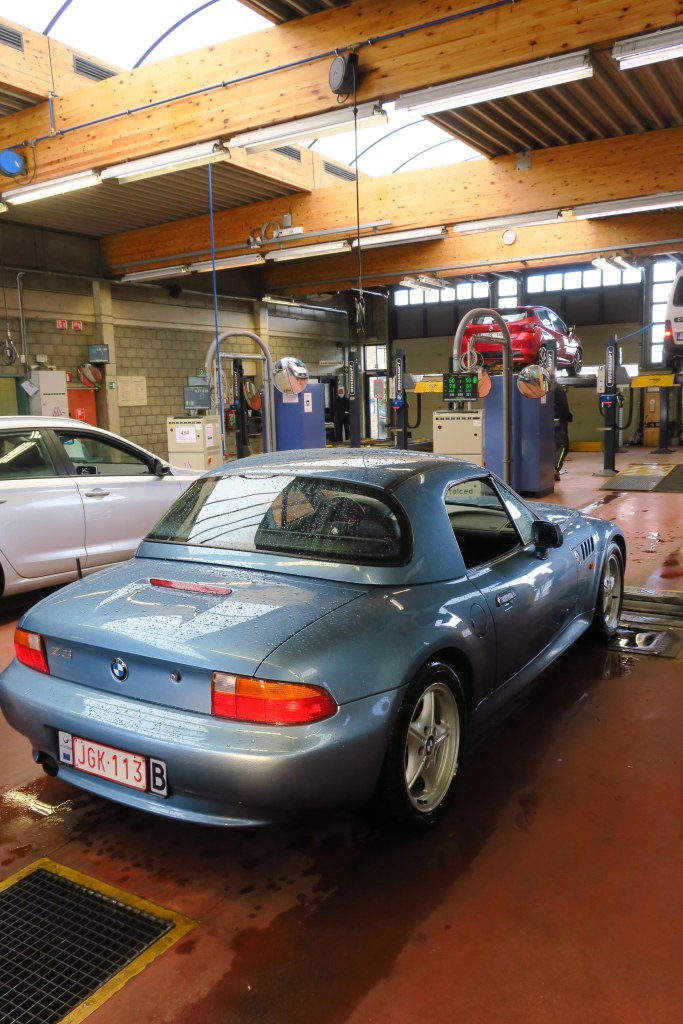
Enjoying and driving an oldtimer means also that you have to take it to the technical inspection in regular intervals.
In Belgium, a car is an “oldtimer” when it has been registered 30 years ago. You can then register your car with an “O” (oldtimer) license plate. This means that you enjoy reduced road tax, but on the other hand the use of the car is restricted. Any commercial and/or professional use is prohibited. You cannot use it as stage prop or décor for film productions for example. Neither can you use it for weddings and other special occasions which involves transporting passengers, even when this is done for free. Nor can you use the car as a daily commuter between home and work.
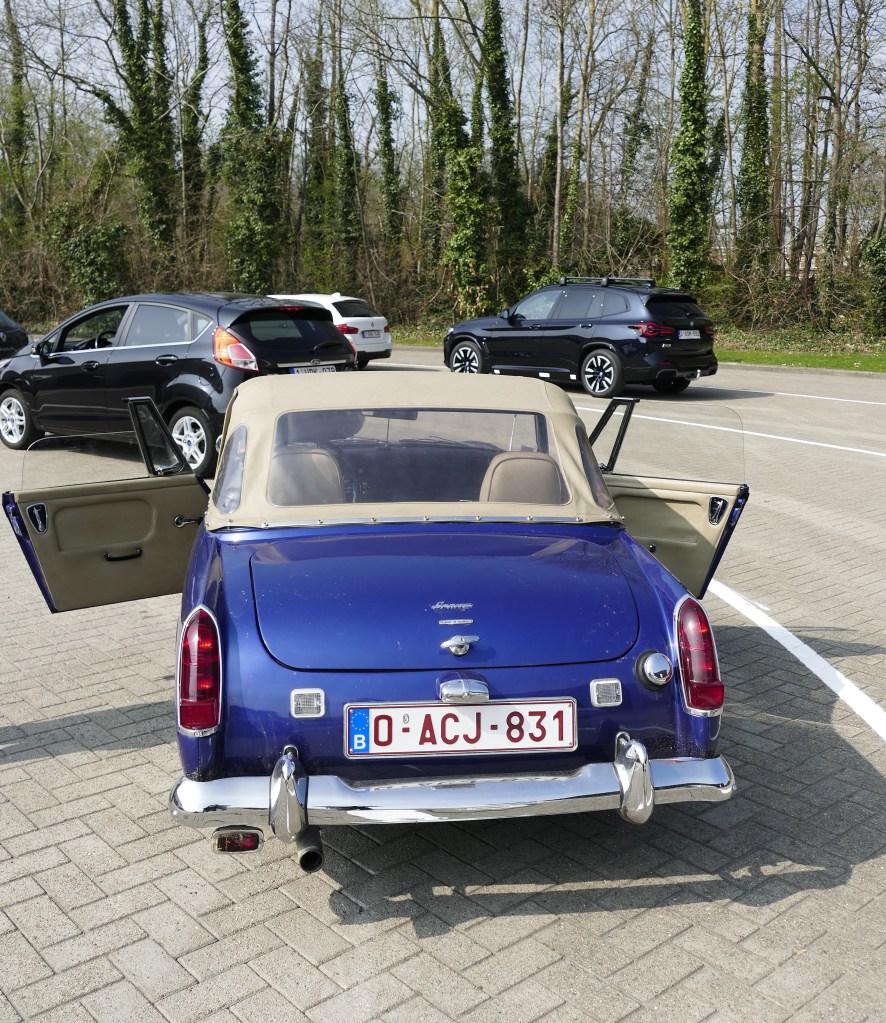
As Belgium has three regions, notably Brussels, Flanders and the Walloon region, the regulations for technical inspection for oldtimers show some differences.
In the Brussels region, cars between 30 and 50 years old have to be taken to the technical inspection every two years. When the car is older, you have to do this only every 5 years. This was the case for our Sprite…
In the Flanders region, the rules are identical. If your car is older than 1st of January 1926, you don’t have to submit the car to a technical inspection.
In the Walloon region, cars between 30 and 50 years have also to be inspected every two years. However, when a car older than 30 years has a “historic value or interest”, it is set free of periodic inspection. The car has to be in original condition and out of production, and no major modifications are allowed, except replacing the chassis when necessary, change to radial tires, and of course all the (safety) changes and improvements which are legally prescribed over the years.
Cars older than 50 years don’t have to be taken to inspection any more.

So we took the Austin Healey Sprite out of its winter sleep two weeks before the inspection. Of course we picked a day when the weather was fine. As the Sprite has been fairly recently fully restored and has enjoyed an extensive mechanical overhaul, we did not expect too many problems. Also the battery had been replaced recently. Starting the engine was nevertheless somewhat hesitant, as it did not fire up after two attempts after having waited previously for the fuel pump to fill the carburettor fuel reservoirs. We had the choke fully out, and were uncertain whether the air/fuel mixture was correct, so to prevent the engine from over-flooding we gently pressed the accelerator halfway on the third attempt and the engine then immediately fired up. We found the engine idling steadily, but nevertheless rather rough, so some tuning of the two SU carburetors might be necessary. We have the impression the air/fuel mixture setting is rather lean for the moment, but only a tune up using mixture measuring instruments will tell.

Oil pressure was OK, which is to be expected as the engine had been totally restored. We took the Sprite for its first spring tour over a distance of a good 35 kilometers, keeping a watchful eye on the cooling temperature and oil pressure gauges and letting the engine and drive train warm up thoroughly. Of course (hand)brake and all the controls were tested.
Several weeks later it was time to put it through the technical inspection. We did not expect many problems, and indeed there weren’t any. The inspectors admired the clean engine bay, and the 1275 cc Series A BMC engine, which is basically identical in the Mini Cooper S, save for the tuning. It makes the 714 kg Sprite quite a lively performer, where it develops a healthy 65 HP at 5800 rpm. Mind you, acceleration is rather brisk with 0 to 100 km/h reached in about 12,5 seconds. The engine is a long stroke unit, therefore quite flexible, developing a good torque for its size of 98 Nm at 3000 rpm.
The BMC A series engine is a very interesting and beautiful “classic” engine, and has a very long history. We will come back in more detail about this engine in further posts.
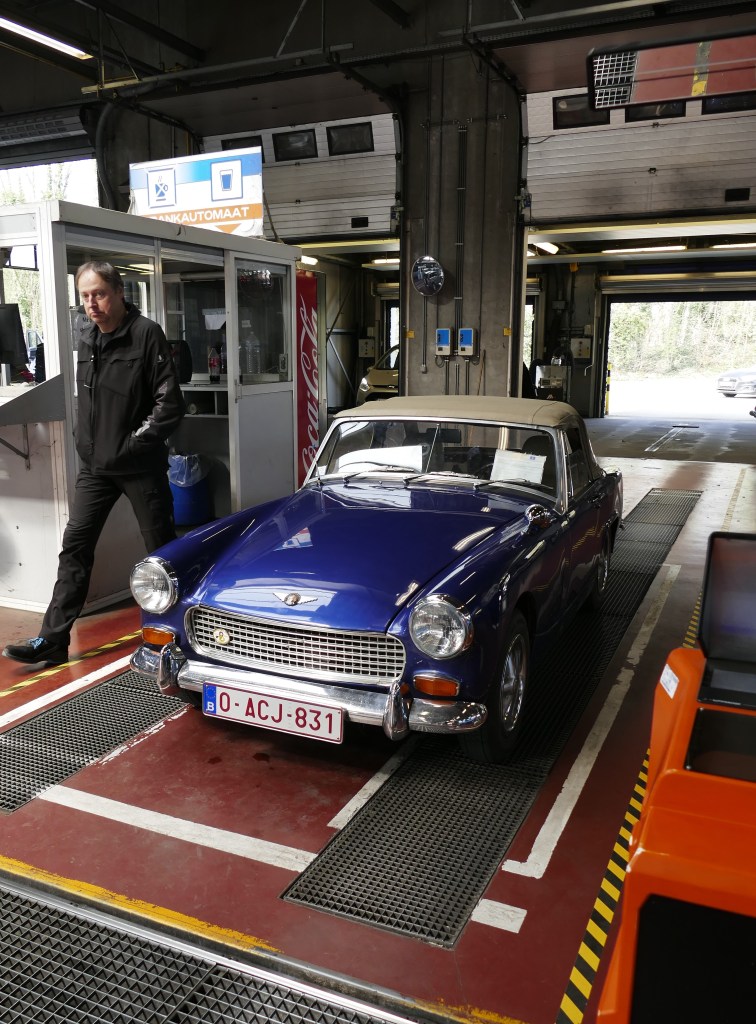
As said, the technical inspection went without a hitch, as brakes, suspension, chassis and all auxiliaries were found to be in perfect working order. The engine’s CO2 emissions were also found to be OK, taking into account the historic emission standards of course. Apparently it was a good idea that we left the carburetor settings unchanged for the time being, although the idle is still rather rough.
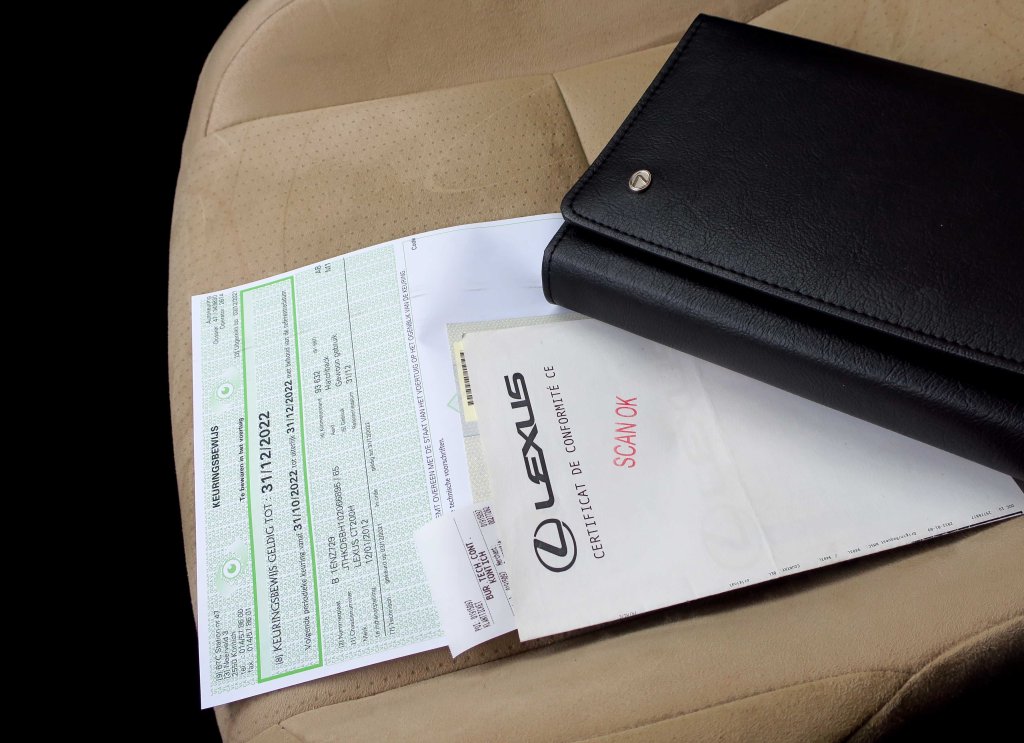
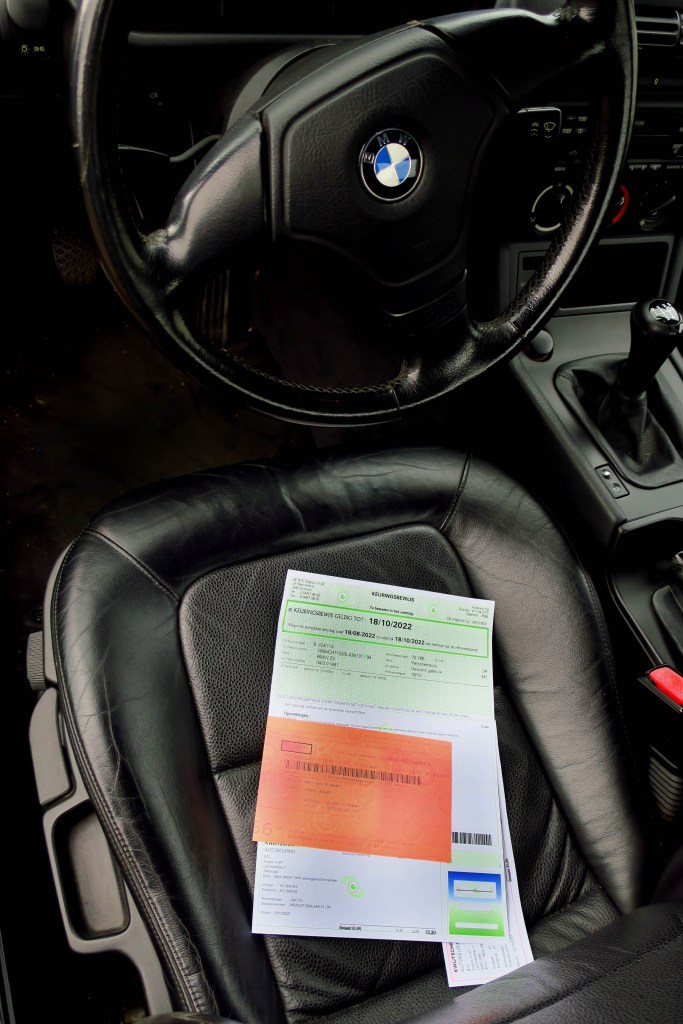
So we received a “green” inspection report, which is now valid for another five years.
On the way back from the technical inspection, we used the motorway for most of the trip, and the Sprite was happily cruising along with a beautiful exhaust roar at some 3500 rpm.

We now also filled up the fuel tank, choosing 98 octane fuel, and avoiding the use of Euro E10 95 octane petrol, which contains 10 pct methanol. There is a product “Classic Valvemaster plus” sold amongst others by Anglo Parts, which protects engines originally designed to run on leaded fuel for the negative effects of Methanol. Another product they distribute is EPS Ethanol protection from Millers Oils. We performed a major cleaning and detailing session with the Sprite to bring it to (almost) concours condition before we used it our next sortie , driving it to Mechelen for the “British Car Day” organised by Anglo Parts on the 26th of April, were the Sprite was proudly present on the stand of the Royal Historical Vehicle Club and met wich much interest from young and old…
Hans Knol ten Bensel



























 Autoprova - for the Connaisseur