A design studio which works amidst a wide
audience, where their 3D models and drawings are made under the eyes of
interested viewers? That is what the bold man and women of the DS Design Studio
are doing.
These designers are the creative pillar of DS
Automobiles, a young car brand whose designs for DS 7 CROSSBACK and DS 3
CROSSBACK are already a benchmark. DS DIVINE, DS E-TENSE and DS X E-TENSE are also
the results of a creative process that came about within DS DESIGN STUDIO PARIS
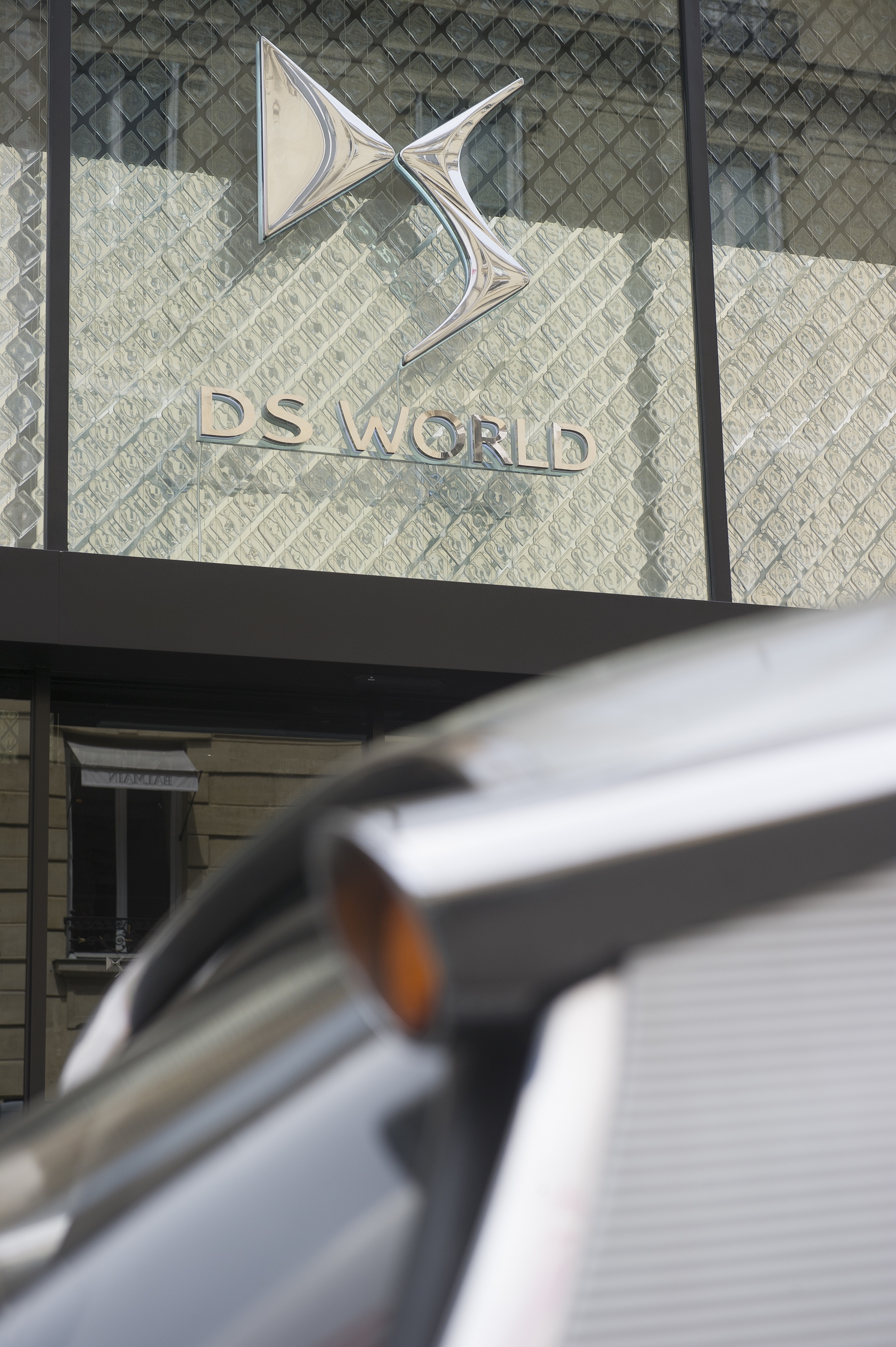
These designers are now leaving their usual work space and setting up over the three floors of DS WORLD PARIS at 33 Rue Francois 1er, Paris.
The DS World Paris is the elegant setting where the public can admire the iconic “DS” or “Déesse”, the godess on wheels, but now also the men and women of the celebrated DS design department will be at work under their eyes…
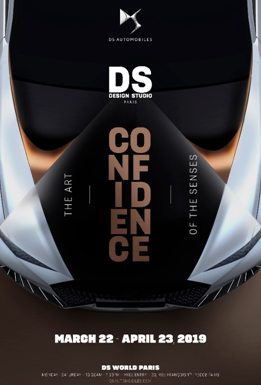
There, the men and women of DS Automobiles design under the direction of Thierry Metroz, DS Design director, will be revealing the innovative projects they’re working on and sharing their secrets through “CONFIDENCE The art of the senses”.
More than an exhibition, this is a
residency of artists, brought to life by DS Automobiles designers who are on
hand to explain their jobs, present their work and talk with visitors.
Indeed, the men and women of DS DESIGN
STUDIO PARIS are on hand throughout the event to explain their work and answer
visitors’ questions.
Some confidentiality restrictions have been
lifted so they can reveal additional secrets. The work of the 60 people who
make up the DS DESIGN STUDIO PARIS is presented by the different teams:
exterior design, interior, ProLab, VLab, modellers, colour and material
workshops and upholsterers.
The brand wants them to share their
inspiration and most recent work to cast a new light on the design and build of
a car.
So, if you are interested to see these design artists at work, we give you here some practical information: “CONFIDENCE The art of the senses” is held from 22 March to 23 April 2019 at DS WORLD PARIS, 33 Rue Francois 1er, Paris.
We all know that SUV’s are all the rage,
and are becoming ever more popular. No small wonder then that this stylish
Jaguar SUV, launched in 2015, is the bestseller of the iconic brand. But then,
you may ask with us, is this popular SUV still remaining a true Jaguar,
combining pace (performance) with grace and space? Will the growl of its
powerful engine lift your spirits, will its chassis seduce you with its
graceful handling and comfort, will the beautiful body and interior put you in
the exquisite mood and ambiance which only a Jaguar can convey? Just read
further…
Hans Knol ten Bensel
Feline contours
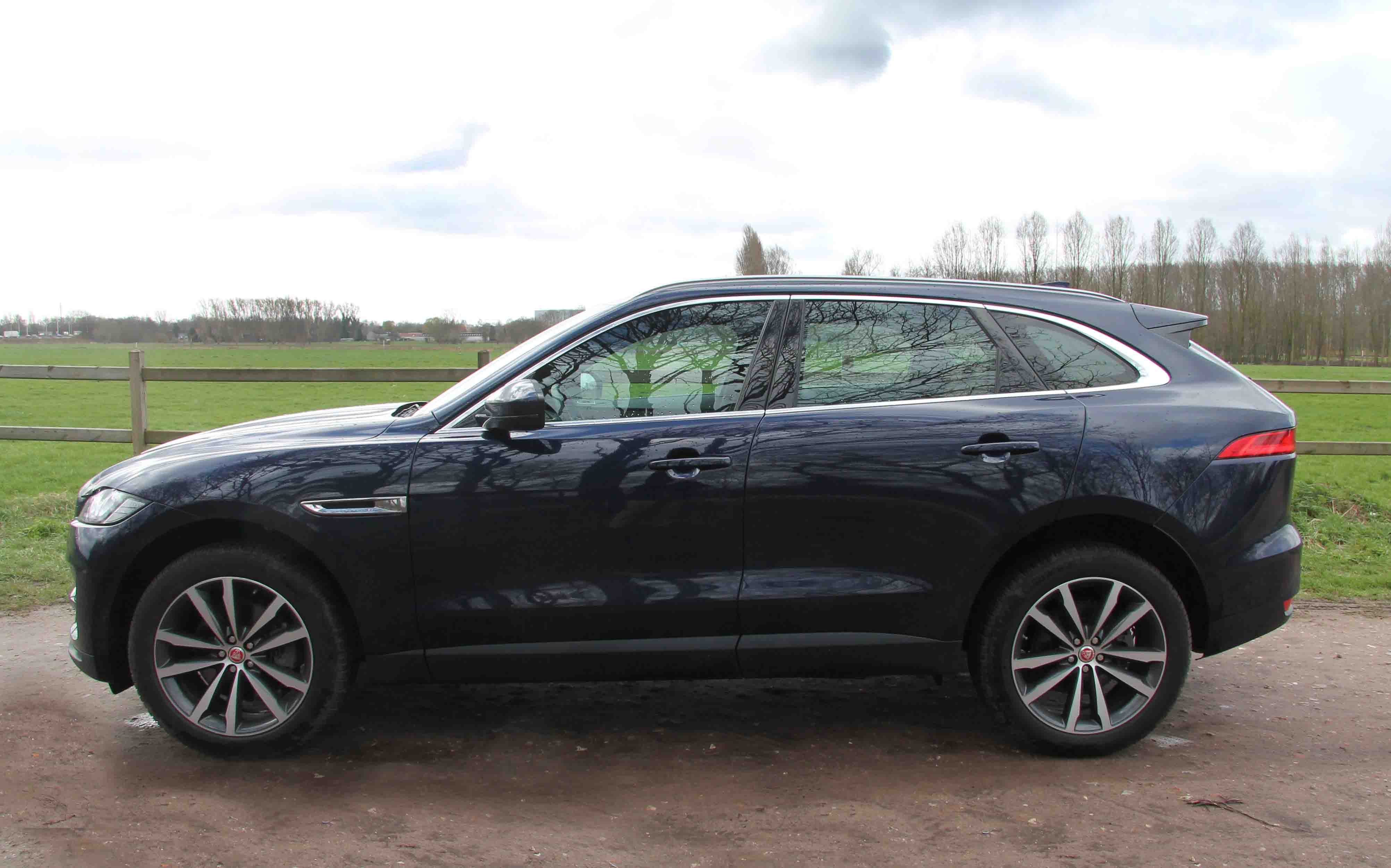
Looking at the photos you will agree, this F-Pace has the looks so unique to Jaguar. The waistline which ends in a higher tail contour, reminiscent of the rear end of the Jaguar E-type, where its high mounted rear bumpers also followed the waistline, the well rounded curves, the proportions of the wheel arches, well integrated in the fluent lines of the whole body, the subtle central bulge on the engine hood, all this is well and truly Jaguar.
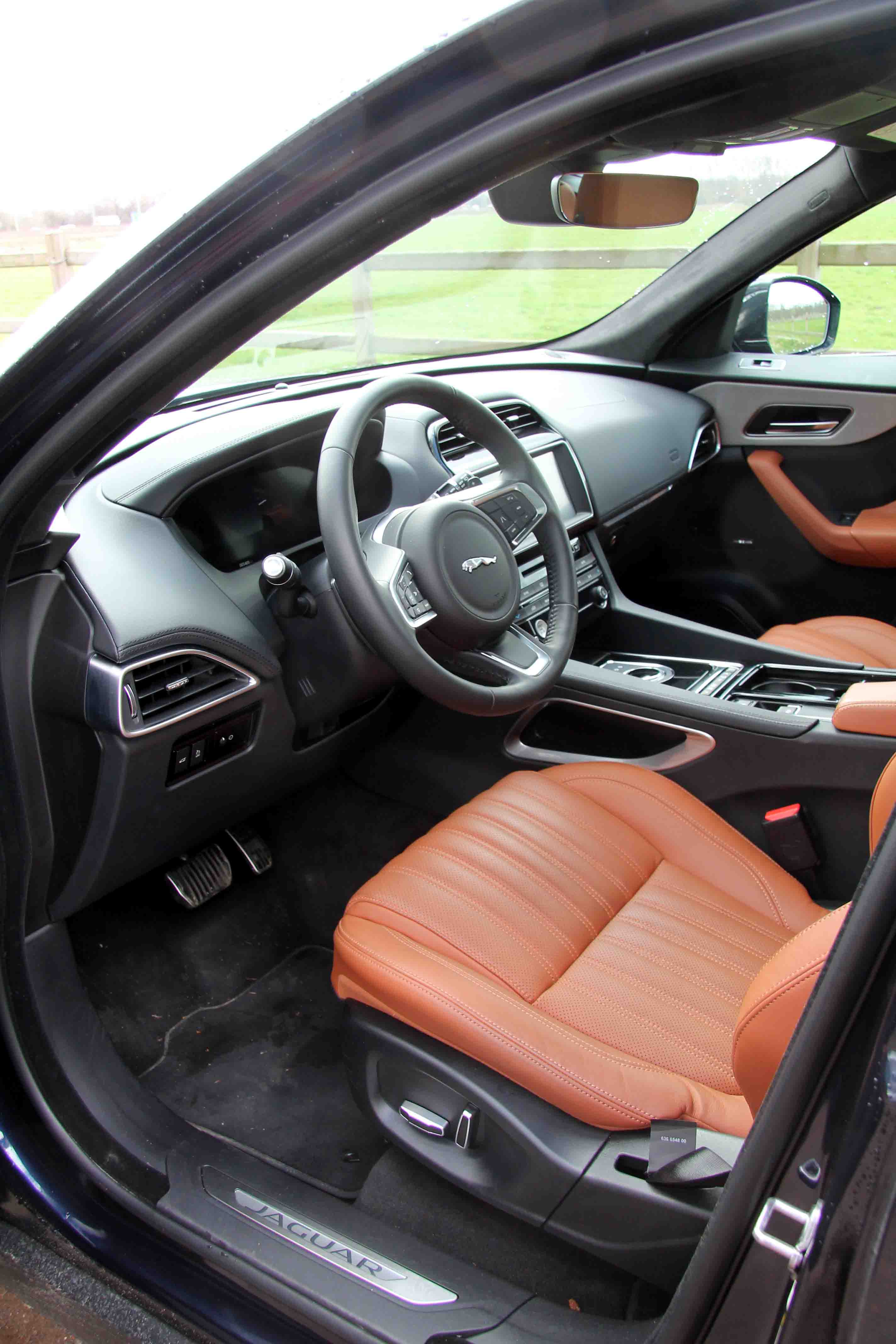
In the interior, the digital age and the utmost attention to passive safety has put its own boundaries and accents, and so, alas, you will not find a wood rimmed steering wheel, nor does it lay thinly rimmed in your hands, the trend of times has commanded otherwise. But once the digital instrumentation lights up on the screens, one sees the familiar big round dials, and the classic lettering in the instruments, white on black, of, well, vintage Jaguars. As readers know, your servant is the proud owner of a Mk II 3,4 litre Jag, and yes, I felt well at home in this one.
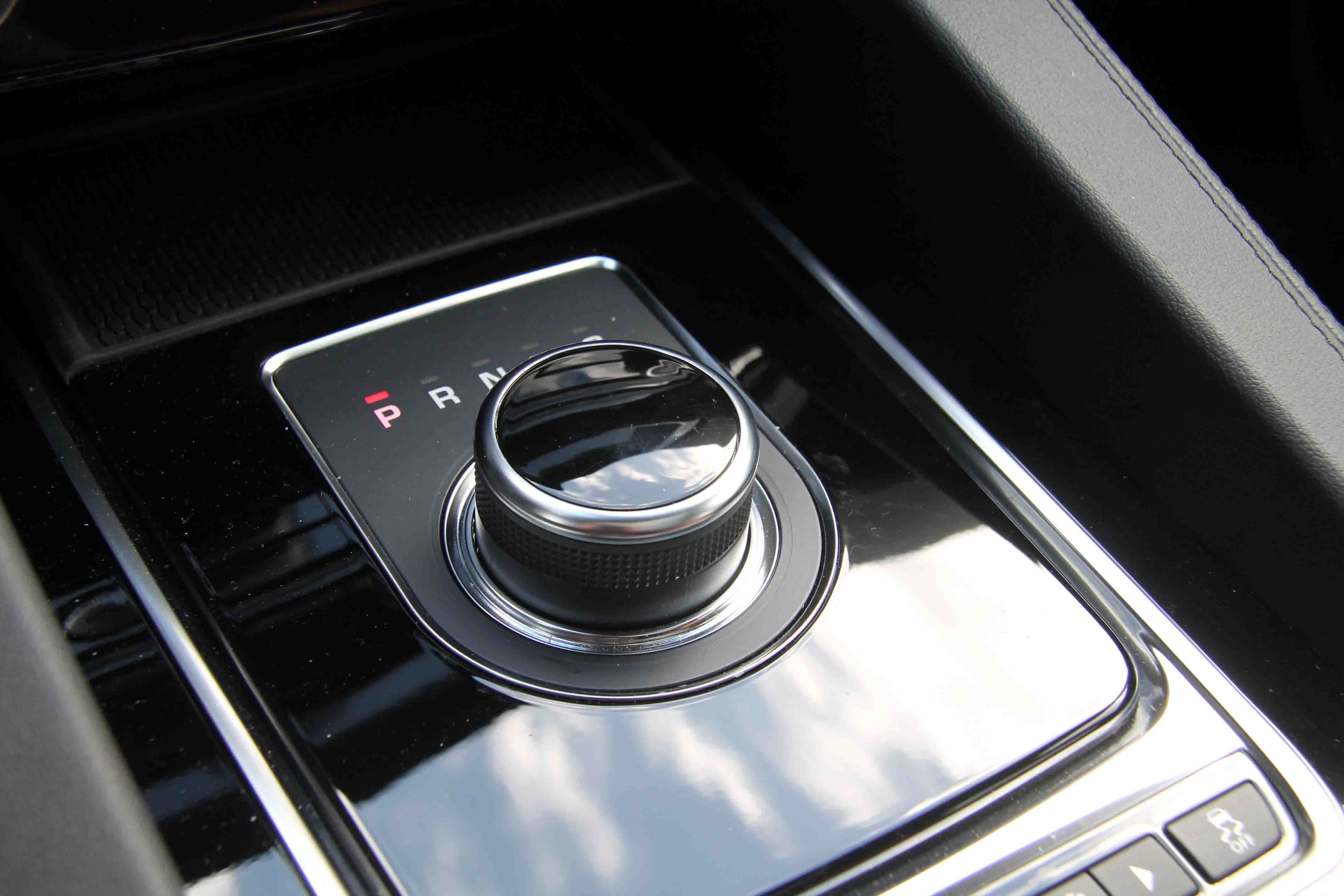
The latest generation digital infotainment screens and functions are also intuitive and the proverbial breeze to use, and rank among the very best you will find in any car nowadays. The centre console is wide – again a celebrated Jaguar tradition- and houses the ergonomic rotary gear selector of the excellent 8- speed ZF auto box, and one just has to turn the column to choose the right function, and it will discreetly descend into its mount when you stop the car and engine, so neat and practical, and (luck has it) so unique to Jaguar. Going from “D” to “R”everse is just a short twist on the column selector, and that is soo clever!
Abundant, smooth, growling power…
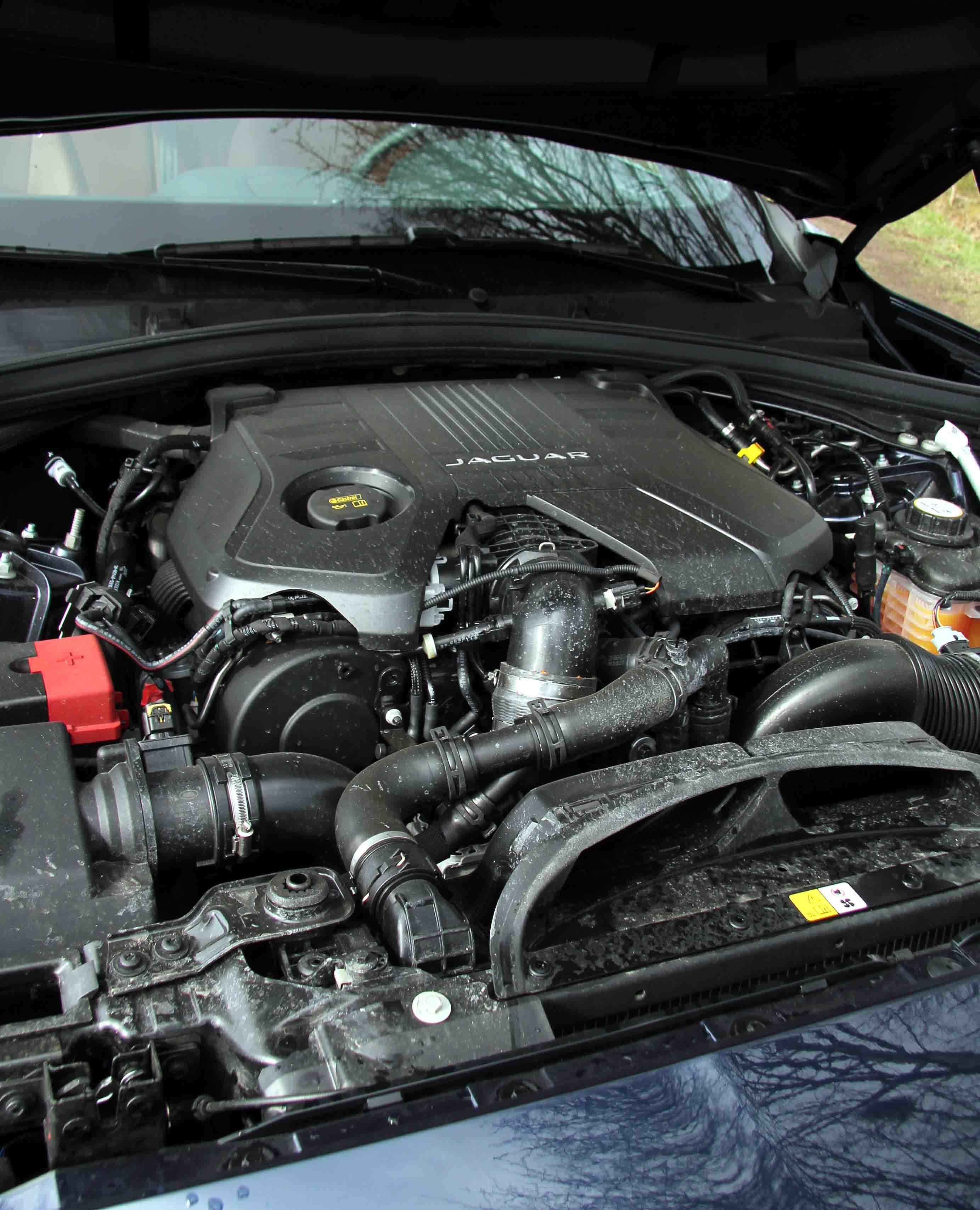
The heart of any car is its engine, and in a Jaguar it simply HAS to be powerful, with abundant torque and pulling power, from low revs onwards, and on top of all that it has to develop that deep, feline sound. No small feat for a Diesel engine. But then, this is a V6 (yes, to me, a Jaguar is only a Jag with a SIX cylinder engine, sorry…) and it has 3 litre of displacement. So there are 300 HP available, at 4000 rpm. Of this, the Jaguar E-Type could only dream. With on top of all that 700 Nm of torque in store for that necessary feline punch, and this at merely 2000 rpm. So the outright performance is truly Jaguar, and indeed, the classic E-type could hardly match its 0 to 100 km/h acceleration of 6.2 sec. It would also have needed the right rear tyre size and final drive ratio to reach the same top speed of 241 km/h which this F-pace is capable of.
The thermal efficiency of a (large) Diesel is legendary, and shows abundantly here too that they belong into the larger SUV’s when there is no electrified or hybrid propulsion present in the drivetrain. It took just a restrained driving style with the engine humming along around 1000 rpm at urban legal speeds, to reach consumption averages between 7,4 and 7,8 liters/100 km in dense urban traffic. A petrol engine of similar size and power does not come even close to these figures in such a 4,7 metre SUV with a kerb weight of 1884 kg. The ingenium technology in these all aluminium engines offers low friction, and all this truly pays off.
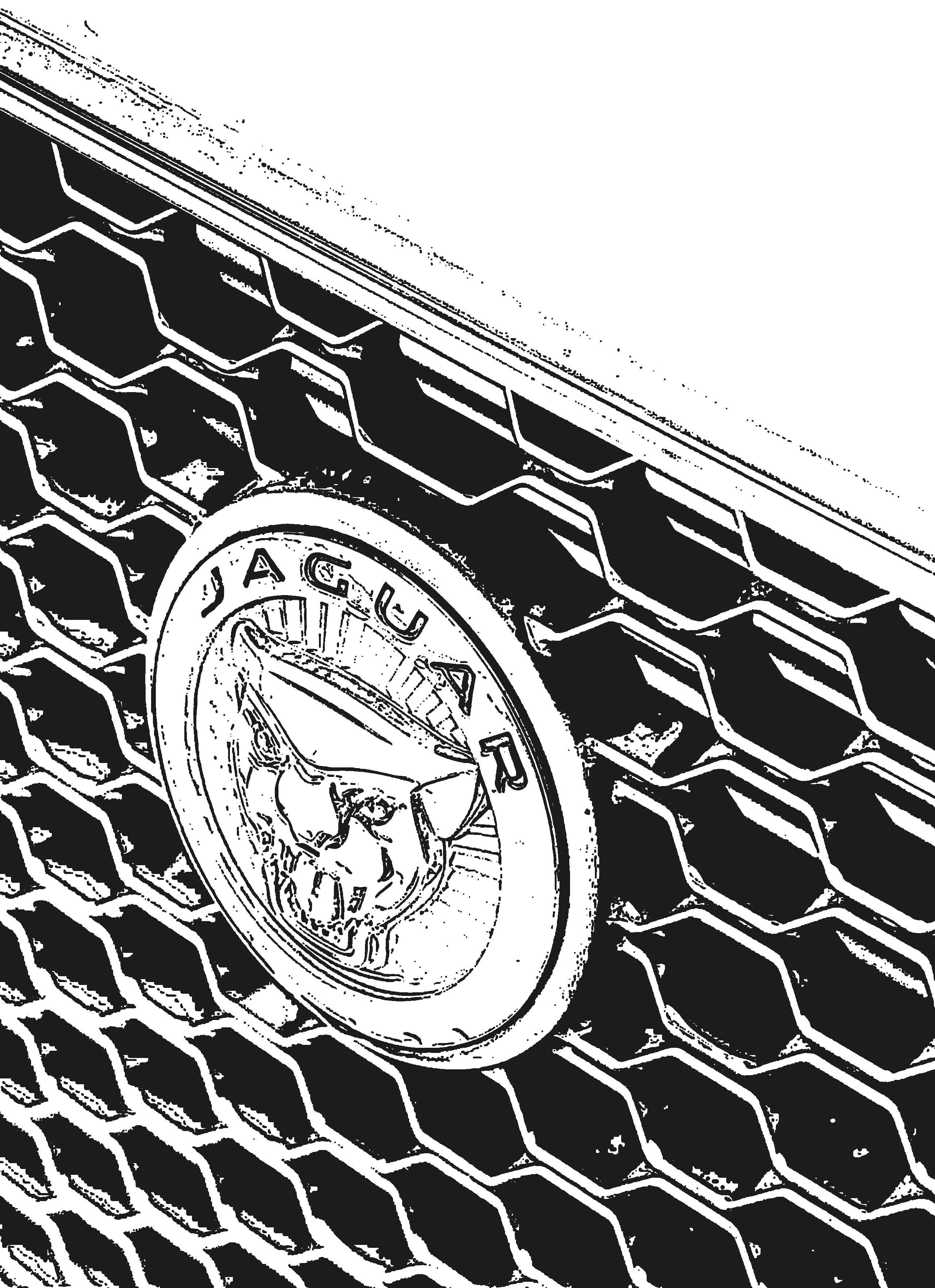
We couldn’t resist making this line drawing version of the inconic Jaguar badge on the front grille. This F-Pace is indeed a true Jaguar…
Handling like a thoroughbred
As shares some of its architecture with the XE and XF, it handles very car-like. Of course, you can choose between driving modes that stiffen the suspension and boost steering response, but even in normal settings the F-type handles like a dream, displaying also very little body roll for an SUV of this weight and size. With the larger engines, the F-type offers standard 4WD, and this sends all the power to the rear wheels most of the time, with occasionally 20 pct sent to the front. On slippery surfaces, up to 50 % of the pulling power can be sent to the front wheels.
A
key ingredient to these impeccable road manners is its lightweight
construction. Don’t forget that 80 pct of the body, excluding the doors, bonnet
and plastic tailgate, is made of aluminium. Then there is the near perfect
50/50 weight distribution, an integral link rear suspension, and the aluminium
double wishbone suspension at the front which is closely following the F-type
setup. Electronics will analyze steering movements up to 500 times per second,
body movements up to a 100 times per second. Do we need to say more? This
Jaguar is in all its sportiness graceful and comfortable, never too hard, even
in this sport mode.
Everyday practicality
The F-type is an SUV, and that means born and built for the modern day mobile couple and family. It easily seats five adults, has a minimum trunk volume of a very decent 650 liters, space for ski’s, toddler isofix seat anchors, electric tailgate, you name it. All thinkable driver assistance options can be had, the infotainment supports Apple and Android Car Play, the sound system is nothing short of superb.
Conclusion
The F-Pace is Jaguar’s bestseller, and for all the right reasons. It has feline, beautifully curved and timeless looks, both inside and out, displays uncanny panache behind the wheel, handles well balanced and displays all the growling Jaguar power you could ever wish for. Don’t forget also, this car is voted World Car of the Year 2017 en World Car Design of the Year 2017; Thi year, the model range has been extended with the 300 SPORT and Chequered Flag. In the diesel version it is as frugal as modern times command it, and if you decide to go green all the way, then Jaguar as the latest I-Pace, which is also a formidable looking car with many (E-) promises.
Needless to say we are very keen to lay our hands on one, but for the time being, and indeed for many years to come, this F-Pace will fulfil everything you could possibly wish of a Jaguar, and this better than ever.
In the segment of premium compact SUV’s,
the Q3 has always been a solid contender, and with the major improvements
introduced in the latest generation, it looks it’s to stay very much on top. It
has been voted first in the “compact SUV/off-road vehicles” category in the
readers’ choice of “Best Cars 2019” by German technical magazine “auto motor
und sport.”Indeed, the confident styling, the superb workmanship, impeccable
finish and build quality will already convince you, even before driving it. But
also behind the wheel, it has lots more in store, just read further…
Hans Knol ten Bensel
Clean and sharp contours
The Audi styling language has been
sharpened up lately and the rounded contours have now been superseded by more
angular surfaces and edges. It makes the whole car more elegant and lighter,
and altogether more lively.
This added dynamism is also found in the
available colour palette, and indeed our test car was sprayed in an attractive pulse
orange, a new color, which suited it well.
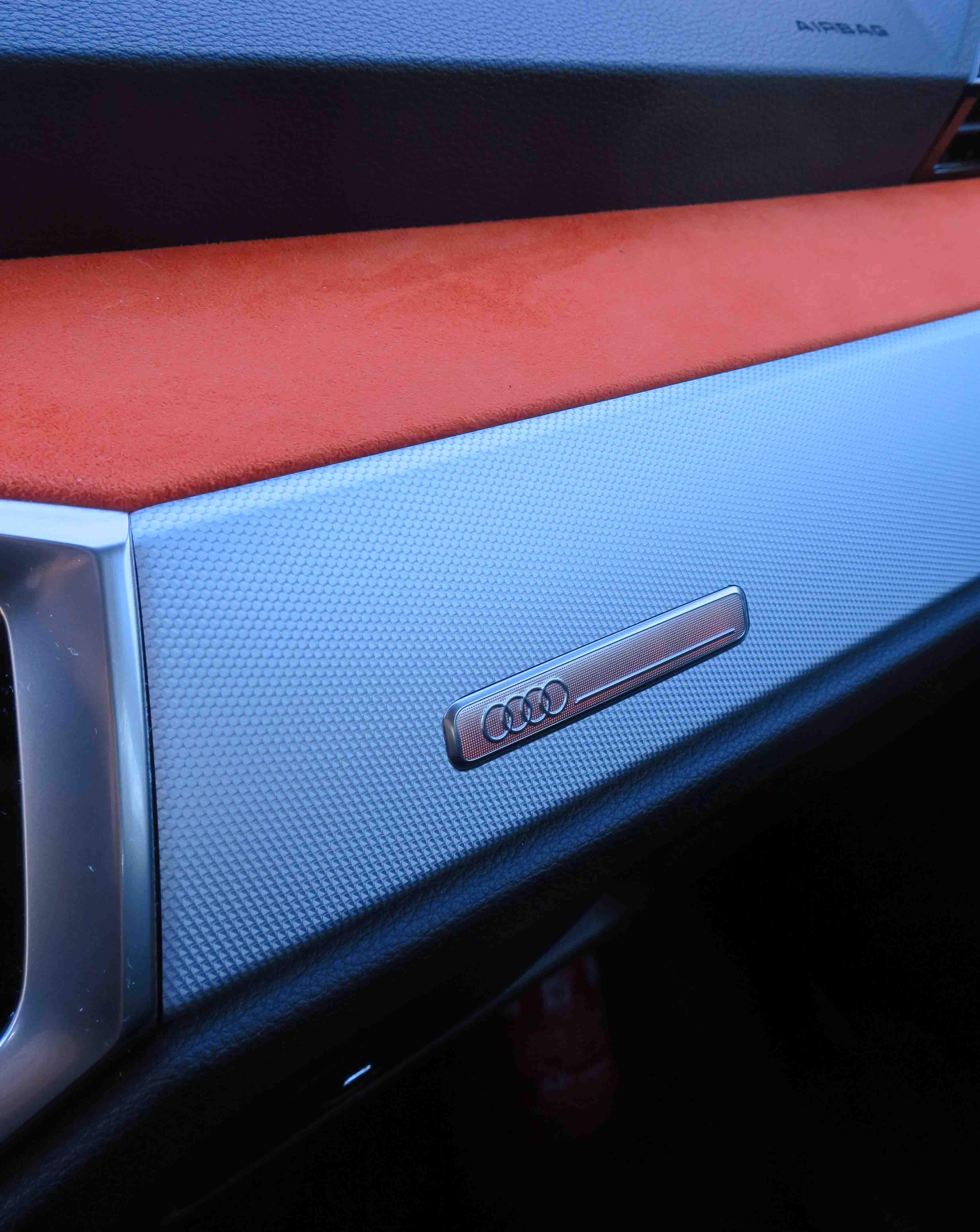
The ‘new generation’ angular styling language is boldly continued in the interior, with as a highlight the suede finish of the dashboard surface panels, repeating the body colour. Led lighting is now introduced in door panels and throughout the cabin, and a large central screen running across part of the instrument panel makes abundantly clear that the digital age has well and truly arrived at Audi.
The digital instrumentation is an example of clarity and elegant design, and the large round dials for speed and revs can be made smaller to allow other information to take central stage in the line of sight of the driver.
Infotainment is of course top notch, and we
enjoyed the DAB radio along with the premium sound system. The navigation also
leaves little to be desired in terms of intuitive usability and accuracy. Of
course there are also a host of driving aids to be enjoyed, of which more
later.
Refined drivetrain
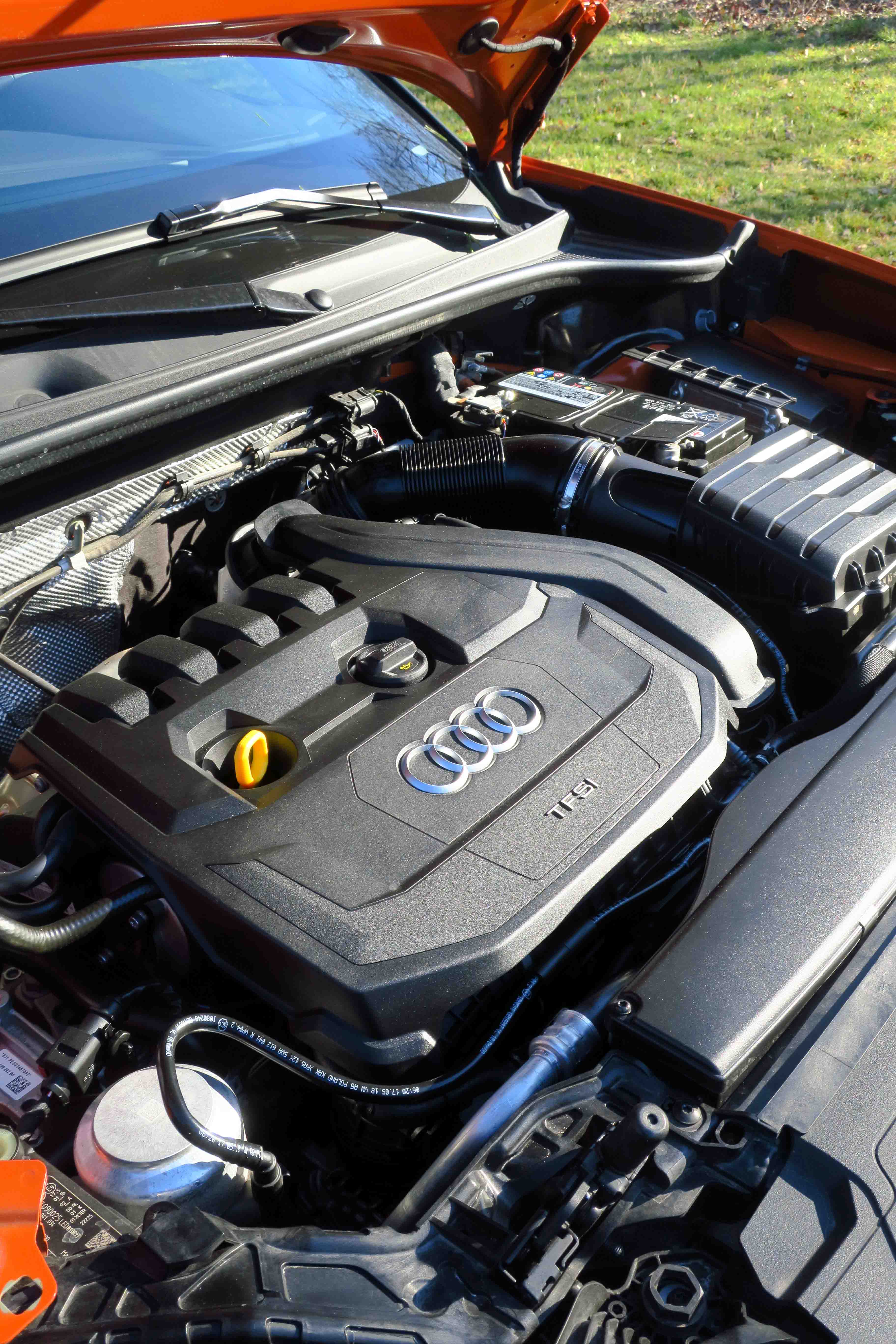
Under the hood purrs a state of the art 150 hp 1,5 litre gasoline TFSI unit, coupled to a smooth and alert 7 speed auto S Tronic gearbox. In terms of smoothness and liveliness, this entry level engine earns top marks. It develops ample pulling power at low revs, is vibrationless and silent, and is willing to rev beautifully under a marvellous staccato when you floor the throttle.
The engine embodies the latest techniques. What to think of for instance its cylinder linings, which have an iron coating that is applied via plasma spraying and significantly reduces friction. The cooling module allows efficient thermal management, assisted by the exhaust manifold integrated in the cylinder head. The turbochargers generate up to 1.3 bar of (relative) charging pressure. The common-rail system injects the fuel at up to 350 bar – the high pressure results in spraying, even distribution of the flame front and low particulate emissions. Combined CO2 emissions are between 134 – 130 g/km.
The gearbox is utterly responsive, and has
a well balanced gearchange behaviour according to the chosen driving mode.
Because – noblesse oblige – the Q3 driver can choose how his car behaves
according to his driving mood. Indeed, customers can order the Audi drive
select dynamic handling system as an option. This system allows the driver to
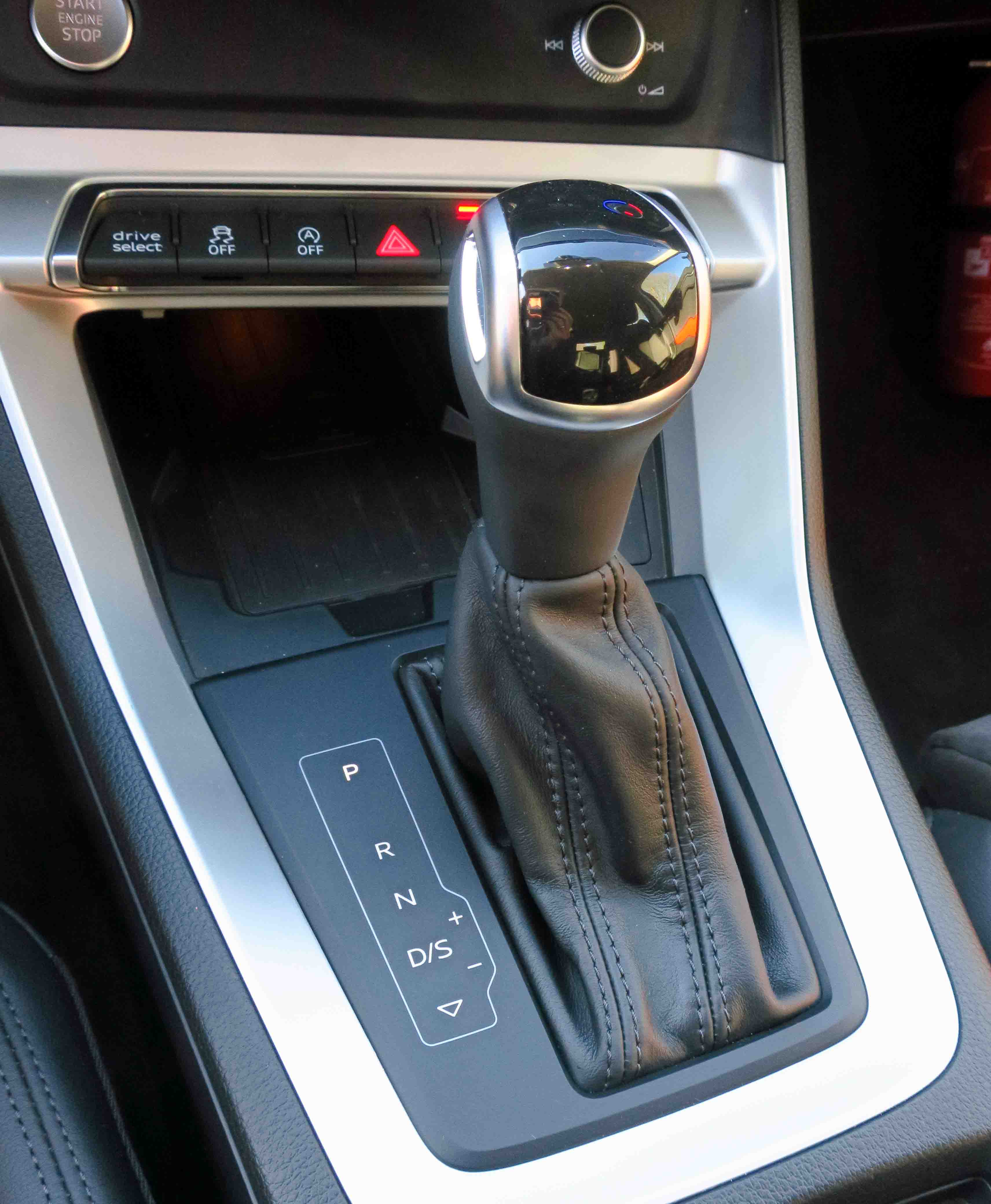
choose between auto, comfort, dynamic, efficiency, offroad and individual mode.
One has the choice between and together
with engine and gearbox responsiveness steering and damping are also adjusted
accordingly. When one has chosen the “dynamic”mode, pure driving
pleasure is to be fully enjoyed, and indeed in terms of agility and steering
precision, this Q3 truly scores very high indeed in this premium compact SUV
segment. Even the standard steering system of the new Audi Q3 is sporty and
direct with a ratio of 14.8:1. With the optional progressive steering, this ratio
applies to the central position – the further the driver turns the wheel, the
more direct the ratio. At full lock, it is 11.4:1.
In Audi drive select offroad mode, in which the adaptive dampers are set to soft, hill descent control can provide assistance (see illustration). Activated at the touch of a button, it constantly maintains the speed specified by the driver (up to a maximum of 30 km/h) on a steep downhill gradient of more than six percent through automatic brake interventions. The driver specifies the preferred speed by accelerating or braking. This allows the driver to concentrate fully on the terrain. In addition the MMI displays the tilt angle accordingly.
A few words more about this gearbox: In the
entry-level gasoline version we tested, the two dry clutches manage without
their own oil supply on account of the lower torque of 250 Nm (184.4 lb-ft).
This improves efficiency even further. Oil is supplied to the gearwheels via a
small, mechanically driven gear pump. In conjunction with Audi drive select,
the seven-speed S tronic provides a freewheel function that becomes active in
many situations if the driver takes their foot off the accelerator. It is
deactivated in dynamic and offroad modes. We remind you here that the the Audi
Q3 35 TFSI exclusively uses front-wheel drive.
Performance with this 150 hp version is more than adequate, with a 0 to 100 sprint time in 9.2 seconds, and a stable and effortless top speed of 207 km/h. When truly put through its paces with panache, this Q3 really shows what mettle it is made of, and indeed, in the true German tradition we would say, this Q3 feels totally at home on high speed outings on the Autobahnen, displaying the superb qualities of its chassis and suspension, and the thoroughly tested and proven quality of its (drivetrain) engineering.
In terms of economy, we remind you that the
engine has the cylinder on demand efficiency system. Actuators on the camshafts
temporarily shut down the second and third cylinders at low and medium loads by
closing the inlet and outlet valves. The engine management system suppresses
fuel injection and ignition. All this is totally imperceptible to the driver.
Despite all these technical refinement, the
fuel consumption of a petrol engine car depends largely on your driving style.
The very best we could achieve was an average of 7,3 liters/100 km, on a longer
open road and motorway drive, with admittedly some 35 pct urban traffic thrown
in. The manufacturer quotes a consumption between 5.9 – 5.7 l/100 km.
Suffice to say that a choice of three
gasoline and two diesel engines, combined with front-wheel or quattro drive, is
available for the Audi Q3. Their power outputs range from 110 kW (150 hp) to
169 kW (230 hp).
Infotainment, instrumentation and driving assistance: the digital age is with us…
The Q3 is manufactured at the Győr plant in Hungary, and is standard fitted with the digital instrument cluster, MMI radio including Bluetooth, multifunction leather steering wheel, air conditioning and LED headlights. In terms of assist systems, along with the Audi pre sense basic and Audi pre sense front safety systems, the Audi side assist lane change warning system and the Audi active lane assist lane departure warning system are fitted ex works. The light/rain sensor and the adjustable speed limiter also come as standard. We must say that this adjustable speed cruise control has decidedly come of age, and works is stunningly smooth and progressive.
Audi has done away with the analog
instruments. Even with the standard MMI radio, they are replaced by a digital
instrument cluster with a 10.25-inch screen diagonal, which the driver operates
using the multifunction steering wheel.
First option: MMI radio plus. This first
configuration level is called MMI radio plus – here, the customer can upgrade
the digital instrument to the Audi virtual cockpit, which they can configure in
many areas. In addition to the usual data such as road and engine speed, it
also displays information on music tracks and Audi connect services.
If the customer has specified navigation,
the display also includes the navigation map. The MMI radio plus also includes
an MMI touch display with an 8.8-inch screen diagonal. It is integrated into
the high-gloss black glass-look surround in the center of the dashboard. Then
there is a still higher level: MMI navigation plus. Here, the MMI touch display
measures 10.1 inches. In addition, the Audi virtual cockpit is available as an
option in a plus version with a 12.3-inch screen diagonal. The driver can call
up three different views on the screen, including a “dynamic” screen. Here, the
engine and road speed are shown in square instruments with red graphical
elements – a really sporty look. In all displays, the graphical user interface
is so clear that the information can be read quickly. The menu structure is
streamlined and easy to understand, as on a smartphone
Practical with more boot space
The luggage compartment has also benefited
substantially from the growth of the new Q3 –it is the largest in the premium
compact segment. Depending on the position of the rear seats and backrests, its
capacity totals 530 or 675 liters (18.7 or 23.8 cu ft) With the backrests
folded down the figure rises to 1,525 liters (53.9 cu ft) The loading floor can
be adjusted in up to three levels; the low loading sill of 748 millimeters
(29.4 in) makes it easier to stow heavy luggage. If the parcel shelf is not
needed, it can be stowed under the loading floor.
Conclusion
The new Q3 has decidedly matured to a top contender, as we said before. Thoroughly engineered and built carefully to reach perfection, in terms of styling, quality, performance, handling, comfort and economy and longevity. It is in this segment of compact SUV’s a benchmark, without any doubt, by which others will be judged. Needless to say it will top the charts in the fleet segment, and win also the hearts of many private Audi enthusiasts and followers…
There is now a superb SUV which is stealing the heart of car lovers all over the world, and that is the Alfa Romeo Stelvio. The men and women of this iconic brand born in Milan have long waited to launch a SUV, and with good reason, as Alfa Romeo stands for a unique driving experience. The stunning “Giorgio” platform of the Giulia provided a sound basis for a SUV with extraordinary driving qualities, and the result is this Stelvio. Not only its name is synonymous for panache and character, the car itself scores, and how… Just read on further…
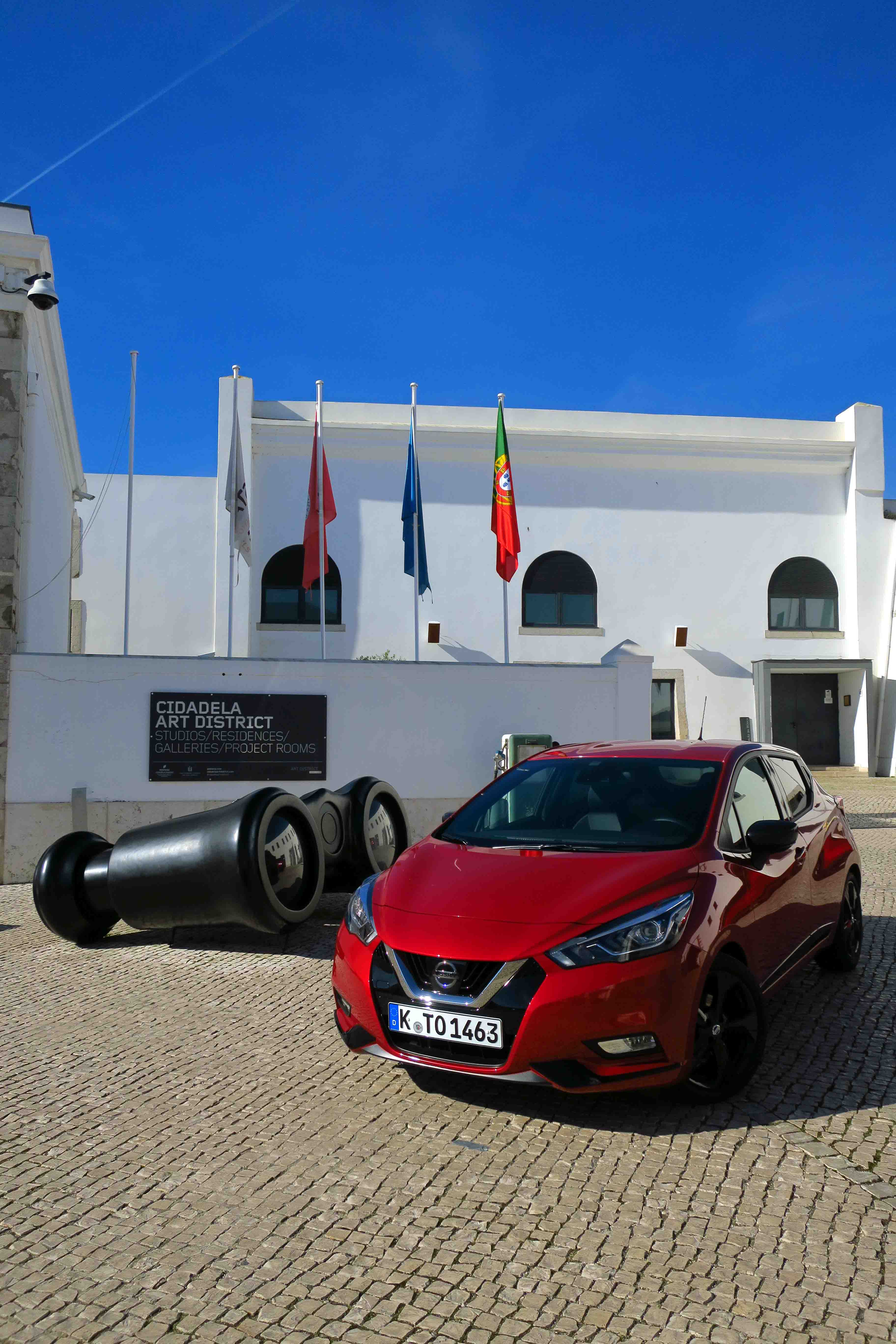
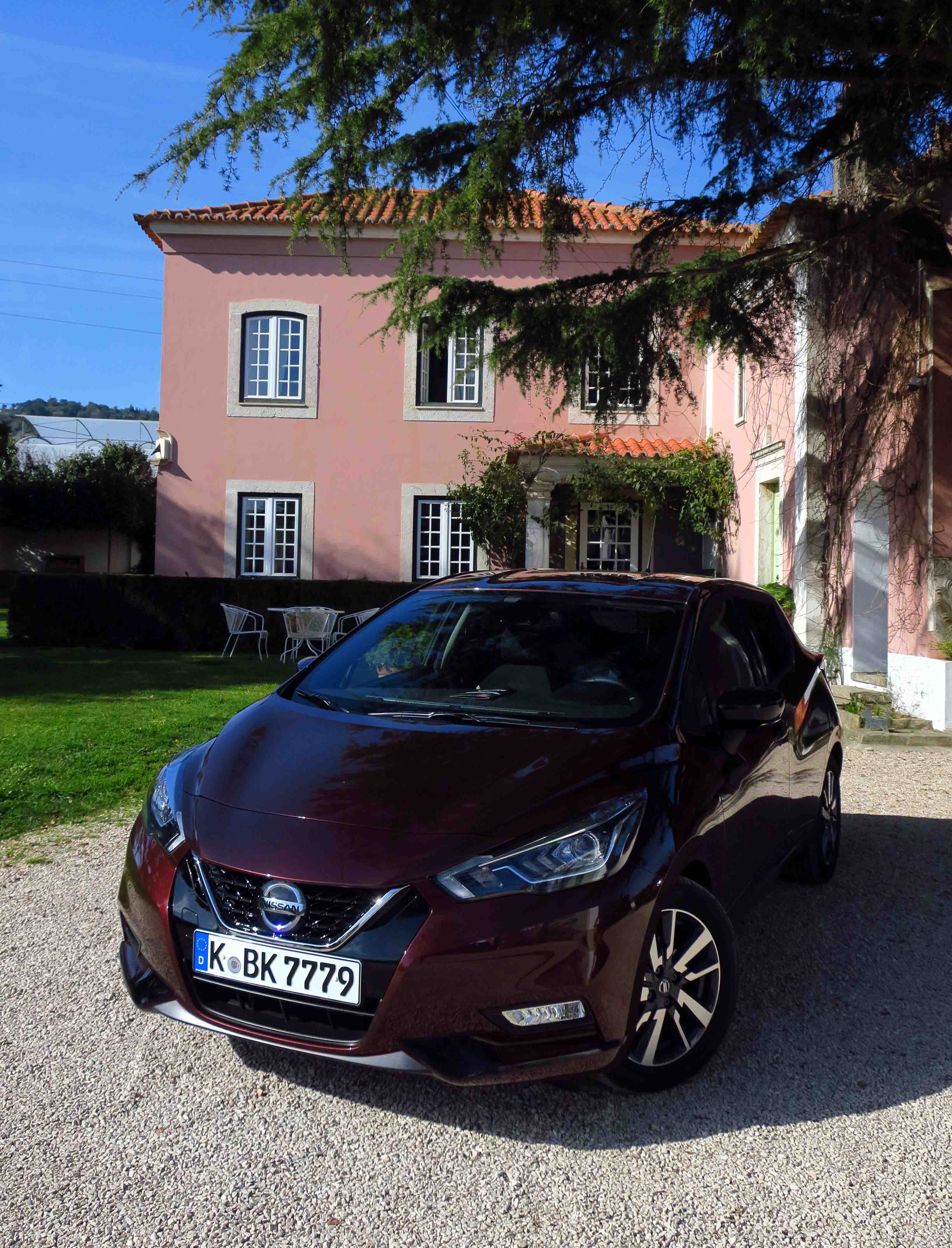
The Citadela Art District in the posh coastal Portugese riviera town Cascais proved the proper setting for the Nissan Micra to present its new petrol engines…
We drove the stylish Micra in scenic Lisbon and the winding roads historic Cascais to test the new generation of very impressive three cylinder petrol engines, which will give the Nissan Micra a high tech trump card in the B segment for years to come.
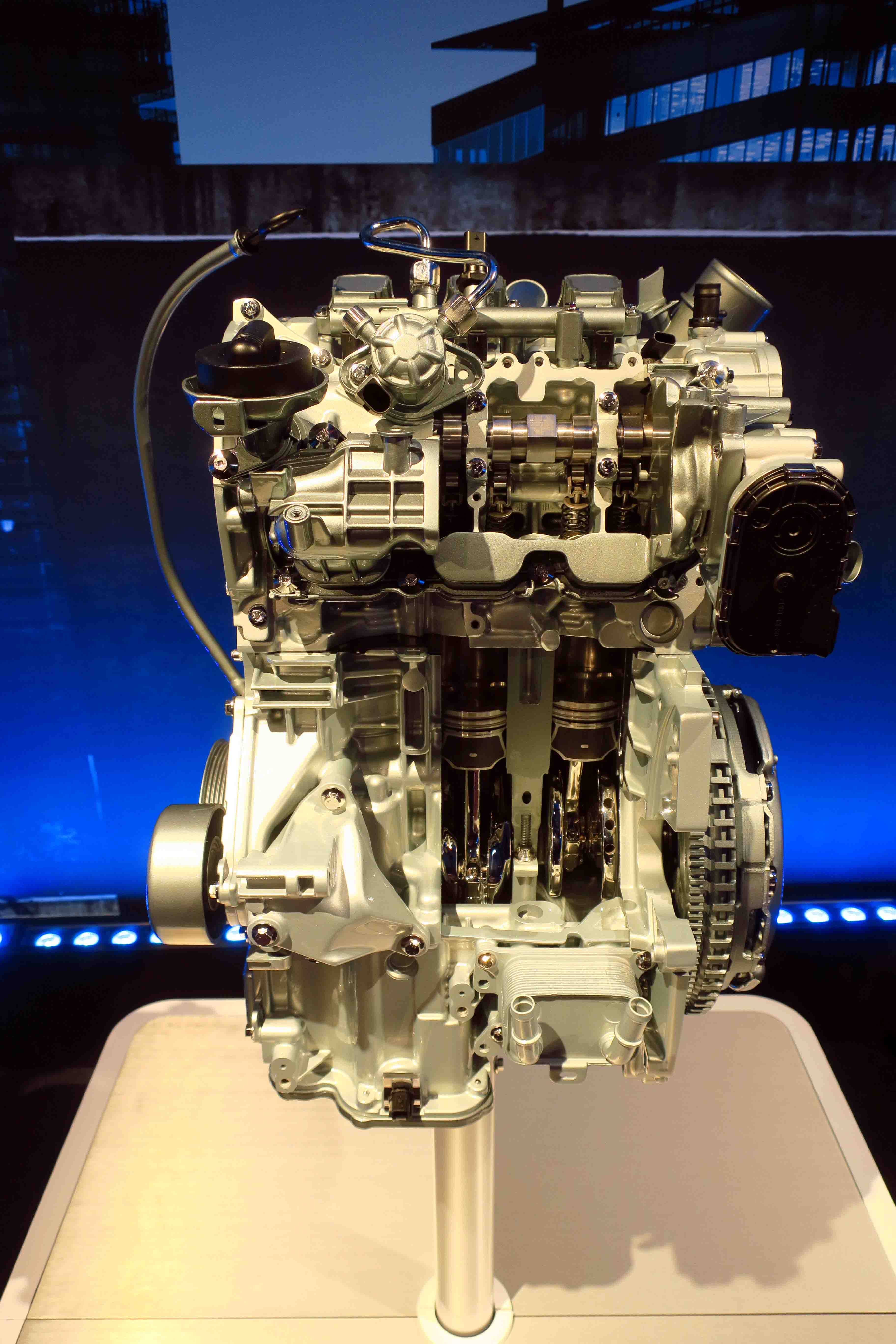
Central place is taken by a totally new developed 100 HP 1 litre unit which embodies all the engineering and production knowhow of the alliance Renault/Nissan/Mitsubishi, a smooth and frugal performer which can be mated to either a 5 speed manual or an excellent CVT auto box.
But there is more, as together with Mercedes a different version was developed using the same block, but adopting a different cylinder head with double overhead camshaft and centrally placed direct injection. See this photo here…
All this results in an altogether sportier engine delivering 117 HP. This engine is coupled exclusively to a 6 speed manual. More on the driving impressions of the Micra with these future proof petrol engines soon…
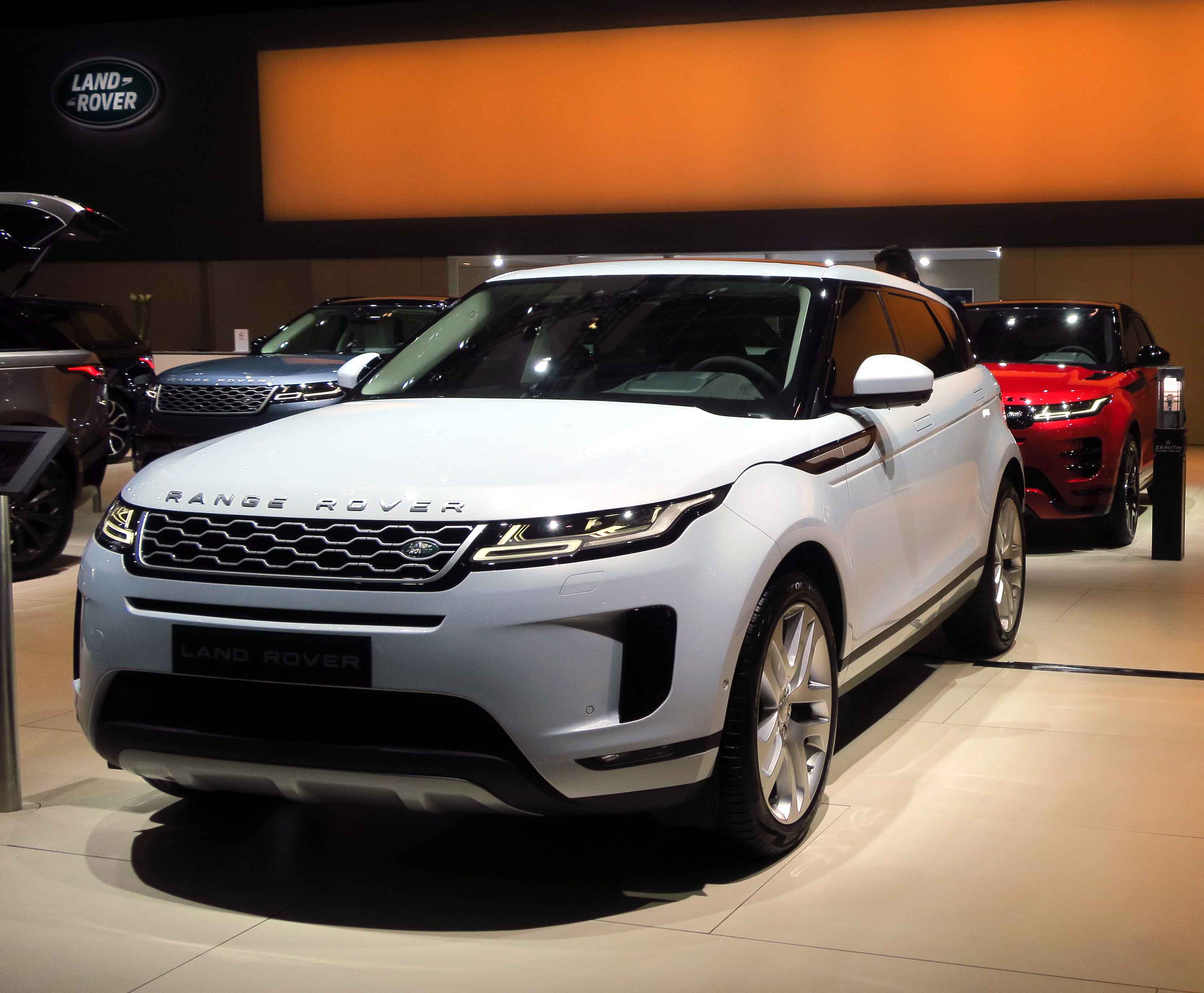
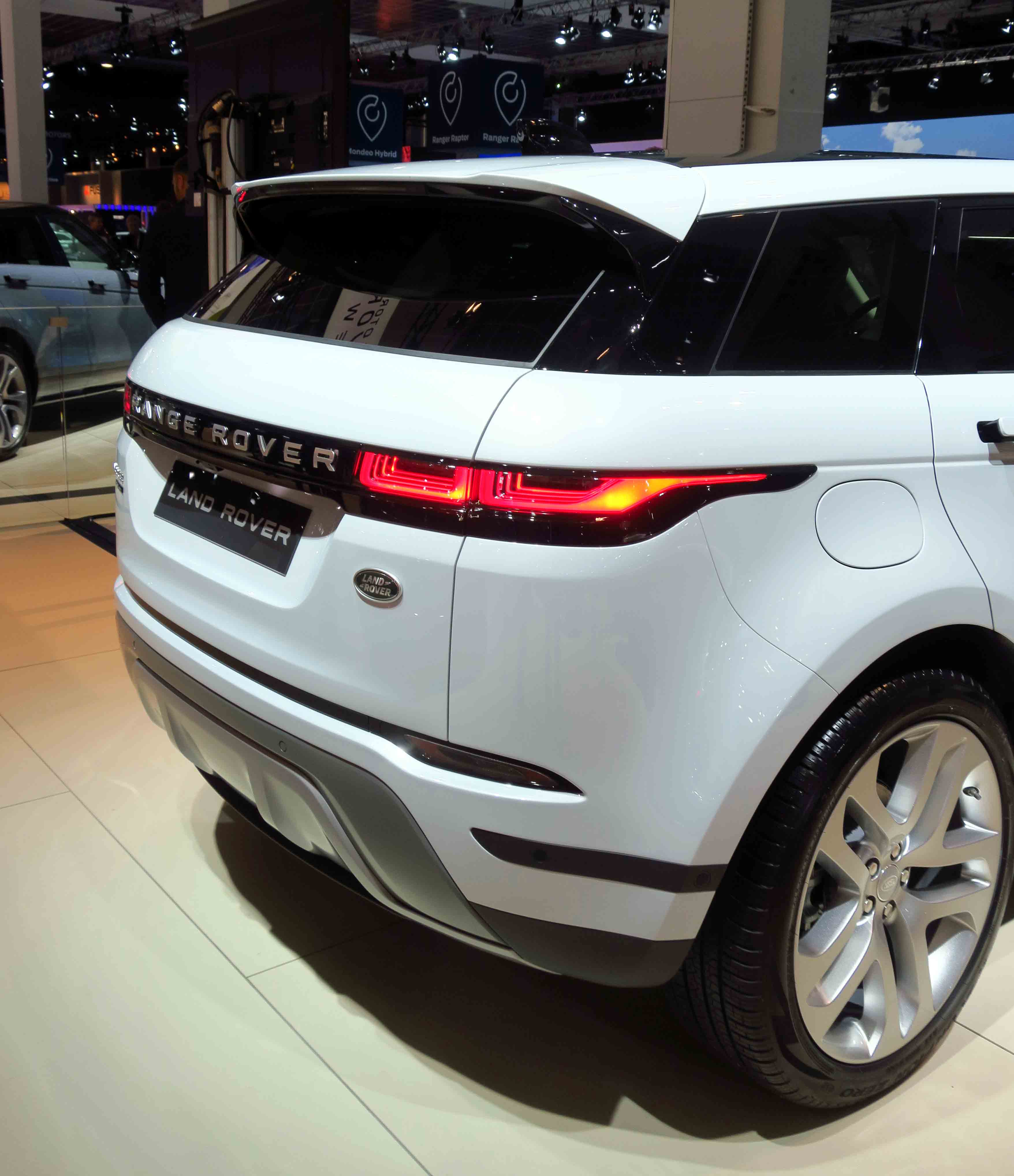
There was news to be seen and admired on the Range Rover show stand at the Brussels Salon, with the sleek and clean Range Rover Evoque. The car has already been presented in London in November last year, but its show debut comes in Brussels.
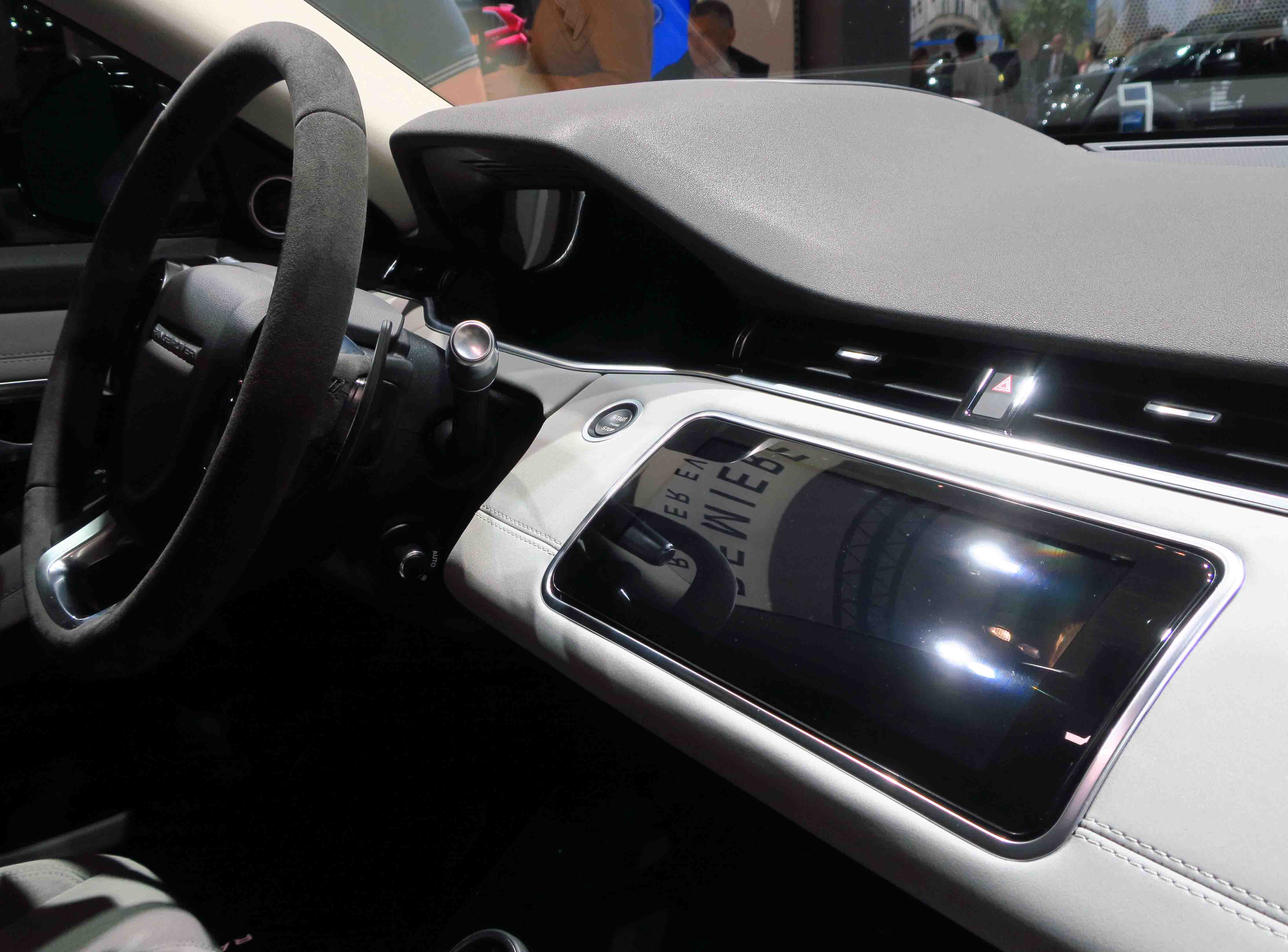
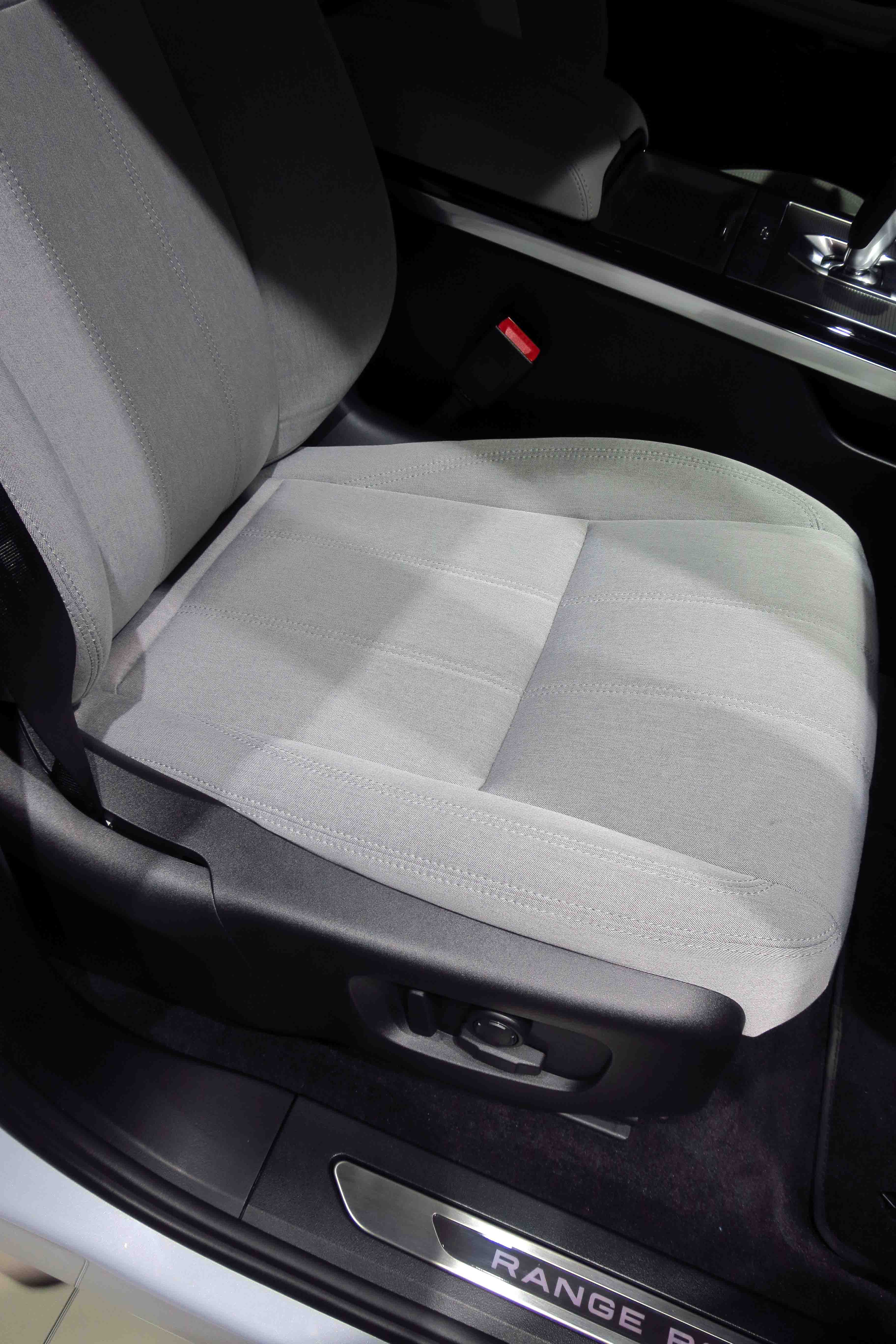
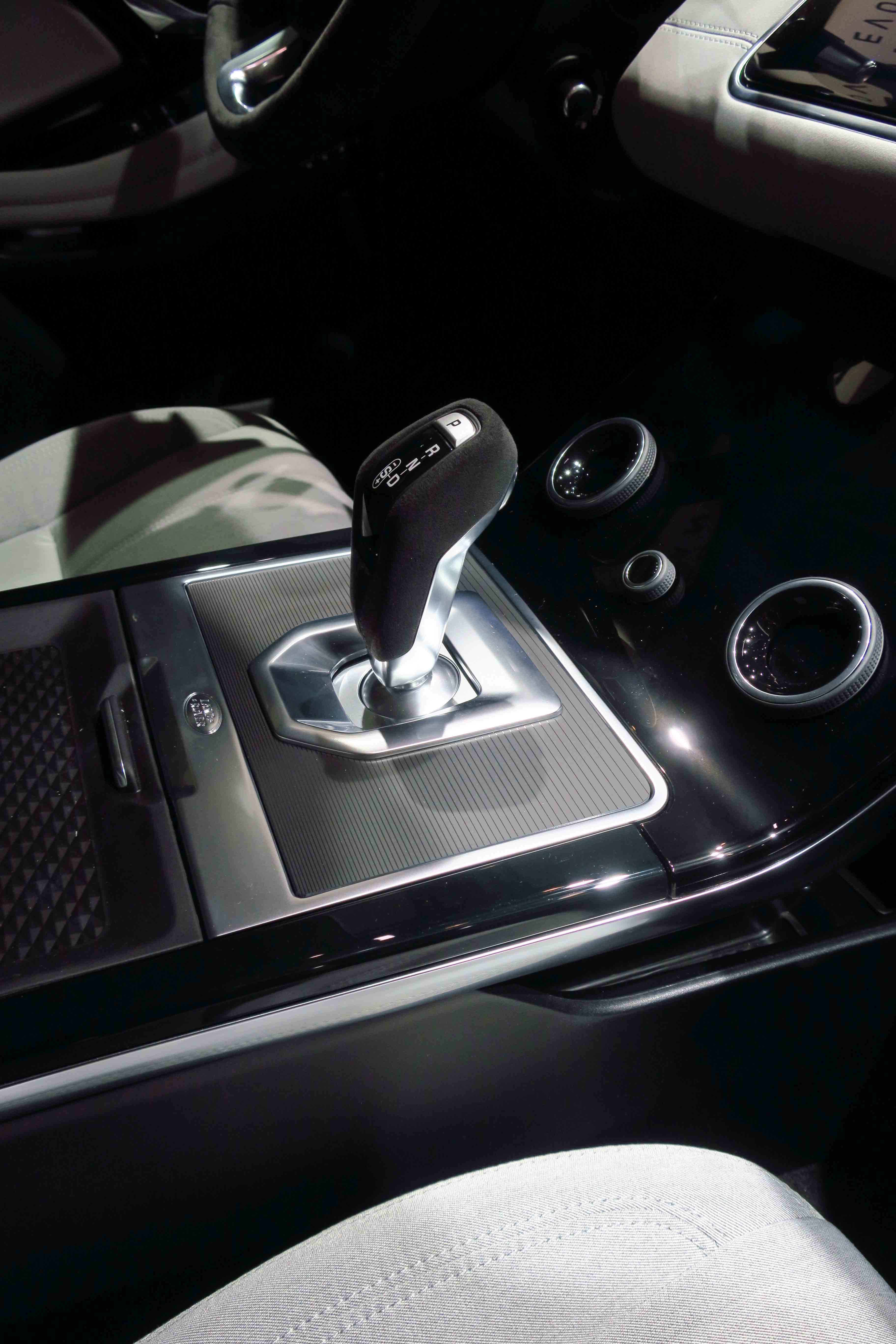
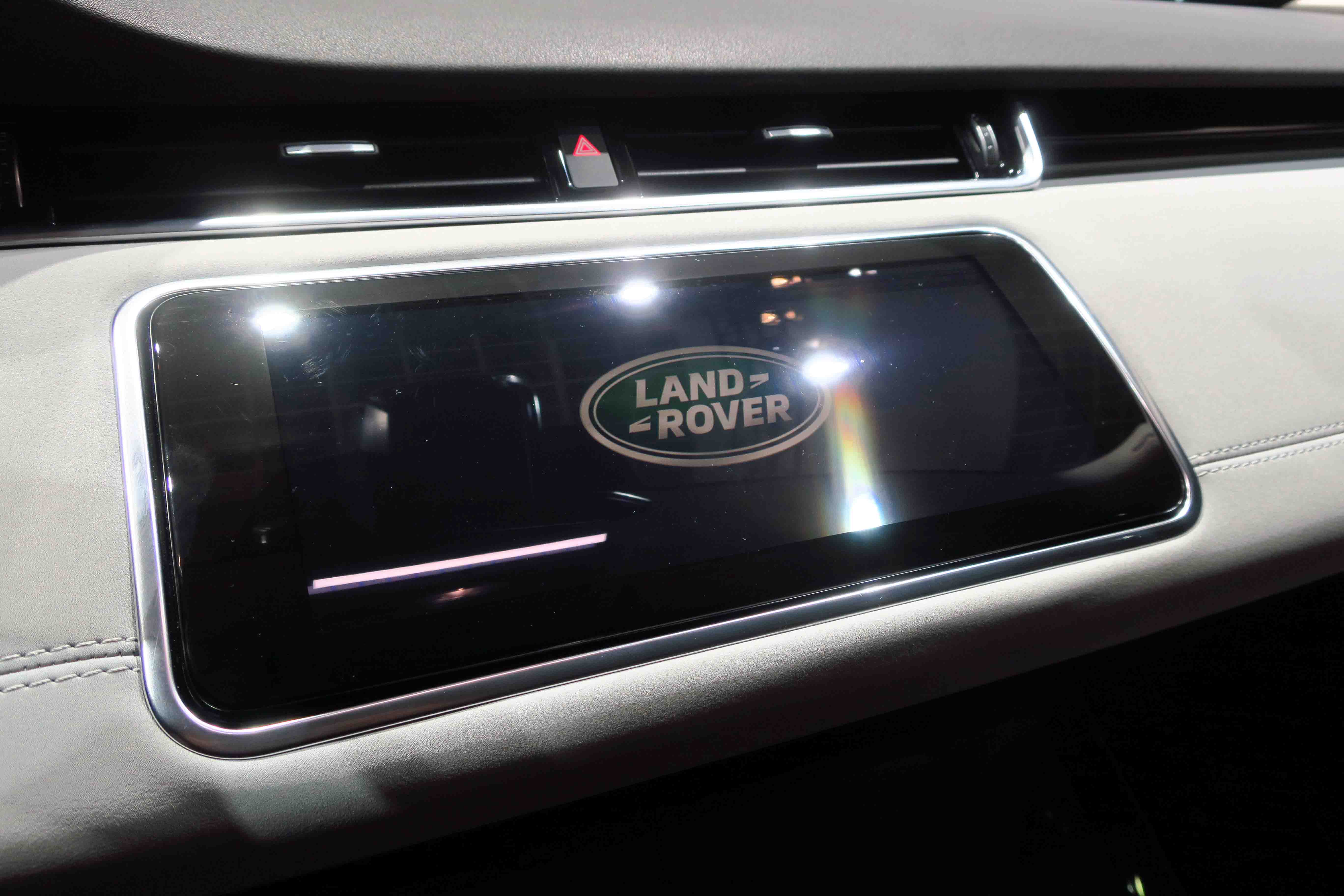
A very refined car, with a pure styling language which we also find in the Velar. Indeed, a modernist exterior design, with an equally clean lined technology-rich interior with new materials crafted from eucalyptus, wool and recycled plastics. (See the seat upholstery below…)
The Evoque is available with a range of efficient four-cylinder diesel and petrol engines and Land Rover’s first mild-hybrid electric technology (MHEV).
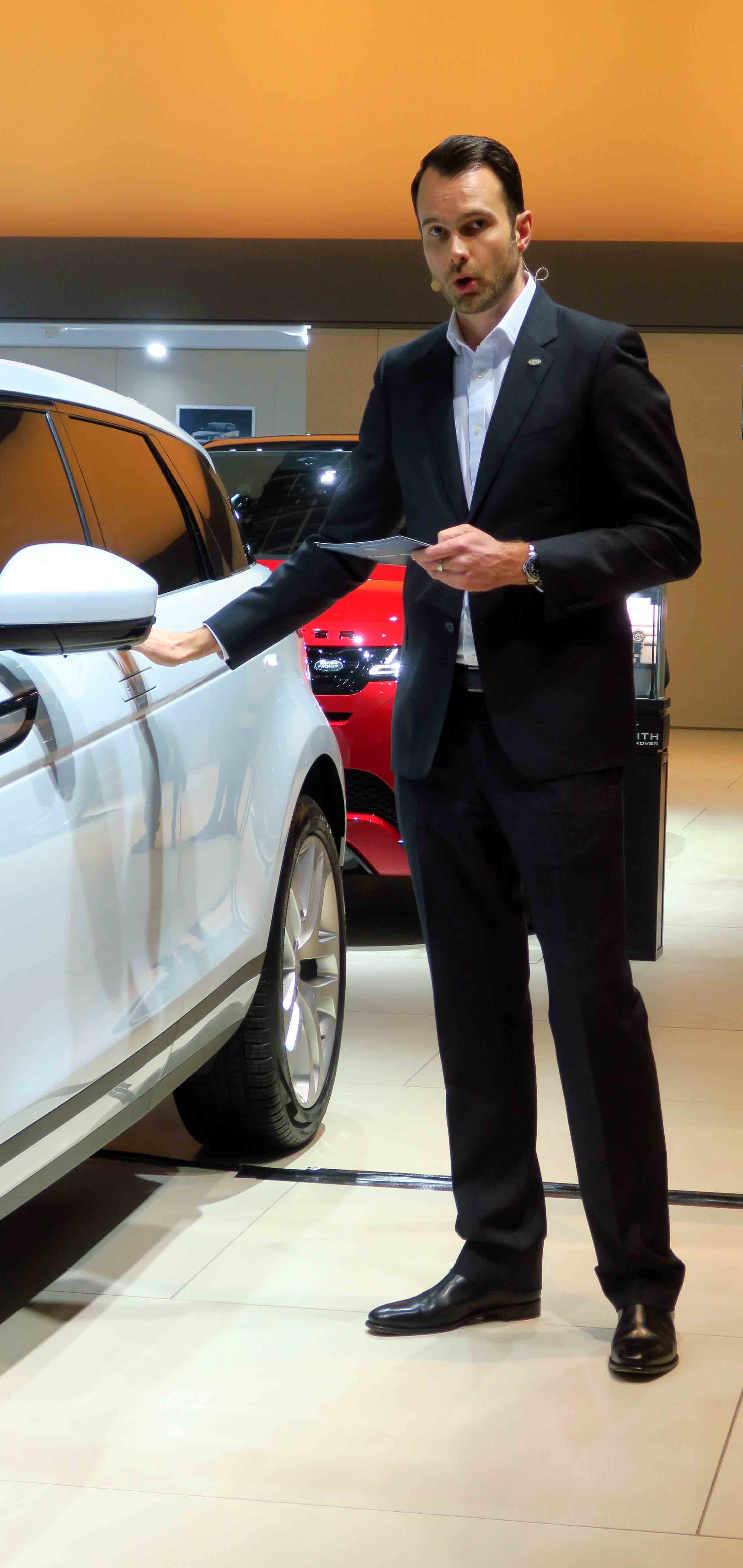
Exterior designer Jeremy Waterman at the presentation of the new Evoque in Brussels…
The Evoque pioneered the luxury compact SUV market, with global sales of over 772,096 and more than 217 international awards, and the new Range Rover Evoque is a quite sophisticated evolution of the original.
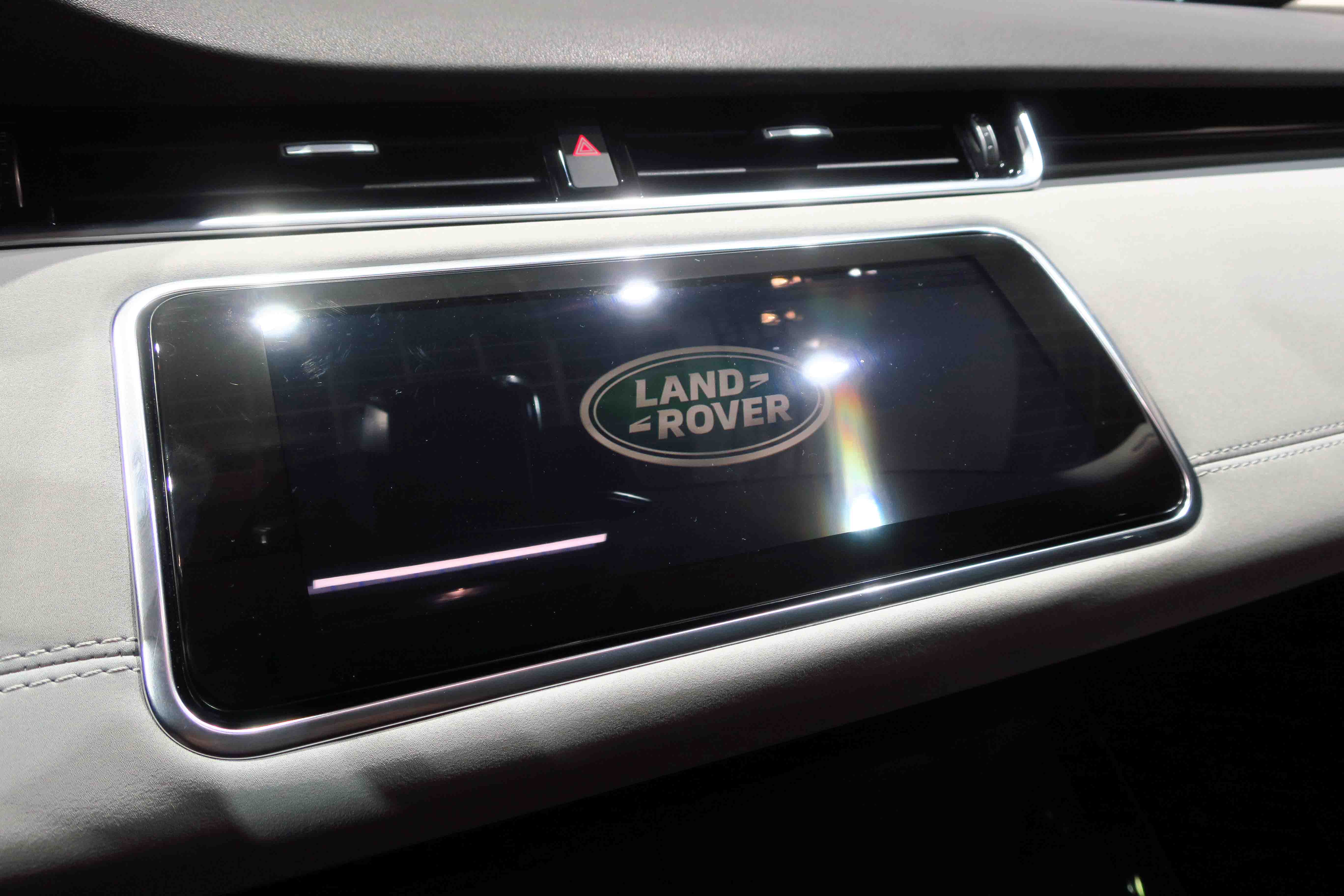
Tech firsts include ‘see through bonnet’ technology and a rear-view mirror that turns into an HD screen displaying a camera feed of what’s behind the vehicle.
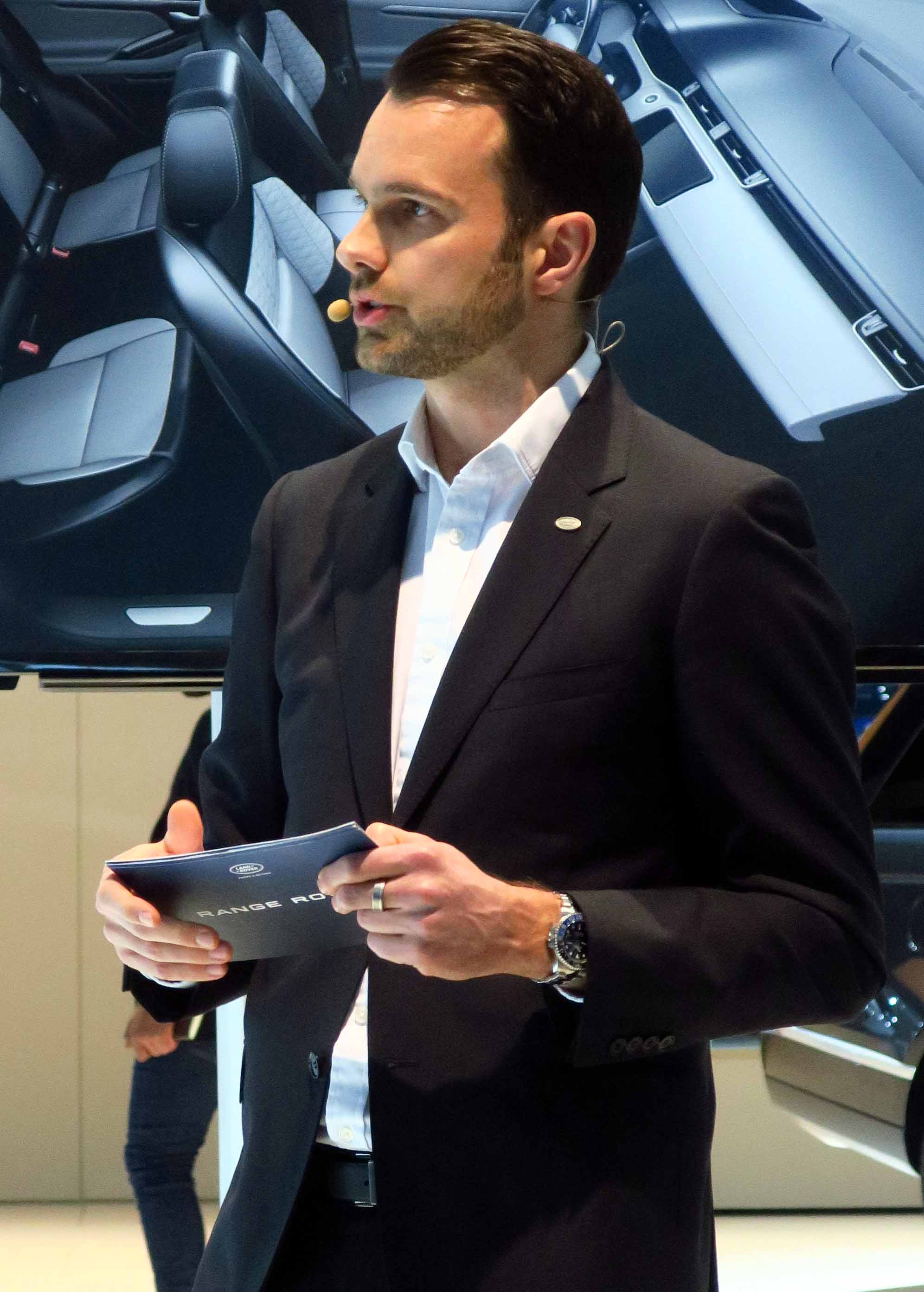
What we most admired was the clean design, and its purist simplicity and modernism. At the presentation, we had a short interview with Jeremy Waterman, Chief Designer, Exteriors Land Rover. Jeremy Waterman is a senior member of the exterior design team working under Massimo Frascella, Land Rover’s Creative Director for Exterior Design. In 2004 Jeremy moved to Land Rover Design in Warwickshire.
In his time at the Land Rover Design studios in Gaydon, Jeremy has been involved in a series of projects working as Exterior Designer on the 2008 LRX Concept and as Exterior Designer / Design Manager on both the 2011 Range Rover Evoque and 2013 Range Rover Sport models. More recently Jeremy has worked closely as part of the Range Rover Velar and Range Rover Evoque design team.
Standing besides the Evoque, I addressed a few questions to Jeremy:
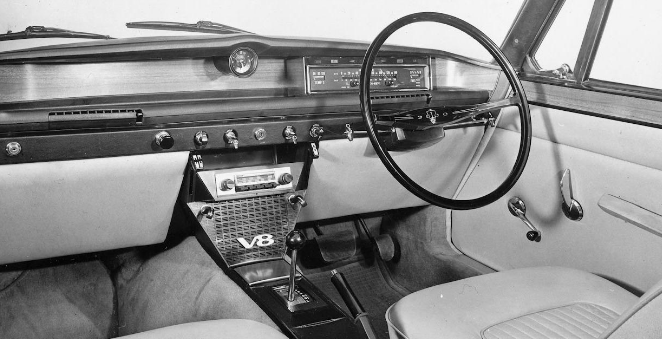
HKTB: “The design language is much more pure, and it remembers me of the original Rover 2000, the simplicity and clean lines, also found then in the dashboard…”I commented.
The dashboard of the iconic car of the early sixties, the Rover 2000, here already with the Buick based V8 3,5 liter engine, found in many Range Rovers since. Its beautiful simplicity and clean lines were a styling benchmark…
YW: “Yes, this is indeed this reductive journey we’re on, taking all the superfluous elements off the car, it does give you this simplicity and timeless quality, which is what we are trying to do. It also gives you that modernity feel, combined, we have to do all the precise detailing, we say that the more you pare the design back, the more you have to have the elements that are left back precise, so with our great engineers we worked very well together to get a very luxurious, modern and sophisticated product. But it still got the character of the original Evoque, the sideview and the proportions.
HKTB:“The car was a success”…
YW“Yes, we still love that car, but this one is more is more modern and sophisticated.”
HKTB: “Who actually had the idea originally to make the small window?”
YW: “Actually the design team, as a result of rising waist and falling roof, you end up with that very pillar-box rear window. But without it, it wouldn’t have that character. It made the car really, with that visual robustness and the wheel at each corner, you have to remember, it was a very different proportion when this Rover first came out, but as we know it just worked.”
Yeremy Waterman continued: “It also brought youth into the brand, and it gave the customers a platform to start into the larger vehicles, we are very proud of what that car did. This one equally is a step on, the technology and as you say the interior, more car, more sophisticated, and this with the technology and the increased legroom; when you see the ground view, the deletion of the bonnet with the cameras, it is just fantastic…”
HKTB: “Thank you very much”
YW: “Thank you very much, it was a pleasure to meet you!”
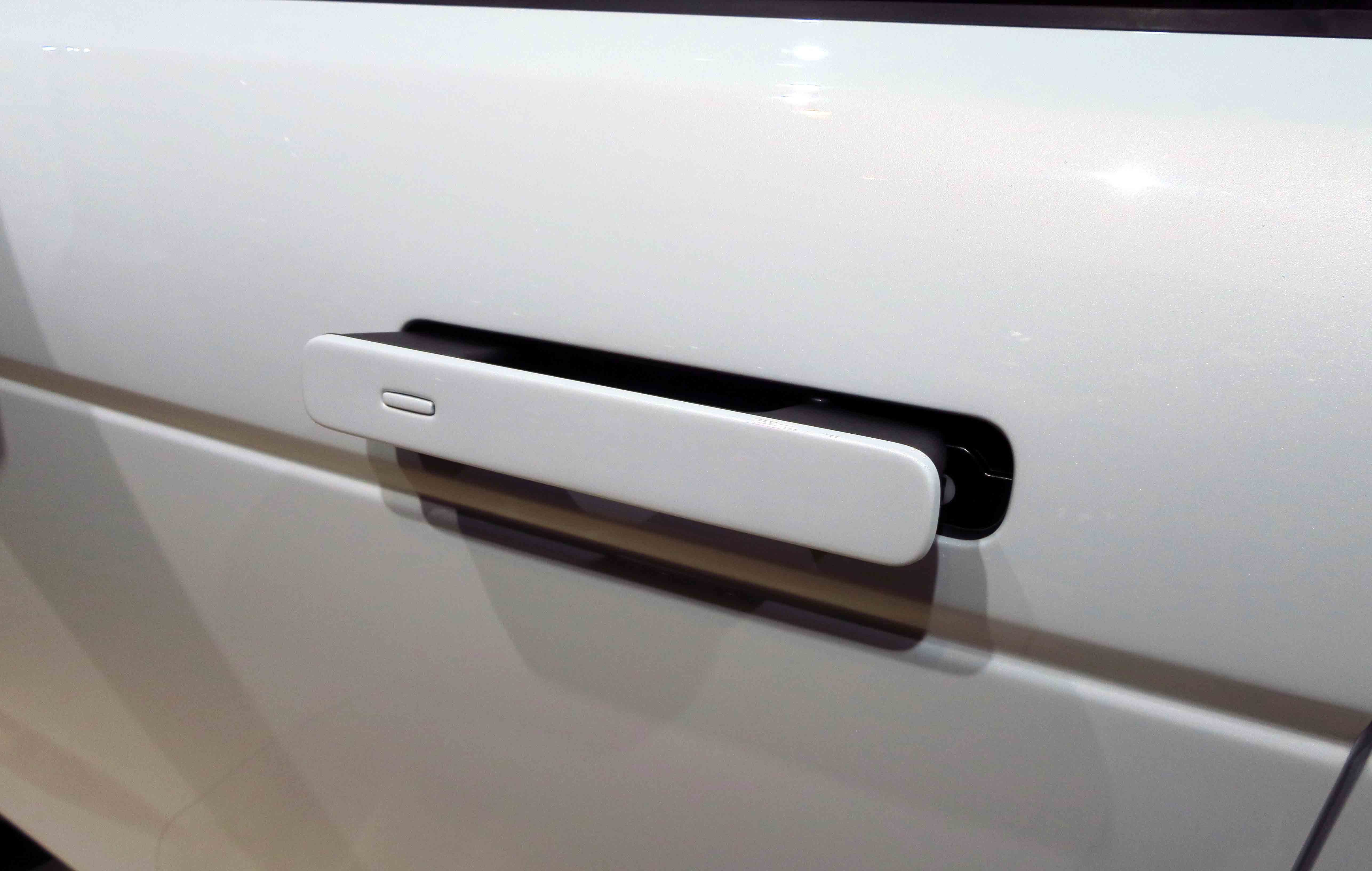
We show you here some photos of this elegant and refined Evoque, and needless to say we are very keen to lay our hands on one in the near future…
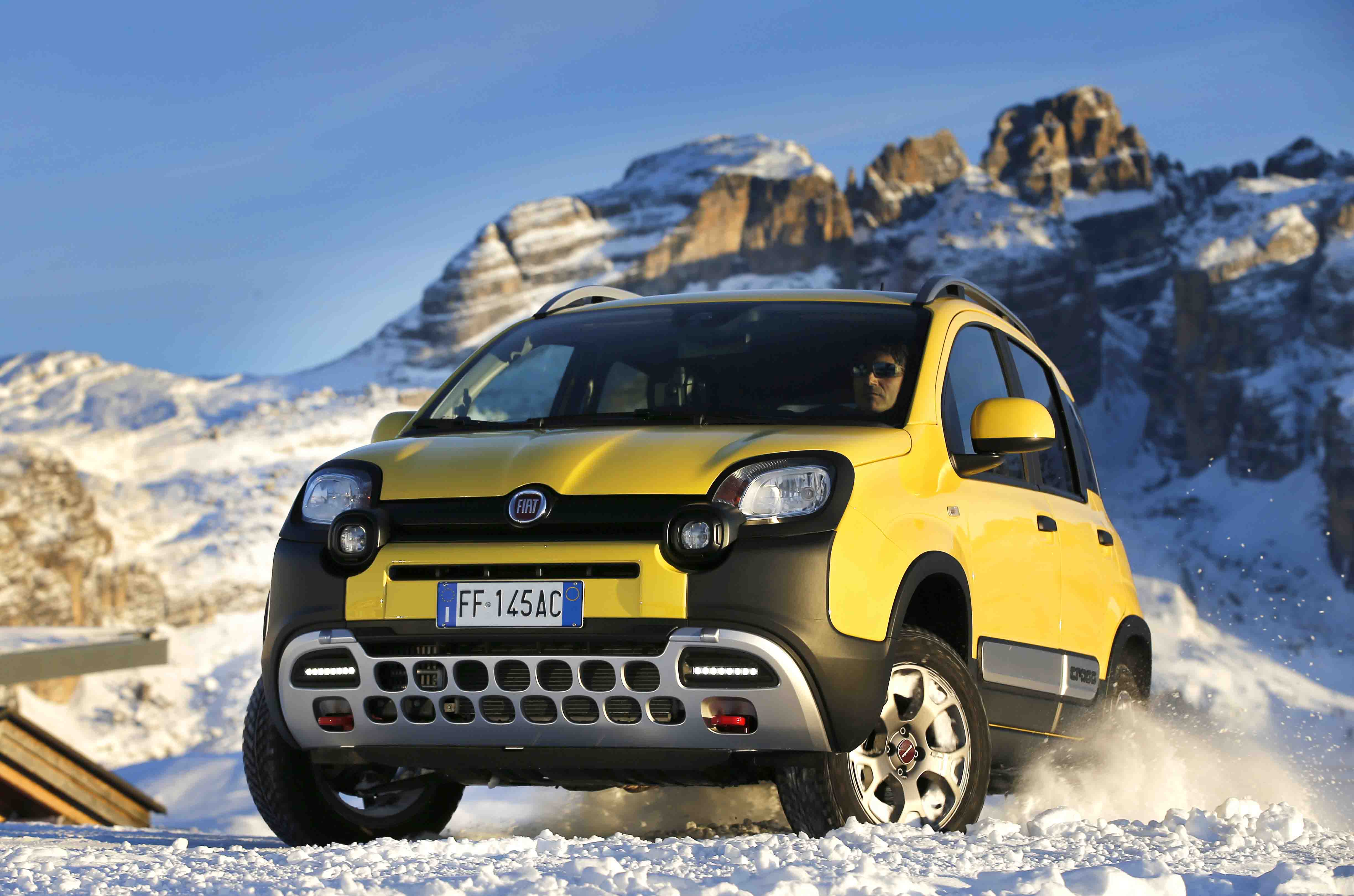
Fit for wintery weather: the award winning Panda Cross…
Presently we are driving a smooth and refined 1,4 liter Fiat Tipo Hatchback, and are impressed by its many qualities. It makes you again clearly realize that FCA products are going from strength to strength in engineering excellence, workmanship and driving pleasure.
These thoughts just led us to focus here on the iconic Panda, which has been making its mark in the auto world for 30 years now. It has had some impressive firsts: it was the first city car to have 4WD technology, the first city car to reach an altitude of 5,200m and attain the Everest base camp, as well as being the first natural gas fuelled city car to be produced on a large scale.
Just recently the Fiat Panda Cross has once again won the Crossover category in this year’s 4×4 Magazine ‘4×4 of the Year 2019 awards’. Judges praised it for its lively engine, traction finding ability and fun factor, never failing to put a smile on their faces. Alan Kidd, editor of 4×4 Magazine, commented “I don’t think there is any vehicle that won its class so consistently down the years, as the Panda Cross. It has been wonderfully consistent in what it offers – while also getting better all the time.”
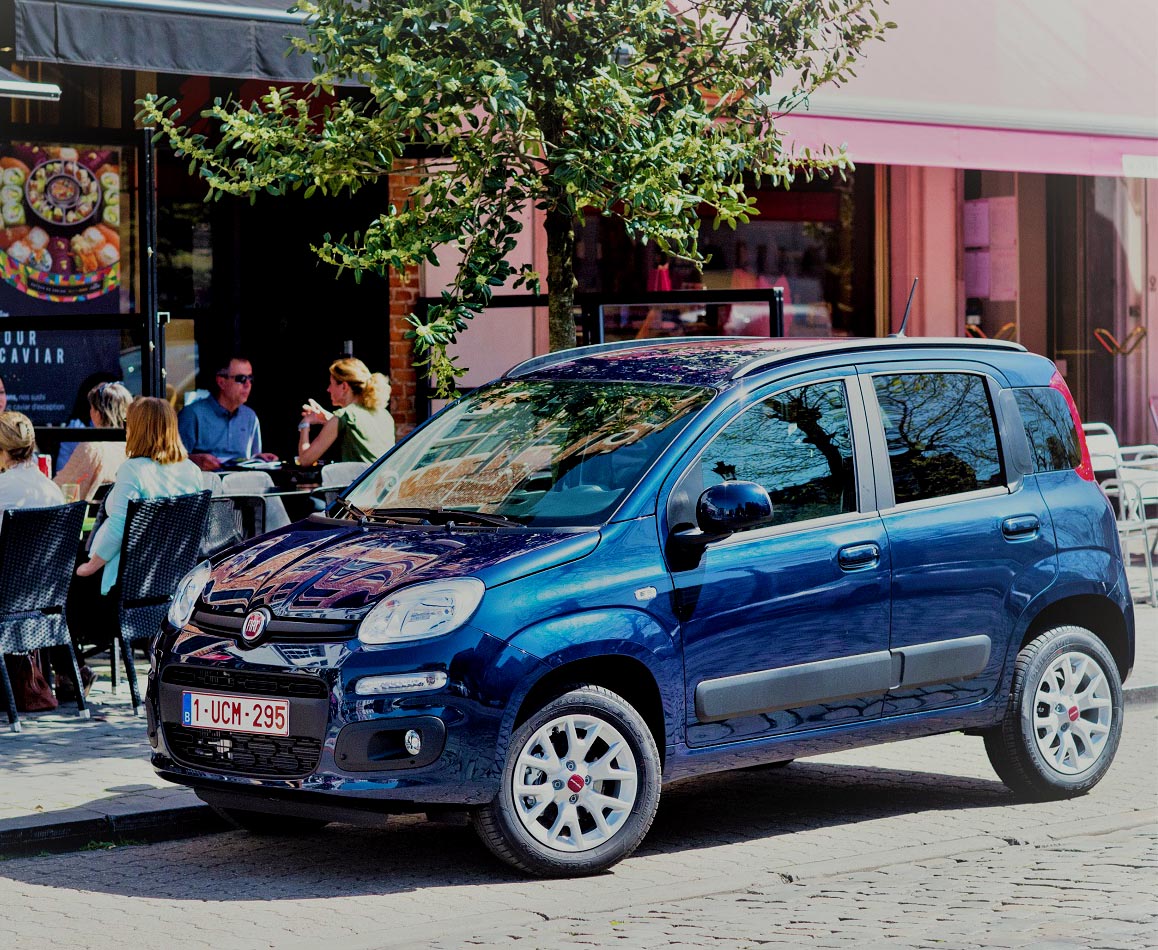
Green and versatile: the Panda CNG… emitting just 97 g / km CO².
Dominique Fontiginies, the dynamic PR Manager of Fiat Chrysler Automobiles Belgium, pointed out today in his press release that with more than 750,000 natural gas vehicles sold in Europe, Fiat Chrysler Automobiles is the undisputed market leader in CNG technology. Rightly so, as one knows that the cars with CNG engine (operating on natural gas) are currently the most effective solution to reduce pollution in the city and to strongly reduce CO² emissions. Indeed, with this type of engine, CO2 emissions are as much as 23 percent lower than with petrol engines, while the emission of fine soot particles is virtually nil.
He presented in today’s release the merits of the Panda CNG, powered by a 900 cc two-cylinder turbo petrol engine with 70hp, emitting just 97 g / km CO². This four wheeled city hero is by no means Spartan: The Panda, equipped as standard with ABS brake system, ESP, 6 airbags and a tire pressure control system, also offers a very ergonomic seating comfort and equipment that includes Uconnect Bluetooth radio, central door locking with remote control, air conditioning and electric windows in front.
The Fiat Panda CNG is available on the network of official Fiat distributors from € 13,490 VATI (€ 13,044 in Luxembourg).
In this wintery weather, we would indeed like to drive the in February or March the cute and very able 4 x 4 Panda Cross, and drive into spring behind the wheel of a Panda CNG… and we join here above the sunny picture joined by Mr. Fontignies in his release!
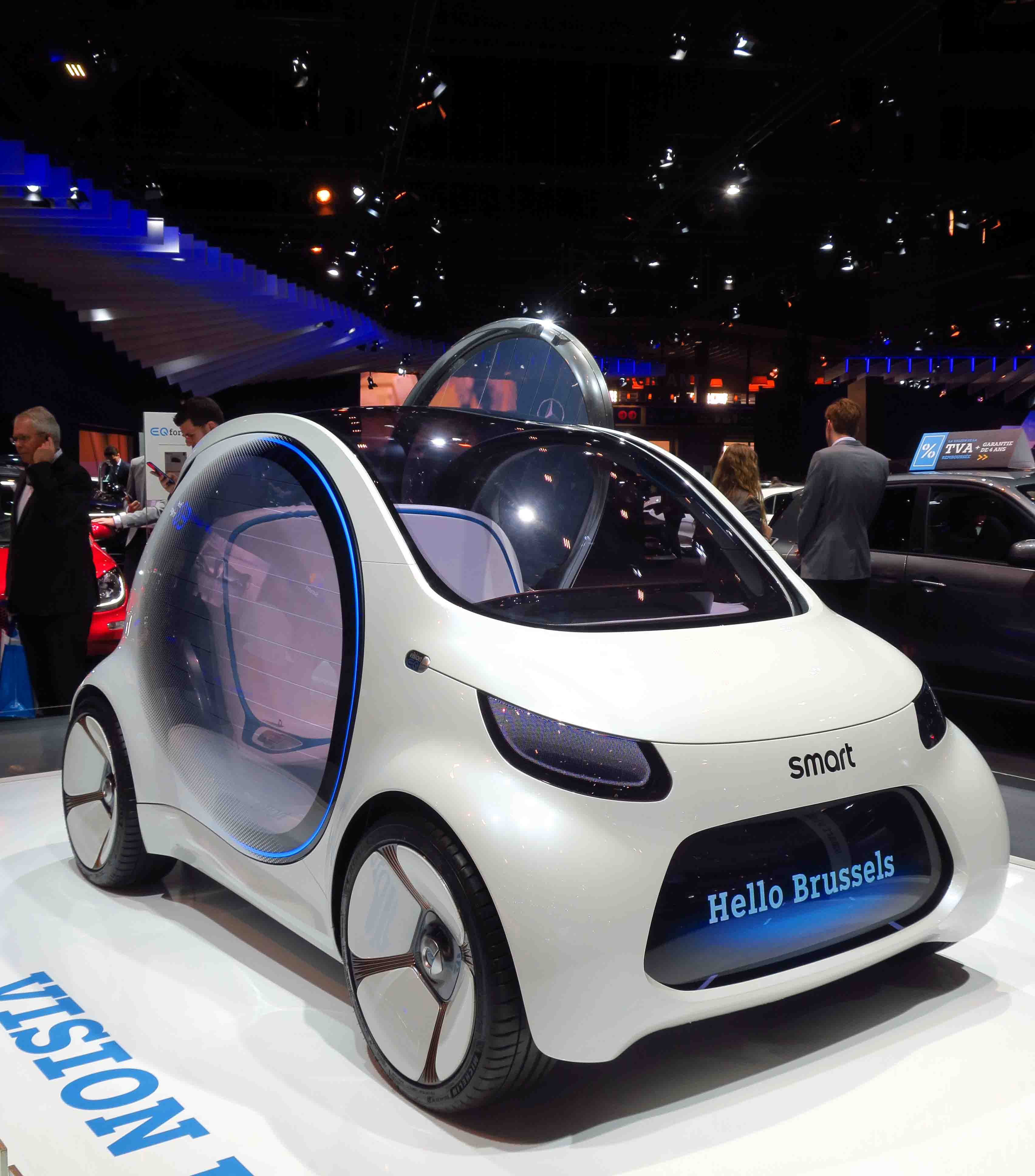
We will treat you in the coming days ans weeks to an extensive report on the Brussels Motor Show, with some notable (world) premieres like the Range Rover Evoque, for instance. We will also let you listen in with some interviews, notably of the designer of the Evoque, and also celebrate 60 years of Mini with further interesting encounters. Driving into the future autonomously on e-power is also very much in tht foreground, like this Smart Vision EQ fortwo you see here on the photo. It is designed with car sharing in mind, and takes its passengers whenever and wherever they want to go, and it doesn’t even have a steering wheel or any commands…
In 2019, Porsche will once again be found in Palace 1 of Brussels Expo, exclusively reserved for the prestigious Dream Cars exhibition. This year this ‘expo-in-the-expo’ will be held throughout the Brussels Motor Show. After 2018, a commercially quite successful year with no less than 3,222 Porsches were registered in Belgium, Porsche presents the eighth generation of the mythical 911 in a European premiere.
Two versions are shown to the Belgian public: the 911 Carrera 2S and the 911 Carrera 4S. The impressive Porsche booth, 600 m2 in size, will undoubtedly become the main attraction of Palace 1.
11 cars on the stand
The three 911 type 992, undeniably the stars of the 97th Brussels Salon, are in good company.
The Panamera GTS and Sport Turismo are pinnacles of GT comfort, style and speed…
Thanks to the 718 Boxster & 718 Cayman, Macan, Cayenne and Panamera, the entire Porsche range can be admired from 19 to 27 January.
Soon we tell you more about the magnificent 911 in our columns, so stay tuned!
Lexus has always been synonymous with luxury and hybrid propulsion. But besides stunning technology and design, there is also reliability. This bodes well for our 2012 Lexus CT 200h which will soon join our stable and we will use with pleasure for years to come. But did you know that Lexus was chosen as the most reliable car brand in a survey of ‘Test Aankoop’ at no less than 9,000 Belgians and at the French consumer organization ‘Que Choisir’, which was based on a survey among 37,000 consumers? The brand also came first again in the ‘J.D. Power 2018 Vehicle Dependability Study ‘of most reliable brands. It is also worth noting that 99.9% of all models that Lexus sells in Belgium are self-charging hybrids.
The elegant UX 250h, aiming at the urban explorer, and a trendsetter in its class…
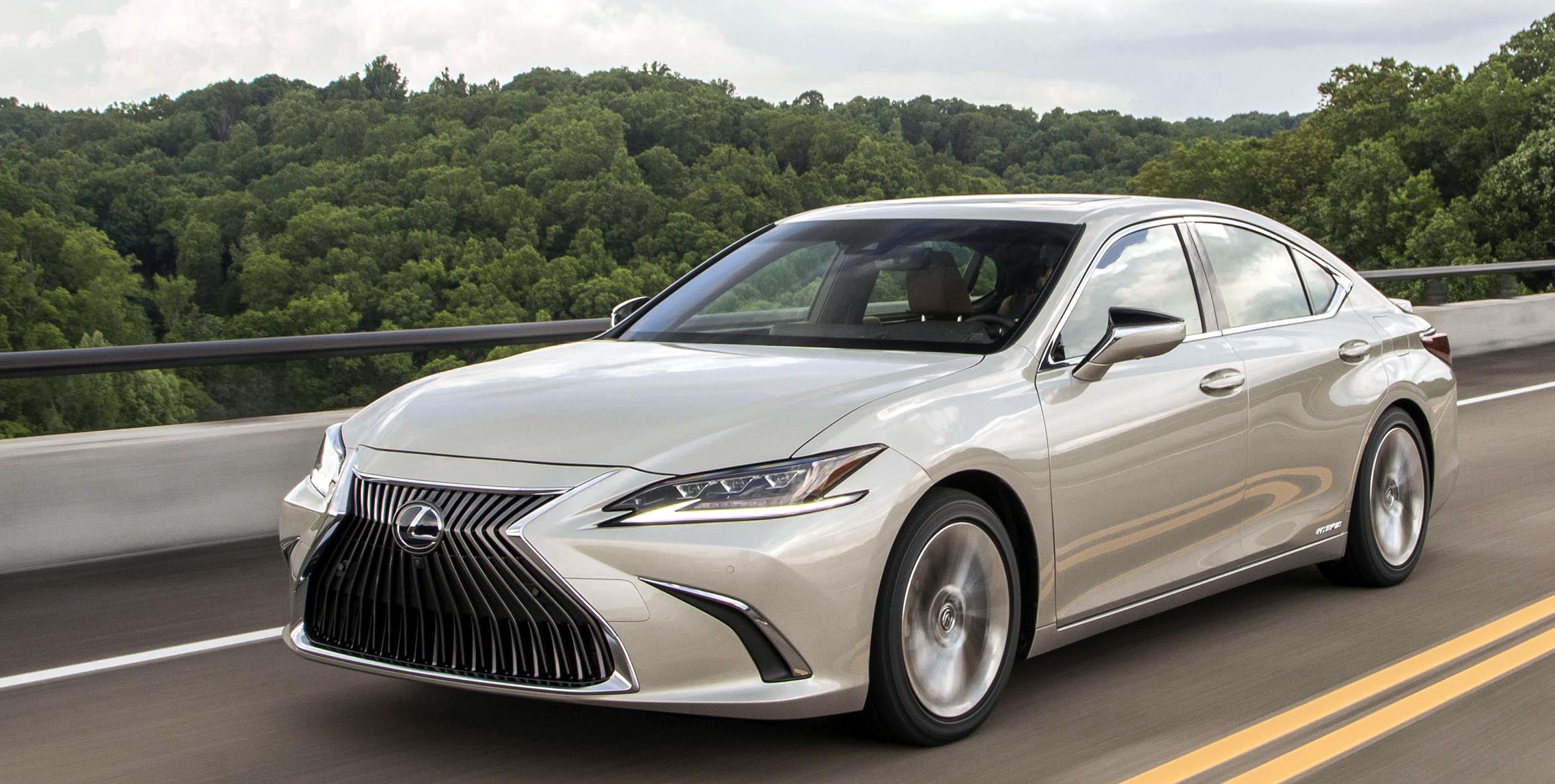
Lexus will present in Brussels the seventh generation Lexus ES 300 h as a European première. It has besides new styling also a completely revised and new GA-K (Global Architecture) platform, and has the 2,5 l engine mounted in its hybrid system. It is also elected by the Euro NCAP as Europe’s safest car in the Hybrid and electric cars/big sedans category. Its low CO2 emissions make it very interesting tax-wise.
The beautiful Lexus RC has some interior and dashboard refinements, introduced at the Paris Salon, and last but not least we will stand eye to eye with the UX 250h, aiming elegantly at the urban explorer. It is the first Lexus to use the GA-C or Global Architecture Compact platform.
It is all to see at the Palace 4 of the Brussels Motor Show, just take a look at the photos for now…

















 Autoprova - for the Connaisseur