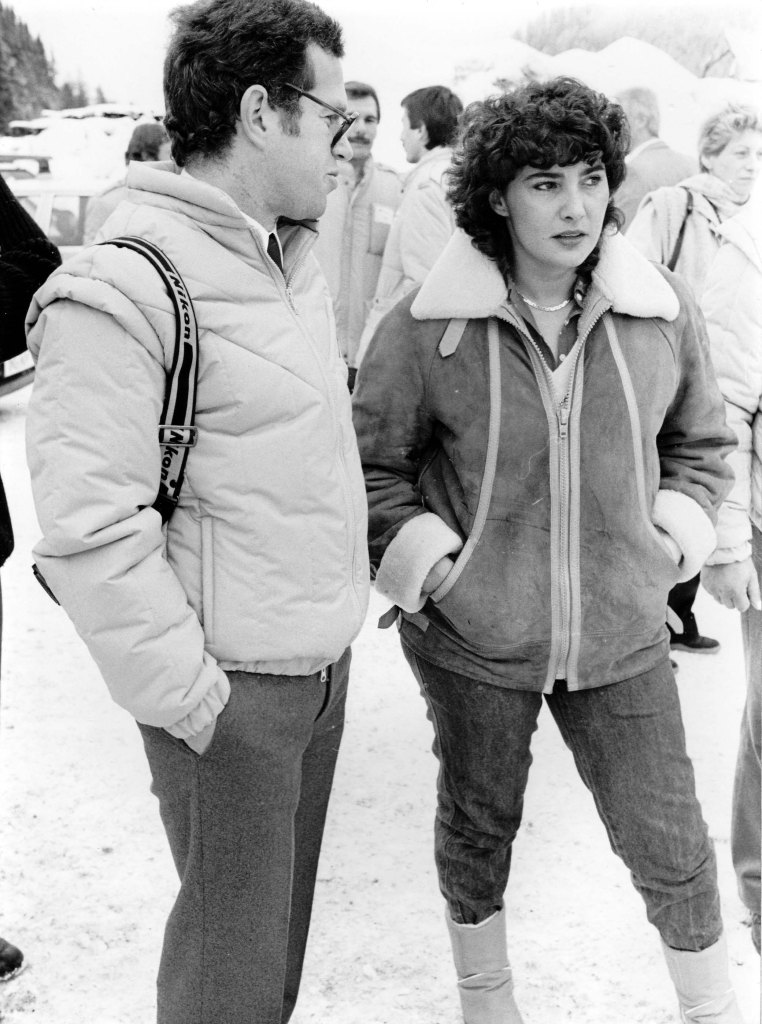
We were there: your servant in conversation with Michèle Mouton in Sankt Moritz, on December 8, 1982…
Your servant was already active as a freelance car journalist from the mid-seventies of last century, so we witnessed up close the birth of the Audi 5-cylinder engines and the (rally) cars powered by it were quite familiar. When we were telling you the long career of Audi’s 5 cylinder engine, we told you how your servant remembered a drive behind the wheel of the Audi 80 Quattro with this magnificent engine. Just look at our pages on this site, and more especially https://autoprova.be/2016/09/18/sweet-memories-our-drive-with-the-5-cylinder-audi-80-5e-quattro-in-sankt-moritz/
This memorable test drive of this Audi 80 5E Quattro took place in Sankt Moritz, on 8 and 9 December 1982. For the assembled international journalists, Audi had also organized a demonstration run with the Quattro Rally Cars, and had brought Michèle Mouton and Stig Blomquist to the venue.
You see me here chatting with Michèle Mouton before having a demo drive with her at the wheel in her Quattro Rally machine…
Here I stand proudly as a 23 year old behind the driver’s door of the Alfa Giulia Super, with my nephew looking into the ravine of the Great Saint Bernard pass…
There are epic moments, already in the young life of a car enthusiast. I was barely 23 at the time, when I accompanied my father on a drive to attend the 1970 Monza Grand Prix. My father had a Olive Metallic Green 1,6 Giulia Super press test car for the occasion, and I have been smitten for Giulia’s and Alfa’s ever since, as the drive was so magnificent.
My father had his faithful Leicaflex with the 90 mm Summicon – R f 1:2 lens along, and this is the perfect camera to make impressive shots. You see them here.
My father and I had also taken my nephew along, and so we went on our drive, with me doing most of the driving, as my father found that I understood the car very well. Of course we were keen to let the Alfa perform. This meant cruising on the German Autobahnen and the A27 through Switzerland and the Italian Autostradas at speeds between 150-160 km/h in fifth gear, when the law allowed it of course.
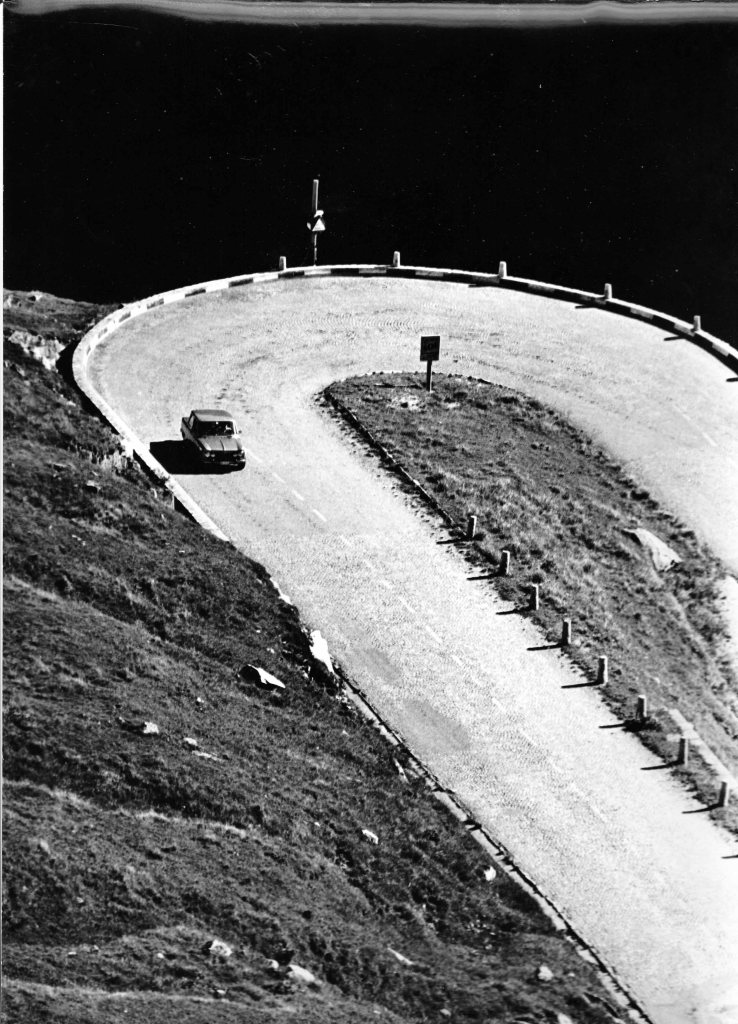
On our route, we decided not to take the Simplon Tunnel, but take the historic road winding over the Great St. Bernard pass itself, which lies a few hundred metres from the Swiss border with Italy, and is only passable from June to September.
Not only was the old classic pass road a dream for the Giulia, with its pleasantly short second and third gears, and I gladly helped the somewhat weaker synchromesh of the gearbox with expert double declutching. Descents were also epic, as this Giulia had already four disk brakes…
I still recall the eager sound and crisp exhaust roar of the 1,6 litre twin cam engine, and, as said, am totally smitten by Alfa’s ever since.
The Monza Grand Prix was rather dramatic. We arrived in Monza on the fifth of September, going down to the track after having got our press permits and parking voucher for our dear Alfa. Only to hear that Jochen Rindt had killed himself during the practice session on that day. He spun into the guardrails after a failure on his car’s brake shaft. He was killed owing to severe throat injuries caused by his seat belt. He was way ahead in points over the rest of the F1 field, so he became the only driver to be posthumously awarded the Formula One World Drivers’ Championship.
The Great Saint Bernard Pass was gruesome in winter, so prayer to our Lord was certainly appropriate…
We show you the photos, and dream away with you on the joys of holding the wheel of this magnificent four door Gran Turismo, which the Giulia was and still is right to this day…
Your servant would love to make a repeat edition of this drive on the Great Saint Bernard Pass with today’s Giulia… that would be truly great!
I found a photo of the VW, with my eldest sister – she is one year younger than me – posing in front of it, in July 1969. She lives happily married in the US and is a busy mother and grandmother now. Note how the simple and clean Mary Quandt fashion of the end of the sixties looks even very smart today…
I had removed the hubcaps of the car, put a circular racing number background to camouflage the somewhat scratched door. The former owner Johan Anthierens has also damaged the side board slightly, but neverteless, with our cosmetic changes, the VW looked very preppy and the paintwork was overall still excellent!
In Corona times, some days are spent delving into archive boxes, and of course, treasures are found. I will show them in several reports here on my site.
They tell us about unique moments, and also learn us also how fast time goes…
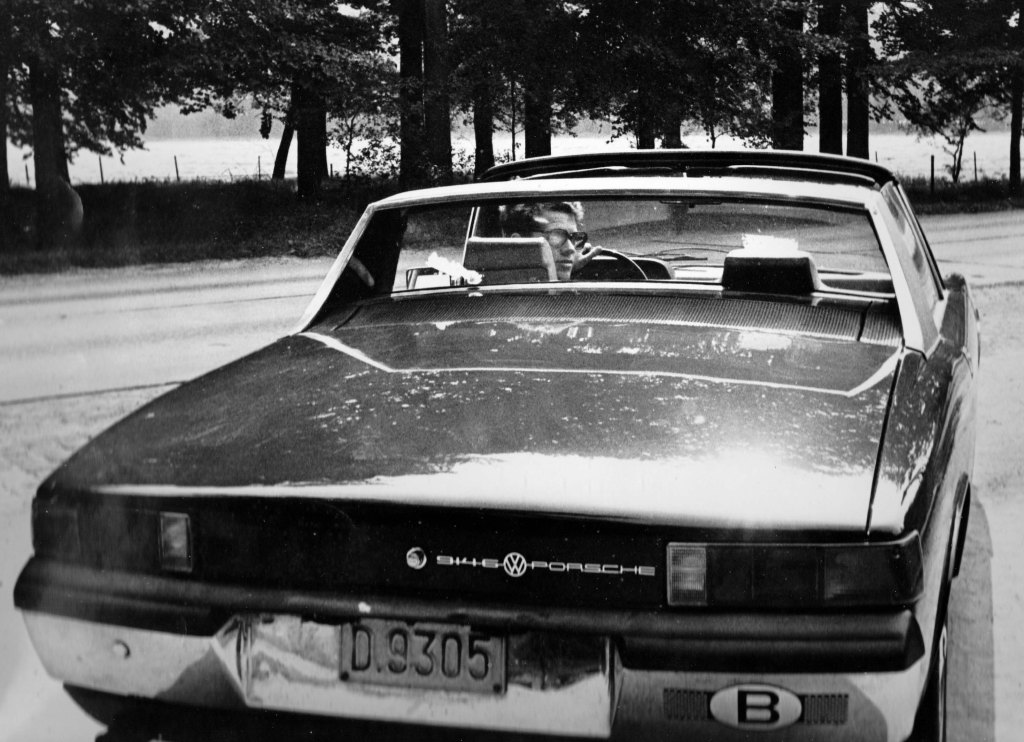
Here above you see a photo of me in my early twenties, behind the wheel of the much underrated 914-6 VW Porsche, with its 2 litre six cylinder boxer, a necessary ingredient in making it a “true” Porsche.
We drove quite a few Porsche test cars from the D’Ieteren press fleet, here you see me at the wheel of one of the earlier 911’s, which I loved very much and was able to drive to their limits without the slightest mishap. Indeed, I never ever lost control of these early 911’s. I still love them… and their characteristic road manners, which still call for a talented and sensitive driver to master them. Note also the absence of headrests!
Liane Engeman, from the race track to photo modelling for Alfa…
In the first part of our story where Alfa Romeo pays tribute to its glorious queens of speed, we took you back to the ‘30s, but now we guide you to more recent times. First we start off with a good looking racing driver, who later became even a …photo model for Alfa: The super-fast Dutch driver Liane Engeman, she excelled herself in the Toine Hezemans team’s Alfa Romeo 1300 Junior.
Liane Engeman with Toine Hezemans…
The photo here above let’s you understand fully why she became later an iconic model for Alfa…
Then there is Christine Beckers, who I came to know personally. Her heroic days were in the ‘60s, the era of the Alfa Romeo Giulia Sprint GTA. Its results, victories and importance in Alfa Romeo’s history are well-known. Less known, however, are the events of the (supercharged) Alfa Romeo GTA-SA. Prepared in ten units for Group 5, it was equipped with two hydraulically operated centrifugal compressors that boosted output to 220 hp, resulting in a top speed of 240 km/h.
It reached peak performance, but as historical test driver from Autodelta Teodoro Zeccoli explained, the GTA-SA had “an unpredictable boost of power would kick in suddenly without notice, making the SA an unpredictable vehicle, hard to govern on curves or when maneuvering.” One able to govern this ill-tempered vehicle better than any other was the young Belgian driver Christine Beckers, who won in Houyet in 1968 and went on to achieve excellent results the following year: in Condroz, at the “Tre Ponti”, at Herbeumont and at Zandvoort. But there are more heroines…
Maria Grazia Lombardi & Anna Cambiaghi
To follow Maria Teresa de Filippis in the 1950s, the second Italian woman to drive in a Formula 1 race – in as many as 13 GPs – was Maria Grazia Lombardi, known as “Lella”.
Between 1982 and 1984, she took part in the European Tourism Championship with the Alfa Romeo GTV6 2.5, together with Anna Cambiaghi, Giancarlo Naddeo, Giorgio Francia and Rinaldo Drovandi, and helped to bring in multiple titles. She remains the only female Italian driver to have improved her standing in a Formula 1 race.
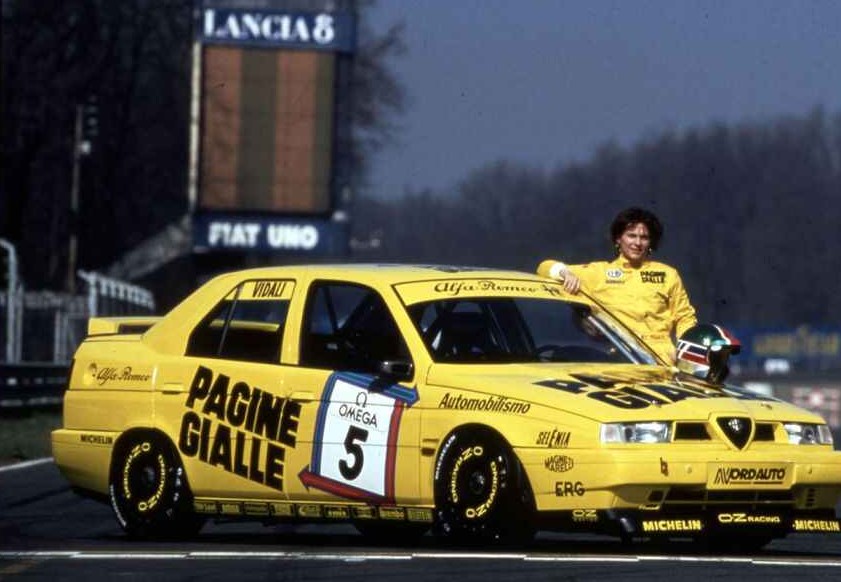
Tamara Vidali
In 1992, Vidali won the Italian Tourism Championship (Group N) in an Alfa Romeo 33 1.7 Quadrifoglio Verde, set up by the brand’s newly established Racing Department. Just as unforgettable is the fully yellow livery of the Alfa Romeo 155 that she drove in the Italian Superturismo Championship (CIS) in 1994.
Last but not least there is Tatiana Calderon.
Born in 1993 in Bogotá, Colombia, Calderon took her first steps in motorsport in 2005, winning a National Championship in the Easy Kart Pre-Junior series. Just three years later, she would become the first woman to win the JICA class of the Stars of Karting Championship East Division in the United States.
In 2017, Calderon became a development driver for the Sauber Formula One team. One year later, Sauber promoted her from F1 development driver to F1 test driver for Alfa Romeo Racing.
We enjoyed reading about all these (very) fast women, and we trust you did too…
International Women’s Day is an ideal occasion, Alfa Romeo found, to put its female racing champions behind an Alfa sportscar wheel into the spotlight. The material they put forward is so abundant and interesting, that we make (at least) a two-part series of it.
We start here with the early, very elegant protagonists, who combined female elegance with panache and excellent racing qualities…
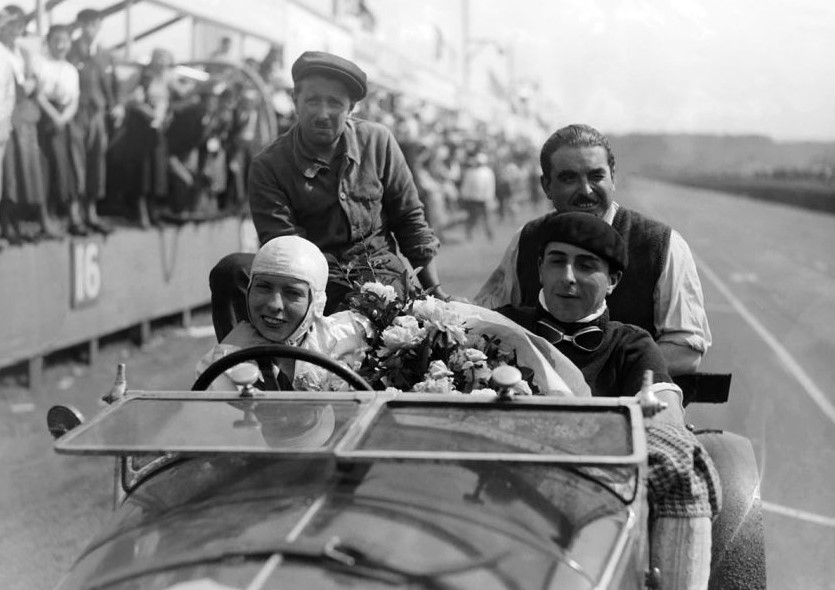
We start here with Odette Siko, you see her elegantly here in the photo above.
She takes you back to the 1930s, where Alfa Romeo asserted itself as one of the main protagonists in motorsport. This was partly down to extraordinary vehicles, but also to drivers who became part of the legend: these were the years of Nuvolari, Varzi, Caracciola and Sommer. The latter won the 24 Hours of Le Mans in 1932 behind the wheel of an Alfa Romeo 8C 2300, but the Alfa Romeo 6C 1750 SS driven by the striking Odette Siko finished fourth overall and won the 2.0-liter category! A young Parisian, Siko quickly became one of the stars on the track, displaying her elegance both in the paddock and in her racing performance, often accompanied by another female French racer whose path also crossed Alfa Romeo’s several times: Hellé Nice.
Hellé Nice, see the photo here, was a model, acrobat, and dancer. Her real name was Mariette Hélène Delangle, but was more commonly known as Hellé Nice. Renowned for her outgoing personality, Nice was good friends with the Rothschilds and the Bugattis. She raced in Europe and America and became one of the first drivers to display the logos of her sponsors on the bodywork of a single-seater racing car.
She took part in the 1933 Italian Grand Prix at Monza in her own 8C 2300 Monza; in the same race, Campari, Borzacchini and Czaikowski tragically lost their lives. In 1936, she won the Ladies Cup in Monte Carlo and took part the São Paulo Grand Prix in Brazil, where she fell victim to a dreadful accident, then miraculously came out of her three-day coma.
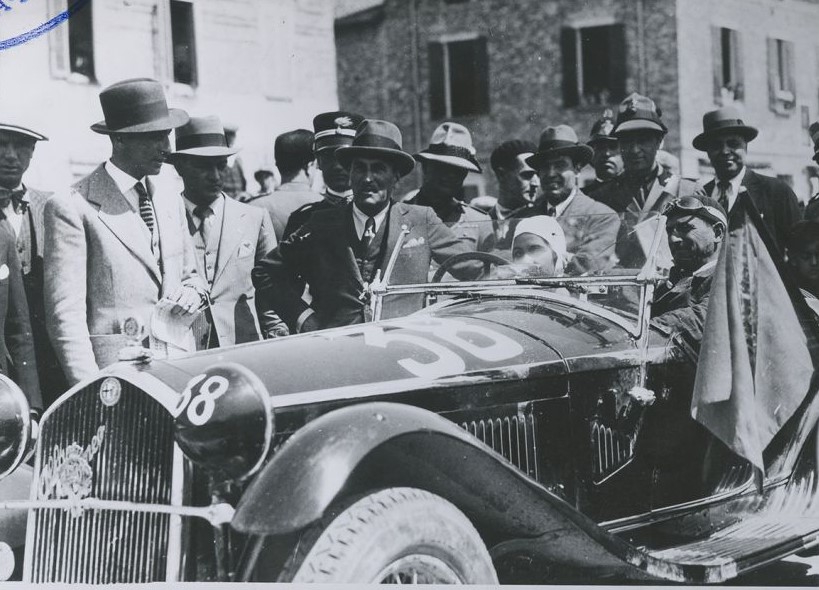
Further on, there was Anna Maria Peduzzi. In her time, the years of Scuderia Ferrari marked a crucial chapter in Alfa Romeo’s history. The drivers of the “Prancing Horse” included Como-born Anna Maria Peduzzi, the wife of driver Franco Comotti, who was nicknamed the “Moroccan”.
After her debut aboard her own Alfa Romeo 6C 1500 Super Sport, which she had purchased from Ferrari himself, Peduzzi almost always raced alone and only occasionally with her husband. In 1934, she won the 1500 Class at the Mille Miglia and, in the post-war period, raced in the Alfa Romeo 1900 Sprint and the Alfa Romeo Giulietta.
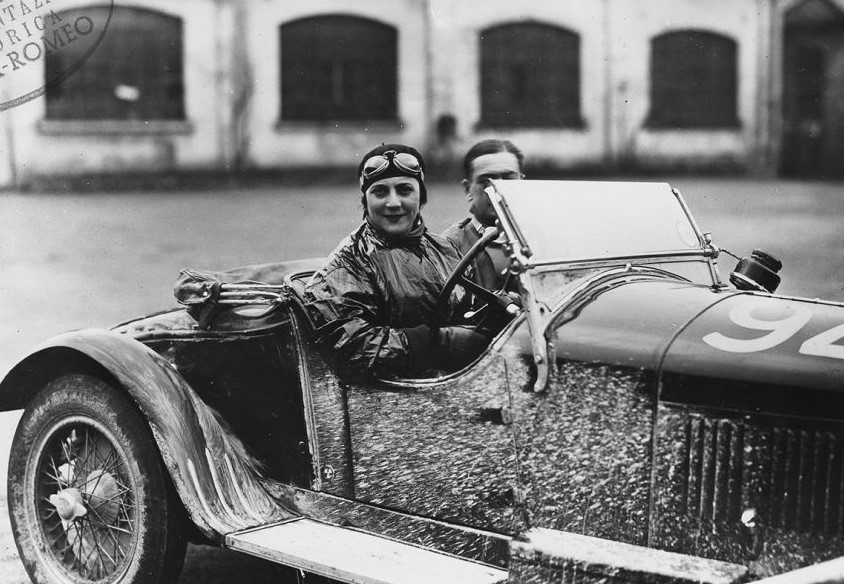
We conclude our first part here with Maria Antonietta d’Avanzo.
The forerunner of female Alfa Romeo drivers, Baroness Maria Antonietta d’Avanzo made her debut in the interwar years. A pioneer of Italian motorsport, aviator and journalist, d’Avanzo won third place in the Alfa Romeo G1 at Brescia in 1921, and proved her worth in many competitions as a formidable opponent for the best drivers of the time, including a young Enzo Ferrari.
Baroness d’Avanzo in her Alfa 20-30 ES
Baroness d’Avanzo raced until the 1940s in a variety of vehicles and races, traveling all over the world to do so…
In the next part we will tell you more about our national champion Christine Beckers and her more contemporary colleagues… Stay tuned!
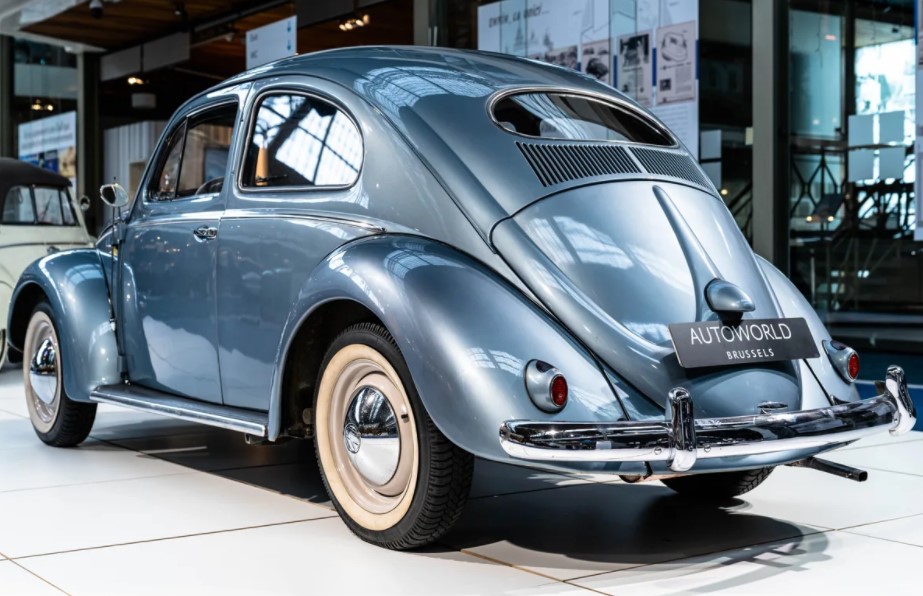
Traditionally, in February and March, the Brussels based Autoworld Museum organizes a special for Volkswagen historical exhibition, culminating in a Beetle love parade on St. Valentine’s day.
However, the parade will not take place in 2021 for obvious reasons, but the exhibition organized in collaboration with Volkswagen is very special indeed!
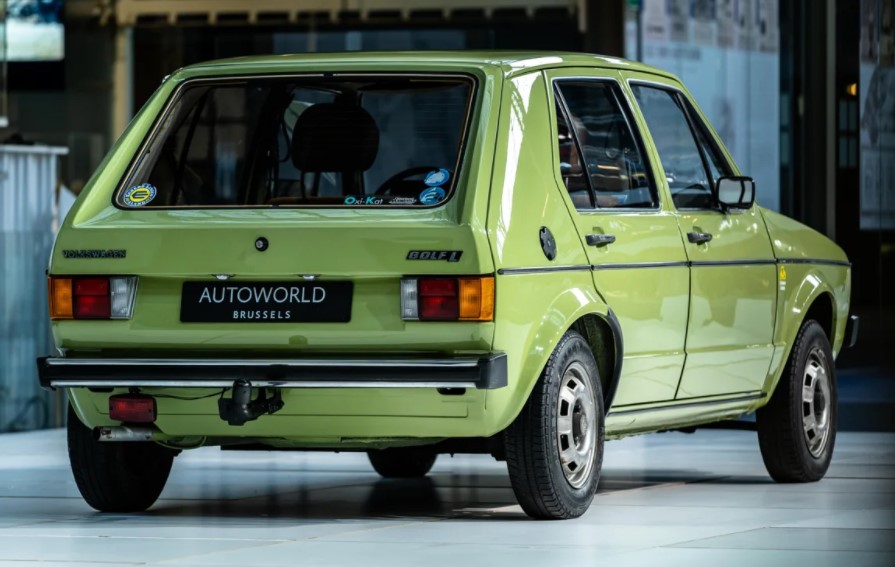
The exhibition is dubbed “Volkswagen Milestones” and reflects the historical zeitgeist of the car of “Everyone and everbody” on the basis of the three important models in the history of the brand: the Beetle from the 50s – 60s, the Golf from the 70s to the early 80s and last but not least, the “Electrical Age”, with the new ID.3.
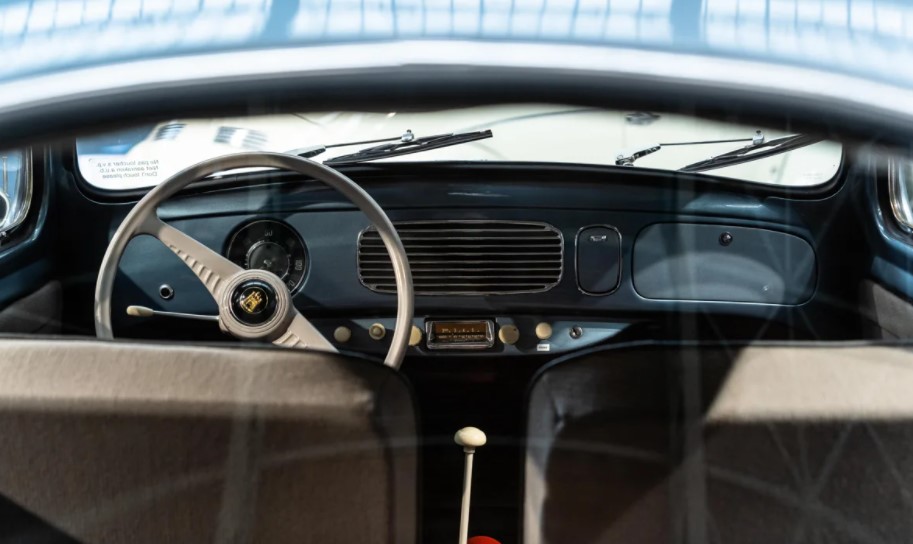
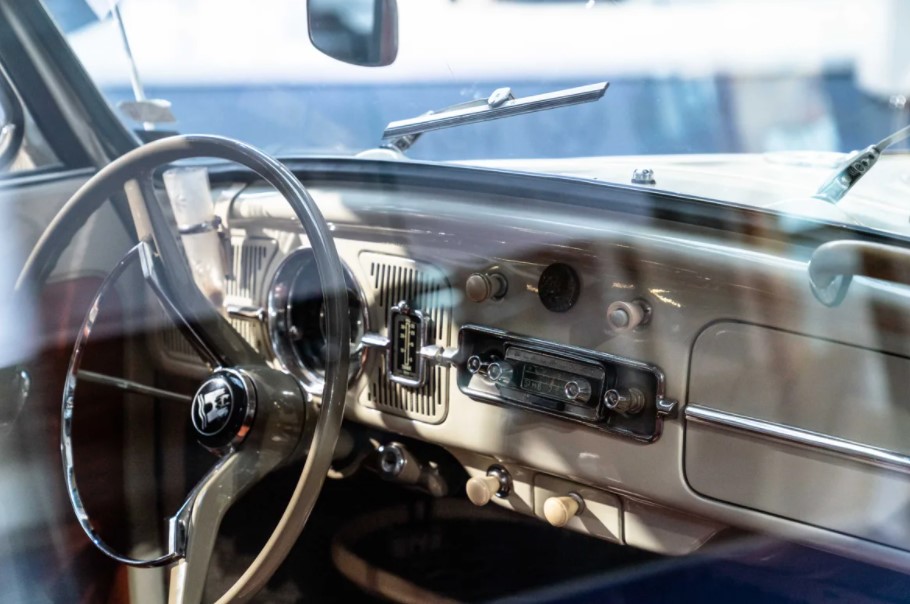
When I saw the cars on the exhibition, via a magnificent photo portfolio shot by Yves Noël, I couldn’t help reflecting back to my early days of motoring. Because, of course, I started out myself behind the wheel of a Beetle. I had bought, as a student, this ’55 (I believe) Beetle De Luxe Export from the famous and iconic television, arts and performance critic and column writer Johan Anthierens, who had learned the craft of journalism from my father, then Chief Editor of the illustrated weekly magazine “De Post”. He had hired Johan to write the Television column in “De Post”. Johan Anthierens bought a new car, and he sold his Beetle to me for the modest sum of 500 Belgian Frank, which is the equivalent of…some 12,5 Euros.
This Beetle is the exact same car as figures here on Yves Noël’s magnificent shots, with – if I recall well, the indestructible 30 HP 1200 cc version of the famous boxer in the back. Indestructible, well, almost. At higher mileages the third cylinder suffered unavoidably rather more from lean mixture than the others, and compression losses in this cylinder due to worn exhaust valves were often de result. This situation was however not bad with this one.
This beetle, with dark green livery, had soon its hubcaps removed and its wheels painted silver, and looked the part! We drove four years with it with the greatest joy throughout Europe, from Copenhagen to Bordeaux, over Routes Nationales and Autobahnen, and our greatest admiration for Porsche and its designs was born then.
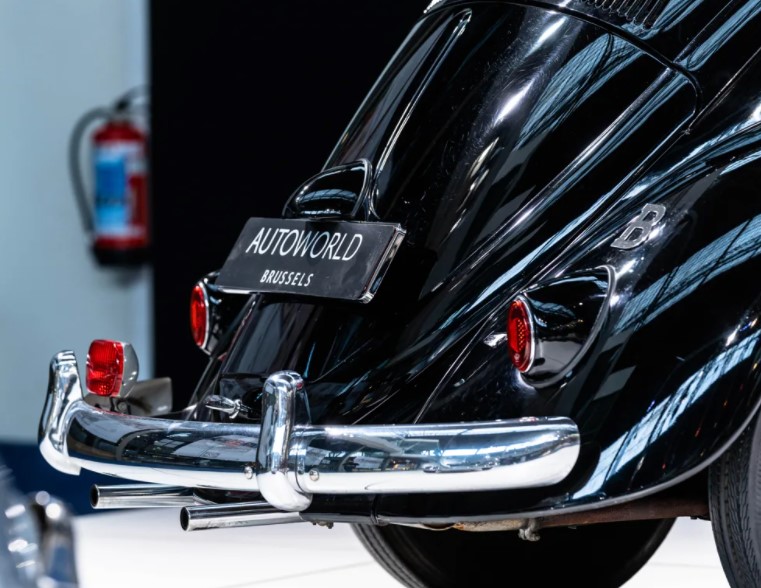
Then, I stumbled on another bargain Beetle, the exact self same car as the black one here on the photo. It still had the 30 PS (manual choke) engine, but an “American type” steering wheel, with a big chromed claxon ring, and, progress, the bigger rear window.
Performance was basically the same as the first one, but I adorned the dual exhaust with slightly bigger diameter tail-end pipes, and this gave a deeper, throaty exhaust note, very similar to a 356 Porsche.
Boy, did I love driving this Beetle with zest… I drove it for another 3 years, until I got engaged to my present wife. Her father changed cars, and so I became as a “welcoming present” suddenly the happy and proud owner of the famous big Volkswagen 411 L, donned in dark British Racing Green paint, which suited it very well. That was my (big) Volkswagen during the Golf era, being also the last creation by VW within the air cooled boxer engine at the rear philosophy. A very comfortable and fast car, which would have merited an even greater success than it had. But other times were coming, also for the “bigger” VW’s. Not only the Passats were soon to come, but in those days also another beauty which was born on the drawing tables in Neckarsulm, the VW K70. This car fitted better in the Golf era, where thermal efficiency, economy, light construction and excellent road manners together with style became the norm.
The Golf era started in 1974, and these cars changed the perceptions about what a small car could do. Winners, I found, were the Golf GTD, which could cruise along all day at 140 km/h and consume still only 6 litres/100 km or thereabouts, with its 1,5 litre Diesel being a pleasant and eagerly revving machine. Then, there was the ultimate Golf, the GTI. Originally 110 PS, but what zest and panache. Also the styling details are absolutely iconic, to say nothing about its handling and performance.
There were also the three spoked steering wheel, the chequered seats, the wheels, the paint scheme, the throaty exhaust note…
Of course, there is also VW’s electric future on display, and indeed the ID.3 is a very convincing car. Just read our test report in these columns. We have just left hospital last week after two major operations, but around easter we are able to take the wheel again. The new VW hybrids are cars we are looking forward to. We will ask Joke Boon, Press Events Coordinator and VW Press and PR Director Jean Marc Ponteville to have a look in their calendar… and thank Joke Boon here for all the Autoworld photo’s she sent me!
Just some practical info: Autoworld – Jubelpark 11 – 1000 Brussels. Open every day, also Monday, from 10 AM to 17 PM (Saturdays and Sundays until 18 PM)
Admission: €12/adult – €10/senior – €9/student – €5/child (6-12 yr) free for children below 6 yr. Tickets bought online cost 1 Euro less.
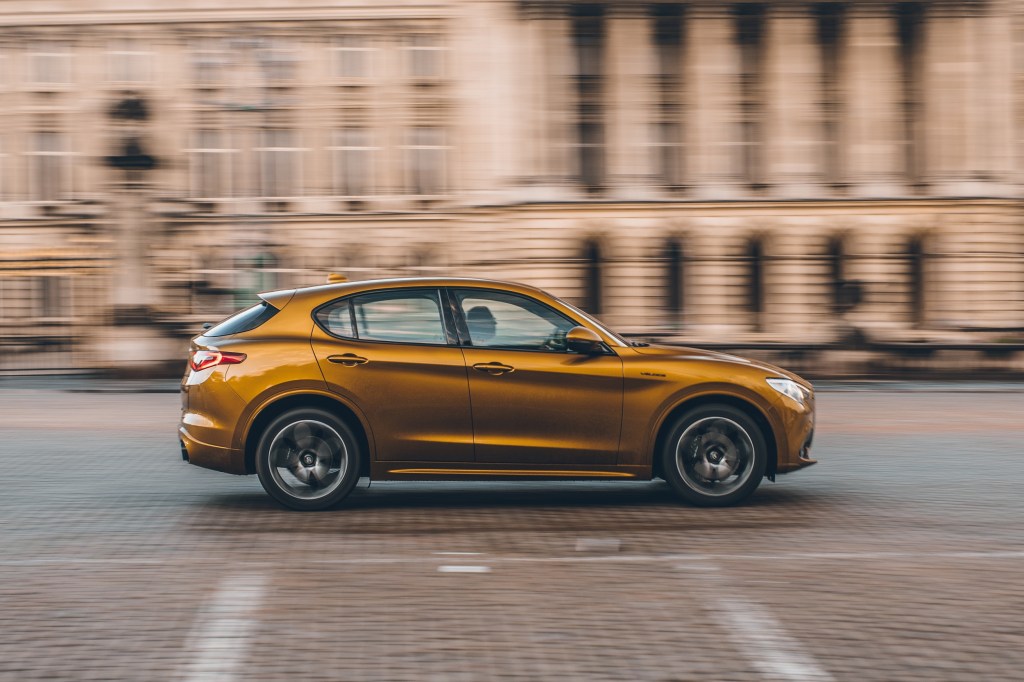
Alfa celebrates 110 years of passion in Belgium, driving here in front of the Royal Palace in the heart of Brussels…
Alfa Romeo will officially celebrate its 110th anniversary on June 24 in Arese, Italy, on the brand’s historic site. So more about this very soon this week.
But also in Belgium, Alfa has since its very first beginning always been synanimous of pure four wheeled passion.
In Belgium, fans of the brand will be able to watch a new video from today that creates a unique bond between Alfa Romeo and the Belgians, from the Brussels squares to the curves of Spa-Francorchamps, the Formula 1 mecca where Alfa Romeo will compete in August.
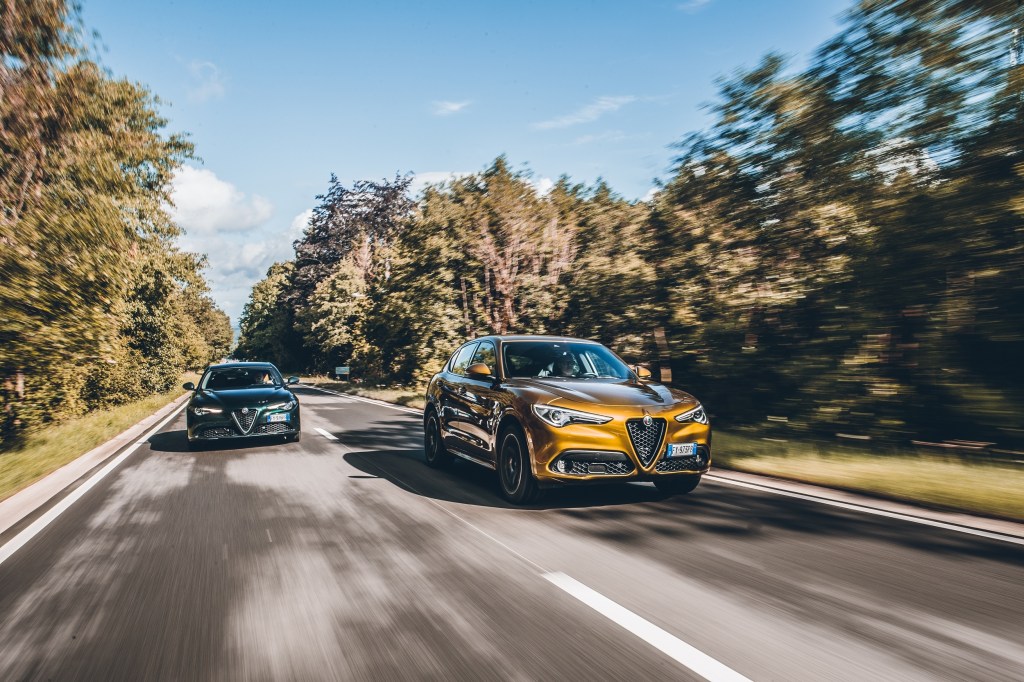
The Giulia and Stelvio MY2020 play the leading role, as this video illustrates the brand’s mastery of typical Italian design, technology and driving pleasure.
We tell you here somewhat more about it…
Hans Knol ten Bensel
The tour shot on the video starts at the iconic Place Royale, a stone’s throw from the Royal Palace in Brussels. This highly symbolic location for Belgium serves as the background for the two latest creations of Alfa Romeo: the sedan Giulia MY2020 and the SUV Stelvio MY2020.
In keeping with Belgian tradition, the nocturnal rainy weather made the wet pavement reflect in the still illuminated headlamps of the two Biscione models. It is barely 5 a.m., and the city wakes up.
This is all the more photogenic, and the media team prepares to shoot the video images and take photos of this historic moment: the celebration of the 110th anniversary of the Alfa Romeo brand on Belgian territory.
As a symbol of the “Made in Italy” label, Alfa Romeo has had a beautiful love relationship with the Belgians for a long time. The sportiness and elegance of the brand have been celebrated here for decades. In addition, Alfa Romeo has made models throughout its history that have become icons in the automotive industry. Belgium, with its many car enthusiasts, is also an important territory for discerning collectors. There are many private museums across the country, containing numerous treasures created by Alfa Romeo engineers and designers, as well as unique vehicles handcrafted by the peninsula’s great bodybuilders. For the “Belgians”, the name Alfa Romeo stands for passion.
From the squares to the striking monuments of Brussels, the last two creations of Alfa Romeo go to the east of the country, first past the Royal Palace of Brussels, remembering that the King and Queen of the Belgians, Albert II and Paola, when they were crown princes, brought a visit to Alfa Romeo and went also to its Balocco test track. The Prince of Liège hiself slid behind the wheel of the unique 33 Stradale, in October 1967.
After Brussels the team and the cars head towards Spa-Francorchamps. To the most mythical circuit of motorsport, which all Formula 1 drivers enjoy the most.
A territory that the Alfa Romeo Giulia and Stelvio have known for several years, as the Quadrifoglio versions of both models are used for the transport of the two current pilots of the brand, Antonio Giovinazzi, ambassador of the Giulia Quadrifoglio, and Kimi Räikkönen, ambassador of the Stelvio Quadrifoglio. It is also on this very track that the new Alfa Romeo Racing ORLEN Formula 1 cars will run the Belgian Grand Prix at the end of the summer, on Sunday 30 August 2020.
On the runway at La Sauvenière Airport, the scene of an impressive air ballet during the Grand Prix weekends, the two Alfa Romeos are now enjoying the asphalt, whose curves, straights and slopes are already an interesting playground on the way to circuit. Two legendary cars that are about to race on an iconic track, where the brand has had the opportunity to express the full range of its sporting expertise on numerous occasions and in many motorsport events.
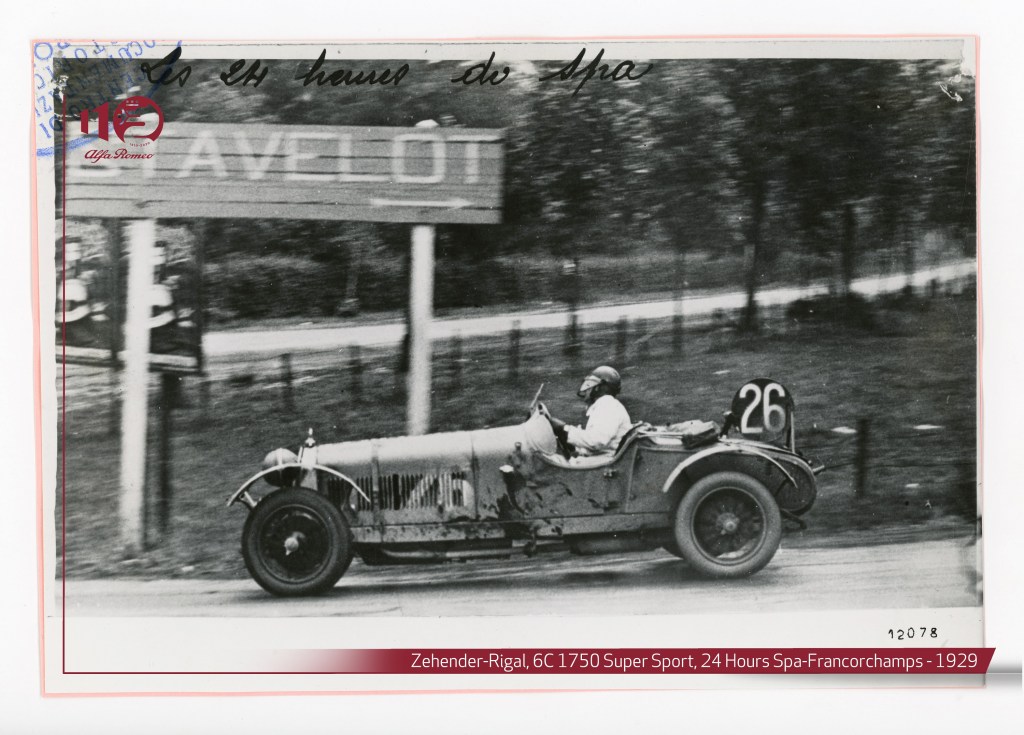
The 1750 Sport was already a star in Francorchamps in 1929…
It is in this magical setting that the last images of this commemorative video produced by the Alfa Romeo team will be shot, to testify once again to the unique bond that unites the famous sports brand with its Belgian fans. The video will be available on the Alfa Romeo social media pages in Belgium and on the Alfa Romeo press website:
The dynamic PR people of the Mercedes-Benz Museum have recently launched a so-called “33 Extras” exhibit series. These “33 Extras” bring the history of personal mobility and motoring culture to life highlighting details and aspects that are often surprising. Here they focus on the steering wheel, and we found their story interesting enough to present it here to you…
Hans Knol ten Bensel
The world´s first car race from Paris to Rouen, 22 July 1894. Alfred Vacheron´s vehicle with petrol engine. Vacheron was awarded joint 4th place in the contest.
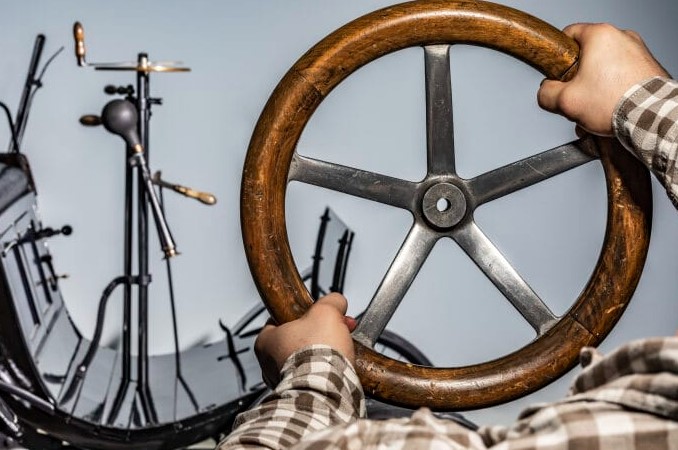
It all started in in 1894: the steering wheel made its debut in the first motorsport competition in history – the race from Paris to Rouen. French engineer Alfred Vacheron equipped his Panhard & Levassor vehicle, powered by a Daimler engine, with a … genuine steering wheel. Compared to the control levers that had been used up to that point, the steering wheel allowed him to steer more accurately – and therefore also to increase his speed. His steering wheel consisted of a circular grip ring connected to the steering column by spokes – a basic principle which is still valid to this day.
Mercedes-Simplex in the Mercedes-Benz Classic Insight Nice-–La Turbie in 2017. The steering wheel was equipped with additional levers for adjusting various engine functions.
The end of the handlebar…
Before the steering wheel became the norm at the turn of the century, there were many solutions, including some that resembled bicycle handlebars. In his three-wheeled Patent Motor Car of 1886, Carl Benz used a rotary crank that transmitted the driver’s steering action to the steering column. Gottlieb Daimler equipped his four-wheeled motor carriage from 1886 with a cross-shaped handle.
In the end, the steering wheel prevailed quite simply because it could be operated intuitively. Along with the pedals and seat, it is the most important interface between the driver and the car. Key advantage: It was possible to determine the exact driving direction much more accurately than with levers because the wheel principle allowed the steering lock to be translated through the gearing into several revolutions.
Additional functions already 120 years ago…
Sectional view of a steering wheel with airbag from 1992. The folded airbag (white) can be seen above the propellant charge.
On the Mercedes-Simplex models, from 1902 on, the steering wheel was equipped with levers that were used to adjust important engine functions ─ in particular, ignition timing and mixture formation. In the 1920s, a steering wheel ring for operating the horn was added – an early implementation of Car-2-X communication, so to speak.
…and now
Today’s steering wheels are used to operate numerous systems, such as the on-board computer, voice control, telecommunications and multimedia. In addition, there are a number of stalks arranged in the immediate vicinity. In the summer of 2020, Mercedes-Benz will be presenting the next generation of the steering wheel as a command centre – the capacitive steering wheel with digital control zones.
Touch, “feel” and emotion…
There are considerable technical demands placed on the steering wheel – and the tactile experience. If the steering wheel is not perceived as pleasant to touch, this can have an effect on the way the vehicle is driven. In addition to the materials, the design also plays an important role.
Steering wheel and instrument cluster from the Mercedes-Benz S-Class, model series 221. Photo from 2005.
Steering wheel ergonomics also includes its position in the vehicle. The Daimler Phoenix racing car from 1900 and the innovative Mercedes 35 hp from 1901 had already proved this point: Their steering columns were inclined much more than before. This made it possible to steer the cars much more effectively and more dynamically. This contributed both to driving safety and also to the overwhelming sporting success of the Mercedes 35 hp in Nice Week in 1901.
Steering wheel from a Formula One Mercedes-AMG Petronas Motorsport racing car. Photograph from 2018.
Size did matter…
The first steering wheels provided a fair guide as to how big and heavy a vehicle was. Trucks and buses initially needed enormous steering wheels. It was not until the advent of power steering that it became possible to make steering wheels smaller in large vehicles. Power steering was first fitted on the Mercedes-Benz 300 saloon car, in 1958. From the 1960s onwards, Mercedes-Benz commercial vehicles were also equipped to an increasing extent with power-assisted steering.
Passive safety started in 1959
As part of the safety concept implemented in 1959 in the W 111 model series, the “tail fin” or “Heckflosse” saloon was the first to feature a steering wheel with a large, padded impact cushion, which reduced the risk of injury. In 1967, Mercedes-Benz introduced safety steering with a telescopic steering column and impact absorber as standard equipment for all vehicles. Then, in 1981, the driver’s airbag fitted in the steering wheel was introduced. This world-first innovation in production cars was introduced by Mercedes-Benz in the S-Class model series 126.
Im Forschungsfahrzeug Mercedes-Benz F 200 Imagination wird 1996 die Fahrzeugsteuerung über Sidesticks erprobt.
The Mercedes-Benz F 200 Imagination concept vehicle from 1996 tested the use of side-mounted joysticks for steering.
Cars without a steering wheel?
Mercedes-Benz has toyed with this scenario at least in test and research vehicles. The F 200 Imagination concept vehicle presented in 1996 was controlled with the aid of side-mounted joysticks. The innovative system worked perfectly. However, the steering wheel remains the preferred option, which applies just as much to production cars as to modern racing cars with their highly complex control systems. Perhaps tomorrow’s autonomous cars will be able to do without a steering wheel completely. Until then, however, the new Mercedes-Benz capacitive steering wheel supports autonomous driving functions more comprehensively than ever before. A brief history of the steering wheel is also given in a press release from Mercedes-Benz Cars.
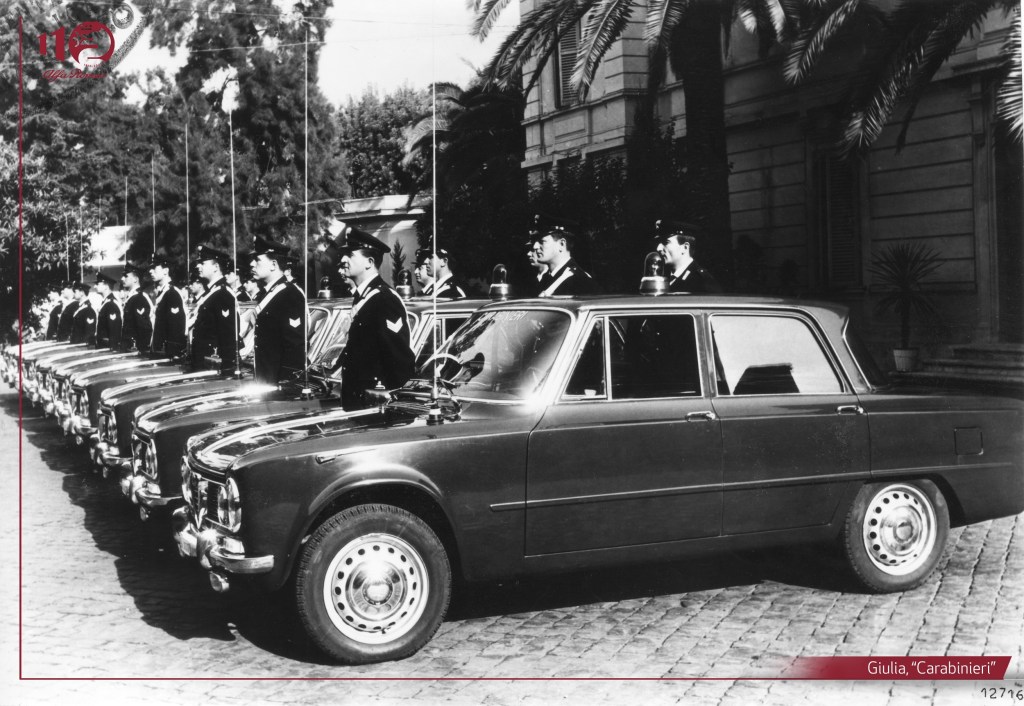
We vividly remember them when I drove in the historic Mille Miglia with my father. The olive green Alfa Giulia Supers of the Carabinieri coached us along the way, watched over crossroads, helped to control traffic along our route, kept overenthusiastic spectators at bay.
The Carabinieri had not only taken out their fifties’uniform complete with riding boots, they also had polished their Giulia Supers. And of course, mechanically, these Alfa’s were in top form. What a delight it was to hear their 1,6 thoroughbred DOHC four cylinder revving up when they joined with panache and screeching Michelins again our fast moving column of Millia Miglia cars. Only to pass us swiftly with the blue police light flashing on the roof, with their engine on full song.
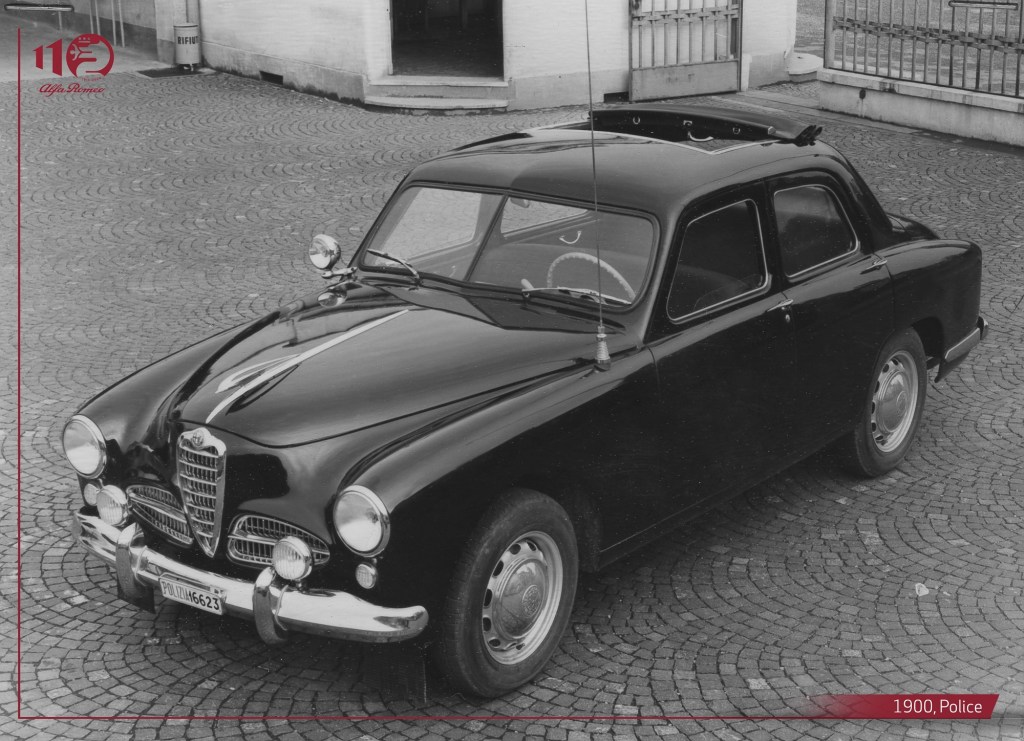
The beautiful Alfa 1900 was in 1952 immediately an iconic intervention car for the Italian Polizia…
Delightful, simply delightful. On the return leg from Roma back to Brescia, on the lunch stop before Siena, me and my father took (too much) time to chat with Stirling Moss, and we forgot our schedule a bit. This meant we were late, and had to do some massive catching up through the field. As there were timed sessions ahead, and we had to be within our time slot again. Easier said than done, with the power of a Mercedes 180 D ponton. Fight your way past birdcage Maserati’s and the like with 40 HP. Also the normal traffic was busy and held us up too much, as it took always time to accelerate for us to our top speed of 120 km/h at best.
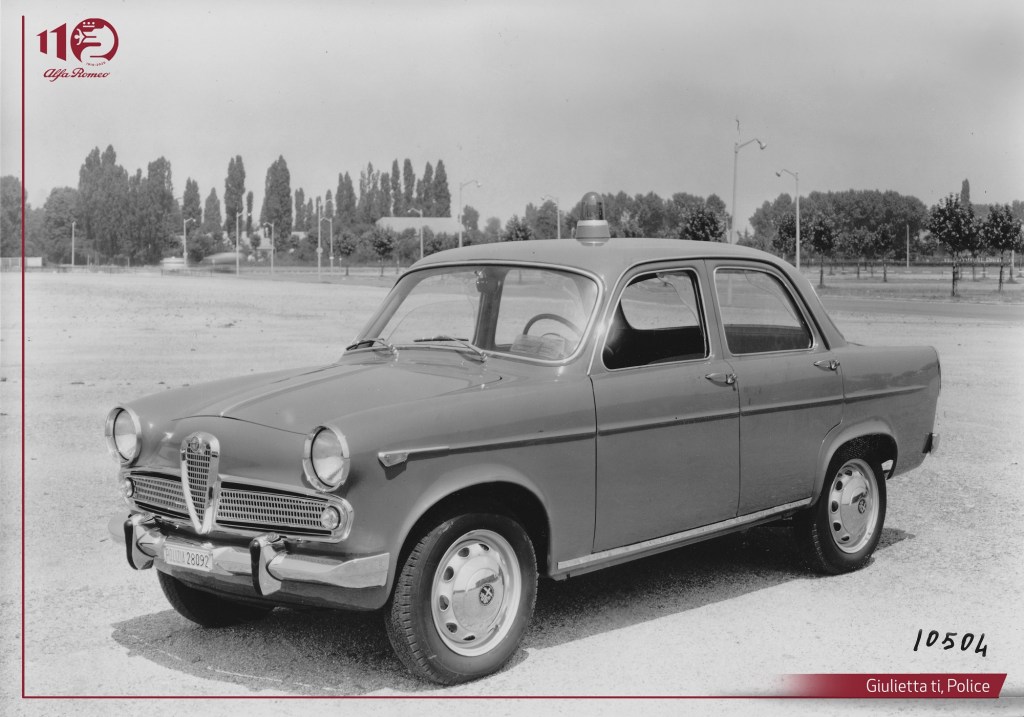
The Giulietta was in the mid-fifties the police car par excellence… to be replaced by the Giulia Super.
Then we saw the olive green Giulia Super at a crossroad. We waved frantically and threw our hands in the air, shouting “siamo in ritardi!” We are too late!
“Okay, Okay”, they shouted back, starting their Giulia, putting swiftly their Alfa in front of us. “Siguici da vicino, follow usse close” they commanded us in their marvelous Italian accent, and so we went as a two wagon speed train through traffic, and passed the field of surprised Mille Migla participants. Lancia Aurelia, BMW 328 and Jaguar XK120 drivers couldn’t believe their eyes. But we got after 30 minutes of frantic speeding again in our slot. We waved at the carabinieri thankfully, and they responded with two signals on their beautiful Fiamm horn.
So when the dynamic PR people of FCA came up with te story about the fast, invincible Alfa’s in the service of the law, our delightful memories came back again, and we had to tell you here this story.
Of course, the Polizia/Carabinieri Giulia’s were totally iconic and omnipresent in the sixties, but the love affair of the servants of the law with Alfa’s started already in the early fifties with the formidable Alfa 1900. We show you here the photos, and dream on with us…























 Autoprova - for the Connaisseur