Early next year we will drive for you the DS4 and the DS9, and we are looking forward to have a taste of French refinement, elegance and panache.
But did you know that thanks to an electrification strategy pursued since its inception, DS Automobiles is the multi-energy brand with the lowest average CO2 emissions in Europe?
Indeed, it registered 100.2 grams CO2 per kilometer per vehicle in the first half of 2021 according to the WLTP cycle. Not surprisingly, as its production mix of electrified cars exceeds a third. This strategy is now only gaining momentum: from 2024, all new DS Automobiles models will be 100% electric only.
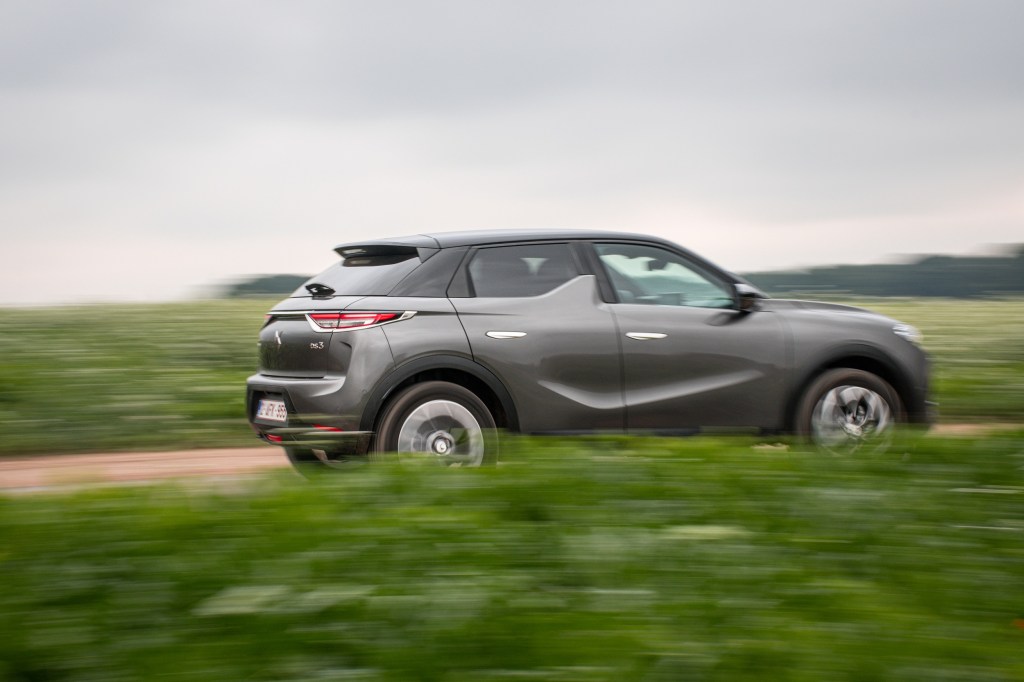
The first 100% electric model in the DS range is continuously under further development. The DS 3 CROSSBACK E-TENSE, on the market since 2019, now has a range of 340 kilometers according to the combined WLTP cycle, an increase of almost 7%.
During development, the focus has always lied on improving the practical use of the DS 3 CROSSBACK E-TENSE. In particular, the heat pump has been improved through the use of a humidity sensor to improve efficiency. The heat pump, supplied as standard, produces heat by compression to generate warm air. This significantly reduces the need for E-energy.
As a result of continuous development and ongoing discussions with the Formula E championship team, supported by DS Performance, the transmission ratio has also been optimized to improve the efficiency of the DS 3 CROSSBACK E-TENSE.
The hand stitched steering wheel upholstery stands out in an interior full of French panache…
Greater autonomy in real-world use is also achieved through the use of new 17″ class A tires developed by Continental. The Continental EcoContact 6 Q is available in 215/60 R17 96H and has a new high-tech silica compound to improve rolling resistance. improve and reduce noise emissions.
In Belgium, the DS 3 CROSSBACK E-TENSE is available from €38,400 (incl. VAT) with a 100 kW (DC) and 11 kW (AC) charger.
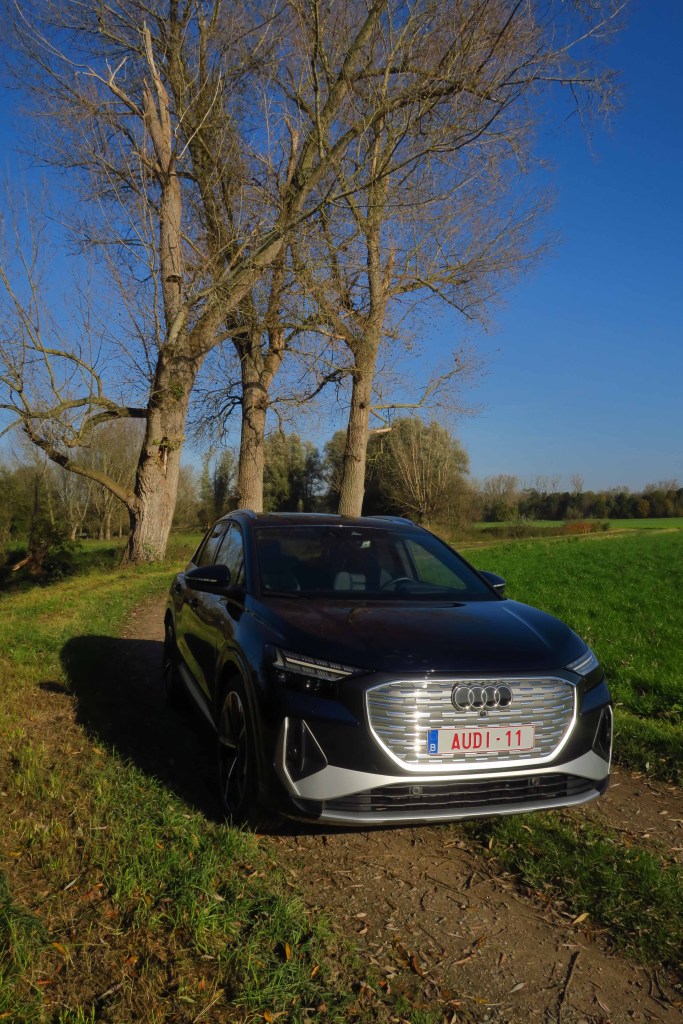
Audi has ambitious plans for further electrification: in 2025, it will have not less than 20 pure EV’s in its model range. Besides the big Audi e-tron Quattro and its Sportback version and the stunning e-tron GT, another pure EV joins the party: the compact SUV Q4, which is also available right away in a stylish Sportback version.
The Q4 comes in two battery and power versions. The base model is the Q4 35 with a 55 kWh battery. Its range is said to be 350 kilometers and it has a 125 kW/170 HP motor driving the rear wheels. We tested for you the Q4 40 which has the 77 kWh battery and the 150 kW/204 HP motor we also find in the VW ID.4.
The Q4 is built… in the VW factory in Zwickau, where also the ID.3 and ID.4 are rolling off the production lines. Only logical if one knows that the Q4 runs on the same MEB platform as the two Volkswagens.
So the Q4 is a dressed up VW? Not at all, the Audi engineers and designers have succeeded in giving the Q4 its unmistakable premium character and Audi identity.
Just read further…
Hans Knol ten Bensel
Stylish
The bodywork of the Q4 breathes the timeless Audi styling language, with very good proportions throughout. The front end grille betrays its “pure” EV character, as it is closed. Indeed, electric motors need a lot less cooling.
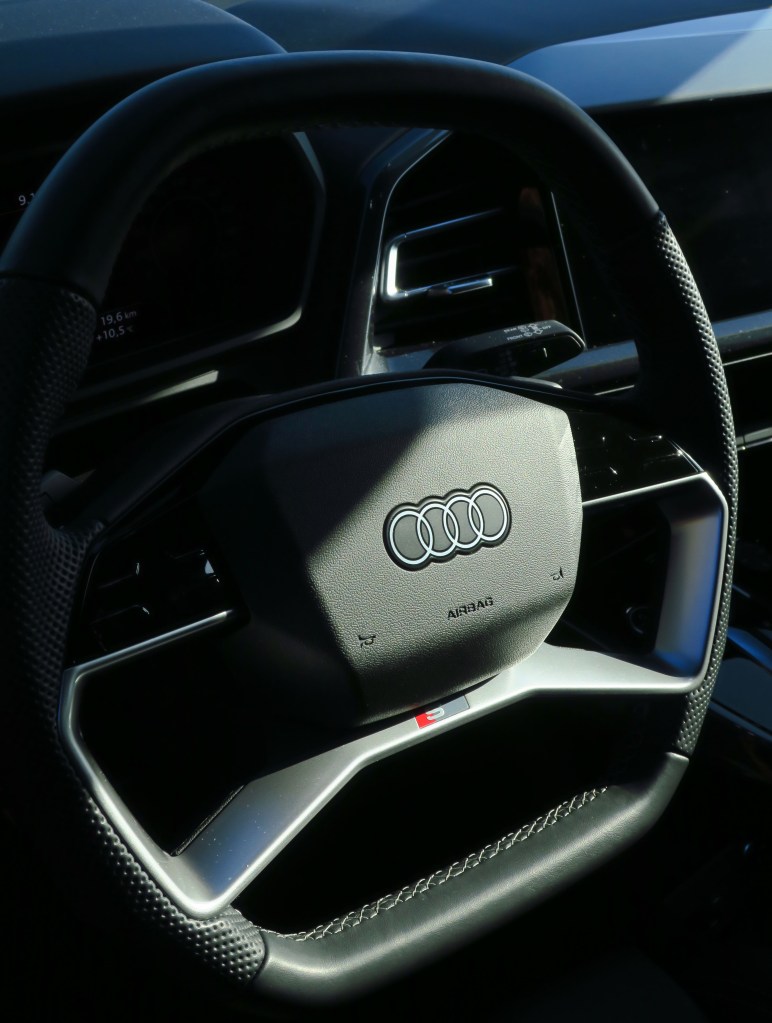
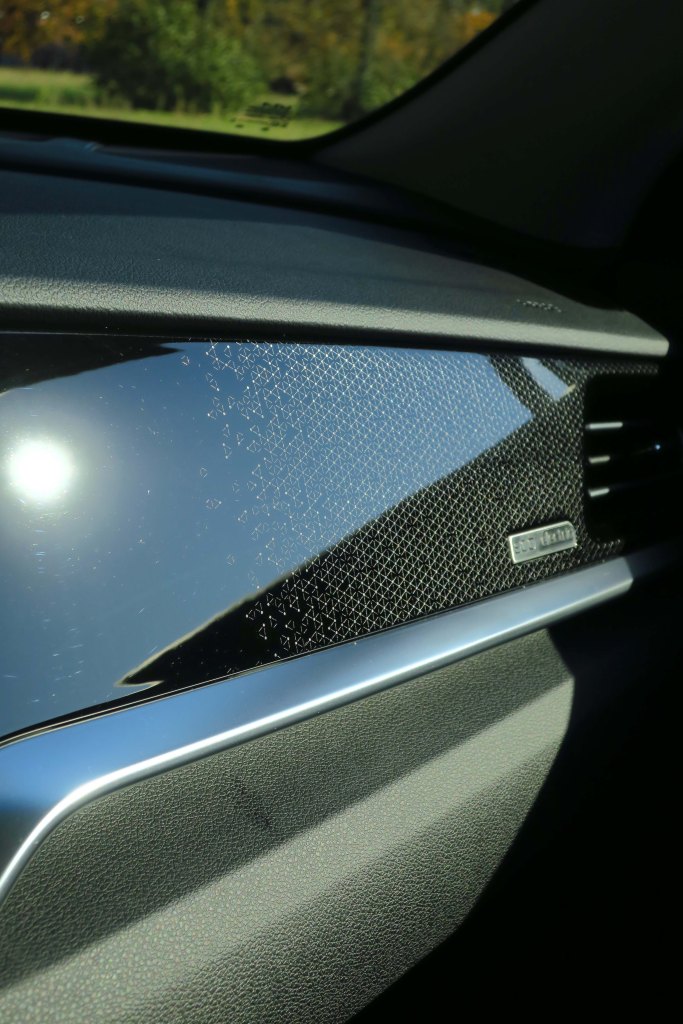
The dashboard and cabin breathe Audi panache: the instrumentation is directed towards the driver here, rather untypical for a SUV. Bravo for Audi, and they did also very well with the instrument layout: two large dials are seen in front of you, on the digital display which is almost equally as large as the central touchscreen.
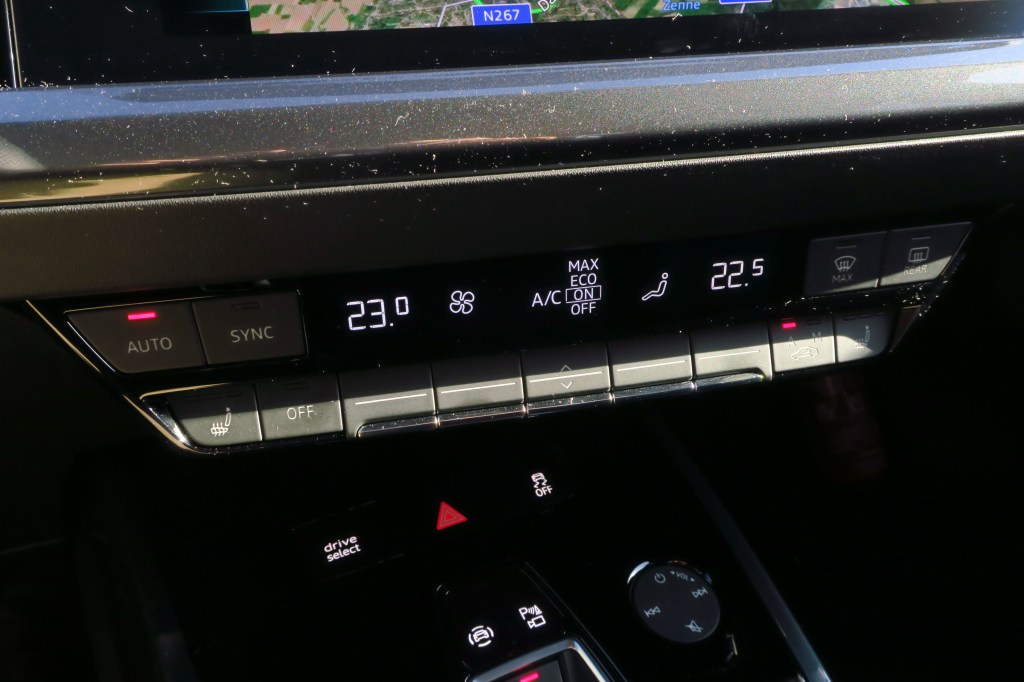
The ventilation commands are thankfully also on a separate panel with extra knobs, and also the audio volume knobs are of the rotating touch type as found on the early Apple I pods.
When you opt for the MMI package, you can also enjoy an augmented reality head up display. Our test car came with it and we liked it very much.
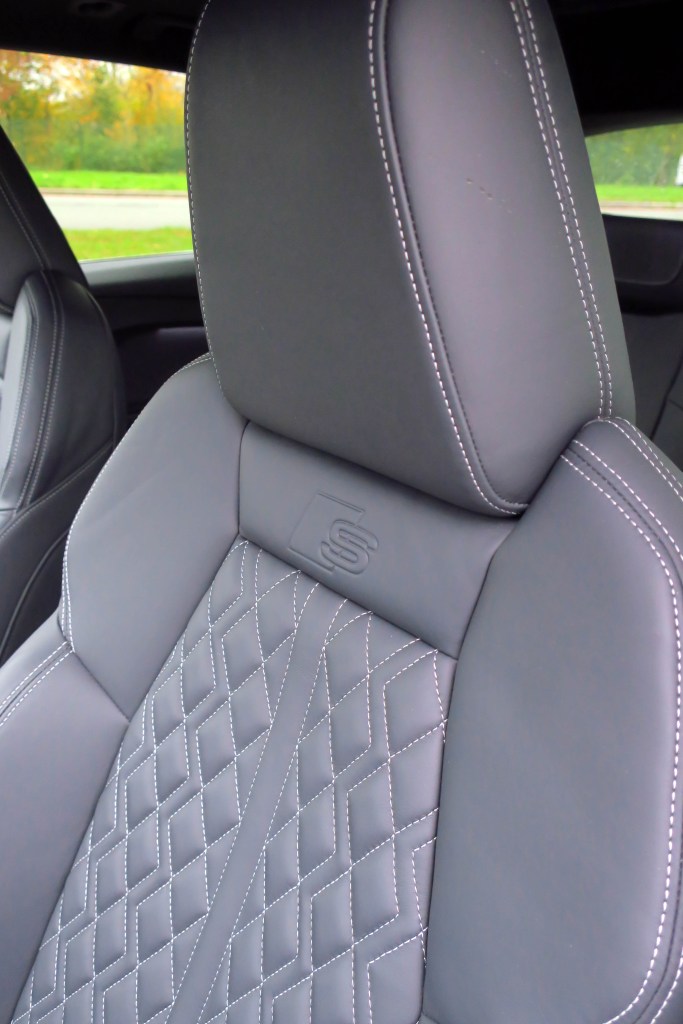
In the posh “S line” equipment level of our test car the seat upholstery with its typical cross stitched patters was very pleasing to the eye, and the seats are also very comfortable indeed.
While we are talking about the cabin, we can mention here that also the Q4 offers plenty of room, also for its rear passengers, taking advantage of the good qualities of the MEB platform. This SUV is certainly not compact here…
There is also plenty of room for storage in the interior, a good 24,8 liters. On the central console between the two front seats you have already 4,4 liters at your disposal.
Luggage space is more than adequate with 520 liters, with both rear backrests down you have a maximum of 1490 liters at your disposal, when you use the available space up to the roof.
The charging cables are neatly tucked away under the luggage floor. Only a bit cumbersome to reach them when the boot is fully loaded when on holiday. For the rest of the year it’s very fine.
Dynamic and smooth…
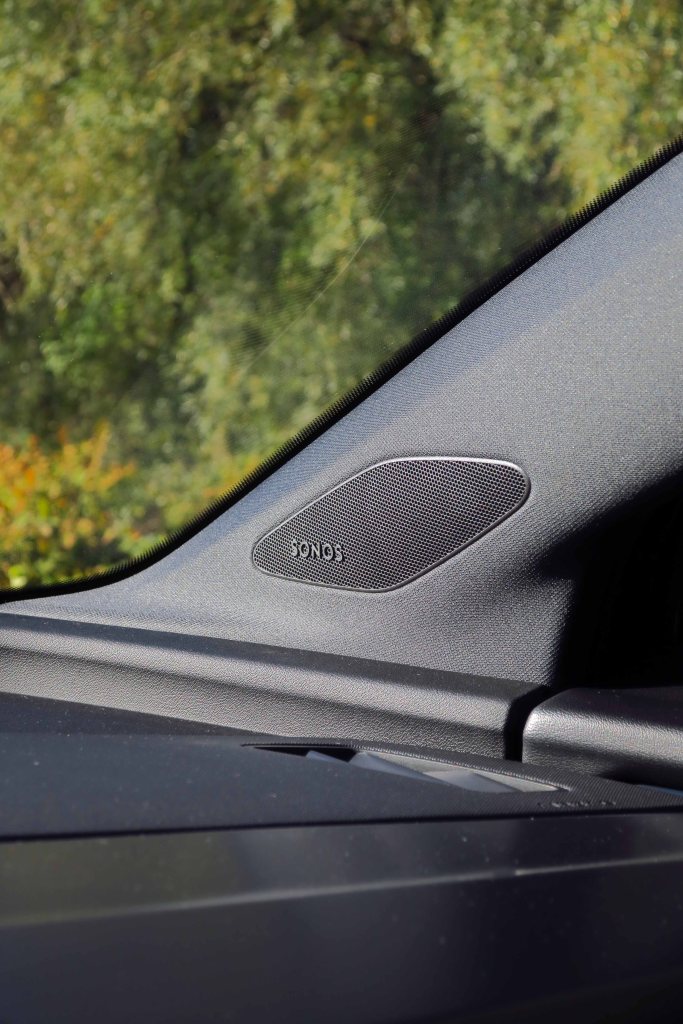
Let’s get behind the wheel now and start driving. As an EV befits, this Audi is again supersmooth. It is “Zen” driving all the way. EV’s are just a delight to drive in town, with their feline power delivery. 310 Nm of torque is at your disposal, always. It makes this Audi beautifully agile and nimble in dense traffic. Stop and go traffic is now for you an ideal moment to relax behind the wheel, and enjoy the beautiful sound coming from the Sonos system we had in our test car.
Performance is of course excellent, with a 0 to 100 km/h acceleration time of 8,5 seconds. Top speed is limited to 160 km/h, as in the ID.4.
German Autobahn aficionados would like this to be more, but then we would not speak of a useable range anymore.
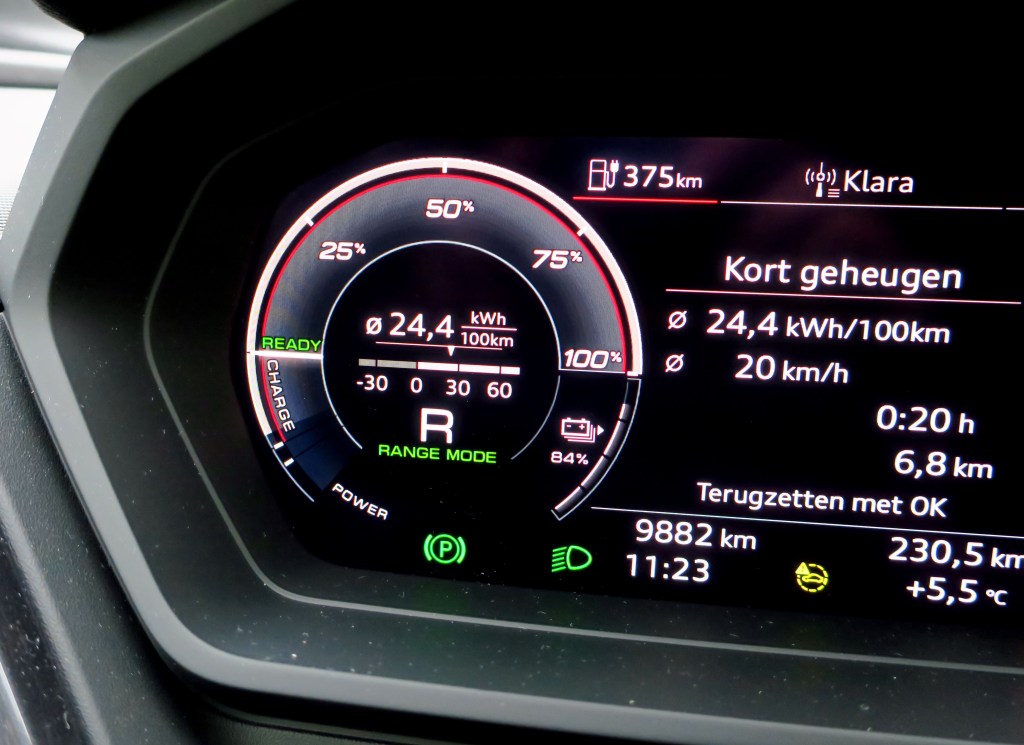
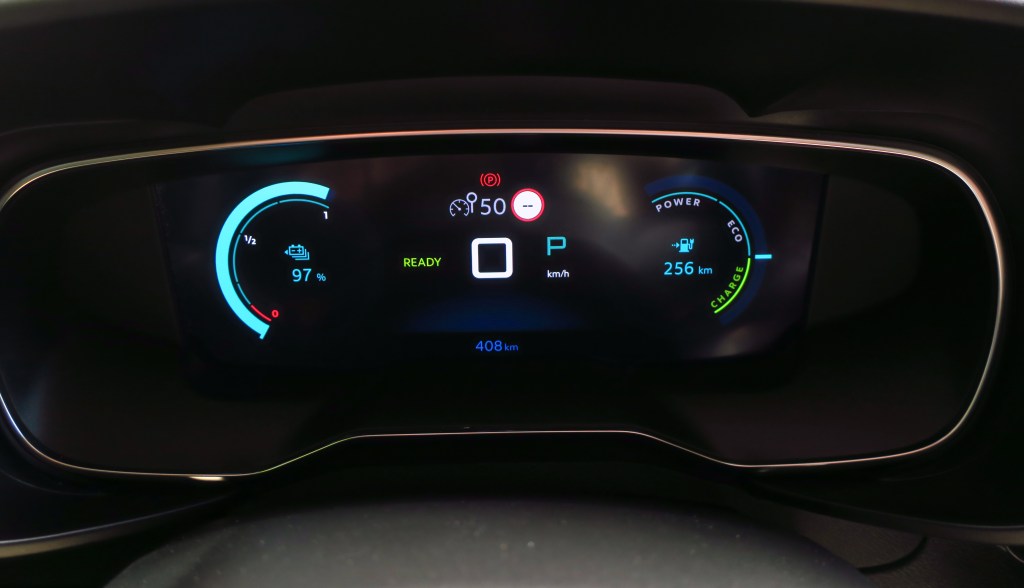
When it comes to range, your driving style is here of paramount importance. You see it clearly on the photo showing the instrumentation: when collecting our test car, we drove it gently to the motorway, where we drove a constant 95 km/h, just a bit faster than the trucks, to reach our photo spot. Consumption was then a very reasonable 15,2 kWh/100 km, over 19,6 km at an average speed of 42 km/h.
A cold start in the morning, with heater full ablaze and just some slow stop and go traffic paints another picture. There the consumption over 5,4 km was a whopping 43,6 kWh. The following photo tells the story.
When we take the WLTP consumption as the norm, being 19,3 kWh, then the effective range would be 530 km. In practice, you can expect a useable range of a good 400 km.
There are different driving modes on the Audi, one of them being the “Range” mode. It limits power and sets a maximum speed of 90 km/h.
Charging at the home wallbox is possible up to 11 kWh, and on public charging points you can “fast charge” your Audi at not less than 125 kWh. Then it takes only 10 minutes to add an extra of 130 km to your range.
Practice in our country is of course rather different to say the least. 98 % of our existing condominium and apartment buildings have NO wallbox provisions in their underground garages, not even electricity sockets in many cases, limiting possibilities of enjoying EV propulsion greatly.
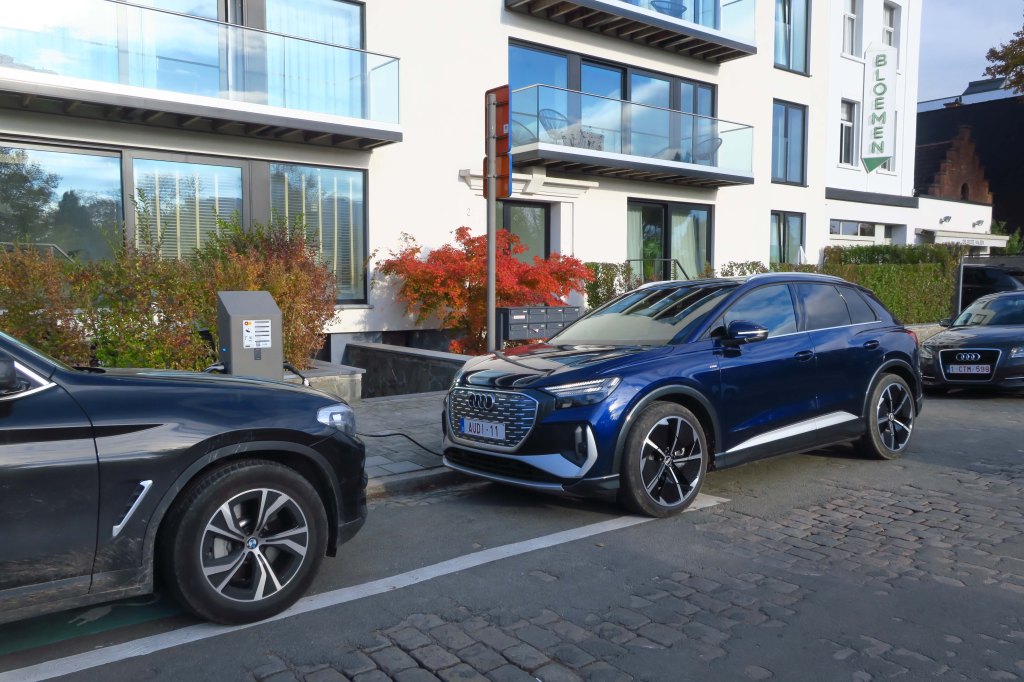
My nearest public charging point is about 1 kilometre away, and this is not a “fast” charging point. Allowed time for charging is also limited to 3,5 hours. Belgian municipalities – at least those near Antwerp – have still to wake up to reality that the charging points have TWO sockets and can actually charge two cars simultaneously. The square they paint on the pavement actually is clearly meant for ONE car. Users of the charging point are so kind and gentlemen-like to ignore this, so your servant could charge the Q4 too, as the following photo shows, which leaves one certainly perplex…
Driving the Q4 to Knokke, we found no unoccupied charging points within a reasonable walking distance from the place we stayed, so the next day we used the “Range” Driving mode to get us home again. It was a magnificent and leisurely drive…
Car manufacturers are certainly not to blame here. Their products increasingly offer useable ranges, and we could easily plan a longer route on the Audi, where the touchscreen clearly indicated which charging points en route we could use, how long we had to charge, which were open, etc.
Of course, providers are working hard to change the situation. At the moment of writing, IONITY is invetsing 700 million € for 5.000 extra HPC charging points in Europe.
Comfortable and agile
Besides room of its occupants, the Audi Q4 also offers a genuinely comfortable ride and steering is also precise and engaging. Audi’s are build to deliver driving pleasure, and this is also found in this Q4. A well balanced car, certainly making the very best of what the MEB platform has to offer. The same goes for the brakes, which can be well dosed to come to a smooth stop.
We also mention here the “coasting function”. When one hasn’t chosen the “B” mode, the Audi will just coast along when you lift the throttle, and this adds greatly to the “Zen” driving pleasure, once you have mastered the art of anticipative driving.
Of course you can recuperate energy when decelerating, or you can leave everything to the wisdom of this Q4. Indeed, you can put the Predictive Energy Assistant at work, which will interpret road signs and navigation data. Then the system will calculate for you continuously the right balance between sailing and energy recuperation, no less!
Conclusion
Audi has succeeded in designing and building a magnificent compact EV on the MEB platform. A car with impeccable finish, oozing with style, panache, good comfort and handling, very good range and performance, and on top of all that roomy too.
Of course this has a price tag, but it is a timelessly styled premium car, one of the very best which ever rolled of VW production lines.
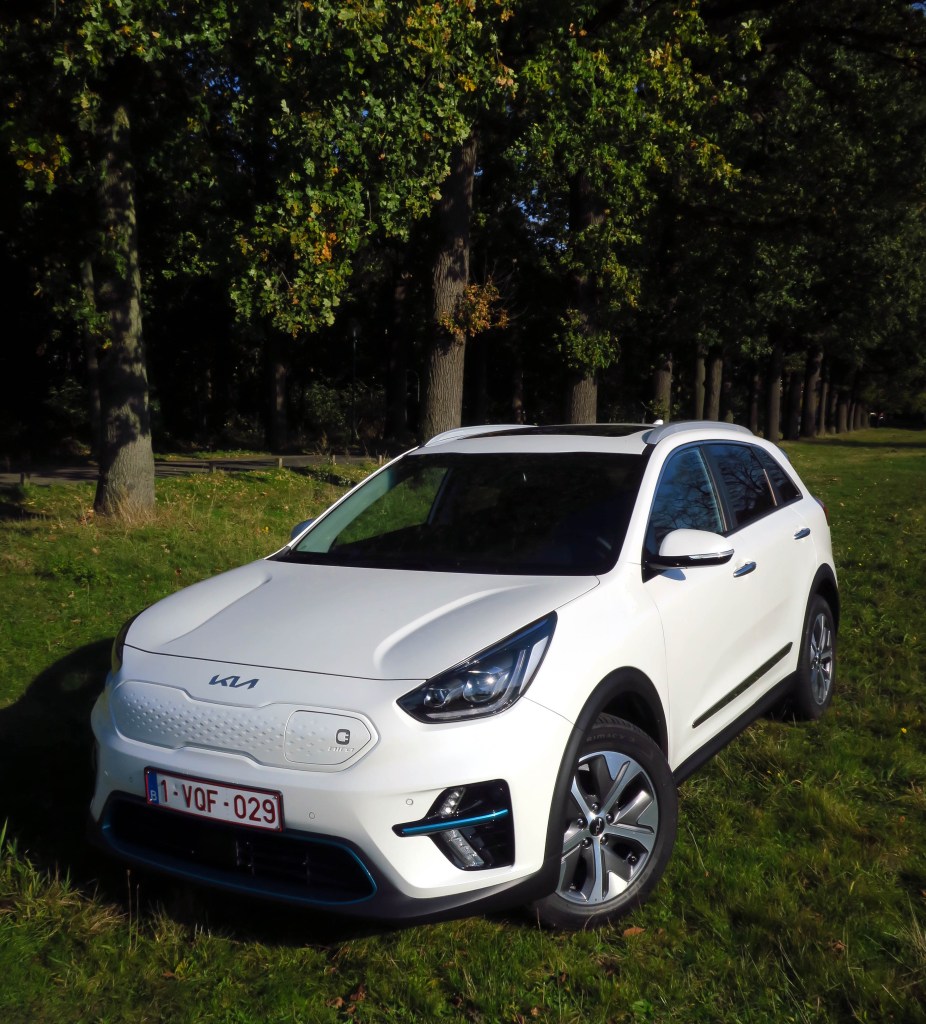
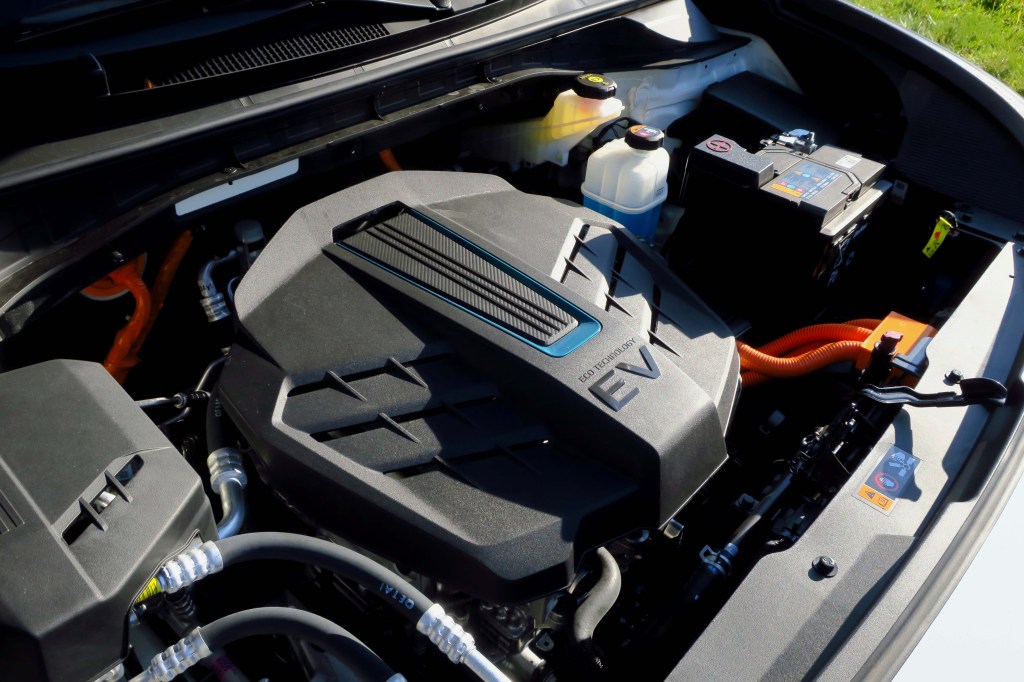
The Kia Niro is already a few years amongst us, first electrified as hybrid, then plug-in hybrid, and finally as a “pure” EV.
The competition has become a lot stronger since its introduction, notably with newcomers as the Volkswagen ID.3, the Peugeot 2008 and the Citroën ë-C4, but this Kia still has a lot of qualities which make it still earn very well an excellent place its segment. Of course, Kia is ready for this competition, and at the moment of this test going to press, it presents a completely new version of the Niro at the Seoul motor show, but the present model is still relevant enough to put it through its paces for you here.
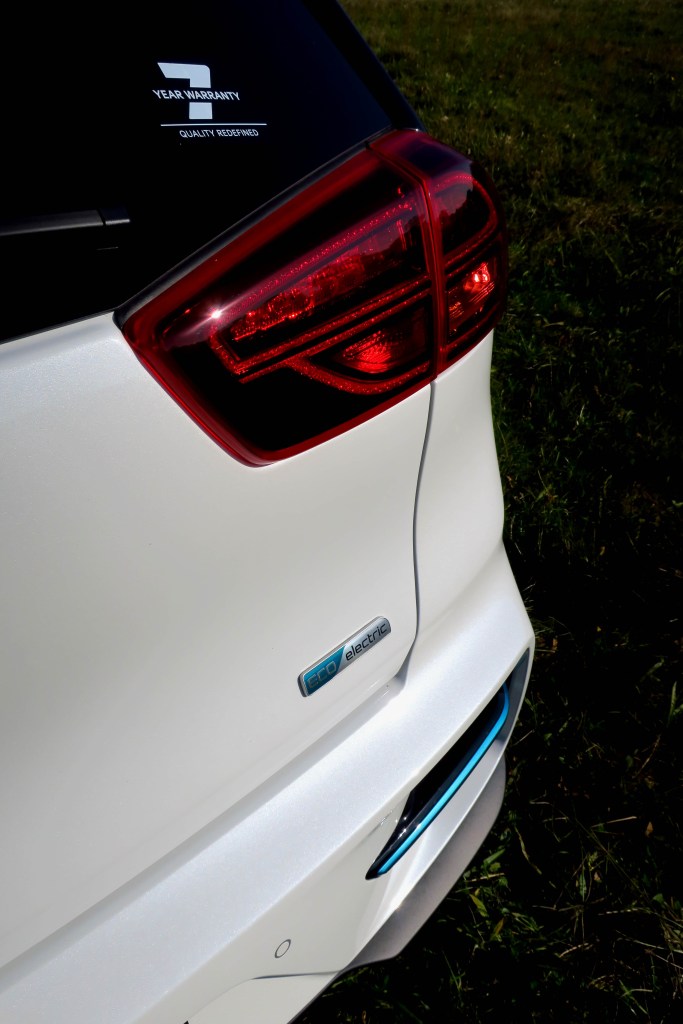
We should also not forget that this Kia EV with its 64 kW battery set the trend towards longer ranges: according to the WLTP norm, it is still good for 455 km…and on top of that, it offers very good value for money, with a 7 year guarantee!
Hans Knol ten Bensel
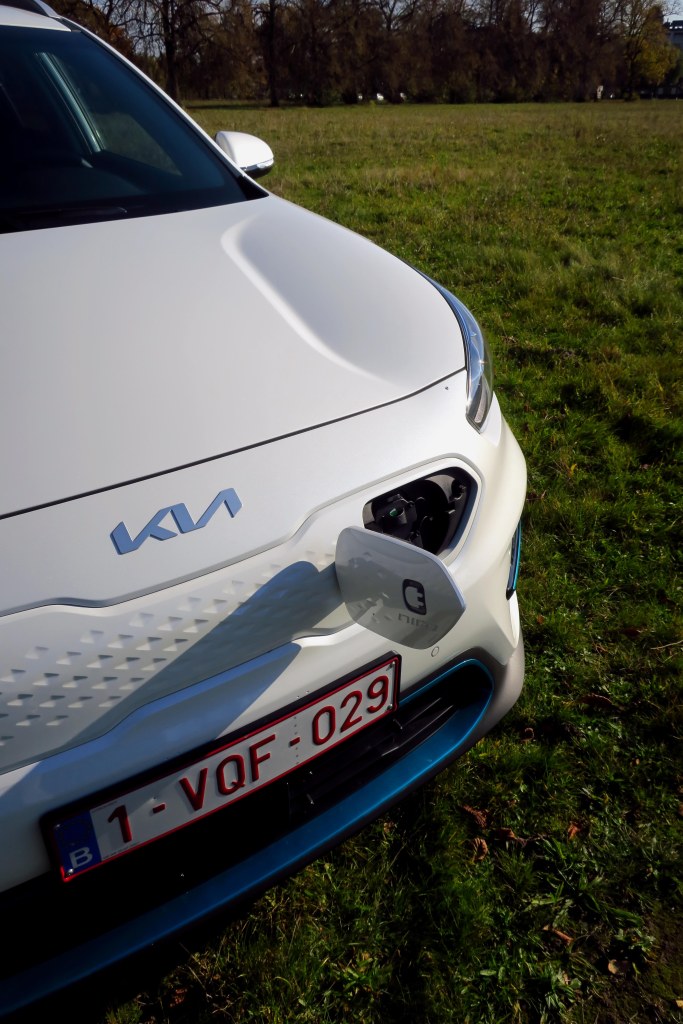
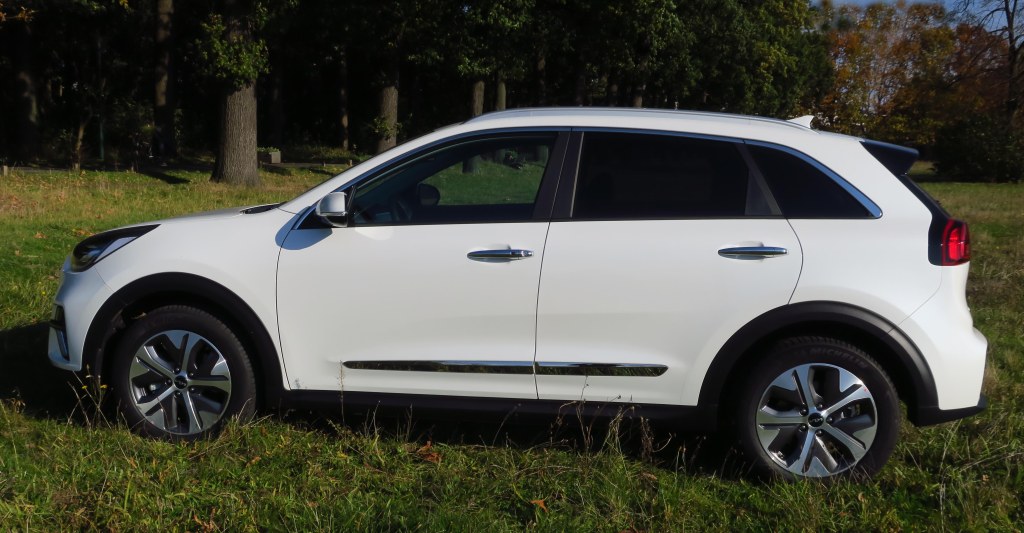
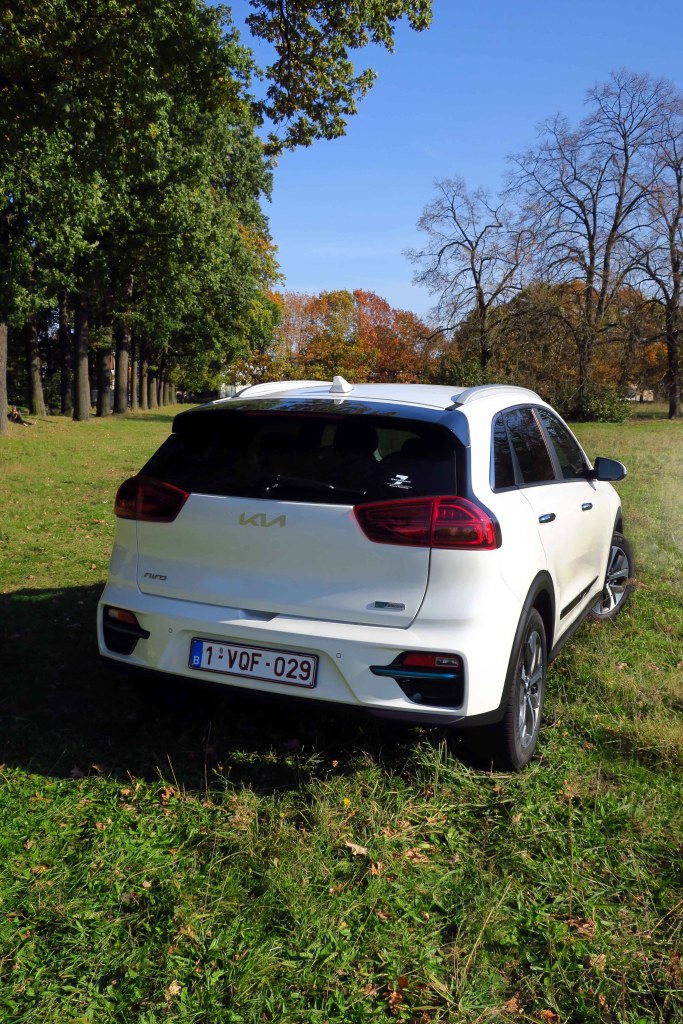
The Kia Niro still has very pleasing and now already familiar looks, with some specific blue coloured accents for the EV version. The front end clearly shows its EV character, and also the flap of the charging sockets is clearly visible. The cabin is well laid out, with classic disposition of instrumentation, commands and central touchscreen, so indeed one would hardly suspect sitting in an EV vehicle. This is all for the better, as one is very soon familiarised in using and driving this Niro.
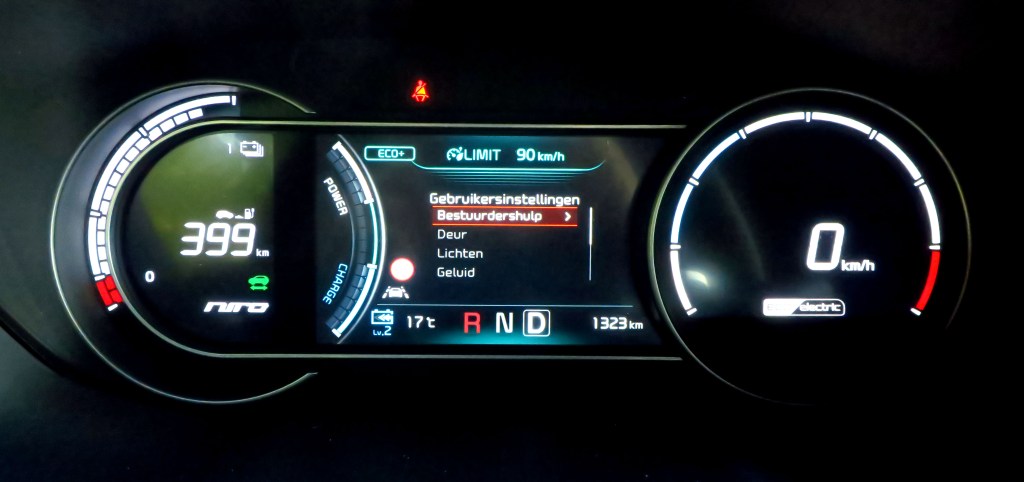
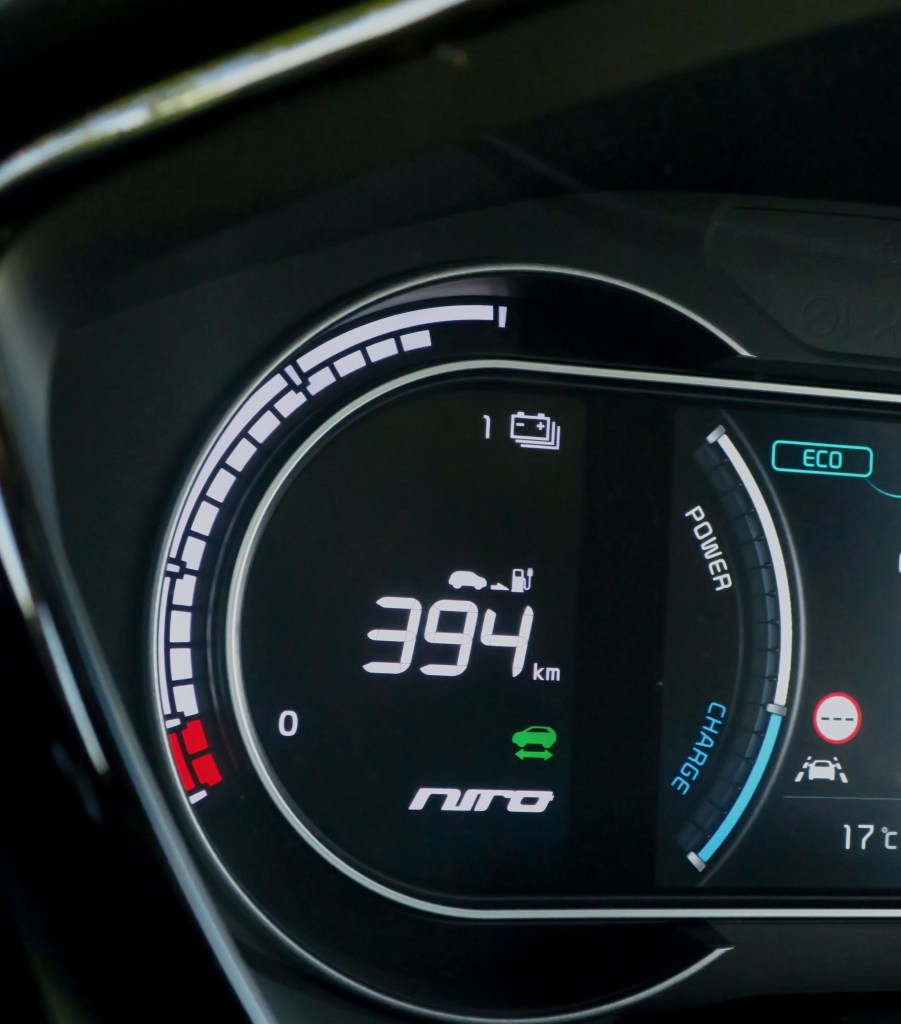
The display in front of you clearly indicates of course battery status and range, as well as the immediate or average consumption in KW/h. Soon one notices that this 150 kW or 204 HP Kia is quite frugal, where your driving style is of prime importance of course.
The manufacturer quotes 15,9 kW/h according to the overall quite realistic WLTP cycle. We took the test car on a lengthy trip to Holland, using the ECO mode throughout, and easily achieved an average of 17 kW/h.
It was delicious to be able to make this trip without the usual range anxiety, and on top of that to find plenty of public charging points in the Netherlands, not even 50 meters away from the house of the family member where we stayed over the weekend. All in all, in this ECO mode, a range of over 400 kilometers is even in more wintry conditions easily achievable when adopting a normal driving style.
Having said this, EV cars have decidedly come of age with our northern neighbours, where the e-Niro has been the top selling car in 2020 by the way…
Smoothness combined with power…
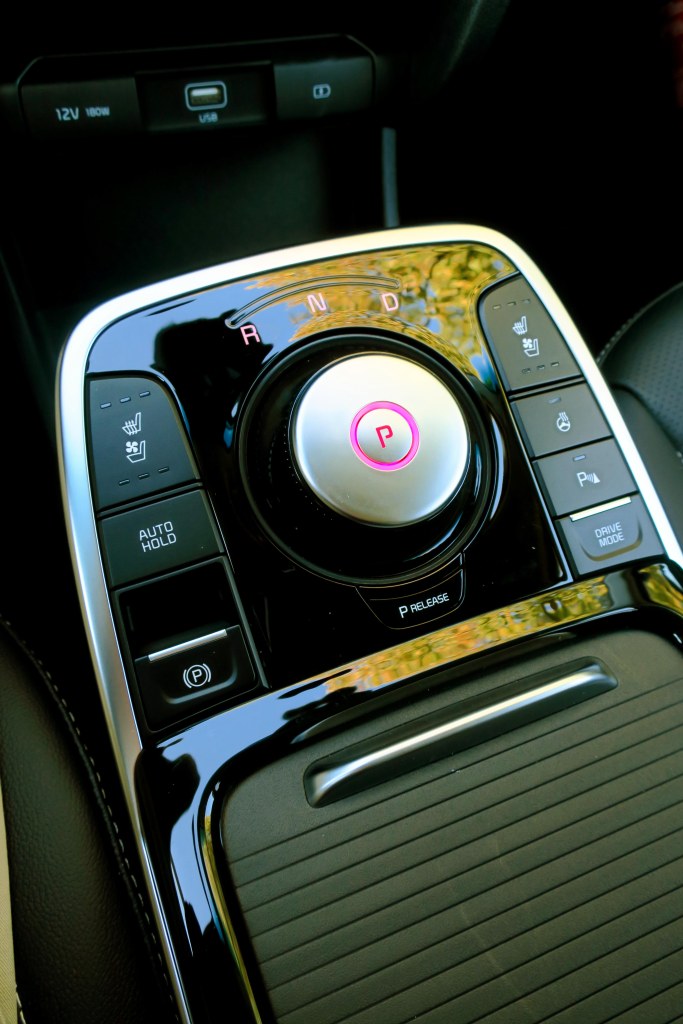
As a pure EV befits, “Zen” like feline and vibrationless power is for you to enjoy here. On the centre console is a familiar circular knob which lets you choose between drive and reverse, as we have seen in Jaguars and Land Rovers.
Off you go, and indeed, this Kia has under the hood what it takes. The front wheels are driven, and will pull you from 0 to 100 km/h in merely 7,8 seconds, which is no small feat as one knows that the kerb weight of the e-Niro is 1712 kg. Top speed is a very creditable 167 km/h. So performance wise, one is rather spoiled too, besides of course the uncanny smoothness and silence of the drivetrain.
There are paddles at the steering wheel column which let you choose the amount of regenerative braking, so “one pedal” driving is easy to achieve.
On the technical side, let us tell you here that our test car was equipped with the lithium-polymer 64 kW/h battery and that the permanent magnet synchronous motor has a power of 150 kW/204 HP and 395 Nm of torque.
For home charging, one is of course well advised to install a three-phase wallbox. With the optional three phase onboard charger, you can be fully charged in some 4,5 hours.
Roomy and practical
The e-Niro is quite roomy, with sufficient legroom also for taller passengers in the rear, with standard luggage space being a good 451 and 1405 liters.
With the rear cover in place, the volume is reduced to 280 and 1175 liters respectively. In the cabin, there is enough storage room in the central console and beneath the central armrest as well as the door bins. As we said, using infotainment and all the commands for heating/airco/ventilation is intuitive, and we also used the voice command to good effect for navigation amongst other things.
Safe handling
The e-Niro will not exactly invite you to throw it around corners, but its handling is fine to say the least. Sudden steering wheel movements will be met with initial understeer, with well controlled oversteer by the ESP when you lift the throttle. This e-Niro will not lean unduly in fast corners, has good straight line stability and is comfortable too.
Conclusion
The present e-Niro with its attractive range is still very much a desirable EV, combining excellent performance with low E-consumption. Add to this the good value for money considering the space and equipment found, with last but not least the 7-year warranty. You will agree that this EV-range trendsetter which will accompany you for many years in to wonderful “Zen” world of EV motoring and mobility.
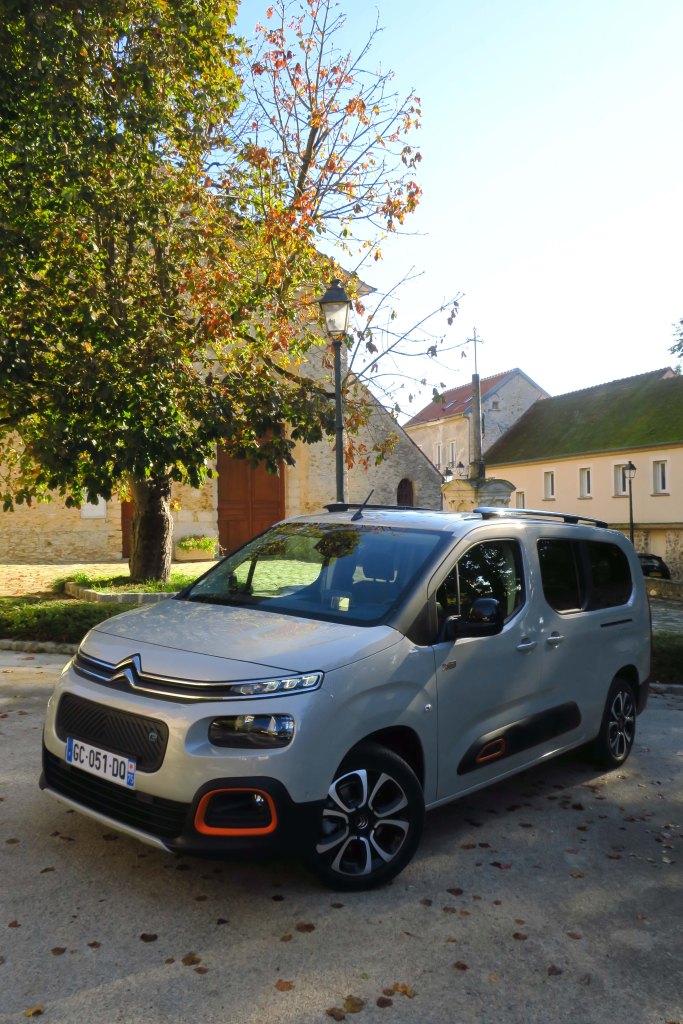
We drove the ë-Berlingo in the scenic surroundings of the Domaine des Maffliers, near Paris…
Electrification is now also expanding to commercial vehicles and popular minivans and family carriers like the Berlingo. We sat for a few hours behind the wheel of this spacious and endearing Citroën to enjoy all the delicious “Zen” refinements brought by electric propulsion, which totally transformed the driving experience of this Berlingo.
The Citroën PR and marketing team had carefully chosen a very scenic route around and in the woods of the Domaine des Maffliers, in the neighborhood of Paris. An excellent environment to get a taste the velvety power of its electric motor, to enjoy the seating and suspension comfort of this Berlingo.
We first tested the M version, which is 4,4 meters short, and thereafter the 4,75 meter “long” version. Suspension comfort and handling is virtually the same in both versions, and the EV drivetrain is identical. But then even more space is to be found in the “long” version, which can seat comfortably up to seven people.
Along the scenic villages near Paris with the “long” version…
A smooth performer…
The silence and utter smoothness of the electric motor totally transforms the driving experience. With its very comfortable suspension, one has the distinct feeling of sitting behind the wheel of a top class limousine, helped by the comfortable central armrest which supports your right arm and elbow, which has the only task to select the proper driving mode on the central selector.
But let us first tell you a bit more about the drivetrain. Citroën selected a 100 kW or 136 HP electric motor, fed by a 50 kW/h battery. Torque is sufficiently ample with 280 Nm. Top speed is limited to 135 km/h.
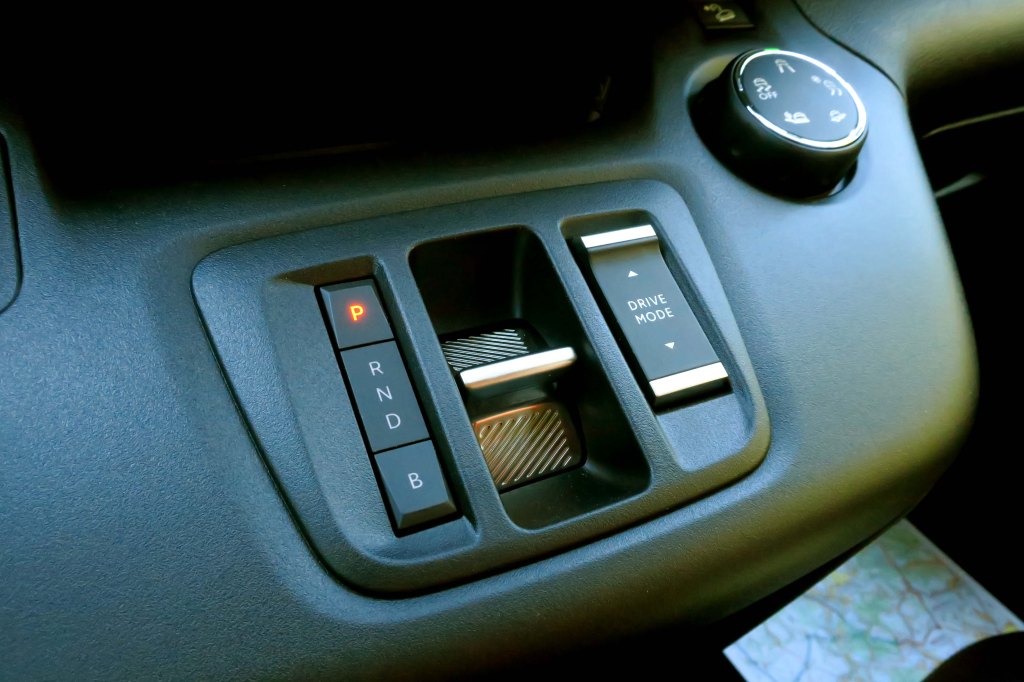
The driver has the choice between three driving modes, activated with a special so-called ë-toggle.
Comfortable simplicity: ë-toggle on the right for the drive modes, selector in the middle for reverse and drive, knobs for “P” and “B” to the left…
First, there is the so-called Normal mode, where the motor develops 80 kW/210 Nm, striking a good compromise between performance and economy. Then comes the Eco mode, with 60 kW/180 Nm, still quite sufficient in terms of liveliness we found, which gets you further on a full charge. According to WLTP, the range is then a good 280 kilometers. You also have to settle for reduced heating or airco power, but this remains still within comfortable limits. Finally there is the power mode, where the full 100 kW is at your disposal. Interesting of course when the Berlingo is heavily loaded, and/or you are driving in hilly or mountainous areas.
Simplicity is truth…
Of course there is also a “B” knob on the centre console, which lets you recuperate energy when you lift the throttle, and gives that “one pedal” driving opportunity when you adopt an anticipatory driving style, which you learn soon enough…
Spacious…
The battery pack sits snugly on the floor of the Berlingo, so the charging volume is not impaired at all. The M version has 775 liters luggage space, the XL version in 5 seat configuration brings this to a whopping 1050 liters.
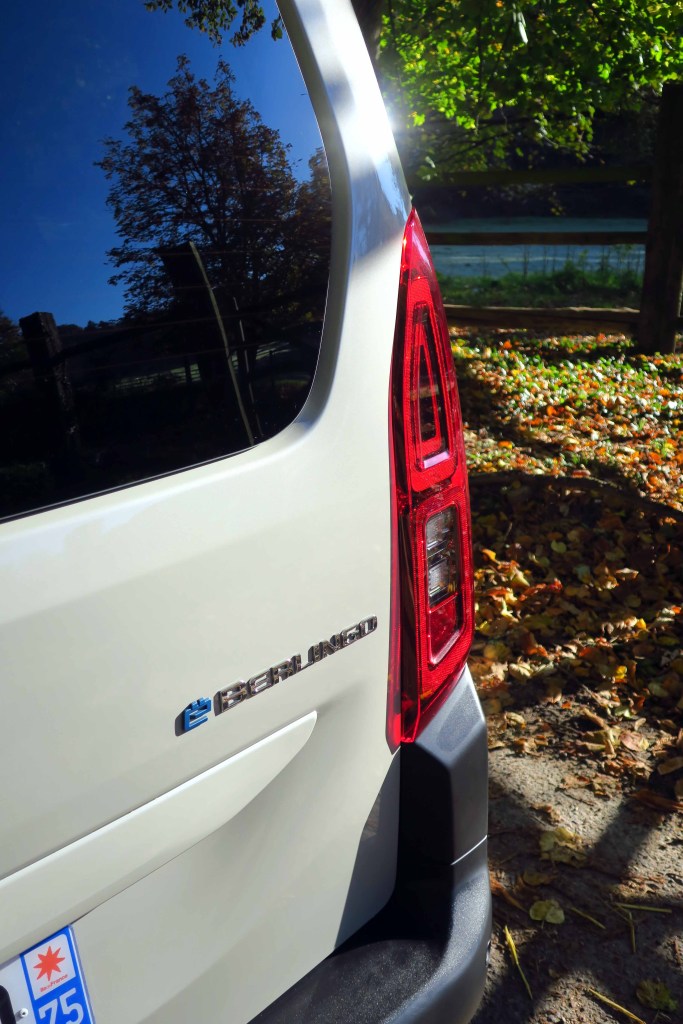
The ë-Berlingo proudly wears its badge…
The cabin boasts a further 167 liters of storage space, so this Berlingo makes you truly feel at home. This is a car which makes family life really easy…
… and easy charging
The practicality of a fully fledged EV stands or falls with the charging facilities, and we all know that the public charging situation in Belgium is nothing short of abysmal. Home or office charging is the answer for the time being, and here Citroën offers for its Berlingo plenty of opportunities.
Home charging can be done with the so-called Mode 2 cable, which is compatible with an 8A and/or 16 Amp socket. For fast chargers, both public or private, one needs an optional Mode 3 cable. This allows you to charge from 0 to 100 % in 7,5 hours if you have a single phase 7,5 kW wallbox. This is reduced to 5 hours if you have a three phase 11 kW wallbox.
Super fast charging is possible at public charging points up to 100 kW, and there one needs a mode 4 cable which is integrated in the charger. It then takes merely 30 minutes to charge the 50 kW battery up to 80 %.
The Berlingo leaves you the choice between three connected packages, connect assist, connect nav and connect play.
In the basic assist package you can get connected with a call center in case of emergency or accident, and via the My Citroën App you can be informed about range, charging status, mileage, next service, etc.
In the nav package, you can use voice command/recognition for interaction with the phone, navigation and radio functions. TomTomTraffic displays for you the best route under up to date traffic conditions.
The connect play feature sports Mirror Screen technology, compatible with Apple CarPlay™ and Android Auto.
Conclusion
Electrification is not an empty word at Citroën anymore…
The electric propulsion completely transforms the driving experience with this Berlingo, and this refined upper class panache makes this family friendly space car even more endearing and desirable. But not only for the family man. Every craftsman or public/private services worker/small entrepreneur who works in urban spaces will just love this EV version, which will be a soothing companion in his daily work life. After a stint behind the wheel, you will indeed wonder how we fared for decades without this full EV enjoyment and “Zen” progress…
Note that at this Citroën ë-experience day we also drove the full EV version of the C4. More about our driving impressions soon…
With this ID.4, Volkswagen is taking another bold step forward: it is building an SUV which will be offered worldwide, notably built and sold in China, the US and Europe. For us here, it is produced in Zwickau. It is the second model to use the celebrated MEB platform, the EV platform which is also sold to Ford. The car embodies a quite important if not formidable step for VW, where every aspect of this car has to please many customers, all over our globe.
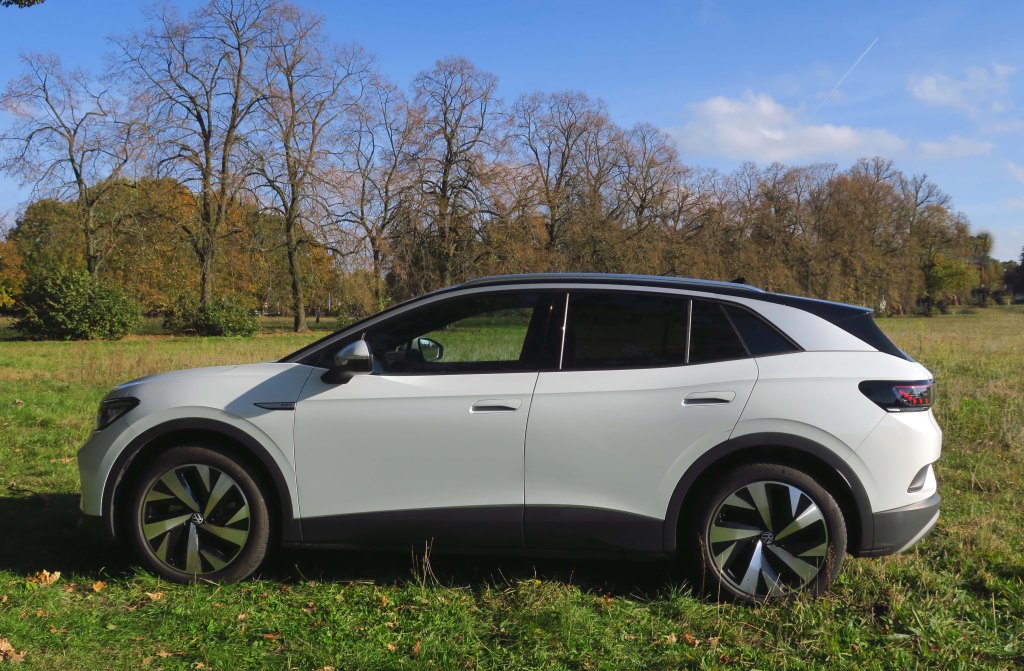
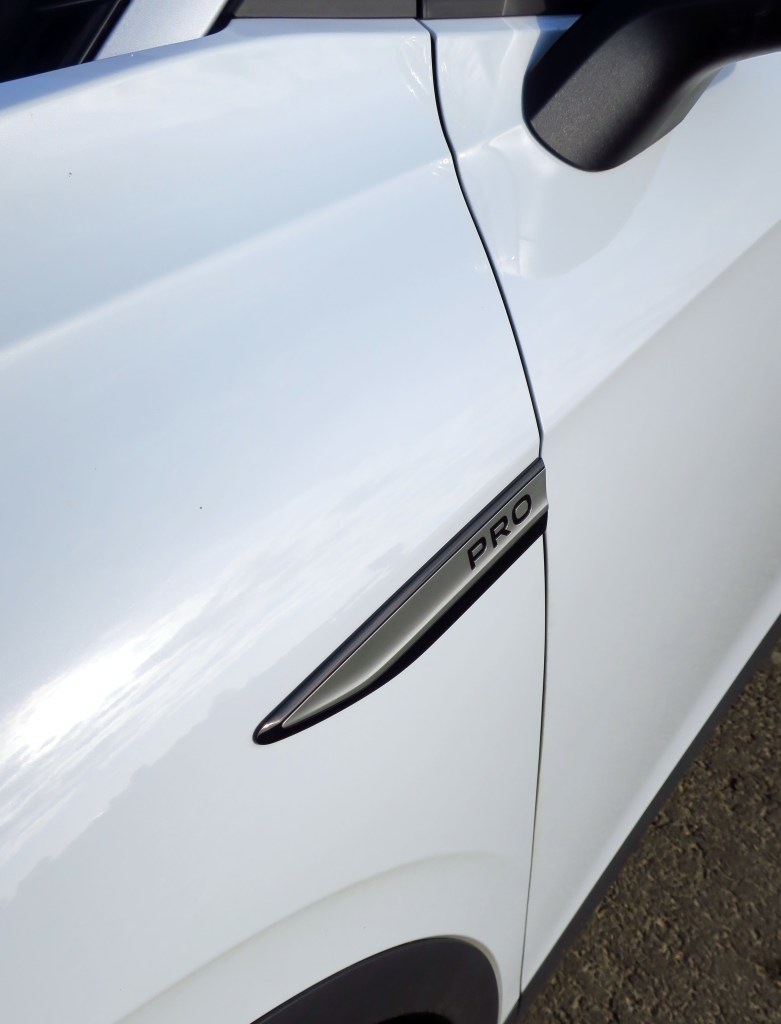
We drove the so-called “Pro” version, with the 77 kW battery, about 500 km range, 204 HP or 150 kW, and lively performance. It certainly did please us, and this pleasant impression got better the longer we drove it. Just read on…
Hans Knol ten Bensel
Friendly and harmonious looks
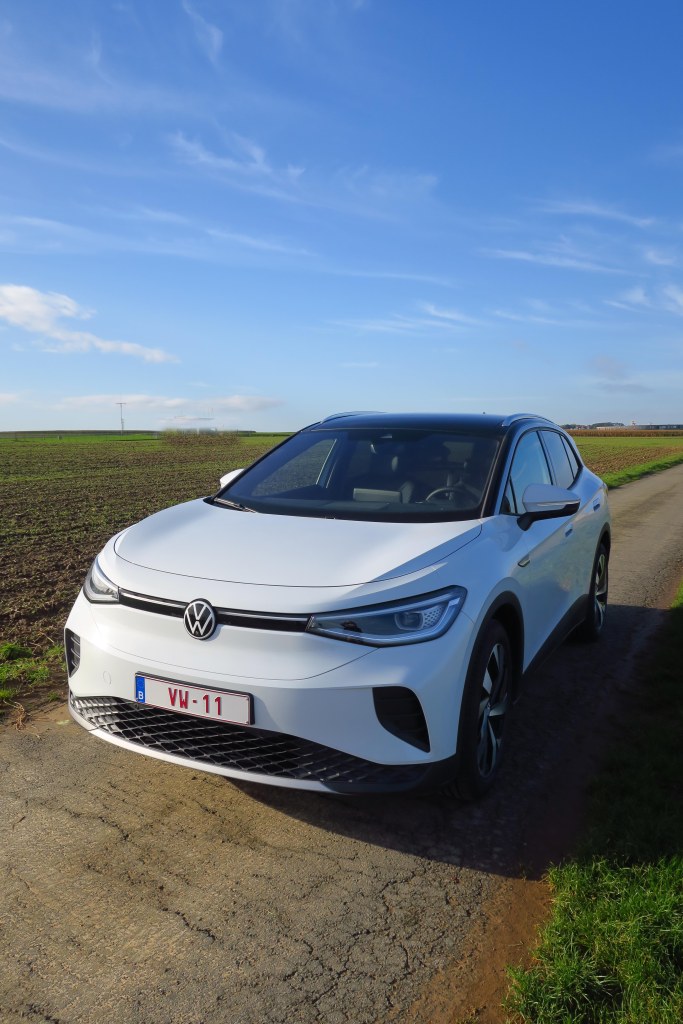
Stylists of a world car have no easy task. It looks that they have succeeded though. Just know that the ID.4 has recently been singled out for the “2021 World Car of the Year” award. When we approached the ID.4 and walked around it, our eyes meet iconic, timeless and pleasing shapes. Lines and contours with character, evoking exactly what this car wants to be: a family-friendly roomy SUV, which will accompany its owner with style for years to come. The rounded styling language is never aggressive, the front end is clean, not without elegance, has a timeless touch. The proportions are well chosen, look just right from every angle, also the big wheels with their aerodynamic alloys add panache to this SUV. We took some photos close to the runway of Zaventem airport, so the flatness of the empty landscape adds to the clean lines of this ID.4.
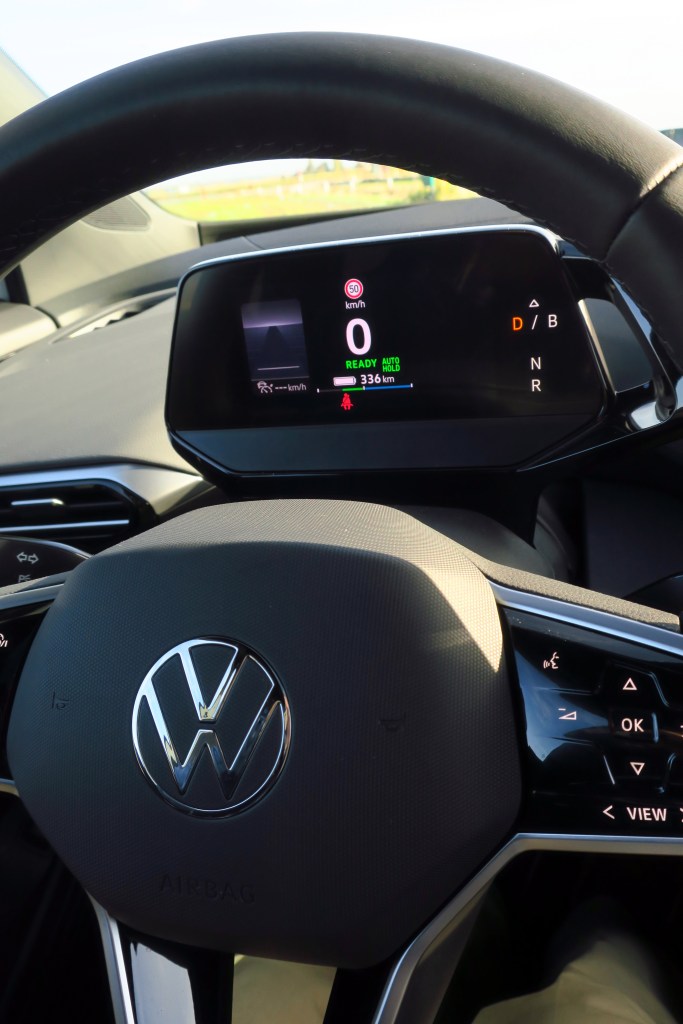
The same simplicity and clean lines are found in the interior and the dashboard layout and instrumentation. It is very similar to the ID.3, with an instrument cluster forming one unit with steering column and steering wheel, and a large touch screen in the centre of the dashboard. Its driver assistance and infotainment system is everything you could wish for. Of course you have to familiarize yourself with its controls, so we suggest you to read the instruction book carefully.
Reading the instructions is the proper thing to do when you buy a car of this refinement, engineering excellence and build quality. It is by the way ALWAYS the thing to do when you purchase any car, actually. Also, remember, there is YouTube. Many VW car dealers have a film made for you, so-called instruction films, where you can see and hear the workings of every accessory and functionality.
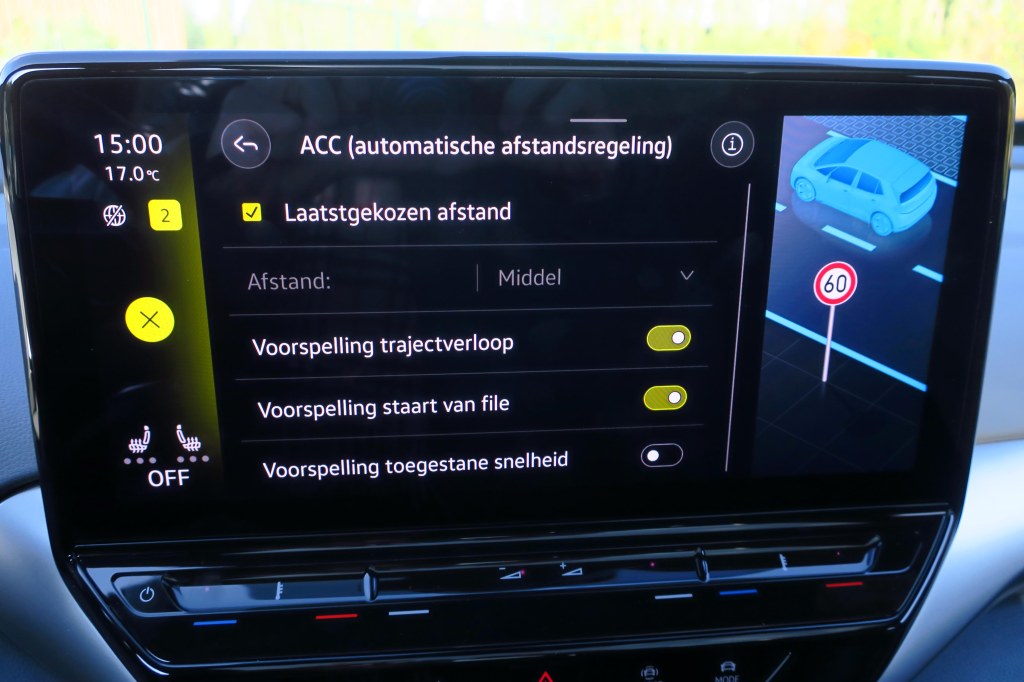
In our test car, suffice to say the diagonal size of the touch display was 10 inches, and it is good to know that natural voice control with an online connection and the ID. Light come as standard. You will not read any critique here about the workings of any of the functions of the ID.4, it takes getting used to, and even a week can be too short for this to have everything intuitively in its fingers.
I always keep in mind that the owner or user of this car will be behind the wheel of this VW for months, if not years, and will have familiarized him (her) with every function, that is if he (she) was not too lazy to read about it in the manual or try it out. I mentioned ID. Light. It is a light strip below the windscreen, and tells you when to take a left or right turn, when it has understood a voice message from you, after you said first “Hello ID.” Indeed, the future has arrived in this car.
The driver uses the central display to manage the telephone system, navigation system, entertainment functions, assist systems and the vehicle setup. Sliders for volume and temperature adjustment are located below the display. Clean and purposeful.
Daily life with the ID.4 has become simple. Just step in, push the brake pedal and select “D”. Off you go. On the right side of the steering column is a big switch which you have to turn towards or from you, to select D, B or Reverse. At the end of this switch us a big knob “P”. Just push it and the parking brake is on.
With “D” you drive normally, with “B” the electric motor regenerates energy when you lift the throttle. It will decelerate the car of course. When you are a master in anticipative driving, remain in “D”, you can coast then almost forever. Using kinetic energy by just coasting is still the most efficient, albeit the most difficult thing to do as you have REALLY to anticipate traffic situations.
“Zen” driving…
The biggest advantage of EV’s, I find personally, is their supersmooth progress. Gone is the so disturbing jerkiness of sticky transmissions and unwilling cold engines. So the ID.4 is also a very soothing vehicle. Silent, vibrationless, with smooth feline power thanks to its impressive torque. 310 Nm if it. Good enough to take this rather heavy ID.4 from standstill to a speed of 100 km/h in 8,5 seconds. Almost pushing your back firmly in the seat. Almost, but remember, this is meant to be a family car. Top speed is limited to 160 km/h. It is also a towing vehicle. Up to 1,000 kg in our test car’s configuration.
The suspension is rather firm, but not uncomfortable. The laws of physics command some firmness as there is a good 500 kg of batteries in the platform underneath the seats. The electric 150 kW motor sits above the rear axle and drives the rear wheels. The advantage is that it allows a small turning circle of just 10.2 metres. Rear wheel drive then, but do not expect to make any power slides. Steering is precise and handling is quite good, even on the rather sporting side.
The WLTP range with the 77 kW battery is according to the manufacturer up to 522 km. There is no secret. Using kW/h costs range. If you cruise at say 85 km/h on the motorway (the truck drivers won’t like this and disturb your “Zen” progress) everything is fine. In winter, and/or when driving faster, the practical range can be estimated as being a good 360-380 kilometers, which is still quite OK. At a DC quick-charging station, the ID.4 with its 77 kWh battery and a charging capacity of 125 kW can be recharged ready for the next 320 km in around 30 minutes (according to WLTP).
Roomy
The VW engineers and stylists have kept one thing firmly in mind: this is a family SUV. So indeed, it offers room which is actually that of a SUV which belongs to a class higher. Ample legroom in the rear, (similar to the Tiguan Allspace), three passengers can sit easily, and even tall drivers do not touch the roof when they put their seat in the highest position. Need we say more? Suffice to say that the wheelbase is a good 2766 millimeters.
The ID.4 has also lots of room in the front centre console, as there is no gearchange lever to disturb things. The luggage space is also impressive: 543 litres of luggage, a figure that increases to 1,575 litres after folding down the backrests (loaded to roof height).
And comfortably equipped
Standard features in all ID.4 models include the ten-colour ambient lighting, the speed limiter and Air Care Climatronic. This is coupled with an electric stationary air conditioning system, which can also be activated when the car is not charging from the mains power grid. Life is good with the ID.4.
All nine ID.4 models are equipped with the Discover Pro navigation system and 10-inch display as standard. All models above the ID.4 City and ID.4 Life come with the Infotainment package. (We tested the “Pro” version.) Its highlights include the Comfort mobile phone interface, which is able to connect a smartphone to the vehicle’s electronic system and charge it inductively. The standard App-Connect function enables media to be streamed via a smartphone, which can be embedded in its native environment using Android Auto, Apple Car Play and Mirror Link. In the Infotainment Plus package (which comes with the ID.4 Tech and ID.4 Max), the navigation system has a 12-inch display.
The ID.4 is equipped with the lane keeping system Lane Assist as standard. Front Assist monitors the area in front of the vehicle and responds with warnings and braking interventions to warn the driver of impending collisions with other road users. The acoustic Park Distance Control function is able to avoid parking collisions or reduce the level of damage using the automatic manoeuvre braking function. The speed limiter is also included in the ID.4’s standard equipment.
Another technology that every ID.4 has on board is called Car2X, which allows the car to exchange information about local hazards with other vehicles and the traffic infrastructure – via the wireless standard WLAN p. The maximum distance here is 800 metres, with warning transmission taking only milliseconds. Car2X is currently active from a speed of 80 km/h, but is also intended to improve safety and traffic flow in urban traffic in the future.
Conclusion
A very able, roomy and stylish compact SUV and a marvelous EV, that’s what this ID.4 essentially is. It is a true Volkswagen, setting standards in timeless modernity, embodying purposeful and clever engineering.
Add to this the know-how of a world manufacturer, the vast dealer network, you will agree that this new generation VW EV have a lot going for it. It ranks already in some countries where the charging infrastructure is decent among the bestsellers, so this ID.4 has a bright future ahead, electrifying the world…
Subaru is deservedly famous for its excellent engineering. It embraces 4WD and boxer engine technology, and sticks to it with an uncanny sense of tradition. Rightly so.
Comes of course the EV age, and Subaru makes with the e-Boxer range it first steps into this world. The e-Boxer drivetrain can best be described as a self-charging hybrid. It does the job, whilst retaining its unique Subaru character: the willing boxer engine, the excellent off-road capabilities, the well balanced and inspiring handling on tarmac, it is all still there.
We tested already the 2020 XV e-Boxer, just read our previous test report on these columns. We find our positive findings confirmed, and focus here also on the main topics of the facelift…
Hans Knol ten Bensel
Bolder looks
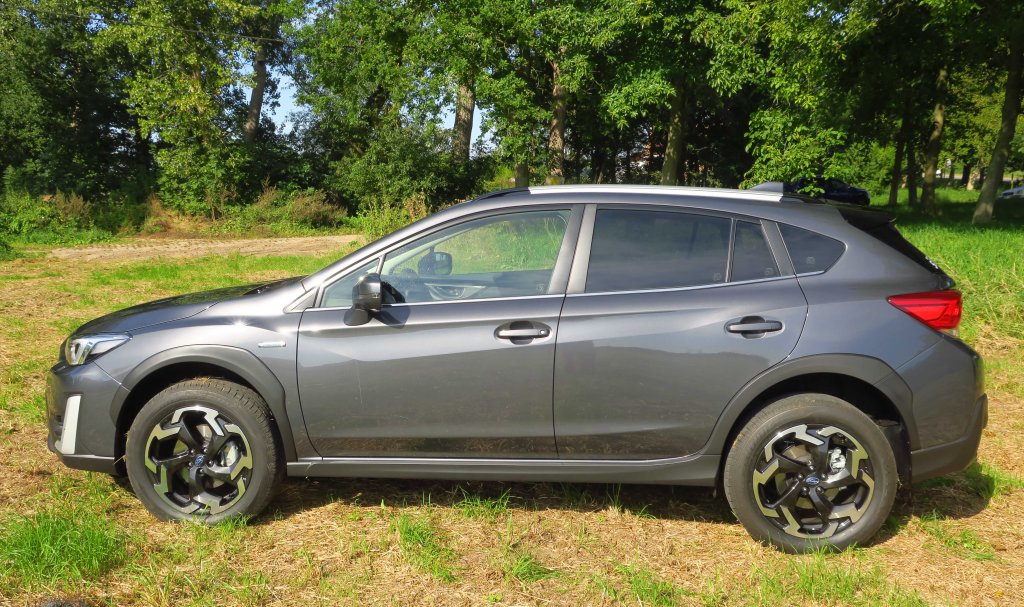
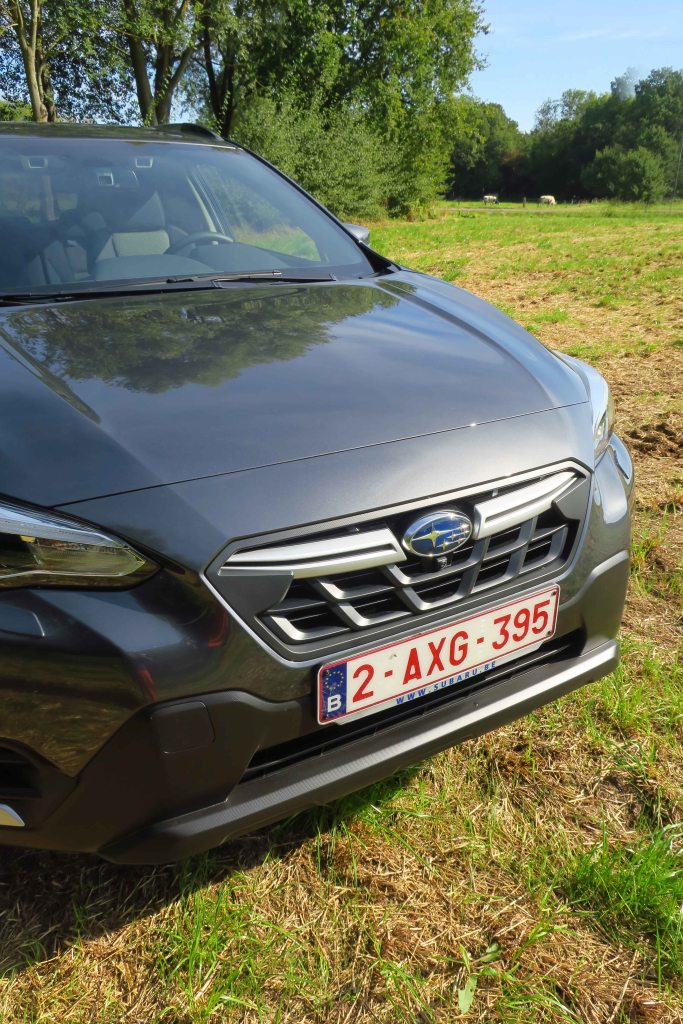
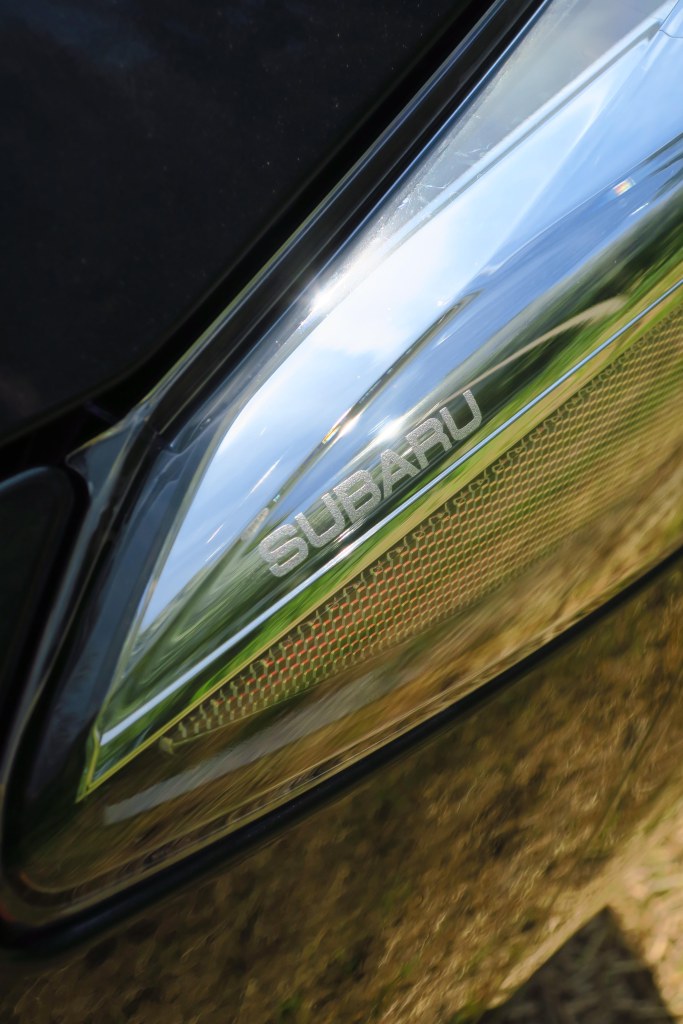
The compact crossover has now a modified front, with an even tougher look. The front bumper was redesigned with a larger black plastic part, a new skid plate and L-shaped silver-grey inserts. The fog lamps received a new frame and the grille was tightened with a new mesh. The crossbar in the grille itself is now slightly wider, making the Subaru logo larger and more prominently visible. Finally, the design of the 17- and 18-inch alloy wheels has been revised.
The drivetrain becomes even more sophisticated
Let’s first look at the drivetrain, which it has of course in common with the other e-Boxer models in the Subaru range. The redesigned 2 litre boxer engine is coupled to a 12.3kW electric motor sitting on the CVT transmission and small 13.5kWh battery, and as we said, Subaru calls it a self-charging hybrid. Modest beginnings, but on the other hand this adds only some 167 kilo to the scale.
Does it work? Yes, it certainly does, that is if you hone your driving style, so the hybrid can function optimally. We indicated this already in our previous test report, and we can only repeat it here.
It will run on the electric motor at lower speeds, for shorter distances. The trick is to accelerate slowly and keep constant speeds in urban traffic. These driving conditions which will not prompt the boxer engine to set in, but let the 17 HP electric motor do its work as much as possible.
The CVT transmission will also choose higher ratio’s when you keep the throttle openings small. The result is lower revs, which will keep consumption very reasonable. Subaru did some very good detail work in setting up the CVT transmission, added an “Intelligent” setting which is ideal for constant speed boulevard drives and keeps revs close to 1000 rpm or so when touring in 30 km limit areas.
All this lets consumption drop to between 7 and 6.5 l/100 km even in tight urban driving conditions. All this also happens with uncanny smoothness, and this Subaru is a very refined automobile indeed.
As said, Subaru added with the facelift the so-called “I-Drive” as standard. The system has two settings, Sport (S) and Intelligent (I), each with their own character: thanks to the smooth power delivery, Intelligent mode is ideal for city driving, for long distances and for driving as efficiently as possible. Indeed, this setting keeps the revs down as much as possible. The Sport mode is a highly responsive mode and is well suited to all-round conditions thanks to its instant acceleration.
Of course in this Sport mode you cannot bend the laws of physics, and when the willing boxer engine delivers its 150 HP pulling power, the fuel consumption goes invariably up.
The manufacturer quotes 6,5 l/100 km as average consumption and mentions CO2 emissions of some 149 g/km. Performance is everything you could ever wish for: 0 to 100 km in 10,7 seconds and a top speed of 193 km/h.
Precise and inviting handling, on and off-road…
The Subaru XV runs on its new Global Platform, which delivers more safety and stiffness, as we said before, resulting in very good handling, and this XV is a pleasure to drive on winding stretches. Suspension comfort is also very good, both on tarmac as on (very) rough terrain. When it comes to safety, it is good to know that the XV has been awarded the maximum 5-star Euro NCAP safety rating.
Subaru’s Permanent Symmetrical All-Wheel Drive constantly shifts power to the wheels with the most traction, and the XV has not less than 220 mm ground clearance.
With X-MODE with Hill Descent Control, you negotiate steep inclines and descents as an expert. At the push of a button, it takes command of the engine, transmission, Symmetrical AWD, brakes and other components to help you navigate challenging terrain. Here the facelift has made things even better. Subaru also optimized this X-MODE. It is now equipped with a dual function that allows the driver to choose between “Snow / Dirt” and “Deep Snow / Mud”. X-MODE takes advantage of the high torque and fast response of the motor to prevent stalling in extremely poor surfaces
Living with the XV
The seating position is also very good, with fine, supportive seats.
We liked already in the previous test the dashboard layout and clear, the fine chrome finished round dials, which evoke a bit of pur-sang atmosphere which we like so much. Connectivity and driving aids are up to scratch, not to mention Subaru’s unique EyeSight.
This keeps you on a safe distance to cars in front of you, avoids front end collisions with cars and detects pedestrians in front of you. Of course infotainment is also top notch, with Android Auto and Google CarPlay provided for ideal connectivity.
Conclusion
Every bit a Subaru, this e-Boxer. But, if you drive it with intelligence, it will reward you with very interesting consumption figures. Subaru will soon have a full electric vehicle, so they also go up that path. In the meantime, in the remote outback, this is your ideal car to hit all the country roads in an electrified and environmentally conscious manner…
The iconic Fiat 500 is entering into the electric era, and it is doing this very convincingly with superb technology and style.
It even has the panache to add a third door to its well-shaped body, to set it apart from the rest.
And indeed, apart from the rest it is. It has a whole new body, and is six centimeters longer and 3 cm taller than the “normal” Cinquecento, yet it retains fully its ideal and iconic proportions.
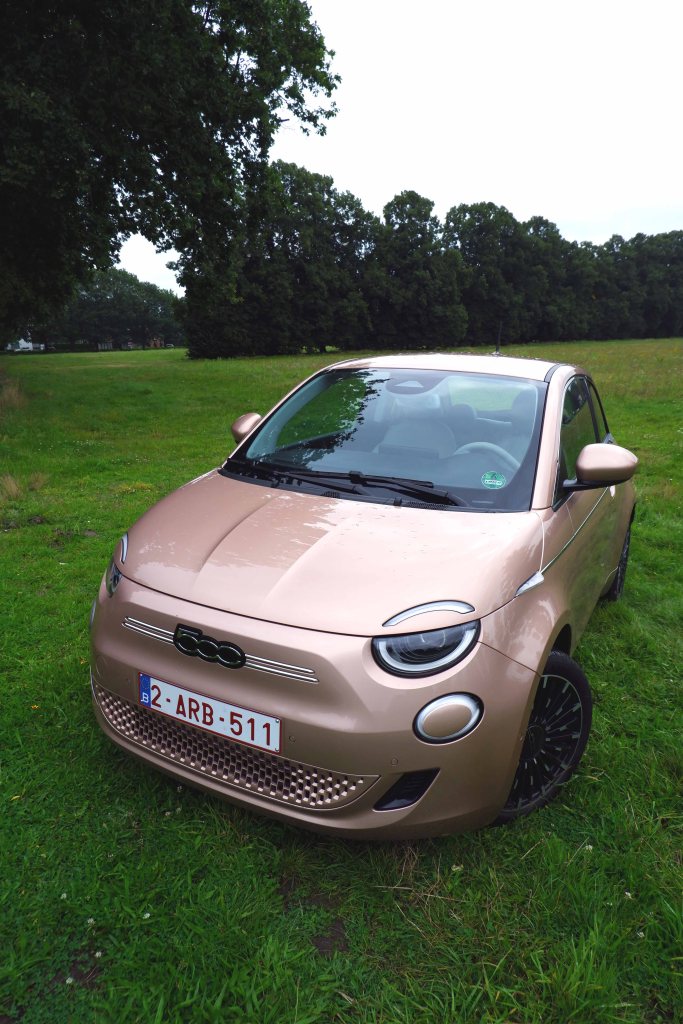
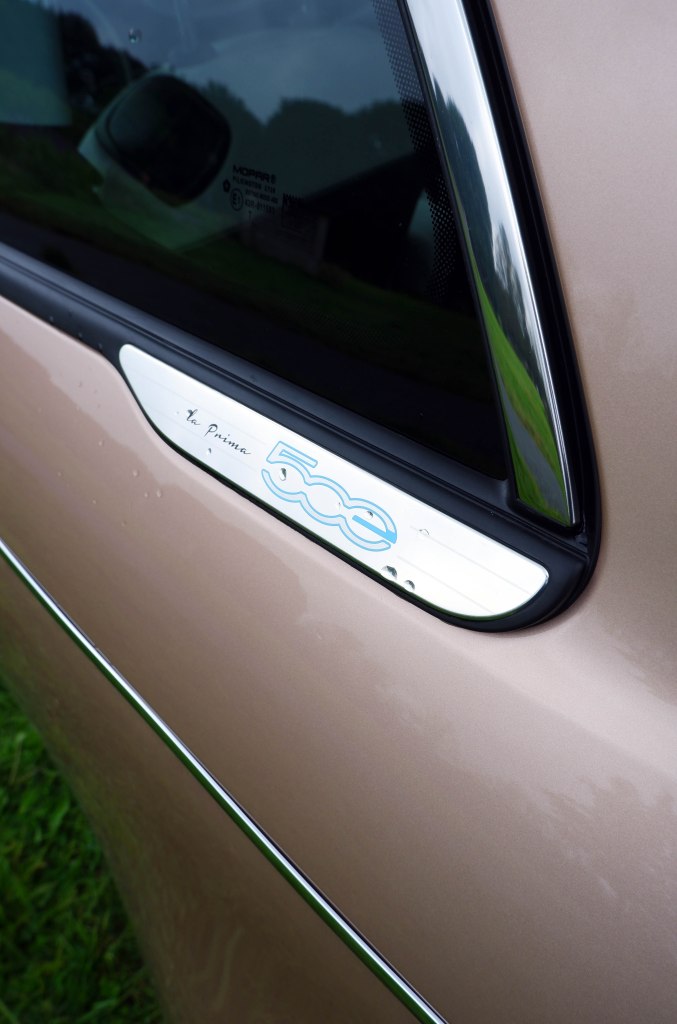
We drove the “prima” Cinquecento, sprayed in very pleasing Rose Gold, and we liked very much its performance, ride and style, just read further…
Hans Knol ten Bensel
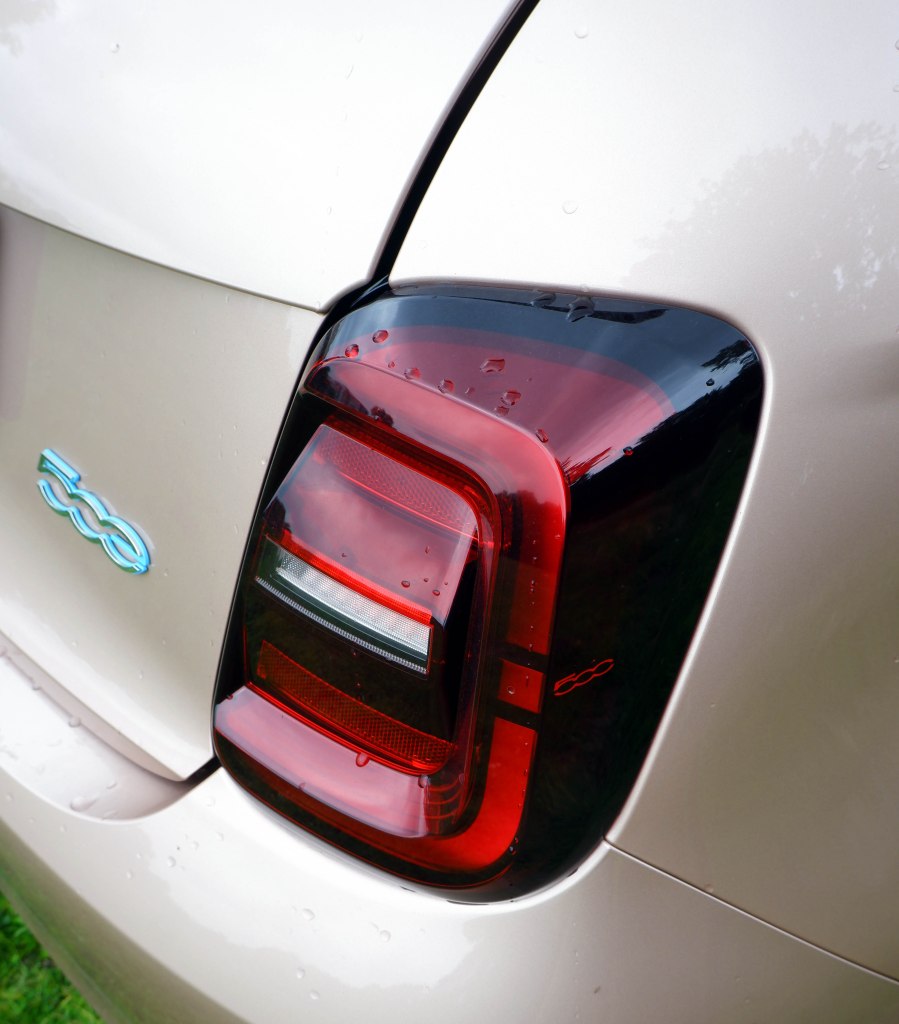
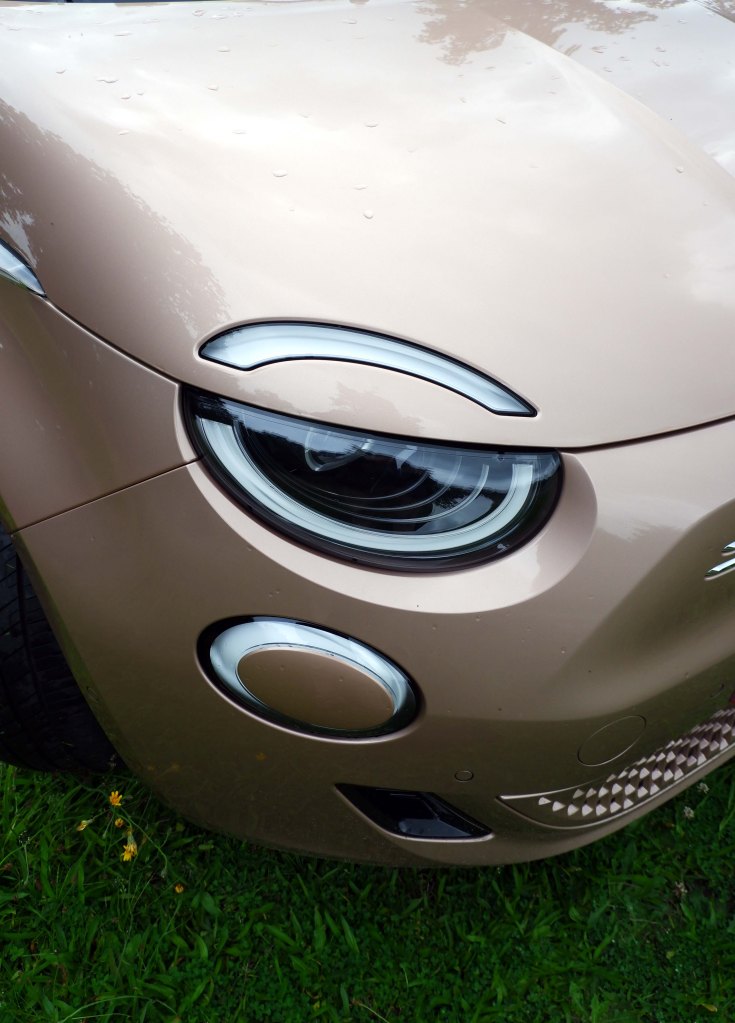
The New 500 3+1 “la Prima” has it all, and stands out with a range of exclusive details: full LED headlights with an ‘Infinity design”, two-tone 17” diamond-cut wheel rims and chrome-plated inserts on the windows and side panels.
In the interior, the pleasant ambiance continues: soft-touch seats studded with Fiat monograms, a two-tone steering wheel flattened at the bottom and an exclusive “la Prima” tag on the console. We also liked very much the finish of the dashboard panels on our test car.
Comfort is also paramount: six-way adjustable front seats, mats, an “electro chrome” internal rearview mirror and 360° ‘drone view’ parking sensors. The steering wheel is also adjustable in height and length over a wide range, so an ideal seating position is soon found. Add to this the spacious glove box, the wide door bins and trays on the center console, and you notice that this New Electric 500 is geared to make your daily life a lot rosier.
“Zen” electric driving is addictive…
But let’s turn now to driving this Torino-built electric icon of style. It is not only constantly pleasing to the eye, it is also a soothing, relaxing experience to move it from A to B.
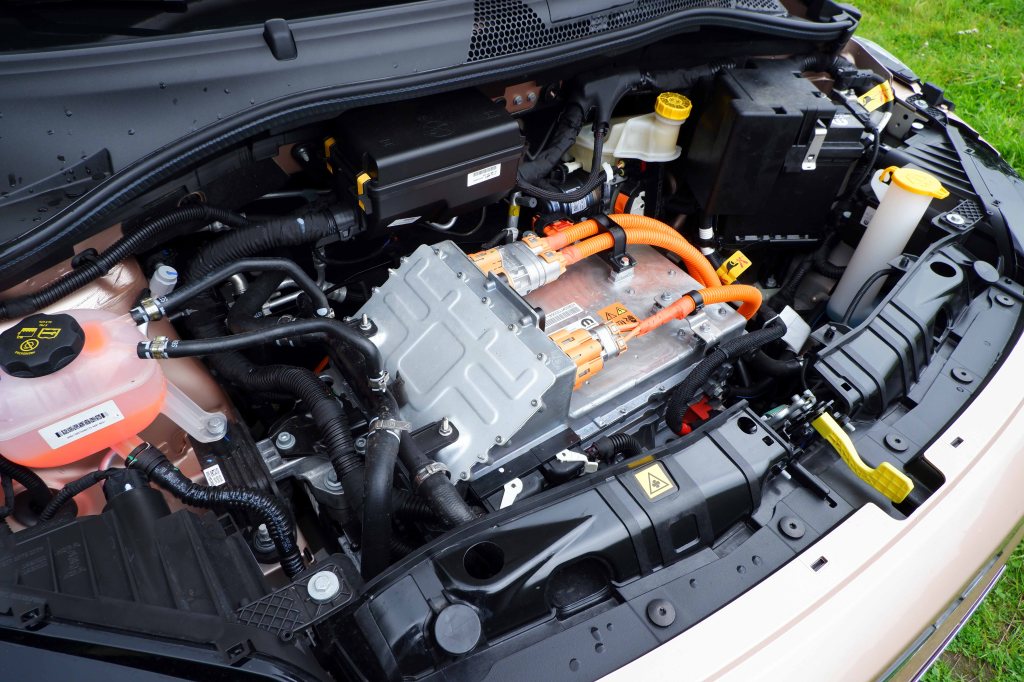
Even if you are driving with kind smoothness, only caressing the right pedal, you feel its whispering power. All 118 HP or 87 kW of it, with 220 Nm of instant torque. Technically very refined, motor and drivetrain being vibrationless and totally inaudible over the whole speed range.
Zesty it is indeed. It will whisk you from 0 to 100 km/h in merely 9 seconds. And when pulling away from standstill, you reach 50 km/h in just 3.1 seconds. But it is the “Zen” character of e-driving which gets you sold, and puts a broad smile on your face.
No frantic revving, no jolts from clumsy gearchanges, just a smooth, utterly silent, silk smooth flow of power. You can fully concentrate on the traffic and everything around you, undisturbed, enjoying the purity and elegance of your progress. Only e-power can convey this feeling, and we have to admit it, it is addictive.
We caught ourselves cruising on urban boulevards even below the 50 km/h speed limit, just to enjoy the ride. Urban driving at the corresponding lower speeds delivers of course also excellent economy, and throughout our test the consumption was a very reasonable 8.1 km/kWh. We have to admit that we drove this “Elettrica” very smooth indeed. On a fully loaded battery, which has a capacity of 42 kWh, the TFT 7 inch instrument panel indicated a 260 km range, which is totally adequate for our country. The 500 Electric can be charged with a fast 85 kW charger, so you can recharge from a flat battery to 80% range in 35 minutes, or to 50 km – the average daily distance driven – in around 5 minutes.
We used the 11 kW standard charger, getting from 40 % to 80 % charge in about 3 hours. In our neighborhood, with only two charging points for a few thousand inhabitants, we are allowed to stay maximum 3,5 hours at the charging point, but this was luckily enough for us.
As everyone knows, the charging infrastructure in Belgium is completely below any standard, and will very probably remain so for considerable time to come. It is therefore almost essential in our country to have a private home and/or garage/driveway, if you want to call an fully electric car your own and use it regularly.
The electric 500 is about 300 kg heavier than its petrol engined counterpart, so the suspension setup is somewhat stiffer, without being uncomfortable however. Despite its 1,3 tons weight, the car still feels quite nimble and agile, and the excellent 9,7 m turning circle and super light steering make it your ideal partner in town.
On the open road, the electric 500 stands very well its own, with a regulated maximum speed of 150 km/h. It doesn’t feel fussy at all when driving at the legal maximum motorway speeds. Of course, look out for fast(er) charging points and plan your trip carefully…
One word about the driving modes. In the “normal” driving mode, the car will coast essentially when you lift the throttle, retaining the kinetic energy for you to use. In the “range” mode, the electric motor will use this kinetic energy to charge the battery, allowing you to use a “one pedal” driving style with ease, as the braking effect of the motor is quite marked. Last but not least there is the “sherpa” mode, where motor and battery are carefully governed to allow you to squeeze a maximum distance out of the remaining battery charge.
Infotainment and driving aids…
“La Prima” is equipped with the most advanced ADAS systems available:
What to think of Intelligent Adaptive Cruise Control (iACC) and Lane Centering, Traffic Sign Recognition, Autonomous Emergency Brake with pedestrian and cyclist recognition, Intelligent Speed Assistant, Lane Control, High-resolution rear camera with dynamic grid, 360° parking and urban blind spot sensors, Automatic twilight and dazzle sensors, Emergency call and Electronic parking brake?
Last but not least it features automatic air conditioning…need we say more?
Connectivity is also hardly neglected.
This electric 500 has the new UConnect 5 infotainment system, which means a 7″ TFT Display, a 10.25″ Touch Screen With navigation, an excellent DAB Radio, Wireless CarPlay / Android Auto, the Uconnect Box (a telematic box enabling the connected services) and a wireless smartphone charger.
We were very impressed by the functionality and computing power of the central touchscreen, with excellent and fast graphics.
Practical
The third door, which can only be opened when the corresponding front door is opened, proved very practical, and allowed much easier access to the rear seats. The rear accommodation is essentially meant for kids or (very) small grown-ups. In a 500, noblesse oblige… this is a car with style. Nevertheless, it has a standard boot space of 185 liters, and of course the backrests of the rear seats can be folded.
Conclusion
The Cinquecento is alive more than ever, and the transplant with an electronic heart has succeeded masterfully. It was a very wise decision – also technically necessary of course to house the batteries in the chassis floor – to build an entirely new body for this car, and it was even more judicious to retain faithfully its iconic proportions too.
Technically, the car is totally mature, providing premium character smooth transport, assisted by driving aids and made to measure top notch infotainment.
If you are looking for attractively priced (urban) electric transport with iconic panache and style, take a long hard look at this car…
Hans Knol ten Bensel
Photographer’s notes: for the photos of this test, we took our recently acquired Fujifilm X-A5 through its paces. We like the excellent contrast and contour sharpness of the Fujinon Apherical Zoom lens, delivering the fine definition you see here on these images. We used the TV or shutter priority mode set at 1/125 s, to avoid any eventual motion blur. We found the autofocus a bit on the slow side compared to our Nikon DSLR, but this was not much of an issue as the car was stationary anyway.
The VW Tiguan is Europe’s best-selling SUV since its launch, and VW wants obviously to continue this succes. As the competition has come to the market with plug-in hybrid versions, notably the Peugeot 3008 and the Opel Grandland X, VW decided to bolt the drivetrain of the Golf GTE on the Tiguan platform, which is actually still the one of the previous generation Golf. The result is a smooth and very frugal performer, which will convince many crossover buyers to take the step towards electrified transport. Indeed, this Tiguan plug-in Hybrid stole our hearts with its state-of-the-art technology, honed to perfection already on the Golf GTE. Just read further…
Hans Knol ten Bensel
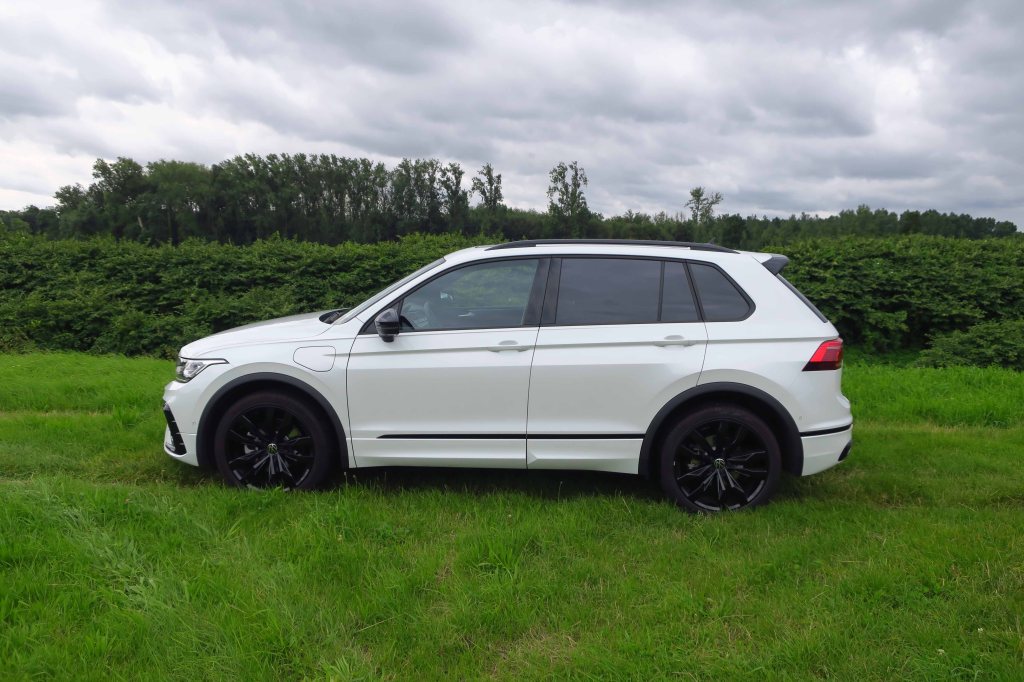
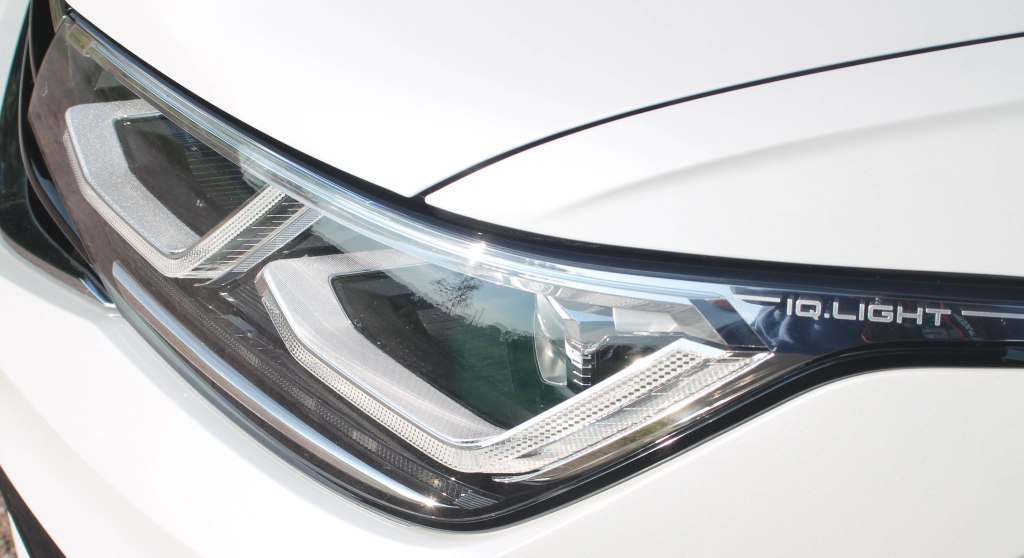
Our stylish R version seduced us, both inside and out. The previous Tiguan generation had already good looks, and VW just brought the grille in line with the angular styling we see in the Golf 8. The front is bolder, the hood is a bit higher, the lower bumper has also been reorganized. Led lighting is now standard and includes now also the more tech style tail lamps.
Photographers’s note: we used besides the trusty Canon G9 X also our big digital Canon DSLR with an older generation Canon 35-80 zoom lens used on an analogue (film) Canon DSLR. We were astonished with the result. The contour sharpness is truly top notch. Canon does an excellent job, seeing that the older generation autofocus lenses are completely compatible with their newest generation digital DSLR camera’s…
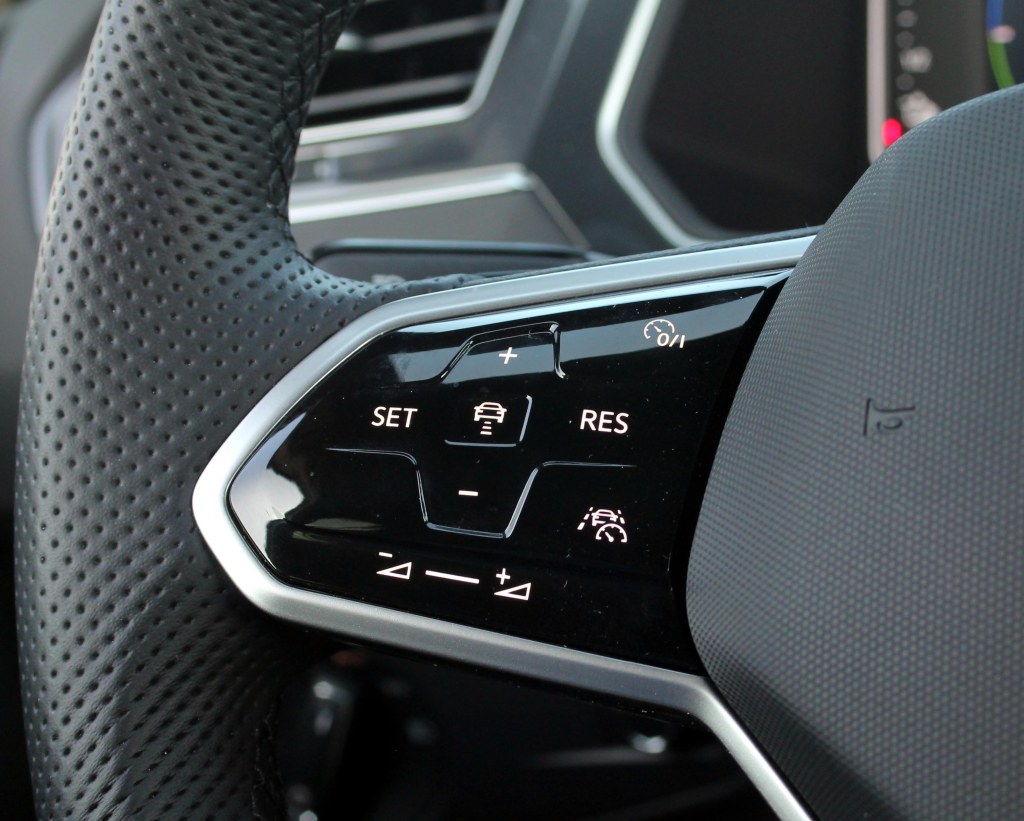
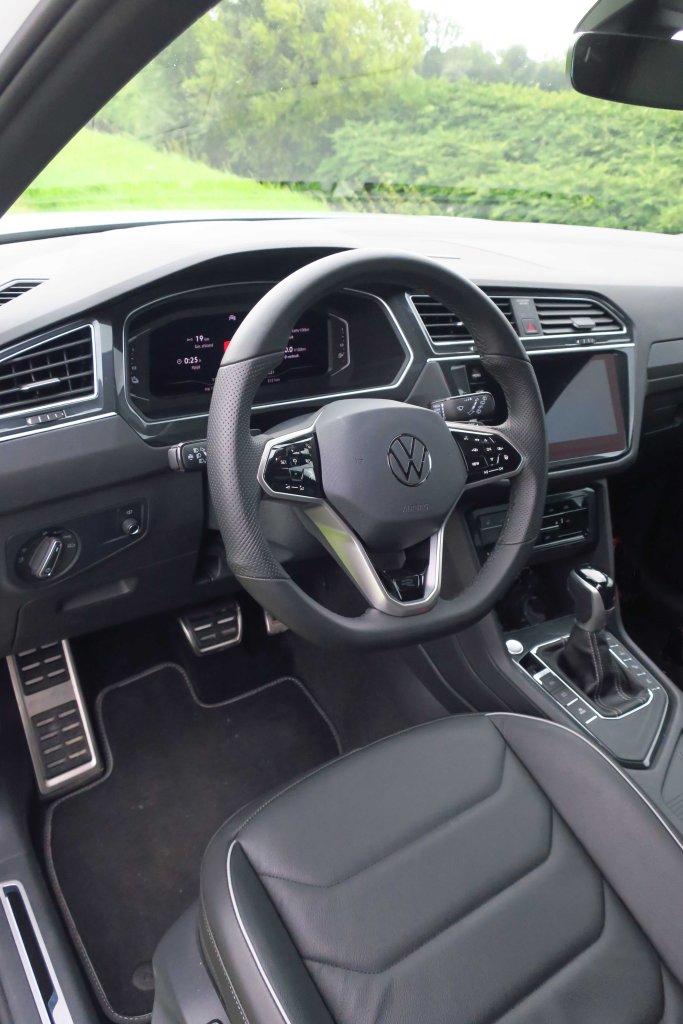
In the interior the digital age has certainly made further headway. Virtually all the controls are now of the electronic slide and touch type. This takes some getting used to, but we already familiarized ourselves with these capacitive controls in the Golf Alltrack, and soon enough one starts to like it even.
Again taken with the older generation Canon 35-80 zoom…
It is a rather bold step for VW to introduce this type of touch commands, but it makes very much sense and indeed documents the readiness of VW to make their mark in this all electronic age. One also finds a new steering wheel, adopting also these capacitive buttons on the R equipment level of our test car, and it has now a flattened bottom.
On this R Line equipment level, the infotainment offered leaves nothing to be desired, as you can guess. Here we have the optional 9,2 inch screen in the center, with even gesture control. All the functions, down even climate control, can be controlled to the touch screen. Just familiarize yourself with it and a world opens for you.
Smooth and state-of-the-art drivetrain
The drivetrain of the eHybrid Tiguan is strictly similar to the GTE Golf. A 30 kWh battery is located in the platform floor ahead of the rear wheels, giving the Tiguan a pure electric range of about 50 km. We achieved some 45 km of mostly motorway driving on a full battery load. Alongside the 85 HP electric motor sits the well proven 150 HP 1,4 liter TSI petrol engine, resulting in a total system power of 245 HP or 180 kW. Both drive units together generate a maximum system torque of 400 newton meters.
This means brisk performance, with a 0 to 100 km/h acceleration time of 7,5 seconds. Top speed is also a rather impressive 205 km/h, far outclassing most of the pure EV’s. In pure electric mode, the top speed is still a very creditworthy 130 km/h.
On the center console, you can push the E mode button for pure electric driving, or push the same button again and shut it off, allowing you to enjoy optimal hybrid driving.
Last but not least you have the GTE mode button which gives maximum E assistance to achieve maximum performance. With all this avalanche of power, the front wheels will spin on wet tarmac, however soon brought under control by the electric driving aids.
When driving, you can select with the gear lever to be in “D” or “B” mode. In the “D” mode it will coast when you lift the throttle, in the “B” mode, it will recuperate the kinetic energy to charge the battery, and therefor decelerate more. This mode seems more logical, as you want usually to decelerate anyway when one lifts the throttle.
Frugal, when you want it to be…
Fuel/E-power consumption depends of course on how you use your Tiguan. When the battery is depleted, one reverts of course to using only the petrol engine, and average fuel consumption is rather around 7 litres/100 km. In hybrid mode, the drivetrain acts quite judiciously, and balances very well between E and petrol engine power. With some restraint in your driving style, you can achieve also about 7-8 liters/100 km in tight urban traffic with an empty battery. On a 100 km trip on the open road with very sedate driving, we achieved 5,8 l/100 km.
The Tiguan eHybrid will start its trip on ePower, giving you about 50 km range…
VW quotes the fuel consumption in l/100 km (NEDC) combined as 1.7–1.5, power consumption in kWh/100km: combined 14.1-13,5. CO2 emissions in g/km are quoted combined 33-38.
When your daily driving distance is less than 50 km and you charge your Tiguan regularly, it is actually used as an all-electric vehicle, and has all its advantages, not in the least its absolute “Zen” smoothness. It is fiscally also treated very well in our country, as it is 100 pct deductible…
A breeze to use daily…
Electric charging via the flap on the drivers’ side is 3,6 kW maximum. Charging speed is not such a big issue with this or any other hybrid, as most of it is done mostly overnight anyway. Charging time takes a few hours, but if you are in a hurry, you can simply interrupt it and drive away, as you have always the petrol engine to get you to your destination.
Again a shot with the older Canon lens…
All the creature comfort you could wish for…
Seating comfort has always been top notch in the Tiguan, and there is ample head and legroom, also for the rear passengers. There is very good stowing room in the doors, as there is also a fair amount of luggage space, to be further enlarged using the split foldable rear backrests. This Tiguan is a very practical companion in your busy and varied daily life, and its popularity has very good reasons indeed.
Predictable handling
In the R version, we enjoyed the adjustable suspension, giving either a very comfortable or sporty ride. Handling is everything you would expect from a modern SUV, and the older Golf platform still does a very good job here. Very sure footed and predictable, the front wheel drive Tiguan will hardly surprise its owner, also thanks to the electronic handling controls built in. Steering is sensitive, direct and precise, and a joy to use on winding roads.
Still the older 35-80 Canon zoom…
We were very impressed by the utter smoothness and progressivity of the ACC, or automated cruise control. It kept the distance to preceding traffic very smoothly, and was a joy to use. It has been honed to perfection, to say the least.
Conclusion
A stylish, mechanically very matured SUV or crossover, roomy, very well built, optimally prepared for an electrified future mobility. You can enjoy the restfulness of a pure EV when you drive short urban distances, which is the case for many of us anyway. Keep it charged overnight if you are so lucky to have a home E-socket on your driveway or private garage, and this Tiguan is an absolute E-dream.
Driving longer distances in hybrid mode with (intermittent) use of the smooth petrol engine is no punishment either.
Taking into account that a plug-in hybrid still enjoys very advantageous fiscal treatment in most European countries is an extra reason to take a long hard look at this eHybrid Tiguan, and make it soon your own…
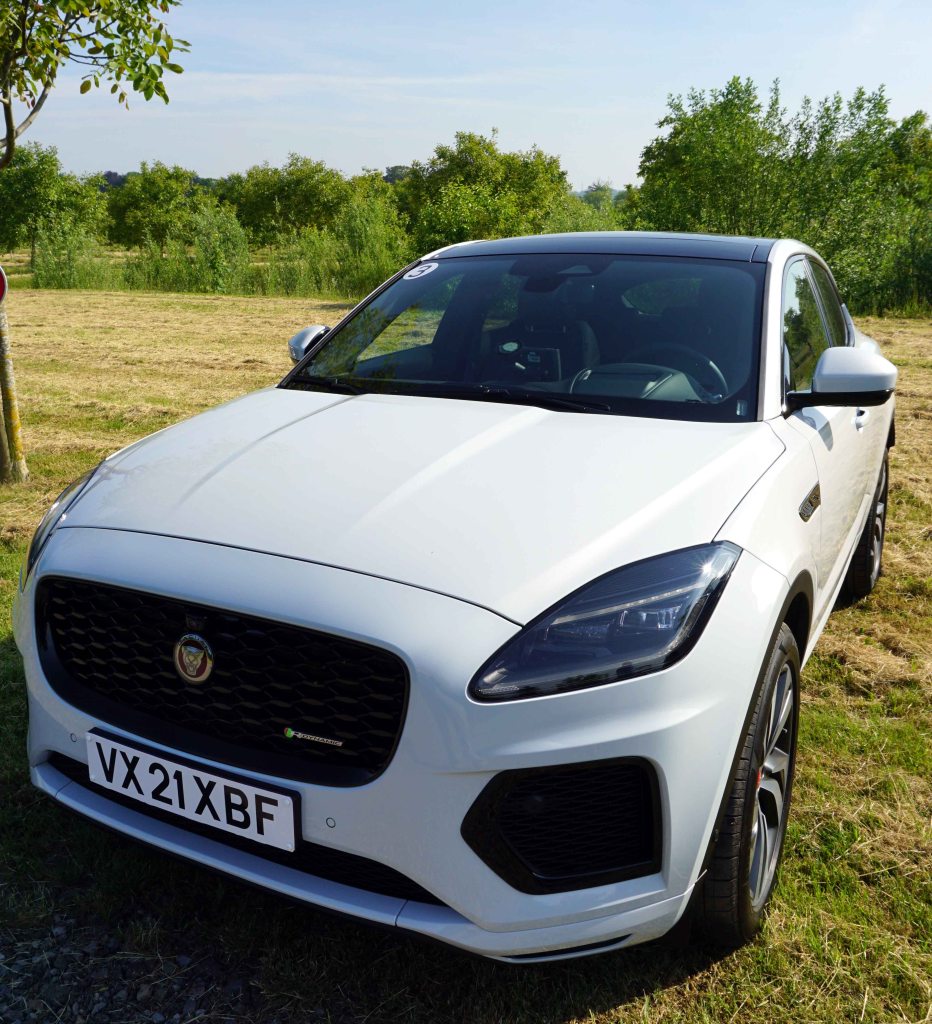
We start our overview of the more detailed driving impressions with – in our opinion at least – one of the most interesting cars of the range: the E-Pace, here in the most dynamic version. We find this Jag good looking, of ideal dimensions, and of course wonderfully dynamic. Just read further…
Hans Knol ten Bensel
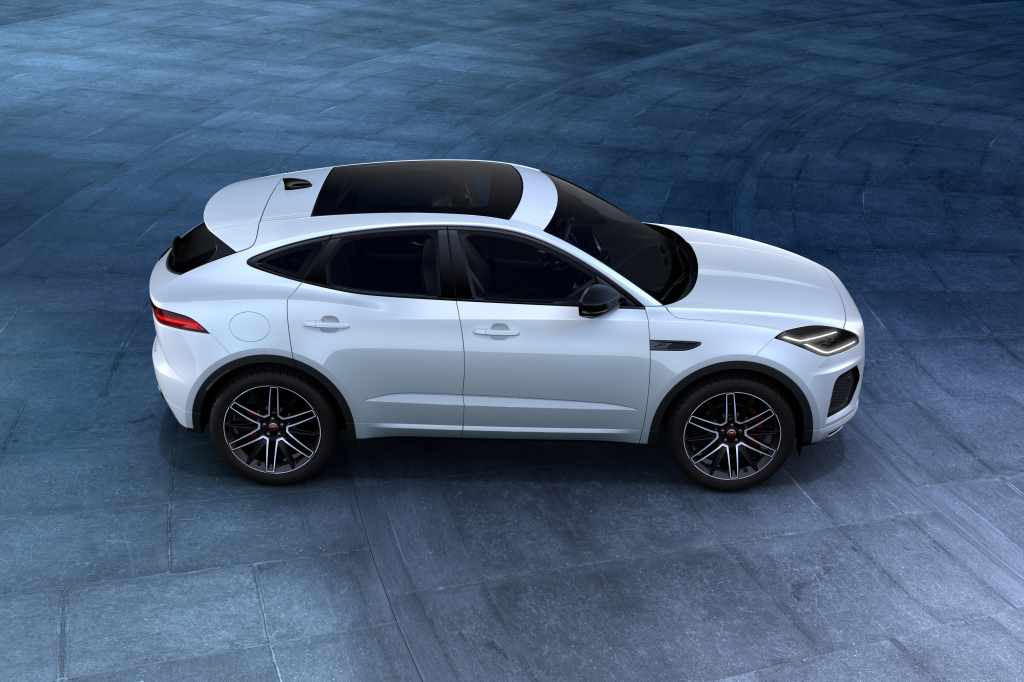
Our (UK registered) test car came with the so-called “Black Pack”, with unique black mirror caps, panoramic roof, privacy glass and red brake calipers, which complement Satin Grey 19-inch alloy wheels. There is Gloss Black detailing to the front bumper and lower grille surround, main grille surround and grille tips. The side window surround and side vent – complete with the Jaguar leaper – also feature a Gloss Black finish, along with the Jaguar script and rear badging. The R-Dynamic Black is available with all E-PACE exterior colours, including new Ostuni White. Our test car came with the latter colour.
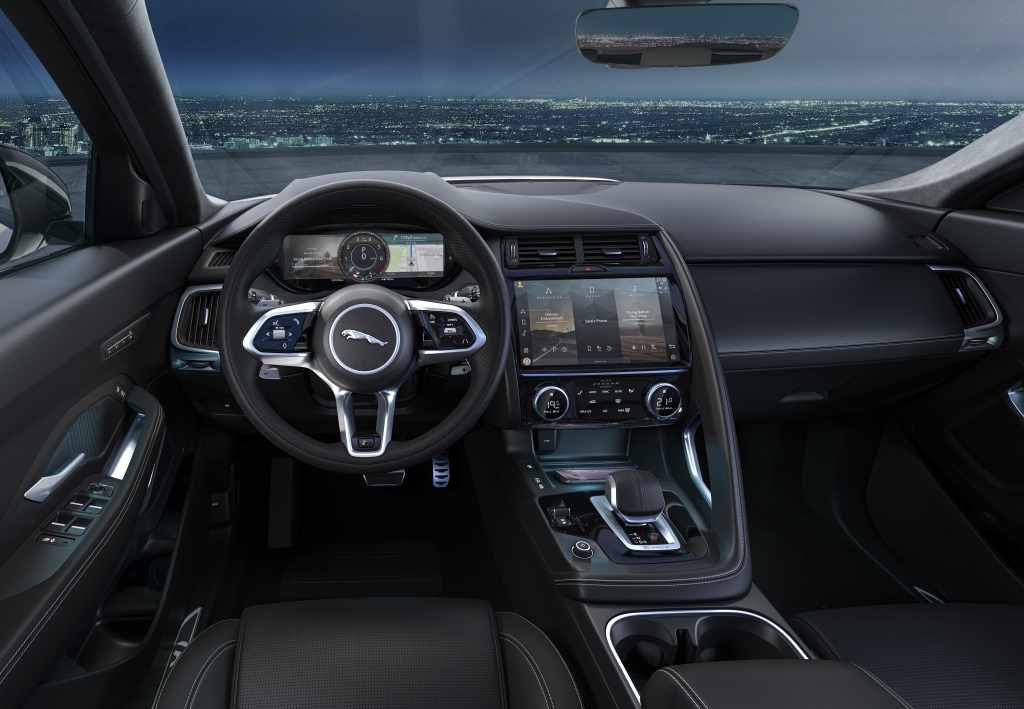
Also the interior is up to date with the curved 11.4-inch HD touchscreen integrated into the central instrument panel.
The large touchscreen operates the intuitive Pivi Pro infotainment system, which provides greater clarity and allows the driver to carry out 90 per cent of common tasks within two taps from the home screen thanks to its simplified menu structure.
But besides the good looks, there is of course state-of-art technology awaiting you.
Jaguar Land Rover’s Premium Transverse Architecture (PTA) ensures the E-PACE has the latest electrified powertrain technologies, as well as delivering improved ride comfort with the performance and handling agility Jaguar customers expect. Indeed, the handling and agility of the E-PACE is nothing short of superb, as we found out on the winding roads near Namur.
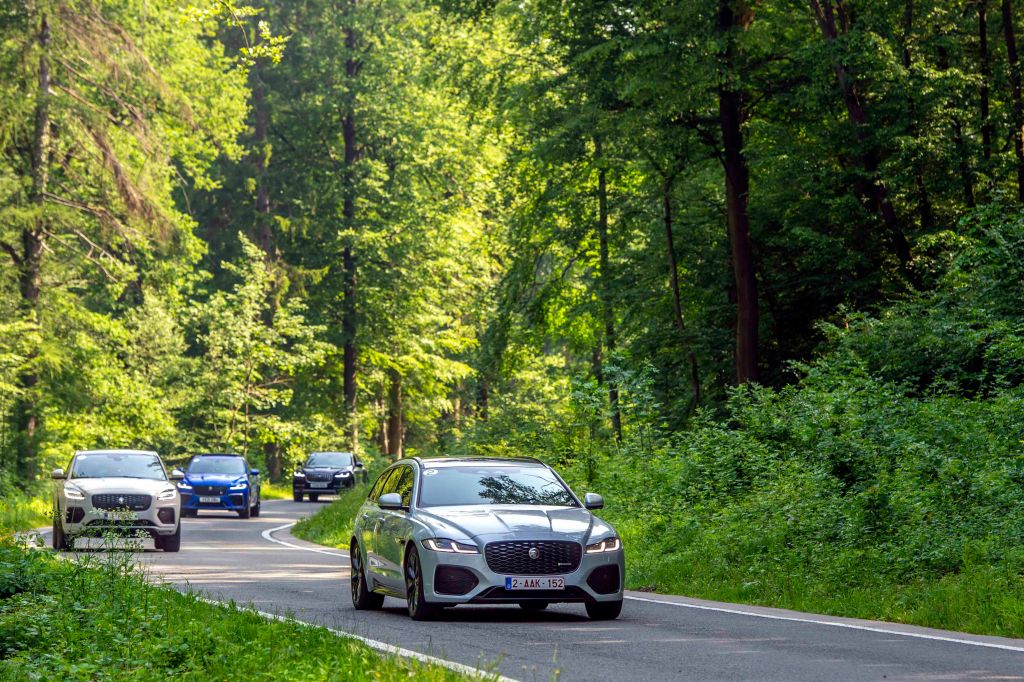
We drove the whole Jaguar Range on the scenic winding roads near Namur….on June 15, 2021 Press Day JLR Belgium
New engine mounts contribute to enhanced throttle response, while the suspension layout ensuring indeed a comfortable ride.
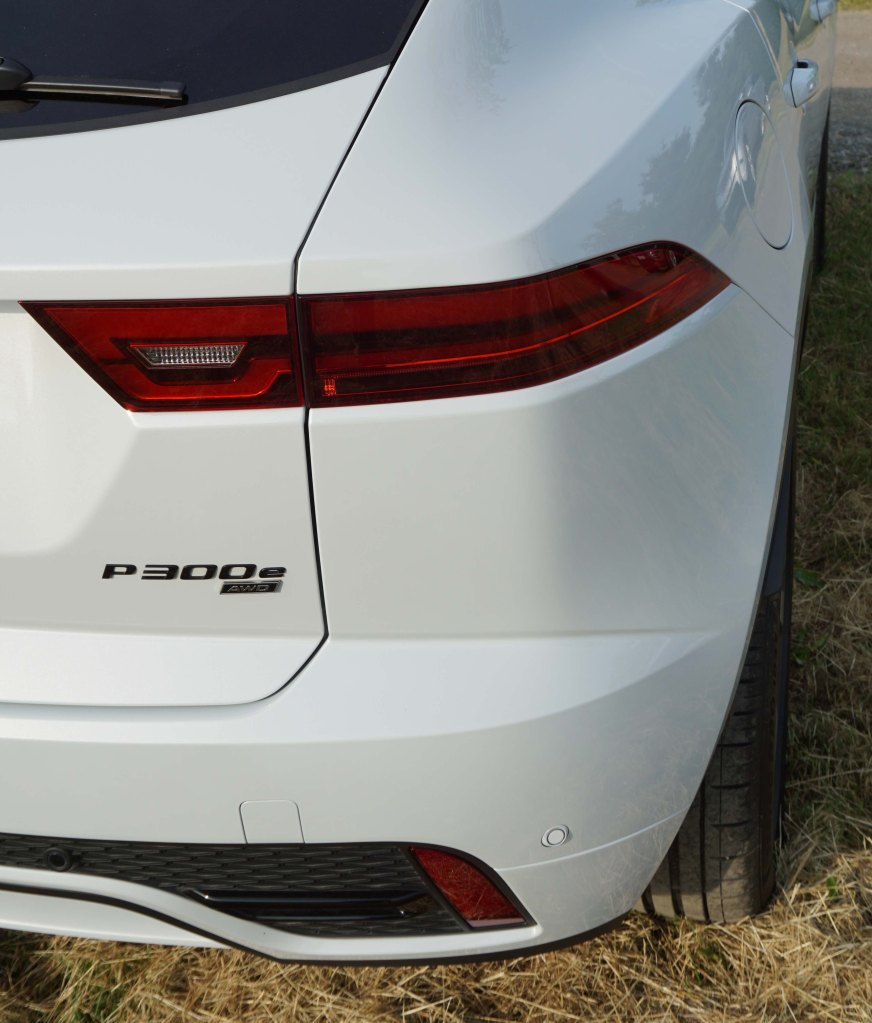
The Jaguar E-PACE is available with an efficient three-cylinder P300e PHEV powertrain, plus the most advanced four-cylinder petrol and diesel Ingenium engines, utilising MHEV technology to deliver enhanced performance, refinement and efficiency.
The P300e PHEV powertrain of our test car combines a 200PS 1.5-litre three-cylinder Ingenium petrol engine and a 109PS (80kW) Electric Rear Axle Drive (ERAD) motor to deliver 0-60mph in 6.1 seconds (0-100km/h in 6.5 seconds) with CO2 emissions from 44g/km and fuel efficiency of up to 143.1mpg (2.0l/100km) (WLTP TEH combined).
We were indeed utterly impressed by the liveliness of this E-Pace.
The P300e powertrain operates in one of three modes: Hybrid, EV or Save:
·HYBRID mode uses both the petrol engine and the electric motor in the most responsive and efficient way, intelligently switching between pure EV driving and using the petrol engine
·EV mode provides zero-emissions driving for up to 34 miles (55km)
·SAVE mode enables the driver to recover up to 85 per cent of battery charge, which can be deployed later in a journey, for example in urban areas.
Enhanced connectivity
The latest E-PACE comes with even greater technology and connectivity options, with wireless Apple CarPlay® becoming available soon as standard*. Wireless Android Auto™ will also become available as standard at the same time,* with both available via a SOTA update for all Pivi and Pivi Pro equipped E-PACE models – seamlessly replicating the customer’s smartphone display on the central touchscreen and giving drivers multiple methods of controlling infotainment and phone functions. The E-PACE is also available with wireless device charging.
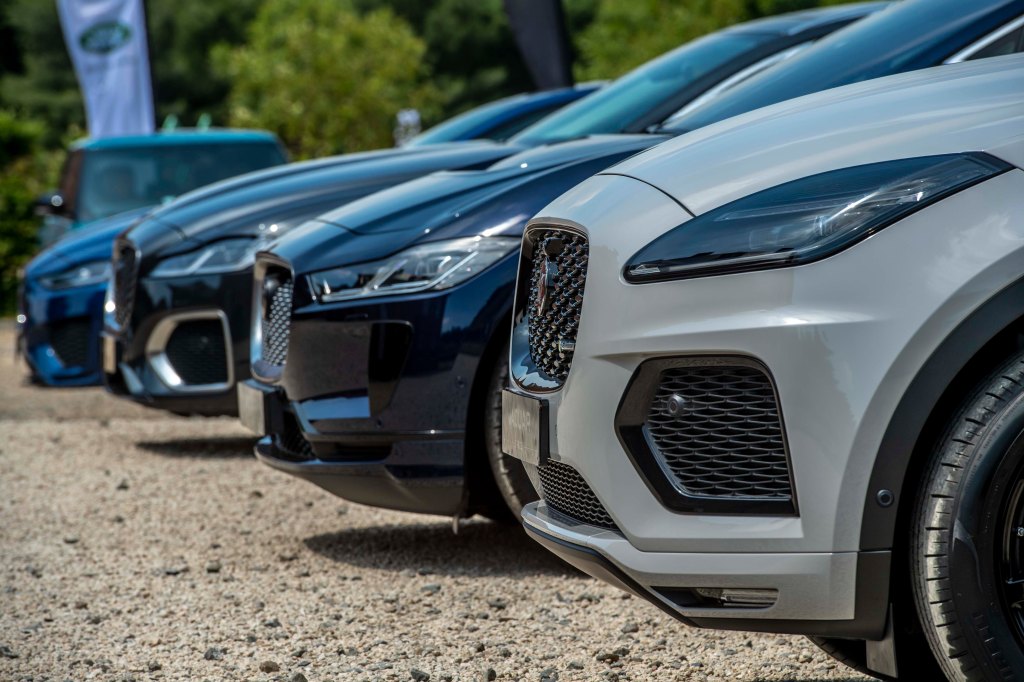
The Jaguar Range was neatly lined up on the Media Drive JLR Belgium
Jaguar’s advanced Pivi Pro infotainment system has a range of embedded apps, fast start-up from its own dedicated power source and dual-SIM technology so you can stream media and download updates simultaneously.
Pivi Pro technology is complemented by the 12.3-inch HD Interactive Driver Display that features enhanced graphics, a fully configurable layout with digital dials, media information, phone functions or full-screen mapping for the navigation system. With the optional Head-Up Display, the E-PACE’s interior technology ensures the driver is provided with numerous ways of configuring the set-up in the most convenient way possible.
Pure cabin ambiance…
The Cabin Air Purification system improves interior air quality through Nanoe technology. The advanced system features PM2.5 filtration, which captures ultra-fine particles – including PM2.5 particulates – to improve occupant health and well being and is activated by pressing the ‘Purify’ button within the central touchscreen.
The latest enhancements ensure Auto High Beam Assist is fitted as standard on E-PACE S models, previously standard on SE and HSE derivatives, while the seating options have been simplified, ensuring customers can specify the perfect E-PACE with ease. High-quality Meridian Audio Sound is now standard from SE specification and memory functions for the door mirrors and seats are now standard on S models.
The E-PACE we drove on the sunny roads near Namur on the Media Drive JLR Belgium…
All R-Dynamic models feature Configurable Dynamics as standard, allowing drivers to hone detailed aspects of the E-PACE’s driving dynamics, including throttle and gearbox responses, as well as steering settings and suspension (where Adaptive Dynamics is specified) to tailor the driving characteristics to suit individual driver preferences. We just loved it!
More driving impressions of the Jaguar range to follow soon…
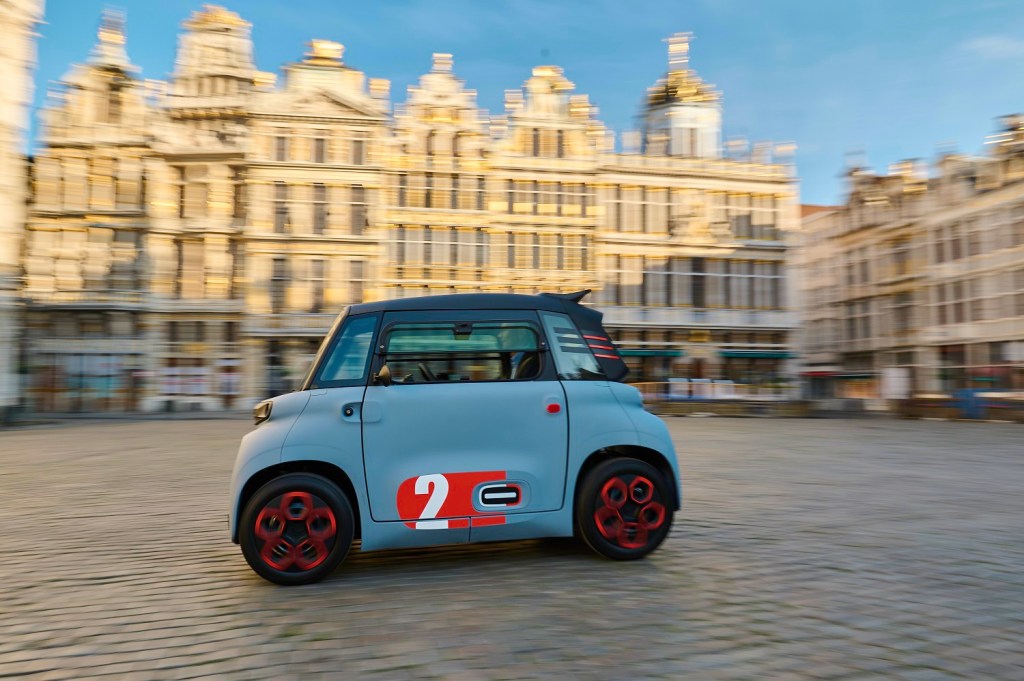
Citroën has always been THE brand for breakthrough mobility solutions. It responded this time to today’s challenges by offering 100 % electric mobility literally for all: a cute, roomy two seater with an 8 HP (6 kW) electric motor which can be charged in 3 hours on your home socket and which offers up to 75 km electric range in town or country/village roads. What’s more, since it is only 45 km fast, you don’t even need a drivers’ license for it. In France, 14 year old’s can drive it, in most European countries this is possible from 16 years onwards. But it is also excellent news for the (very) elderly, they have the ideal, roomy two seater which protects them from the elements, it is easy to step in and out of, has two wide opening doors and is the proverbial breeze to drive.
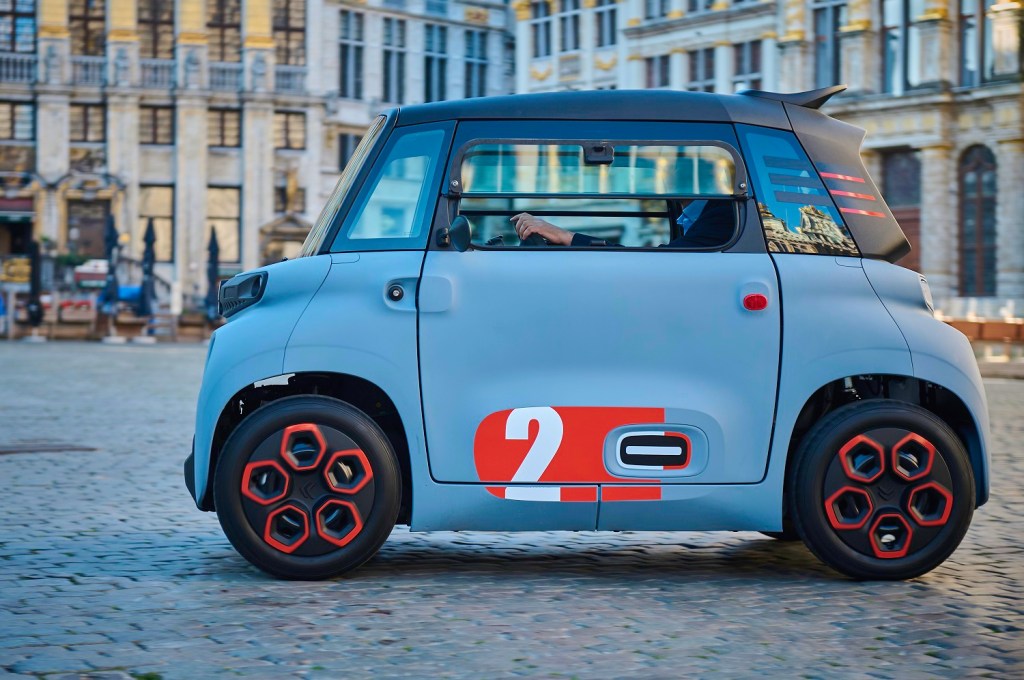
Citroën has done it, and we were delighted thanks to the dynamic PR team to experience the first kilometers behind its cute steering wheel in the streets, squares and boulevards of Brussels. Just read further…
Hans Knol ten Bensel
Light and roomy
Like the iconic 2 CV, this AMI is designed with nothing but practicality in mind. Its symmetrical body shape is unique, with a long roof and cabin, offering a sea of space for its two happy occupants. Only the driver’s seat can be moved fore and aft, the passenger’s seat is fixed, and therefore one sits normally a bit further back than the driver.
Room for a cabin space suitcase, and an elegant hook to hang your bag…
But she/he enjoys formidable legroom, and can actually stretch its legs fully. This means that seating with your legs in a normal position, there is even room for a cabin size suitcase in front of your feet! So there is always enough room for your errands, as besides in the cabin, the AMI has still an extra luggage space in the back.
Citroën has decided to make this long cabin as light and airy as possible. Therefore, a glass panoramic roof is fitted standard. So it is la Vie en Rose in your AMI. One gets in through the wide opening doors, which are identical and because of that opening in different directions. The driver’s door sways out in the front, making getting in and out super easy.
You can throw your pocket camera, bottle and sundry in one of the three customizable bins just behind the window, hang your city/handbag on the elegant hook provided on the passenger’s side, and get behind the wheel. The dashboard just reveals speed and battery charge level, indicating also the remaining range in km. Further, there is a switch for heating and fan. Next to it is a smartphone holder, so your phone can provide for navigation and music.
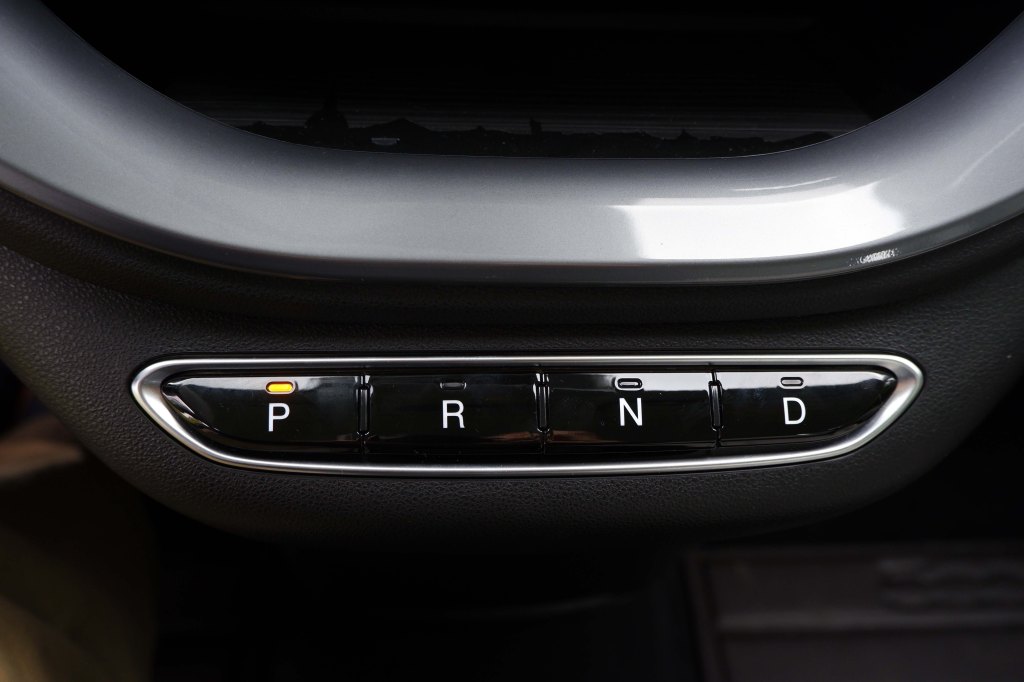
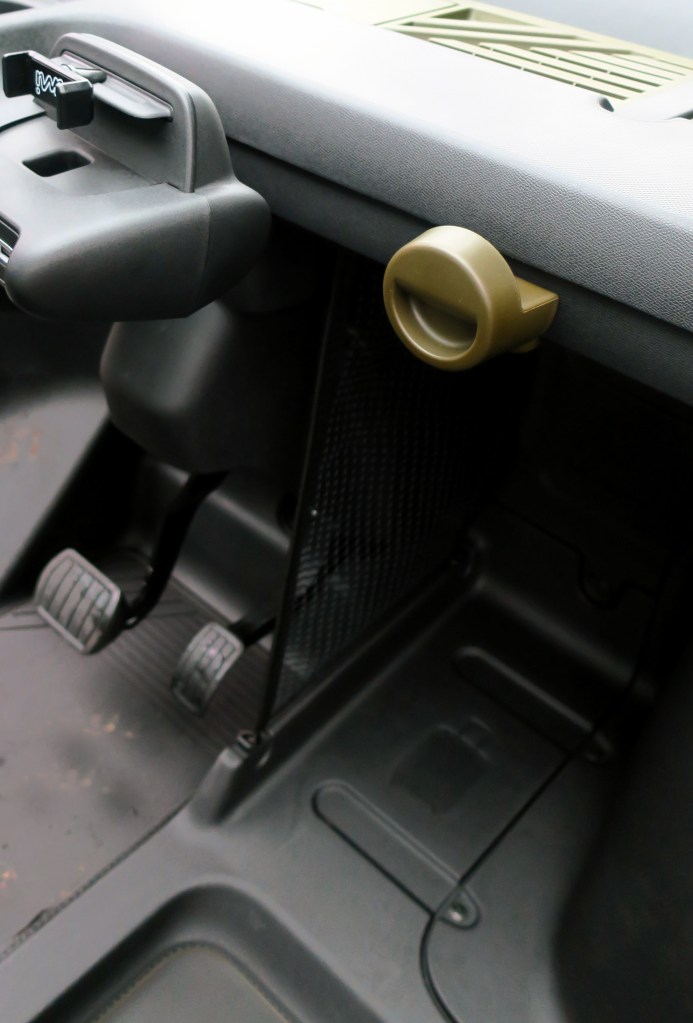
The row of knobs for “Drive”, “Reverse”, “Neutral” and “Park” sits on the left side of the driver’s seat. Just push “D” and off you go. Acceleration is lively, but don’t expect miracles from 8 HP moving a cute car with a total weight with battery of 485 kg, where one still has to add the weight of one or two passengers. But it is certainly enough to move along with the flow of urban traffic, and with some restraint one soon notices that a cruising speed of around 40 km/h needs just a push of 1 or 2 centimeters on the throttle. You don’t get any deceleration from the E-motor when you lift the throttle at speed, so adapt your driving style and drive with more anticipation as the distances to make good use the kinetic energy are longer. But it can be done, and soon you get the hang of it…
Driving in Brussels one soon notices that the indicated range is absolutely realistic, and that’s a big plus. Also remember, three hours is enough to fully (re)charge the AMI.
Brussels paves are ridden with potholes and ridges, but the AMI took it very well in its stride with a surprisingly comfortable suspension.
Make it your very personal AMI…
As said, life is good in this AMI. Typical and reminiscent of the 2CV are the side windows, which open by manually tilting upwards.
Citroën offers, in a “Do It Yourself” fashion, the possibility of creating the object that suits each customer’ tastes through a kit of accessories that can easily be installed yourself. This kit incorporates functional decorative items: a central separation net, a door storage net, mat, storage tray on the top of the dashboard, small hook for a handbag, smartphone clip, DAT@MI box (dongle device) connected to the My Citroën app to retrieve essential information from your Ami on the smartphone.
4 main shades are available for these accessory kits, costing 400 Euros: MY AMI GREY, MY AMI BLUE, MY AMI ORANGE, and MY AMI KHAKI.
2 characterful packs are available on AMI for even more customization. These 2 packs contain all the above decorative elements and large format stickers that cover the outside and thus give AMI its very own style.
– My Ami POP with Orange personalization and a fun, young and sporty look, with a rear spoiler, is available for €8,190 incl. VAT.
– My Ami VIBE in gray with a more upscale, chic and graphic design that integrates roof coverings in addition to the stickers, is available for € 8,690 incl. VAT.
The installation of these 2 personalization packs is entrusted to professionals before delivery.
The specific exterior body colour is neither too feminine nor too masculine and works with the different colour packs Citroën has developed (blue, white, khaki and orange).
So the Ami is a base that can become a completely customised object with exterior and interior accessories that are either pure style or offer real extra functionality, as well as stickers that give it a completely different characters, tells us Pierre Leclercq, Head of Citroën Style.
Prices…
AMI AMI: 7.290€ incl. VAT
MY AMI ORANGE, KHAKI, GREY, BLUE: 7.690€ incl. VAT









































 Autoprova - for the Connaisseur