Lancia has always embodied style and elegance, coupled with mechanical refinement. This makes the new Ypsilon a very fitting candidate for EV propulsion. Indeed, after an extended test behind the wheel of this Lancia, we can only agree. It is most endearing as an EV, and indeed, it is a delight to steer it in town and on every road you may drive it.
Hans Knol ten Bensel
Renaissance on a well proven platform
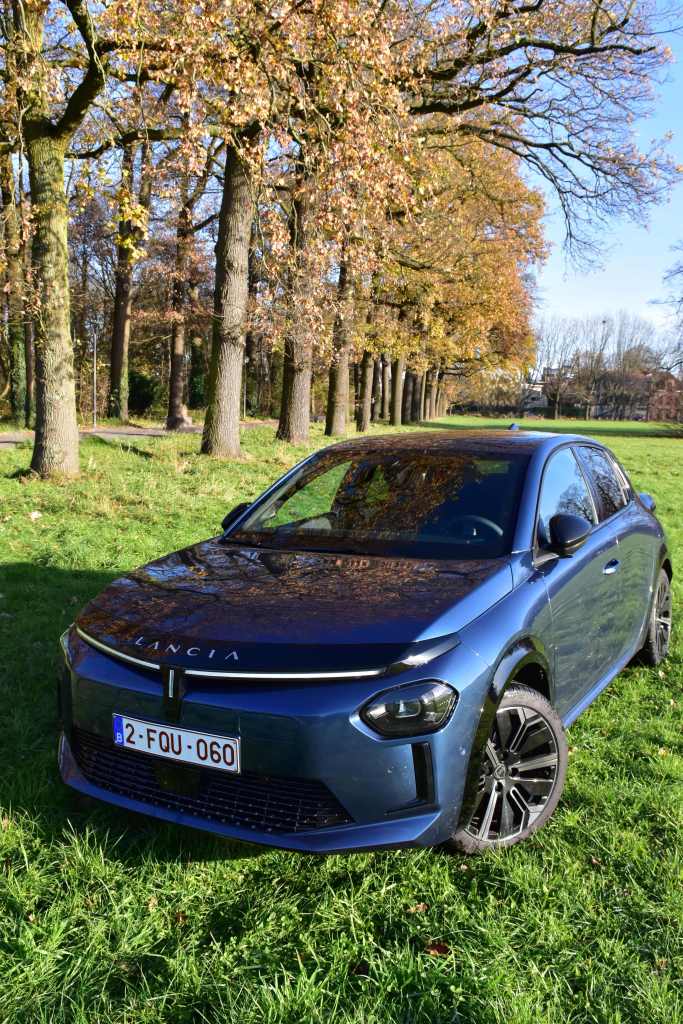
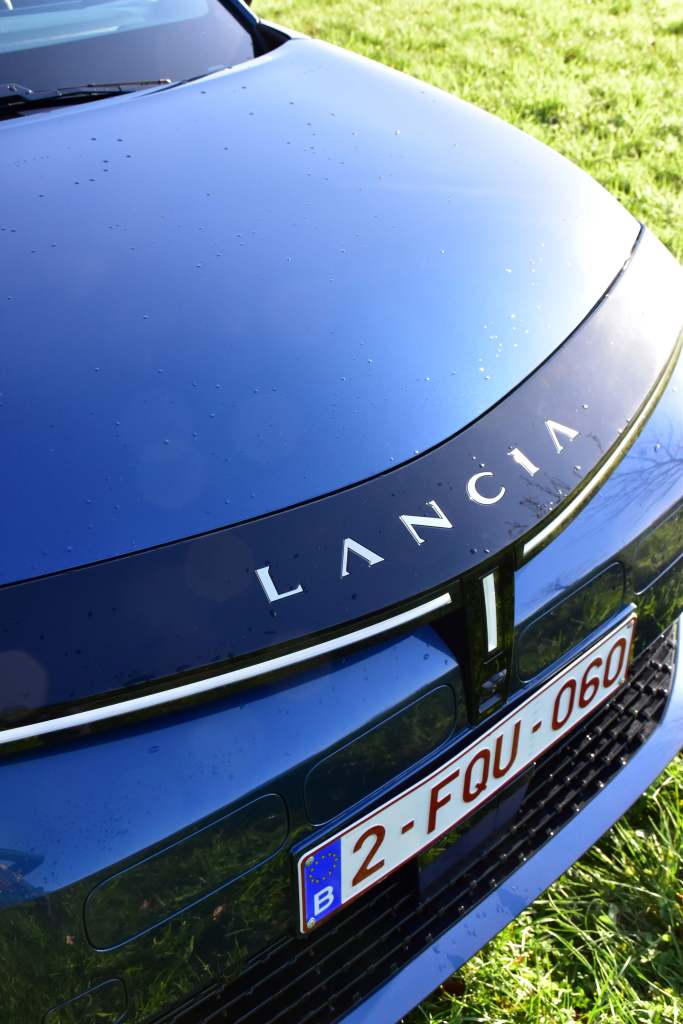
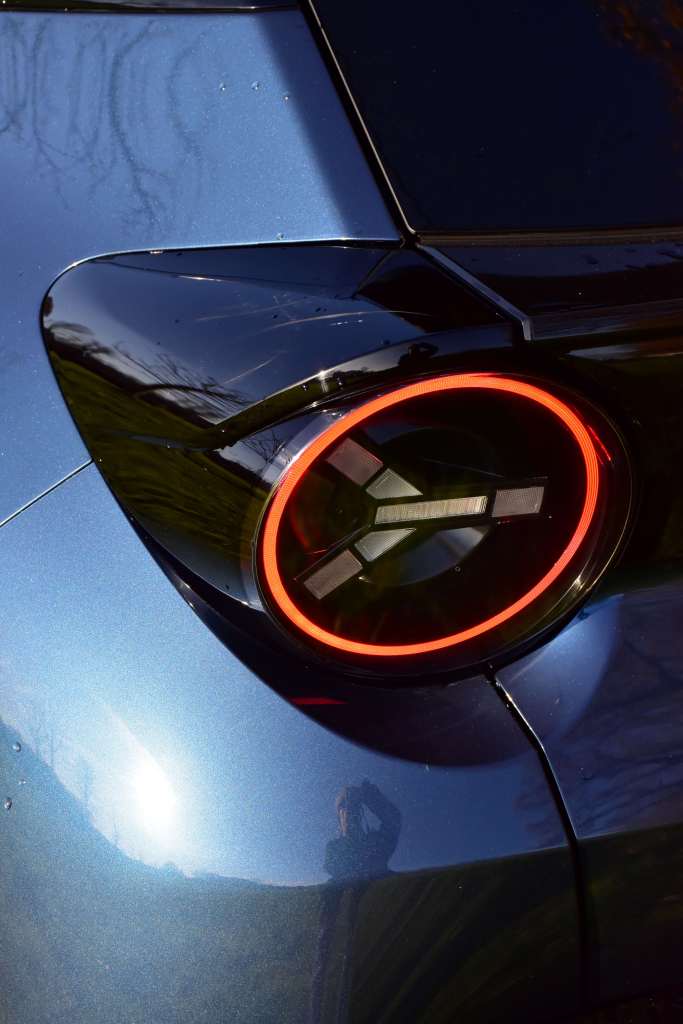
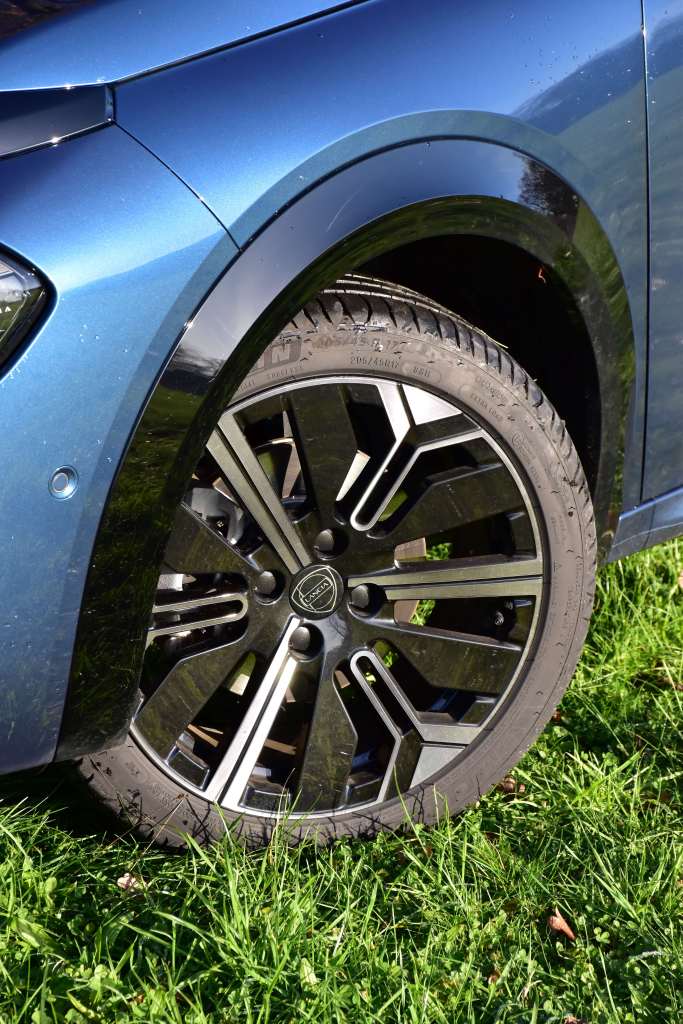
With the birth of Stellantis it was clear that a revival of Lancia was in the cards. We already told you in length about the introduction of this Ypsilon. It carries typical styling icons of the brand, like the “calice” on the front end, and the round rear lights reminiscent of the legendary Stratos. In my opinion it is the most attractive of the Stellantis compact range, but that is of course a very subjective preference.
Iconic cabin
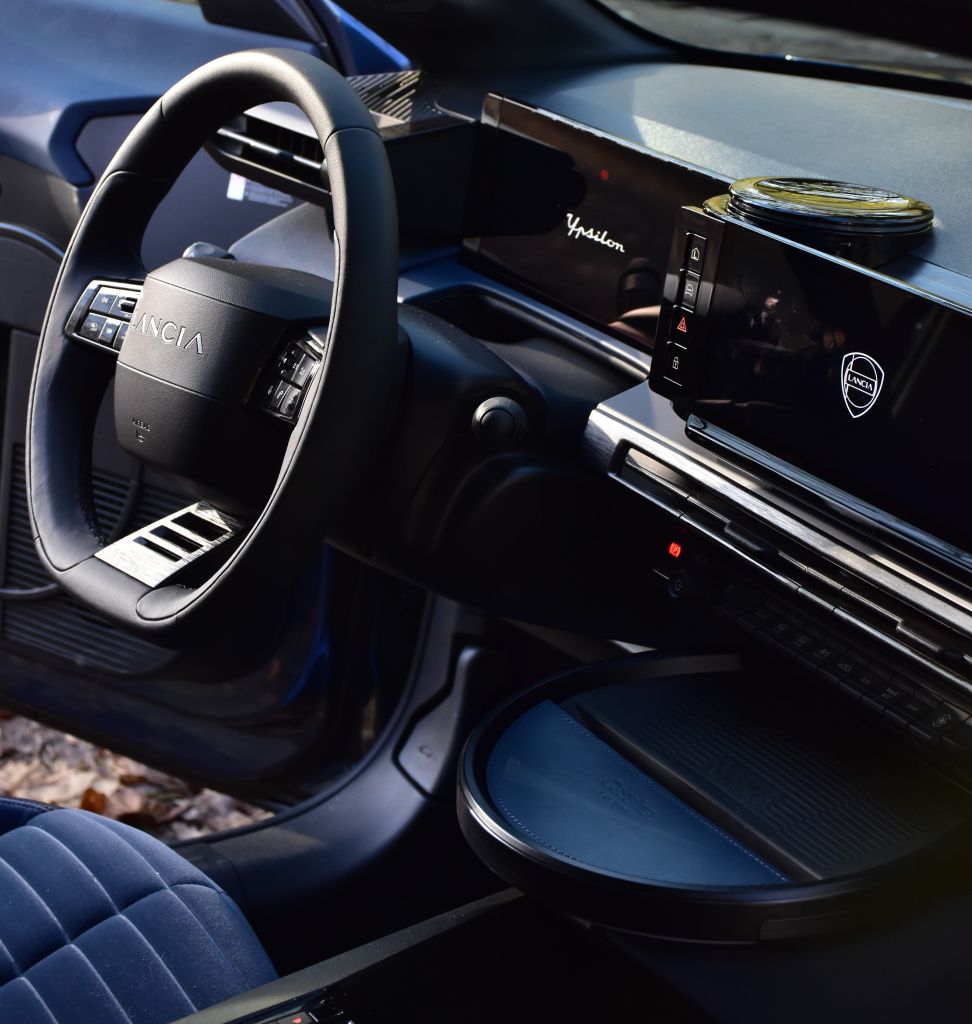
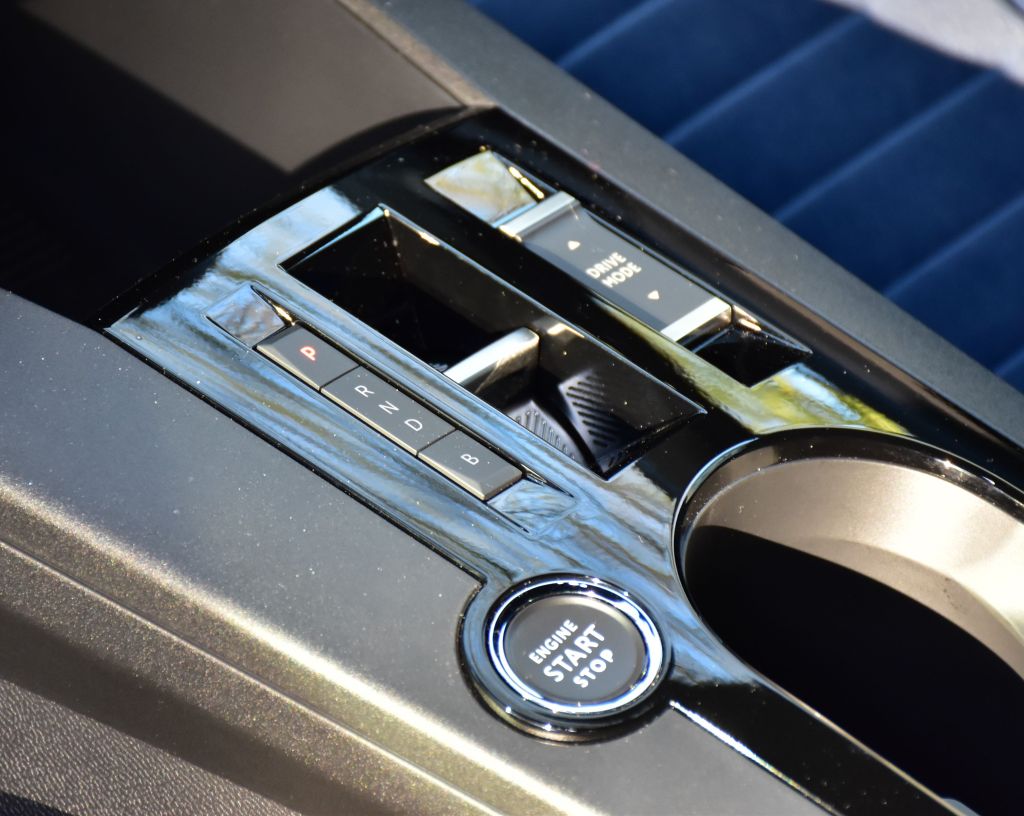
The elegance and the Lancia typical panache continues in the interior. We loved the layout of the dashboard, the resolutely square screens, the cute and well finished little central table or ”tavola”.
You can leave flat and light objects on it, everything else is of course hazardous when you drive your Lancia with verve. We loved the blue/grey/black colour palette in the interior, so in tune with the tradition of the brand. Of course, it is a pleasure to find “real” commands and knobs for ventilation/heating for instance, and one feels quickly at home in this Lancia. One has Android Auto or Apple Carplay, and you can stream La Callas and delight in hearing how beautifully she brings Casta Diva. Indeed, the sound system is up to scratch.
The seats are quite comfortable and give excellent support. Space for the rear passengers is adequate, but of course one cannot expect miracles from a car with an overall length of 4,08 meters. Boot space is more than adequate for its class, with a standard available space of 309 liters.
Smooth EV power…
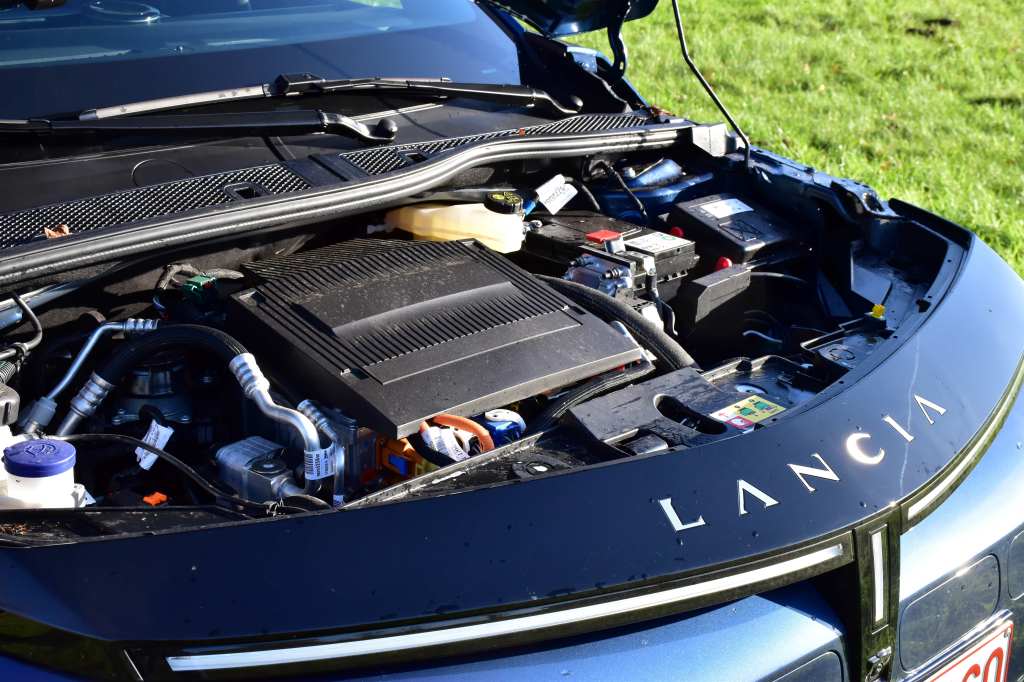
The Lancia shares its EV drivetrain with other cars in the Stellantis group, like the Opel Corsa, Peugeot 208, Jeep Avenger and Fiat 600. This means we’ll proven technology, with a 115 kW electric motor and a 54 kW battery, of which 51 kW is available in practice on the road.
This drivetrain is quite efficient, and indeed it is well possible to achieve consumption averages of 14-15 kW/100 km. It results in a practical range of some 360 km under reasonable temperatures. Fast charging is possible up to 100 kW, which means you can charge your Lancia in less than 1/2 hour from 20 to 80 pct.
The smoothness of the EV drivetrain is an absolute delight and suits the character of the car wonderfully. Performance is quite zesty with an acceleration time from 0 to 100 km/h in 8,2 seconds. Top speed is limited to 150 km/h, which is very wise indeed, as high speed driving with an EV is a very wasteful affair.
Handling is brisk and precise, and indeed even when driven with abandon on winding roads, this Lancia will delight you.
Conclusion
We found this Ypsilon utterly pleasing with the EV drivetrain. The silence and smoothness of EV power is just what this car needs. We are curious to see how it behaves with its 1,2 litre 16 V combustion engine, and even more so in the hybrid form. But here in our eyes, it already earned top marks…
Hans knol ten Bensel
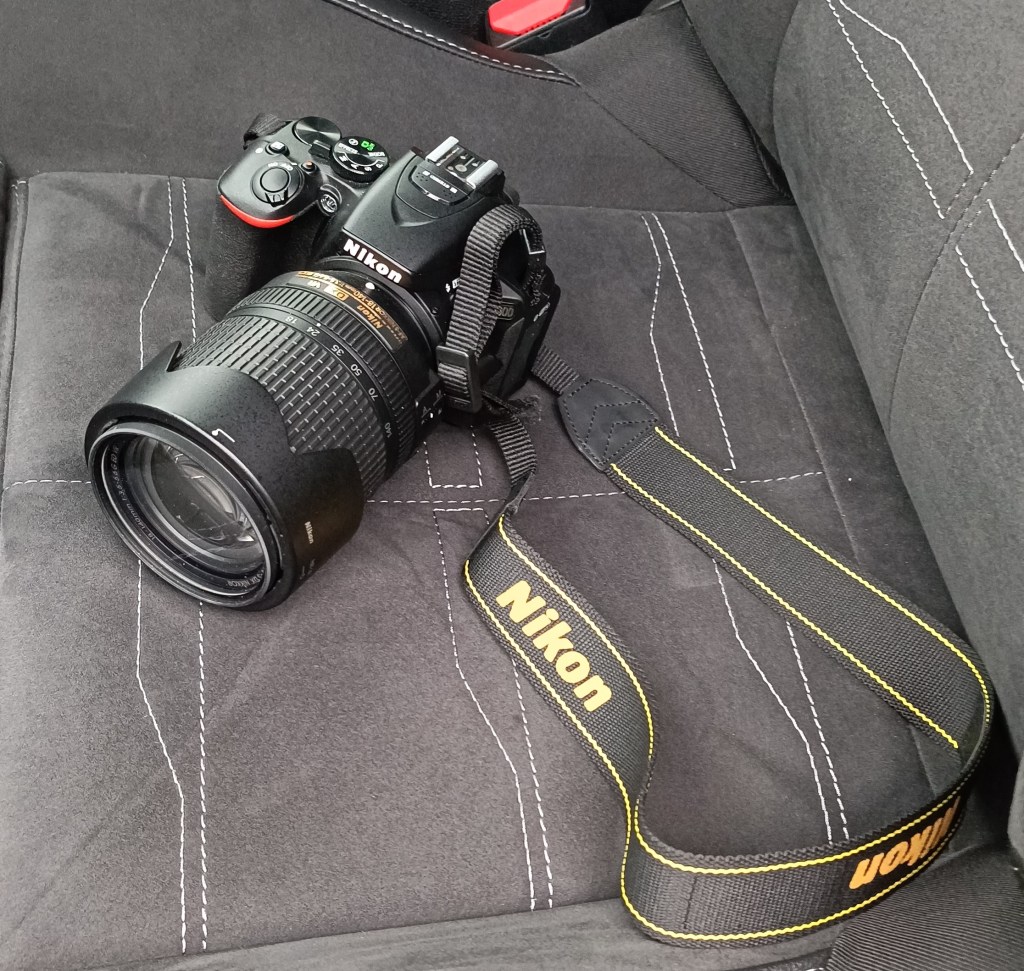
Photographer’s notes: we used for our photos here again our trusted Nikon 5600 D, a 24.2 megapixel upper-entry level, APS-C sensor DSLR. It delivers nice, crisp, well balanced photos, and is an absolute pleasure to use.
Head of Communications Melvin Keuter opened the yearly Nissan Benelux press conference…
Your servant attended the yearly Nissan Benelux press conference, again expertly organized by the dynamic PR team led by Head of Communications Melvin Keuter. Together with Managing Director Jérôme Saigot they presented the mid-term and mid-long term strategic plan of the company, the new products which were launched in 2024 and the new cars for next year. Just read further…
Hans Knol ten Bensel
The Arc: A bridge to Nissan Ambition 2030.
The Arc is positioned between the Nissan NEXT transformation plan running from fiscal year 2020 through fiscal year 2023 and Nissan Ambition 2030, the company’s long-term vision. The new plan is split into mid-term imperatives for fiscal years 2024 through 2026, and mid-long-term actions to be carried out through 2030.
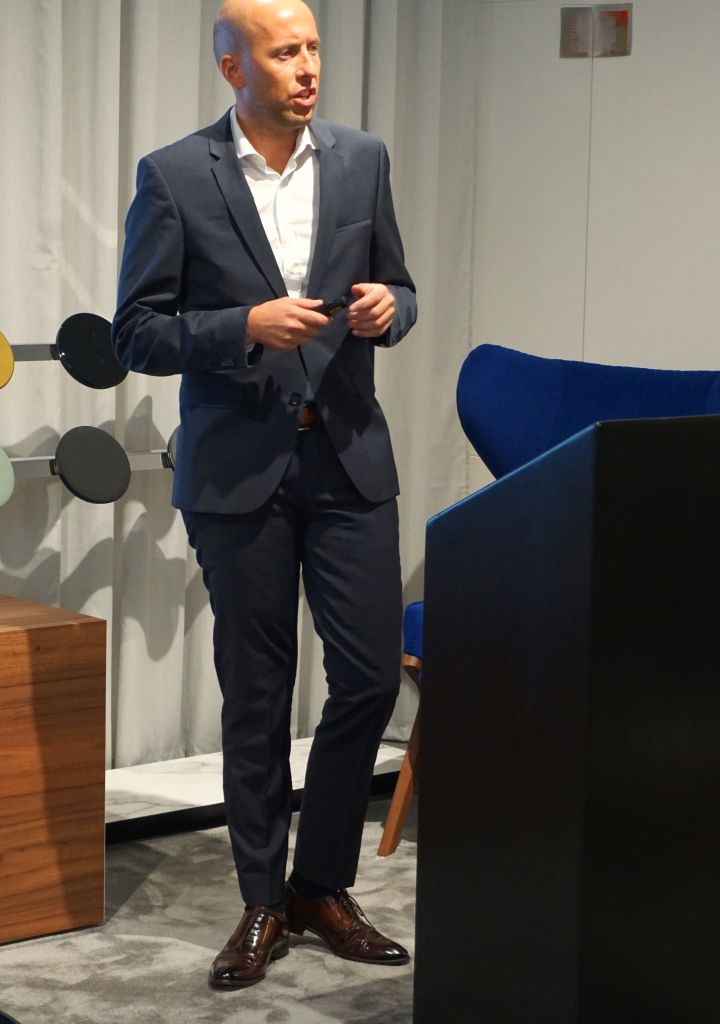
Managing Director Jérôme Saigot presented the Nissan short and mid-term strategy…
Under the two-part plan, Nissan will first take actions to ensure volume growth through a tailored regional strategy and prepare for an accelerated transition to EVs, supported by a balanced electrified / internal combustion engine product portfolio, volume growth in major markets, and firm financial discipline.
This will pave the way for the second part of the plan aimed to enable the EV transition and realize long-term profitable growth, supported by smart partnerships, (see below more about partnership with Honda) EV competitiveness, differentiated innovations and new revenue streams. For Europe, it will maximize its collaboration with Ampere in Europe to complement their own electrification strategy.
To achieve healthy growth in the future, Nissan is now rightsizing the organization and transforming the profit structure to enable the company to afford shareholders’ return, even with a projected annual sales of 3.5 million units by fiscal year 2026.
Three new full electric vehicles for Europe…and battery development
Nissan has for our market three models in preparation which will be produced in the Sunderland factory, replacing the present Qashqai and Juke crossovers and the next-gen Nissan Leaf: the “Chill-out”, the “Hyper Urban” and the “Hyper Punk.”
Nissan will offer enhanced nickel, cobalt and manganese (NCM) lithium-ion batteries, lithium iron phosphate (LFP), and all solid-state batteries to provide diversified EVs to meet different customer needs. Nissan will significantly enhance NCM li-ion batteries, reducing quick-charging time by 50% and increasing energy density by 50% compared to the Ariya. LFP batteries, to be developed and produced in Japan, will be launched that will reduce cost by 30% compared to the Sakura EV minivehicle. New EVs with enhanced NCM li-ion, LFP and all-solid-state batteries will be launched in fiscal year 2028.
The future line-up in Europe…
The model portfolio will be further enhanced with a new all-electric Interstar LCV, a replacement for the Leaf and the Micra and last but not least all-electric versions for the popular Juke and Qashqai.
… and partnership with Honda.
Nissan and Honda agree to joint research in fundamental technologies for a next-generation SDV platform. SDV means Software Defined Vehicle (note of the author), which means that the vehicle uses software as the main driver for its operations, features and functions. Nissan and Honda aim to complete basic research in approximately one year and based on the results consider the possibility of mass production development. (Research note of the author).
The two companies have reached a basic agreement to unify the specifications of their respective e-Axles, over the medium to long term, to be used in the next-generation EVs of both companies.
The agreed first step is to share motors and inverters, the core of the e-Axle. (Research note of the author).
With the models to be sold globally by Nissan and Honda, the two companies will consider supplementing models from a short-term to medium- to long-term perspective. For the short-term, Nissan and Honda reached a basic agreement on models and regions to be complemented by each company, and also agreed on the outline of a product review system to be jointly operated by both companies. Furthermore, ICE and EVs are being considered as vehicles for mutual complementation. (Research note of the author).
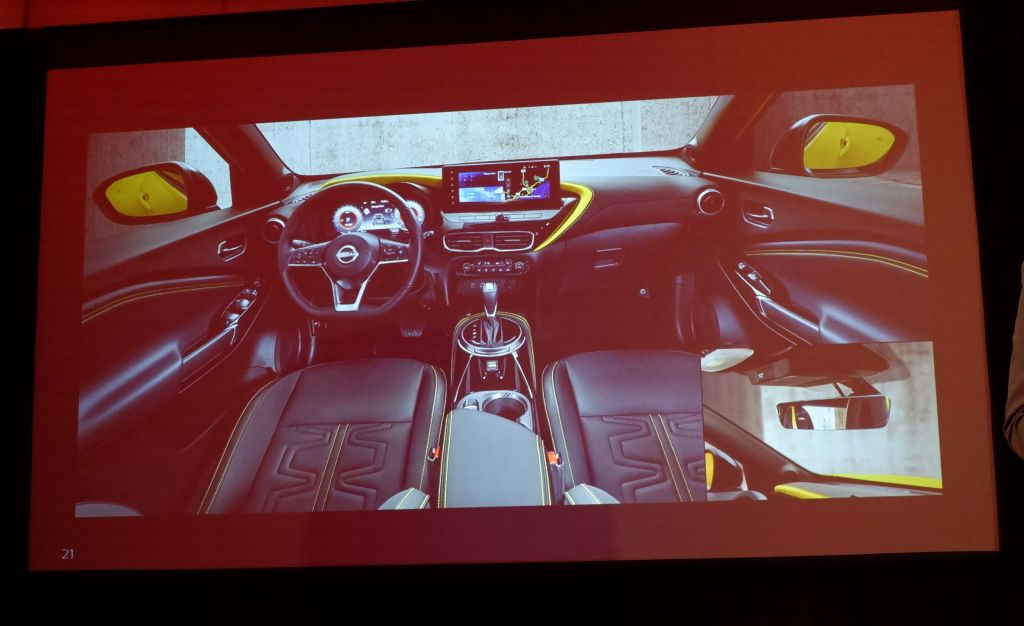
Melvin Keuter highlighted the new features of the 2024 Juke,
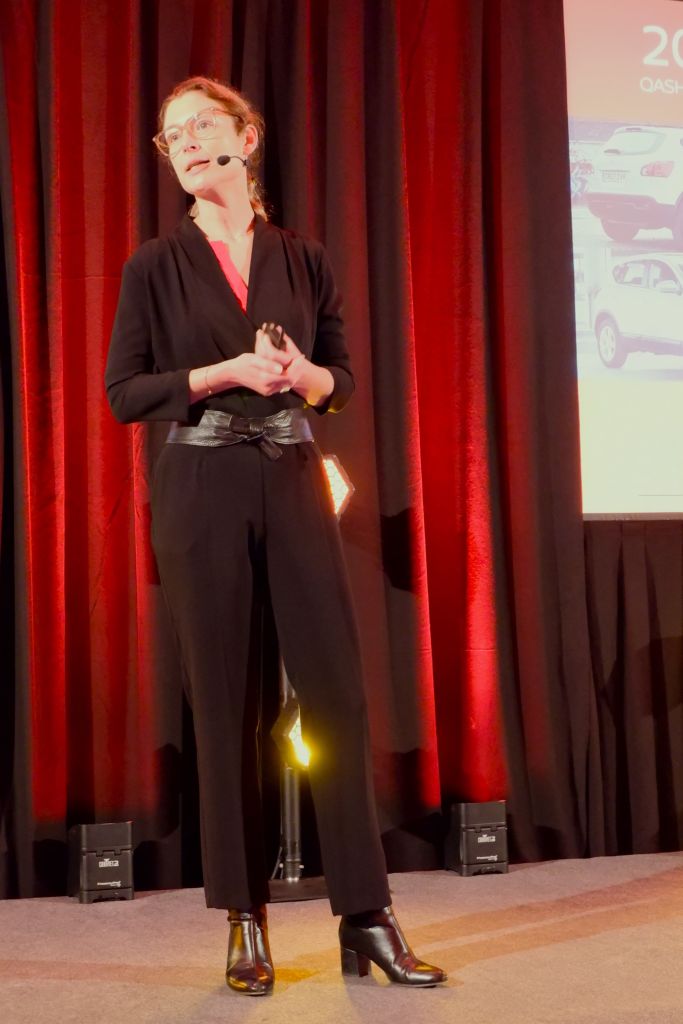
and Julie Engelborghs presented the 2024 Qashqai, now with e-power, uplifted design and upgraded tech and connectivity.
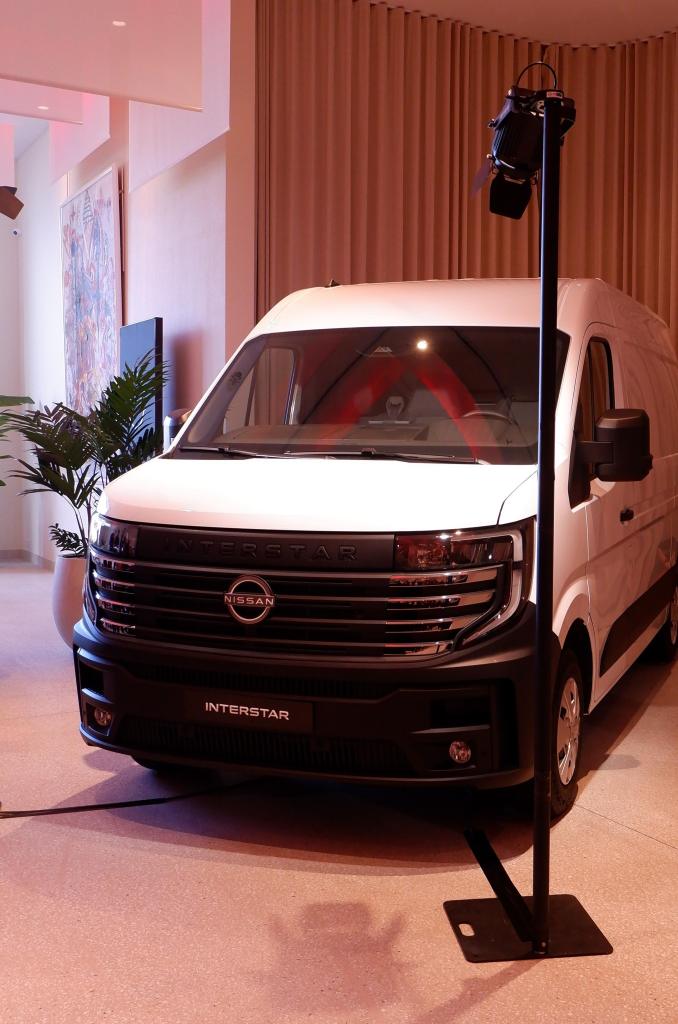
A further highlight was the new Interstar LCV, with a new EU 6E norm M920 Diesel engine and of course a choice between a 40 and 87 kW EV battery for the full EV versions.
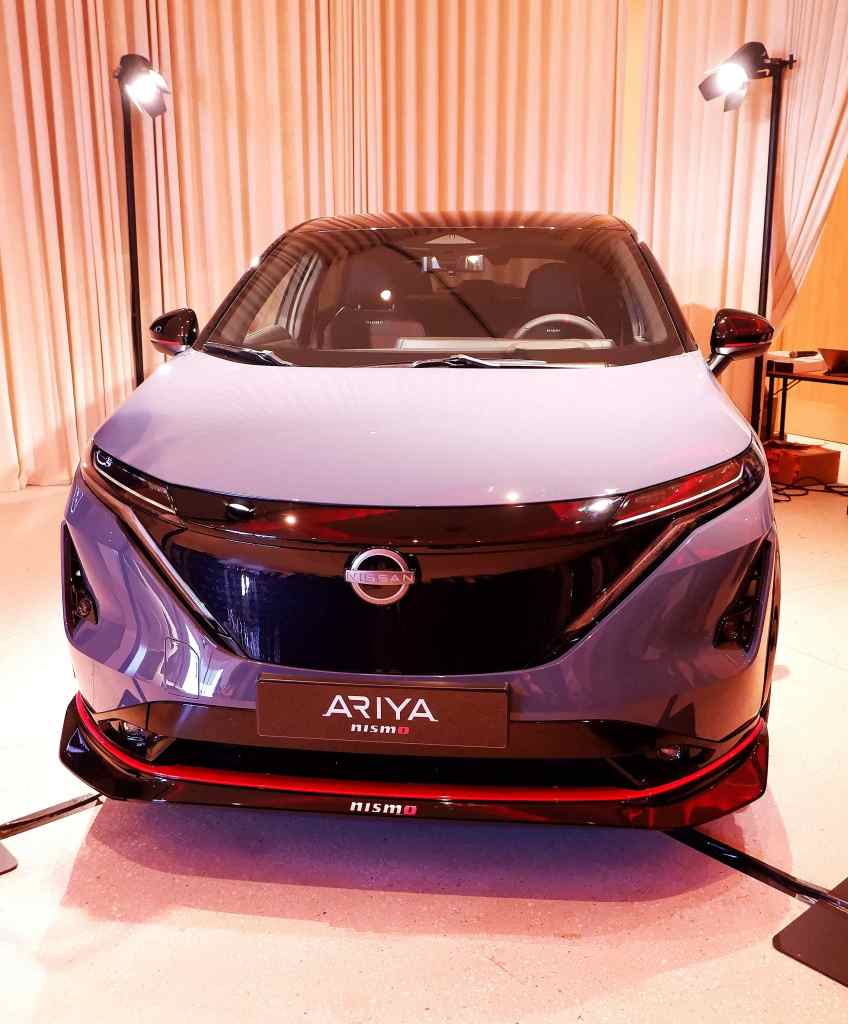
Icing on the cake: the Ariya NISMO…
With this car, NISMO (Nissan Motor Sport) is back in Europe. Based on the Ariya e-4ORCE and featuring a dynamic new-generation EV NISMO design, the Ariya NISMO delivers greater confidence and peace of mind thanks to its extremely powerful yet smooth acceleration, exemplary handling and stellar aerodynamic performance — all brought about by NISMO’s exclusive tuning, Nissan stated when introducing the car.
The motor has approximately 10 percent greater peak output and performance is further enhanced by the combination with special acceleration tuning and an exclusive NISMO driving mode that maximizes response.
Aerodynamic performance is improved thanks to race-derived technologies that reduce drag and provide greater down force at higher speeds — factors particularly important for EV’s.
Of course, also the interior exudes a premium air with high quality features throughout, including specially designed NISMO seats and trim.
Much more soon on this formidable SUV, but we just tell you here that you can now pre-order this NISMO at nissan.be. The price is at the moment of writing set at € 65.900. The first 250 European customers who order the car get it delivered in the exclusive exterior color Stealth Grey – the iconic body colour from NISMO. In addition, they benefit from a free charging for one year via Nissan Charge…
Soon more about Nissan, amongst others the affordable vehicle to grid technology Nissan will introduce in Europe in 2026…
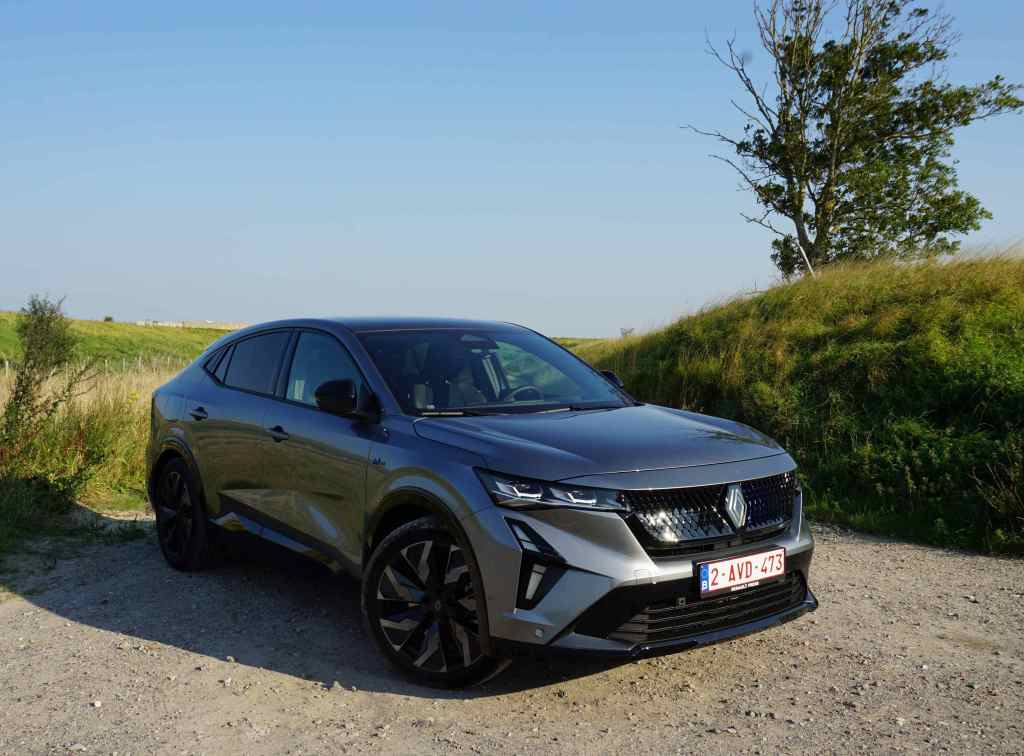
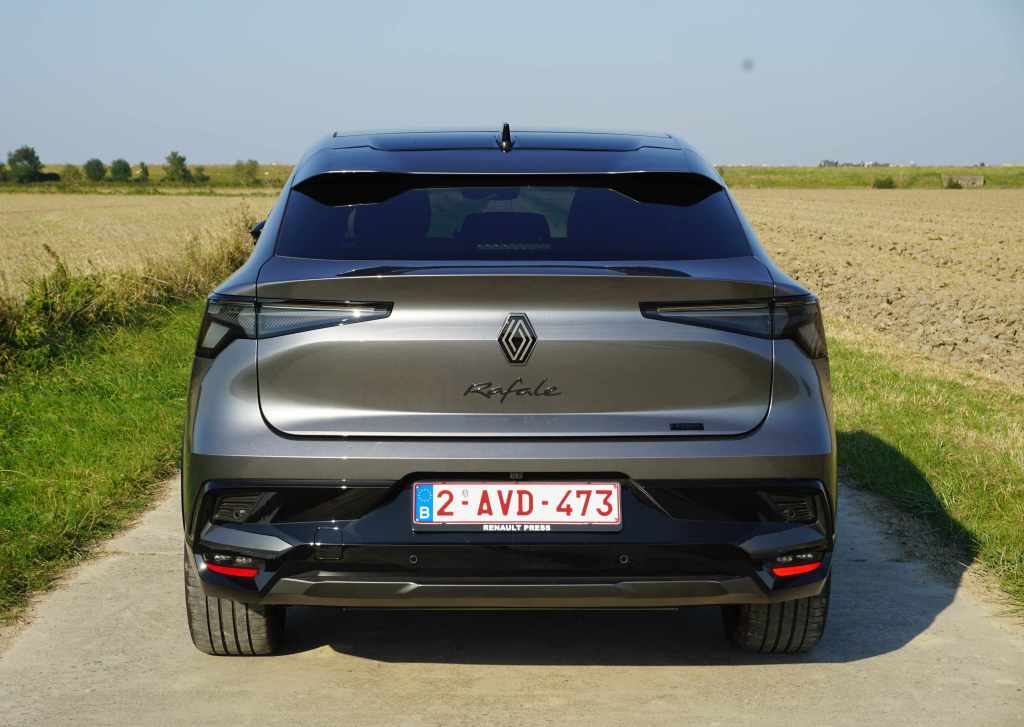
There are days where the life of a car journalist are very bright indeed. For example when sitting behind the wheel of the Renault Rafale, a stylish high tech hybrid full of character and ingenuity.
Renault has poured all its car making know how into their latest SUV Coupé, making it very much in tune with the times: it is a full hybrid, offering electric driving without recharging, and has style too. We drove the 200 HP model in the “Esprit Alpine” equipment version, adding to the unique panache of this Rafale… just read further.
Hans Knol ten Bensel
Stylish, inside and out
The Rafale has the looks, now coming from the hand of Gilles Vidal. Surprisingly Renault has abandoned the design language which Laurens van den Acker started in 2009 when he became chief designer and which culminated in the recent Megane E-Tech electric. Now Gilles Vidal is at the designer table, and he comes from the Peugeot stable. He brought the design language of the recent Peugeot C-segment sales hits (3008) to Renault, and this is what Luca de Meo apparently wanted.
This new Renault DNA takes some getting used to, but we understand the strategy, as this styling language is trendy for the C segment and upward. Don’t forget, the Rafale is a D segment car. Renault is also choosing different and highly original styling paths when it comes to the new “retro” 5 and 4, which are indeed amazing and bound to be successful.
But back to the Rafale. I must admit that I like the name. It harks back to the also very stylish and rakish pre-war record plane with a Renault aircraft engine, and did you know that Dassault is still building a ”Rafale” jet fighter?
Renault has also added a touch of “Alpine magic” to it. Your eyes fall on the illuminated “A” with an arrow on the backrest of the front seats. It pulses to the beat of a human heart. Wooww….The colour of the lighting matches the option selected in the MULTI-SENSE settings. Agneta Dahlgren, the design project director on the new CMF-CD platform also used for the Austral and the Espace , sees the illuminated logo when you enter the car as an invitation to experience driving pleasure…
The interior of the Rafale is quite welcoming, ergonomic and spacious. It has a high tech aura about it, accentuated by phasing out the use of leather in its cars. In the Esprit Alpine version we tested, the use of … SLATE is surprising. Renault says that “it evokes the Alps”, an environment where the rally Alpine Berlinettes stormed to victory. Present on the dashboard facing the passenger, these thin sheets of slate mould to the contours as easily as wood veneer.
The interior is also quite spacious. Understandable, as it is built on the same platform as Espace. The Rafale shares its 2.74m wheelbase, allowing not less than 302 mm knee room in the back. The long wheelbase and gently sloping roof line allow a rear headroom of 880 mm, almost the same as on Espace (892 mm). The Rafale has a standard boot space of 627 litres (532 dm3).
A digital cockpit…
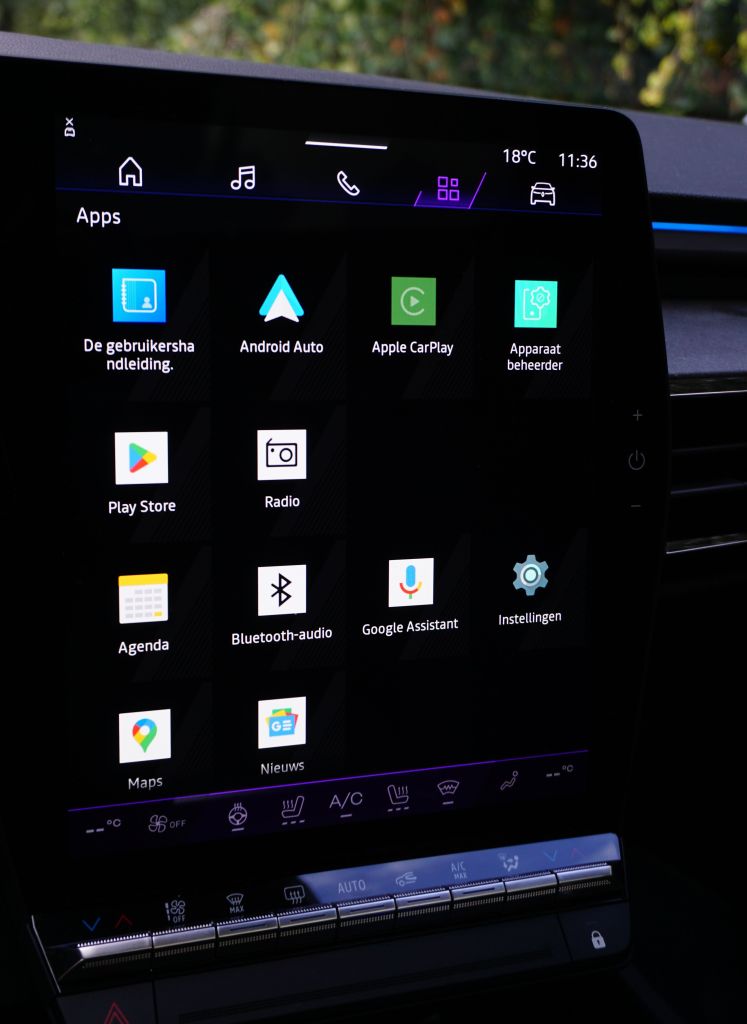
The cockpit offers driver and front passenger Renault’s “Open R” digital instrumentation with two screens forming an L shape. There is a horizontal TFT dashboard display of 12.3 inches diagonally and a vertical touch screen measuring 12 inches diagonally in the centre of the console. Eminently legible and intuitive to use.
Staying connected…
The Rafale connects indeed seamlessly with your smartphone through its in-car “OpenR” Link multimedia system with Google built-in. The system provides access to Google Maps, Google Assistant and a host of apps (50 or more depending on the country and version) via the Google Play catalogue. Just like on a smartphone. The interface is also fully customisable and compatible with Android Auto and Apple Carplay.
As it is an open-ended system connected to the cloud, OpenR Link automatically integrates the recommended updates using FOTA firmware over the air) technology.
A clever, full hybrid drivetrain…
The Rafale has a 3-cylinder 1.2 litre turbocharged petrol engine developing 130 hp (96 kW) with 205 Nm of torque underneath the hood, and two electric motors. Let’s start with the engine. It has a Miller combustion cycle, low-pressure exhaust gas recirculation, a variable-geometry turbocharger and a longstroke architecture similar to that of a diesel. The result is an extraordinary efficiency level of 41%.
You guessed it, this engine does not spoil your ears with a thoroughbred high revving staccato, but rather sounds indeed like, well, a lower revving piston aircraft engine when called to duty. Especially as the computer which controls the hybrid system lets the engine rev up to recharge the small 2 kW battery, which it does when you are driving at a (lower) constant speed or coasting, when you are using little engine power otherwise to propel the car. The computer then cleverly takes the opportunity to rev up the engine to recharge swiftly the battery, so it can again deliver its e-power for e-driving in slow urban traffic or to e-boost swift acceleration when called for.
This typically gives the driver the impression that the engine is revving up like the original Rafale record airplane before take-off… one would almost like to sit behind the wheel with leather gloves and a leather flying cap and goggles!
Renault’s full hybrid system is indeed very clever and astonishingly efficient. The two electric motors are respectively a main motor, developing 50 kW or 70 hp, and this is the one fed by the 2 kW 400 V battery. The other one is a starter-generator motor of 25 kW, which starts/stops the engine and performs the gear changes in the clutchless multimode automatic dog box developed using Formula 1 technology. It combines two gears for the main electric motor and four for the internal combustion engine. The motors and engine with this box combine 15 different operating possibilities, to offer te ideal solution in any driving situation. Soo clever! But there is more. Renault went as far as to introduce on its flagship car so-called “predictive hybrid driving”. This function is meant to maximise the use of electrical energy while driving.
Connected to Google’s mapping data, such as the topography of the road over the next seven kilometers (or the most likely route if no destination is recorded), provides advance information to the battery management system to maximise the use of electric power….
Brisk performance
With a total system power of 200 HP, acceleration of this 1,6 tonne Rafale is quite good with a sprint time from 0 to 100 km/h of 8,9 seconds, and an intermediate dash between 80 and 120 km/h being absolved in 5,6 seconds. Of course, when driving full power for an extended period, the e-power is consumed and the petrol engine has further to do all the work, which translates therefore with its 130 HP in a relatively modest top speed of 180 km/h.
The good thing is that one is driving in urban traffic to a very large extent on e-power, which translates indeed in very good fuel economy. The WLTP figure is 4,7 l/100 km with CO2 emissions being 105 g/km.
The paddles on the steering wheel are not meant for manual gear changes, just let you choose the level(s) of e-regeneration.
Alpine agility…
The Rafale has very good handling qualities, and much testing has been done by Renault people to eke out the very best the CMF-CD platform has to offer.
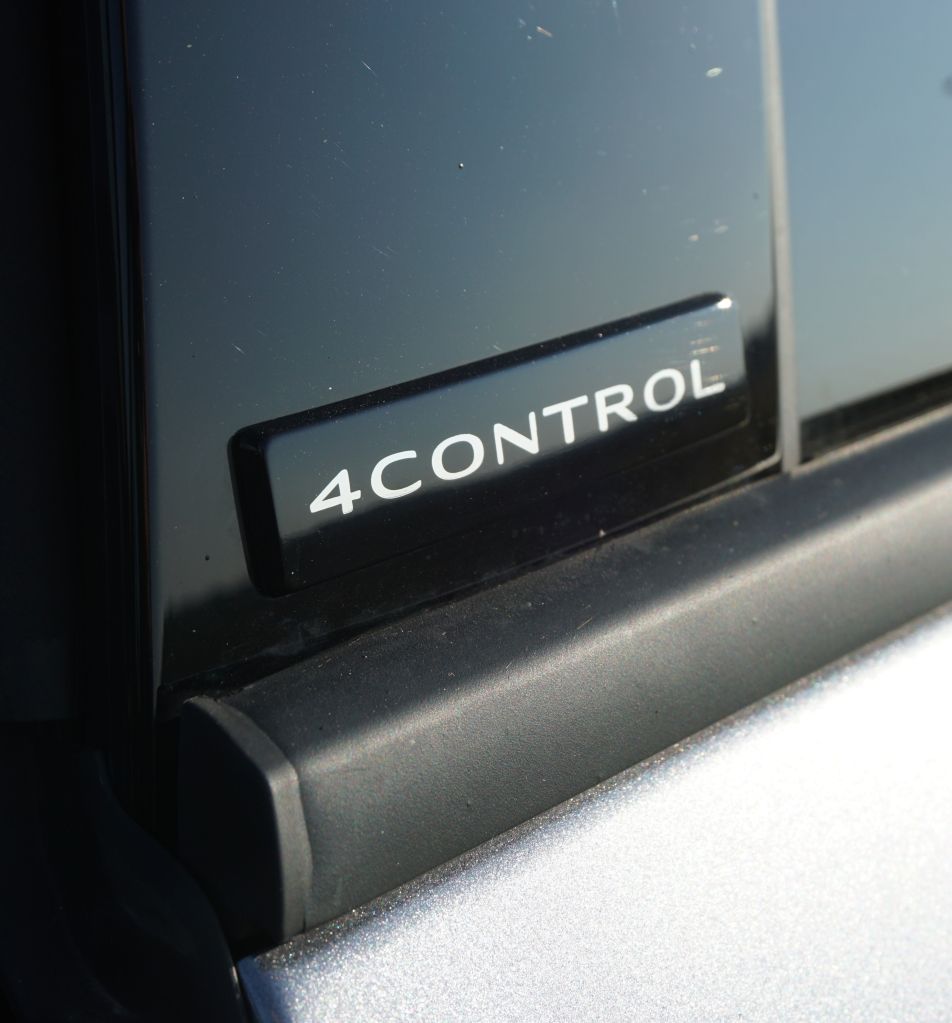
The Rafale has multi-link rear suspension as standard , and the Alpine version we drove has the “4Control” four-wheel steering technology. The rear wheels turn in the opposite direction to the front wheels (by up to 5 degrees), for better maneuverability on city streets. This results in a turning circle of merely 10.4m. On the motorway, at higher cruising speeds, the rear wheels then turn very slightly (up to 1 degree) in the same direction as the front wheels, improving vehicle stability by reducing the inertia of the rear axle.
We found the Rafale indeed quite agile and stable. Also thanks to the upgraded Vehicle Motion Control (VMC 2), an electronic system controlling the rear wheels, and ESP. All this is further enhanced by the calibration of the steering with a direct steering ratio of 13. A truly sporting D segment car, when it comes to agility and road manners. In line with its French pedigree, it is very comfortable too.
Conclusion
With this Rafale, Renault makes an impressive statement in the D segment, offering a stylish SUV coupé with ample room, excellent handling, convincing performance and surprising economy. Its drivetrain is truly clever, its equipment and finish is full of panache, especially in the Alpine versions.
Soon there will be a 300 hp plug in hybrid 4×4 version, noblesse oblige, but already this 200 HP Rafale was very convincing indeed…
Lanciapresented its Ypsilon Rally 4 HF, with from left to right rally champion Miki Biasion, Charles Fuster, Lancia head of Marketing and Communication andEugenio Franzetti, head of Lancia Corse HF.
Indeed, Lancia is making an impressive comeback in our low countries, notably Belgium/Luxembourg and the Netherlands. The three countries have always had a strong interest and passion for the brand, and therefore represent an important portion of the brand’s internationalization plan. It is good to know that by the end of this year, Lancia will get ten new showrooms in Belgium-Luxembourg and five in the Netherlands.
“Lancia is Back” said Charles Fuster, Head of Marketing and Communication for the Lancia brand, with indeed already a grand opening of six showrooms in the Belgium-Luxembourg region, located in Aartselaar, Overijse, Kortrijk, Gent, Gilly and Bertrange, with a network set to grow to ten showrooms by the end of 2024, including upcoming locations in Drogenbos, Hasselt, Namur and Herstal. In the Netherlands, the brand inaugurated five new showrooms at strategic locations, in Amsterdam, Rotterdam, The Hague, Utrecht and Zwolle.
The Lancia Ypsilon Rally 4 HF…
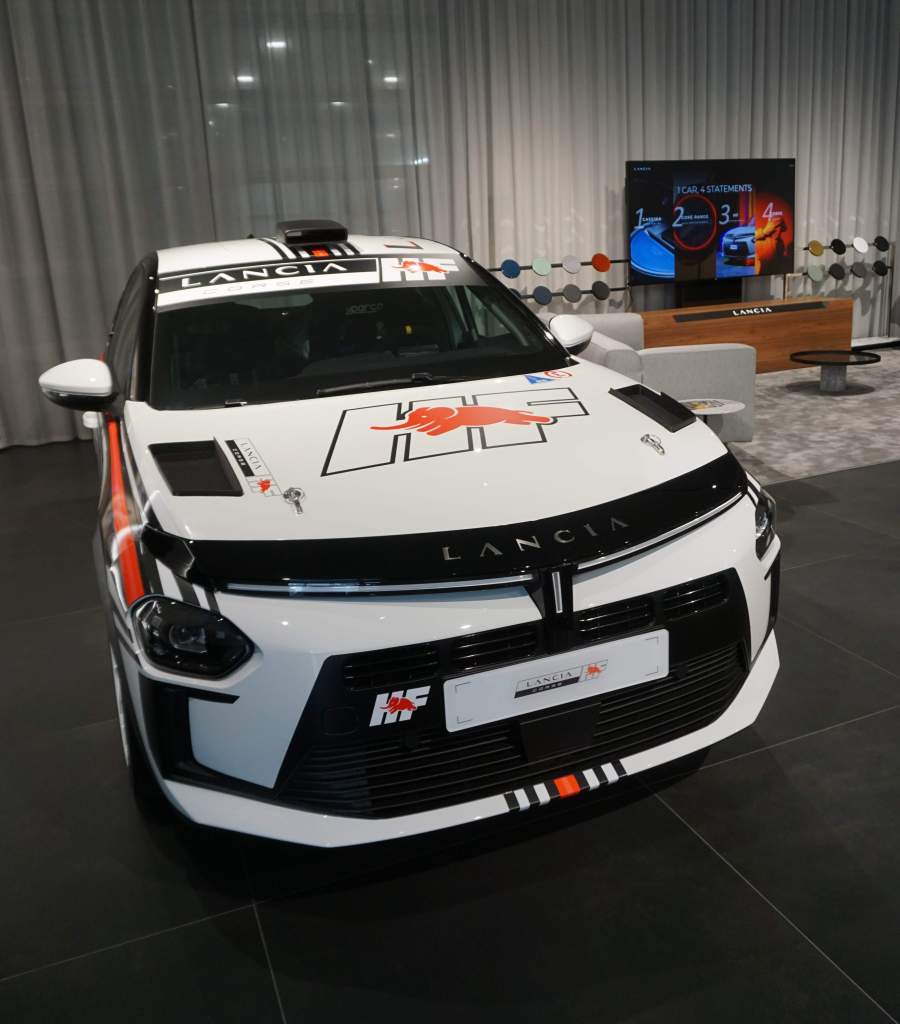
But Lancia – as announced already several months ago by Stellantis CEO Carlos Tavares – is also returning to motorsport, and presented now in Brussels, Antwerp and Utrecht for the first time the Lancia Ypsilon Rally 4 HF.
As the name “Rally 4” already suggests, this Lancia will take part in the Rally 4 championship, a gateway to the world of rallies where junior drivers make their first steps towards becoming professional rally drivers.
and champion Miki Biasion…
Miki Biasion, the world rally champion in 1988 and 1989 with the Lancia Delta of Martini Racing, was present at the presentation, and we were able to have a few words with him.
“I am really glad to support the Lancia Product Team and the Stellantis Motorsport Team in the fine-tuning of both the Ypsilon HF and the Lancia Ypsilon Rally 4 HF,” he said. “We worked to improve the performance of the car, fine-tuning several parameters: engine response, trying out different ignition/injection mappings.” Then he continued: “We worked also extensively on grip and handling, also working on the settings of springs and shock absorbers. We also honed and perfected the braking system, the responsiveness and gearchange speed of the gearbox, also testing new ratios”
Indeed, the Lancia Ypsilon Rally 4 HF has a “classic” 1,2 three-cylinder 1.2-liter turbo engine with four valves per cylinder and an output of 212 hp under the bonnet. It has only front-wheel drive, a mechanical transmission with five gears and a mechanical limited slip differential. All this to make the car affordable for debutant young drivers, which is also the strategy of Stellantis, pursued already with the Peugeot 208 and the Opel Corsa.
Relying on private teams…
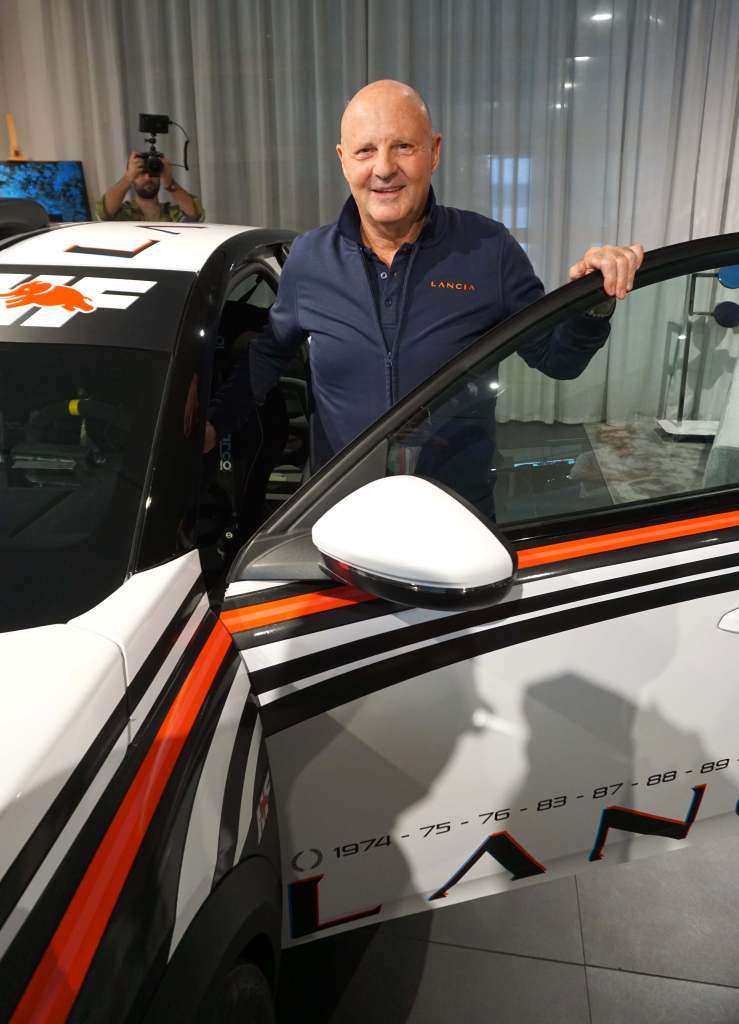
We spoke also with Eugenio Franzetti, presently Director of Lancia Corse HF. He told us that the strategy of Lancia and Stellantis in general is to rely for the Lancia Rally 4 HF on private teams at the start of the 2025 season, and therefore the car has to be both affordable as well as competitive.
Eugenio Franzetti together with Silvia Cassani, Head of Lancia Communications
Eugenio already occupied various important positions in the Stellantis Group. He was communications and competitions director for Peugeot in Italy, director of communications for DS Automobiles/Citroën/Peugeot in Italy, director of sales for Citroën in Italy, director of communications for Peugeot Global and Italy’s Managing Director of the DS brand before becoming director of DS Performance.
Today he remains in his position as the DS Performance Director and he will therefore retain the dual role.
E power for the road: the Lancia Ypsilon HF
The Lancia Ypsilon HF, the 100% electric performance version of the new Ypsilon, is powered by a 280 hp electric motor, which enables acceleration from 0-100 km/h in just 5.8 seconds. This drivetrain is also found in the Alfa Junior Veloce and the Abarth 600e.
With its lowered chassis, wider track and muscular design, the Ypsilon HF is a nod to the iconic models from Lancia’s rich past. The car will be launched in May 2025…
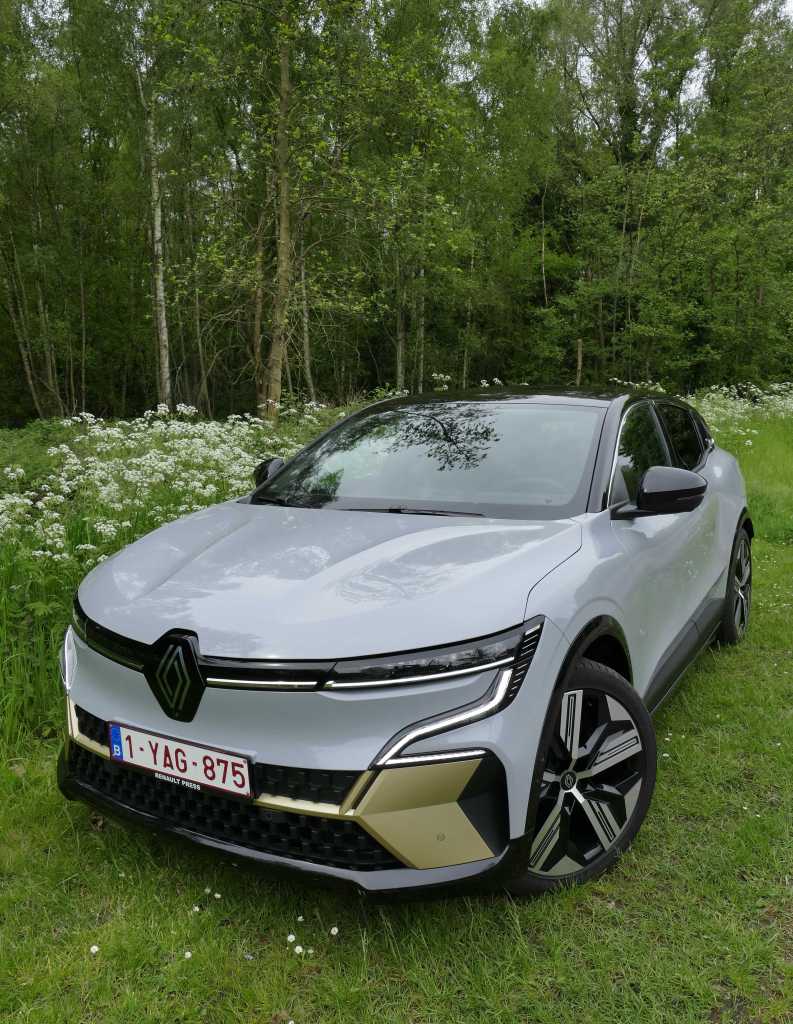
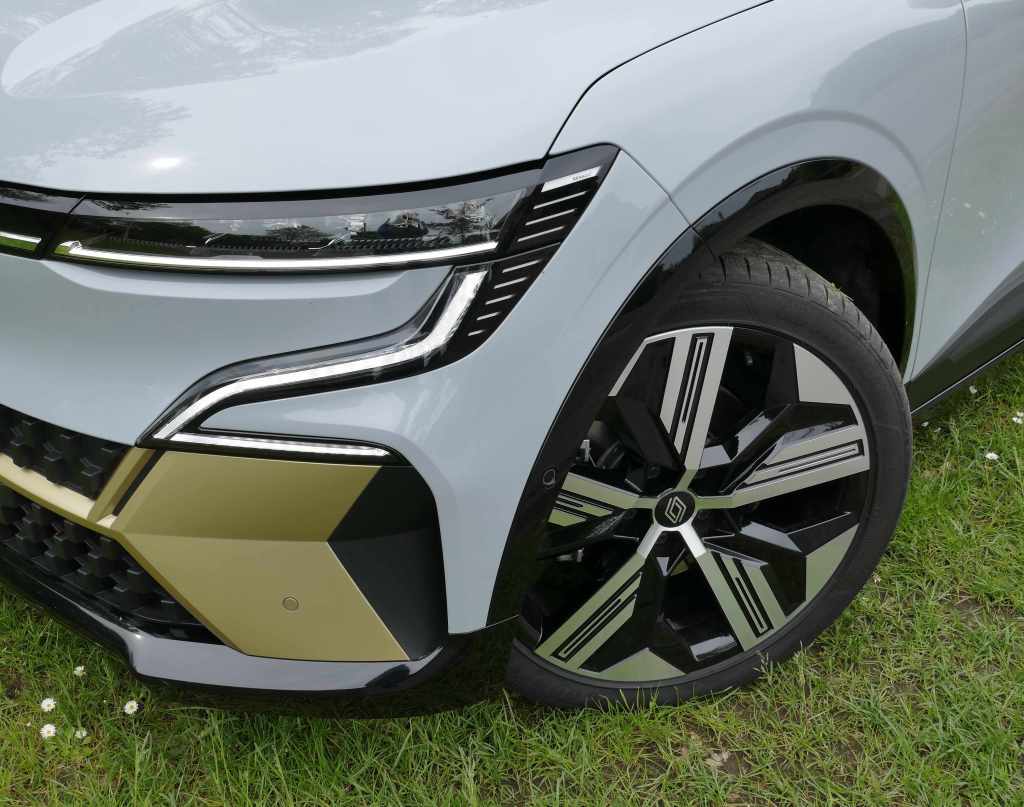
Renault has been very early in the EV game, with its fittingly called ZOE, which has been for years an absolute bestseller. The new Megane has been completely redesigned and is the first Renault model to run on the new so-called CMF-EV platform, co-designed with Nissan. The new Megane is compact with its 4,20 meters, which is almost identical with the previous, fourth generation Megane, but that’s were any similarity ends. The new Megane stands proudly on its big wheels (20 inch in the version we tested) and its proportions are beautiful indeed. The longer weelbase of some 2,70 meters clearly shows that this is a latest generation EV. It certainly has style and panache. Will it also convince as an EV? Just read further…
Hans Knol ten Bensel
Modern times…
The Megane has not only a contemporary flair, it also offers quite enough room for four adults and their luggage. They are greeted by a pleasant and premium interior, with impeccable styling. On the top version we tested, your eyes wander over a well finished dashboard and meet with a crisp 12 inch central screen which offers state of the art infotainment and connectivity. Of course, Apple Car Play and Android Auro are provided. But this is also standard in the base model. Indeed, the latest Megane generation comes very well equipped. Then you get a 9 inch screen, but a rear camera and speed limit recognition combined with cruise control are also standard.
Cocooning
Indeed, the digitalized instrumentation leaves nothing to be desired. Renault has integrated Google functions in its OpenR link, and offers very good information for the EV driver. First of all it uses the chrystal clear Google maps, and when plotting the chosen route for you, it will take into account the charging situation of your battery, and even indicate the estimated remaining charge status at your destination.
Of course it will also suggest stops and places where you can recharge your battery. The layout of the dashboard is quite practical, and it is good to see that the commands for heating and ventilation are placed on a separate physical touchboard below the central screen. One also finds the legendary and iconic audio command stick on the right side of the steering column, which is typical for every Renault since the R 25 sedan, launched way back in the seventies…
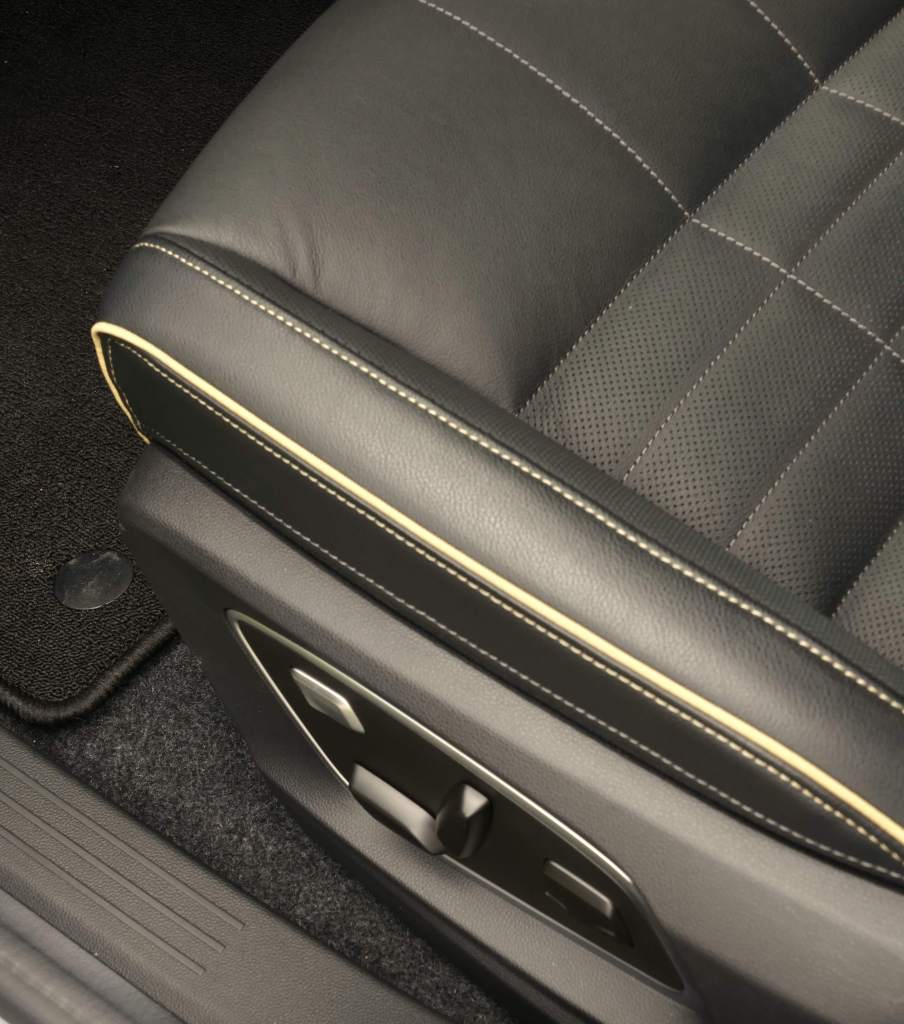
The finish level of the cabin and seats is high indeed. In the top “Iconic” version we tested, Renault has also provided electric powered front seats with memory and massage functions. The seats are very comfortable and the upholstery is firm.
Smooth power
We tell you nothing new when I tell you that EV’ s spoil you with lots of super-smooth power. With its 300 Nm and 220 HP you can expect very sporting performance. Not only is this Renault very quick off the mark with a sprint from 0 to 100 kmh in merely 7,5 seconds, it excels in traffic with very brisk accelerations. From 60 to 100 kmh costs merely 3,6 seconds, which makes overtaking or joining faster traffic the proverbial breeze. Besides the silence and smoothness, it is this permanent presence of this abundance of power which makes an EV truly delightful to drive. The pleasure stops at 160 kmh, as the electronic limiter sets in quite sensibly. Indeed, high cruising speeds wreck havoc to the range of your EV.
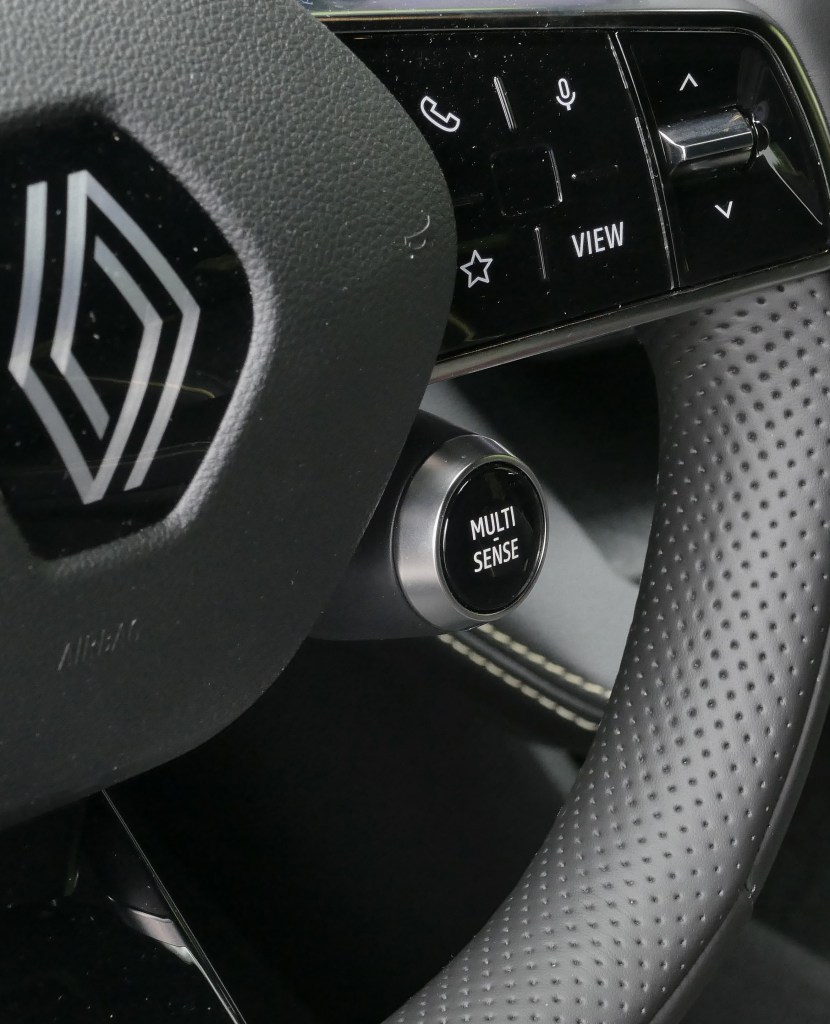
There is a round knob at the steering wheel column where you can choose the different driving modes from eco to sport, and with the paddles on both sides of the steering wheel you can select the amount of energy recuperation you want on your drive.
Despite being only front wheel drive, the drivetrain copes well with all this power. When it comes to consumption, the slower you accelerate and cruise, the better your range will be. We learned to drive EV’s with restraint, despite their abundant power, and this is the only way to achieve a consumption which comes close to the official WLTP figures. We regularly achieved values between 15 kW in urban traffic and 17 KW on the open road, at moderate cruising speeds. When you use this Renault more briskly, you have to reckon with 19-20 kW, which is still a very good value indeed.
The battery has 60 KW capacity, and this means a range between 370 and 400 km is quite realistic and achievable when you drive it with restraint and achieve a consumption of around 15-16 kW. It accepts up to 130 kW fast charging, and this means that you can charge it from 10 to 80 pct in merely 41 minutes. The battery is guaranteed to deliver 70 pct of its capacity for a period of 8 years or 160.000 km.
Practical
We already applauded the excellent infotainment and good cabin layout. The boot space is adequate with some 330 liters, with the rear backrests down this raises to some 750 liters. The boot floor lies very deep, and this makes loading heavy objects a bit cumbersome. One minus point in everyday life might be the rather poor backward visibility, due to the small rear window, high waistline and the large C pillar. But then the Megane has a rear camera as standard equipment, and in the top version we were spoiled with an electronic rear view mirror.
Comfort and handling
The Megane is in good French tradition laid out for comfort, it is also at home on winding roads and offers excellent stability at motorway speeds. We already applauded the comfortable seats, and getting in and out of the car is also easy due to its higher stance.
Conclusion
A well styled car, well built and finished, powerful and reasonably frugal, the Megane betrays the excellent ”savoir faire” of the French car builder in making EV cars. It is full of panache, both inside and out, and certainly deserves a good look if you are looking for an EV in this segment.
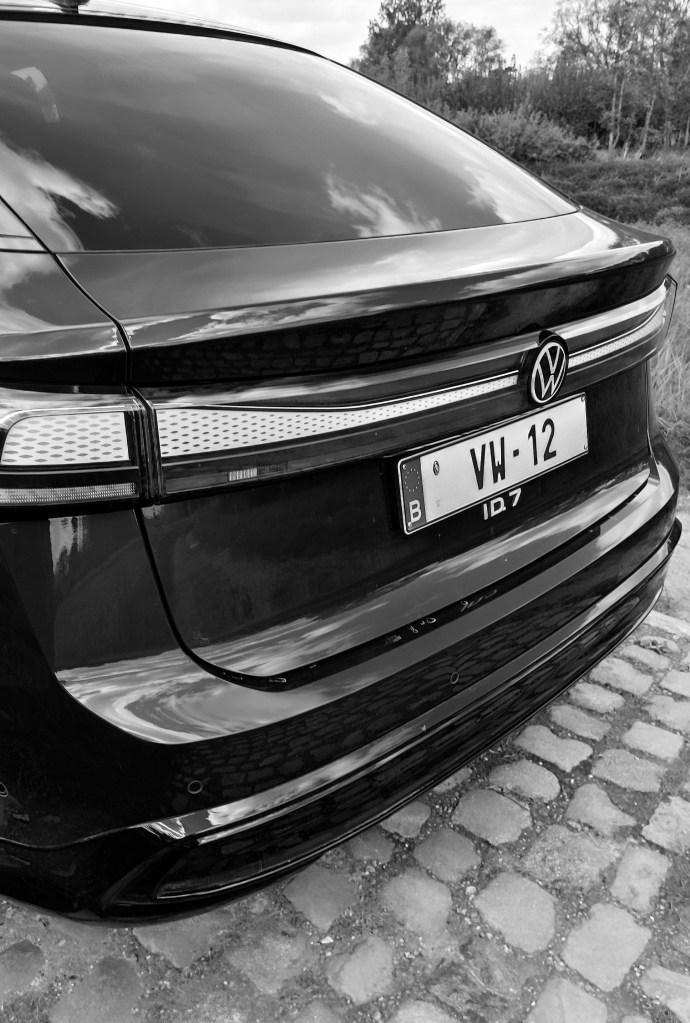
Volkswagen has gained over the years already quite some experience in designing, developing and building EV’s with its already iconic ID series. All this know how is now brought together in the ID.7, the big EV limousine at the top of their ID range. The result is manifest: this car is full of good qualities, and earns indeed top marks in virtually all aspects. We found it clearly one of the best bigger EV’s we have come across lately. Just read further…
Hans Knol ten Bensel
Imposing and well proportioned
The ID.7 has the same styling and form language as the smaller models in its ID range, but its proportions are even better, not in the least because of its longer weelbase. The overall length of 4,97 meters lets the lines and contours flow more gradually and elegantly and indeed, this ID.7 looks good from any angle. The ID.7 is also very aerodynamic, with a Cw value of merely 0,23. This is very crucial to reduce energy consumption at higher cruising speeds, and to achieve longer ranges on long distances. But there is more: the VW engineers gave the ID.7 also a brand new electric motor. It drives like in the other ID models the rear wheels and develops 210 kW or 286 HP.
Plenty of power, to say the least, and this ID.7 is very agile indeed. It sprints from 0 to 100 km/h in merely 6,5 seconds and overtaking becomes the proverbial breeze. The ID.7 behaves also wonderfully when you drive it more quietly, and the car then rewards you with a very reasonable consumption. We achieved during our test an average of 17.60 kW/100 km, and we think that this tells the whole story. Indeed, VW succeeded in giving their flagship EV an impressive range of close to 500 km. Of course, the usable range varies with outside temperatures and driven speeds, but let’s say that this ID.7 has its merits as a long distance Gran Turismo. This good range is achieved with the 77 kW battery which is also found in the other cars of the ID range, and all this is due to the improved motor and the better aerodynamic qualities. Of course, as you already know by now, EV cars just LOVE slow driving. The slower the (constant) speed, the further you go. Even to very slow speeds, like say 40 km/h, EV’s are frugal, where IC engined cars need to revert to lower gearing to keep the revs up and are therefore less efficient. Also the outside temperatures are relevant. So at a nice springtime outside temperature of 20 degrees and at a cruising speed of say 90 km/h, you will drive far beyond 600 kilometers with your stylish ID.7. Top speed is sensibly limited to 180 km/h.
This electric flagship will also recuperate its kinetic energy nicely. If you put it in Eco mode, it will also decelerate smoothly and anticipate for bends and crossroads.
Comfort and space…
We found the suspension of the ID.7 actually “just right”, offering excellent comfort in all circumstances and under all driving styles, with outstanding handling and agility. A superbly balanced car indeed.
But it is not only the suspension which stands out, the generous dimensions in the cabin do the rest. Indeed, this is a limousine fit for the very tallest. Even when the front seats are put back to accommodate 1,95 meter tall front passengers, you will still enjoy ample legroom in the back. Indeed, this is a car to fit four basket ball players, and this is pretty unique. Your servant is barely 1,70 m tall, so you can imagine that I was absolutely spoiled.
Climate comfort
The seats itself also merit superlatives. The front seats are optionally equipped with so-called ’Adaptive Climate Control’. It has to be felt to believe it. Humidity sensors in the backrest will prevent transpiration, small jets will cool or heat the seats for optimal comfort. Besides this, the seats will also spoil you with an array of massage functions.
The light atmosphere in the cabin can be changed almost at will, 10 different colour shades are standard, and can optionally be as many as 30…
Our test car came with a panoramic roof, which has a layer of polymer dispersed liquid crystals, so you can control the transperance with a simple touch.
Heating and ventilation are controlled on the immense central touchscreen, although there is an illuminated control bar at the base of the screen which lets you adjust with sliders the basics like air temperature and airflow volume. The direction of the airflow through the vents can only be adjusted on the touchscreen however. Your servant is very sensitive to colder airflows, and was very surprised to feel an intermittent air stream on his face. Indeed, the airvents can be set to turn constantly on a horizontal axis, like a stand ventilator in your home…
A range of well over 500 kilometers is quite possible with the ID.7..
On a public charging point it will accept power up to 11 kW, and the battery will be 80 pct charged in about 4 hours…
Touch controls…and clear instrumentation.
Again the haptic touch controls are the hallmark of this VW, as is typical for the entire ID range. It takes some getting used to, and for instance you are well advised to set the voice command sensor on the steering wheel properly, otherwise she will ask you what she can do for you at every turn of the way.
What we loved is the very clear and concise driver information the instrument display puts in front of you. Indeed, less is more. There is also a very readable head up display. It informs you about speed, the direction you should take and energy consumption.
Practical
In good VW tradition, the boot space is enormous. When you fold the back seats and load until the window openings, you can store 888 liters… There is even a small separate 25 litre storage space for the charging cables.
The ID.7 is rather wide for urban traffic, but its turning circle is a modest 10,7 meters, and indeed the car is thanks to the driving aids also a breeze to park.
Fast charging is a strong point of the ID.7. It will accept up to over 180 kW charging power, and under these conditions it will take little more than half an hour to recharge this flagship from 10 to 80 pct. On a public or wallbox charger it will typically accept 11 kW, and you have to reckon with a charging time of some 8 hours.
Conclusion
The ID.7 is indeed a totally convincing limousine EV. It is hard to find any weak points, and it is therefore not surprising that it earns many top laurels in the international motoring press. Notably it was given the very best note ever for an EV by the German ADAC in their test.
Quality doesn’t come cheap, but then this is a rather formidable EV, and we sincerely regretted to part with it…
The stylish 2008 has already won many car loving hearts in its B-SUV segment over the last three years, and Peugeot now again improved its styling, equipment and last but not least gave it a new electric motor, bigger battery and longer range.
Reason enough for us to have a go for you behind its cute, dynamic and very pleasant small steering wheel, which gives this 2008 the extra panache and feel to brighten up your daily driving. We drove the top notch GT version here, and were spoiled indeed…
Hans Knol ten Bensel
The E-2008 was already quite popular in its earlier version, with not less than 75,000 units sold. It accounted for 17.4% of sales in 2022, placing it on the podium of European sales of electric SUVs in the B segment.
Even more style…
The 2008 had already an appealing overall design, but now after the new 508 saloon and 508 SW, the 2008 is the second model to adopt the new PEUGEOT signature light. This consists of three vertical light claws which are integrated into the gloss black inserts on the bumper. In the GT versions, the effect of the three claws is extended in the lighting of the full LED headlamps through the use of three light modules. We liked it…see the photo below.
The new LED rear lights on all versions of the new 2008 are redesigned. The emblematic three claws are made up of three superimposed horizontal double slats, giving the 2008 optically a wider stance.
The new 2008 has a new front end, which features the new PEUGEOT emblem, and we liked very much the new Selenium Grey which was chosen as the launch colour. It gives the 2008 a decidedly upmarket appeal. The wheel design is now in line with those introduced on the PEUGEOT 408. Several models are available, in 16-inch “NOMA” (ACTIVE versions), 17-inch “KARAKOY” (ALLURE and GT) or 18-inch “EVISSA” (optional on GT). All alloy wheels feature a 4-spoke wheel centre, stamped with the PEUGEOT crest…
A pleasant cabin and a new digital instrument cluster
Ideally located at eye level, just above the steering wheel, the new 2008’s instrument cluster is digital on the ALLURE and GT versions. Its 10-inch digital display has a new design and, on GT versions, a 3D display. The colour of the display, the hierarchy and the layout of the information can be fully adjusted to suit the driver’s preferences, and indeed, is quite intuitive to use. We like the Peugeot idea of putting the instruments in your line of vision, just above the upper rim of the small steering wheel, but we would suggest that you test this out for yourself so that you feel comfortable with it.
Of course, the central display will also show your Android Auto connection…
All 2008 models now come with a 10-inch central touchscreen as standard, and on the ALLURE and GT versions, the central screen has improved readability thanks to HD technology. It is indeed a breeze to use, also thanks to the row of piano keys under the central screen, giving quick access to key functions. We also liked very much the big round audio volume control knob, it is always the most intuitive and useful tool for radio listening, no matter what…
The cabin is pleasant, the seats not only look good, but give excellent comfort and support. As icing on the cake, the GT version we tested offers ambient lighting which can be customised in eight different colours, coordinated with those of the central touch screen and even taking into account the selected driving mode (!).
If you plan to take your E-2008 to snowy alps or muddy country roads, it is good to know that the 2008 comes with Grip Control, which provides access to three driving modes: sand, mud and snow. Depending on the country, this grip control offer is combined with ‘3PMSF’ all-season tyres.
A new electric engine and longer range…
Stellantis installs now a more powerful 156 HP electric motor in the 2008, and this engine is also found in the E-208 and E-308. The same goes for the improved battery, now good for 54 kWh. All this results in a longer range – according to WLTP standards – of 406 km. Everybody now knows that outside temperatures and driving styles greatly influence the possible range of an EV. And it must also be said that for EV driving, the slower is the better, contrary to IC engined cars, which in the top gear have a so called ”sweet” spot for economy driving at some 70-85 km/h. At this speed, an EV is already consuming a LOT MORE kWh than at say 50-60 km/h. Speeds between 30 and 40 km/h are most economic for an EV, this is the reason why it excels in urban traffic, and this is the main reason for adopting hybrid drivetrains to lower overall consumption in frequent urban use.
To achieve decent efficiency at higher speeds and more dynamic use, manufacturers of electrified cars have adopted the so-called ”drive modes” systems, as is of course also found on this E-2008. In this ”Eco” mode, the engine power is harnessed to some 109 HP, which is indeed more than sufficient for everyday driving. The excellent torque characteristics of an electric motor make up for this, and one never has the feeling that the car is underpowered.
What remains is the uncanny and brilliant smoothness of EV driving, and indeed, nothing comes close if you want pleasant (urban) mobility. On the open road, we try to achieve in the milder springtime temperatures a decent range of some 350 kilometers, and this means cruising in the ”Eco” mode at some 100 km/h, which means that you truly can enjoy the jazz or classical music coming from the very melodious sound system. On the practical recharging level, it is good to know that you can fast charge the 2008 at up to 100 kW. This means that you can recharge this Peugeot in merely 27 minutes from 10 to 80 %.
We also appreciated here the very well dampened rolling noises, making a longer trip a very relaxing and enriching experience. EV cruising is indeed under these circumstances a marvelous ”Zen” activity, where we are of course grateful that the distances in our rather small country are not by any means large. A word of praise also for the sound system, very important now in an EV.
French car builders have a unique “savoir faire”, when it comes to making suspensions which are both comfortable and well balanced, offering excellent road manners. The small steering wheel inspires you to adopt a more active driving style, and indeed, the 2008 doesn’t miss a beat, on any road and at (almost) any speed…Having said this, this 2008 feels however most at ease when you adopt a zesty, but a still rather relaxed driving style.
With 156 HP the E-2008 offers quite adequate performance, if not sensational. It will sprint from 0 to 100 km/h in 9,1 seconds, top speed being limited to 145 km/h.
Practical
The 2008 scores well in everyday life. Offering good seating comfort fore and aft, luggage space is still very much OK with 434 litres, and you can extend the luggage space by folding the 60:40 split rear seats. When it comes to equipment, there are three levels you can choose, Active, Allure and the Gt version we tested. The Allure version seems the ideal compromise in terms of value for money, as it offers most of the things you get in the GT version, although we must admit that we liked the extra panache of the GT nevertheless…
Conclusion
The 2008 convinces in styling, above all a fantastic looking interior and dashboard. It is smooth and comfortable, seats four easily, has adequate boot space, and is reasonably e-efficient. It is very well possible to achieve an average consumption of around 15 kW/h given a relaxed driving style.
Hans Knol ten Bensel
Photographers’ notes: this time we used an older Nikon camera from our collection: the D3000. It saw life in 2009… Is a 15 year old digital camera with a 10.2MP DX-Format CMOS sensor and an EXPEED image processor still able to hold its own? The experts then said: “Image quality overall is excellent with accurate colors, sharpness, and great exposure metering. Although cameras within this class aren’t especially known for their speed, the D3000 holds it own.” Well, judging from the photos here, taken with the 18-140 f 3,5/5.6 zoom lens we bought with it at the time, it still does!This begs the question: do we need the 20 and more millions of pixels to produce good results? Well, eh, no…
Mr. Philippe Dehennin pleaded passionately for a change in EU Commission decarbonization policies in the interest or European car industry, its workers and its consumers…
Recently I assisted at an interesting luncheon conference held by Philippe Dehennin, Chairman of BEHVA and honorary Chairman of Febiac after a lifelong career at BMW, at the premises of Autoworld and organised by the dynamic Royal Historical Vehicle Club.
He talked about the one-sided approach of the present EU commission and parliament in drafting the path to carbon neutrality of our automotive mobility.
He passionately pleaded for a neutral stance by the EU political decision makers concerning the technologies which are to be used in reducing carbon emissions. This is in the interest of both consumers and the European automotive industry, which is under pressure and economical risk due to one sided technological solutions (i.e BEV) which distort competitive balances in the global economy. Here I present to you an extensive report of his conference.
On the subject mentioned in our title, we will regularly report on what the captains of automotive industry have to say, and the adjustments they bring to their corporate strategies in these turbulent times of energy transition… Just read further!
Hans Knol ten Bensel
The lunchean conference was held at Brussels Autoworld…and organised by the Royal Historical Vehicle Club.
After illustrating the broad evolution of our (Belgian and European) mobility from the early fifties to the present day, Mr. Dehennin described, amongst others, the positions of ecologists on our future mobility.
In terms of preference, these ecologists adhere to the following pecking order: walking, biking, metro, bus, and finally the individual car. They see further carpooling and car sharing as the only viable use for cars. They see the latter solution also ideal for bikes, like cargo- or tandem bikes for example.
However, all studies show clearly that in all everyday life situations, the car remains the preferred means of transport. This situation is somewhat less outspoken in cities, but the preference is even more outspoken on the countryside and suburbs. For many families and households, the car remains an outright necessity.
In terms of reducing the ecological footprint, car manufacturers have made a quite remarkable progress over the years and have convinced many car owners and users not to give up what they have acquired in terms of individual mobility. The car will have a bright future ahead, unless the EU commission maintains its stance to forbid the sale of cars with IC engines from 2035 onwards.
The private car buyer hesitates…
Do we have to fear that this will happen? Studies on the behavior of average, modest households, which represent the majority of our consumer base, clearly show that they are largely opposed to the electrification of their cars. This situation now starts to have an impact on our politicians.
In the EU, only 1 in 10 of private car buyers opt for an electric vehicle. In Belgium, this is only one household on 20. The EV’s are just too expensive for the majority of average households. Many would just be forced to postpone the purchase of a new car and face the consequences of driving around illegally in (urban) low emission zones. Cities are aware of this and are starting to mitigate and loosen their emission regulations.
But the trend is changing. There are also several countries who do not forbid anymore the sale of IC engine cars within their borders. The same goes for the use of heat pumps, etc. EU countries are now more than ever on the issue of decarbonization.
No place for climate skepticism…
I want to stress here that I am not a climate skeptic. I am convinced that reducing carbon emissions is an absolute necessity, but it has to be done with the support of the larger public, within the boundaries and limitations of their purchasing power. Now, EU and national politicians are increasingly becoming aware of this.
The actual and invasive consequences of the socially utopian obligations and regulations are seen and felt by the EU public, and one can indeed ask oneself whether these measures are deemed necessary, taking into account that Europe represents merely 8 pct. of global CO2 emissions. Since 1990, these EU emissions have dropped by 50 %, whereas the emissions of China and India have increased over the same period by 300 %.
Saving the European car industry… through adopting a wider array of technologies.
Of course, the BEV is useful for many applications, notably in cities. But I also believe in the future of “thermal” or IC engine cars. 8 European countries, housing the majority of the not less than 13 million jobs tied to the automotive industry, have not said their last word. Nobody wants to open a free road to chinese imports. Germany obtained formal guarantees to be able to develop and use synthetic fuel for IC engines from 2026 onwards.
Jean Dominique Sénard, Chairman of the Board of Directors of the Renault Group, has repeated the strategy of Renault to go further on the path of electrification, but he thinks also that the combustion engine has still many good years ahead of it, thanks to the use of synthetic fuels, which he expects to go down in price in the coming years.
Oliver Zipse, chairman of the board of management of BMW AG, sees also hydrogen having a place in a diversified energy strategy to meet the varied needs of users the world over. In his latest statement, Zipse said “There is no “one size fits all” when it comes to mobility. Markets, customer wishes and conditions develop differently. This is a fact. As a global company, we take this into account. We are continuing to develop all powertrain technologies, including further researching the potential of hydrogen with our BMW iX5 Hydrogen pilot fleet.” (Added by editor).
Of course, hydrogen offers freedom of mobility with very short recharging times. BMW also believes in the future of thermal engines. Because the IC engine will live on for at least a century…And indeed, thermal engines are a crucial sector of European engineering excellence, whereas battery technology is a sector of Chinese engineering prowess.
If we are driven by the political authorities in only one direction, i.e. BEV, without certainty of the geopolitical developments, nor the certainty of access to the necessary raw materials, without having the necessary “green” E-power and the corresponding adequate charging infrastructure, we will not be able to offer what the customer wants, nor will we be able to guarantee employment in the automotive sector.
A brief for the new EU commission: to adopt a neutral technological stance…
We need to convince the EU Commission to adopt a neutral stance on the technological level. The commission cannot dictate to the industry the technological path to follow. This has never been done in the past and should not be done now.
The CO2 neutral mobility has to be adapted to the diversified realities of the broad consumer base. Also the Diesel engine has not told its last word with the appearance of “clean” synthetic fuels on the market..
The new commission has to steer our European industry in an intelligent manner through this energy transition. If we need EV’s for our needs, we should also invite Chinese manufacturers to open factories also on our shores; because only employment will generate the necessary prosperity and purchasing power.
Of course, the challenge for our manufacturers lies in offering also models for the average consumer besides the premium segment, where our European presence is already well established.
Only a combination of technologies will offer the proper solutions to the very diverse mobility needs of the EU consumer. The consumer should have the necessary freedom of choice, the liberty of selecting the ideal technology for his purposes.
Europe is a continent of liberties, the result of the declaration of human and citizen’s rights, like the freedom of speech, thought, opinion, property, the freedom to move when and how he or she wishes.
It is difficult to understand the complacency of a part of public opinion for those who seek to constrain us towards a single solution, i.e. the BEV and the bycicle. We need a technologically neutral, ecologically responsable mobility, respecting and preserving our economical prosperity. This will allow us to co-finance, together with the major powers, the decarbonization of the African continent.
Europe has to be again the home of automobiles with passion and style…
One last word about design. It is time that the European car industry starts to offer intense and passionate automobiles, incarnating a (design) culture proper to each brand. This trend is now (thankfully) growing… concluded the speaker.
Jeep has conquered many hearts over the years, and its popularity keeps steadily rising. The iconic brand for outdoor lovers has also chosen the path of electrification, which has been very well received indeed. The Avenger earned also top marks right after its introduction. It is designed and built in Europe, and is – for the time being – available only on our EU markets.
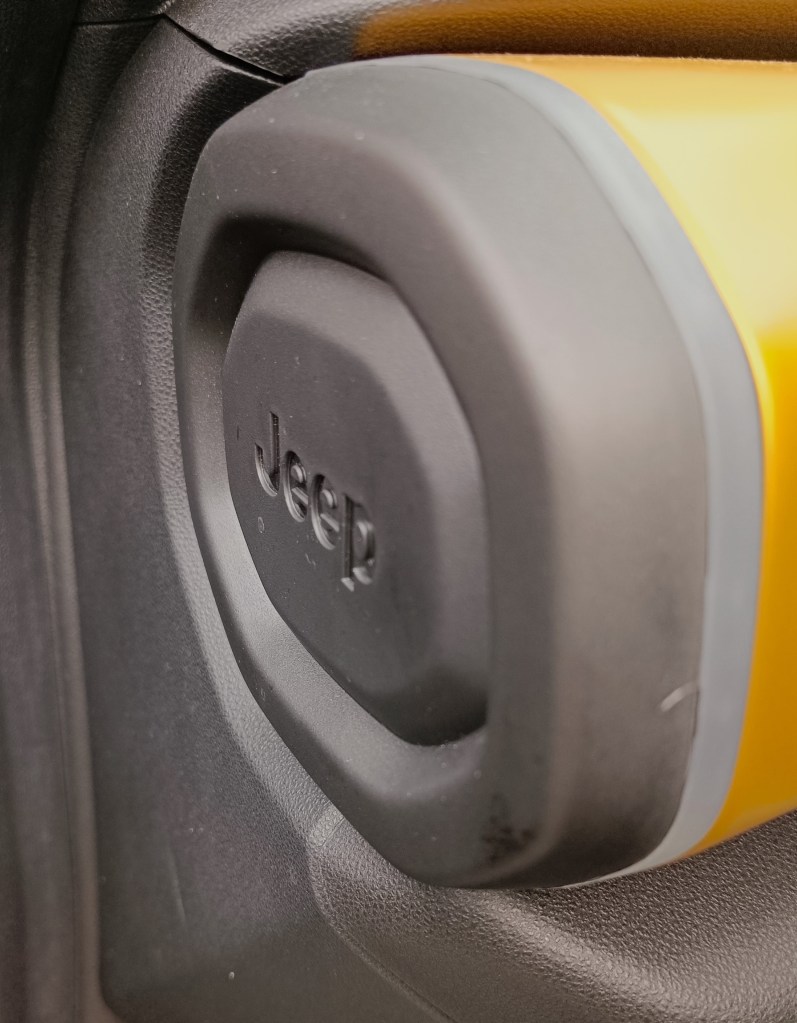
The Jeep Avenger Electric is only front wheel drive, but has the cutest proportions and overall looks, and just that makes it so desirable. It is unmistakably “Jeep”, and small styling details both inside and out remind you of this. We tested for you this ultrasmooth (urban) icon, just read further…
Hans Knol ten Bensel
Indeed, the looks and proportions are top notch, whereby the overall dimensions remain beautifully compact. Overall length is only 4,08 meters, which is 16 cm shorter than the Renegade. Of course, the platform comes from the Stellantis group, is built in Poland in the state of the art Tychy plant and harbours the latest EV technology, of which much more here below. The side view is marked by the classic trapezoidal wheel arches, allowing more wheel travel for maximum articulation. The seven bar grille is of course classic Jeep…
At the rear, the Avenger carries signature-lights inspired by the classic X fuel cans. This “X” is a recurring theme inside and outside via the “X-Camo”, a pattern which combines the concept of “camouflage” with the letter “X”. Cute!
Practical
The interior space feels in our modest opinion “just right” and the height is wonderfully suited to get in and out of the car most easily. The clean design of the dashboard breathes the “design to function” premise. It was inspired by the Jeep brand’s history and particularly by the Jeep Wrangler. It certainly looks refreshing and we just loved it
The upper part of the dashboard is shaped by a single horizontal function ‘beam’ which includes all the air vents, ambient lighting and a centrally located 10.25 inch touch screen, which can be seen by both the driver and passenger. The lower side of the dashboard is then marked by a wide-open storage shell, where you can put not less than 34 liters of all your stuff which you think are unmissable in your daily life. Below the buttons controlling the automatic transmission, this space has a neat folding magnetic cover which let you hide it from other’s eyes… Below it you can for example charge a cell phone while simultaneously storing a 1.5-liter bottle of water.
The front seats are electronically adjustable and can be had with massage function, and we found them quite comfortable indeed. Boot space is good with 380 liters, and is practical with the sill height lowered to 72 cm. Also the boot lid which is more than 1 meter wide.
Second generation BEV powertrain…
The second-generation 400 Volt electric powertrain is the first one to be launched by Emotors, a joint venture between Stellantis and Nidec Leroy-Somer Holding. It supplies 115 kW, corresponding to 156 horsepower, and 260 Nm of maximum torque. This means zesty performance…It runs on the “small” STLA platform. We tell you here that Stellantis has designed four EV platforms. STLA Small platforms vehicles will house packs with capacities between 37 kWh and 82 kWh. STLA Medium EVs will carry between 87 kWh and 104 kWh, STLA Large will use packs of 101 kWh and 118 kWh, and the big STLA Frame will require between 159 kWh and 200 kWh packs.
Each platform can be built to up to 2 million units a year. Volume and a high degree of shared components are of course key for both speed to market as well as cost control, according to Stellantis.
There will be three core drive modules that package the electric motor together with the transmission and power inverter. These drive modules also will be suitable for front-, rear-, and all-wheel drive applications, as well as 4xe in the case of plug-in hybrid Jeeps. So much here about the Stellantis platform strategy.
As rather typical for an EV, the acceleration leaves little to be desired. It will sprint from 0 to 100 km/h in 9 seconds. A rapidly diminishing range will prevent you to put your right foot very deeply on the motorway, and therefore the engineers already limited the top speed to 150 km/h.
A useful range.
The new 54 kWh battery, which is also produced by Stellantis, is made up of 17 modules and 102 cells utilizing NMC 811 Lithium-Ion chemistry and delivers 400 km of range in the WLTP cycle, which becomes 550 km in the urban cycle, still according to Stellantis.
The battery, is found under the front and rear seats and the central tunnel. Furthermore, it is protected by a high ground clearance and underbody skid plates during off-road.
Speaking of range, in the real world where we drove the Avenger in winter, and this affects of course battery performance. The range using the heating normally and doing some brisk highway and motorway driving at the legal maximum speeds, is reduced to some 230 km, with close to 300 km available when you use the Avenger exclusively for (sedate) urban driving. We said it already many times before in these columns, the smoothness and silence of E propulsion is just wonderful, and indeed the Avenger is a pure delight to drive.
Off road talent maintained…
The full electric Avenger we tested is only front wheel drive. But make no mistake, it is a Jeep. Therefore, it is equipped with standard Selec-Terrain® and Hill Descent Control which, together with the good approach and departure angles and the vehicle’s ground clearance, make it very fit to discover nature’s off road paths. We tried it, and indeed we were astonished…
The Selec-Terrain® system offers six modes: “Normal” for everyday driving; “Eco” to enhance range; “Sport” for more driving fun; “Snow” for maximum traction on icy roads or trails; “Mud” to optimize mud performance and to enhance grip; and “Sand” to limit the risk of becoming stuck on sandy soil. Needless to say that we used on the open road almost exclusively the ”Eco” mode…
Infotainment and driving aids…
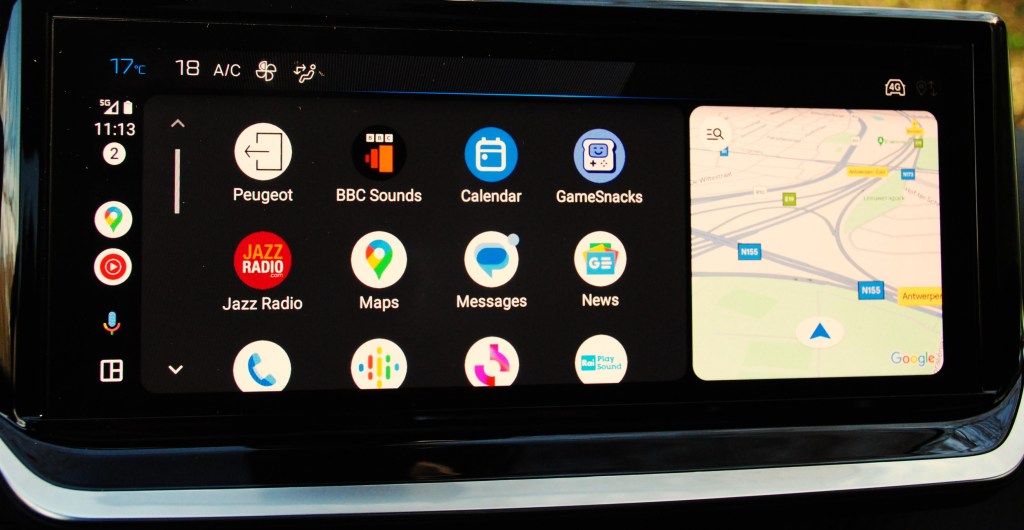
The Avenger offers of course Android Auto and CarPlay; you can mix and match content to build your own interface (up to twelve widgets per page, up to six pages); you can enjoy embedded navigation by TomTom with enhanced natural voice recognition; and last but not least over-the-air updates.
The new Jeep Avenger also offers a suite of remote services and functionalities. For example, thanks to the Jeep Mobile App, users can locate the location of their cars directly from their smartphones. Users can even lock and unlock their doors, check the battery level, set the climate functions and recharge the vehicle, as well interact directly with the Avenger through a vocal assistant.
The Avenger offers also Level 2 autonomous driving, which automatically adjusts speed and trajectory, and makes use of Adaptive Cruise Control and Lane Centering. We found it together with the “zen” character of E driving quite relaxing indeed…
We liked the pleasant compact dimensions of the Avenger, yet offering excellent head and legroom fore and aft even for tall adults. It is a marvelously well balanced car with, as we said earlier, pleasing and iconic looks and proportions.
Conclusion
The Avenger has many qualities which impressed us greatly. It looks good, drives beautifully, offers enough room for four adults and their luggage, is marvelously fit for urban use and is also surprisingly well at home on unhardened country roads. It is also an excellent cruiser, comfortable and silent, but when you have Gran Turismo high speed aspirations, look rather for the hybrid version. We look forward to testing this e-Hybrid version soon…
Hans Knol ten Bensel
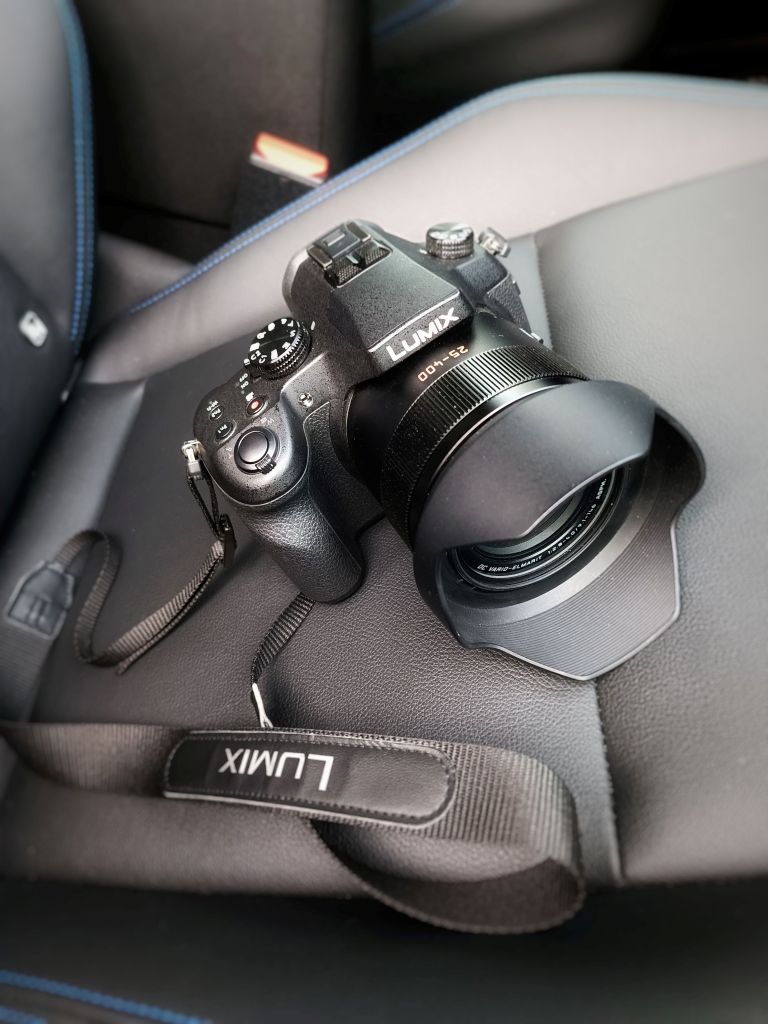
We shot the photos here again with our Panasonic Lumix DMC FZ-1000. The mid winter light lacklustre conditions were very well mastered with sufficient colour rendition, brightness and contrast. The Leica Vario Elmarit aspherical f 2.8-4 25-400 mm lens delivers excellent sharpness also at full lens openings.
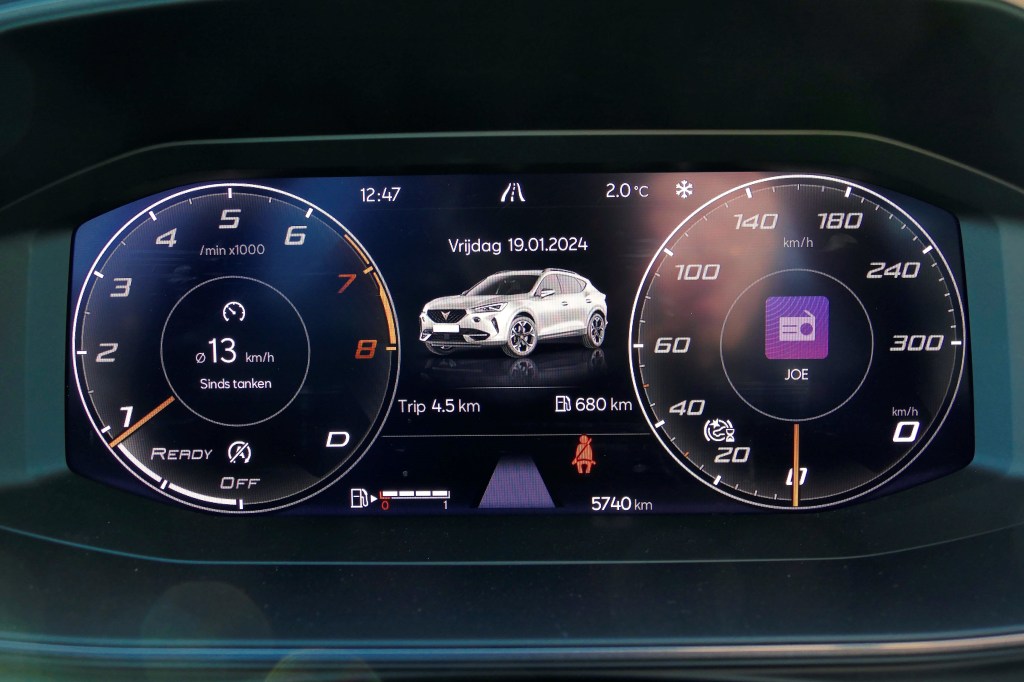
Faithful Autoprova readers remember the test report of the Cupra Formentor 1.5 TSI, and we liked very much the Cupra’s style, handling and overall behaviour. We found also the performance more than adequate, but the dynamic PR team of the Belgian importer D’Ieteren suggested that we make a test drive with the 2.0 TSI 4Drive version, as it will show even better the superb balance and true grit of the Cupra. So we did, and indeed, we finished this test with a smile on our face…Just read on!
By the way, do you know what “Formentor” actually means? We looked it up for you: Formentor refers to a place or location, and is often associated with scenic or picturesque natural landscapes and can be found in various regions around the world. For example, Formentor is a well-known cape in the island of Mallorca, Spain, renowned for its breathtaking views and beautiful beaches. Now you know!
Hans Knol ten Bensel
Smooth power…
As soon as we push the starting knob and put the 7 speed DSG in “D”, we are impressed by the pulling power of this 2 litre unit, developing not less than 320 Nm of torque over a wide rev range, i.e. between 1500 and 4100 rpm. Not that you need any high revs to get ahead with verve, and indeed this is a nice big pulling engine for your svelte and relatively light Formentor, which only puts some 1521 kg on the scale. This is the Volkswagen Group EA888 series engine, a well proven DOHC unit with DCVV (continuously variable valve timing), developing 140 kW/190 HP between 4200 and 6000 rpm.
The performance leaves nothing to be desired. The acceleration figures speak for themselves: it costs only 7,3 seconds to reach 100 km/h, and the top speed is not less than 220 km/h. Aficionados will say this is more like a Cupra is supposed to be… Intermediate acceleration figures also speak volumes: from 60 to 100 km/h costs only 4 seconds, 80 to 120 km/h only 5,4 seconds.
The engine feels and sounds never stressed, and is silent and smooth. In combination with an alert DSG with fast and imperceptible changes and a variable 4 wheel drive you soon feel light-hearted and start truly enjoying this Formentor.
As revs remain low even with spirited progress, consumption stays very reasonable indeed. We achieved an average of 7,3 liters/100 km, with a fair amount of faster driving involved. We find this an excellent value. Of course, when one uses the performance to the full, well over 8 liters is consumed over 100 km, a figure which is however still quite creditable, given the performance achieved. CO2 emissions are set at 202 g/km.
Excellent handling
The 190 HP Formentor can be had optionally with the DCC variable suspension setup and you can choose between good comfort up to firm sporting fit for razor sharp, flat cornering with virtually no body roll whatsoever. Combined with the sensitive and precise steering, it is a delightful car for the expert driver or the ordinary mortal who now and then wants to have some sporting pleasure behind the wheel. Motorway stability at (very) high speeds is excellent, and the steering is not too nervous, so this Formentor is totally fit for effortless high speed long distance driving.
During our test, we had a stint of (very) impressive snowy winter weather, so we were able to put the variable 4WD through its paces. It proved very efficient and kept us on the slippery and frozen snowy country roads always on the right path…
Conclusion
The Cupra Formentor really comes into its own with this lively 2 litre engine. The performance levels are excellent. In our country, the fiscal treatment of this version is not too good, and therefore one should – with this in mind – also have a look at the 1.4 litre e-Hybrid version(s), with 150 kW/204 PS and 180 kW/245 PS respectively. Maybe within the foreseeable future we can test one for you…
Stay tuned!
Hans Knol ten Bensel
Photographers notes:
We shot the photos here agan with our Panasonic Lumix DMC FZ-1000. The Leica Vario Elmarit aspherical f 2.8-4 25-400 mm lens delivers excellent results, with excellent sharpness and contrast, despite its very wide zoom range.
































 Autoprova - for the Connaisseur