We drove the Peugeot 408 GT 225 HP hybrid : French style and panache…

Peugeot is well known for its outspoken design, and the latest version of the 408 sedan is no exception. We all know that we live in a time where imposing SUV’s are all the rage, but then Peugeot, with an eye towards automotive tradition, will always keep an attractive sedan in its range, and the 408 is the result.

Did you know that the bodywork definitions ”sedan” and ’limousine” are French? The definition “sedan” stems from the French town of that name. The definition ‘limousine’ comes from the French region “Limousin”. In automotive terms, it is a luxury saloon, in horse-drawn world, it is a utilitarian cart or any big cart with three lateral windows. 

But then, is this Peugeot a “classic” sedan? Well, no! Just read further…

Hans Knol ten Bensel

According to Peugeot, the 408 is a blend between SUVs, hatchbacks and saloons, and has been described as a “coupe crossover.” Indeed, with the Peugeot 408, the brand with the proud lion introduces nothing less than its own segment, that of a raised fastback sedan.  Actually the present day 408 is based on the EMP2 platform, shared with the third-generation 308.

The development of the vehicle, led by project manager Aurélie Bresson, PSA Group took several years due to its radical concept, codenamed as the P54 during development.  

The design was inspired from an internal concept car that Peugeot had worked on, which was known as the “2015 Advanced Design” manifesto. Its design concept is also featured in the Citroën C5 X, which shares the same platform (long-wheelbase EMP2 V3) and height with the 408. Indeed, the family resemblance is manifest, and the long-legged stable and very comfortable road manners are similar.

The 408 is bold and elegant. Peugeot calls it also a fastback (indeed, because of its fifth door) and places it at the top of the C segment. Peugeot also states that the car exudes “allure” and, as we said earlier in our article at the static presentation of the 408, we liked the angular shapes and its well accentuated contours , with remarkable styling details like the inverted cut-out of the rear bumper. We also liked the 20- inch rims featuring an interesting geometric design, and we already pointed out in our colums (see https://autoprova.be/2022/09/14/bold-and-beautiful-angular-and-elegant-the-new-peugeot-408-is-a-fastback-with-panache/) we appreciated that the tire rims protrude further than the alloy rims and thus protect them, so you cannot readily damage the beautiful wheels at the first high kerbed stone you meet.

The future smiles at you in the cabin…

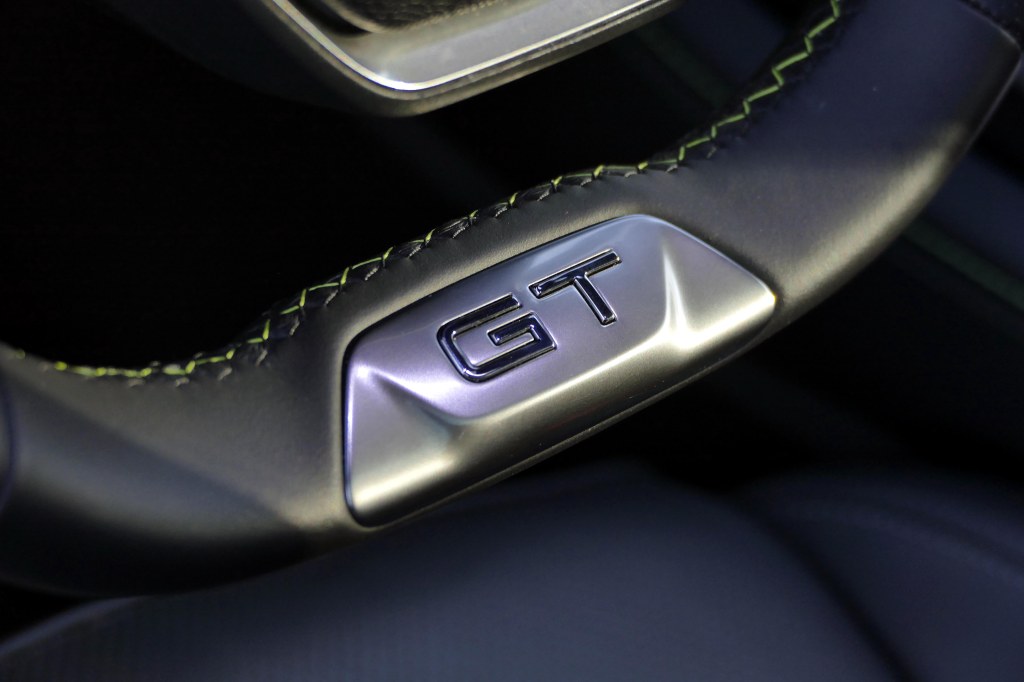
The bold and angular futuristic styling continues in the dashboard and cabin layout. Indeed, the PEUGEOT 408 offers the latest generation of the PEUGEOT i-Cockpit®, instantly recognizable by its compact steering wheel dedicated to driving pleasure and controlled agility. The compact steering wheel puts you indeed in a sporting mood and encourages you to drive this 408 with slightly more verve, but then you have to concentrate on finding a proper seating position so that your vision on the instrumentation is not (partially) blocked by the enthusiastically shaped steering wheel.

Driving: the joy of French comfort, grace and speed… Peugeot attaches great importance on comfort combined with safe, superior and predictable handling. The 408 scores beautifully in all these points. The 408 takes comfort to a very high level, even on frost-ridden secondary roads, wet routes nationales or départementales, and floats over it at (high) speed with undisturbed stability, to take you swiftly and safely to your destination. Traveling big distances is a boon for this 408. As said here earlier, it bears resemblance to the road manners if the “big” Citroën C5 X.

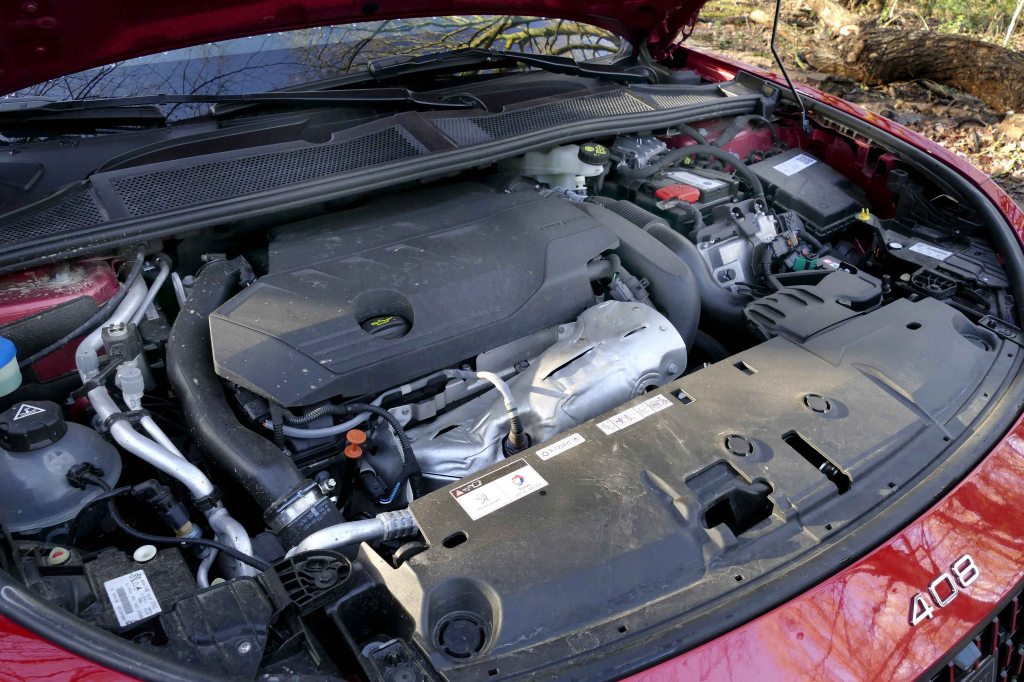
The test car was equipped with the top-notch drivetrain, in the PHEV version we tested. The 1,6 litre efficient four cylinder petrol engine develops 180 HP at 6,000 rpm, with torque being 250 Nm @ 1750 rpm. But there is also an electric motor of 110 Hp @ 2500 rpm sitting between the petrol engine and the 8 speed automatic transmission. The impressive torque of this motor, namely 320 Nm, is developed between 500-2500 rpm. All this results in a system power of 225 HP, and a system torque of 360 Nm.

This results of course in (more than) excellent performance. It will sprint in about 7,9 seconds from 0 to 100 km/h, and its top speed is a stellar 233 km/h. Abundant torque at every speed makes for a delightful performance experience. This car is well and truly a fast Gran Turismo. Mind you, this is nothing less than the performance of the iconic Jaguar E-Type!

Consumption depends greatly on how often you charge its 12,4 kW battery. According to WLTP standards, it is set at 1,4 l/100 km. Running it on petrol power, you can expect anything between 6 and 8 litres, depending on your driving mix between town and open road. You are helped by the relatively low weight (1.781 kg) of the car, and its excellent aerodynamics.

A roomy and practical daily companion

The 408 offers a lot of legroom on the elongated platform it shares with the Citroën C5 X. Boot space is also abundant, with a volume of 536 litres, which can be increased to 1.611 litres, once the rear seats are folded down.

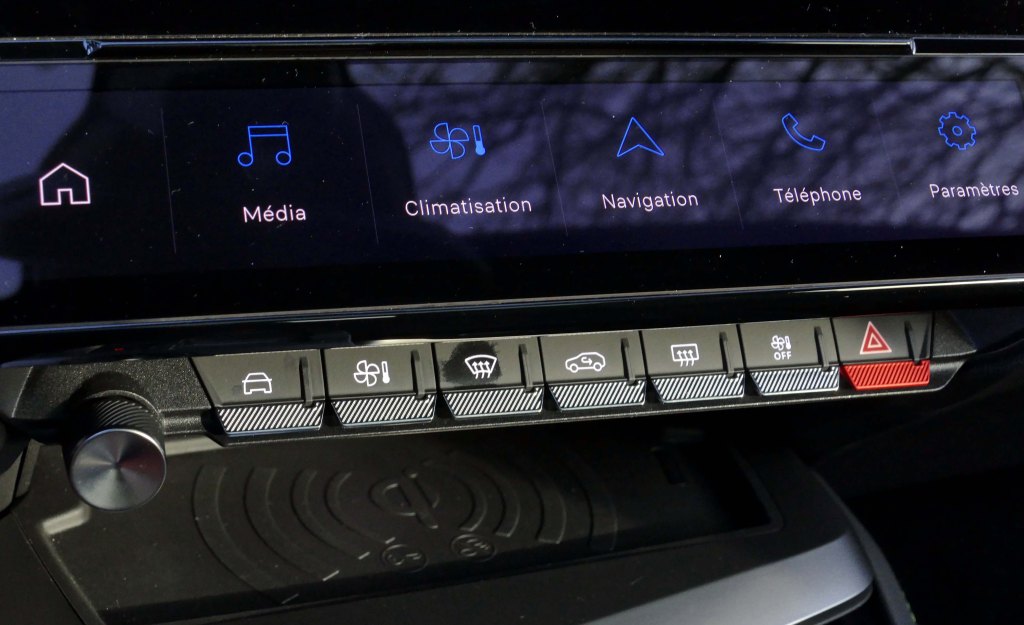
The 10 inch touchscreen gives you all the necessary navigation and infotainment info, and the 408 pleases with puttons and switches on steering wheel and below the touchscreen for all the usual functions.

Of course, this 408 offers all the thinkable driver assistance and safety functions. Powered by 6 cameras and 9 radars, the driver assistance systems include adaptive Cruise Control with Stop and Go function,  Night Vision, which warns of animals, pedestrians or cyclists ahead before they appear in the high beam, Long-range blind spot monitoring (75 metres) and last but not least Rear Traffic Alert, which warns of a potential hazard when reversing.

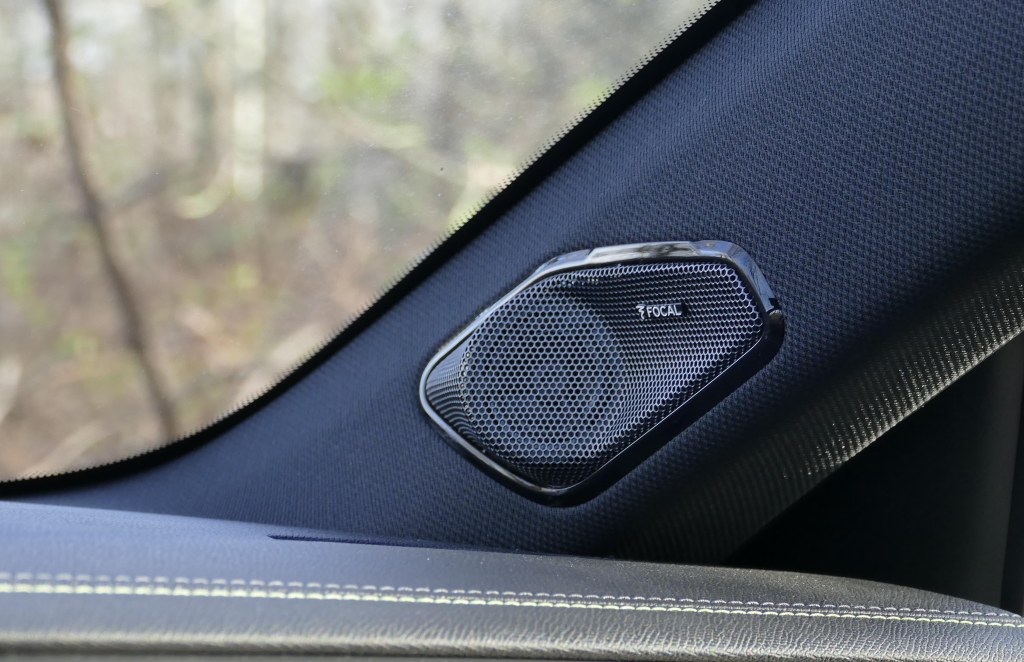
All this contributes to driving pleasure, which is indeed overall a very relaxing experience. Intuitively you will feel very much at home and rather sooner than later you will come to enjoy the excellent sound system and find every drive with this Peugeot a “Zen” moment in your (busy?) day…

Conclusion

Peugeot has truly succeeded to create a roomy four passenger comfortable Gran Turismo which gives you a soothing driving experience, where you can enjoy refinement, experience the unique panache of French comfort together with unerring stable handling and the sheer pleasure of the speed and performance of a “grande routière.”

Combine all this with responsible energy consumption, E-power capacity in town, smoothness and mechanical “raffinement” all packed in a bodywork with stylish “allure”, and you will agree that this Peugeot has a lot to go for…

Hans Knol ten Bensel  

Nissan Benelux unfolds her strategy for the Benelux market…

Managing Director Jerome Saigot unfolds the strategy of Nissan Benelux…

We are at the start a new automotive year, and therefore it is a good opportunity for manufacturers to look forward into 2024 and announce to the Belgian press what their strategy, plans and objectives will be in the forthcoming 12 months.

So we were invited at the end of last year by the Melvin Keuter, head of communications of Nissan Benelux at their press conference…and their interesting initiatives are certainly worth a closer look. Just read further!

Hans Knol ten Bensel

Melvin Keuter, head of communications of Nissan Benelux, exposed the electrification strategy of Nissan and its future…

Nissan Belux and Nissan Nederland merged into Nissan Benelux

On the 1st of July last year, this merger was executed in order to improve response to the needs of the Benelux market. Now the two entities are joined in a new so-called Regional Business Unit, led by Managing Director Jerome Saigot. Indeed, the car market is going through a fundamental transition, and Nissan will respond to these challenges by focusing on electrification, digitalization of the customer approach and responding to major changes in the buying behavior of their clients. Mr. Saigot emphasized these points of the strategy in his presentation at the press conference. He sees also in this merger further useful synergies for staff and dealerships.

He exposed the mission of Nissan Benelux, which is to be an innovative brand which offers electrified mobility and a superior service to its customers. Its objectives are to enlarge its volume, raise brand identity and awareness as well as boosting profitability.

The strategy to achieve this will be to focus, as we said, on further digitalization of customer approach, further electrification of the model range, strengthening corporate sales, bolstering brand identity and streamlining distribution.

According to Jerome Saigot, digitalization is a major trend which will strengthen further. In 2020, only 4 % of customers were buying a car online, which has risen to 12 % in 2023. Market surveys show that soon 45 % of the future customers will buy their car online. Of course, Nissan will work further on its electrification, and indeed focus also increasingly on corporate sales.

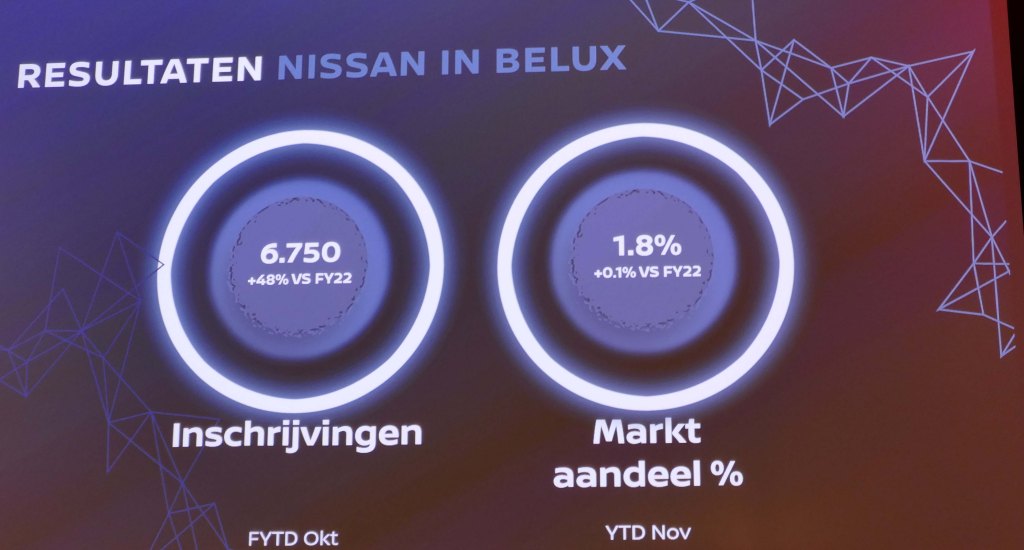
Looking at the results last year of Nissan Belux, 6.750 units were sold, which is an impressive 48 % rise compared to FY 22.

Also in distribution and dealership the focus will be on further developing synergies and tailoring the customer approach on their changing preferences and buying behavior. In December last year, Nissan sent a message to the professionals, small and medium enterprises, craftsmen and the like, pointing out the attractiveness of their increasingly electrified LCV segment.

Decisive steps toward further electrification… or EV36Zero.

EV36Zero is a key part of Nissan Ambition 2030. In this period Nissan will deliver exciting, electrified vehicles and technological innovations while expanding and transforming its operations globally the company announces. The vision supports Nissan’s goal to be carbon neutral across the lifecycle of its products by fiscal year 2050.

In November last year, Nissan announced that the EV36Zero hub in Sunderland, Nissan’s blueprint for future manufacturing, will consist of three electric vehicles (EVs), three gigafactories and up to £3bn investment.

The transformational project includes future all-electric versions of Nissan’s flagship Qashqai and JUKE crossovers, and Nissan also confirmed that the third vehicle planned for UK production will be next-generation Nissan LEAF.

Nissan also announced that that it expects its passenger car line-up in Europe to be 100% electric by 2030.

Nissan is also incorporating in their electrification strategy the latest developments in battery technology. It will adopt Cobalt-free batteries, and towards 2028 there will be a cost reduction in comparison with Lithium-Ion batteries of not less than 65 %. This year Nissan will open a pilot factory in Yokohama to produce solid-state batteries, which can be charged three times faster and cost much less. They will be introduced to the market in 2028…  

Looking into the future…

After exposing the good qualities of the present range, a veil was lifted in this conference about the cars we can expect in the (not so) distant future.

Indeed, the three future versions of the full electric Juke, Qashqai and Leaf will be inspired by three exciting all-electric concept models, two of which were recently unveiled at the Japan Mobility Show:

The Nissan Hyper Urban Concept, a crossover EV characterized by a sleek and modern aesthetic.

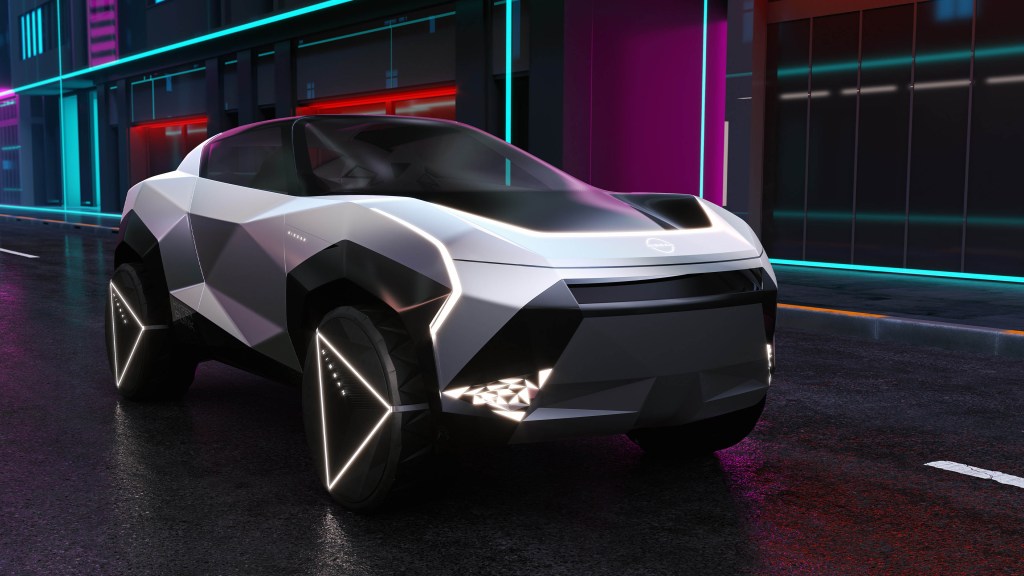
The Nissan Hyper Punk Concept, an all-electric compact crossover with an exterior aesthetic defined by multifaceted and polygonal surfaces.

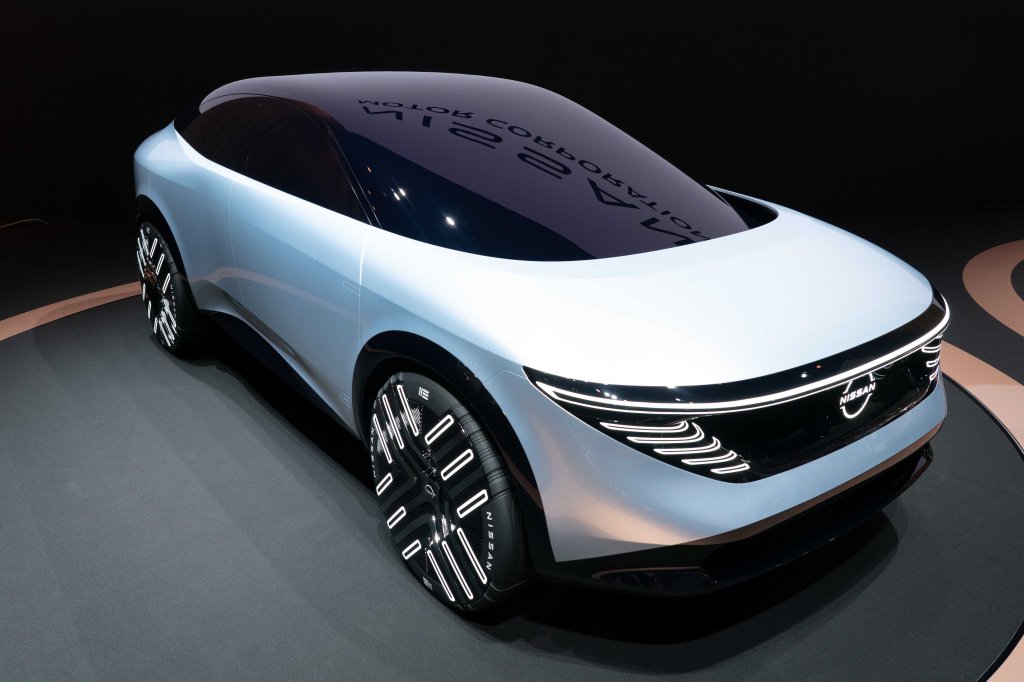
The Nissan Chill-Out Concept, was unveiled in 2021 and previously confirmed as the inspiration for a future EV to be built in Sunderland.

 The car is a compact, sporty, city EV concept with an influence from the world of virtual gaming. Besides the sleek and modern design, advanced safety technology, it has a productive and comfortable interior space.

The Chill-Out, – see photo here above – which looks to us as a very realistic concept car which we might see on our roads in the (very?) near future, utilizes the CMF-EV platform.

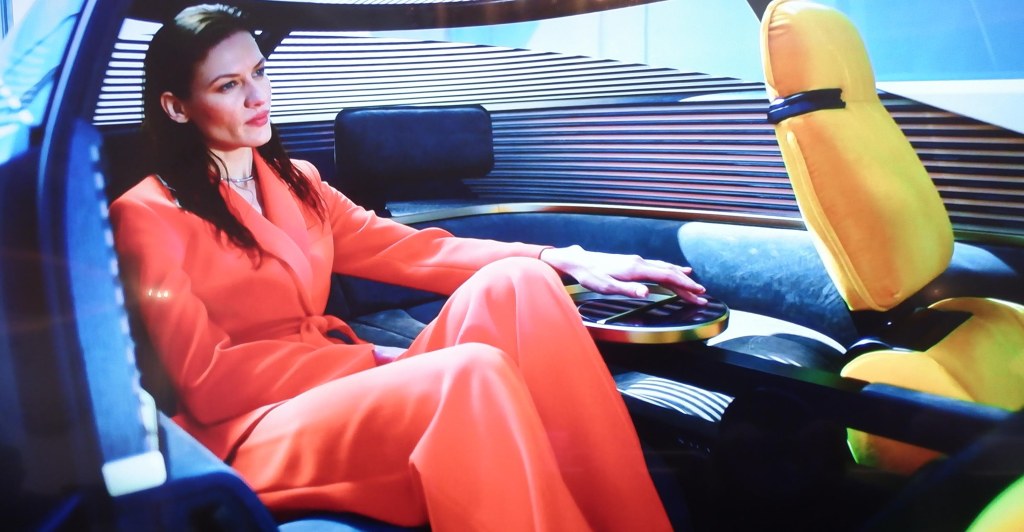
The Nissan Hyper Urban Concept – see photo here above – was announced at the 2023 Japan Mobility Show; its styling complements the sophisticated tastes of its target users, such as urban and suburban based professionals who prioritise environmental sustainability.

This all-electric crossover concept is designed to remain up to date for every new owner, ensuring an extended lifecycle through regular software and hardware upgrades, aiming to achieve the utmost sustainability. To maximize this further, the vehicle seamlessly integrates into the electric vehicle ecosystem (V2H/B/G), for power sharing.

Last but not least, there is the Nissan Hyper Punk concept was also announced at the 2023 Japan Mobility Show.

It is positioned as an all-electric compact crossover concept, catering for a dynamic audience seeking self-expression through style and creativity. It offers owners a canvas for self-expression with its polygonal-shaped exterior with dynamic color changes.

Further styling exercises: the Nissan Concept 20-23

To celebrate the 20th anniversary of Nissan Design Europe (NDE) being located in London, Makoto Uchida, Nissan’s President and Chief Executive Officer, visited NDE in September last year to unveil an all-new sporty urban electric concept car called Nissan Concept 20-23.

The car certainly turns heads, as you can see from the accompanying photo. It was designed by a team including some the younger members of NDE, with the simple brief to design a car – with no constraints – which they would like to drive on the streets of the city where they work.

Of course there is the present range of Nissan, with the Juke, bestseller Qashqai and Ariya. Last but not least also the Leaf. Head of Marketing Rémy Le Gall presented them. See photo here below.

Soon we will refresh our driving impressions of these cars for you, and tell you then more about their unique qualities. Stay posted!

Hans Knol ten Bensel  

Renault unveils a tip of the veil of its cute 5 E-Tech electric ahead of Geneva Show…

Indeed, Renault will enrichen the world with its iconic full electric “Cinq”, reminiscent of its wonderful R5 which stole so many hearts decades ago. With this car, Renault wants to bring EV driving to the masses, affordable and with a distinct link to its glorious past.

The car will be a star on the 26 February at the Geneva International Motor Show, and it now starts gradually unveiling details of the car.

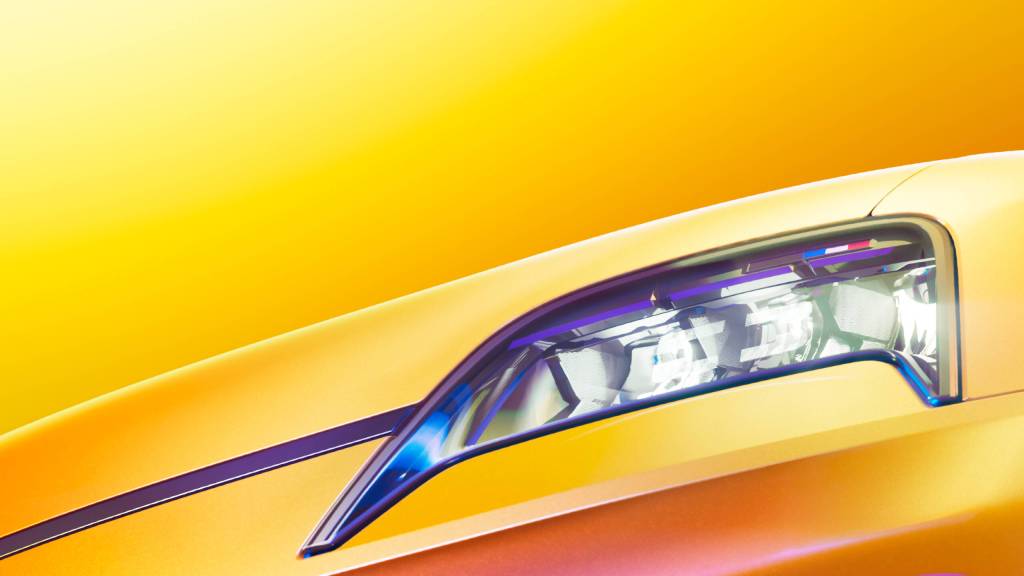
The headlights of R5 are a key design feature, making the front end instantly recognisable. It is not only their shape that sets them apart, but also the mark in the centre of the lens, resembling the pupil of the human eye.  This nod to the 1972 advert featuring “The Adventures of Supercar” gives the modern-day R5 a human-like expression.

At the front end, the air intake present on the bonnet of the historic model has disappeared. Clearly showing that Renault 5 E-Tech electric belongs to the world of electric vehicles, it has been replaced by a charge indicator light forming the iconic number “5” when the vehicle is fully charged.

The wheel arches create a broader stance, giving R5 the look of a compact car with real on-road presence. Their graphic design underlines a unique and instantly recognisable personality, reminiscent of R5 Turbo.

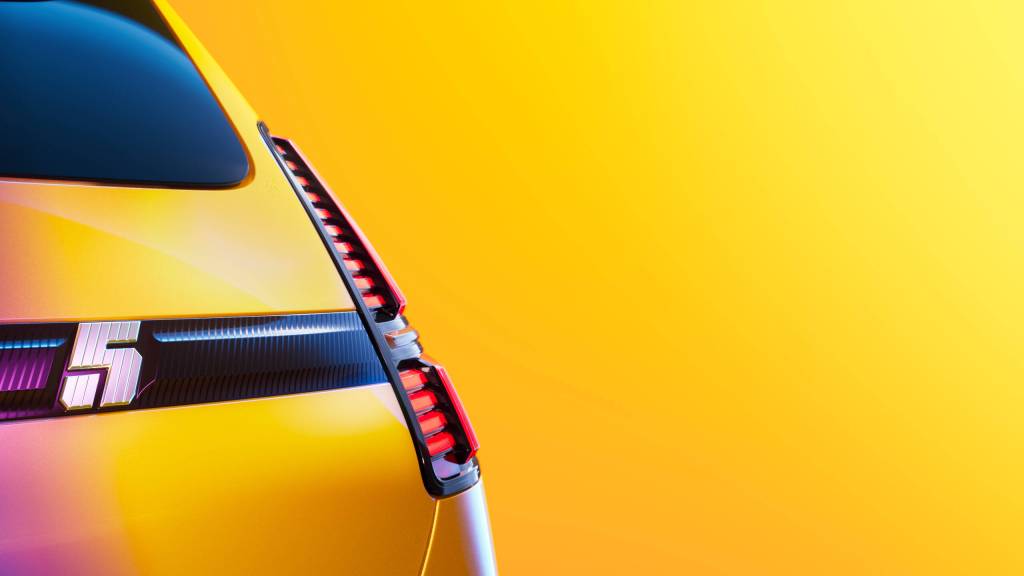
The vertical rear lights were a hallmark of the R5, and here they include a function extending the side panel.

R5 R Pass, a skip-the-line programme for online customers

At the end of last month, Renault is rolled out a unique experience for future customers: the R5 R Pass programme. R5 R Pass holders will be able to order the new iconic all-electric vehicle in the Renault network 10 days before orders open to the general public. Customers placing an order during this special period will be among the lucky first to take delivery of their vehicle from autumn 2024, with the ElectriCity plant in Douai, France, giving priority to their order on the production line. Holders of an R5 R Pass will receive a scale model of Renault 5 E- Tech electric after its reveal and will be the first to access content and events around Renault 5.

Available at a cost of €150, the R5 R Pass will be available from http://www.renault.fr/r5 and in the seven participating countries (France, Germany, Italy, Spain, United Kingdom, Belgium and the Netherlands).

An all-electric city icon…

Just 3.92m long, Renault 5 E-Tech electric is every inch a city car. Ideal for urban driving, this all-electric icon is also fit for the open road with its 52 kWh battery giving it a range of up to 400 km WLTP. This battery will be the first available when orders open. A second 40 kWh battery will become available at a later date.

Renault 5 E-Tech electric will be the first vehicle built on the new AmpR Small platform (formerly CMF-B EV), designed for true driving pleasure. The multi-link rear suspension, usually found only on vehicles further up the market, contributes to the excellent stability and roadholding.

Renault will gradually show more of its new all-electric baby. Stay tuned!

Hans Knol ten Bensel
We spoke with Milosz Tomanek, Premium Cluster Director Belux, about Lancia’s renaissance…

In the magnificent surroundings of the Italian embassy in Brussels, we talked with Milosz Tomanek about Lancia’s return to the Belux market…

At the presentation of the Lancia Pu+Ra HPE and the announcement of the return of Lancia in Belgium, we had an interesting talk with the Director of the Premium Cluster Belux at Stellantis, on the opportunities of the iconic brand on the Belux market…

Hans Knol ten Bensel

Q: The Belgian market has much potential for Lancia, but due to its long absence, the question arises what is now your client base and what is your approach to re-enter our market? We have the Dutch approach, where the market is already very digitised. Both countries have a very large fleet market, and this will also be the challenge for Lancia…

MT: Indeed, the fleet market is with around 70 pct of the total volume very important. For the premium segment, its share is even 80 pct. When we want to re-launch Lancia, we have to establish ourselves in this fleet market too. This is also the reason why we have electrified the new Ypsilon, and are offering a plug-in hybrid version as well as a full electric variant.

When we want to re-launch a brand, we have also to take the right steps to grow. We have to start from a solid base. The B segment is quite large in Belgium with a total volume of not less than 125.000 cars. We also have the private client. His market importance has admittedly diminished over time, but he exists. When a new model is launched by an Italian brand, it is the private client who is the first to show substantial interest.

Driven mostly by family members or acquaintances which had previous ties with the brand. When it was rumoured that Lancia would come back to Belgium, many private clients reacted eagerly to the news. This shows clearly that Lancia still stirs emotions and interest amongst many. Clients which are looking for emotion, design, a sporting touch, elements which are intrinsically part of Lancia. We must certainly not overlook this segment.

Q: I also think that the interest of the private client forms the basis for the subsequent appeal of the brand in the fleet market. Don’t you agree?

MT: Indeed, this is why the private client constitutes the basis of our market approach.

Q: Will you adopt for Lancia a similar service model which Stellantis uses for the other premium brands in the group, like DS for instance? MT: What you are saying now is somewhere the essence of the premium approach, but we have three brands with their own, specific identity. If you put the three brands in a showroom, the clients will invariably go to the niche or corner of their brand. But of course, what DS has established and built over the last few years is valuable. We have to offer a credible and worthy alternative of the German brands. Having said this, we have to offer a client experience which is at least as good as what the German competition is offering. But we don’t have to merely copy their approach. The client has to discover the identity of the brand in his service experience. Therefore we cannot simply copy what DS or Alfa does for its clients, but we take the right elements which are in line with the identity and character of the brand.  Last but not least we have to offer a proper atmosphere of the reception and showrooms of the dealerships.

One of my tasks is to find the synergies, but always with an eye for the specific identity of the brand. We don’t want to be merely a corner within the Alfa showroom, we want to offer a complete client experience, but then of course we will use the best practices learned with DS and Alfa Romeo. One must not forget that despite their iconic and long history, these brands are relatively young for the Belgian market in terms of a substantial market presence. But the brands nourish each other, this is also important for our distribution network.

There will be 10 dealers this year which will have also Alfa or even the three premium brands under one roof, and we see that proven best practices are shared for the three brands, inspiring but not cannibalizing each other in their specific client approach.  

Q: We will see the Ypsilon in a full electric and electrified hybrid version, also to enable a smooth transition for the existing Ypsilon owners to this electric age, which is certainly indicated for senior clients who live in urban areas and apartments…

MT: Indeed, there is a philosophy behind this. We will not dictate what the client has to buy. We will listen to the client, but at the same time we have to project what the client of the future will buy. We notice that the market is getting more mature what full electric purchases is concerned, and political decisions now cause a rapid expansion of this segment. But this switch is slower for clients living in urban areas.  

Thanks to the financial strength of the Stellantis Group, we could carefully work out our renaissance strategy and roll it out judiciously step by step. This consistency has helped me when I started up the team and the retailers were identified. Credibility was already created. One should keep in mind that irrespective of the fact that a brand has been absent of the market for 5 or 10 years, you only have one chance to (re)launch a brand successfully. You have to do it right. I am convinced we are doing it the correct way…

Q: Thank you for this interview.

Hans Knol ten Bensel

We spoke with Manuele Tomasorri, Exterior Designer Lancia: the art of sculpting the modern world in the premium tradition of the brand…

At the occasion of the presentation of Lancia Pu+Ra HPE at the Residence of the Italian Ambassador in Bruxelles, we took the opportunity to have an interview with the young and inspired exterior designer of the Lancia Pu+Ra HPE… it proved very interesting indeed!

Q: The Lancia design department has been producing now a wonderful and iconic car which embodies the styling language of future Lancia’s. You are responsible for exterior design, can you tell us what is your vision on design, and why have you chosen to join the Lancia design department?

Also can you tell us a bit more about your design education, your school, and even more important, what do you want to create and establish as a designer…

MT: I understand your point. It is a very good question. Before I studied design, I did different things. It was rather more manual and mostly on focused on the mechanical aspect. I came to design out of curiosity. Then I started in Italy my studies in transportation design in Turin, at IED, Istituto Europeo di Design. There I developed an understanding of the meaning of Design. What is Design? Why do we have to do this? The reason why I chose Lancia is simple: what Lancia stands for in terms of form language coincides with my ideas about Design. So I understand fully what they want to convey.

Q: This means you are taken by the Lancia spirit?

MT: Indeed, completely!

We have included in our design language elements stemming from architecture, fashion, everything that surrounds us in our modern world, it is truly eclectic in its inspiration. All this, we have the chance also to embed all this into our heritage. Because this viewpoint, this approach, we have used it also in the past. It is of course a dream for a designer to work in this environment…not everybody has this history and has tried so many wonderful things in its past.

Q: When we come to the design language of the Pu + Ra, the emphasis lies on well rounded shapes and surfaces.

MT: Indeed, this concept car is really a synthesis and includes the logic of the design of our future cars. The contrast between the soft curves and the hard edges will be seen in future Lancias, it will be indeed our design bible. It will be our reference book or bible, so to say.

Q: You will also embody with your design a distinct premium level…

MT: Indeed, we will be very serious and thorough in lifting our design language well into the premium level. This will reflect itself in the quality of the chosen materials as well as the shapes. In our design, we want to express also the (sporting) heritage of our brand. So we look for compactness, agility, efficiency. The Pu+Ra is compact in its overall dimensions, like the historic Lancias.

Q: Will we see these design elements already in the future Ypsilon, because there the design is already established and fixed now…

MT: The design elements shown here in the Pu + Ra HPE will be seen in the forthcoming Lancia’s we announced here today…,For instance, the iconic “Calice”, Chalice or Cup  in the front of the car will also adorn the front of these Lancias.

Q: It will be so to say the light signature of the Lancia’s…

MT: Indeed… also the choice of the materials conveys quality and durability. This is also a credo of Lancia, and we express this with the use of durable materials.

Thank you very much for this interview.

We will soon follow with an interview with Mr. Milosz Tomanek_Premium Cluster Director Belux. Stay tuned!

Hans Knol ten Bensel

Lancia is back…

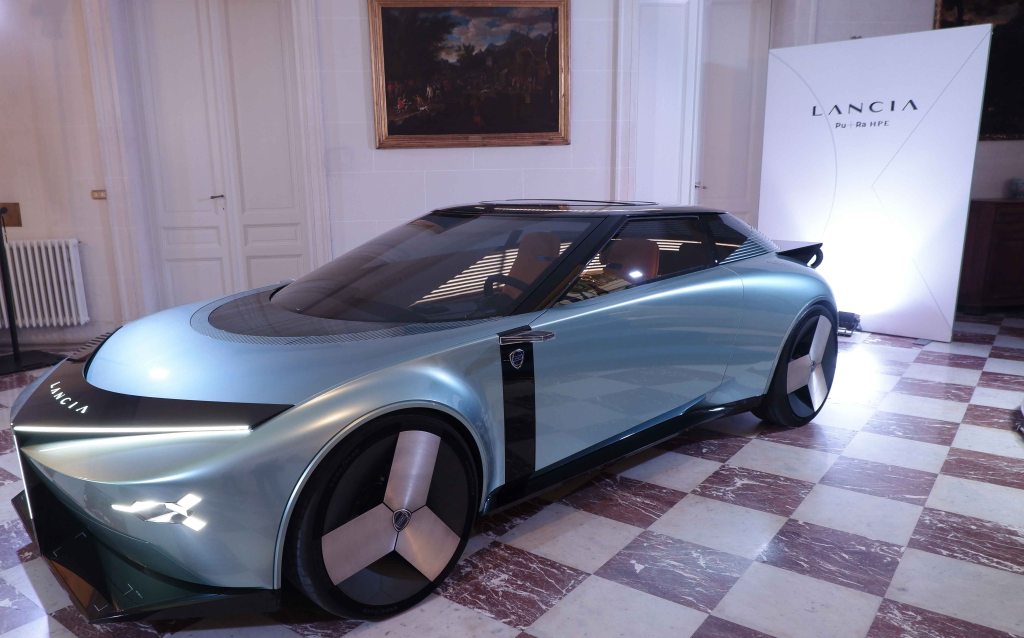
Belgium has always been a country with many Lancia enthusiasts, and the iconic brand returns therefore in its renaissance strategy also to our country and Luxemburg as one of its 6 major European markets. We could witness the presentation at the Italian embassy in Brussels of the beautiful and stunning Lancia Pu+Ra HPE, a concept car which embodies, as Lancia puts it,  “the brand manifesto for the next 10 years in terms of design, interior home feeling, sustainability, electrification and effortless technology.” We will come back in more detail on the styling and innovations incorporated in this car, which will indeed be a harbinger of things to come for the brand.

At the press conference, we listened to four speakers, Mr. F. Colonnese Business Development Manager EE (see photo here above) , Mr. C. Louwerse_Premium Cluster Director NL, Mr. Milosz Tomanek_Premium Cluster Director Belux and last but not least Emanuele Tomassorri, Exterior Designer.

We could have an interview with both misters Tomanek and Tomassorri, which you will see further soon in our columns.

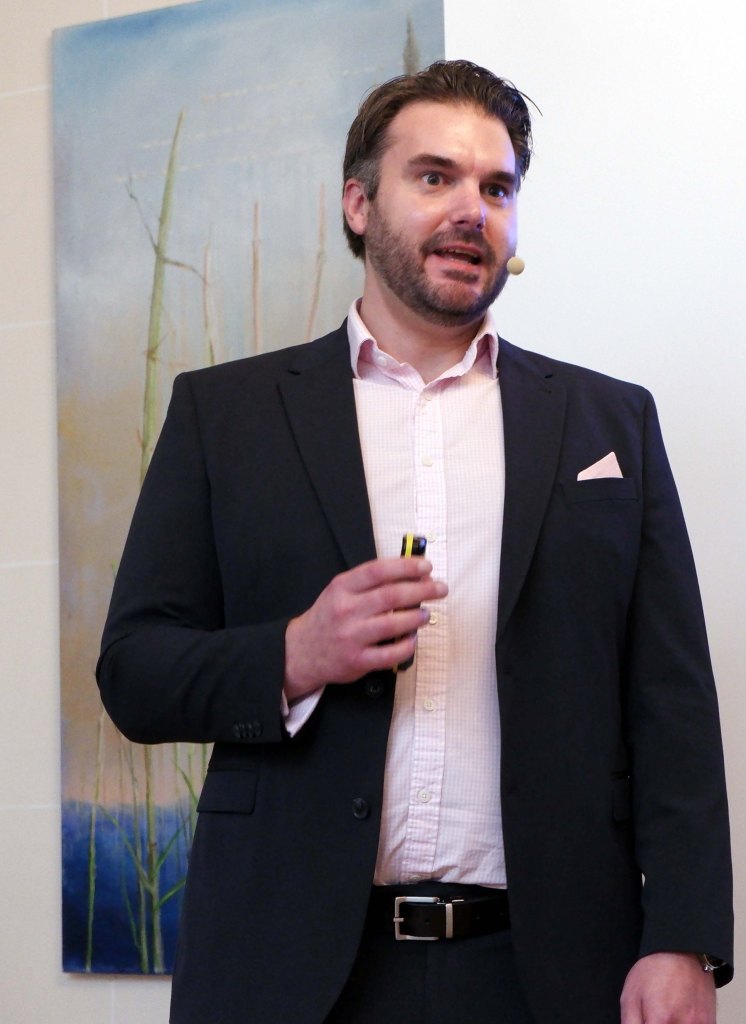
Milosz Tomanek, Director of the Stellantis Premium Cluster in Belgium and Luxembourg (photo here above) stated “as soon as we announced Lancia return to Belgium and Luxembourg, we set up a dedicated team to work on and implement the brand Renaissance, making of Lancia the brand that embodies the Italian elegance. For the launch of the new Ypsilon in 2024, we will have 10 retailers and 13 after-sales service points. We are ready to have Lancia back and make of Belgium and Luxembourg two of the main European markets for Lancia.” Lancia will also launch the Gamma in 2026 and last but not least the Delta in 2028. From 2026, Lancia will only be launching 100% electric models and, from 2028, it will only sell 100% electric cars.

Lancia’s Roadmap for Europe

Lancia’s arrival in Belgium and Luxembourg is another step of the brand’s Renaissance towards its internationalization and forms part of a roadmap in line with the Stellantis “Dare Forward 2030” strategic plan.

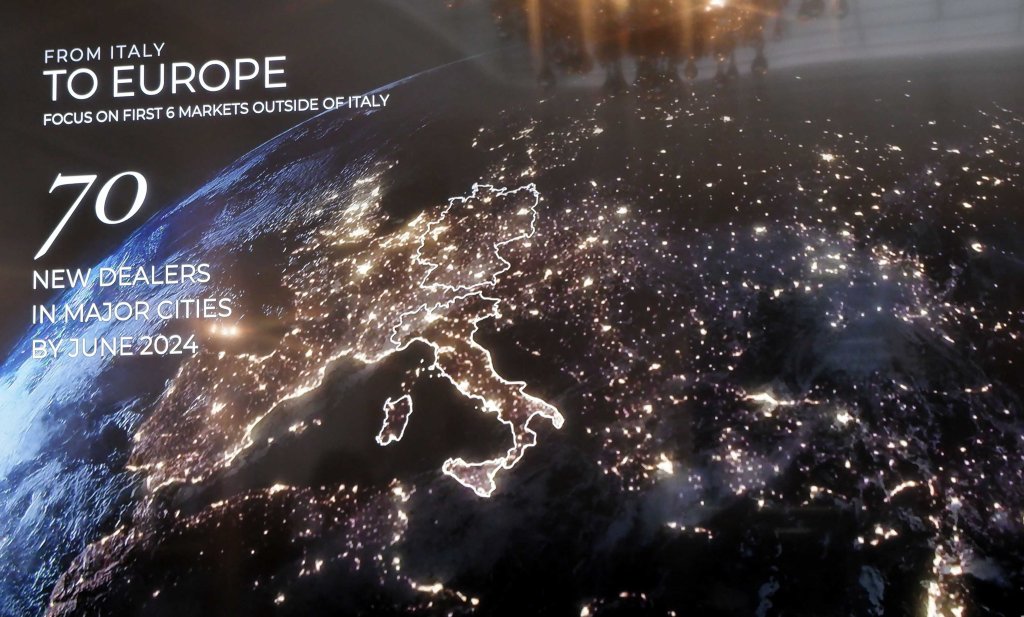
By the first half of 2024, the brand will have 70 new retailers in 70 major European cities and 100% of the letters of intent have already been signed. The strategy involves, as Lancia puts i officially, a new efficient and innovative distribution model, with a selected number of retailers based on a key concept of Lancia Renaissance: quality.

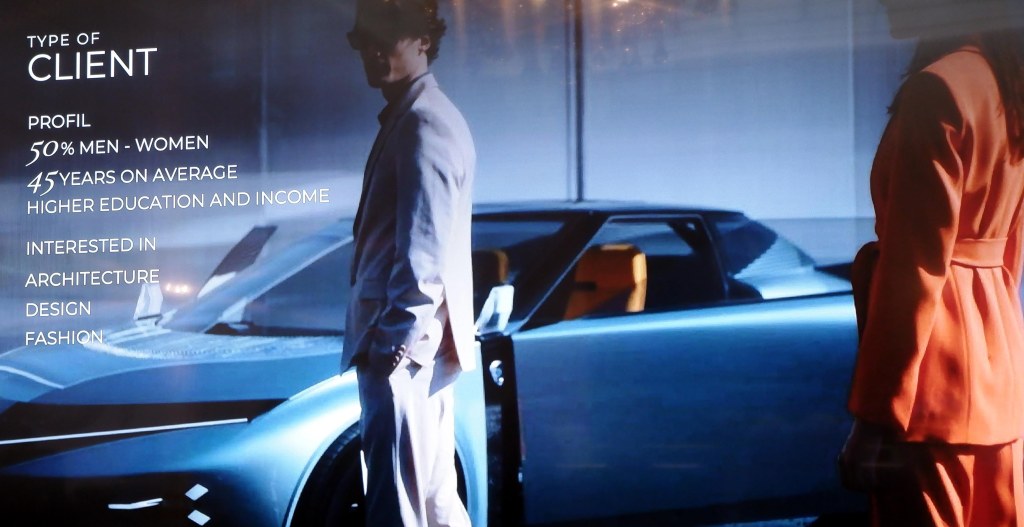
The new showrooms will provide customers with a totally immersive experience, both online and offline, recreating a “home feeling” atmosphere, thanks to materials, colors and attention to detail, inspired by Italian architecture and design.

As said, more soon with interviews and further separate reports and comments on the design of the Pu+Ra HPE…

we just tell you here that the name Lancia Pu+Ra HPE is based on Pu+Ra, the brand’s new pure and radical design language, whereas HPE stands for ‘High-Performance Electric’…

Hans Knol ten Bensel
Audi’s Q8  gets an update…

The new Q8, here in Sakhir gold metallic…

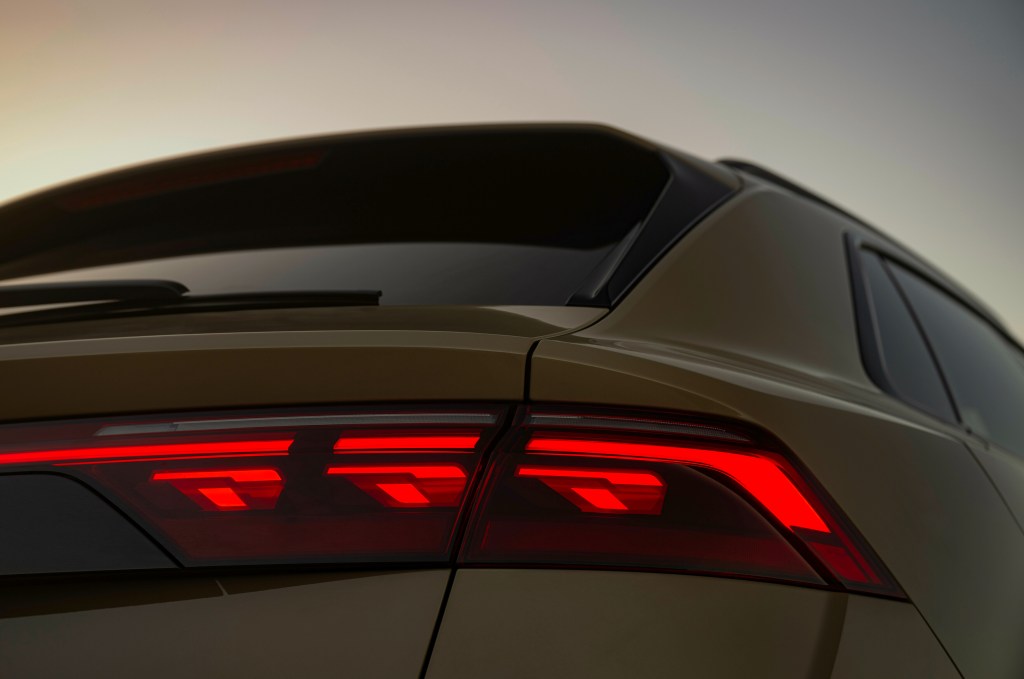
Audi recently made its top SUV line even more attractive. It revised the exterior design of the new Q8 with new front and rear aprons, underscoring the strong character of the SUV coupé.

The S line in Waitomo blue…

The optional S line exterior package caters to customers who desire more sportiness. For the first time, Audi is equipping the Q8 with HD Matrix LED headlights with a laser as an additional high beam. The headlights also feature digital daytime running lights with selectable light signatures.

Digital OLED rear lights with four selectable rear light designs complete the expanded light offering. New wheels, colors, decorative inlays, and seats with contrast stitching highlight the car’s top position among the Q models…

Hans Knol ten Bensel

In the new Porsche Panamera the driver is put at the centre…

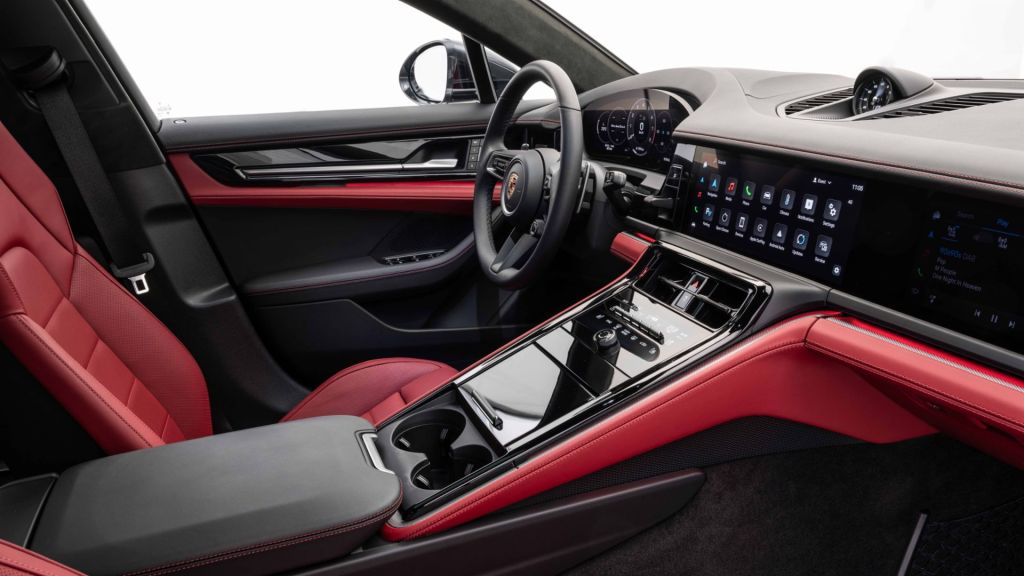
We have always admired the instrument layout of Porsches, where the big round dials for revs and speed are a true delight to the drivers’ eyes. Porsche continues this good tradition…

In the new model generation set to be unveiled to the public on 24 November 2023, the Porsche Panamera will feature also the driver-centered Porsche Driver Experience control concept we saw already in the Taycan.

It offers a fully digital display, a wide range of customization options and intuitive operation.

A key feature of the concept is the grouping of the control elements relevant for driving in the immediate vicinity of the steering wheel. All elementary functions are therefore quick and intuitive for the driver to access.

Porsche is placing both the toggle switch for navigating through the options provided by the instrument cluster, and the mode switch for selecting the driving programmes, directly on the steering wheel. The gear selector lever is now located directly next to it. This decision opens up space on the centre console for a climate control panel that combines touch surfaces and physical switches. is elegant. New, completely finless and electrically adjustable air vents are now installed in the centre console. It is possible to switch between several pre-configured and personalized climate control modes at the press of a button. In addition, the storage bin in the centre console offers more space than before.

Of course, a Porsche driver needs his dials right in front of him. Consequently, the digital, free-standing instrument cluster lines up in the driver’s axis. The 12.6-inch display is curved and free-standing. Porsche clearly structures the driving information displayed on it into three areas, for which different configurations are possible depending on the equipment and the selected view. The additional, optional head-up display can be operated directly from the sports steering wheel.

Porsche has based the colour and material options in the new Panamera on smooth quality materials and a wide selection of bi-colour designs. Matching decor and accent options are de rigueur and some of them are offered by the Porsche Exclusive Manufaktur. For the first time, Porsche is also offering leather-free equipment in the Panamera, which combines particularly sporty materials such as Race-Tex and Pepita fabric with each other…

We show you here some photos of the new interior, and soon tell you also more about the third E-Hybrid variant of the Cayenne…

Hans Knol ten Bensel
We drove the Opel Astra GSe: the Opel lightning shines again…

We all know the Opel badge: the image of a lightning boldly striking through the “O”, the first letter of the iconic Opel name. After this extensive test at the wheel of this GSe, we can truly say that this sporting version of the Astra bears tribute to it.

Indeed, this Astra GSe is fast, nimble, with beautiful handling, quiet, stable, steering with precision and offering Gran Turismo comfort to its occupants.

It has style too, and is economical and “green” on top of all this: it’s an efficient hybrid, with sufficient range to bring you around town in a totally emission free manner. Just read further…

Hans Knol ten Bensel

We already applauded the styling and the wonderfully clean interior and dashboard layout of the Astra. Less is more, is the philosophy when it comes to infotainment and ergonomics.

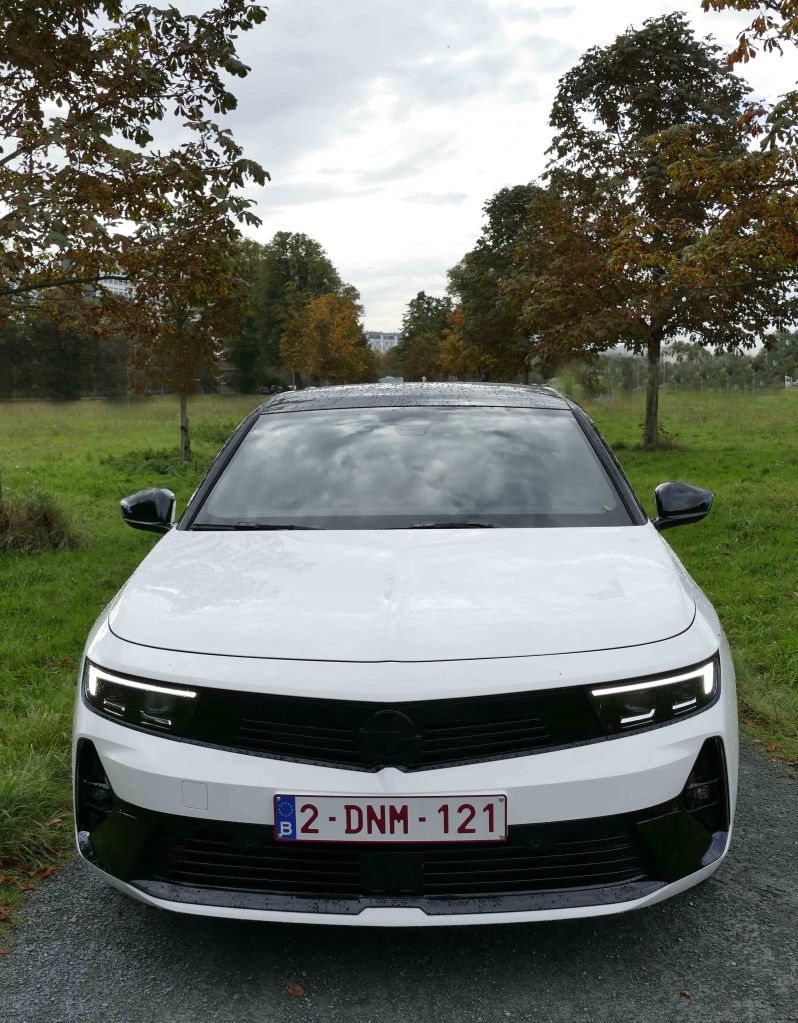
Inside, your eyes admire the GSe-exclusive performance seats. On the outside, one sees clearly that this is an Astra with a sporting touch: it has exclusive 18-inch alloy wheels and the characteristic GSe front bumper.

Driving resuscitates the Opel legend…

Sporting Opels are legendary. The Ascona’s and Manta’s driven by Walter Rohrl for instance. They were efficient, fast, yet still very recognizable as Opels, keeping a very close resemblance to the production series versions. At the wheel of this GSe one feels also this unique punch, the steering precision, the effortless but very impressive performance.

Indeed, this GSe has what it takes. With an impressive system output of 165 kW/225 hp – the 1.6 litre four-cylinder engine delivers 133 kW/180 hp, the electric motor contributes up to 81.2 kW/110 hp – and with a maximum torque of 360 Nm, the Astra GSe with spoil you with an acceleration from 0 to 100 km/h in 7.5 seconds; a top speed of up to 235 km/h is also in the cards. Need we say more? Indeed, this Opel will make you smile.

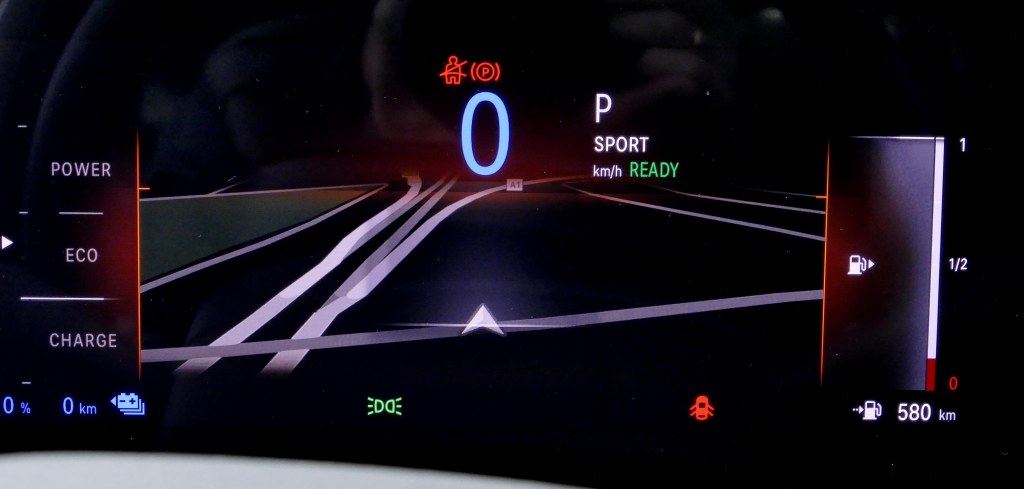
Because it’s a hybrid, it will not spoil the city atmosphere, as with its 12.4 kWh lithium-ion battery, the Astra GSe can cover up to 64 kilometres on e-power according to WLTP2 (EAER City according to WLTP2: 69-73 km).

The fuel consumption is according to WLTP1: 1.2-1.1 l/100 km, CO2 emissions 26-25 g/km; each combined. With a depleted battery, the hybrid mode is of course still very useful, as the system then recuperates the kinetic energy when decelerating. When cruising along at legal maximum speeds on the autobahn, it is easy to consume less than 6 litres/100 km, and with a very disciplined right foot in city traffic and a lot of anticipation, you can achieve anything between 6 and 7 litres/100 km. But it you are tempted by the smooth and abundant power at your disposal, it will inevitably cost you…

Precise and nimble handling

The Opel engineers did some serious homework. It has a dedicated chassis, lowered by 10 millimetres. The sporty calibration of the steering is GSe-specific, while the springs and oil-filled dampers of the front and rear suspension are specially tuned not only for dynamic driving but also for comfortable cruising.

The dampers feature KONI FSD (Frequency Selective Damping) technology, which enables different damping characteristics at high frequencies (suspension control) versus low frequencies (body control).

The ESP settings are also specific for thenGSe, with the activation threshold adjusted upwards to match the dynamic driving behaviour. The result is a comfortable Opel which handles like a dream, displays utmost stability at high speeds and steers with uncanny precision.

State of the art driving aids and infotainment.

The Astra GSe comes with the so-called “Intelli-Drive 1.0” system with forward collision alert and active emergency braking, pedestrian and drowsiness detection, lane departure warning and traffic sign assistant, cross traffic and side blind spot alert and automatic speed assistant with stop function as standard.

The parking pilot for the front and rear and the 360-degree “Intelli-Vision” camera support the driver when maneuvering.

You are well connected with the wireless Apple CarPlay and Android Auto compatible multimedia navigation system including 10-inch colour touchscreen and the 10-inch driver information display. Compatible smartphones can also be easily charged via wireless charging in the centre console.

Conclusion

Opel has built here a very desirable high performance hybrid with excellent manners. Opel says that with this car, it has redefined the performance “Zeitgeist.”

Indeed, it has done so. Just for Opel historians: the Opel “GSe” label was traditionally an abbreviation of “Grand Sport Einspritzung” (Grand Sport Injection) as on the Opel Commodore GS/E and the Opel Monza GSE.  Now GSe stands for “Grand Sport electric”.

We can only say, we were electrified…

Hans Knol ten Bensel

We drove the Mercedes GLC 400e  4MATIC: a plug-in hybrid with the luxury and panache of the good star…

Mercedes is an expert in designing and building premium lifestyle cars, and has with its new GLC Coupé a new and strong contender in this segment. The Coupé version is a more sporty and stylish looking variation on the GLC SUV, which is indeed one of its absolute bestsellers. This Mercedes combines good proportions with stylish surfaces and, certainly in the AMG Line version we tested, a beautiful interior. Mercedes says when stepping into its cars, it feels like coming home. We can only agree. All this is combined with state of the art plug-in technology. Just read further…

Hans Knol ten Bensel

Indeed, the Mercedes GLC looks good, albeit the overall silhouette of these bigger SUV Coupés are a bit chunky. The AMG Line version we drove The AMG Line is available with 19-inch or 20-inch mixed-profile tyres and wheel arch liners in the vehicle color. Also offered as optional extras are easy-entry running boards and last but not least a so-called “Night package.”
The interior is a chapter on its own…

Indeed it is… The color of the seats and upholstered panels was very well matched to the exterior, and indeed the generous trim area flows seamlessly into the curved centre console. Standard for the AMG line is the leather-lined dashboard with nappa-look beltlines, and it is a pleasure to see and touch. Some trim elements have innovative surfaces. In our test car, these included interpretations of open-pored wood veneers in brown, with aluminum inlays.

Of course, we find a further improved MBUX operating system in front of us. . The 12.3-inch (31.2 cm) LCD screen in front of the driver appears to float freely above the trim surface. The 11.9-inch (30.2 cm) portrait format central display rises from the centre console and likewise seems detached from the trim surface. Like the dashboard, the screen surface is slightly angled towards the driver, which makes it a bit awkward for the front passenger to imput commands on the screen and seeing the resulting information…There is a special tactile slider command for the sound volume, which reacts indeed more positively and faithfully to your finger input.

A new feature which we liked aesthetically is the floating control cluster, into which the door opener and seat adjustment controls are integrated.

Driving: enjoying workmanship and efficient performance…

There is something unique about driving a Mercedes. It is the feeling of solidity, absolute workmanship, enhanced by the opulence of the interior and the experience of an ultra solid bodywork and chassis. A Mercedes will never really invite you to throw it around corners but nevertheless lets you feel its sheer power and high performance capability. You feel indeed that it is fully ready to do great things, but it will rather invite you into a sedate and responsible driving style. Of course it has the performance.

We tested the 400e, which is the plug-in hybrid version with a 2 litre petrol engine, delivering not less than 185 kW/252 hp at 5,800 rpm and 400 Nm of torque between 2,000-3,200 rpm. But that’s not all. It is assisted by a 100 kW electric motor delivering also 440 Nm of torque. You understand that this makes for effortless, instant accelerations. This Mercedes will catapult you from 0 to 100 km/h in 5,6 seconds, and the top speed is also almost in supercar league with a good 239 km/h. Total system power by the way is 280 kW/381 hp, and total system torque not less than 650 Nm.

But don’t expect a nervous supercar when you are driving it in town. The 100 kW electric motor will take most of the honors, and drive you whisper smooth over the city boulevards. If you choose the hybrid driving mode, it will in default configuration (you can select another configuration of course) run on battery first, until it is depleted, and this especially in urban driving conditions.  According to the WLTP test cycle, the electric range varies between 119-131 kilometers. But you can also choose to hold the battery charge constant for later use, and then there is also the obligatory sport mode. You can also choose for instance the electric “all-terrain” mode, the choice is yours…indeed, it is a 4MATIC…  

The battery has a rated capacity of 31.2 kWh, and is an in-house development by Mercedes-Benz. . Starting from empty, a full recharge with the optional 60 kW DC charger is completed in around 30 minutes. The GLC Coupé is equipped as standard with an 11 kW three-phase AC charger.

The full electric power is available up to 140 km/h. It should also be noted that in the new GLC Coupé, Mercedes-Benz uses a so called “electromechanical brake booster”. It automatically  controls the flexible transition between hydraulic braking and recuperation, depending on the driving situation, to ensure optimal energy recovery and braking performance at all times. Indeed, we noticed that even in the “battery hold” position, after we braked almost to a standstill, we then drove for a few hundred meters on battery power when we continued our route, just based on the electric energy we recuperated during the previous braking.

Excellent agility and comfort The GLC Coupé is also surprisingly agile. It has a new four-link front suspension and a multi-link independent rear suspension mounted to a subframe. The hybrids have air suspension and level control at the rear axle as standard too. On request the new GLC Coupé is available with the so-called “Tech Package.” This includes the AIRMATIC air suspension system and active rear-axle steering with a 4.5° steering angle. A very positive handling is the result. The steering has a variable ratio as standard, and this also helps to give you the impression of steering a smaller car. Of course, comfort is paramount in this GLC.

The optional ENERGIZING Plus package brings them to life at the touch of a button or by voice command and bundles them in up to seven comfort programmes. At the same time, the system creates a matching atmosphere in the interior – e.g. invigorating in case of fatigue or relaxing in case of an elevated stress level. The ENERGIZING COACH suggests an appropriate fitness or wellness programme based on vehicle and trip data… need we say more? We can only say that the seats are excellent fore and aft, and that indeed long trips are restful in this Mercedes. Of course the GLC offers excellent stability on motorways and open roads, with very little road or wind noise reaching the cabin.

Another novelty with the GLC Coupé: there is a trailer menu and towing route planner for navigation: In the central display, routes can be planned that are suitable for driving with the previously defined trailer. This takes into account permitted widths and heights along the route, among other aspects.

Efficient

Plug-in hybrids have a varied consumption pattern, largely depending on how you use it. WLTP figures for combined fuel consumption are 0.6-0.5 l/100 km, with weighted combined power consumption being 22.4-20.2 kWh/100 km. We noted that when cruising in the “battery hold” function between 110-120 km on the open road, that the excellent aerodynamics of the GLC resulted in a consumption of… 5,7 l/100 km.

Practical

The GLC has of course all the thinkable infotainment on board, and we also enjoyed the masterful Burmester® surround sound system, offering 15 premium speakers and a total output of 710 watts.  With even more boot volume than before, the GLC Coupé offers 390–1,335 litres in plug-in hybrid form. The EASY-PACK tailgate is standard. This opens or closes at the touch of a button using the ignition key, the switch in the driver’s door or the unlocking handle on the tailgate.

Standard equipment of the new GLC Coupé already includes the AVANTGARDE Line, among other features. This includes large displays, smartphone integration, wireless phone charging and heated seats for drivers and passengers.

The new GLC Coupé has LED High Performance headlamps as standard. DIGITAL LIGHT is available as an optional extra. The light is created by a matrix of LEDs in the headlight unit that can be individually controlled.

Conclusion

This stylish premium SUV in the plug-in hybrid form as we tested here for you marries the best of all worlds. It gives you the pleasant “Zen” feeling of E-driving, with the range and long distance performance of a conventional IC engined supercar. All this in utter quietness and comfort, combined with sleek styling, a cabin which is a pleasure to look at and touch, with an opulent and tasteful interior and instrumentation which makes you indeed feel utterly at home. It offers all the room and space you want, is at home on any road, and even off the road too. Last but not least, it is even a very practical and sturdy towing car. Last but not least, it is future proof with its 140 km E-range… so a car to have and cherish indeed…

Hans Knol ten Bensel