We drove the Jaguar E-Pace R-Dynamic P 300e

On the Jaguar Media Drive Day we sampled driving impressions of the exhilarating E-PACE…

We told you earlier on our pages that we put the entire Jaguar Range (literally) through its paces, and it proved to be a unique experience indeed. (To read it, just click the link https://autoprova.be/2021/06/15/we-put-the-whole-range-of-jaguars-and-land-range-rovers-through-their-paces/)

We start our overview of the more detailed driving impressions with – in our opinion at least – one of the most interesting cars of the range: the E-Pace, here in the most dynamic version. We find this Jag good looking, of ideal dimensions, and of course wonderfully dynamic. Just read further…

Hans Knol ten Bensel

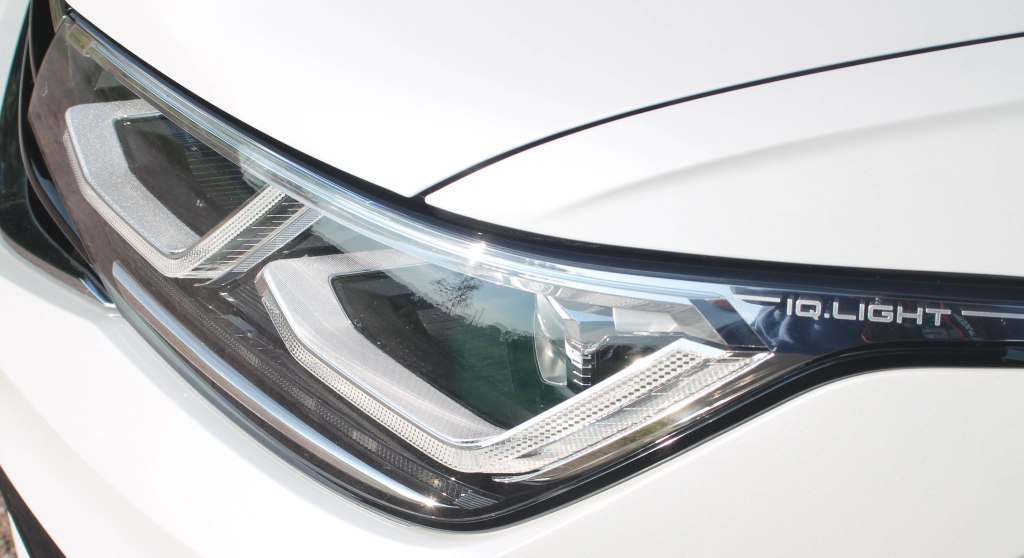
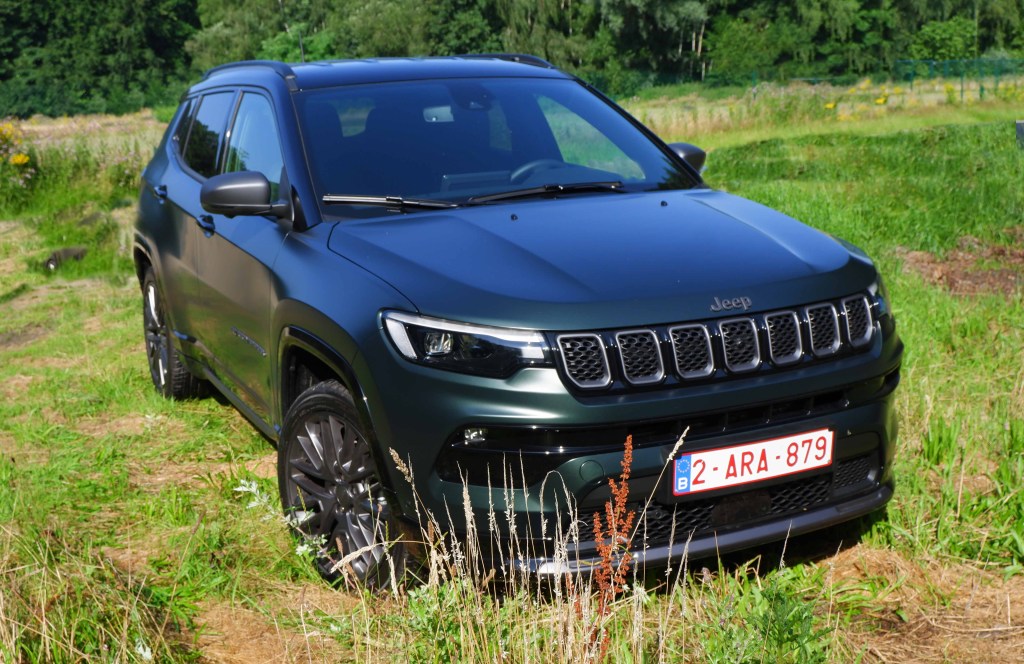
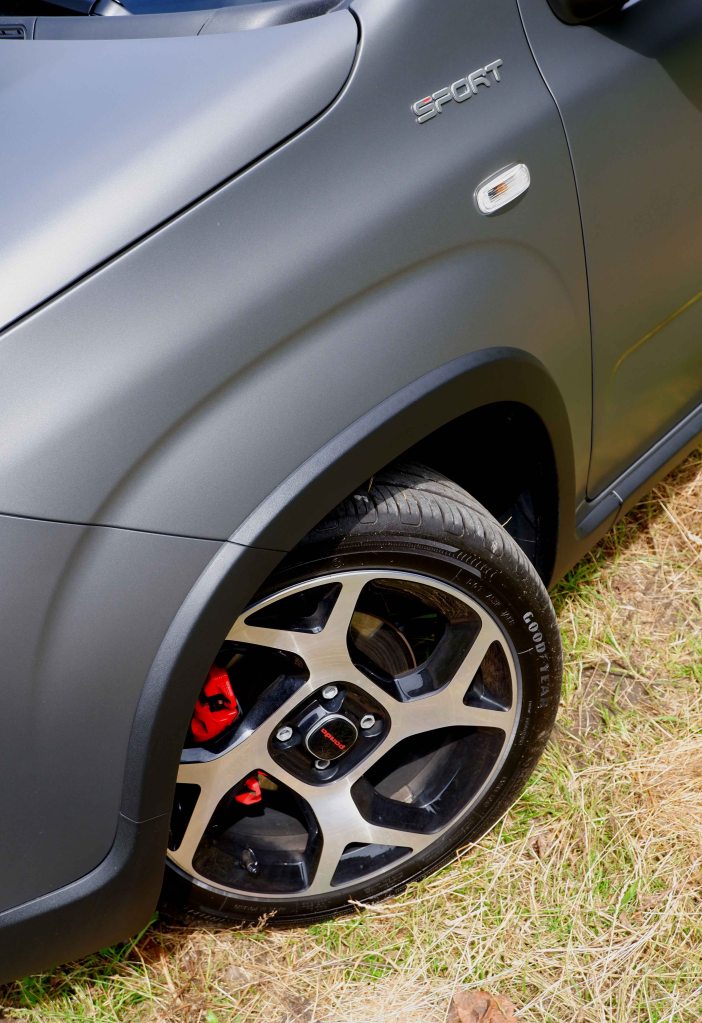
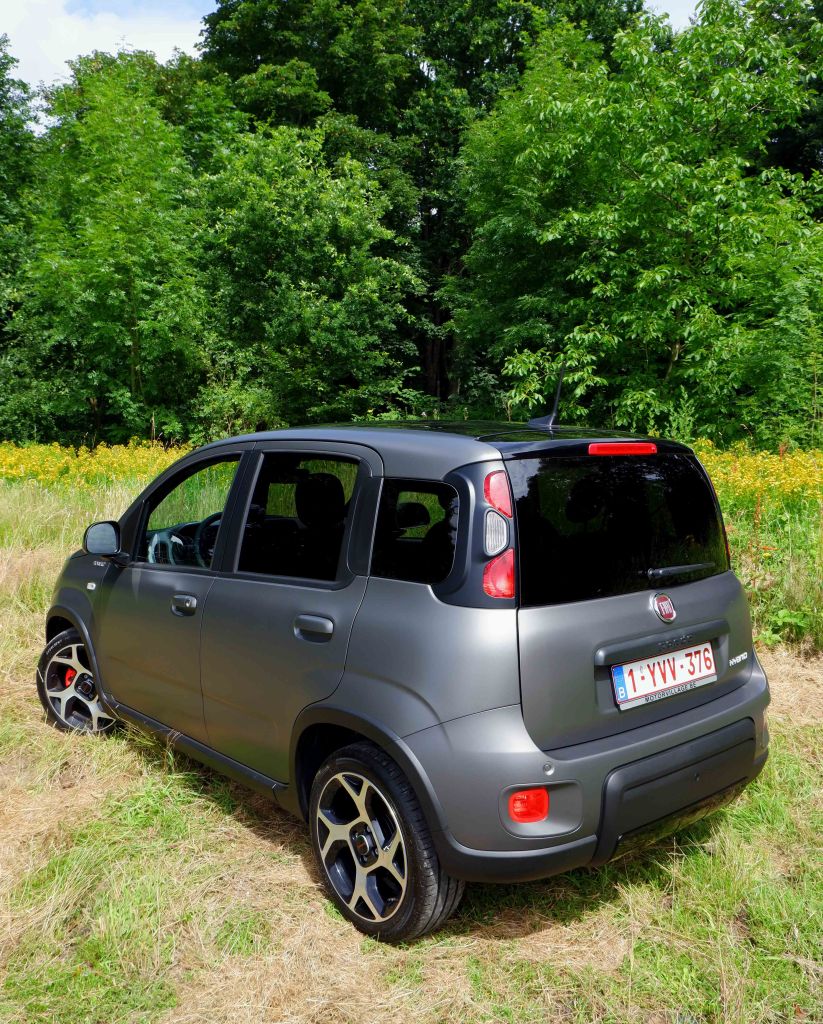
Our (UK registered) test car came with the so-called “Black Pack”, with unique black mirror caps, panoramic roof, privacy glass and red brake calipers, which complement Satin Grey 19-inch alloy wheels. There is Gloss Black detailing to the front bumper and lower grille surround, main grille surround and grille tips. The side window surround and side vent – complete with the Jaguar leaper – also feature a Gloss Black finish, along with the Jaguar script and rear badging. The R-Dynamic Black is available with all E-PACE exterior colours, including new Ostuni White. Our test car came with the latter colour.

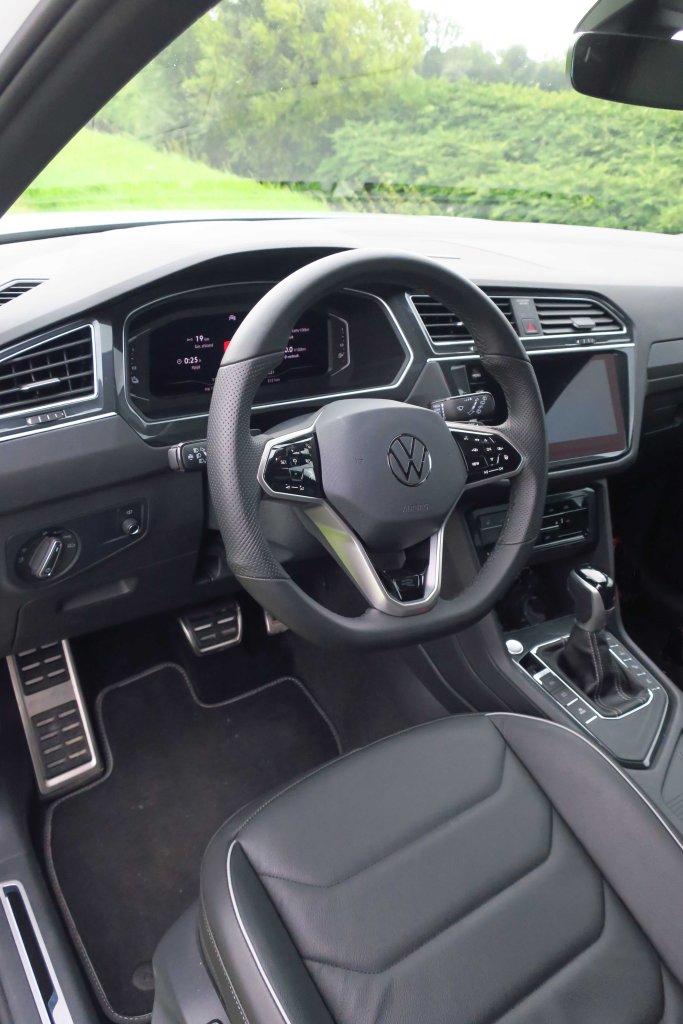
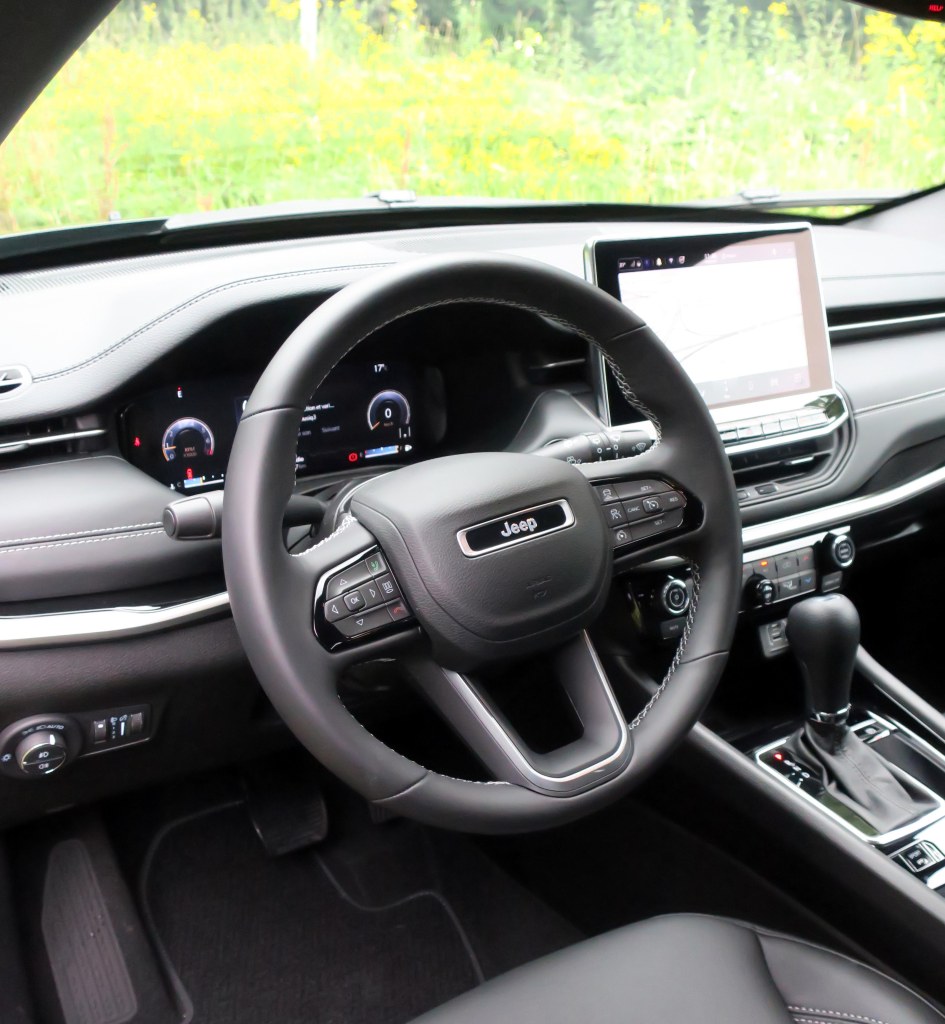
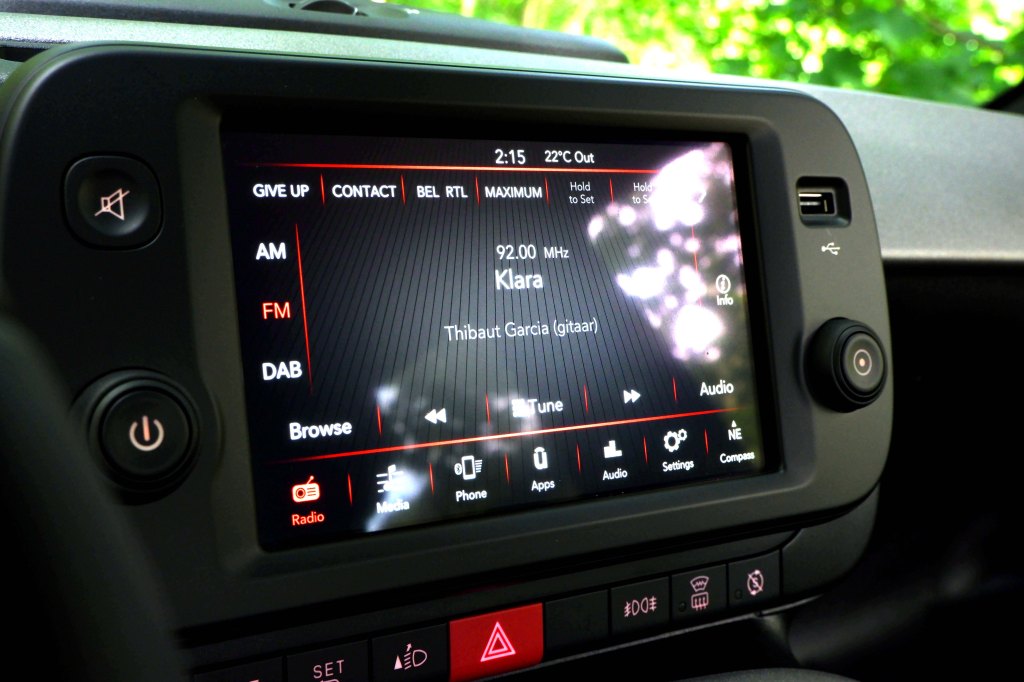
Also the interior is up to date with the curved 11.4-inch HD touchscreen integrated into the central instrument panel.

The large touchscreen operates the intuitive Pivi Pro infotainment system, which provides greater clarity and allows the driver to carry out 90 per cent of common tasks within two taps from the home screen thanks to its simplified menu structure.

But besides the good looks, there is of course state-of-art technology awaiting you.

Jaguar Land Rover’s Premium Transverse Architecture (PTA) ensures the E-PACE has the latest electrified powertrain technologies, as well as delivering improved ride comfort with the performance and handling agility Jaguar customers expect. Indeed, the handling and agility of the E-PACE is nothing short of superb, as we found out on the winding roads near Namur.

We drove the whole Jaguar Range on the scenic winding roads near Namur….on June 15, 2021 Press Day JLR Belgium

New engine mounts contribute to enhanced throttle response, while the suspension layout ensuring indeed a comfortable ride.

The Jaguar E-PACE is available with an efficient three-cylinder P300e PHEV powertrain, plus the most advanced four-cylinder petrol and diesel Ingenium engines, utilising MHEV technology to deliver enhanced performance, refinement and efficiency.

The current engine line-up includes:

Diesel

·163PS 2.0-litre four-cylinder turbo, six-speed manual, FWD

·163PS MHEV 2.0-litre four-cylinder turbo, nine-speed automatic, AWD

·204PS MHEV 2.0-litre four-cylinder turbo, nine-speed automatic, AWD

Petrol

·160PS MHEV 1.5-litre three-cylinder turbo, eight-speed automatic, FWD

·200PS MHEV 2.0-litre four-cylinder turbo, nine-speed automatic, AWD

·249PS MHEV 2.0-litre four-cylinder turbo, nine-speed automatic, AWD

·300PS MHEV 2.0-litre four-cylinder turbo, nine-speed automatic, AWD

·309PS PHEV 1.5-litre three-cylinder turbo, eight-speed automatic, AWD

The P300e PHEV powertrain of our test car combines a 200PS 1.5-litre three-cylinder Ingenium petrol engine and a 109PS (80kW) Electric Rear Axle Drive (ERAD) motor to deliver 0-60mph in 6.1 seconds (0-100km/h in 6.5 seconds) with CO2 emissions from 44g/km and fuel efficiency of up to 143.1mpg (2.0l/100km) (WLTP TEH combined).

We were indeed utterly impressed by the liveliness of this E-Pace.

The  P300e powertrain operates in one of three modes: Hybrid, EV or Save:

·HYBRID mode uses both the petrol engine and the electric motor in the most responsive and efficient way, intelligently switching between pure EV driving and using the petrol engine

·EV mode provides zero-emissions driving for up to 34 miles (55km)

·SAVE mode enables the driver to recover up to 85 per cent of battery charge, which can be deployed later in a journey, for example in urban areas.  

Enhanced connectivity

The latest E-PACE comes with even greater technology and connectivity options, with wireless Apple CarPlay® becoming available soon as standard*. Wireless Android Auto™ will also become available as standard at the same time,* with both available via a SOTA update for all Pivi and Pivi Pro equipped E-PACE models – seamlessly replicating the customer’s smartphone display on the central touchscreen and giving drivers multiple methods of controlling infotainment and phone functions. The E-PACE is also available with wireless device charging.

The Jaguar Range was neatly lined up on the Media Drive JLR Belgium

Jaguar’s advanced Pivi Pro infotainment system has a range of embedded apps, fast start-up from its own dedicated power source and dual-SIM technology so you can stream media and download updates simultaneously.

Pivi Pro technology is complemented by the 12.3-inch HD Interactive Driver Display that features enhanced graphics, a fully configurable layout with digital dials, media information, phone functions or full-screen mapping for the navigation system. With the optional Head-Up Display, the E-PACE’s interior technology ensures the driver is provided with numerous ways of configuring the set-up in the most convenient way possible.

Pure cabin ambiance…

The Cabin Air Purification system improves interior air quality through Nanoe technology.  The advanced system features PM2.5 filtration, which captures ultra-fine particles – including PM2.5 particulates – to improve occupant health and well being and is activated by pressing the ‘Purify’ button within the central touchscreen.

The latest enhancements ensure Auto High Beam Assist is fitted as standard on E-PACE S models, previously standard on SE and HSE derivatives, while the seating options have been simplified, ensuring customers can specify the perfect E-PACE with ease. High-quality Meridian Audio Sound is now standard from SE specification and memory functions for the door mirrors and seats are now standard on S models.

The E-PACE we drove on the sunny roads near Namur on the Media Drive JLR Belgium…

All R-Dynamic models feature Configurable Dynamics as standard, allowing drivers to hone detailed aspects of the E-PACE’s driving dynamics, including throttle and gearbox responses, as well as steering settings and suspension (where Adaptive Dynamics is specified) to tailor the driving characteristics to suit individual driver preferences. We just loved it!

More driving impressions of the Jaguar range to follow soon…

Hans Knol ten Bensel

Experiencing E-mobility for all: we drove the new Citroën AMI in the streets of the Capital of Europe…

Citroën has always been THE brand for breakthrough mobility solutions. It responded this time to today’s challenges by offering 100 % electric mobility literally for all: a cute, roomy two seater with an 8 HP (6 kW) electric motor which can be charged in 3 hours on your home socket and which offers up to 75 km electric range in town or country/village roads. What’s more, since it is only 45 km fast, you don’t even need a drivers’ license for it. In France, 14 year old’s can drive it, in most European countries this is possible from 16 years onwards. But it is also excellent news for the (very) elderly, they have the ideal, roomy two seater which protects them from the elements, it is easy to step in and out of, has two wide opening doors and is the proverbial breeze to drive.

Citroën has done it, and we were delighted thanks to the dynamic PR team to experience the first kilometers behind its cute steering wheel in the streets, squares and boulevards of Brussels. Just read further…

Hans Knol ten Bensel

Light and roomy

Like the iconic 2 CV, this AMI is designed with nothing but practicality in mind. Its symmetrical body shape is unique, with a long roof and cabin, offering a sea of space for its two happy occupants. Only the driver’s seat can be moved fore and aft, the passenger’s seat is fixed, and therefore one sits normally a bit further back than the driver.

Room for a cabin space suitcase, and an elegant hook to hang your bag…

But she/he enjoys formidable legroom, and can actually stretch its legs fully. This means that seating with your legs in a normal position, there is even room for a cabin size suitcase in front of your feet! So there is always enough room for your errands, as besides in the cabin, the AMI has still an extra luggage space in the back.

Citroën has decided to make this long cabin as light and airy as possible. Therefore, a glass panoramic roof is fitted standard. So it is la Vie en Rose in your AMI. One gets in through the wide opening doors, which are identical and because of that opening in different directions. The driver’s door sways out in the front, making getting in and out super easy.

You can throw your pocket camera, bottle and sundry in one of the three customizable bins just behind the window, hang your city/handbag on the elegant hook provided on the passenger’s side, and get behind the wheel. The dashboard just reveals speed and battery charge level, indicating also the remaining range in km. Further, there is a switch for heating and fan. Next to it is a smartphone holder, so your phone can provide for navigation and music.

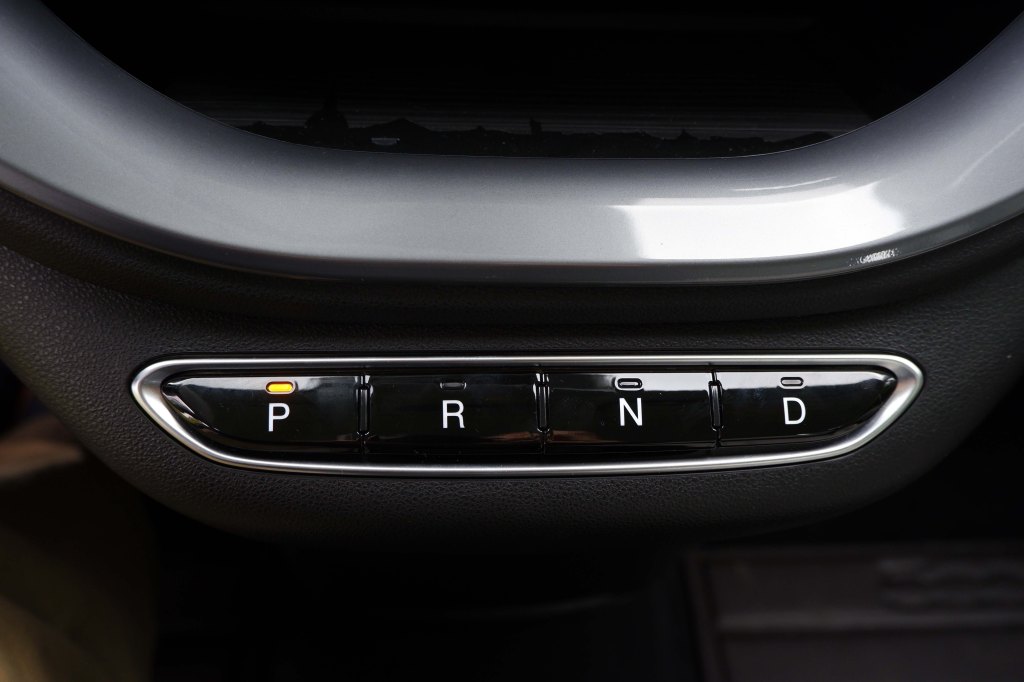
The row of knobs for “Drive”, “Reverse”, “Neutral” and “Park” sits on the left side of the driver’s seat. Just push “D” and off you go. Acceleration is lively, but don’t expect miracles from 8 HP moving a cute car with a total weight with battery of 485 kg, where one still has to add the weight of one or two passengers. But it is certainly enough to move along with the flow of urban traffic, and with some restraint one soon notices that a cruising speed of around 40 km/h needs just a push of 1 or 2 centimeters on the throttle. You don’t get any deceleration from the E-motor when you lift the throttle at speed, so adapt your driving style and drive with more anticipation as the distances to make good use the kinetic energy are longer. But it can be done, and soon you get the hang of it…

Driving in Brussels one soon notices that the indicated range is absolutely realistic, and that’s a big plus. Also remember, three hours is enough to fully (re)charge the AMI.

Brussels paves are ridden with potholes and ridges, but the AMI took it very well in its stride with a surprisingly comfortable suspension.

Make it your very personal AMI…

As said, life is good in this AMI. Typical and reminiscent of the 2CV are the side windows, which open by manually tilting upwards.

Citroën offers, in a “Do It Yourself” fashion, the possibility of creating the object that suits each customer’ tastes through a kit of accessories that can easily be installed yourself. This kit incorporates functional decorative items: a central separation net, a door storage net, mat, storage tray on the top of the dashboard, small hook for a handbag, smartphone clip, DAT@MI box (dongle device) connected to the My Citroën app to retrieve essential information from your Ami on the smartphone.

4 main shades are available for these accessory kits, costing 400 Euros: MY AMI GREY, MY AMI BLUE, MY AMI ORANGE, and MY AMI KHAKI.

2 characterful packs are available on AMI for even more customization. These 2 packs contain all the above decorative elements and large format stickers that cover the outside and thus give AMI its very own style.

– My Ami POP with Orange personalization and a fun, young and sporty look, with a rear spoiler, is available for €8,190 incl. VAT.

– My Ami VIBE in gray with a more upscale, chic and graphic design that integrates roof coverings in addition to the stickers, is available for € 8,690 incl. VAT.

The installation of these 2 personalization packs is entrusted to professionals before delivery.

The specific exterior body colour is neither too feminine nor too masculine and works with the different colour packs Citroën has developed (blue, white, khaki and orange).

So the Ami is a base that can become a completely customised object with exterior and interior accessories that are either pure style or offer real extra functionality, as well as stickers that give it a completely different characters, tells us Pierre Leclercq, Head of Citroën Style.

Prices…

AMI AMI: 7.290€ incl. VAT

MY AMI ORANGE, KHAKI, GREY, BLUE: 7.690€ incl. VAT

MY AMI POP: 8.190€ incl. VAT

MY AMI VIBE: 8.690€ incl. VAT

MY AMI CARGO : 7.690€ incl. VAT.

Hans Knol ten Bensel

We put the whole range of Jaguars and Land/Range Rovers through their paces…

Today we were invited by the people of Jaguar Land Rover Belux for a Jaguar Land Rover Media Drive at the magnificent establishment La Noiseraie , and it proved a wonderful experience. The whole range of Jaguars were driven on the scenic winding roads and motorways around Namur…with the exquisitely sporting SV R being the icing on the cake, although the hybrid and full electric Jaguars proved very impressive indeed.

The Land/Range Rovers were put to the ultimate off-road test at the Land Rover Experience Center at Suarlée.

We were also able of course to have a thorough go in our former test car we drove earlier, the New Defender, see also our test on these pages…

More on all this soon, we just show you here a few images, which say more than thousand words… just stay tuned on these columns!

Hans Knol ten Bensel

We drove the Land Rover New Defender 90 P400: an icon reborn…

It is always tricky to restyle and re-engineer a classic icon. But the people of Land Rover have succeeded. And how: a thoroughly modern looking car that nevertheless retains all the iconic elements of the original Defender. Its tall, upright stance, its purposeful short overhangs, to name but a few. Technically, the New Defender truly belongs to a new era. Painstaking efforts have been made to retain and even improve the legendary terrain capabilities of the Defender, while vastly improving the on-road driving qualities. The level of handling, comfort and road manners have nothing to do any more with the original. This makes this New Defender again fit for another few decades, enough time to grow into another icon. We were already convinced after this test. Just read further.

Hans Knol ten Bensel

Inspired by its past, but not harnessed by it…

These words were said by Gerry McGovern, Chief Design Officer, Land Rover, and it all sums it up just right. This is a new Defender for a New Age, he says, and we agree. The lines are clean, well proportioned. Besides the short wheelbased 90 and its hardtop version, there is also the 110, which offers five, six or 5+2 seating configurations, with a load space behind the second-row seats of up to 1,075-litres, and as much as 2,380-litres when the second row is folded. The Defender 90 is capable of accommodating six occupants in a vehicle the length of a compact family hatchback. It is aerodynamic too: it even has a flat underbody which both optimizes aerodynamic performance (as low as 0.38Cd).   

The stripped-back personality of the original Defender has also been embraced inside, where structural elements and fixings usually hidden from view have been exposed, with the emphasis on simplicity and practicality. New features include a dash-mounted gear shifter to accommodate an optional centre front ‘jump’ seat, which provides three-abreast seating across the front like early Land Rovers. The back of this ‘jump’ seat folds neatly forward, offering an immense centre console/armrest, and we just loved it.

Our test car came with the optional full-length Folding Fabric Roof – available on both 90 and 110 – for that open-top feel. There is even more: it also allows passengers in the second-row seats to stand up when parked to provide the full safari experience…

Strong and durable

Bystanders admiring the new Defender usually comment “we still like the old one for its robustness”. Well, they are wrong. Chassis engineering is now living in modern times. And the new Defender is the rolling proof of it.

Its new D7x (for extreme) architecture is based on a lightweight aluminium monocoque construction to create the stiffest body structure Land Rover has ever produced. It is three times stiffer than traditional body-on-frame designs, providing perfect foundations for the fully independent air or coil sprung suspension and supports the latest electrified powertrains.

Our test car had the air sprung suspension, and it is a superb experience, both on- and off road.

Outstanding both on- and off road…

This New Defender drives truly top notch on the road. Our test car proved with its air suspension superbly comfortable, and even spirited driving on winding roads delivered predictable handling with little body roll. Straight line motorway driving at high speeds is also what the New Defender is built for.

 In urban traffic and on terrain,  Land Rover’s advanced ClearSight Ground View technology helps drivers  by showing the area usually hidden by the bonnet, directly ahead of the front wheels, on the central touchscreen.

But also off road the Defender has what it takes to excel. Permanent all-wheel drive and a twin-speed automatic gearbox, centre differential and optional Active Locking Rear Differential ensure it has all the hardware required to feel at home in desert sand or (arctic) tundra.

“Configurable Terrain Response” debuts on New Defender, allowing experienced off-roaders to fine-tune individual vehicle settings to perfectly suit the conditions, while inexperienced drivers can let the system detect the most appropriate vehicle settings for the terrain, using the intelligent “Auto” function.

The new body architecture provides ground clearance of 291mm and world-class off-road geometry, giving the 110 approach, breakover and departure angles of 38, 28 and 40 degrees (Off-Road height) respectively. Its maximum wading depth of 900mm is supported by a new Wade programme in the Terrain Response 2 system, which ensures drivers can ford deep water with complete confidence.

Up-to-date power…

The New Defender offers a choice of advanced petrol and cleaner diesel engines,  while a Plug-in Hybrid Electric Vehicle (PHEV) powertrain provides silent EV-only progress of up to some 43 km.

The petrol line-up comprises a four-cylinder P300 and a powerful six-cylinder P400, featuring efficient Mild Hybrid Electric Vehicle (MHEV) technology.

Our test car came with the P400, and indeed powerful it is.

This in-line six-cylinder Ingenium petrol, as said with MHEV technology, features both a conventional twin-scroll turbocharger and an advanced 48-volt electric supercharger, with a belt-integrated starter motor in place of the alternator to assist the petrol engine. Indeed, this starter motor ensures more responsive and refined operation of the Stop/Start system and provides extra assistance to the engine when accelerating.

The MHEV system also has a 48-volt lithium-ion battery to store energy captured as the vehicle slows down.

Driven with restraint, coupled with an ultra smooth 8 speed auto box, this six cylinder (how do we love the sound of straight sixes…) just hums along at anything between 1200 and 2000 rpm, letting you enjoy its impressive torque. It develops not less than 550 Nm over a wide rev range of 2000 to 5000 rpm. Push the throttle deeper and the Defender lifts its heels. Indeed, 400 PS or 295 kW between 5500 and 6500 rpm really make you move. The Defender storms from 0 to 100 km/h in 6 seconds, and its top speed is 191 km/h. This New Defender counts therefore among the fast cars on our roads, a truly outstanding feat.

Fuel consumption depends heavily on how you drive your Defender. Anything between 14,2 and 9 liters/100 km and even slightly less when you concentrate yourself on adopting a smooth and anticipative driving style, is what you can expect, even when driving in town. (!). The MHEV system helps here of course. The manufacturer quotes 9,6 l/100 km for the NEDC cycle, with CO2 emissions being 219 g.

We also note that your new Defender can tow up to 3500 kg (!).

State-of-the art infotainment…

The New Defender introduces Land Rover’s new “Pivi Pro” infotainment system. The touchscreen is intuitive and user-friendly, requiring few inputs to perform frequently used tasks, while its always-on design guarantees almost instant responses.

In addition, the New Defender takes Software-Over-The-Air (SOTA) technology to a new level, with 14 individual modules capable of receiving remote updates.

…and you can personalize your Defender

Like on our test car, a Satin Protective Film can be specified to make the exterior paintwork even more durable. The wrap helps protect against everything from car park scratches to bramble rash and is available as a factory-fit option in Gondwana Stone, Pangea Green and Eiger Grey, providing a unique contemporary finish as it protects the Defender’s paintwork.

In addition to the Accessory Packs, the New Defender is available with the widest choice of individual accessories ever assembled for a new Land Rover, with everything from a Remote Control Electric Winch, Rooftop Tent and Inflatable Waterproof Awnings to more conventional tow bar systems and roof racks.

Conclusion

This New Defender oozes with panache, with its clean body to its impressive, well styled interior, breathing uniquely the aura of our modern times, combining it with a reductionist styling language.

Technically, from chassis, suspension, drivetrain and engine(s), this new Defender is truly top notch. The result is formidable comfort and very good handling on the road, and masterful behavior and capabilities once you leave the beaten track.

The 400P provides excellent performance, and offers reasonable economy when you drive relaxed. A car for all seasons, for any road or place in the world. You will feel at home in it, everywhere you go.

Hans Knol ten Bensel  

We drove the Renault Captur E-Tech Plug-in Hybrid: the compact SUV which has it all…

Renault has now also introduced its clever E-Tech Hybrid system in its Captur range, showing clearly that besides full electric propulsion, the hybrid solution has certainly its firm place in the Renault drivetrain strategy.

Having driven also the Mégane GrandTour with the same E-Tech technology, we were again very pleased with the refined qualities of the system, which also makes very efficient use of both electric and classic combustion engined propulsion. Indeed, provided you adopt a relaxed driving style, this Captur will spoil you with a close to 50 km range on its batteries, and an average fuel consumption in hybrid mode with (almost) depleted batteries still well below 6 liters/100 km. Add to this the “Zen” feeling of electric driving – the Captur will always drive away on E-power – and you will understand that we loved testing this good looking SUV. Just read further.

Hans Knol ten Bensel

Elegant

The Captur is well styled and proportioned, and pleases to the eye from any angle. A strong selling point, and now the Captur is further enhanced by the equally well designed led head- and rear lamps.

The cabin is also vastly improved, the level of finish and the quality of the materials used is now top notch. We just loved again the tall upright 10,25 inch touchscreen, the easy to manipulate round knobs for heating and ventilation, the Renault typical audio control, the quality of infotainment, the easy and self-explaining choice of the different driving modes. Apple Car Play and Android Auto connectivity are also to be had. The Captur is practical too, with large doorbins to stow away the things you take along on a car ride and an adequate luggage space with split floor to accomodate the charging cables. (Indeed, there is one for domestic plugs and one type 2 charging cable.) The Captur will also seat five without too many problems.

The E-Tech drivetrain convinces…

After the Mégane, the E-Tech system in the Captur convinced us again. It transforms the Captur in a comfortable, smooth, relaxed performer. As said, the fact that you will always drive away on the 67 HP electric motor adds greatly to the premium feeling this Captur gives you. The acceleration in those first meters is not only smooth, it is also quite powerful, and be sure that the Captur is a quite lively car at traffic lights.

At the beginning of our test, we managed to drive 44,5 km on battery power, with the rest of the distance, 60,6 km, driven in “My Sense” mode, using both engine and battery power. Average fuel consumption was 1,1 liter/100 km, E-consumption 14,4 kW/100 km.

The E-Tech system has three engines: one 1,6 litre Atkinson cycle 91 HP combustion engine, the 67 HP electric motor and then a smaller second electric motor which serves as starter motor for the combustion engine and generator. Acceleration is especially good at lower speeds, but the 0 to 100 km/h sprint is still quite creditable with a time of 10,1 seconds.

With batteries (almost empty, we drove a stretch of 95 km on the open road, using mostly the combustion engine, staying in the “my sense” mode. Fuel consumption was a very creditable 5,3 l/100 km.

Top speed is also a very satisfactory 174 km/h, which makes this Captur a quite potent motorway cruiser.

When asking full performance, the combustion engine will step in verve and will of course be pushed to high revs, but soon one learns to be sensitive with the right foot: a slight lift off of the throttle will induce the gearbox to choose a higher gear, and the engine revs will immediately drop. The E-Tech drivetrain, as well as the Captur, are built for comfort and a relaxed driving style, rewarding you, as we pointed out in our introduction, with very good efficiency, both in liters and KWh /100 km.

Choice between driving modes…

One can opt for the “Sports” mode which makes a performance oriented choice between the electric motors and engine, but most will choose the “My Sense” mode, as we did during most of our test, and the inboard computers will make the smooth and efficient choices for you. We also drove the Captur with the stylish gear lever put in “B” position, which increases the regenerative function when you lift the throttle, and soon enough you will be able to drive the Captur as a “one pedal” E-car in urban traffic. Then you can choose the “Pure” function, which lets the Captur run solely on E-power, and select the “E-Save” function or mode when you want to save battery power for later.

Needless to say that this Captur is very much fun to drive in town, but thanks to the 158 HP hybrid drivetrain it is also well at home on the open road, and this over long distances.

The Captur has a 9,8 kWh battery pack, which is housed under the rear seat, but the interior space is hardly impaired at all, and the rear seat bench can even be shifted back and forth to gain either legroom or luggage space.

The stylish gear selector sits on a “floating” console…

The extra weight of the batteries made a somewhat stiffer suspension necessary, but this did not make the Captur uncomfortable. Handling is also still quite pleasing, the car  can be driven spiritedly over winding roads, but this being said, it will not invite you to throw it around corners. As we said before, the true vocation of this Captur is relaxed and comfortable touring, and to enjoy the “Zen” panache of electrified motoring.

Conclusion

Renault stepped into the hybrid arena, and convincingly so. With the plug-in facility, you have literally the best of both worlds. In our country though, one needs a home charger. But then again, if no charging points are available, you have the pleasant possibility of running on fuel, and the Captur proves here to be quite frugal too. So this go anywhere anytime electrified pleasant looking compact SUV has many cards upon its sleeve…

Hans Knol ten Bensel

A woman tailoring the Fiat E-Ducato to your needs: Angelica Carapezza

Her vast experience, very good knowledge of the company and a well established large and well honed network were the keys for Angelica Carapezza to bring the complex E-Ducato pilot project towards customers to a succesful end.

At the first presentation of the E-Ducato in mid- 2019 we met up with some very remarkable people of Fiat Professional, notably with Angelica Carapezza, now responsible for managing and coordinating the implementation of the Ducato’s electrification programs at full scale.

Now with the E-Ducato “coming of age” as it were with its commercial launch, after having went through a very thorough process of profiling the customer and their needs, we were very intrigued how this process exactly went about. All the more reasons for a second interview. The first interview, where we told you more about Angelica Carapezza’s multi-faceted career, can of course also be read in our columns, by following the link https://autoprova.be/2019/09/15/women-behind-cars-angelica-carapezza/.

Just read our second interview with Mme Carapezza here below…

Hans Knol ten Bensel

HK: The Ducato has built up an enviable reputation of commercial success, so launching a fully electric version is quite a challenge, as the expectations of the market are high. What was your business philosophy here in positioning the E-Ducato into the market?

AC: We have a long 120-year history in the LCV market, and Fiat Professional has always been a Brand that “lets the facts speak for themselves”. It is down to earth, so to say, producing vehicles that are first and foremost an ideal tool for the small or big entrepreneur who wants to grow his business. With this approach throughout the years, we achieved an undisputed leadership position in the world of light commercial vehicles, as shown by the figures for the Ducato: over 5 million units produced since 1981 in the biggest plant in the world, having also conquered over 75% of volumes in the Caravan bases sector and, finally, having achieved the European Best Seller status in 2020.

HK: Being close to the customer, responding to its needs, how did this translate in the actual approach?

AC: We wanted the E-Ducato to be absolutely “tailor made”. I can refer here to the Press Statement recently released by Stellantis about our “Pilot Project” to tune the E-Ducato to the needs of our customers, but let me explain it also a bit more for you here how we went about.

We first started with gathering data. With a solid database, you know where you’re going. So we collected data for a whole year from 4,000 thermal Ducato vehicles, whose control units, connected in real time, allowed the different individual mission profiles of our customers to be identified in their real application on the road.

E-Ducato’s were delivered to corporate customers like Arcese to further fine tune them to their needs…and collect their experiences.

Then we started analyzing the collected data, and aggregated them. Now, and this is of course crucial, we had established ourselves a very good idea about the profile of daily missions which could be accomplished by an electric instead of a thermal vehicle without causing any business interruption for the customer: in this way we identified the market segment which is “ready to divert” from thermal to electric, based on their specific mission(s) or activity and the size of their fleet.

This analysis which well founded, as it was carried out after not less than 50 million km being traveled by connected vehicles. This confirms again how deep knowledge about customers and their needs is fundamental and conditio sine qua non for the successful sale of commercial vehicles.

HK: Based on your findings, you could now further develop and fine-tune the engineering of the E-Ducato…

AC: Indeed, but we wanted our customers also to test out right from the beginning our pre-production vehicles, and communicate to us their findings during further development of the E-Ducato. We wanted them to have “their” driving experience in the field, based on real life conditions. To achieve this, we launched a “Pilot Project” so complete and complex that it was unprecedented in the history of Fiat Professional. During this engineering development phase of the electric version of the Ducato, we produced a mini fleet of pre-series vehicles and then assigned them to strategic customers. This time it allowed us to sample further data in purely electric mode.

Briefly, each user is assigned a vehicle on free loan for a period of 4-6 weeks, depending on mission/s tested, geography, type of paths chosen, allowing each customer effectively and empirically to start “his” Ducato experience.

The final target is to identify “his” vehicle, which is the result of the combination of two key and indivisible elements: offer and demand. Fiat Ducato’s commercial offer covers more than 18.000 different versions of the same vehicle, available with either thermic or electric propulsion, so you may imagine how important is for us to provide always the right and the best solution to our customers. In other words, we find the right match between on one hand the customer’s specific needs (type of route, daily km, delivery times/shifts, working days, type of goods transported and charging profile) and on the other hand the “right” Ducato with its wide range of product combinations (battery size, body configuration, options).  

This allowed a “real life” customer profile to be established, and so we could tailor the E-Ducato not only ideally to its specific delivery tasks and missions, but also to the individual market-specific requirements and local conditions, with indeed the geography being another important key factor in the choice of the vehicles.  

HK: Very remarkable, this close cooperation with customers. Does it have a following?

AC: Right indeed, the collaboration with selected customers for the “Pilot Project” continues today and covers various communication channels: press, web, social, co-marketing, joint participation in events and promotion of new experimental business lines.

Furthermore, in terms of identification and visibility, it is worth emphasizing that the E-Ducato fleet bears the distinctive livery of the model, combined with that of the international partners who took part in the project, including Arcese, GLS, Lyreco, Mercitalia, EDF, Fraikin, CSB, Nippon Express and BT Fleet, and last but not least DHL: all leading companies in the market and devoted to innovation, which have shown that they want to combine the commercial side of their business with respect for the environment.

HK: Indeed, I understand, customers and manufacturers are working together towards eco-sustainable mobility…

AC: Absolutely. Respective expectations have the same target: to give a consistent contribution in achieving truly eco-sustainable mobility from the beginning, throughout the value chain, and this new mobility is now the result of two companies sharing a single major strategic goal. OEMs cannot any longer sell just vehicles; they have to sell a full mobility solution in a world that is constantly evolving and where customers need easy solutions to continue their daily mission. LCV customers make a purchase choice based on tangible elements: payload, volume, range; here there is no room for emotion like for passenger cars; our customers have a clear idea about what they want and need, they are very demanding, the vehicle is the business for them. With E-Ducato we are proud to state that we “emotionally sell product contents”.  

HK: The car industry is now on the threshold of major eco-conscious changes… with its customers changing too…

AC: The entry of Electric Mobility happens not only in the Automotive market per se, but especially also in the culture and education of the people, which is leading to an epochal change that will impact heavily on the customer’s commercial approach, making her/his choice a «choice of full Mobility»: the customer is a pro-active stakeholder of this process of a new behavior and approach to Mobility.

For the car industry this means not only making the switch from thermal to electric, but also and above all fostering the evolution from the simple sale of a vehicle to the sale of a complete sustainable mobility service, in which the customer’s knowledge and needs become essential elements of the sale itself. Once again, Fiat Professional becomes the protagonist of a cultural change through a concrete approach to the issue of sustainability, with our “tailor-made” E-Ducato.

HK: What were your personal experiences, findings and satisfactions in setting up and bringing to a good end this complex project, amid Corona times? Do you have a message here – as a woman with a career– to our readers?

Well, good question Hans! If you ask me to summarize all my experiences with only one adjective, I would tell you “complicated”, but let me add a second one: “satisfying”. However, as satisfying as all complicated and challenging tasks are, it was not a “promenade”, notwithstanding my 35 years of experience in the Automotive Sector and having clear idea how the “machine” runs.

The Corona virus played its part too in complicating easy things like meeting the customers, feed commercial relations, being on the field, have internal meetings with the team and speed up developments. In one stroke, all these tools were taken away by the Corona pandemic, and we had to cope with delays and only virtual experiences at all levels. But I would mention Einstein here, “in the middle of every difficulty lies an opportunity”, and the Corona virus gave us the opportunity to deal with in a new – and unpredictable – scenario, in finding new ways to establish the collaboration in each part of the long chain of automotive processes, where everybody gave her/his strong contribution to deliver the project.

To those people, my colleagues, go my special thanks for having supported me for each time I asked for something that was “never done before”. Whether you are a man or a woman, if you commit yourself first and you strongly believe in what you are asking for, the results come in.

HK: In more general terms, do you think that the Corona Pandemic has affected the position of women in the working place? What challenges in your opinion lie ahead for them?

AC: Well… a question which is not so easy to answer. Once more, statistical data show us that most of the women have lost their job. We can state generally that women belong indeed still to a weak professional category: they are always the first to pay any change.

I can consider my self – as all women in multinational companies- as a privileged person, since I had immediately the chance to continue my daily job. To avoid any disruption, the Company had made work from home immediately available to all its staff, but of course, everything became virtual. I did not lose my job, but I had to change the way of doing it.

Angelica Carapezza, second from left, seamlessly adapting her dress code to the occasion, delivering the E-Ducato to customer Lyreco…

HK: Did your function in the Company pose specific personal challenges for you?

AC: I’m a Senior Marketing Manager, I’m responsible of the E-Ducato Pilot Project: this job is based on relationships, both within the company as well as externally.  

This meant that, at the outbreak of the pandemic, we all had to rely on and capitalize as much as we could on the network we had build up so far. I can say that without a deep knowledge of the organization at all levels, If I would not have already known the thousands of people that work here and what they do, if I would not have built personal relations in the past, I would never have been able to deliver the Pilot Project as it is today.

Along with the network I built up, my professional experience also played an important role in this pandemic situation.

I think it must have been very difficult for young people who had just entered the organization prior to the pandemic. I keep asking myself, how have they worked from their homes without knowing the processes, the people, the organization flows, the fundamentals when you have to deal with an enormous organization? How could they develop that special feeling of “belonging to” the company if they could not experience it hands on and feel it on their skins?

HK: And to return to our first question, what were the extra challenges for women in general with this pandemic?  

If you ask me about the challenge… well the challenge was just even bigger now with the pandemic, if you consider a full working day for a woman.

From a personal point of view, I think we have to see both sides of the so-called “remote working opportunity”: what it appears to be and the everyday reality. At first sight it seems that from home you can better manage and organize your daily workload, which  – apparently –, leaves you more room to organize your life. But the truth is quite another matter.  

The reality is that from home, as women, we tripled our daily tasks and got more and more efficient being at  same time managers, mothers, housekeepers with no time limits!  

We, like our children who paid the most expensive cost of this pandemic, lost the human contact, everything is done behind the screen, everything is happening inside your house, and most of times you don’t perceive that it’s time to switch off the PC.

HK: The pandemic has affected us all…

The pandemic has affected us as human beings. We are not born to become home robots. As a woman, I want to go back to work, I need to put on a nice dress, have make-up, wear shoes and go out, before we all forget what is so fundamental for a human being: the interaction among us, the fact that we need to see each other into the eyes, to talk face to face, directly, to shake hands, to re-establish relationships. Human relationships: this makes us live.

HK: I thank you for this interview.

Hans Knol ten Bensel

We drove the 135 HP Renault ZOE 50: a bestseller with more punch and range…

The facelifted ZOE now has a more inviting front end too… and got LED headlamps standard.

Did you know that almost one out of five E-cars sold in Europe is a ZOE? Not surprisingly, as since its introduction back in 2012, the cute ZOE had the small EV market almost completely for itself. Now the competition is growing, with the Opel e-Corsa and the Peugeot e-208 coming to our markets. But Renault has revamped its ZOE on just the right points to make its baby still score very well in its segment: a bigger battery, a stronger engine, and a revamped interior indeed make the ZOE as attractive as ever… just read further!

Hans Knol ten Bensel

The bigger 52kWh battery gives the ZOE an interesting range… The Z.E. symbol lights up blue when the car is charged…

Let’s start with the most interesting point: the bigger battery. Instead of the former 41 kW unit, the ZOE now has a 52 kWh battery, putting 326 kg on the scale, but more importantly, pushing the effective driving range just beyond the 400 km mark. Given of course the appropriate driving style.

Energy efficient…

When you set the cruise at 95 km/h or thereabouts, just to be a bit faster that the heavy trucks and lorries, the ZOE will consume 7 to 10 kW/h with the ZOE at these speeds, and yes, you can enjoy quite useful ranges, close to 400 km indeed.

This meant also using the clever “B” function by slipping the nicely designed gear-lever in this position, which lets the car regenerate the kinetic energy more intensely, effectively slowing the car more markedly when one lifts the throttle. Soon, one has learns to drive with more anticipation,  and soon you drive this ZOE as a one-pedal car. A delight in dense urban traffic.

We also clicked on the “ECO” driving mode, but this severely reduces the car’s liveliness, and in our opinion should only be used when “getting home” is crucial.

Of course, this nice range is markedly shortened when you use any airco/heating function, fans and windscreen wipers and other accessories. The effective range soon drops closer to maximum 300 km or thereabouts.

Lively performance

Having said this, the 100 kW or 136 HP motor, having also a healthy 245 Nm of torque, transforms the 1502 kg ZOE in a very lively performer. Low speed acceleration is excellent, going from 0 to 100 km/h costs merely 9,5 seconds. Top speed is limited to 140 km/h.

Given the still disastrous charging infrastructure in our country, a wallbox at your house is therefore a must for every (Belgian) EV owner, if he wants to use the dynamic qualities of your EV to the full without any further worries.

Renault’s 7 kW wallbox will charge the ZOE from empty to 100 pct in some 9,5 hours. The ZOE also supports 50 kW charging provided you choose this extra option. Then it costs only 1 hour and 15 minutes to charge up to 80 pct.

The rear lamp clusters are also neatly redesigned…

The joys of EV driving…

Let it be said here already: this ZOE is an absolute delight to drive in town. The electric motor is powerful and absolutely silent (up to 30 km/h an audible signal is sent for pedestrians, but this can be shut off). The “B” function lets you drive efficiently and smoothly, you can enjoy your favored tracks through the excellent Bose sound system, which was installed in our top-of-the-line ZOE.

On the open road, the 135 HP motor certainly gives the ZOE more than enough zest, and you can enjoy the silence of the car, as the ZOE sports besides the inaudible electric motor also a very good sound insulation.

Soothing comfort…

On top of all this comes also a very comfortable suspension, which is further enhanced by the soft sprung seats. All this guarantees relaxed, stress-free driving for hours on end, and indeed, the compact, barely 4 meters long ZOE is an excellent Gran Turismo, the only thing to watch out for are range and charging points…

The light steering is sufficiently precise to enjoy also spirited driving on winding roads, and indeed the ZOE is a perfectly balanced companion on winding and undulating “Nationales”, as not surprisingly, this Renault seems born for them.

Our test car was also equipped with the usual driving aids, lane assist, blind spot warning, etc, which makes the ZOE quite “grown up” on the motorway and multi-lane ring roads or urban “périferiques.”

A much-improved interior and infotainment…

The ZOE has inherited much of the instrumentation and screens from the latest Clio, and this seriously uplifts the car. In front of the driver sits now a digital 10-inch display, which is standard even in the basic version. The upright/portrait 9.3-inch touchscreen stems from the Clio, is standard on the top equipment line but can be had as an option in the other equipment levels. The screen sits relatively high, which makes it easy to reach and more pleasant to use.

The climate controls are neatly placed below the screen, a wise choice to put them indeed separately. Via the large round knobs, they are a breeze to use.

The quality of materials is also improved, and we liked the fabric covering of the dashboard panels. Of course, we drove the top equipment version, things might look different going down the line(s)…

The quality of the materials used in the interior has vastly improved…

The ZOE is practical too, with USB slots, phone charging, plenty of storage space in the front doors, foldable backrests, etc. Boot space is quite sufficient for a compact EV, the large and wide sill might be a drawback, but then passive safety has also its needs and necessities…

Conclusion

The ZOE has with its recent improvements grown out into a quite formidable contender, witch provides comfortable, “ZEN” transportation both in town as well as on open roads and Autoroutes. Eminently comfortable and silent for its size, it is a very “grown up” car, and holds very well its own in terms of range, performance, finish and cabin ambiance.

We expect this ZOE to be one of the absolute stars in its segment, and this for quite some time to come…

Hans Knol ten Bensel

Centro Stile Fiat and Abarth creates a stunning one-off based on the beautiful ‘60s Abarth 1000SP…

The slender original ’60s Abarth 1000 SP on the left, alongside the new one-off successor…

Sometimes, things happen which make the heart of a car enthusiast beat faster. Like an initiative taken by the people of the Centro Stile Fiat & Abarth.

They have now rolled out a contemporary interpretation of the superbly stylish and iconic Abarth prototipo Designed in 1966 by the Milan engineer Mario Colucci. Just look at the accompanying photo. Of course, we can only hope and pray that this will not limit itself to this one-off styling and engineering exercise.

A beautiful evocation of the purity of the original Abarth 1000SP…

The points and lines of the original car’s design were respected to ensure continuity between the ’60s sports car and the concept car of the new millennium.

The contemporary Abarth 1000 SP respects three fundamental design principles already seen in the ’60s model. First and foremost, the lightness of its forms, its volumes and of course its weight.

The second principle is aerodynamics: modern design technologies have made it possible to combine the iconic lines of the 1000 SP with an aerodynamic coefficient worthy of a contemporary sports car.

Finally, ergonomics, aimed at improving the user experience, to optimize the vehicle’s control and agile driveability.

A faithful evocation…

The Abarth 1000 SP echoes the lines and aesthetics characteristic of its forerunner. The sinuous body, with the soft surfaces of the fenders highlighting the position of the wheels, takes up the pattern of the spider with a central engine.

The cockpit glazing features shaped side deflectors, with their profile lowered towards the roll bar, the latter strictly “in view”, to highlight our being in the presence of a “no-holds-barred” spider.

Of course, today’s passive safety requirements make the car taller and more imposing…

The rear geometries of the Abarth 1000 SP accentuate the harmony between the lights and the exhaust pipes.

Of course, The livery is strictly red and the characteristic air intakes appear all over, from the front bonnet to the cooling slots in its rear counterpart. 

The headlights also follow the minimalist scheme of the historic 1000 SP, with point lights on the nose and a single pair of round headlights to accentuate the car’s remarkable breadth when seen from behind.

The present Abarth 1000 SP thus maintains a very similar identity to its forerunner’s, courtesy of the meticulous work to update the historic, no-holds-barred Abarth 1000 SP.

Despite modern safety requirements, the designers of Centro Stile managed to retain the character of the original…

Conversely, the tubular chassis under the “skin” of the historic Sport Prototipo gives way to a hybrid frame, with a central cell in carbon fiber and an aluminum front. The “new” Abarth 1000 SP features a powerful turbocharged 4-cylinder, 1742-cc central engine, capable of 240 hp. The sophisticated mechanics of the concept boasts overlapping triangle suspension in the front, with an advanced MacPherson strut at the rear.

We will tell you more about the original 1966 Abarth later, so stay tuned!

Hans Knol ten Bensel.

We drove the Renault Mégane Grandtour Plug-In Hybrid: high-tech versatility with a touch of French genius…

The elegant Mégane is now already a few years amongst us, and has conquered a solid place in its market segment.

A mid-term facelift was in the cards, and this time the facelift of the popular Mégane family was mostly technical, and saw the introduction of a plug-in hybrid version. Directly derived from its Formula 1 technology, its cleverness impressed us. Just read further…

Hans Knol ten Bensel
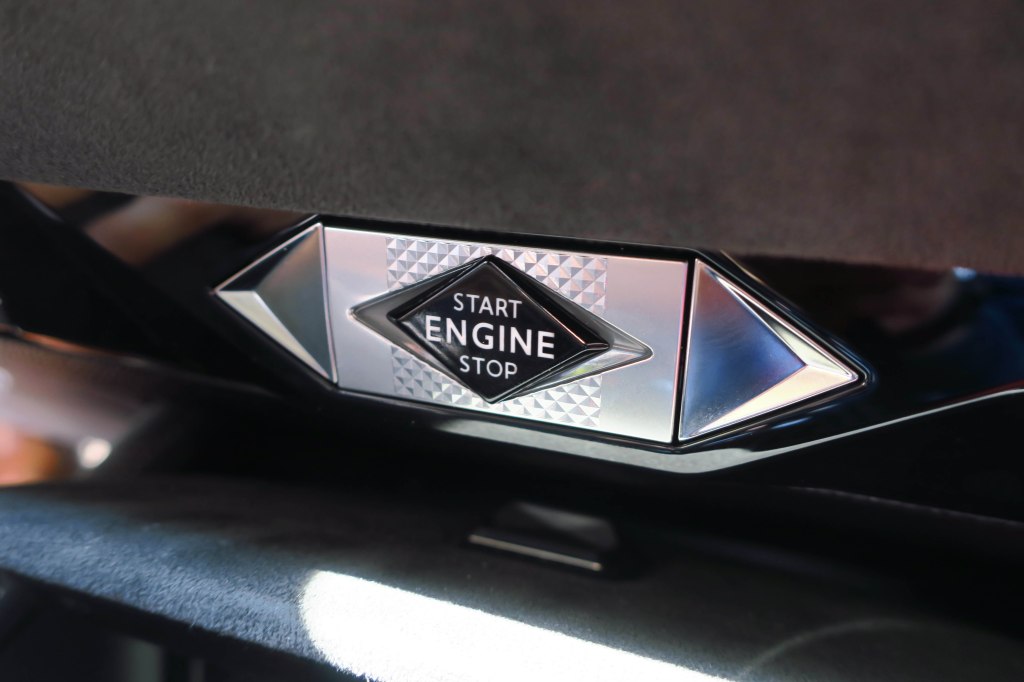
Changes found mainly under the hood…

Externally, the changes to the Mégane are mainly cosmetic, with revised head- and rear lamps, which are now LED-powered and have a new light signature.

There is a wider choice of (RS) trim line versions, and in the cabin the main news is the revised digital display in front of the driver to illustrate and control the functioning of this plug-in hybrid. Also all the heating/ventilation/airco commands are grouped together below the display on the central console, and the temperature can be set manually via ergonomic circular knobs.

But the main news is found under the hood. Renault opted for a sedate version of their double overhead cam 1,6 litre four cylinder, laid out with Atkinson cycle combustion for optimal efficiency. No turbo this time either, resulting in some 91 HP at 5600 rpm. Torque is 144 Nm at 3200 rpm, and this means this engine has to rev a bit to show its best. But then this petrol engine is further helped by two electric motors.

The main E-motor is good for 49 HP, and has an excellent 205 Nm of torque. This motor is always used when you drive away from standstill with this hybrid, with the petrol engine setting in later when more acceleration is wanted. Then there is a third starter/generator motor which develops 25 HP and 50 Nm of torque. Its function is also to match the rpm of the engine with the main electric motor, and to recuperate kinetic energy. Taking into account the power losses in the drivetrain, total system power is 160 HP.

This results in more than adequate performance, with 0 to 100 km/h being achieved in 9,8 seconds with a top speed of 185 km/h.

The automatic transmission operates with dog clutches, with both the petrol engine (5) and the main electric motor having several (3) gears, resulting in 15 gears in total.

The second electric motor will match the revs between itself and the petrol engine choosing the right gear combination. The matching is flawless, resulting in smooth, imperceptible changes. The engine will be kept in lower and middle rev ranges most of the time, even in the chosen “sport” mode. Only when using full kickdown, the transmission software will let the engine rev much high(er), which is only logical when full performance is required. Overall, the silence of the engine(s) and drivetrain seduces under more sedate driving conditions, although even under these circumstances brisk performance can certainly be enjoyed. But indeed, this Mégane E-TECH inspires you rather to a comfort-oriented driving style.

Technology derived from Formula 1 experience…

The adoption of ultra-efficient dog clutches for the transmission stems from Formula 1 technology. Only changes had to be smoother for everyday road use, and therefore the extra E-motor is used to seamlessly match revs between the main E-motor and the combustion engine and make smooth changes. This clever technology has been the subject of more than 150 patents…

All-electric for the daily commute…

The 400 volt Lithium-ion battery has a capacity of 9,8 Kw, enough for a useable range of up to 50km in combined cycle (WLTP) and up to 65km in urban cycle (WLTP). We managed indeed to drive a good 45 km between Drogenbos near Brussels, where we collected the test car, to our home town Antwerp on electric power only, albeit adopting a slower cruising speed of around 100/110 km/h on the motorway.

The E-TECH Mégane told us exactly what had happened during our first 67 km drive: distance travelled on E-power: 50,6 km, average fuel consumption: 1,1 l/100 km, average E-current use: 12,6 kWh /100 km. Recuperated energy 1,3 kWh.

Choice between three driving modes…

In the so called “Pure” mode, one drives 100% electric up to a top speed of 135 km/h. You can select also the “MySense” or “Sport” mode to take advantage of the E-SAVE function, always ensuring a minimum 40% battery charge. In both the MySense and Sport mode you enjoy regenerative braking, and when one drives with the necessary anticipation, the system will use the electric battery power again as long as the battery is charged above the set minimum threshold. This means than more often than not, you will still drive electric in urban start stop situations, and consumption will benefit accordingly.

Consumption: anything between zero and around eight litres/100 km…

The amount of fuel you consume depends entirely on the amount of electricity you use to drive  your Mégane. You charge it at home and office and commute some 30 km daily? Then your weekly fuel consumption is of course nil. Are you driving in “Sport” mode on a holiday to the South of France in one fast trip and you don’t want to bother recharging? Then it is good to know that this Mégane has the following stated consumption figures: 6.7/4.6/5.4 l/100km urban/extra-urban/combined. Of course, this Mégane will always start your journey all electric, until the batteries are depleted to the threshold level. Renault knows also that this car will have a reasonable consumption, and opted for a tank volume of only 39 litres.

An urban asset: the “B” mode.

Besides the obvious “D” position of your gearbox selector, you can push it one notch further to the “B” position.

Driving is now easier in the town or in slow-moving traffic with this “B” Mode. The electric motor will now regenerate the kinetic energy more intensely, resulting in increased engine braking. This allows for a one-pedal driving experience, meaning less brake pedal use, a more relaxing drive and better still, it helps preserve or even increase your battery range!

On the map display in your EASY LINK 9,3” touchscreen you can display the charging stations, and you can manage your battery level from your customisable 10.2” driver’s screen.

You can also install the MY Renault app to monitor your battery level, programme charging, or to pre-heat the passenger compartment of your MEGANE Sport Tourer E-TECH Plug-in Hybrid to the optimum temperature from your smartphone.

All in all, we found this E-Tech Plug-in Hybrid very pleasant and relaxing to drive, as we have a natural preference for a cool, fluent driving style, which is exactly what this Mégane seems to be built for.

French comfort

French cars, and also Renaults, are first of all built “pour vivre”, to please and serve you in everyday life. So they are comfortable and practical. Suspension, seats, commands, keyless entry, everything is engineered and perfected to make your daily life a pleasure. This is also what makes this car so endearing to us.

The Mégane also scores in its excellent ride, handling and comfort. The extra weight of about 200 kg, with the batteries sitting under the rear seat, made the engineers adopt a mulitlink rear suspension, so the handling stays top notch. The boot space remains unchanged also at 447 litres, with a neat underfloor space for the charging cables, so they don’t interfere with other luggage.

In the cabin, your led illumination stripes along door panels and centre console light up in electric blue, as do dashboard light accents, so you are well aware that you are driving in the electric age…

Conclusion

This good looking Mégane is superbly versatile, built for the future. Whatever our politicians have in store for us with emission free zones in our European (mega)cities, this Mégane is built for it and can cope. When the extra-urban charging infrastructure in Europe remains insufficient for some time to come, your mobility is nevertheless not impaired, ever.

It is built for the relaxed driving style which suits our congested roads and dense traffic anyway, offering good sound insulation, seating comfort and predictable handling on top of that. It is pleasant to live with, with well-designed amenities.

Renault made a clever throw at making the ideal all-round car for our present times, fit for whatever the future has in store for us. So it deserves a long hard look if you look for a replacement of your company or private car in the coming months…

We will soon test also the Captur in the same plug-in hybrid layout, and will also get acquainted with the all-electric ZOE… stay tuned!

Hans Knol ten Bensel  

RENAULT TALK #1: a new ERA – THE RENAULT BRAND RESTATES ITS AMBITIONS

A new Logo, and a bold future…

Today Luca de Meo, Renault Brand CEO, and the Renault brand team have participated in the first ever “Renault Talk”, a brand-new all-digital event where they discussed their vision of the wider group.

The new direction, unveiled by the team, presents Renault Group as an energy transition leader, at the forefront of the latest technology and services, operating in a more sustainable and responsible manner as part of its ‘Nouvelle Vague’ (New Wave). 

A people-centric brand, Renault is entering a new era as it delivers enhanced modernity to the European automotive industry.

Technology and state of the art electronics will hallmark the future Renaults…

Nouvelle Vague…

The ‘Nouvelle Vague’ will turn Renault into a brand focused on technology, services and clean energy, by engineering smarter everyday vehicles and mobility solutions that are more sustainable.

This is in line with the DNA as a company that changed with the times throughout the 20th century with innovative, modern vehicles.

Now, more than ever, Renault strives to meet market expectations of responsible, carbon-free, safe and scalable mobility solutions that are in line with customer needs.

The Arkana, the first SUV Coupé of a volume manufacturer… presented here by Laure Grégoire – Model launch Manager.

During Renault Talk #1, Luca de Meo restated the direction set for the brand, at the heart of the Group’s Renaulution plan:

  • As industry leader of the energy transition, the Renault brand will be the greenest brand in Europe as of 2030, with nine out of 10 cars on sale being electrified.
  • At the forefront of technology and services, the Renault brand is shaping the future of urban mobility, primarily via the ‘Software Republique’. More than 2,000 engineers from five industry-leading companies will bring their shared expertise in cyber security, artificial intelligence, data processing, software, and microelectronics, in order to deliver turnkey mobility solutions for cities and communities.
  • The Renault Re-Factory – Europe’s first circular-economy hub – marks a move towards a more sustainable and responsible model, with up to 120,000 vehicles (EV included) recycled or upcycled every year. Nearly 80 per cent of strategic recycled materials will be reused in new batteries.  By 2030, Renault will become the world’s best automotive manufacturer when it comes to the percentage of recycled materials in new vehicles.
  • Renault is taking its ‘voitures à vivre’ to upper segments: Seven models will be released in the C and D segments by 2025, all of them electrified, with the All-New Arkana marking the beginning of this offensive. The next generation Megane E-TECH Electric, a vehicle that embodies the future of connected and full-electric cars, is also set be launched in the near future. Lastly, ongoing improvements to E-TECH hybrid technology will continue to provide upcoming C- and D-segment vehicles with the very best in efficiency and dynamic driving experiences.

A NEW ERA, and a NEW LOGO

Throughout its history, the Renault brand has undergone several changes to its visual identity. But one thing has remained unchanged since 1925: the instantly recognizable Renault diamond, a true brand icon.

The latest version of the Renault logo was created in 1992 before being slightly refreshed and reworked in 2015. As a brand deeply rooted in a modern, international market, this all-new logo brings a more modern and vibrant feel and serves a key purpose of portraying the Renault brand as more relatable and built on people-centric values. A streamlined design without typography or brand signature, the logo is an open-ended shape, reflecting the brand’s openness and transparency.
The new logo was co-designed with Landor & Fitch consultants and will be phased in as of next year on all Renault brand vehicles and throughout the Renault network. By 2024, the whole Renault range will bear the new logo.  

During the Renault Talk, Gilles Vidal, Renault Brand Design Director, unveiled an image of the logo as it will appear on the back of the new Megane E-TECH Electric, which will come to market in 2022.

ALL-NEW BRAND EXPRESSION

According to Arnaud Belloni, VP of Global Marketing for the Renault brand, the ‘Nouvelle Vague’ is also reflected in the brand’s advertising.

Imbued with a creative and modern edge, they incorporate some of the brand’s most iconic pieces of memorabilia: the Renault Fuego, covers of cult classics like ‘Johnny & Mary’, or the Renault-Gitane cycling jersey featured in a recent advert for the Captur E-TECH Hybrid.

Renault makes their “Cars fit for true living” increasingly electrified… presented here by Gilles Le Borgne – Engineering Director Renault Group

THE RENAULT E-TECH HYBRID OFFENSIVE

With more than 10 years of experience and almost 400,000 vehicles sold to date, Renault is a leader in the European EV market. Building from its expertise in pure-electric vehicles, Renault has extended its EV range with hybrid and plug-in hybrid versions of its core market vehicles.

With more than 150 patents to its name and having leveraged the brand’s experience in Formula One, E-TECH hybrid technology is as unique as it is modular. In both hybrid and plug-in hybrid versions, it provides the best in energy efficiency and driving pleasure while also reducing CO2 emissions and fuel consumption.

This revolutionary piece of technology debuted on three of the brand’s core vehicles in 2020 as a way of making the EV experience something for everyone:

  • Clio E-TECH Hybrid
  • Captur E-TECH Plug-in Hybrid
  • Megane Sport Tourer E-TECH Plug-in Hybrid

In 2021, the E-TECH range is set to expand with the release of the All-New Arkana and Captur E-TECH Hybrid, plus the Megane E-TECH Plug-In Hybrid, totalling an electrified range of six E-TECH hybrid and plug-in hybrid vehicles.

Gilles Le Borgne, EVP, Engineering, Renault Group, has confirmed that the brand is preparing for the future by extending the scope of its E-TECH hybrid technology to future generations.  

Upper segments – especially the C-SUV segment – will see the arrival of a brand-new 1.2-litre three-cylinder engine combined with an electric motor, for a 200hp hybrid vehicle in 2022 and a 280hp in plug-in hybrid four-wheel drive vehicle in 2024.

ALL-NEW ARKANA: SPORTY, HYBRID, AND SPACIOUS

The All-New Arkana’s unique, full-hybrid design is the first SUV with coupe design from a mass-market manufacturer.

Its TCe engines feature 12-volt micro-hybrid technology delivering enhanced fuel efficiency, while the E-TECH hybrid powertrain is capable of running in electric mode for up to 80 per cent of the time on urban roads, contributing to around 40 per cent in fuel savings compared with a standard petrol engine.

Across Europe in May so far, more than 6,000 orders have already been placed for the All-New Arkana.  

THE ALL-NEW KANGOO: ELEGANT AND SPACIOUS

The All-New Kangoo combines sophisticated design, space and technology, offering superior practicality with three full-sized seats in the rear and more than 49 litres of accessible storage areas. The car is here presented by Thierry Plantegenest – VP Sales Marketing LCV and Pick-ups, (on the left).

The  bootspace ranges from 775 litres up to 3,500 litres of flat-bed cargo area, while it can be specified in five- or seven-seat models. The All-New Kangoo also boasts 14 standard-fit driver assistance systems.

In 2022, the All-New Kangoo range will expand further as it becomes available as a full-electric E-TECH model.

VALUE FIRST

Fabrice Cambolive, SVP, Renault Brand Sales and Operations, restated Renault brand’s commercial priorities:

  • The ‘green’ offensive: Ramping up the EV range and furthering the E-TECH offensive, as already in Europe, 25 per cent of Renault sales are electrified and 30 per cent of Clio sales in France are for the E-TECH Hybrid
  • Products: Speeding up product line renewal, both in Europe and abroad, by winning back market shares in the
    C-segment

A global player…

Proud of its French roots, the Renault brand is also an international brand. The Renaulution plan is Renault’s way of bolstering its international presence, while boosting efficiency. Model by model, market by market, the Renault brand has overhauled its business model. The final objective is to increase the profitability of its vehicles while preparing a generation of new products to conquer new markets.  

Internationally, the Renault brand has been investing in its historical high-potential markets with a strong local presence – Brazil, Russia, Turkey, and India – while keeping risk levels in check.

In Europe, Renault continues to rely on its key markets – France, Spain, Italy, Germany, and the United Kingdom – with a more visible range and a clear roadmap: leverage E-TECH to foster E-mobility leadership and ramp up efforts to increase market shares for both C-segment and commercial vehicles.

A bold future lies ahead! We will soon test for you the Megane Grandtour and Captur Plug in Hybrid, as well as the bestselling ZOE – stay tuned!

Hans Knol ten Bensel