The Mercedes styling philosophy uncovered…

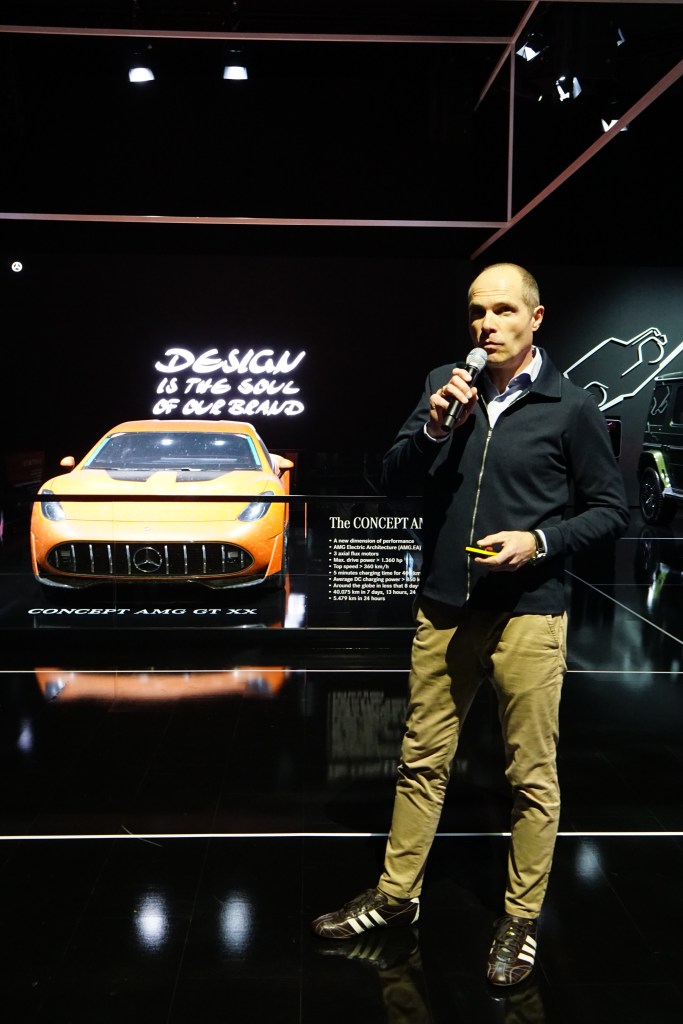
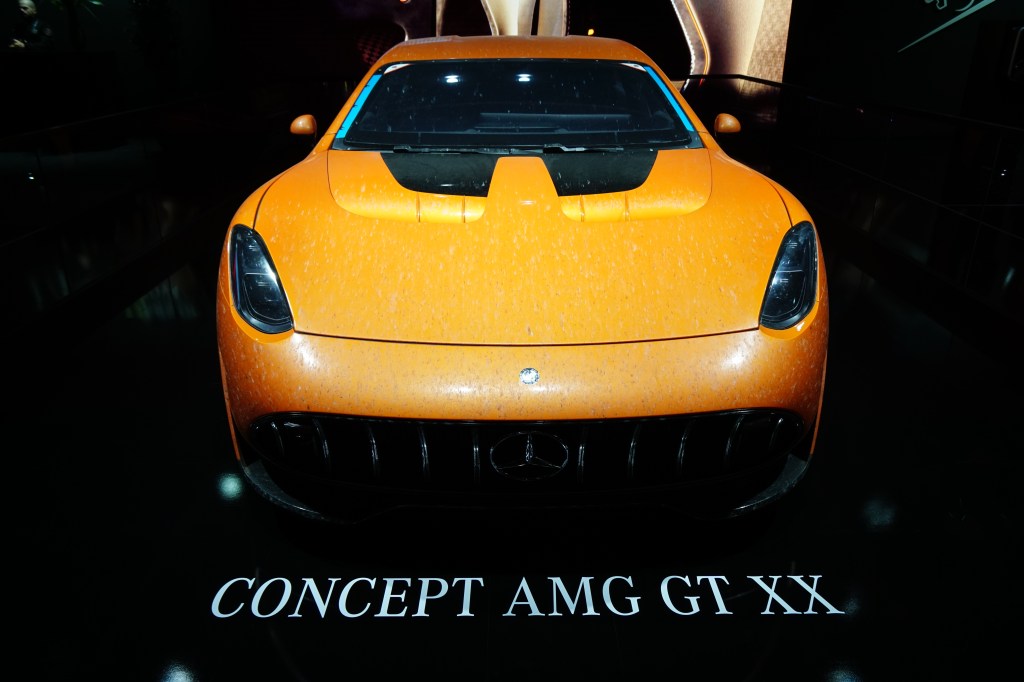
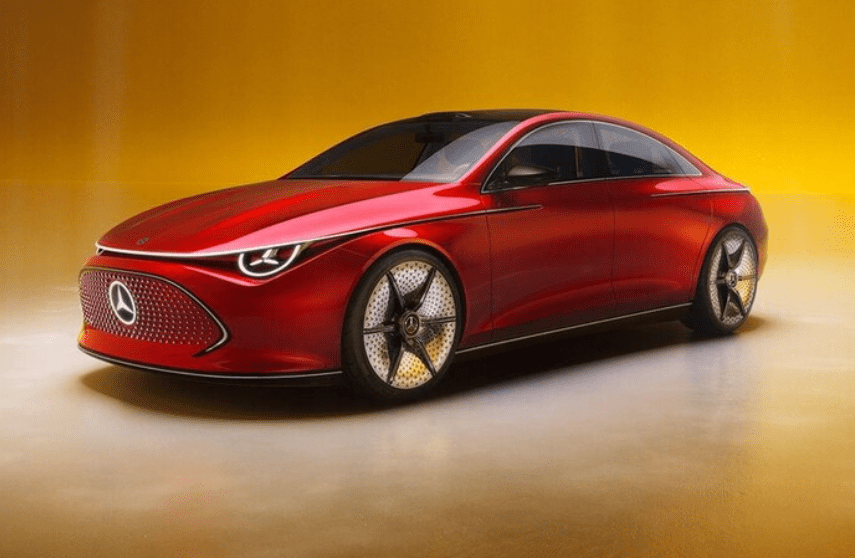
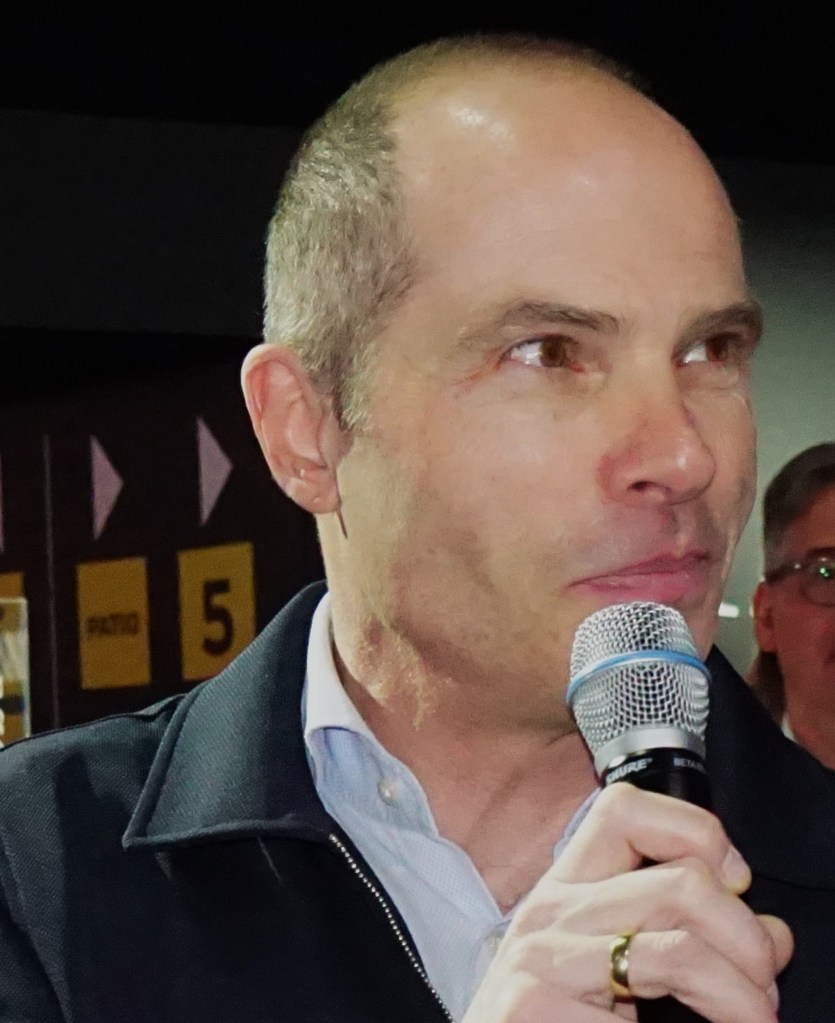
The latest Brussels Motor Show proved to be a treasure trove for us car enthusiasts. At the impressive wonderful Mercedes stand on the show we met on the press day with Robert Lesnik, Director of Exterior Design. In front of the iconic and already legendary Concept AMG XX, he presented styling examples of what Mercedes believes stands for the brand.

He started off with this AMG XX, and commented that this car embodies a rare combination a very aggressive sporting front end, the side view with the timeless proportion of the long bonnet, a very round shaped rear end and an amazing interior. He also showed the legendary Autobahnkourier, and he also focused on the grille of the 300 SLR Uhlenhaut Renncoupé, being so iconic and a typical design hallmark over the years for the sport coupés and cabrios of the brand. He also commented further on the Concept AMG that this car is the harbinger of what is to come for the series version of this AMG Electric sports coupé.

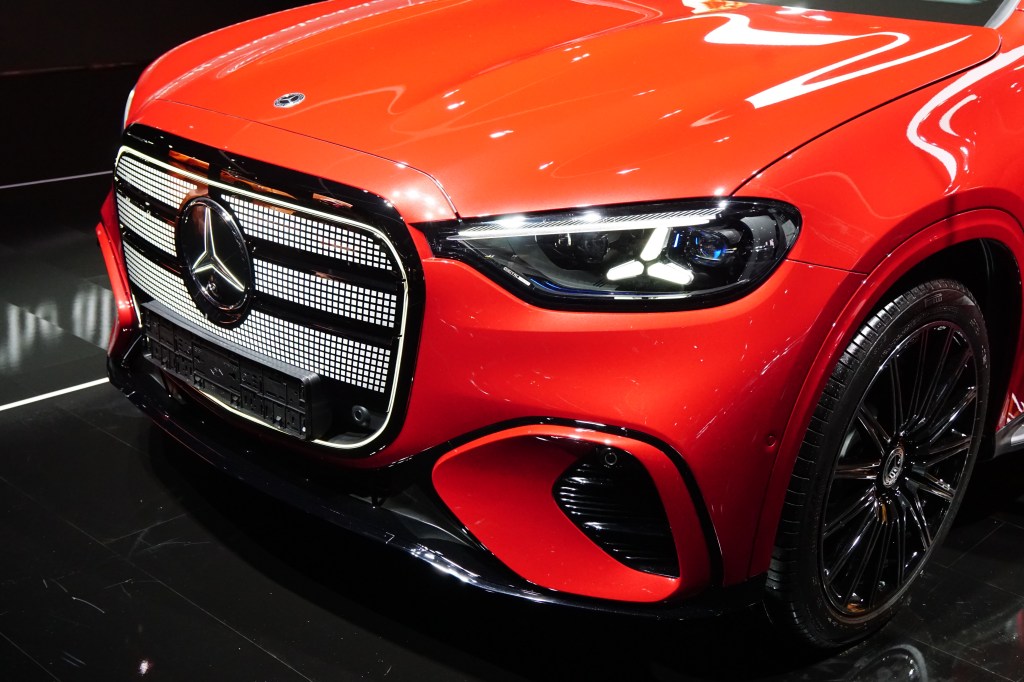
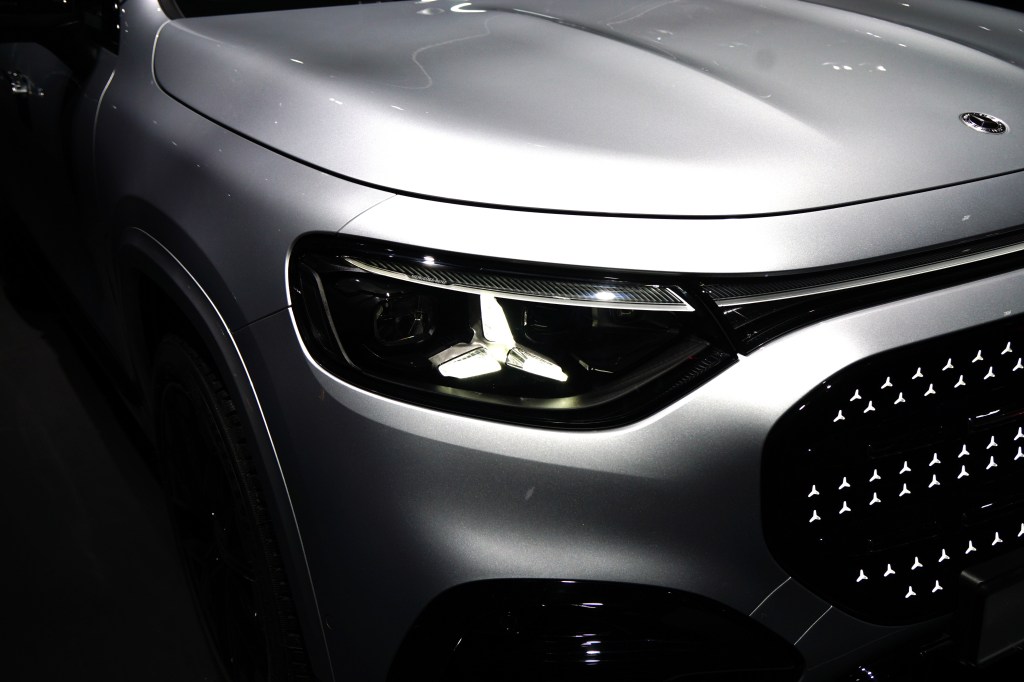
Robert Lesnik commented further: “For the new generation we were inspired by our past cars and design heritage, which doesn’t mean that we are doing retro design. You can see it on the radiator grille of the new GLC Electric SUV, with just three horizontal bars illuminated, it is a modern interpretation of a classic design icon.”

Beauty and attraction…

“There are two elements, beauty and attraction, which are the goals when we design a Mercedes”, Robert continued. Something that attracts the customer and what he perceives as beautiful.”

“Obviously, this goes for both the exterior AND the interior. There must be a certain power. I would say the sweet spot for every Mercedes is the three-quarter rear end perspective, where you really see the shoulder, and you see also a very iconic graphic with two roundish rear lights, with three lights for the AMG versions.”

We asked also about the interior, although he is responsible for exterior design, but nevertheless…

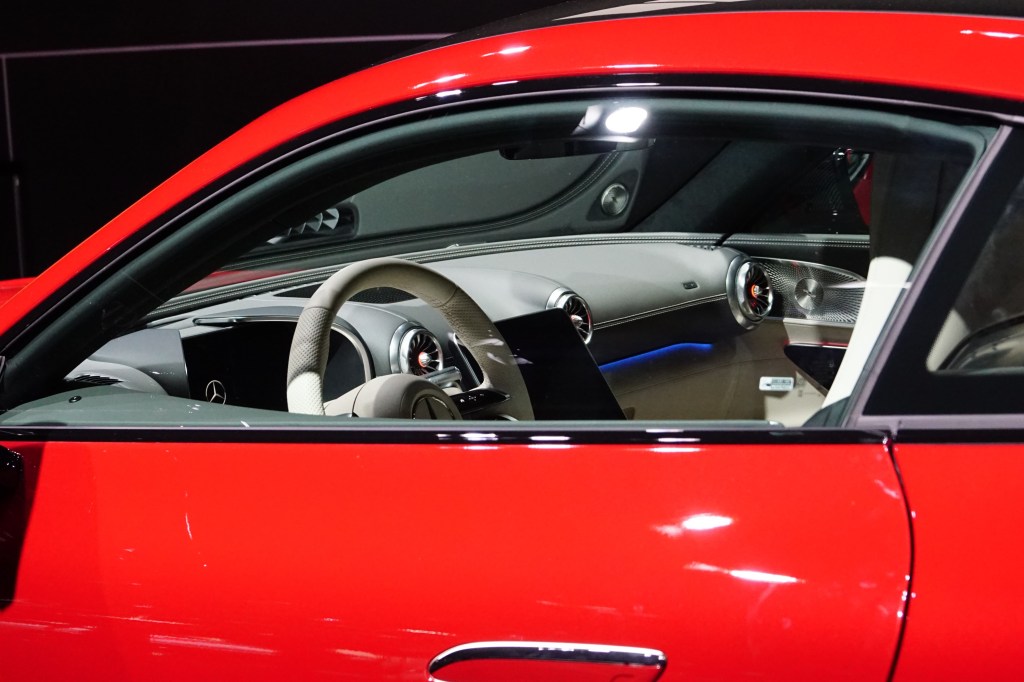
“For the interior,” he continued, “there is always a combination of the digital and the analog. For the first time, we have a hyperscreen, made of three screens being seamlessly positioned together. Also when the instruments and screen is shut off, it is not uniformly black, the air vent openings are still illuminated, the touch fields and items on the screen are also still visible, the inside door handles have a metallic coating, silver shadow galvanized so to say, these elements were there earlier, and will stay also in the future. I always say, Mercedes has always a chromium strip more.” We could only agree…

Focusing further on the front of the car, Robert stressed that it is still somewhat higher, which results in a spacious frunk. We will also strive to have clean lines.

We asked Robert also when looking back at the elegantly styled cars for the hand of Paul Bracque, the cars were lean, low, with excellent all round visibility. Do we see these styling elements back in the Mercedes cars of today and the future?

“Indeed, cars were (much)smaller, but now cars are electric, and they need more volume because of the batteries. Cars therefore need to be higher and this also calls for bigger wheels. This means also that cars are wider and have longer wheelbases. So cars are bigger and later hopefully will get smaller again. But cars as elegant as the Pagode will never appear again because of the safety regulations… But for the next five years, our horizon is set, we have a good idea what our design strategy will be.”

We thanked Robert for the interview and show you here some photos.

In a further episode we will have a further interview with Oliver Löcher, Vice President Vehicle Engineering and Overall Vehicle Functions Mercedes-Benz Cars.

Hans Knol ten Bensel
Xpeng, a high-tech EV car company that makes a sales hit in Belgium…

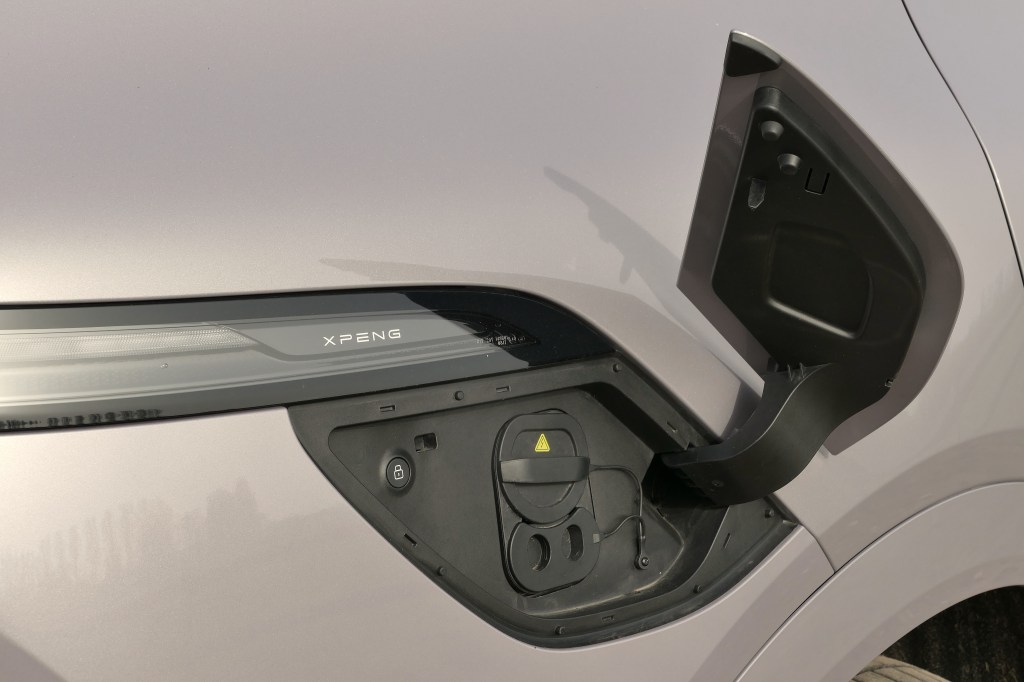
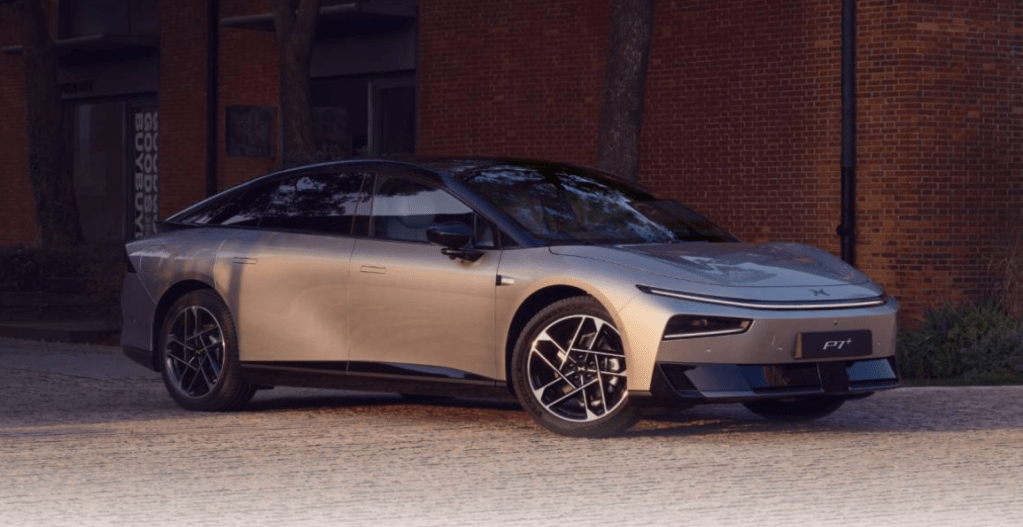
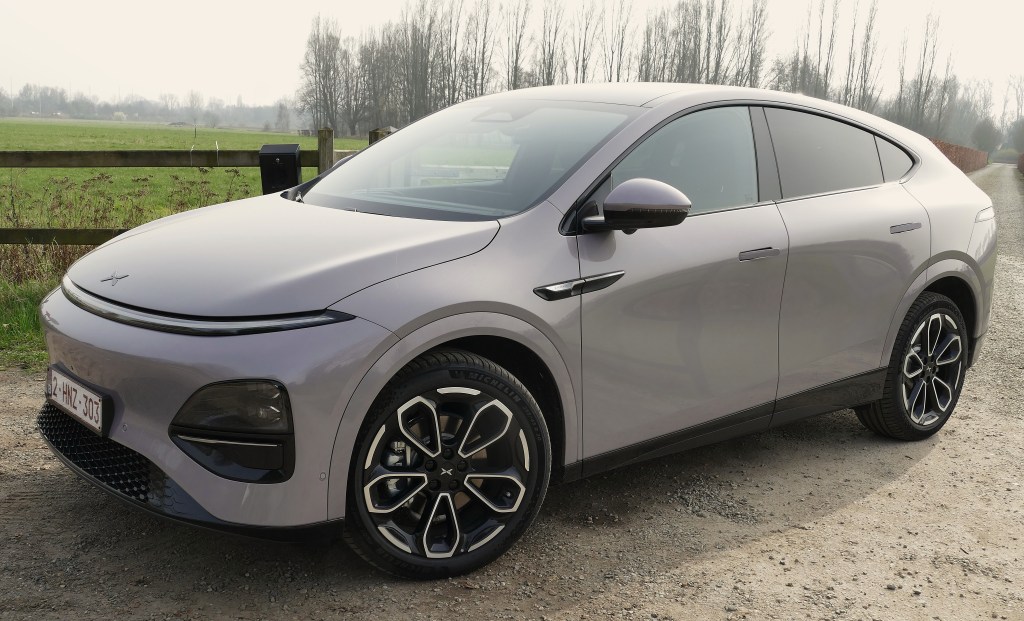
Xpeng introduced on the Brussels Motor Show their P7+, an “intelligent fastback” brimming with advanced features…

AS everybody knows, Chinese manufacturers are entering our automotive markets, and indeed we have already applauded the very convincing Leapmotor C10, just read the test report in our columns.

In the coming weeks we will cover the Chinese brands which were present at the Brussels Motor Show, and we start this series here with Xpeng. An interesting story follows…

Hans Knol ten Bensel
Xpeng, a fascinating company history…

The full name if Xpeng is actually Guangzhou Xiaopeng Motors Technology Co., Ltd.  XPeng was co-founded in August 2014 by Xia Heng and He Tao, former senior executives at GAC Group with expertise in automotive technology.

Let’s delve a bit more into this GAC Group. This is the Guangzhou Automobile Group Co., Ltd. As of 2021, it was the 5th largest automobile manufacturer in China.

Maybe it is also good to know that on 17 November 2023, GAC Group announced the independent development of key technologies, including all-solid-state batteries, cobalt-free batteries, low-cobalt batteries, and sodium-ion batteries. The company aims to achieve the integration of all-solid-state batteries into automobiles by 2026. Say no more…

But back to Xpeng. The Initial backers were amongst others the founder of UCWeb and former Alibaba executive He Xiaopeng, namesake and current Chairman of XPeng, and Lei Jun, the founder of Xiaomi.

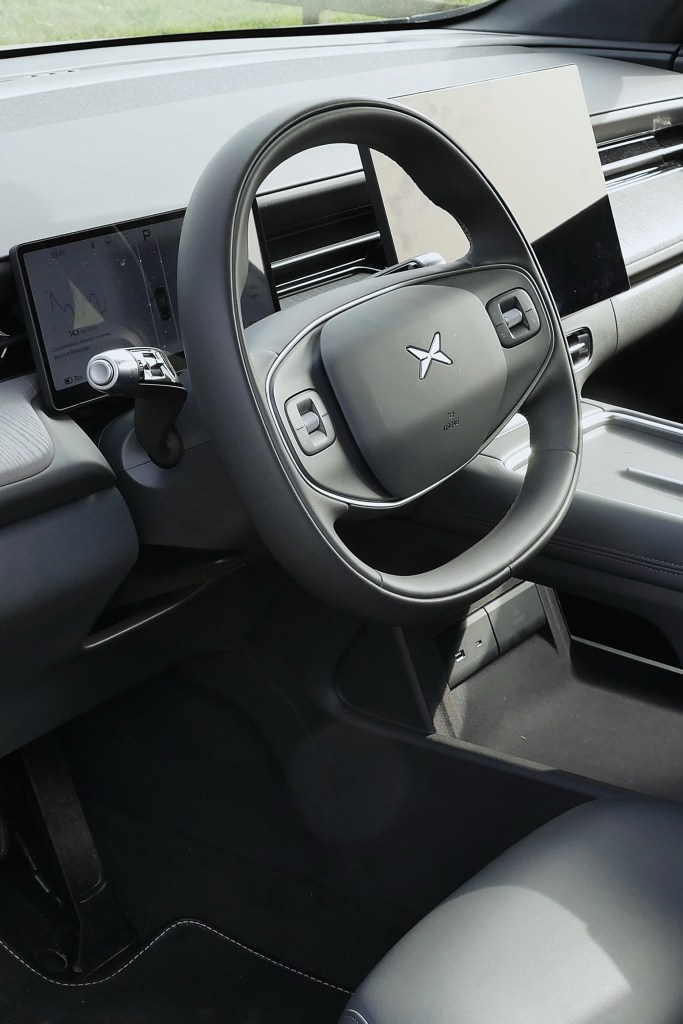
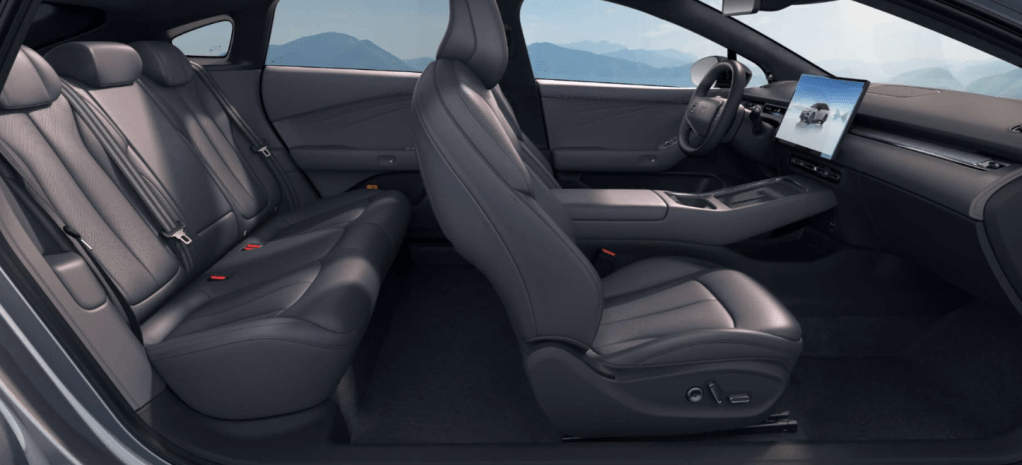
The spacious interior of the P7+

Collaboration with Volkswagen…

On 26 July 2023, the Volkswagen Group announced its investment of $700 million in XPeng for purchasing 4.99% stake of the company. The VW Group will collaborate with XPeng to develop two VW brand electric models for the mid-size segment in the Chinese market in 2026.

In February 2024, XPeng and VW signed a technology cooperation and joint development agreement on platform and software. 

In August 2025, XPeng and Volkswagen Group signed an Agreement on Expanding E/E Architecture Technical Collaboration (“Expanded Technical Collaboration”). The signing of this agreement marks that the E/E Architecture will be not only integrated into Volkswagen’s electric vehicle platforms, but also deployed across its ICE and PHEV platforms in China, thereby significantly expanding the strategic technical collaboration to broader markets.

In November 2025, Xpeng announced a new driver-assist system designed for navigating narrow roads, which they say will be rolled out by the first quarter of 2026. The system is claimed to be able to navigate cars smoothly through the narrow streets and will be opened to other car makers, with Volkswagen being its first client. Brave new world we would say…

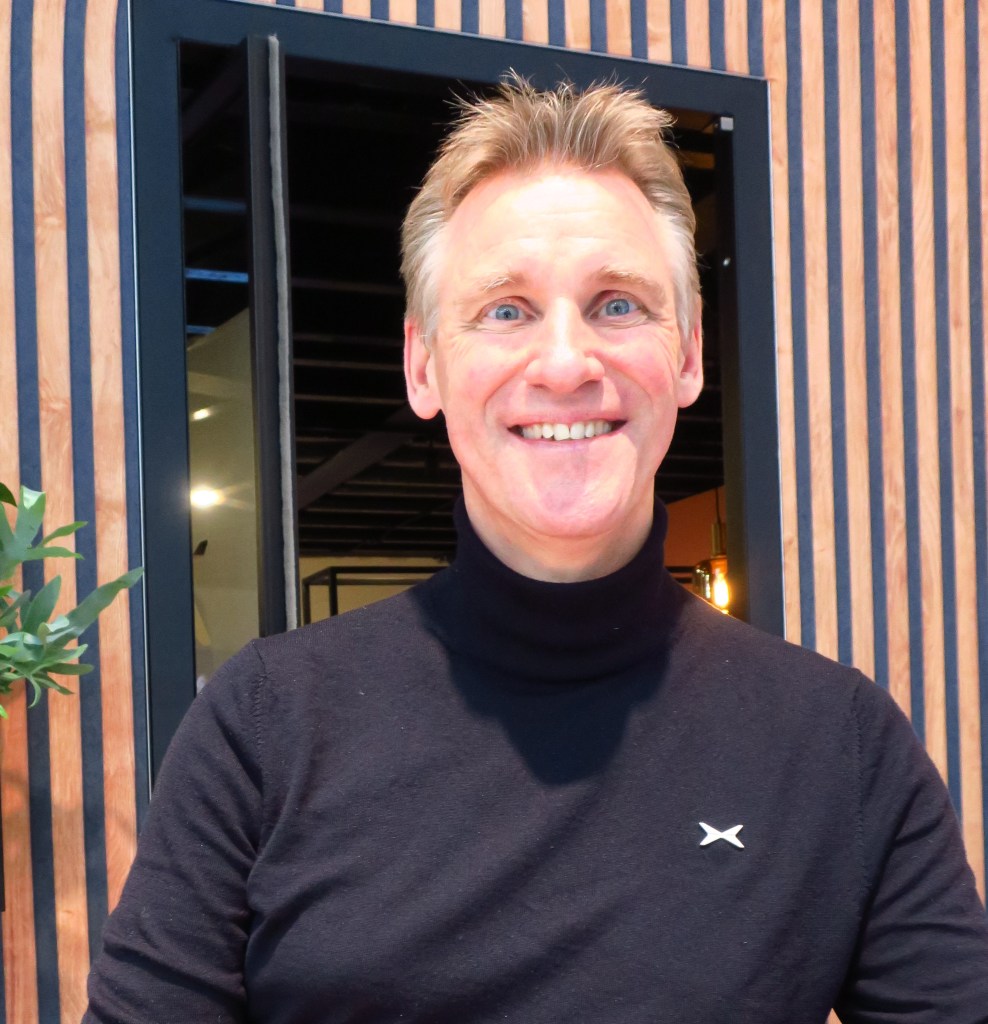
We spoke with Bart Hamminga, Country Managing Director of Xpeng Benelux.

Initial sales success in Belgium…

On their stand at the Brussels Motor Show, we had an interview with Bart Hamminga, Xpeng Country Managing Director of Benelux.

“Last year we announced our debut at the Brussels Motor Show, and we actually had a dream start. 12 months later, we could sign our 1000th sales contract.” Bart told us proudly.

“It shows that the Belgian car market is open for innovation and new technology” he continued. “The success is also due to the quality of our cars, which impressed the Belgian buyers. I think a very important contribution to the success was, last but not least, the cooperation with Hedin Automotive. It is, of course, essential to have a very good and solid partner. The combination of these three factors led to the very positive development we see on the Belgian market.”

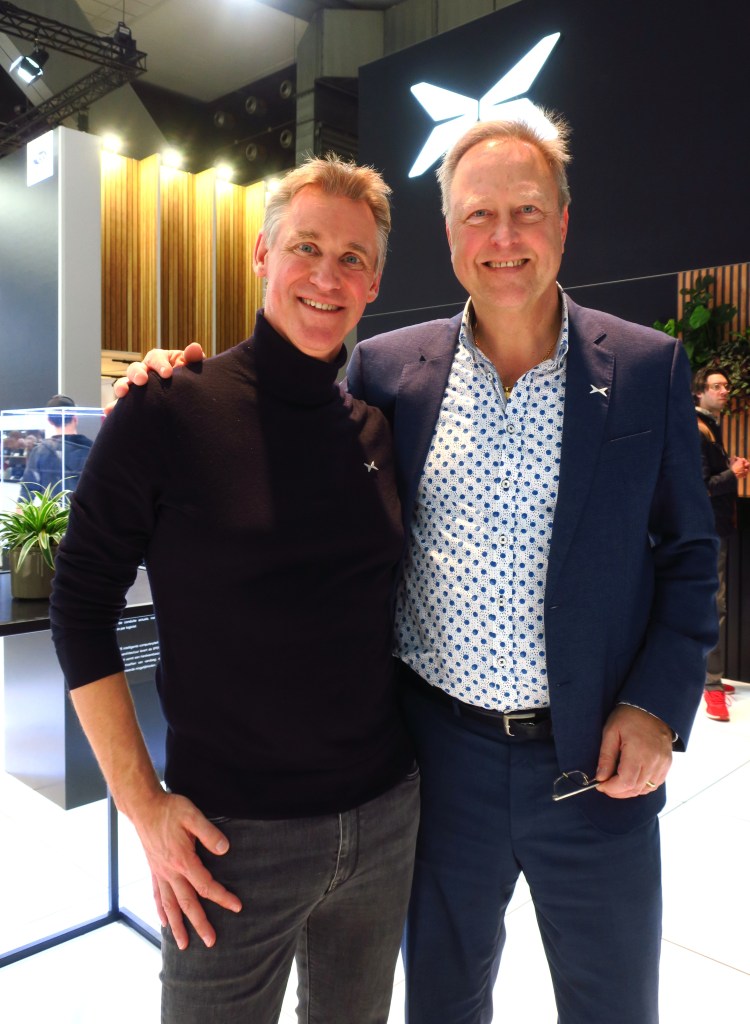
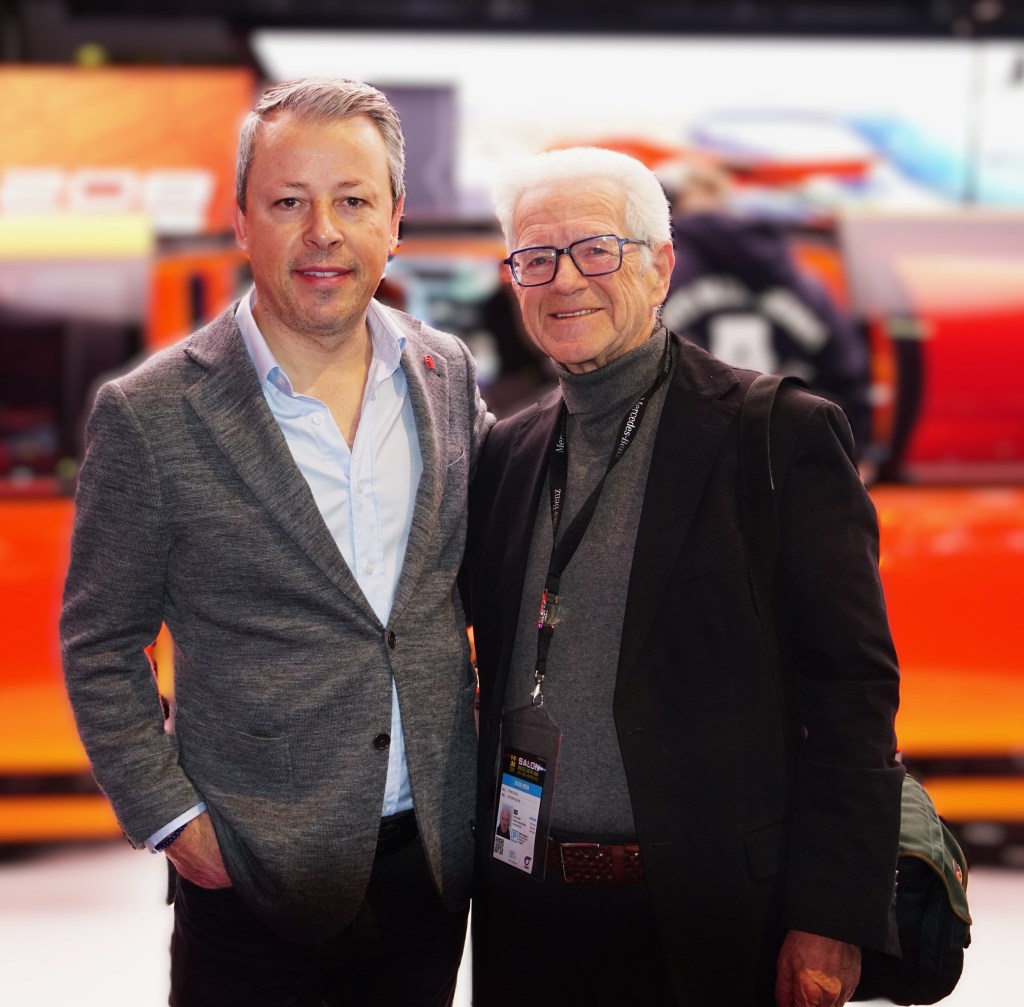
Smiling faces: Bart Hamminga, Country MD of Benelux to the left, and XPeng Public Relations Manager René Aerts jr.

An impressive range

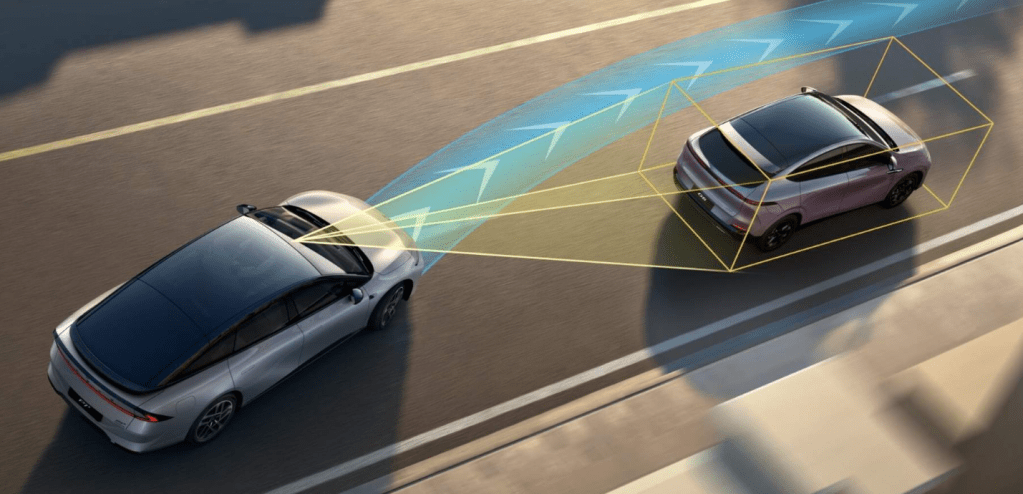
The P7+ has massive computing power, supporting the XPILOT ASSIST Advanced Driver Assistance System that uses a variety of cameras, radars, and sensors to offer support in three main areas: driving, parking, and safety.

At the Brussels Motor Show, Xpeng made the Eurpean premiere of the P7+, a model that was already on the Chinese market in 2024.

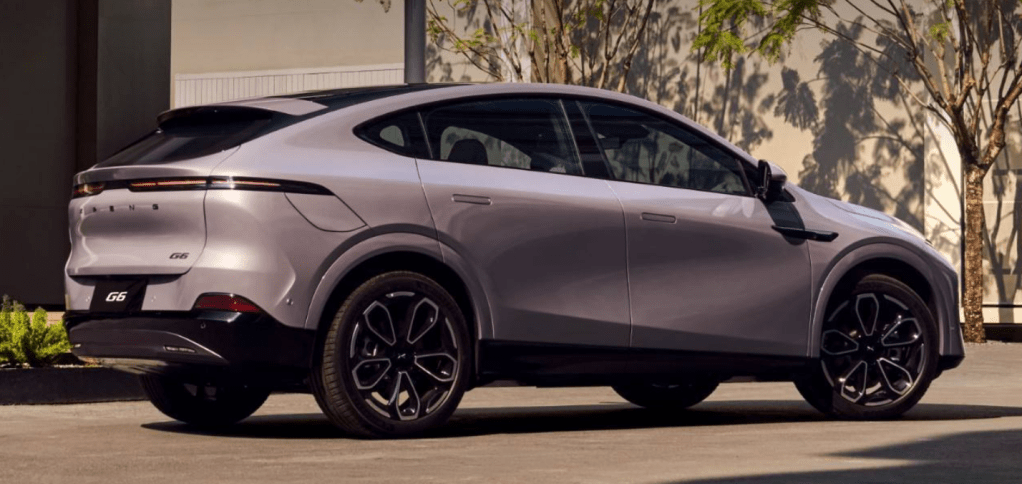
The car now got a  facelift, and is in “pure” EV available in a RWD Long Range or an AWD Performance version. The rear end is completely restyled, and Xpeng defines the car as an “intelligent fastback”.  

The Long Range will accelerate from 0 to 100 km/h in 6,2 seconds, the Performance version does this in merely 4,3 seconds. There is a lot of luggage space in this 3 m long wheelbase elegant 5 seater, with a volume of 573 l up to 1931 l with the rear seats reclined.

Needless to say that we look forward to put this high-tech and elegant P7+ EV through a test soon…

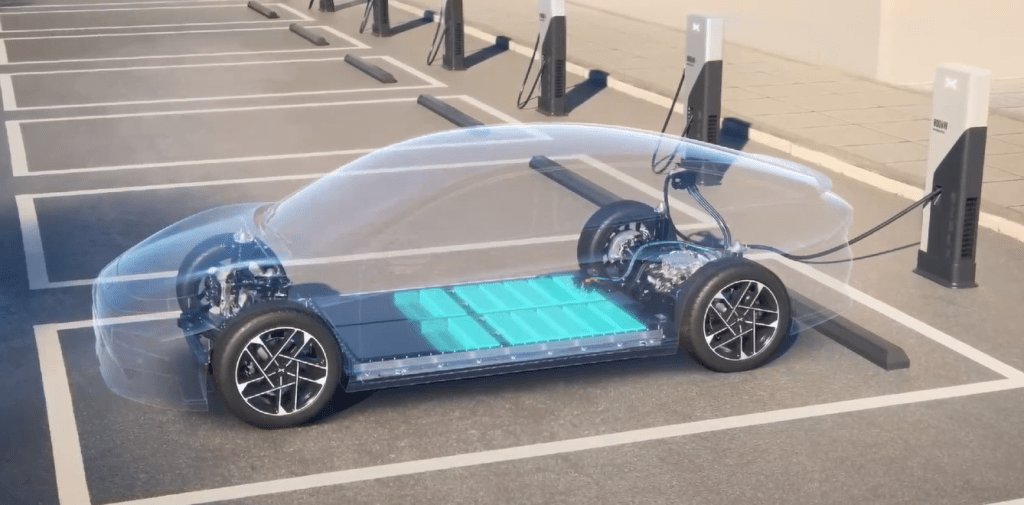
The 7+ has a 800-volt Si-C platform, which means that you can charge it from 10 % to 80 % in merely 12 minutes.

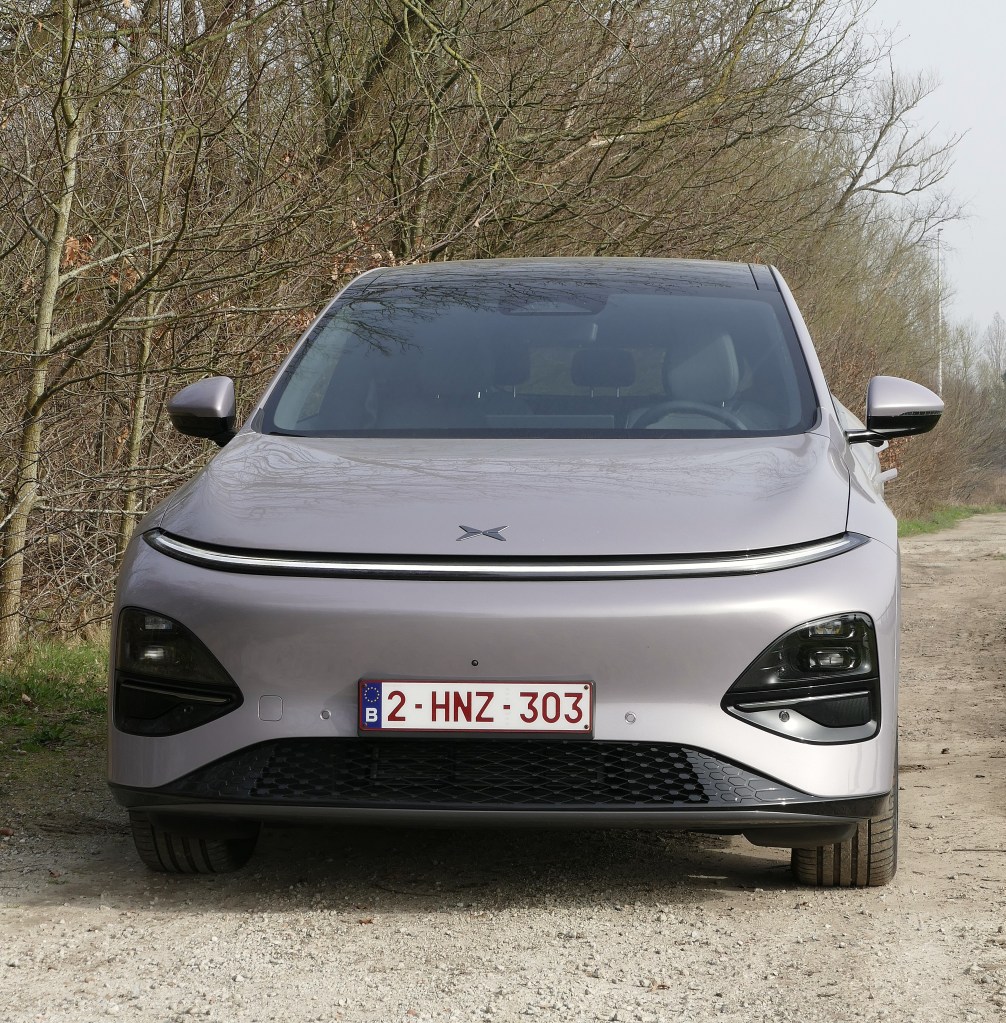
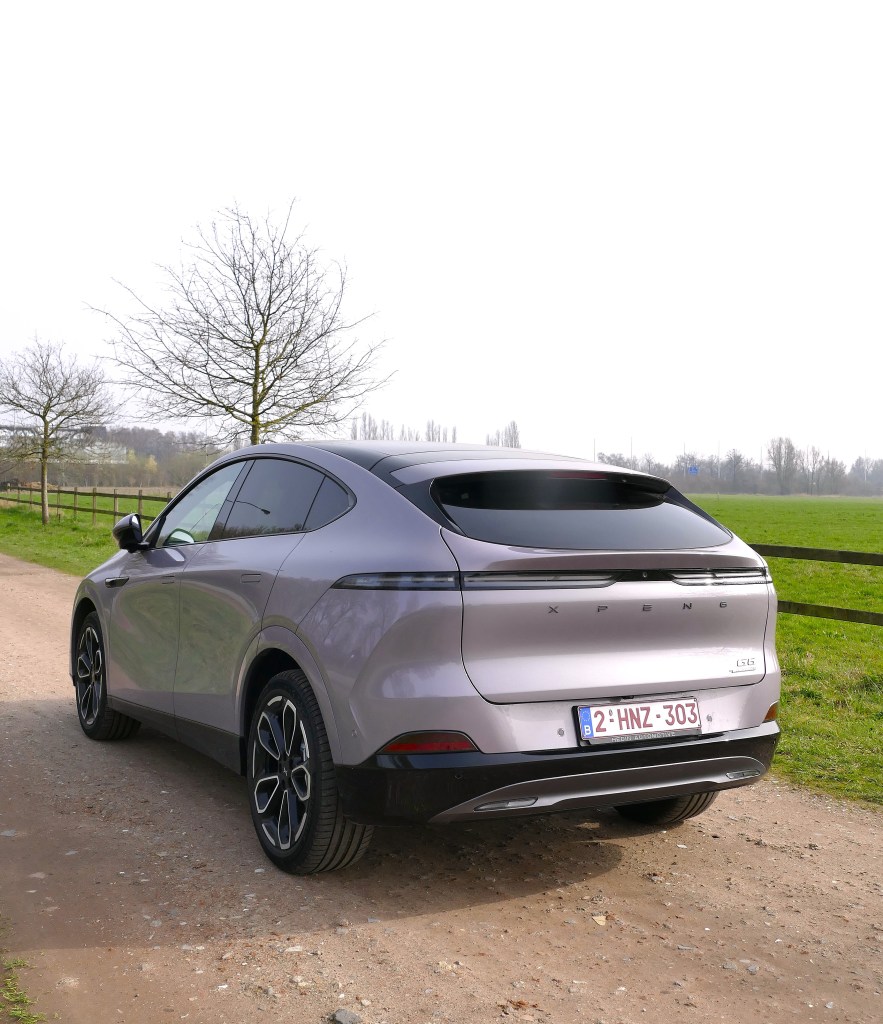
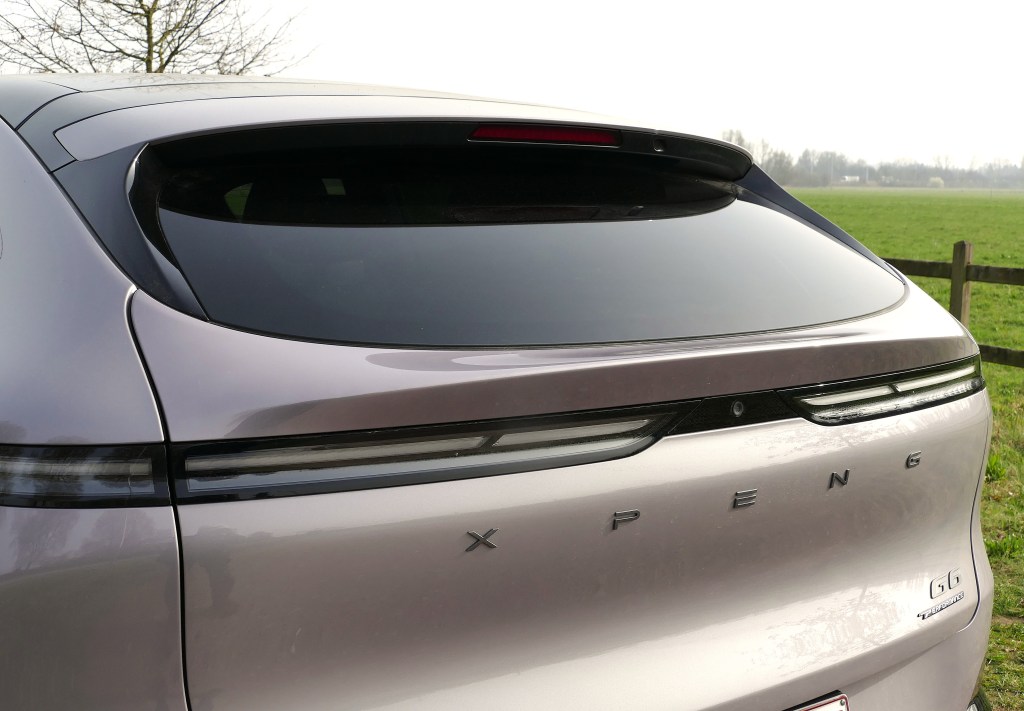
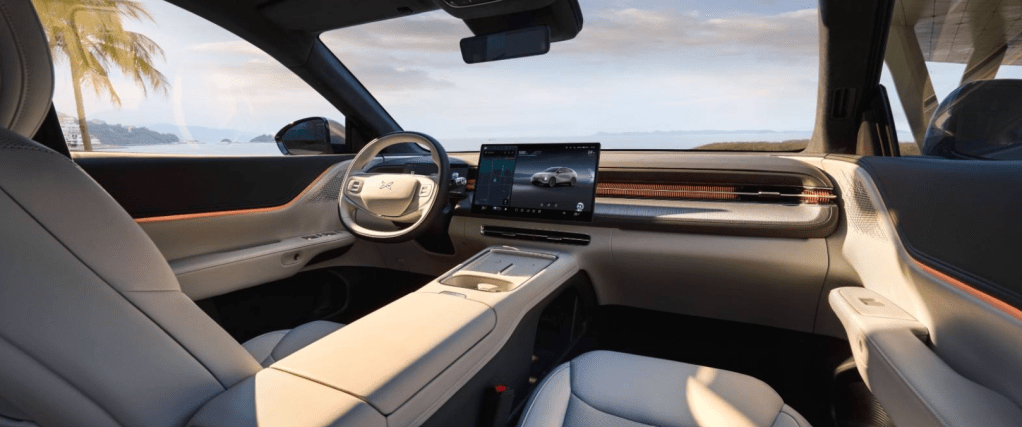
There is also the G6, which has a WLTP range of up to 525 km and also has the XPILOT driver assist system. It will also fast charge up to 451 kW and has also the 800 Volt SiC platform, which means that also with the G6 you can charge it from 10 % to 80 % in merely 12 minutes. It has a slightly shorter wheelbase of 289 cm compared with the P7+, but luggage space is still quite good with 571 l/1374 l.

The RWD standard range goes 470 km on a full charge according to WLTP standards. It will accelerate from 0 to 100 km in 6,7 seconds. The RWD Long Range has similar performance, but a slightly longer range of 525 km.

The dashboard and interior of the G6…

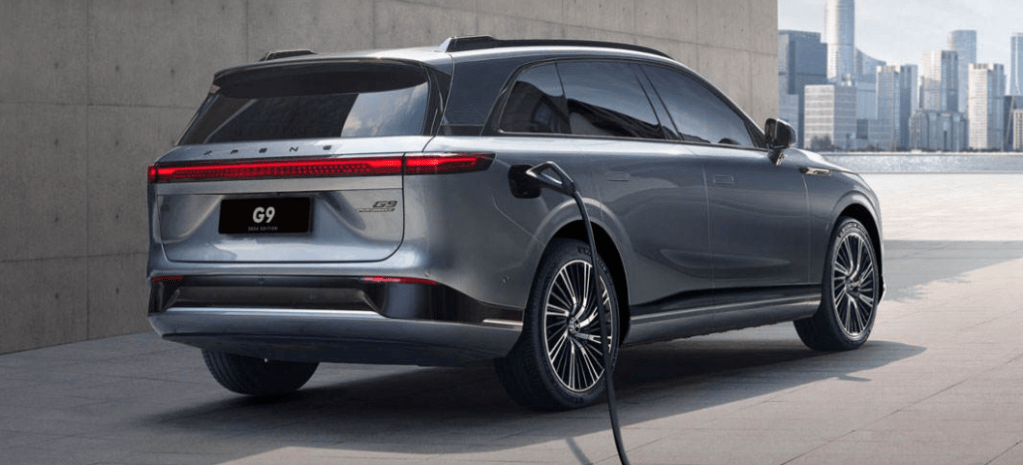
Last but not least there is of course also a full size SUV in the range, the G9. Its wheelbase is 299,8 cm or let’s say 3 meters. Luggage space is 660/1576 liters. Its kerb weight is an impressive 2,4 tons. An induction motor is at the front, a permanent magnet motor at the rear for the AWD version. Combined output is here not less than 423 kW…
 

The car is available in 3 versions, RWD standard and long range, then last but not least the AWD Performance. This flagship SUV in the standard range gets you 502 km far, the long range is good for 585 km. Almost supercar performance is warranted in the Performance version: in will sprint from 0 to 100 km/h in 4,2 seconds.

Also this car has the Ai speech command feature, and of course the same XPILOT driver assist system. As with all the Xpeng cars, the high-tech company will see to it that you get automatic wireless updates of its built in software.

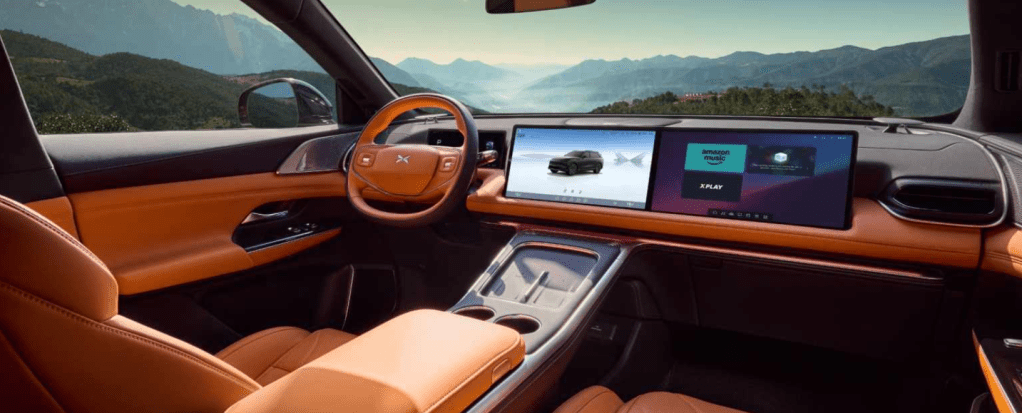
The dashboard and interior of the G9…

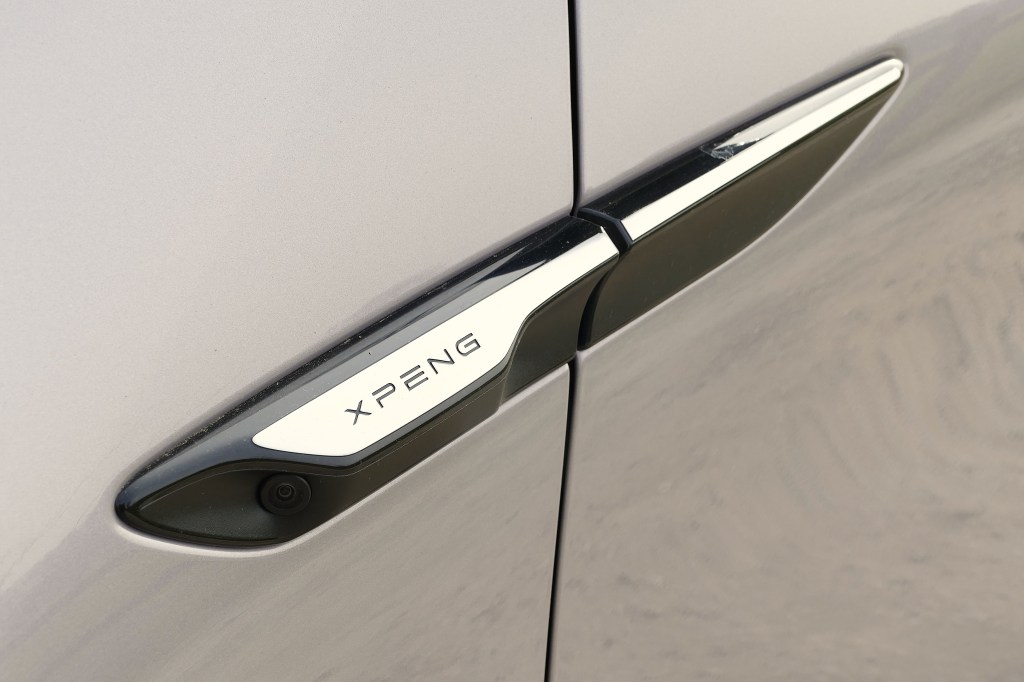
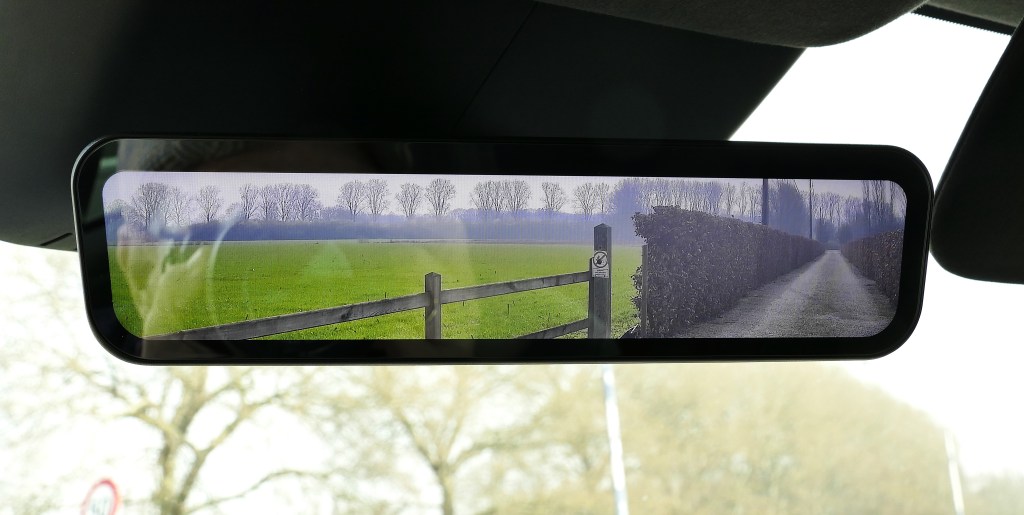
he G9 has the so called “Full-Stack Logic” architecture, functioning with a binocular front camera and a rear camera. Much more on these clever cars when we drive them…

Hans Knol ten Bensel
Brussels Motor Show: Some thoughts about the styling future at Citroën, our talk with head of design Pierre Leclercq…

Conceiving the automotive future is always a very challenging task. Some brands have also  a future-oriented attitude more than others in their DNA, and one of them is certainly Citroën.

75 years ago, they brought us the 2 CV, a car which embodied nothing less than a four-wheeled French revolution, embodying Liberty, Equality and Fraternity. Indeed, this adagio of the French revolutionists fitted the post-war French “citoyens” admirably, as the 2CV brought them just that. Freedom for all, with low-cost mobility, practicality, and go-anywhere capacity.

This revolutionary dream of the brand with the double chevron has never died. And Pierre Leclercq, the Belgian born head of design, proved its love for practicality, out of the box progressive “back to authentic basics of automotive mobility” thinking  already with its wonderful and stunning OLI.   

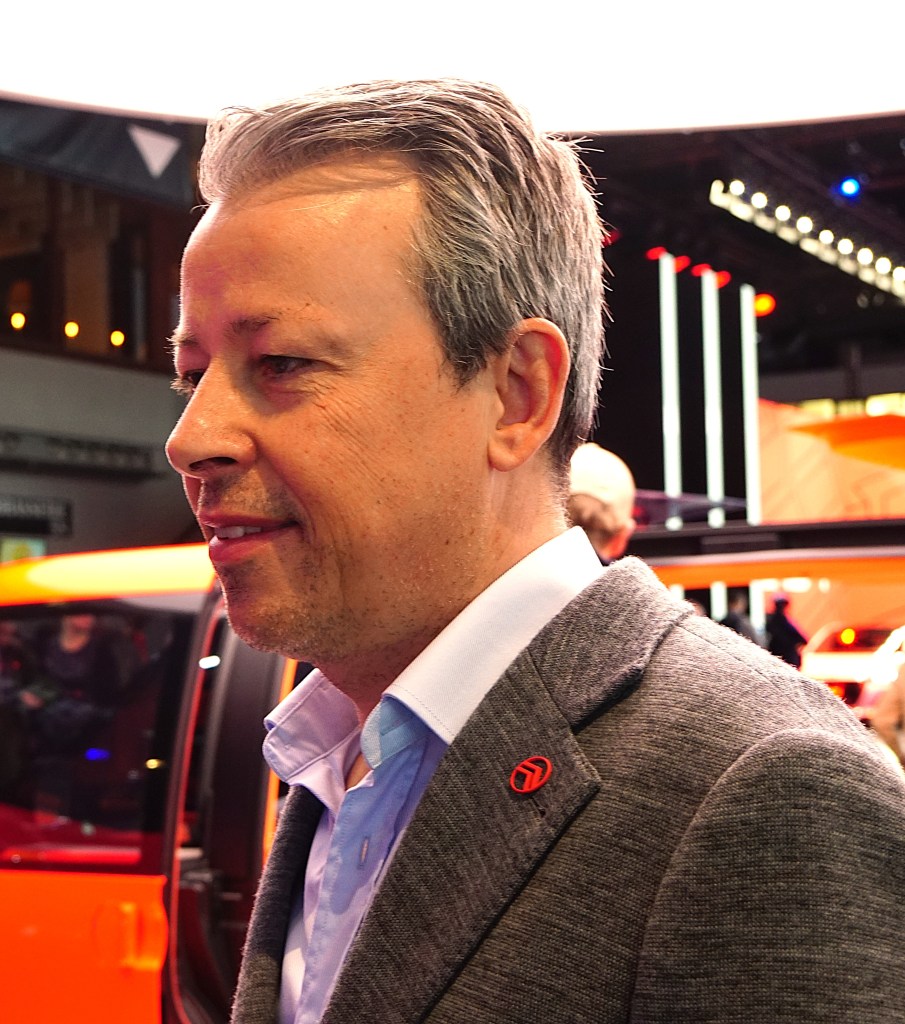
Your servant was at the presentation of this OLI in Paris, and now stood eye to eye with the equally intriguing ELO. On both occasions, he met the designer, Pierre Leclerq. We talked to him again in Brussels…

Hans Knol ten Bensel

A creative career…

Pierre Leclercq started in 1998 at BMW as an intern, he joined the Italian coachbuilder Zagato in 1999, which he left after three months to join Ford Ghia. Here he designed the interior of the Ford Street Ka concept. In 2000 he returned to BMW, where he worked for 13 years. There he notably designed the BMW X5 E70, BMW X6 E71 and the rear of the first Mini Countryman. He also worked on a successor to the BMW M1 based on the BMW i8, but the project was ultimately abandoned.

Pierre Leclercq headed the design studio of Great Wall Motors from 2013 to 2017. He then became design director at Kia, but stayed only one year with the South Korean manufacturer. Needless to say that he acquired a keen understanding of the design philosophy and DNA of both European and Far East manufacturers.

In November 2018, he took over the head of Citroën’s design office, succeeding Alexandre Malval, who had moved to Mercedes-Benz. The first project he led entirely at Citroën was the C4 X, a 4-door version of the third-generation C4.

Three pillars to keep in mind when building this concept car…

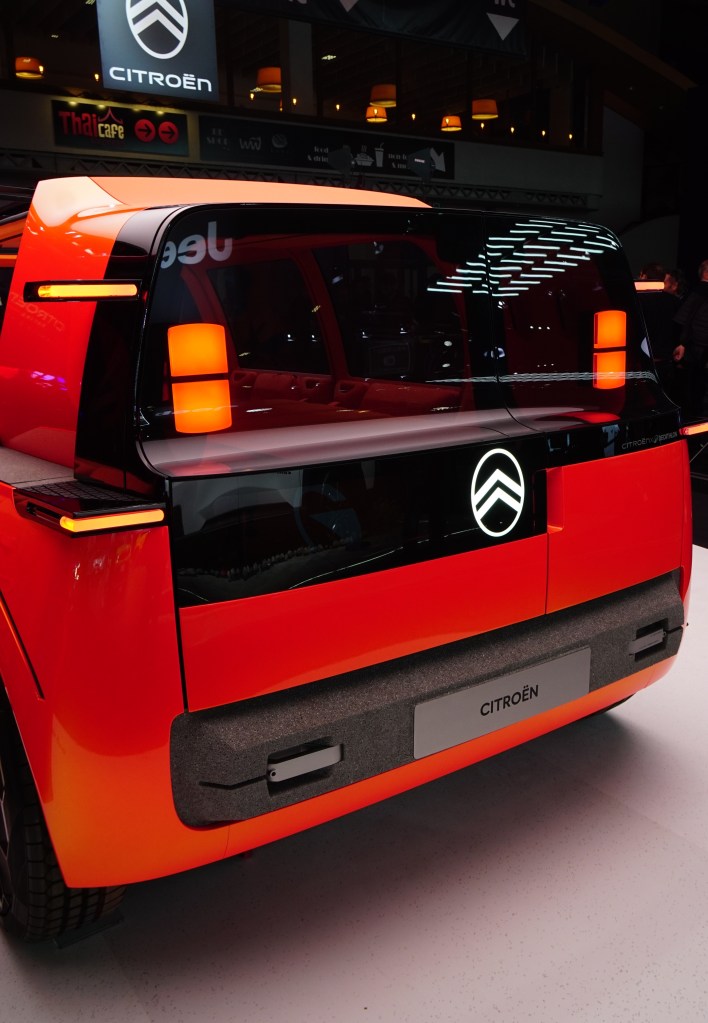
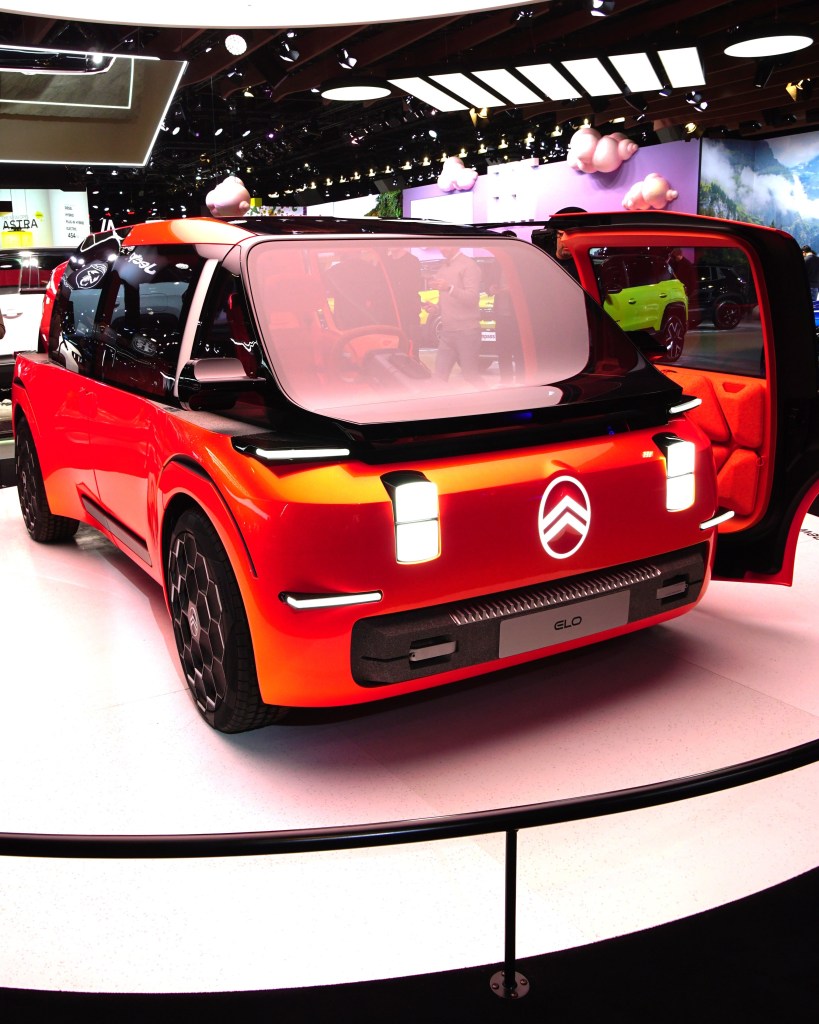
On the Brussels show, at the presentation of the ELO and the subsequent talk we had with him, Pierre stressed that this concept car is first and foremost a laboratory of ideas. He also wants to demonstrate the three pillars of the design philosophy of this car;  he told us: “The ELO must become your third place (after home and office – editor’s note) to live in which you must be able to play, work and rest ”   

Work…

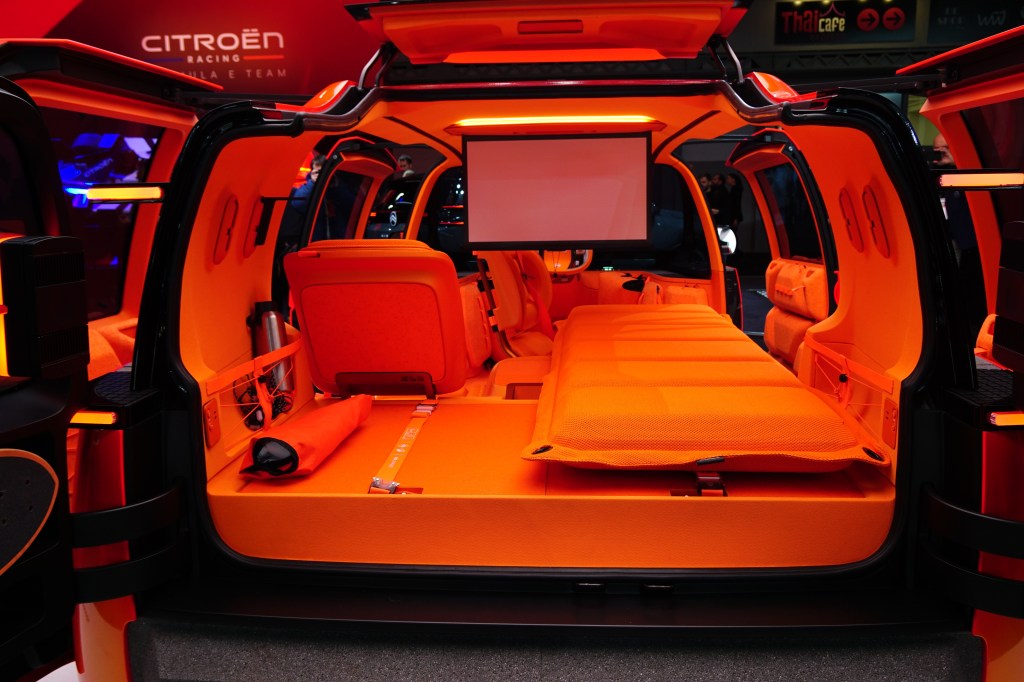
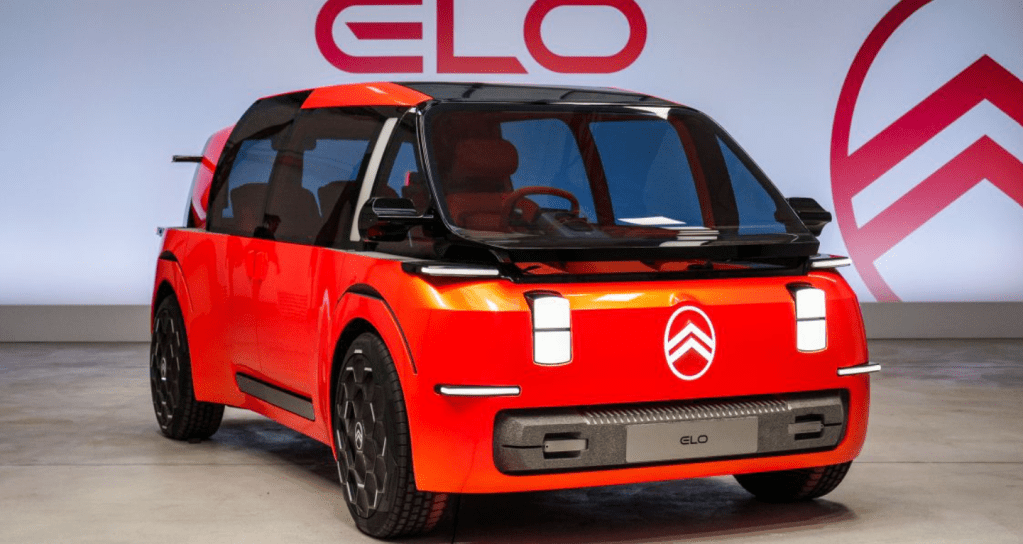
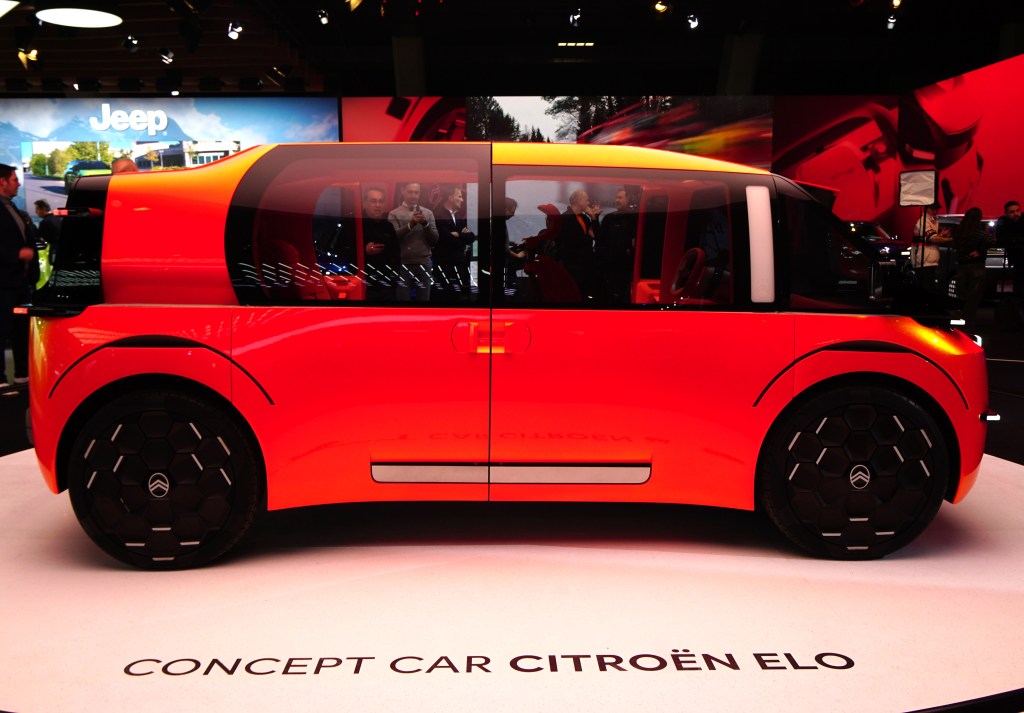
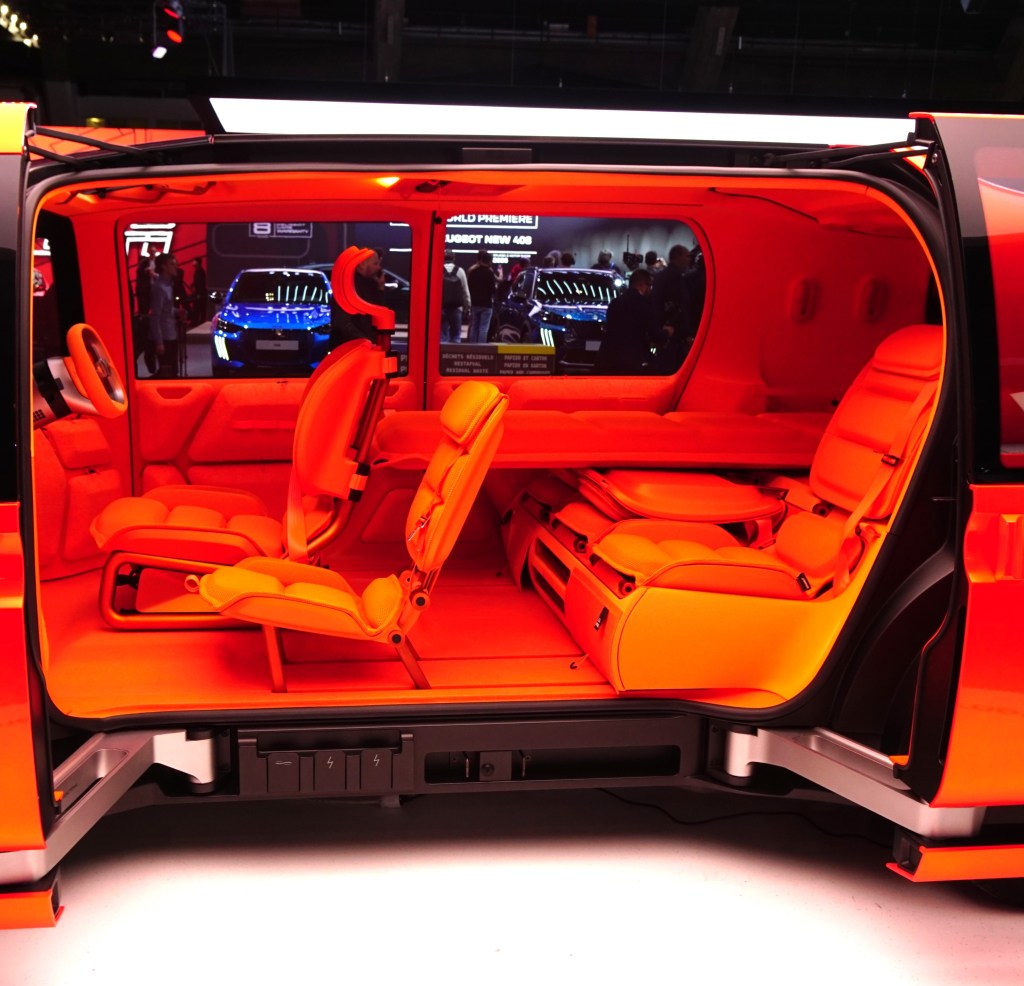
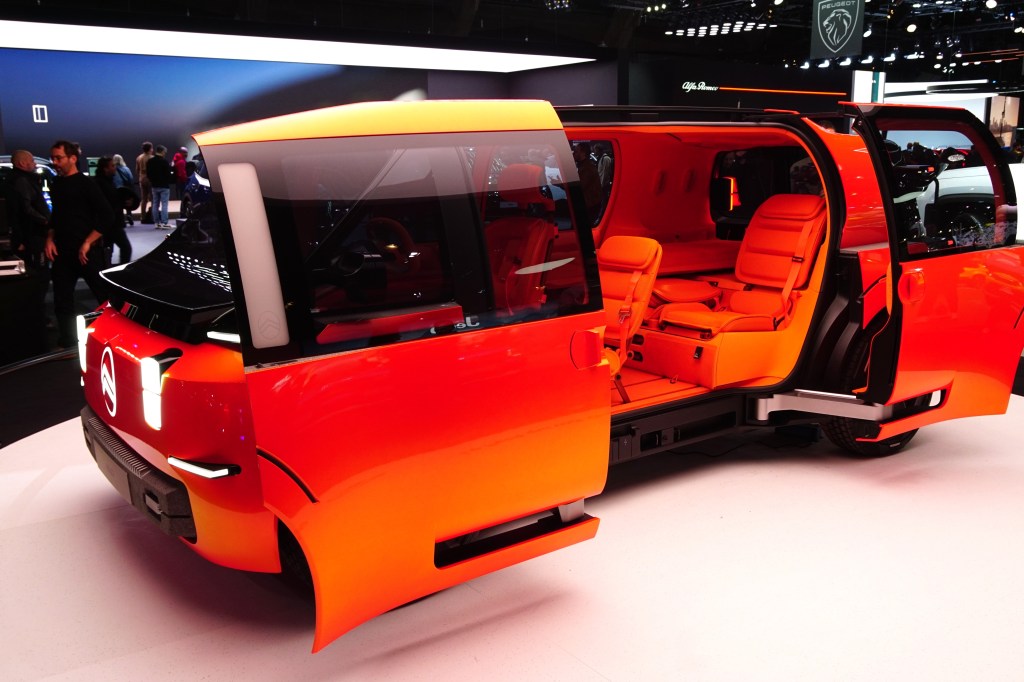
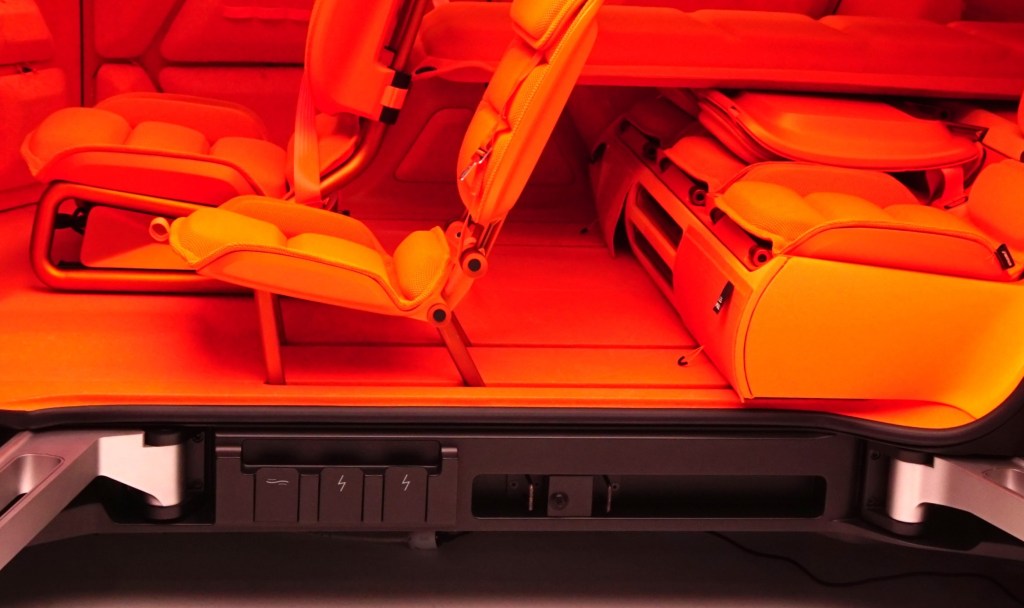
Pierre presented the ELO to us, showing the highlights of its design. “We start with a six seater”, with the driver in the center and two seats on both sides. The second row is made of three other seats.”

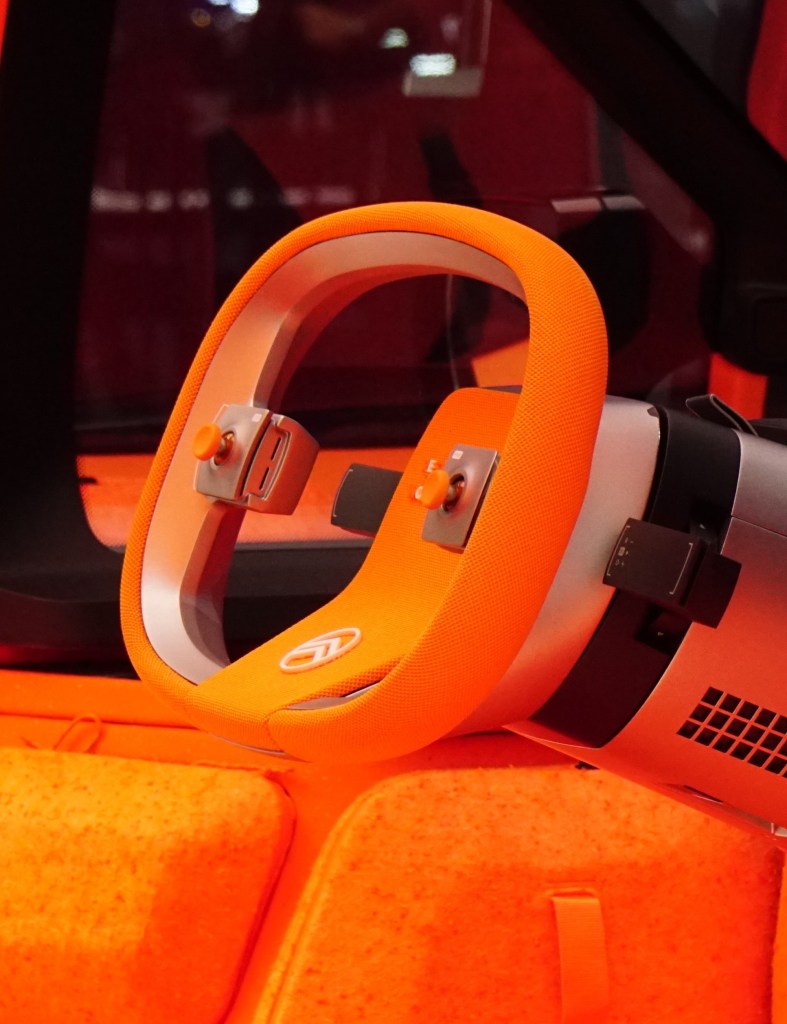
“Fold two seats under the rear seats and then you can rotate the driver’s seat 360 degrees, either for a good entry or when you want to work. Ideal for people who want to work – our first pillar –  in another place than the office.”

Play…

“I told you the second pillar is play”, he continues. “The cooperation with Decathlon was so inspiring and led to new ideas and applications. We developed an app together with them. You can plan your trip, plan your weekend, so that you don’t forget anything that you need, you have electricity and (compressed) air for your bikes and toys…”

Compressed air and electricity for your E-bikes are provided…

Rest…

“The third pillar is rest. You fold the seats in the back row, and you have a flat floor. You then use two matresses, again an innovation from Decathlon. You inflate them to have perfect rigidity. We also have a larger screen that can unfold and we have a projector that is on the side of the car, and the little roof opens up at the back of the car to let you look at the stars in the sky.”

We asked him also about the cooperation with Decathlon on this project…

PD: “We liked Decathlon because we carry the same values.” was his answer. “Decathlon is innovating because it makes well designed and well thought products and is not reverting to expensive technologies. We worked together from the beginning to the end on this project, and it was a big learning experience for us.”

What are the futher design hallmarks of the ELO, we asked.

PD: “The car is compact, but has a lot of glass, which is very important both for the driver and people in the back, and more importantly, children.”

Can you tell us more about the materials used, we wanted to know.

PD: “Many materials are recyclable and we even recycled materials from the OLI for this project. Also the interior panels for example. They are also cheap and easy to replace when scratched due to intensive use…”

You took advantage of the EV architecture, we remarked…

PD: “Indeed, we could maintain very compact dimensions whilst offering much room. We could move driver forward, even putting him in the centre.”

We will see much of these solutions in forthcoming models?  

PD: “Yes, this concept car is a laboratory of ideas, there is not one idea which we will not try to put into production. Of course, this is the beauty of our craft, of being a designer, is to make and develop many projects, and to put them on the road, and last but not least to sell them, because these concept cars are not made for us, but for the cliënt.  

Needless to say it was a big pleasure for us to meet up again with Pierre Declercq, and see and admire his stunning concept car, the ELO.

In the next report on the Brussels Salon we will talk to Robert Lesnik, Director Exterior Design Mercedes-Benz and Oliver Löcher, Vice President Vehicle Engineering and Overall Vehicle Functions Mercedes-Benz Cars. Stay tuned!

Hans Knol ten Bensel
World premieres in Brussels…

The Brussels Motor Show is now in its 102nd edition and will be quite important, with an impressive array of world premieres to admire.

You can stand eye to eye with the  Citroën ELO concept car, the Ford Ranger (facelift),  Hyundai’s biggest EV so far, the Staria EV, KIA will show its new EV2 and powerful GT versions of the EV3 , EV4 and EV5, Mercedes-Benz will bring its new GLB, Mazda probably the European version of the EZ-30. Last but not least there is the Opel Astra and Peugeot E-408.

Indeed, Citroën has chosen Brussels to unveil the world premiere of ELO, a concept car designed as a veritable laboratory of ideas. ELO is firmly rooted in society and evolving lifestyles: responsible, functional, clever, multi-purpose, accessible and resolutely friendly. Compact (4.10 m) but incredibly spacious, ELO is “the little car that thinks big”. Its 100% electric architecture is optimally exploited to offer a modular space that can accommodate up to six people.

Kia will unveil the EV2, an all-electric B-segment SUV dedicated for Europe, on 09 January 2026, at the Brussels Motor Show. It is expected to have one E motor, borrowed from the Kia Inster. The 115 HP EV will be built in Žilina, in Slovakia.

Hyundai will launch new EVs in 2026, starting at the Brussels Motor Show with the world premiere of its biggest EV yet,” the automaker said in a statement. “The new model will showcase state-of-the-art electric technology, including an advanced 800-volt charging system.”

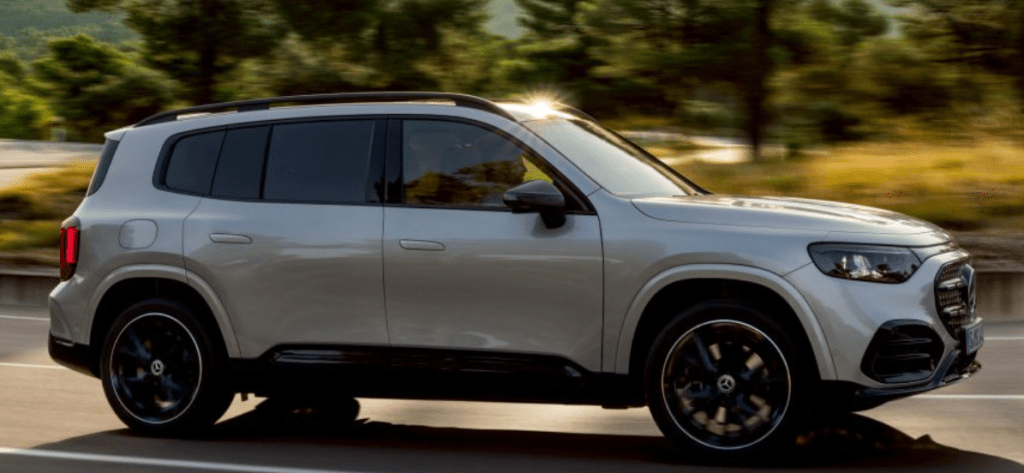
The all-new Mercedes GLB is built for everyday life. Available as a 5-or 7-seater, it adapts to all customers’ needs. It has more space, a new design, greater comfort, and even the ability to tow a full-size caravan.

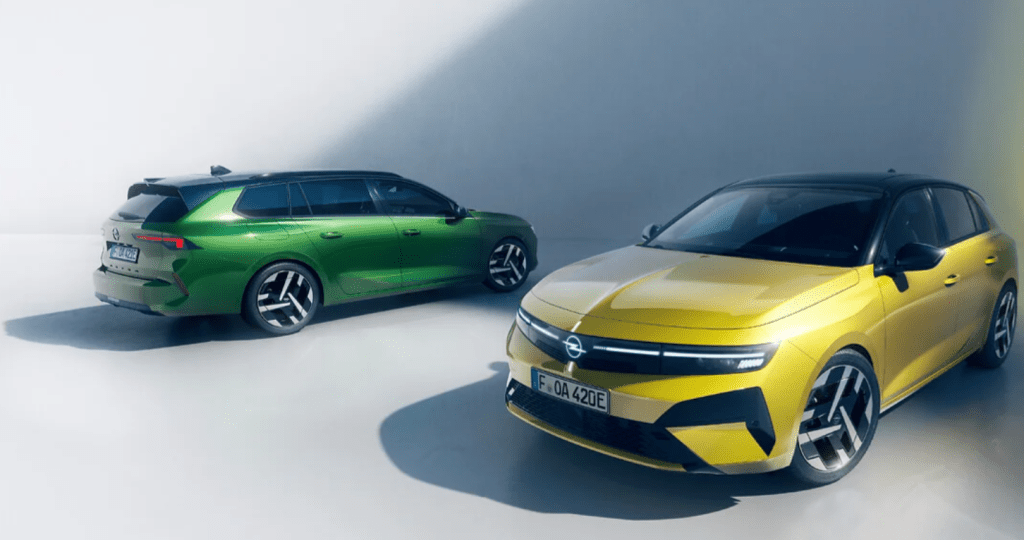
The new Opel Astra and Astra Sports Tourer will celebrate their world premieres at the 102nd edition of the Brussels international motor show. The compact class bestsellers ‘made in Germany’ are sharper and more technical than ever, featuring the permanently illuminated Opel Blitz in the centre of the modernised Opel Vizor brand face for the first time, as well as the segment-unique, adaptive Intelli-Lux HD light.

PEUGEOT will unveil its new saloon car, the PEUGEOT 408, in Brussels. A true ambassador of French dynamism and panache, says the manufacturer in its press message, the new PEUGEOT 408 boasts an expressive and unexpected design. Wow effect guaranteed… 

This will also be an opportunity for the Belgian public to discover the NEW PEUGEOT E-208 GTi.

The Brussels Motor Show will open its doors to the public from January 10 until 18 January. Your servant will attend the press day on January 9, and you will soon read my impressions in these columns… Don’t miss it!

Hans Knol ten Bensel
We drove the Fiat Grande Panda Elettrica: EV driving with panache and style…

Italy is the birthplace of style and elegance, and this Grande Panda truly shows it. We personally love it and both the exterior and cabin styling solutions have won our hearts. It truly stands out in character and practicality and shows many competitors how a compact B-segment car can also be designed and built.

The Grande Panda Elettrica runs on the Stellantis compact EV platform, which it shares with the Citroën C3 (Aircross) and Opel Corsa/Frontera.

It has a 44 kW battery, and a 83 kW/113 HP electric motor. Perfect for town driving, where the less ideal aerodynamic boxy bodywork doesn’t spoil the fun. This means that in town, a practical range of some 300 km is quite realistic.

On the open road and certainly on the motorway, you better have a somewhat lighter foot, as the wind resistance pushes the consumption higher into 18-19 kW/100 km, reducing the range below 220 km.

The engineers wisely limited the top speed to some 132 km/h, which is totally reasonable. Cruising around 110 km/h will get you around 250 km useable range. The WLTP consumption is quoted at 16,8 kW/100 km. Charging on an 11 kW charger will cost 4,5 hours from zero to a full battery.

The Grande Panda is very much in its element both in town and on the open road. It steers light and precise, is quite comfortable on city pavés and is also remarkably silent, also at speed.

The electric engine is smooth and inaudible, just a faint whirr is heard when it recuperates energy when slowing down. Wind and tyre roar increase with speed, but it never gets obtrusive.

A model of the original Panda, remembering the banked round curves of the famous “pista” on top of the iconic original Fiat factory in Turin…

Besides the silence and smoothness of the electric engine, one can also enjoy the zest and power offered by the 83 kW motor. It will sprint from 0 to 100 km/h in just over 11 seconds, but actually the intermediate accelerations tell you the whole story: accelerating from 60 to 100 km/h costs slightly over 6 seconds…

Handling is quite good and predictable. This Panda doesn’t mind to drive with speed on winding roads, with good motorway stability also guaranteed.
 

A pleasant cabin

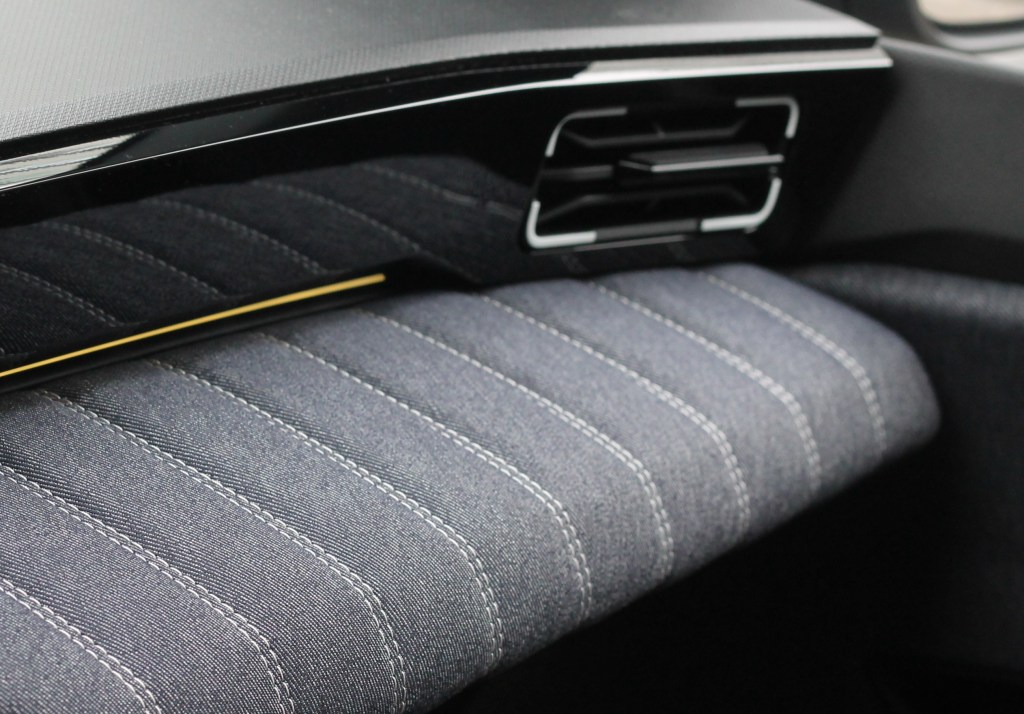
So much for the driving part. Stepping into the car one enjoys the modern and stylish “ambiance” of the interior. Well done! We liked the styling elements and surface texture of the glove box, the square shaped ventilation openings, the layout of digital dashboard screen and the 10,25 inch centre screen. Everthing is simple, yet there is every information you will ever need.

Of course, no navigation is provided, so the apps on your phone will via Apple Car Play or Android Auto will have do the work. It also pays to have an app on your phone which shows charging stations…

There is plenty of room on the dashboard to put your stuff and the centre console has room for your phone. Two USB C slots are provided in front near the centre console.  

We liked the “Panda”lettering on the seats, and the front seats were pleasantly soft and comfortable. We were further seduced by the evident controls of heating and ventilation: three round knobs, which were a child’s play to use… When the battery is charged more than 30 pct, you can even pre-heat your Panda in the morning.

Also in the rear there is enough room for two rather tall adults.  The luggage space is also more than adequate with 361 liters, with the rear seat down this increases to 1315 liters. The charging cables have no separate space, so they occupy the boot…

Conclusion

If you are looking for a B segment car which stands out in style, then this Grande Panda is the one to look at. It offers enough room for four adults and their luggage, is a dream to drive in town and will let you tour through Europe in comfort.

Its personality will let you enjoy EV motoring, that’s for sure, and last but not least, the price will also make you smile…

Hans Knol ten Bensel
We drove the Renault 5 E-Tech: the automotive future now embraces its historic icons..

Indeed Renault is looking back, but then only to inject its unique iconic true DNA into the cars it designs for the E-future. This is a clever strategy of this iconic French automaker. Indeed, in the roaring sixties and seventies, it did put cars on the road which continue to inspire several generations, and this right until this day.

Besides the ”4L” or charmingly called in the Gallic language ” la quatre elle” , there was the Renault 5, lovingly called “la Cinq”.

Another Renault icon is the starting blocks by the way, the new Twingo E-TECH, and all these new characterful cars are based on the same platform which Renault has developed for the new age of very efficient, compact and financially accessible EV’s.

Renault showed a prototype of its electric “5” already in 2021, and we are delighted to see that virtually all the styling elements of this project car are found back in the series production model.

The “5” is indeed an absolute pleasure to look at, it is wonderfully proportioned and stacked with delightful details.

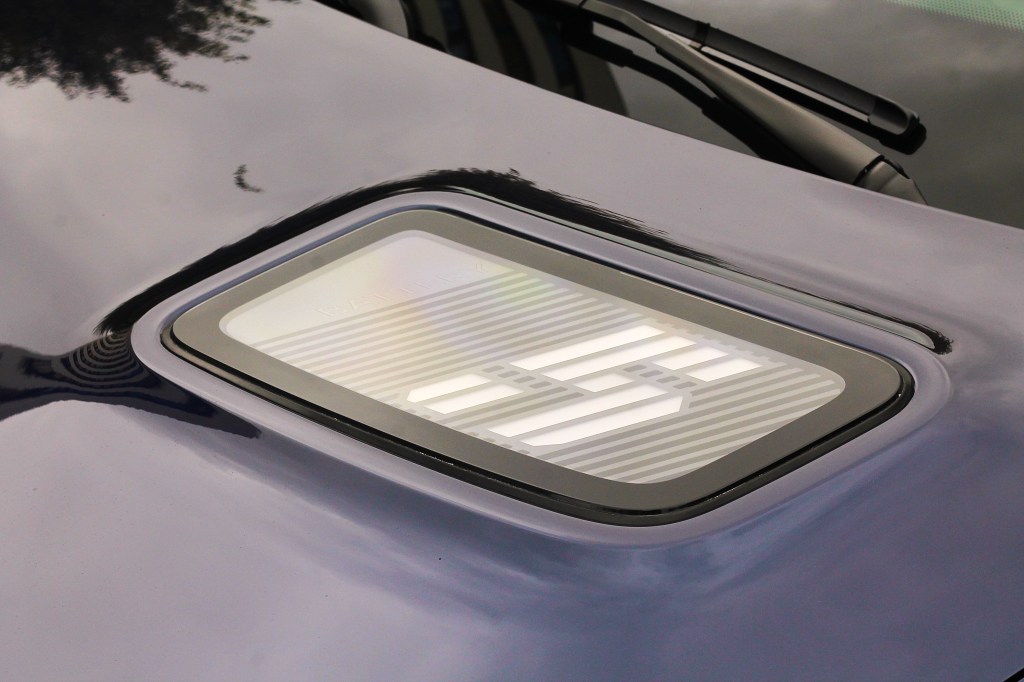
Like the big letter “5” on the hood which gradually lights up when you charge the car, so you can  immediately see how far the battery is recharged. So cool!

The headlamps are also wonderfully styled, and accompanied by square led light patterns below them.

The rear lights are sculpted as on the legendary R5 Turbo. By the way, the power and panache of this Turbo classic is not much more in driving practice than the torque and immediate pulling power of the 150 HP electric motor of our test car. And then there is the 218 HP Alpine Version, which we hope to drive soon…

A wonderful cabin…

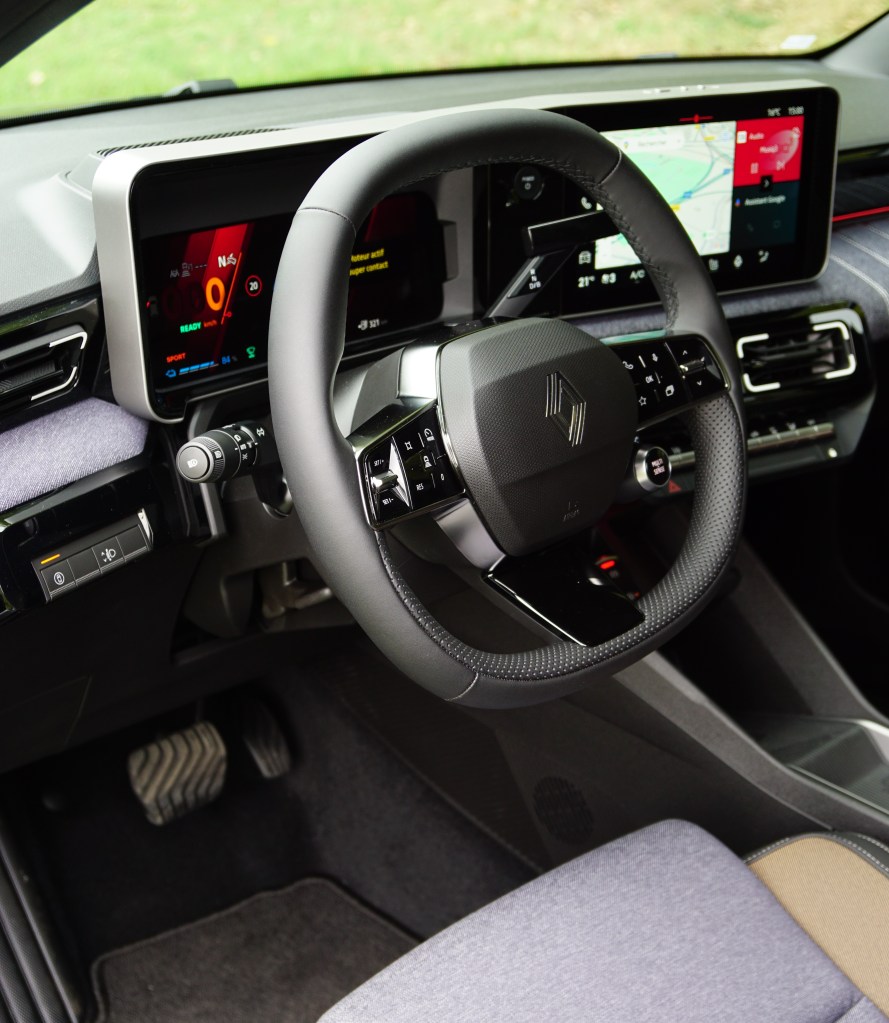
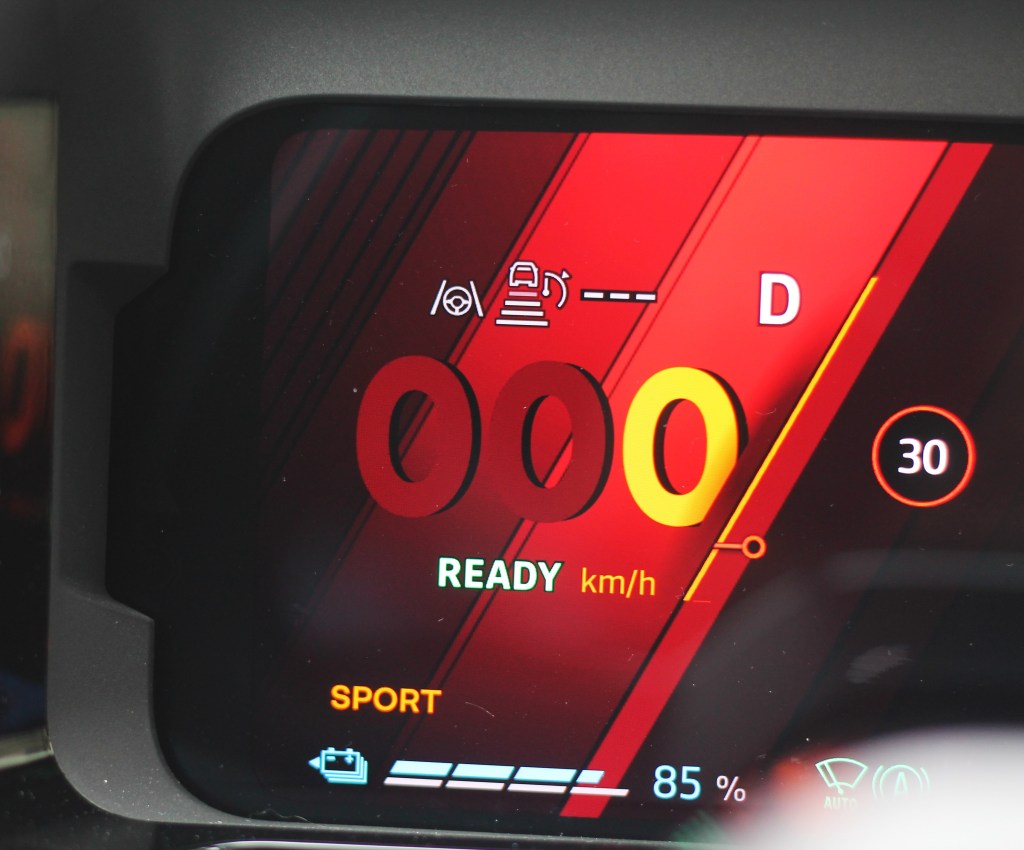
The fun continues in the cabin. We find here the typical square design style of the seventies, which is continued in the yellow colour and graphic patterns of the displays found in front of the driver and the centre.

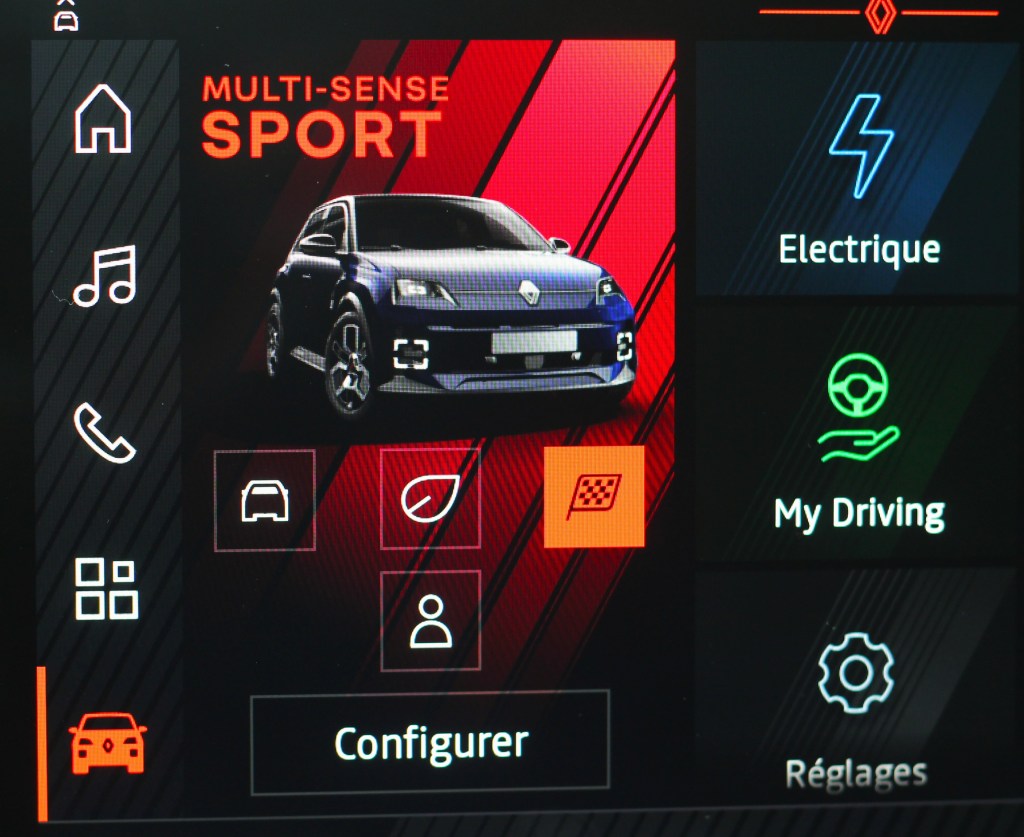
The screens are quite practical after some obvious acquaintance, and we liked the extra row of physical knobs and controls for heating and ventilation below the panels.

We liked the seventies styling of the seats which are also comfortable and well adjustable. The driver seat is also height adjustable as standard. In the front there is is ample leg and headroom, at the rear the available space is only adequate for adults. But this is a (city) car for young (at heart) adults, so in the rear you will mostly find kids or grandchildren..

The boot space is more than adequate for this compact EV, with 255 liters under the luggage cover. There is no separate stowing space for the charger and cables, just a stylish bag is provided.
 

Rediscovering driving pleasure…with an EV.

This is where this Renault 5 E-Tech really stands out: it gives you TONS of driving pleasure behind the wheel. No small feat for an EV. Not in the least because it steers and handles like a dream. The steering is precise, the suspension is sporting but not too harsh, and it just LOVES winding roads.

The car is wonderfully agile, and when you steer it into corners with abandon, it will even oversteer, which is of course easily corrected. Just great. Straight line and high speed stability is excellent. Does this 5 inspire you always to a sporting driving style as a must?

Not at all, it is whisper quiet, and the excellent sound system (can be optionally equipped with a Harman Kardon sound system) lets you enjoy classical or your preferred music along the route. Wind and tyre noise are virtually absent and this makes the compact “Cinq” a car with the manners and driving refinement of a premium automobile. Fit for long journeys too!

With outstanding performance to match…

What about range and performance you will ask. Our test car was equipped with the 150 HP or 110 kW engine, and this means vigorous accelerations, considering that the weight of the 5 is reasonable with 1450 kg. The 0 to 100 km/h sprint is absolved in some 8 seconds, top speed is reasonably limited to 150 km/h.

The car with this engine version has a 52 kW battery, which results in a average range of some 350 km, based on a consumption of 17 kW/100 km. City driving will easily give you average consumptions around 13-14 kW, corresponding with a range of some 400 km. Brisk motorway driving will limit the range, as the boxy 5 E-Tech with a Cw value of 0,32 is not a champion in aerodynamics. Speed charging up to 100 kW is possible with the Cinq, so within a 30 minute coffee break the battery is easily recharged from 20 to 80 pct.
 

Up to date infotainment

Of course, noblesse oblige, in this day and age the 5 E-tech has Android Auto and Apple Carplay,  also handles voice commands over Google Assistant, offers two USB C connections. The navigation system is based on Google Maps. You can also plot your charging points en route. You can personalise the system via your Google account and of course you can be further informed about your car by using the Renault App. With over the air updates, your Renault can always be kept up to date…

Conclusion

This 5 E-Tech has the looks and offers you pleasure behind the wheel. It is indeed fun to drive and look at, and will also spoil you with the whispering silence of a premium car.

It is also well priced, and its timeless iconic shape will let you enjoy it for many years to come…

Hans Knol ten Bensel
We drove the Opel Mokka Hybrid: the bestseller with lightning style and panache…  

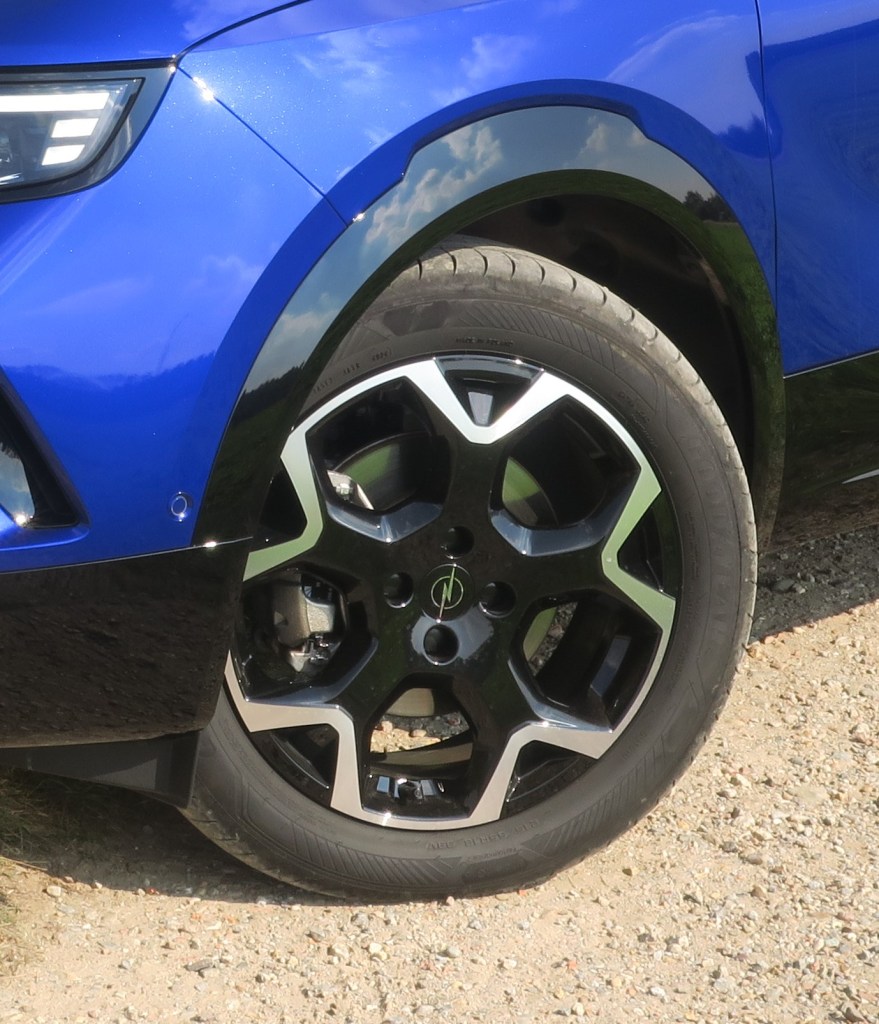
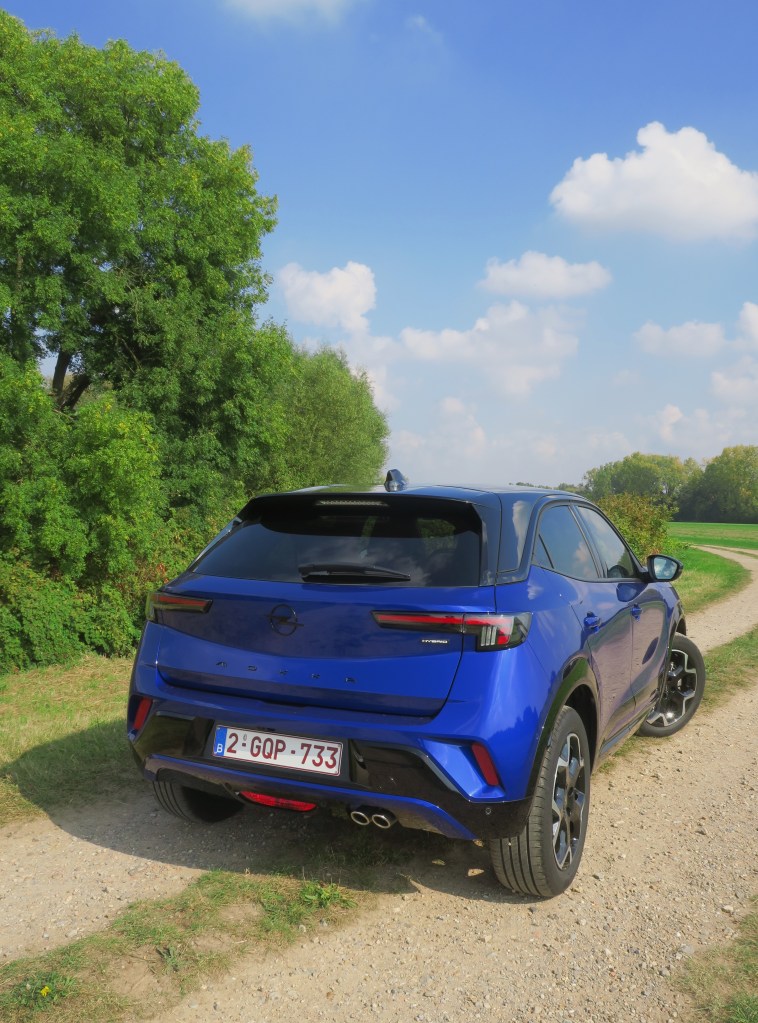
The Opel Mokka, one of the bestsellers in the Opel range, has got a facelift combined with some important technical refinements. More than reason enough to put the hybrid version through its paces for you here.  It was the first Opel to receive the now iconic characteristic brand fascia, the so-called “Opel Vizor”, and now it got even more character: with the facelift the black Vizor visually integrates the new Blitz and the headlights into one element. Black elements are decidedly en vogue: a black design line runs from the bonnet to the rear above the side windows. Black claddings at the front, rear and wheel arches also give a more sporting look.

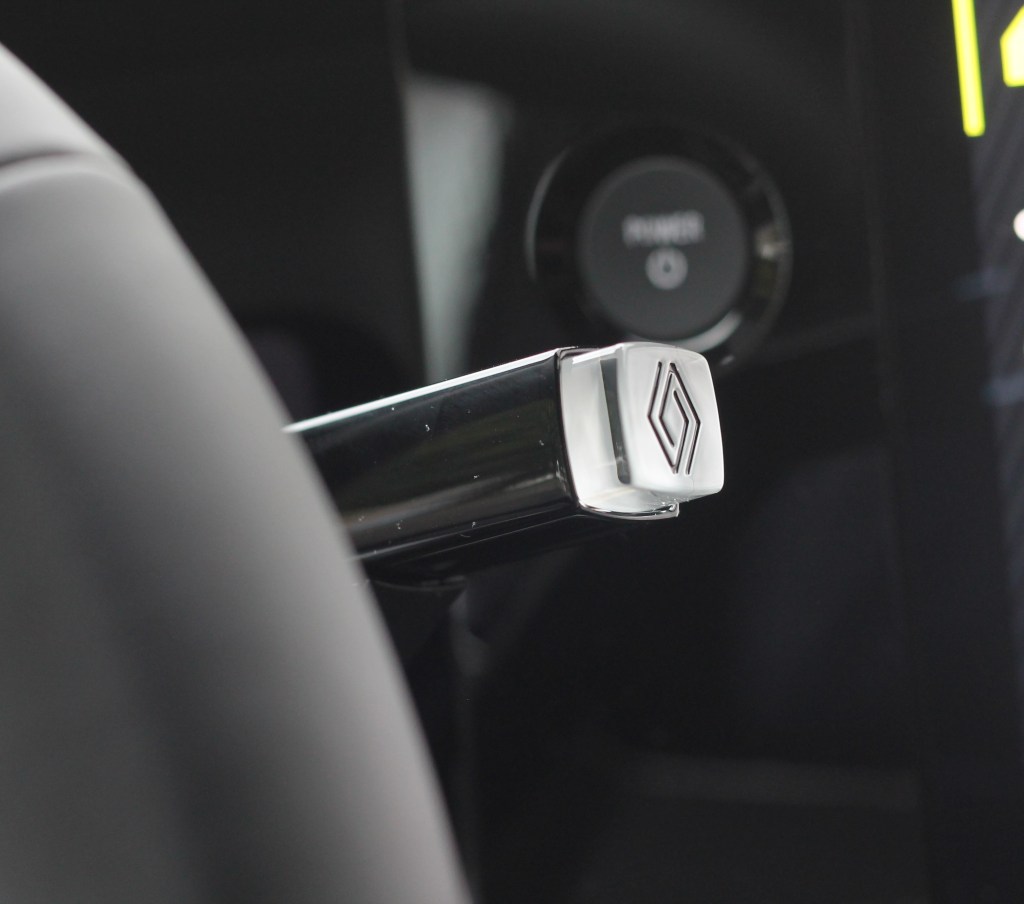
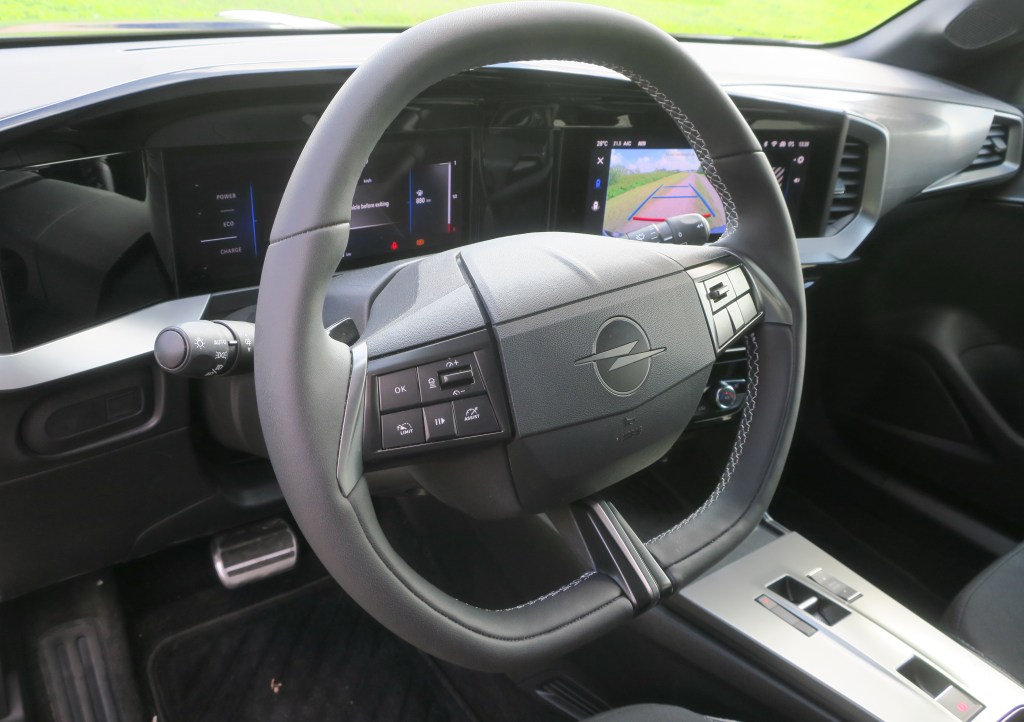
Also in the cabin things have further improved. First of all, there is a new steering wheel, flattened at the top and bottom and made from vegan material, with the new Blitz emblem proudly at the centre.

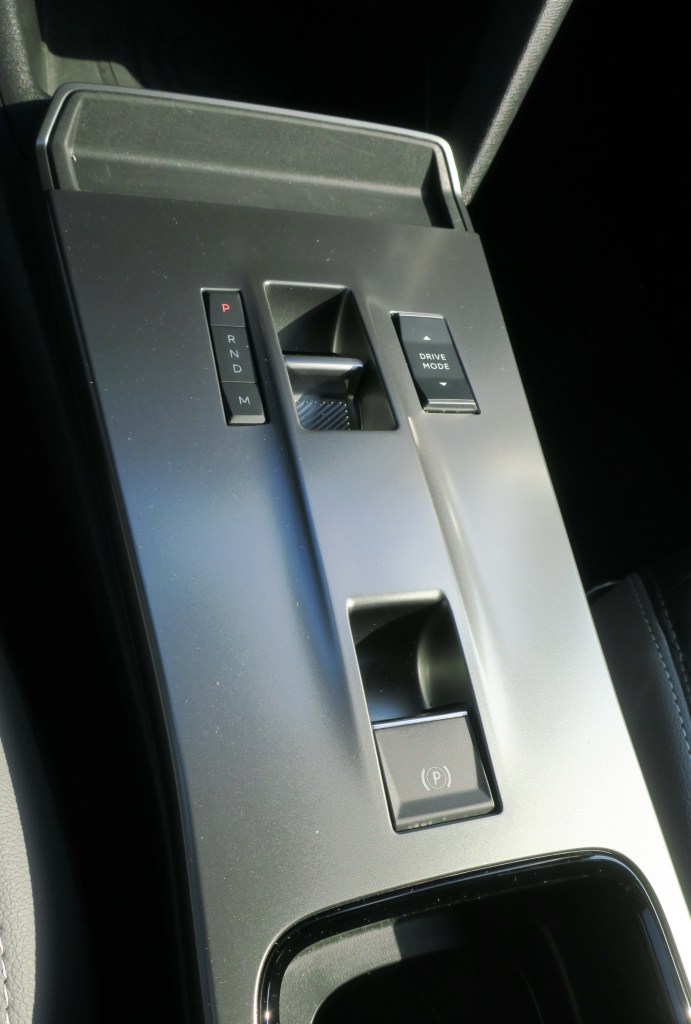
The centre console between the front seats, in a matt silver tone, has a cleaner, upmarket style and the design of the remaining switches for the electric parking brake and the selectable driving modes is identical to the all-new Opel Grandland. The material of the seats consists now of recycled material, but it is good to know that the whole cabin gives now a decidedly more upmarket impression.

A hybrid with 48 Volt technology…

Opel calls it a “modern hybrid”, and it consists of a 100 kW (136 hp) 1.2-litre turbocharged petrol engine with a 21 kW (28 hp) electric motor and an electrified six-speed dual-clutch transmission. The transmission is very smooth, the electric motor assists the engine in accelerations with helpful extra torque and all this results in very pleasant performance combined with excellent efficiency.

When accelerating slowly and driving at moderate constant speeds on city boulevards, the engine will run at very low revs in the highest possible gears, and this without any noticeably noise or vibrations. Pushing the trottle a bit further will cause the E-motor to react immediately and the transmission will intantly choose the correct gear for the engine to step in.

Driven with restraint, you will easily achieve a consumption in city driving at around 6 litres/100 km, and even slightly lower, whereas cruising on the open road will let the consumption drop to around 5,2 litres/100 km. According to WLTP standards, fuel consumption is 4.9 l/100 km, CO2 emissions are 110 g/km; the CO2 label is a C.

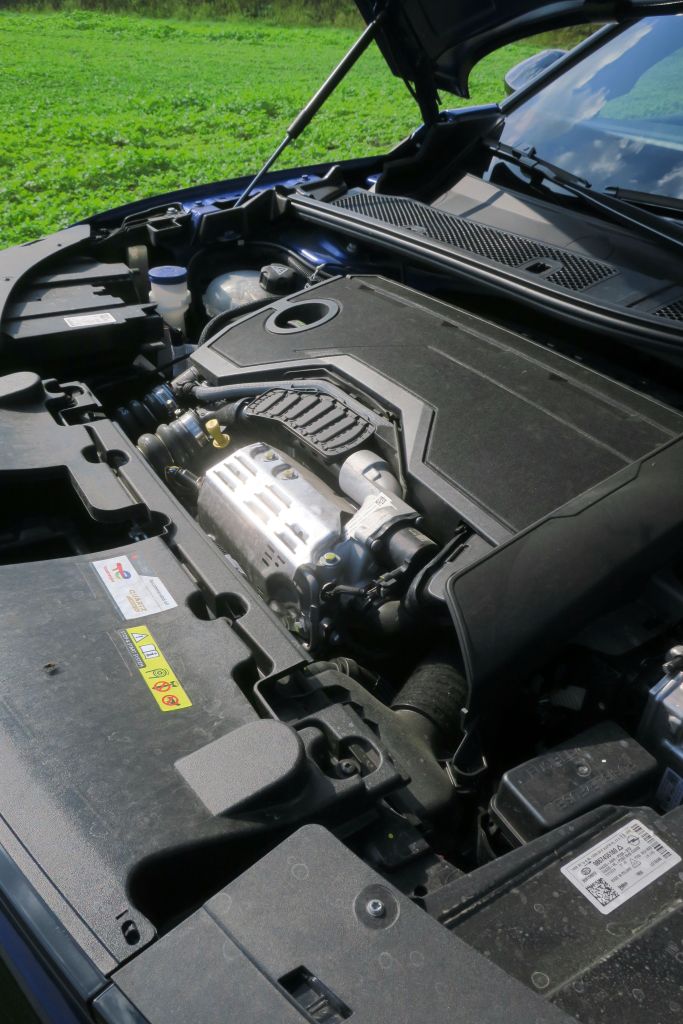
The 3 cylinder engine has now a chain driven distribution system, and the Continetal-developed oil lubricated belt has been abandoned, resulting in improved reliability.

A drivers’ car…  

We find Opels always very attractive drivers’ cars, striking a very good balance between comfort, performance and a predictable, engaging handling. The Mokka again proved this wonderfully. It responds admirably to a brisk driving style, but will never let you feel uncomfortable when you decide to drive smoothly and leasurely.

Seating position behind the wheel is also excellent. The knee room for rear passengers is somewhat more restrained, and boot space is not cavernous either, but with 350 litres is still sufficient for most.

Performance is excellent, with the Mokka proving to be an “Autobahn Meister” with a smooth top speed of 207 km/h and an acceleration from 0 to 100 in just above 9 seconds. This Mokka is a fast GT, let this be said. This performance is almost identical to the original Porsche 2 litre 911, don’t forget!  

… with up to scratch infotainment

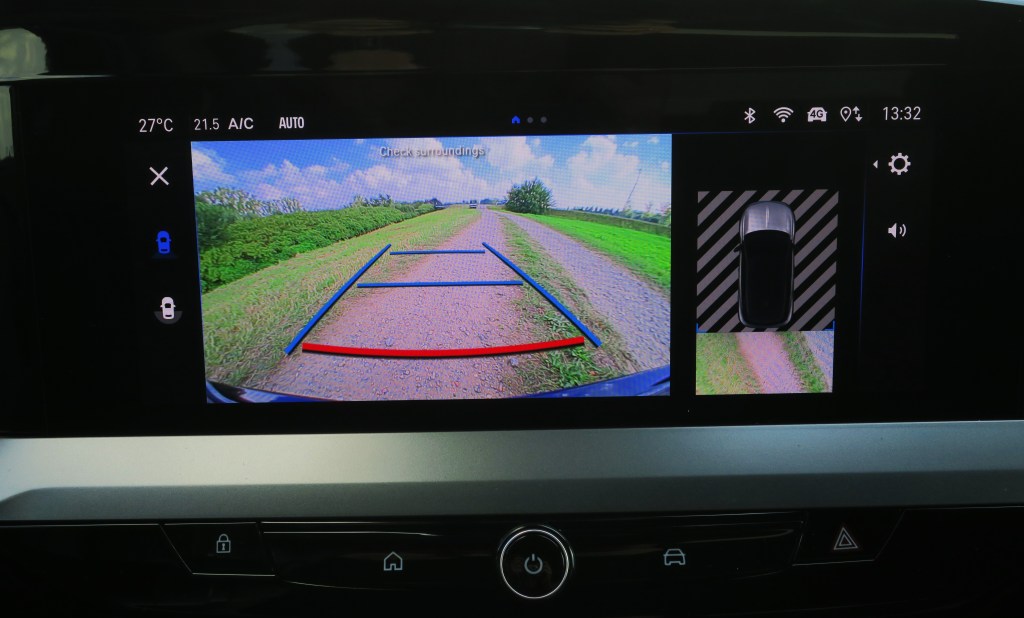
The facelifted Mokka also is no laggard when it comes to modern infotainment. The cockpit uses Qualcomm Technologies’ next generation Snapdragon Cockpit Platform and Snapdragon Auto Connectivity Platform3 to enable premium in-vehicle experiences, including state-of-the-art graphics, multimedia and enhanced connectivity capabilities such as Wi-Fi, Bluetooth and 4G, says Opel.

A 10-inch digital driver information display and an equally large colour touchscreen are also standard. The latter can be easily operated via widgets, just like a smartphone – alternatively and in combination with the optional navigation system, a ‘Hey, Opel’ is enough to use the natural voice recognition.
 

Both displays can be personalised. The system recognises the driver’s personal profile on the connected smartphone; the connection is always wireless in the new Mokka. Virtual shortcuts can be set up on the central screen and you can choose between different colour schemes.

When ordered with the integrated navigation system, map updates are made available over-the-air. The system also constantly learns and – based on the habits of the linked driver profile – independently suggests destinations and routes.

The “myOpel” app can also be used to easily send the destination and the corresponding route to your car.  Furthermore, Opel offers ChatGPT4 (available in combination with Connected Navigation) for the new Mokka…

To sum it all up, we liked the Mokka Hybrid very much indeed, having style, performance, offering driving pleasure combined with excellent performance and economy, all this combined with a very reasonable price…

We drove the Alfa Romeo Junior Veloce Elettrica: It makes your heart beat faster…

Alfa’s have always been cars with a heart. They exude a unique aura and panache. How can you translate this into an EV, where you have to miss the characteristic roar of a thoroughbred engine?

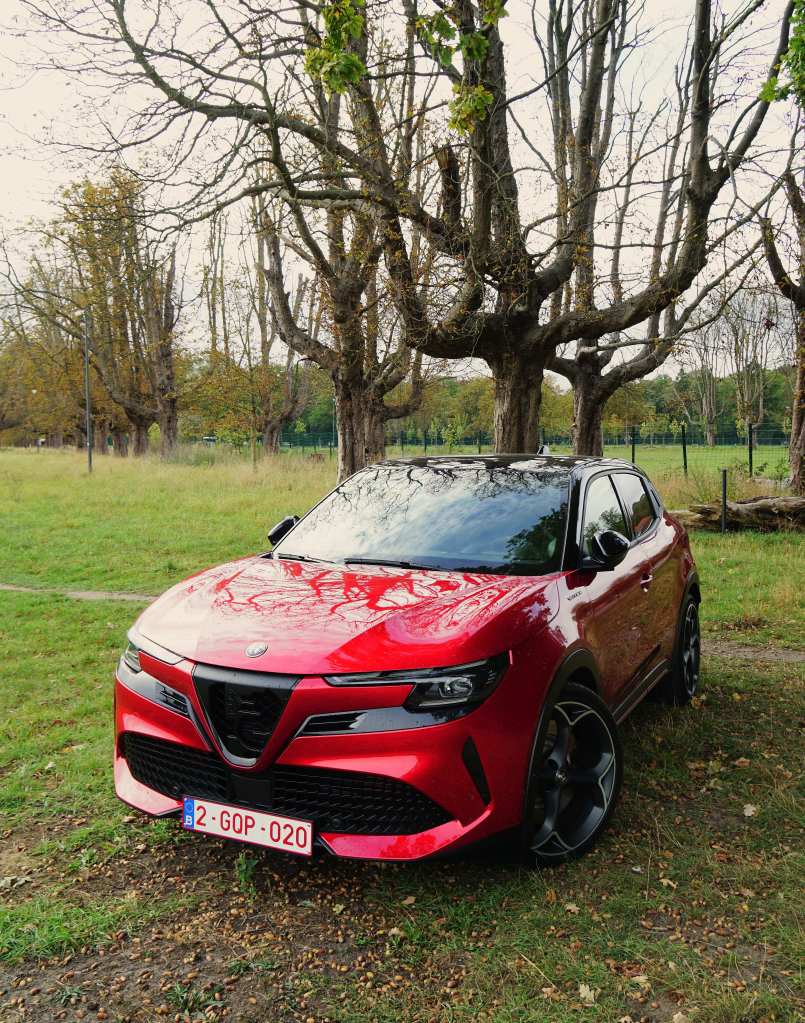
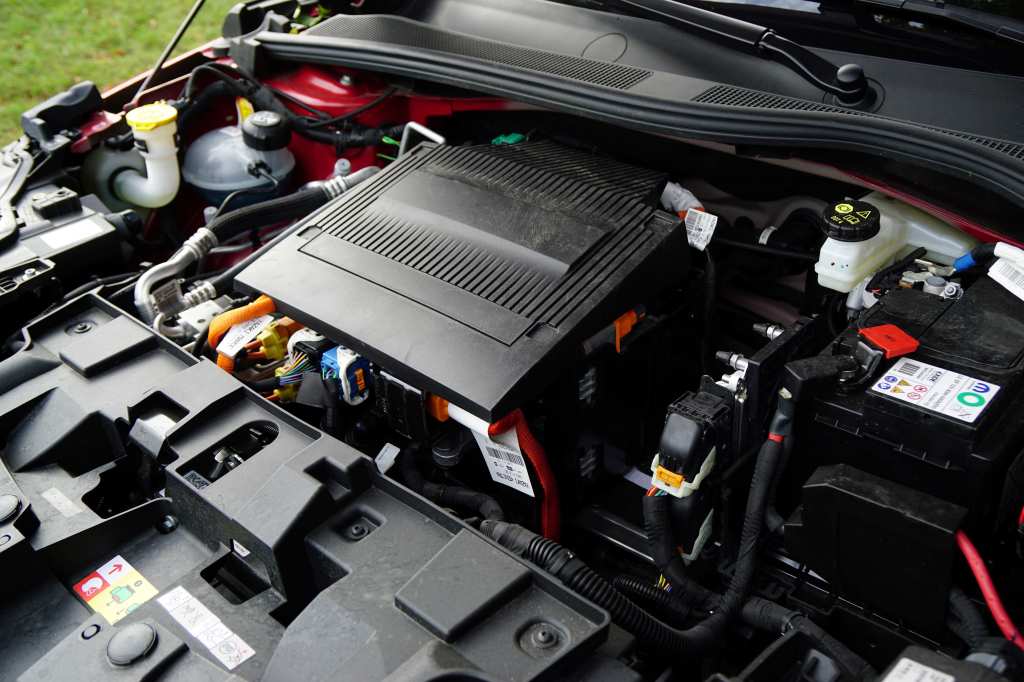
Well, the Alfa engineers and designers within the Stellantis family have found a bold answer: the Alfa Junior. The styling of the Junior is appealing, to say the least. Of course, it runs on the Stellantis Electric Common Modular Platform (e-CMP2), which it shares with virtually all the other brands of the group that are present in the B-Segment.

But the Centro Stile Alfa Romeo rolled up its sleeves, and treats your eyes with a new grille, displaying the restyled “Scudetto.” The 20 inch “Venti” alloys are also designed along the DNA of the house, the rear end shines with an aerodynamic “coda tronca”. The well-balanced muscular proportions please the eye.

The same can be said for the cabin: personally I would like to have more “vintage drama” in the instrumentation, with proper dials with “real”arrows, which are now easy to emulate digitally, but the “less is more” philosophy today has its rights these days.

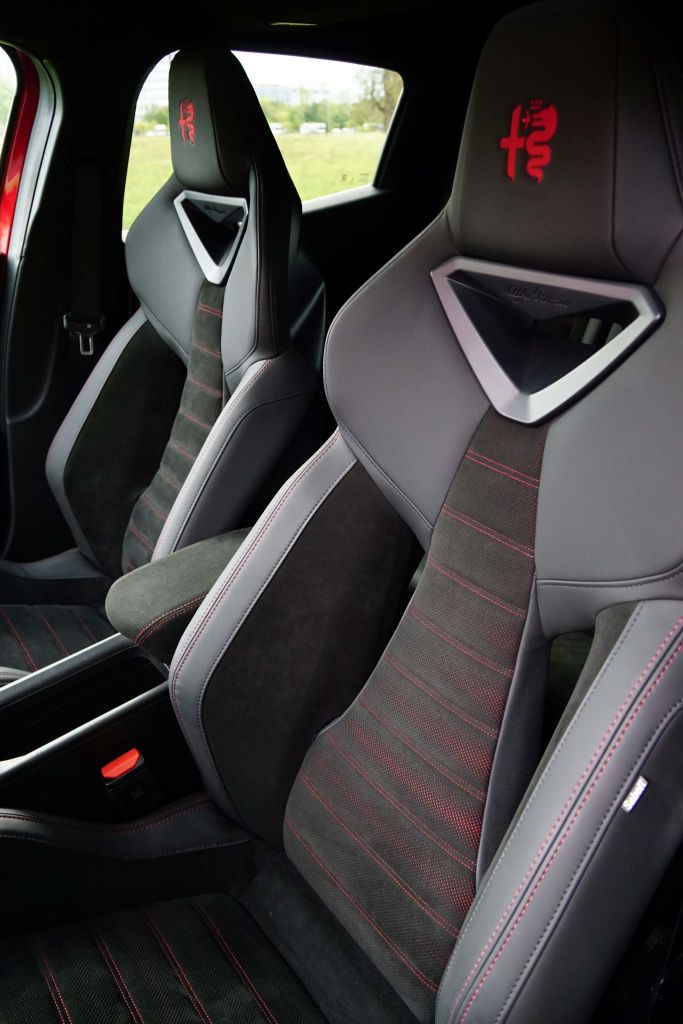
What we liked is overall the dashboard styling and the use of alcantara on some panels. On the central console one now finds the familiar Stellantis selector switches, which Alfisti will find a bit regrettable, and maybe a small tricolore adorned aluminum Alfa lever would have been nice, but there you go.

The central screen is turned well to the driver and not too big and overwhelming, which I liked. Our test car had the beautiful optional “Corsa” bucket seats, made by Sabelt, which are yours when you opt for the Sport Pack. They add not only to the looks and atmosphere in the interior, they also sit wonderfully too…

“Stellar” performance.

Stellantis opted to install in the “Veloce” version of the Junior a 280 HP or 207 kW electric motor, which is also found in the Abarth 600e “Scorpionissma” and in the announced Peugeot e-208 GTI. The performance is nothing short of spectacular: 0 to 100 km/h is absolved in 5,9 seconds, top speed is limited to 200 km/h. The maximum torque is 345 Nm. Of course, in our tested version a limited slip differential allows you to get all this power seamlessly on the road.

Handling is absolutely beyond reproach: it has a widened track and stiffened anti-roll bars…

To enjoy all this, one has to use the “Dynamic” mode on the drive selector, which should be the permanent choice for the Alfa enthusiast.

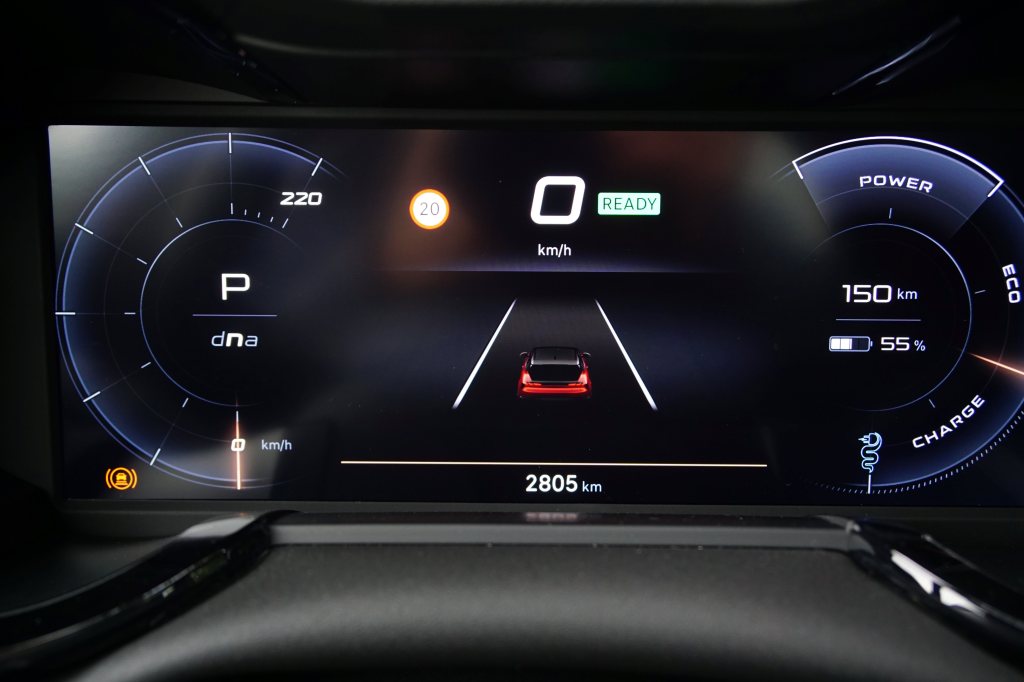
If you drive with somewhat more restraint using this mode, and adopt an anticipative driving style, the regeneration function when coasting lets you achieve creditable values between 16 and 17 kWh in both city and open road use. Based on WLTP cycle, the consumption is quoted at 17,9 kW.
 

The 54 kW battery (51 kW net available power) gives you an adequate range, the manufacturer quotes – using the WLTP standard – a range between 325 – 315 km. We found a “safe” range of some 260 km more realistic. Hooked on a 100 kW charger, the Veloce will charge up from 20 to 80 % in 27 minutes. The time of a leisurely coffee break.  

The Veloce costs some 10.000 Euros more than the standard Junior Elettrica, and the “sport” version with set you back another 2.000 Euro’s, but then for true Alfa aficionados, love and passion has no price…

Hans Knol ten Bensel
Renault continues to improve its Full Hybrid Technology…

As faithful readers know, your servant is still quite keen on the full hybrid solution to enjoy the benefits of electrified mobility. It ideally combines the smoothness of E-power with economy and total hassle-free practicality, as you can cover any distance without worrying about recharging.

Renault made a very wise strategic decision to build also an important presence in this market segment, and is indeed developing its Full Hybrid Technology always further.

Did you know that Renault has sold over 750,000 vehicles equipped with this full hybrid E-Tech powertrain since its launch in 2021?

Renault developed its full hybrid E-Tech powertrain in 2021. Over 150 patents have been filed for this technology, which taps into Renault’s expertise in Formula 1, particularly in energy recovery and regeneration. Ii is found in many models, from Clio to Rafale. 

More power and full hybrid performance for Captur and Symbioz

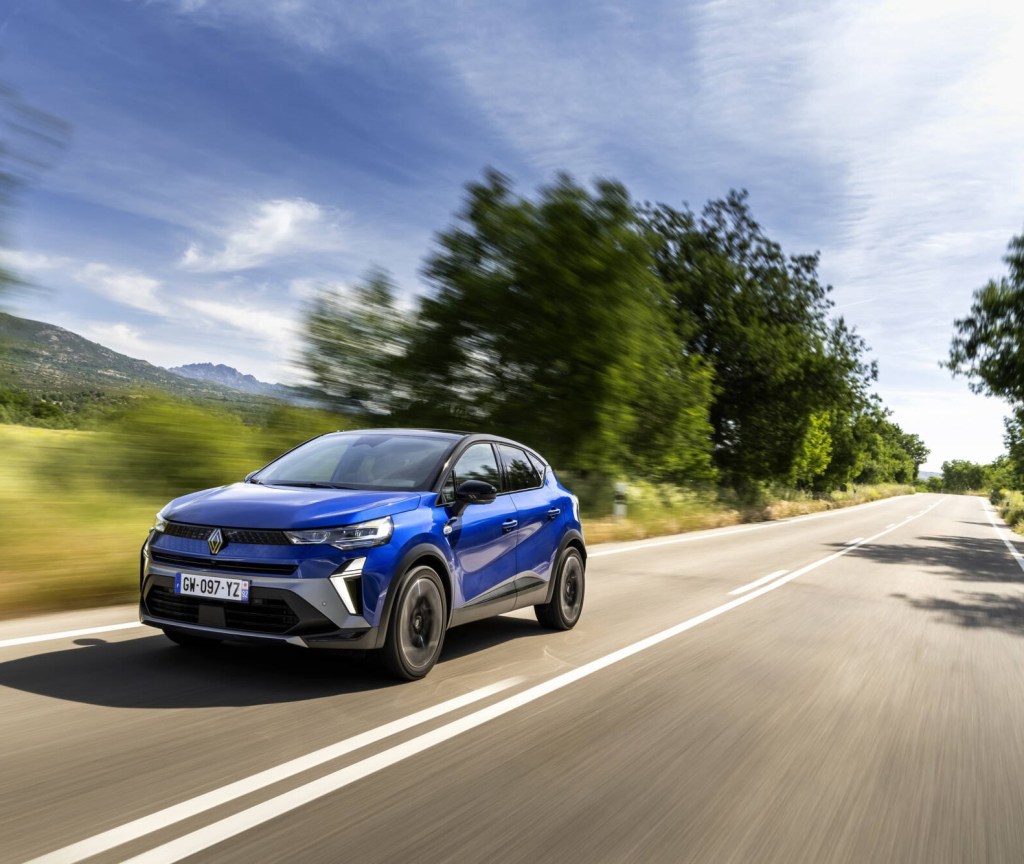
In the same way as with the previous generation, the series-parallel hybrid architecture of this new powertrain combines two electric motors (a 36 kW e-motor and a 15 kW HSG – High-Voltage Starter Generator) with a 1.8l 4-cylinder petrol engine of 80 kW or 109 hp (69 kW and 94 hp for the previous engine) mated to a new intelligent multi-mode clutchless dog box and a 1.4 kWh battery. The dog box delivers fast precise gear changes with minimum power loss. It is also simpler from a mechanical standpoint, making it more reliable.

Driveability maintained

The indirect injection of the previous generation has been replaced by a new direct-injection system.

Torque is 25% higher (172 Nm for the combustion engine alone, i.e. +22 Nm) than for the previous version. This means that maximum torque is available at lower revs (around 2,000 rpm), for better performance and response, particularly during acceleration or when picking up speed on fast roads. Acceleration is therefore more dynamic. Captur now takes 8.9 seconds to accelerate from 0-100 km/h compared with 10.6 seconds previously, delivering a better response for a more agile driving experience.

The Symbioz also improves its 0 to 100 km/h acceleration time: 9.1 seconds compared with 10.6 seconds previously.

A new  battery with a higher capacity of 1.4 kWh

The new hybrid powertrain has a battery of 1.4 kWh battery (230V), compared with 1.2 kWh for the previous version. ower fuel consumption and CO2 emissions

Fuel consumption is optimised by a regenerative braking function, combined with the high self-charging capacity of the 1.4 kWh (230V) battery and the efficiency of the E-Tech system.

Under the bonnet of Captur and Symbioz, the new full hybrid E-Tech powertrain consumes just 4.3 litres/100 km, compared with 4.7 litres for the previous version. This optimised system delivers fuel savings of up to 40%, while also reducing CO2 emissions to as little as 98 g/km on Symbioz (99 g/km for Captur).

Smooth gear changes

The dog box transmission has been maintained: the dog clutch system replaces both a sprocket and a synchroniser ring in a clutchless layout with fewer friction parts for high levels of efficiency. The gearbox was then fine-tuned for faster, smoother gear changes. As a result, gear changing is quieter and more responsive, reducing vibration and engine noise for increased driver comfort.

Further, the introduction of a new electronic gear lever (e-shifter) provides greater precision and optimised ergonomics.

Needless to say that we are keen to lay our hand on a Renault with this improved full hybrid drivetrain… stay tuned!

Hans Knol ten Bensel
E-Power for all: the Fiat Grande Panda goes hybrid…

FIAT launches the new Grande Panda Hybrid, marking a significant milestone in its global product strategy:  making the electrified transition possible for all thanks to this affordable, and cool B-segment Panda.This hybrid version marks the brand’s role as a leader in volume and accessibility, says Stellantis, echoing the golden years of FIAT when simplicity, innovation, and emotional design moved millions.

The Grande Panda project is the cornerstone of a new global vehicle family developed entirely under the guidance of the FIAT HQ and Centro Stile in Mirafiori, Turin. Your servant remembers its visit at the Centro Stile a few years ago, when he stood eye to eye with the clay model of the FIAT “centoventi” or 120, which showed already the proportions and styling language of the present day Panda. Technologically, it already incorporated the solutions we see today.

The model sits on Stellantis’ “Smart Car” Platform. At the heart of this model lies the T-Gen3 hybrid powertrain, featuring a 1.2-liter, 3-cylinder turbocharged engine delivering 110 HP, combined with a 48V Li-ion battery and a eDCT 6-speed dual-clutch automatic transmission. This system integrates a 21kW electric motor,an inverter, and a central control unit.
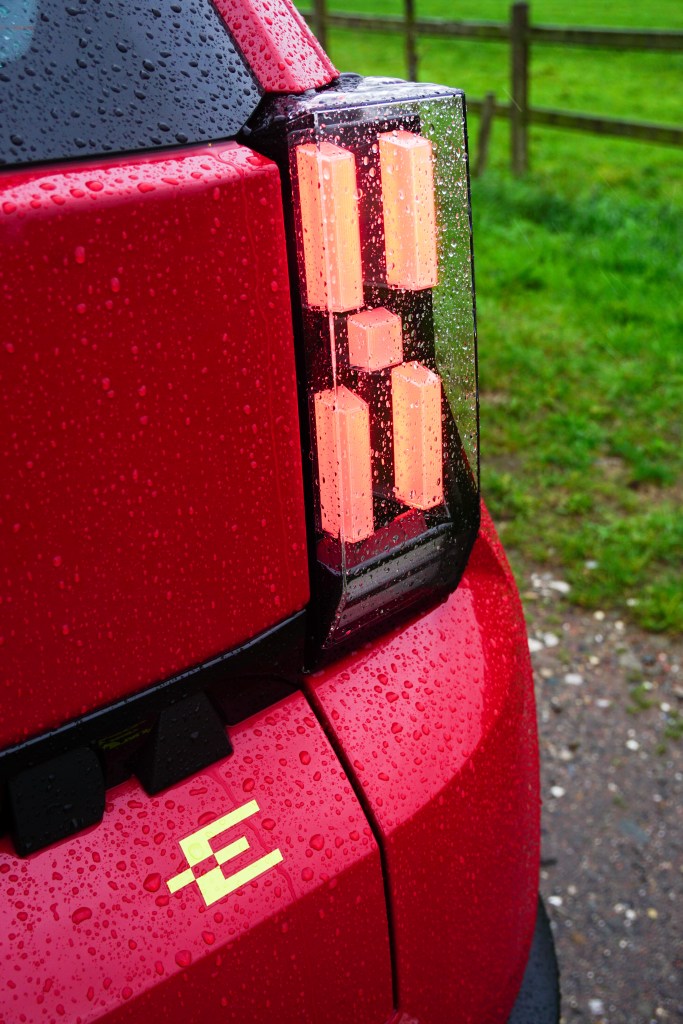
Through functions like e-launch, e-creeping, and e-parking, the Grande Panda Hybrid can operate in full-electric mode during low-speed manoeuvres, allowing for up to 1 km of electric-only driving at speeds under 30 km/h. These features result in smoother acceleration, silent city driving, and less fuel consumption and CO₂ emissions, made possible in part also by the Miller Cycle combustion strategy. The eDCT transmission further enhances efficiency and provides a relaxed, two-pedal driving experience that embodies FIAT’s “easy drive” philosophy.


All trims, and one can choose between three levels, notably POP, ICON, and LA PRIMA, come equipped with a comprehensive ADAS suite, including Cruise Control, Speed Limiter, Active Safety Brake, Lane Keeping Assist, Driver Attention Warning, and open-door alerts. The LA PRIMA trim enhances this with front sensors and a rear view camera.
Connectivity is supported through the onboard 10” digital cluster, 10.25” central touchscreen, and wireless smartphone mirroring. Customers benefit from multiple USB-C ports, a wireless charging pad, and seamless digital integration.

Continuing the 4 X 4 tradition of the Panda with a 4 X 4 concept…

The new Grande Panda 4×4 concept model, presented during the Grande Panda Hybrid Media Drive, is the direct heir of the Panda 4×4 from the ‘80s. It has exclusive details, and the unique dark red livery, bringing the 80s Panda’s character into the modern era.


It has an electrified, innovative rear axle that delivers all-terrain versatility.  We look forward to see this concept hitting the road soon…

We invite you to look at the accompanying photos for now…

Hans Knol ten Bensel