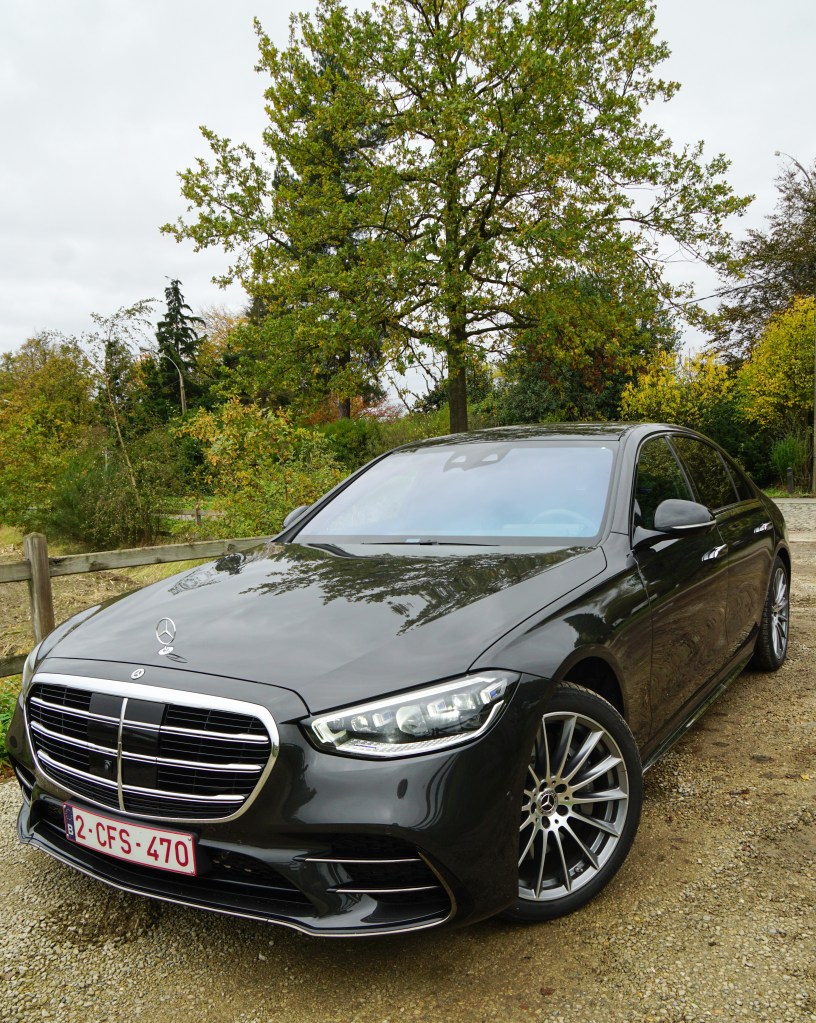
We drove the Mercedes 450e S Class: the pinnacle of luxury motoring…

The Mercedes S-Class has been the benchmark of luxury limousine comfort since 1972. Now we are at the W223 series, and it is still unsurpassed in terms of comfort, workmanship, mechanical and electronic excellence, and last but not least, panache.

Our test car is the plug-in hybrid version of the S-Class, designated as the S 450 e. Furthermore, we drive the “L” or long version, which, of course gives you totally superb rear passenger comfort.
 

Don’t think that this imposing S Class version will be difficult to drive in town: thanks to the rear-axle steering (optional) the turning circle of the S-Class is reduced by up to two metres. The steering angle at the rear axle goes up to 10 degrees…The steering is also surprisingly direct: only 2 turns are needed to steer from full right to left.   

Stepping behind the wheel in this magnificent limousine will however still require some caution, certainly if you wear a hat. The a-pillar is  raked rather steeply for good aerodynamic reasons, but this means that you will still have to tilt your head slightly…
Once your are sitting down you are enveloped in superb somfort. The front seats have a 4 way back support, electronically adjusted, and of course there is a whole (optional) massage program waiting for you, just touch the “comfort” symbol on the large central control screen and you can choose your favorite session…

You can also opt for an active “multi-contour” package, which gives you extra lateral support when you are cornering at speed.
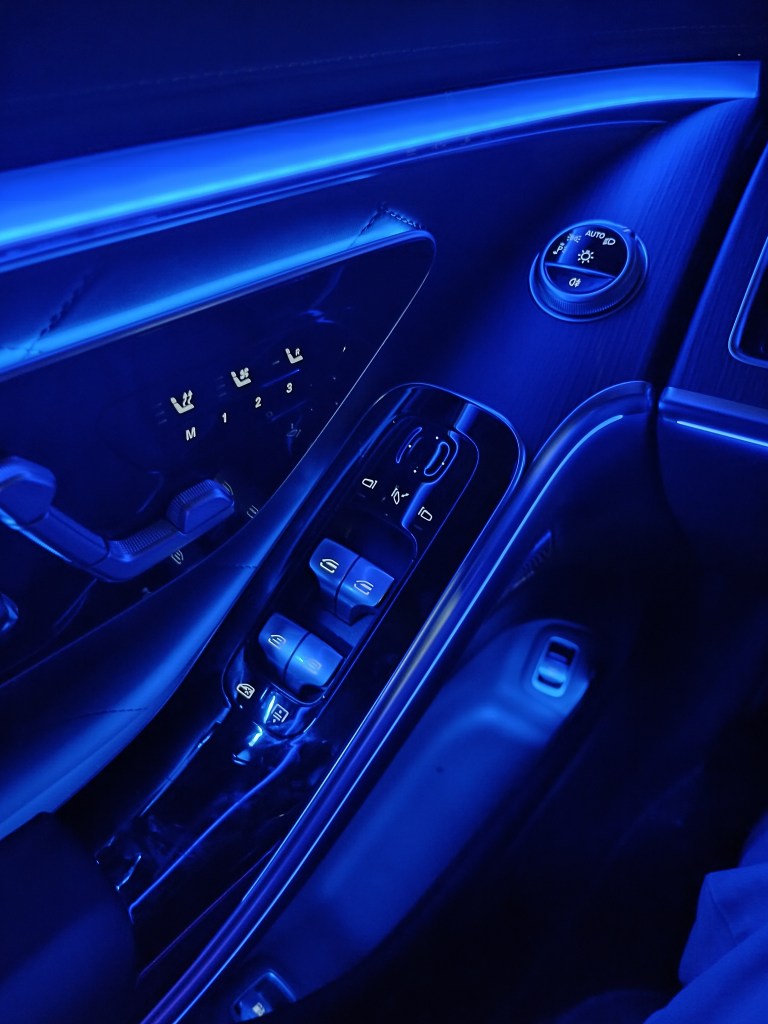
 The cabin bathes you in a wonderful light ambiance, which, of course you can adjust at will.
The instrumentation is clear, the immense screens both in front of the driver and the central screen are largely self-explanatory, although we would still suggest that you take some time to get acquainted with all its wonderful features.

Superb and ultra-refined performance…
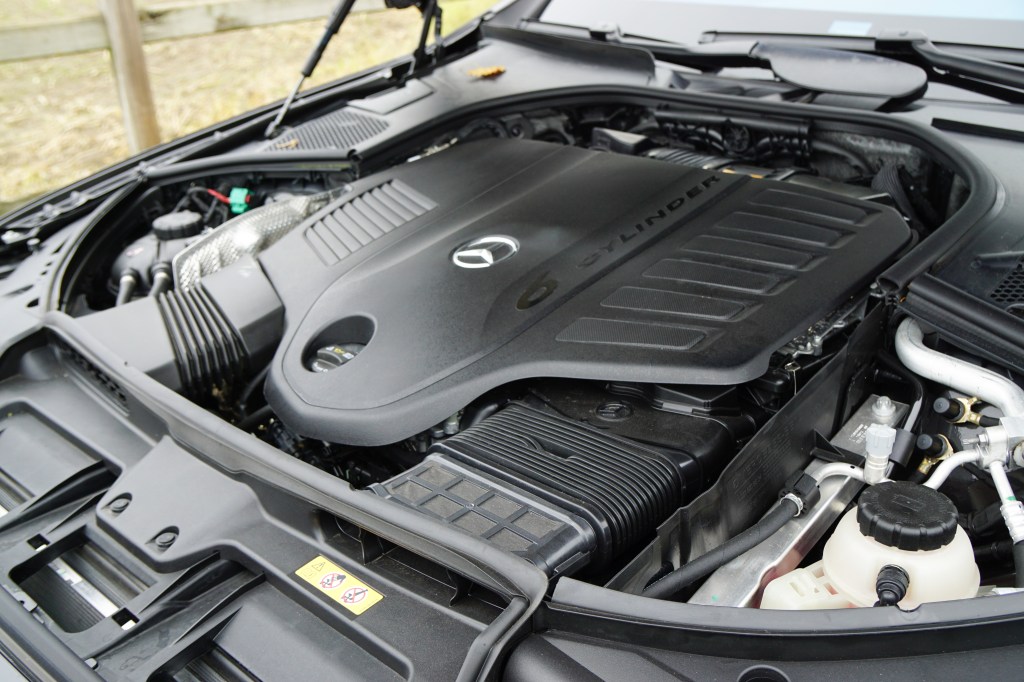
The fourth generation of the hybrid drive celebrated its premiere in the S-Class in 2021. The present 450 e version has a 3 litre straight-six cylinder under the hood, developing 220 kW or 299 hp, combined with a rather powerful 110 kW or 150 hp electric motor. The battery is not enormous with 21,96 kWh, but powerful enough to give the 2,5 tonne “e” S-Class a range between 105 and 70 km.

:

You can calculate it for yourself on the simulator which you can find on the Mercedes website.

We show you it here in two screenshots: assuming 35 % of the trip made on the Autobahn, the electric only range with an outside temperature of 20° is 100 km, when the ambient temperature drops to 10°, the range drops to 77 km. Quite sufficient in our opinion to perform a daily commute on E-power…

You can charge the battery with a maximum power of 60 kW, and on an ordinary wallbox or public charging point (Max 20 kW on DC) you can charge the battery from 10 to 80 pct in merely 20 minutes.

The outright performance leaves nothing to be desired: this S-Class will sprint from 0 to 100 km/h in merely 5,9 seconds. The top speed is electronically limited to 250 km/h.
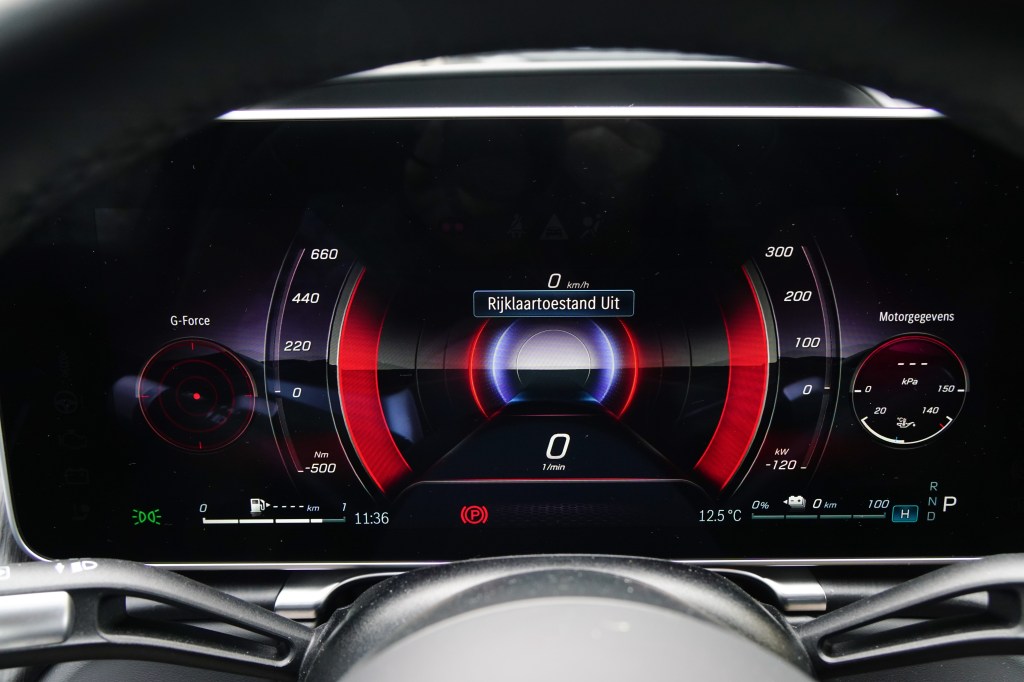
But the beauty lies of course, in the smooth way all this performance unfolds. The electric engine is totally inaudible, the 6 cylinder 3 litre engine is ideally balanced and vibrationless, and only a soft purr is heard when accelerating hard. The engine is mated to a smooth and alert 9G-TRONIC Plus automatic gearbox, which makes imperceptible gear changes. You have gearchange paddles at the steering wheel, but with 9 gears to choose from, one is soon overwhelmed… and we chose to let the clever gearbox do the work. The 9th gear allows very relaxed cruising at very low revs. At 120 km/h,  the engine exceeds barely 1500 rpm.

Consumption is, of course, very much in function of the battery status, or rather, whether you drive on e-power or not. The WLTP standard consumption is officially quoted at 2,4 l/100km. The manufacturer’s official figure for average e-consumption is 17,4 kWh/100km, which I find a rather more realistic indicator. On the open road, your flagship is still quite economical, due also to its excellent aerodynamics: it has a Cw coefficient of merely 0,22. When you drive at fast cruising speeds, the consumption hardly exceeds 11 l/100 km. Town driving will cost you around 10,5 l/100 km.
Floating carpet comfort…

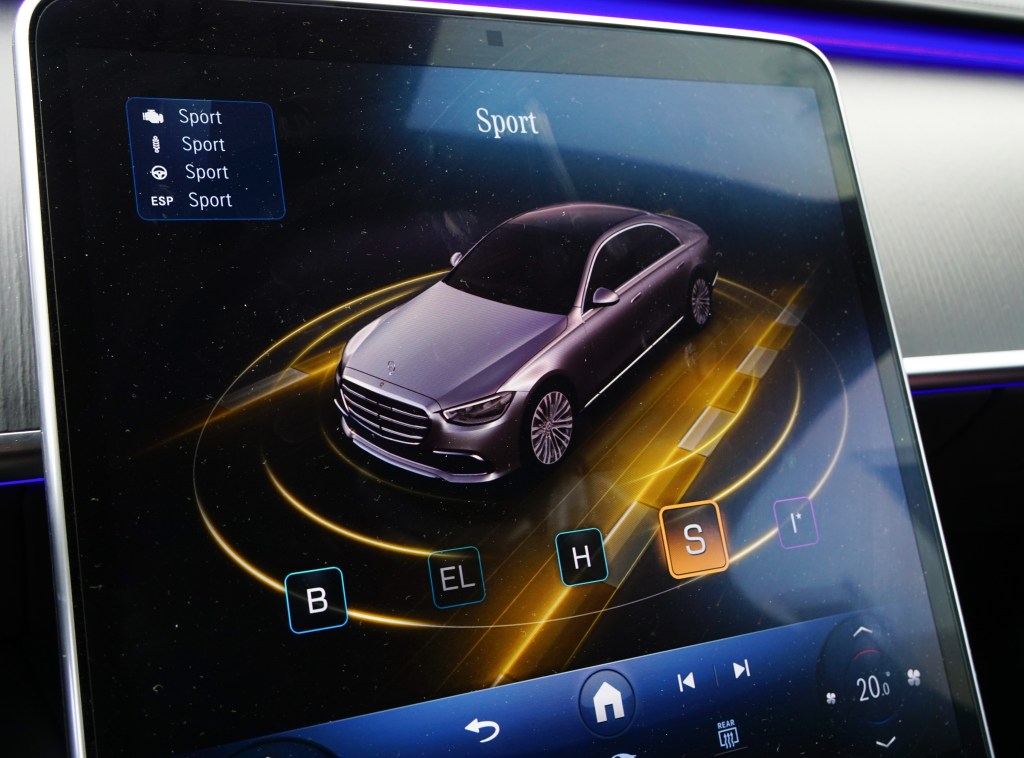
The S-Class can be considered to be the ultimate standard in limousine driving comfort. It has standard an air suspension with adaptive dampers, and you can opt for E-Active body control, which keeps the car body stable even under very fast cornering. The suspension swallows any road irregularities totally smoothly and this even at very slow speeds, and one truly enjoys a “floating carpet” ride. You can choose between different suspension settings, but even in the “sport” mode the ride remains totally smooth.

Heating and ventilation are also in a class of its own. Two-zone airco is standard, but you can opt for four-zone airco. Of course the rear passengers are spoilt too. You can obtain all conceivable extras, from heated side panels to heated and ventilated seats fore and aft, dark window curtains at the rear; you name it..

Infotainment reaches into the stars…

Mercedes is quite proud of its MBUX infotainment system, and deservedly so. As we said above, the system is quite intuitive, provided you take the effort to study the system and carefully go through all the menus. The indications are chrystal clear and seen on a massive 12,8 inch central touchscreen.  
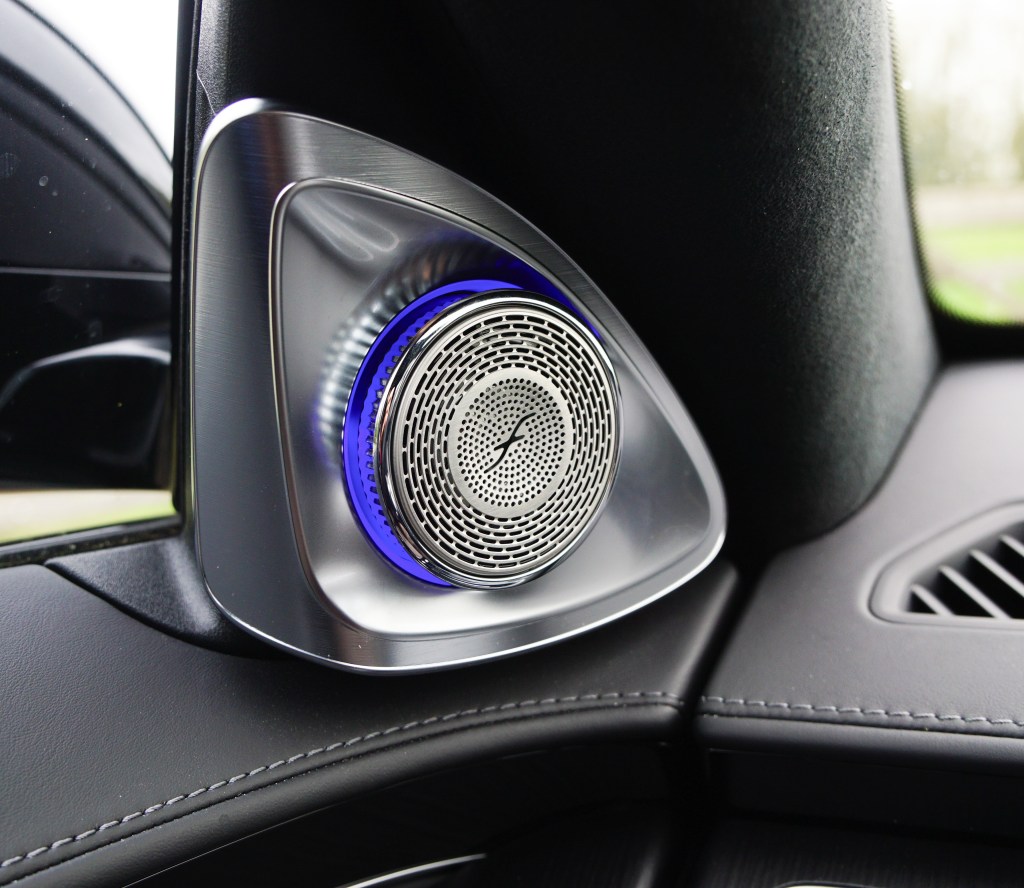
The sliding volume control for the superb Burmeister (31-speaker!) sound system takes some practice, but soon you become a master at it. You can also choose the instrument layout on the screen in front of you, and the overhead display of our test car was also eminently readable. You can also enjoy the optional augmented reality feature on this display, which shows you, with clearly visible arrows, which route to take…

This flagship Mercedes was updated last year, and has further optimized the MBUX user interface: suggestions for assisted parking are now located more intuitively in the menu. The Mercedes-Benz Automatic Lane Change (ALC) function now offers a further intelligent development: if a slower vehicle is traveling ahead, the car can initiate a lane change itself.

Indeed, if the radar recognizes sufficient open space and lane markings are detected, it can overtake the slower vehicle in front… fully automatically(!). The prerequisites are a motorway-like road with at least two lanes and a speed limit as well as a vehicle equipped with MBUX Navigation. The system does not require any further input from the driver to carry out the automatic lane change. Brave new world, we would say…

Let there be light…
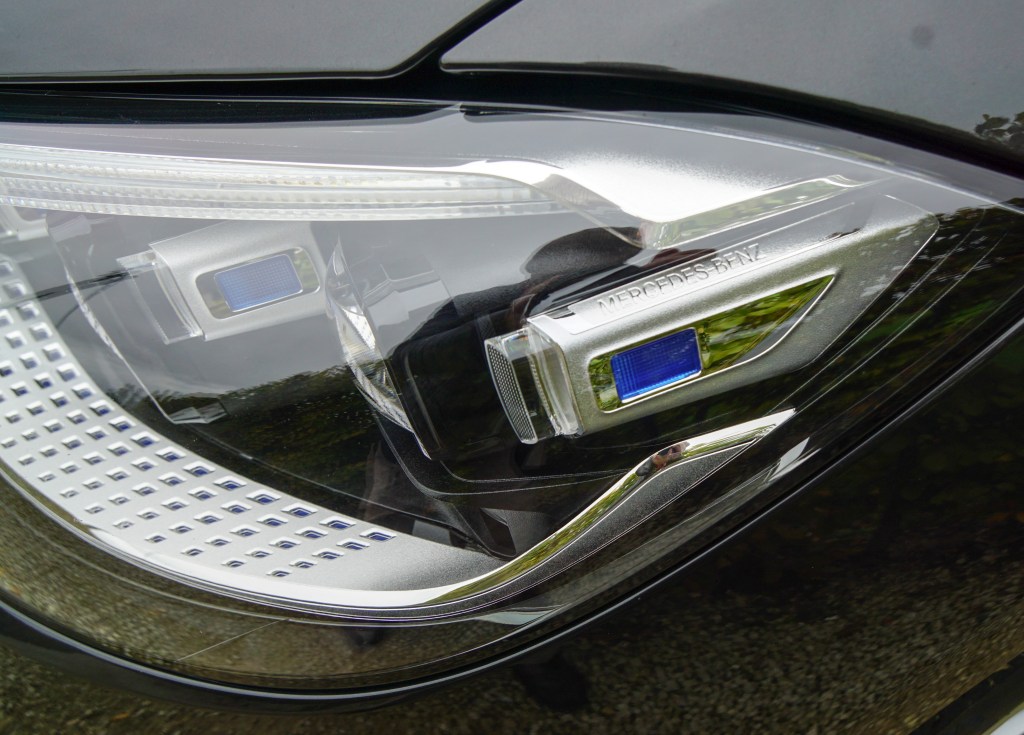
The LED headlights are state of the art, with light shining in bends, combined with excellent long-range visibility with dynamic headlight assistant and extra powerful LED elements. The headlights shine up to a distance of … 650 meters (!).
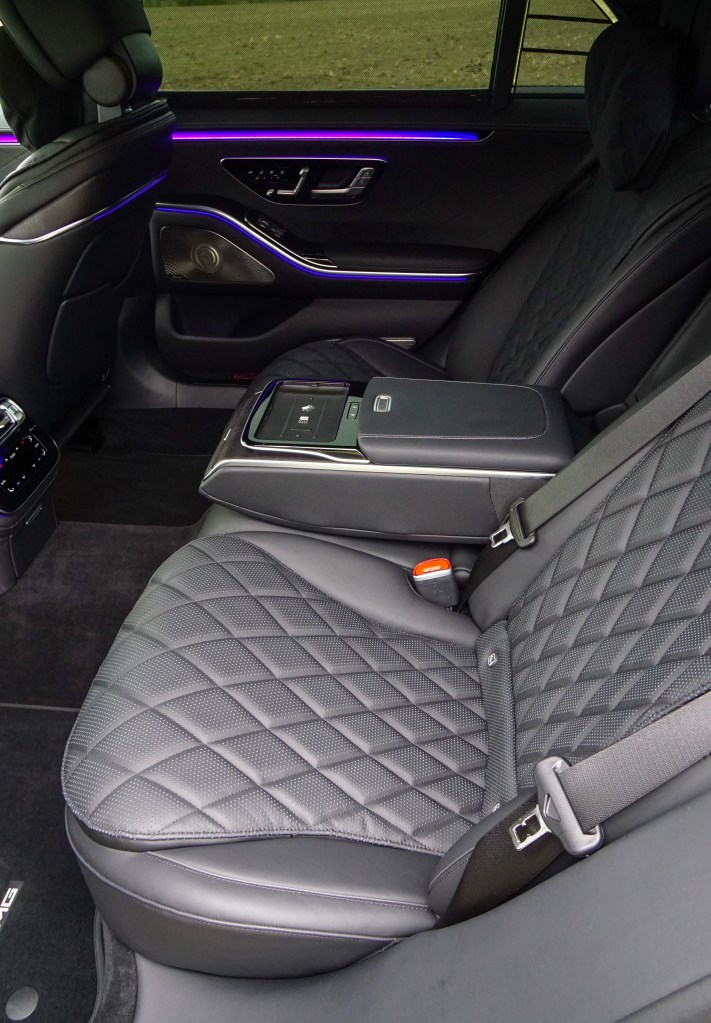


The Long version of the 450 is as you can expect enormously spacious at the rear. But also in front there is enough head- and legroom for 2 metre tall adults. Boot space is of course also sufficient with 450 liters.
 
 Conclusion

The Mercedes S Class continues to be the absolute benchmark in luxury, mechanical and electronic perfection, comfort and sheer performance. Add to this the legendary quality seen in the perfect fit and quality of the materials used, and you know that this car is built for a lifetime of superb motoring.

Of course, all this doesn’t come cheap, even more so when you take into account the long list of optional extras.

But then, when one reaches the pinnacle of what a series production luxury saloon can embody and represent, it is still quite reasonable when compared with exotic supercars…

Hans Knol ten Bensel

The Citroën C5 Aircross, or the magic of a voyage in total comfort…

The fine art of travel: we drove the C5 Aircross for a stay in Hotel des Indes in The Hague…

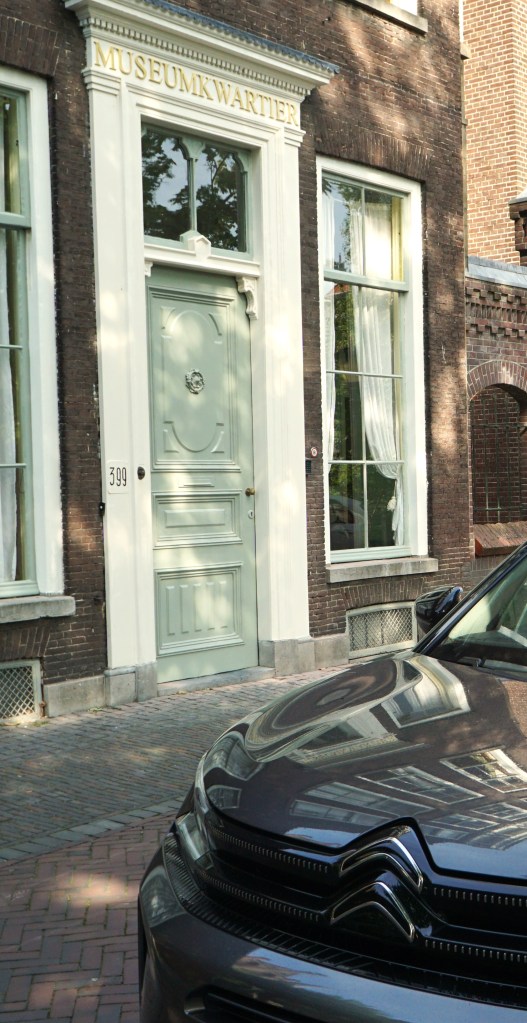
Driving between and into the iconic cities of Europe in a Citroën has always a special touch. Our test car indeed added the unique aura of the brand on our tour through Belgium, Holland and Germany. Comfortable, smooth, spacious, frugal and efficient, being last but not least also fast and safe. These are the qualities of this C5 plug in hybrid SUV we appreciated on motorways and narrow inner city roads along Dutch canals and their historic houses. Just read further…

Hans Knol ten Bensel

Enjoying Utrecht by staying a few nights in a historic house in the beautiful city centre along the grachten…

The Citroën we tested came with a 180 HP engine, combined with a 81 HP electric motor coupled to a battery pack which gives you close to 60 km range. A wonderful hybrid drivetrain, smooth and pleasantly frugal when you drive it sensibly, of course. This C5 is not unduly heavy, with a kerb weight of 1.825 kg, which indeed makes it future proof when weight coupled road taxes will be imposed increasingly in the coming years.

The iconic city centre of Gouda…

We liked the looks and the typical Citroën styling language with a preference for well-rounded shapes while keeping an eye for boxy room efficiency in its overall proportions. The silver grey paint scheme and the judicious use of chromed accents added a touch of luxury and panache to “our” C5. Since its facelift in 2022, its overall looks have dramatically improved, especially on the front end.

Your spacious travelling companion…

Right away we were very seduced by the excellent luggage capacity and the overall shape of the boot, as it allowed to stow our large suitcases upright on their side which allowed us to take maximum use of the available space of without having to fold down the rear seat backrests at all, leaving the cabin uncluttered and free for passengers. Indeed, the three individual back seats can be moved back and forth over a distance of not less than 15 cm. In the plug in hybrid version we drove, the available space is at least 425 litres. One can enjoy that the luggage load is discreetly stowed away, which makes city visits more safe when on tour between hotels and cities with a fully loaded car. A major practical advantage which is often not fully appreciated…

Superb seating and driving comfort…

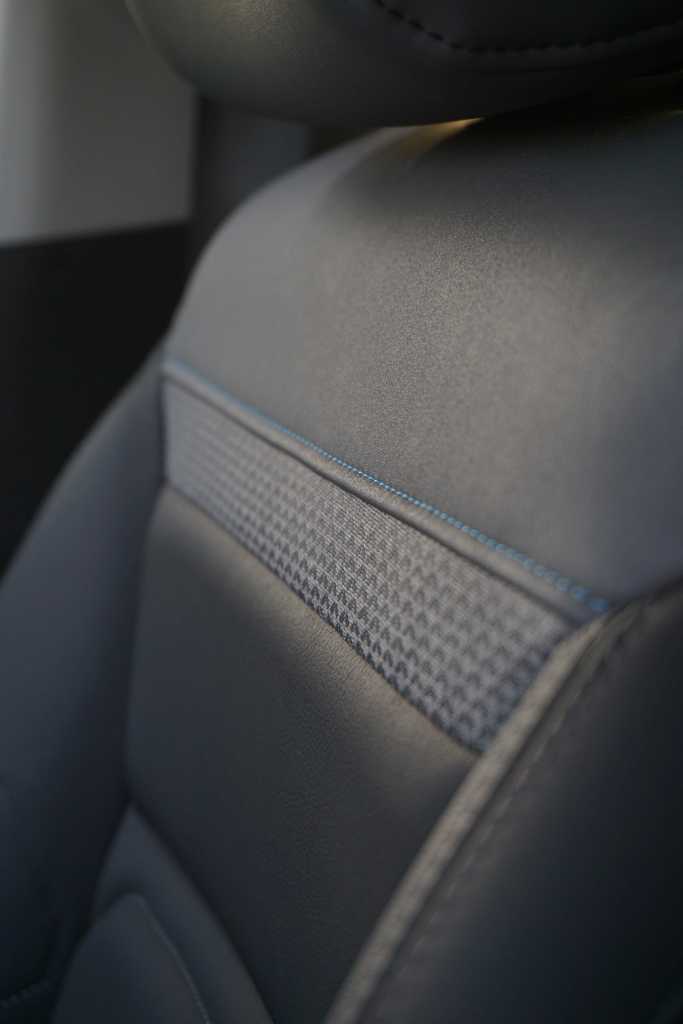
Citroën goes to great lengths in making their seats comfortable, and indeed, they are a class of their own. They provide smooth and restful support, due to the clever use of foam material. Citroën calls them Advanced Comfort, and they are also pleasantly wide.

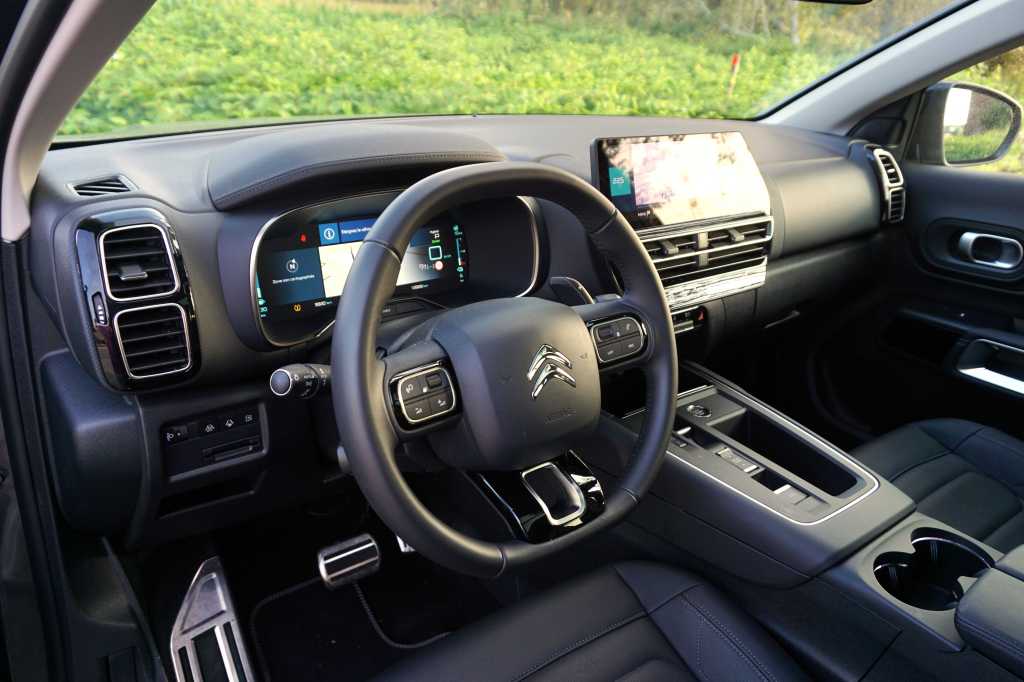
Infotainment is up to scratch, and Android Auto as well as Apple Car play are possible; we liked very much the dual digital clusters, which enabled the navigation map to be displayed both on the central screen as well as in the instrument panel in front of the driver, which is so useful when you have to find your way in unknown iconic city centres.

The suspension of the C5 is also calibrated and set up to combine good handling and surefootedness with excellent comfort, both at high and low speeds. We were also quite impressed by the high speed stability on German Autobahnen, where this hybrid SUV left nothing to desire in terms of fast GT cruising. It just goes to show again how good cars have become nowadays…The C5 is also remarkably silent, even at higher speeds.

Performance and economy

On this voyage we never ever felt the desire for more power, and indeed the C5 Aircross has all what it takes. Its 180 HP engine combined with the 81 HP electric motor develop a total of 224 HP, resulting in an acceleration time from 0 to 100 km/h in under 9 seconds, and a top speed of not less than 225 km/h, as we could enjoy on German Autobahnen, where the Citroën truly impressed with its silent ease at these high speeds.

Economy of this hybrid depends totally on the way you drive and use it. You can recharge it regularly and drive only on E power over its 50 km useful E-range, or choose one of the several ’E-Save’ modes, and drive it as a hybrid. In the E-save modes, one can keep or recharge the battery up to a certain chosen level for later use in emission-restricted zones. Driving in hybrid mode, one can achieve easily values ranging between 7 and 8 litres/100 km. The drivetrain, also thanks to the super smooth Aisin 8 speed auto transmission, is beyond reproach, responsive and refined.

Fit for urban use

The C5 needs some vision aids when driving in town centres, and we appreciated these accessories indeed very much. The C5 is rather wide with its 2,11 meters, but then reasonably compact again with a total length of 4,5 meters. It has distance warnings fore and aft as standard equipment.

Conclusion

The C5 Aircross is a bestseller in the Citroën range, and with voyage we found all the good reasons for it. Last but not least it is good to know that the C5 Aircross is offered with a wide choice of different drivetrains, from the 136 HP petrol engine and a Diesel version with the same power to the (plug in) hybrid versions with respectively 180 and 225 HP system power.

It is marvelously versatile, has genuine GT qualities, is roomy, comfortable, is frugal and fast, has distinct, characteristic looks, and indeed drives like a true Citroën…

Hans Knol ten Bensel 

Fiat celebrates 125 years and launches a new iconic “grande” Panda for the world…

Fiat has now for more than a century been the pounding heart of Italian engineering and industrial genius. It has given the world wonderful cars, and to me, besides the pre-war Balilla and Topolino, the post-war cars are even more iconic and are absolute milestones in automotive history. Let’s begin with the Fiat 1100 or millecento compact four dour sedan, which is still serving in India as a taxi and has been built there until a few years ago. I absolutely loved the PininFarina styled six cylinder 1800/2100 four door sedans launched in the sixties, and then of course the Seicento and the Cinquecento in ‘57…

About ten years later came the Fiat 124, the 1967 European car of the year, which put the whole east-bloc and Russia on wheels, built in Russian Togliattigrad as the Lada.

Then there was the Fiat 127, putting front wheel drive and excellent performance to the disposal of the masses. Soon then came the Panda, an absolute icon which I photographed in the Galerie de la Reine in Brussels for Keesings Auto Magazine at the time. This car I still find absolutely modern, by the way.

The iconic Panda, born in the 80s, still totally modern and contemporary today…

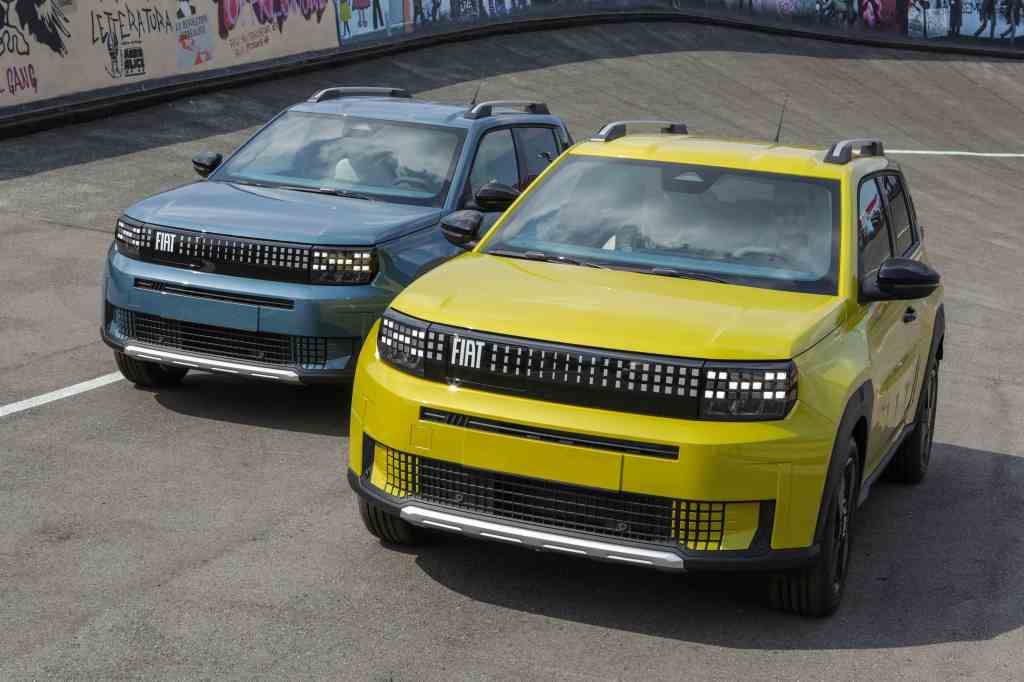
Now we live in different times, but the Panda is still inspiring many. Therefore only logical that Stellantis put its new Fiat Grande Panda on the new global line-up based on a multi-energy platform.  FIAT now starts its transition from local-based production to a global offer through a common global platform. But there is still an Italian DNA left, as it has been styled at the Centro Stile in Turin, and certainly has lots of character as the photos show.


The new Grande Panda

Olivier Francois, FIAT CEO and Stellantis Global Chief Marketing Officer, summarized it well at the presentation: “Currently we have launched FIAT’s comeback to the global mainstream based on 3 pillars: Italian design and development, global platform and local relevance—and the Grande Panda is the first member of our new global family.”

The Grande Panda will first land in Europe, Middle East, and Africa, and will be available in both electric and hybrid versions.

Proudly presenting the big new Panda: John Elkann, Chairman of Stellantis, Carlos Tavares, Stellantis CEO, and Olivier Francois, FIAT CEO and Stellantis CMO.

Needless to say that we eagerly await to get more acquainted with the Grande Panda soon, both in hybrid and E-versions, which, as we read, will be aggressively priced.
 

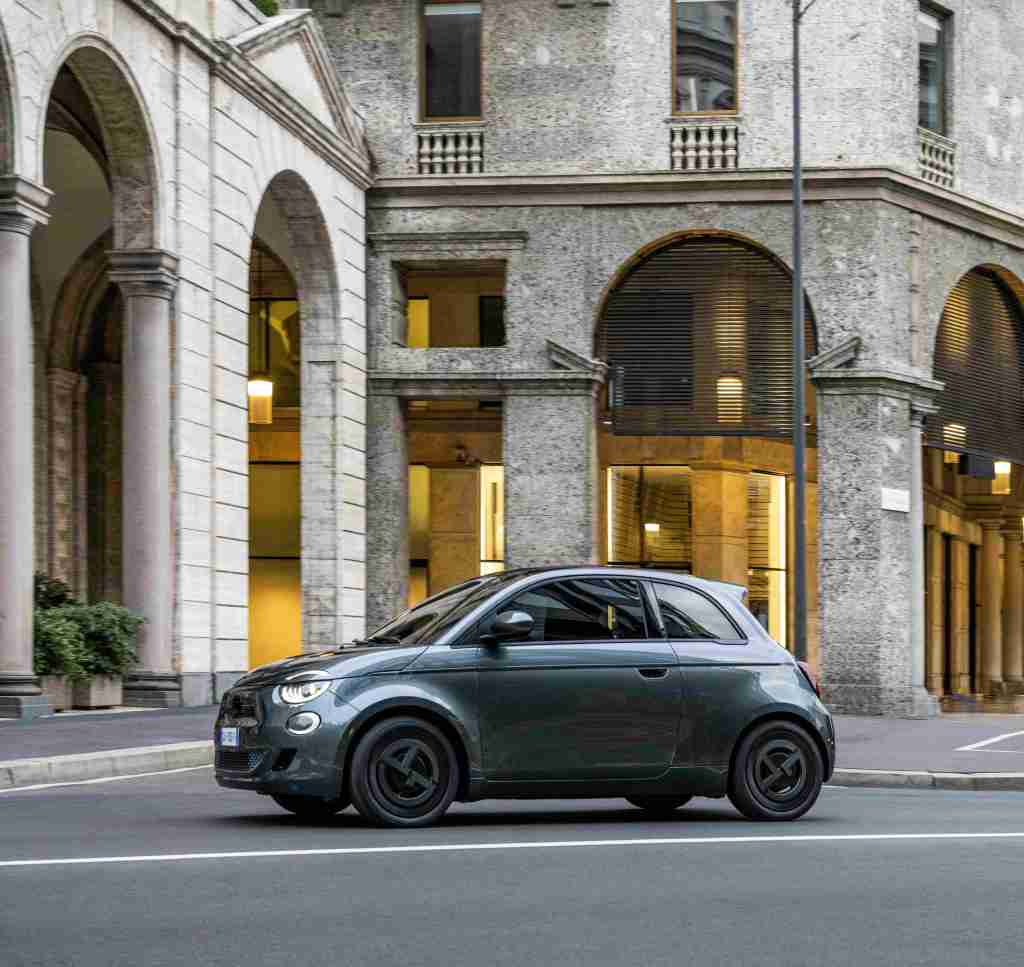
A Fiat 500e Giorgio Armani

But at this anniversary, celebrated on the iconic “Pista 500”, the circular test track on the roof of the famous Lignotto factory building, now converted in a hotel, where the walls of the guestrooms are decorated with mural size photos of details of historic Fiats and a MUST to spend a night when you are in Turin, Fiat stylists and Giorgio Armani designed together an elegant version of the 500e.

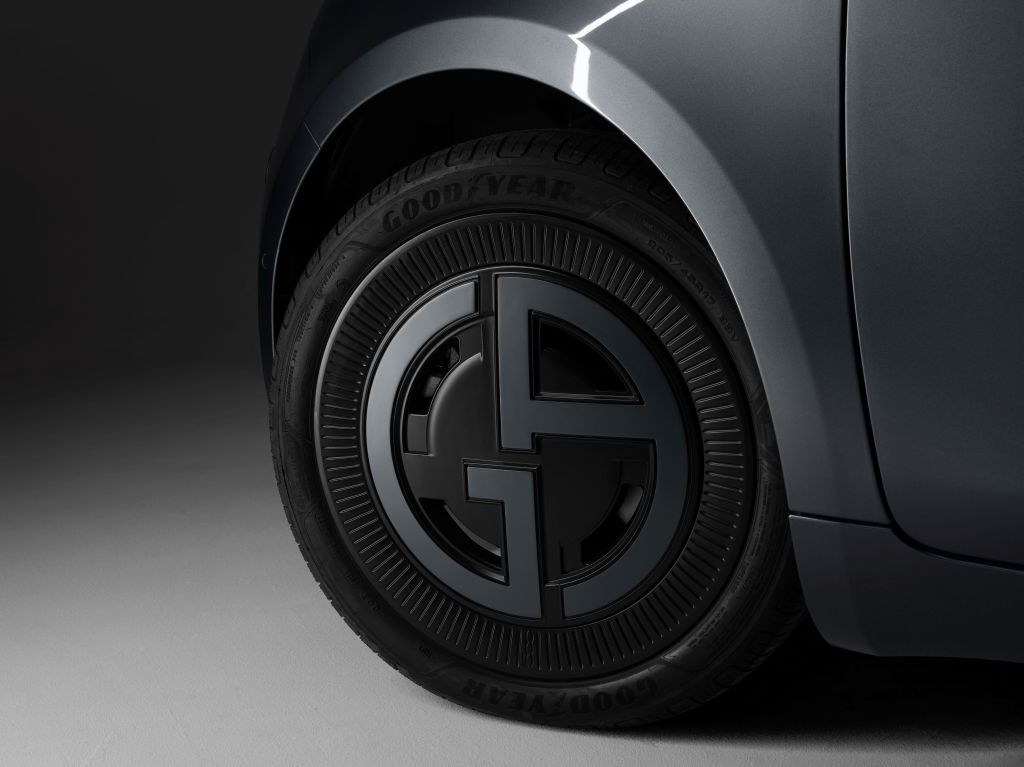
The standout exterior design element are the wheels, representing the GA logo on a macro scale. They become the car’s star feature, ensuring it stands out…

We hoe you enjoyed here the photos of the celebration, a very enjoyable event for a brand we always kept very close to our car-loving heart…

Hans Knol ten Bensel  

We drove the Volkswagen T-Cross 115 HP DSG R Line

The most compact SUV in VW range is now already a few years with us, but has lost nothing of its appeal since its recent major facelift . It seduced us greatly during our test with its looks and revamped interior and infotainment, overall agility and  driving pleasure, zesty performance and immense practicality. On top of that, it is beautifully compact. We drove it with the 115 HP 1 litre 3 cylinder, mated to a 7 speed dual-clutch transmission. Just read further…

Hans Knol ten Bensel

Compact looks

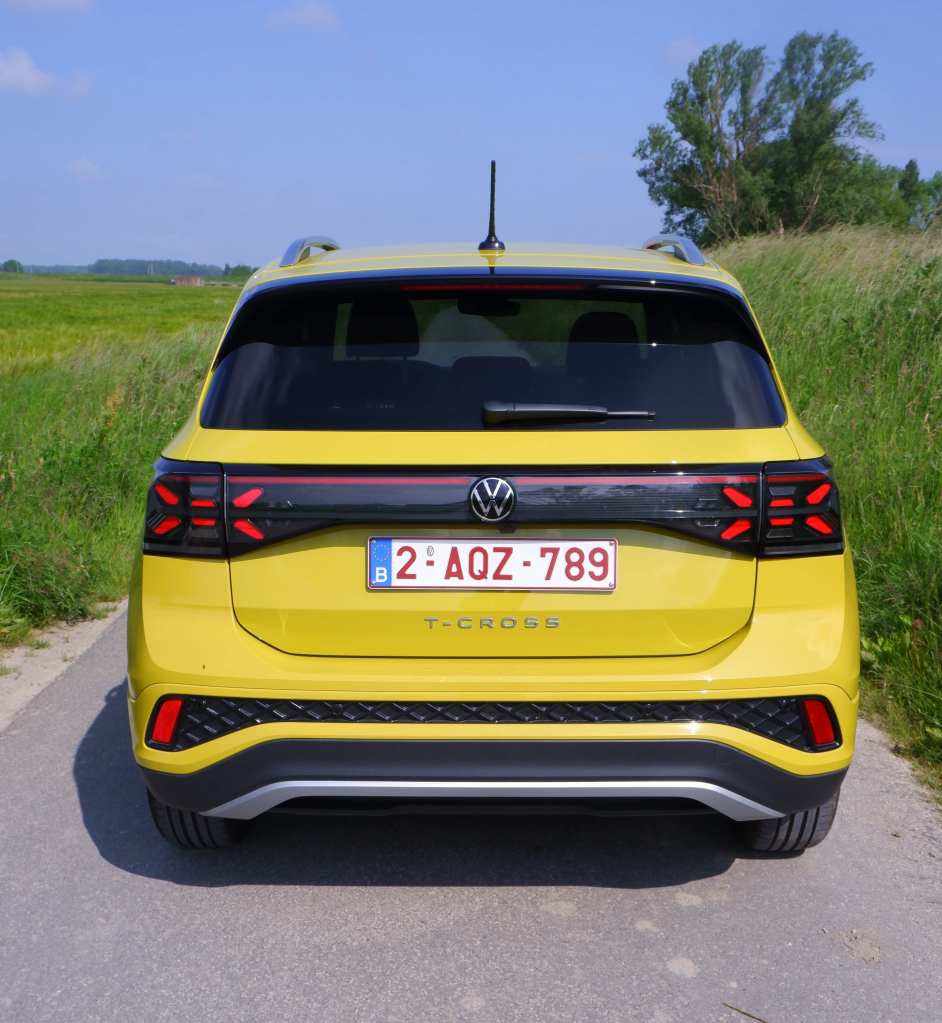
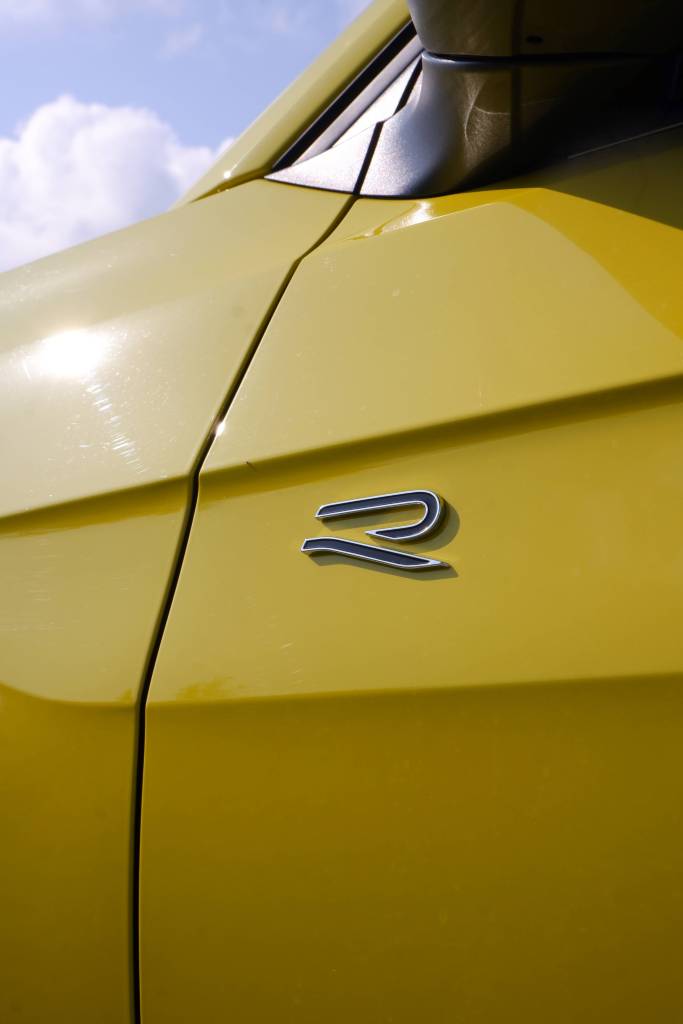
The T-Cross is actually only 5,4 cm longer than the Polo, but some 13,8 cm taller. Its stance is quite muscular, and we liked very much the wide front grille and even more the horizontal reflector band at the rear, which gives the T-Cross a distinct VW family character and modernity. Three new, fresh colours have been added to the model range: the solid colour Grape Yellow (a crisp, sporty yellow), Clear Blue Metallic (an elegant and friendly light blue) and Kings Red Metallic (a vivid, striking red). As you can see on the photos, the Grape Yellow suited our R-line T Cross very well…

Quality…

Stepping into the car one is inevitably seduced by the overall no nonsense solidity and quality the materials and the outstanding fit and finish. The recent facelift brings a redesigned dashboard, with a free-standing infotainment display. The top sporting equipment version, the so-called R-Line,  we tested, has a 9.2-inch display with a diagonal of 23.4 cm. Android Auto and Apple Car Play are of course standatrd. The dash panel in the T-Cross has also undergone a complete redesign: as in larger VW models, the dash panel features soft-upholstered and significantly higher-quality surface materials.

The nice firmness of the seats, the look and feel of the (now again physical touch) controls, one has the overwhelming impression of stepping into a long lasting quality product. 

Despite its compact size, the four doors are quite large, and one doesn’t feel cramped at all. VW proudly comments that this is an advantage of its so-called modular transverse matrix, which allows the front axle to be placed much closer to the front of the car. 

The generous 2,55 m wheelbase does the rest. On top of all that, the SUV character of the T-Cross lets you sit pleasantly high. The driver and front passenger sit some 60 cm above the road, the rear passengers even some 5 centimeters higher.  

Lively performance 

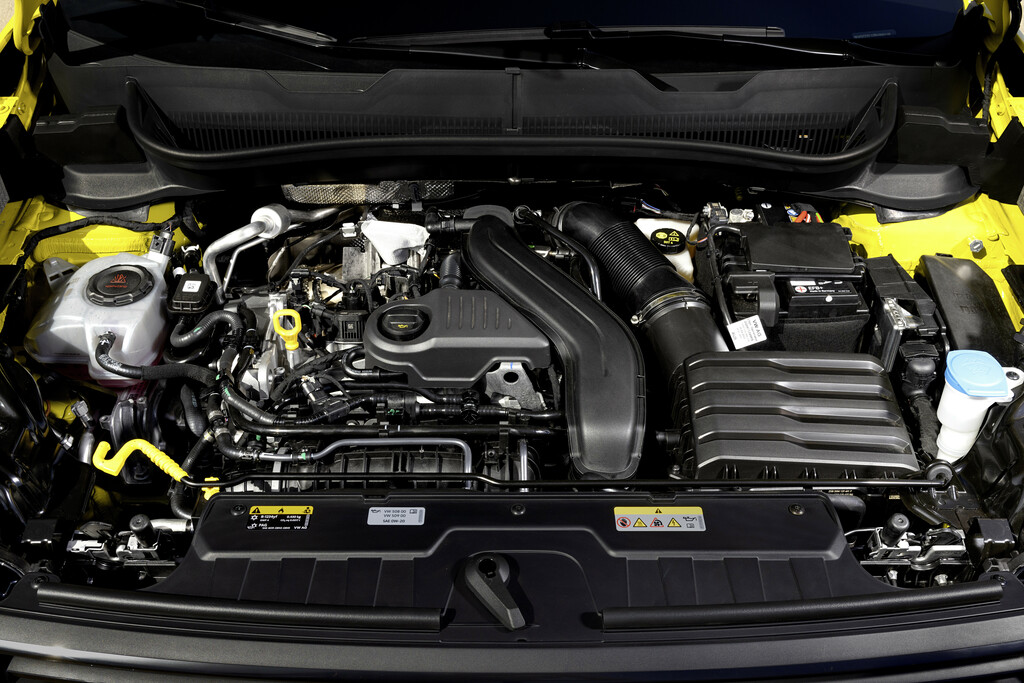
The T-Cross is powered with the 1.0 TSI three cylinder engine with gasoline particular filter. This is a well proven unit with sits all across the Polo range, coded in factory terms as the EA211 aggregate. It comes in several power versions, and we tested the 85 kW/115 version.

With this power, the T-Cross leaves little to be desired in terms of performance. 0-100 km is absolved in just over 10 seconds, with an Autobahn worthy top speed of 195 km/h. The impressive pulling power of this eager 3 cylinder and the reactive 7 speed DSG does the rest. One can choose between normal and sport settings, and indeed, driving pleasure is to be had.. 

With a lighter right foot, the DSG makes full use of the available power at low revs, and the fuel consumption is therefore quite good, even when one adopts a rather dynamic driving style. We achieved an average test consumption well below 7 litres, which is very creditable indeed, and amply shows that a state of the art ICE has not said it last word at all. 

The latest news at the moment of writing is that Volkswagen intends to allocate shift some of its EV-designated funds to continue developing petrol engines. Company Chief Financial Officer Arno Antlitz recently stated that it would spend around $65 billion to “keep our combustion cars competitive.” It seems that VW would invest a third of its planned EV funds in combustion engine technology , and this is a change in its strategy for the time being.

So, remember what we wrote in the test of the Polo GTI. Just cherish your ICE engined VW, it will be useful for years, if not decades to come… We liked this 1 litre engine, with excellent smoothness and excellent pulling power at low revs, making it very “zen” to drive in urban traffic.

Versatile and practical

The T-Cross has been, despite its compactness, convinced with excellent versatility. The rear bench seat that can be moved by 140 mm. When all the seats are occupied, the T-Cross offers a luggage compartment capacity of between 385 and up to 455 litres when loaded up to the height of the rear bench seat.

When the rear bench seat is folded down (60:40 split), this creates a flat load area with a stowage volume of up to 1,281 litres (loaded up to the height of the front seat backrests). But there is more. The front passenger seat can additionally be folded down as standard from the Life specification package and up.

The continuous load area from the rear to the front is then 2,398 mm long and can stow everything “from surfboards to para gliders”, as VW puts it.

Volkswagen has also increased the draw bar load of the T-Cross from 55 to 75 kg, so you can transport safely those heavier E-bikes.

Let there be light…and safety first with “assist” systems.

The T-Cross now has new LED headlights (instead of halogen) and new LED taillight clusters as standard equipment. The IQ.LIGHT LED matrix headlights are a completely new Volkswagen development by the way.

Safety is paramount, and indeed our test car came with the optional Travel Assist. Depending on the traffic ahead and the permitted speed, the T-Cross can control the vehicle’s speed with automatic acceleration and braking.

Within the system limits, Travel Assist can also include speed limits, bends, and roundabouts in its control interventions. Wonderful, although sometimes you just want to cruise quietly along at the slower speed imposed by the new speed limit, and not being catapulted vigorously to the previous original speed limit when this new lower limit ends. But you can set all this, so you are well advised to do this homework first at the start of your trip.

The new T-Cross can also automatically perform stop-and-go operations when fitted with the DSG, and this is something we appreciated very much indeed…

Conclusion

The T-Cross totally convinces, and it embodies indeed perfectly what a ICE engined Volkswagen should be: superbly built, powerful and fast on Autobahnen, fit for Grand Touring yet smooth and “zen” in town, quite frugal if you let it show its qualities by adopting a more relaxed driving style.

It offers genuine driving pleasure and offers also all what the dynamic owner and his/her family wants: a versatile interior, offering also excellent towing talent.

Hans Knol ten Bensel

We spoke with Barbara De Mol, Marketing Director Lancia and Alfa Romeo…

HKTB: Let me first congratulate you with your new responsibility, and thank you for granting this interview. You have already built up quite a career in the automotive world…

BDM: Indeed!  I made my first steps at Renault, then joined the Group D’Ieteren, where I worked in the Marketing department at Porsche, and then took a new challenge by joining Electric by D’Ieteren, putting their product in the market. Then, as I was launching a new product in a premium (electric) automotive market, it was a logical step for me when an iconic brand like Lancia was (re)launching itself in our market, to take up also this challenge and this is how I landed here as a marketing director for Lancia and Alfa.

HKTB: Lancia is a unique premium brand with a noble Italian elegance and spirit, embedded in a rich history…

When I heard that 9 dealers will represent the Lancia brand in our country, with 1 in Luxemburg, it intrigues me to know how they will receive and approach the client and give him this premium impression and “feel” the moment he enters the showroom. What kind of support do you provide to these dealers?

BDM: Indeed, our support goes further than just marketing, and contains other aspects. For instance, the appearance and “look” of the showroom itself. We prescribe a premium level here. But there is also the sales person, i.e. the person who makes the first contact with the client. So we have established a training programme, where learning how to establish a good “face to face” contact is very important. We also have to address any doubts the client may have about the quality of our Italian cars, and therefore we offer an extended guarantee for the entire duration of the contract on our products.

HKTB: Do you work together with Italy to develop this training program for the sales staff?

BDM: Indeed, we have a very good collaboration. They communicate about their best practices, and of course we also have in Belgium our own training team. We have also developed a specific sales course, not only focusing on the technical aspects of the car, but also pointing out which elements constitute a premium brand.

HKTB: And the philosophy of the brand…

BDM: Of course. This has also a special appeal for them. The Italian elegance, the rally successes, there are many aspects. The history of Lancia is also very important.

HKTB: Can you tell us a bit more about the geographical distribution of the dealerships, for instance, there is no dealer in Knokke…

BDM: Indeed, there might come one in 2025… The first idea is of course to spread the dealerships  across Belgium, and the person who lives in Knokke or rather has his second residence there, lives usually also in one of the main Belgian cities.

HKTB: You have a dealership in Courtrai…

BDM: Indeed! The (first) locations have been chosen in function of the potential sales volumes. We need motivated dealers who want to invest in the brand, and therefore we need to offer them an opportunity to grow…

HKTB: What about the dealerships who previously sold the Lancia Ypsilon, now some years ago?

BDM: These dealers will still exist for after sales service. Presently there are only two dealers in this situation. They can service the new Ypsilon, even when they don’t have the car in their showroom.

HKTB: The car has many technical similarities with other cars in the the Stellantis group, not to mention the Peugeot 208 and Opel Corsa …

BDM: Indeed, but when it comes to selling and servicing the Ypsilon, the approach is to maintain its strictly Italian character, which is reflected in the dealer strategy…and which is to be applauded!

HKTB: Do you have a cooperation with the Netherlands?

BDM: We are different, but we work together, as the Ypsilon is launched simultaneously in both countries.

HKTB: Within the Stellantis group, DS is also a brand which addresses a premium client base. Is there a “cross fertilization” concerning client approach, an exchange of best practices in this field?

BDM: Not really. Indeed, we have three premium brands in the group, Alfa, DS, Lancia. We can share some training programmes on how to sell a premium brand, but then for Lancia and Alfa the passion for the automobile, its elegance and its design are rather more important. It is more “Italian”.

HKTB: Can you tell a bit more about the plans and potential for the fleet market for this Ypsilon?

BDM: We know that in Belgium the premium is very much fleet oriented, but as the Ypsilon is a city car, we reckon that about 50 % will be sold in the fleet market and indeed 50 % will find its way to private clients, who will opt rather more for the hybrid version.

HKTB: There will also be a follow up in the Lancia model range with the Gamma…

BDM: Indeed, and next year also there will be the more engaging HF version of the Ypsilon.

HKTB: Are the dealers exclusively Lancia?

BDM: No, they are also Alfa. They are so-called multibrand, but they will have a specific showroom, dedicated to the brand. The showrooms of the different brands have also to be clearly separated, and indeed the sales people are also specific. There is a dedicated sales person for the brand, who has an intimate knowledge of the brand.

HKTB: Are you going to engage with Lancia in cultural and other events? Will you for example sponsor in the future events like the Concours Reine Elisabeth?

BDM: Not in 2024, we now concentrate on the launch of the brand; but the retailers will probably organize or sponsor (local) events. There will be however specific events for the fleet clientele.

HKTB: I am (also) an artist myself and have a keen interest in artistic events, and I could see Lancia sponsoring events in the cultural sector…

BDM: This is a very good suggestion! Maybe in 2025. But you can always contact me, I am always open to new ideas and suggestions! The first event is now the opening of our retailers. The 22nd of May, the Luxembourg retailer will open its doors…

HKTB: Thank you very much for this interview!

Hans Knol ten Bensel  

We drove the Peugeot e-2008: a bestseller goes electric…

The stylish 2008 has already won many car loving hearts in its B-SUV segment over the last three years, and Peugeot now again improved its styling, equipment and last but not least gave it a new electric motor, bigger battery and longer range.

Reason enough for us to have a go for you behind its cute, dynamic and very pleasant small steering wheel, which gives this 2008 the extra panache and feel to brighten up your daily driving. We drove the top notch GT version here, and were spoiled indeed…

Hans Knol ten Bensel

The E-2008 was already quite popular in its earlier  version, with not less than 75,000 units sold. It accounted for 17.4% of sales in 2022, placing it on the podium of European sales of electric SUVs in the B segment.

Even more style…

The 2008 had already an appealing overall design, but now after the new 508 saloon and 508 SW, the 2008 is the second model to adopt the new PEUGEOT signature light. This consists of three vertical light claws which are integrated into the gloss black inserts on the bumper. In the GT versions, the effect of the three claws is extended in the lighting of the full LED headlamps through the use of three light modules. We liked it…see the photo below.


The new LED rear lights on all versions of the new 2008 are redesigned. The emblematic three claws are made up of three superimposed horizontal double slats, giving the 2008 optically a wider stance.

The new 2008 has a new front end, which features the new PEUGEOT emblem, and we liked very much the new Selenium Grey which was chosen as the launch colour. It gives the 2008 a decidedly upmarket appeal.
The wheel design is now in line with those introduced on the PEUGEOT 408. Several models are available, in 16-inch “NOMA” (ACTIVE versions), 17-inch “KARAKOY” (ALLURE and GT) or 18-inch “EVISSA” (optional on GT). All alloy wheels feature a 4-spoke wheel centre, stamped with the PEUGEOT crest…

A pleasant cabin and a new digital instrument cluster

Ideally located at eye level, just above the steering wheel, the new 2008’s instrument cluster is digital on the ALLURE and GT versions. Its 10-inch digital display has a new design and, on GT versions, a 3D display. The colour of the display, the hierarchy and the layout of the information can be fully adjusted to suit the driver’s preferences, and indeed, is quite intuitive to use. We like the Peugeot idea of putting the instruments in your line of vision, just above the upper rim of the small steering wheel, but we would suggest that you test this out for yourself so that you feel comfortable with it.

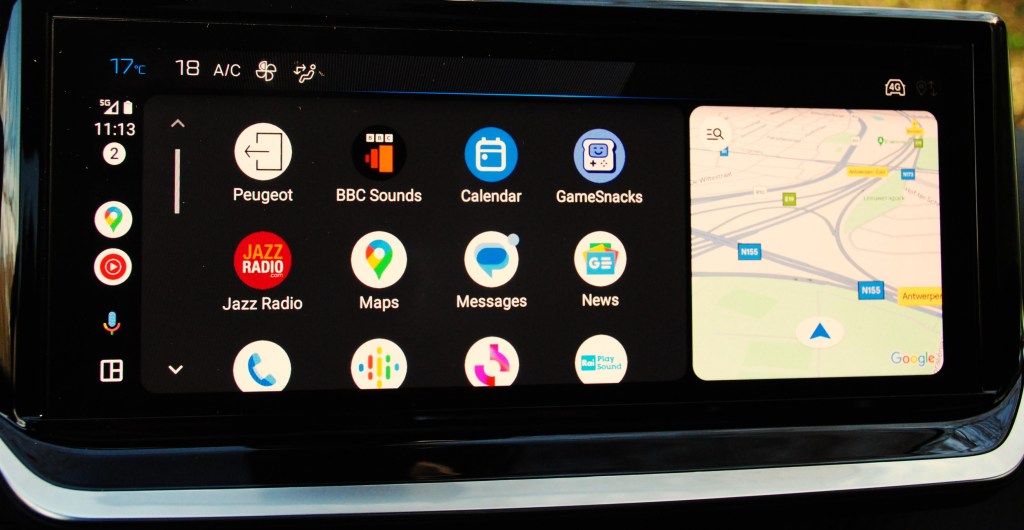
Of course, the central display will also show your Android Auto connection…

All 2008 models now come with a 10-inch central touchscreen as standard, and on the ALLURE and GT versions, the central screen has improved readability thanks to HD technology. It is indeed a breeze to use, also thanks to the row of piano keys under the central screen, giving quick access to key functions. We also liked very much the big round audio volume control knob, it is always the most intuitive and useful tool for radio listening, no matter what…

The cabin is pleasant, the seats not only look good, but give excellent comfort and support. As icing on the cake, the GT version we tested offers ambient lighting which can be customised in eight different colours, coordinated with those of the central touch screen and even taking into account the selected driving mode (!).

If you plan to take your E-2008 to snowy alps or muddy country roads, it is good to know that the 2008 comes with Grip Control, which provides access to three driving modes: sand, mud and snow. Depending on the country, this grip control offer is combined with ‘3PMSF’ all-season tyres.

A new electric engine and longer range…

Stellantis installs now a more powerful 156 HP electric motor in the 2008, and this engine is also found in the E-208 and E-308. The same goes for the improved battery, now good for 54 kWh. All this results in a longer range – according to WLTP standards – of 406 km.
Everybody now knows that outside temperatures and driving styles greatly influence the possible range of an EV. And it must also be said that for EV driving, the slower is the better, contrary to IC engined cars, which in the top gear have a so called ”sweet” spot for economy driving at some 70-85 km/h. At this speed, an EV is already consuming a LOT MORE kWh than at say 50-60 km/h. Speeds between 30 and 40 km/h are most economic for an EV, this is the reason why it excels in urban traffic, and this is the main reason for adopting hybrid drivetrains to lower overall consumption in frequent urban use.

To achieve decent efficiency at higher speeds and more dynamic use, manufacturers of electrified cars have adopted the so-called ”drive modes” systems, as is of course also found on this E-2008. In this ”Eco” mode, the engine power is harnessed to some 109 HP, which is indeed more than sufficient for everyday driving. The excellent torque characteristics of an electric motor make up for this, and one never has the feeling that the car is underpowered.


What remains is the uncanny and brilliant smoothness of EV driving, and indeed, nothing comes close if you want pleasant (urban) mobility. On the open road, we try to achieve in the milder springtime temperatures a decent range of some 350 kilometers, and this means cruising in the ”Eco” mode at some 100 km/h, which means that you truly can enjoy the jazz or classical music coming from the very melodious sound system.
On the practical recharging level, it is good to know that you can fast charge the 2008 at up to 100 kW. This means that you can recharge this Peugeot in merely 27 minutes from 10 to 80 %.

We also appreciated here the very well dampened rolling noises, making a longer trip a very relaxing and enriching experience.
EV cruising is indeed under these circumstances a marvelous ”Zen” activity, where we are of course grateful that the distances in our rather small country are not by any means large. A word of praise also for the sound system, very important now in an EV.

French car builders have a unique “savoir faire”, when it comes to making suspensions which are both comfortable and well balanced, offering excellent road manners. The small steering wheel inspires you to adopt a more active driving style, and indeed, the 2008 doesn’t miss a beat, on any road and at (almost) any speed…Having said this, this 2008 feels however most at ease when you adopt a zesty, but a still rather relaxed driving style.

With 156 HP the E-2008 offers quite adequate performance, if not sensational. It will sprint from 0 to 100 km/h in 9,1 seconds, top speed being limited to 145 km/h.

Practical

The 2008 scores well in everyday life. Offering good seating comfort fore and aft, luggage space is still very much OK with 434 litres, and you can extend the luggage space by folding the 60:40 split rear seats. When it comes to equipment, there are three levels you can choose, Active, Allure and the Gt version we tested. The Allure version seems the ideal compromise in terms of value for money, as it offers most of the things you get in the GT  version, although we must admit that we liked the extra panache of the GT nevertheless…

Conclusion

The 2008 convinces in styling, above all a fantastic looking interior and dashboard. It is smooth and comfortable, seats four easily, has adequate boot space, and is reasonably e-efficient. It is very well possible to achieve an average consumption of around 15 kW/h given a relaxed driving style.

Hans Knol ten Bensel 
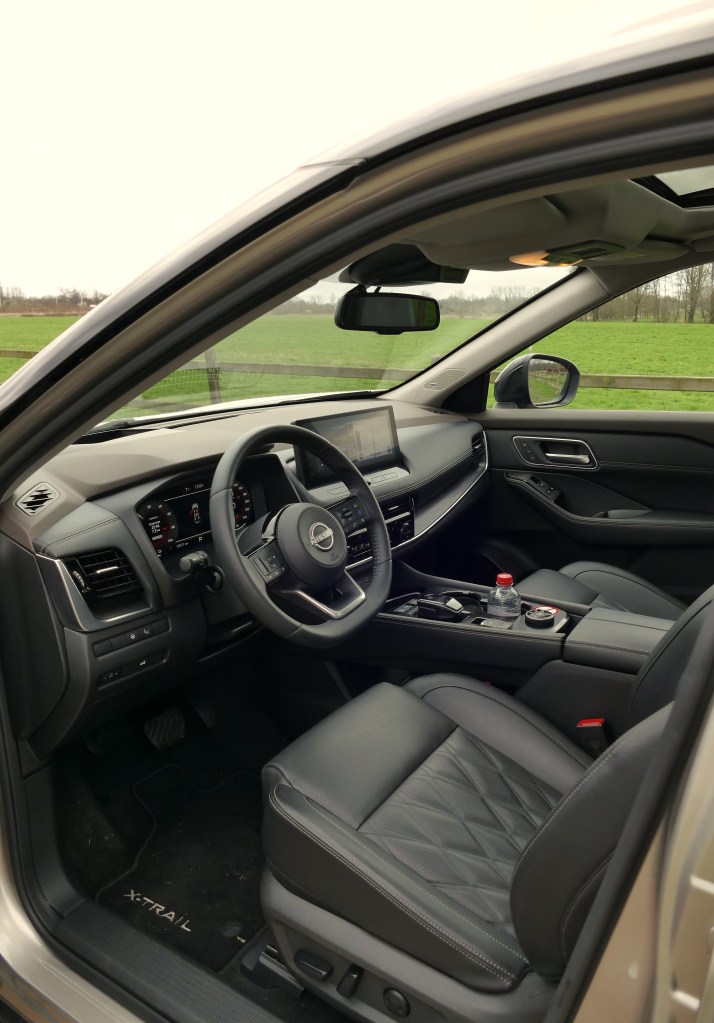
We drove the Nissan X-Trail e-Power e-4ORCE : the best of both worlds?

Nissan is carving itself a wonderful niche in the electrified SUV world, with both its popular Qashqai and the all new X-Trail.

It offers a bold technological solution for these two popular models by decoupling the engine entirely from the proper drivetrain, letting it act solely as a generator to one (and in this case two) electric motors.

The idea behind it is obvious: it offers the pulling power and mechanical refinement of the electric motor and at the same time it avoids the inefficiency of the combustion engine when it operates under low charge  situations combined with relatively high revs, like in urban stop start traffic.

It lets the engine do its charging work under ideal thermal working conditions and loads, and uses a small(er) battery to deliver the extra electric energy when needed in specific driving situations, like starting off from standstill or engaging in fierce acceleration. Ideal? Let’s find out…

Hans Knol ten Bensel
Smooth…

The driving impressions are indeed very convincing: progress is silky smooth, and indeed the X-Trail is delightful to drive in town and slow traffic.

The ample torque of both electric motors inspires confidence, and lets you master every driving situation. The combustion engine, a 1,5 litre three cylinder, is well insulated and hardly audible. Its recharging task depends of course on how much e-power you want it to deliver, and therefore the more relaxed your driving style, the less you hear it. Whether it will rev higher depends also on the driven speed, soo clever! The Nissan engineers did a very good job here, as this gives a very “natural” impression to driver and passengers.

Total power of our top op the range e-Power e-4orce X-Trail is not less than 213 HP, and the torque is even more important with 330 Nm at the front and 220 Nm at the rear. Smooth performance is the result: the 1,9 tonne 7 seater will sprint from 0 to 100 km/h in 7 seconds and the top speed is an impressive 180 km/h. Indeed, this X-Trail will never feel underpowered.

Geared for comfort

Does the X-Trail awaken the sporting driver in you? Well, rather not. Its utter smoothness puts you rather in a “Zen” mood, and the comfortable suspension does the rest. The car is well balanced and stable in all circumstances, and this adds to the overall relaxing character of the car.

Well being is also found in the cabin. Of course, the top Tekna+ equipment version spoils your senses. The interior is also well laid out, stylish and the designers did keep wisely an array of knobs so you quickly find your way intuitively to all the functions of this X-Trail. We also liked the look of the digital instruments and screen display.

The X-trail e-4ORCE AWD is with its dual motors and 4WD very well at home off- road too…

… but also for economy?

The Nissan engineers had first and foremost the mechanical smoothness of e-propulsion in mind, and combined this with range comfort. Consumption seemed not to be an absolute priority. Nissan opted for a smaller  battery, not least because it would cost room, make the car heavier and pricier. This means that the engine has nowhere to dump its generating power when the battery is full. Of course, the drivetrain software will shut the IC engine down as soon as possible, or let it turnover purely on e-power. Having said this, if you adopt a relaxed driving style, it is quite possible to achieve a consumption between 7,5 and 8 litres, which is quite efficient for a car weighing close to two tonnes. Official figures indicate an average consumption of 6,4 litres/100 km, and 146 g/km of CO2 emissions.

A seven seater…

Indeed, this X-Trail will transport two youngsters on the third row seat, but this is not meant to be for super long trips. But a short run to the supermarket or football club is always in the cards, and this can be quite practical on more occasions than you would expect.

Conclusion

This Nissan X-Trail e-4ORCE is a very well balanced, refined car which offers you all the sophisticated “Zen” pleasures of electric driving combined with the range and long distance cruising panache of IC engined cars. It is very well finished, is lavishly equipped and offers more than adequate space.

We were so seduced by all its good qualities that we decided to join a Nissan e-Power e-4ORCE to our stable of cars, so soon we will inform  you regularly about how it behaves in long term use…

Hans Knol ten Bensel 
Thoughts about the future of our automotive mobility and our energy resources…  

Mr. Philippe Dehennin pleaded passionately for a change in EU Commission decarbonization policies in the interest or European car industry, its workers and its consumers…

Recently I assisted at an interesting luncheon conference held by Philippe Dehennin, Chairman of BEHVA and honorary Chairman of Febiac after a lifelong career at BMW, at the premises of Autoworld and organised by the dynamic Royal Historical Vehicle Club. 

He talked about the one-sided approach of the present EU commission and parliament in drafting the path to carbon neutrality of our automotive mobility.

He passionately pleaded for a neutral stance by the EU political decision makers concerning the technologies which are to be used in reducing carbon emissions. This is in the interest of both consumers and the European automotive industry, which is under pressure and economical risk due to one sided technological solutions (i.e BEV) which distort competitive balances in the global economy. Here I present to you an extensive report of his conference.

On the subject mentioned in our title, we will regularly report on what the captains of automotive industry have to say, and the adjustments they bring to their corporate strategies in these turbulent times of energy transition… Just read further!

Hans Knol ten Bensel   

The lunchean conference was held at Brussels Autoworld…and organised by the Royal Historical Vehicle Club.

After illustrating the broad evolution of our (Belgian and European) mobility from the early fifties to the present day, Mr. Dehennin described, amongst others, the positions of ecologists on our future mobility.

In terms of preference, these ecologists adhere to the following pecking order: walking, biking, metro, bus, and finally the individual car. They see further carpooling and car sharing as the only viable use for cars. They see the latter solution also ideal for bikes, like cargo- or tandem bikes for example.

However, all studies show clearly that in all everyday life situations, the car remains the preferred means of transport. This situation is somewhat less outspoken in cities, but the preference is even more outspoken on the countryside and suburbs. For many families and households, the car remains an outright necessity.

In terms of reducing the ecological footprint, car manufacturers have made a quite remarkable progress over the years and have convinced many car owners and users not to give up what they have acquired in terms of individual mobility. The car will have a bright future ahead, unless the EU commission maintains its stance to forbid the sale of cars with IC engines from 2035 onwards.

The private car buyer hesitates…

Do we have to fear that this will happen? Studies on the behavior of average, modest households, which represent the majority of our consumer base, clearly show  that they are largely opposed to the electrification of their cars. This situation now starts to have an impact on our politicians.

In the EU, only 1 in 10 of private car buyers opt for an electric vehicle. In Belgium, this is only one household on 20. The EV’s are just too expensive for the majority of average households. Many would just be forced to postpone the purchase of a new car and face the consequences of driving around illegally in (urban) low emission zones. Cities are aware of this and are starting to mitigate and loosen their emission regulations.  

But the trend is changing. There are also several countries who do not forbid anymore the sale of IC engine cars within their borders. The same goes for the use of heat pumps, etc. EU countries are now more than ever on the issue of decarbonization.

No place for climate skepticism…

I want to stress here that I am not a climate skeptic. I am convinced that reducing carbon emissions is an absolute necessity, but it has to be done with the support of the larger public, within the boundaries and limitations of their purchasing power. Now, EU and national politicians are increasingly becoming aware of this.

The actual and invasive consequences of the socially utopian obligations and regulations are seen and felt by the EU public, and one can indeed ask oneself whether these measures are deemed necessary, taking into account that Europe represents merely 8 pct. of global CO2 emissions. Since 1990, these EU emissions have dropped by 50 %, whereas the emissions of China and India have increased over the same period by 300 %.  

Saving the European car industry… through adopting a wider array of technologies.

Of course, the BEV is useful for many applications, notably in cities. But I also believe in the future of “thermal” or IC engine cars. 8 European countries, housing the majority of the not less than 13 million jobs tied to the automotive industry, have not said their last word. Nobody wants to open a free road to chinese imports. Germany obtained formal guarantees to be able to develop and use synthetic fuel for IC engines from 2026 onwards.

Jean Dominique Sénard, Chairman of the Board of Directors of the Renault Group, has repeated the strategy of Renault to go further on the path of electrification, but he thinks also that the combustion engine has still many good years ahead of it, thanks to the use of synthetic fuels, which he expects to go down in price in the coming years.

Oliver Zipse, chairman of the board of management of BMW AG, sees also hydrogen having a place in a diversified energy strategy to meet the varied needs of users the world over. In his latest statement, Zipse said “There is no “one size fits all” when it comes to mobility. Markets, customer wishes and conditions develop differently. This is a fact. As a global company, we take this into account. We are continuing to develop all powertrain technologies, including further researching the potential of hydrogen with our BMW iX5 Hydrogen pilot fleet.” (Added by editor).

Of course, hydrogen offers freedom of mobility with very short recharging times. BMW also believes in the future of thermal engines. Because the IC engine will live on for at least a century…And indeed, thermal engines are a crucial sector of European engineering excellence, whereas battery technology is a sector of Chinese engineering prowess.  

If we are driven by the political authorities in only one direction, i.e. BEV, without certainty of the geopolitical developments, nor the certainty of access to the necessary raw materials, without having the necessary “green” E-power and the corresponding adequate charging infrastructure, we will not be able to offer what the customer wants, nor will we be able to guarantee employment in the automotive sector.

A brief for the new EU commission: to adopt a neutral technological stance…

We need to convince the EU Commission to adopt a neutral stance on the technological level. The commission cannot dictate to the industry the technological path to follow. This has never been done in the past and should not be done now.

The CO2 neutral mobility has to be adapted to the diversified realities of the broad consumer base. Also the Diesel engine has not told its last word with the appearance of “clean” synthetic fuels on the market..

The new commission has to steer our European industry in an intelligent manner through this energy transition. If we need EV’s for our needs, we should also invite Chinese manufacturers to open  factories also on our shores; because only employment will generate the necessary prosperity and purchasing power.

Of course, the challenge for our manufacturers lies in offering also models for the average consumer besides the premium segment, where our European presence is already well established.

Only a combination of technologies will offer the proper solutions to the very diverse mobility needs of the EU consumer. The consumer should have the necessary freedom of choice, the liberty of selecting the ideal technology for his purposes.

Europe is a continent of liberties, the result of the declaration of human and citizen’s rights, like the freedom of speech, thought, opinion, property, the freedom to move when and how he or she wishes.

It is difficult to understand the complacency of a part of public opinion for those who seek to constrain us towards a single solution, i.e. the BEV and the bycicle. We need a technologically neutral, ecologically responsable mobility, respecting and preserving our economical prosperity. This will allow us to co-finance, together with the major powers, the decarbonization of the African continent.   

Europe has to be again the home of automobiles with passion and style…

One last word about design. It is time that the European car industry starts to offer intense and passionate automobiles, incarnating a (design) culture proper to each brand. This trend is now (thankfully) growing… concluded the speaker.

Hans Knol ten Bensel

Our cars: The Lexus CT 200h is still going strong, and our beloved Volvo fondly remembered…

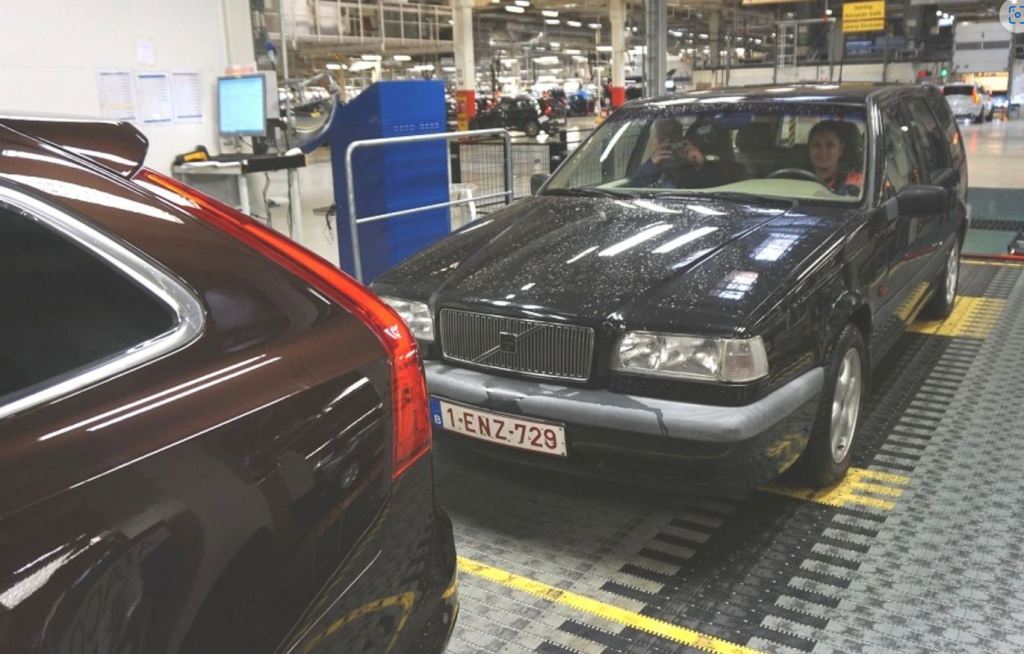
In our age of energy transition, things indeed have to change. So with the (urban) emission regulations coming along, we had to give up 5 years ago a truly excellent car, our Volvo 850 Estate, with its marvelous 2,5 litre five cylinder petrol engine.

Before parting with it, we took it on a last long trip,from the Volvo factory in Ghent to the Volvo plant in Swedish Torslanda, where the sedan version of the 850 rolled of the assembly lines. Just look at the links of these articles on our site: 

https://autoprova.be/2017/04/11/our-cars-soon-we-will-drive-our-volvo-850-estate-from-volvo-ghent-to-torslanda/
And:
https://autoprova.be/2017/05/20/we-start-the-travel-with-our-1995-volvo-850-from-ghent-to-torslanda/
Last but not least:
https://autoprova.be/2017/06/01/our-850-volvo-visits-the-swedish-torslanda-factory-and-is-driven-on-the-assembly-line/

We have to blame here our EU AND also our local politicians which make very one sided decisions away and above social considerations and consequences. The beautiful Volvo had to go, as it was now politically declared an urban outcast.  

And despite its excellent ’as new’ condition, it fetched… 250 Euros, and that was it.

So go now, dear citizen! Go and enlarge your ecological footprint and buy a NEW BEV car! While the European electric grid still has to be adapted to the pan-EV reality, let alone the infrastructure, we have to plunge for this, with the EU and certainly global electricity production still being far from “clean”. Of course, we are still creating the extreme dependencies of raw materials and global markets as we did before…

But soon enough, we understood already five years ago, that the answer lies not (yet) there. Today finally even economy expert journalists admit that they did not see all the benefits of the hybrid solution which Toyota offered with the Prius now decades ago. The present market evolution now lets them see the light.  

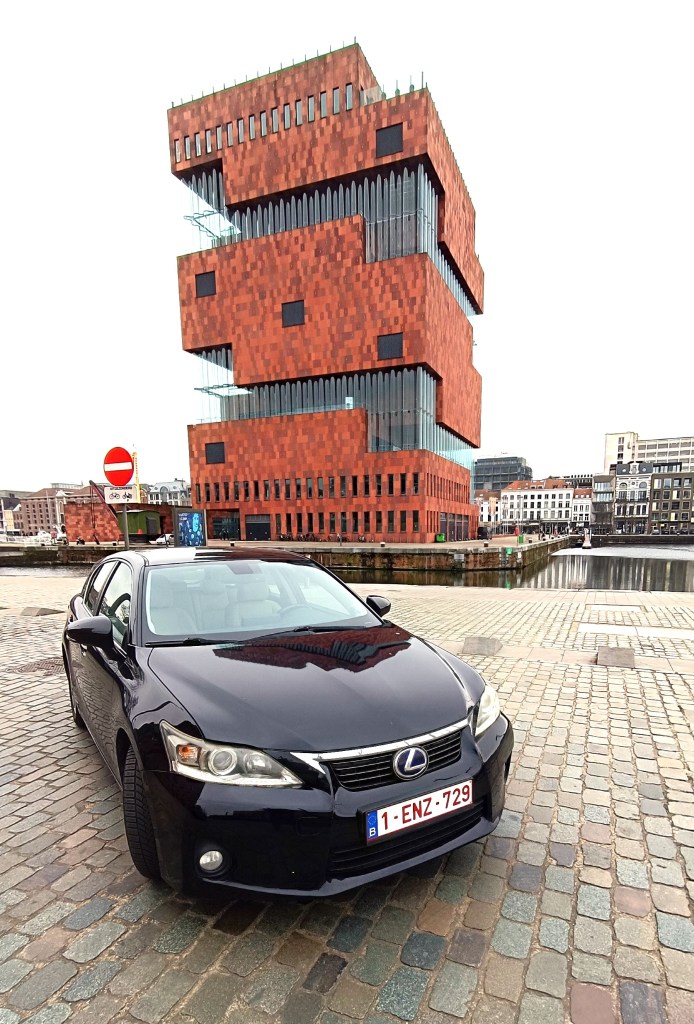
We were already convinced then, and therefore we shopped for a used Lexus CT 200h, and found a well cared for dark blue example. See https://autoprova.be/2019/01/25/we-collect-our-lexus-ct-200h/.

Right away we were very pleased by its comfort, mechanical refinement and stunning economy. See the reports about  trips with our Lexus like https://autoprova.be/2019/04/05/our-lexus-ct-200h-continues-to-surprise-us/.

Further reports are found using the tag: https://autoprova.be/tag/lexus-ct-200h/

Now it is already five years with us, and it still hasn’t missed a beat. It passed the latest technical inspection with flying colors, and had last month its major service. It continues, as the photo shows, to consume well below 5 litres/100 km…

On the last photo you see the remote “mouse” control for the functions on the central screen display, which we still find ideal…


Hans Knol ten  Bensel 

We drove the Dacia Jogger Hybrid 140: your (price) winner…

Hans Knol ten Bensel