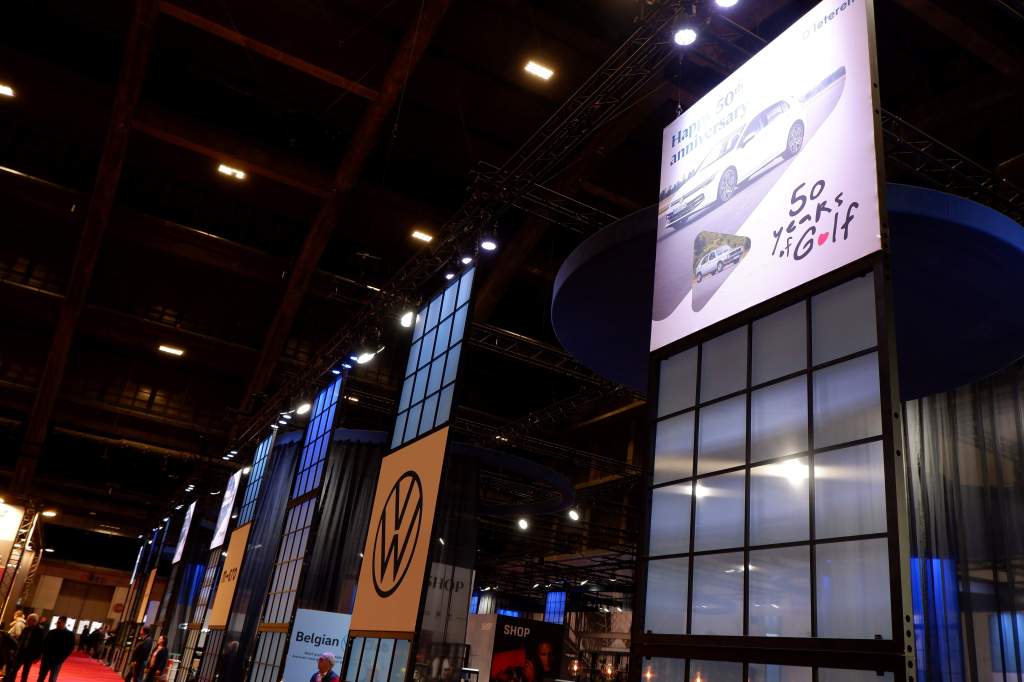
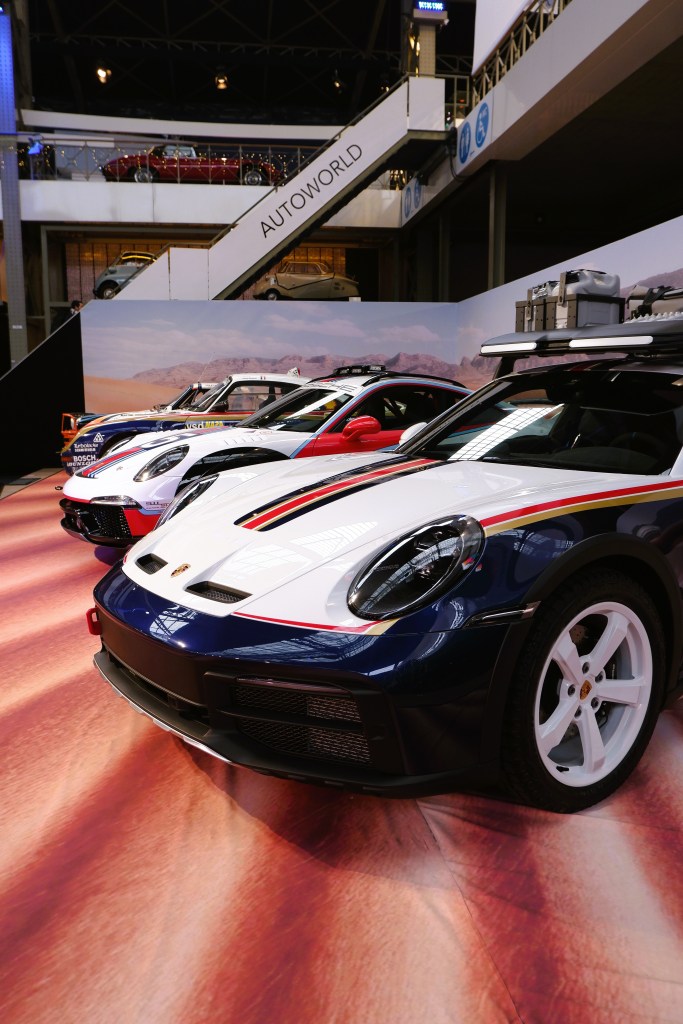
InterClassics Brussels 2025 was an absolute hit…

In the vast “palaces” of the iconic Brussels Expo, the 10th edition of this event proved quite popular, with no less than 29.472 enthusiasts admiring the four-wheeled classics. Special theme of the show was the celebration of the looks, fury and sound of the V12 engine, which is of course at home in many supercars. The good news is that these wonderful engines are here to stay, as our Brussels EU politicians are going to allow combustion engines to live on after 2035…

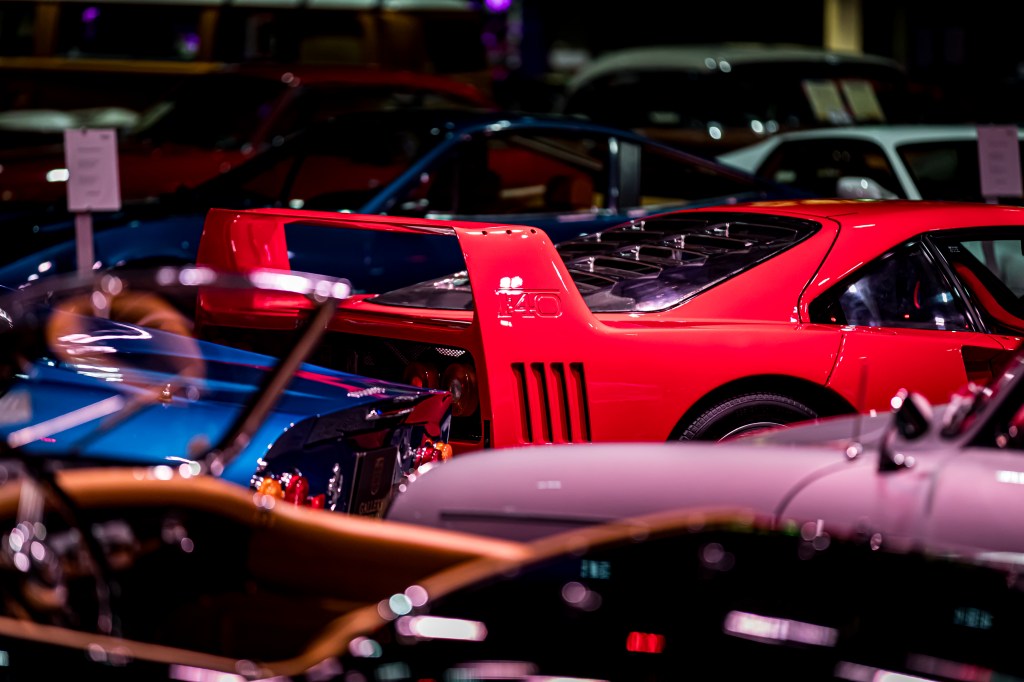
The festival of supercars: a Koeningsegg was admired by many…

The show also focused on the 75th anniversary of Formula 1. Many supercars were therefore to be seen on the show, and this inspired the organiser MECC Maastricht to provide a special “Supercar Foyer” at the InterClassics Maastricht, which is to be held from 15 to 18 January in Maastricht.
International character

Organiser Erik Panis also mentions the international character of the show, and indeed, it is becoming one of the hallmarks of the Brussels event. It has now grown to the biggest indoor classic car event in the Benelux. Also, if you look at the number of cars which changed hands on the show, one notes that the classic car sector is still growing…

BEHVA promotes youth education…

One of the important partners of MECC is the Belgian Historic Vehicle Association (BEHVA). They worked actively to support students and teachers in car maintenance, repair, and service. Indeed, without the (specialized) professional mechanical and service know-how in repair and workshops and classic car care centres, the classic car industry and sector simply cannot survive and have a good future.

Many beauties were to be found on the show, and our beloved Royal Historical Vehicle Club Belgium, which had put up a beautiful stand at the InterClassics show, won a special prize with a well-preserved Lincoln Continental Mark II built in 1957. The club also celebrated its 50 years of existence…
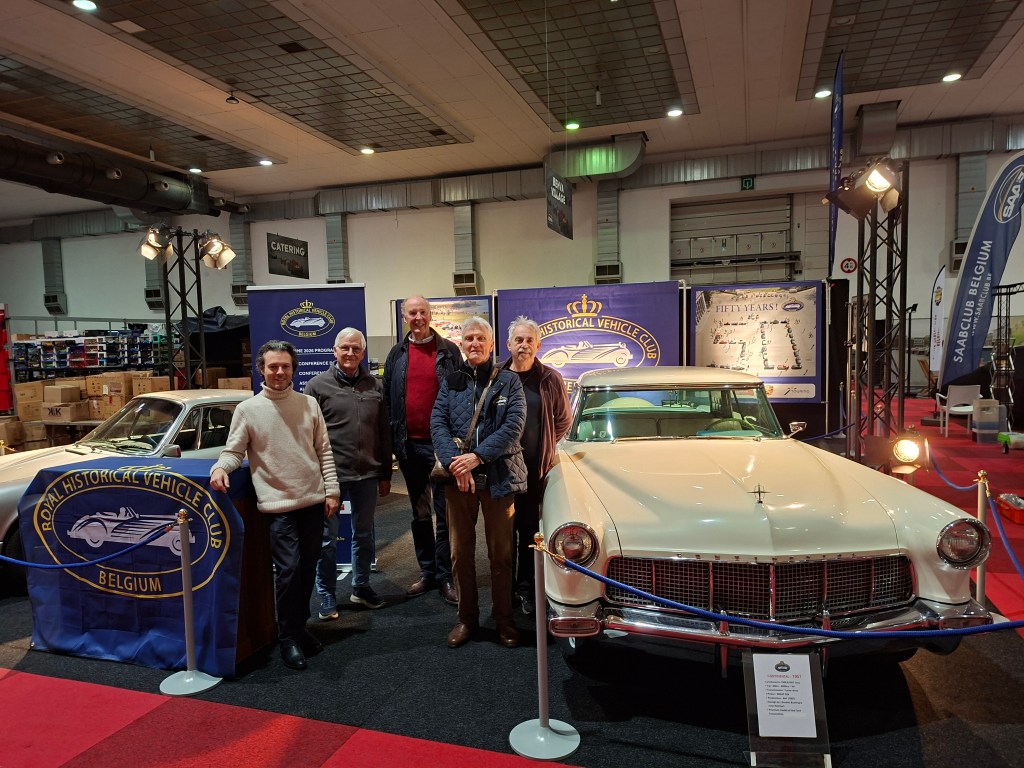
The body, interior, and chassis of this Continental are totally original; of course, the mechanics underwent a thorough overhaul to make it roadworthy and reliable. For Emmanuel de Menten, (here far left in the photo), the proud owner of this Lincoln with classic “European” and Latin/Italianate styling language, hence the name “Continental”,  owning this car is the fulfillment of a child’s dream…

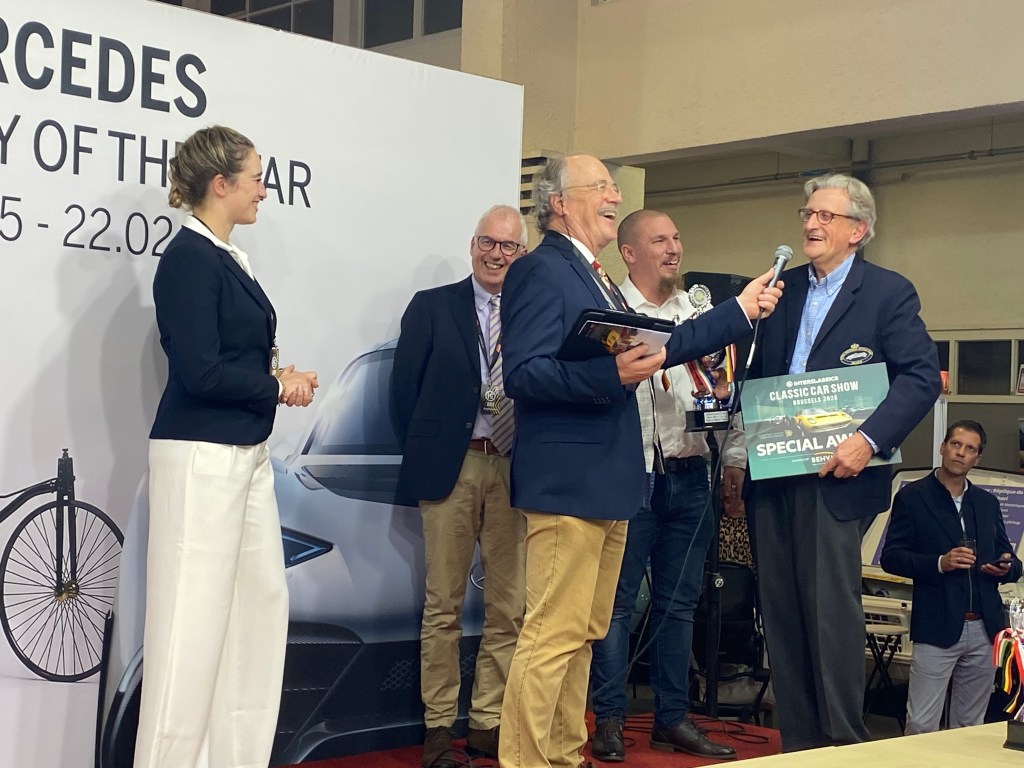
On the photo below you see the counselor and member of the executive committee of Autoworld Brussels, Leo Van Hoorick, handing over the Special Price of the BEHVA Jury to RHVCB President Michel Van Eesbeeck.    
Celebrating 50 years of VW Polo…

Your servant vividly remembers driving the Audi 50 as a test car, and soon after I sat behind the wheel of the first Polo, a more dressed down version of the Audi sister model, launched in 1975. The original Polo 1 was sold in not less than 1,1 million units, and was built, including a facelift, until 1981. Of course, the history of the Polo merits a special article by itself and we will come back on this.
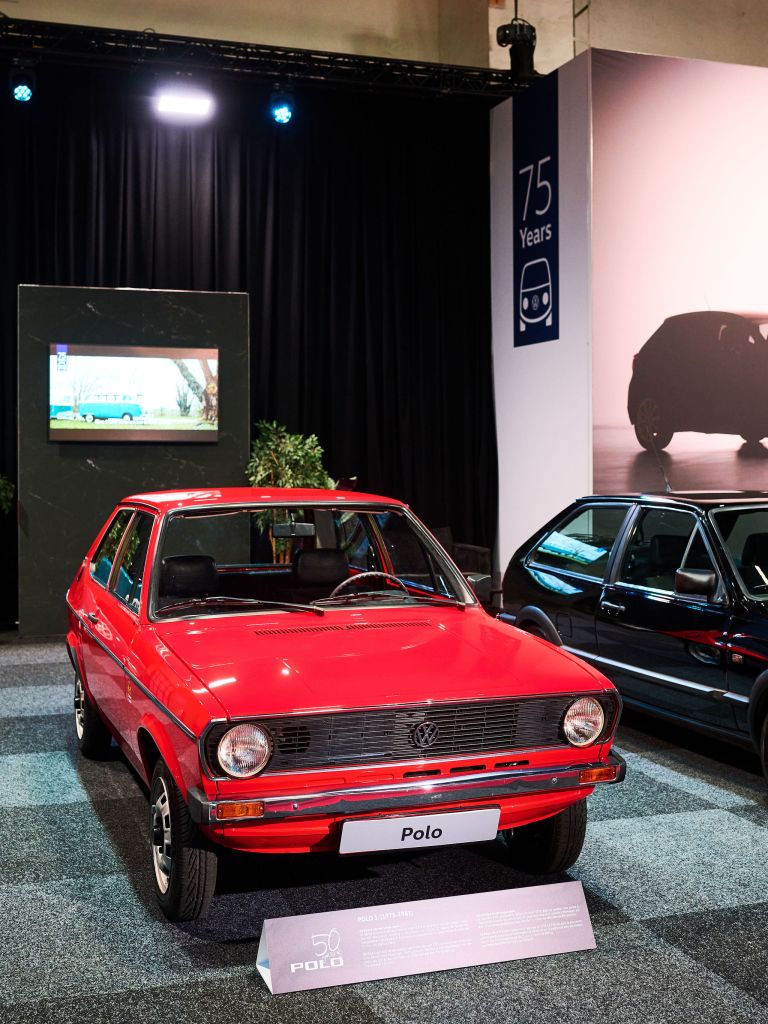


We limit ourselves here to the remarkable Polo models on the VW stand of the show, the Polo Harlekin and the Polo R WRC.

The story of the “Harlekin” is a special one. When the third generation of the Polo was introduced in 1994, Volkswagen also launched its modular production system. This allowed some parts to be exchanged with other models and brands within the group.
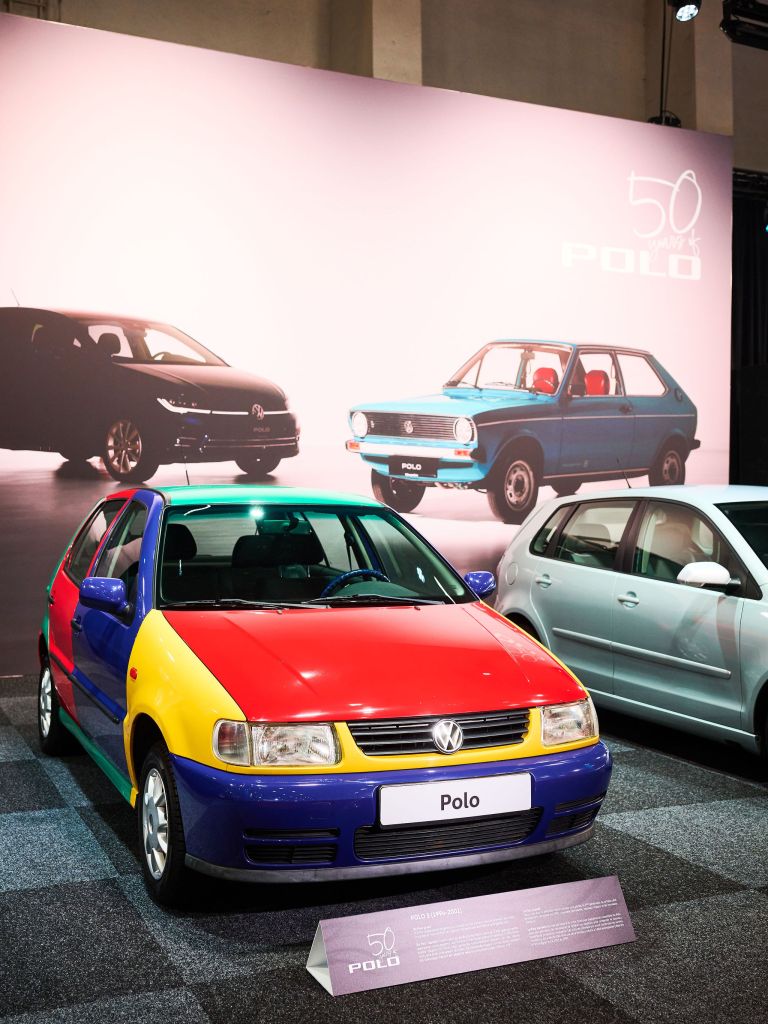
To highlight this approach, a small group of production engineers decided to fit ten Polos with body parts of different colours, and the Wolfsburg marketing department liked the idea and decided to make a limited production run for the German market. In total, from 1995 to 1997, 3.806 units were built, with 103 extra right hand drive Polos for the UK market.

The Polo R WRC is an icon of the World Rally Championship! Over four seasons, this car ensured that Volkswagen Motorsport and its beloved duo Sébastien Ogier and Julien Ingrassia won four world titles for manufacturers, and the same number for drivers and co-drivers. Of the 52 rallies in which the Polo R WRC participated, the car won 43 (or 82.7%) and at least one of its drivers finished on the podium 50 times.

The Polo R WRC, which is showcased at the Belgian VW Club stand during InterClassics, is the car that Sébastien Ogier and Julien Ingrassia used in 2013. The 1.6-litre turbo engine produces around 315 hp, a power that is transmitted to all four wheels via a sequential gearbox. Good for a sprint from 0 to 100 km/h in less than four seconds!

You can write the next InterClassics Brussels in your agenda: it is scheduled from 20 to 22 november next year!

Hans Knol ten Bensel  

We drove the Opel Mokka Hybrid: the bestseller with lightning style and panache…  

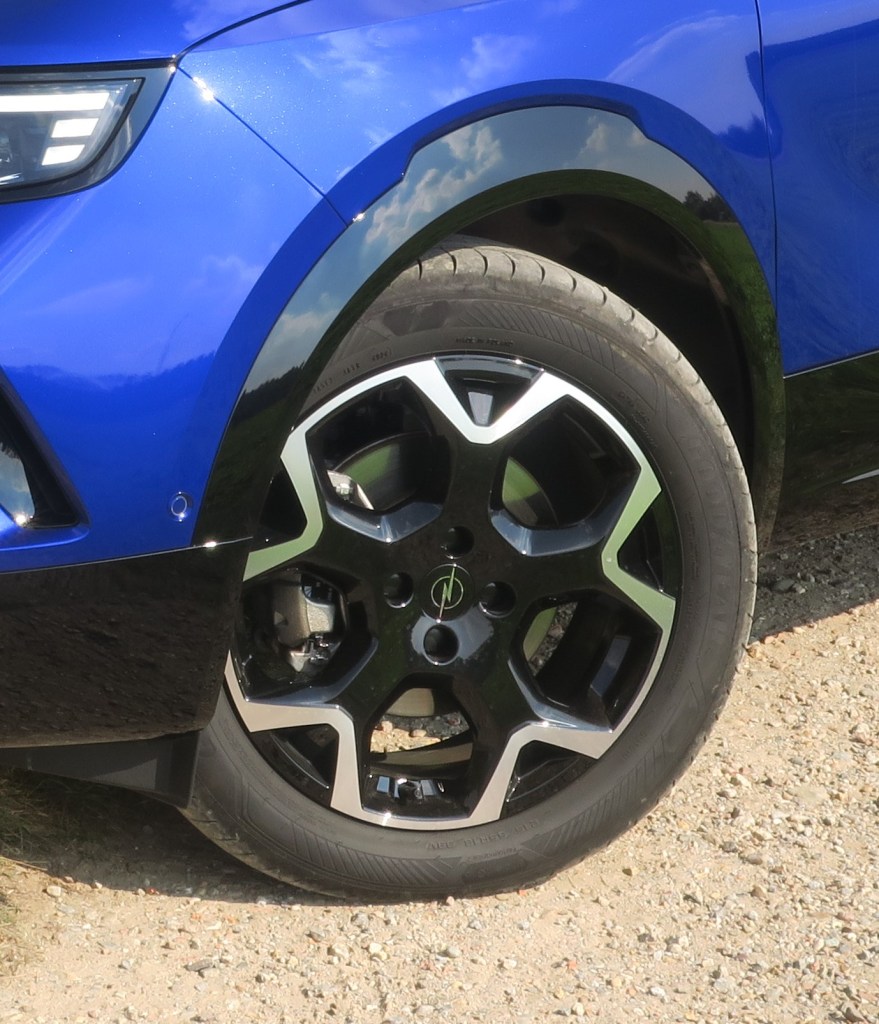
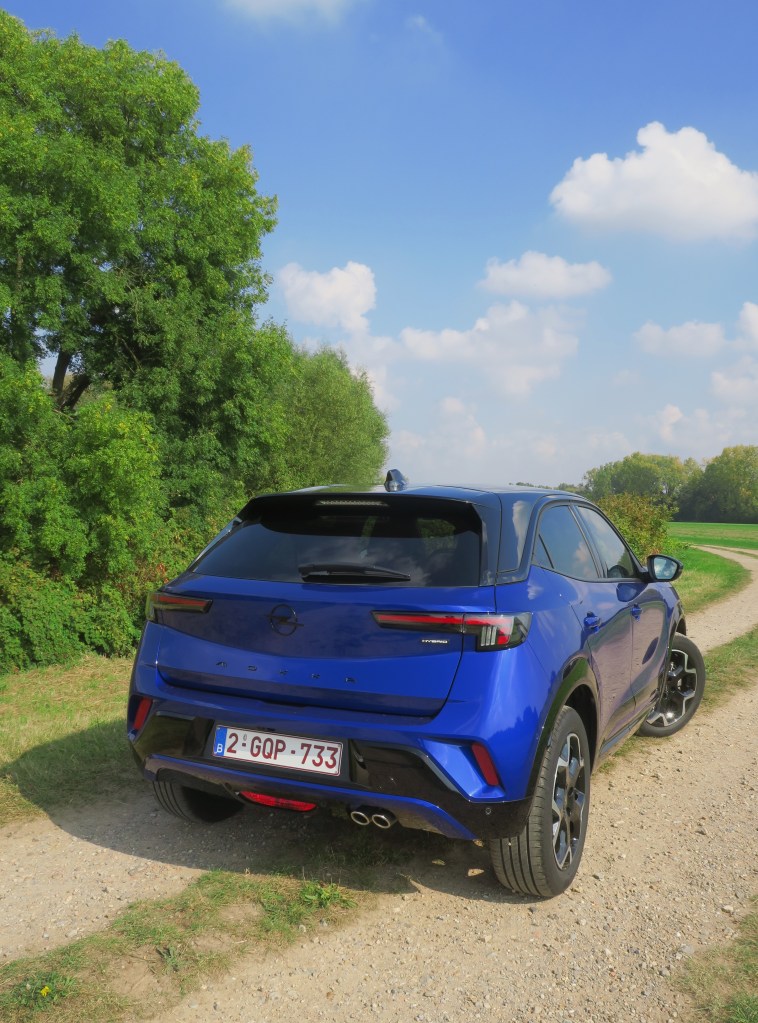
The Opel Mokka, one of the bestsellers in the Opel range, has got a facelift combined with some important technical refinements. More than reason enough to put the hybrid version through its paces for you here.  It was the first Opel to receive the now iconic characteristic brand fascia, the so-called “Opel Vizor”, and now it got even more character: with the facelift the black Vizor visually integrates the new Blitz and the headlights into one element. Black elements are decidedly en vogue: a black design line runs from the bonnet to the rear above the side windows. Black claddings at the front, rear and wheel arches also give a more sporting look.

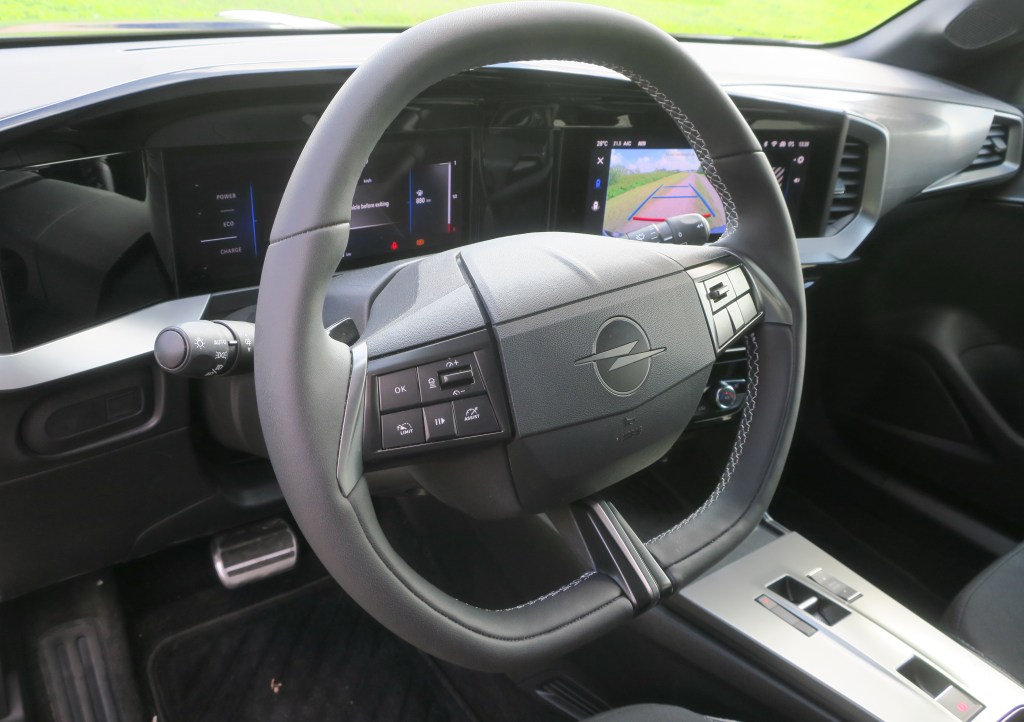
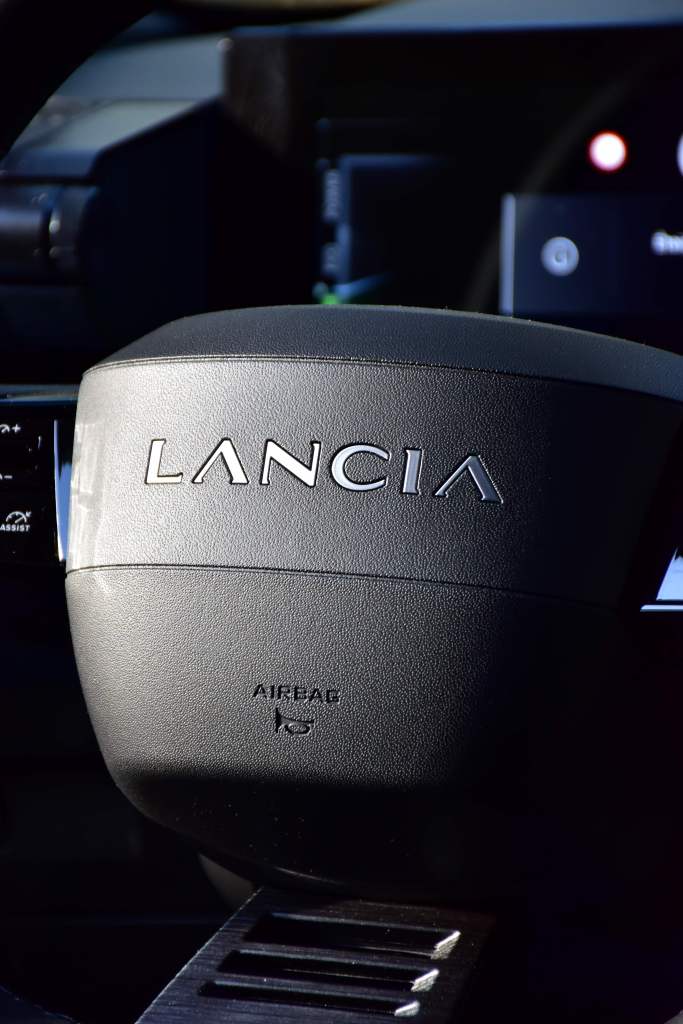
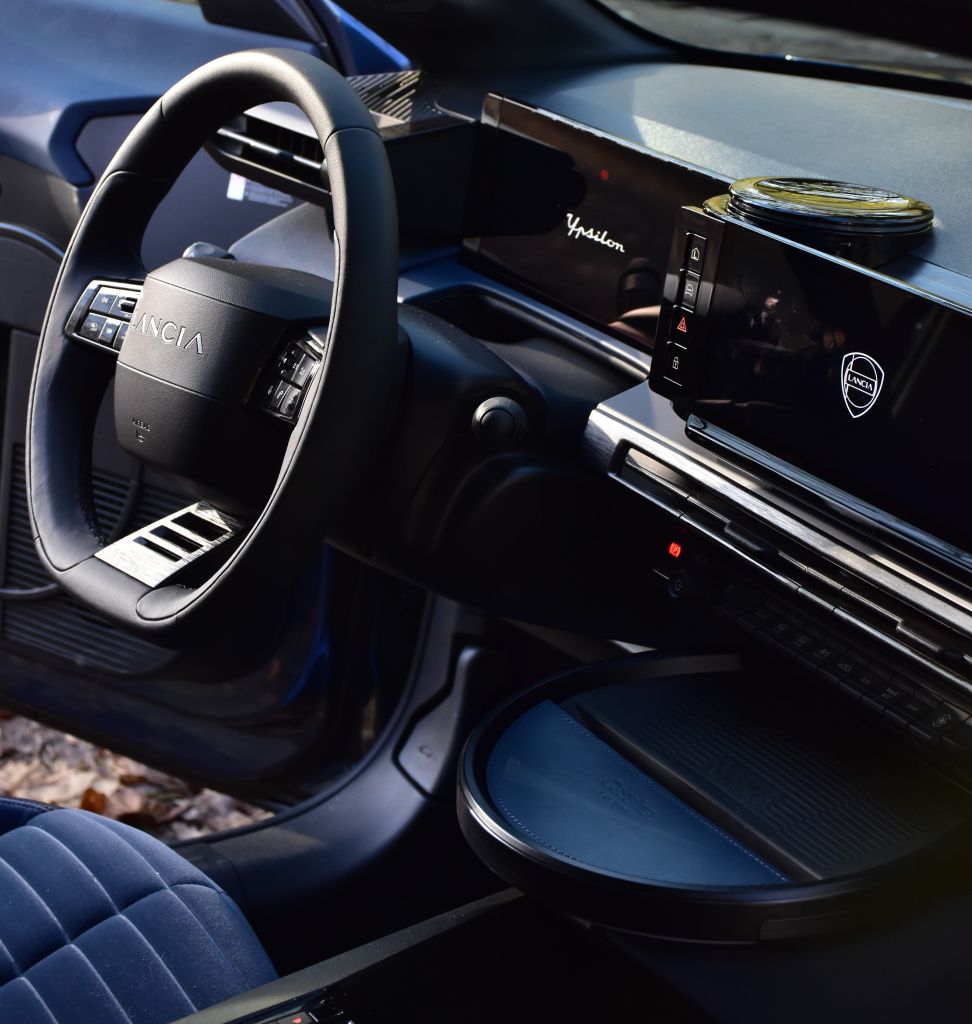
Also in the cabin things have further improved. First of all, there is a new steering wheel, flattened at the top and bottom and made from vegan material, with the new Blitz emblem proudly at the centre.

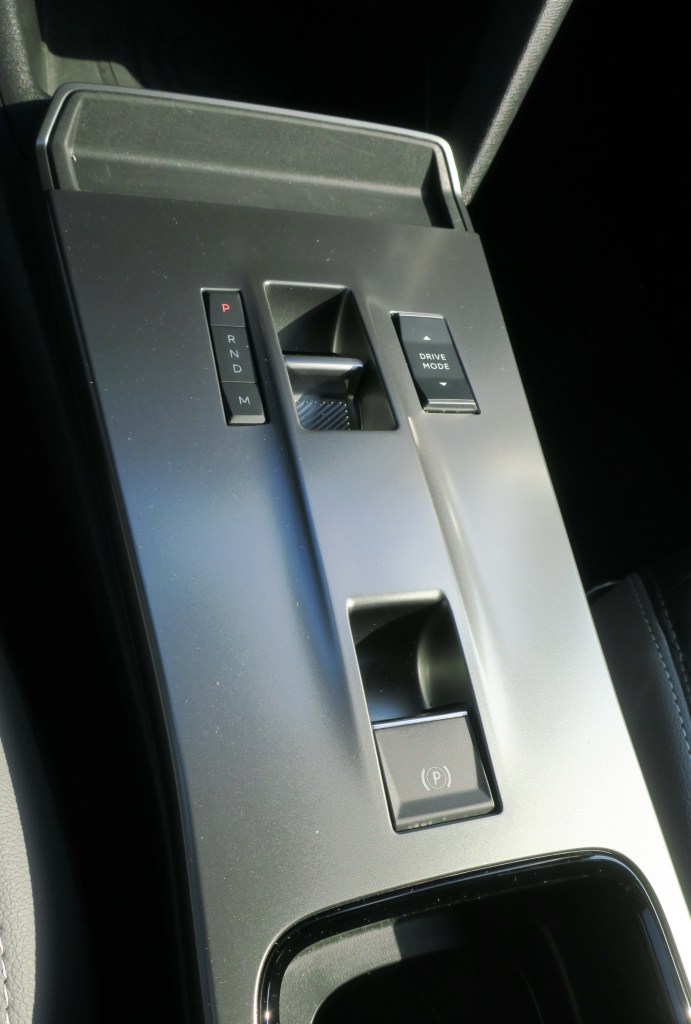
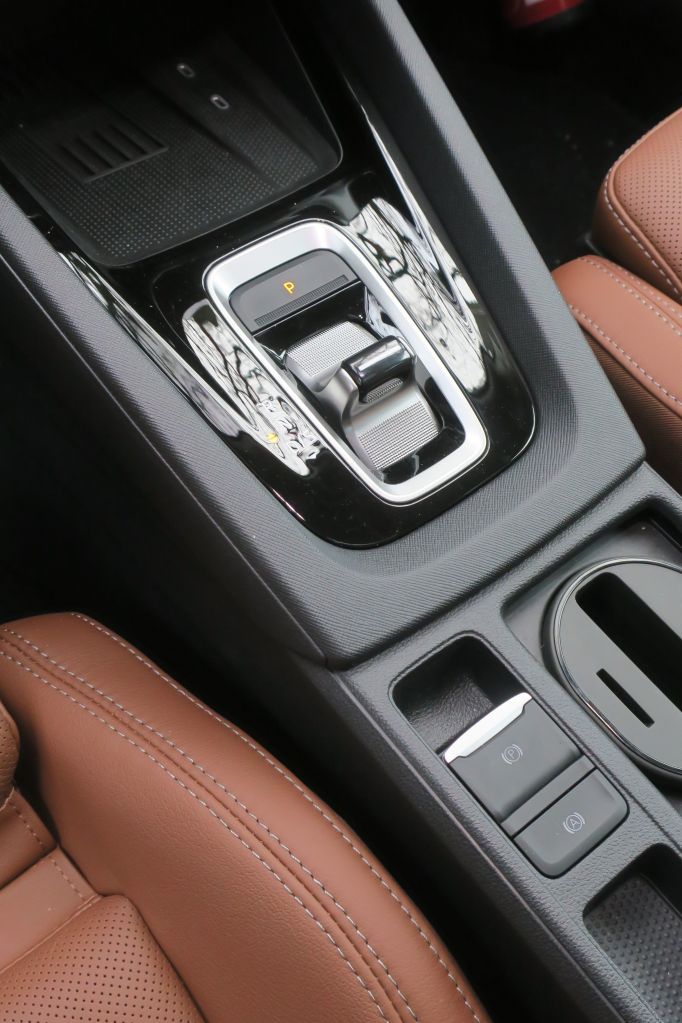
The centre console between the front seats, in a matt silver tone, has a cleaner, upmarket style and the design of the remaining switches for the electric parking brake and the selectable driving modes is identical to the all-new Opel Grandland. The material of the seats consists now of recycled material, but it is good to know that the whole cabin gives now a decidedly more upmarket impression.

A hybrid with 48 Volt technology…

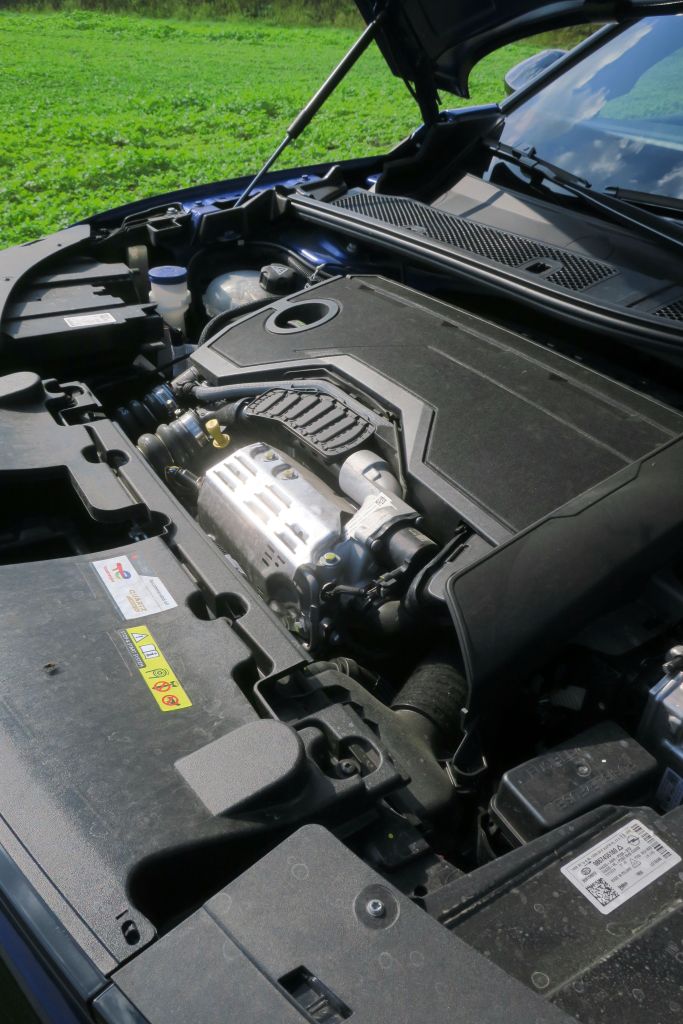
Opel calls it a “modern hybrid”, and it consists of a 100 kW (136 hp) 1.2-litre turbocharged petrol engine with a 21 kW (28 hp) electric motor and an electrified six-speed dual-clutch transmission. The transmission is very smooth, the electric motor assists the engine in accelerations with helpful extra torque and all this results in very pleasant performance combined with excellent efficiency.

When accelerating slowly and driving at moderate constant speeds on city boulevards, the engine will run at very low revs in the highest possible gears, and this without any noticeably noise or vibrations. Pushing the trottle a bit further will cause the E-motor to react immediately and the transmission will intantly choose the correct gear for the engine to step in.

Driven with restraint, you will easily achieve a consumption in city driving at around 6 litres/100 km, and even slightly lower, whereas cruising on the open road will let the consumption drop to around 5,2 litres/100 km. According to WLTP standards, fuel consumption is 4.9 l/100 km, CO2 emissions are 110 g/km; the CO2 label is a C.

The 3 cylinder engine has now a chain driven distribution system, and the Continetal-developed oil lubricated belt has been abandoned, resulting in improved reliability.

A drivers’ car…  

We find Opels always very attractive drivers’ cars, striking a very good balance between comfort, performance and a predictable, engaging handling. The Mokka again proved this wonderfully. It responds admirably to a brisk driving style, but will never let you feel uncomfortable when you decide to drive smoothly and leasurely.

Seating position behind the wheel is also excellent. The knee room for rear passengers is somewhat more restrained, and boot space is not cavernous either, but with 350 litres is still sufficient for most.

Performance is excellent, with the Mokka proving to be an “Autobahn Meister” with a smooth top speed of 207 km/h and an acceleration from 0 to 100 in just above 9 seconds. This Mokka is a fast GT, let this be said. This performance is almost identical to the original Porsche 2 litre 911, don’t forget!  

… with up to scratch infotainment

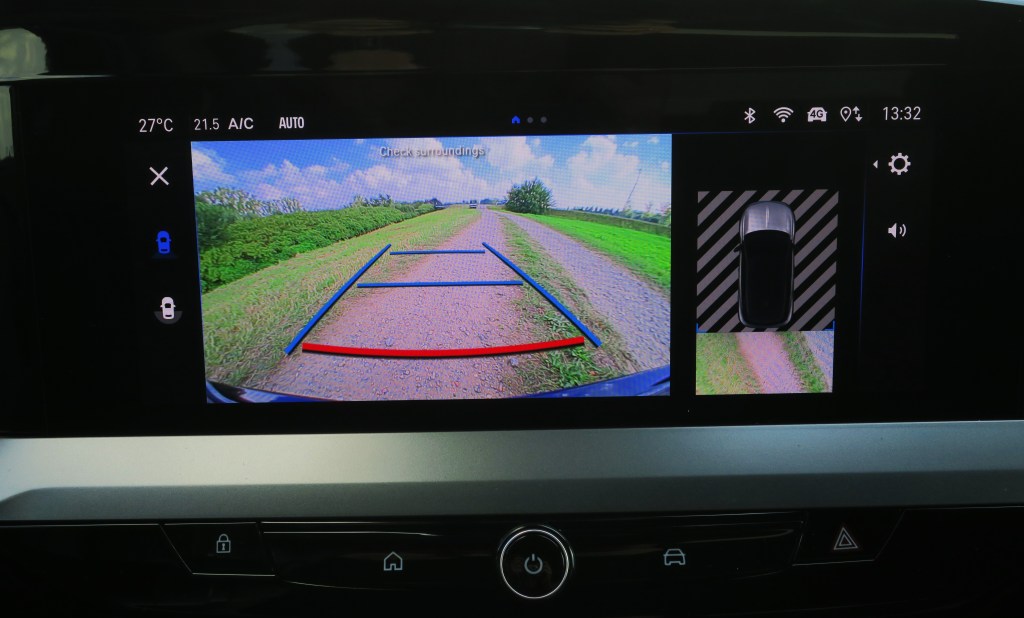
The facelifted Mokka also is no laggard when it comes to modern infotainment. The cockpit uses Qualcomm Technologies’ next generation Snapdragon Cockpit Platform and Snapdragon Auto Connectivity Platform3 to enable premium in-vehicle experiences, including state-of-the-art graphics, multimedia and enhanced connectivity capabilities such as Wi-Fi, Bluetooth and 4G, says Opel.

A 10-inch digital driver information display and an equally large colour touchscreen are also standard. The latter can be easily operated via widgets, just like a smartphone – alternatively and in combination with the optional navigation system, a ‘Hey, Opel’ is enough to use the natural voice recognition.
 

Both displays can be personalised. The system recognises the driver’s personal profile on the connected smartphone; the connection is always wireless in the new Mokka. Virtual shortcuts can be set up on the central screen and you can choose between different colour schemes.

When ordered with the integrated navigation system, map updates are made available over-the-air. The system also constantly learns and – based on the habits of the linked driver profile – independently suggests destinations and routes.

The “myOpel” app can also be used to easily send the destination and the corresponding route to your car.  Furthermore, Opel offers ChatGPT4 (available in combination with Connected Navigation) for the new Mokka…

To sum it all up, we liked the Mokka Hybrid very much indeed, having style, performance, offering driving pleasure combined with excellent performance and economy, all this combined with a very reasonable price…

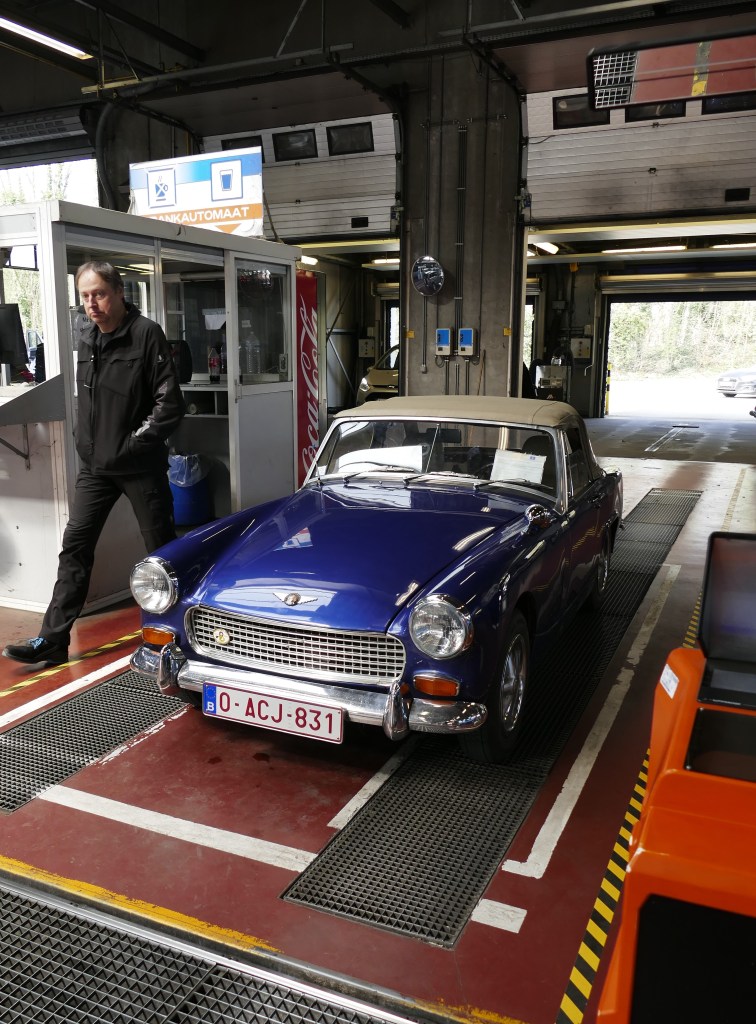
We took a 1969 Austin Healey Sprite Mk IV through the Belgian technical inspection…

Enjoying and driving an oldtimer means also that you have to take it to the technical inspection in regular intervals.

In Belgium, a car is an “oldtimer” when it has been registered 30 years ago. You can then register your car with an “O” (oldtimer) license plate. This means that you enjoy reduced road tax, but on the other hand the use of the car is restricted. Any commercial and/or professional use is prohibited. You cannot use it as stage prop or décor for film productions for example. Neither can you use it for weddings and other special occasions which involves transporting passengers, even when this is done for free. Nor can you use the car as a daily commuter between home and work.

As Belgium has three regions, notably Brussels, Flanders and the Walloon region, the regulations for technical inspection for oldtimers show some differences.

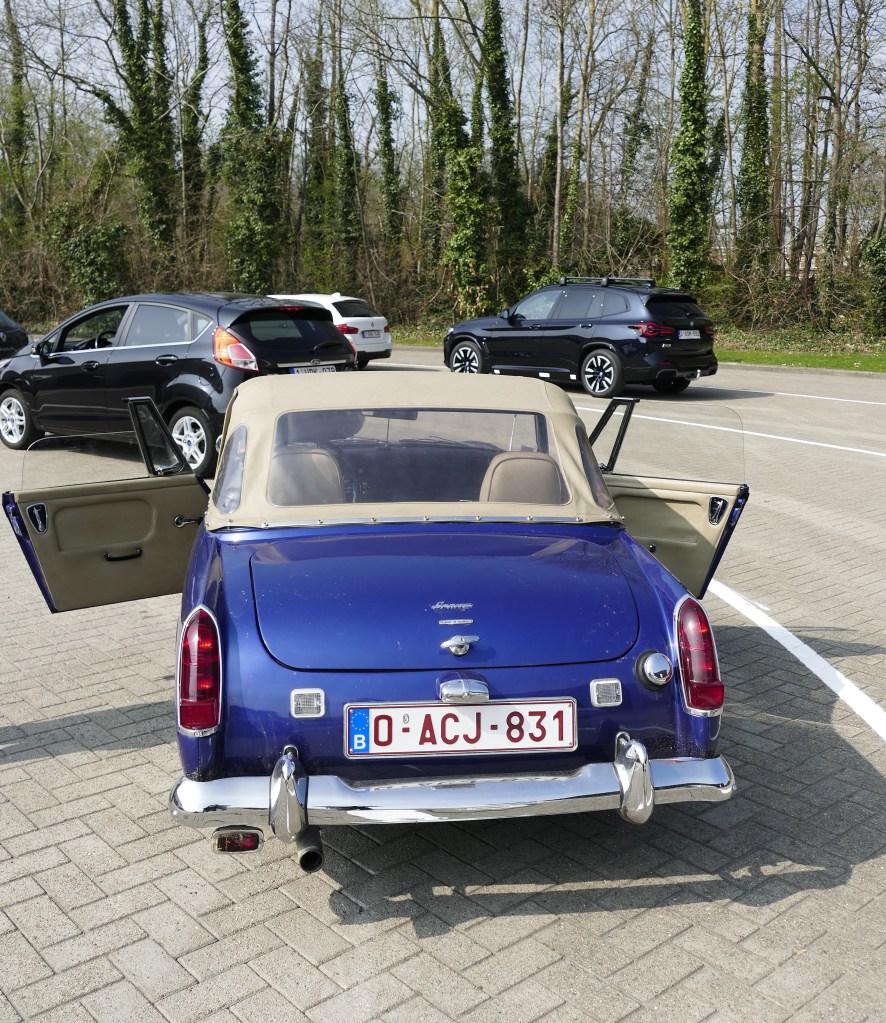
In the Brussels region, cars between 30 and 50 years old have to be taken to the technical inspection every two years. When the car is older, you have to do this only every 5 years. This was the case for our Sprite…

In the Flanders region, the rules are identical. If your car is older than 1st of  January 1926, you don’t have to submit the car to a technical inspection.

In the Walloon region, cars between 30 and 50 years have also to be inspected every two years. However, when a car older than 30 years has a “historic value or interest”, it is set free of periodic inspection. The car has to be in original condition and out of production, and no major modifications are allowed, except replacing the chassis when necessary, change to radial tires, and of course all the (safety) changes and improvements which are legally prescribed over the years.

Cars older than 50 years don’t have to be taken to inspection any more.

So we took the Austin Healey Sprite out of its winter sleep two weeks before the inspection. Of course we picked a day when the weather was fine. As the Sprite has been fairly recently fully restored and has  enjoyed an extensive mechanical overhaul, we did not expect too many problems. Also the battery had been replaced recently. Starting the engine was nevertheless somewhat hesitant, as it did not fire up after two attempts after having waited previously for the fuel pump to fill the carburettor fuel reservoirs. We had the choke fully out, and were uncertain whether the air/fuel mixture was correct, so to prevent the engine from over-flooding we gently pressed the accelerator halfway on the third attempt and the engine then immediately fired up. We found the engine idling steadily, but nevertheless rather rough, so some tuning of the two SU carburetors might be necessary. We have the impression the air/fuel mixture setting is rather lean for the moment, but only a tune up using mixture measuring instruments will tell.

Oil pressure was OK, which is to be expected as the engine had been totally restored. We took the Sprite for its first spring tour over a distance of a good 35 kilometers, keeping a watchful eye on the cooling temperature and oil pressure gauges and letting the engine and drive train warm up thoroughly. Of course (hand)brake and all the controls were tested.

Several weeks later it was time to put it through the technical inspection. We did not expect many problems, and indeed there weren’t any. The inspectors admired the clean engine bay, and the 1275 cc Series A BMC engine, which is basically identical in the Mini Cooper S, save for the tuning. It makes the 714 kg Sprite quite a lively performer, where it develops a healthy 65 HP at 5800 rpm. Mind you, acceleration is rather brisk with 0 to 100 km/h reached in about 12,5 seconds. The engine is a long stroke unit, therefore quite flexible, developing a good torque for its size of 98 Nm at 3000 rpm.

The BMC A series engine is a very interesting and beautiful “classic” engine, and has a very long history. We will come back in more detail about this engine in further posts.

As said, the technical inspection went without a hitch, as brakes, suspension, chassis and all auxiliaries were found to be in perfect working order. The engine’s CO2 emissions were also found to be OK, taking into account the historic emission standards of course. Apparently it was a good idea that we left the carburetor settings unchanged for the time being, although the idle is still rather rough. 

So we received a “green” inspection report, which is now valid for another five years. 

On the way back from the technical inspection, we used the motorway for most of the trip, and the Sprite was happily cruising along with a beautiful exhaust roar at some 3500 rpm. 

We now also filled up the fuel tank, choosing 98 octane fuel, and avoiding the use of Euro E10 95 octane petrol, which contains 10 pct methanol. There is a product “Classic Valvemaster plus” sold amongst others by Anglo Parts, which protects engines originally designed to run on leaded fuel for the negative effects of Methanol. Another product they distribute is EPS Ethanol protection from Millers Oils. We performed a major cleaning and detailing session with the Sprite to bring it to (almost) concours condition before we used it our next sortie , driving it to Mechelen for the “British Car Day” organised by Anglo Parts on the 26th of April, were the Sprite was proudly present on the stand of the Royal Historical Vehicle Club and met wich much interest from young and old… 

Hans Knol ten Bensel

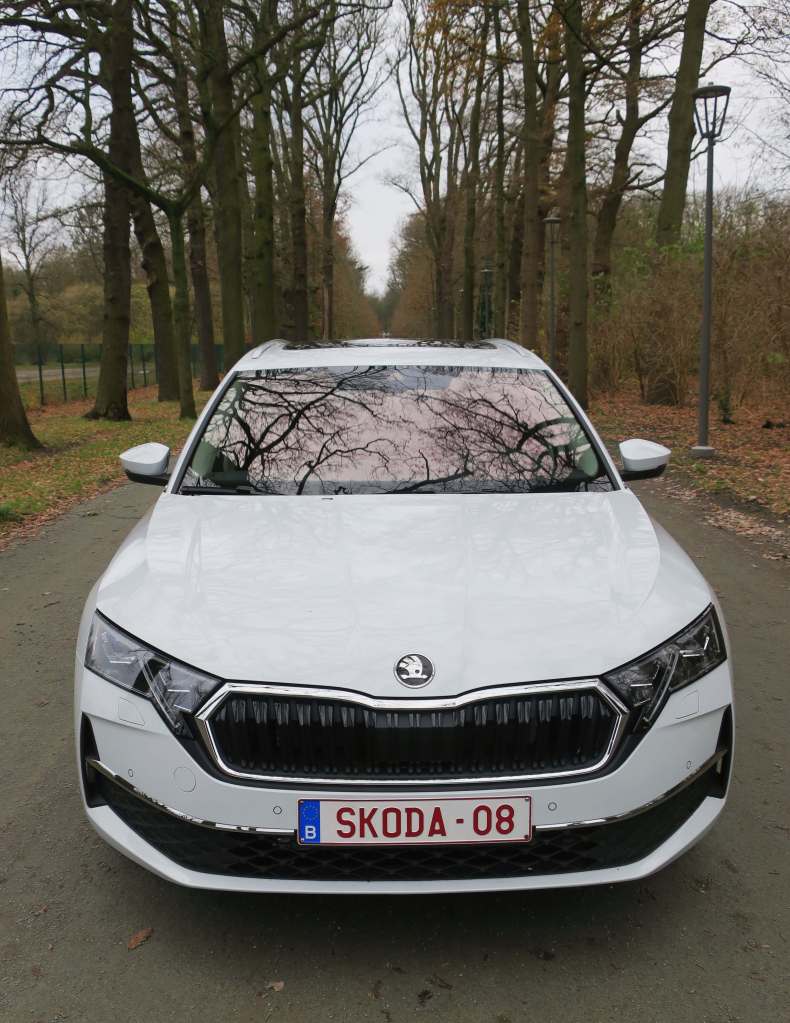
We drove the Skoda Octavia Combi : an all-round (family) bestseller…

Skoda’s are popular family friends, and indeed the Octavia steals the hearts of many. For good reason: Skoda builds on the platform of the Golf (now it is the Golf VIII) an even more roomy and practical version, the Octavia Sedan and Combi. It tops the charts in many (European) countries, as it is well built, stylish, marvelously practical and offers last but not least very good value for money.

We tested for you two versions: the 115 HP 1,5 TSI with the 6 speed manual in “Corporate” trim and the 150 HP 1,5 TSI m-HEV with the 7 speed DSG auto box in the top of the line “Selection” trim.

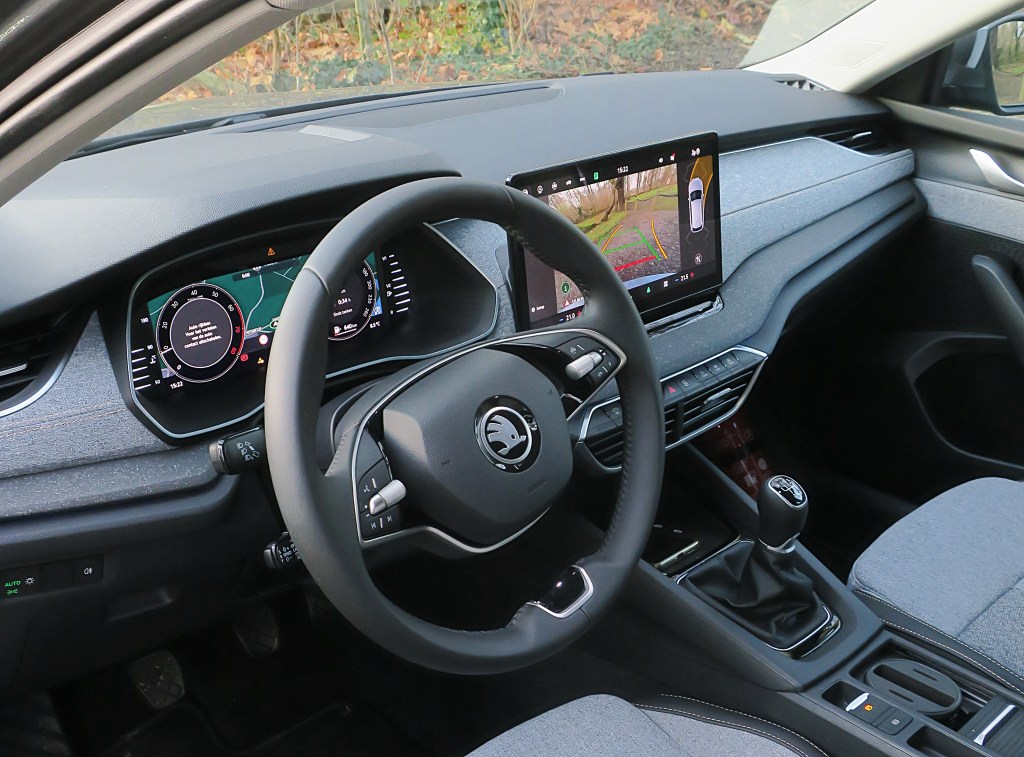
Sliding behind the wheel of the Octavia puts immediately a respectful smile on your face. It’s interior certainly impresses. Roomy, well finished, big instrument and infotainment screens, lavishly  equipped, certainly in the equipment versions we tested.
 

The interior of the 115 HP “Corporate” equipment version. It already has everything you might need…

Starting the 1,5 TSI results in a quiet purr, and you move the slick lever into first gear. The gearbox changes are precise and smooth, the engine is flexible and willing. It develops a healthy pulling power with maximum torque of 220 Nm, developed from 1500 to 3500 rpm. This means you can flow along with the traffic in the higher gears, with only a whisper of engine sound, and enjoy urban consumption figures between 7 and 8 litres/100 km. On the open road, adopting the same quiet driving style, you will see consumption soon dropping below 6 litres/100 km. Skoda officially quotes 5,2-5,7 l/100 km, with CO2 emissions given between 118 and 129 g/km, putting it in class D.

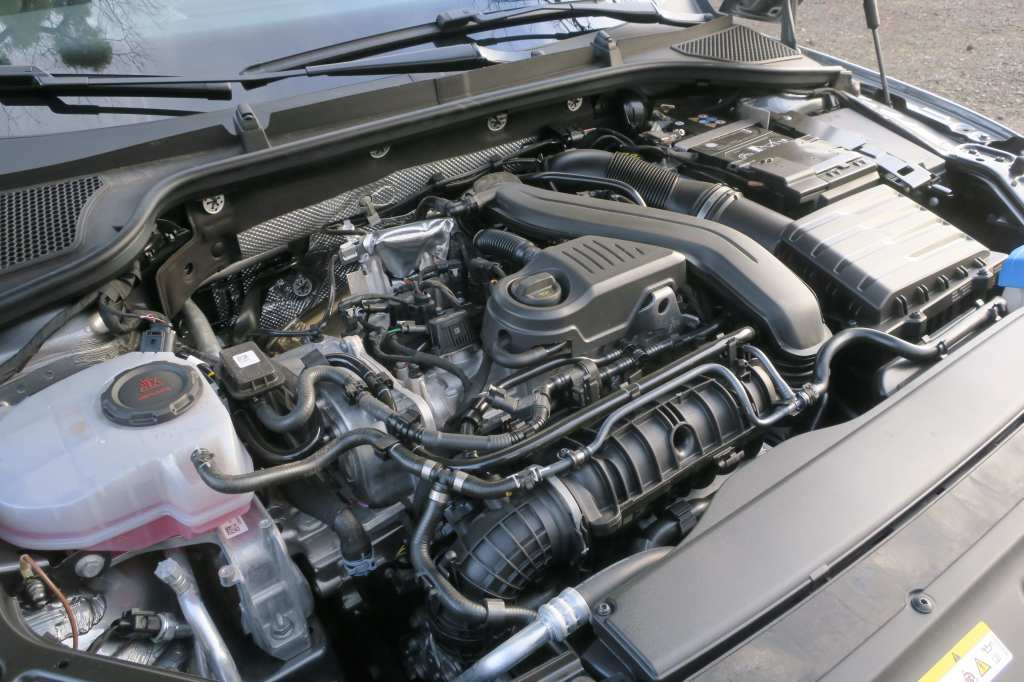
This 1,5 TSI engine belongs to the ultra-modern EA211 TSI series,  Thanks to Active Cylinder Management (ACT), two of the four cylinders are switched off as often as possible, and this is almost inperceptible.

Of course, this Octavia can stand its own on long fast trips and Autobahnen. It will sprint in 10,5 seconds to 100 km/h and has a top speed of 203 km/h. It is a beautiful high speed cruiser, along with many other good handling qualities. It has the platform of the Golf VIII, remember, and Skoda knows something about chassis and suspension tuning, just think of the RS versions. The top RS beast has not less than 265 HP, which is identical to the sixties super car, the Jaguar E-Type.

But again, the “base” version with its 115 HP coupled to a 6 speed manual will satisfy most. Since our silver grey test car came second in the contest of the “family car of the year” organized by the Belgian VAB magazine during our test, the car was needed for photo and marketing purposes by the Belgian importer D’Ieteren, so we had the opportunity to test also the 150 HP 1,5 TSI m-HEV, which is the mild hybrid version of the Octavia.

Like the 115 HP engine, the 1.5 TSI with 110 kW (150 PS) delivers its maximum power between 5,000 and 6,000 rpm. This diminishes both consumption and emissions. The maximum torque of the 110 kW engine is 250 Nm and this is also available between 1,500 and 3,500 rpm.

The 150 HP version came with leather seats and leather covered dashboard panel surfaces , giving the interior extra panache and a touch of luxury…

The m-HEV version has a 48 V lithium-ion battery, which supplies the 12 V vehicle electrical system and drives a 48 V belt-driven starter-alternator. This belt-driven starter-alternator takes on the role of the alternator and starter while simultaneously operating as a small, lightweight electric motor that instantly boosts the drive torque when moving off. The output of the generator is transferred by the belt drive. It also starts the combustion engine – which is switched off as much as possible while the vehicle is moving – in a barely perceptible way. In this case, the 48 V battery supplies energy to all the important systems of the car.

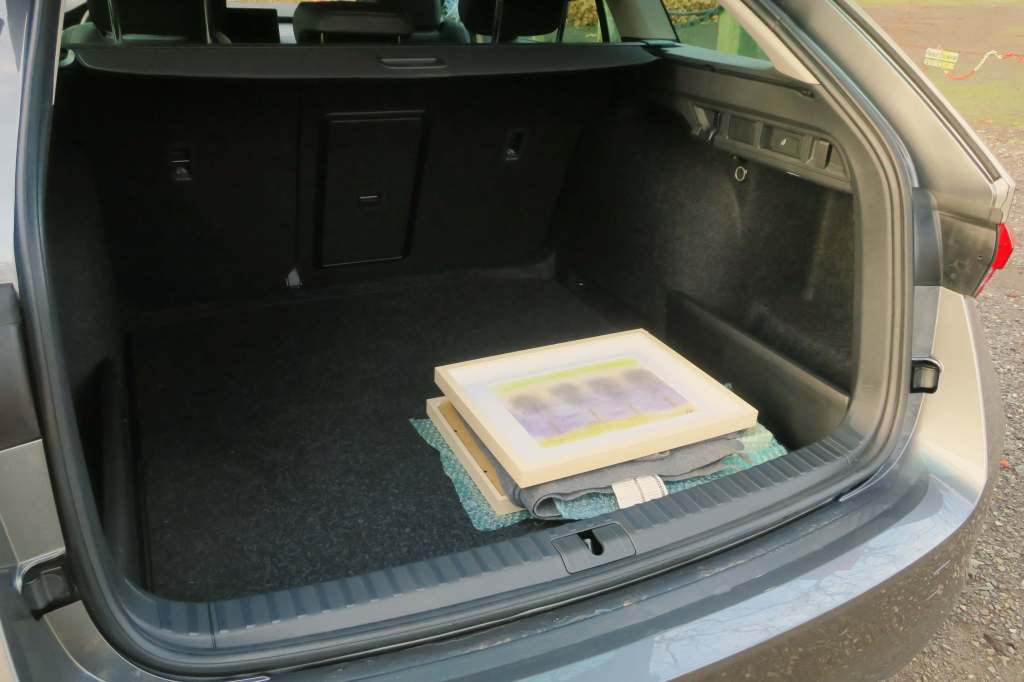
Luggage space is absolutely cavernous…

We liked this smooth extra EV power, and the engine switching off really enhances your quiet driving style. It adds greatly to the “zen”feeling when driving in busy traffic. We also liked the coasting function when you lift the throttle at speed. It is astonishing how frequently one can profit from the kinetic energy of the car when you drive it just a bit with anticipation. It certainly results in lower fuel consumption in urban driving situations, where we achieved averages of around 7 liters/100 km in town without any effort. Skoda quotes averages of 5 to 5,8 liters/100 km, and indeed in practice this Skoda was about 0,5 liters more economical than the 115 HP 6 speed version. CO2 emissions are quoted between 114 and 133 g/km.

Coupled to the smooth 7 speed DSG the Octavia really comes into its own, and it is a delightful everyday car.

Our test car had drive mode selection, which added further to driving pleasure and well being behind the wheel. Performance is here truly admirable, with 0 to 100 acceleration in 8,6 seconds and a top speed of not less than 226 km/h.

Put in the proper driving mode, this Octavia can really be moved with zest on winding roads, and has excellent Gran Turismo qualities. Leaving it in the comfort mode makes it a very restful (long distance) car for both driver and passengers.

Roomy and practical

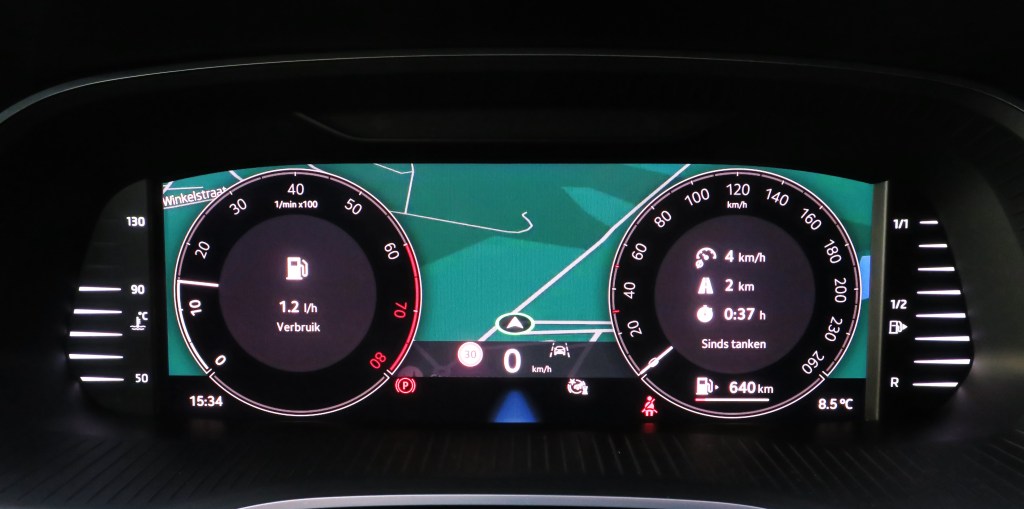
Skoda engineers have a talent to create room on the platforms of the group, and what they have built on the Golf VIII platform is nothing short of astonishing. It is a fully fledged five seater, with luggage space to match. You have 640 liters with the rear seats up, and up to 1700 liters when everything is laid flat.  

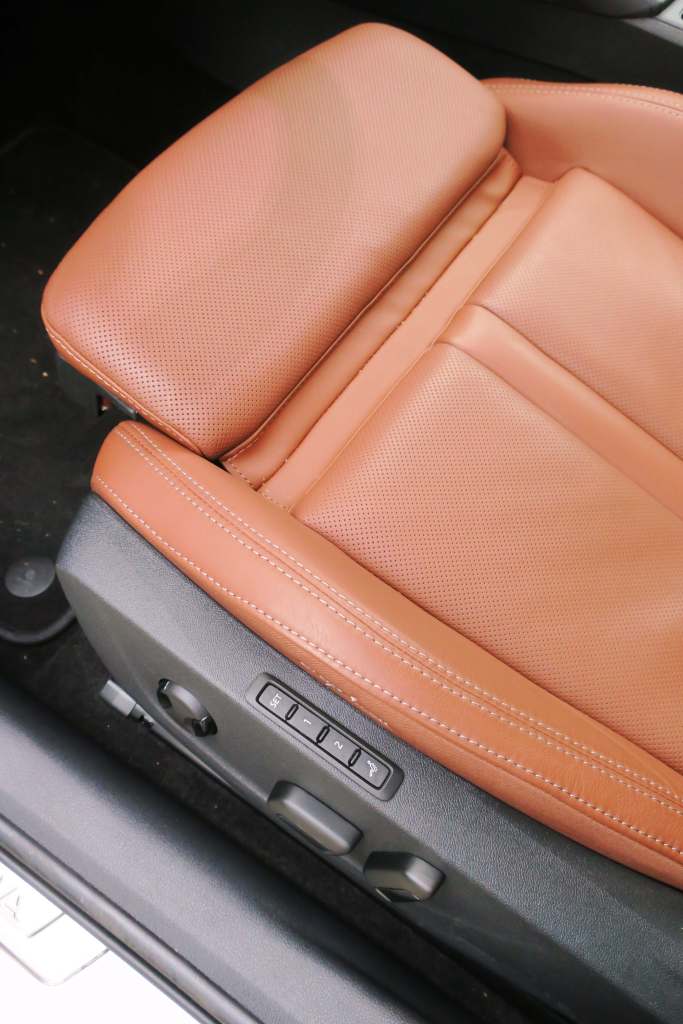
Seating comfort is also one of the strong points of the Octavia. The position behind the wheel is nothing short of ideal, with in the top equipment  version we tested anatomical seats with adjustable seat  functions throughout. The rear passengers enjoy ample legroom and also headroom is more than sufficient. The 150 HP Octavia sported also very aesthetic beige leather seats which added a touch of panache to the interior.

Infotainment

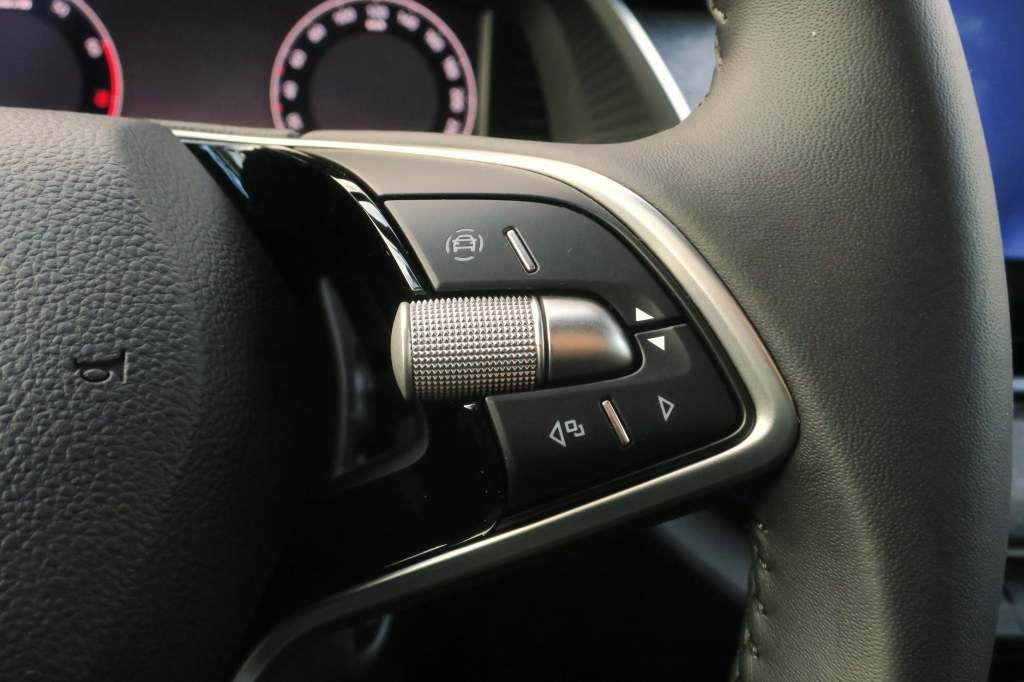
The Octavia comes with a large touchscreen in the centre, combined with a digital instrument cluster in front of the driver. Skoda has increased the functionality of its infotainment functions with artificial intelligence, and it is now possible to have a more efficient dialogue with your car. It just shows how much importance Skoda is giving to stay competitive in its class. Skoda was indeed also quite clever to use touch/roll buttons for the various commands at the steering wheel column, instead of the haptic/touch sliders used in the VW (ID) range.


Conclusion

The more you drive this Skoda Octavia, the better you come to appreciate its qualities. It is indeed an all round practical car which literally ticks all the boxes. It is elegant with no thrills or frills in its overall styling, both inside and out, offers acres of room for passengers and their luggage, is mechanically smooth and well honed.

It offers impressive performance and allows you a ’zen’ driving experience in town. It is quite frugal too, when you adopt a reasonable driving style. So that families just love this Octavia is obvious. Indeed, enduring success is based on solid qualities, and this Octavia continues to have them…

Hans Knol ten Bensel 

We drove the Lancia Ypsilon electric: elegance, character and smooth panache

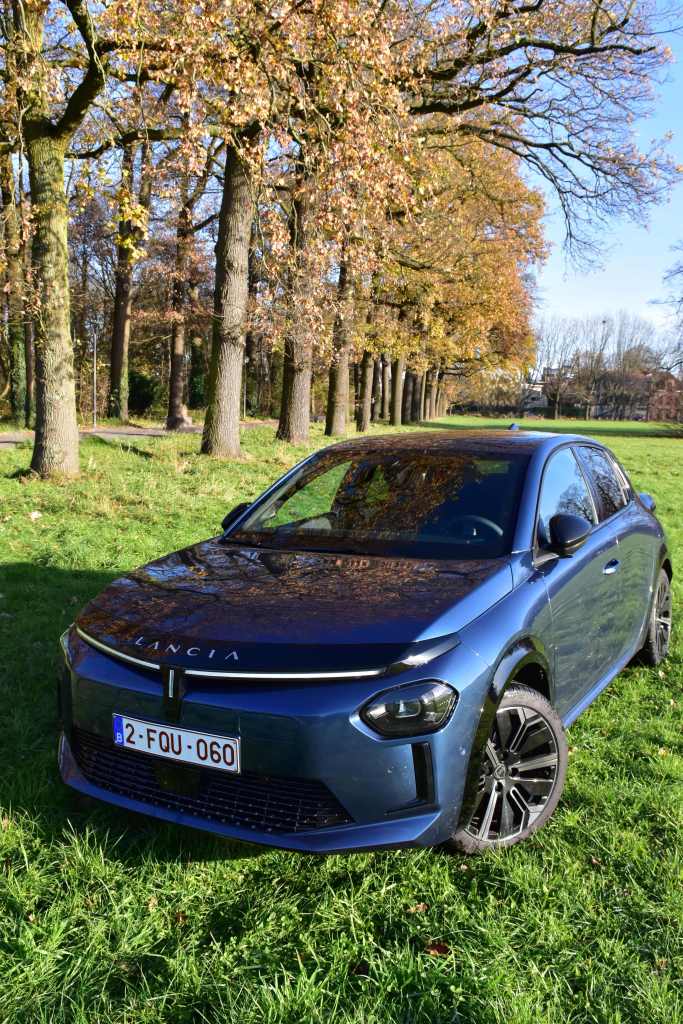
Lancia has always embodied style and elegance, coupled with mechanical refinement. This makes the new Ypsilon a very fitting candidate for EV propulsion. Indeed, after an extended test behind the wheel of this Lancia, we can only agree. It is most endearing as an EV, and indeed, it is a delight to steer it in town and on every road you may drive it.

Hans Knol ten Bensel
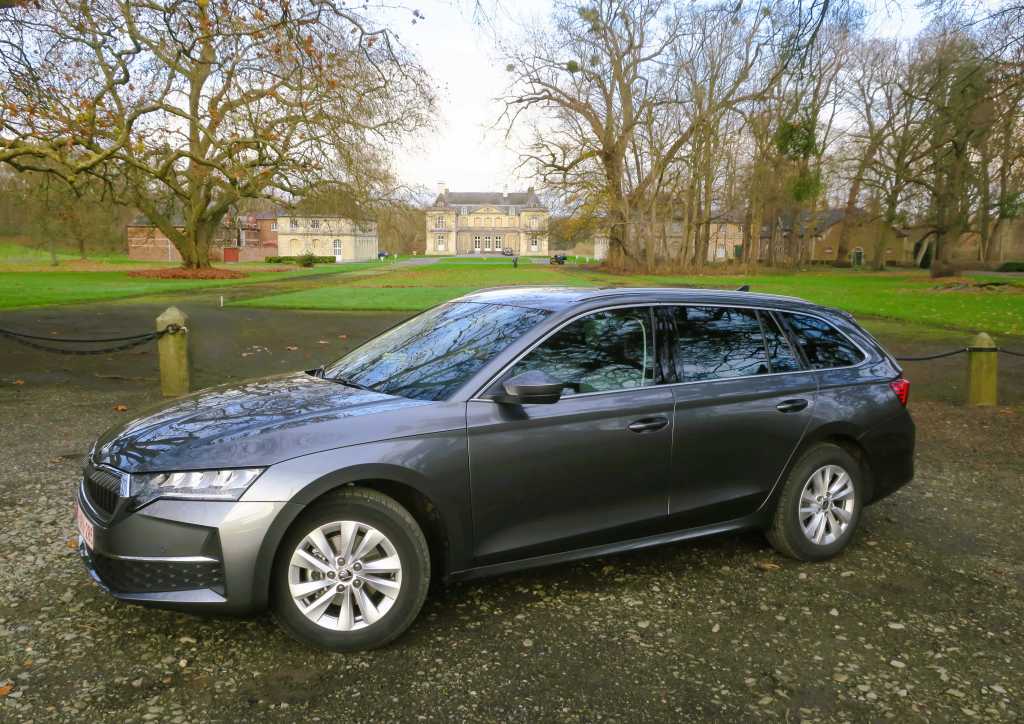
Renaissance on a well proven platform

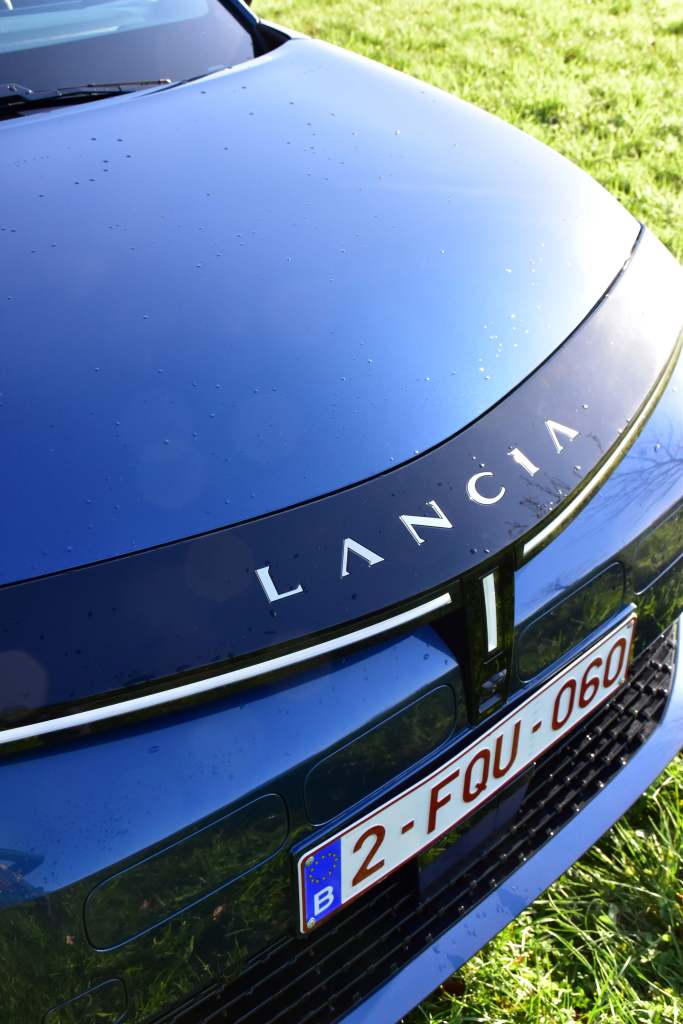
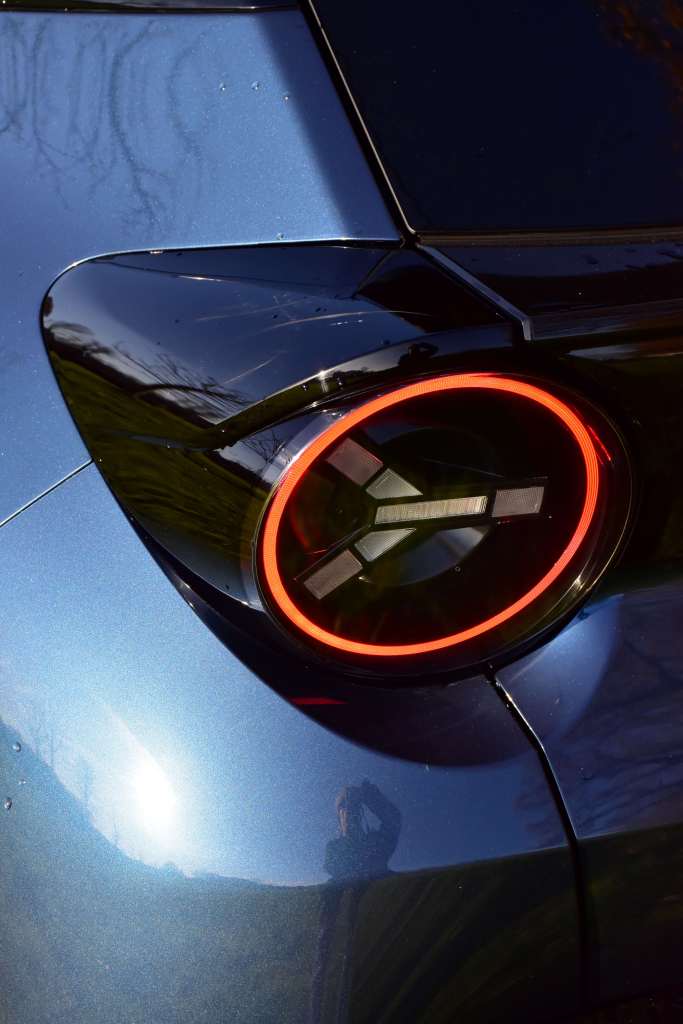
With the birth of Stellantis it was clear that a revival of Lancia was in the cards. We already told you in length about the introduction of this Ypsilon. It carries typical styling icons of the brand, like the “calice” on the front end, and the round rear lights reminiscent of the legendary Stratos.
In my opinion it is the most attractive of the Stellantis compact range, but that is of course a very subjective preference.

Iconic cabin

The elegance and the Lancia typical panache continues in the interior. We loved the layout of the dashboard, the resolutely square screens, the cute and well finished little central table or ”tavola”.

You can leave flat and light objects on it, everything else is of course hazardous when you drive  your Lancia with verve. We loved the blue/grey/black colour palette in the interior, so in tune with the tradition of the brand. Of course, it is a pleasure to find “real” commands and knobs for ventilation/heating for instance, and one feels quickly at home in this Lancia. One has Android Auto or Apple Carplay, and you can stream La Callas and delight in hearing how beautifully she brings Casta Diva. Indeed, the sound system is up to scratch.

The seats are quite comfortable and give excellent support. Space for the rear passengers is adequate, but of course one cannot expect miracles from a car with an overall length of 4,08 meters. Boot space is more than adequate for its class, with a standard available space of 309 liters.

Smooth EV power…

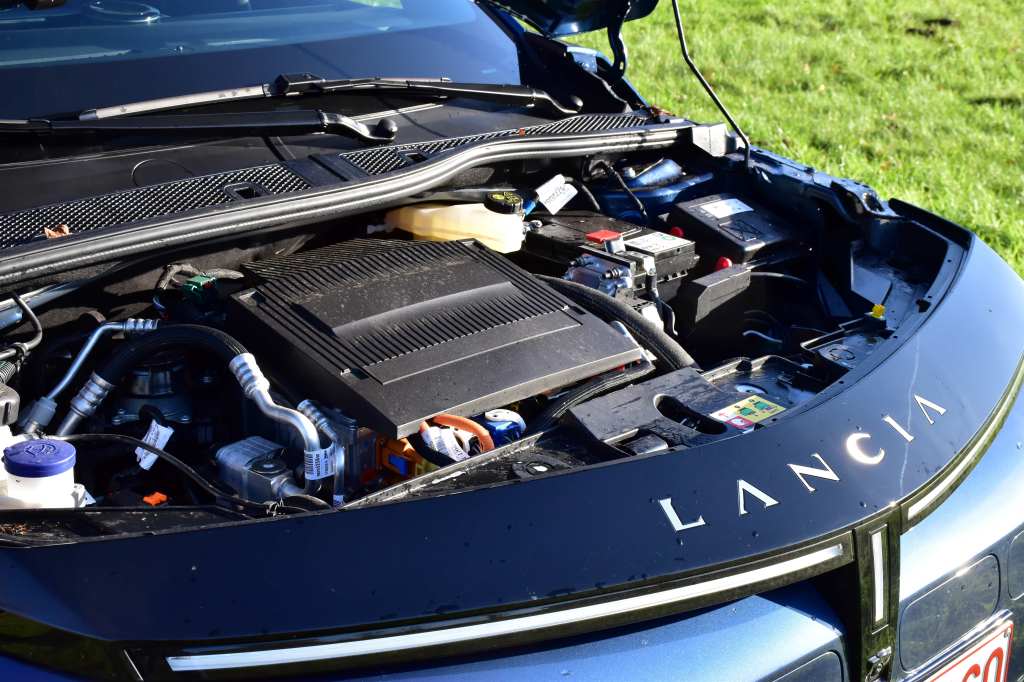
The Lancia shares its EV drivetrain with other cars in the Stellantis group, like the Opel Corsa, Peugeot 208, Jeep Avenger and Fiat 600. This means we’ll proven technology, with a 115 kW electric motor and a 54 kW battery, of which 51 kW is available in practice on the road.

This drivetrain is quite efficient, and indeed it is well possible to achieve consumption averages of 14-15 kW/100 km. It  results in a practical range of some 360 km under reasonable temperatures. Fast charging is possible up to 100 kW, which means you can charge your Lancia in less than 1/2 hour from 20 to 80 pct.

The smoothness of the EV drivetrain is an absolute delight and suits the character of the car wonderfully. Performance is quite zesty with an acceleration time from 0 to 100 km/h in 8,2 seconds. Top speed is limited to 150 km/h, which is very wise indeed, as high speed driving with an EV is a very wasteful affair.

Handling is brisk and precise, and indeed even  when driven with abandon on winding roads, this Lancia will delight you.

Conclusion

We found this Ypsilon utterly pleasing with the EV drivetrain. The silence and smoothness of EV power is just what this car needs. We are curious to see how it behaves with its 1,2 litre 16 V combustion engine, and even more so in the hybrid form. But here in our eyes, it already earned top marks…

Hans knol ten Bensel 

110 years Maserati was celebrated at Interclassics Brussels…and so much more!

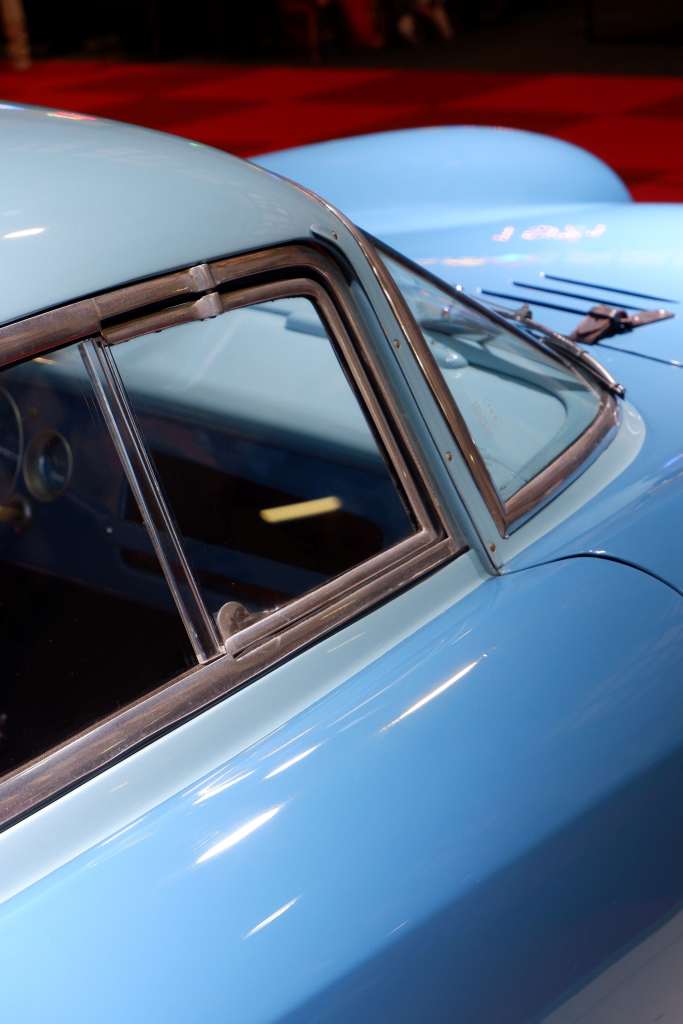
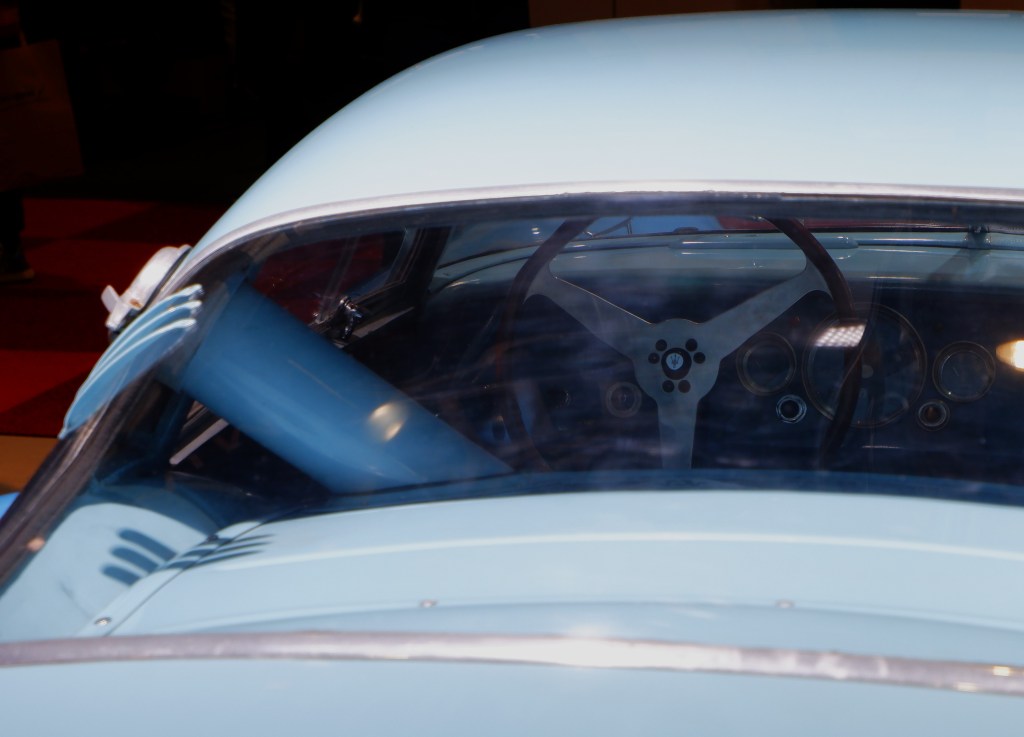
The breathtaking contours of the award winning Maserati A6GCS/53 Berlinetta by Pinin Farina, presented by the Brussels Autoworld museum on their stand.

The 9th edition of the Interclassics car show proved again a formidable event. The 40.000 m2 spread over several palaces was filled with collectible four wheeled beauties, and lovers of Italian, British, German, French or last but not least American classics could have a true delightful time from Friday 15 to Sunday. Your servant also took his Fujifilm X-A5 camera along, and shares here with you his impressions.

Hans Knol ten Bensel
D’Ieteren celebrates 345 years of heritage…

The dynamic PR department of D’Ieteren invited me to their magnificent stand, where they celebrated the anniversaries of some of the most iconic models of the brands they import into our country.

To present the rich history of its brands, D’Ieteren adopted the theme of the evolution of technology, and so displayed the vintage models of the Volkswagen Golf, Audi 100, SEAT Ibiza, Škoda Octavia and Porsche 911 alongside their current versions. The cute Microlino was also present, next to the iconic BMW Isetta…

What better for me to do than to aim my Fujinon lens to bodywork details of both current and vintage cars, visually telling the story of progress along many decades…

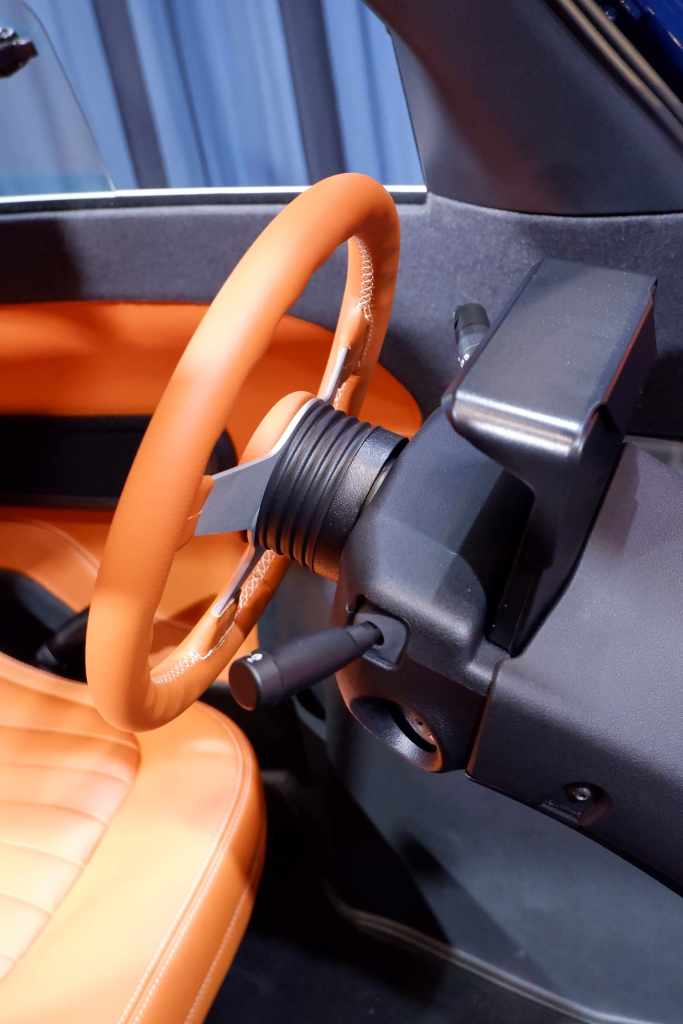
Down to the very essence: the “dashboard” of the BMW Isetta…

The electric Microlino continues this tradition of “less is more…”

In doing this, I found it remarkable how ”modern” the Porsches still look, and indeed a ”classic” Porsche hardly feels out of place five decades later. What’s more, its sheer performance and road manners still are impressive today. Actually, the same can be said of the ”Ur” Golf, its proportions, styling,  performance and overall stance are still quite modern.


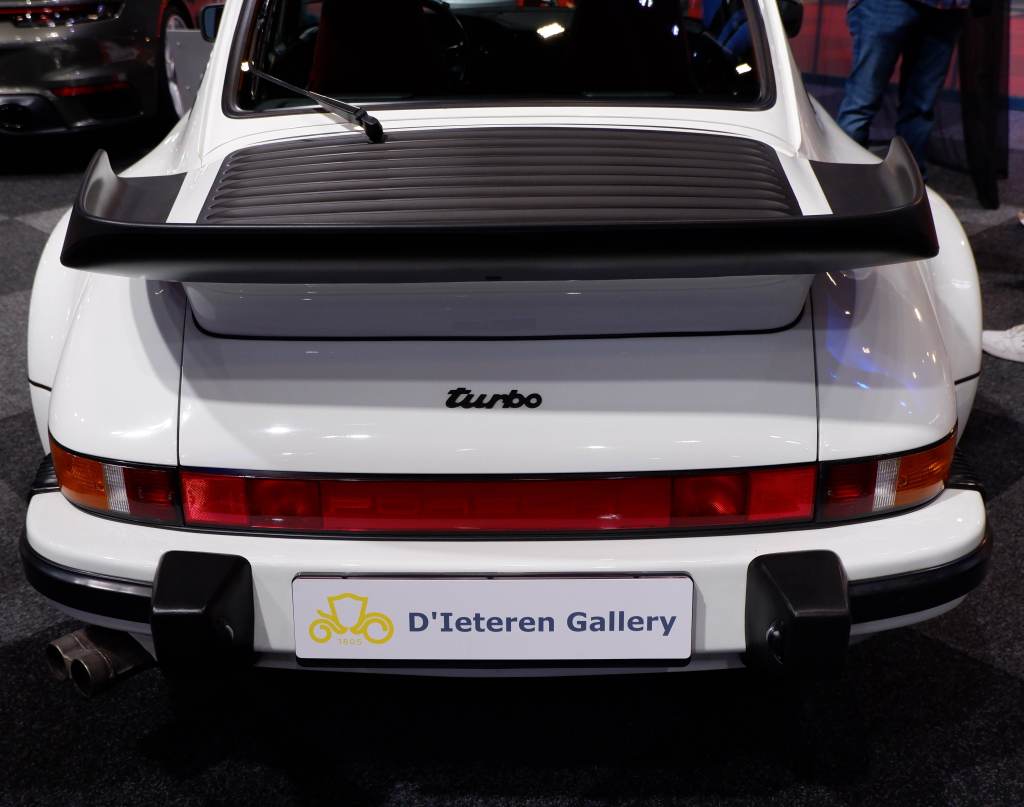
Porsche celebrated the 50th anniversary of the Porsche 911 Turbo . The Porsche 911 Turbo Type 930 made its debut in 1974. I still have the fondest memories of these early Porsche 911’s. As a young car journalist I drove them to the limit, enjoying their delicate handling, the hiss of the air cooled flat six at high revs, the tout feel and precision of the whole car. Indeed, Porsche’s are unique, and once you sat behind the wheel of them, they make an indelible impression.

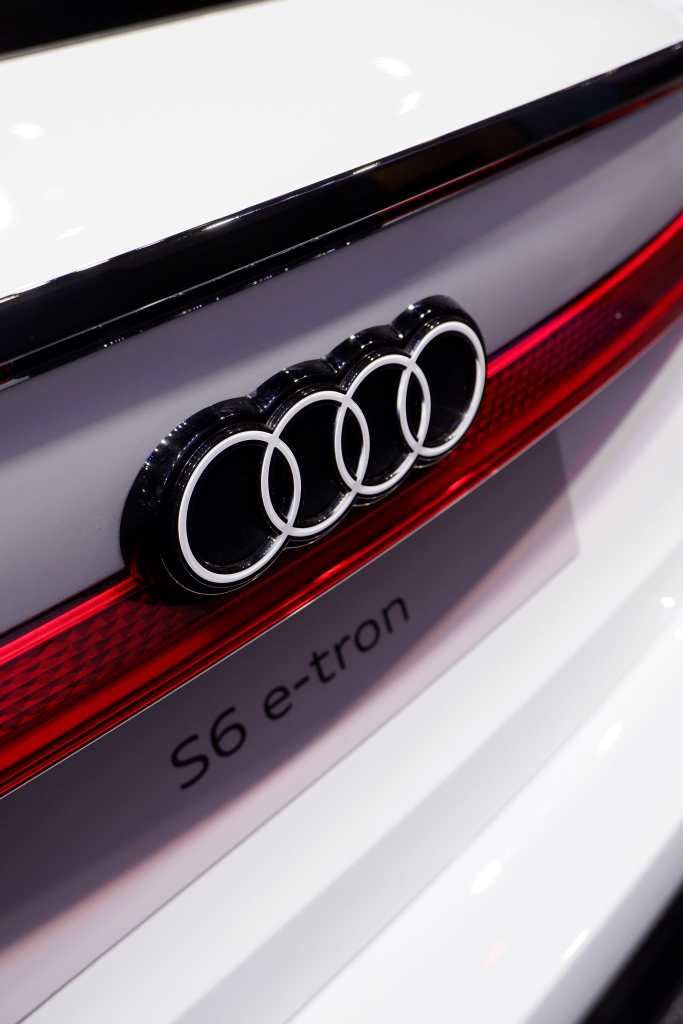
Celebrating 50 years of Audi in Belgium , D’Ieteren also put a truly pristine and original Audi 100 L Automatic alongside the brand new A6 e-tron, which has just hit the market. It completed this with an equally formidable 100 Coupé.

The dramatic styling details of the ’74 Audi S Coupé…

And the clean lines of the S6 e-tron…

Bentley showed a recent 2022 Flying Spur alongside a mid ‘80s Bentley Turbo R. This now classic Bentley brings back sweet personal memories, as I was invited to drive this impressive powerful V8 turbocharged saloon personally from Brussels to le Mans to attend the 2003 Le Mans 24 hour race, witnessing the event from the Bentley pit stand, and see the Bentley Speed 8 win the race!

Massive power with style…

Seat celebrated 40 years of the Ibiza, showing an immaculate 1984 model, shown here below.

Automotive technical evolution was most apparent when one compared the 65 year old Skoda Octavia Break 1201 with the present Octavia. Understandable, as in the mid sixties, the styling and technology of the products behind the iron curtain were somewhat lagging behind what was made in the west, and indeed, a time span of more than six decades  is also very long indeed.


Last but not least there was the Microlino on the D’Ieteren stand, next to the car which inspired it, the BMW Isetta. Similar in shape, but totally different in technology. 

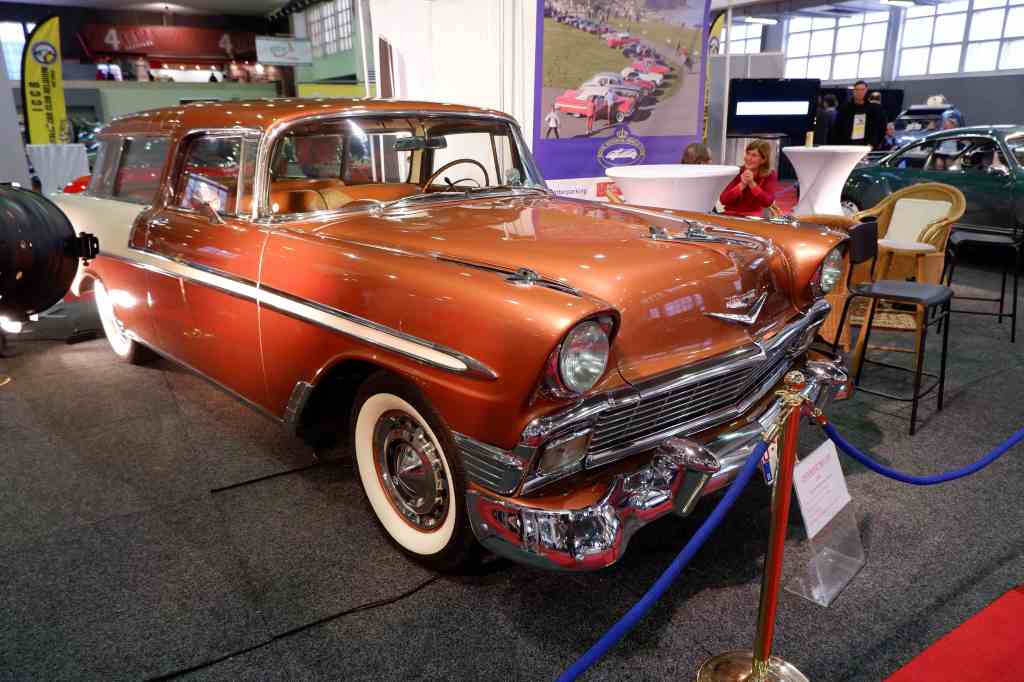
Of course, there were some beautiful American classics on the show. Just look at the 1956 Chevrolet Bel Air Nomad Sport Wagon shown here on the stand of the Royal Historical Vehicle Club Belgium…

Maserati, or the unique magic of pur sang…

The quality of the Maserati’s on display was nothing short of stunning, and the car which was prized best of show was a pale blue A6GCS/53 Berlinetta by Pinin Farina, presented by the Brussels Autoworld museum on their stand. I show you here some photos of this gorgeous coupé. I am totally smitten by its feline stance and wonderful proportions.

It just has tons of character, and it embodies everything the brand with the trident stood and still stands for. This ninth edition of the Brussels Interclassics was certainly a wonderful show, and we are already looking forward to the next edition.
Just enjoy the photos…

Hans Knol ten Bensel
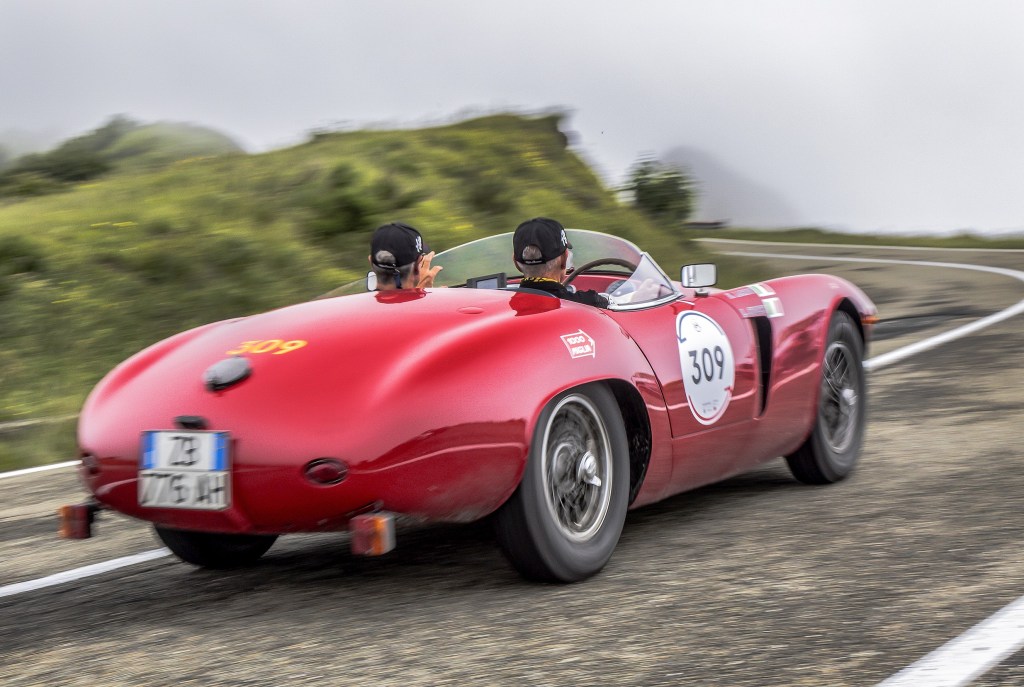
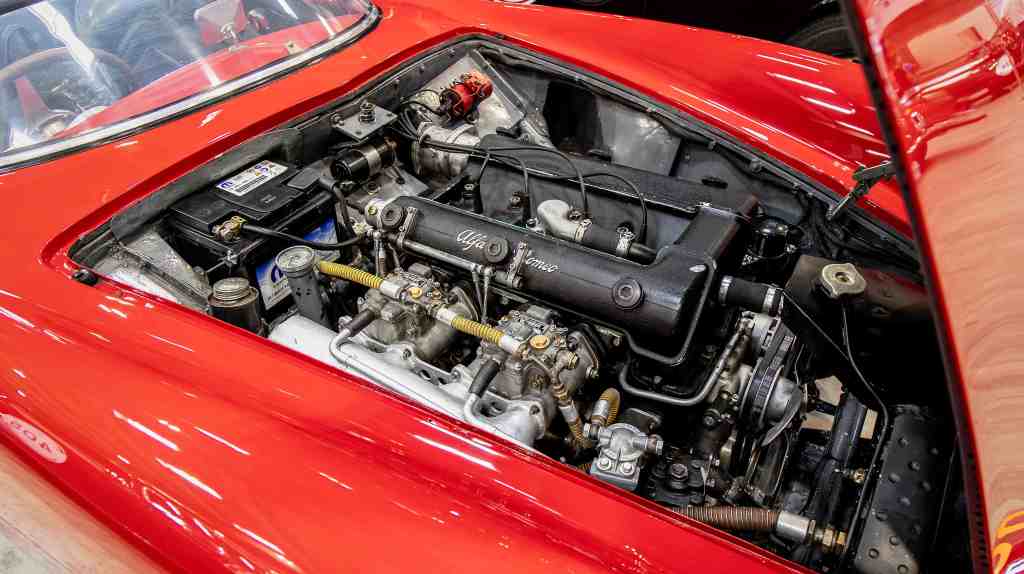
Alfa Romeo victorious again in the 1000 Miglia 2024…

The Villa Trasqua team’s 1929 Alfa Romeo 6C 1750 Super Sport driven by the duo of Vesco and Salvinelli took the top step of the podium

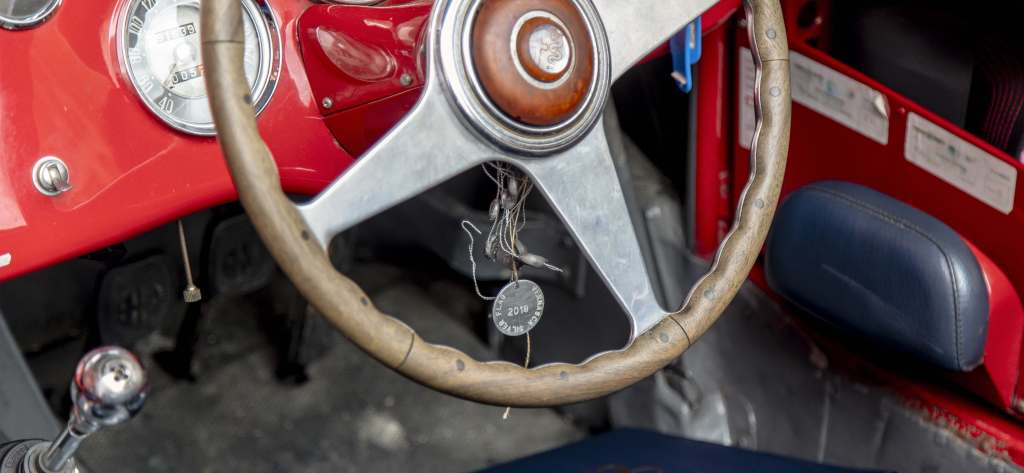
The 42nd edition of the 1000 Miglia has been run beautifully again. The “Mille” is a race which has a very special place in my heart, as I have participated in it forming a team with my father in the official Mercedes Factory team, at the wheel of a works car. In the Mercedes team entry was then also Stirling Moss, and you can imagine that being in the same team, talking to him and wearing the same Mercedes Team racing overall as the celebrated champion was the pinnacle of what we would ever experience in our motoring life. I still have and cherish the Mille Miglia Shopard Watch with our entry number, 147, engraved in the back. 

The Lancia Autrelia’s of the Automobile Club di Brescia were then the car on the winners podium, and now today Alfa Romeo’s undisputed dominance of the 1000 Miglia continues. 

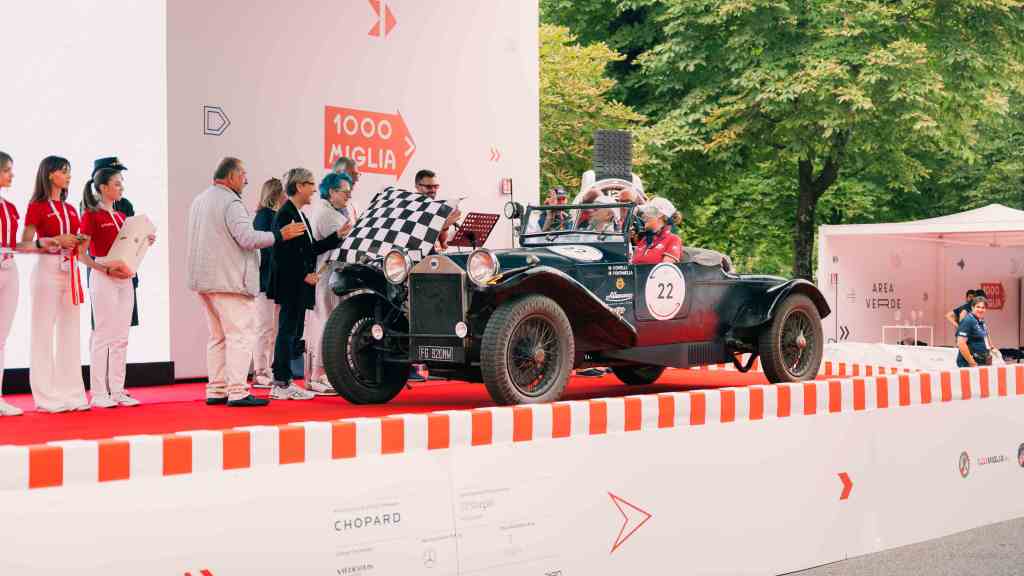
The 1927 Lancia Lambda Casaro VII Serie, crewed by Fontanella and Covelli, won the silver medal.

The route of the Mille Miglia is in itself totally epic…

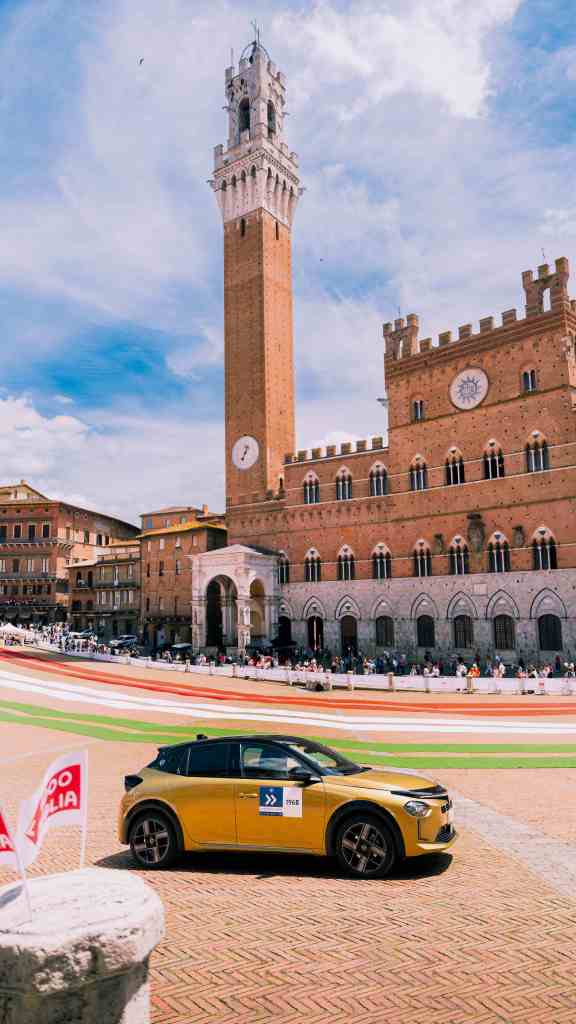
From Brescia it went for the first time in 76 years also to Turin, then from Genoa and the beaches of Viareggio to Via Veneto in the heart of Rome, then returning north via Siena, Ferrara and Lake Garda, to end with the traditional parade on Viale Venezia in Brescia, where it all began back in 1927.

Once again this year, the pass-by of this epic “traveling museum” aroused enthusiasm and curiosity among the throngs of spectators who crowded the route of over 2,000 km. 

Also remarkable was the participation  of the Alfa Romeo Junior, the new compact car that brings Alfa Romeo sportiness back into the largest segment in the European market.

The New Lancia Ypsilon finished at the third position participating for the first time at the 1000 Miglia Green. And this on the very same days the model became available at Italian dealerships! Needless to say that we are keen to drive both cars soon…

As you will recall, I mentioned this already earlier in my columns, I have been a Lancia owner for four years, driving a dark midnight blue Lancia Dedra. It NEVER missed a beat, come what may and accompanied me in many iconic European places and cities. After that, I drove for half a year a Lancia Gamma, which also was fast, reliable and full of panache. 

But back to the Mille Miglia: what a fantastic event, it still moves my heart. 

Hans Knol ten Bensel 
We drove the Nissan X-Trail e-Power e-4ORCE : the best of both worlds?

Nissan is carving itself a wonderful niche in the electrified SUV world, with both its popular Qashqai and the all new X-Trail.

It offers a bold technological solution for these two popular models by decoupling the engine entirely from the proper drivetrain, letting it act solely as a generator to one (and in this case two) electric motors.

The idea behind it is obvious: it offers the pulling power and mechanical refinement of the electric motor and at the same time it avoids the inefficiency of the combustion engine when it operates under low charge  situations combined with relatively high revs, like in urban stop start traffic.

It lets the engine do its charging work under ideal thermal working conditions and loads, and uses a small(er) battery to deliver the extra electric energy when needed in specific driving situations, like starting off from standstill or engaging in fierce acceleration. Ideal? Let’s find out…

Hans Knol ten Bensel

Smooth…

The driving impressions are indeed very convincing: progress is silky smooth, and indeed the X-Trail is delightful to drive in town and slow traffic.

The ample torque of both electric motors inspires confidence, and lets you master every driving situation. The combustion engine, a 1,5 litre three cylinder, is well insulated and hardly audible. Its recharging task depends of course on how much e-power you want it to deliver, and therefore the more relaxed your driving style, the less you hear it. Whether it will rev higher depends also on the driven speed, soo clever! The Nissan engineers did a very good job here, as this gives a very “natural” impression to driver and passengers.

Total power of our top op the range e-Power e-4orce X-Trail is not less than 213 HP, and the torque is even more important with 330 Nm at the front and 220 Nm at the rear. Smooth performance is the result: the 1,9 tonne 7 seater will sprint from 0 to 100 km/h in 7 seconds and the top speed is an impressive 180 km/h. Indeed, this X-Trail will never feel underpowered.

Geared for comfort

Does the X-Trail awaken the sporting driver in you? Well, rather not. Its utter smoothness puts you rather in a “Zen” mood, and the comfortable suspension does the rest. The car is well balanced and stable in all circumstances, and this adds to the overall relaxing character of the car.

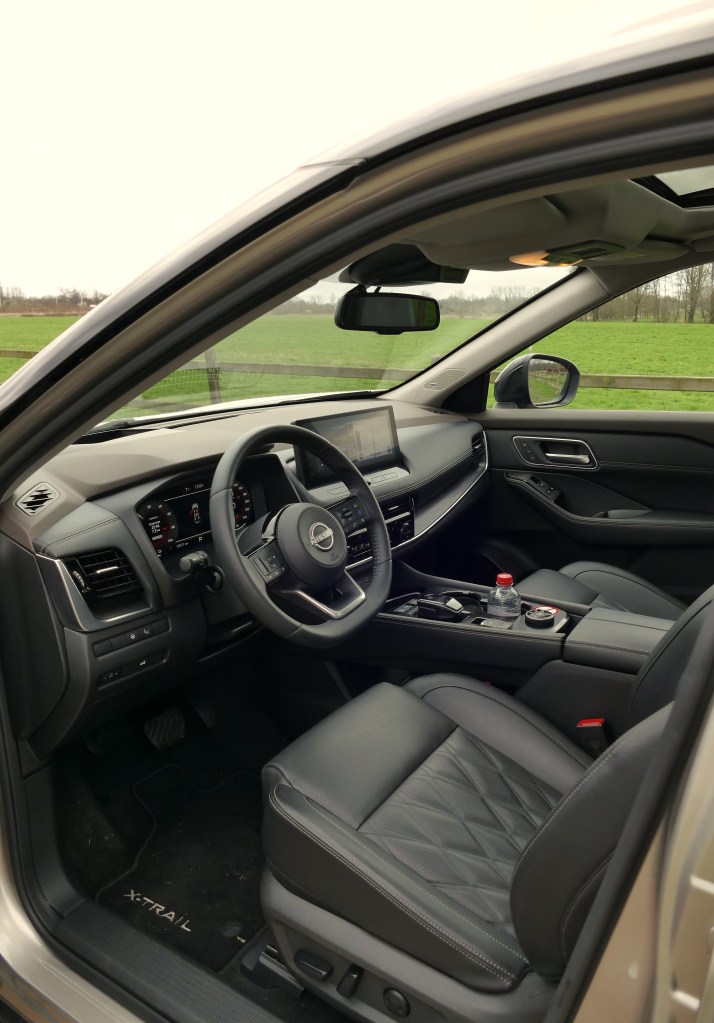
Well being is also found in the cabin. Of course, the top Tekna+ equipment version spoils your senses. The interior is also well laid out, stylish and the designers did keep wisely an array of knobs so you quickly find your way intuitively to all the functions of this X-Trail. We also liked the look of the digital instruments and screen display.

The X-trail e-4ORCE AWD is with its dual motors and 4WD very well at home off- road too…

… but also for economy?

The Nissan engineers had first and foremost the mechanical smoothness of e-propulsion in mind, and combined this with range comfort. Consumption seemed not to be an absolute priority. Nissan opted for a smaller  battery, not least because it would cost room, make the car heavier and pricier. This means that the engine has nowhere to dump its generating power when the battery is full. Of course, the drivetrain software will shut the IC engine down as soon as possible, or let it turnover purely on e-power. Having said this, if you adopt a relaxed driving style, it is quite possible to achieve a consumption between 7,5 and 8 litres, which is quite efficient for a car weighing close to two tonnes. Official figures indicate an average consumption of 6,4 litres/100 km, and 146 g/km of CO2 emissions.

A seven seater…

Indeed, this X-Trail will transport two youngsters on the third row seat, but this is not meant to be for super long trips. But a short run to the supermarket or football club is always in the cards, and this can be quite practical on more occasions than you would expect.

Conclusion

This Nissan X-Trail e-4ORCE is a very well balanced, refined car which offers you all the sophisticated “Zen” pleasures of electric driving combined with the range and long distance cruising panache of IC engined cars. It is very well finished, is lavishly equipped and offers more than adequate space.

We were so seduced by all its good qualities that we decided to join a Nissan e-Power e-4ORCE to our stable of cars, so soon we will inform  you regularly about how it behaves in long term use…

Hans Knol ten Bensel 

Our cars: The Lexus CT 200h is still going strong, and our beloved Volvo fondly remembered…

In our age of energy transition, things indeed have to change. So with the (urban) emission regulations coming along, we had to give up 5 years ago a truly excellent car, our Volvo 850 Estate, with its marvelous 2,5 litre five cylinder petrol engine.

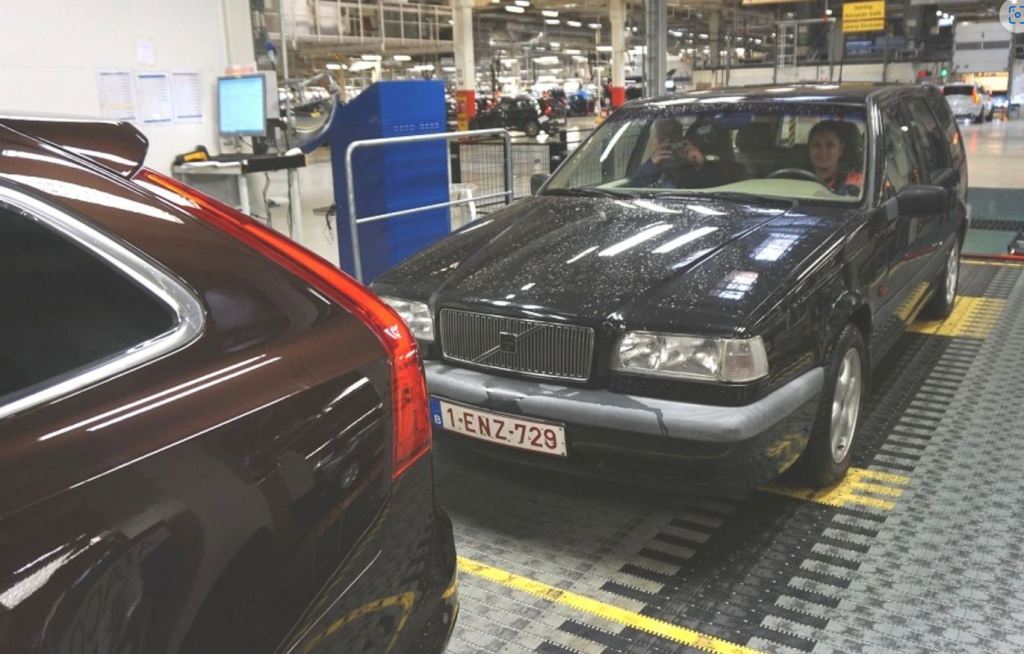
Before parting with it, we took it on a last long trip,from the Volvo factory in Ghent to the Volvo plant in Swedish Torslanda, where the sedan version of the 850 rolled of the assembly lines. Just look at the links of these articles on our site: 

https://autoprova.be/2017/04/11/our-cars-soon-we-will-drive-our-volvo-850-estate-from-volvo-ghent-to-torslanda/
And:
https://autoprova.be/2017/05/20/we-start-the-travel-with-our-1995-volvo-850-from-ghent-to-torslanda/
Last but not least:
https://autoprova.be/2017/06/01/our-850-volvo-visits-the-swedish-torslanda-factory-and-is-driven-on-the-assembly-line/

We have to blame here our EU AND also our local politicians which make very one sided decisions away and above social considerations and consequences. The beautiful Volvo had to go, as it was now politically declared an urban outcast.  

And despite its excellent ’as new’ condition, it fetched… 250 Euros, and that was it.

So go now, dear citizen! Go and enlarge your ecological footprint and buy a NEW BEV car! While the European electric grid still has to be adapted to the pan-EV reality, let alone the infrastructure, we have to plunge for this, with the EU and certainly global electricity production still being far from “clean”. Of course, we are still creating the extreme dependencies of raw materials and global markets as we did before…

But soon enough, we understood already five years ago, that the answer lies not (yet) there. Today finally even economy expert journalists admit that they did not see all the benefits of the hybrid solution which Toyota offered with the Prius now decades ago. The present market evolution now lets them see the light.  

We were already convinced then, and therefore we shopped for a used Lexus CT 200h, and found a well cared for dark blue example. See https://autoprova.be/2019/01/25/we-collect-our-lexus-ct-200h/.

Right away we were very pleased by its comfort, mechanical refinement and stunning economy. See the reports about  trips with our Lexus like https://autoprova.be/2019/04/05/our-lexus-ct-200h-continues-to-surprise-us/.

Further reports are found using the tag: https://autoprova.be/tag/lexus-ct-200h/

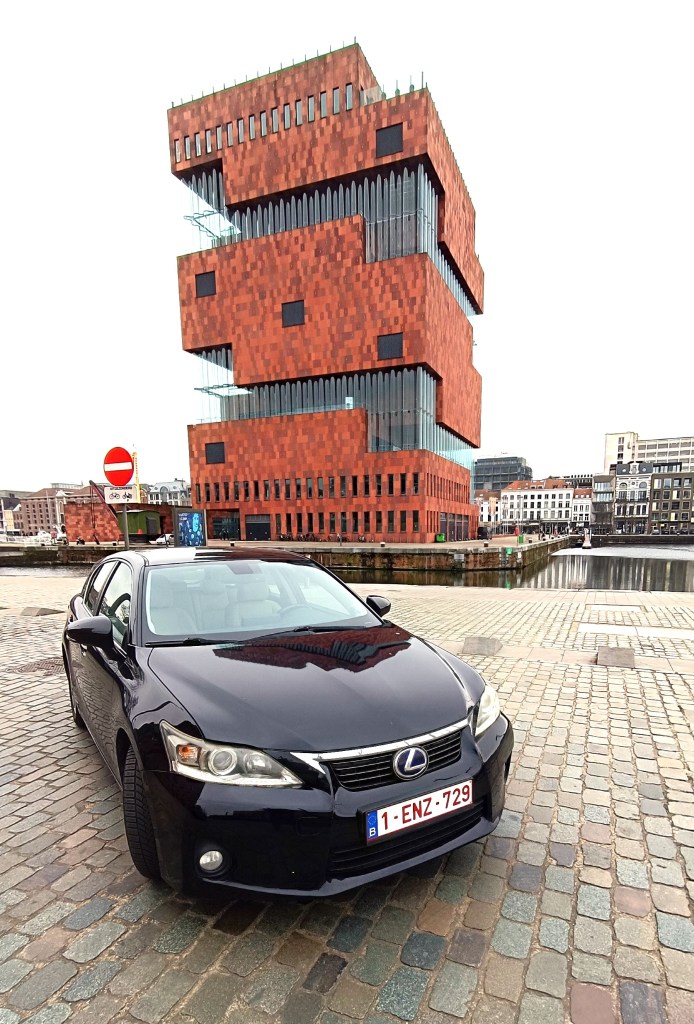
Now it is already five years with us, and it still hasn’t missed a beat. It passed the latest technical inspection with flying colors, and had last month its major service. It continues, as the photo shows, to consume well below 5 litres/100 km…

On the last photo you see the remote “mouse” control for the functions on the central screen display, which we still find ideal…


Hans Knol ten  Bensel 
Autoworld has grown to be (much) more than just a museum…

On February 21 I attended an interesting dinner conference organized by the Royal Historical Vehicle Club Belgium, where Sebastien de Baere, managing director of Autoworld Museum Brussels presented the impressive turnaround he achieved for this iconic museum, which is now more popular than ever. 

Michel Van Eesbeek, president of the Royal Historical Vehicle Club Belgium, introduced the speaker Sebastien de Baere…
This evening conference was of course held in the restaurant of the Autoworld museum.

Sebastien told us at length about the very positive evolution the museum went through since he became its Managing Director in January 2011. His previous professional experience as event organizer (he was Director of SAP Lounge, situated in the historic setting of the ‘Tuchthuis’ in Vilvoorde, which offers a high class meeting and event facility to catalyze business interaction) helped him to revitalize and effectively transform the museum.

“I first started to transform the sleepy, dusty image of this museum in its stately premises at the Cinquantenaire, also literally”, Sébastien starts his conference. I drew up a five year plan, and indeed started with removing unnecessary old artifacts which did not contribute to the essence of the museum and then we began to restructure the collection of exhibits and display areas.

2024 started already magnificently with the end-of-year exhibition “Porsche – Driven By Dreams,” from December 8th 2023 until February 25th 2024. We reported about this outstanding exhibition on our pages…

Then we got to work on improving the image of the museum with a new logo, introduced up to date marketing and last but not least started organizing events, at a very frequent rate. (Not less than 150 annually). These events established close ties between the museum and companies and industry in the automotive sector as well as the whole Belgian and international car world.

The results are there: In 2023, the museum welcomed no less than 235,000 visitors, a spectacular achievement especially if you take into account that this number doubled in a mere five years.

The 2024 events calender will be very busy indeed…

The year started already magnificently with the end-of-year exhibition “Porsche – Driven By Dreams,” from December 8th 2023 until February 25th 2024. We reported about this outstanding exhibition on our pages…

Autoworld further honors 50 years of the Volkswagen Golf from March 1st to April 28th. The most successful European car is now in its 8th generation, having received a facelift again this year. 

Many members of the Royal Historical Vehicle Club Belgium attended the conference…

It will be followed from  the 60th anniversary of the legendary Ford Mustang, a retrospective on the history of Formula 1, and, of course, a few more surprises that Sebastien de Baere would like to keep secret until further notice…

Soon we will visit the VW Golf exhibition at Autoworld – stay tuned!

Hans Knol ten Bensel