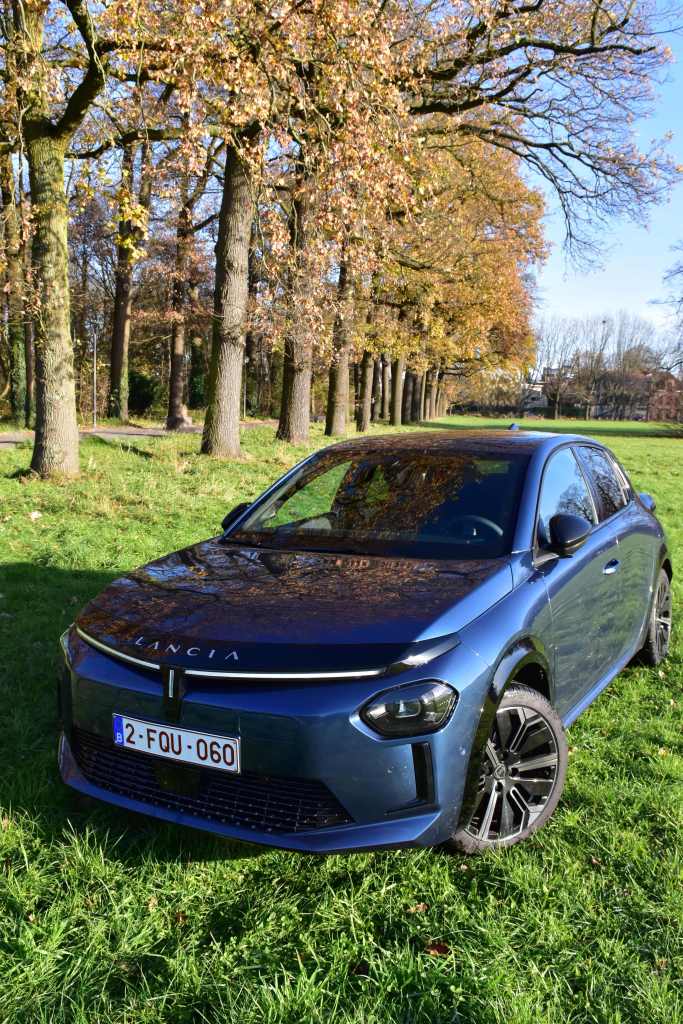
Lancia has always embodied style and elegance, coupled with mechanical refinement. This makes the new Ypsilon a very fitting candidate for EV propulsion. Indeed, after an extended test behind the wheel of this Lancia, we can only agree. It is most endearing as an EV, and indeed, it is a delight to steer it in town and on every road you may drive it.
Hans Knol ten Bensel
Renaissance on a well proven platform
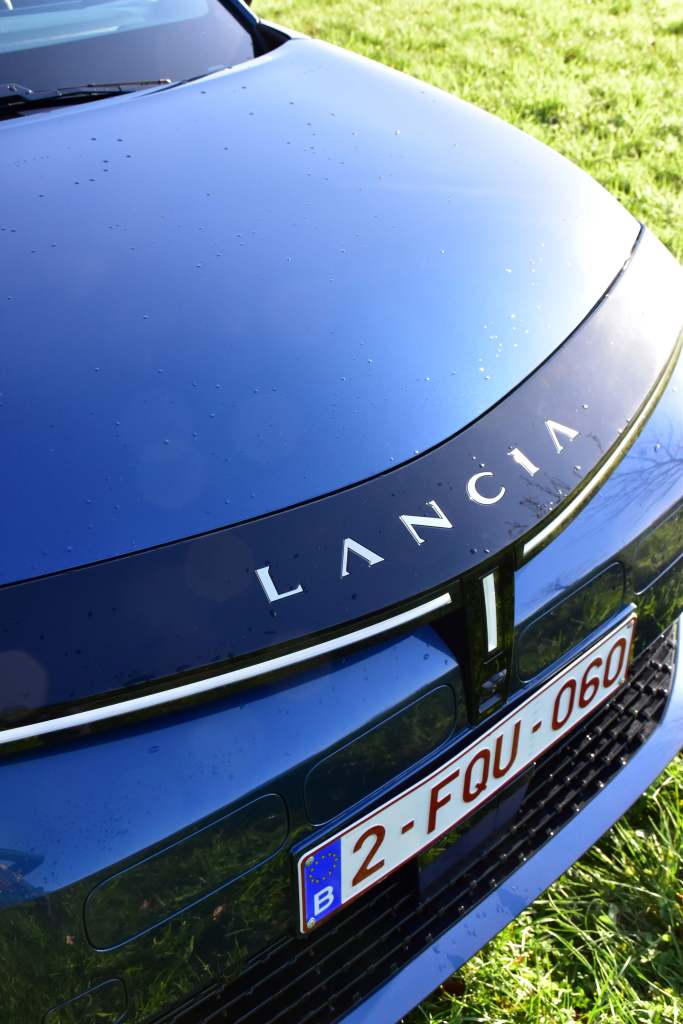
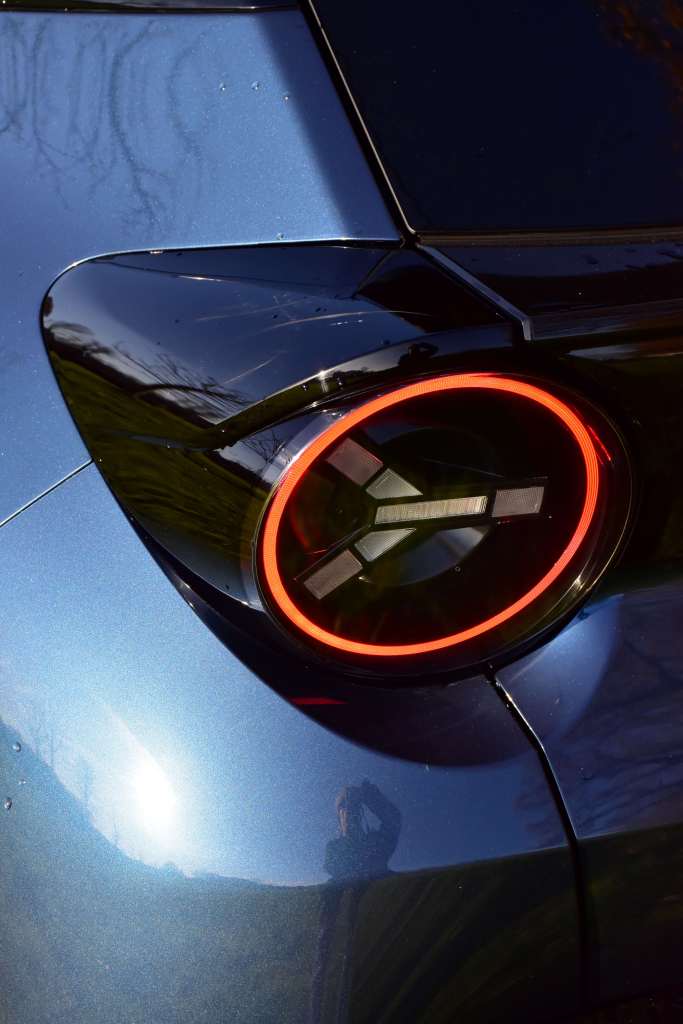
With the birth of Stellantis it was clear that a revival of Lancia was in the cards. We already told you in length about the introduction of this Ypsilon. It carries typical styling icons of the brand, like the “calice” on the front end, and the round rear lights reminiscent of the legendary Stratos. In my opinion it is the most attractive of the Stellantis compact range, but that is of course a very subjective preference.
Iconic cabin
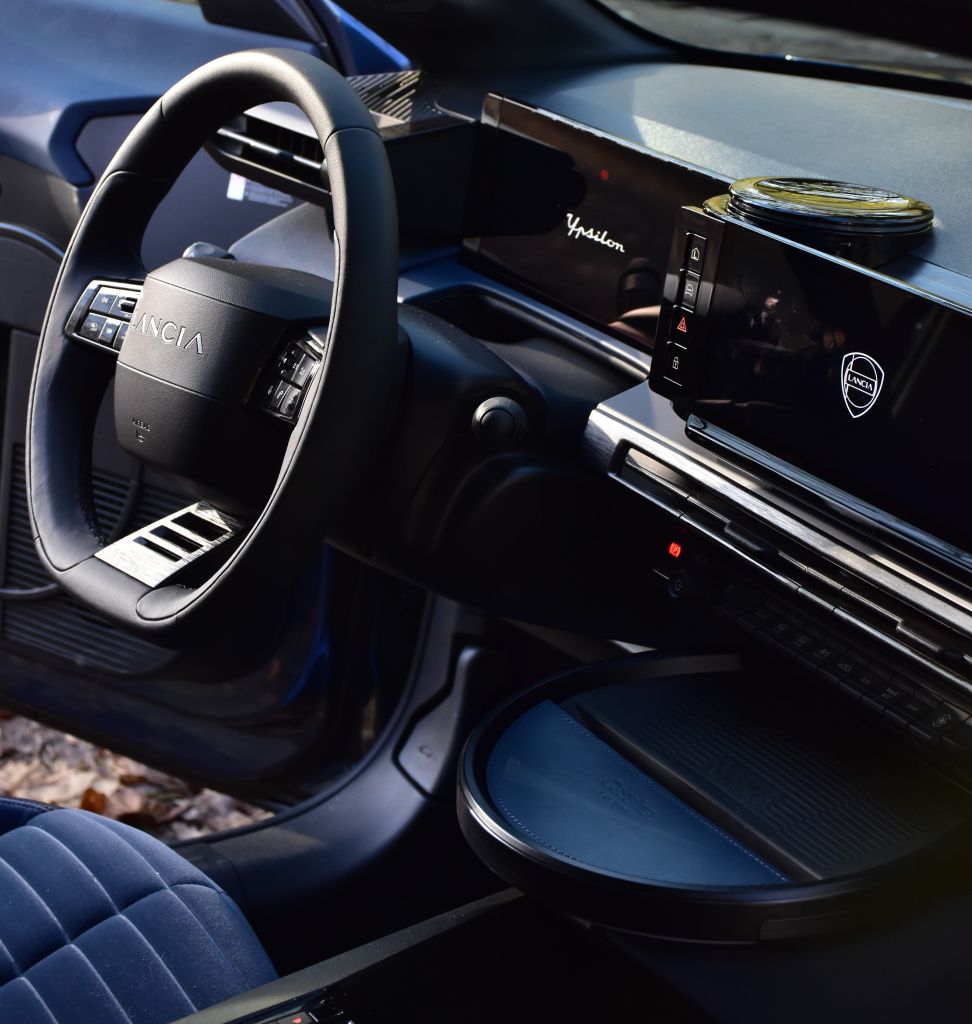
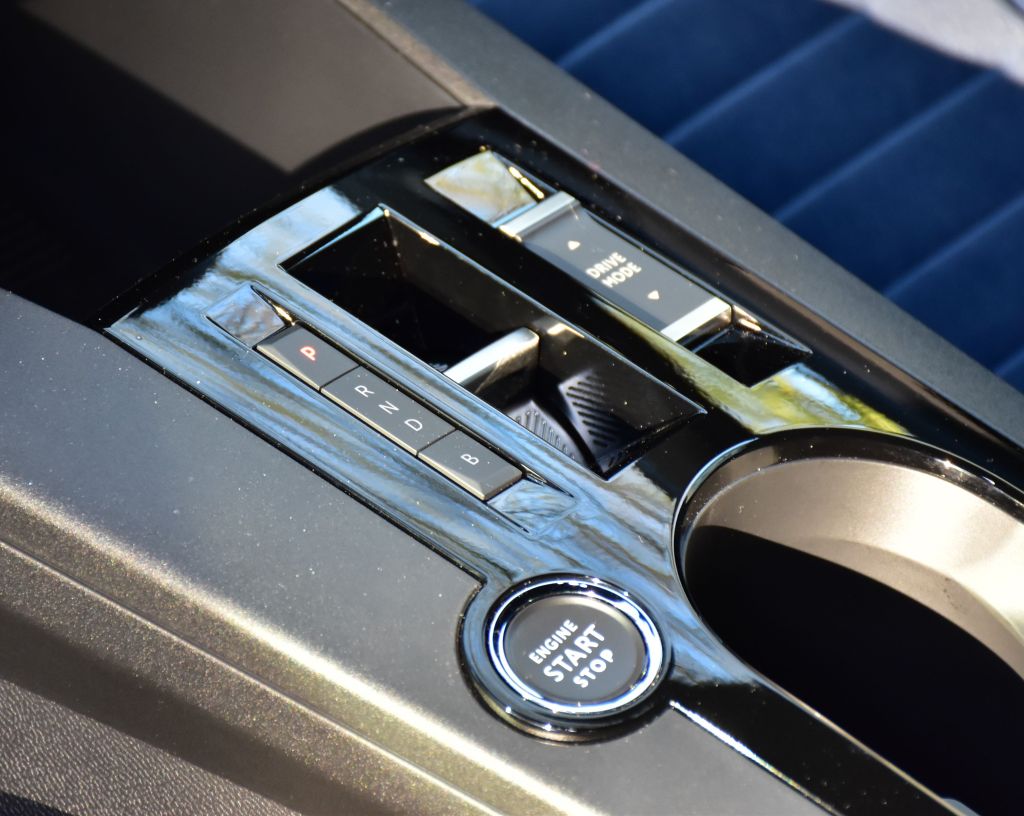
The elegance and the Lancia typical panache continues in the interior. We loved the layout of the dashboard, the resolutely square screens, the cute and well finished little central table or ”tavola”.
You can leave flat and light objects on it, everything else is of course hazardous when you drive your Lancia with verve. We loved the blue/grey/black colour palette in the interior, so in tune with the tradition of the brand. Of course, it is a pleasure to find “real” commands and knobs for ventilation/heating for instance, and one feels quickly at home in this Lancia. One has Android Auto or Apple Carplay, and you can stream La Callas and delight in hearing how beautifully she brings Casta Diva. Indeed, the sound system is up to scratch.
The seats are quite comfortable and give excellent support. Space for the rear passengers is adequate, but of course one cannot expect miracles from a car with an overall length of 4,08 meters. Boot space is more than adequate for its class, with a standard available space of 309 liters.
Smooth EV power…
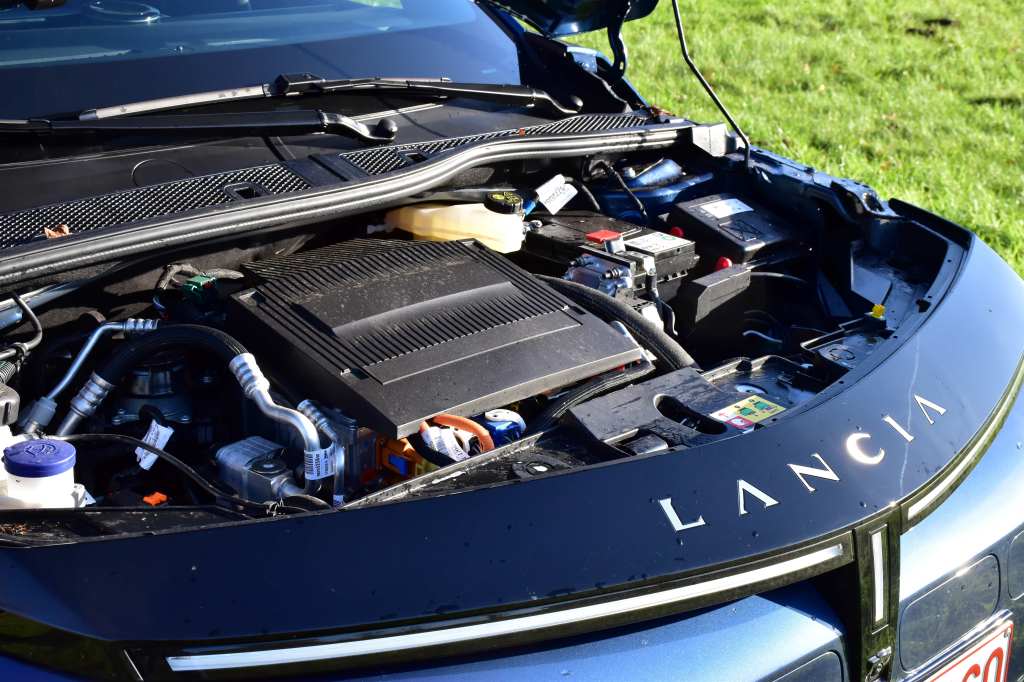
The Lancia shares its EV drivetrain with other cars in the Stellantis group, like the Opel Corsa, Peugeot 208, Jeep Avenger and Fiat 600. This means we’ll proven technology, with a 115 kW electric motor and a 54 kW battery, of which 51 kW is available in practice on the road.
This drivetrain is quite efficient, and indeed it is well possible to achieve consumption averages of 14-15 kW/100 km. It results in a practical range of some 360 km under reasonable temperatures. Fast charging is possible up to 100 kW, which means you can charge your Lancia in less than 1/2 hour from 20 to 80 pct.
The smoothness of the EV drivetrain is an absolute delight and suits the character of the car wonderfully. Performance is quite zesty with an acceleration time from 0 to 100 km/h in 8,2 seconds. Top speed is limited to 150 km/h, which is very wise indeed, as high speed driving with an EV is a very wasteful affair.
Handling is brisk and precise, and indeed even when driven with abandon on winding roads, this Lancia will delight you.
Conclusion
We found this Ypsilon utterly pleasing with the EV drivetrain. The silence and smoothness of EV power is just what this car needs. We are curious to see how it behaves with its 1,2 litre 16 V combustion engine, and even more so in the hybrid form. But here in our eyes, it already earned top marks…
Hans knol ten Bensel
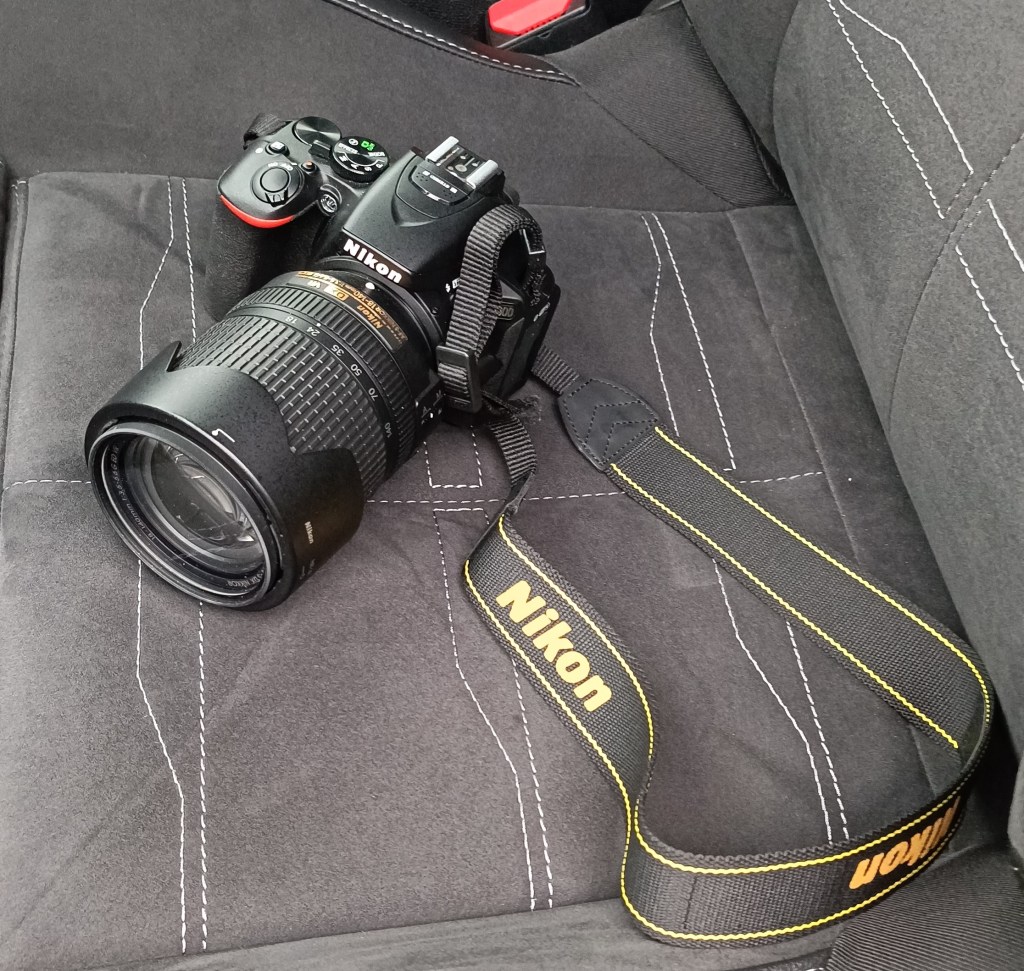
Photographer’s notes: we used for our photos here again our trusted Nikon 5600 D, a 24.2 megapixel upper-entry level, APS-C sensor DSLR. It delivers nice, crisp, well balanced photos, and is an absolute pleasure to use.
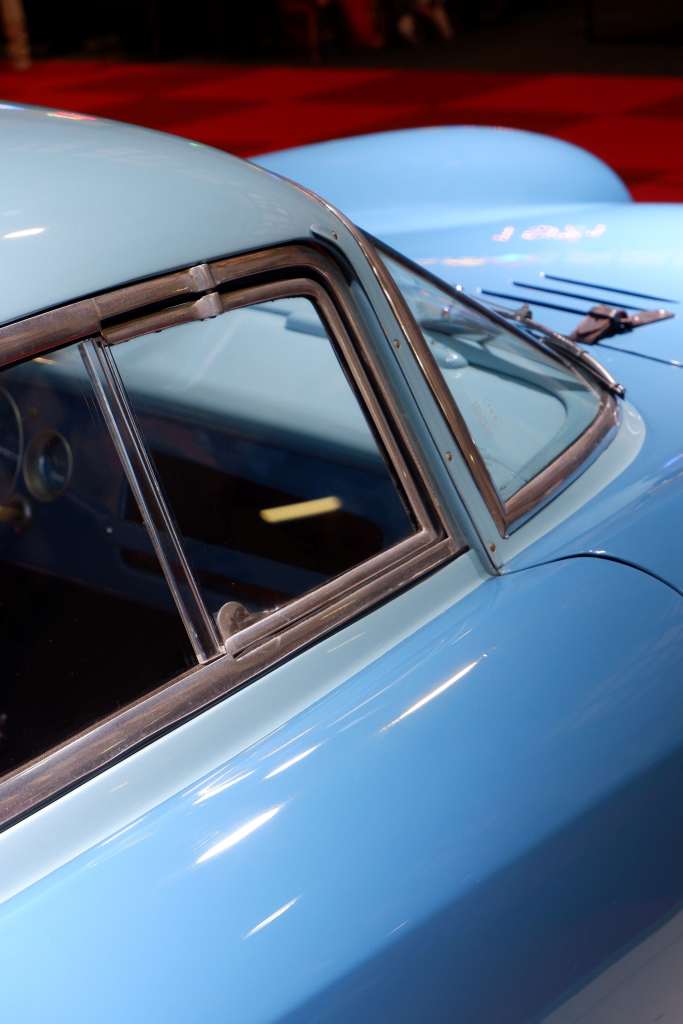
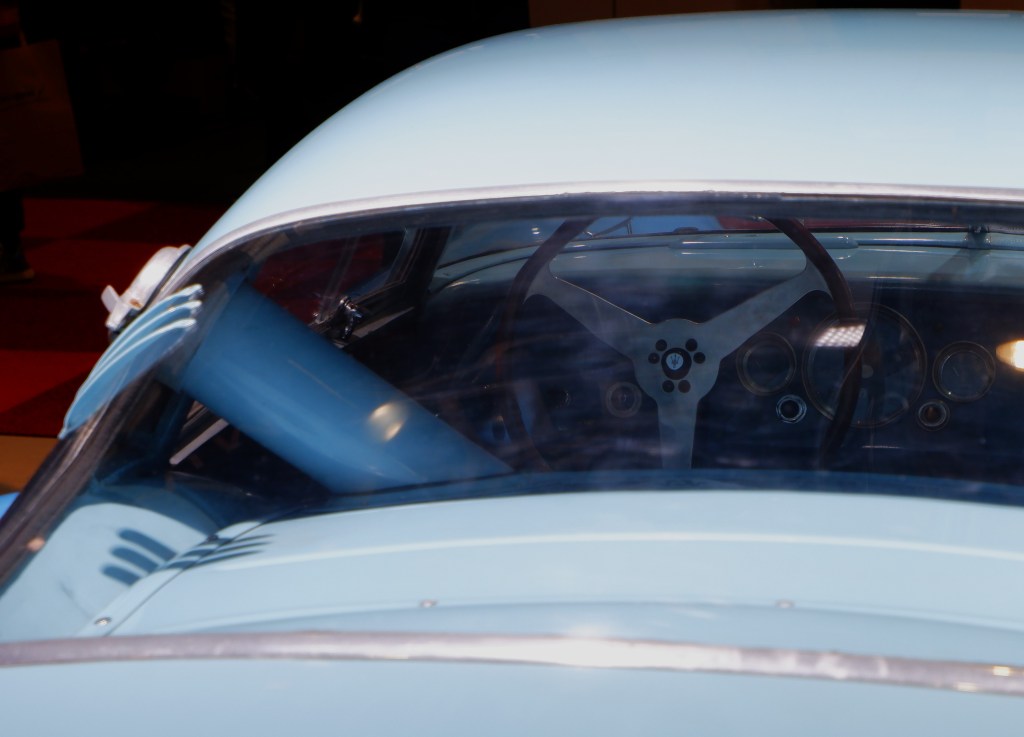
The breathtaking contours of the award winning Maserati A6GCS/53 Berlinetta by Pinin Farina, presented by the Brussels Autoworld museum on their stand.
The 9th edition of the Interclassics car show proved again a formidable event. The 40.000 m2 spread over several palaces was filled with collectible four wheeled beauties, and lovers of Italian, British, German, French or last but not least American classics could have a true delightful time from Friday 15 to Sunday. Your servant also took his Fujifilm X-A5 camera along, and shares here with you his impressions.
Hans Knol ten Bensel
D’Ieteren celebrates 345 years of heritage…
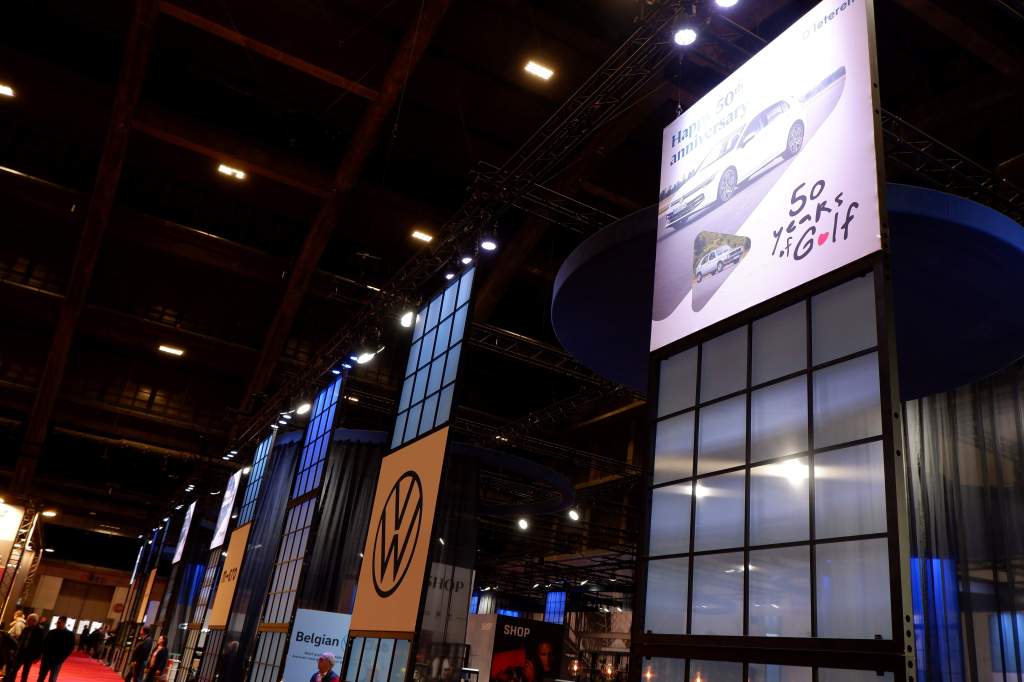
The dynamic PR department of D’Ieteren invited me to their magnificent stand, where they celebrated the anniversaries of some of the most iconic models of the brands they import into our country.
To present the rich history of its brands, D’Ieteren adopted the theme of the evolution of technology, and so displayed the vintage models of the Volkswagen Golf, Audi 100, SEAT Ibiza, Škoda Octavia and Porsche 911 alongside their current versions. The cute Microlino was also present, next to the iconic BMW Isetta…
What better for me to do than to aim my Fujinon lens to bodywork details of both current and vintage cars, visually telling the story of progress along many decades…
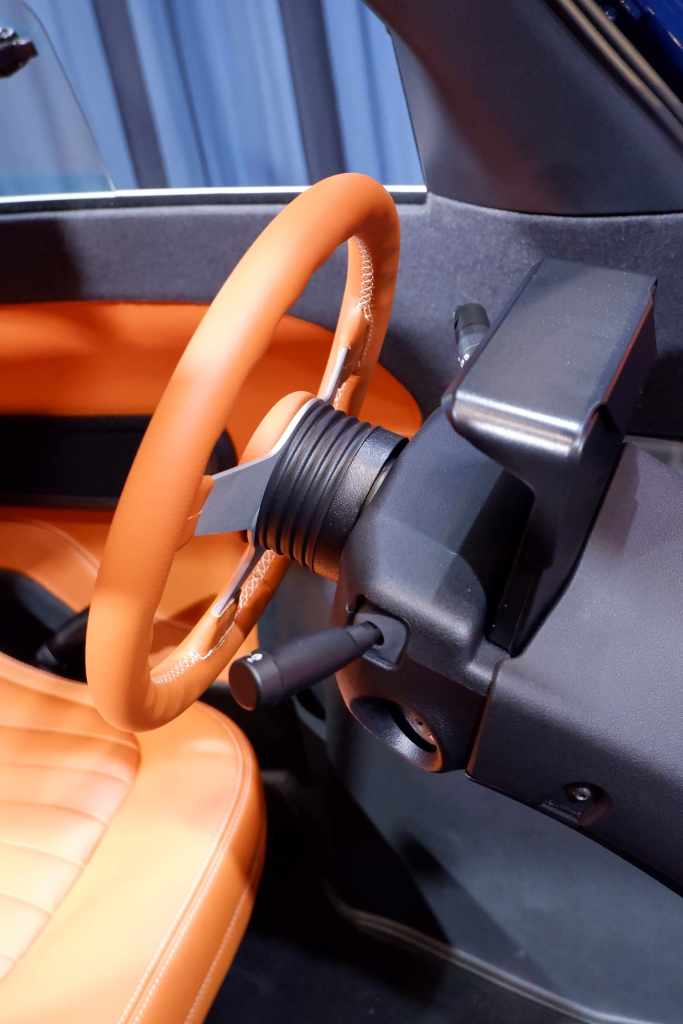
Down to the very essence: the “dashboard” of the BMW Isetta…
The electric Microlino continues this tradition of “less is more…”
In doing this, I found it remarkable how ”modern” the Porsches still look, and indeed a ”classic” Porsche hardly feels out of place five decades later. What’s more, its sheer performance and road manners still are impressive today. Actually, the same can be said of the ”Ur” Golf, its proportions, styling, performance and overall stance are still quite modern.
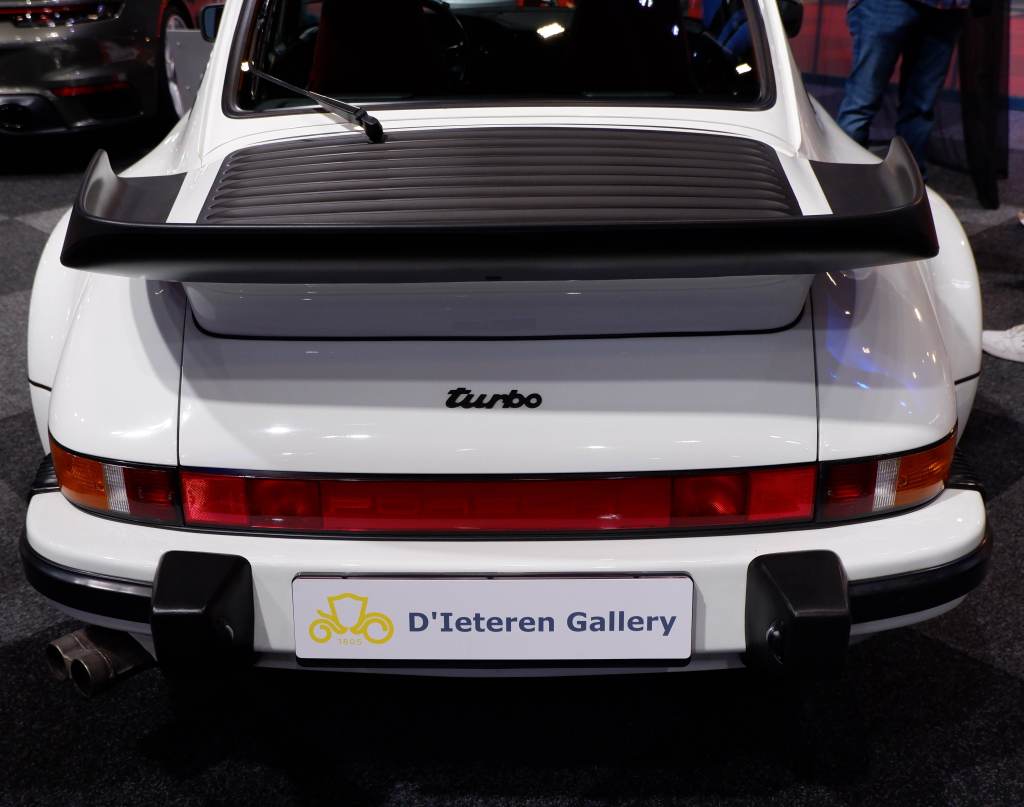
Porsche celebrated the 50th anniversary of the Porsche 911 Turbo . The Porsche 911 Turbo Type 930 made its debut in 1974. I still have the fondest memories of these early Porsche 911’s. As a young car journalist I drove them to the limit, enjoying their delicate handling, the hiss of the air cooled flat six at high revs, the tout feel and precision of the whole car. Indeed, Porsche’s are unique, and once you sat behind the wheel of them, they make an indelible impression.
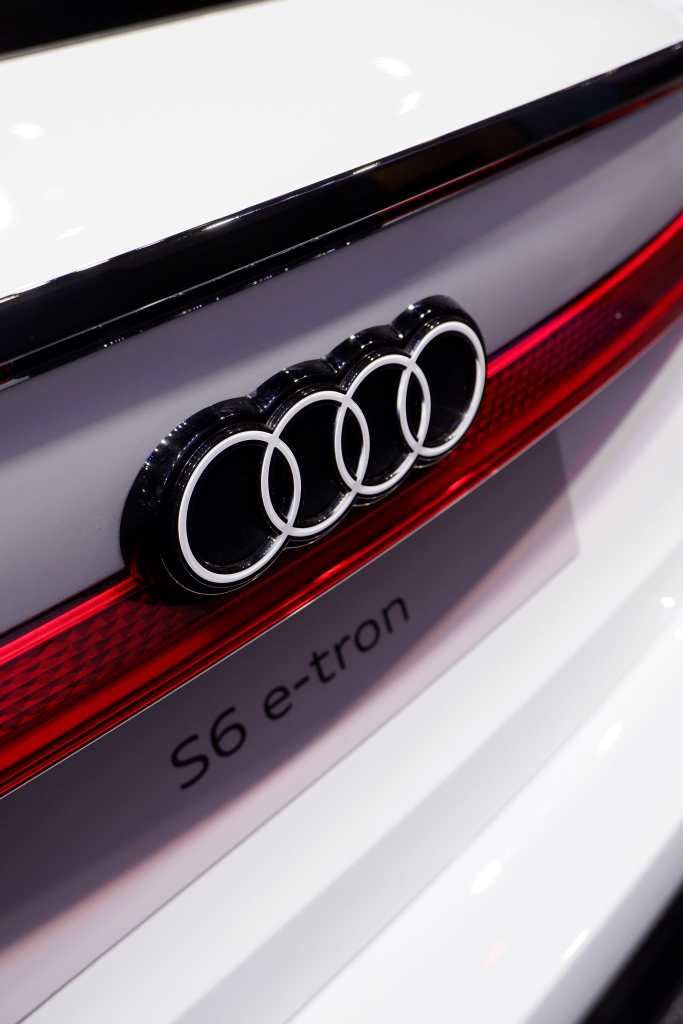
Celebrating 50 years of Audi in Belgium , D’Ieteren also put a truly pristine and original Audi 100 L Automatic alongside the brand new A6 e-tron, which has just hit the market. It completed this with an equally formidable 100 Coupé.
The dramatic styling details of the ’74 Audi S Coupé…
And the clean lines of the S6 e-tron…
Bentley showed a recent 2022 Flying Spur alongside a mid ‘80s Bentley Turbo R. This now classic Bentley brings back sweet personal memories, as I was invited to drive this impressive powerful V8 turbocharged saloon personally from Brussels to le Mans to attend the 2003 Le Mans 24 hour race, witnessing the event from the Bentley pit stand, and see the Bentley Speed 8 win the race!
Massive power with style…
Seat celebrated 40 years of the Ibiza, showing an immaculate 1984 model, shown here below.
Automotive technical evolution was most apparent when one compared the 65 year old Skoda Octavia Break 1201 with the present Octavia. Understandable, as in the mid sixties, the styling and technology of the products behind the iron curtain were somewhat lagging behind what was made in the west, and indeed, a time span of more than six decades is also very long indeed.
Last but not least there was the Microlino on the D’Ieteren stand, next to the car which inspired it, the BMW Isetta. Similar in shape, but totally different in technology.
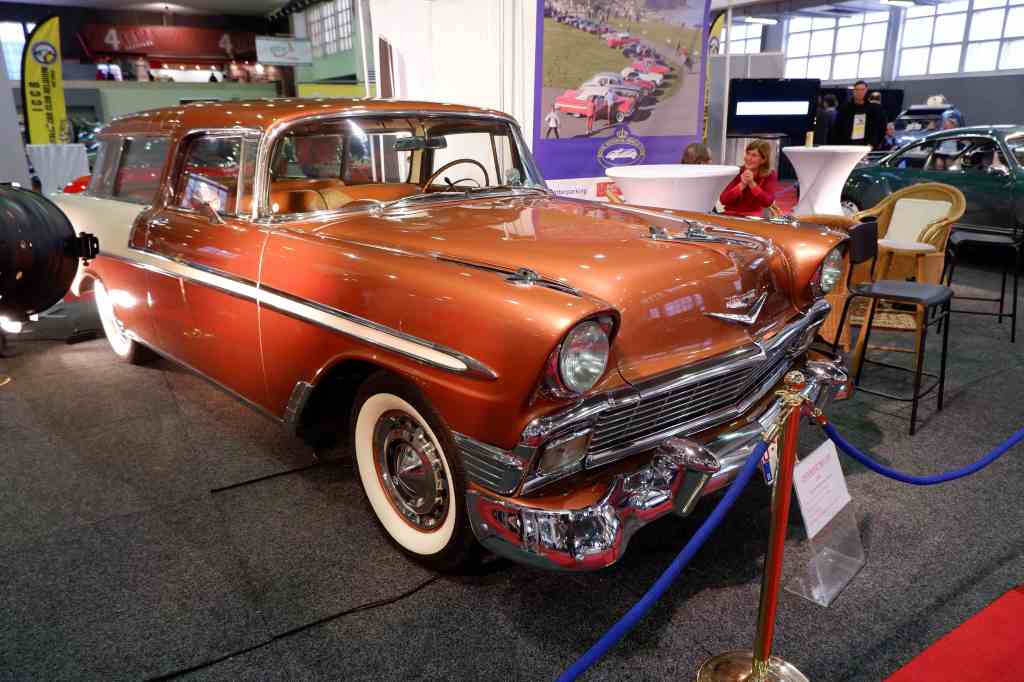
Of course, there were some beautiful American classics on the show. Just look at the 1956 Chevrolet Bel Air Nomad Sport Wagon shown here on the stand of the Royal Historical Vehicle Club Belgium…
Maserati, or the unique magic of pur sang…
The quality of the Maserati’s on display was nothing short of stunning, and the car which was prized best of show was a pale blue A6GCS/53 Berlinetta by Pinin Farina, presented by the Brussels Autoworld museum on their stand. I show you here some photos of this gorgeous coupé. I am totally smitten by its feline stance and wonderful proportions.
It just has tons of character, and it embodies everything the brand with the trident stood and still stands for. This ninth edition of the Brussels Interclassics was certainly a wonderful show, and we are already looking forward to the next edition. Just enjoy the photos…
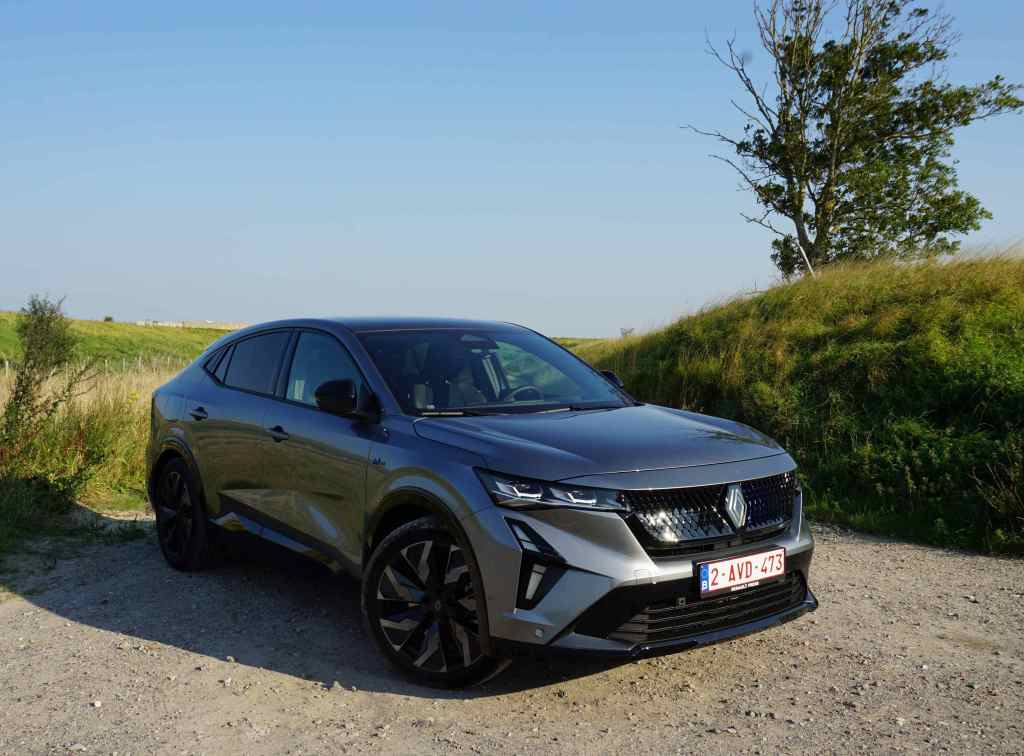
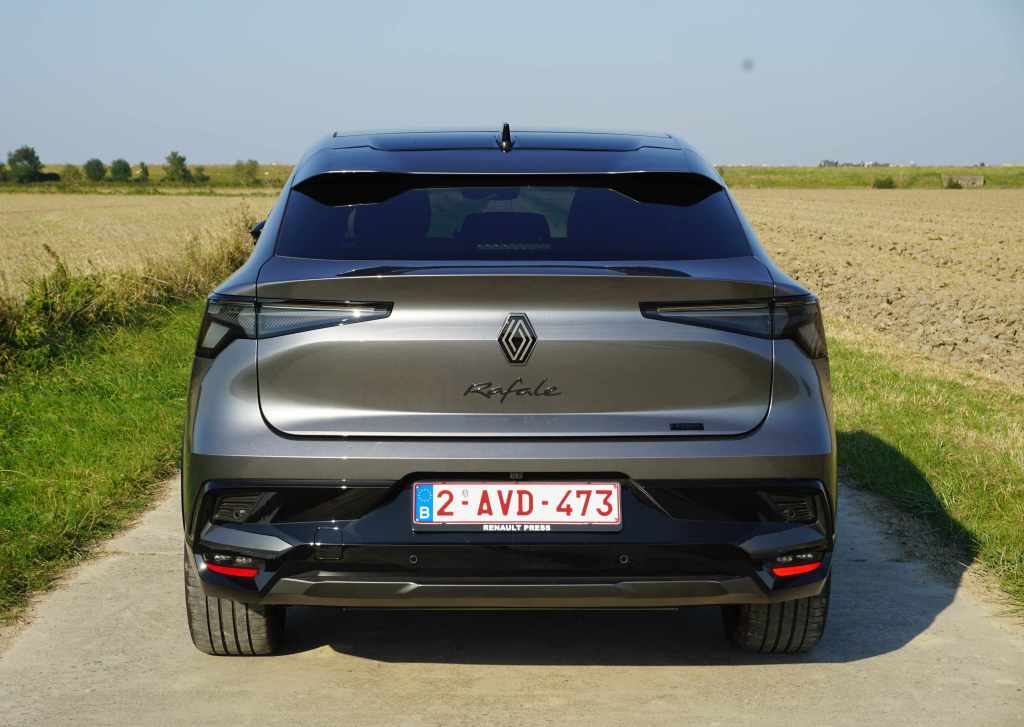
There are days where the life of a car journalist are very bright indeed. For example when sitting behind the wheel of the Renault Rafale, a stylish high tech hybrid full of character and ingenuity.
Renault has poured all its car making know how into their latest SUV Coupé, making it very much in tune with the times: it is a full hybrid, offering electric driving without recharging, and has style too. We drove the 200 HP model in the “Esprit Alpine” equipment version, adding to the unique panache of this Rafale… just read further.
Hans Knol ten Bensel
Stylish, inside and out
The Rafale has the looks, now coming from the hand of Gilles Vidal. Surprisingly Renault has abandoned the design language which Laurens van den Acker started in 2009 when he became chief designer and which culminated in the recent Megane E-Tech electric. Now Gilles Vidal is at the designer table, and he comes from the Peugeot stable. He brought the design language of the recent Peugeot C-segment sales hits (3008) to Renault, and this is what Luca de Meo apparently wanted.
This new Renault DNA takes some getting used to, but we understand the strategy, as this styling language is trendy for the C segment and upward. Don’t forget, the Rafale is a D segment car. Renault is also choosing different and highly original styling paths when it comes to the new “retro” 5 and 4, which are indeed amazing and bound to be successful.
But back to the Rafale. I must admit that I like the name. It harks back to the also very stylish and rakish pre-war record plane with a Renault aircraft engine, and did you know that Dassault is still building a ”Rafale” jet fighter?
Renault has also added a touch of “Alpine magic” to it. Your eyes fall on the illuminated “A” with an arrow on the backrest of the front seats. It pulses to the beat of a human heart. Wooww….The colour of the lighting matches the option selected in the MULTI-SENSE settings. Agneta Dahlgren, the design project director on the new CMF-CD platform also used for the Austral and the Espace , sees the illuminated logo when you enter the car as an invitation to experience driving pleasure…
The interior of the Rafale is quite welcoming, ergonomic and spacious. It has a high tech aura about it, accentuated by phasing out the use of leather in its cars. In the Esprit Alpine version we tested, the use of … SLATE is surprising. Renault says that “it evokes the Alps”, an environment where the rally Alpine Berlinettes stormed to victory. Present on the dashboard facing the passenger, these thin sheets of slate mould to the contours as easily as wood veneer.
The interior is also quite spacious. Understandable, as it is built on the same platform as Espace. The Rafale shares its 2.74m wheelbase, allowing not less than 302 mm knee room in the back. The long wheelbase and gently sloping roof line allow a rear headroom of 880 mm, almost the same as on Espace (892 mm). The Rafale has a standard boot space of 627 litres (532 dm3).
A digital cockpit…
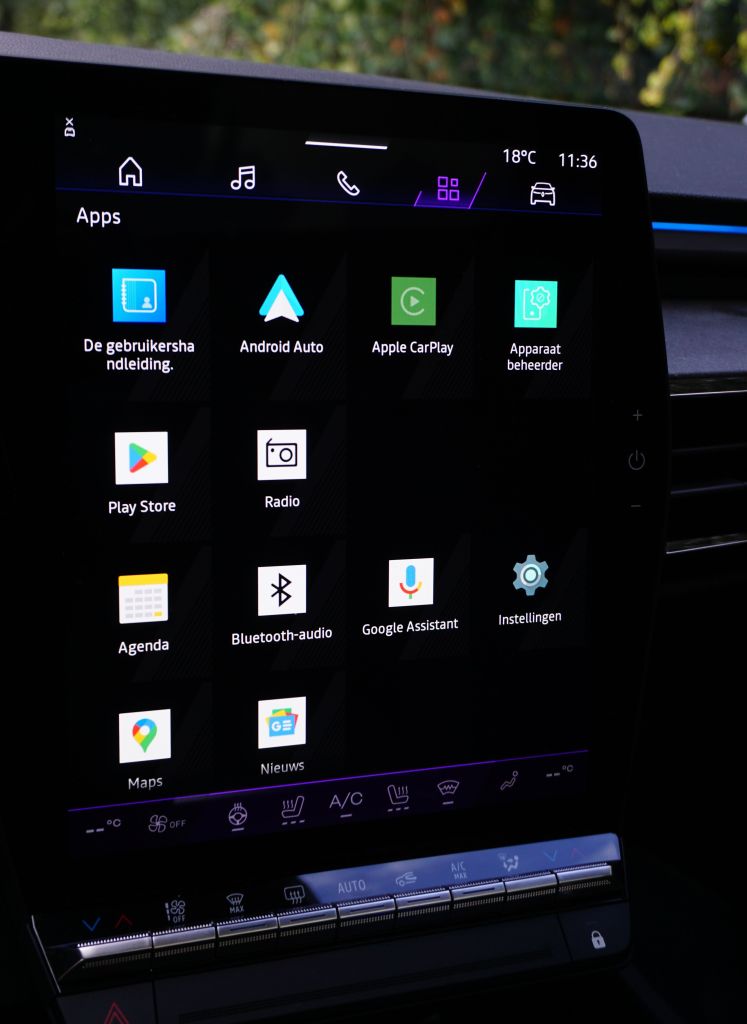
The cockpit offers driver and front passenger Renault’s “Open R” digital instrumentation with two screens forming an L shape. There is a horizontal TFT dashboard display of 12.3 inches diagonally and a vertical touch screen measuring 12 inches diagonally in the centre of the console. Eminently legible and intuitive to use.
Staying connected…
The Rafale connects indeed seamlessly with your smartphone through its in-car “OpenR” Link multimedia system with Google built-in. The system provides access to Google Maps, Google Assistant and a host of apps (50 or more depending on the country and version) via the Google Play catalogue. Just like on a smartphone. The interface is also fully customisable and compatible with Android Auto and Apple Carplay.
As it is an open-ended system connected to the cloud, OpenR Link automatically integrates the recommended updates using FOTA firmware over the air) technology.
A clever, full hybrid drivetrain…
The Rafale has a 3-cylinder 1.2 litre turbocharged petrol engine developing 130 hp (96 kW) with 205 Nm of torque underneath the hood, and two electric motors. Let’s start with the engine. It has a Miller combustion cycle, low-pressure exhaust gas recirculation, a variable-geometry turbocharger and a longstroke architecture similar to that of a diesel. The result is an extraordinary efficiency level of 41%.
You guessed it, this engine does not spoil your ears with a thoroughbred high revving staccato, but rather sounds indeed like, well, a lower revving piston aircraft engine when called to duty. Especially as the computer which controls the hybrid system lets the engine rev up to recharge the small 2 kW battery, which it does when you are driving at a (lower) constant speed or coasting, when you are using little engine power otherwise to propel the car. The computer then cleverly takes the opportunity to rev up the engine to recharge swiftly the battery, so it can again deliver its e-power for e-driving in slow urban traffic or to e-boost swift acceleration when called for.
This typically gives the driver the impression that the engine is revving up like the original Rafale record airplane before take-off… one would almost like to sit behind the wheel with leather gloves and a leather flying cap and goggles!
Renault’s full hybrid system is indeed very clever and astonishingly efficient. The two electric motors are respectively a main motor, developing 50 kW or 70 hp, and this is the one fed by the 2 kW 400 V battery. The other one is a starter-generator motor of 25 kW, which starts/stops the engine and performs the gear changes in the clutchless multimode automatic dog box developed using Formula 1 technology. It combines two gears for the main electric motor and four for the internal combustion engine. The motors and engine with this box combine 15 different operating possibilities, to offer te ideal solution in any driving situation. Soo clever! But there is more. Renault went as far as to introduce on its flagship car so-called “predictive hybrid driving”. This function is meant to maximise the use of electrical energy while driving.
Connected to Google’s mapping data, such as the topography of the road over the next seven kilometers (or the most likely route if no destination is recorded), provides advance information to the battery management system to maximise the use of electric power….
Brisk performance
With a total system power of 200 HP, acceleration of this 1,6 tonne Rafale is quite good with a sprint time from 0 to 100 km/h of 8,9 seconds, and an intermediate dash between 80 and 120 km/h being absolved in 5,6 seconds. Of course, when driving full power for an extended period, the e-power is consumed and the petrol engine has further to do all the work, which translates therefore with its 130 HP in a relatively modest top speed of 180 km/h.
The good thing is that one is driving in urban traffic to a very large extent on e-power, which translates indeed in very good fuel economy. The WLTP figure is 4,7 l/100 km with CO2 emissions being 105 g/km.
The paddles on the steering wheel are not meant for manual gear changes, just let you choose the level(s) of e-regeneration.
Alpine agility…
The Rafale has very good handling qualities, and much testing has been done by Renault people to eke out the very best the CMF-CD platform has to offer.
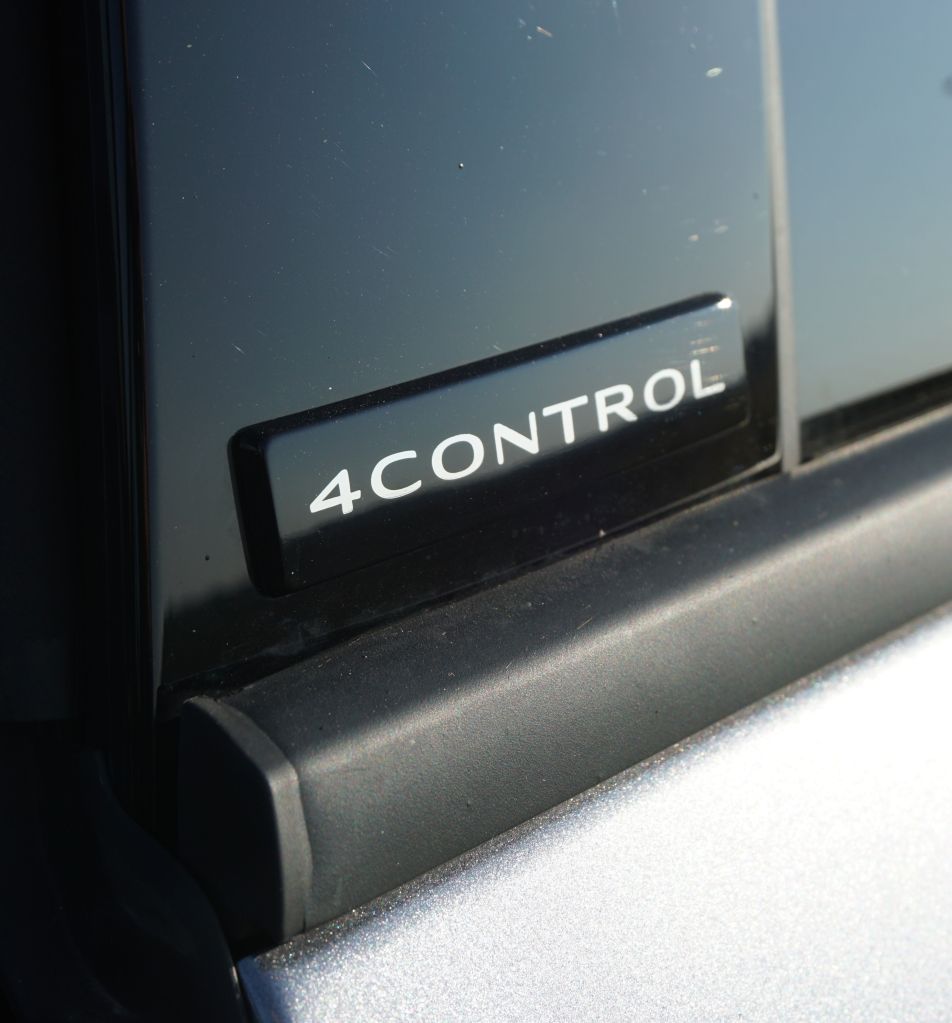
The Rafale has multi-link rear suspension as standard , and the Alpine version we drove has the “4Control” four-wheel steering technology. The rear wheels turn in the opposite direction to the front wheels (by up to 5 degrees), for better maneuverability on city streets. This results in a turning circle of merely 10.4m. On the motorway, at higher cruising speeds, the rear wheels then turn very slightly (up to 1 degree) in the same direction as the front wheels, improving vehicle stability by reducing the inertia of the rear axle.
We found the Rafale indeed quite agile and stable. Also thanks to the upgraded Vehicle Motion Control (VMC 2), an electronic system controlling the rear wheels, and ESP. All this is further enhanced by the calibration of the steering with a direct steering ratio of 13. A truly sporting D segment car, when it comes to agility and road manners. In line with its French pedigree, it is very comfortable too.
Conclusion
With this Rafale, Renault makes an impressive statement in the D segment, offering a stylish SUV coupé with ample room, excellent handling, convincing performance and surprising economy. Its drivetrain is truly clever, its equipment and finish is full of panache, especially in the Alpine versions.
Soon there will be a 300 hp plug in hybrid 4×4 version, noblesse oblige, but already this 200 HP Rafale was very convincing indeed…
France has always been the birthplace of refined automobiles with panache, elegance and superb technology. We only have to think about the Voisins, the Delages, and of course, the post-war icon which laid the very foundation of DS Automobiles: the DS with was presented on the Paris salon in 1955.
The DS 7 breathes this heritage, and has all the qualities which made their predecessors so unique. We drove it here for you, and bring you the story how it offers you an experience which is nowhere else to be found.
The art of style…
We were totally smitten by the stories and drawings told and presented by the designers of DS automobiles at the presentation of their range on several occasions, just look further on our columns, and we love the design language and the detail solutions they apply on the bodywork of their cars.
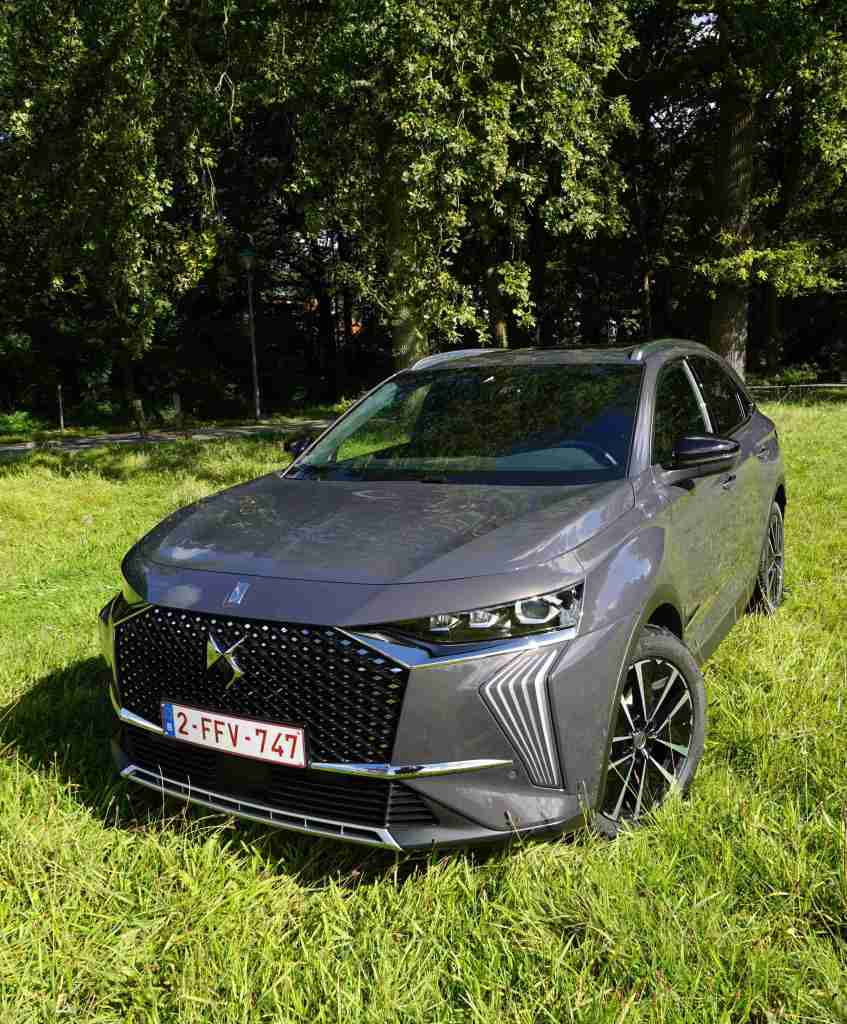
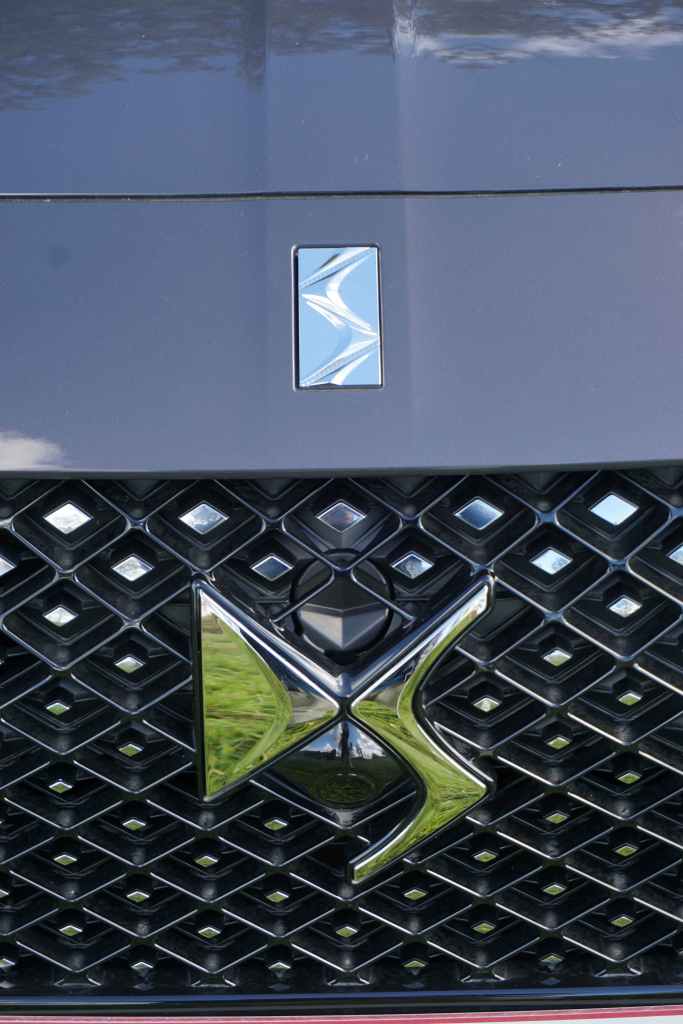
Take the redesigned front end of the DS 7 for example. The grille is delicately set between the new slimmer DS PIXEL LED VISION 3.0 headlamps and the DS LIGHT VEIL daytime running lights. Also the rear lights have an extra touch of stylish panache, they are also slimmer, and have now, according to the manufacturer, a vortex effect. They are executed with a dark metallic finish, and add to the refinement of the car.
..and craftsmanship
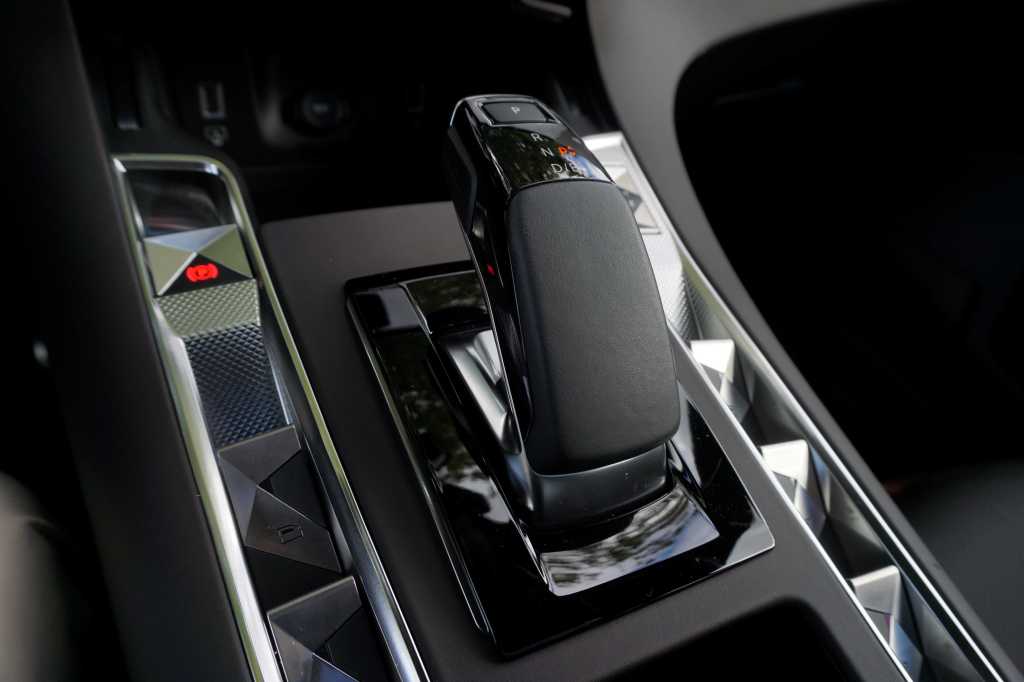
Stepping in the interior brings you really into the DS world. Here your eyes are attracted to the switch layout on the centre console, and your finger touches the lozenge styled starting knob sitting below an iconic clock which switches open for you when you start this 4 wheeled goddess.
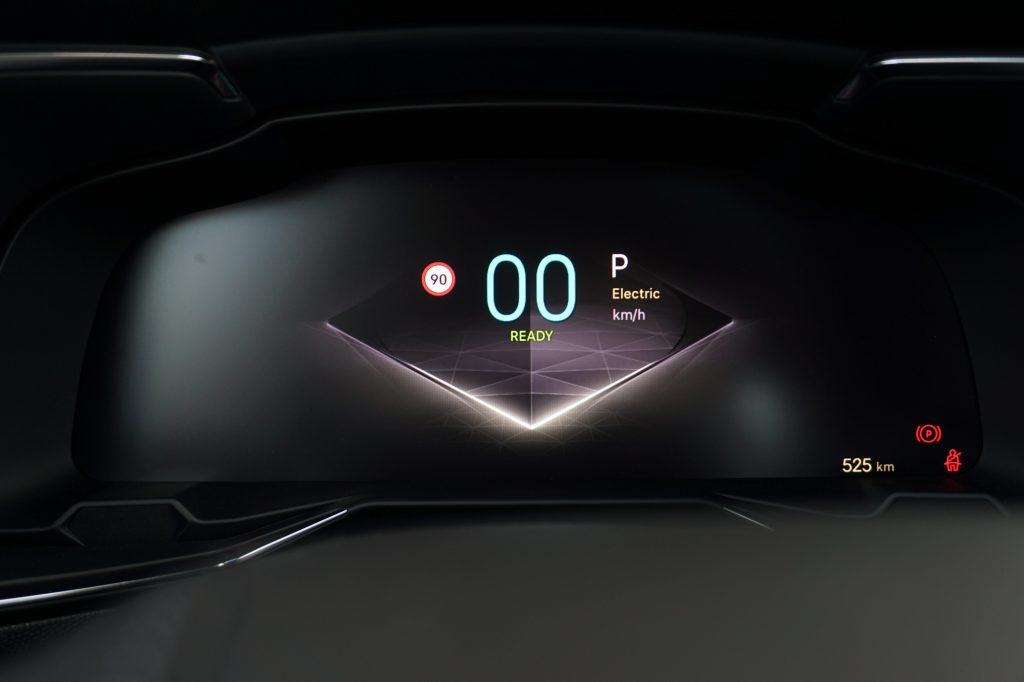
A lozenge styled digital instrument screen in front of you gives you the necessary information, and the only thing for you to do is to flick the gear lever in drive.
The spirit of grand touring…
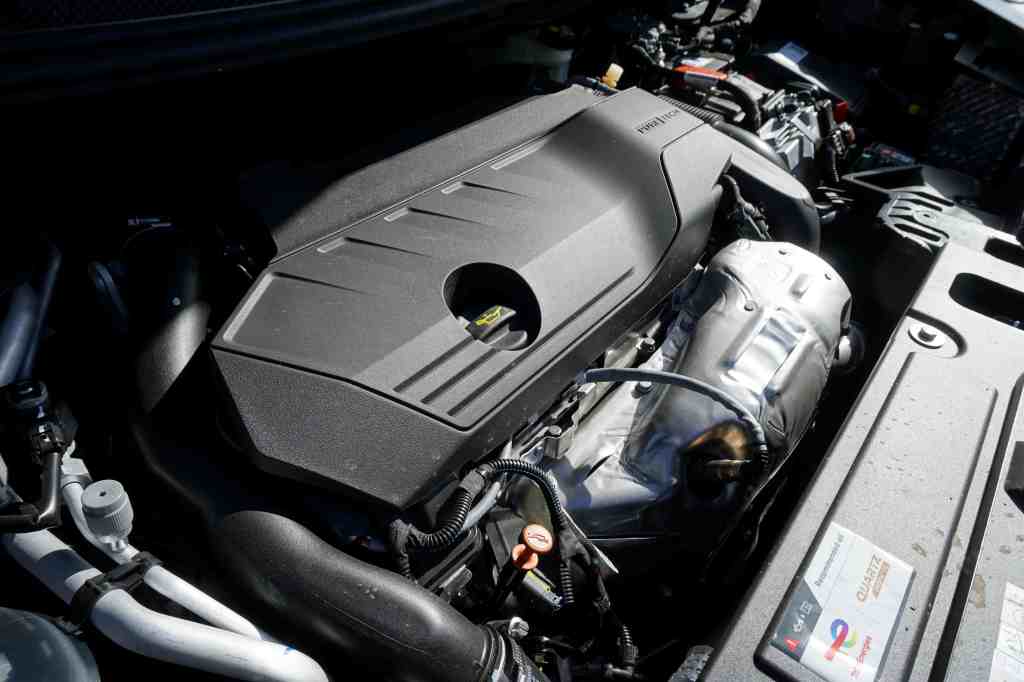
We tested the 225 HP front wheel drive plug-in hybrid version, which means that it has a 180 HP four cylinder 1,6 litre PureTech petrol engine and a 110-horsepower electric motor fitted to the eight-speed automatic gearbox, transferring the power to the front wheels.
Refinement is the word. Indeed, your voyage starts on silk smooth e-Power. Indeed, the new 14.2 kWh battery will transport you up to 65 kilometers with zero emissions on the WLTP mixed cycle and up to 81 kilometers on the urban cycle. By the way, charging time is about two hours on a 7.4kW charger.
When the engine sets in, the power switch is virtually imperceptible, and you continue to enjoy the smoothness of the power flow. Depending on the chosen driving mode, the system will judiciously e-propulsion when and where it can.
In all this refinement, the engine remains unobtrusive, except under maximum acceleration, although its high revving staccato sounds never unpleasant. Performance is more than adequate, with a 0 to 100 km/h sprint in merely 8,6 seconds, hurtling further to a top speed of not less than 225 km/h. But this DS 7 will never invite you to adopt a vigorous driving style, it just lets you enjoy its excellent GT capacities.
You can guess that high speed motorway or Autobahn driving is a delight in this DS 7, showing excellent stability, comfort and very low wind noise.
Economy with a plug-in hybrid depends totally on how often you recharge and of course your driving style. The manufacturer quotes 1,2/1,3 l/100 km, and without e-Power you can expect 7,5 liters in town, 6-7 liters on the open road.
Safety and agility…
The DS7 is designed for comfort. It has the so-called DS ACTIVE SCAN SUSPENSION, which is a camera-controlled damping system that adjusts each wheel independently according to imperfections in the carriageway. It gives you indeed the legendary “carpet ride” of its iconic 1955 predecessor.
In this day and age of electrification, there is of course much more. With DS NIGHT VISION, an infrared camera sweeps the carriageway and its edges to detect cyclists, pedestrians and animals at distances up to 100 metres. The driver receives the information in the new high-resolution digital instrument display, reinforced by a special warning in the event of danger. Need we say more?
The DS watches over you…
Safety is paramount, and therefore this DS has DS DRIVER ATTENTION MONITORING. It analyses the driver’s level of attention with two cameras.
The first camera scans the surroundings and the second, positioned facing the driver, diagnoses where he or she is looking, also inspecting their face and eyelid movements which indicate the level of sleepiness and attention…
Of course the DS7 makes life behind the wheel easier. It is equipped with DS DRIVE ASSIST, adaptive cruise control which initiate stopping and restarting without driver intervention and of course lane assist is also installed.
The handling of the DS7 is also exemplary, but again this SUV does not readily invite you to drive it with abandon. For the more sporting souls amongst us, DS Automobiles has the DS 7 E-TENSE 4X4 360 ready for you, which has a lowered chassis, a wider track fore and aft. We are looking forward to have a drive with this powerful DS7 soon…
Comfort, practicality and infotainment
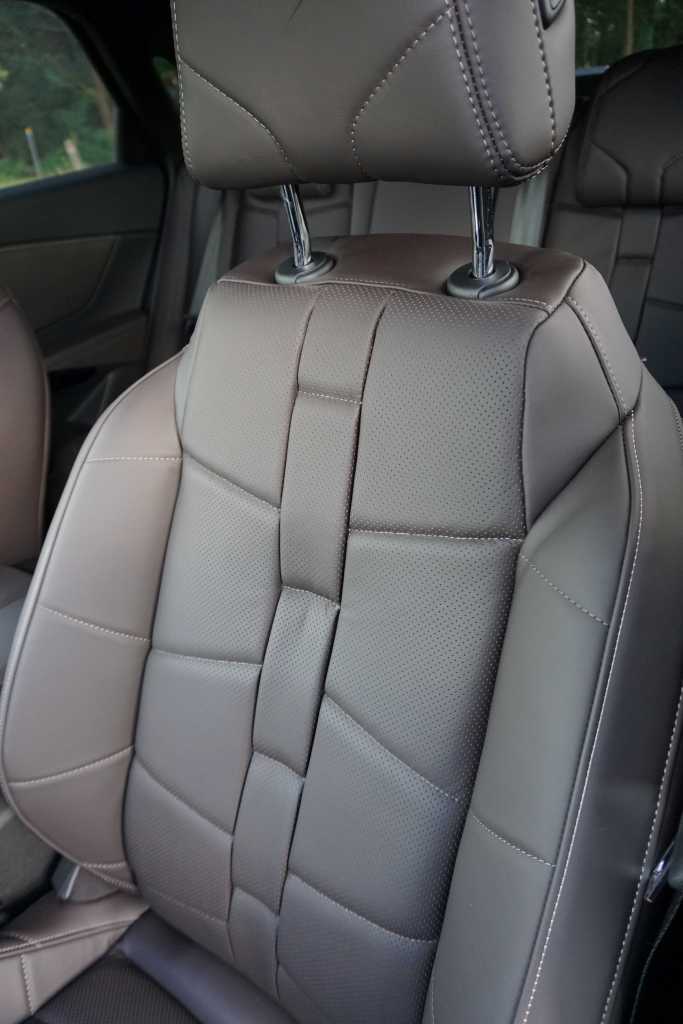
The DS7 offers ample room also for rear passengers and again the seats are in a class of their own. You can opt for different equipment levels, and enjoy the iconic leather pattern inspired by the bracelet of a luxury watch. The seats are made of high-density foam with more material than for a traditional seat, which results in better comfort which is maintained over the years.
The new DS 7 now has the so-called DS IRIS SYSTEM. This means a totally reworked interface, completely configurable, supported by natural voice recognition. The redesigned 12” high-resolution touch screen now has a menu made up of widgets for accessing all its functions with a single movement: for controlling the connected navigation, the ventilation, the digital audio sources and journey information.
This big screen also enables views front and rear to be displayed, provided by new high-resolution digital cameras, and one has access to the Mirror Screen function over Wi-Fi.
The displays on the new large 12-inch digital instrument panel can also be changed and personalised.
The DS7 has also a quite practical boot space of some 550 litres, which can be extended to over 1700 litres with both rear backrests folded down. One word of applause is also fitting for the excellent sound system, we enjoyed in our test car: the FOCAL ELECTRA Premium Hi-Fi System with not less than 14 loudspeakers… Music buffs as we are, we thoroughly enjoyed it!
Conclusion
When you are looking for a car with character and personality, attach great importance on comfort and want excellent Gran Turismo qualities, then this is a car for you. It is built with craftsmanship and care in Mulhouse, and its styling language has a very particular timeless aura. It transports you in style and comfort wherever you go, and that’s what makes it truly stand out…
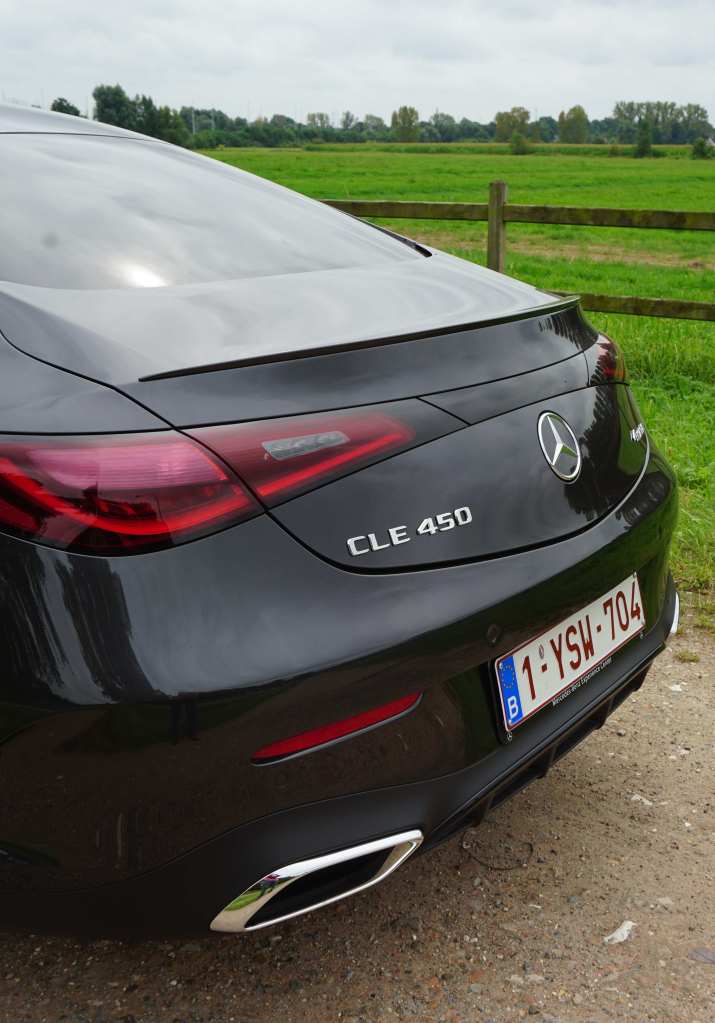
A Mercedes coupé has always been a car of legends. My father had a 1955 220 S coupé, based on the first Mercedes ponton and it was in the mid fifties an iconic and elegant dream car indeed. Then came ’heckflossen’ generation and its coupé version is still a pure beauty and a very desirable classic indeed with a unique panache. Mercedes carefully honed this 4 seater coupé/cabriolet tradition right until this day, and indeed the CLE we tested for you is a true delight. The new CLE Coupé uses the conceptual and technical innovations of the C-Class and E-Class, and has the classic ingredients the brand uses since decades now to achieve appealing looks.
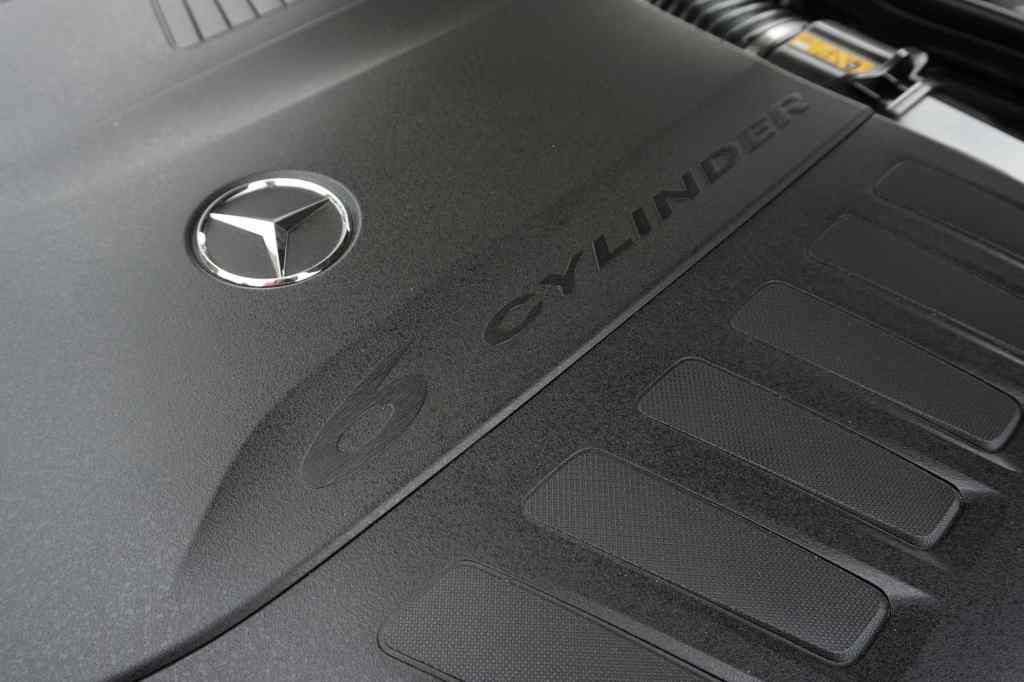
It offers the necessary efficiency we expect nowadays by downsizing its engines and making them electrified. Indeed, all engines are mild hybrids with an integrated starter generator and 48-volt electrical system. There is a choice of four-cylinder units and – as the most powerful engine – a 3.0-litre straight-six petrol unit, which we enjoyed in our test car. Connoisseurs will agree: nothing surpasses the sound and fury of a powerful straight six, and indeed, it has plenty of power, all 280 kW or 381 HP of it.
But driving a Mercedes Coupé is also very much about enjoying its interior, space and comfort. Here the CLE also sets again standards. Just read further…
Hans Knol ten Bensel
Elegance and comfort
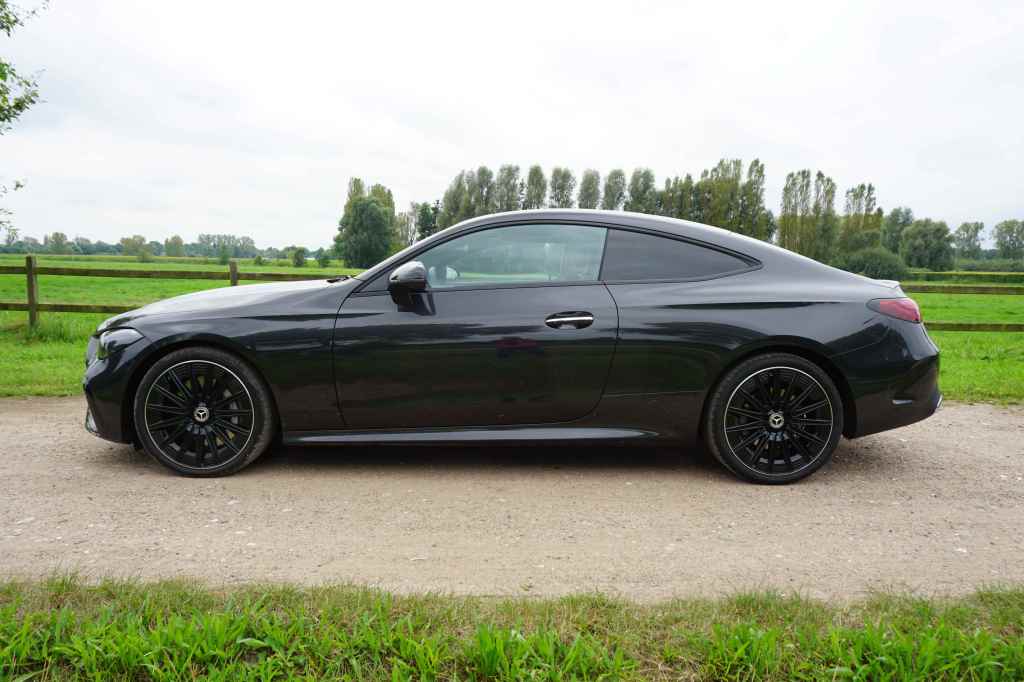
Long wheelbase, a strongly inclined A-pillar, a short front and a slightly longer rear body overhang, as well as pronounced shoulders and large wheels, these are the recipies for elegance as the brand with the good star understands it. This CLE impresses with its forward leaning “shark nose”, flat LED headlights and a newly designed, three-dimensional radiator grille.
Of course, the overall body lines are smooth and softly curved, as the laws of aerodynamics now dictate, and iconic angular designs are a thing of the past. Therefore it is very important that the overall proportions of the car are “just right”, and here the Mercedes stylists succeeded admirably.
A Mercedes coupé always stands out with a magnificent interior, and the CLE truly lives up to the tradition. Opulence reigns, with a top choice of excellent materials and a beautiful finish. Opening the wide door, your eyes meet the free-standing 12.3-inch, fully digital instrument display and the 11.9-inch, driver-oriented central display in portrait format. Modern times embrace you. Your shoulders are smoothly held by the front seats in so-called “integral sport design”, developed exclusively for the CLE. Beautiful, and very comfortable indeed.
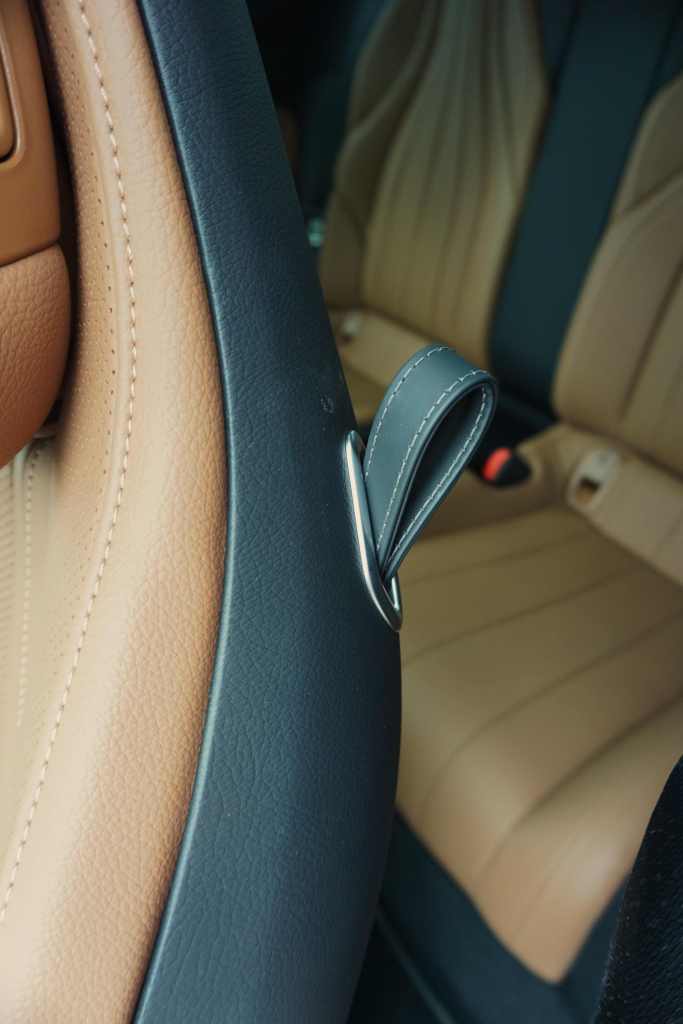
Before stepping in, your hands are searching for the release handle of the front seats, to put your jacket, purse or camera, tablet or laptop on the rear seat, only to discover that the release handle is not there. Indeed, the Mercedes stylists have made a little surprise for you. They replaced the knob with an elegant loop made of Nappa leather.
It is conveniently located at the upper edge of the backrest, the only thing is that you have to pull it straight up and not a bit sideways, because then it did not function. It took some getting used to, but soon enough we got the hack of it. But the seats are a dream. In conjunction with the optional Burmeister® 3D surround sound system, which we enjoyed in our test car, they each have two speakers at the level of the integrated headrests, creating an immersive music experience with Dolby Atmos close to the ears. The premium sound system has a total of 17 speakers…The front seats are heated and have an electro-pneumatic four-way lumbar support as standard. Seat climate control and a seven-zone massage are also available in conjunction with the optional ENERGIZING Plus package.
Enjoy now further the Mercedes world. Additional panache is created by the dynamic ambient lighting in not less than 64 colors. There is ambient lighting with indirect light on the trim strip of the instrument panel, the cup holders on the centre console, the overhead control unit, the door handles, the seat adjustment unit and in the front footwell. All this is standard.
The AMG Line comes standard with ARTICO/MICROCUT black, which is made of 65 percent recycled materials in the seat area and 85 percent in the inner lining. Our test car had a macchiato beige/black colour scheme.
Intuitive user interface…
The display graphics and their arrangement are taken from the C-Class. The styles “Classic”, “Sport” and “Ambiente” can therefore also be selected in the CLE Coupé and are optionally supplemented by a full-screen map in the instrument cluster. All relevant settings for media, vehicle, telephone, comfort, etc. can be found on the central display. The new main icons in the central display were recently introduced in the new E-Class, and are self explaining. Here the highlight in the AMG line is a new trim part with a silver-coloured mixed-metal fabric. Also new is an open-pored, black wood veneer that is interspersed with fine real aluminium inlays. Superb!
Spacious…
With its dimensional concept – in particular the 25-millimetre longer wheelbase – the CLE Coupé offers more space than the C-Class Coupé.
The rear passengers enjoy 10 millimeters more headroom, 19 millimeters more shoulder and elbow room and 72 millimeters more knee room. The trunk offers 60 litres more volume, with a total of 420 litres. Indeed, we were able to transport one of my larger paintings to an exhibition with it, which could be conveniently and safely placed flat on the luggage compartment floor.
The magic of a powerful straight six…
As the happy owner of a classic 3.4 litre Jaguar Mk II we know something about powerful straight-six petrol engines. I also vividly remember my long drive in Marbella at the wheel of a 300 SL Gullwing at the anniversary celebration of this legendary car.
So straight-six petrol engines are close to my heart. This one incorporates of course all the up to date engine technologies. This M 256 M as the factory designates it, combines a twin-scroll turbocharger with ISG, eliminating all turbo lag. The exhaust ducts of three cylinders each are combined in the dual-flow exhaust manifold and only rejoin directly in front of the turbine wheel. This leads to a spontaneous build-up of boost pressure and torque as well as rapid engine response and spontaneous revving from low engine speeds. This of course means abundant power and performance.
The CLE 450 4MATIC develops 280 kW (381 hp) and 500 Nm of torque, resulting in a 0 to 100 sprint in merely 4,4 seconds, hurtling further to an electronically limited top speed of 250 km/h. We can assure you, it is a true delight to put this coupé through its paces. The instant responsiveness of this engine makes everyday both relaxing and enjoyable indeed. The 9 speed auto gearbox reacts instantaneously and is well tuned to the sporting character of the CLE. It will show some jerkiness under some conditions when parking and moving slowly back and forward when manoeuvring, but is otherwise super smooth.
Electric support…
In addition to a turbocharger, the CLE has a second-generation integrated starter generator (ISG). This will also deliver extra push, albeit only from a 17 kW motor, so it is only useful to propel the car on E power at low speeds or in city driving situations.
The ISG includes a 48-volt vehicle electrical system. Besides boosting with extra power, it also allows coasting and recuperation. Another advantage is an almost imperceptible start-stop function. Also the transition from coasting with the engine switched off to propulsion with engine power is not noticeable. Refined city motoring is the result, fitting for a coupé of this stature, we would think.
A plug-in hybrid propulsion is in the cards too…
Besides the formidable straight six, Mercedes has a wide array of engines to choose from, as we told you already here above. The four-cylinder petrol engine (M 254) is available in two output levels at market launch: with 150 kW as the CLE 200 and CLE 200 4MATIC and with 190 kW as the CLE 300 4MATIC . The entry displacement is 2.0 litres. There is even a 2 litre diesel engine available under the hood of the CLE 220 d Coupé developing 145 kW.
Soon a plug-in hybrid version is available. Of course, this 450 CLE is efficient, and its fuel economy depends largely on your driving style. Official WLTP figures for combined consumption are 8.6-7.8 litres/100 km, with Co2 emissions between 196-176 g/km.
Dynamic handling?
The CLE enjoys the so-called 4MATIC all-wheel drive, which has been further developed. It increases the surefootedness of the car, especially in the wet. Our test car came with the technology package, which includes the DYNAMIC BODY CONTROL suspension with continuously adjustable damping on the front and rear axles as well as rear-axle steering. Truly state of the art!
Of course you can use the DYNAMIC SELECT switch to choose between a comfortable or a sporty, taut setting. In conjunction with this DYNAMIC BODY CONTROL, the CLE Coupé is equipped with sports direct steering.
Just a few words more about the 4 wheel steering. The steering angle on the rear axle is up to 2.5 degrees. This reduces the turning circle by 50 centimeters. At speeds below 60 km/h, the rear wheels steer in the opposite direction to the front wheels. The wheelbase is thus virtually shortened, making the more agile. From a speed of 60 km/h, the rear wheels steer in the same direction as the front wheels. The resulting virtual longer wheelbase increases driving stability and safety at high speeds, fast lane changes or sudden evasive manoeuvres.
Entering the digital age…
The CLE Coupé adopts the third generation of the MBUX (Mercedes-Benz User Experience) infotainment system, as we told you already. This makes the sporty two-door the most intelligent coupé with the star. The MBUX infotainment system, the MBUX language assistant, the instrument cluster, the central display and the optional head-up display share a very powerful central vehicle computer.
For entertainment, a new Android compatibility layer allows the installation of third-party apps. The “Mercedes me” Store has also a new App Store. The offer will be gradually expanded. The MBUX entertainment package is optionally available from the Mercedes me Store. It includes Internet radio, music streaming and a data package from a selected third-party provider. With the online music service, Mercedes-Benz has fully integrated the largest music streaming providers – Tidal, Spotify, Amazon Music and Apple Music – into the MBUX infotainment system. MBUX enables access to the personal user profile of the linked music providers. Classical and jazz music lovers as we are, we certainly enjoyed this…
But there is more: with the “Just Talk” function, the intelligent voice control can now also be activated without the keyword “Hey Mercedes”. The customer must be alone in the vehicle for this. When the function is activated, a red microphone symbol appears in the display. Then the CLE Coupé is ready and waiting for voice commands.
Hey Mercedes also explains vehicle functions and helps, for example, if you want to connect your smartphone via Bluetooth. If compatible building technology and household appliances are available, these can also be networked with the CLE Coupé thanks to the Smart Home function and controlled from the vehicle by voice. The language assistant can also recognise occupants acoustically. After the individual voice characteristics have been learned, this can be used to access personal data and functions via profile activation.
Enjoy also personal routines…
The CLE Coupé goes one step further in terms of automated adaptation to personal habits. You can use templates of standard routines, or have the opt for creating our own routines. You can link several functions and conditions with routines. Examples here include “Cold days” (switching on the seat heating at a certain outside temperature, ambient lighting changes to warm orange) or “Date night” (romantic music is played via Bluetooth audio, the ambient lighting turns pink)…
Conclusion
This CLE Coupé sets again very high standards in its class, in the legendary tradition of the brand. First comes the excellent quality of materials and workmanship, the unique design language, the mechanical refinement and solidity.
The panache of the interior and the excellent infotainment add to the magic of Mercedes coupés, as does its performance and handling, combined with a great amount of comfort.
In this age of energy transition, Mercedes here follows the path of mild hybrid technology, which could prove to be a future proof mobility solution in world markets…
The fine art of travel: we drove the C5 Aircross for a stay in Hotel des Indes in The Hague…
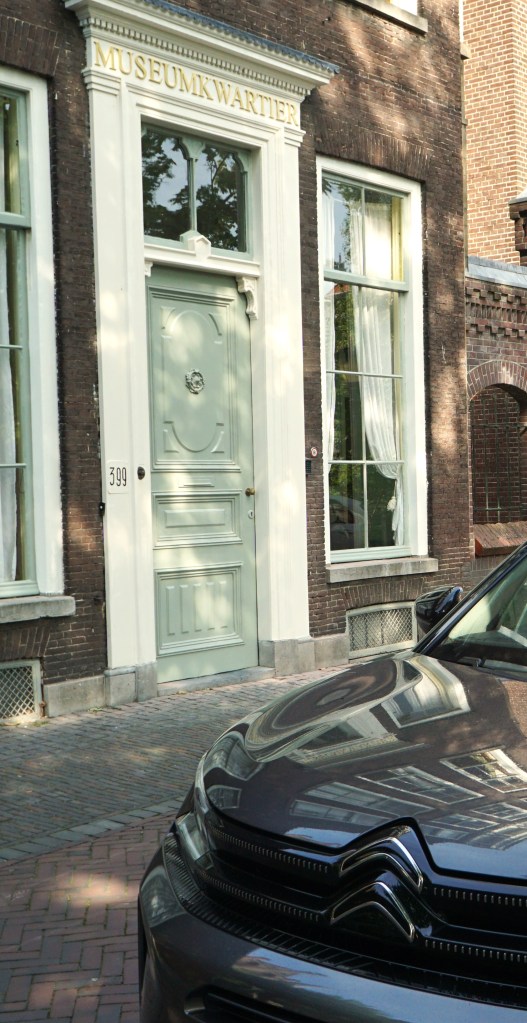
Driving between and into the iconic cities of Europe in a Citroën has always a special touch. Our test car indeed added the unique aura of the brand on our tour through Belgium, Holland and Germany. Comfortable, smooth, spacious, frugal and efficient, being last but not least also fast and safe. These are the qualities of this C5 plug in hybrid SUV we appreciated on motorways and narrow inner city roads along Dutch canals and their historic houses. Just read further…
Hans Knol ten Bensel
Enjoying Utrecht by staying a few nights in a historic house in the beautiful city centre along the grachten…
The Citroën we tested came with a 180 HP engine, combined with a 81 HP electric motor coupled to a battery pack which gives you close to 60 km range. A wonderful hybrid drivetrain, smooth and pleasantly frugal when you drive it sensibly, of course. This C5 is not unduly heavy, with a kerb weight of 1.825 kg, which indeed makes it future proof when weight coupled road taxes will be imposed increasingly in the coming years.
The iconic city centre of Gouda…
We liked the looks and the typical Citroën styling language with a preference for well-rounded shapes while keeping an eye for boxy room efficiency in its overall proportions. The silver grey paint scheme and the judicious use of chromed accents added a touch of luxury and panache to “our” C5. Since its facelift in 2022, its overall looks have dramatically improved, especially on the front end.
Your spacious travelling companion…
Right away we were very seduced by the excellent luggage capacity and the overall shape of the boot, as it allowed to stow our large suitcases upright on their side which allowed us to take maximum use of the available space of without having to fold down the rear seat backrests at all, leaving the cabin uncluttered and free for passengers. Indeed, the three individual back seats can be moved back and forth over a distance of not less than 15 cm. In the plug in hybrid version we drove, the available space is at least 425 litres. One can enjoy that the luggage load is discreetly stowed away, which makes city visits more safe when on tour between hotels and cities with a fully loaded car. A major practical advantage which is often not fully appreciated…
Superb seating and driving comfort…
Citroën goes to great lengths in making their seats comfortable, and indeed, they are a class of their own. They provide smooth and restful support, due to the clever use of foam material. Citroën calls them Advanced Comfort, and they are also pleasantly wide.
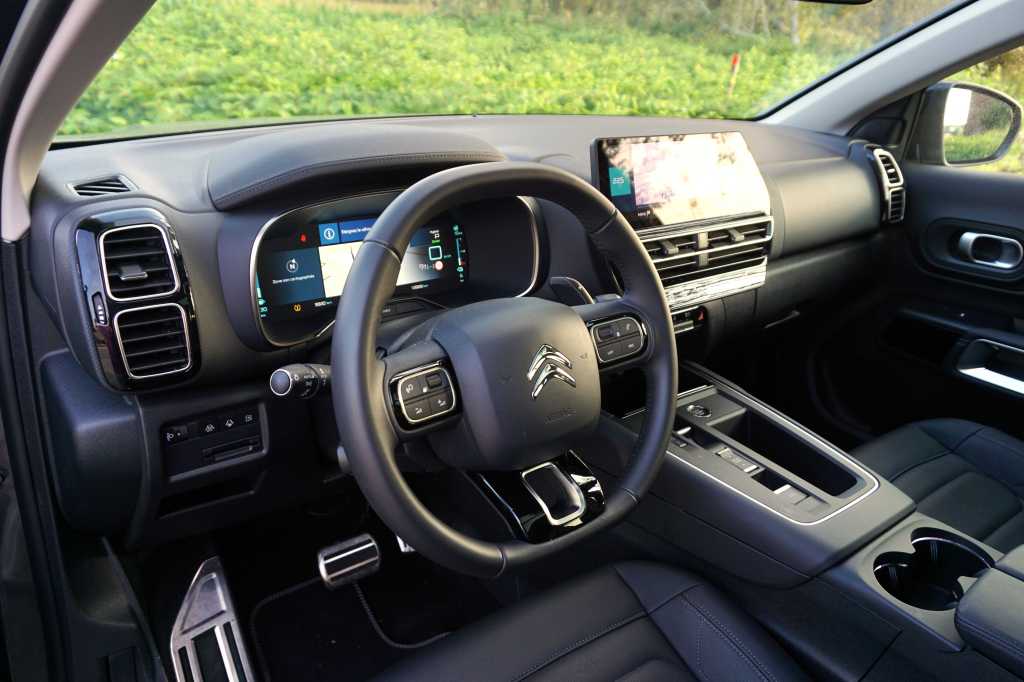
Infotainment is up to scratch, and Android Auto as well as Apple Car play are possible; we liked very much the dual digital clusters, which enabled the navigation map to be displayed both on the central screen as well as in the instrument panel in front of the driver, which is so useful when you have to find your way in unknown iconic city centres.
The suspension of the C5 is also calibrated and set up to combine good handling and surefootedness with excellent comfort, both at high and low speeds. We were also quite impressed by the high speed stability on German Autobahnen, where this hybrid SUV left nothing to desire in terms of fast GT cruising. It just goes to show again how good cars have become nowadays…The C5 is also remarkably silent, even at higher speeds.
Performance and economy
On this voyage we never ever felt the desire for more power, and indeed the C5 Aircross has all what it takes. Its 180 HP engine combined with the 81 HP electric motor develop a total of 224 HP, resulting in an acceleration time from 0 to 100 km/h in under 9 seconds, and a top speed of not less than 225 km/h, as we could enjoy on German Autobahnen, where the Citroën truly impressed with its silent ease at these high speeds.
Economy of this hybrid depends totally on the way you drive and use it. You can recharge it regularly and drive only on E power over its 50 km useful E-range, or choose one of the several ’E-Save’ modes, and drive it as a hybrid. In the E-save modes, one can keep or recharge the battery up to a certain chosen level for later use in emission-restricted zones. Driving in hybrid mode, one can achieve easily values ranging between 7 and 8 litres/100 km. The drivetrain, also thanks to the super smooth Aisin 8 speed auto transmission, is beyond reproach, responsive and refined.
Fit for urban use
The C5 needs some vision aids when driving in town centres, and we appreciated these accessories indeed very much. The C5 is rather wide with its 2,11 meters, but then reasonably compact again with a total length of 4,5 meters. It has distance warnings fore and aft as standard equipment.
Conclusion
The C5 Aircross is a bestseller in the Citroën range, and with voyage we found all the good reasons for it. Last but not least it is good to know that the C5 Aircross is offered with a wide choice of different drivetrains, from the 136 HP petrol engine and a Diesel version with the same power to the (plug in) hybrid versions with respectively 180 and 225 HP system power.
It is marvelously versatile, has genuine GT qualities, is roomy, comfortable, is frugal and fast, has distinct, characteristic looks, and indeed drives like a true Citroën…
Fiat has now for more than a century been the pounding heart of Italian engineering and industrial genius. It has given the world wonderful cars, and to me, besides the pre-war Balilla and Topolino, the post-war cars are even more iconic and are absolute milestones in automotive history. Let’s begin with the Fiat 1100 or millecento compact four dour sedan, which is still serving in India as a taxi and has been built there until a few years ago. I absolutely loved the PininFarina styled six cylinder 1800/2100 four door sedans launched in the sixties, and then of course the Seicento and the Cinquecento in ‘57…
About ten years later came the Fiat 124, the 1967 European car of the year, which put the whole east-bloc and Russia on wheels, built in Russian Togliattigrad as the Lada.
Then there was the Fiat 127, putting front wheel drive and excellent performance to the disposal of the masses. Soon then came the Panda, an absolute icon which I photographed in the Galerie de la Reine in Brussels for Keesings Auto Magazine at the time. This car I still find absolutely modern, by the way.
The iconic Panda, born in the 80s, still totally modern and contemporary today…
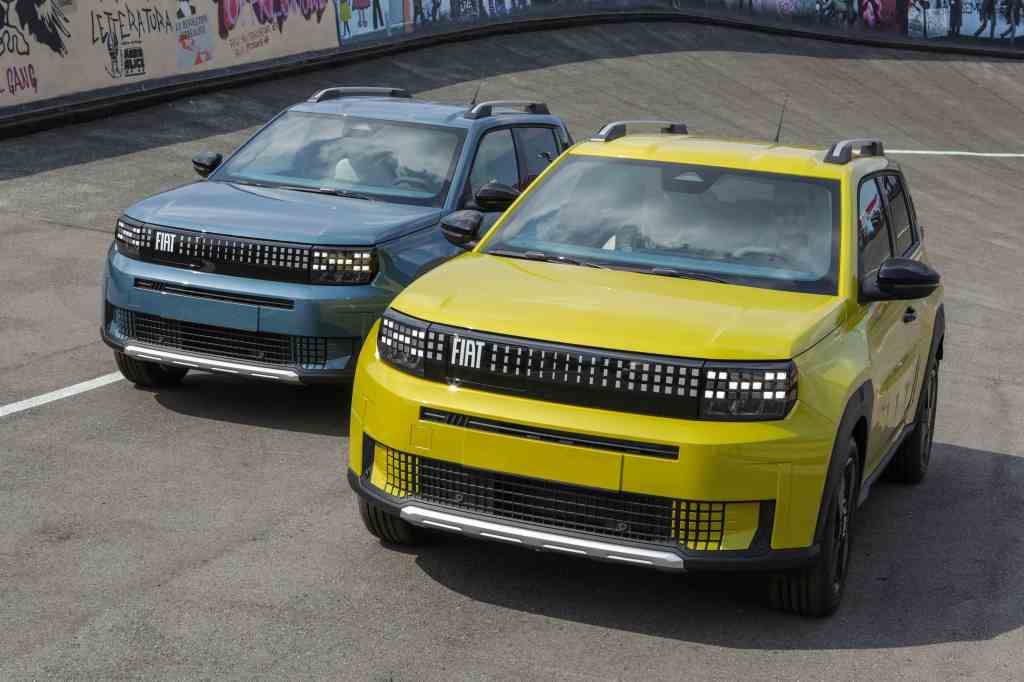
Now we live in different times, but the Panda is still inspiring many. Therefore only logical that Stellantis put its new Fiat Grande Panda on the new global line-up based on a multi-energy platform. FIAT now starts its transition from local-based production to a global offer through a common global platform. But there is still an Italian DNA left, as it has been styled at the Centro Stile in Turin, and certainly has lots of character as the photos show.
The new Grande Panda…
Olivier Francois, FIAT CEO and Stellantis Global Chief Marketing Officer, summarized it well at the presentation: “Currently we have launched FIAT’s comeback to the global mainstream based on 3 pillars: Italian design and development, global platform and local relevance—and the Grande Panda is the first member of our new global family.”
The Grande Panda will first land in Europe, Middle East, and Africa, and will be available in both electric and hybrid versions.
Proudly presenting the big new Panda: John Elkann, Chairman of Stellantis, Carlos Tavares, Stellantis CEO, and Olivier Francois, FIAT CEO and Stellantis CMO.
Needless to say that we eagerly await to get more acquainted with the Grande Panda soon, both in hybrid and E-versions, which, as we read, will be aggressively priced.
A Fiat 500e Giorgio Armani
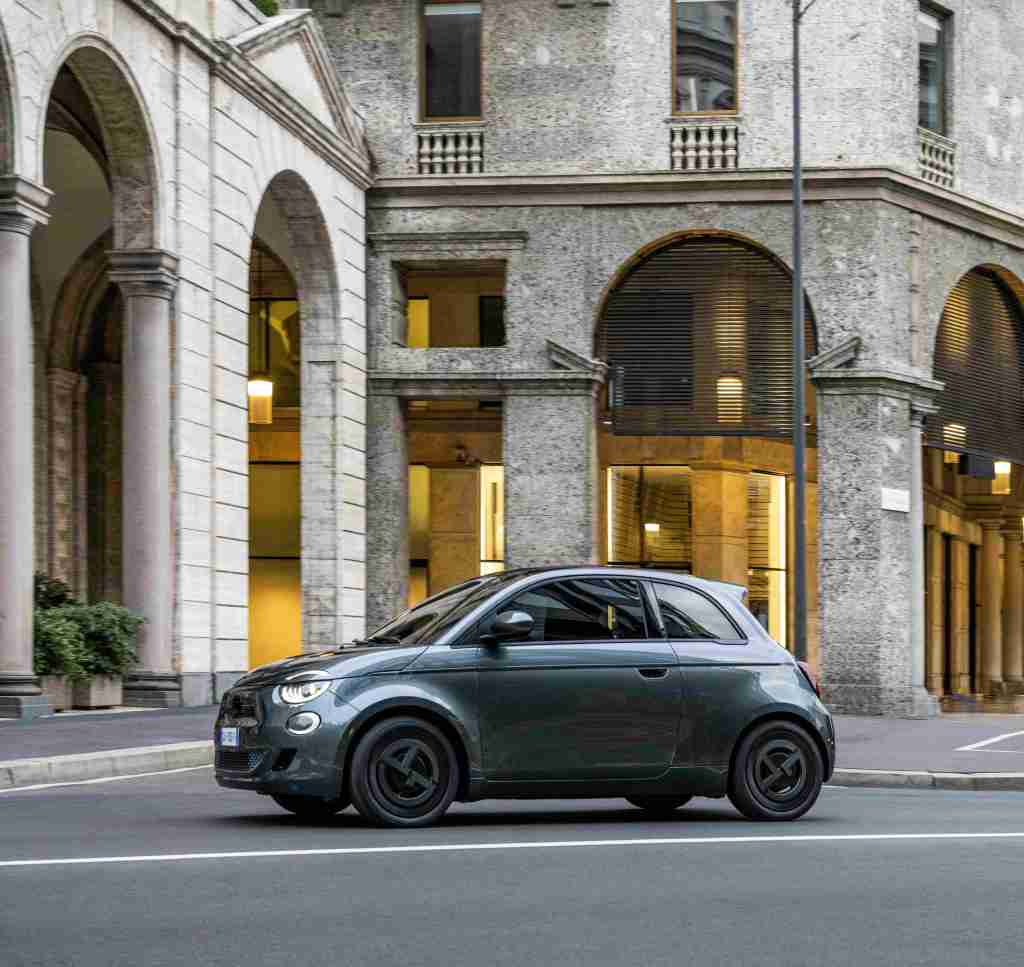
But at this anniversary, celebrated on the iconic “Pista 500”, the circular test track on the roof of the famous Lignotto factory building, now converted in a hotel, where the walls of the guestrooms are decorated with mural size photos of details of historic Fiats and a MUST to spend a night when you are in Turin, Fiat stylists and Giorgio Armani designed together an elegant version of the 500e.
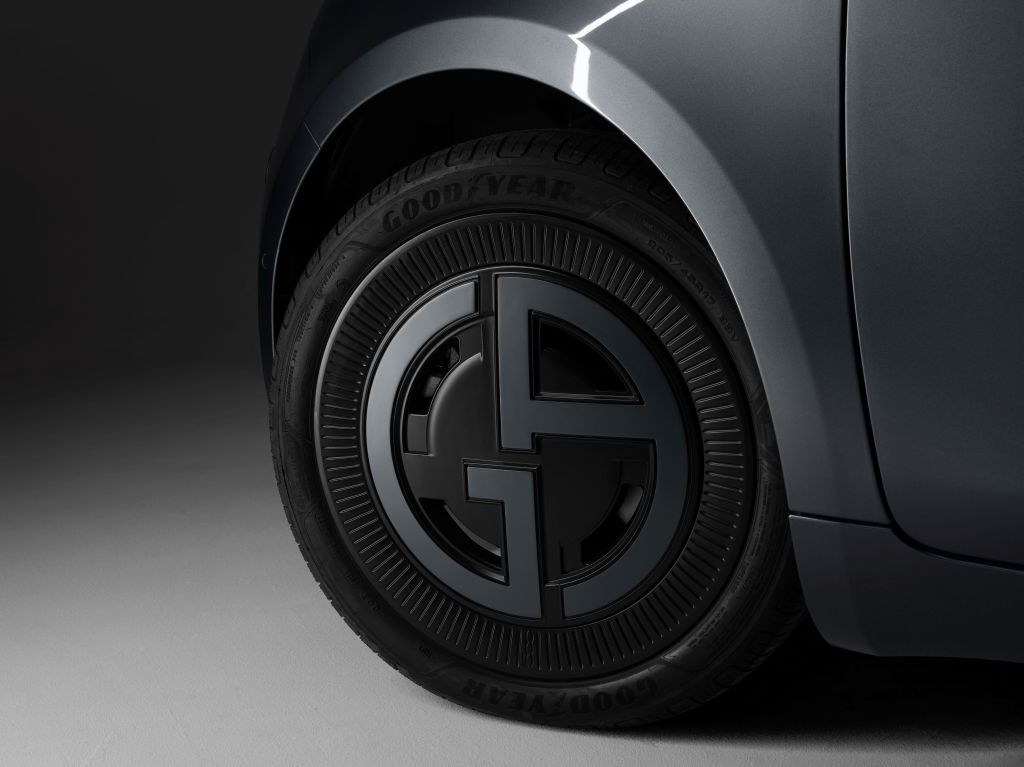
The standout exterior design element are the wheels, representing the GA logo on a macro scale. They become the car’s star feature, ensuring it stands out…
We hoe you enjoyed here the photos of the celebration, a very enjoyable event for a brand we always kept very close to our car-loving heart…
The most compact SUV in VW range is now already a few years with us, but has lost nothing of its appeal since its recent major facelift . It seduced us greatly during our test with its looks and revamped interior and infotainment, overall agility and driving pleasure, zesty performance and immense practicality. On top of that, it is beautifully compact. We drove it with the 115 HP 1 litre 3 cylinder, mated to a 7 speed dual-clutch transmission. Just read further…
Hans Knol ten Bensel
Compact looks
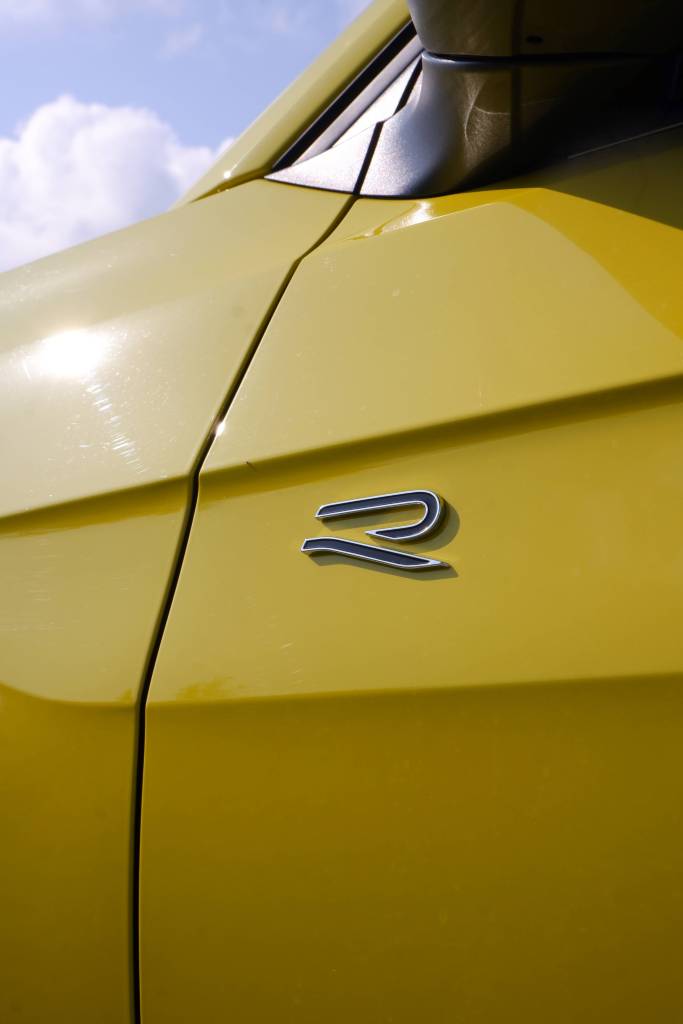
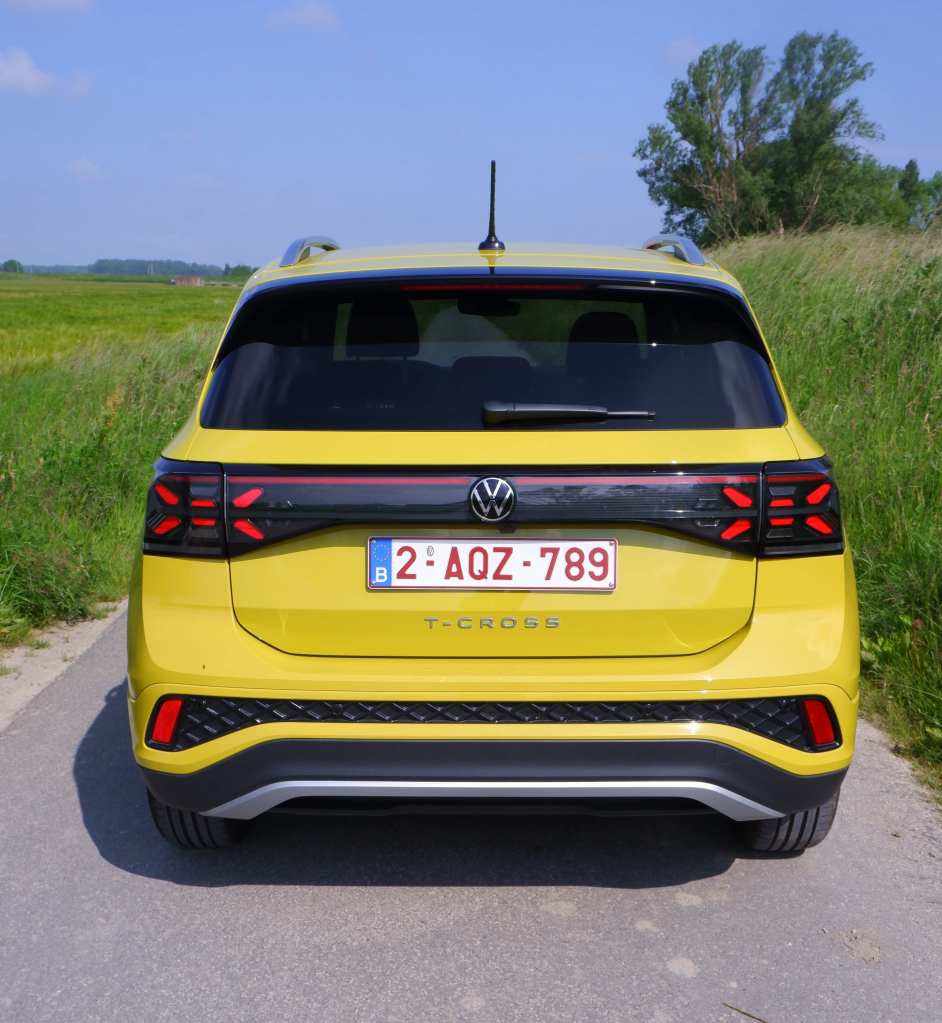
The T-Cross is actually only 5,4 cm longer than the Polo, but some 13,8 cm taller. Its stance is quite muscular, and we liked very much the wide front grille and even more the horizontal reflector band at the rear, which gives the T-Cross a distinct VW family character and modernity. Three new, fresh colours have been added to the model range: the solid colour Grape Yellow (a crisp, sporty yellow), Clear Blue Metallic (an elegant and friendly light blue) and Kings Red Metallic (a vivid, striking red). As you can see on the photos, the Grape Yellow suited our R-line T Cross very well…
Quality…
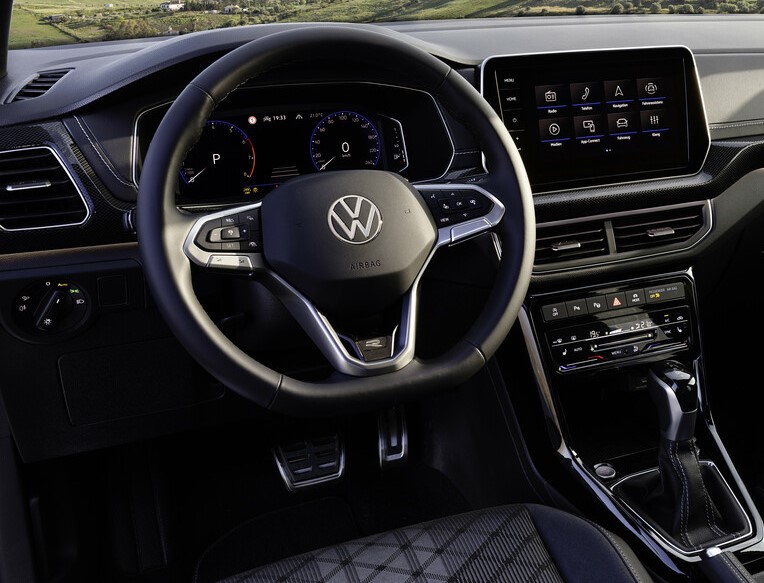
Stepping into the car one is inevitably seduced by the overall no nonsense solidity and quality the materials and the outstanding fit and finish. The recent facelift brings a redesigned dashboard, with a free-standing infotainment display. The top sporting equipment version, the so-called R-Line, we tested, has a 9.2-inch display with a diagonal of 23.4 cm. Android Auto and Apple Car Play are of course standatrd. The dash panel in the T-Cross has also undergone a complete redesign: as in larger VW models, the dash panel features soft-upholstered and significantly higher-quality surface materials.
The nice firmness of the seats, the look and feel of the (now again physical touch) controls, one has the overwhelming impression of stepping into a long lasting quality product.
Despite its compact size, the four doors are quite large, and one doesn’t feel cramped at all. VW proudly comments that this is an advantage of its so-called modular transverse matrix, which allows the front axle to be placed much closer to the front of the car.
The generous 2,55 m wheelbase does the rest. On top of all that, the SUV character of the T-Cross lets you sit pleasantly high. The driver and front passenger sit some 60 cm above the road, the rear passengers even some 5 centimeters higher.
Lively performance
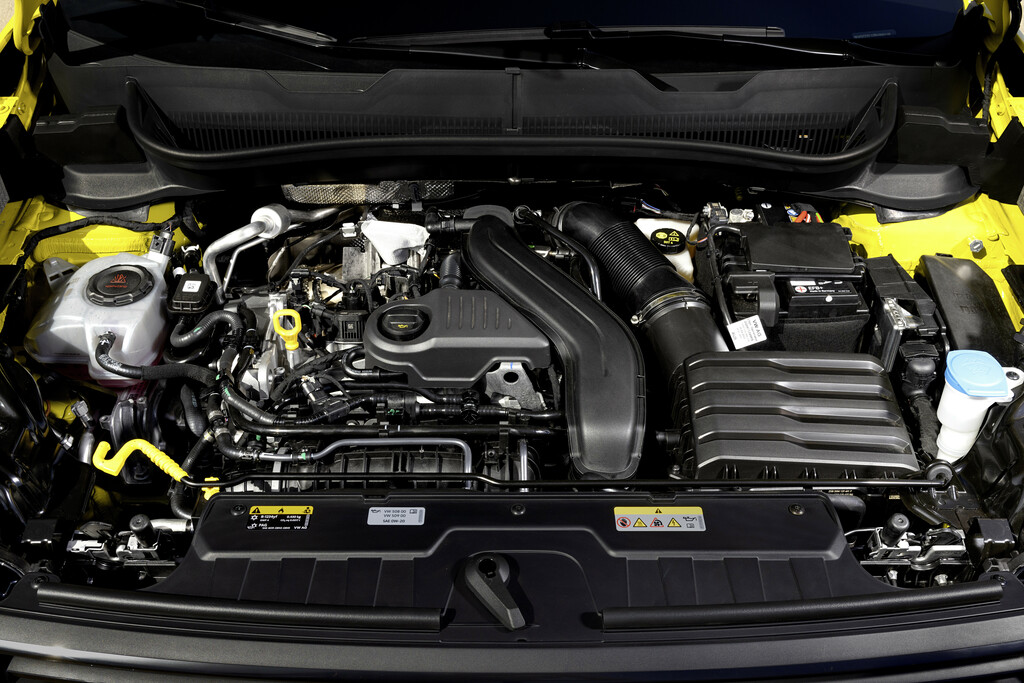
The T-Cross is powered with the 1.0 TSI three cylinder engine with gasoline particular filter. This is a well proven unit with sits all across the Polo range, coded in factory terms as the EA211 aggregate. It comes in several power versions, and we tested the 85 kW/115 version.
With this power, the T-Cross leaves little to be desired in terms of performance. 0-100 km is absolved in just over 10 seconds, with an Autobahn worthy top speed of 195 km/h. The impressive pulling power of this eager 3 cylinder and the reactive 7 speed DSG does the rest. One can choose between normal and sport settings, and indeed, driving pleasure is to be had..
With a lighter right foot, the DSG makes full use of the available power at low revs, and the fuel consumption is therefore quite good, even when one adopts a rather dynamic driving style. We achieved an average test consumption well below 7 litres, which is very creditable indeed, and amply shows that a state of the art ICE has not said it last word at all.
The latest news at the moment of writing is that Volkswagen intends to allocate shift some of its EV-designated funds to continue developing petrol engines. Company Chief Financial Officer Arno Antlitz recently stated that it would spend around $65 billion to “keep our combustion cars competitive.” It seems that VW would invest a third of its planned EV funds in combustion engine technology , and this is a change in its strategy for the time being.
So, remember what we wrote in the test of the Polo GTI. Just cherish your ICE engined VW, it will be useful for years, if not decades to come… We liked this 1 litre engine, with excellent smoothness and excellent pulling power at low revs, making it very “zen” to drive in urban traffic.
Versatile and practical
The T-Cross has been, despite its compactness, convinced with excellent versatility. The rear bench seat that can be moved by 140 mm. When all the seats are occupied, the T-Cross offers a luggage compartment capacity of between 385 and up to 455 litres when loaded up to the height of the rear bench seat.
When the rear bench seat is folded down (60:40 split), this creates a flat load area with a stowage volume of up to 1,281 litres (loaded up to the height of the front seat backrests). But there is more. The front passenger seat can additionally be folded down as standard from the Life specification package and up.
The continuous load area from the rear to the front is then 2,398 mm long and can stow everything “from surfboards to para gliders”, as VW puts it.
Volkswagen has also increased the draw bar load of the T-Cross from 55 to 75 kg, so you can transport safely those heavier E-bikes.
Let there be light…and safety first with “assist” systems.
The T-Cross now has new LED headlights (instead of halogen) and new LED taillight clusters as standard equipment. The IQ.LIGHT LED matrix headlights are a completely new Volkswagen development by the way.
Safety is paramount, and indeed our test car came with the optional Travel Assist. Depending on the traffic ahead and the permitted speed, the T-Cross can control the vehicle’s speed with automatic acceleration and braking.
Within the system limits, Travel Assist can also include speed limits, bends, and roundabouts in its control interventions. Wonderful, although sometimes you just want to cruise quietly along at the slower speed imposed by the new speed limit, and not being catapulted vigorously to the previous original speed limit when this new lower limit ends. But you can set all this, so you are well advised to do this homework first at the start of your trip.
The new T-Cross can also automatically perform stop-and-go operations when fitted with the DSG, and this is something we appreciated very much indeed…
Conclusion
The T-Cross totally convinces, and it embodies indeed perfectly what a ICE engined Volkswagen should be: superbly built, powerful and fast on Autobahnen, fit for Grand Touring yet smooth and “zen” in town, quite frugal if you let it show its qualities by adopting a more relaxed driving style.
It offers genuine driving pleasure and offers also all what the dynamic owner and his/her family wants: a versatile interior, offering also excellent towing talent.
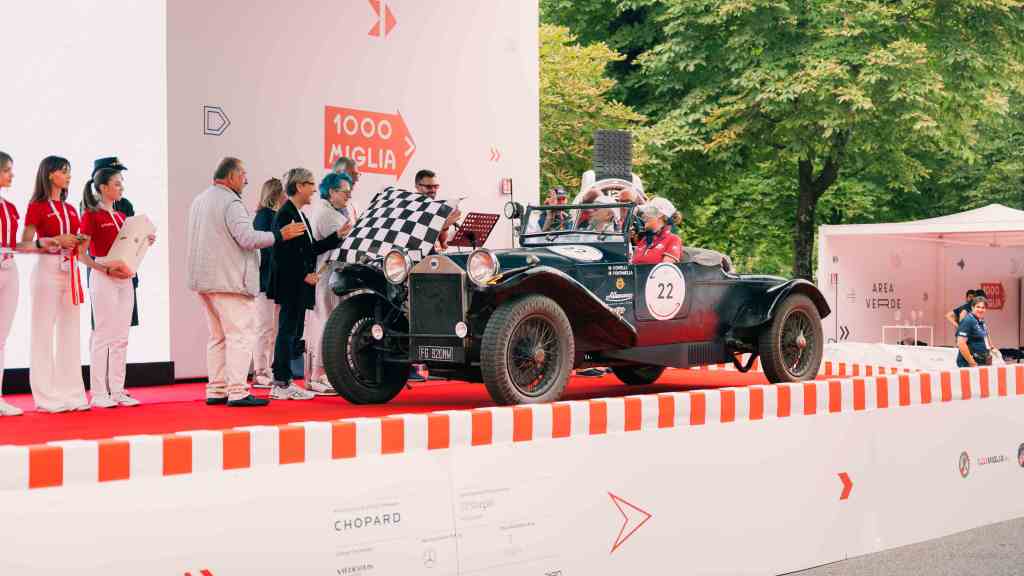
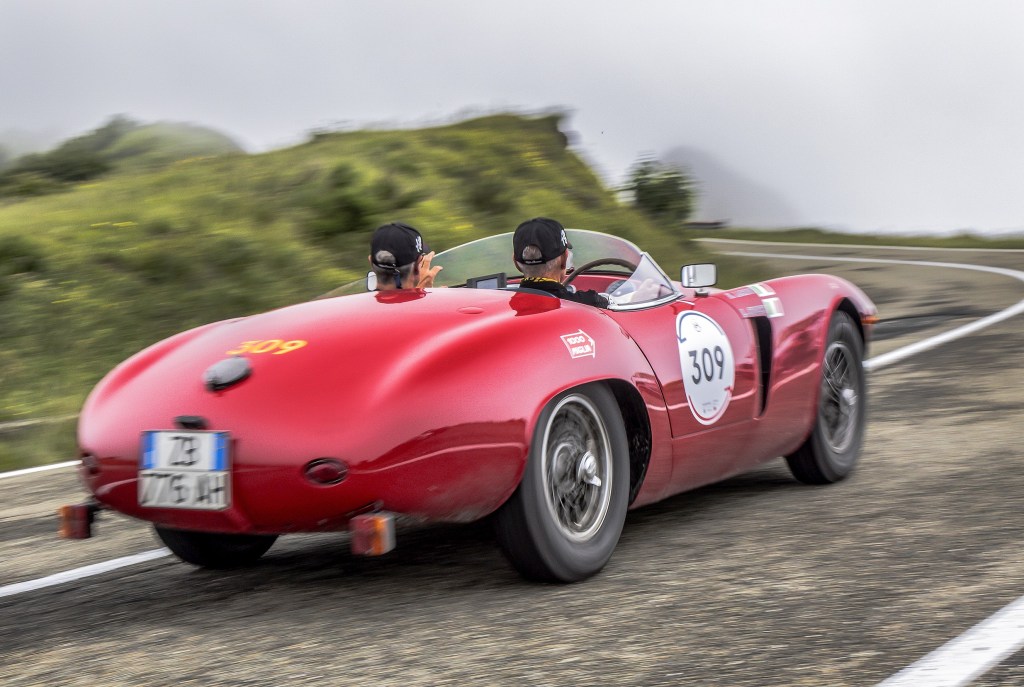
The Villa Trasqua team’s 1929 Alfa Romeo 6C 1750 Super Sport driven by the duo of Vesco and Salvinelli took the top step of the podium
The 42nd edition of the 1000 Miglia has been run beautifully again. The “Mille” is a race which has a very special place in my heart, as I have participated in it forming a team with my father in the official Mercedes Factory team, at the wheel of a works car. In the Mercedes team entry was then also Stirling Moss, and you can imagine that being in the same team, talking to him and wearing the same Mercedes Team racing overall as the celebrated champion was the pinnacle of what we would ever experience in our motoring life. I still have and cherish the Mille Miglia Shopard Watch with our entry number, 147, engraved in the back.
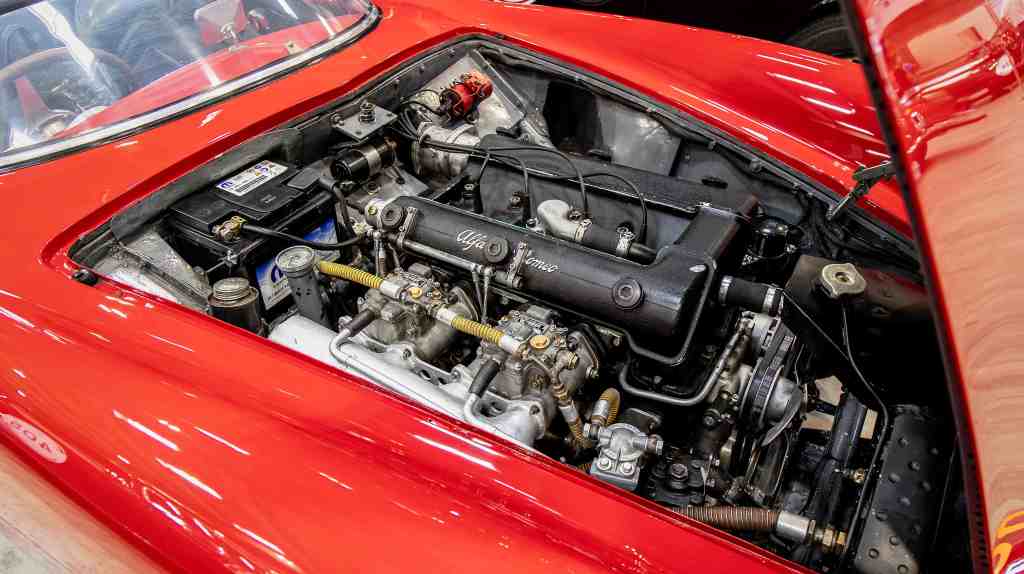
The Lancia Autrelia’s of the Automobile Club di Brescia were then the car on the winners podium, and now today Alfa Romeo’s undisputed dominance of the 1000 Miglia continues.
The 1927 Lancia Lambda Casaro VII Serie, crewed by Fontanella and Covelli, won the silver medal.
The route of the Mille Miglia is in itself totally epic…
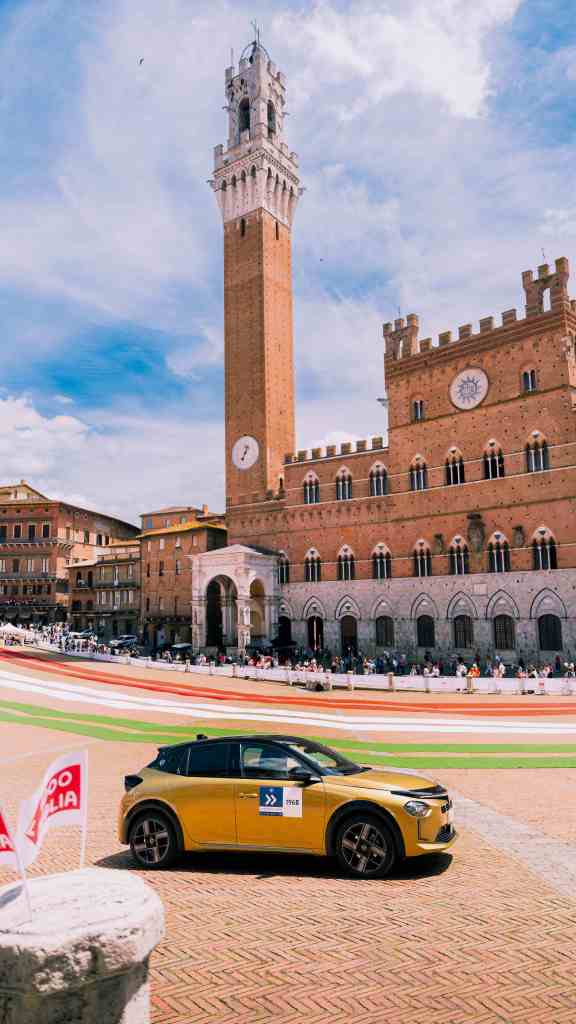
From Brescia it went for the first time in 76 years also to Turin, then from Genoa and the beaches of Viareggio to Via Veneto in the heart of Rome, then returning north via Siena, Ferrara and Lake Garda, to end with the traditional parade on Viale Venezia in Brescia, where it all began back in 1927.
Once again this year, the pass-by of this epic “traveling museum” aroused enthusiasm and curiosity among the throngs of spectators who crowded the route of over 2,000 km.
Also remarkable was the participation of the Alfa Romeo Junior, the new compact car that brings Alfa Romeo sportiness back into the largest segment in the European market.
The New Lancia Ypsilon finished at the third position participating for the first time at the 1000 Miglia Green. And this on the very same days the model became available at Italian dealerships! Needless to say that we are keen to drive both cars soon…
As you will recall, I mentioned this already earlier in my columns, I have been a Lancia owner for four years, driving a dark midnight blue Lancia Dedra. It NEVER missed a beat, come what may and accompanied me in many iconic European places and cities. After that, I drove for half a year a Lancia Gamma, which also was fast, reliable and full of panache.
But back to the Mille Miglia: what a fantastic event, it still moves my heart.
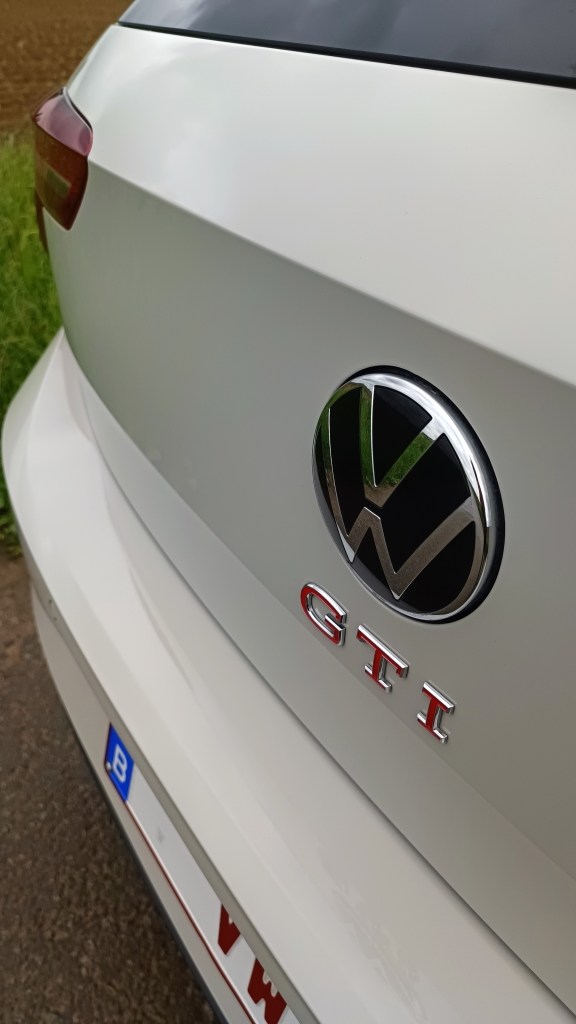
Sooner or later, every car enthusiast dreams to be behind the wheel of a true classic car. Know that since 1976 already, Volkswagen offers you this classic driving pleasure with absolute panache and everyday reliability in the form of an icon: the Golf GTI.
Can you imagine if your father had bought one new and would have introduced you to the delights of GT driving by storming with you over the Gottardo or the Stelvio at the wheel of this car? If he would have kept and cherished it and would have passed it on to you, you could now participate with it in classic car events…
But all is not lost if your father wasn’t so wise. Volkswagen still sells the Golf GTI and also since 25 years now the Polo GTI, more compact that the Golf and maybe a bit closer to the “ur” Golf GTI. Delightful? Yes. To be lovingly kept and enjoyed for the rest of your motoring life? We would think so…
We drove it for you, and indeed, we are sold…just read further!
Hans Knol ten Bensel
This modern day Polo GTI follows the classic VW tradition when it comes to building a GTI. A bigger powerful direct injection series production VW engine is shoehorned under the hood, this time the cornerstone of the VW group 2 litre engine family, the EA888, developing not less than 207 HP and 320 Nm of torque over a wide rev range all the way from 1500 to 4500 rpm. It is coupled to a delightfully smooth and fast 7 speed DSG box. Manual gearboxes are not available, and let’s face it, Verstappen doesn’t use them either anymore.
The thoroughbred sound of the engine is an acoustic delight, something no electric motor will ever be able to offer, and who’s car loving heart doesn’t beat faster when the engine revs in staccato under lightning fast gearchanges?
The performance is nothing short of superb: 0 to 100 km/h is absolved in 6,2 seconds, top speed is over 240 km/h. With this GTI, long stretches of Autobahn at cruising speeds between 160 and 200 km/h are an everyday affair, something which a EV simply cannot match without its usable range melting like snow, even if it can reach these speeds…
On your Gran Turismo trip, you can further concentrate on good restaurants, iconic hotels and stopping places with breathtaking vistas, and enjoy totally carefree mobility…no calculations, no recharge planning, no range anxiety.
The handling is top notch, certainly if you opt for the adjustable suspension. You can choose between sport, comfort and normal, with steering, gearbox and engine reactions to match. An electronic limited slip differential is standard, wisely so.
Iconic cabin
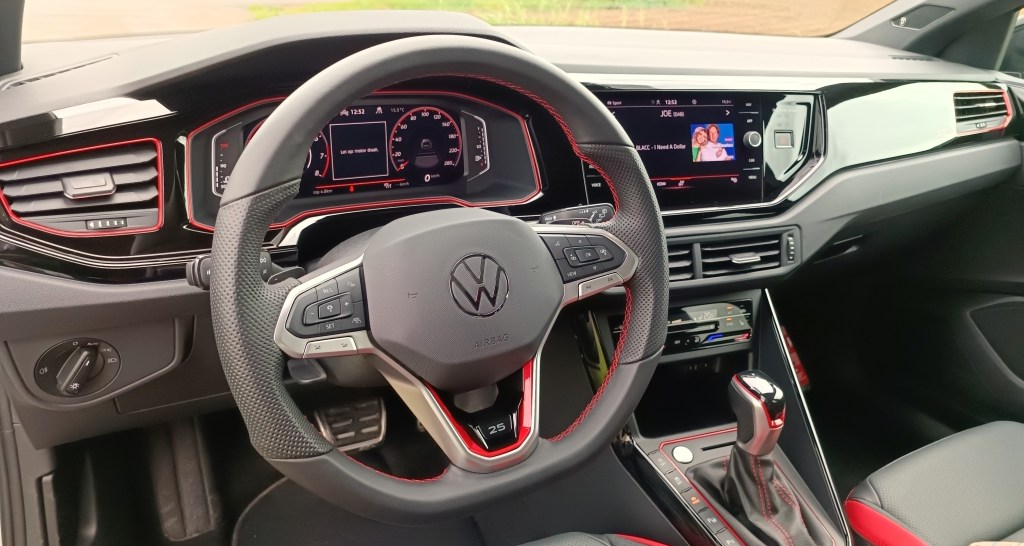
The GTI driver finds excellent seats with of course the GTI logo stitched in the upholstery, then the digital instrumentation of the Polo family, which has here large round clocks and is eminently readable and clear. The “haptic soft touch” controls on both arms of the steering wheel are gladfully replaced with true touch buttons, much to our delight. The sliding controls of heating and ventilation below the central touchscreen still need some concentration, and need more often than not a controlling eye, which can be distracting.
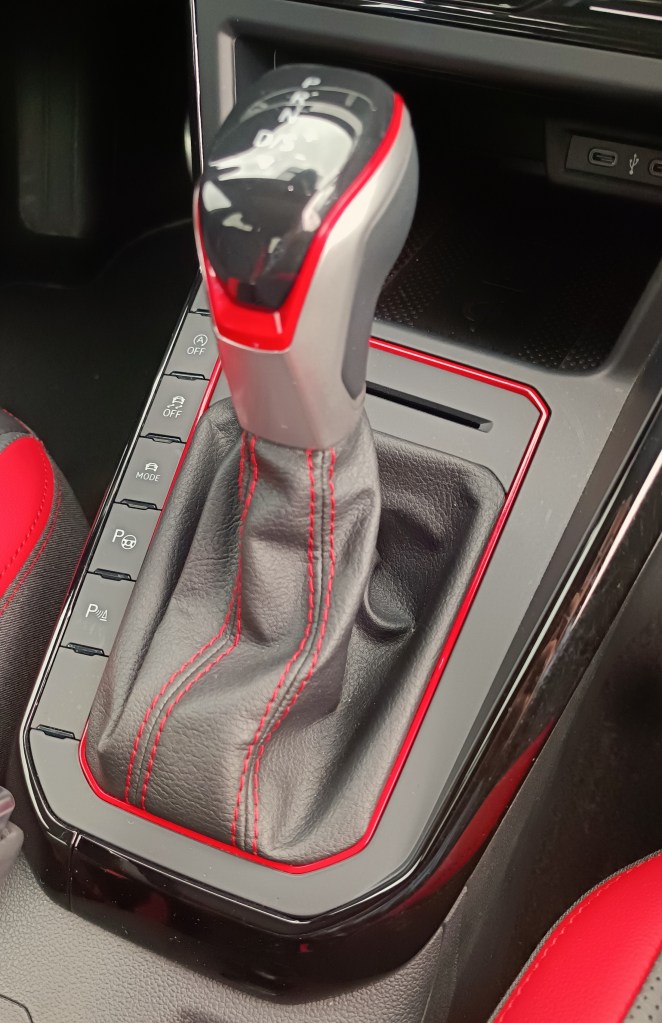
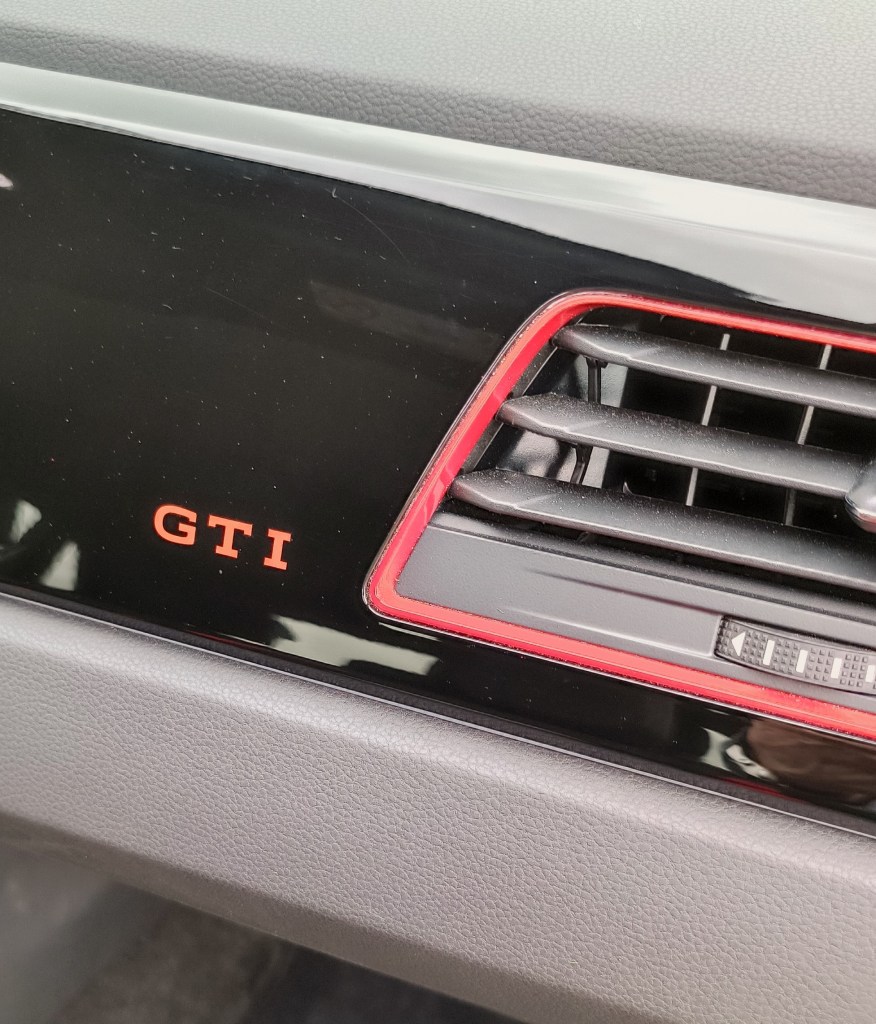
What one appreciates however is the excellent finish and the quality and durability of the materials. One feels clearly that this car is built to last, as a VW product befits. We also liked the red accents around the nice dashboard surfaces with a gleaming lacquered effect finish.
One finds of course the overall practicality of the Polo, with enough room for four and a boot space of 302 liters, up to almost 1100 liters when you put the rear seat backrests down. Infotainment and driving aids are top notch, and you instantly feel at home in this Polo, with everything lying “just right” within reach in your hands.
An allround Gran Turismo…
Last but not least there is the question of the true character of this beautifully performing Polo.
This GTI certainly has lots of zest and panache, but in everyday use can be utterly docile and civilised when you are not in a sporting mood. This, in our opinion, is the (very) strong point of this Polo GTI. It is totally versatile, and indeed will please all family members in their daily life(s.) So there is absolutely no reason why this GTI shouldn’t be the evergreen family favorite, and be delightful for shopping as well as for a fast trip or even circuit track day.
The fuel consumption is of course totally dependent on how you use the available power. It is very well possible to achieve close to 6 liters/100 km on the open road, with below 9 liters/100 km in town.
Conclusion
If you want a classic GT high performance car with all the build quality and practicality of the Polo, then this car is for you. It handles beautifully, will take you comfortably on long, fast trips and voyages and excels with superb performance.
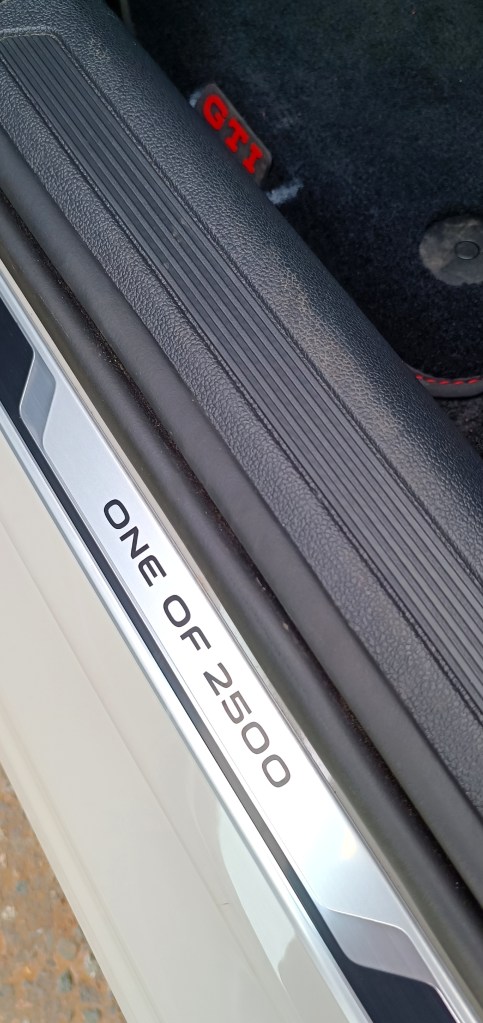
It is not a dramatic hot hatch, but the beautiful sound of its powerful four cylinder will put a smile on your face every meter you drive it… so buy and keep this one, as it is a limited edition of 2500 units, and if you have a heart for classic motoring, maintain it lovingly and cherish it, only to pass it on to the next generation…for another delightful 25 years!















































 Autoprova - for the Connaisseur