If you want to experience what Lexus really stands for, than get behind the wheel of this sleek and stylish ES300h: smooth comfort and roominess, technical perfection, sleek and velvety power, a full luxury cabin, and totally stunning economy. It embodies it all, in a masterful and very attractive way.
Of course, you must like sedans. We still
do, and let us tell you right away, we were totally sold on this Lexus. We
drove it extensively, and took it also to the French capital of light. We
couldn’t think of a more appropriate transport to the city of elegance and
savoir vivre…
Driving the future. Now. Literally, without any strings or plugs attached. That is what Lexus driving is all about. Superbly engineered, dramatically styled. With an eye for quality and modern day luxury: this is what Lexus’s most compact SUV offers you.
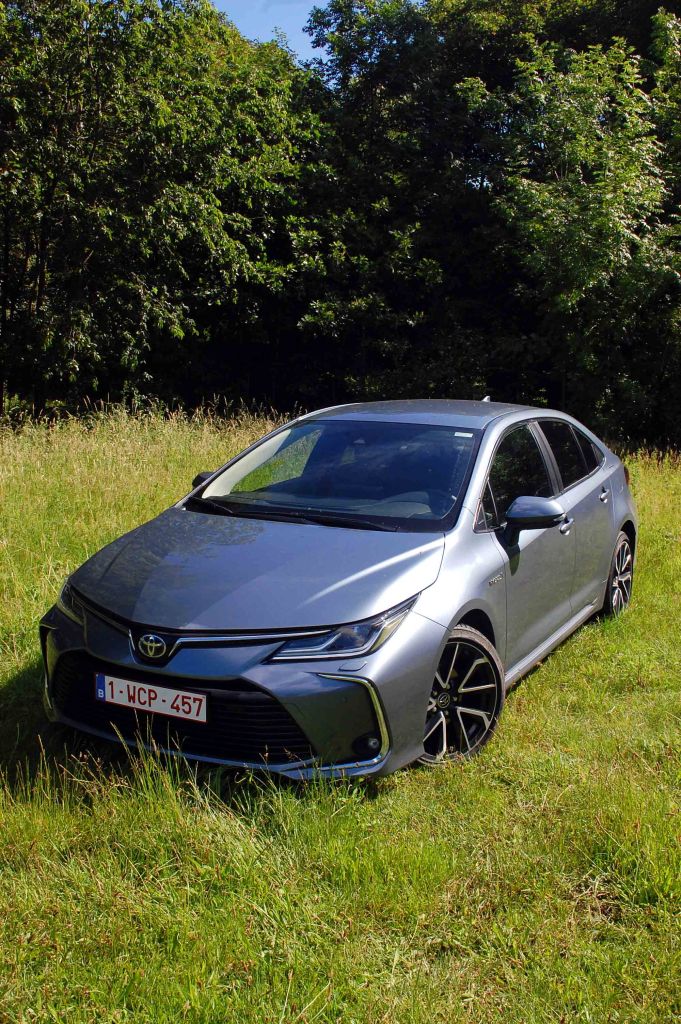
It runs on the new GA-C-platform, which is also seen in the new
Corolla. It shares also (most) of its drivetrain. Indeed, the well known 2
litre Atkinson Cycle four cylinder plays here the fiddle in harmony with its
electric cousin under the bonnet, in clever hybrid fashion, just like in the
Corolla. This means absolute technical perfection and utmost reliability is
yours to enjoy. But that is not all. The bodywork of this SUV has what it takes
to please you, both inside and out. Just read further…
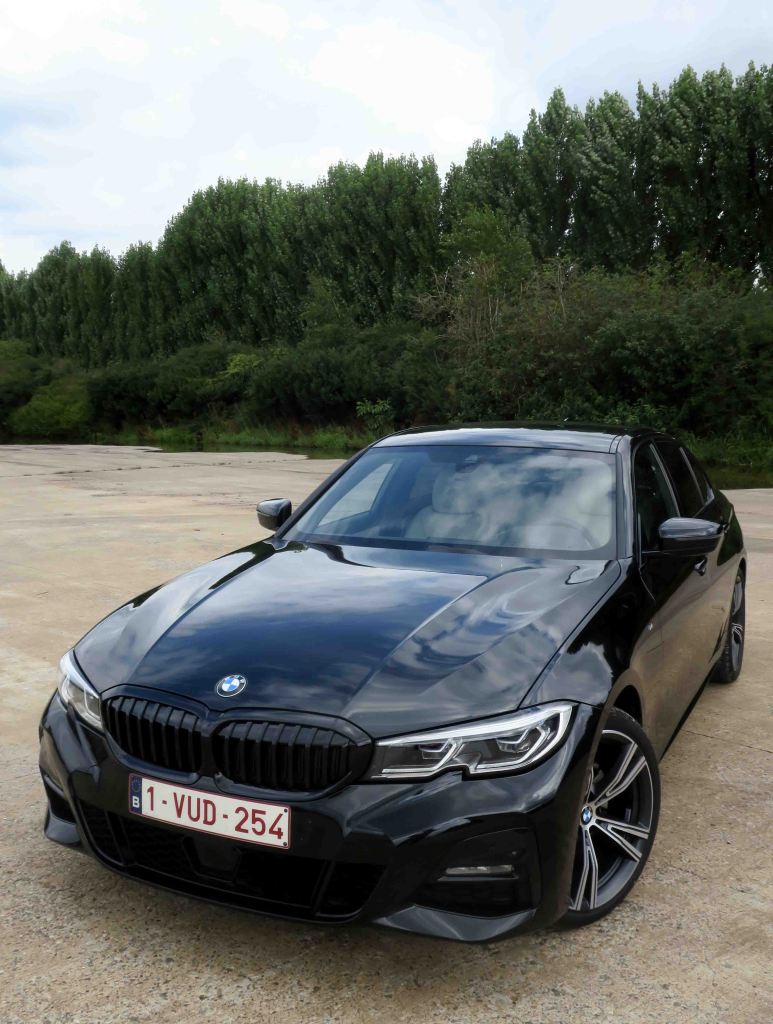
There are cars which are true benchmarks,
and when it comes to a dynamic sedan, then the BMW 3 series is the absolute
standard to which all others are judged. It embodies all BMW stands for, and it
is also their most successful model. Therefore it is carefully honed to
perfection by its maker with every new generation they build. The 3 series is now
in its seventh generation, introduced at the Paris Salon last year. We can tell
you, it is and remains a true joy to drive and own.
We drove the economical and smooth 2 litre Diesel
unit, which has with 190 HP enough zest to let the car display its sportiness
and handling.
The truth is now known to us all: to save our planet we need a lot more trees. We would add, we also need a good car to go with it: and this could very well be the clever and superbly built Subaru Forester…
It is a car which continues to surprise and
amaze us. The engineering is top notch, it performs like a dream, has terrific
4WD, gets you wherever you want to go, in all seasons, in all circumstances and
weather conditions, is indestructible and getting ever more frugal too.
Toyota and Lexus are friends of the earth since decades. They offer E power in hybrid form across their whole range now, and this started already back in 1997 with the Prius, a car which has been a star on Californian (and many other) roads worldwide ever since.
The hybrid drivetrain of this car is
nothing short of a stroke of genius, and therefore hardly surprising that it is
also seen on the Lexus range. Faithful readers know that I am the happy owner
of a Lexus CT 200h, a car which is running around with an average consumption
between 3.9 and 4.6 litres/100 km.
The subject of this test is also to find out whether the continuously further developed hybrid system brings further gains in efficiency compared to my faithful Lexus.
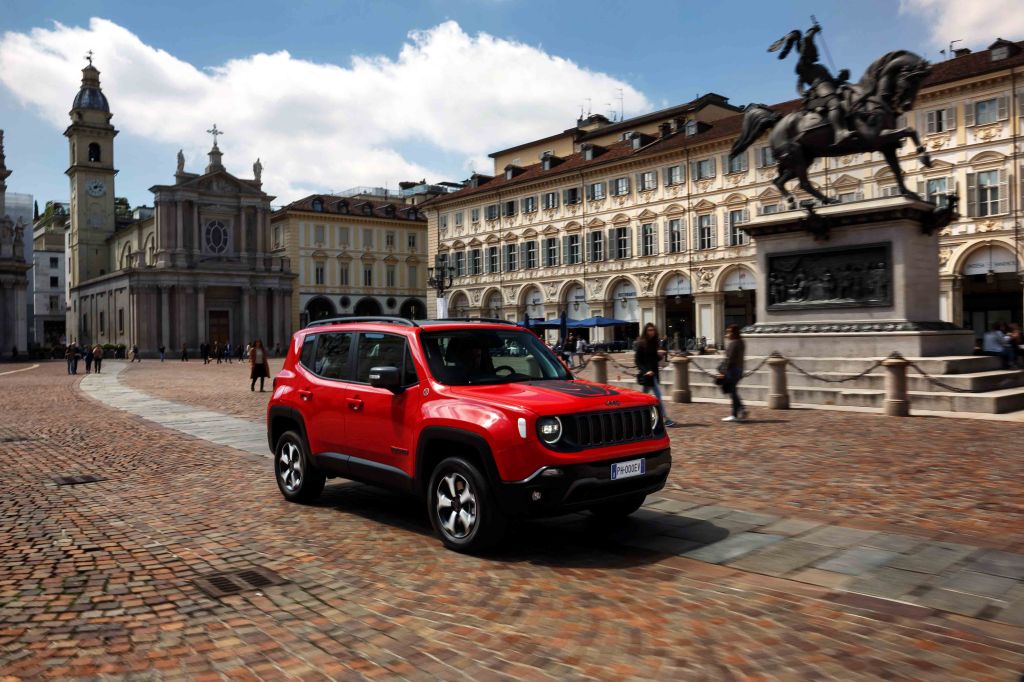
A beautiful Turin setting was chosen for
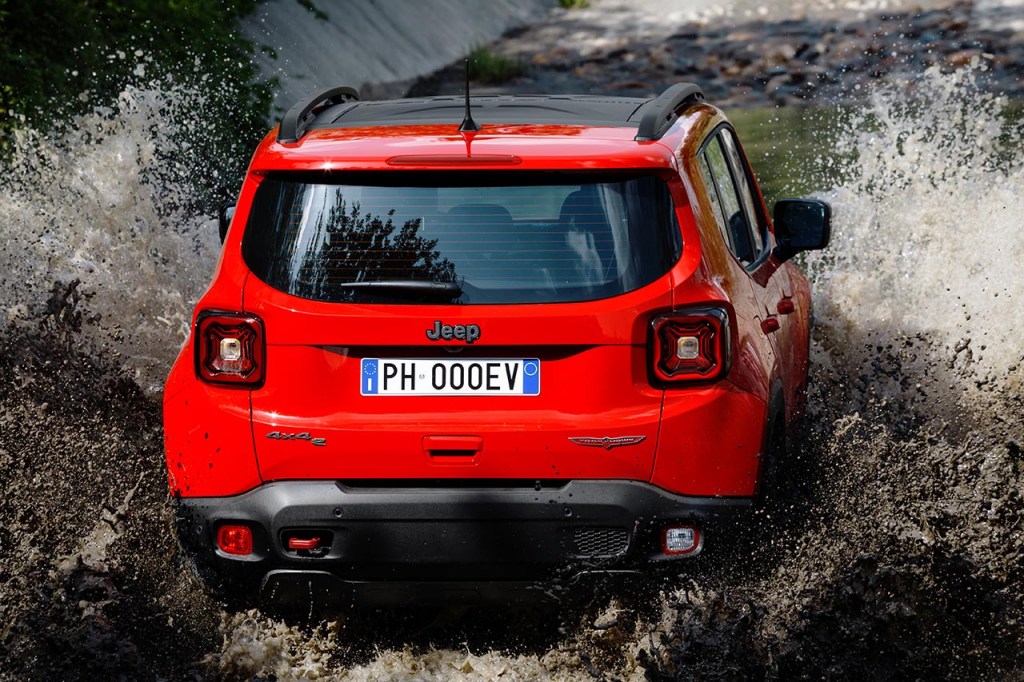
the first international on-road debut of Jeep’s both the new Hybrid Plug-Ins
(PHEVs), the new Jeep Renegade and Jeep Compass.
Indeed, at the the Salone dell’Auto in Turin, the new SUV will set off from Piazza Vittorio Veneto and parade around the city centre circuit, giving spectators a chance to realise how quiet it really is.
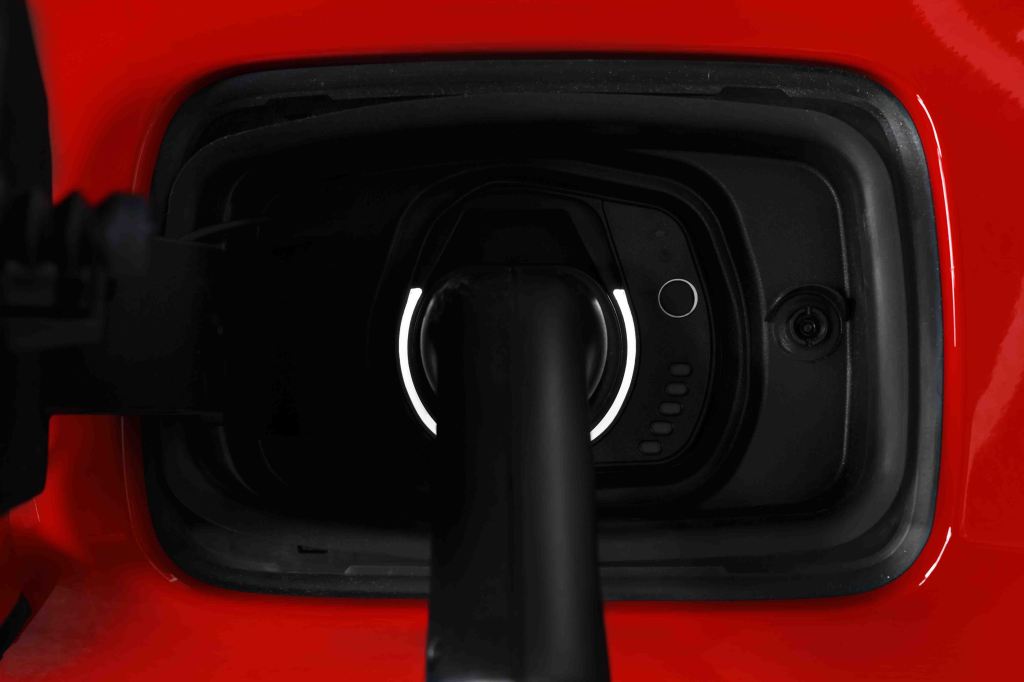
Both Renegade and Compass have CO2 emissions below 50g/km, and are both fitted with plug-in hybrid propulsion systems. Batteries can be recharged by the internal combustion engine or from an external power outlet.
They have a pure electric range of approximately 50 kilometres and about 130 km/h full electric top speed for both Renegade and Compass. The electric units work in synergy with the new 1.3-litre turbo petrol engines. There is ample power: the combined action of the two propulsion systems, internal combustion and electric, produces up to 240 hp.
The off-road talents of hybrid propulsion
Thanks to the high torque of the electric motor and the ability to adjust it with extreme precision during take-off and while driving on the most challenging terrain, off road behaviour is further improved.
Thanks to the new electric all-wheel-drive technology (eAWD), traction to the rear axle is not provided by a prop shaft but through a dedicated electric motor. This allows the two axles to be separated and to control the torque independently in a more effective way than a mechanical system. We cannot wait to collect driving impressions for you soon…
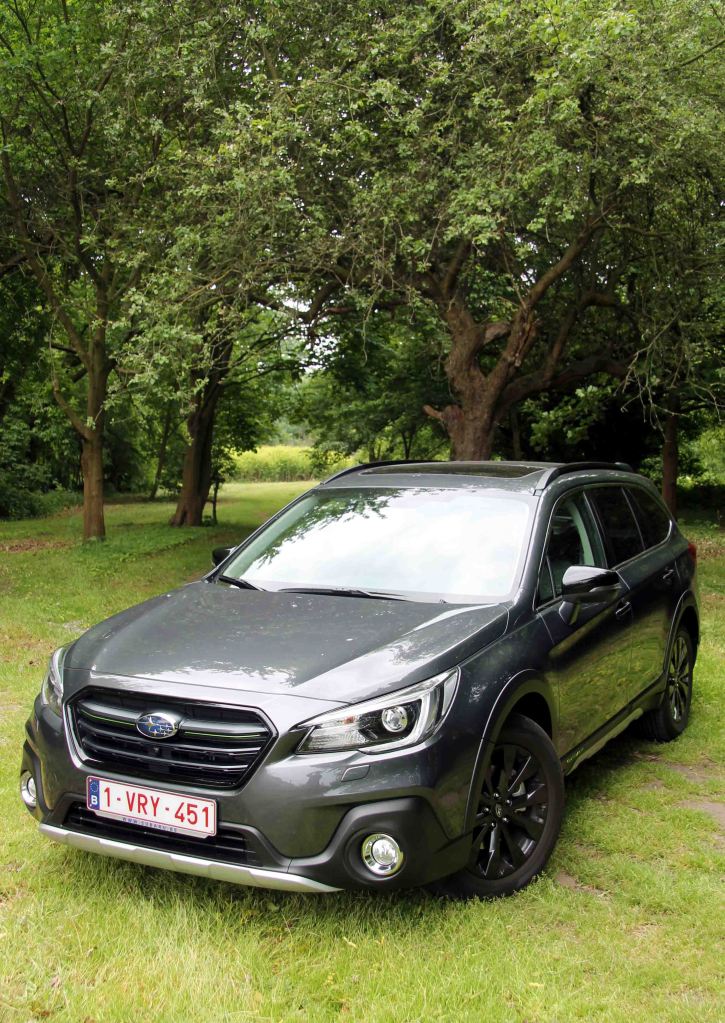
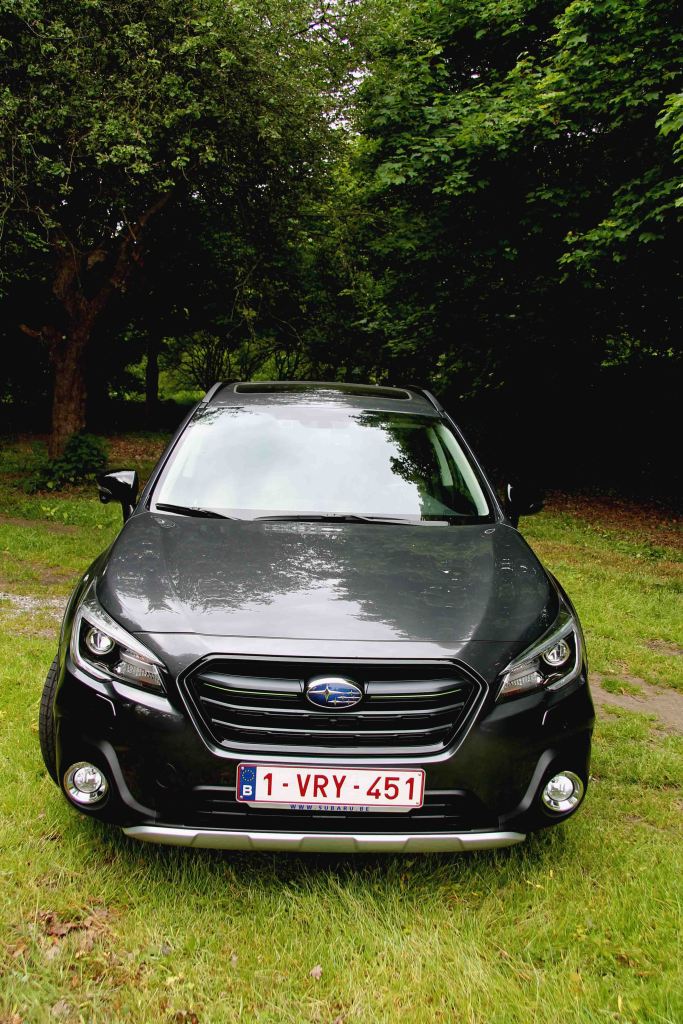
New grille and headlights distinguish the latest Outback…
Some cars are bursting of ingenuity, hiding
their technical marvels under the bonnet. You only discover it as you drive
them. All Subaru’s are such cars, and this Outback proved this to us, once again…
Indeed, this Outback is a connoisseur’s car.
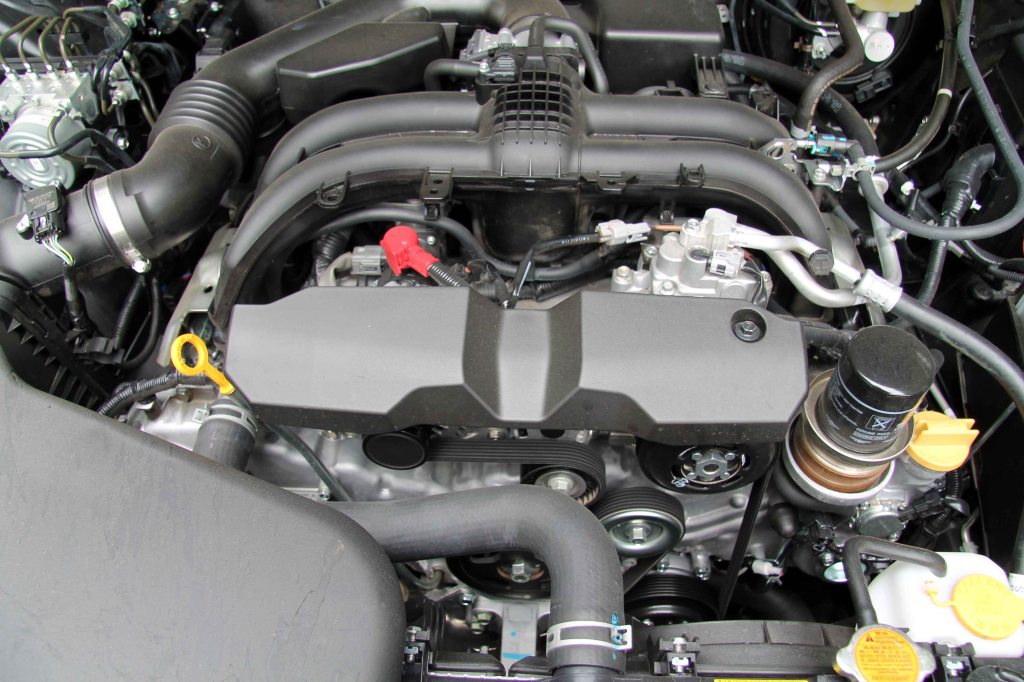
What to think of a marvellous double overhead cam boxer, 175 hp strong, with a
power to litre ratio of 70 HP? This is more than the legendary 2 litre 1963
356B Porsche Carrera GS, which pumped out 130bhp at 6,200rpm of its 1,966cc
DOHC Flat 4-Cylinder Engine, fed with Dual Solex 40PII-4 Downdraft Carburettors…
and the 1965 Porsche 911 for that matter.
But that is far from all. This Outback has
a supersmooth CVT transmission and permanent AWD, boasting excellent off-road talents.
It also proves to be a practical, sturdy companion.
Just read on…
Hans Knol ten Bensel
Pleasing looks
The styling people of Subaru are this time making their sums right, and indeed struck very elegant proportions and curves in designing this SUV. Just look at the photos and you will agree. This Outback looks good from any angle, and we met with many admiring looks and comments during our test. The new bumper and grille mark this latest version, and new headlights, which now actively track in the direction of a turn to enhance visibility. LED light is now available, as well as High Beam Assist, which can automatically switch the headlights between the high and low settings when an oncoming vehicle is detected, enhancing safety for both you and other drivers on the road.
The same can be said of the cabin, with everything very logically in place, and with seats and steering wheel being easily adjustable, we found the correct seating position in a breeze. A 10-way adjustable power driver’s seat with 2-position memory function and 4-way power front passenger seat help make you find that good position. Infotainment and navigation are totally new, but logical and self explaining, and soon we were on our way. Apple Car Play and Android Auto are built in standard, so you can enjoy navigation with your connected smart phone.
But the Salon version we drove has an in-built navigation system which uses Tom-Tom based maps. The seating position is pleasantly high, and does not give a way much here in comparison to the Subaru SUV Forester. New ventilation vents and new and simpler commands for the climate control distinguish the newer version.
Refinement
Mechanical refinement is one of the hallmarks of this Outback. Push the starting knob, slide the handle in “D” and off you go. Boxer engines are vibrationless, and we truly enjoy this. The CVT transmission has infinite ratios, so there are no jerks or rev changes when accelerating.
Soon you learn to lift the accelerator early when accelerating smoothly, so the CVT chooses immediately the highest possible ratio, and this allows you to cruise at the legal urban speeds at close to tickover speeds, say 1000 rpm or so. Needless to say that this will dramatically reduce urban fuel consumption, which we maintained between 7 and 8 liters, driving with some restraint. The manufacturer quotes a combined consumption of 7,3 liters/100 km, and CO2 emission(s) of 166 g/km. We must admit that Subaru did a very good job here in reducing fuel consumption further. We point out here too that the CVT transmission, which had hitherto 6 electronically controlled ratios you could choose from, now has an electronic seventh (very) high ratio, which again enhances economy.
The Subaru is quite responsive when you push
the throttle deeper, and the fact that the CVT will choose the right ratio for
optimum pulling power results in excellent agility and will get you out of any
traffic situation if needed. Performance is more than adequate, with a 0 to 100
km/h time of 10,2 seconds and a top speed of 198 km/h.
Spacious…
The Outback is quite roomy, and will seat comfortably two adults in the back, which enjoy plenty of head- and legroom. Three baby seats can easily be fitted on the back seat, and in the back there are also two USB charging points provided. The Subaru offers also lots of luggage space, with a minimum volume of 559 liters and 1848 liters with the backrests fully folded down.
X-Mode will make you an expert off-road
Pleasant handling and versatile off-road with lots of pulling power…
New shocks make the Outback more comfortable, body roll is better contained, and this Outback does not protest at all when driven in a spirited manner. This Outback has Vehicle Dynamics Control (VDC) with Active Torque Vectoring which helps provide sharper, more stable handling. It automatically senses steering and braking inputs to help keep the vehicle on the driver’s intended path. It really works!
Never
forget, it has 8,7 inch ground clearance, and performs very well on terrain. It
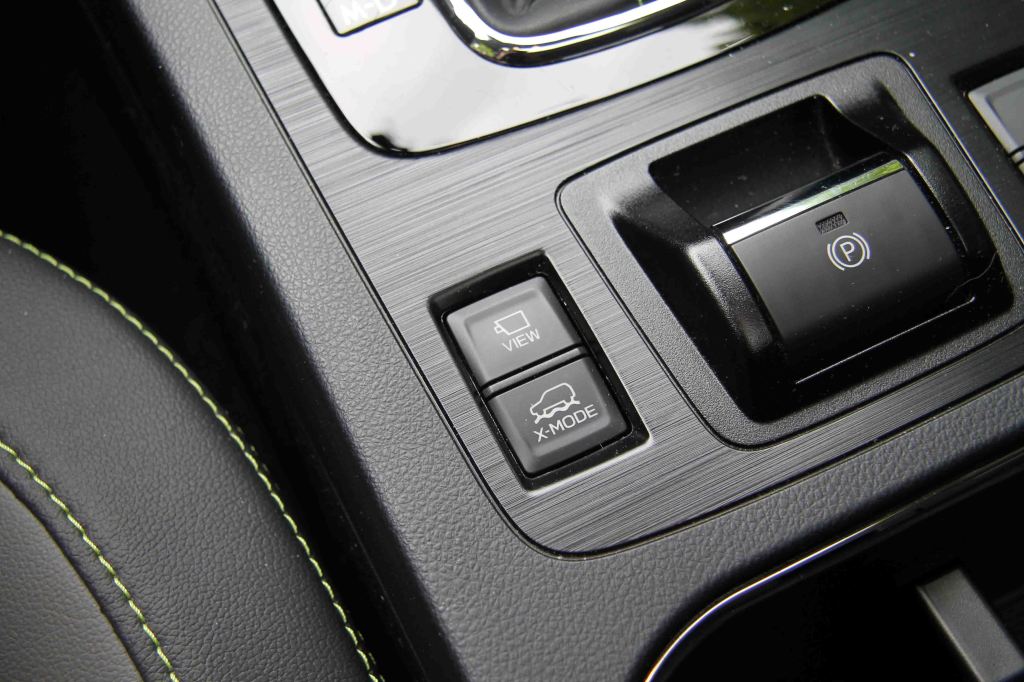
has standard X-MODE, which optimizes the Symmetrical All-Wheel Drive system for
maximum traction. X-MODE also incorporates Hill Descent Control for stability
and confidence when descending more difficult grades.
It is also
ideal for pulling that horse trailer, and can indeed tow up to 2.000 kg.
…and safe with EyeSight 3.0.
The confidence of EyeSight is now a standard feature on the Outback. This advanced safety technology monitors traffic movement, optimizes cruise control, and warns you when you’re swaying outside your lane. The Pre-Collision Braking feature can even apply full braking force, bringing you to a complete stop in emergency situations, reducing the rate of rear-end crashes with injuries by 85%. You have actually an extra set of eyes on the road…
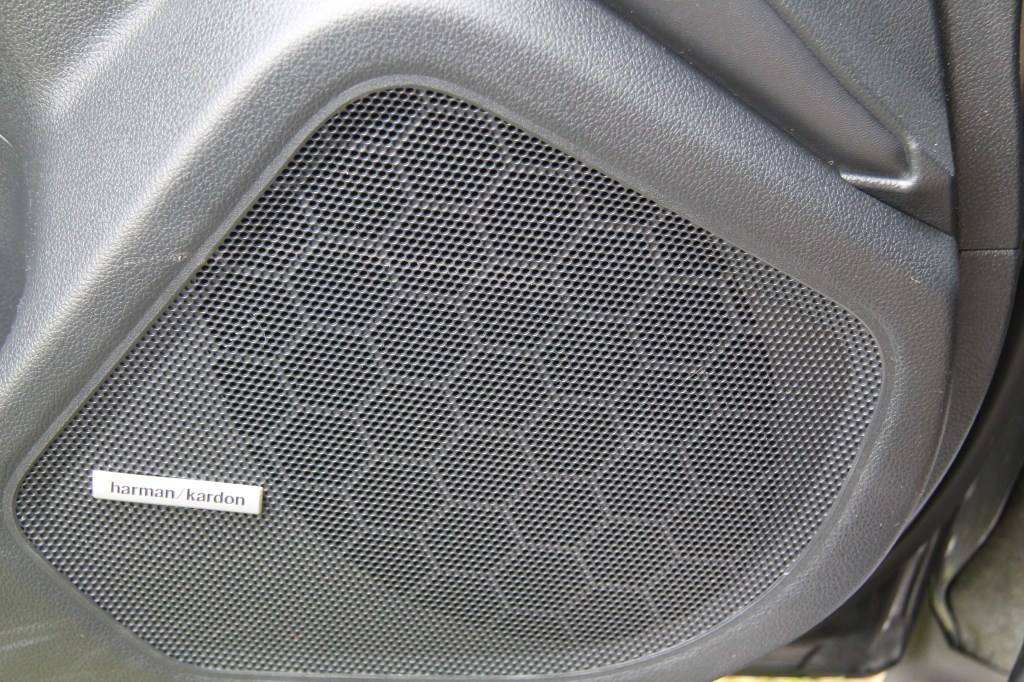
Last but not least we have a word of praise
for the Harman Kardon premium audio system in our test car, with 12 speakers
and a 576-watt-equivalent amplifier.
A standard Rear-Vision Camera enhances rear visibility when backing up. Its display includes guidelines to help you see the vehicle’s path and judge distance to other objects. And with available Reverse Automatic Braking, your vehicle can even stop itself to avoid objects behind while in reverse.
We liked the fact that you had also a side view of the car on the split screen when manoeuvring, and could also put on the front camera when you want for better vision at the front end of the car.
Conclusion
This Subaru is a five star car: safety, reliability, boxer engines, excellent off road qualities with permanent 4WD, Eyesight 3.0, all this combined delivers indeed an outstanding vehicle, which is a dream to use everyday for all purposes of your busy (family) life.
In our country, the Subaru is rare and therefore rather exclusive, but keep in mind it is quite popular in the States and Japan, for all the good reasons. So we would conclude, have a (test) drive in one, and soon you will be a convinced follower…
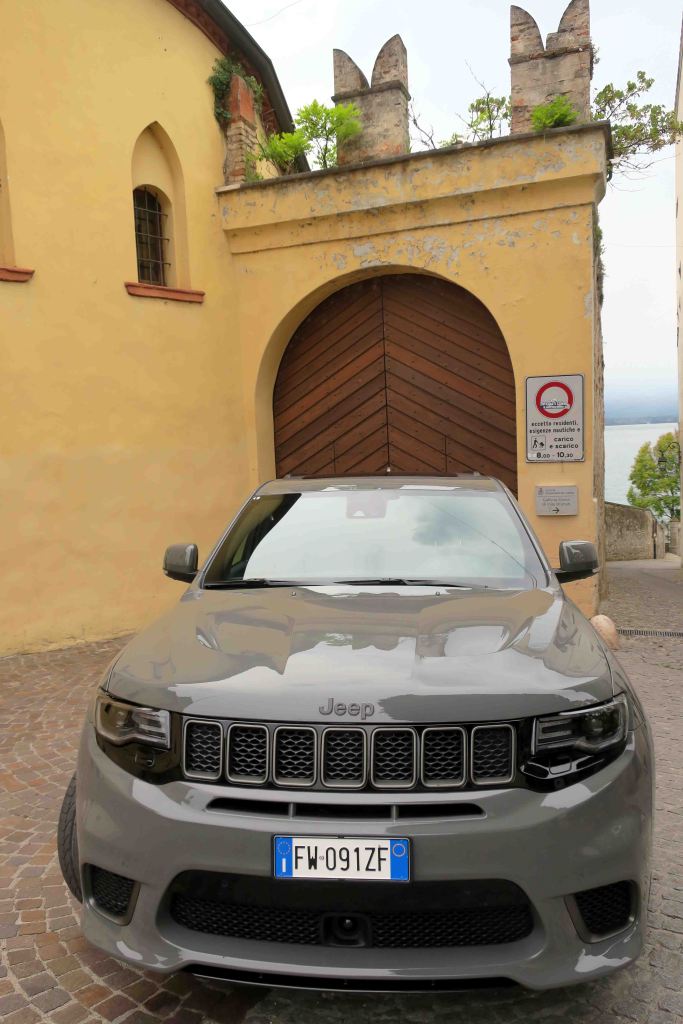
Driving the already legendary Grand Cherokee Trackhawk along the scenic villages around the beautiful Lago di Garda…
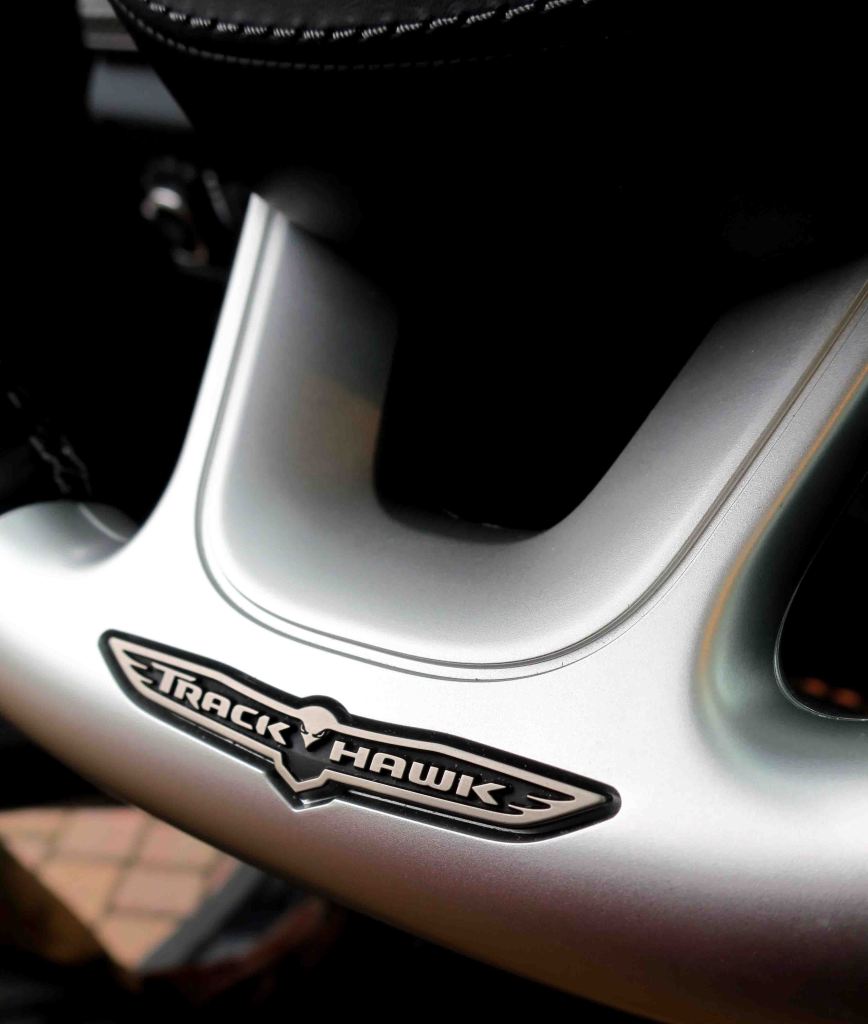
One of the absolute highlights of two days of Jeep driving amidst the beautiful scenery of the Italian Lago di Garda was a stint behind the wheel of the Grand Cherokee Trackhawk and the SRT. The Jeep® Grand Cherokee is the flagship of the Jeep brand and the most awarded SUV ever, and this gem of a car created the premium SUV category 27 years ago and with more than 6.4 million units sold since its introduction. More about this Jeep Grand Cherokee in its “normal” version(s) later, we focus here on the stunning Trackhawk and SRT versions.
Indeed, it had to happen, and the whole car world was actually expecting this: the more than 700 HP V8 of the Dodge Hellcat, the “muscle car” par excellence, was to be dropped in the engine bay of the Jeep Grand Cherokee. It all happened last year, and now we had the chance to drive it: the supercharged 6.2-litre HEMI® V-8 engine, delivering 710 hp at 6000 rpm, mated to an 8 speed automatic transmission. High-strength, forged-alloy pistons, powder-forged connecting rods and sodium-cooled exhaust valves all add to the power of the Supercharged 6.2L V8 engine. Do not expect a hissing monster though.
The massive V8 burbles smoothly through slow urban traffic through the villages around the Lago di Garda, and progress is silky smooth. Until you floor the throttle. Supercar acceleration is the instant answer, and the engine growls away. 0 to 100 km/h is reached in some 3,7 seconds, the top speed is 289 km/h, if you only dare.
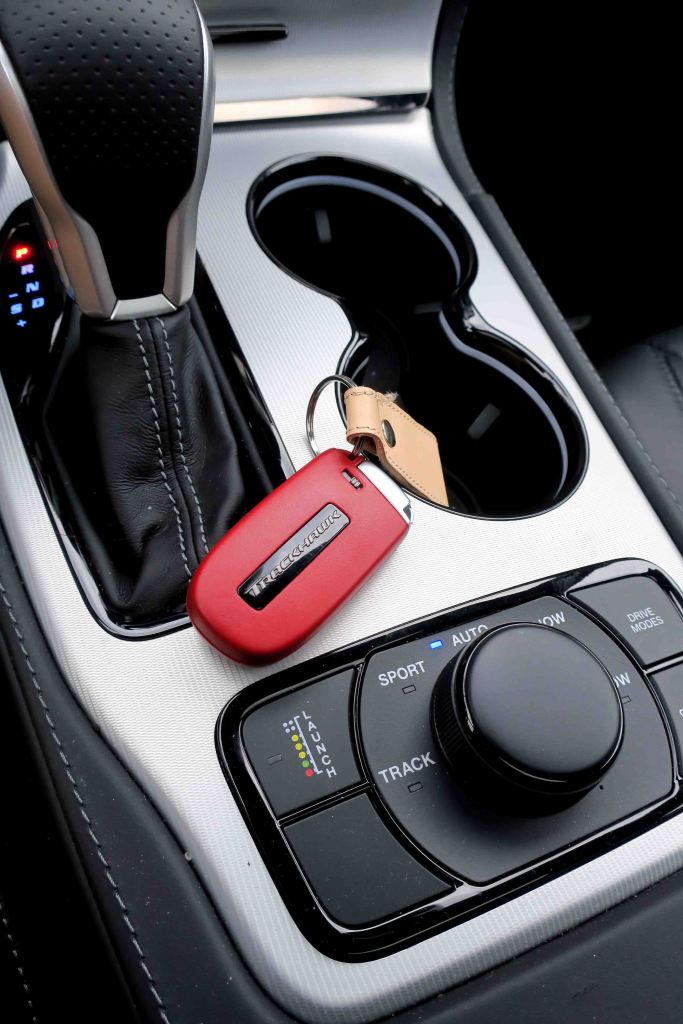
The Drive Mode selector, and the “launch” mode at the push of a button.
Of course, good traction is provided for with all this power. A “Quadra-Trac” active on-demand four-wheel-drive system, which also includes a rear Electronic Limited Slip Differential (ELSD) and a single-speed active transfer case is at your disposal.
A 6,4 litre V8 Hemi in the SRT…
Not yet an expert in unleashing all this
power and putting it “just right” on the tarmac? Good to know that there is a “Launch
Control” on SRT® and Trackhawk® , which optimizes track performance
by coordinating the engine, transmission, driveline and suspension for a
textbook launch and consistent straight-line acceleration.
The traction management system has been specifically retuned for the Trackhawk and SRT versions as “Selec-Track.” It features five vehicle setting – Auto, Sport, Track, Snow and Tow – to allow the driver to achieve the best driving experience on any surface.
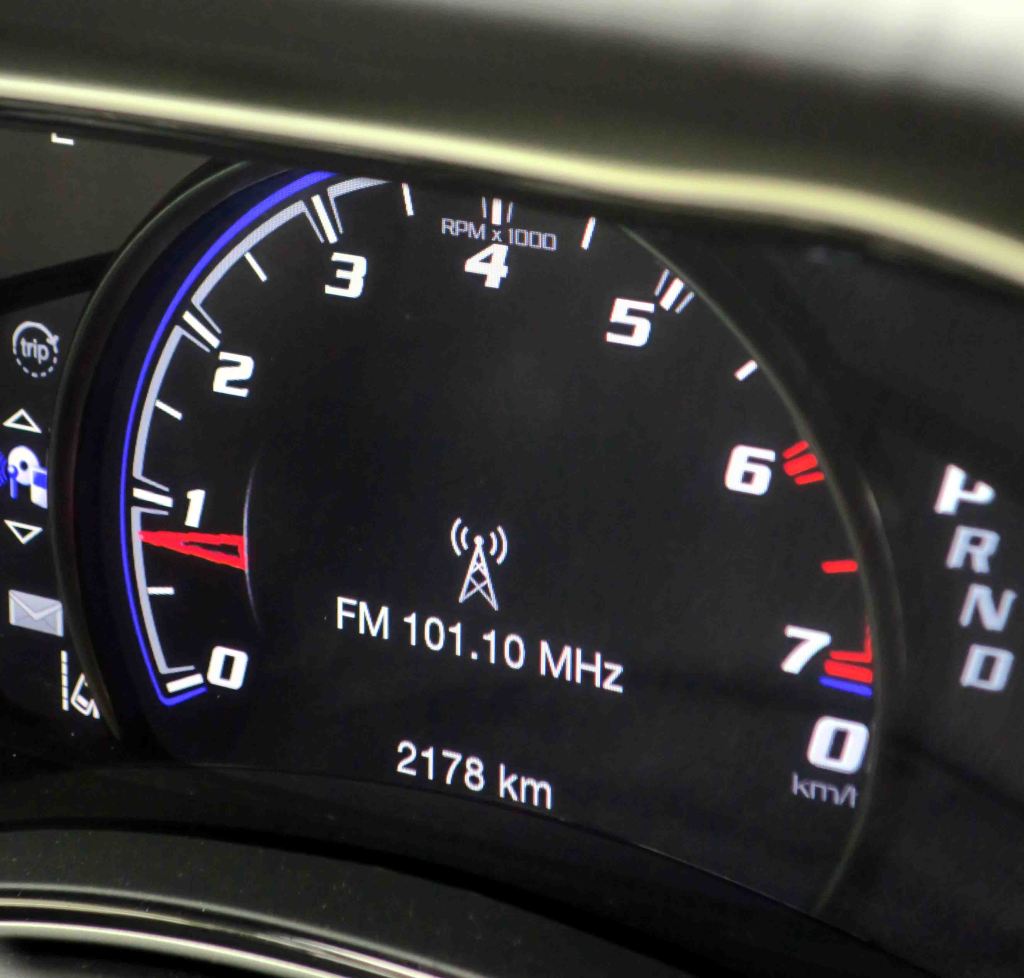
Beautiful instrumentation with a centrally placed rev counter…
The suspension is of course
well tuned to this extra power, as well as brakes, and the Grand Cherokee
remains eminently drivable.
Don’t forget there is also the Bilstein® Adaptive Suspension system, which can adjust the dampers for sport or track performance if desired, while the rear Electronic Limited Slip Differential features a four-point axle mounting to better distribute the massive power to the wheels.
For the heavier terrain work, the Quadra-Lift air suspension system allows you to change the ride height of the Grand Cherokee up to a maximum ground clearance of 28 cm.
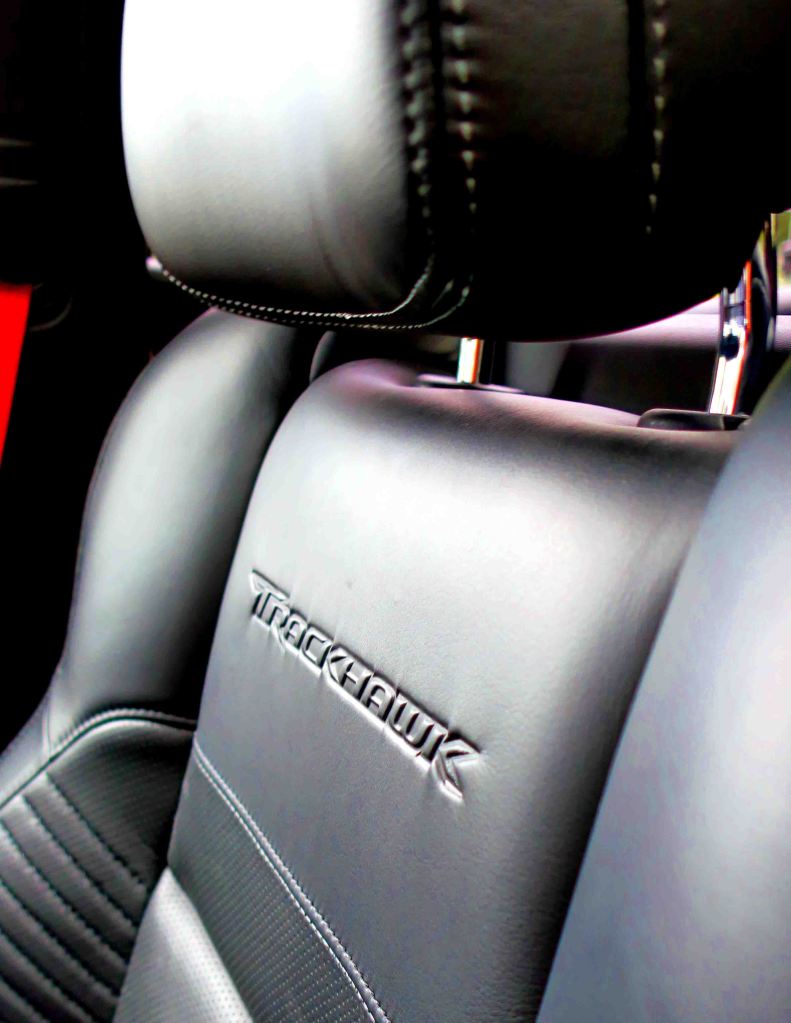
We were deeply impressed by its handling and ride when driven with more abandon, and how perfectly balanced the whole car was. The unique driving experience is further enhanced by excellent seats and instrumentation, with not only a beautiful central rev counter, but also a special “Performance Page” on the central touch screen, where you can see anything as time of your acceleration, G-Force, all engine data like oil temperature, etc.
We enjoyed also having a stint at the wheel of the more suave SRT. Not that on the urban scenic roads around the Lago, you could test fully the difference in performance compared to the Trackhawk. Under the hood of the SRT version growls the 6417 cc V8 Hemi, good for 344 kW or 468 HP @6250 rpm. The same 8 speed auto transmission as in the Trackhawk knows this engine also needs to be revved to reach all out performance, as maximum torque of 624 Nm is reached at 4100 rpm. Of course, also here the Launch Control and the choice between five dynamic Drive Modes with the Selec-Track® System, as described above.
We enjoyed the same beautiful well balanced handling, indeed an SUV which also truly stands out if you expect that extra performance. Using launch control, it will still be able to catapult you from 0 to 100 km/h in 4,9 seconds.
We just coloured this image in front of this old factory a bit more (fiery) red to enhance the Trackhawk spirit…
We let you
enjoy the photos here, and we dream along with you about this unforgettable
experience… and there is more Jeep news to come with driving impressions of the
full range!
We always had a weak spot for Opels for
their willingness to perform, handle and drive with zest and ease. It leads
many Opel owners to become enthused drivers, and appreciate their cars the
longer they own and drive them.
Combine all these good dynamic qualities
with their robustness, the quality of workmanship and materials used and you
have a cocktail which is very much appreciated throughout Europe.
Of course, Opel also has embarked fully
into the SUV trend, and has put some very interesting contenders on the road.
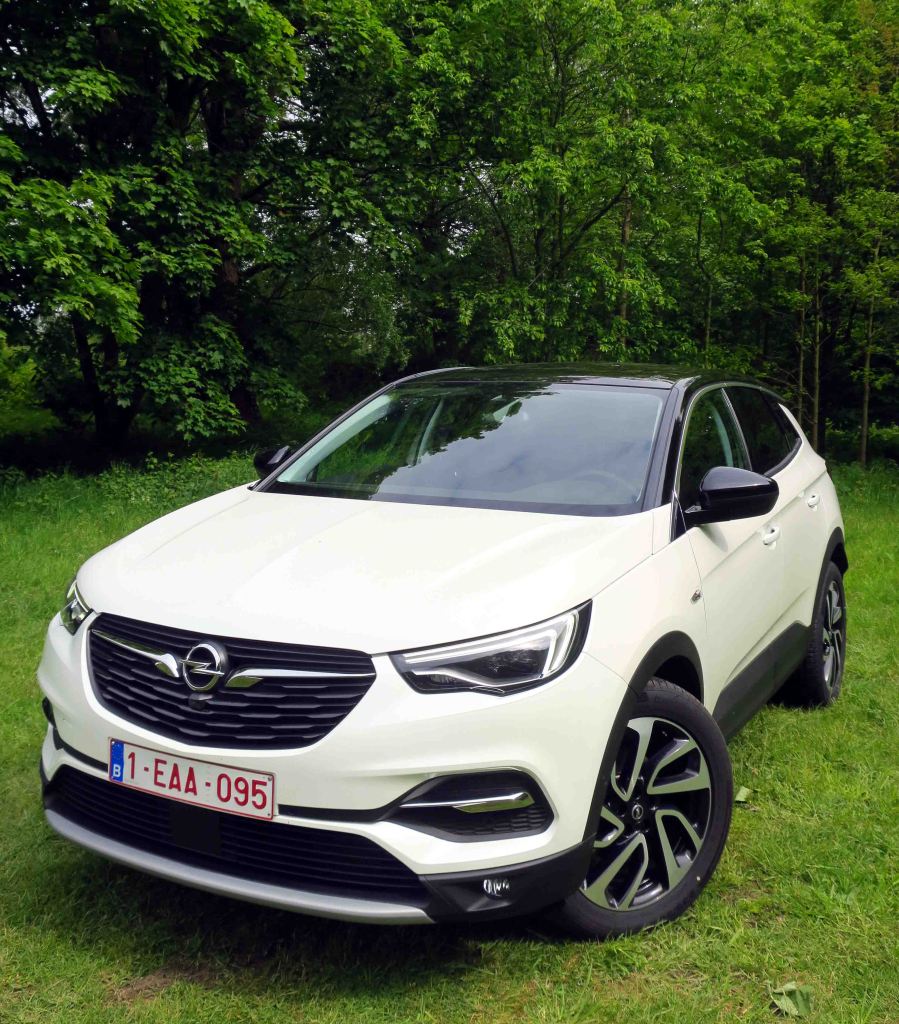
We are driving for you here the Grandland X Flagship version, and were glad to
rediscover again all the good Opel qualities…masterfully retained despite the
fact that Opel and Peugeot have co-developed this mid-sized SUV-Crossover, and
this even long before GM even considered getting rid of their German
subsidiary.
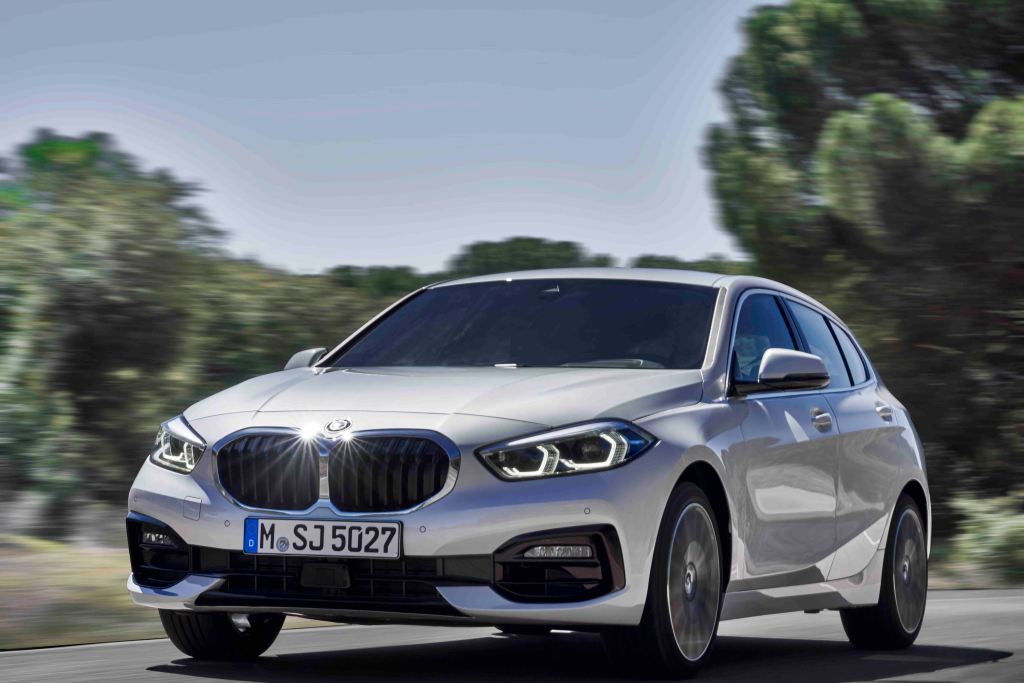
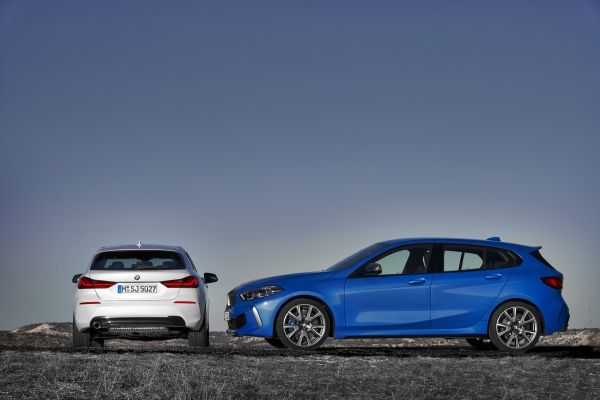
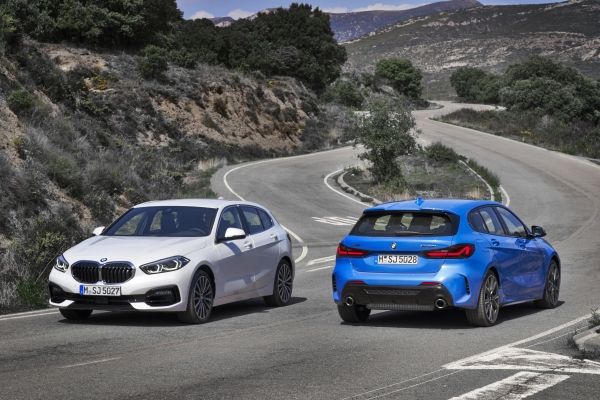
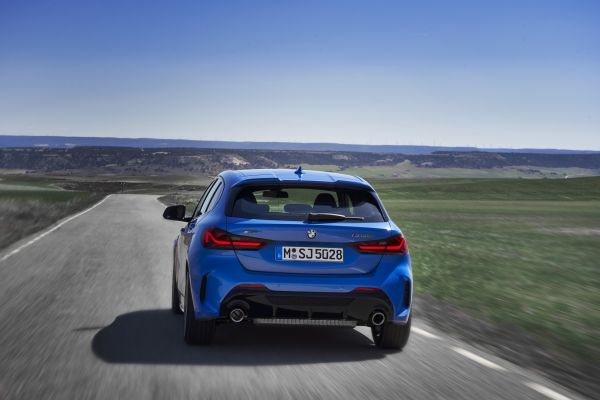
BMW enters a new era with its new 1 Series:
front wheel drive makes its entry in this third generation. This results in
more room, but driving pleasure and dynamic qualities have been retained, BMW
assures us.
The third generation of the BMW 1 Series will be unveiled to the public for the first time on 25 – 27 June 2019 on the new BMW Group #NEXTGen presentation platform at BMW Welt in Munich. Hosting the show premiere of the new BMW 1 Series, meanwhile, will be the IAA event in Frankfurt am Main in September 2019. The worldwide launch will get underway on 28 September 2019.
We show you here the first photos, and we
must admit, we already were offered a first (pre)view of this car at the
presentation of the #18 BMW Art Car at the Brussels Brand Store… Corporate PR
Officer Saschia de Rudder then asked us to cover our smart phone cameras,
offering us this very smart pouch… which we then did, noblesse oblige!
But just read and look further…
Hans Knol ten Bensel
A new, bolder stance.
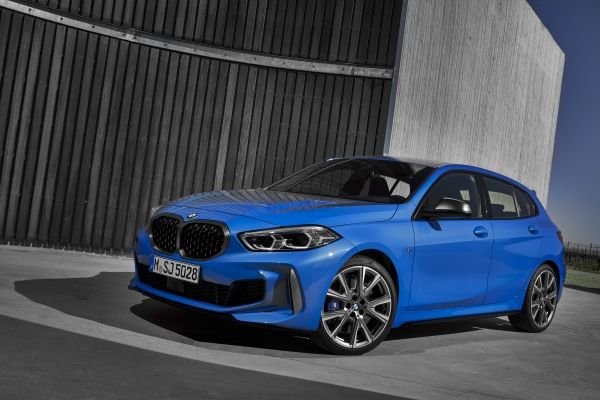
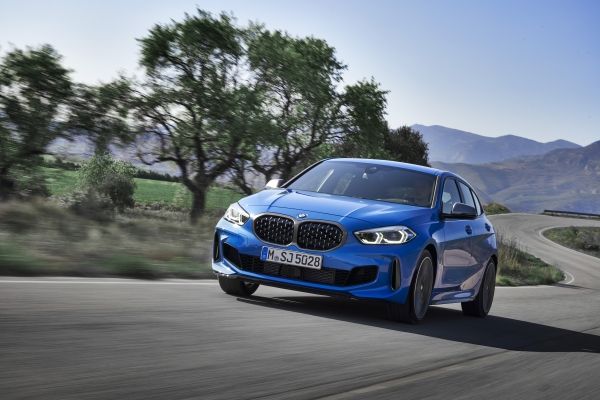
What first impresses is the signature BMW kidney grille, which is now larger, with far greater presence. For the first time in this model range, the two kidneys now merge in the middle. The sporting flagship of the line-up, the BMW M135i xDrive, replaces the grille’s classical bars with a prominent threedimensional mesh design inspired by racing cars. The headlights are now angled in design. This Series 1 has now truly grown up… to underline all this, know that 19-inch rims are available as an option for the first time.
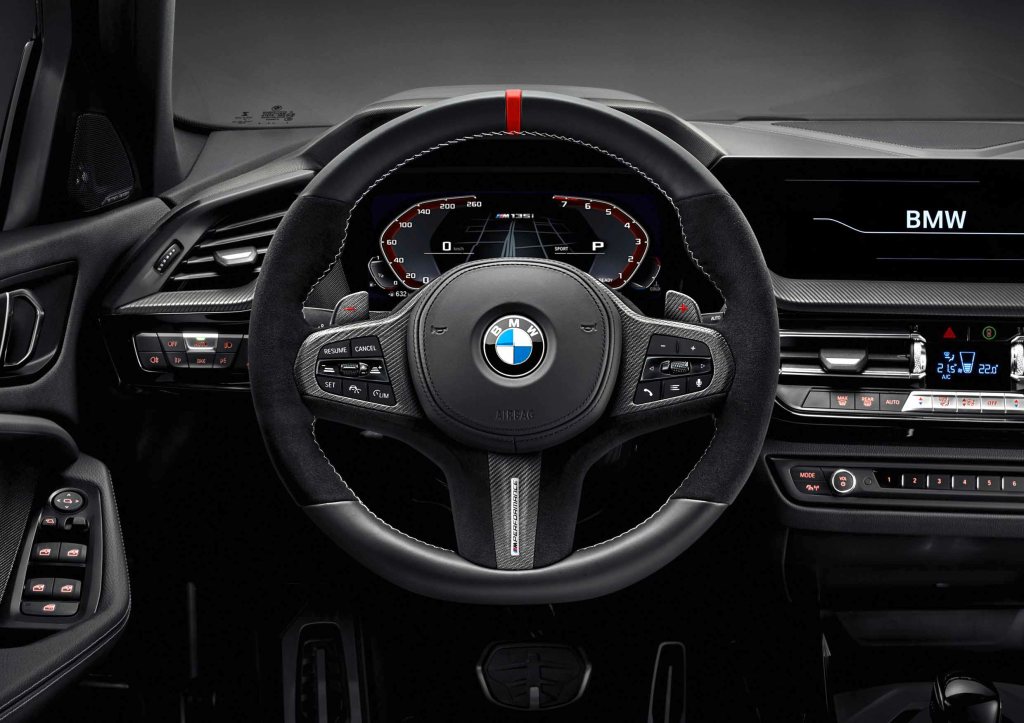
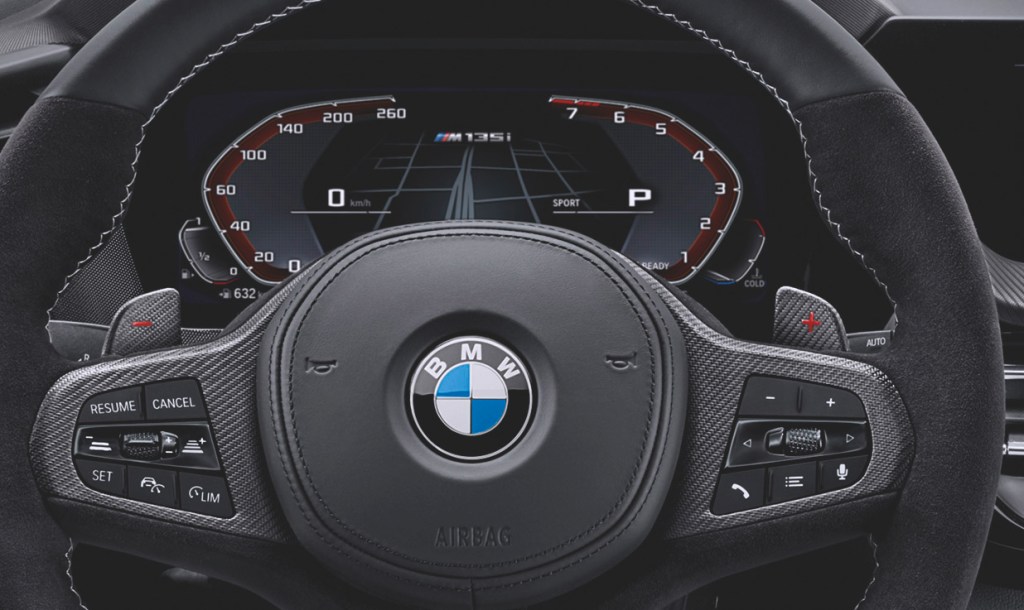
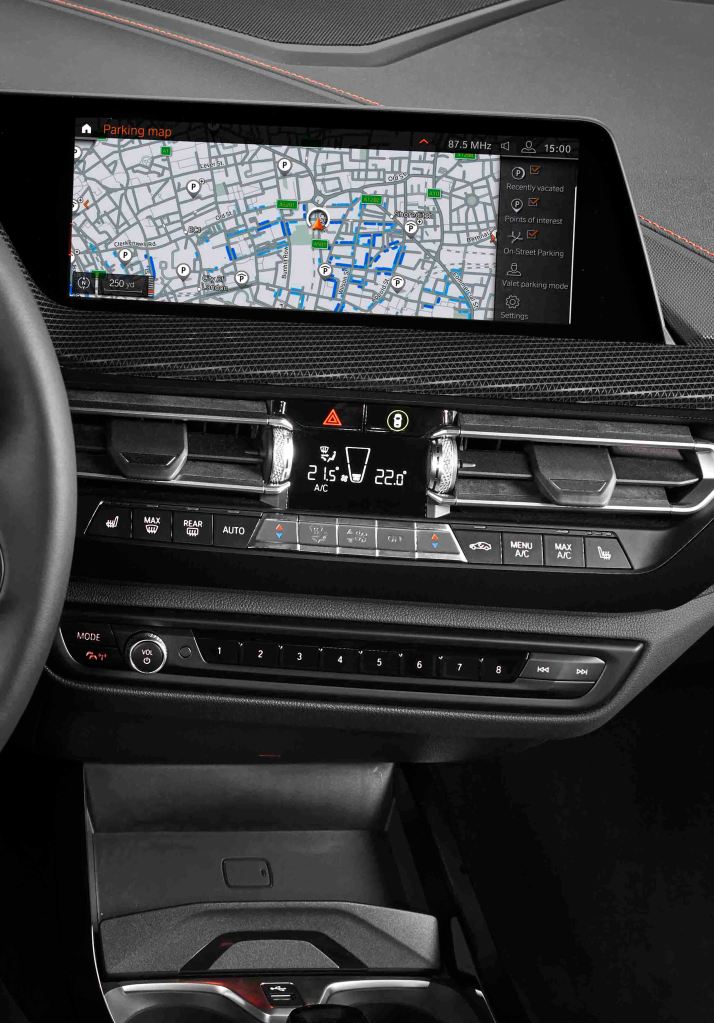
More luxury too: The electric panoramic roof available for the first time on the BMW 1 Series, as well as backlit trim strips. They come in three different designs with six switchable colours. Optional infotainment features of the new BMW Operating System 7.0 – using gestures, if the relevant option is specified – are via a grouping of two displays, each of which have a screen diagonal measuring up to 10.25 inches in the case of the BMW Live Cockpit Professional. Also a full-colour, 9.2-inch BMW Head-Up Display is available as an option for the first time on the BMW 1 Series.
More room…
Getting in is easier and knee room for the rear passengers has increased by 33 millimetres. The rear offers a full 19 millimetres of extra headroom if the outward-opening sliding panoramic sunroof is specified. Rear passengers also enjoy 13 millimetres more elbowroom, while the driver and front passenger can look forward to an extra 42 millimetres in this respect.
The load compartment capacity of 380 litres is 20 litres up on the outgoing car and folding down the rear seat bench increases this to 1,200 litres.
Four equipment lines and one flagship model.
The base Advantage model is joined in the new BMW 1 Series line-up by three other equipment lines, which differ from one another in both exterior and interior details. The Luxury Line model accentuates the classy and comfortable side to the car’s character with the help of body applications in Aluminium satinated and seat upholstery in Dakota leather.
The Sport Line model with Black accents, window graphic in BMW Individual high gloss Shadow Line and sports seats, and the M Sport model with accents in Aluminium satinated, front apron with specially shaped air intakes and BMW M rear apron in High-gloss Black lead the 1 Series up the dynamic BMW Media Information 05/2019 Page 4 ladder culminating in the BMW M135i xDrive. The flagship model stands out with features including a mesh-design BMW kidney grille, angle-cut tailpipe tips in Cerium Grey and a BMW M rear spoiler in body colour.
Cutting-edge new front-wheel-drive architecture…
A five year process of development has brought
all the experience acquired over recent years with front-wheel-drive BMW Group
models together in the new Series 1. Also
the transfer of technology from BMW i to the BMW core brand contributed to
create a proper BMW with a character all its own. Whether front-wheel-drive or
equipped with BMW xDrive intelligent all-wheel drive, “the new 1 Series has
taken its agility to a level above its predecessor”, BMW claims.
An important factor here is the ARB (actuator contiguous wheel slip limitation) technology familiar from the BMW i3s. This is now making its debut in a combustion-engined vehicle and allows wheel slip to be controlled much more sensitively and swiftly than before. A standard feature of the BMW 1 Series, ARB uses a slip controller that is positioned directly in the engine control unit rather than in the control unit for the DSC (Dynamic Stability Control) system. Eliminating the long signal paths, means that information is relayed three times quicker, while the driver perceives wheel slip being brought under control up to ten times faster. Actuator contiguous wheel slip limitation works in close tandem with the DSC system to bring about a clear reduction in the power understeer normally experienced in front-wheel-drive cars.
The ARB technology is assisted in its task
by BMW Performance Control (yaw moment distribution). This feature, also
included as standard on the 1 Series, gives it more agile handling by applying
the brakes as required at the wheels on the inside of the bend before the slip
threshold has been reached. The result is neutral steering behaviour. Besides
the standard suspension – which already has a dynamic set-up and is specially
tuned to the different engine variants – and the M Sport suspension with a 10
mm reduction in ride height, the all-new BMW 1 Series can also be specified
with the Adaptive suspension with VDC (Variable Damper Control) as an option.
Two models with BMW xDrive intelligent all-wheel drive.
ARB technology and BMW Performance Control are likewise included in the BMW 120d xDrive and BMW M135i xDrive, which feature intelligent all-wheel drive as standard. Standard specification for the M135i xDrive also includes a newly developed mechanical Torsen limited-slip differential, which gives the car an even sportier edge by creating a locking effect between the front wheels.
Three diesel engines and two petrol
variants from launch. Customers can order their new BMW 1 Series with a choice
of three- and four-cylinder engines from the latest-generation BMW
EfficientDynamics family. A host of detail improvements give them better fuel
economy, lower emissions and, in some cases, more power than before. Three
diesel engines and two petrol units are available, developing from 85 kW (116
hp) in the BMW 116d (fuel consumption combined: 4.2 – 3.8 l/100 km [67.3 – 74.3
mpg imp]; CO2 emissions combined: 110 – 100 g/km*) to 225 kW (306 hp) in the
BMW M135i xDrive. The new engine powering the latter model is the most powerful
four-cylinder unit in the BMW Group line-up. The BMW M135i xDrive dispatches 0
to 100 km/h (62 mph) in a mere 4.8 seconds (4.7 seconds with M Performance
package, available from 11/2019) on the way to a governed top speed of 250 km/h
(155 mph). Despite these impressive performance figures, combined fuel
consumption is just 7.1 – 6.8 litres per 100 km [39.8 – 41.5 mpg imp] and CO2 emissions
come in at only 162 – 155 grams per kilometre, says BMW. All the engines
available for the BMW 1 Series meet the Euro 6d-TEMP emissions standard, while
the BMW 116d is already Euro 6d-compliant. The petrol engines are equipped with
a gasoline particulate filter and the diesels with a diesel particulate filter,
NOx adsorption catalyst and SCR (Selective Catalytic Reduction) technology.
Three different transmission technologies now available.
The BMW 116d, BMW 118d and BMW 118i come as
standard with the further-developed six-speed manual gearbox, while the seven-speed
dual-clutch Steptronic transmission can be specified as an option for the BMW
116d and BMW 118i. The eight-speed Steptronic transmission – available as an
option for the BMW 118d and standard on the BMW 120d xDrive – and the
eight-speed Steptronic Sport transmission of the BMW M135i xDrive boast further
improved smoothness and acoustic properties. Intelligent connectivity allows
both automatic transmissions to adapt their shift strategy to the route and
traffic situation at hand.
Assistance systems from BMW models higher up the range.
A large number of innovative driver
assistance systems fitted in the BMW 1 Series have been taken from models
higher up the BMW range to make their debuts in the premium compact class;
Standard equipment in Europe includes
collision and pedestrian warning with city braking function, which also alerts
the driver to the presence of cyclists. Also fitted as standard is the Lane
Departure Warning system with active lane return, which is operational from 70
to 210 km/h (44 – 130 mph). Options include Active Cruise Control usable up to
160 km/h (99 mph) – on cars with automatic transmission and Stop & Go
function – plus the Driving Assistant, which comprises the Lane Change Warning
system, rear collision warning and crossing traffic warning.
Celebrating its premiere in the premium
compact class is the innovative reversing assistant, which stores the steering
movements for any section the car has just driven forward along at no more than
36 km/h (22 mph). The system is then able to steer the vehicle in reverse – for
distances of up to 50 metres at up to 9 km/h (5.5 mph) – along exactly the same
line it took when moving forward.
The smartphone as car key.
The BMW 1 Series is available with the
option of two new smart features that have previously only been seen in BMW
models higher up the ladder: the BMW Digital Key and the BMW Intelligent
Personal Assistant. Available as an option, the BMW Digital Key enables users
to lock and unlock the vehicle from a smartphone using Near Field Communication
(NFC) technology, rendering the conventional car key surplus to requirements.
Holding the smartphone up to the door handle opens the car – even if the phone
battery is dead. The engine can be started as soon as the phone has been placed
in the smartphone tray or wireless charging tray.
Operation by iDrive Controller, touch, voice or gestures.
The new BMW 1 Series lets drivers use a variety of operating methods, depending on the situation and personal preferences. In addition to the usual buttons on the centre console and steering wheel, other frontline control elements include the iDrive Controller – with touchpad from BMW Live Cockpit Plus upwards – and the standard 8.8-inch Control Display with touch screen functionality. BMW Live Cockpit Plus also adds a navigation system and intelligent voice control with online speech processing. BMW Live Cockpit Professional, based on the new BMW Operating System 7.0, brings together the fully digital display and operating system (including two 10.25- inch displays) with maximum connectivity and customisability….
The Series 1 has definitely grown up… we
are of course very anxious to gather first driving impressions!





















 Autoprova - for the Connaisseur