We have always admired the instrument layout of Porsches, where the big round dials for revs and speed are a true delight to the drivers’ eyes. Porsche continues this good tradition…
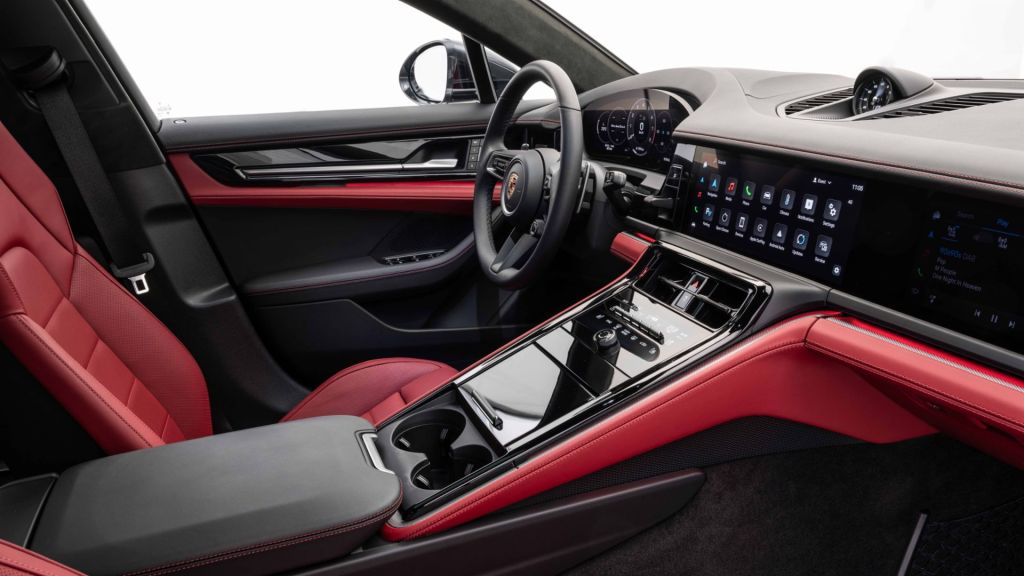
In the new model generation set to be unveiled to the public on 24 November 2023, the Porsche Panamera will feature also the driver-centered Porsche Driver Experience control concept we saw already in the Taycan.
It offers a fully digital display, a wide range of customization options and intuitive operation.
A key feature of the concept is the grouping of the control elements relevant for driving in the immediate vicinity of the steering wheel. All elementary functions are therefore quick and intuitive for the driver to access.
Porsche is placing both the toggle switch for navigating through the options provided by the instrument cluster, and the mode switch for selecting the driving programmes, directly on the steering wheel. The gear selector lever is now located directly next to it. This decision opens up space on the centre console for a climate control panel that combines touch surfaces and physical switches. is elegant. New, completely finless and electrically adjustable air vents are now installed in the centre console. It is possible to switch between several pre-configured and personalized climate control modes at the press of a button. In addition, the storage bin in the centre console offers more space than before.
Of course, a Porsche driver needs his dials right in front of him. Consequently, the digital, free-standing instrument cluster lines up in the driver’s axis. The 12.6-inch display is curved and free-standing. Porsche clearly structures the driving information displayed on it into three areas, for which different configurations are possible depending on the equipment and the selected view. The additional, optional head-up display can be operated directly from the sports steering wheel.
Porsche has based the colour and material options in the new Panamera on smooth quality materials and a wide selection of bi-colour designs. Matching decor and accent options are de rigueur and some of them are offered by the Porsche Exclusive Manufaktur. For the first time, Porsche is also offering leather-free equipment in the Panamera, which combines particularly sporty materials such as Race-Tex and Pepita fabric with each other…
We show you here some photos of the new interior, and soon tell you also more about the third E-Hybrid variant of the Cayenne…
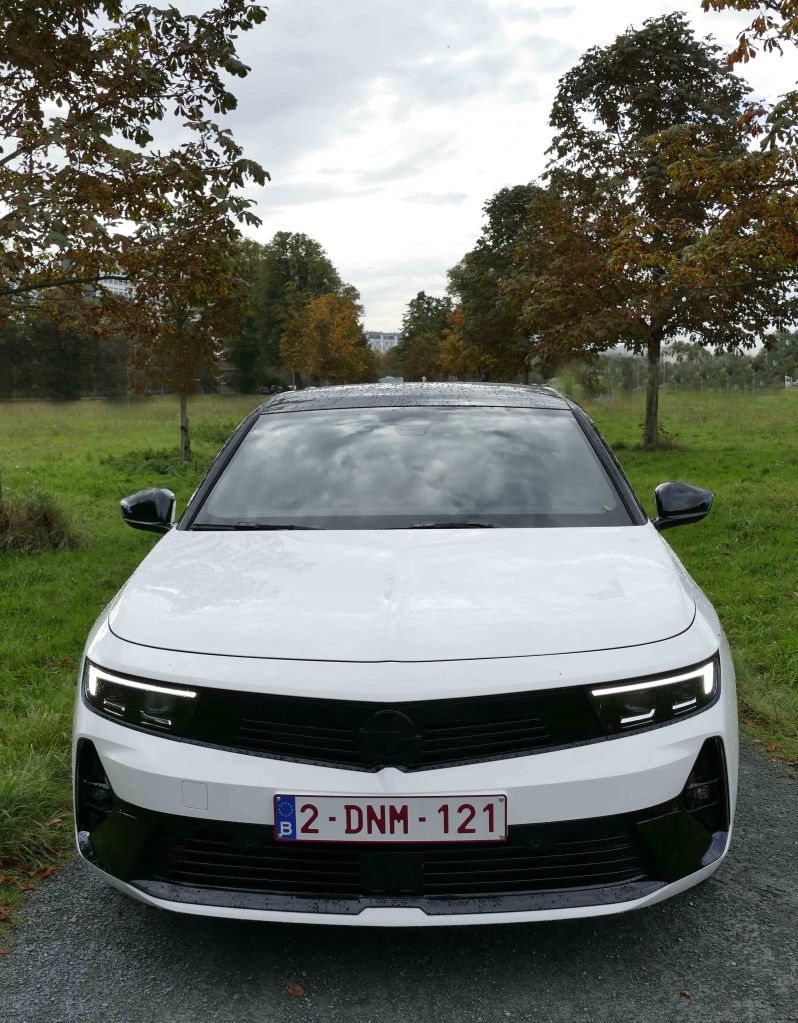
We all know the Opel badge: the image of a lightning boldly striking through the “O”, the first letter of the iconic Opel name. After this extensive test at the wheel of this GSe, we can truly say that this sporting version of the Astra bears tribute to it.
Indeed, this Astra GSe is fast, nimble, with beautiful handling, quiet, stable, steering with precision and offering Gran Turismo comfort to its occupants.
It has style too, and is economical and “green” on top of all this: it’s an efficient hybrid, with sufficient range to bring you around town in a totally emission free manner. Just read further…
Hans Knol ten Bensel
We already applauded the styling and the wonderfully clean interior and dashboard layout of the Astra. Less is more, is the philosophy when it comes to infotainment and ergonomics.
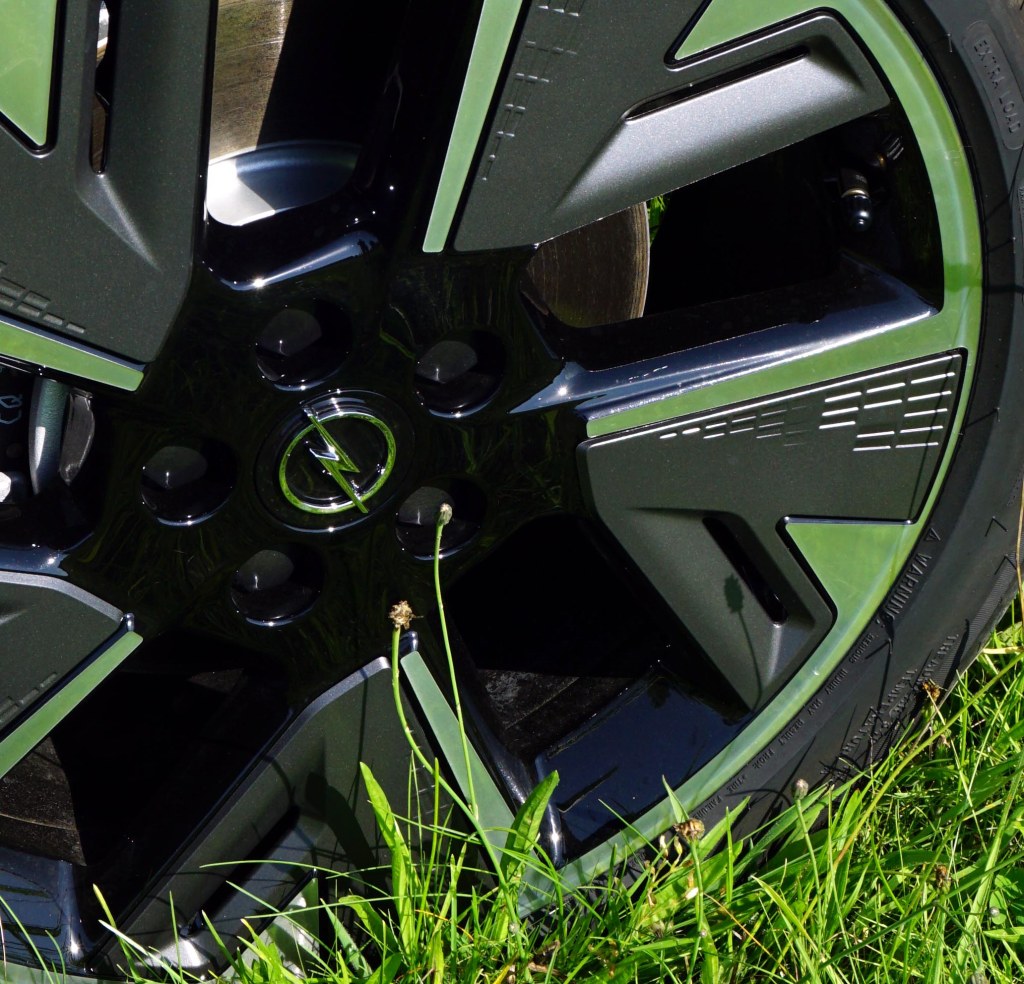
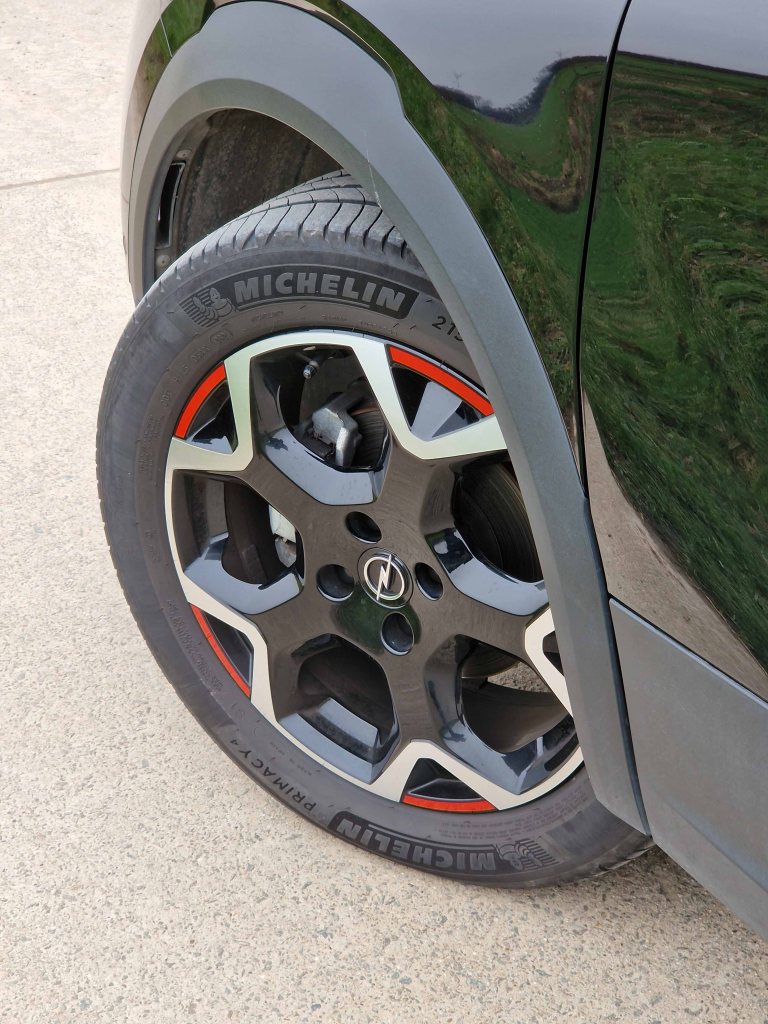
Inside, your eyes admire the GSe-exclusive performance seats. On the outside, one sees clearly that this is an Astra with a sporting touch: it has exclusive 18-inch alloy wheels and the characteristic GSe front bumper.
Driving resuscitates the Opel legend…
Sporting Opels are legendary. The Ascona’s and Manta’s driven by Walter Rohrl for instance. They were efficient, fast, yet still very recognizable as Opels, keeping a very close resemblance to the production series versions. At the wheel of this GSe one feels also this unique punch, the steering precision, the effortless but very impressive performance.
Indeed, this GSe has what it takes. With an impressive system output of 165 kW/225 hp – the 1.6 litre four-cylinder engine delivers 133 kW/180 hp, the electric motor contributes up to 81.2 kW/110 hp – and with a maximum torque of 360 Nm, the Astra GSe with spoil you with an acceleration from 0 to 100 km/h in 7.5 seconds; a top speed of up to 235 km/h is also in the cards. Need we say more? Indeed, this Opel will make you smile.
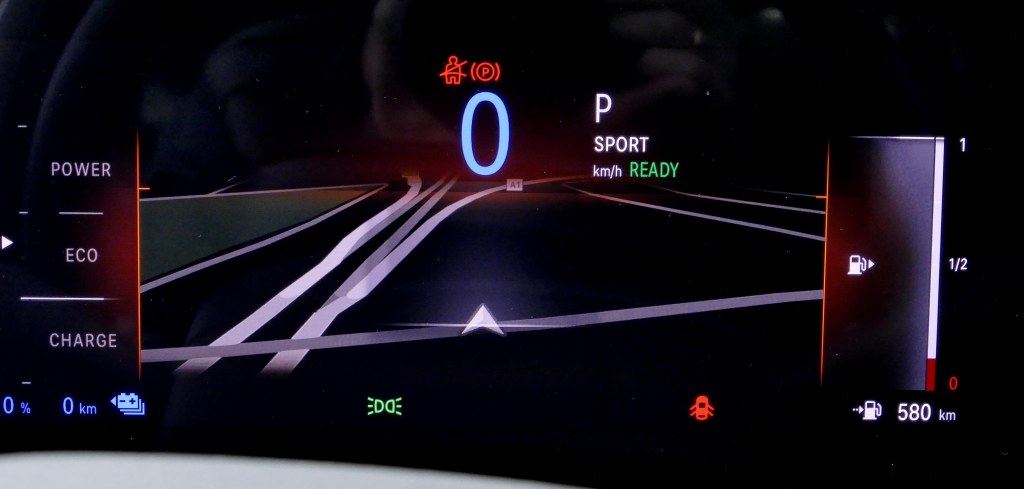
Because it’s a hybrid, it will not spoil the city atmosphere, as with its 12.4 kWh lithium-ion battery, the Astra GSe can cover up to 64 kilometres on e-power according to WLTP2 (EAER City according to WLTP2: 69-73 km).
The fuel consumption is according to WLTP1: 1.2-1.1 l/100 km, CO2 emissions 26-25 g/km; each combined. With a depleted battery, the hybrid mode is of course still very useful, as the system then recuperates the kinetic energy when decelerating. When cruising along at legal maximum speeds on the autobahn, it is easy to consume less than 6 litres/100 km, and with a very disciplined right foot in city traffic and a lot of anticipation, you can achieve anything between 6 and 7 litres/100 km. But it you are tempted by the smooth and abundant power at your disposal, it will inevitably cost you…
Precise and nimble handling
The Opel engineers did some serious homework. It has a dedicated chassis, lowered by 10 millimetres. The sporty calibration of the steering is GSe-specific, while the springs and oil-filled dampers of the front and rear suspension are specially tuned not only for dynamic driving but also for comfortable cruising.
The dampers feature KONI FSD (Frequency Selective Damping) technology, which enables different damping characteristics at high frequencies (suspension control) versus low frequencies (body control).
The ESP settings are also specific for thenGSe, with the activation threshold adjusted upwards to match the dynamic driving behaviour. The result is a comfortable Opel which handles like a dream, displays utmost stability at high speeds and steers with uncanny precision.
State of the art driving aids and infotainment.
The Astra GSe comes with the so-called “Intelli-Drive 1.0” system with forward collision alert and active emergency braking, pedestrian and drowsiness detection, lane departure warning and traffic sign assistant, cross traffic and side blind spot alert and automatic speed assistant with stop function as standard.
The parking pilot for the front and rear and the 360-degree “Intelli-Vision” camera support the driver when maneuvering.
You are well connected with the wireless Apple CarPlay and Android Auto compatible multimedia navigation system including 10-inch colour touchscreen and the 10-inch driver information display. Compatible smartphones can also be easily charged via wireless charging in the centre console.
Conclusion
Opel has built here a very desirable high performance hybrid with excellent manners. Opel says that with this car, it has redefined the performance “Zeitgeist.”
Indeed, it has done so. Just for Opel historians: the Opel “GSe” label was traditionally an abbreviation of “Grand Sport Einspritzung” (Grand Sport Injection) as on the Opel Commodore GS/E and the Opel Monza GSE. Now GSe stands for “Grand Sport electric”.
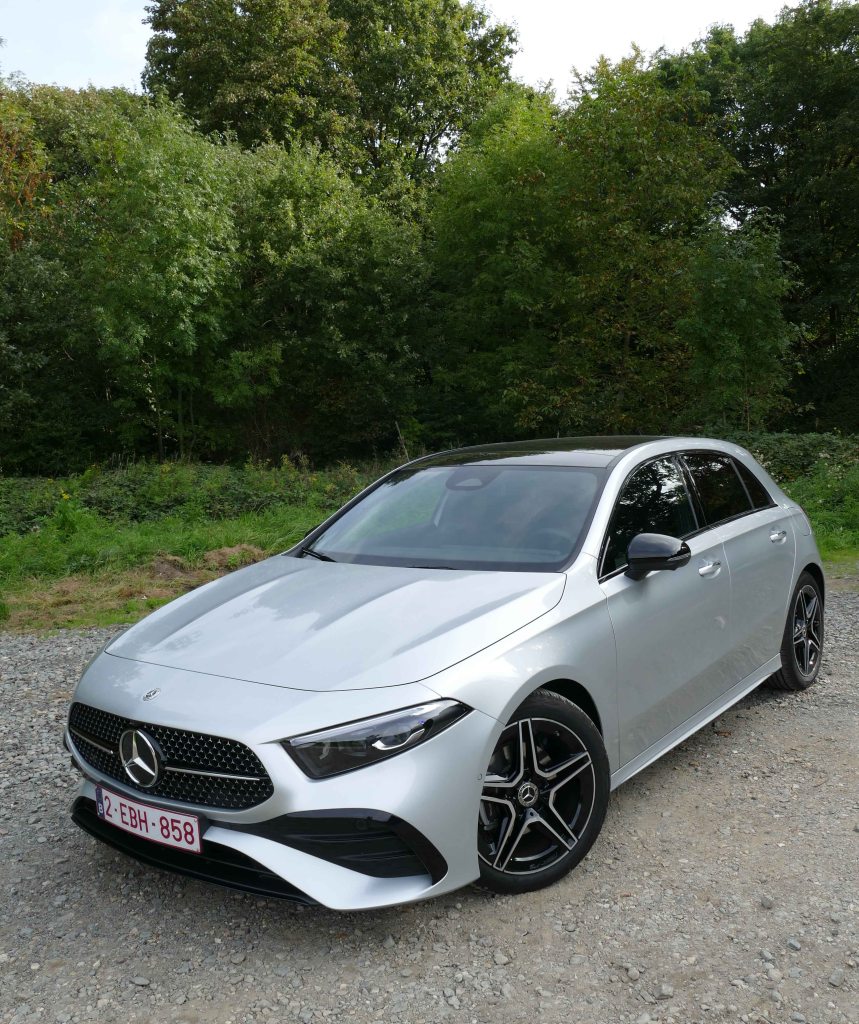
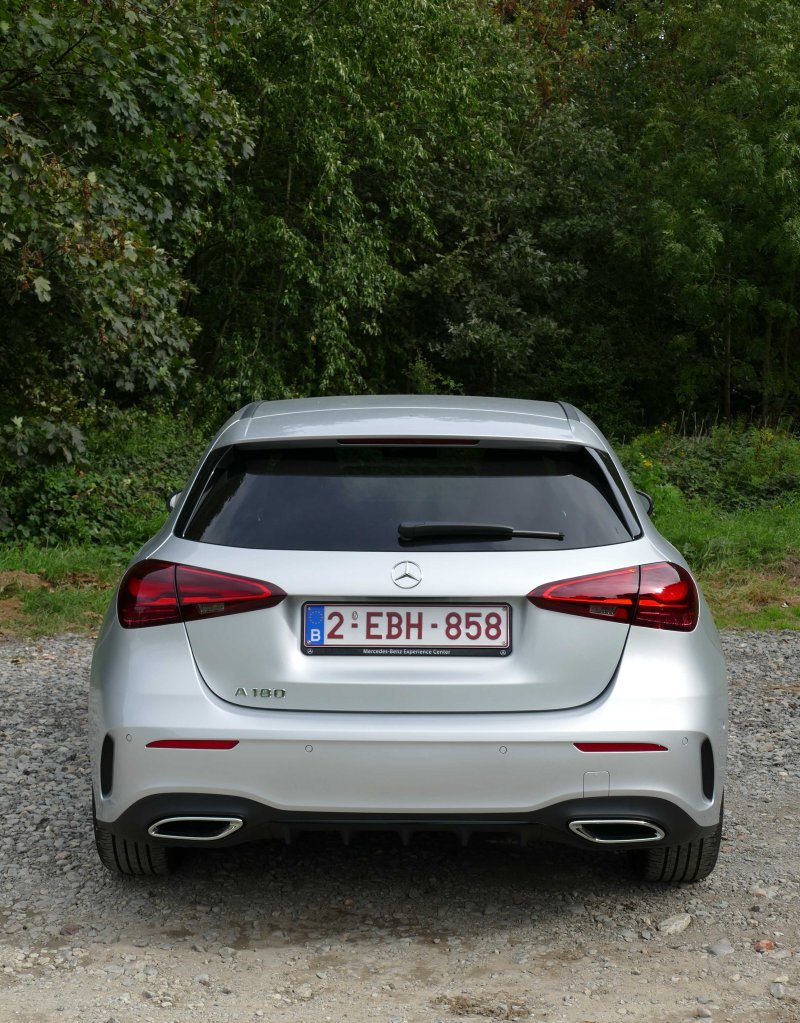
The ever so popular A-Class recently got a face-lift, and it was for us an excellent opportunity to get behind the wheel of the latest edition of this very capable car with the iconic star. To tell you right away, it proved a wonderful experience, proving amply how good, well balanced and mature this A-class has become. An an icing on the cake, our good looking test car was sprayed in iridium silver and was equipped with the very tasteful AMG line, which gave this A-Class just this extra panache which made it stand out as a true Mercedes-Benz, just as we liked it.
We would say, read further…
Hans Knol ten Bensel
Dynamic looks
The facelifted A-Class looks sporty, even more so in the hatchback version we tested. The front end is dominated by a distinct shark nose, as Mercedes puts it, and the sloping bonnet shows two distinct power bulges, reminiscent of the legendary 300 SL…ah, it reminds us from the beautiful time we had behind the wheel of one in Marbella, celebrating 50 years of SL…
But also this A-Class lets you dream. Just have a look already at its gleaming AMG alloys, the dual exhausts and the new rear diffuser.
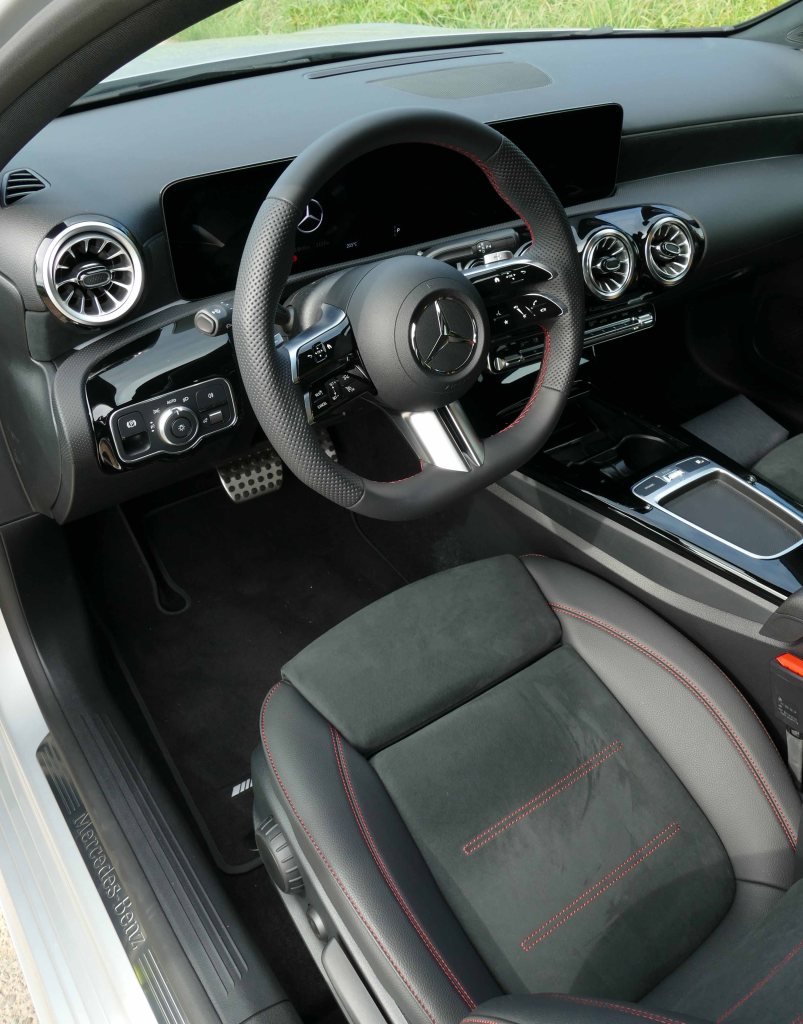
A cabin with the unique atmosphere of the good star… The cabin of this AMG line A-Class has plenty of atmosphere. The steering wheel is not only a steal to look at, it also feels great in your hands, the double horizontal spokes let you have all the functions at your fingertips. The latest version of the MBUX makes your life easier, and the dual screen display puts all the info crystal clear in front of you. Of course, the central screen is a touchscreen, but can also be controlled via the commands on the steering wheel.
The latest version of MBUX has a plethora of useful functions. For instance, did you know that you can prepare the car optimally for a car wash by a simple touch? All the well proven driving aids are of course also at your fingertips, and we appreciated very much in urban manoeuvring and parking the 360 degree camera which offers very crisp images. The camera retracts under the boot lid and so shields itself from the elements, staying always nicely clean.
The look of the digital instrument display can be customised of course. You can choose the “Classic” layout with round dials for speed and revs, “Sporty” with the dynamic rev counter, or “Discreet” with reduced content. There are also three modes (Navigation, Assistance, Service) and seven colour worlds.
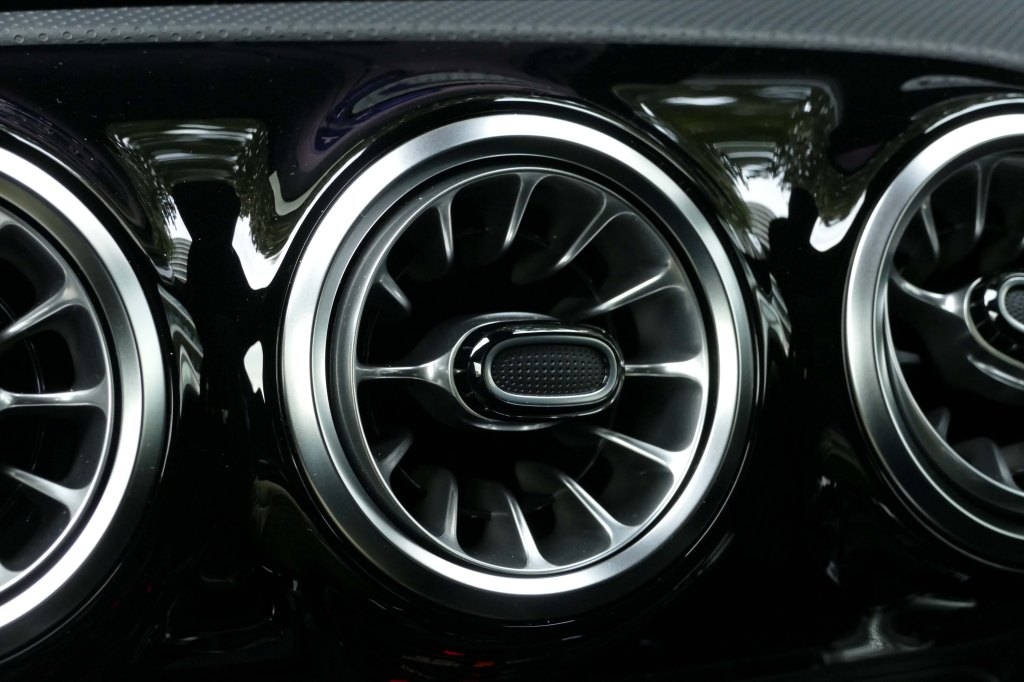
The dashboard is studded with beautiful round air vents, which have become a hallmark for the Mercedes passenger cars, and are nicely sculpted and heavily chromed here, providing a striking contrast with the dark interior. Below these vents one finds a row of buttons for all the necessary ventilation and heating functions, making daily life with the A Class a pleasant experience for everyone, even when unfamiliar with the car.
Of course you will find Android Auto and Apple Carplay in this Merc, so using your phone fully is a proverbial breeze…you also have extra charging points too.
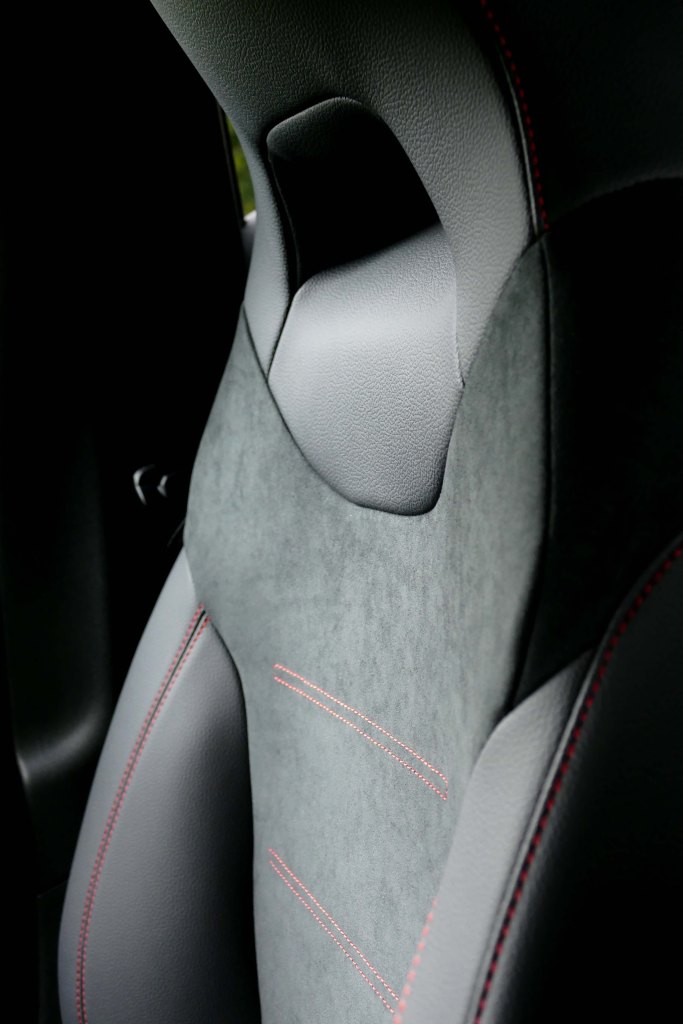
Ideal seating and comfort The AMG Line sports excellent looking seats with integrated headrests, with a nice looking contrasting red stitching, which is also seen on the steering wheel and door panels. The seats, with their three dimensionally embossed Artico upholstery, as Mercedes puts it, offer excellent support and comfort, are adjustable over a very wide range.
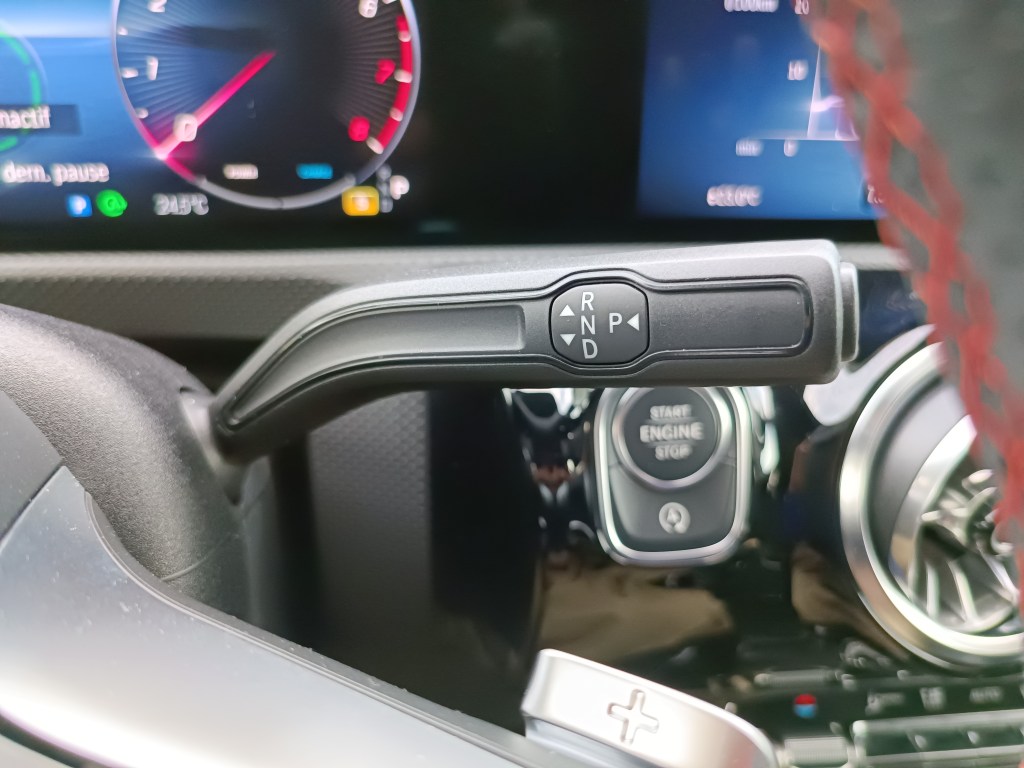
The same goes for the steering wheel, so an ideal seating position is soon found. Seating comfort is one of the strong points of a Mercedes, along with the well studied and honed ergonomics. We also liked the positioning of the small gear lever on the steering column, so you have hardly to lift your hand from the steering wheel when choosing forward, reverse or parking.
Dynamic driving pleasure…
Your servant owns now already for seven years a 180 B Class, which with its smooth 1,6 litre engine is laid out for silent and comfortable transport. The present A Class has clearly a different, more dynamic and sporting character. This is already manifest when pushing the starting knob. The 1332 cc four cylinder emits a pleasant throb, and indeed lets itself heard. The engine revs willingly at the slightest blip of the throttle, and is quite dynamic of the mark. Even in comfort or eco mode, the engine tends to rev up from standstill, giving you quite brisk accelerations.
The governing electronics of the 7 speed automatic has clearly been laid out for this. Despite this sporting bias, the new belt-driven starter-generator (RSG) noticeably improves the comfort in start/stop situations. A lower-vibration and quieter start is the result, and in addition, it allows ‘sailing’ with the combustion engine switched off during steady cruising. During braking and overrun, the RSG recuperates and thus supplies the 12-volt on-board network and the 48-volt battery. The energy thus generated can then be put to good use when accelerating, giving the combustion engine an extra boost of 10 kW. It makes the A 180 quite dynamic, even in the 100 kW version we drove. It increases the torque and pulling power of the 1,3 litre engine massively at small throttle openings, and lets you drive with zest in city traffic without impairing economy. Soon enough, one learns to avoid the engine revving too high when moving from standstill, by gently lifting the throttle as soon as revs increase above 2000 rpm.
It triggers the gearbox to change into second, and you repeat this for the third gear. Afterwards, the electronic steering system of the gearbox notices that you use small throttle openings at higher speeds and will further inequivocally choose the highest gear possible. Not only does this increase the pleasure of a “zen” driving, it also greatly helps economy. Urban consumptions dropped from 11-12 litres/100 km to around 8 l/100 km after we learned this.
Mercedes drivetrain engineers must have honed the gearbox and engine management to do this, despite the sporting bias, as when you lift the throttle gently in first gear, it immediately starts to coast when changing up, making the operation very smooth. Of course, in the “sport” mode, the gearbox will keep the gears engaged until at least 3000 rpm, and its behavior is decidedly sporting. At constant speed, even in the sport mode, economy is very good indeed. Mercedes quotes 6.4 – 5.8 l/100 km as combined fuel consumption according to WLTP standards, with combined CO2 emissions being 145.0 – 133.0 g/km.
Autobahn Meister
As a German car befits, this Mercedes feels totally at home on the Autobahn. With a pleasant throb and in total unstressed stability, the speedometer needle rises to 215 km/h. Overall, the performance leaves nothing to be desired, with the 0 to 100 km/h sprint being absolved in 9,2 seconds. And this is just the “base” power version of the A Class range…
Impeccable handling
Of course, performance means nothing if it is not well controlled. Here the beautiful handling of this AMG Line A-Class has to be applauded. With virtually no body roll, it steers with precision, with excellent feedback felt in the delightful steering wheel, which is such a pleasure to touch. Winding roads are the preferred playground of this A-Class, combined with as we said, excellent high speed manners and stability. Of course, the brakes are fully up to the task. The suspension strikes also an ideal balance between comfort and sportiness.
Living with the A-Class
Mercedes tells us it is the Class for everyday, and we can only agree. We drove the hatchback version, and it is a roomy four seater. Standard luggage space is not enormous with 350 liters, but then the split rear seat folds back in seconds, to transport for example the larger paintings I had to bring to my solo exhibition I held at the District House in Wilrijk, nearby Antwerp. We already mentioned the MBUX infotainment system, which makes life pleasant with the A-Class. When you think you know everything, just read fully its manual. You will discover even more… The same goes for all the driving aids you have at your disposal.
Conclusion
The A-Class has matured over the years into a truly superb automobile. Carriying the unique panache of the brand in looks, finish quality and styling, it continues to do so in handling, comfort, performance, economy and durability. You enter in the world of the three pointed star, as you get indeed everything the brand stands for when you slide behind its wheel. Just push the button. It’s a Mercedes.
The e-version of the successful Astra was unveiled on the Brussels motor show in January this year, and has recently hit our roads. The dynamic PR department of Stellantis offered us the top equipment version for an extended test drive, and indeed we were very keen to get behind the wheel.
The Astra e seduced us with its refined smoothness and its remarkable efficiency. Driven sedately in dense urban traffic, we used only 12,4 kW/100 km, which is impressive indeed. The Astra is a worthy member of a new generation of compact EV’s with sufficient power, lower weight, reasonable battery sizes and a usable range of some 360-400 kilometers. On top of that, they are agile and a pleasure to drive. Just read further…
Hans Knol ten Bensel
Stellantis is doing fine in the EV field, offering sensibly sized compact models across its range like the DS 3 we tested earlier. Here in the Astra we find the same new electric motor, good for 156 hp and 270 Nm of torque.
This offers zesty performance, which will satisfy virtually all of us in daily life. Indeed, the Astra will sprint with a whisper from standstill to 100 km/h in 9,2 seconds, and has a very creditable top speed of 170 km/h.
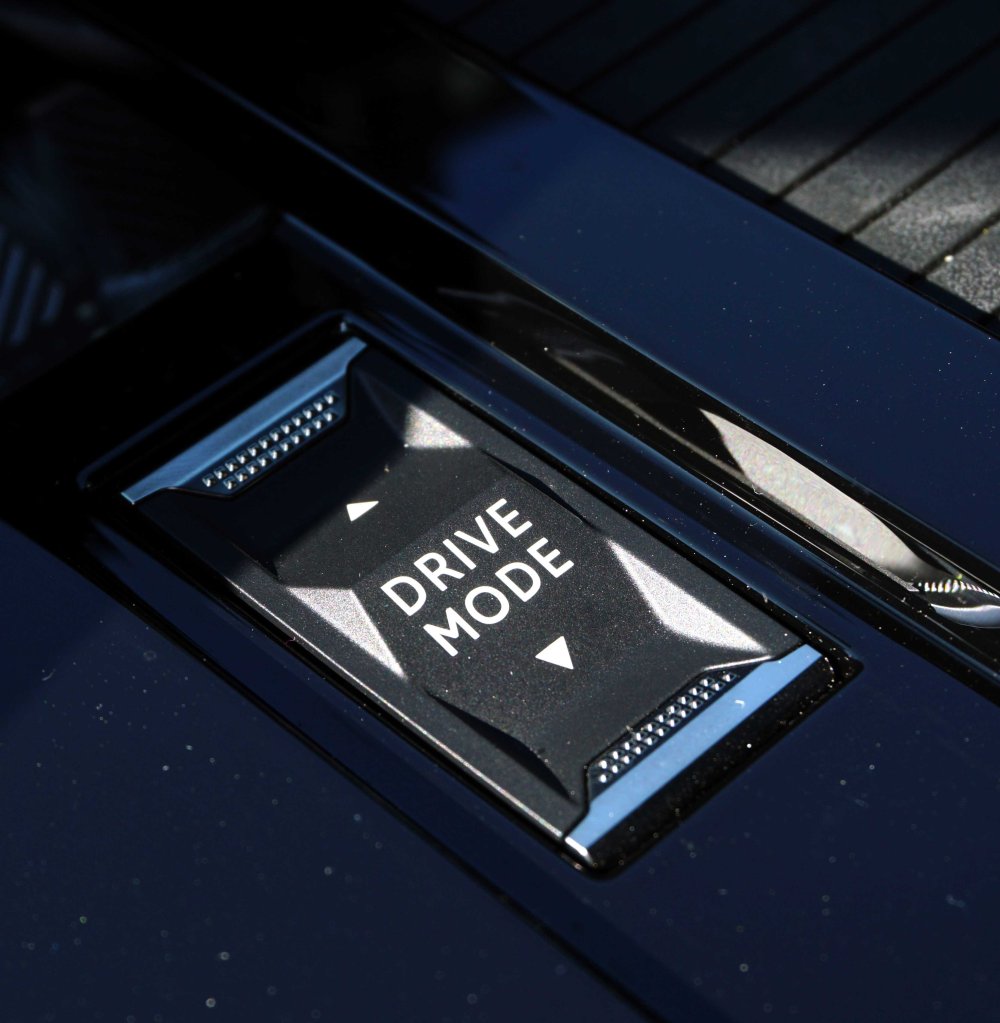
You can choose between three driving modes, eco, normal and sport. In the eco mode, engine power is reduced to 108 hp, but in practice this leaves you still with enough oomph thanks to the excellent torque characteristics of the electric motor. It gives you excellent efficiency, like we pointed out earlier. One drawback with the very hot weather we had during our test is the reduced power of the air conditioner in this eco mode. In the normal driving mode, power is set at 136 hp, with 156 hp being reserved for the sport mode. Nevertheless there is a kickdown function which puts the full engine power at your disposal irrespective of the chosen mode when you floor the throttle.
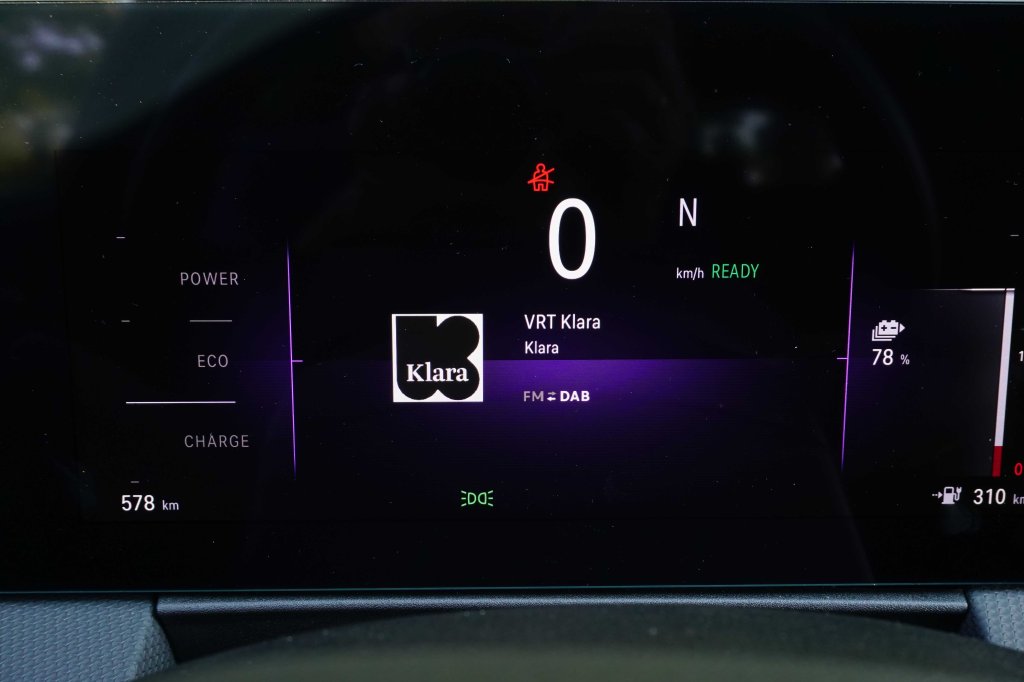
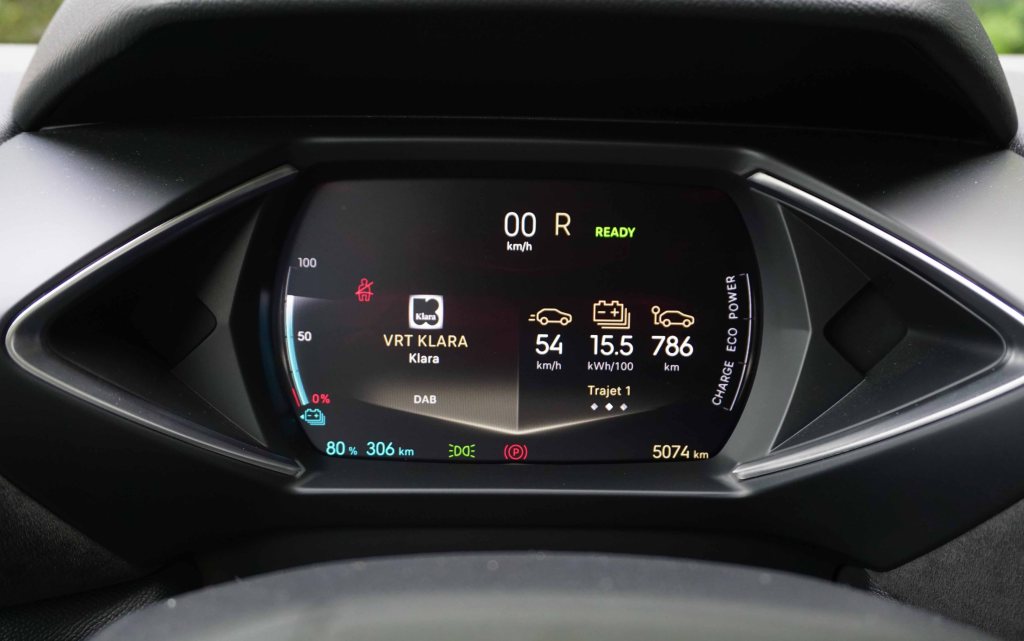
The screen in front of you displays the chosen driving mode, and is a school example of clarity and simplicity. You find all the essential information in a nutshell: battery capacity, range, driven speed and the music you are listening to… of course, it can be configured to suit your personal preferences.
The unique feeling of ’’ZEN’’…
More and more we start to like EV driving, especially in town. There is the uncanny smoothness when parking, maneuvering or driving very slowly in traffic jams. It is so beautifully stress reducing. On top of that, it is silent. So you discover the merits of a good audio system, and indeed, the beauty of music… it makes spending time in heavy traffic a soothing and restful experience. This can be said more than ever when driving this Astra Electric. The DAB+ radio provides of course crystal clear sound, and with the display right in front of you informing you about the composer, the piece of music and performer, you just sit back and enjoy…
Ideal seating and ergonomics…
At Opel they take good seating very seriously. The driver’s seat is a so-called “active sports” seat, especially designed to give your back the best possible support. It carries the certificate label AGR, which means nothing else than that it is certified by the organisation ’’Aktion Gesunder Rücken”, or Campaign for Healthier Backs. Indeed, they give excellent support. The seat is also eminently adjustable, so sitting behind the wheel of this Astra is an undisturbed pleasure.
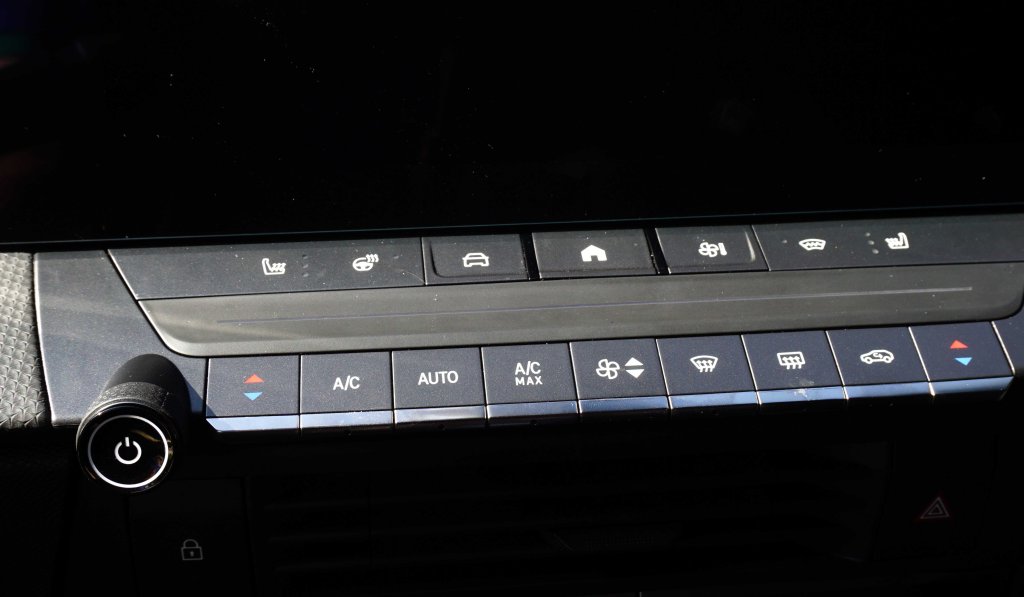
This feeling of absolute well-being is further enhanced by the excellent ergonomics of displays and commands in the cabin. Opel designers are convinced that less is more, and they have adopted this philosophy when designing the dashboard and its controls. Indeed, the dashboard layout is a model of simplicity and clever design.
All the controls are clearly labeled and tactile, and you don’t need a manual to get acquainted with all the functions in this Astra. The instruments, or rather the two coupled 10 inch screens are also a school example of clarity and readability. Some will say that everything is rather austere and without stylish drama and panache, but then you come to appreciate it increasingly in daily use.
Lively and agile
The suspension strikes also a very good balance between comfort, steering precision, handling and high speed stability. The Astra steers very pleasant and its overall agility on winding roads totally belies its 1,7 tonne weight, which is quite light anyway for EV standards. As said, the Astra strikes a very good balance between engine power, battery size and vehicle weight.
Just a word about the batteries. It is a 54-kWh lithium-ion battery with 102 battery cells housed in 17 modules. The Astra Electric can cover up to 418 kilometres in accordance with WLTP1.
Charging times are also quite reasonable. It can be charged to 80 pct of its battery capacity in under 30 minutes at a 100 KW charging station. The car is standard equipped with a three-phase 11 kW onboard charger for the wall box at home…
We already told you about the efficiency of the Astra. Thanks to the standard heat pump, this five-door Astra requires just 14.8 kWh of electricity per 100 kilometres (WLTP2 ). A word of praise again here, as in the test of the DS 3, is warranted for the ”B’’ position, where the car will use the regenerative braking to the full. This allows very smooth one pedal driving indeed, with the regenerative braking force being very progressive and smooth.
Practical
The Astra also has an estate version, and soon the Astra Electric will also be available as such. This makes this EV then a very practical proposition indeed. The batteries are housed in the platform floor and beneath the rear and front seats, and take some boot space too. The Astra Electric offers 352 litres of luggage space in the boot – with the seats folded down, the capacity increases to up to 1,268 litres. Sufficient we would say, but the soon to come estate version will offer more…
Electronic driver assistance…
On-board as standard are electronic aids from the front collision warning system with automatic emergency braking to the adaptive cruise control with stop-and-go function and the Intelli-Vision 360-degree camera. In addition, the Intelli-Drive 2.0 system with semi-automatic lane change and intelligent speed adaptation is optionally available for the Astra Electric for the first time. The adaptive Intelli-Lux LED®Pixel Light ensures bright, glare-free illumination of the road at night. We also liked the very clear and readable head up display.
Conclusion
This Opel Astra is now even more endearing to drive in the electric version. It has lost nothing of its agility, the dynamic driving experience is now even better thanks to the smoothness of the drivetrain and the power delivery. Handling is just as good, striking a good balance between comfort and overall handling. The excellent ergonomics, the host of electronic driver assistance systems make daily life with the Astra a further pleasure…and just wait for the estate version!
The latest generation of the DS3 has truly impressed us. It has gained further in style with a redesigned front end and light units, reworked dashboard controls and better touchscreen, and the E-TENSE version has definitely gained in practicality with a more powerful electric motor and a bigger battery, greatly improving range and driving experience. Just read further…
Hans Knol ten Bensel
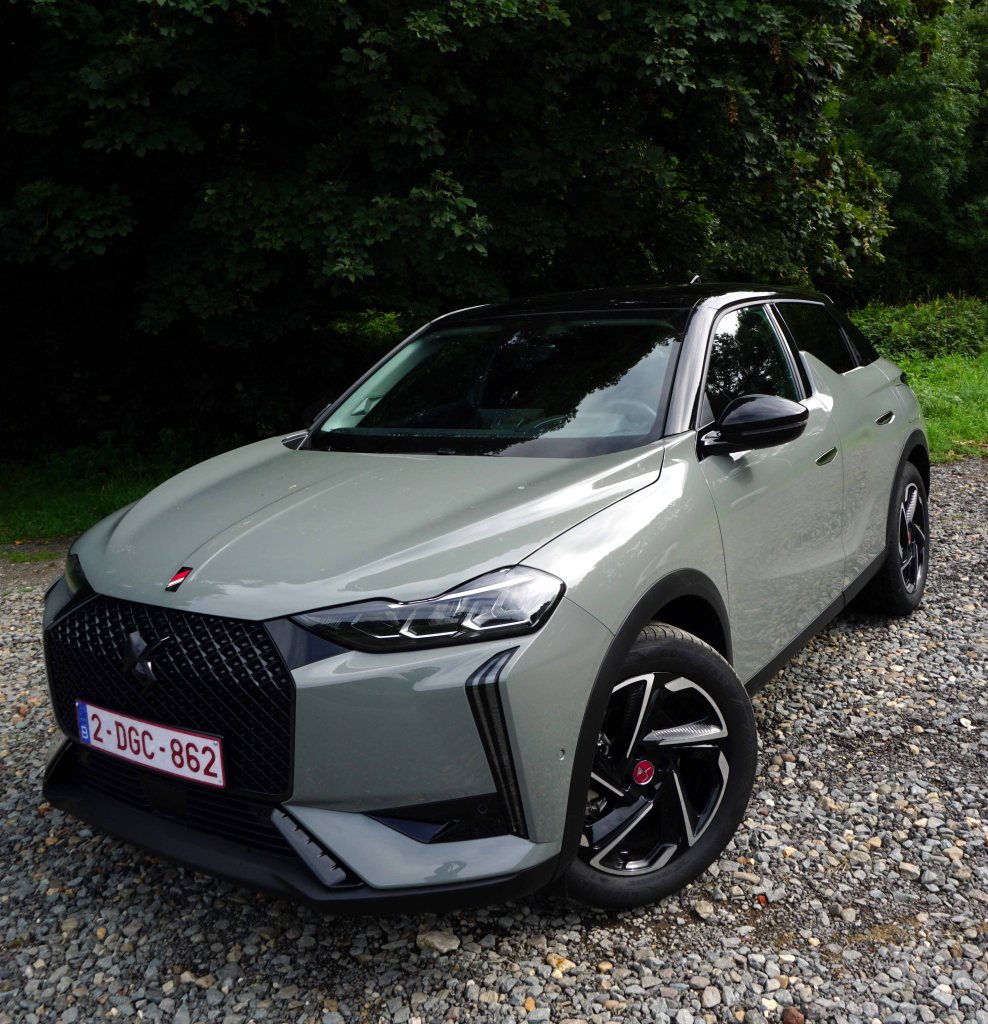
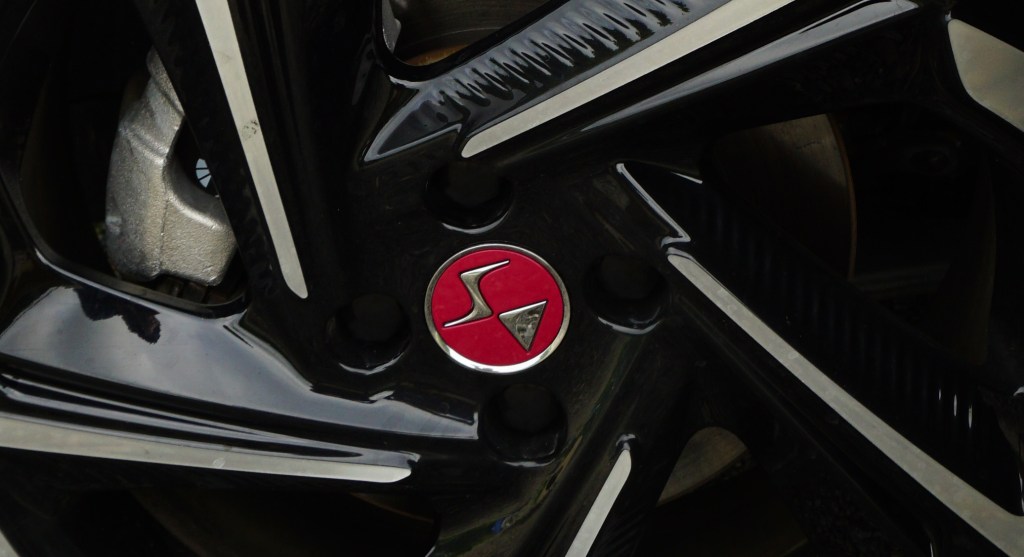
We like the look and styling of the DS automobiles, and the DS3 is no exception. We personally find the DS 3 one of the best looking compact crossovers, and indeed the styling department of DS really does a very good job to let the brand truly stand out within the Stellantis group.
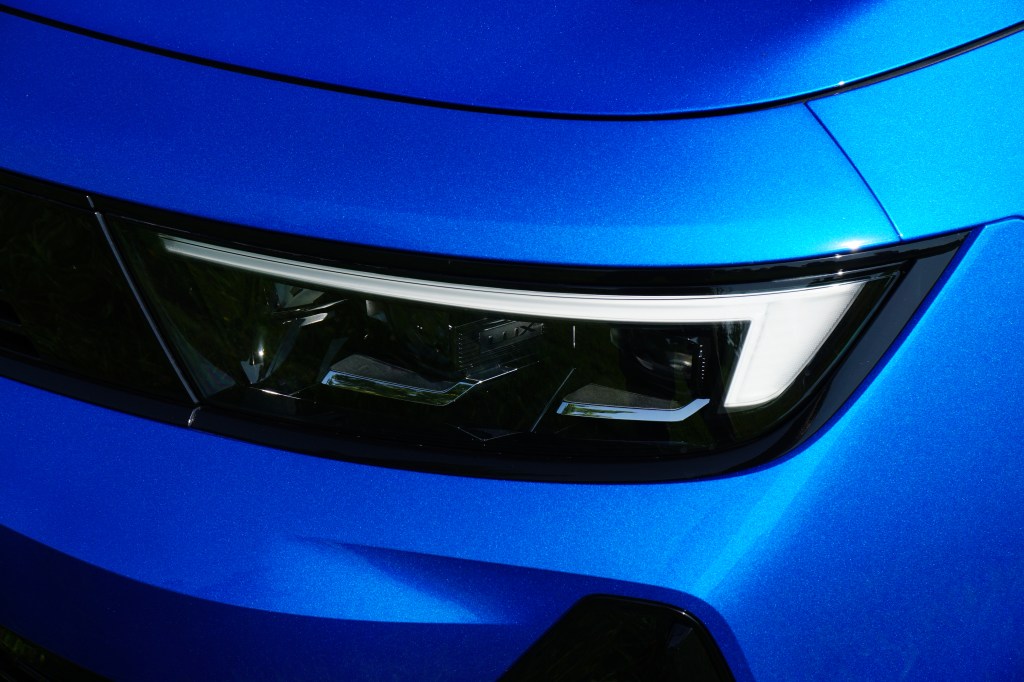
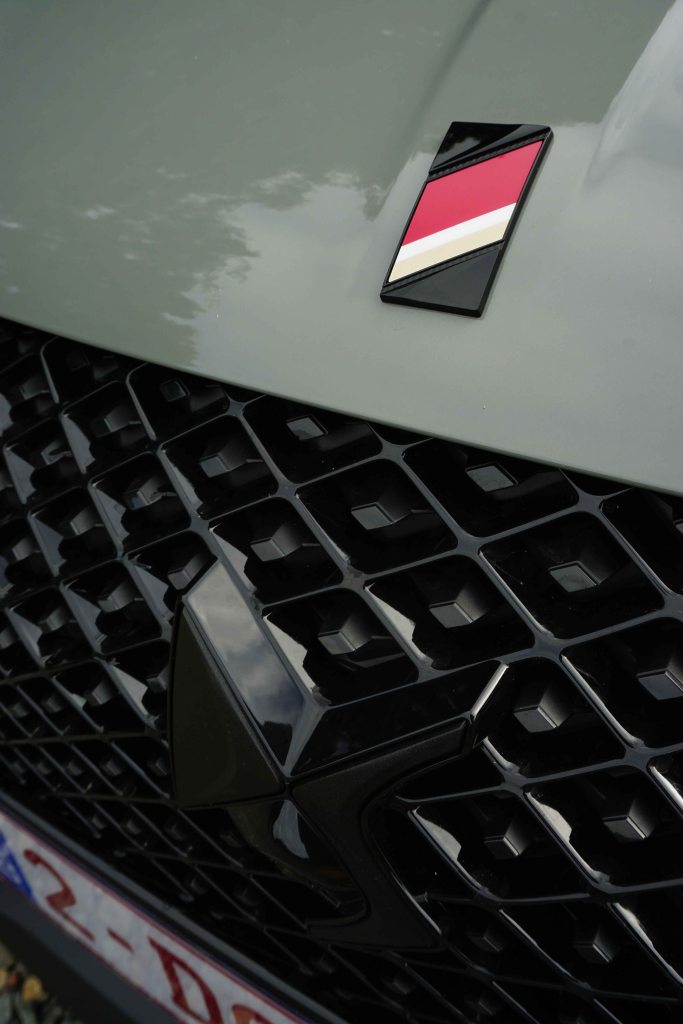
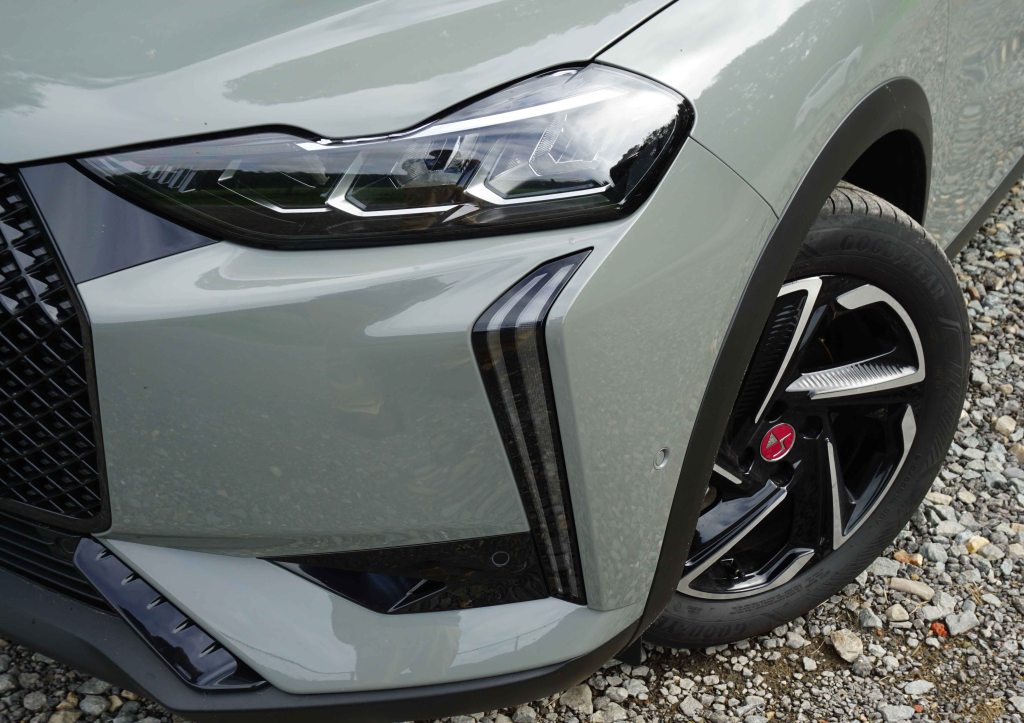
There is a redesigned grille, wider and enhanced with gloss black or chromed diamond tips depending on the model. The distinguishing DS WINGS have been tweaked to subtly join the grille and headlamps. The new LED headlamps – standard across the range – give New DS 3 a sharper look with three feature modules set in satin chrome.
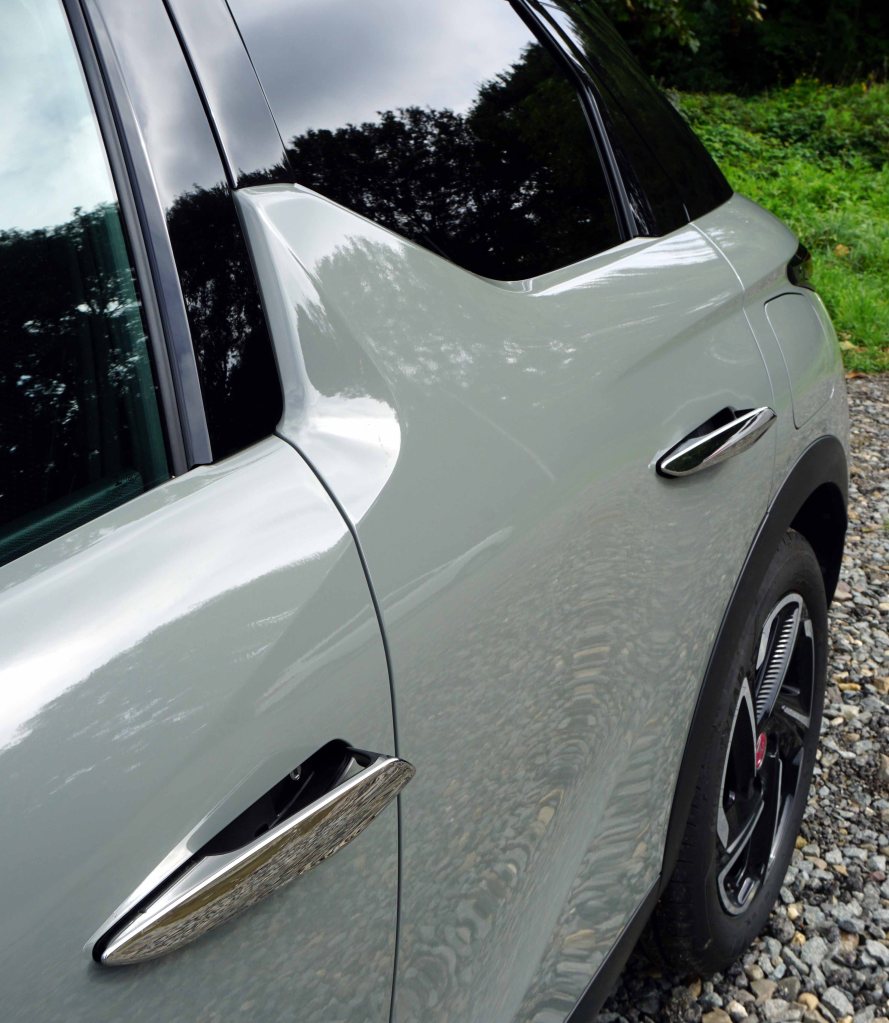
The new daytime running lights feature two LED lines vertically arranged either side of the front for a wider light signature, consistent with the latest DS Automobiles design language. At the sides we find again the the distinctive DS 3 shark’s fin, flush flitting door handles and invisible exterior window seals.
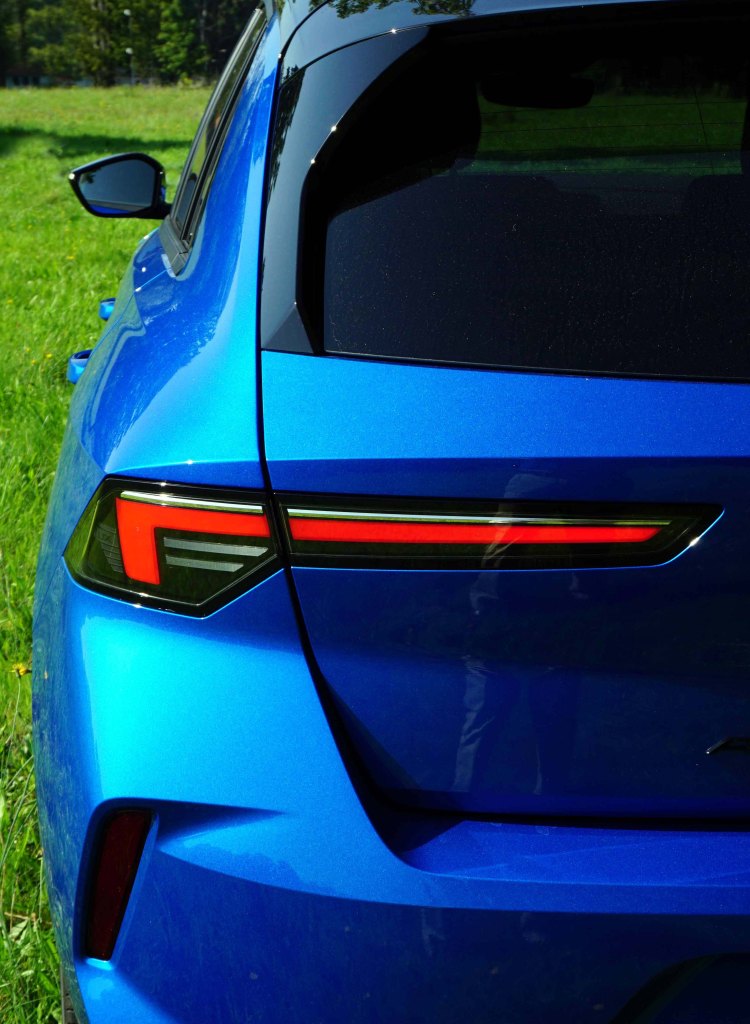
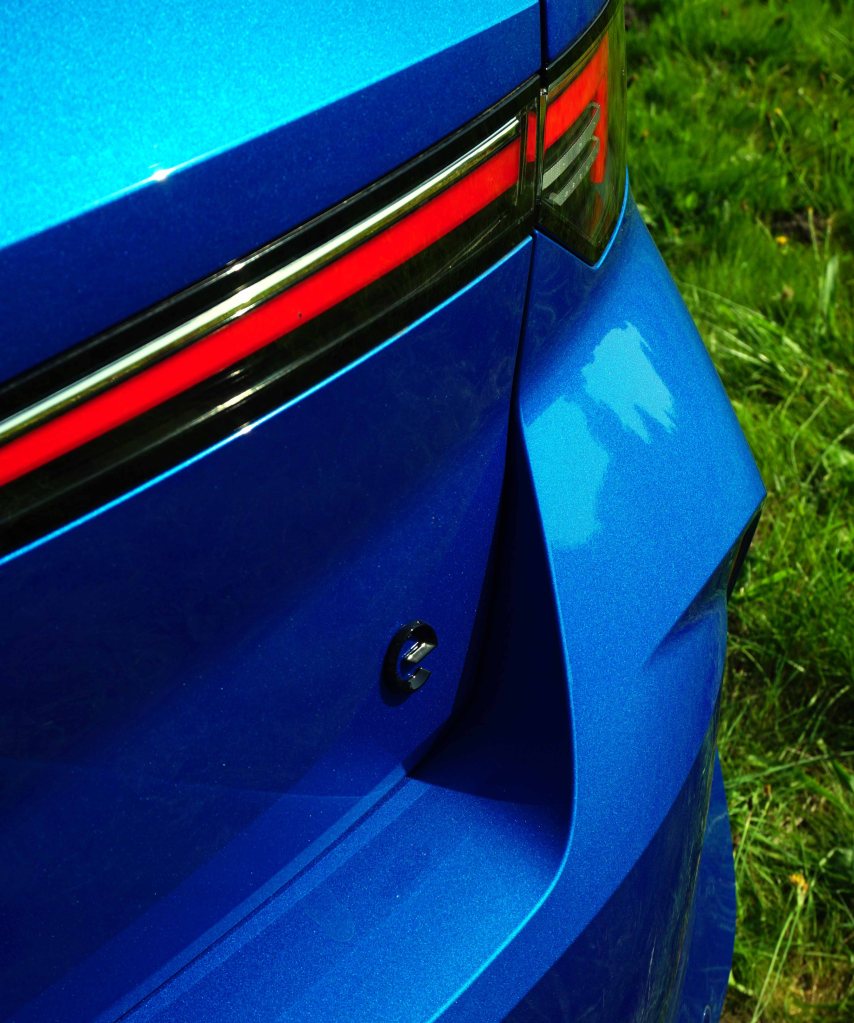
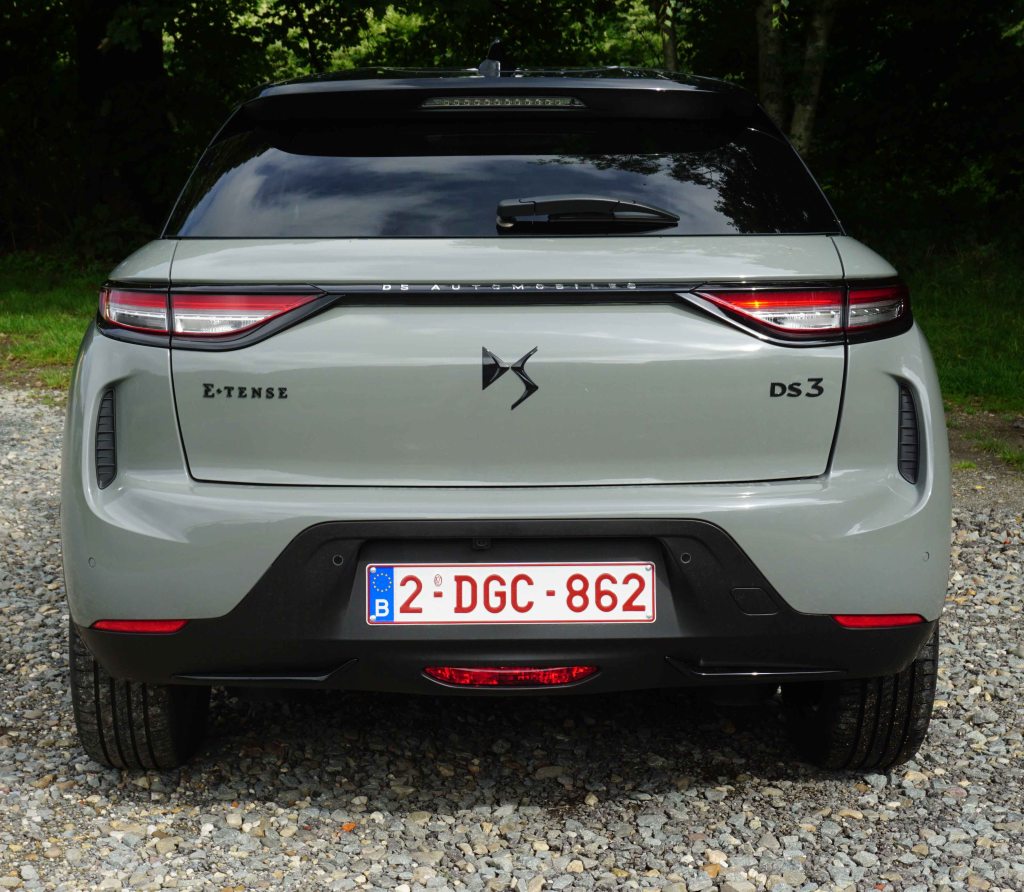
Also the rear has been refined: the lights and the tailgate are enhanced by a lacquered black strip. This gets the “DS AUTOMOBILES” signature through a unique technology, the letters in polished stainless steel being divided and set one by one in the trim. Very premium, and indeed, reminiscent of what Porsche is doing to their cars.
Cabin gets even more style…
The interior of the DS 3 certainly brings you into the unique atmosphere of the DS world. The finish is excellent, and the form and shape of the controls really stands out. Some might say it is form over function, but I always say that owners drive their cars a lot longer than we journalists test them, so one has to be very careful not to criticize unduly functional idiosyncrasies, as they only will take some getting used to. That being said, reading a manual is rather the exception than the rule these days, so when controls are intuitive, it is certainly an advantage…
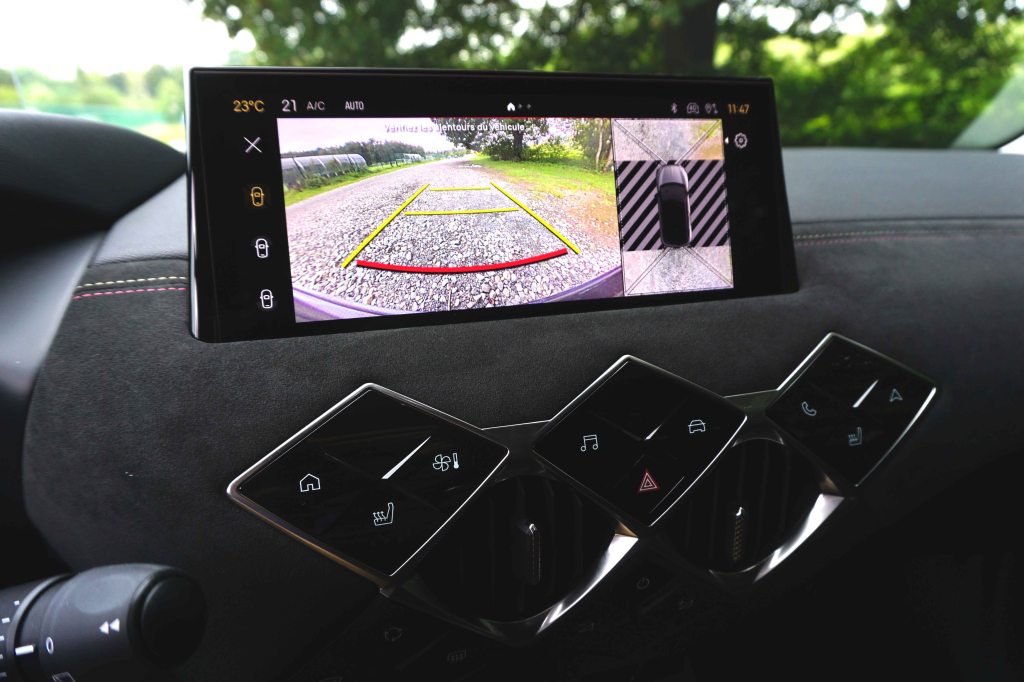
One enjoys the wonderful design of the controls in the centre console and the lozenge shaped tactile controls below the very readable touchscreen. Indeed, a new 10.3-inch high definition central screen is now offered as standard, with the new DS IRIS SYSTEM infotainment system built in. Top notch.
Driving with refinement…
We tested here for you the 100 % electric E-TENSE, and it certainly is an ultra smooth performer. Compared to the previous generation, the new DS3 has a new electric hybrid synchronous motor, offering 115 kW (156 horsepower) of power and 260 Nm of torque at a voltage of 400 volts. The new 54 kWh battery (51 kWh usable) is thermally controlled through liquid circulation and a heat pump that enables rapid charging, better range and increased lifespan. The onboard charger takes 100 kW in direct current (10 to 80% in 30 minutes) and 11 kW in alternating current (0-100% in 5 hours 45 minutes).
Performance is brisk, the E-TENSE will sprint from 0 to 100 km/h in 9 seconds, with top speed being limited to 150 km/h. Of course, for an EV these performance figures are not exactly overwhelming, but the emphasis with the new electric drivetrain lies on increased efficiency. According to DS automobiles, the WLTP range is now 404 kilometers, increasing to 500 km in urban conditions. In practice, we saw that given a cool driving style, a range of some 360 kilometers is quite achievable.
The DS 3 is indeed the proverbial dream to drive in town as well as on the highway, and its nice pulling power will let you also enjoy B roads. In town, one can use the ”B” mode for smooth one pedal driving, and we have to admit that it is one of the smoothest and most natural feeling setups so far. The deceleration when lifting the throttle is very progressive and unobtrusive indeed.
In city driving we very much appreciated the multiple cameras in front and rear combined with a 360 degree view to assist you when maneuvering, it is truly excellent and indeed should be present in any premium car worth its name.
Compact but comfortable
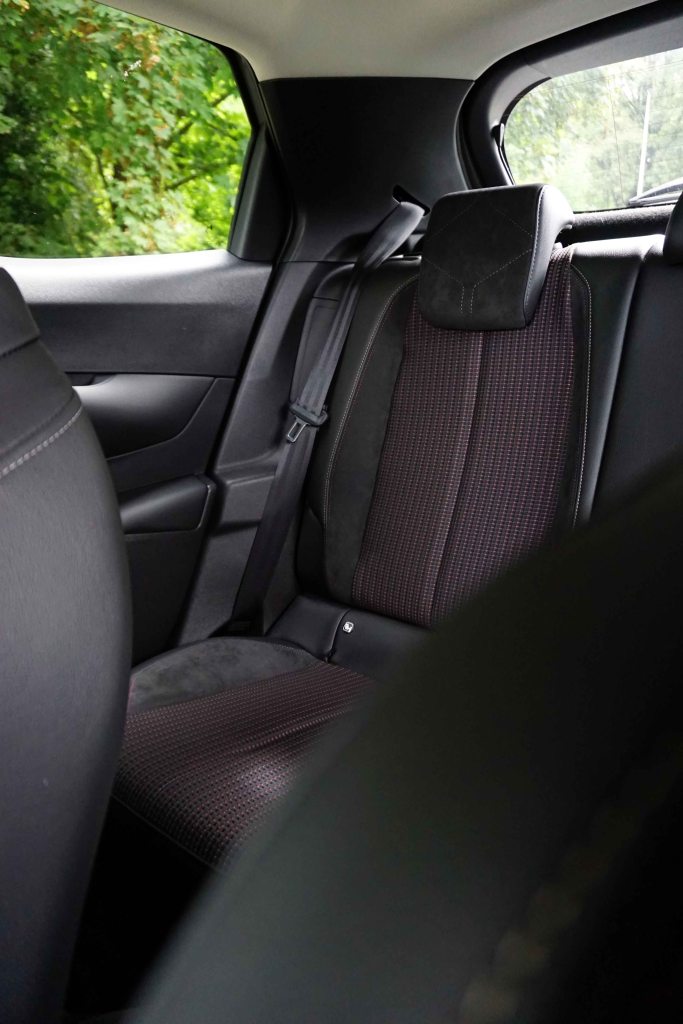
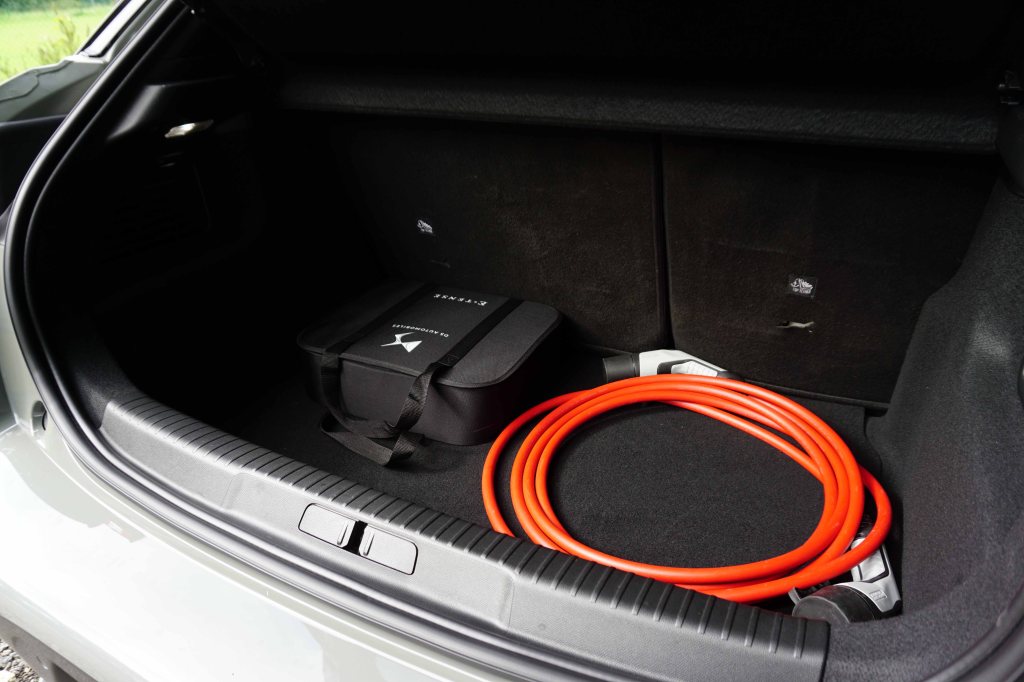
The DS 3 offers plenty of room in the front, somewhat less in the rear. Also boot space is not exactly overwhelming with a good 360 liters or thereabouts, with still some extra room needed for charging cables and stuff.
The suspension is unchanged from the previous generation, and that’s a good thing. The DS 3 is comfortable, with just the right amount of firmness to let you enjoy a spirited driving style. The DS 3 is very stable and precise to steer on winding roads.
Conclusion
The full electric version of the DS 3 is a compact crossover with a unique personality, with a drivetrain which utterly convinces in efficiency and usability. Premium in style and finish, it has timeless elegance too. Compact, it is excellent for effortless city driving, thanks also to its camera vision aids. It certainly doesn’t feel out of place on open roads either, and can be driven on longer distances given its comfortable suspension, reasonable range and rather short recharging times. The price of the E TENSE, starting at slightly above 40.000 Euros for this full EV, is also within reason… So a closer look at this stylish crossover is certainly warranted!
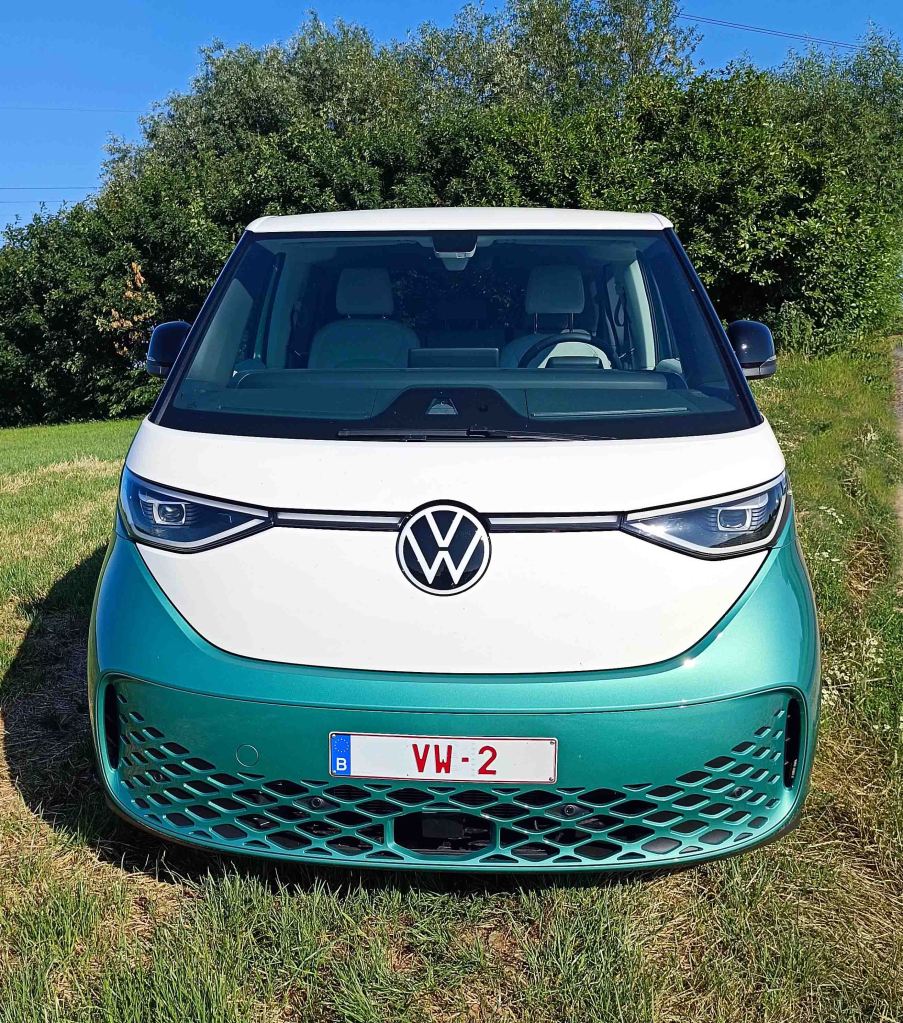
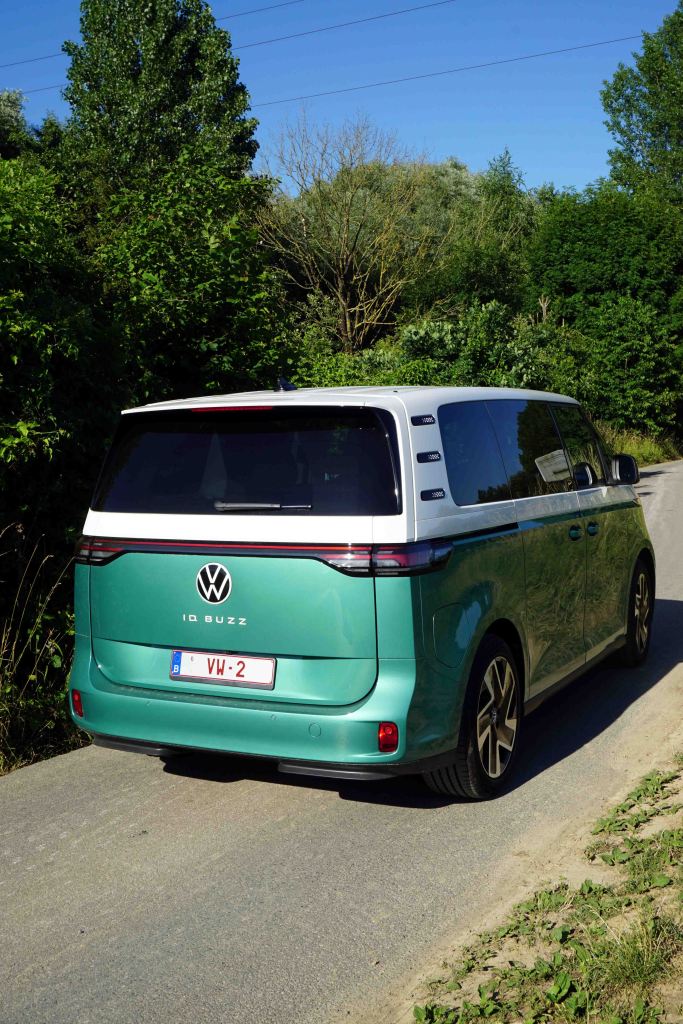
Volkswagen designers and engineers recreated the iconic “Bulli” and made it fitting for our modern E-Times. Their ID.Buzz is a indeed a car which brings at least the aura and panache of the original VW bus, and is adding even more character to it. It underlines the stylistic hallmarks of the original, and has masterfully translated it to steal the hearts of many of us. But not only that: this ID.Buzz now also brings along the well proven VW E-technology. We drove it for you, just read further…
Hans Knol ten Bensel
Cool functionality…
The ID.Buzz has character indeed, and the two tone paintwork of our test car even accentuated its early heritage. The cool character of its predecessor goes even further. Indeed, the original “Bulli” was very functional in its interior, and VW designers have somehow continued this approach in the interior of the Buzz.
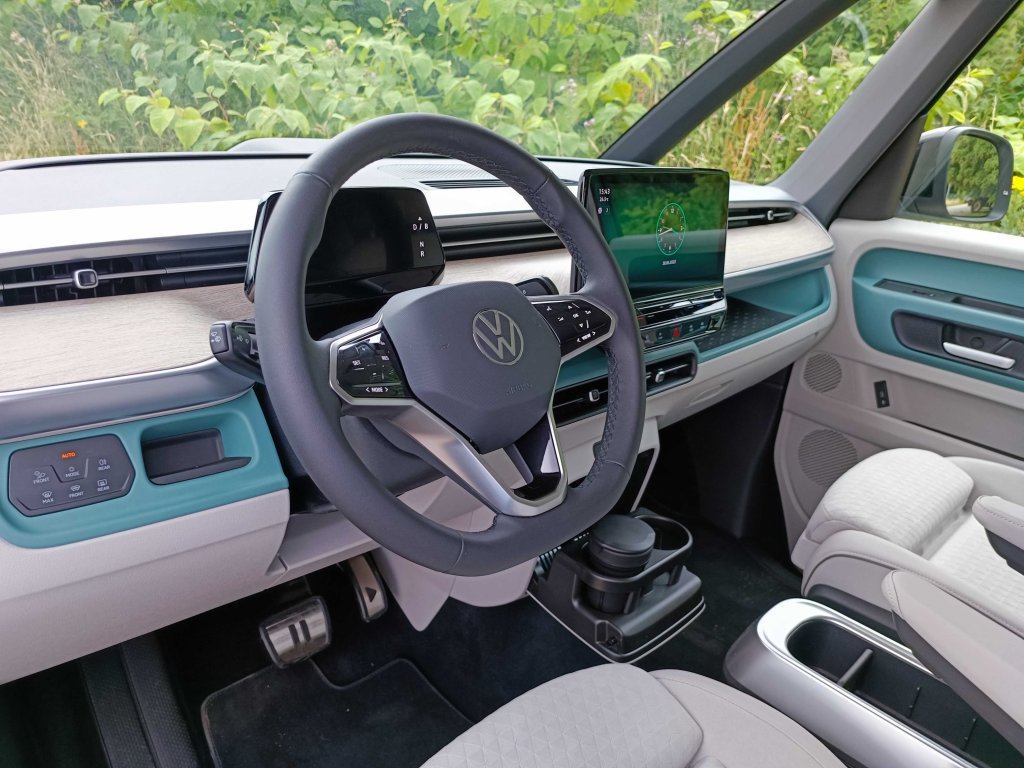
Everything is functional, the “less is more” philosophy is applied in every detail.
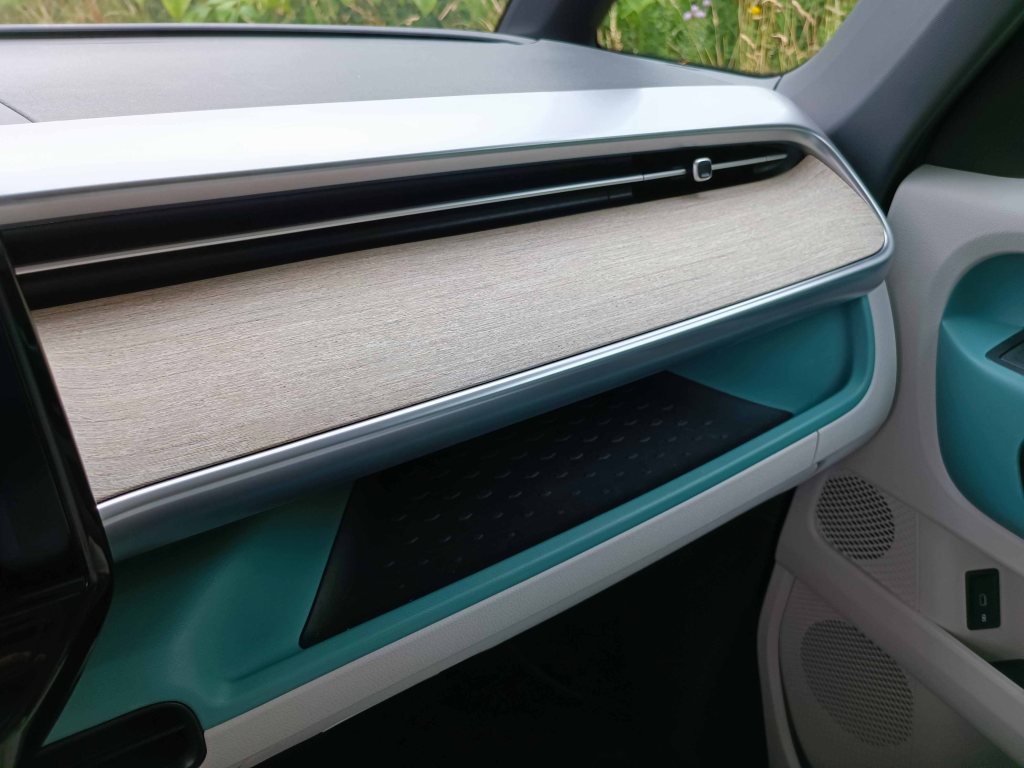
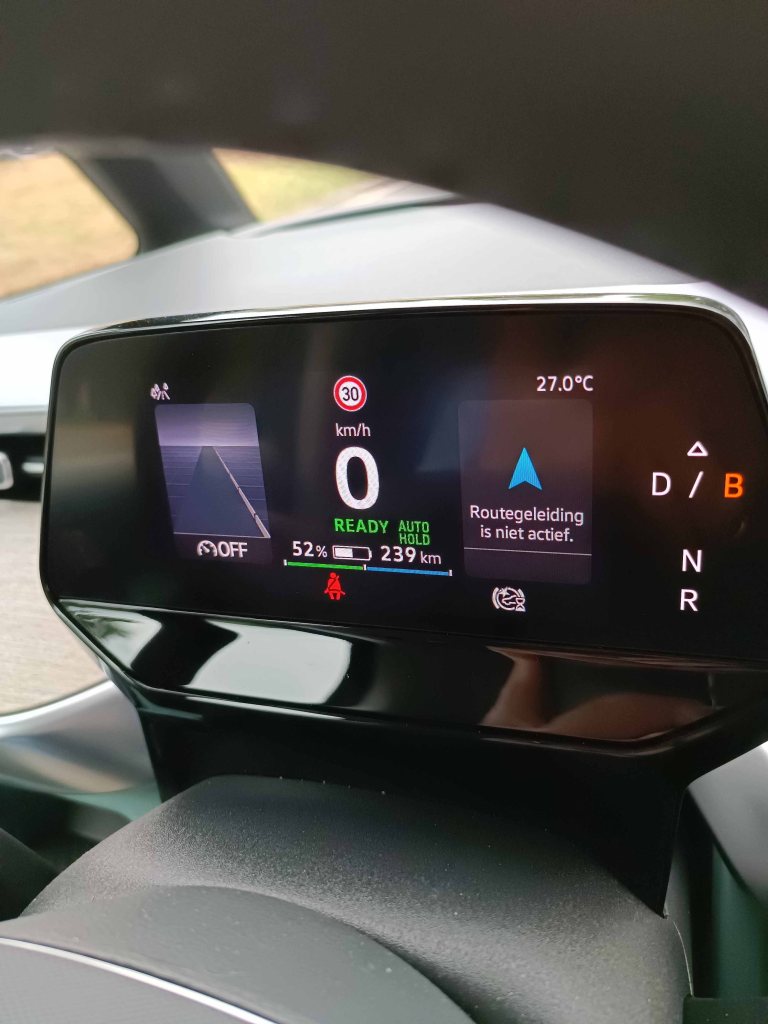
The instrumentation is wonderfully simple, and even the size of the central touchscreen is also kept within reasonable limits. The instruments and screens are put on a wooden finished large dashboard panel, which is set in a large matte aluminum band, running horizontally across the whole width under the windshield.
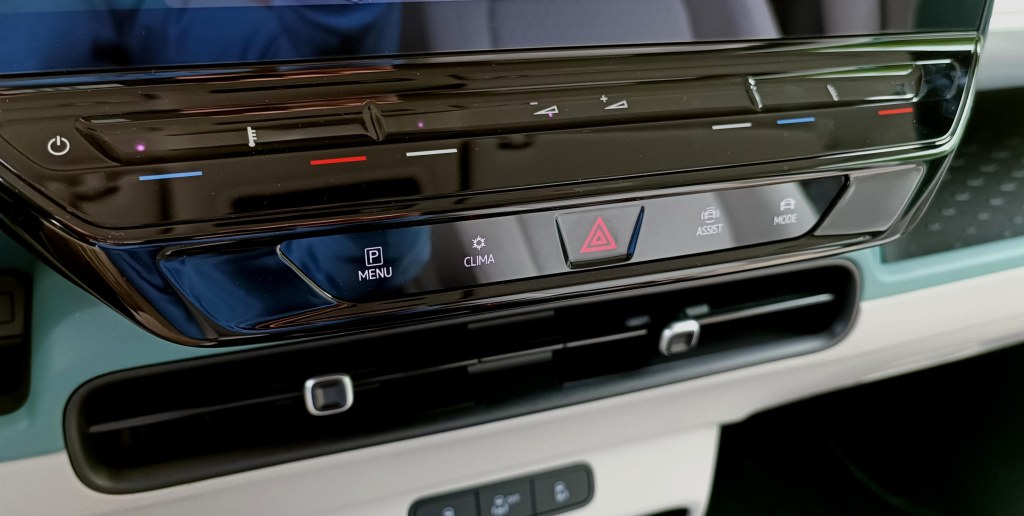
This certainly looks stylish, but also brings lot of reflections on bright sunlit days, so be sure to wear your sunglasses when you are behind the wheel. A lot has been said about the practical functionality of the “haptic” controls of VW’s ID generation, and indeed it takes a delicate hand to use them with success. But soon, one gets the hang of it.
The finish of the bodywork and interior is of the usual very high VW standards, the upholstery of the seats, certainly in the front, is also quite appealing. There is less padding on the plastic panels in the interior, certainly also in line with the “practicality first” philosophy of the original icon, but then we must not forget that this is a car commanding a price tag of around 75.000 Euros. But we personally think that very few users/buyers would have any objections here, as indeed the unique character of its original icon is preserved and this is what the lovers of the ID.Buzz want to experience and feel.
In terms of connectivity driver and passengers cannot complain. Of course one has DAB+ radio, Apple Play and Android Auto, and enough USB slots for passengers fore and aft. The navigation system with online functions and Live Traffic helps the E-driver wonderfully. It calculates also when and where to recharge the batteries. It will also recalculate them continuously in function of driving style and traffic conditions.
Driving
The ID.Buzz has the power, 150 kW of it and not less than 310 Nm of torque, but it has also the weight: 2,4 tons of it. Not that the Buzz is a slow car, far from it: it will accelerate with zest from 0 to 100 km/h in merely 10,2 seconds, and has powerful intermediate accelerations. But it does not invite you to use all this power. It rather suggests a more relaxed driving style, and this is indeed where this ID.Buzz excels. The gear lever can be turned either in “D” or in “B” position, and in the latter it will regenerate the kinetic energy when you lift the throttle. We used it actually all the time, and soon one learns to adopt fully “one pedal” driving with this setting. On motorways and higher cruising speeds, wind resistance of this ID.Buzz takes its toll, and wind and road noise are rather prominent. This will let you intuitively cruise at legal speeds of 120 km or thereabouts, and even slightly lower. The ID. Buzz has by the way an electronically limited top speed of 145 km/h. This makes absolute sense, as kW consumption rises markedly above these legal cruising speeds. Driving with some restraint, we averaged a test consumption in the neigbourhood of 19-20 kW/100 km, and this is very creditable indeed. A driving range around 450 km is achievable indeed.
The ID.Buzz is very stable, with a rather firm, but not uncomfortable suspension. Steering is precise, cornering/handling indeed being very predictable, with a tendency towards understeering. For the moment, the ID.Buzz cannot be had with adaptable suspension, but then the standard setting strikes a very good compromise for most.
Brakes are also OK, and the transition between engine braking and “pure” proper braking is very well balanced. One might be surprised that the Buzz has drum brakes at the rear, but then the electric engine sitting at the rear assists the drum brakes with its regeneration somewhat, so that even under more sporting driving no fading or diminishing efficiency occurs.
What we liked very much was the very small turning circle of merely 10,9 meters, which makes the Buzz a very nice car to drive in urban traffic.
Practical
When it comes to charging, the ID.Buzz has a 77 kW battery, and can be charged with the AC Type 2 plug or the DC type CCS unit. AC charging on a 11 kW wallbox takes some 8 hours, with DC charging one can go clearly much faster. The ID is fit for charging up to not less than 180 kW. So after a short break for a coffee or light meal one is on the road again, with the batteries up to about 80 pct charged…
The ID.Buzz has of course a (very) strong point: it is roomy. Fore and aft, the driver and his passengers have ample head- and legroom, one has to be taller than 2,15 meters to brush the front seats or the roof.
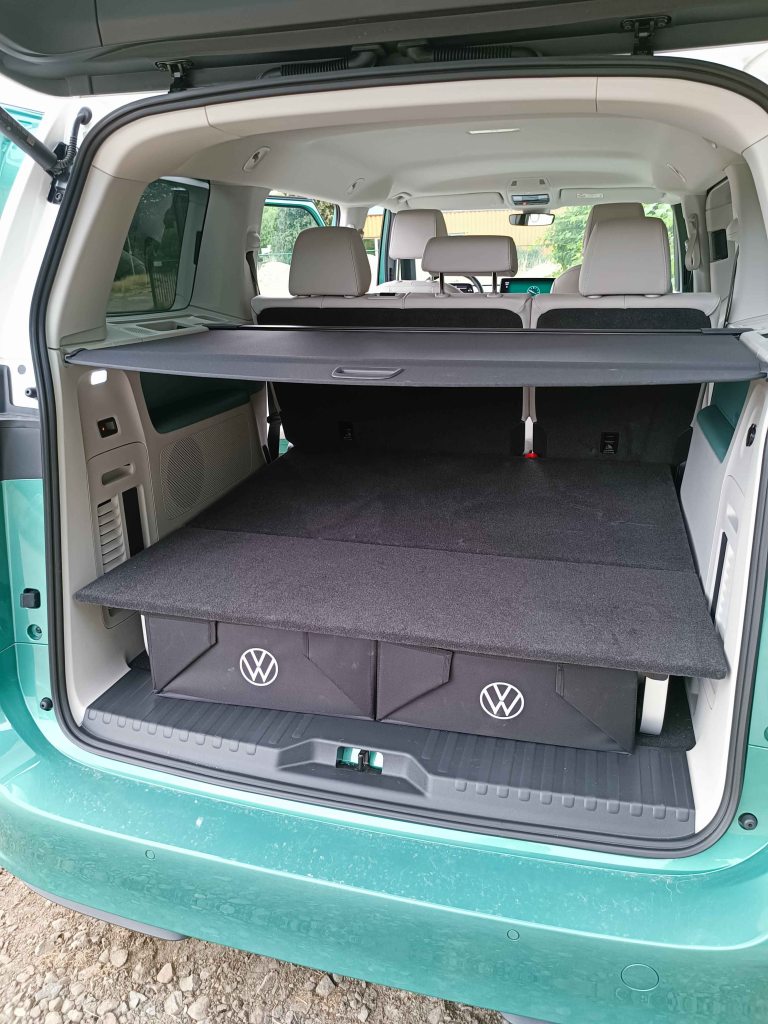
The boot space is also cavernous. Up to the cover, the boot space is 1.160 liters. When you stow things further until the roof, it is 1.760 liters. When you fold everything down, one has a massive 2.835 liters at its disposal.
There is no “Frunk” in front, so be careful that you have your charging cables stowed elsewhere when you load your Buzz fully, and consider also that avoid (parking) situations where you cannot open the rear lid, and cannot reach the cables…
We also liked the armrests on the front seats. Be sure to order the armrests on both sides of the seat, as the armrest in the door is set too high to achieve a comfortable position.
There is a large bin between the front seats, where you can also charge your smartphone, and of course there is storage space for large 1,5 and 1 litre bottles in the doors.
Conclusion
We were very much charmed by this ID.Buzz, and we truly liked it. Indeed, it invites you to take your everyday driving with a “Zen” and restful mindset. Listening to the excellent audio system, looking at the world around you with a smile. The other road users are doing the same by the way when they encounter you. Such is the sympathy of this ID.Buzz. It is also remarkably frugal when you drive it responsibly, to the joy and delight of everyone who drives with you. They find comfort and lots of room…
Add to all this the absolutely timeless character of this ID.Buzz. Its shapes and contours have instant “classic” status, and this will be a desirable car for so many across the years. So keep and cherish it as a family treasure, you will hear a never ending “buzz” of joy from young and old across the generations…
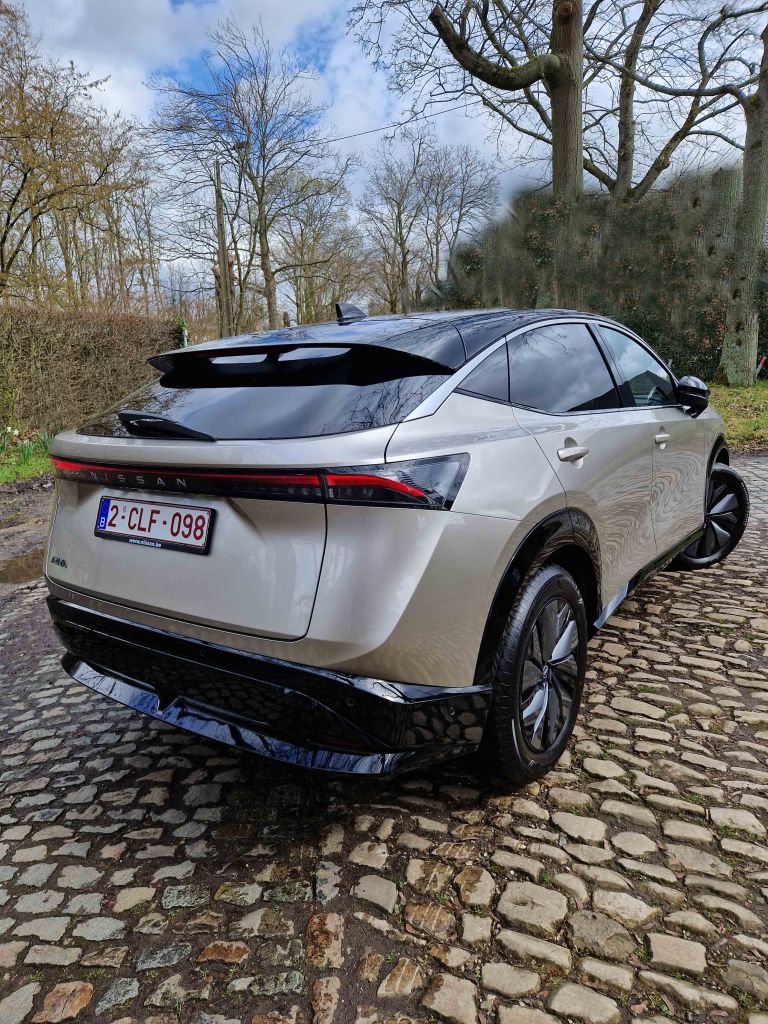
We all know, EV’s offer refinement. Some also offer roominess and the stance of a big SUV. Nissan decided to take things a step further: they also offer pure beauty.
Indeed, the designers of the Ariya surpassed themselves: they transformed the clunky dimensions of a SUv into fluid lines, which are sleek, well proportioned and completely natural. If you look at this car, the volumes, shapes and lines are completely logical, achieving an unsurpassed purity which seduces the viewer at first hand. Nissan calls its design language “Timeless Japanese Futurism”; it certainly is.
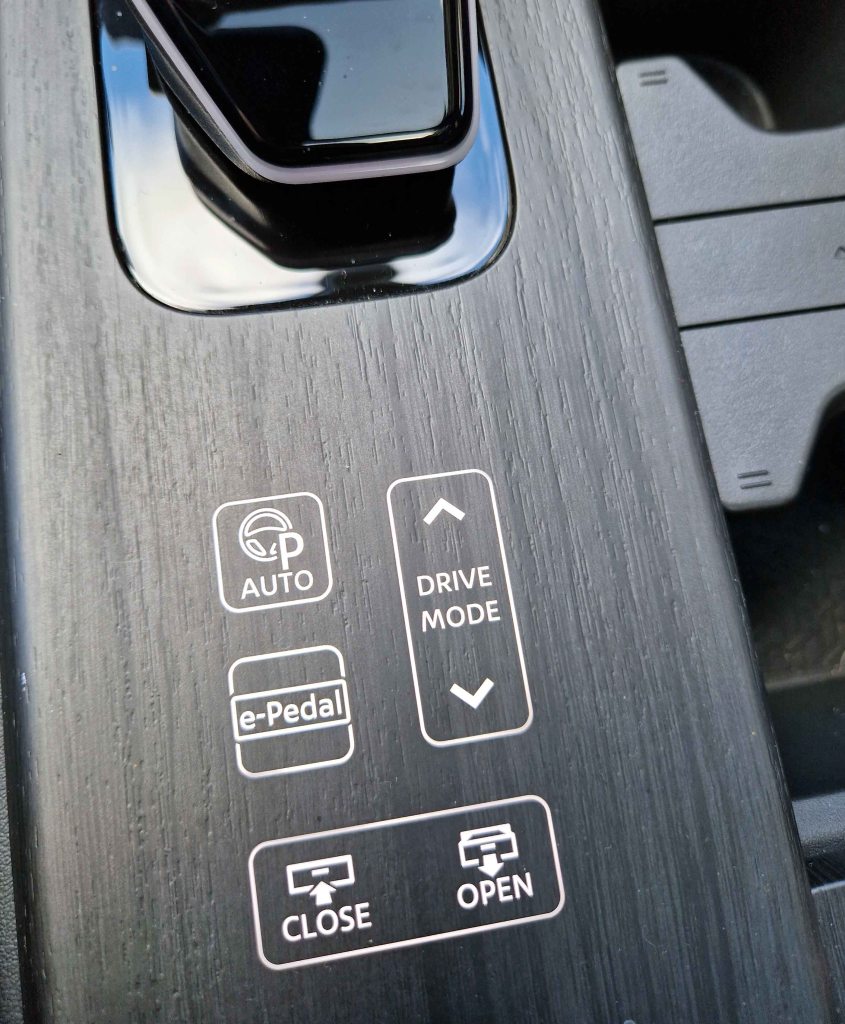
The interior breathes the same logical simplicity, underlined by a judicious choice of noble materials. The climate controls and the drive mode together with other essential functions on the console are – noblesse oblige in these modern times – haptic with a very positive feel. The styling of the dashboard is beautifully clean, the seats and steering wheel are electrically adjustable and soon an ideal seating position is found. One feels immediately totally at home in this Ariya, everything is totally self explaining what the commands are concerned, and a “Zen” feeling pervades you even before you have pressed the starting button.
The instrumentation has different modes and readings, you can have nice round dials if you want, the layout and functions of the touchscreen is top notch, with the “camera” functionality well placed in the top left of the screen, easy to push when you enter a tight garage entry for instance with your big Ariya. In the centre of the dashboard is an electric deploy-able tray, which is opened with one of the haptic buttons on the console.
Driving
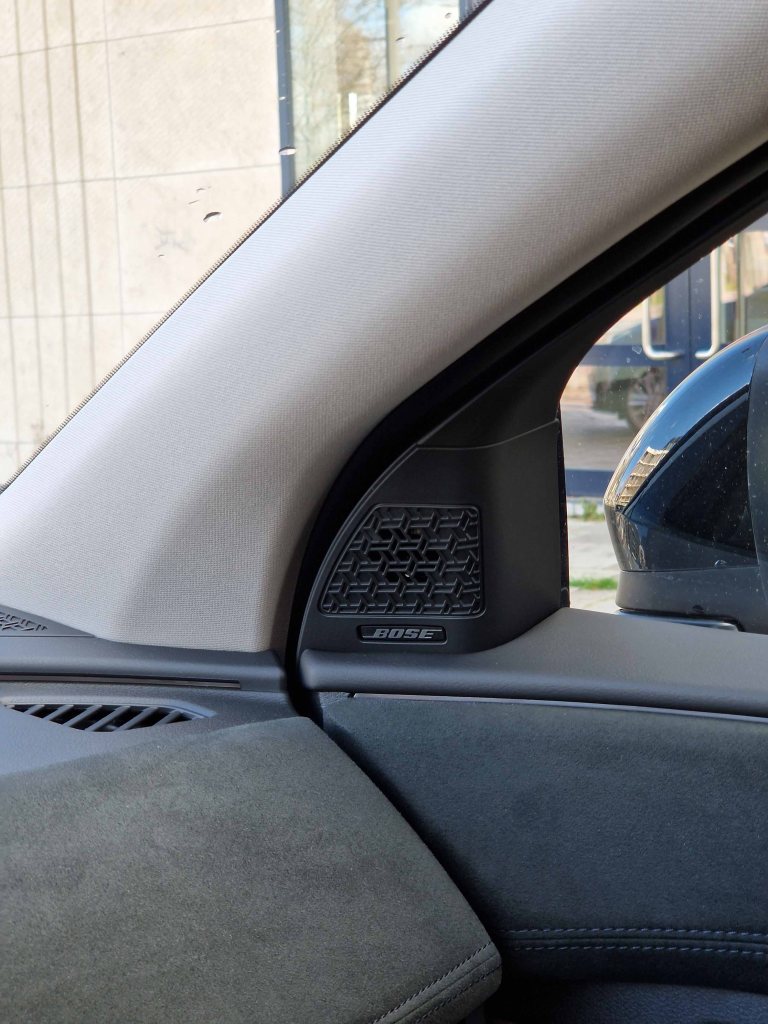
The Ariya is of course completely silent and smooth, and one has the choice between three driving modes, eco, standard and sport. For our test, we left it mostly on standard mode, but we always used the clever e-pedal mode, which lets you, after having learned it a bit, drive with anticipation using almost no brakes. Lifting the throttle puts the electric motor in regeneration mode. You cannot completely stop the Ariya without applying the brakes however, which is actually a good thing, as you can approach the traffic light smoothly, slightly creeping and accelerate immediately again away when it turns green. It adds to driving smoothness, and smooth driving is actually what EV’s are all about. Always remember that you are driving a two tonne car, which needs to be accelerated and stopped, and this is costing much energy indeed. If you want to reach easily the official driving range of your EV, drive it smoothly in town, avoid any brisk accelerations, which disturb the “Zen” feeling of the car anyway and hardly impresses any girl above 10 years of age, just enjoy the music AND the journey. There was a 10 speaker BOSE system in our Ariya, together with a DAB radio. You can imagine how we felt in this Ariya…
It rewards you with consumption figures as low as 9 (yes nine) kWh. This was reached on a urban stretch of 2 km with FOUR traffic lights. (!) Over the test, we reached without effort a driving range of well over 500 kms. We mention here that our test car came with the 87 kWh battery pack. Reaching this range supposes of course you also have to take it easy also on the open road. Settle for a cruising speed of 95-100 km/h, just a bit faster than the trucks. You have a wonderful, silent, relaxing voyage. Yes, we know, the charging situation in our country is still abysmal. So for the time being, be easy on the throttle, and by the way, aren’t we environmentally conscious?
You can charge it up to maximum 130 kW DC. Charging times than dwindle, in 35 minutes you can charge for a distance from 44 to 348 km or let’s say, from 10 to 80 % capacity.
Performance
Let’s first point out that the Ariya is available in three versions (Ariya 2WD 63kWh, Ariya 2WD 87kWh, Ariya e-4ORCE AWD 87kWh). With performance to match… For the 178 kW (242PS) 2WD version, acceleration from 0 to 100 km/h is in 7,6 seconds, top speed being limited at 160 km/h. Largely sufficient for any needs!
Handling and comfort
The suspension is not too firm, with the suspension being a bit noisy on bumps and ridges, with a responsive and precise steering. Road noise is very well suppressed; the Ariya is very silent at speed. The Arya is quite engaging to drive at speed on winding roads, there is hardly any body roll. So yes, (sporting) driving pleasure is certainly to be had!
Just note here that the the Ariya is built on the all-new Alliance-developed CMF-EV platform that’s optimised to deliver unparalleled performance. Suspension in the front consists of independent MacPherson struts, in the rear there is an independent mulit-link setup.
Let’s talk about visibility. The visibility up front is excellent. The C pillar is a bit wide, so it obstructs the three quarter rear view somewhat. Rear visibility is also further enhanced by the built in camera in the rear view mirror. The camera’s give also an excellent 360° surround view
Practicality
There is good storage space in the Ariya, and indeed, the car comfortably seats five. With enough legroom in the back and no transmission tunnel, the third passenger sits comfortably too. One even gets heated seats in the back and the obvious USB sockets of course. The boot capacity is 466 litres, which is not enormous. There is no front boot space either. But the boot cover can be stored underneath the floor when you need more space and put the rear seats down. If you want to tow things up to 1500 kilos, you need the 4WD version, the Ariya with front wheel drive will only pull a good 750 kilos.
Luxurious
The Ariya is very well equipped. The Evolve version we drove featured a panoramic retracting sunroof, Intelligent Rear View Mirror, head-up display, power-adjustable center console and steering column, Digital Audio Broadcasting (DAB) radio, Bose 10-speaker stereo and temperature-controlled front seats. We liked the Intelligent Rear View Mirror, indeed, a special camera in the rear view mirror lets you “see through” the third passenger on the back seat… The center console can also be moved fore and aft electrically, which we liked very much and let you really settle in comfortably.
Conclusion
A beauty, which also gives you the ultimate “Zen” driving feeling, with its clean interior, its superb commands, excellent sound insulation, roominess and good comfort. Add to this the good, predictable handling and practicality, leaving the excellent range as a last, very decisive argument too take a good look at this Ariya. It will brighten up your motoring life…
It’s coming: Volkswagen brought us a first glimpse of an all-electric Volkswagen costing less than 25,000 euros with their “ID. 2all” concept vehicle.
It is of course front-wheel drive, range of up to 450 kilometres, innovative technological features such as Travel Assist, IQ.LIGHT or Electric Vehicle Route Planner and a new Volkswagen design language.
Technical buffs are interested to know that this new “E”VW for the masses will be based on the MEB Entry platform and is one of ten(!) new electric models that Volkswagen will launch by 2026.
In my modest opinion, VW takes here a formidable and bold gamble… will the European car markets (and more specifically its electric infrastructure) be ready for this?
Read further about this “milestone” E-VW…it is sooo interesting and will be a harbinger for things to come!
Hans Knol ten Bensel
VW’s goals and ambitions with this new true “E”-VW…
It is certain that VW wants the wider public to again fall in love with its cars: Thomas Schäfer, CEO of Volkswagen Passenger Cars stated it clearly: “We are transforming the company rapidly and fundamentally – with the clear objective of making Volkswagen a genuine Love Brand.”
The concept of “Wertarbeit”, a concept so beloved by the Germans, which can be freely translated to “Quality work which creates value”, is also not lost in the boardroom and lobby’s of Volkswagen. Imelda Labbé, Member of the Brand Board of Management for Sales, Marketing and Aftersales, stated it clearly: “We are transferring the typical Volkswagen virtues to the new world of mobility: top quality and workmanship, outstanding software and digital services with genuine added value.”
Mechanical perfection and reliability is therefore of prime importance, and so VW adops well-tried solutions, present in the MEB platform, which by the way uses also all the automated product processes which are already well in place.
Kai Grünitz, Member of the Brand Board of Management responsible for Development, states it for us: “The ID. 2all will be the first MEB vehicle with front-wheel drive. We are exploiting the great flexibility offered by our modular electric drive (MEB) platform and will set new standards in terms of technology and everyday usability with the MEB Entry platform.”
This VW will also certainly be no sluggard: It has a powerful electric drive motor with an output of 166 kW / 226 PS and will have a calculated WLTP range of up to 450 kilometres.
A new design…
The ID. 2all concept vehicle was designed by Andreas Mindt, who took over as the new Head of Volkswagen Design on 1 February 2023. Volkswagen is in his blood, as his father was a designer in Wolfsburg before him. Andreas Mindt joined Volkswagen in 1996 after studying design. He created bestsellers such as the first Tiguan and the seventh-generation Golf. In 2014, he moved to Audi in Ingolstadt as Head of Exterior Design.
The next step followed in 2021 when Mindt became Director of Design at Bentley in Crewe, England. However, he has always maintained his close ties to Volkswagen and continues to be the proud owner of a Beetle. Andreas Mindt on his first project as Volkswagen Head of Design: “We are transferring the DNA of our icons into the future. The ID. 2all is therefore also homage to the Beetle, Golf and Polo.”
Andreas Mindt has developed a new Volkswagen design strategy – one that will ensure the brand’s DNA remains clearly recognisable in the future. Mindt: “I am focusing on three main pillars: stability, likeability and excitement.”
“The most important value for Volkswagen design is stability,” says Andreas Mindt. This includes value stability, stability of form, reliability and recognisability. “A second core element of the brand is likeability,” explains the designer. The Beetle, Volkswagen bus, new Beetle and ID. Buzz clearly demonstrate this. “Stability and likeability – we have to achieve these two values in every respect.” But there is much more to a successful Volkswagen than that: “We also want to create excitement in our customers.” For example, with added dynamics, improved operability or the classic “form follows function” of an ID. Buzz or Golf. Technologies, forms and concepts are what make a Volkswagen desirable. Stability, likeability and excitement are typical characteristics of the Volkswagen design, the Volkswagen feeling. Mindt assigns three design elements to each of these three values. They are all reflected in the ID. 2all.
I was happy to read Mindt’s comments on design, which I have repeated time and again in my guide tours at Audi Brussels: Automotive design is an art form, but there are still clear laws that apply – such as the golden ratio. I couldn’t agree more with Andreas Mindt: “Likeability is created by the golden ratio. This is quite simply the ratio of three fifths to two fifths.” Leonardo da Vinci already followed this geometrical principle in works such as the Mona Lisa. The designer continues: “The feature line running below the window shoulder is located on exactly the golden ratio line of the ID. 2all. Both the Beetle and Golf also always followed the principle of the golden ratio.” People perceive this division created by nature as being pleasant and likeable.
Easy to use…
VW has learned from the usability mishaps in the commands of the early ID’s. VW now calls it ‘self-explanatory operation’. The touch display (diagonal: 32.7 cm / 12.9 inches) of the infotainment system has a new menu structure. Below this there is a newly developed, separate air conditioning control panel. Other vehicle functions are operated by means of a menu control in the centre console, which can also be used to change the look of the digital instruments. The new multifunction steering wheel is designed to be clear and self-explanatory – two thumbwheels on the left and right and two buttons each, and nothing else.
Charged to 80 per cent in less than 20 minutes…
The battery permits a calculated WLTP range of up to 450 kilometres. At DC quick-charging stations, the battery can be charged from 10 to 80 per cent in 20 minutes.
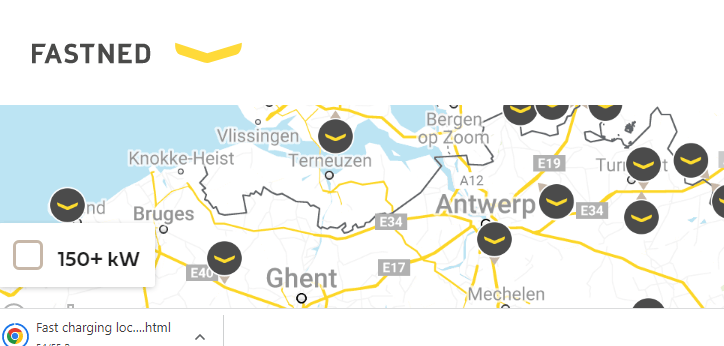
Provided we find these stations! In our country, the situation is still abysmal what these quick charging stations is concerned. Take Fastned: when I want for instance to drive from Antwerp to Knokke, I need to have enough range to make the 210 km trip back and forth to Antwerp, and to make things even worse, there is no Fastned charging station in the whole Antwerp region so far, and NONE in Knokke… so I would have to go towards Brussels in Steenokkerzeel, about 43,7 km from Antwerp, to find one… ridiculous isn’t it? I need at least 260 km range for the trip! To avoid any misunderstandings, we looked here only for Fastned charging stations. There are of course some other 4 to 38 kW charging stations, but any of the apps to find chanrging stations do NOT show whether you can use your bank card or not. At more than 90 %, it is not possible…
Back to our concept car…
Of course, this VW accelerates like a bullet: 0 to 100 km/h in less than 7 seconds. Its top speed is limited to 160 km/h.
A bold step for Volkswagen, but a very logical one if you take a look at its strategy. Soon, we will live in (very) different times…
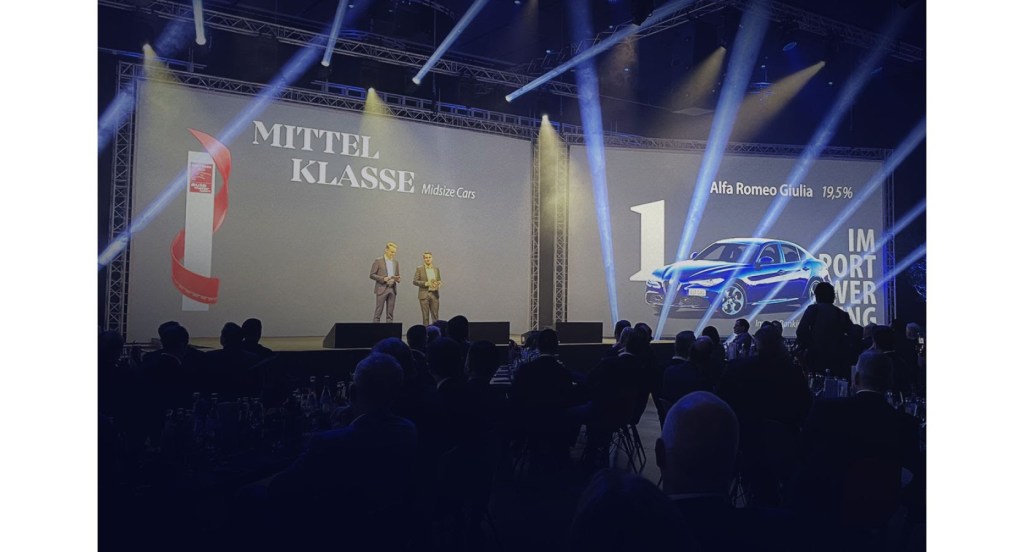
There are smiling faces at Alfa Romeo: the iconic Giulia wins the “mid-size import” category in the readers’ competition of the magazine “auto motor und sport ” . The victory in “Best Cars 2023” is already the sixth success for the Alfa Romeo Giulia in the past seven years.
18 candidates were put to the test by the readers of “auto motor und sport” in the “mid-size import” category, and the Giulia was a winner with 19,5% of the votes.
Also the new Alfa Romeo Tonale proved a favorite. It just missed out on victory by only 0,2% and scores a 2nd place in the category ‘Compact SUV – Importers’. The D-SUV Alfa Romeo Stelvio is also among the top 3 models in the category ‘Large SUV – Importers’.
The Jeep Avenger clearly has won the hearts of the femaile voters. The fully electric Jeep® Avenger is named Best Family SUV in 2023 Women’s World Car of the Year (WWCOTY) awards. A panel of 63 WWCOTY jurors from 45 countries selected the Avenger ahead of 12 other family SUVs.
In January, the Avenger was named European Car of the Year 2023. More than 12,000 units have been sold since the opening of orders for the 1st Edition on Dec 1, 2022 and then the full lineup on Jan 11th, 2023.
The WWCOTY jury praised the Avenger for its “successful design and excellent off-road capability”, and for being “a commitment to the future that customers will appreciate”.
More news soon about the other WWCOTY winners…and we will next week have an extended testdrive with the plug in hybrid Tonale, we are looking forward to it, and soon you will read our comments!
Opel cars carry proudly the iconic lightning or “Blitz” badge, and this since the Opel-RAK 1 or rocket record car made an unforgettable impression in March 1928, when it achieved 75 km/h and more than 100 km/h in April of the same year.
The Opel group was also working on liquid-fuel rockets in those days: In a cabled exclusive to The New York Times on 30 September 1929, Duke von Opel is quoted as saying: “Sander and I now want to transfer the liquid rocket from the laboratory to practical use. With the liquid rocket I hope to be the first man to thus fly across the English Channel.” It announced the dawning of a new age: that of rocket propulsion.
But we will stay with both feet on the ground, and enjoy the four wheeled products of the brand. And I must admit, I did already enjoy them massively in my early automotive life. My first Opel I tested as a car journalist was in 1968, actually replacing my father Theo ten Bensel, then Editor of weekly illustrated “De Post”. It was the beautiful Opel GT 1900, driven in the surroundings of Port Grimaux.
In the summer of 1971 we made a high speed trip to the Austrian Grand Prix in Zeltweg, with a Manta 1900, having the same 102 HP engine as the sleek GT two seater, coupled to three-speed TH-180 automatic. The Manta proved to be not only fast, it excelled with a stable, wonderful handling, making it a true Gran Turismo. Since then, my admiration for Opel cars was born.
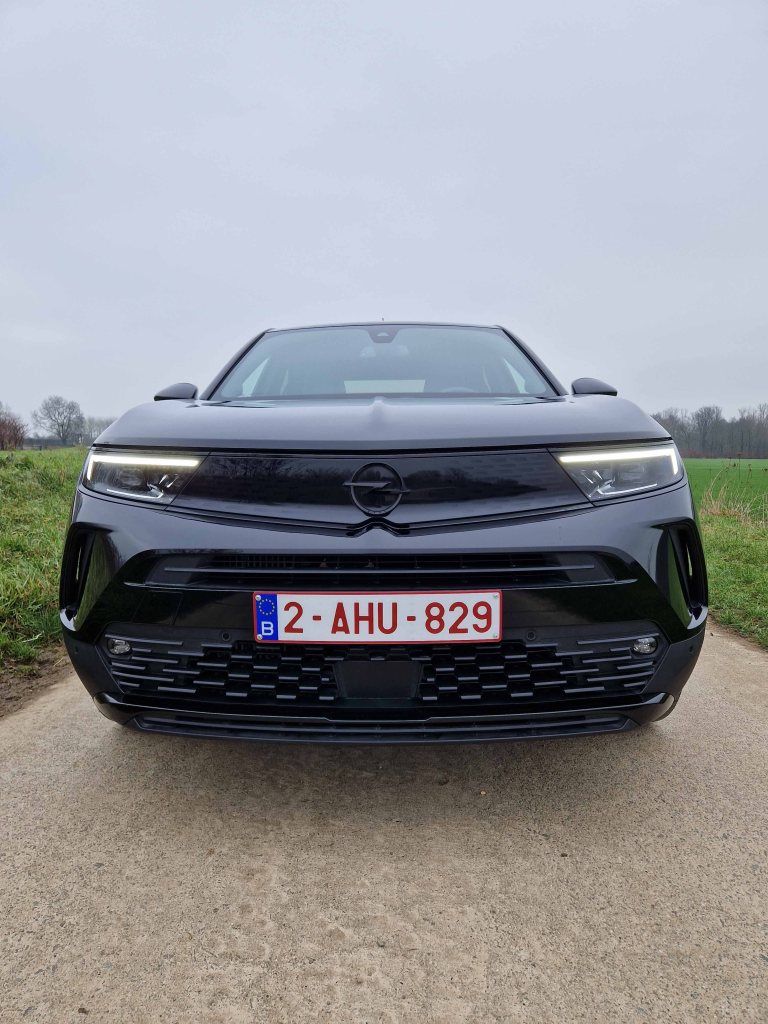
When I slid behind the wheel of a Mokka, superb looking in its black livery, I immediately was again seduced by the no-nonsense Opel efficiency, build quality and style. Opel adopts in-car connectivity and instrumentation with the philosophy of “less is more”, and indeed the dashboard is an example of user friendliness and simplicity.
But it is stylish too. The new Mokka was the first model with the Opel Vizor as the future brand face, and indeed it symbolizes very well what Opel this decade wants to look like: pure, precise – reduced to the essentials. Like a full-face helmet, the Opel Vizor organically integrates the grille, the headlights and the brand logo in one single module that covers the new Opel face.
The Mokka is also well proportioned: its bold looks are characterized by short overhangs and a well-planted, wide stance. It’s also is 12.5 centimetres shorter than the predecessor – despite the 2.0cm-longer wheelbase.
We told you about the first generation “A” Opel Manta. It inspired the initial concept of this elegant feature: for the new Mokka, the designers literally reinvented the Manta’s grille with twin headlight-modules on a black surface, framed by a thin chrome bar.
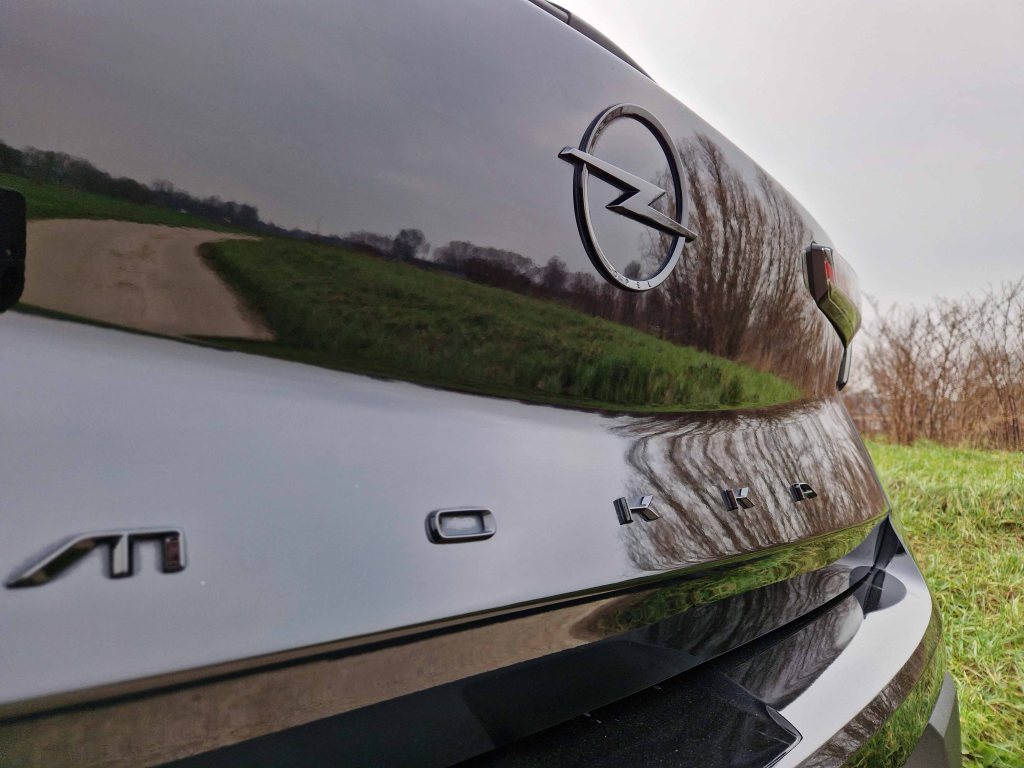
The legendary “Blitz” brand logo we also told you about has been redrawn and will adorn all upcoming models from the German carmaker. The surrounding ring is now slimmer, more elegant, more precise. This emphasizes the “Blitz” even more. All details are super sharp with a very small radius. The ‘Opel’ lettering is integrated in the lower part of the ring.
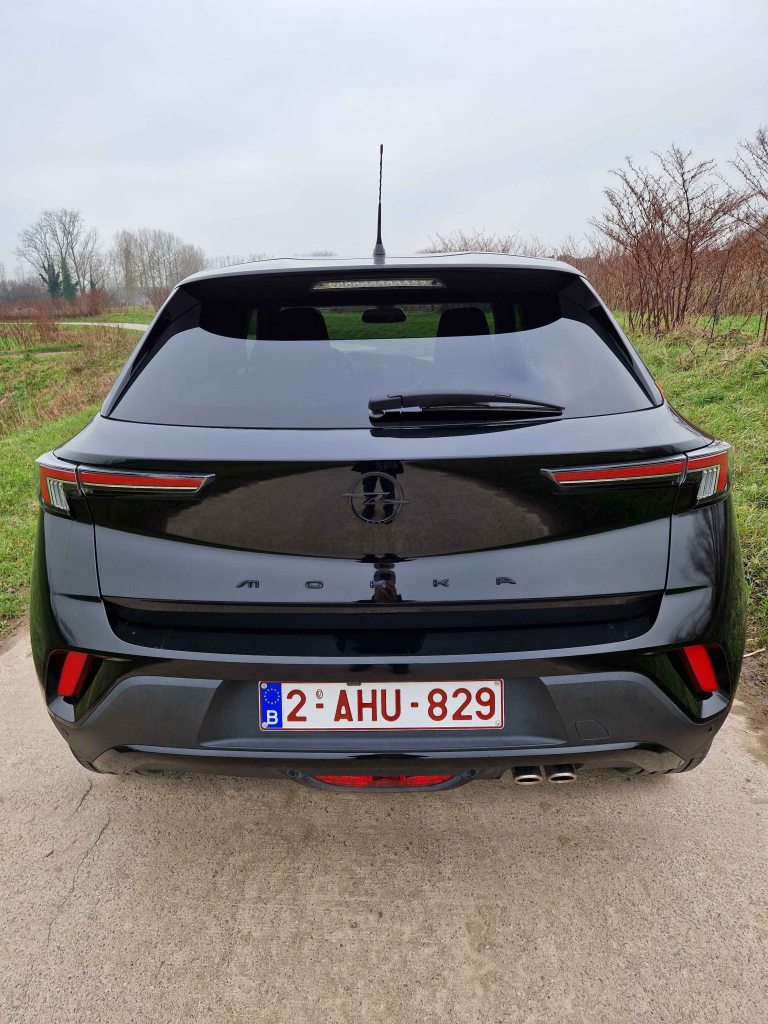
At the rear, The Mokka nameplate, executed in sharply crafted lettering, stretches in a wide landscape format to emphasize the width of the vehicle, “pure”, without irritating additives such as equipment lines or displacement abbreviations. It sits centrally on the tailgate below the legendary Blitz. Nice!
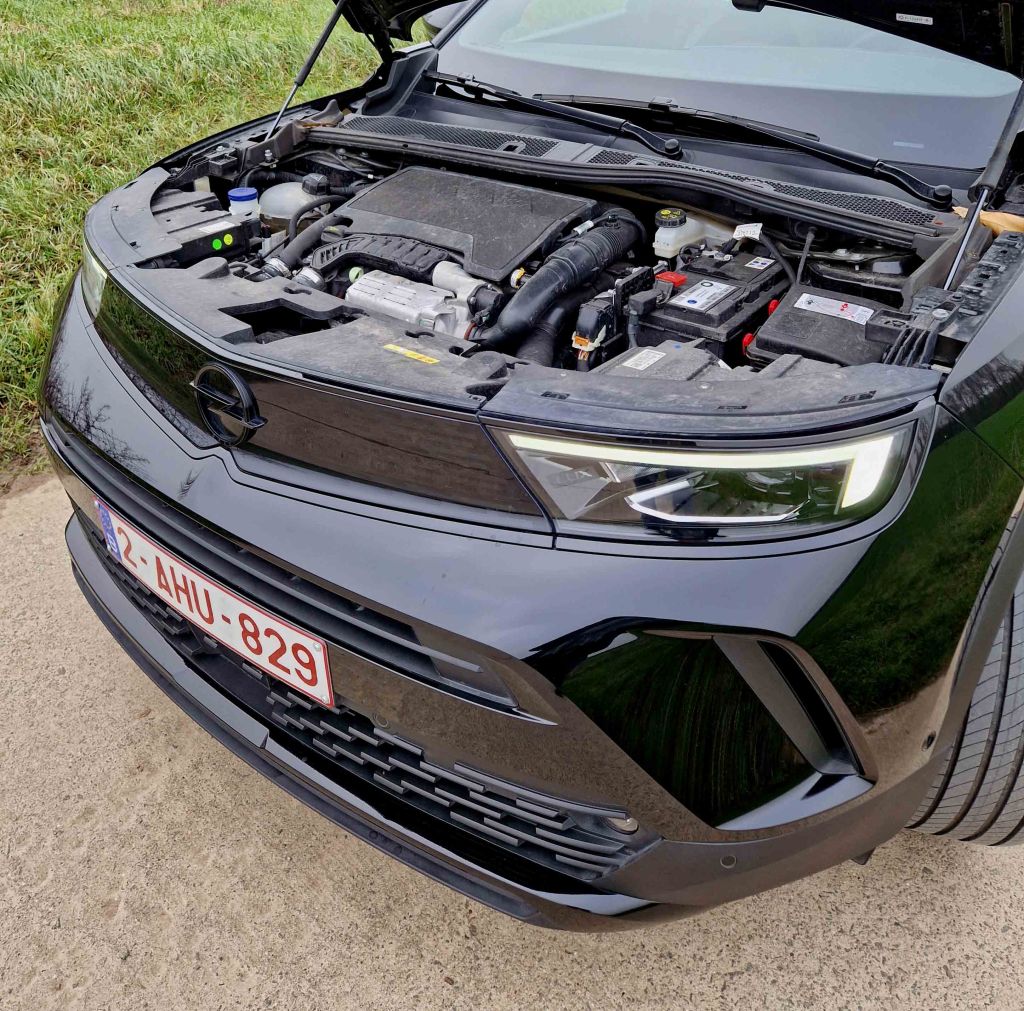
But it there are of course the well proven 1,2 litre three cylinder petrol engines with power outputs ranging from 74kW (100hp) to 96kW (130hp).
This engine family takes centre stage in the Stellantis Group and is found in virtually all brands and models. We tested here the 130 HP version coupled to the equally well proven 8 speed auto box, which we also find in many Stellantis models. Compared with the Citroen C5 X we tested with the identical drivetrain, it made a more sophisticated impression, with less vibrations and generally smoother pickup. Performance leaves also here nothing to be desired, with a top speed of a solid 200 km/h and an acceleration time from 0 to 100 km/h in 9,2 seconds. You guessed it: this is by and large the performance of the original Porsche 911. Not bad…
Of course, very Porsche untypical is the consumption: this is where enormous progress is made over the years: where the 60’s Porsche would consume well over 13 liters/100 km in town, the 1,2 litre Mokka will consume about half, and even less, with an average of 6-5,9 litres. On the open road, the differences are just as large. Cautiously driven, the vintage Porsche would consume 9-9,5 liters on the open road, the Mokka will chalk up merely 4,3 liters… These WLTP figures require a very sensitive foot, and indeed also ask for rather sensitive cruising speeds, but let’s face it, what has been reached over the years is just enormous. This, lets’ not forget, will make our modern petrol engines future proof for many years to come…
We just loved the three cylinder throb of the engine, which was overall quiet anyway, and this made driving this Mokka a genuine pleasure.
Add to all this the impeccable handling, then you understand this Mokka is indeed a driver’s car. It does not have the absolute eagerness of a pure sports car, but is stability and steering precision is certainly inviting you to drive it with spirit. It feels at home in town, as it is smooth at slow speeds, and on the Autobahnen it is a true master. This is a machine built for (very) high cruising speeds, for hours on end. On country roads, its positive handling and stability lets you also tackle the route with verve.
Efficient aerodynamics
Of course, to make this Mokka a smooth Autobahn high speed master, some detailed work had to be done. So the carmaker’s engineers optimised the new Mokka’s aerodynamics in the wind tunnel of Stuttgart University (at the Research Institute of Automotive Engineering and Vehicle Engines).
Depending on the model variant, they cut the drag factor to an excellent 0.32 cD. The basis for the aerodynamic efficiency is the new Mokka’s frontal area of only 2.27 m2.
With the aid of computational fluid dynamics (CFD) and attention to detail in the wind tunnel, Opel’s aero experts then chiseled down to the excellent drag coefficient by fine-tuning every detail that helps improve the aerodynamics. The engineers optimized the design of the new Mokka’s characteristic Opel Vizor, as well as the shapes of the A-pillars and the exterior mirrors. In addition, cladding covering the bottom of the engine compartment and the underside of the body improves the airflow beneath the car.
Other major sources of drag are the wheels, tyres and wheelhouses. The new Mokka therefore features innovative air curtains that increase aerodynamic efficiency in this area. An air curtain is an integrated duct on each side of the front fascia that creates a tall, thin jet of air across the face of the front wheel and tyre. The air curtain directs the flow smoothly across the wheel openings, decreasing the amount of wake and separation from these areas.
Need we say more? Yes actually. The Mokka also has…active aerodynamic shutters!
The new Mokka also benefits from an active shutter that further reduces drag and improves fuel efficiency by automatically closing the frontal opening when cooling air is least needed. Until recently, this innovation has been more common on more expensive cars from higher segments.
When closed, the shutter system enhances aero performance by redirecting airflow around the front of the vehicle and down the sides, rather than through the less aero efficient engine compartment.
The shutter is open or closed depending on engine coolant temperature and speed. For example, the shutter opens when the car is traveling up a hill or in hot city driving. The shutter closes when less engine cooling is required, for example at urban-road speeds.
The results of these efforts are impressive: compared with the previous model, which had a drag coefficient of 0.35, CO2 emissions in the WLTP2 cycle are up to 9.0 g/km lower, while drag at motorway speeds has been reduced by 16 per cent.
High tech LED headlamps and more…
But not only clever physics have been put in the Mokka. It has also a (very) fair share of high tech electronics. All models are equipped with latest generation LED lamps – from daytime running lights in typical Opel graphics to headlamps and front fog lights. The Mokka has adaptive IntelliLux LED® matrix light with a total of 14 elements. Cruise control, a smoothly operating lane assist and forward collision alert with automatic city emergency braking and pedestrian detection operates at speeds above 5.0km/h. Below 30km/h, the system can bring the vehicle to a complete stop. If the speed exceeds 30km/h however, speed is reduced and the driver must actively brake…
Inside: Opel’s “Pure Panel”
As we said, the good design continues. The structure of the Pure Panel, along two widely stretched screens, strikes a balance between digitalization and purely intuitive operation, without needing to navigate into sub-menus. We simply loved it.
The connectivity is also well served: The top of-the-line Multimedia Navi Pro offers a high-resolution 10-inch colour touchscreen; in this configuration, the driver information display covers more than 12 inches. The Apple CarPlay as well as Android Auto compatible multimedia systems have integrated voice control.
The new Mokka also offers the OpelConnect service with a direct link to breakdown assistance and eCall. If the airbags or seatbelt tensioners deploy in an accident, eCall contacts the local Public Safety Answering Point (PSAP) automatically.
Comfort and style…
Thorough seating engineering is typical of Opel. Various six-way ergonomic seats are available, which are individually adjustable. You can choose between alcantara or classic leather. What seduced us also was the GS trim of our test car. Alloy wheels in TriColor black, a black roof, black exterior mirrors and skid plates front and rear in SUV design. The Opel Blitz, the Mokka nameplate and the Opel Vizor frame are in high-gloss black. There is a characteristic red signature line across the car. The interior features a black ceiling, aluminium pedals and red décor. The black seats with side cushions in premium leather-look have red stitching and design accents…
Conclusion
This Mokka will wet your appetite. It’s good looking, lively, frugal, a pleasure to drive, well built and finished. It is equally at home on fast Autobahnen for fast cross country Gran Turismo driving as well as urban errands. It’s tough, built for a long life. To sum it up, it’s Opel…





































 Autoprova - for the Connaisseur