ŠKODA OCTAVIA RS iV: sporting and “green”…

Skoda launches its first plug-in hybrid in the performance-oriented ŠKODA RS family.

The new ŠKODA OCTAVIA RS iV has been fitted with a 1.4 TSI petrol engine and an 85-kW electric motor delivering a combined power output of 180 kW (245 PS). Featuring black details on the bodywork, the OCTAVIA RS iV can immediately be recognised as sporty top-of-the-range variant of ŠKODA’s bestseller, now in its fourth generation.

The Czech car manufacturer will offer the new OCTAVIA in three other electrified versions as well. The OCTAVIA iV is a plug-in hybrid delivering 150 kW (204 PS) and is available in the Ambition and Style trims. Two e-TEC variants producing 81 kW (110 PS) and 110 kW (150 PS) make use of mild hybrid technology for the first time at ŠKODA.

Christian Strube, ŠKODA Board Member for Technical Development, said, “By introducing the OCTAVIA RS iV, we are starting a new chapter in the success story of our RS portfolio. We are using plug-in-hybrid drive in a sporty top-of-the-range model for the first time. In the new OCTAVIA RS iV, this both increases performance and reduces fuel consumption as well as CO2 emissions.”

ŠKODA has fitted the OCTAVIA RS iV with a 1.4-litre TSI petrol engine (110 kW / 150 PS) and an 85-kW electric motor. Together, they have a combined power output of 180 kW (245 PS) and offer a maximum torque of 400 Nm, which is transferred to the front wheels via a 6-speed DSG. The car’s CO2 emissions are approximately 30 g/km in the WLTP cycle*, meaning it already complies with the new, stricter EU6d emissions standard for all newly registered vehicles in the EU, which will come into force from 1 January 2021.

The drivetrain is mostly the same as we have found in the hybrid Passat we tested for you. Just look alos in our columns.  

The high-voltage lithium-ion battery has a capacity of 37 Ah equating to 13 kWh, thereby giving the car an all-electric range of up to 60 km in the WLTP cycle*.

As the 330 Nm of torque provided by the electric motor are available straight away, the RS iV can pull away quickly. In Sport mode, which allows drivers to make use of the car’s full power output, the OCTAVIA RS iV accelerates from 0 to 100 km/h in just 7.3 seconds. Its top speed is 225 km/h. The progressive steering that comes as standard and dynamic tuning of the sports suspension that is typical for the RS range cater to energetic driving styles.

Sporty black accents provide distinguishing visual features

The ŠKODA OCTAVIA RS iV has specific LED fog lights and black 18-inch alloy wheels as standard; the brake callipers in RS-typical red catch the eye. 19-inch alloys are available as an option. The ŠKODA grille, air curtains, diffuser on the RS-specific front apron, aeroflaps, diffuser on the rear apron and window frames all come in sporty black. The hatchback sports a black RS rear spoiler; in the estate, the roof spoiler matches the car colour.

Oliver Stefani, Head of ŠKODA Design, explained, “We have given the already dynamic shape of the new OCTAVIA an even sportier appearance using familiar RS insignias. With its numerous black design details, such as the ŠKODA grille, front apron, rear diffuser and alloy wheels, the car is immediately recognisable as a member of our RS family.”

Dynamic, RS-style interior
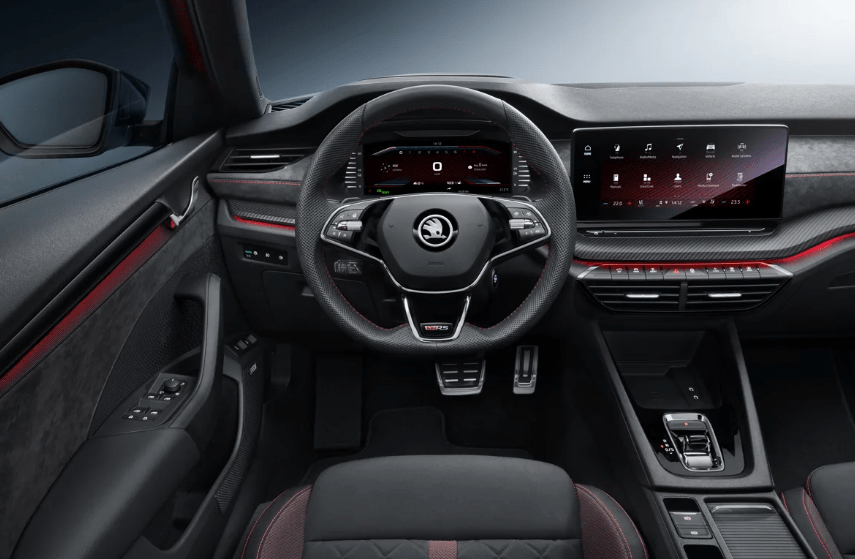
Looking inside the OCTAVIA RS iV, the predominantly black interior stands out. The three-spoke leather multifunction sports steering wheel bears a vRS logo and features paddles for operating the DSG. The front sports seats are upholstered in black fabric, whilst the optional Ergo seats come with Alcantara and leather upholstery as well as seat-depth adjustment. The seats are adorned by an RS logo and coloured decorative stitching in red or silver-grey, which can also be found on the leather steering wheel, on the armrests and on the Alcantara-covered dashboard. Decorative strips in an RS look and pedals with an aluminium design round off the sporty impression.

OCTAVIA iV plug-in hybrid delivering 204 PS

In addition to the RS variant of the OCTAVIA iV, ŠKODA is also offering plug-in-hybrid drive for the Ambition and Style trim levels. Here, the 1.4 TSI petrol engine and the 85-kW electric motor provide a power output of 150 kW (204 PS) and a maximum torque of 350 Nm. This plug-in-hybrid variant can also cover an electric range of up to 60 km in the WLTP cycle* and is fitted with a 6-speed DSG, operated using shift-by-wire technology. Its CO2 emissions are approximately 30 g/km*. The OCTAVIA iV also complies with the EU6d emissions standard.

The lithium-ion high-voltage battery, with a capacity of 37 Ah equating to 13 kWh, used in both iV models can be conveniently charged at home using a standard household plug socket or a wall box. The charging port is concealed in the driver’s side of the front bumper. A regular 12-volt battery is located in the boot, which has a capacity of 450 l in the hatchback and 490 l in the estate. The fuel tank can hold 40 l – just five litres less than in OCTAVIAs that are powered purely by a combustion engine.

Two eTEC engines boasting mild hybrid technology

The two eTEC versions of the OCTAVIA are making their ŠKODA debut. They will be the brand’s first production cars to feature mild hybrid technology when they start to roll off the line this summer. When combined with a 7-speed DSG, the three-cylinder 1.0 TSI producing 81 kW (110 PS) and the four-cylinder 1.5 TSI outputting 110 kW (150 PS) make use of a 48-volt belt-driven starter motor and a 48-volt lithium-ion battery that is located under the front passenger seat and has a capacity of 0.6 kWh. Both models can be identified by a specific badge on their tailgate.

Mild hybrid technology enables energy to be recovered when braking so that it can be stored in the 48-volt battery. This energy is used to support the combustion engine by providing it with an electrical boost of up to 50 Nm and, depending on the situation, makes it possible for the engine to switch off completely, letting the vehicle coast. As soon as engine power is required again, the motor restarts the engine in a fraction of a second. The stop/start function also works faster and more conveniently thanks to the use of the belt-driven starter motor. In addition, the engine generates less noise and vibrations when starting and the 48-volt battery is able to charge the regular 12-volt battery using a DC/DC converter. In total, the mild hybrid technology used for the two ŠKODA eTEC engines allows for savings of up to 0.4 l of fuel per 100 km.

Hans Knol ten Bensel

E-power for all of us: the Dacia Spring

2020 – Dacia SPRING… will lift your E-hearts…

It was only a matter of time:Renault puts its massive experience in designing and building E-vehicles even more to the wide public with a full electric Dacia model.

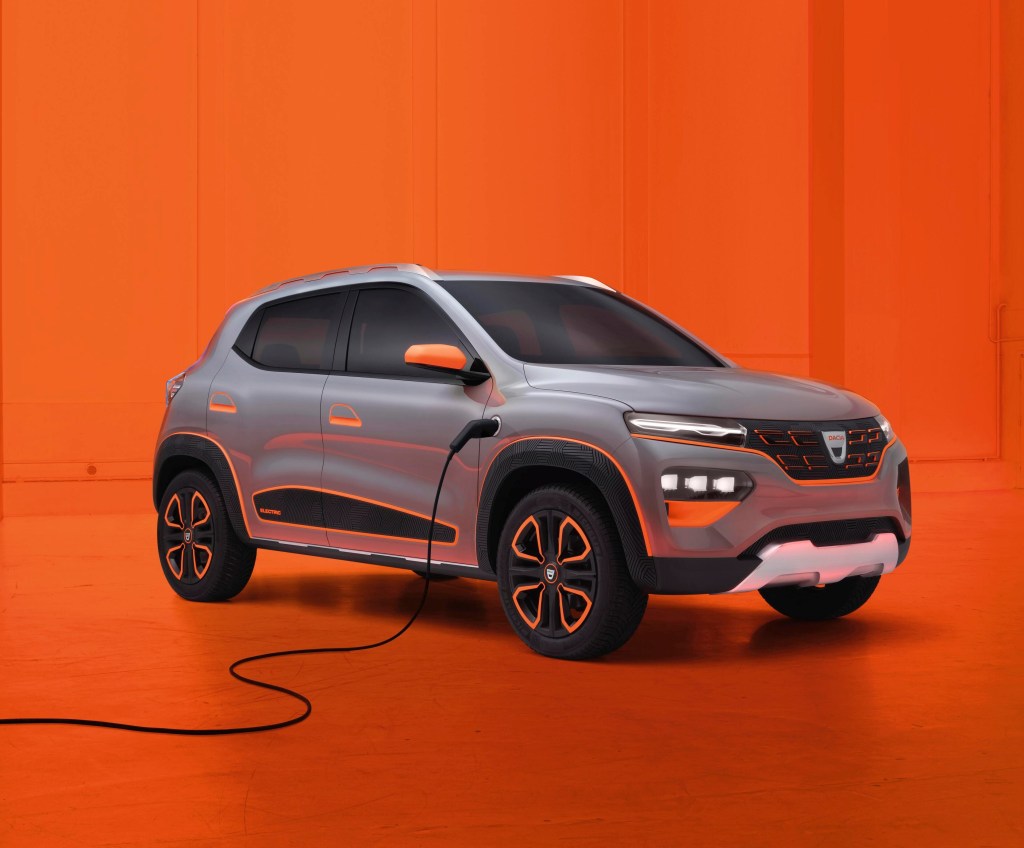
And here it is: the Dacia Spring. It caters for the young at heart with a city car that has a distinctive SUV look and modest dimensions, making it the ideal car for everyday use.

2020 – Dacia SPRING has an appealing light signature…

The light and compact series version of Dacia Spring is aimed at a driving range of approximately 200 kilometers (WLTP).

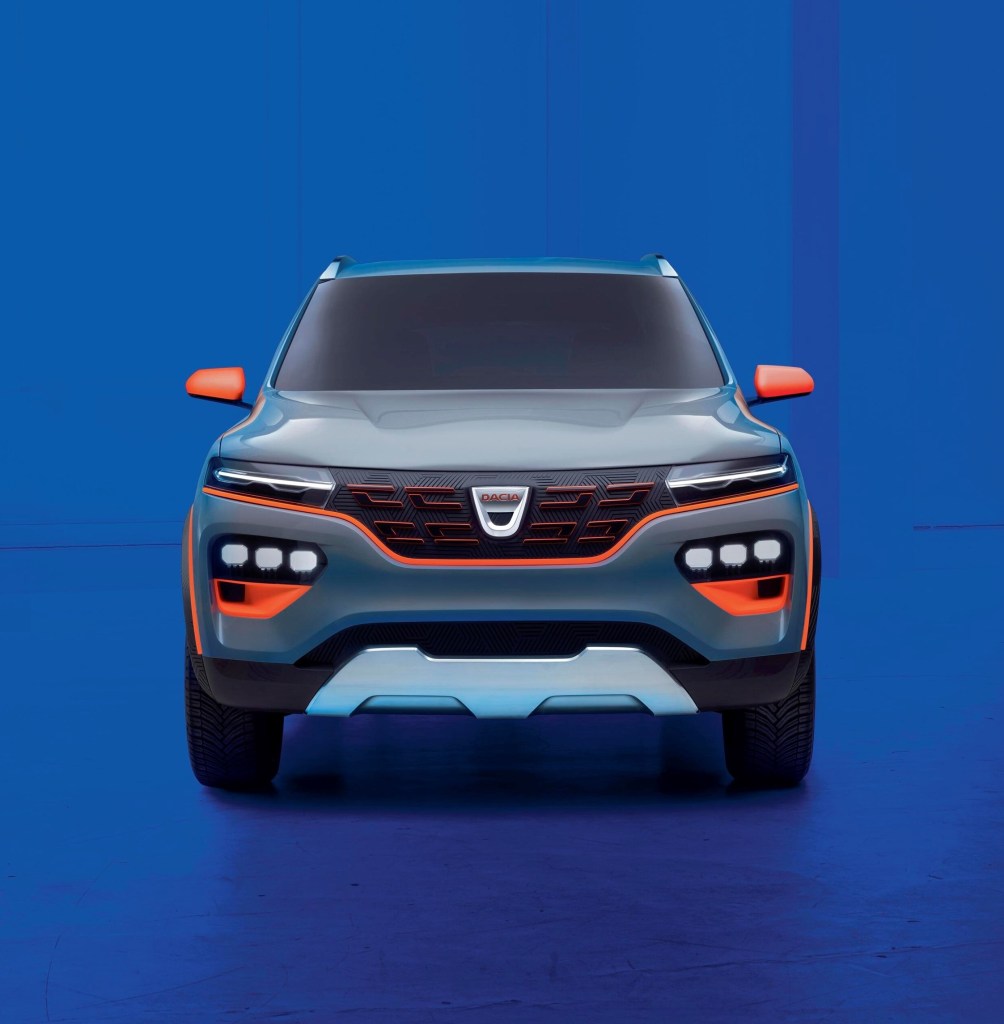
It has also quite appealing looks and colours. What to think of a body in pastel Mouse grey with accents in Matt Fluo Orange, painted in the massive protective strips for the wheel arches, roof bars, and door sills…

The Dacia Spring has an increased ground clearance, integrated base plates in the front and rear bumper, to show its mettle in today’s city jungle…

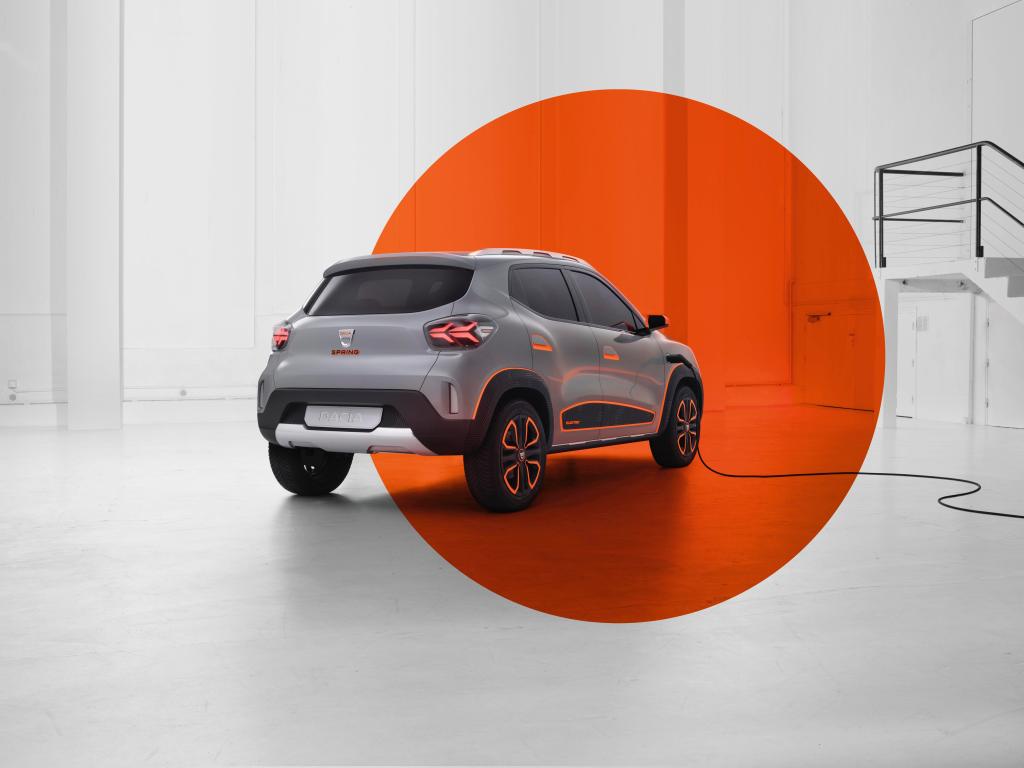
2020 – Dacia SPRING rear lights with typical “Y” signature…

A lot of attention was paid to the lighting functions of the car. At the front the ‘full LED headlamps split into two levels: a horizontal line for the upper part and four graphics elements integrated into the bumper. At the rear, the four “full LED” lights form one double “Y”. These light blocks indicate the future light identity of the Dacia models will look like.

The Dacia Spring series version will be available in 2021. Of course we will be keen to have a closer look “in the flesh” and drive it!

Hans Knol ten Bensel

Renault launches its electric offensive…

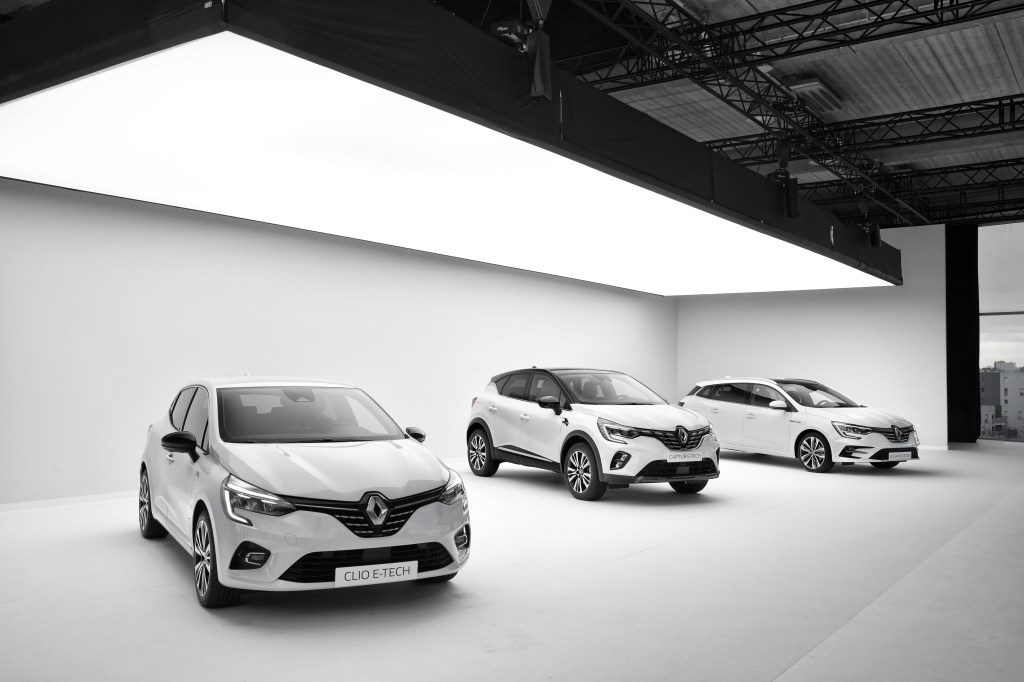
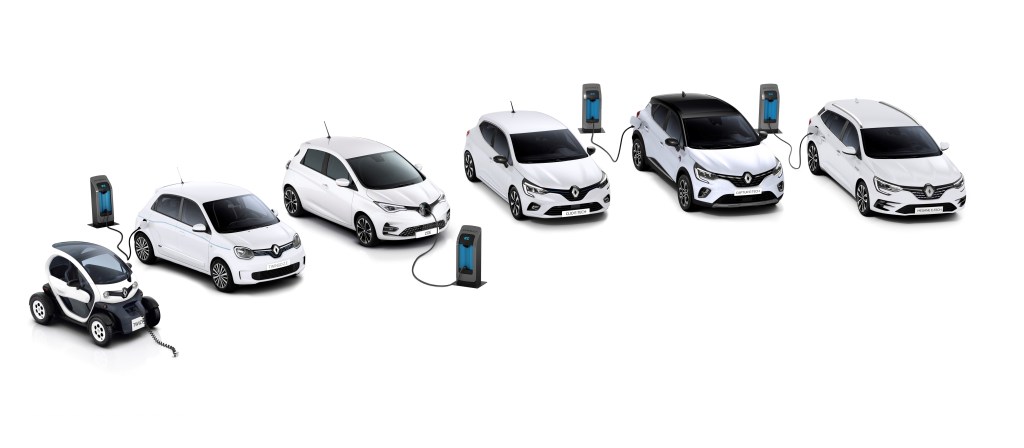
2020 – E-TECH Family: New Clio, Captur and Mégane Estate…

Renault has an ever wider choice of electric and electrified models in store now.

First of all the clever E-TECH, offering hybrid and plug-in hybrid powertrains on the new Clio, new Captur and new Mégane Estate. Renault drew on its vast Formula 1 experience as well as its know how in electrification to develop this E-TECH system. We will explain this very interesting system in a separate report.

2020 – Range E-TECH / Z.E.

There is also the new Twingo Z.E., also becoming 100% electric, and the new ZOE is now also available in a “Riviera” limited series.

Last but not least there is also A MORPHOZ electric concept car, of which more soon in a separate report. Renault announces here that it (re)invents the future of family mobility, with a car which adapts to the changing needs of everyday life and integrated into the electric ecosystem. Stay tuned!

Hans Knol ten Bensel

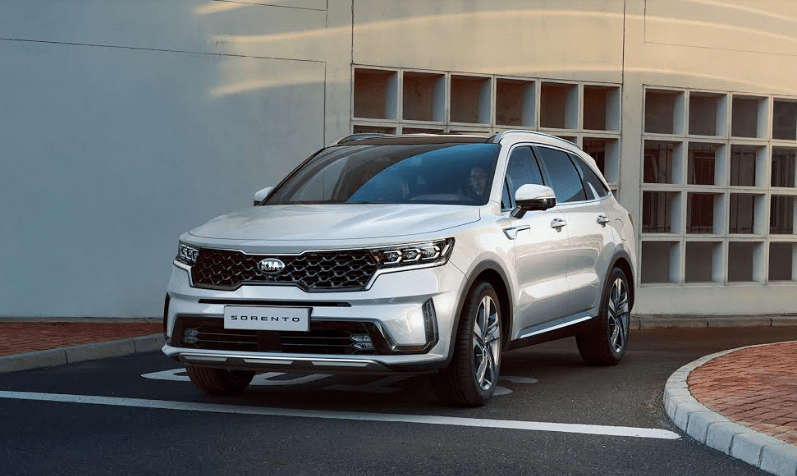
Kia reveals first images of next-generation Sorento…

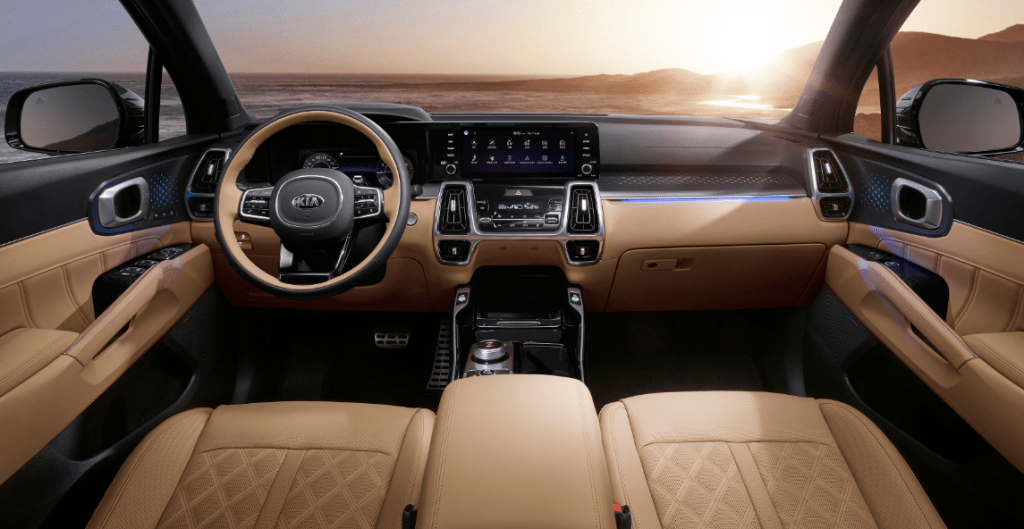
The concept of ‘refined boldness’ inspired Kia’s designers, and they came up with a more confident, mature and desirable exterior design. But that is not all. The cabin is also definitely upscale with premium material quality.

Of course, the new Sorento is crammed with progressive connectivity, driver assist and infotainment technologies. It makes its first public appearance at 2020 Geneva International Motor Show

More to come!

Hans Knol ten Bensel

A new Citroën C3…

It is high time that we start talking in our columns about the iconic brand of the “Double Chevron”with some important news…

Citroën has very recently unveiled its New C3, marking a further evolution of the Brand’s best-seller worldwide, a real success with 750,000 sales achieved by the 3rd C3 generation since its launch at the end of 2016.

Did you know that the C3 is sold almost 4,5 million times since its launch? It is the best-seller of Citroën range, belongs to the top 5 in Europe in its segment at the end of December 2019 and the 3rd best-selling car in France.

The new C3 has a proper look. It doesn’t look like any other vehicle. It builds on its differences with a colourful personality and very good comfort. It now stands even more out with new LED headlights, 97 exterior possible combinations, 3 new roof stickers, 2 new wheel rims and 3 interior colour ambiences. It now has new Airbump® designs and up to 12 driving aids, with a lot of connected services: Connect Assist for the SOS assistance, Connect Nav with its 7 “ touch tablet and Connect Play for smartphone duplication. Equipment, completely in the tune of the times, which makes everyday life easier…

New C3 will arrive at dealerships starting in June 2020.

Hans Knol ten Bensel

We drove the Fiat Panda Cross 4 x 4: your cute, compact companion on any road

Who doesn’t want a car which is the quintessence of  ” less is more “and takes you literally everywhere? Such a car is the Panda Cross we drove here for you. A car which embodies all the “savoir faire” of a great  manufacturer who is an absolute genius in making small cars. This Panda we drove is moreover full of unique panache, as it combines the clever two cylinder “TwinAir” petrol engine with a very comptetent 4 WD drivetrain.

This engine with its twin cylinder sound adds to the endearing character of this Panda, as it recalls the original sound of the (also) vertical twin of the fifties Cinquecento.

Of course, this is where the comparison with its iconic predecessor ends. Because the present day Panda has sufficient room for four grown ups, is light years further when it comes to high speed stability,  comfort and last but not least passive safety.

But before we take the wheel, just a few words here about the cute looks of this Cross Panda. The front of the car already tells the story. Fog lights are snugly set into the matte black grille, the skid plate suggests clearly that this Fiat is not afraid of hitting rougher terrain. Cute accents are further found alongside this Panda, with impressive side mouldings and further culminate in the rear end, where also a skid plate is found. It also has larger mountain snow tyres, which raises the ground clearance to 161 mm and increases wading depth to not less than 410 mm.

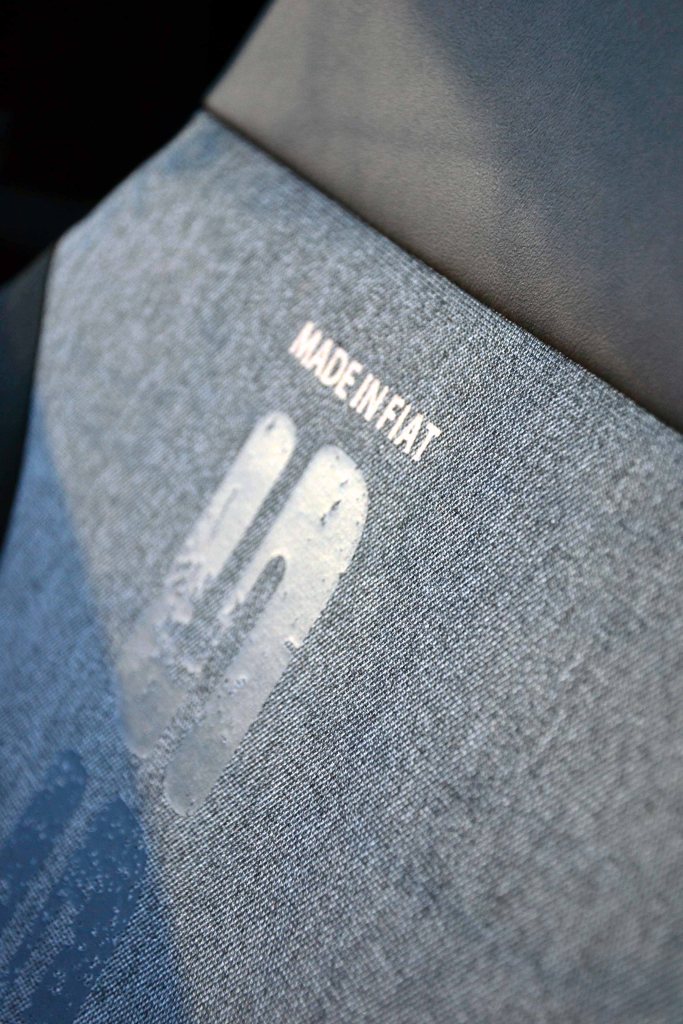
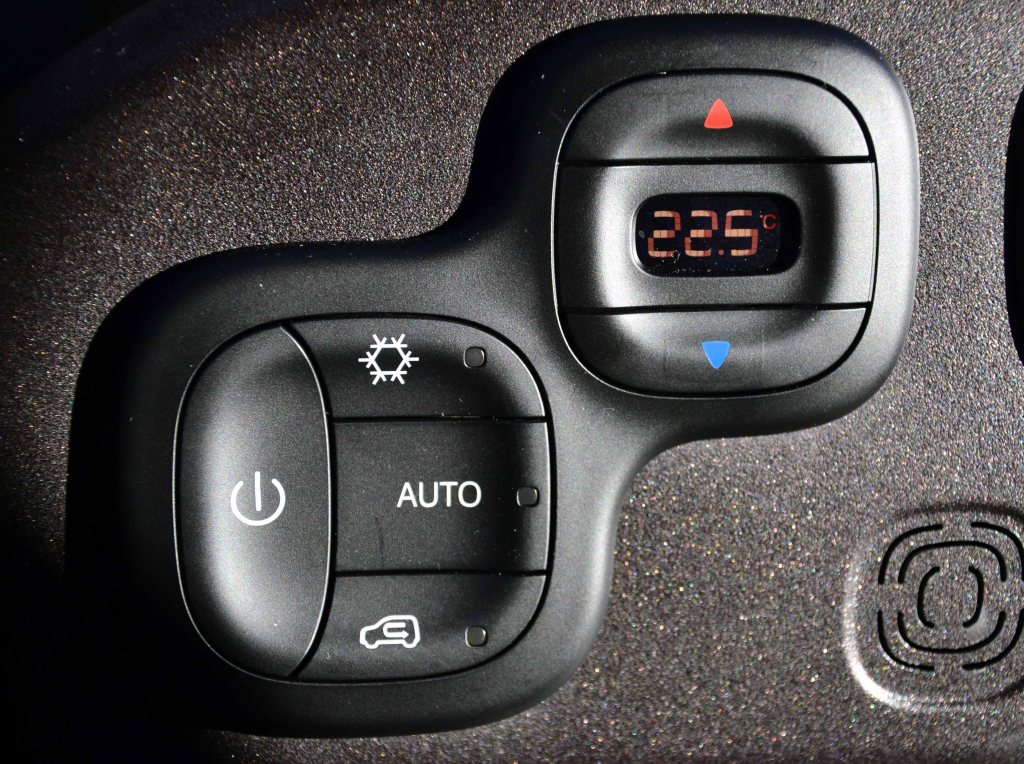
The cabin with its typical rounded contours in the iconic Panda styling language host clearly readable instruments and knobs.

Rediscover (off-road) pleasure…

What has remained in this iconic Panda over the years is the absolute driving fun. Sliding behind the wheel you will find immediately the right knobs and handles, the cute gearlever literally falls into your hand.

The pleasant throb of the eager TwinAir is music in your ears, as it revs up swiftly and gets you going with verve.

Of course, we live in energy conscious times. So you shouldn’t let your enthusiasm get the best of you, and refrain from higher revs.  Change up at 1700 rpm or so, which sounds way too low as your ears are used to the typical throb of a four cylinder. But rest assured, you are doing the right thing. You are also well advised to choose the “eco” mode, which shifts the engine management towards efficient combustion at lower revs and partial load. The rewards are impressive. Urban fuel consumption remains below 7 litres, with enough pulling power left for an active driving style. Drive it in “eco” mode on the open road, and the consumption is dwindling to around 5 litres. A remarkable feat for any 4WD! The manufacturer quotes 117 g/km as CO2 emissions.

But Panda driving is also about (re)discovering driving pleasure. If you are in the mood, forget the eco mode, let the thoroughbred twin sing full breasted, and every metre you travel is just epic. You accelerate faster than a 500 “esse esse” Abarth Corsa of yesteryear, as this TwinAir 875 cc unit has not less than 85 horsepower, and the hissing throb at higher revs and full throttle is just about the same as its famous ancestor. Your Panda sprints under your able hand (and foot) in under 15 seconds from 0 to 100 km/h, and soon you hit the top speed of around 160 km/h. The dapper Panda will cruise all day at 130 km/h and therefore is a perfect all rounder which, despite its initial urban and off-road vocation, is also a good companion on longer motorway trips.

Long distance comfort is greatly helped by the good suspension, which admirably swallows rough tarmac and pavés, and also the fine sound deadening and vibrationless drivetrain are just right here.

In our columns you can also read more about our driving impressions  of the “Mild Hybrid” version of the Panda and 500, which have a very docile 70 HP three cylinder engine under the hood.

A true master offroad…

Due to its low kerb weight (1090 kg), which gives it about the same power to weight ratio as a Diesel Range Rover and last but not least its compactness this Cross Panda is a formidable mount in snow buried mountain villages and pass roads. Not surprisingly it is an absolute favourite in these regions. The low first gear lets your Panda climb the steepest terrain hills, (Fiat says up to 70 % and slide slopes up to 55 %) and it also has a terrain control device, sitting on a round knob between the front seats. There are three settings. One is for normal road driving, and when the road is good, 98 % of the power will be sent to the front wheels. Then there is the option/position off road, and now the car’s differential locks to offer permanent four wheel drive, and the electronic stability control acts to brake the wheels that are slipping. Of course, you also have to come safely downhill, and that is where the third position, “hill descent”, comes in. This uses the car’s electronic stability and the ABS systems to maintain a constant speed.

Conclusion

The Panda is already endearing in its cute “cross” livery. But there is more. It reveals its pleasant character once you are behind the wheel, and it is not only fun in town, it also excels offroad, and in muddy terrain, it can be more than a match for heavier (Defender) Rovers and the like. Its low weight and nimble dimensions and above all short overhangs see to that.

So to get a truly go anywhere, well equipped, compact, frugal 4×4 for a price around € 17.000 Euro’s, which is already an icon among car enthusiasts, then this Panda is a steal!

Hans Knol ten Bensel

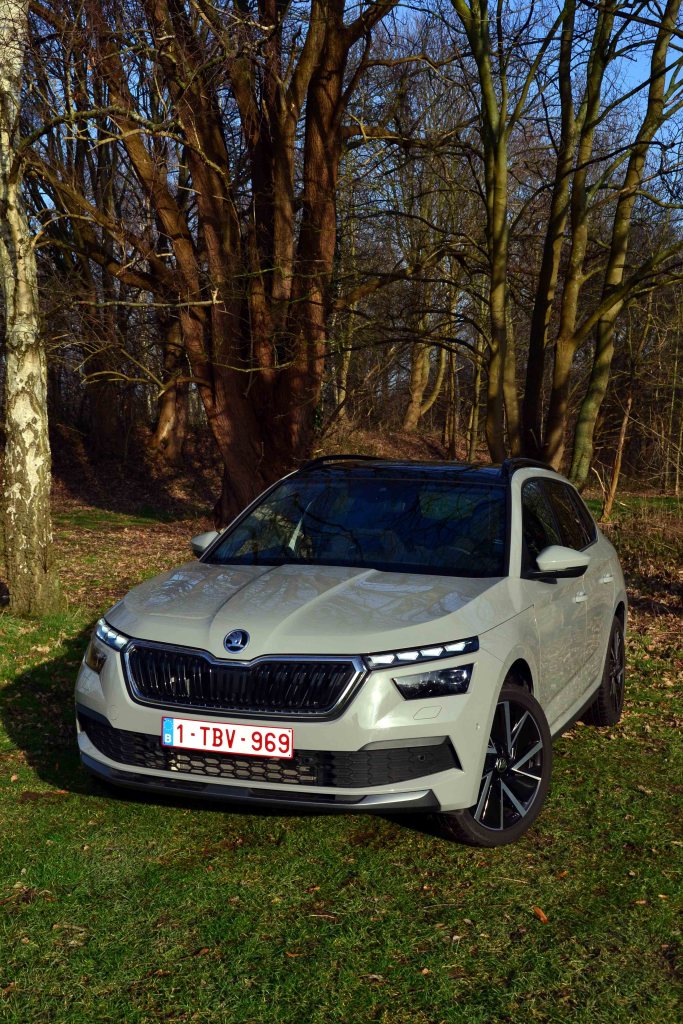
We drove the Skoda Kamiq 150 HP 1,5 TSI DSG: the beauty of agile power…

Who does not dream about it? Owning and driving a compact and practical hatch with the power to weight ratio of an early Porsche 911? A car which comfortably seats four and has all the comfort, infotainment and driver assistance amenities we come to expect from modern mid-size cars, yet has the handling and agility of an early Audi TT?

A car which is well built and reliable, and besides all these qualities doesn’t break the bank? Well, such a car is this Skoda …

Hans Knol ten Bensel

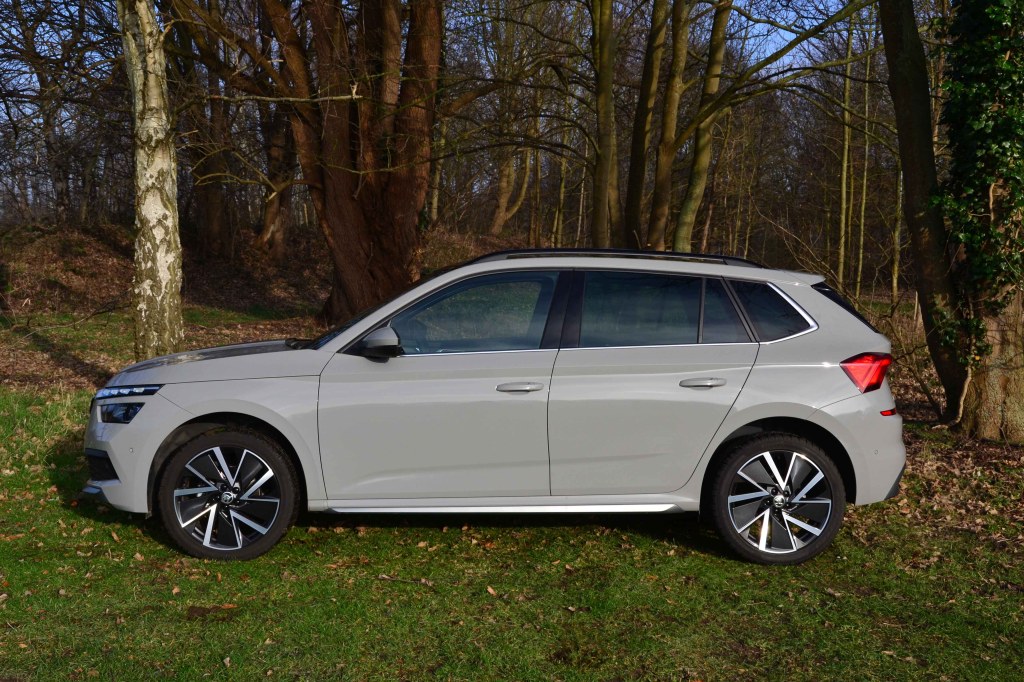
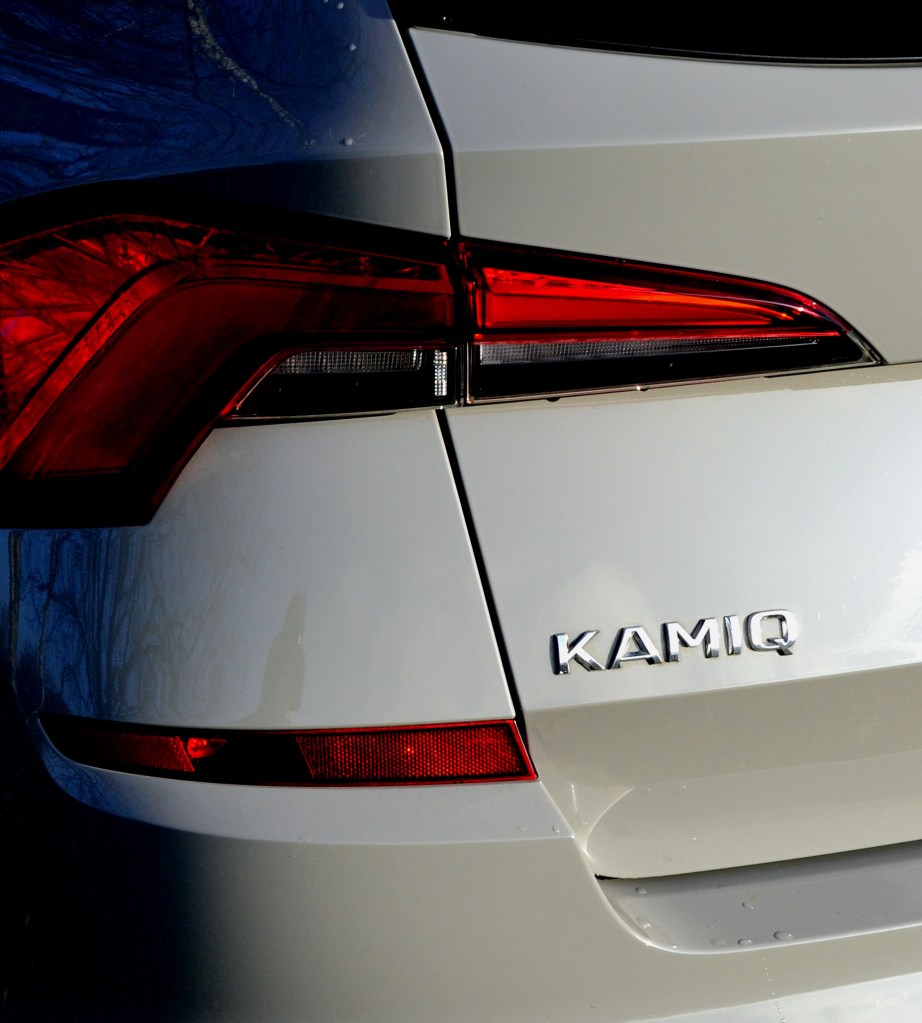
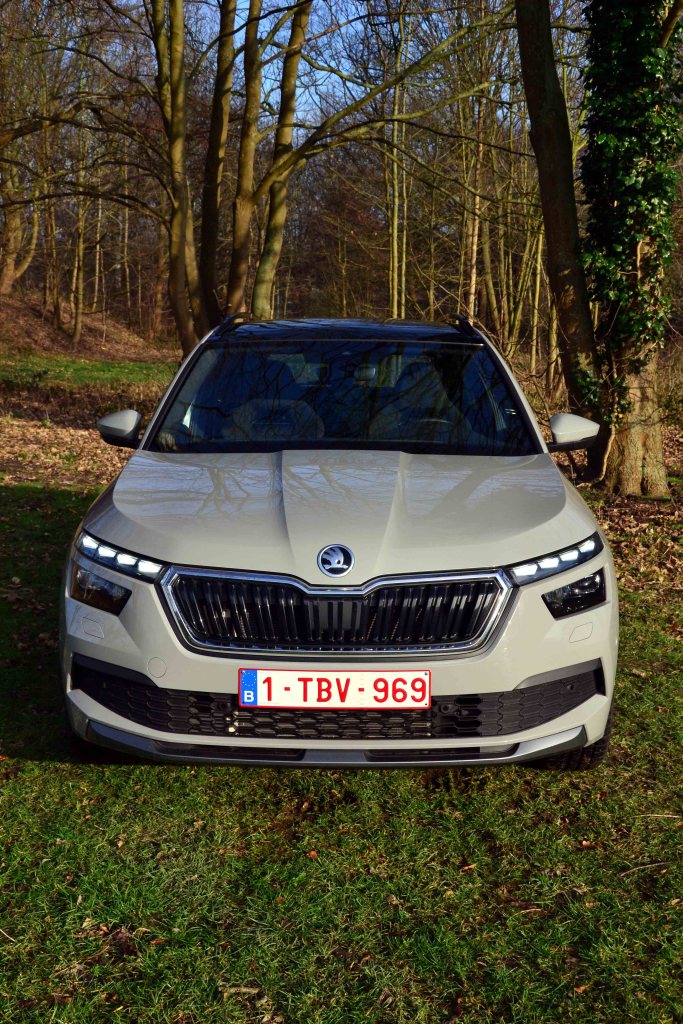
Walking to and around the car, this Kamiq shows to you it’s a true Skoda. The angular contours of the bodywork are typical for the Skoda styling language, the overall body shape betrays the intention of the designers to offer excellent use of available space. They succeeded: its compact, 4241 mm long body, offers for four to five grown ups enough leg- and headroom, and there is not less than 400 – 1395 liters reserved for their luggage. Actually, did you know that the word KAMIQ comes from the language of the Inuit people living in northern Canada and Greenland?

It describes something that fits as perfectly as a second skin in every situation. Well this is certainly true for this Skoda…

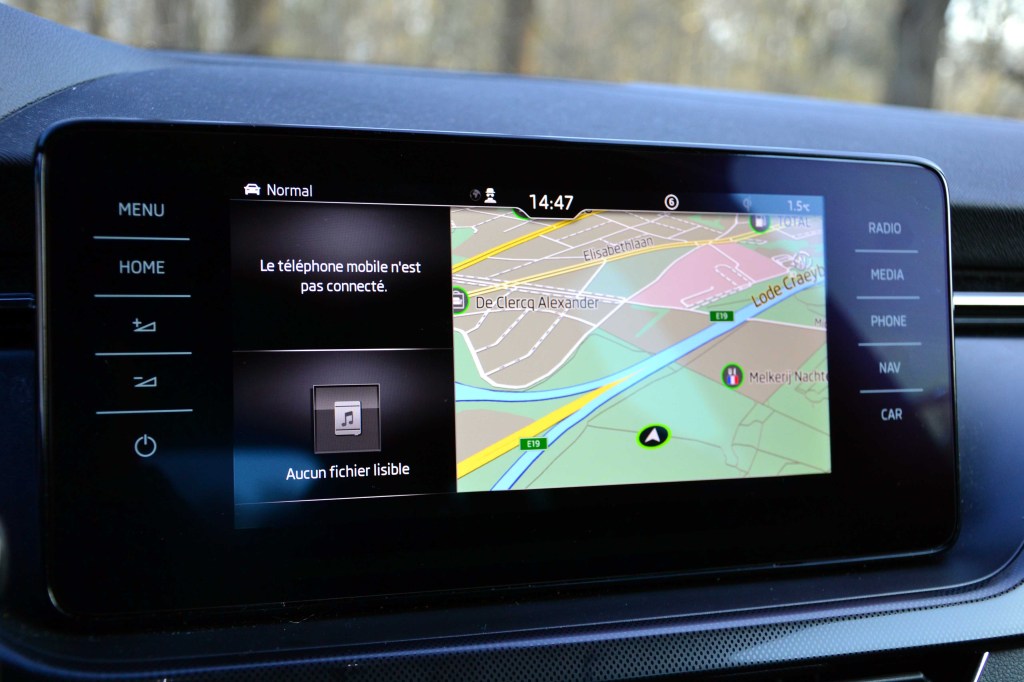
The cabin is more than pleasant, albeit with a no nonsense Skoda flair, but being nevertheless far from spartan. On the centre of the well designed dashboard sits a large 9,2 inch touchscreen, offering all the modern state of the art infotainment one could wish for. Using the “Amundsen” navigation is a breeze, one can pinpoint a chosen destination with your fingertips, and pinch the map size with a brief finger movement. Ventilation, audio, hooking up your phone, everything is intuitive and immediate.

Driving assistance systems were in abundance present in our test car, such lane assist, ACC to name a few. It made driving this Kamiq both in town and the open road a totally “zen” and effortless experience. Driving at night is enhanced with Full LED headlights with curve illumination and dynamic indicators. Seats are excellent, and for long drives there is also Driver Activity Assistant, so it warns you when it detects any fatigue.  

Formidable engine and drivetrain

Good modern petrol engines coupled to superb automatic transmissions are still hard to beat when it comes to sheer performance and driving pleasure.

The smoothness and panache of the 150 HP 1,5 litre 16 valve direct injection petrol engine has to be experienced to be believed. It offers maximum its maximum power between 5 and 6000 rpm, its maximum torque of 250 Nm is delivered between 1500 and 3500 rpm. It revs beautifully with a smooth staccato up to 6500 rpm, and is marvelously coupled to a superb 7 speed DSG transmission, which marries alertness with velvety and fast changes.

The pulling power which unfolds immediately at the slightest hint of your right foot is abundant to say the least, and the objective performance figures amply show it: the sprint from 0 to 100 is swiftly done in 8,4 seconds, and top speed is an impressive 212 km/h. Needless to say that this Kamiq is a good companion on long, fast Autobahn trips as well as tours on curvy mountain and country roads.

But also town driving is a pleasure. Its compact dimensions, the ample torque, the smooth engine and superb transmission see to that. Of course it takes a very gentle right foot to keep consumption down in urban driving, but every soul knows that power costs money, and this is also true for E-cars, by the way. Average consumption is quoted at 5,1 liters/100 km, and it was no trouble at all for us to stay around the 6 litre mark and below it per 100 km. CO2 emissions are quoted at 116 g/km CO2.

Infotainment and driving aids…

The Kamiq in the tested Style equipment version has what it takes to keep you happy behind the wheel. As we said, you are looking at a 9,2 inch touchscreen with easy and very intuitive to handle and excellent “Amundsen” navigation.

Impressive for its class is also the digital instrumentation with a choice of different views, ŠKODA Sound System with 9 speakers, subwoofer and amplifier, DAB+ digital radio, just to name a few. We already mentioned the lane, park assist and Adaptative Cruise Control.

Conclusion

A compact but astonishingly roomy four/five seater, which handles beautifully, has with this 150 HP thoroughbred engine plenty of character and panache and offers tons of driving pleasure. On top of that it superbly built, timelessly styled and last but not least is reliable and offers very good value for money.

So of yo are looking for a practical car which drives like an agile “pur sang”, make this Skoda your own…

Hans Knol ten Bensel  

ŠKODA ENYAQ: this will be the name of ŠKODA’s first all-electric SUV…

ŠKODA’s first electric SUV based on the Volkswagen Group’s Modular Electrification Toolkit (MEB) is to be launched in series production. It is the next of the series of more than ten electric models that will be launched under the ŠKODA iV sub-brand by the end of 2022. It is the brand’s second all-electric vehicle after the ŠKODA CITIGOe iV.

By 2025, ŠKODA expects all-electric vehicles and models with plug-in hybrid drives to account for 25% of sales. By 2021, the car manufacturer will have invested two billion euros in the development of electric models and a holistic, interconnected ecosystem for modern and environmentally friendly mobility solutions.

Of course, a proper name had to be found. With its first all-electric SUV, ŠKODA is establishing a new nomenclature that combines the ‘E’ in reference to electromobility with the ‘Q’ that characterises the final letter of ŠKODA’s successful SUV family.

The name is derived from the Irish name ‘Enya’, meaning ‘source of life’. It will indeed be a new source of mobility for Škoda…

More to come , as we are driving at the moment the impressive ŠKODA Superb Scout and have driven recently also the Kamiq, so test reports will follow soon!  

Hans Knol ten Bensel

We drove the VW Passat GTE Variant: a bestseller goes hybrid…

The VW Passat is a giant. More than 30 million times sold, and it is the world’s best-selling mid-class model. When VW brings out a plug-in hybrid version of this icon, you can expect perfection.

So we were very anxious to drive the latest version of this PHEV, face lifted in autumn last year. Indeed, VW builds the GTE already a few years. Thanks to the dynamic PR people of D’Ieteren VW, we had one soon for a test drive.

With this facelift, the battery’s energy capacity has been increased by 31 percent to a total of 13 kWh. Does this mean we can drive it on E-power throughout our cities every day, and it is enough to just plug it in at night?

Also can we achieve those very low consumption values on the open road, when this Passat chooses the ideal power combination between combustion and E-power?

We were keen to find out. Just read further…

Hans Knol ten Bensel

A clever plug-in hybrid system…

The new Passat GTE has the best of both worlds: it has the latest version of the turbocharged stratified injection engine (1.4 TSI) under the hood, and of course an electric motor. This TSI engine is good for 115 kW / 156 PS.

The electric motor is quite powerful, and generates 85kW / 115 PS. The new high-voltage battery sits , like its 9,9 kW predecessor, in the vehicle floor in front of the rear axle, barely taking up luggage space. Total system power is not less than 218 HP, with a 400 Nm of torque.

As a result, performance is brilliant: 0 to 100 km in merely 7,6 seconds, and top speed of not less than 225 km/h. Need we say more?

DSG DQ400 E

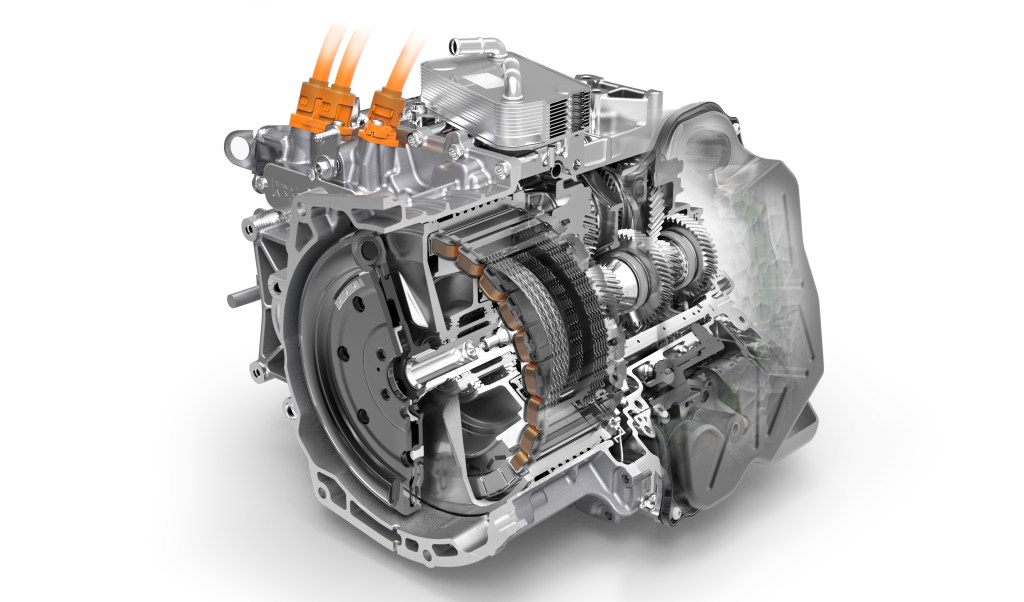
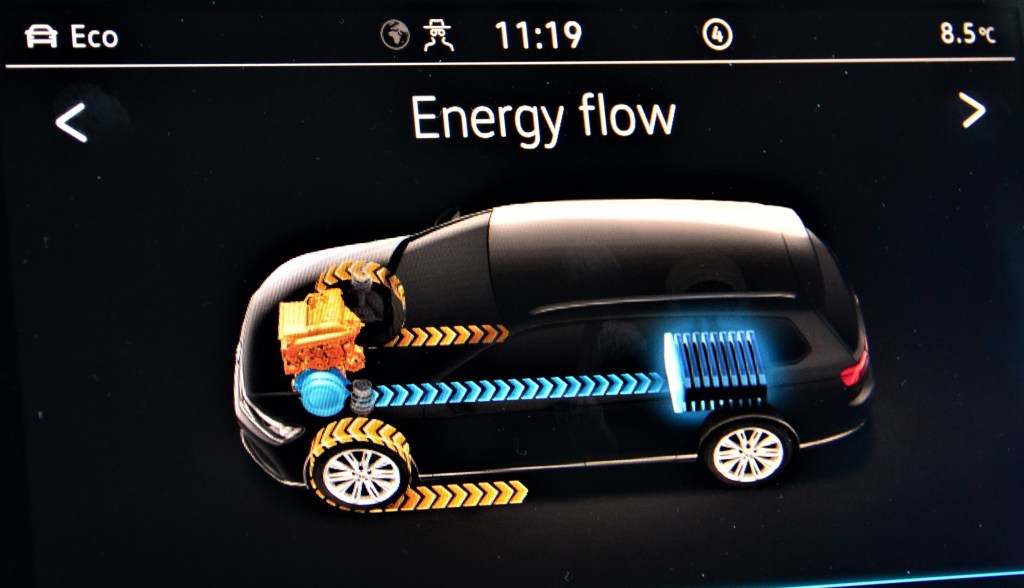
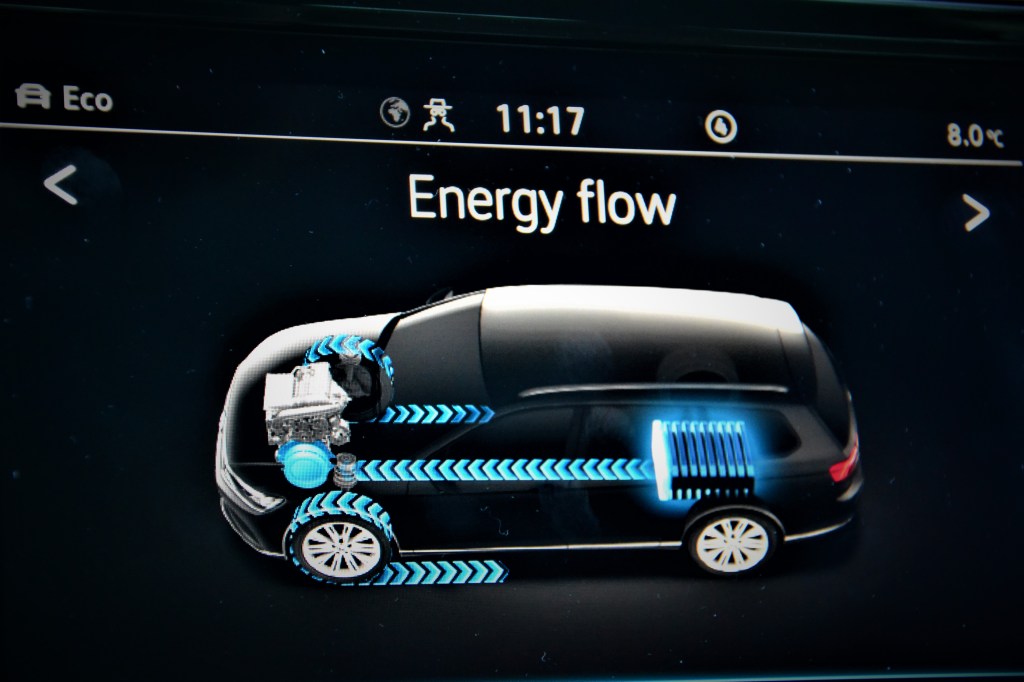
Power is transmitted to the front wheels through a new version of the 6-speed dual-clutch gearbox, dubbed DQ400E, which is adapted to the hybrid layout. Indeed, it has to allow the engine to power also the generator when the driver chooses via the driving modes to maintain or raise the battery charge, of which more later.   

Zero emissions in the city?

VW claims that the purely electric range of the predecessor – determined as an NEDC value (New European Driving Cycle) – was 50 km. The new Passat GTE now has a range of around 70 km in this cycle. Under the WLTP cycle, which is considered particularly similar to practical use, this figure reaches up to 56 km.

One can choose to charge or maintain the battery at a certain charge level. This costs fuel however…
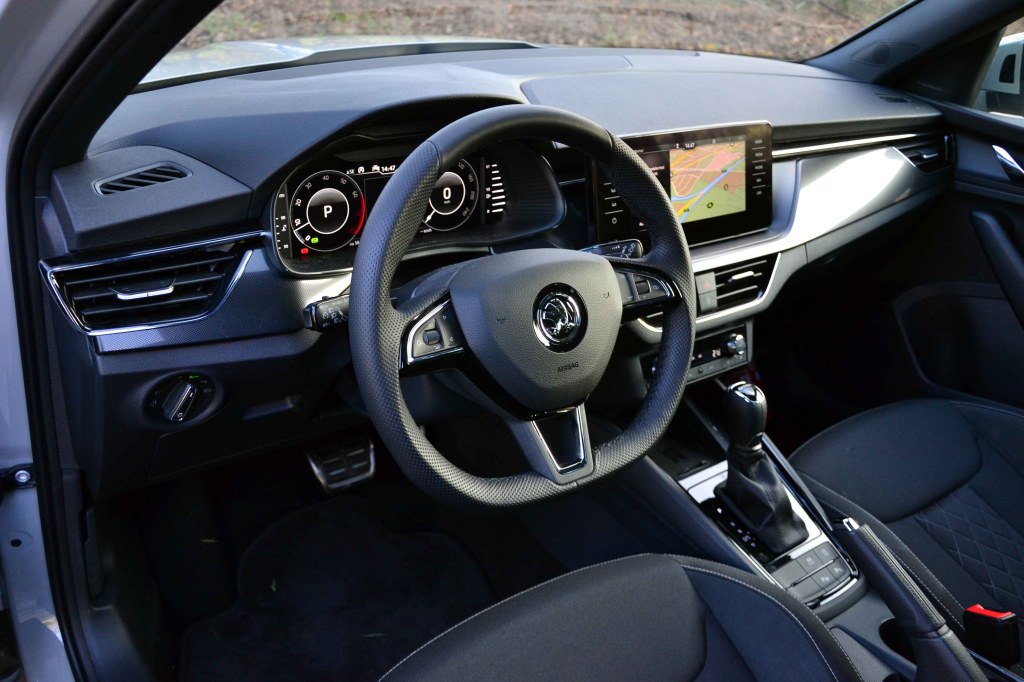
We drove this GTE under rather wintry, low temperature conditions, and the purely electric range amounted to some 32 kilometers. Heating the car and sundry takes its toll in winter. No problem however. The driver can select when starting his journey in the Driving Mode menu via the Infotainment system to charge the battery during the journey.

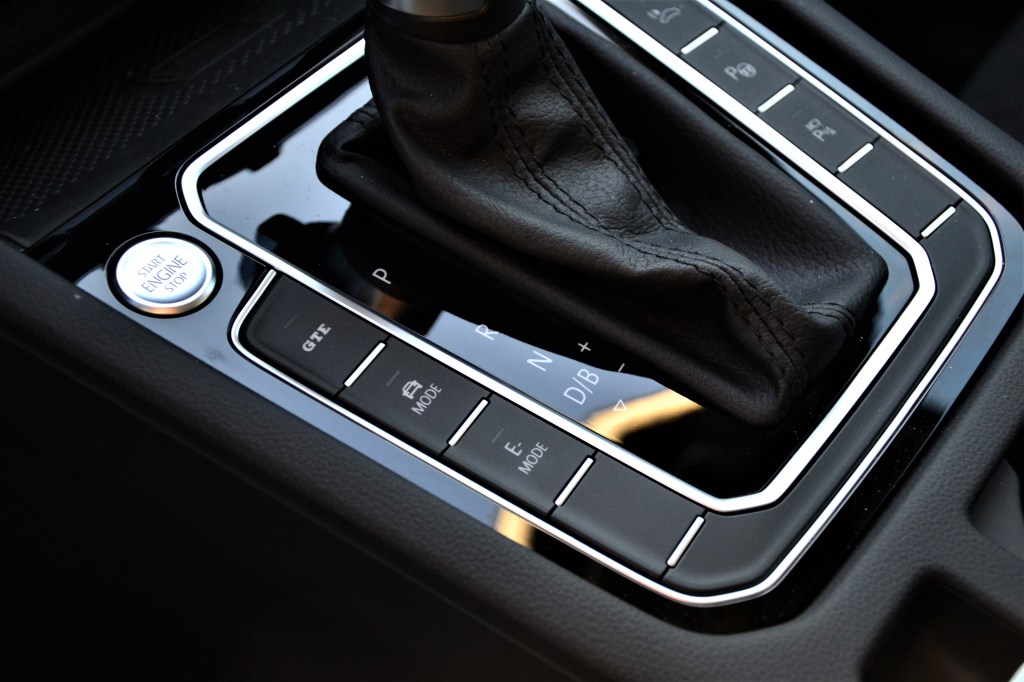
One has namely the choice between the E-MODE and Hybrid modes.(Indicated by a car symbol) In the hybrid mode, a battery with ten compartments lights up on the central screen and you can choose whether you keep the battery fully charged, or deplete or charge it via arrows to a pre-chosen 10-step level, indicated by the battery image on the infotainment screen.   

When the battery has enough power, the GTE Passat is of course quite frugal in the chosen Hybrid mode. The digital dial in your line of view shows clearly with its moving arrow when the engine starts working or when the electric motor delivers the power. Driving at higher motorway speeds and/or under stronger acceleration will let the engine work more, and we noted an average of 3,3 liters/100 km.

The engine charges the battery…

Of course, the hybrid consumption advantage almost totally stops when the battery is depleted, and only the recuperation of energy when decelerating gives you some extra battery power later. Even with merely 3,3 litres/100 km in the chosen hybrid mode, one has to take into account the cost of the electric energy necessary to recharge the battery.

You can drive on “pure” E-power…

Town driving under a (very) cautious right foot will still result in some 7,7 liters/100 km, on the open road when driving with anticipation and cruising at legal limits will let the consumption drop to 6,6 liters or thereabouts.

Or you can simply coast and use the kinetic energy to recharge the batteries…

Charging via the electricity grid

The Passat GTE comes with a 3.6 kW battery charger. Connecting to your home 230 volt outlet means your battery will be fully charged in six hours and 15 minutes. The charging time falls to four hours with a wall box or a charging station with 360 volts / 3.6 kW. In Belgium, this would cost then approximately 3,8 Euros.    

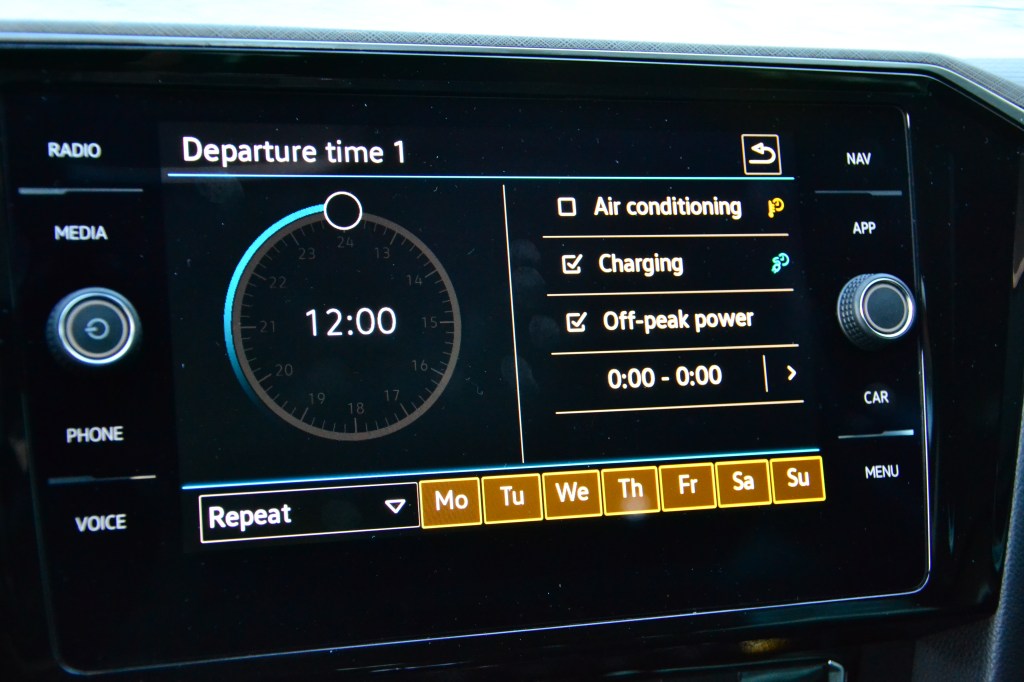
But VW’s hybrid is well thought out: delayed charging is another available option. The time delay can be set using either the Infotainment system or an app. You can activate the charging process directly via the app – in much the same way as a remote control. In addition to the charging process, the temperature inside the vehicle can be raised or lowered – depending on the temperature outside – via the time pre-set function.

Creature comfort

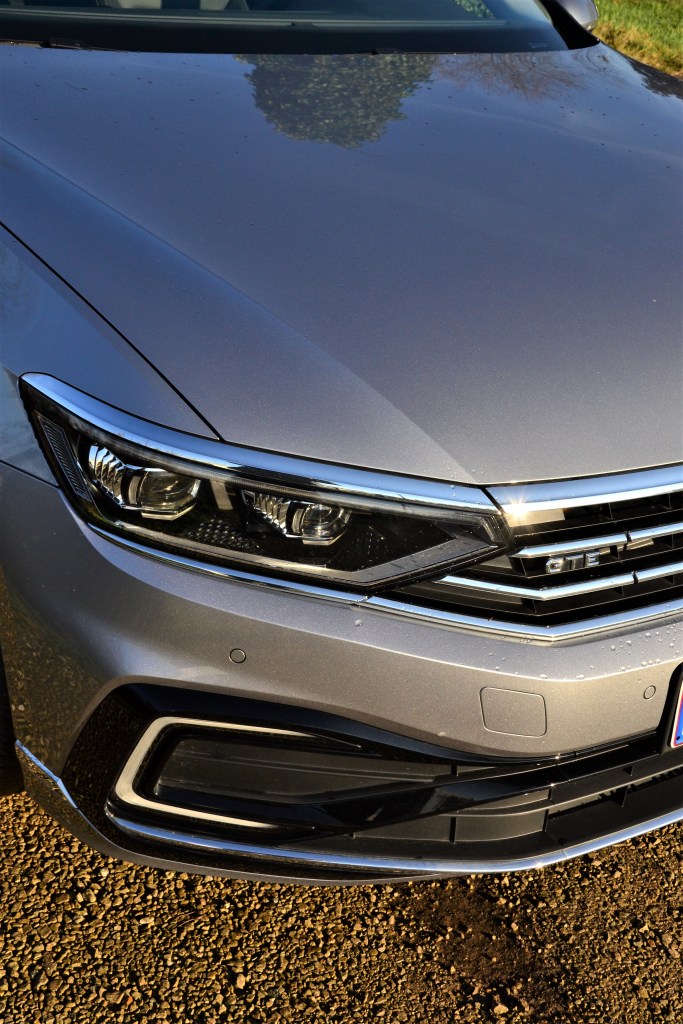
Of course the Passat, and certainly in this Variant version has style and comfort. The car’s appearance is enhanced, and indeed for the better. The front and rear bumpers, the radiator grille and the Passat logo, now located centrally at the rear, have all been redesigned.

In addition, new LED headlights, LED daytime running lights, LED fog lights, and LED tail light clusters make this Passat look the part.

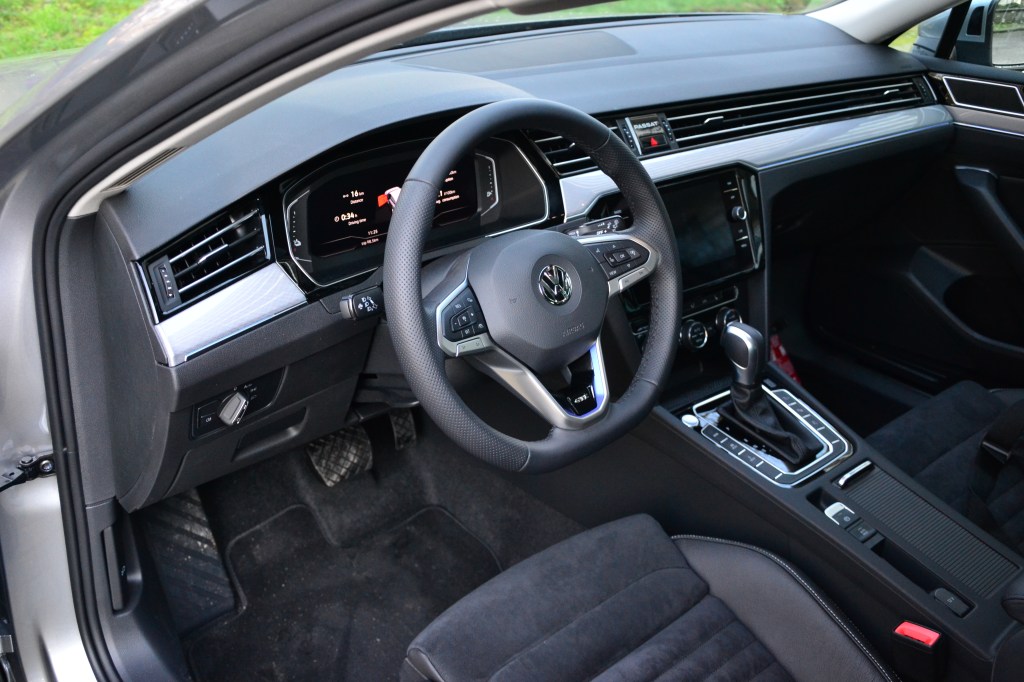
In the cabin the fun continues. The dashboard and digital instrumentation is smart, the finish is impeccable, and the quality of used materials is also beyond reproach. Last but not least, in this Variant edition, there is room. Ample legroom for the rear passengers, and even with the batteries in the back, boot space is 483 l minimum, and can be enlarged to 1613 l.  

Driver assist systems galore

IQ.DRIVE is the new umbrella brand for Volkswagen assistance systems. From now on, the technologies involved in autonomous driving will be bundled under the IQ.DRIVE label. An example is the new Travel Assist. The Volkswagen Passat will be the first Volkswagen that is capable of partially automated driving across practically the whole speed range (0 to 210 km/h). Along with its assistance system, the Passat represents the most advanced version of IQ.DRIVE yet seen.

Emergency Steering Assist also sees its début in the Volkswagen Passat. The system improves safety during sudden evasive manoeuvres via braking intervention. In addition, the lane guidance with Lane Assist has been optimised with a new multifunction camera. The new IQ.LIGHT – LED matrix headlights also are a boon.

Impeccable handling

To enjoy full performance, just choose GTE mode and you have the full system power at your disposal…

Needless to say that the Passat state of the art chassis and suspension warrant excellent road manners. It will take a vigorous driving style well in its stride, has superb high speed stability and handling, with stable and progressive braking. An agile and safe companion on any road.

Conclusion

A superbly well made and engineered car, which indeed is a bestseller for all the good reasons. Performance, handling, workmanship, room, style, the Passat has it all, certainly so in the Variant version. This hybrid version gives you on top of all that a “green” ticket to all the European cities, and allows you to travel anywhere and anytime without range anxiety or (re)charging headaches. Of course, fuel economy is in function of the available E-power, miracles just don’t happen. You should also take into account that charging costs money, as we said above.

But the smoothness of its drivetrain, its state of the art superb technology, the passion for quality which is felt throughout this car in daily use, this is what impresses most, together with its “zen” E-power, as an icing on the cake…  

Hans Knol ten Bensel