We drove the Golf Variant R-Line 1,5 eTSI DSG7: the beauty of efficiency…

Volkswagen hones its bestsellers to perfection, and the Golf range takes here of course centre stage. The Golf also caters for a wide array of users, also for those among us which still choose for a “classic” combustion-engined drivetrain, albeit here with the electric support of a 48 V battery and a belt driven starter/generator.

This choice can be the right one for many reasons, last but not least for example the poor availability and density of the charging infrastructure and of course the type of use of his/her car. Frequent and almost daily high-speed long distance runs on Autobahnen and autoroutes or longer trips in remote mountain/rural areas on this globe can make the choice for an efficient petrol engined car the right one.

We wanted to find out with this test how they behave in terms of consumption and efficiency in our present day “green” world…

We also took a close look at the practical qualities of the Variant version, which also tops in the popularity charts. Did you know that Golf Variant has already impressed more than 3 million customers since its debut in 1993?

Hans Knol ten Bensel
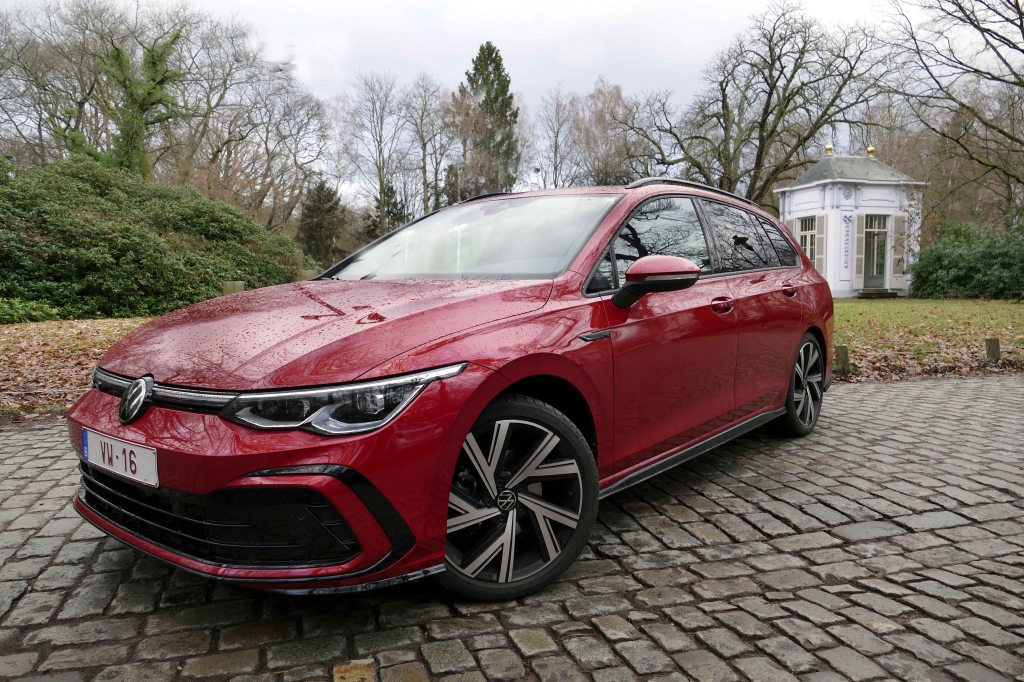
Timeless looks and top notch build quality…

The Golf Variant runs of the production line in the “home” factory in Wolfsburg, and this is true for the entire Golf range now. The Golf stands out with excellent finish and quality of the materials used. The vast experience of the group in achieving high standards of finish in its mass produced cars certainly shows. There is further the attention to detail and every aspect of the styling of the Golf range, which is also a good example of how to combine timeless contours and proportions with an overall elegance which appeals to (almost) all of us. The 2024 edition has received a further facelift by the way, with revamped infotainment. But interior dimensions remain unchanged.

Stepping into the cabin is as one might expect totally easy, even for the tallest among us. Also two adult rear passengers find more than adequate leg- and headroom. See further more about the practical qualities of this Variant.

We like the dashboard layout and the no nonsense design of the round instruments you can choose in the digital display in front of you, clearly readable in the good VW tradition. The central touchscreen is also well oriented and clearly readable. After the most recent facelift the now free-standing touchscreen is further enlarged, with a screen diagonal up to 32.8 cm.

What is truly impressive is the enormous plethora of information you can display on both the central touchscreen and the instrument cluster in front of you. Don’t get too enthusiastic when trying this out, as you can wind up with a drivers’ screen which informs you about too many things…

As with any car, it certainly pays to read the instruction manual carefully, something which hardly anyone does, much to their own expense. You will learn a lot, and the manufacturer has gone to great lengths to inform you, no efforts spared. For example, the manual of my trusted Lexus CT 200h is…696 pages long! Instead of looking at You Tube films to know more about using your car, read the manual first… 

We reconfigured the Variant drivers’ display to indicate also the oil temperature, and this gave us again some very interesting information. It reminded us that one needs to drive at least 10 minutes and/or up to 15 kilometers to get an oil temperature at working temperature. Water temperature is much sooner at its “ideal” level, as the thermostat brings it there rapidly to ensure ideal thermal efficiency and reduced fuel consumption. So don’t floor the accelerator too soon and don’t rev the engine too high on short (urban) runs…

An ideal driving position is soon found, with plenty of adjustment range available in seats and steering wheel column. 

One of the Achilles heels in the present day generations of VW’s are the haptic touch buttons to use the different infotainment functions of the car. It certainly needs a sensitive hand and index finger to get acquainted with them. But practice (and patience) makes perfect…. The slider controls for heating and ventilation are illuminated too, which is welcome at night.

Driving

The Golf has always been an excellent drivers’ car in its segment, and this Variant 1,5 eTSI DSG7 is no exception. The 130 HP 4 cylinder engine is smooth and willing, and well matched to the 7 speed DSG auto box. There is the addition of a mild-hybrid system and a powerful brake energy recuperation function, paired exclusively with the 7-speed dual-clutch gearbox (DSG).

The energy stored in the 48 V lithium-ion battery supplies the 12 V vehicle electrical system and drives the 48 V belt starter generator. Below 20 km/h, when coasting, the engine will shut off automatically, and it does also under braking.
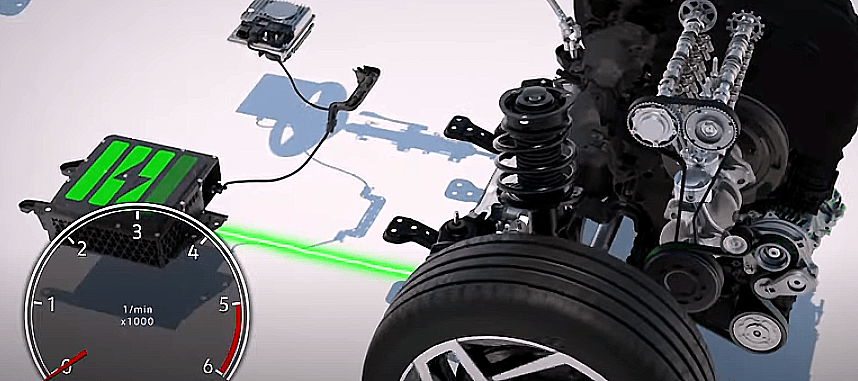
The belt starter generator also starts the combustion engine – which as we said is switched off as much as possible while the vehicle is moving – in a barely perceptible way. Driving at normal throttle openings, the engine will change quickly into higher gears, keeping revs low. This belt-driven starter-alternator not only takes on the role of the alternator and starter but also operates as a small, lightweight electric motor that instantly boosts the drive torque when moving off.

The good torque characteristics of this unit still warrant brisk accelerations. Mind you, the Changes are smooth and jerk free, making (urban) driving most relaxing. Performance is up to scratch, with the “classic” 0 to 100 km/h sprint absolved in 9,6 seconds, and a top speed of not less than 206 km/h.

How does this translate in fuel efficiency? Again, much depends, as always, on your driving style. But the starter generator helps you. In low speed stop and go urban traffic expect a consumption in the range of 7,3 liters/100 km. On the open road, it is easy to get below 5 liters/100 km, and autobahn runs at legal speeds cost you seldom more than 6,5 liters. Indeed, the “coasting” function with automatic engine shut of when you lift the throttle at speed is smooth, very relaxing and indeed saves fuel.

VW claims that the assistance of the starter/generator reduces average fuel consumption by some 0,4 l/100 km. If you adapt your driving style to the philosophy of this eTSI, this is certainly true. The CO2 emissions according to WLTP  standards are 129 g/km, the emission standard is Euro 6d (WLTP).

Handling and comfort beyond reproach.

Needless to say that the Golf platform, it uses the Modular Transverse Toolkit (Modular Quer Bau) is currently Volkswagen’s most widely used technology platform, and allows for the Golf to offer customers a choice between petrol, diesel, CNG, electric and plug-in hybrid powertrains. The Golf Variant offers most excellent (high speed) stability and impeccable handling, behaving very predictably in all thinkable situations. We tested the car in very snowy conditions, and it proved to be masterful in every respect, of course when driven sensibly…

Practical There is another strong point of the Golf Variant, and that is offering room for its occupants and luggage. The Variant is now 4,633 mm long and now boasts a wheelbase of 2,686 mm (respectively a 66 mm increase compared with its predecessor). Much to the advantage of the interior: the legroom thereby also increases by 48 mm. There is also room for your luggage:  when loaded up to the top edge of the rear seat backrest, it offers 611 litres of stowage space.
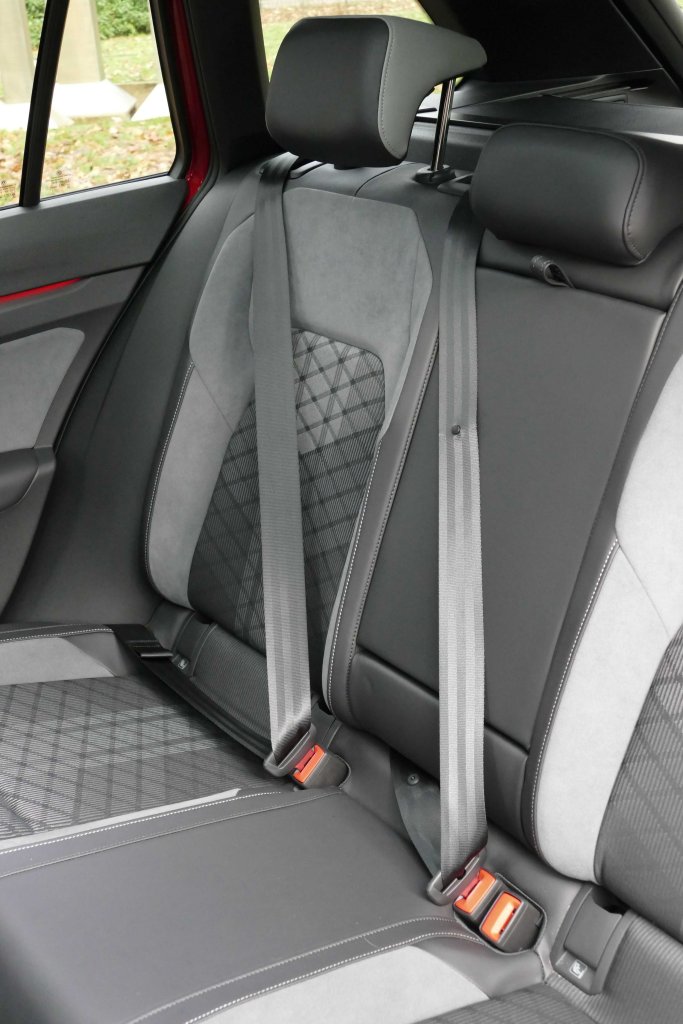
With the vehicle loaded up to the roofliner with integrated luggage compartment net and the front seat backrests, the volume increases to 1,642 litres.

We drove the posh “R Line” equipment version, but it is good to know that the Golf Variant standard features already include the Lane Assist lane departure warning system, Front Assist with City Emergency Braking System and Pedestrian Monitoring, the new oncoming vehicle braking when turning function, XDS electronic differential lock, the Car2X traffic hazard alert, the keyless comfort start system Keyless Start and automatic lighting control. Always as standard in the vehicle interior: Digital Cockpit Pro (digital instruments), Composition online infotainment system touchscreen, We Connect and We Connect Plus online services and functions, a multifunction steering wheel, Air Care Climatronic automatic air conditioner and a Bluetooth telephone interface.

Conclusion

This Golf Variant eTSI A formidable practical companion, bringing you swiftly and economically in all types of weather and roads, with a useable range of 750 kilometers from its 45 liter tank, offering lots of passenger room fore and aft and for massive luggage too.

It is everything you would like a car to be, dependable, timeless, iconic, classless, standing indeed the test of time.

In its starter/generator configuration it makes clever use of e-power, not adding much weight in heavy batteries, which is also an advantage as European governments now soon want increasingly to tax cars on their weight. The Golf is also reasonably compact considering the room it offers, so it will have for many years (literally) its place in urban areas.

Hans Knol ten Bensel

We drove the Peugeot 408 GT 225 HP hybrid : French style and panache…

Peugeot is well known for its outspoken design, and the latest version of the 408 sedan is no exception. We all know that we live in a time where imposing SUV’s are all the rage, but then Peugeot, with an eye towards automotive tradition, will always keep an attractive sedan in its range, and the 408 is the result.

Did you know that the bodywork definitions ”sedan” and ’limousine” are French? The definition “sedan” stems from the French town of that name. The definition ‘limousine’ comes from the French region “Limousin”. In automotive terms, it is a luxury saloon, in horse-drawn world, it is a utilitarian cart or any big cart with three lateral windows. 

But then, is this Peugeot a “classic” sedan? Well, no! Just read further…

Hans Knol ten Bensel

According to Peugeot, the 408 is a blend between SUVs, hatchbacks and saloons, and has been described as a “coupe crossover.” Indeed, with the Peugeot 408, the brand with the proud lion introduces nothing less than its own segment, that of a raised fastback sedan.  Actually the present day 408 is based on the EMP2 platform, shared with the third-generation 308.

The development of the vehicle, led by project manager Aurélie Bresson, PSA Group took several years due to its radical concept, codenamed as the P54 during development.  

The design was inspired from an internal concept car that Peugeot had worked on, which was known as the “2015 Advanced Design” manifesto. Its design concept is also featured in the Citroën C5 X, which shares the same platform (long-wheelbase EMP2 V3) and height with the 408. Indeed, the family resemblance is manifest, and the long-legged stable and very comfortable road manners are similar.

The 408 is bold and elegant. Peugeot calls it also a fastback (indeed, because of its fifth door) and places it at the top of the C segment. Peugeot also states that the car exudes “allure” and, as we said earlier in our article at the static presentation of the 408, we liked the angular shapes and its well accentuated contours , with remarkable styling details like the inverted cut-out of the rear bumper. We also liked the 20- inch rims featuring an interesting geometric design, and we already pointed out in our colums (see https://autoprova.be/2022/09/14/bold-and-beautiful-angular-and-elegant-the-new-peugeot-408-is-a-fastback-with-panache/) we appreciated that the tire rims protrude further than the alloy rims and thus protect them, so you cannot readily damage the beautiful wheels at the first high kerbed stone you meet.

The future smiles at you in the cabin…

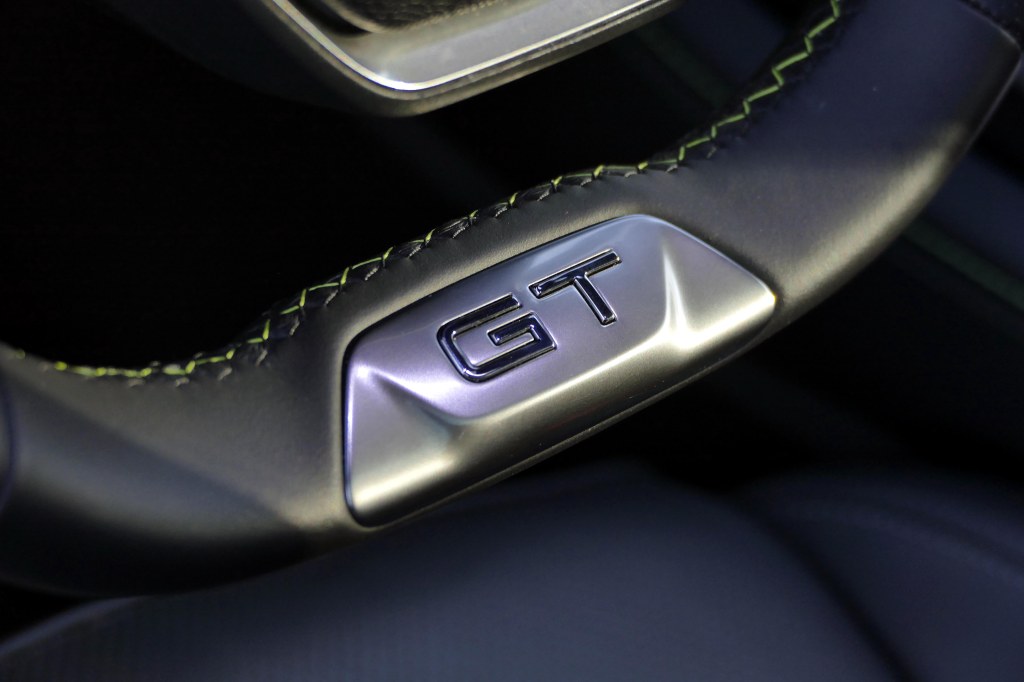
The bold and angular futuristic styling continues in the dashboard and cabin layout. Indeed, the PEUGEOT 408 offers the latest generation of the PEUGEOT i-Cockpit®, instantly recognizable by its compact steering wheel dedicated to driving pleasure and controlled agility. The compact steering wheel puts you indeed in a sporting mood and encourages you to drive this 408 with slightly more verve, but then you have to concentrate on finding a proper seating position so that your vision on the instrumentation is not (partially) blocked by the enthusiastically shaped steering wheel.

Driving: the joy of French comfort, grace and speed… Peugeot attaches great importance on comfort combined with safe, superior and predictable handling. The 408 scores beautifully in all these points. The 408 takes comfort to a very high level, even on frost-ridden secondary roads, wet routes nationales or départementales, and floats over it at (high) speed with undisturbed stability, to take you swiftly and safely to your destination. Traveling big distances is a boon for this 408. As said here earlier, it bears resemblance to the road manners if the “big” Citroën C5 X.

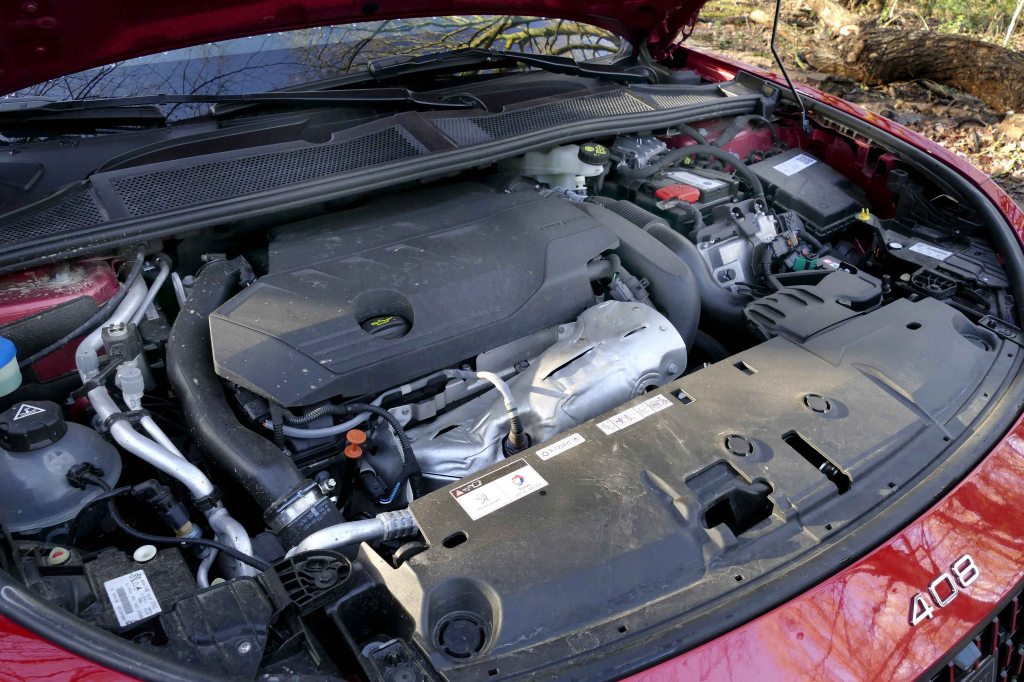
The test car was equipped with the top-notch drivetrain, in the PHEV version we tested. The 1,6 litre efficient four cylinder petrol engine develops 180 HP at 6,000 rpm, with torque being 250 Nm @ 1750 rpm. But there is also an electric motor of 110 Hp @ 2500 rpm sitting between the petrol engine and the 8 speed automatic transmission. The impressive torque of this motor, namely 320 Nm, is developed between 500-2500 rpm. All this results in a system power of 225 HP, and a system torque of 360 Nm.

This results of course in (more than) excellent performance. It will sprint in about 7,9 seconds from 0 to 100 km/h, and its top speed is a stellar 233 km/h. Abundant torque at every speed makes for a delightful performance experience. This car is well and truly a fast Gran Turismo. Mind you, this is nothing less than the performance of the iconic Jaguar E-Type!

Consumption depends greatly on how often you charge its 12,4 kW battery. According to WLTP standards, it is set at 1,4 l/100 km. Running it on petrol power, you can expect anything between 6 and 8 litres, depending on your driving mix between town and open road. You are helped by the relatively low weight (1.781 kg) of the car, and its excellent aerodynamics.

A roomy and practical daily companion

The 408 offers a lot of legroom on the elongated platform it shares with the Citroën C5 X. Boot space is also abundant, with a volume of 536 litres, which can be increased to 1.611 litres, once the rear seats are folded down.

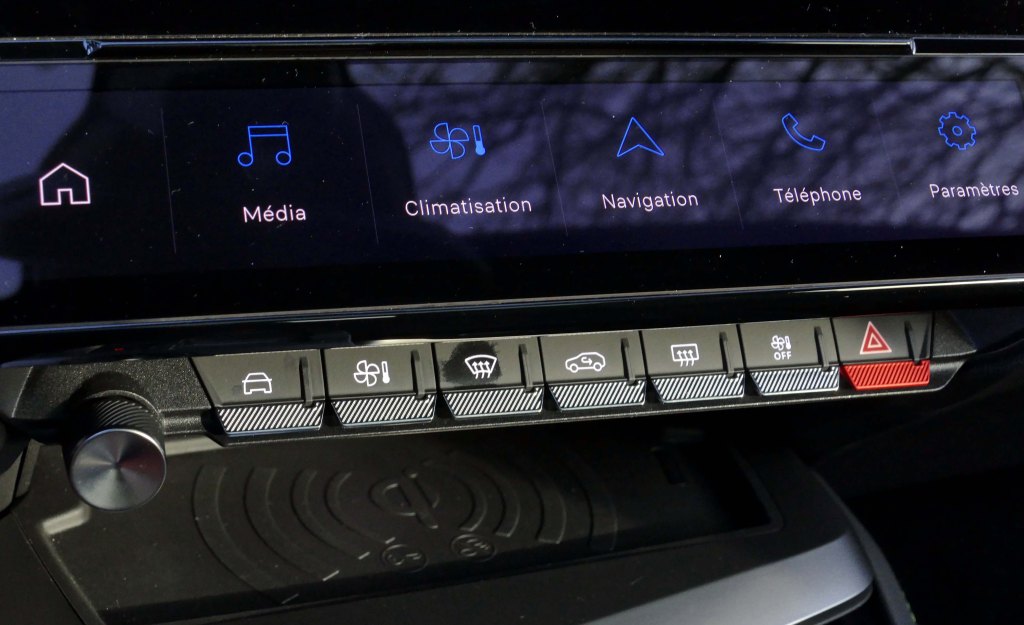
The 10 inch touchscreen gives you all the necessary navigation and infotainment info, and the 408 pleases with puttons and switches on steering wheel and below the touchscreen for all the usual functions.

Of course, this 408 offers all the thinkable driver assistance and safety functions. Powered by 6 cameras and 9 radars, the driver assistance systems include adaptive Cruise Control with Stop and Go function,  Night Vision, which warns of animals, pedestrians or cyclists ahead before they appear in the high beam, Long-range blind spot monitoring (75 metres) and last but not least Rear Traffic Alert, which warns of a potential hazard when reversing.

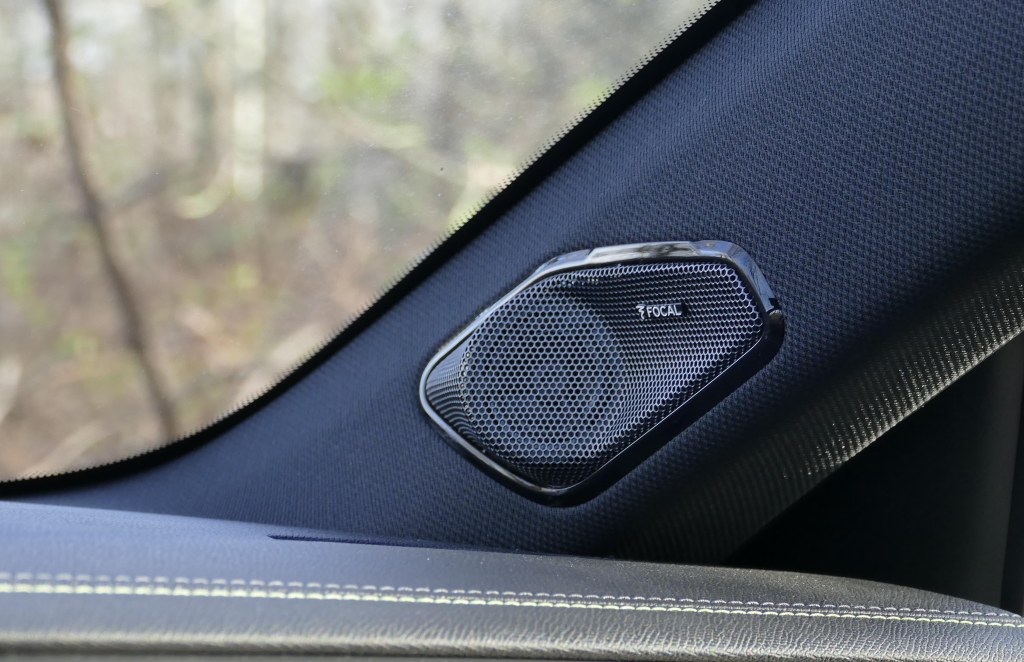
All this contributes to driving pleasure, which is indeed overall a very relaxing experience. Intuitively you will feel very much at home and rather sooner than later you will come to enjoy the excellent sound system and find every drive with this Peugeot a “Zen” moment in your (busy?) day…

Conclusion

Peugeot has truly succeeded to create a roomy four passenger comfortable Gran Turismo which gives you a soothing driving experience, where you can enjoy refinement, experience the unique panache of French comfort together with unerring stable handling and the sheer pleasure of the speed and performance of a “grande routière.”

Combine all this with responsible energy consumption, E-power capacity in town, smoothness and mechanical “raffinement” all packed in a bodywork with stylish “allure”, and you will agree that this Peugeot has a lot to go for…

Hans Knol ten Bensel  

The VW Golf is now 50 years with us!


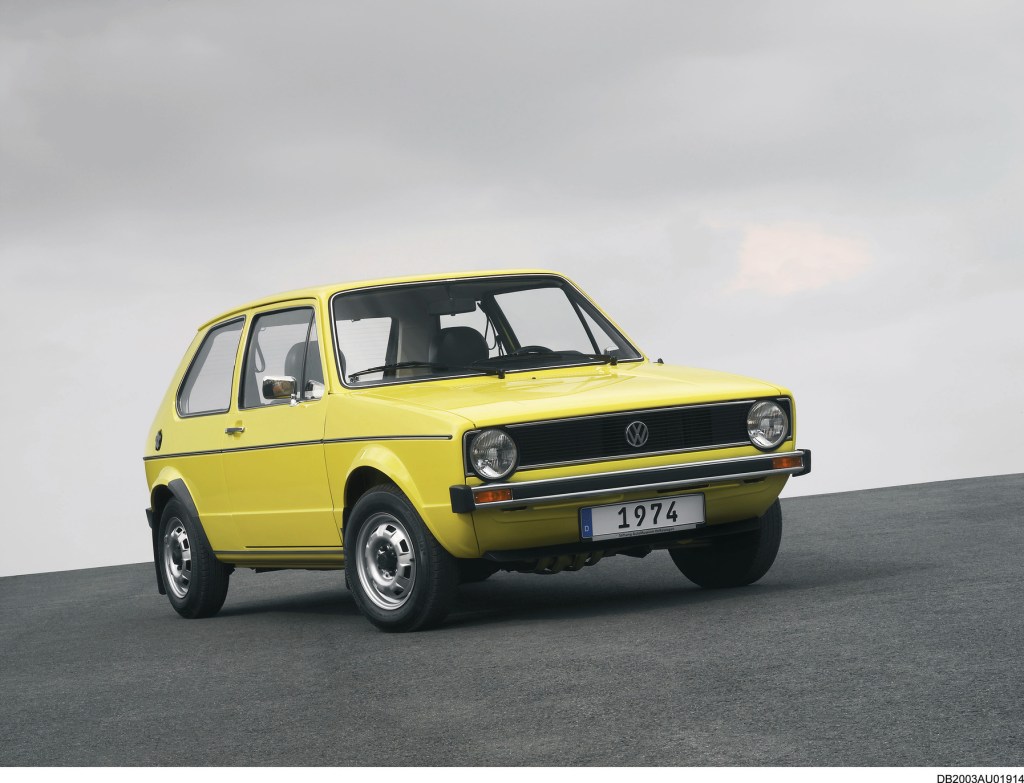
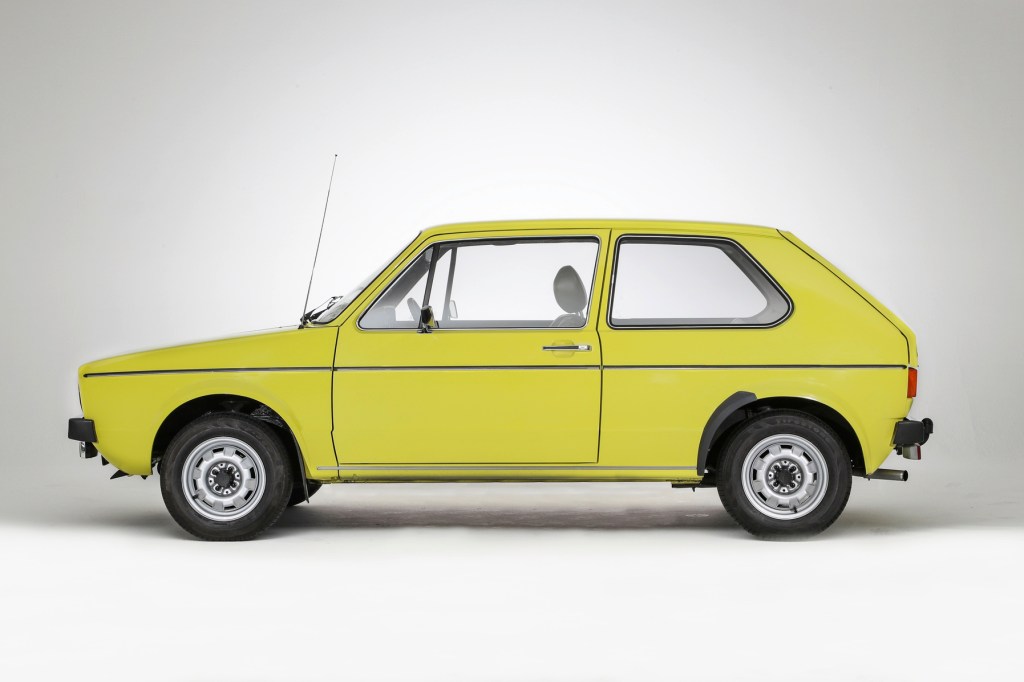
The “Ur” Golf, which looks still quite “modern”, 50 years later.

Many people will say that things are changing rapidly, and many things have disappeared or are not what they used to be. Well, we can be sure of one thing: the Golf, the heart of what Volkswagen as a car manufacturer stands for, is still amongst us.

Indeed, during five decades already, the Golf still accompanies us in our automotive life. Since 1974. Then your servant got married, and drove indeed the first Golf as a test car, and has the fondest memories of this first series, especially when testing the Golf GTI. This sporting Golf created nothing short of a legend. 50 years later, the sporting sound of its 1,6 liter 110 HP engine still seduces, as does its handling and acceleration.

The stuff of eternal legends: the Golf GTI

To me, even this very first series is still a “young” car. The straight-line design created by Giorgetto Giugiaro is timeless, the proportions are just right, the “Ur” Golf still looks good from any angle. Just read further…

Hans Knol ten Bensel

An instant hit…

The Golf set out to win hearts. The Golf quickly became a true “Volkswagen”, and the first million units were sold as early as 1976. Now, more than 37 million Golf’s have hit the road.

Over the decades, the portfolio has been expanded to include further variants: besides the GTI, there was also the Golf Cabriolet or Golf Variant, or many others.

With each new model generation, state-of-the-art technologies, safety concepts and convenience features have been incorporated into the compact class. The Volkswagen Golf has thus democratised not just technologies such as the monitored catalytic converter and anti-lock braking system, but also airbags, cruise control and electronic assist systems as well as mild and plug-in hybrid drives.

In the anniversary year 2024, Volkswagen will present the evolutionary development of the eighth Golf generation. It will impress with visually refined features, new assist systems and powertrains, and also next-generation infotainment systems and software. The world premiere of the new Golf is just a few weeks away, with pre-sales scheduled for spring 2024.

Keeping history alive Volkswagen Classic will also accompany the Golf in its anniversary year and will present historic Golf models from the Volkswagen collection on numerous occasions. First rendez-vous is in Paris. From 31 January to 4 February 2024, the Golf Generations I to VII will enhance Volkswagen France’s presence at the “Salon Rétromobile” show in Paris.

Directly afterwards, from 2 to 4 February 2024, Volkswagen will show a Golf I and the unique EA 276 concept car – the Golf predecessor from 1969 developed in Wolfsburg – at the “Bremen Classic Motorshow”.

A long history… with a touch of NSU

In this first report we will focus on the first series. The concept was nothing less than a complete technical revolution for Volkswagen. They had already acquired NSU in 1969, and so the technology of in-line engines was already present in the group, with the VW K70, originally an NSU design, and the famous Prinz 1000 to 1200 TT’s. The K70 was also a front wheel drive car, and the art of “Leichtbau”, or making light bodyworks, was also already acquired with this car.

Technical forerunner of things to come: the in line 1000/1200 cc four cylinder of the NSU Prinz in the late sixties, still air cooled however…

So the beacons were set in terms of technical product design and manufacturing engineering, to make a mass produced light car with transverse 4 cylinder in line engine.

The new Golf was light, some 165 kg lighter as the Beetle. The styling was done by Italdesign under the direction of Giorgetto Giugiaro. The first Golf is also beautifully compact: only 370 cm long. It had some good power, a healthy 50 HP with the basic 1100 cc engine, and 70 HP with the 1,5 litre engine. So the performance was something the Beetle could only dream of. The chassis, suspension and handling were also in another league. On top of it all, the Golf was cheaper to produce, but cost 600 Euros more than the last Beetle 1303…

In 1976 came the Diesel and the GTI version, and as I said, from that moment on, the “modern” VW was a fact…

More soon about the Golf history…

Hans Knol ten Bensel

We drove the Cupra Formentor 1.5 TSI 150 HP: a sporting beauty…

Creating within the Seat family the Cupra line is a very wise decision. We always found that the quality and panache of the recent Seats merited special place, and with Cupra, they truly found it. We can even say that Cupra will become the main mass market sporty brand for Volkswagen.

The Cupra designers and stylists put on wheels one of the best looking SUV’s in its segment, and for your servant this alone is a very good reason to have a good look at this car and call it your own.

Furthermore, it carries the well proven VW group technology, and with that comes performance, economy and reliability.

Just read further…

Hans Knol ten Bensel

Exquisite

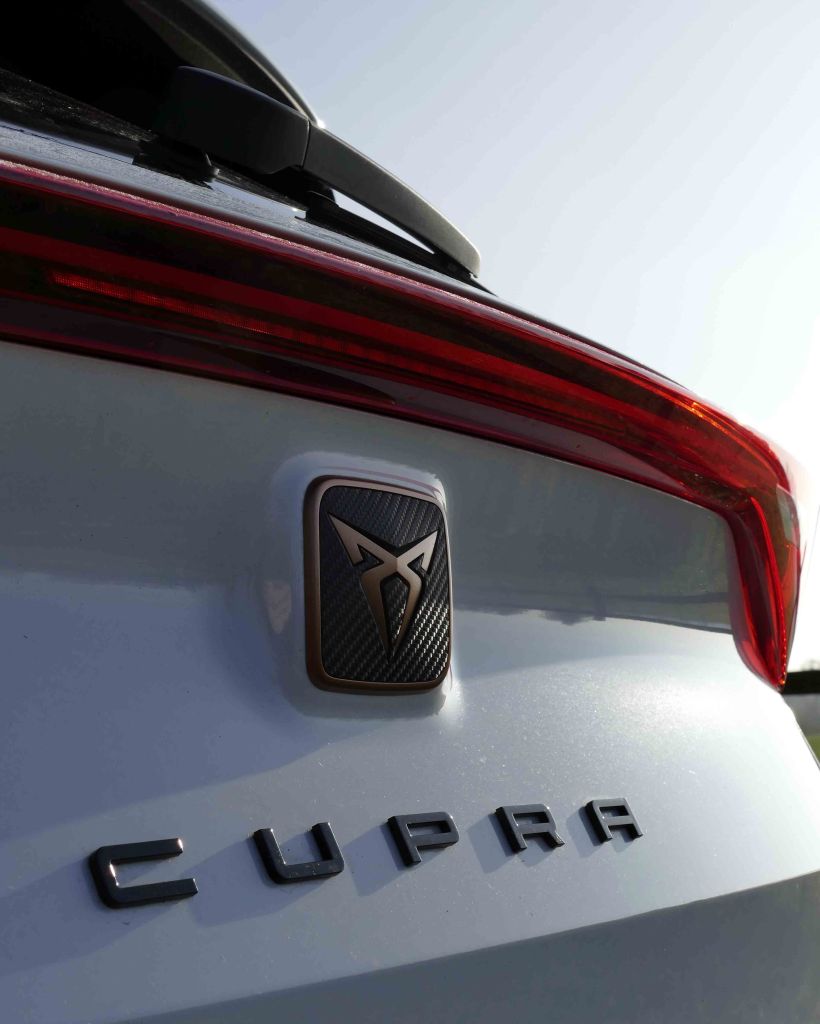
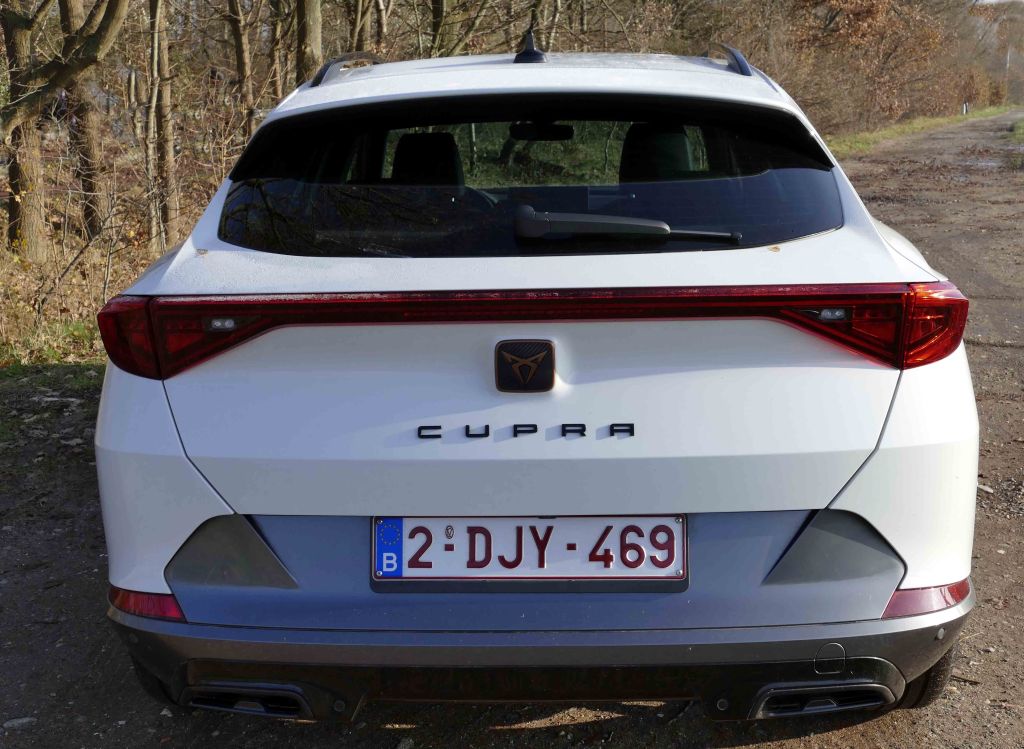
The Formentor certainly is kind for your eyes. Indeed, the car is pleasing to look at from any angle. It seduces with gentle, well balanced curves, well proportioned accent lines, and a very pleasing light signature. At the rear, it is reminiscent of the Lamborghini Urus and displays also a touch of the Panamera. The front end also conveys exactly what the Formentor stands for, and the beautiful alloys complete the picture perfectly. It is a low slung SUV. The manufacturer defines the Formentor as a bespoke SUV Coupé, and deservedly so. Formentor signals its Spanish roots, and actually is the name of a beautiful peninsula in Majorca.

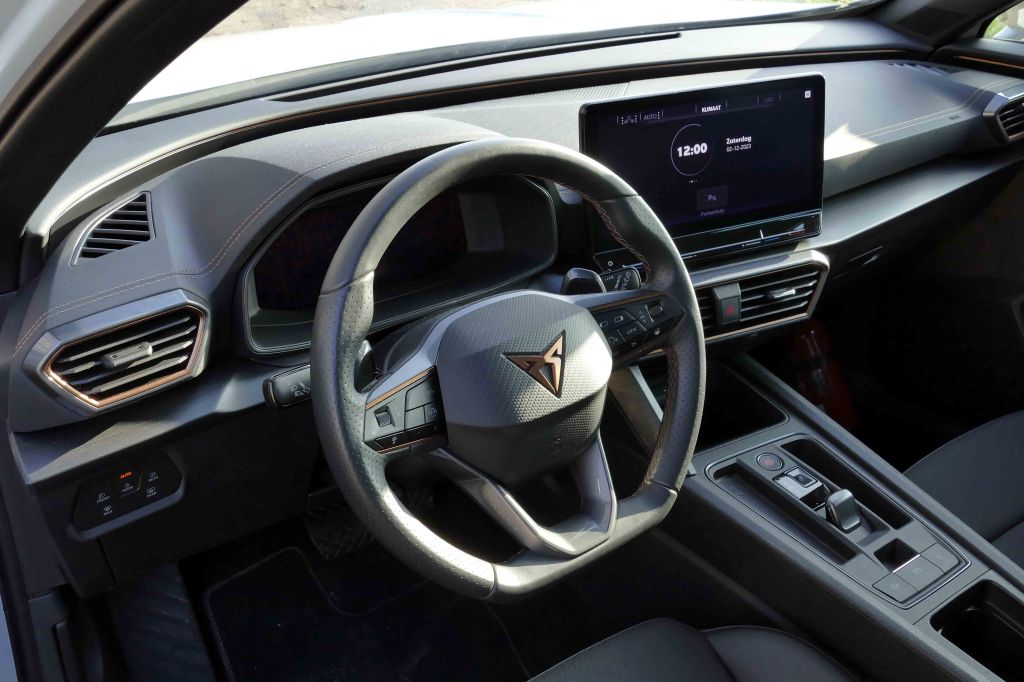
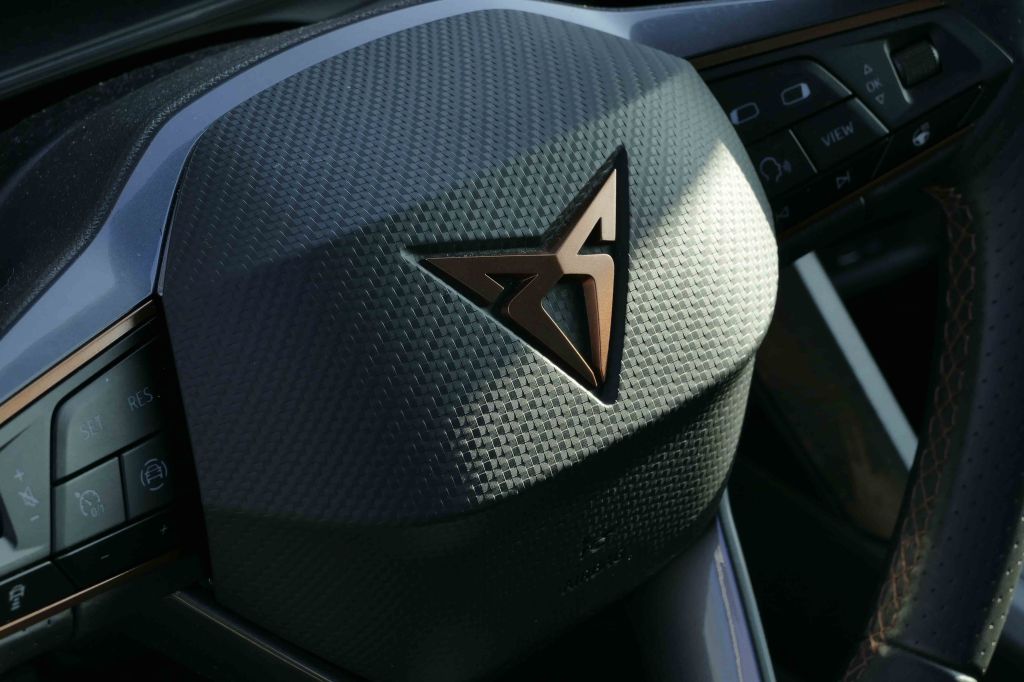
Also in the cabin, the designers have done their homework. One finds copper coloured accents throughout, from the stitching to the copper tinted badge on the steering wheel. The led lighting is also dramatic, with as default hue a copper yellow which runs along the dashboard edge. Note also that this wraparound LED also alerts you to objects in your blind spot (!). Of course, when you step in your Formentor at night, the CUPRA Welcome light projects the CUPRA logo down onto the floor.

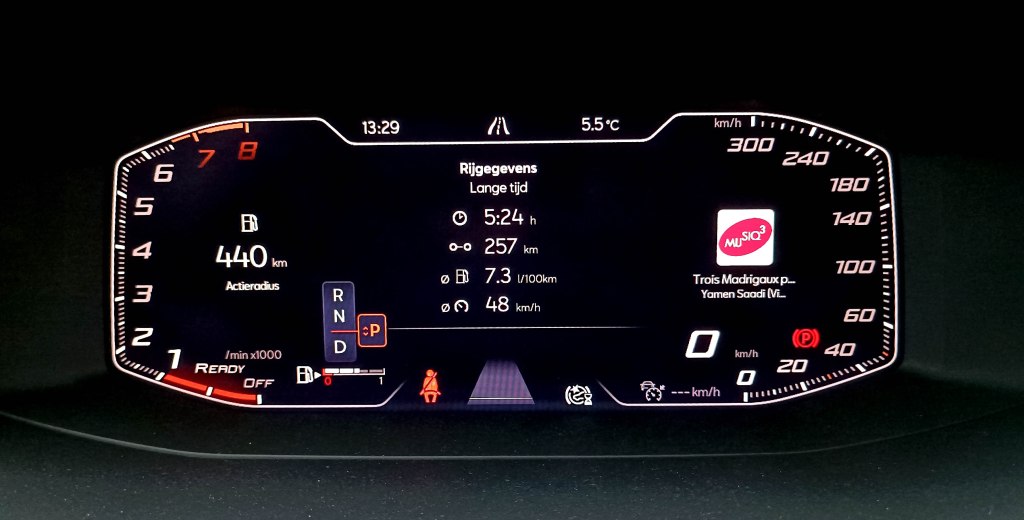
Then we have said nothing about the digital instruments on the panel in front of the driver. You can choose between calm simplicity with some navigation and audio information thrown in or two classic round dials,

and last but not least a large Porsche style central rev counter or as icing on the cake the two square shaped clusters reminiscent of BMW’s.

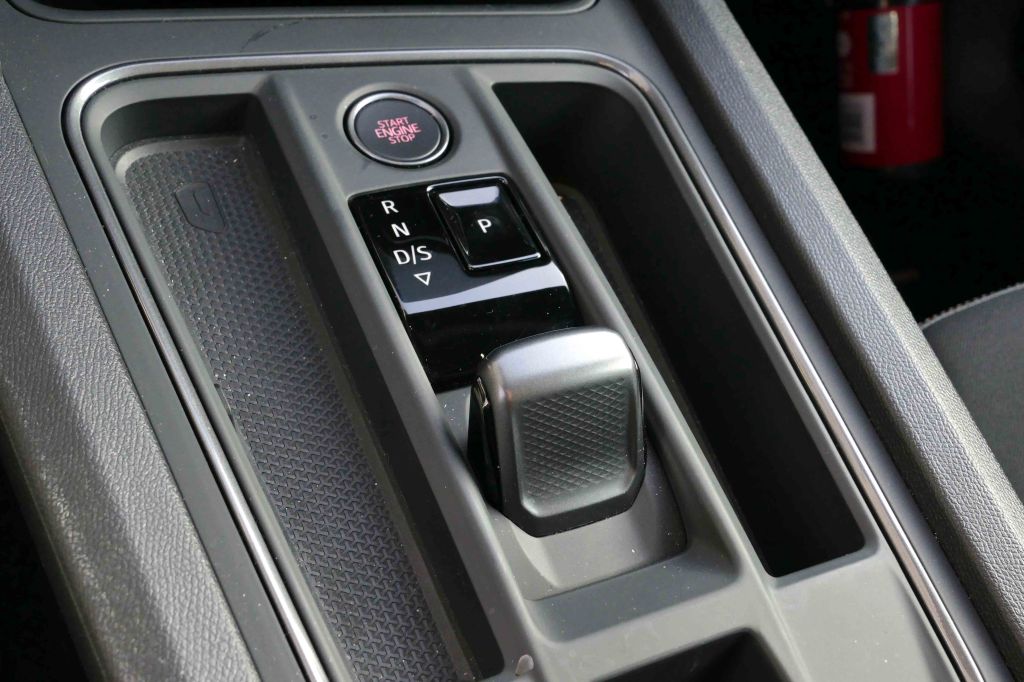
Of course we preferred most of the time the “Porsche” large rev counter in front of us, as we liked to see what we heard, i.e. the pleasant throb of the efficient 1,5 litre four cylinder at work. This 150 HP/110 kW long stroke unit is coupled to the well proven DSG 7 speed box, and it suits the engine characteristics perfectly. Well honed electronic engine and gearbox management sees to that. The engine develops a healthy 250 Nm of torque between a very wide rev range of 1,500 to 3,500 rpm.  One has the choice between different driving modes, from sport to comfort.

The engine is lively enough and has more than sufficient pulling power to warrant an inspired driving style, so we opted most of the time during our test for the comfort mode. Indeed, it is hardly necessary to put the throttle deeper, the absolute performance figures amply prove the point. Accelerating from 0 to 100 km/h is absolved in 8,9 seconds, with the engine revving with a beautiful staccato. Indeed, this is one of the joys of driving a petrol engined car…Top speed is a good 203 km/h. Mind you, these overall performance figures are the same as the original 911 Porsche!

Of course, fuel consumption varies a lot in function of your driving style. During our test, we averaged some 7,2  liters, with several long motorway stretches thrown in. Driven in a rather spirited manner in urban traffic, consumption rises to a good 10,5 liters/100 km. The manufacturer quotes according to the WLTP cycle for the DSG version a consumption ranging between 6.6-7.2 l/100 km. CO2 emissions are  150-163 g/km.

Superb handling

The Formentor runs on the VW Group MQB platform, with the suspension of course calibrated to its sporting pedigree. It handles and steers with balance and precision, and it is a true joy to drive it with verve on winding roads. Of course, the chassis and suspension are laid out for far more power than this 1,5 litre 150 HP version. The most powerful is the 310 HP variant, so you can understand that the car has a rather easy play with the performance of this one.

All these good road manners are combined with very good comfort. The Formentor is nicely sprung, striking a good balance between low and high speed stability, surefootedness and absence of body movement in sharp corners. The suspension is also not unduly firm on rougher surfaces either. We noticed on some road surfaces somewhat higher wheel roll noises, which force you to turn the audi knob a bit higher than you would like.

Everyday life

The Formentor is very pleasant to live with. We said, one is already spoiled by the aesthetics of the instrumentation and cabin, and on top of that you will find out that you have more than sufficient head and legroom both in front and at the rear. Boot space is also more than sufficient with its standard 450 liters. One good word also about the infotainment system. On the centre console we find the easy to read and manipulate 12 inch touchscreen, with of course all the necessary functions at your fingertips.

There are lots of pleasant features for your phone. For instance the place your smartphone in the Connectivity Box to amplify signal, charge seamlessly and sync to play music via the premium BeatsAudio™ system. There is also CUPRA CONNECT: you receive real – time traffic updates and directions while seamlessly connecting to your smartphone to utilise apps and listen to music services on the move. Of course there is Wireless Full Link, so your Apple or Android smartphone seamlessly syncs up, so you can display your favourite apps and functions on screen.

Conclusion

The Formentor is a compact SUV with lots of style and character, and it was actually the main reason why we found it so endearing. For more sporting souls, the Formentor has many more cards upon its sleeve, and the dynamic SEAT/Cupra PR department at D’Ieteren promised us also a test with the 2 litre 190 HP version early next year, so indeed we have something very good to look forward to in 2024!

Hans Knol ten Bensel