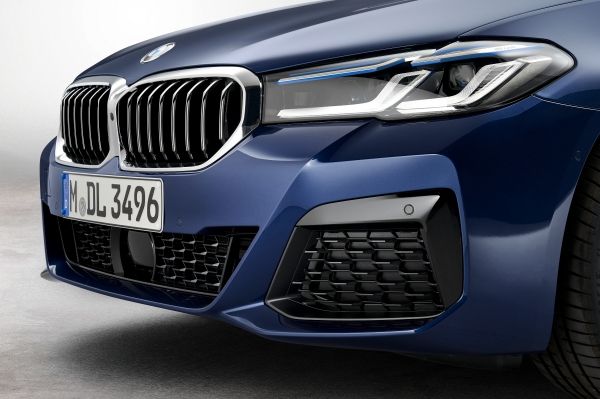
The new BMW 5 series…

BMW rejuvenates its bestseller – more than 600,000 units have been sold of the current 5 series sedan and touring – and the market introduction will be in July 2020. Due to the Corona times, the presentation of this new 5 series was digital, but the car is not less amazing for it, and we are only more curious to see it soon “in the flesh”!  

Both models will be produced at BMW Plant Dingolfing in Bavaria. The new BMW 5 Series Sedan will also be built by production partner Magna Steyr in Graz, Austria. The longwheelbase version of the Sedan is made exclusively for the Chinese market at joint venture BMW Brilliance Automotive’s Dadong plant in Shenyang. Indeed, BMW is a globally operating car manufacturer…

Externally with even more character…

The BMW kidney grille adds extra width and height, two U- or optionally L-shaped daytime driving light sources arranged next to one another create a modern light graphic. New full-LED headlights including adaptive cornering function, BMW Selective Beam non-dazzling high beam with matrix technology, and the High-beam Assistant are offered as an option.

Last but not least BMW Laserlight is now likewise optionally available for all variants of the BMW 5 Series.

More luxury and technology in the interior…

The now standard 10.25-inch or optional 12.3-inch Control Display, newly designed controls on the centre console and the standard sports leather steering wheel with newly arranged multifunction buttons welcome you. Standard equipment for the new BMW 5 Series Sedan and new BMW 5 Series Touring now also includes automatic climate control with extended features.

New additions to the options list include M multifunction seats, new interior trim strips and seat surfaces in Sensatec perforated trim.

More choice in power…

Choice of plug-in hybrids set to grow to five models initially, with eDrive technology now also available in the new BMW 5 Series Touring and in combination with a six-cylinder in-line engine.

From autumn 2020, latest-generation BMW eDrive technology will be teaming up with a four-cylinder petrol engine to power not only the new BMW 530e Sedan and new BMW 530e xDrive Sedan , but also the new BMW 530e Touring and new BMW 530e xDrive Touring (for the latter, fuel consumption combined: 2.3 – 2.1 l/100 km).  

The engine produces maximum output of 135 kW/184 hp, while the electric motor develops 80 kW/109 hp. The joint output of the two power units can be briefly increased to a maximum 215 kW/292 hp thanks to the XtraBoost feature. Electric range is 58 – 62 kilometres (36 – 39 miles) for the new BMW 530e Touring and 53 – 56 kilometres (33 – 35 miles) for the new BMW 530e xDrive Touring.

The arrival of the new BMW 545e xDrive Sedan (fuel consumption combined: 2.4 – 2.1 l/100 km in autumn 2020 will further broaden the selection of plug-in hybrid variants.

In this model, the 80 kW/109 hp electric motor combines with a straight-six petrol unit generating 210 kW/286 hp, resulting in an overall output of 290 kW/394 hp. The new BMW 545e xDrive Sedan achieves an electric range of 54 – 57 kilometres (34 – 35 miles).

The BMW eDrive Zone digital service is available in all the plug-in hybrid models as standard. This unique function automatically switches to the all-electric operating mode when the vehicle enters a “green zone”.

48V mild hybrid technology for all four- and six-cylinder models.

Mild hybrid technology, first introduced in the BMW 520d and BMW 520d xDrive models in autumn 2019, will now offer enhanced performance combined with lower fuel consumption and improved driving comfort in all four- and six-cylinder variants of the new BMW 5 Series. Fitting an extremely powerful 48V starter-generator and a second battery enables a significant increase in the amount of brake energy that can be regenerated.

Choice of petrol and diesel engines…

The new BMW 5 Series comes with a choice of three other petrol and three diesel engines generating between 135 kW/184 hp and 250 kW/340 hp. The direct injection system in the petrol units operates at increased pressure, meaning greater efficiency, whith the two-stage turbocharging technology now fitted in all diesel variants. All the engines link up with an eight-speed Steptronic transmission as standard. BMW xDrive intelligent all-wheel drive is offered as a standard or optional feature for all model variants with the exception of the entry-level petrol engine.  

Superb chassis and suspension…

There is a choice of sophisticated chassis systems designed for the enthusiast. M Sport suspension, Adaptive M suspension and Adaptive M suspension Professional including active roll stabilization can all be found on the options list. The latest version of the optional Integral Active Steering can come to the driver’s aid when manoeuvring by turning the rear wheels as required even at speeds under 3 km/h (2 mph). Red calipers are now available as an alternative to the blue units as a visual telltale for the M Sport brakes.  

Driver assistance systems offering additional functions…

The Lane Departure Warning system included with the optional Driving Assistant now also features lane return by means of steering assistance. The updated Steering and Lane Control Assistant included as part of the new Driving Assistant Professional package also brings Active Navigation. This system uses navigation data to spot in advance when a lane change will be required, and this can then be performed with ease using the Lane Change Assistant. There is also a new function called “automatic formation of emergency lane”, which steps in to guide the car to the most appropriate side of its lane in tailbacks on the motorway.

We are eagerly awaiting the summer and autumn, to get behind the wheel of one of these superb 5 series BMW’s…

Hans Knol ten Bensel

Alfa’s: Italy’s invincible and iconic police cars…

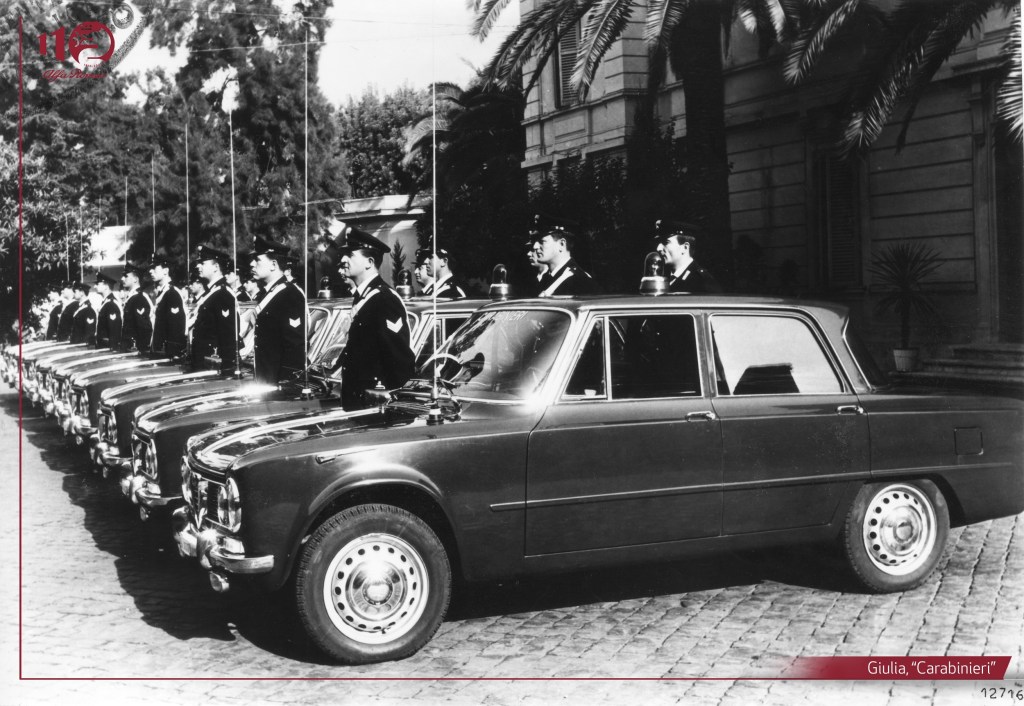
We vividly remember them when I drove in the historic Mille Miglia with my father. The olive green Alfa Giulia Supers of the Carabinieri coached us along the way, watched over crossroads, helped to control traffic along our route, kept overenthusiastic spectators at bay.

The Carabinieri had not only taken out their fifties’uniform complete with riding boots, they also had polished their Giulia Supers. And of course, mechanically, these Alfa’s were in top form. What a delight it was to hear their 1,6 thoroughbred DOHC four cylinder revving up when they joined with panache and screeching Michelins again our fast moving column of Millia Miglia cars. Only to pass us swiftly with the blue police light flashing on the roof, with their engine on full song.

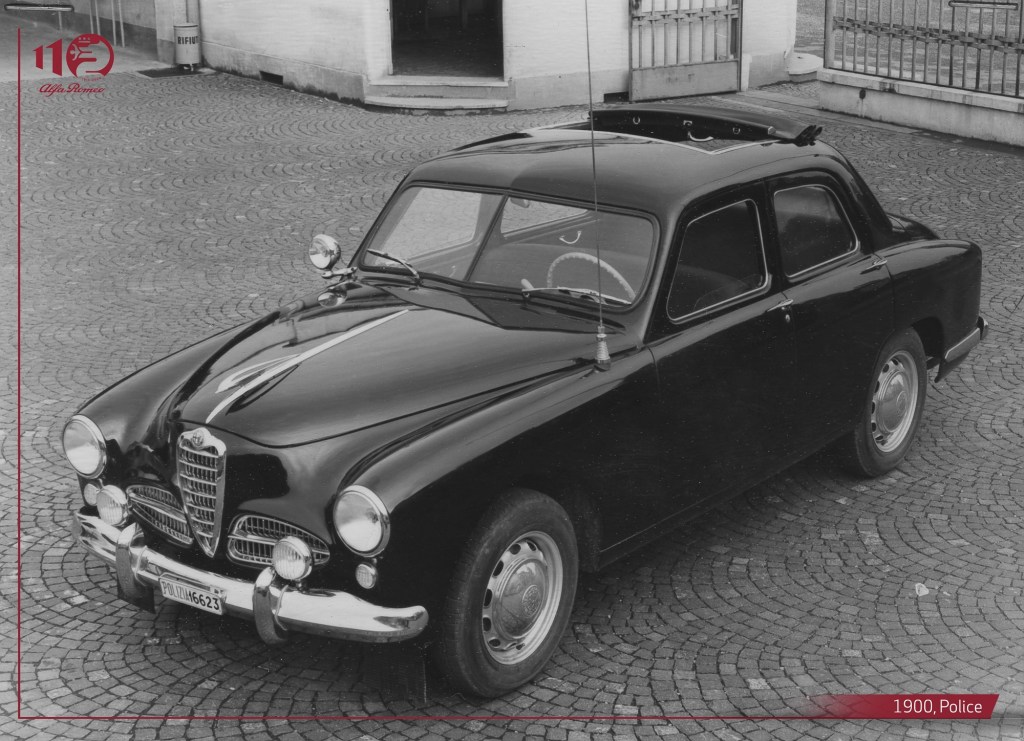
The beautiful Alfa 1900 was in 1952 immediately an iconic intervention car for the Italian Polizia…

Delightful, simply delightful. On the return leg from Roma back to Brescia, on the lunch stop before Siena, me and my father took (too much) time to chat with Stirling Moss, and we forgot our schedule a bit. This meant we were late, and had to do some massive catching up through the field. As there were timed sessions ahead, and we had to be within our time slot again. Easier said than done, with the power of a Mercedes 180 D ponton. Fight your way past birdcage Maserati’s and the like with 40 HP. Also the normal traffic was busy and held us up too much, as it took always time to accelerate for us to our top speed of 120 km/h at best.

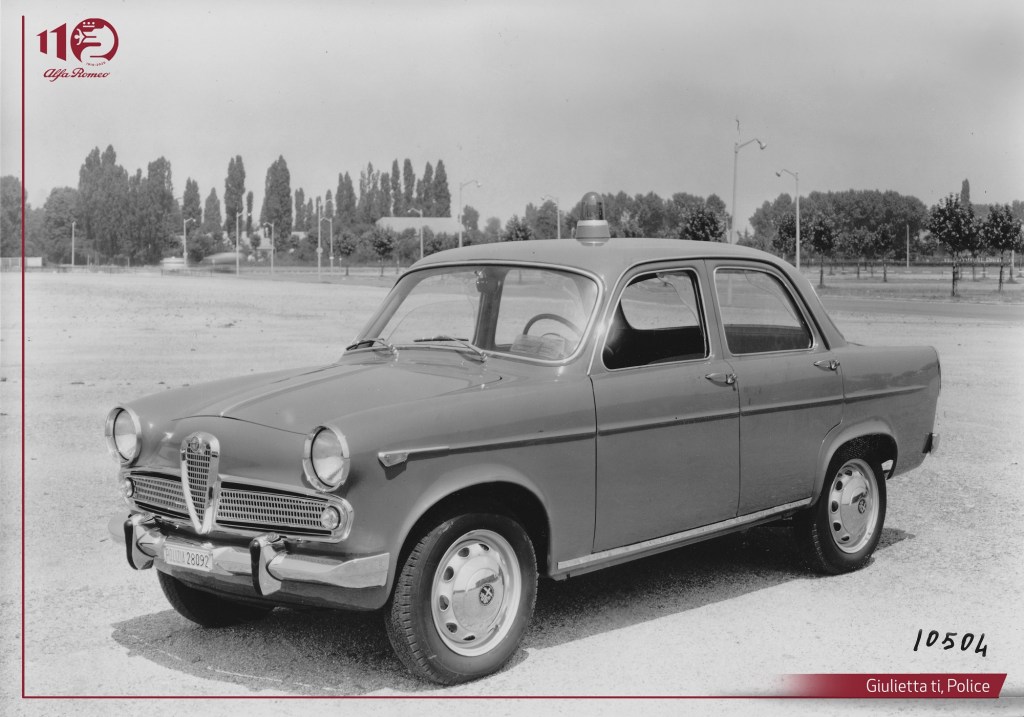
The Giulietta was in the mid-fifties the police car par excellence… to be replaced by the Giulia Super.

Then we saw the olive green Giulia Super at a crossroad. We waved frantically and threw our hands in the air, shouting “siamo in ritardi!” We are too late!    

“Okay, Okay”, they shouted back, starting their Giulia, putting swiftly their Alfa in front of us. “Siguici da vicino, follow usse close” they commanded us in their marvelous Italian accent, and so we went as a two wagon speed train through traffic, and passed the field of surprised Mille Migla participants. Lancia Aurelia, BMW 328 and Jaguar XK120 drivers couldn’t believe their eyes. But we got after 30 minutes of frantic speeding again in our slot. We waved at the carabinieri thankfully, and they responded with two signals on their beautiful Fiamm horn.

So when the dynamic PR people of FCA came up with te story about the fast, invincible Alfa’s in the service of the law, our delightful memories came back again, and we had to tell you here this story.    

Of course, the Polizia/Carabinieri Giulia’s were totally iconic and omnipresent in the sixties, but the love affair of the servants of the law with Alfa’s started already in the early fifties with the formidable Alfa 1900. We show you here the photos, and dream on with us…

Hans Knol ten Bensel

The new Porsche Targa enters its 8th generation…

Porsche has now completed its sports car trio: following on from the Coupé and Cabriolet, the third body variant of the new 911 generation now makes its debut with the all-wheel drive 911 Targa 4 and 911 Targa 4S models. The Targa remains unique with its fully automatic roof system. As on the legendary original Targa from 1965, it consists of a wide Targa roll bar, a movable roof section over the front seats and a wraparound rear window. The roof can be conveniently opened and closed in just 19 seconds. Just read on…

Hans Knol ten Bensel

More power…

It is powered by a six-cylinder, three-litre boxer engine with twin turbochargers: in the 911 Targa 4, it delivers 283 kW (385 PS) and, in combination with the optional Sport Chrono package, allows the 0-100 km/h sprint in 4.2 seconds – one tenth faster than before. In the 911 Targa 4S, it boasts 331 kW (450 PS), enabling the new model to reach the 100 km/h mark in just 3.6 seconds under the same conditions – four tenths faster than its predecessor. The top speed of the 911 Targa 4 is 289 km/h (up 2 km/h), while the 4S peaks at 304 km/h (up 3 km/h).

Both sports cars are fitted with the eight-speed dual-clutch transmission (PDK) and intelligent all-wheel drive Porsche Traction Management (PTM) as standard to deliver maximum driving pleasure.

…and a choice of transmissions

Alternatively, the 911 Targa 4S can be ordered with the newly developed seven-speed manual gearbox, which includes the Sport Chrono package. New technology has also been integrated to extend the range of features for both 911 models and, for the first time, Porsche InnoDrive, which includes adaptive cruise control, is available. 

AWD further developed…

The enhanced performance of the new all-wheel drive models goes hand in hand with further development of the front-axle drive system. The clutch and differential unit is water-cooled and has reinforced clutch discs for greater robustness and a higher load capacity. The increased actuating torque at the clutch improves its adjustment accuracy and also improves the function of the additional front-axle drive system. Overall, the enhanced front-axle drive system with PTM (Porsche Traction Management) contributes to even better traction in all road conditions.

Suspension also taken a step further…

The electronically controlled variable damping system PASM (Porsche Active Suspension Management) is part of the standard equipment on the new 911 Targa models. This system automatically adjusts the damping characteristics in terms of driving comfort and handling to each driving situation and has two manually adjustable maps: Normal and Sport. Porsche Torque Vectoring Plus (PTV Plus), which includes an electronic rear differential lock with fully variable torque distribution, is added as standard equipment on the Targa 4S and is available as an option on the Targa 4.

Like the other eighth generation Porsche 911 variants, the Targa models are also equipped with Porsche Wet mode as standard. If sensors in the front wheel arches detect significant levels of surface water, a signal is issued in the instrument cluster as a recommendation for the driver to manually switch to Wet mode. The drive responsiveness is then adapted to the conditions to guarantee maximum driving stability.

Driving dynamics up another level…

The driving dynamics set-up for the 911 Targa 4 includes 235/40 ZR tyres on 19-inch alloy wheels on the front axle and 295/35 ZR tyres on 20-inch wheels on the rear axle. As standard, the 4S model is fitted with 245/35 ZR tyres on its 20-inch front wheels and with 305/30 ZR tyres on its 21-inch rears. On the Targa 4, deceleration is taken care of on both axles by 330-millimetre brake discs with black four-piston monobloc fixed callipers. The red-painted brake callipers of the Targa 4S have six pistons on the front axle and four pistons at the rear,  while its discs measure 350 mm front and rear. The Porsche Ceramic Composite Brake (PCCB) can be ordered as an option.

Needless to say that we are anxiously awaiting to see this Targa in the flesh and report to you about our driving impressions…

Hans Knol ten Bensel

The silent sound of a car…

We all like the sound of a thoroughbred engine. The characteristic sound of a pur-sang four wheeled beauty. But we also get very nervous about that odd squeaking noise of the passenger seat when its not occupied. Or this annoying rattle somewhere, or the screeching sound of windscreen wipers. So the sound and noises a car makes are so important, determine for us whether we like a car or not.

No small wonder that car manufacturers pay the greatest attention to it. When we received a press message from the Dirk Steyvers, SEAT Press Relations and Content Manager here in Belgium, we took the opportunity to write an article here about it in our columns.  

Just read on…

Hans Knol ten Bensel

In Chile’s Atacama Desert, NASA carries out tests as it is comparable to the surface of Mars. In Ushuaia,Argentina, the only sounds you can hear are the flapping of penguins’ wings and the ice sheets cracking. They could be the most silent places on the planet, but not quite. The most quiet are anechoic chambers, a curious and descriptive name for a facility where acoustic conditions close to absolute silence are reproduced.

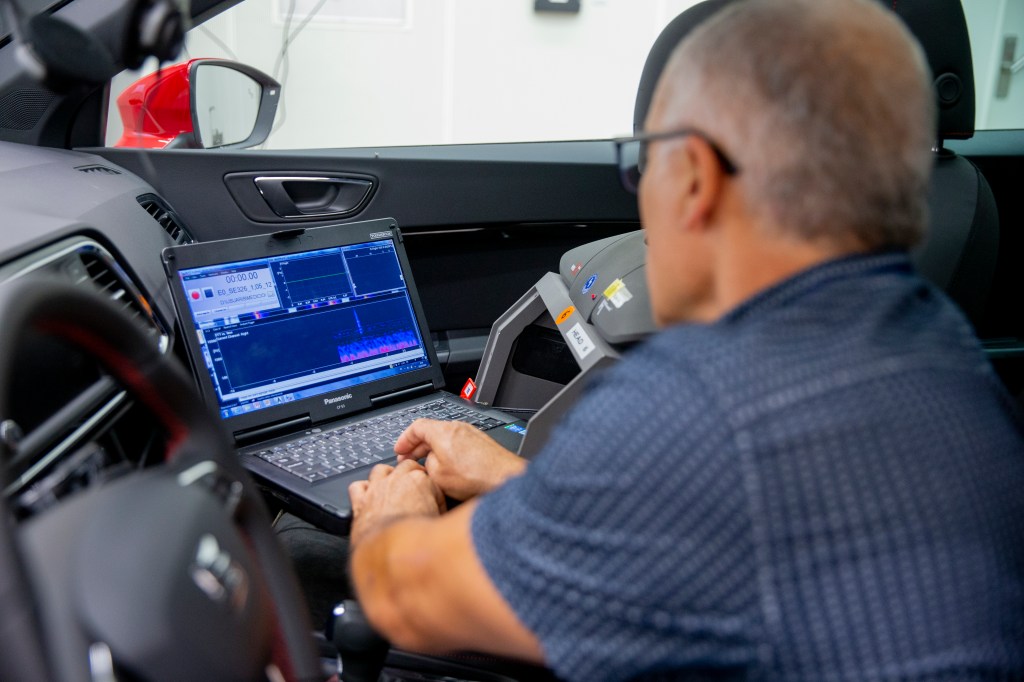
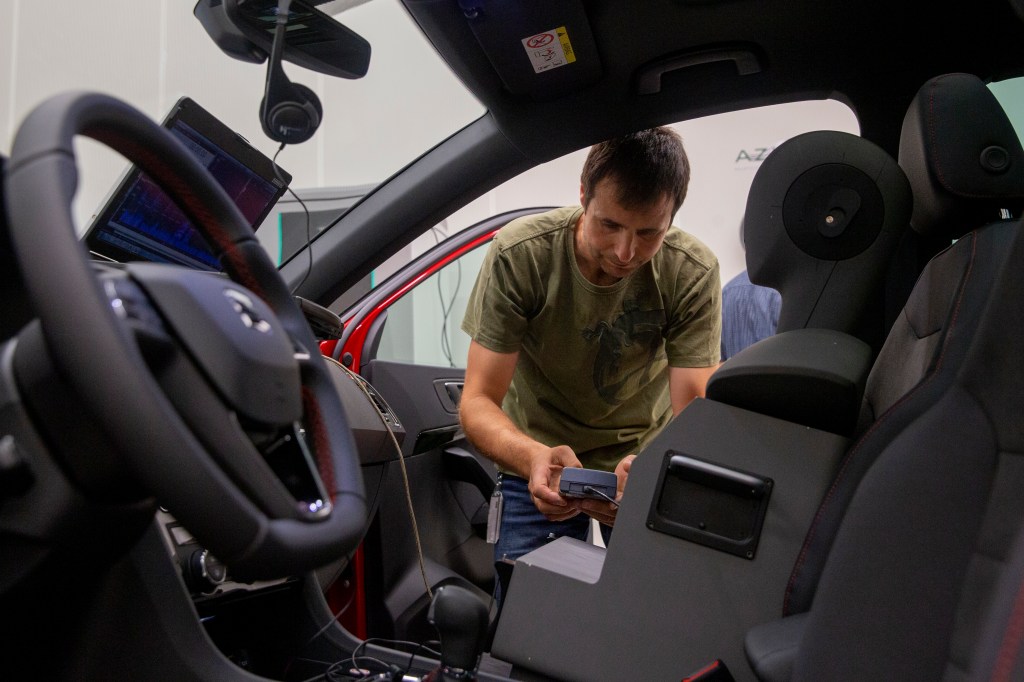
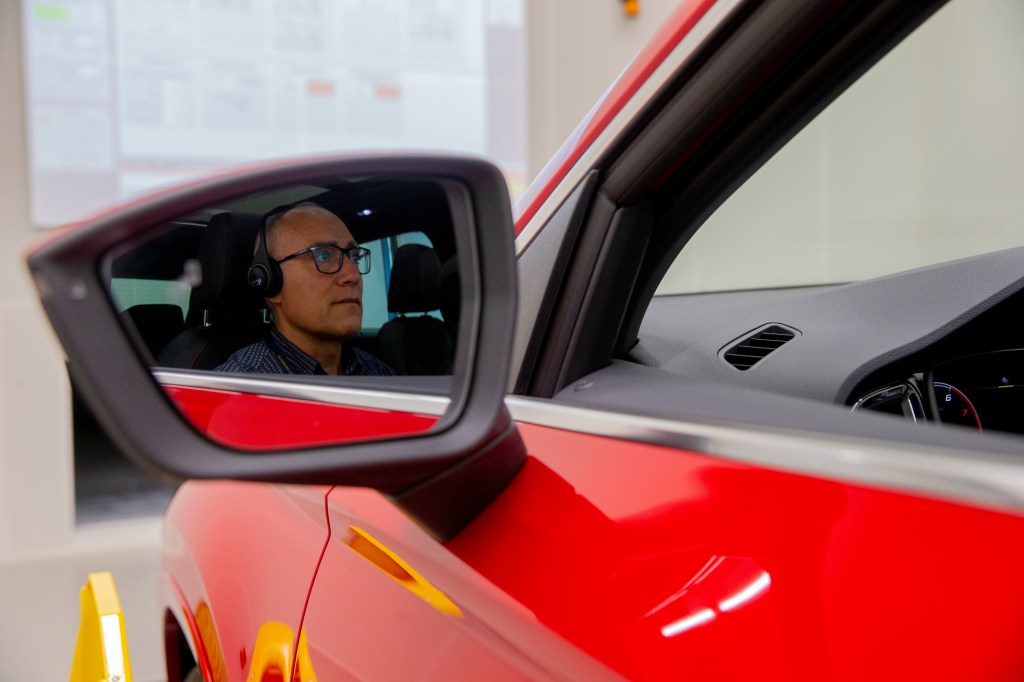
The SEAT Technical Centre in Martorell has one of these chambers, specifically designed to measure the sounds and noises made by a car with the utmost precision and without any interference. This is how it works.

The temple of silence. 

It is designed with a system called “Box in box”, and as the name indicates, it features several layers of concrete and steel that isolate it from the exterior. The inside has cladding material that absorbs 95% of sound waves to prevent echoes and reverberations. In some of these temples of silence people can sometimes hear the blood flowing through their veins or the air circulating in their lungs.

One car, more than one thousand sounds. From the engine or the turning wheels to the door closing, the ventilation system and when a seat reclines. The list of noises made by a car is endless, and they are all analyzed in the chamber. “On one hand, we measure the level of unpleasantness of the noises and check that they are reduced to a minimum; and on the other, we make sure that the noises we do want to hear, the ones that refer to the operation of the vehicle, are perfectly defined. Finally, we work on making them harmonious”, explains Ignacio Zabala, Head of the Acoustics department at SEAT.  

The voice of a car

Engineers and technicians pay close attention to the engine and the exhaust system, as they give a car its voice. Many of the sounds made by a car convey information, such as the unmistakable clicking of the turn signal indicators, which let us know without checking that they are blinking. But not only do the engine and exhaust noises inform us of when to shift gears or the speed of acceleration, they also give an insight into the character of a model. “We all know what the roar of a sporty engine sounds like, and that’s why we verify that it conveys what we want it to in the an-echoic chamber” says Ignacio. 

What does the cold sound like? Inside the room, specialists perform recordings with different highly sensitive microphones. One is bin-aural and features a torso with ear-level microphones to obtain representative recordings of what occupants hear. They place it in different positions to verify that each sound analyzed is heard as it should be from any angle. But they also recreate different conditions, such as temperature, because as Ignacio points out, “a windscreen wiper does not sound the same when it’s hot outside as when the temperature is below zero; the engine when it has just been turned on as when it has been running; or the wheels on different surfaces.”

Hertz, decibels and psycho-acoustics. Engineers and technicians in SEAT’s Acoustics department have several analysis tools at their disposal. The most basic include volume or spectral distribution, to other more technical parameters such as the field of psycho-acoustics, or the subjective perception of sound. “For example, a slight tinkling might make us more nervous and be more unpleasant than a strident sound”, says Ignacio. One of the most important measurements of psycho-acoustics is articulation, which measures the ability of two people maintaining a conversation in a specific setting.

An orchestra on wheels. “It’s no use having a car that is fully insulated from the exterior if the ventilation system sounds too loud. That’s why it’s important to reduce noise and define sounds to achieve a harmonious balance among them” explains Ignacio. He goes on to say that the goal is that the vehicle occupants feel as comfortable as possible, because acoustics “have a direct impact on comfort and are determining factors in the perception of vehicle quality.”

A ranking of silence

1.Anechoic chamber. The Guinness record has been held by the one owned by Microsoft in Washington since 2015, where sound measures -20.16 decibels. The sound made by air molecules bumping off each other measures -24 decibels.

2.Atacama Desert, Chile. The most arid non-polar desert on Earth.

3.Ushuaia, Argentina. The southernmost city in the world.

4.Anza-Borrego Desert State Park, USA. A rocky ecosystem that produces stony silence.

5.The Troll’s Road, Norway. The world’s most sinuous road also stands out for leading to an absolutely quiet place.

Interesting all this, isn’t it? We hope you liked this, we certainly did…

Hans Knol ten Bensel