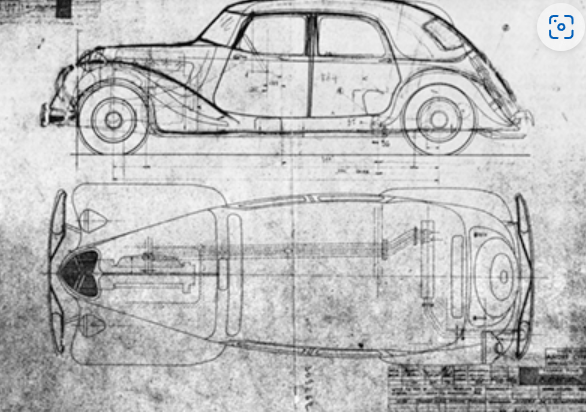
Already in 1934, the dream of the goddess of the road began: Citroën designers drew the first contours of a more streamlined body for the “Traction”, which was launched only a few months earlier.
This year we celebrate 70 years of DS, as indeed the iconic DS 19 was launched in October 1955, this year now 70 years ago.
Reason enough to delve into the stunning history of the birth of this goddess, and subsequently also DS Automobiles, who since 2014 carries further the tradition of making superbly styled, avant-garde automobiles offering exquisite comfort and panache.
Your servant started to delve into his archives, and here is a tale, which every car enthusiast can adopt as an exquisite story to be told at a dinner table with friends and family, about the men with a unique “Génie Français” which led to the birth of a truly unique automobile.
Hans Knol ten Bensel

But development work started rather in earnest in 1938, when Pierre Boulanger codenamed the project for a successor of the Traction VGD, or “Voiture à Grande Diffusion”
The man behind it all: Pierre Boulanger...
But first a word about the actors of this unique engineering adventure. It starts with Pierre Boulanger, who was a so-called “Michelin man”. He started working for Michelin in 1918, reporting directly to Eduard Micheli, co-director and founder of the business. Boulanger joined the Michelin board in 1922, and in 1938, he became the company’s joint managing director.
What has Michelin to do with Citroën? In December 1934, despite the support of the Michelin company, Citroën filed for bankruptcy. In that same month Michelin, already the car manufacturer’s largest creditor, decided out of necessity to become its principal shareholder.
Pierre Boulanger then became the assistant of Pierre Michelin, who was already the chairman of Citroën. Boulanger became the vice-president and chief of the Engineering and Design department. He became president in 1937 until his accidental death behind the wheel of a Traction 15 CV . He also jointly managed the Michelin company.
Pierre Boulanger was already since 1936 working on a project to create the TPV (short for ‘Très Petite Voiture’). This led, as you might already know dear reader, to the birth if the 2 CV, affectionately called by the French “La Deuche”.
The driving genius of the project: André Lefebvre …

But let’s go back to our VGD project, which he started with the help of André Lefebvre, the spiritual father of the Traction. Another most important actor in our tale. He was an engineer with unique insight and creativity, with a wonderful talent to think out of the box. He was a lifelong friend of aviator, artist and also car designer and engineer André Voisin. And this is a man who designed and built absolutely stunning cars.

André Lefèbvre in his younger years, a keen racing engineer, working for Voisin…
We show you here a photo of the Voisin which was to be seen in the Brussels Autoworld museum last year. It was also André Voisin who recommended Lefebvre to André Citroën.

The man behind the hydropneumatic suspension: Paul Magès
The genius who invented and developed the legendary hydraulic suspension was Paul Magès. He came to Citroën as a draughtsman at the age of 17 and a half, and made a wonderful career thanks to its practical sense, creativity and entrepreneurship. In September 1940 he was promoted to quality engineer and in 1942 Pierre Boulanger included him in his research team, to create and develop a suspension system for the 2 CV. Here his out of the box thinking and creativity proved crucial.
Already early in the development, he saw the advantages of a liquid that would compress a gas. It was a new idea that Paul Magès began to experiment with in 1944 on a 2 CV with a very crude system comprising 1 gas tank per wheel, which theoretically made it possible to vary the flexibility from one to four, with a gas and a liquid separated by cork. Cork will not withstand high pressure however. This archaic start is refined, perfected, tested a multitude of times, and the results are always more surprising. Paul Magès then created his own team which manufactured all the organs itself. The skills of each person are at stake, in the feverish atmosphere of research. The theory gradually became reality, the concept was simplified, the tests multiplied, the results were refined.
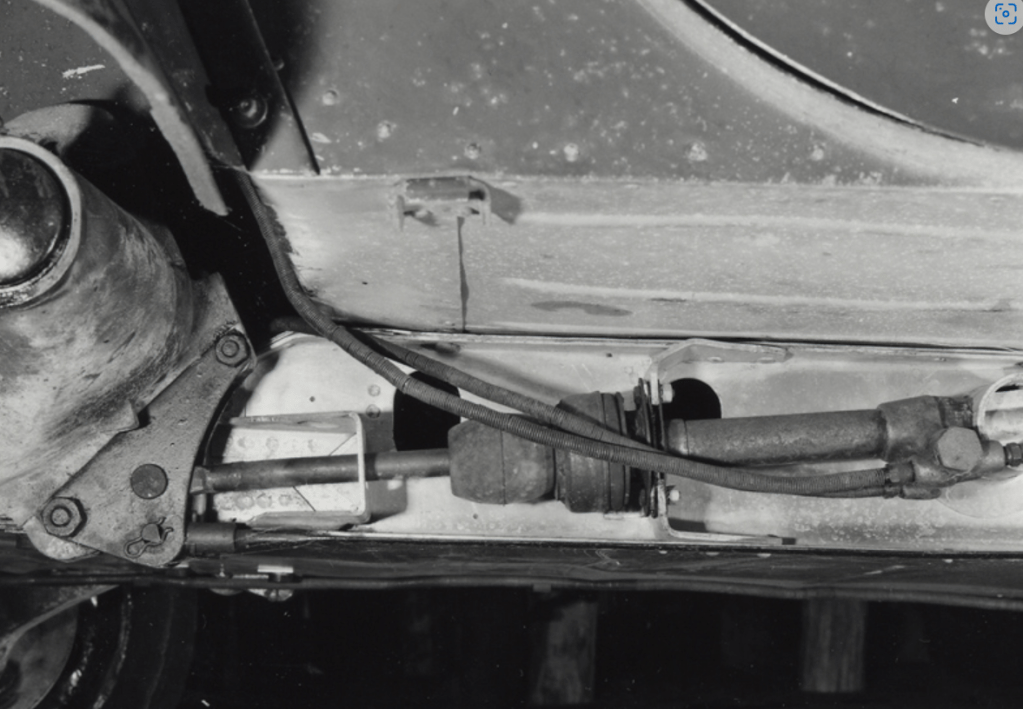
First trials of a hydropneumatic suspension on the 2 CV prototype…
In 1946, Pierre BOULANGER encouraged Paul Magès to continue his research, no longer on the 2CV but this time on a front-wheel drive, because it was necessary to think about the future VGD car. (Mass Circulation Car)
Besides the suspension, the car had to be revolutionary, and Boulanger proposed a monocoque structure in which the centre of gravity would be as low as possible, the roof and bonnet would be of aluminium and the floorpan would support unstressed, lightweight body panels.
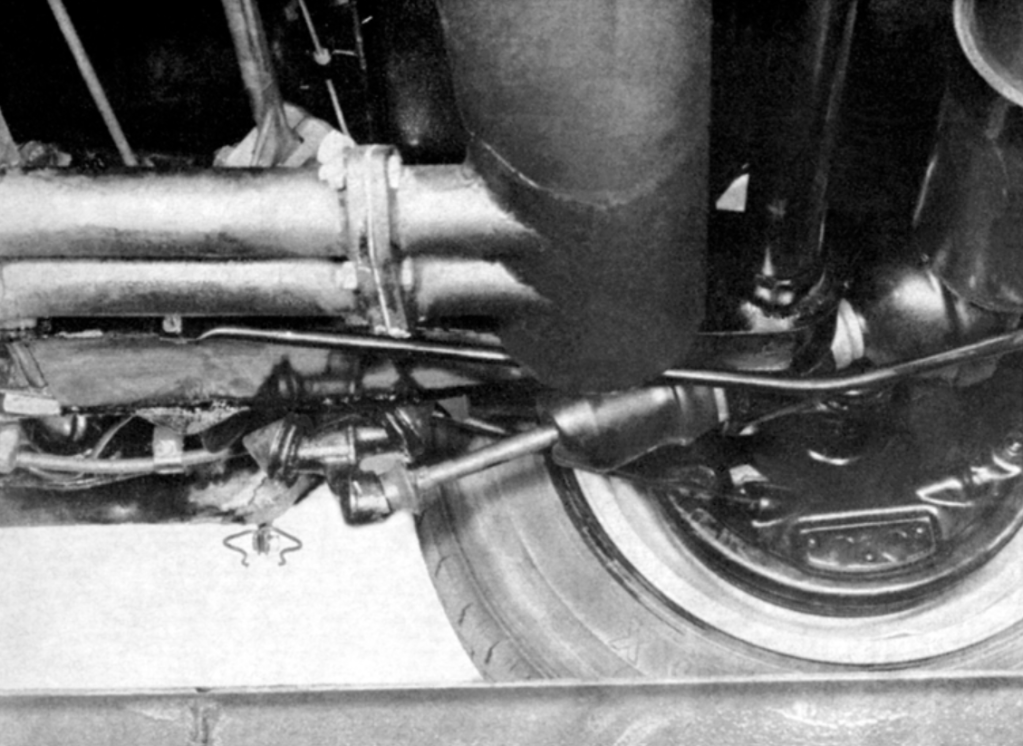
The hydraulic suspension found its way on the rear axle of the six cylinder 15 CV Traction…
In 1949, Paul Magès, after multiple tests, finally developed a hydropneumatic suspension that he put to the test in the cold in the Nordic countries, then in Algeria for resistance to high temperatures. It was from this adventure that the idea of a manual height control was born, in order to allow the vehicle to face snow or chaotic terrain. Other trials will be the source of questioning, creations, and multiple improvements.
In 1953, the hydropneumatic suspensions were deemed reliable enough to equip the 15 six, then the DS 19…
But soon more about the story of the DS in the following 70 years since its birth…
Hans Knol ten Bensel
 Autoprova - for the Connaisseur