We drove the Golf Variant R-Line 1,5 eTSI DSG7: the beauty of efficiency…

Volkswagen hones its bestsellers to perfection, and the Golf range takes here of course centre stage. The Golf also caters for a wide array of users, also for those among us which still choose for a “classic” combustion-engined drivetrain, albeit here with the electric support of a 48 V battery and a belt driven starter/generator.

This choice can be the right one for many reasons, last but not least for example the poor availability and density of the charging infrastructure and of course the type of use of his/her car. Frequent and almost daily high-speed long distance runs on Autobahnen and autoroutes or longer trips in remote mountain/rural areas on this globe can make the choice for an efficient petrol engined car the right one.

We wanted to find out with this test how they behave in terms of consumption and efficiency in our present day “green” world…

We also took a close look at the practical qualities of the Variant version, which also tops in the popularity charts. Did you know that Golf Variant has already impressed more than 3 million customers since its debut in 1993?

Hans Knol ten Bensel
Timeless looks and top notch build quality…

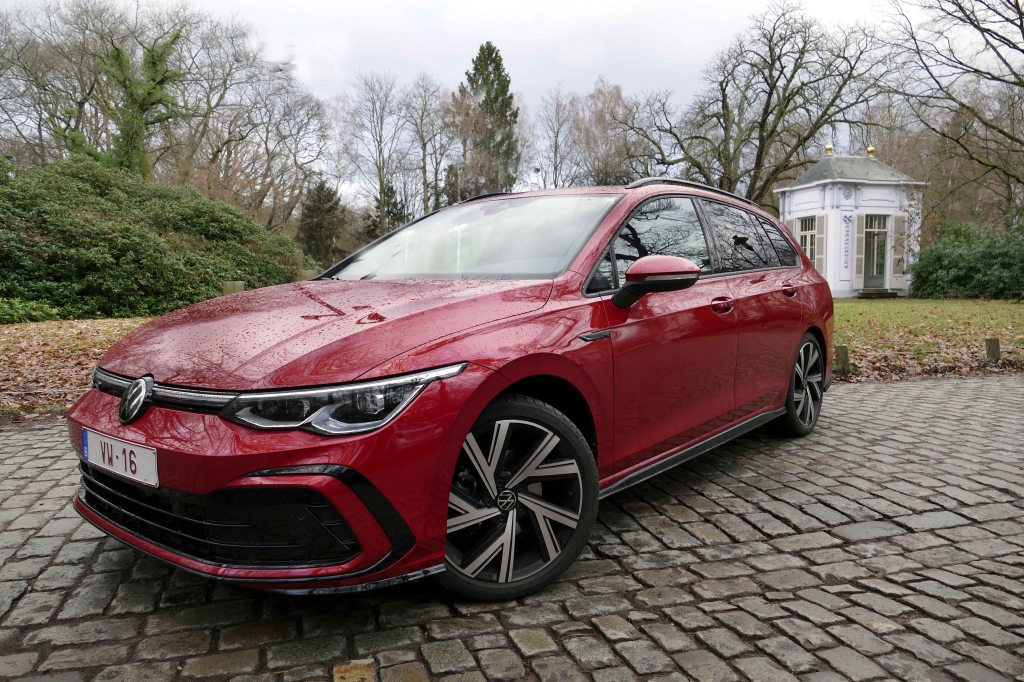
The Golf Variant runs of the production line in the “home” factory in Wolfsburg, and this is true for the entire Golf range now. The Golf stands out with excellent finish and quality of the materials used. The vast experience of the group in achieving high standards of finish in its mass produced cars certainly shows. There is further the attention to detail and every aspect of the styling of the Golf range, which is also a good example of how to combine timeless contours and proportions with an overall elegance which appeals to (almost) all of us. The 2024 edition has received a further facelift by the way, with revamped infotainment. But interior dimensions remain unchanged.

Stepping into the cabin is as one might expect totally easy, even for the tallest among us. Also two adult rear passengers find more than adequate leg- and headroom. See further more about the practical qualities of this Variant.

We like the dashboard layout and the no nonsense design of the round instruments you can choose in the digital display in front of you, clearly readable in the good VW tradition. The central touchscreen is also well oriented and clearly readable. After the most recent facelift the now free-standing touchscreen is further enlarged, with a screen diagonal up to 32.8 cm.

What is truly impressive is the enormous plethora of information you can display on both the central touchscreen and the instrument cluster in front of you. Don’t get too enthusiastic when trying this out, as you can wind up with a drivers’ screen which informs you about too many things…

As with any car, it certainly pays to read the instruction manual carefully, something which hardly anyone does, much to their own expense. You will learn a lot, and the manufacturer has gone to great lengths to inform you, no efforts spared. For example, the manual of my trusted Lexus CT 200h is…696 pages long! Instead of looking at You Tube films to know more about using your car, read the manual first… 

We reconfigured the Variant drivers’ display to indicate also the oil temperature, and this gave us again some very interesting information. It reminded us that one needs to drive at least 10 minutes and/or up to 15 kilometers to get an oil temperature at working temperature. Water temperature is much sooner at its “ideal” level, as the thermostat brings it there rapidly to ensure ideal thermal efficiency and reduced fuel consumption. So don’t floor the accelerator too soon and don’t rev the engine too high on short (urban) runs…

An ideal driving position is soon found, with plenty of adjustment range available in seats and steering wheel column. 

One of the Achilles heels in the present day generations of VW’s are the haptic touch buttons to use the different infotainment functions of the car. It certainly needs a sensitive hand and index finger to get acquainted with them. But practice (and patience) makes perfect…. The slider controls for heating and ventilation are illuminated too, which is welcome at night.

Driving

The Golf has always been an excellent drivers’ car in its segment, and this Variant 1,5 eTSI DSG7 is no exception. The 130 HP 4 cylinder engine is smooth and willing, and well matched to the 7 speed DSG auto box. There is the addition of a mild-hybrid system and a powerful brake energy recuperation function, paired exclusively with the 7-speed dual-clutch gearbox (DSG).

The energy stored in the 48 V lithium-ion battery supplies the 12 V vehicle electrical system and drives the 48 V belt starter generator. Below 20 km/h, when coasting, the engine will shut off automatically, and it does also under braking.
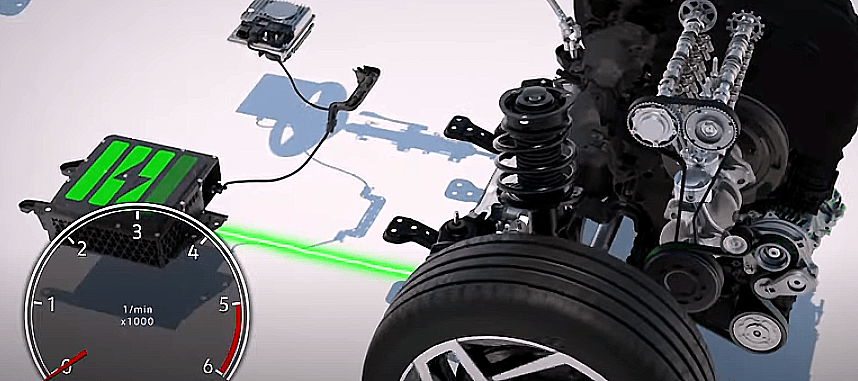
The belt starter generator also starts the combustion engine – which as we said is switched off as much as possible while the vehicle is moving – in a barely perceptible way. Driving at normal throttle openings, the engine will change quickly into higher gears, keeping revs low. This belt-driven starter-alternator not only takes on the role of the alternator and starter but also operates as a small, lightweight electric motor that instantly boosts the drive torque when moving off.

The good torque characteristics of this unit still warrant brisk accelerations. Mind you, the Changes are smooth and jerk free, making (urban) driving most relaxing. Performance is up to scratch, with the “classic” 0 to 100 km/h sprint absolved in 9,6 seconds, and a top speed of not less than 206 km/h.

How does this translate in fuel efficiency? Again, much depends, as always, on your driving style. But the starter generator helps you. In low speed stop and go urban traffic expect a consumption in the range of 7,3 liters/100 km. On the open road, it is easy to get below 5 liters/100 km, and autobahn runs at legal speeds cost you seldom more than 6,5 liters. Indeed, the “coasting” function with automatic engine shut of when you lift the throttle at speed is smooth, very relaxing and indeed saves fuel.

VW claims that the assistance of the starter/generator reduces average fuel consumption by some 0,4 l/100 km. If you adapt your driving style to the philosophy of this eTSI, this is certainly true. The CO2 emissions according to WLTP  standards are 129 g/km, the emission standard is Euro 6d (WLTP).

Handling and comfort beyond reproach.

Needless to say that the Golf platform, it uses the Modular Transverse Toolkit (Modular Quer Bau) is currently Volkswagen’s most widely used technology platform, and allows for the Golf to offer customers a choice between petrol, diesel, CNG, electric and plug-in hybrid powertrains. The Golf Variant offers most excellent (high speed) stability and impeccable handling, behaving very predictably in all thinkable situations. We tested the car in very snowy conditions, and it proved to be masterful in every respect, of course when driven sensibly…

Practical There is another strong point of the Golf Variant, and that is offering room for its occupants and luggage. The Variant is now 4,633 mm long and now boasts a wheelbase of 2,686 mm (respectively a 66 mm increase compared with its predecessor). Much to the advantage of the interior: the legroom thereby also increases by 48 mm. There is also room for your luggage:  when loaded up to the top edge of the rear seat backrest, it offers 611 litres of stowage space.
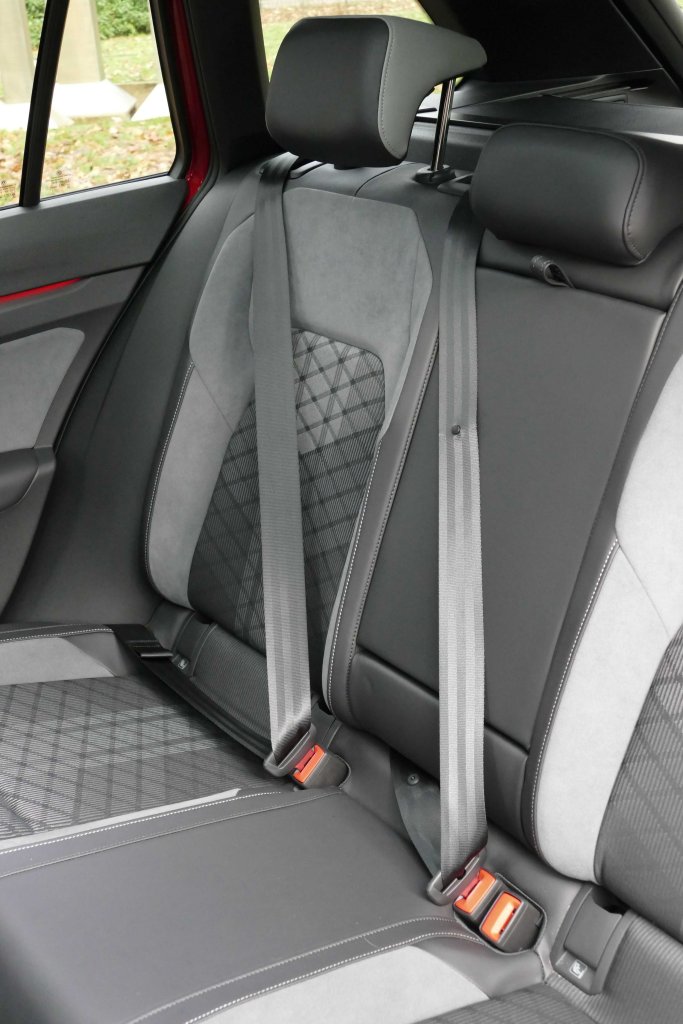
With the vehicle loaded up to the roofliner with integrated luggage compartment net and the front seat backrests, the volume increases to 1,642 litres.

We drove the posh “R Line” equipment version, but it is good to know that the Golf Variant standard features already include the Lane Assist lane departure warning system, Front Assist with City Emergency Braking System and Pedestrian Monitoring, the new oncoming vehicle braking when turning function, XDS electronic differential lock, the Car2X traffic hazard alert, the keyless comfort start system Keyless Start and automatic lighting control. Always as standard in the vehicle interior: Digital Cockpit Pro (digital instruments), Composition online infotainment system touchscreen, We Connect and We Connect Plus online services and functions, a multifunction steering wheel, Air Care Climatronic automatic air conditioner and a Bluetooth telephone interface.

Conclusion

This Golf Variant eTSI A formidable practical companion, bringing you swiftly and economically in all types of weather and roads, with a useable range of 750 kilometers from its 45 liter tank, offering lots of passenger room fore and aft and for massive luggage too.

It is everything you would like a car to be, dependable, timeless, iconic, classless, standing indeed the test of time.

In its starter/generator configuration it makes clever use of e-power, not adding much weight in heavy batteries, which is also an advantage as European governments now soon want increasingly to tax cars on their weight. The Golf is also reasonably compact considering the room it offers, so it will have for many years (literally) its place in urban areas.

Hans Knol ten Bensel

We drove the Fiat 500e “la Prima”: the endless fascination of a bestseller…

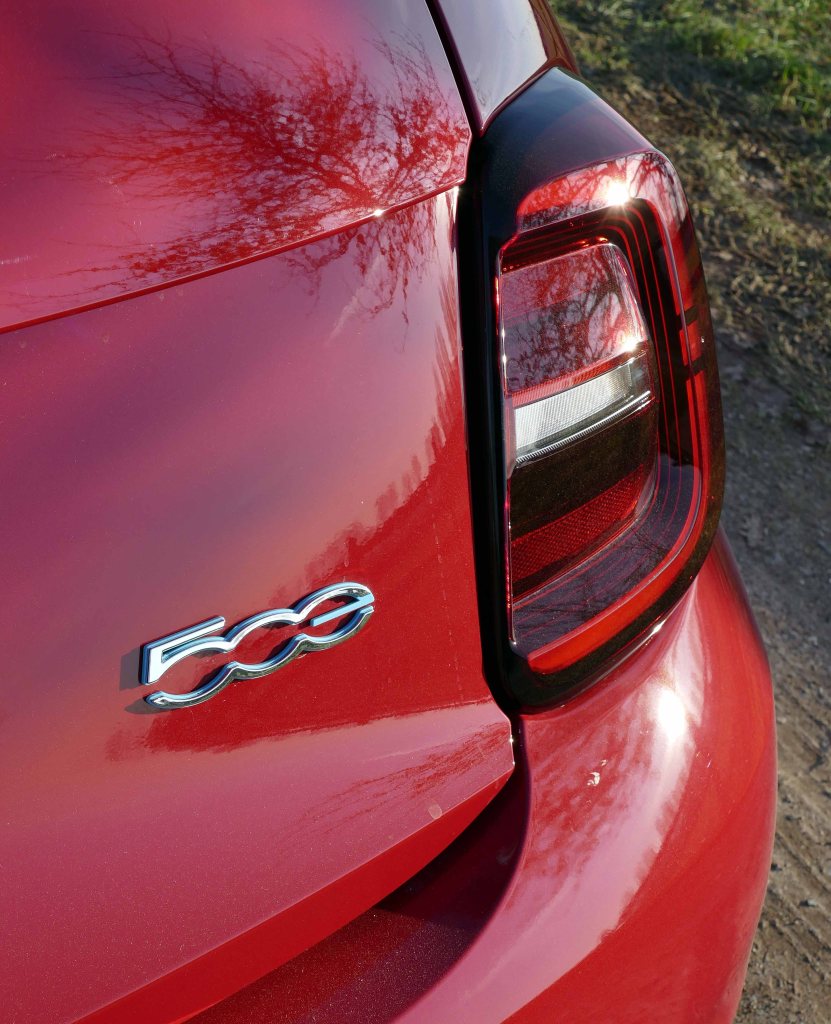
The Fiat Cinquecento has always been a car dear to our hearts, and we certainly are not alone in loving this car. It now continues since 2020 its successful career in EV form, and many say that this is the very best 500 ever. The popularity of the 500e is now indeed clearly written in the sales charts: it is an undisputed leader in the European A+B BEV segment with a market share of 14.7%.

Needless to say that we were very keen to take the wheel of this iconic city car for you here…

Just read further!

Hans Knol ten Bensel

Wonderful looks inside and out

The 500e is cute from any angle, and the “la Prima” version we tested has some extras which we came to like very much. Such as the full LED headlights with a special signature, making the front end even more attractive with its elegant round headlight contours. By the way, at night, the LED headlights offer of course excellent visibility.

We also loved the 17 inch alloy wheels with a diamond cut pattern, which suited our test car very well.

The proportions of the Cinquecento are nothing less than a stroke of genius. In the electric three door version now, the 500 has grown a bit in size, and thanks to a 60mm increase in length and width, it looks a more imposing car. It runs on a completely new platform, and it is also 4 cm taller, with a 2 cm increase in wheelbase. But the designers left the overall look untouched, and that is nothing short of an absolute masterpiece.

The interior is well finished, and the color patterns and textures of the surfaces were also pleasing to the eye. The finish level is also quite good. The instrument cluster houses very clear and “less is more” driver information, with a well positioned 10,25 inch touchscreen in the middle. Underneath this screen is thankfully an “analog” row of buttons for heating and ventilation.

Sound volume can be adjusted with a manual rolling button on the centre console, very neat and practical. On the left side of this sound volume control, you can choose between the different driving modes. Indeed, you can select either “Normal”, “Range” or “Sherpa”. The regeneration function when you release the throttle increases gradually, and in the “Sherpa” mode, you can easily drive without touching the brake pedal at all, as the deceleration is then quite marked. It takes only a little practice to learn this…Needless to say that this has a very positive effect on brake pad wear…who said that EV’s emit more brake dust than “classic” IC cars?

Stepping into the car, one notices immediately some big improvements. The driving position is now comfortable – it’s set lower and has a decent range of movement to the wheel and seat.

The front seats, elegant with their “Fiat” embossed finish are generously dimensioned, and indeed two up to 1,95 m persons can find a good position behind the wheel. This cannot be said for passengers in the back seat. Children and dogs can find a good home though, but anybody taller than 1,60 m will find life in the back seat rather cramped.

Thankfully, through the third door on the right side of the 500e “La Prima”, it’s easier to reach the back seat, and parents with toddlers will only appreciate this, as it makes (re)moving the baby safety seat more of a breeze.

Smooth performance…

The 500e “La Prima” has a 118 HP/87 kW electric motor, and a 42 kW battery pack. The motor drives the front wheels through a single gear transmission, and this means ultra smooth progress. Indeed, e-power refinement is also to be had in this iconic 500. Almost totally silent and of course vibration free, the 500e offers lively performance. However, we should not forget that with its batteries, the 500e puts somewhat more kilos on the scales, and it weighs 1,4 tonnes. Nevertheless, the 118 HP/87 kW motor develops a healthy 220 Nm of torque, so acceleration from lower speeds is quite brisk indeed. For example, it will jump from 15 to 30 km/h in merely one second and the classic sprint from 60 to 100 km/h costs only 5 seconds. Standing acceleration from 0 to 100 km/h is done in 9 seconds. This is (very nearly) as fast as the early Porsche 911… and indeed, subjectively, one has the impression that the 500e is fast in getting up to speed.

Top speed is limited at 150 km/h, but for cruising at legal motorway speeds, the 500e is well suited. Of course, as EV’s go, the range will dwindle dramatically at high cruising speeds. Remember, the 500e has this Sherpa mode, which limits the speed to 80 km/h. But then you have to get very friendly then with the big Scania’s and MAN’s who will overtake and outrun you…

Handling is quite good, with excellent stability in all driving situations. Comfort is adequate, rough sections with potholes and ridges will be felt quite clearly, so the 500e is not a comfort miracle, but it is not bad either.

Steering is pleasantly light, which is welcome for this urban car, and brakes are also very well up to the task.

A reasonable urban range

Speaking of range, maybe some BEV knowledge is useful here. Did you know that the outside temperature plays a significant role? Maybe more than you think. Let’s take a close look here for this “La Prima” with a 42 kW battery.

If we take (very) cold weather, with -10 sub zero temperatures, the range in urban driving is 230 km, when you are venturing on the highway in these wintry conditions, this dwindles down to 165 km. We want to tell here that for the highway, a constant speed of 110 km/h is assumed.

In summer, at a temperature of some 23 degrees with no A/C being used, city consumption rises to a rather impressive 355 km. On the highway in warmer spring weather, now 215 km are possible, but still with no airco. So you will just make a Brussels-Knokke quick retour. Not so formidable it? In winter, you can forget this. What’s more, if you have to make an unforeseen quick retour, it is hardly realistic to expect that your car is fully charged. Keep this in mind when you need to reach in emergency a sick parent or child at a certain distance…

So this means practically that this 500e is a town car, and fit for short commutes only, if you don’t have charging possibilities at home or your destination and/or want to make a quick (evening) retour with no time for recharging “en route”.

When it comes to consumption, the following figures are more realistic: for urban traffic 13,6 kW/100 km, on the open road approx. 18,0 and on the motorway 19,5 kWh/100 km. The official WLTP consumption is given at 14,4 kWh.

Smooth recharging

The 500e offers however the possibility of fast recharging, as it can recharge at up to 85 kW/h. Then you will charge in less than 30 minutes from 10 to 80 pct of the 42 kW battery charge. Practically, one will charge at 11 kW on most public charging points, and then it will take about 4 hours to get fully charged.

Infotainment and practicality

The Fiat 500 boot is pretty small, although there is underfloor storage for one of the two standard charging cables provided. In standard form, the boot space is some 200 liters; using the space until the roof, one has some 35 liters extra. Folding  the rear seats down and loading until the height of the window base, one can pack 460 liters.

You have a DAB+ radio, Bluetooth, 2x USB-A and 1x USB-C connections, Apple CarPlay and Android Auto, and an inductive Smartphone charging station. The navigation informs you about actual traffic situations and charging points. Via a Fiat-app you can heat/cool the car before you leave and be informed about range and charging points on your journey. Last but not least there is a nice JBL Premium-Soundsystem with 320 W system power…

 Conclusion

A formidable, cute looking, absolutely iconic urban BEV, that’s what this Cinquecento Elettrica “La Prima” is. Not the roomiest, nor the most comfortable, but then, with its possibility of having three doors, and even a cabrio version, it will continue to steal many hearts, as it has done so since it rolls of the production lines in the Mirafiori plant in Turin.

Hans Knol ten Bensel

We drove the Peugeot 408 GT 225 HP hybrid : French style and panache…

Peugeot is well known for its outspoken design, and the latest version of the 408 sedan is no exception. We all know that we live in a time where imposing SUV’s are all the rage, but then Peugeot, with an eye towards automotive tradition, will always keep an attractive sedan in its range, and the 408 is the result.

Did you know that the bodywork definitions ”sedan” and ’limousine” are French? The definition “sedan” stems from the French town of that name. The definition ‘limousine’ comes from the French region “Limousin”. In automotive terms, it is a luxury saloon, in horse-drawn world, it is a utilitarian cart or any big cart with three lateral windows. 

But then, is this Peugeot a “classic” sedan? Well, no! Just read further…

Hans Knol ten Bensel

According to Peugeot, the 408 is a blend between SUVs, hatchbacks and saloons, and has been described as a “coupe crossover.” Indeed, with the Peugeot 408, the brand with the proud lion introduces nothing less than its own segment, that of a raised fastback sedan.  Actually the present day 408 is based on the EMP2 platform, shared with the third-generation 308.

The development of the vehicle, led by project manager Aurélie Bresson, PSA Group took several years due to its radical concept, codenamed as the P54 during development.  

The design was inspired from an internal concept car that Peugeot had worked on, which was known as the “2015 Advanced Design” manifesto. Its design concept is also featured in the Citroën C5 X, which shares the same platform (long-wheelbase EMP2 V3) and height with the 408. Indeed, the family resemblance is manifest, and the long-legged stable and very comfortable road manners are similar.

The 408 is bold and elegant. Peugeot calls it also a fastback (indeed, because of its fifth door) and places it at the top of the C segment. Peugeot also states that the car exudes “allure” and, as we said earlier in our article at the static presentation of the 408, we liked the angular shapes and its well accentuated contours , with remarkable styling details like the inverted cut-out of the rear bumper. We also liked the 20- inch rims featuring an interesting geometric design, and we already pointed out in our colums (see https://autoprova.be/2022/09/14/bold-and-beautiful-angular-and-elegant-the-new-peugeot-408-is-a-fastback-with-panache/) we appreciated that the tire rims protrude further than the alloy rims and thus protect them, so you cannot readily damage the beautiful wheels at the first high kerbed stone you meet.

The future smiles at you in the cabin…

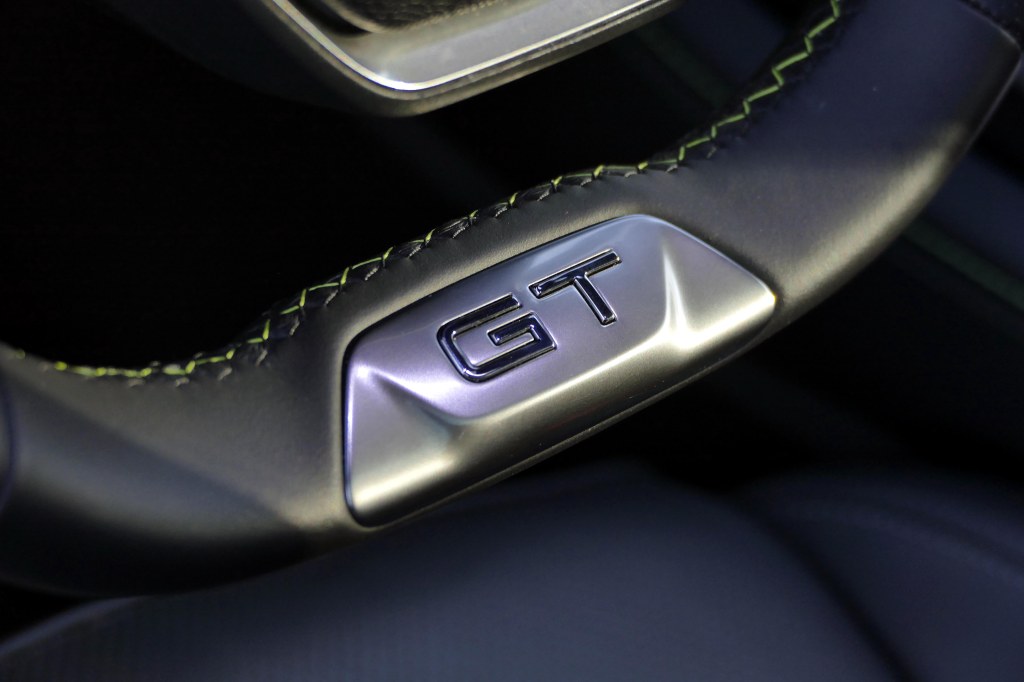
The bold and angular futuristic styling continues in the dashboard and cabin layout. Indeed, the PEUGEOT 408 offers the latest generation of the PEUGEOT i-Cockpit®, instantly recognizable by its compact steering wheel dedicated to driving pleasure and controlled agility. The compact steering wheel puts you indeed in a sporting mood and encourages you to drive this 408 with slightly more verve, but then you have to concentrate on finding a proper seating position so that your vision on the instrumentation is not (partially) blocked by the enthusiastically shaped steering wheel.

Driving: the joy of French comfort, grace and speed… Peugeot attaches great importance on comfort combined with safe, superior and predictable handling. The 408 scores beautifully in all these points. The 408 takes comfort to a very high level, even on frost-ridden secondary roads, wet routes nationales or départementales, and floats over it at (high) speed with undisturbed stability, to take you swiftly and safely to your destination. Traveling big distances is a boon for this 408. As said here earlier, it bears resemblance to the road manners if the “big” Citroën C5 X.

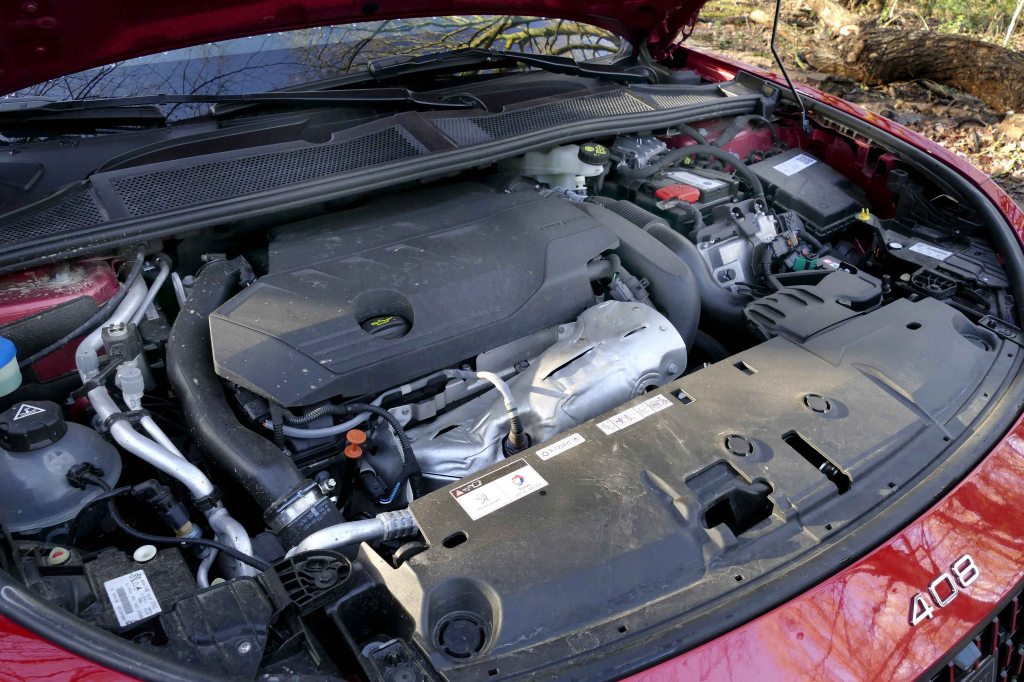
The test car was equipped with the top-notch drivetrain, in the PHEV version we tested. The 1,6 litre efficient four cylinder petrol engine develops 180 HP at 6,000 rpm, with torque being 250 Nm @ 1750 rpm. But there is also an electric motor of 110 Hp @ 2500 rpm sitting between the petrol engine and the 8 speed automatic transmission. The impressive torque of this motor, namely 320 Nm, is developed between 500-2500 rpm. All this results in a system power of 225 HP, and a system torque of 360 Nm.

This results of course in (more than) excellent performance. It will sprint in about 7,9 seconds from 0 to 100 km/h, and its top speed is a stellar 233 km/h. Abundant torque at every speed makes for a delightful performance experience. This car is well and truly a fast Gran Turismo. Mind you, this is nothing less than the performance of the iconic Jaguar E-Type!

Consumption depends greatly on how often you charge its 12,4 kW battery. According to WLTP standards, it is set at 1,4 l/100 km. Running it on petrol power, you can expect anything between 6 and 8 litres, depending on your driving mix between town and open road. You are helped by the relatively low weight (1.781 kg) of the car, and its excellent aerodynamics.

A roomy and practical daily companion

The 408 offers a lot of legroom on the elongated platform it shares with the Citroën C5 X. Boot space is also abundant, with a volume of 536 litres, which can be increased to 1.611 litres, once the rear seats are folded down.

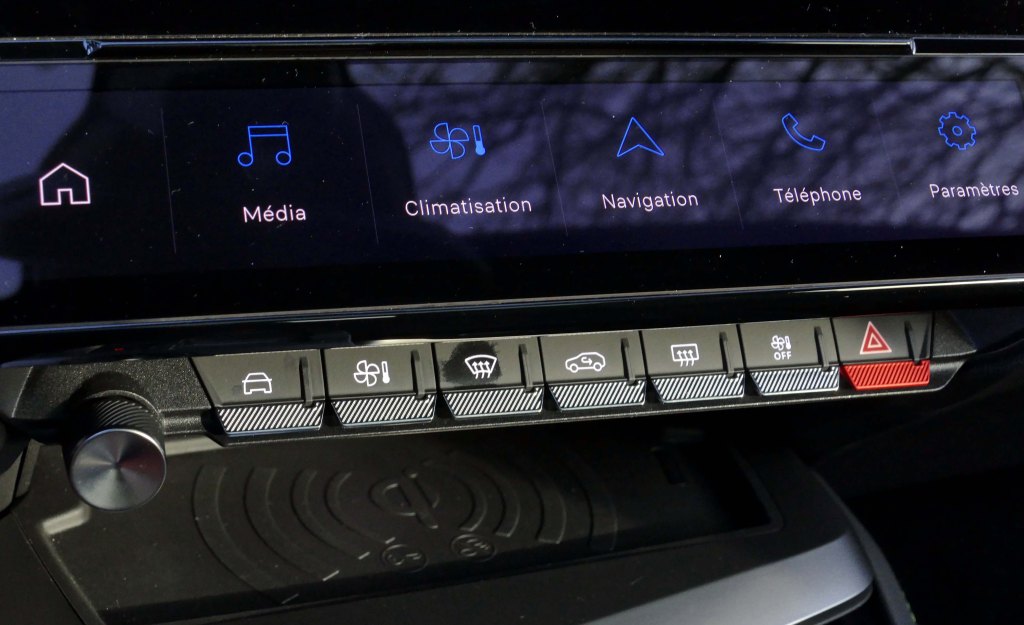
The 10 inch touchscreen gives you all the necessary navigation and infotainment info, and the 408 pleases with puttons and switches on steering wheel and below the touchscreen for all the usual functions.

Of course, this 408 offers all the thinkable driver assistance and safety functions. Powered by 6 cameras and 9 radars, the driver assistance systems include adaptive Cruise Control with Stop and Go function,  Night Vision, which warns of animals, pedestrians or cyclists ahead before they appear in the high beam, Long-range blind spot monitoring (75 metres) and last but not least Rear Traffic Alert, which warns of a potential hazard when reversing.

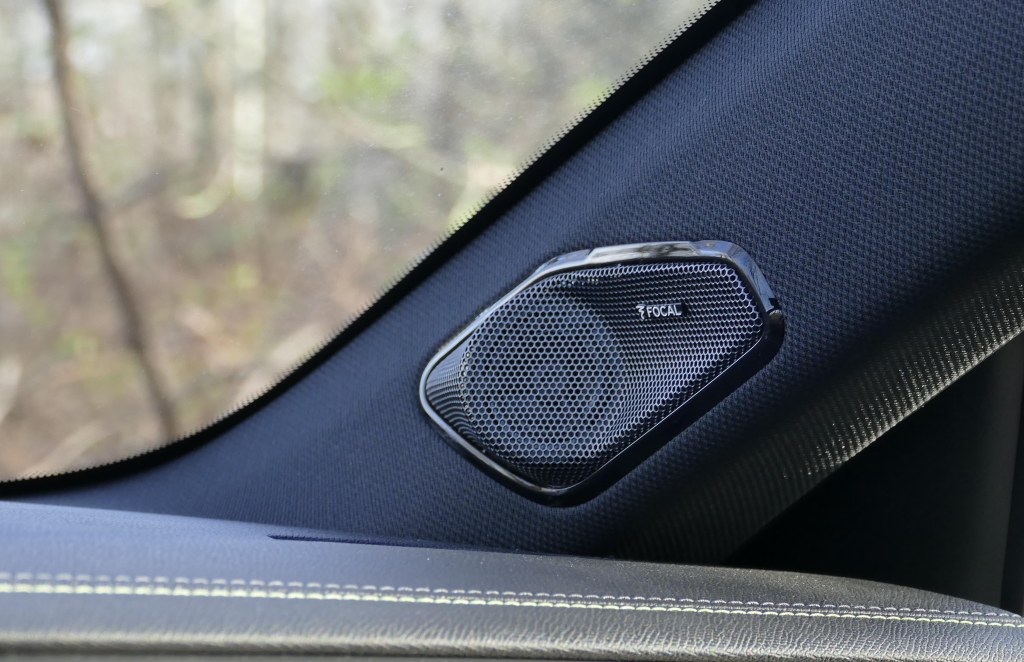
All this contributes to driving pleasure, which is indeed overall a very relaxing experience. Intuitively you will feel very much at home and rather sooner than later you will come to enjoy the excellent sound system and find every drive with this Peugeot a “Zen” moment in your (busy?) day…

Conclusion

Peugeot has truly succeeded to create a roomy four passenger comfortable Gran Turismo which gives you a soothing driving experience, where you can enjoy refinement, experience the unique panache of French comfort together with unerring stable handling and the sheer pleasure of the speed and performance of a “grande routière.”

Combine all this with responsible energy consumption, E-power capacity in town, smoothness and mechanical “raffinement” all packed in a bodywork with stylish “allure”, and you will agree that this Peugeot has a lot to go for…

Hans Knol ten Bensel  

We drove the Alfa Romeo Tonale Hybrid: smooth Italian (super)power…

I vividly remember my visit to the Centro Stile Alfa Romeo. Indeed, I sat in the prototype mock up bodywork/interior of the Tonale, and had to be very cautious not to touch anything, as it was made of plaster, clay and wood. I was invited at the Centro Stile Alfa Romeo by Chief designer Klaus Busse and his team, when the plaster and wood prototype of the Tonale was just finished. We admired its typical proportions in tune with the higher stance of an SUV, with a horizontal accent line reminiscent of the styling language of the famous ‘Disco Volante’ two seater, created by Carrozzeria Touring back in 2013 and the original Disco Volante 1900 C52 born 1952, also designed by the Milanese coachbuilder Carrozzeria Touring… I just love the the iconic Scudetto grille and certainly the five-hole 20-inch alloys…

Another highlight was the first acquaintance with the plug-in Hybrid version on the Balocco proving ground. See the whole story on these columns, by clicking the following link: https://autoprova.be/2022/11/17/we-drove-the-alfa-romeo-tonale-plug-in-hybrid-q4-in-balocco-the-wonderful-panache-of-todays-efficient-sportiness/ and https://autoprova.be/2022/11/20/the-alfa-romeo-tonale-plug-in-hybrid-q4-the-full-story-of-a-modern-electrified-thoroughbred/

But now read further…

Hans Knol ten Bensel

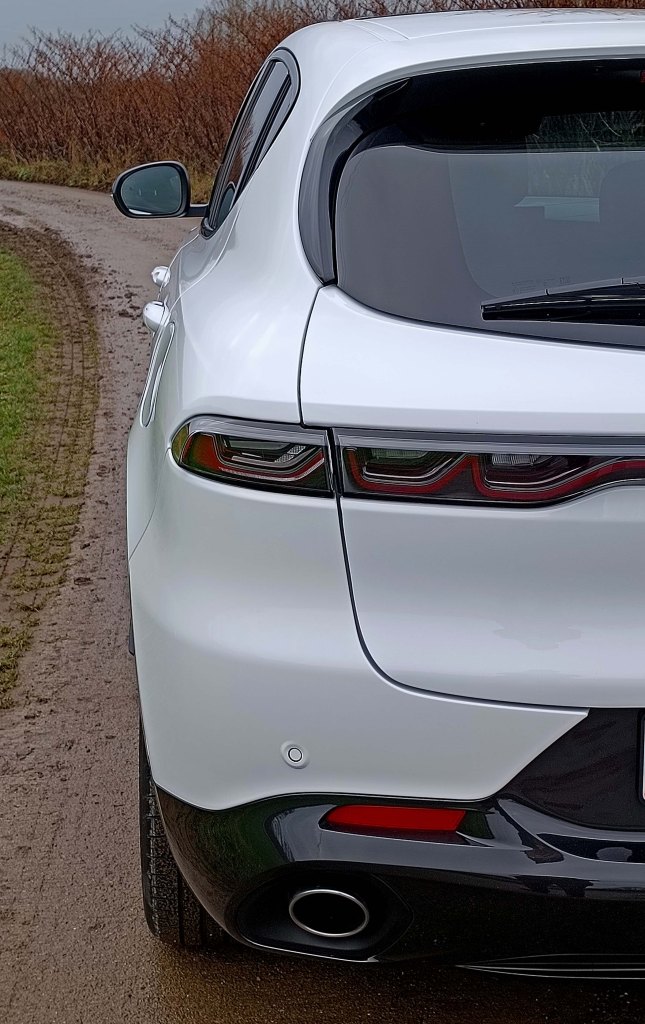
So when we took the wheel of our white Tonale Hybrid test car, the sweet memories came back instantly. The Tonale seduces not only with the right proportions and curves of its bodywork, also in the cabin the iconic Alfa Romeo atmosphere reigns. The round instrument clusters, the big sized gearshift paddles around the classic steering wheel inspire the enthusiast, and it is indeed just how an Alfa Romeo should look. The interior is all black andorned with red stitching on dashboard panels and seats, and this is the only color to choose from for the time being…

A swift turn of the “DNA” drive mode selector lets you choose how you want to drive your Tonale for the day. There are three modes to choose from. Dynamic will reveal all the sporting qualities of this 280 HP Tonale, N means “Naturale” or natural, and then this Alfa will choose for you the right propulsion in each situation, adeptly choosing between engine or E-power. When you want to enjoy more the “Zen” smoothness of battery power, then select the “A” mode, and this Tonale will treat you whenever possible to the delights of electric propulsion. Of course, this happy feeling doesn’t last forever with a 15.5-kWh lithium-ion battery pack, the Tonale has some 60 kilometers in store for you. When the battery is depleted, the Tonale will switch automatically to the “Naturale” mode, and you then can still enjoy the clever smoothness of hybrid propulsion. The battery is recharged fully after some 2,5 hours when connected to your 240 V home charging plug.

Power

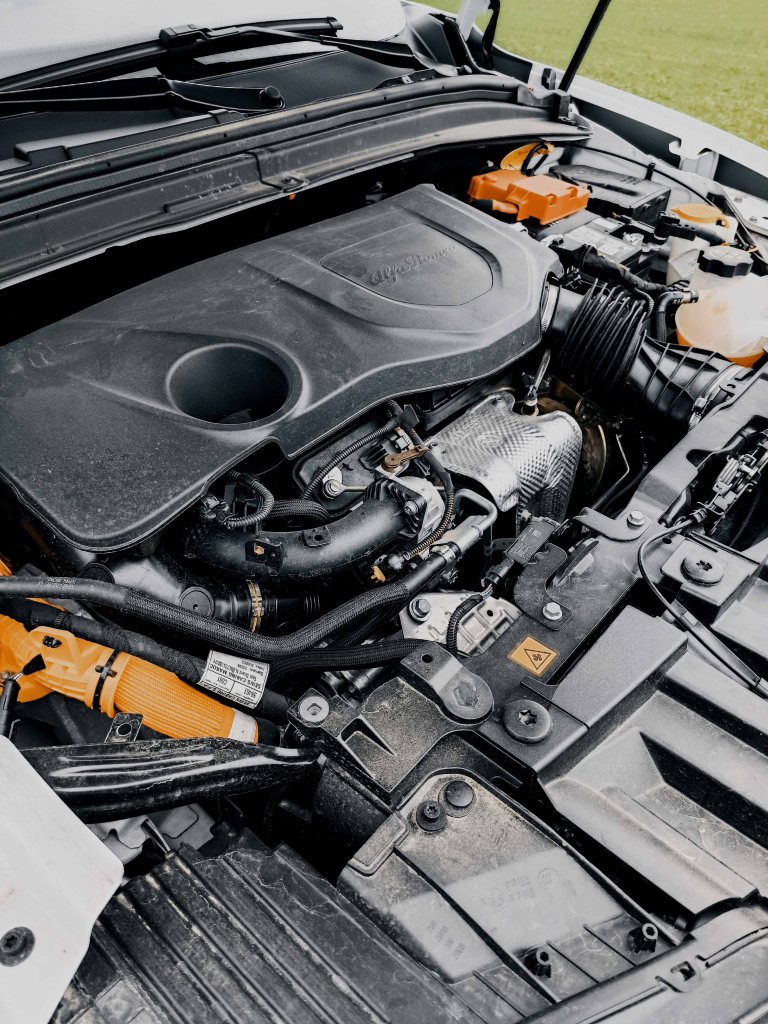
The 1.3-liter MultiAir turbo four and the electric motor produce a total of 280 horsepower, of which 121 are derived solely from the 90-kW electric motor mounted in the rear, as we said, fed by a 15.5-kWh battery pack located under the cabin. All this develops beautiful, smooth punch, which we also fondly remember during our high speed laps on the circuit on the Balocco proving ground. A Giulia Quadrifoglio was then our pace car, and we had no trouble at all following this throughbred beauty, which was driving at 9/10 of its capacities, as the Alfa people  told us afterwards. A smooth avalance of power is yours in this Tonale when you put your foot down. 0 to 100 km/h is reached in 6,2 seconds. This tells the whole story… The top speed is reached at 206 km/h. The MultiAir engine itself develops 180 HP at 5750 rpm, giving it a score of not less than 135,1 HP/L. 

So yes, the Tonale in plug-in Hybrid form is a smooth performer, also thanks to its 6 speed automatic, which reacts nicely to your right foot.  As a bonus, you get four wheel drive thrown in. It is to me a very strong point in favor of this PHEV. When we come to fuel consumption, the official WLTP figure is 1.13-1.48 l/100 km. Let’s say that in pure electric mode, the consumption is stated at 19 kW/100 km, and when you drive solely on petrol, it all depends on your driving style. Anything between 10 and 6 litres/100 km, we would say. Driven with some restraint, an average consumption around 7,3 liters is normally achievable, with some distance driving thrown in, as was proven by our test. Of course, the Tonale scores well on emissions:  CO2 emissions are 26-34 g/km. All these figures are quite remarkable as the Tonale is certainly not a lightweight car with its 1835 kg.

Thoroughbred handling

Despite its all steel underpinnings, the Tonale handles excellent indeed. When you go for the dual-stage valve active suspension, you will find it a smooth companion on pothole filled urban roads. The Tonale feels indeed equally well at home on winding roads when you drive it with abandon, as when you drive it slowly and smoothly in town. The light steering also helps to put a smile on your face, even in tight urban traffic. Stopping power is delivered in the top Veloce version which we tested by Brembo brake calipers, and it is totally beyond reproach.

Infotainment and connectivity

Every Tonale comes standard with a 10.3-inch touchscreen infotainment system. It has the Uconnect 5 software found on other models within the Stellantis group. The home screen can be customized, and you can adapt the interfaces and create not less than five unique user profiles. It has standard Apple CarPlay and Android Auto, as well as of course wireless phone charging. We must say that sometimes we found the touchscreen rather slow and hesitant to react to our finger pressure, certainly awkward when driving and you want just to perform an easy command with one touch of your finger.

Of course the Tonale offers all the thinkable safety and driver-assist features, like automated emergency braking and a very smooth and subtle adaptive cruise control, which I enjoyed very much. Especially the clever refinement of the adaptive cruise control impressed me. Indeed, enormous progress has been made in this field over the last few years.

Practical

The Tonale offers ample comfort for four, has certainly in the top Veloce version everything you could wish for, and with the entire camera supported driving aids, it is a breeze to drive in town and to park in narrow spaces. Boot space is sufficient, with 385 l with all seats up, and to a maximum of 1430 l with everything flat. You can also use your Tonale as a tow car, and it is good for 1250 kg trailer load with brakes, and 700 kg without.

Conclusion

Stylish, full of panache both inside and out, the plug-in version of the Tonale has a lot to please. Enormous performance, with handling to match, it is a true high-performance Alfa, and thanks to the E-power it delivers this performance effortlessly and smoothly.

When you are in the mood, very decent economy is possible, and in normal everyday driving this leaves you smiling all the way.

All these good qualities DO have a price, but then, beauty in this world is never cheap, is it?

Think about this: the timelessness of the styling, the excellent proportions, the emission values thanks to its hybrid configuration make this Tonale a companion for years, if not decades to come, on all the regions and cities in Europe and beyond, so why not fall in love with this Tonale, and set the right tone for your future mobility…

Hans Knol ten Bensel

We drove the Cupra Formentor 1.5 TSI 150 HP: a sporting beauty…

Creating within the Seat family the Cupra line is a very wise decision. We always found that the quality and panache of the recent Seats merited special place, and with Cupra, they truly found it. We can even say that Cupra will become the main mass market sporty brand for Volkswagen.

The Cupra designers and stylists put on wheels one of the best looking SUV’s in its segment, and for your servant this alone is a very good reason to have a good look at this car and call it your own.

Furthermore, it carries the well proven VW group technology, and with that comes performance, economy and reliability.

Just read further…

Hans Knol ten Bensel
Exquisite

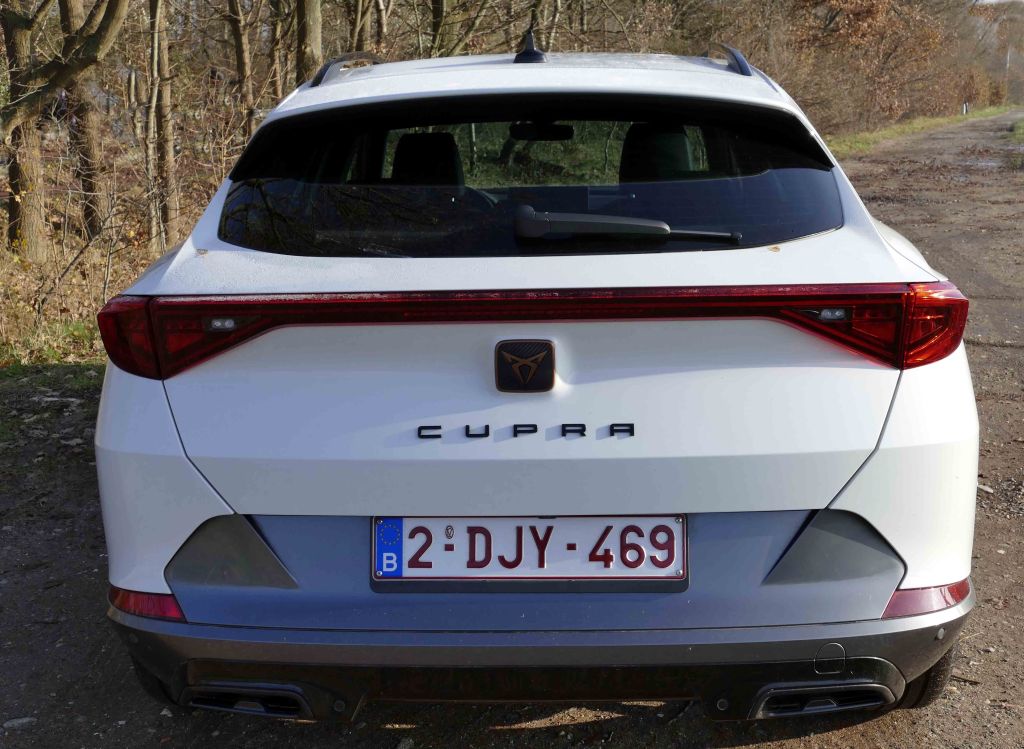
The Formentor certainly is kind for your eyes. Indeed, the car is pleasing to look at from any angle. It seduces with gentle, well balanced curves, well proportioned accent lines, and a very pleasing light signature. At the rear, it is reminiscent of the Lamborghini Urus and displays also a touch of the Panamera. The front end also conveys exactly what the Formentor stands for, and the beautiful alloys complete the picture perfectly. It is a low slung SUV. The manufacturer defines the Formentor as a bespoke SUV Coupé, and deservedly so. Formentor signals its Spanish roots, and actually is the name of a beautiful peninsula in Majorca.

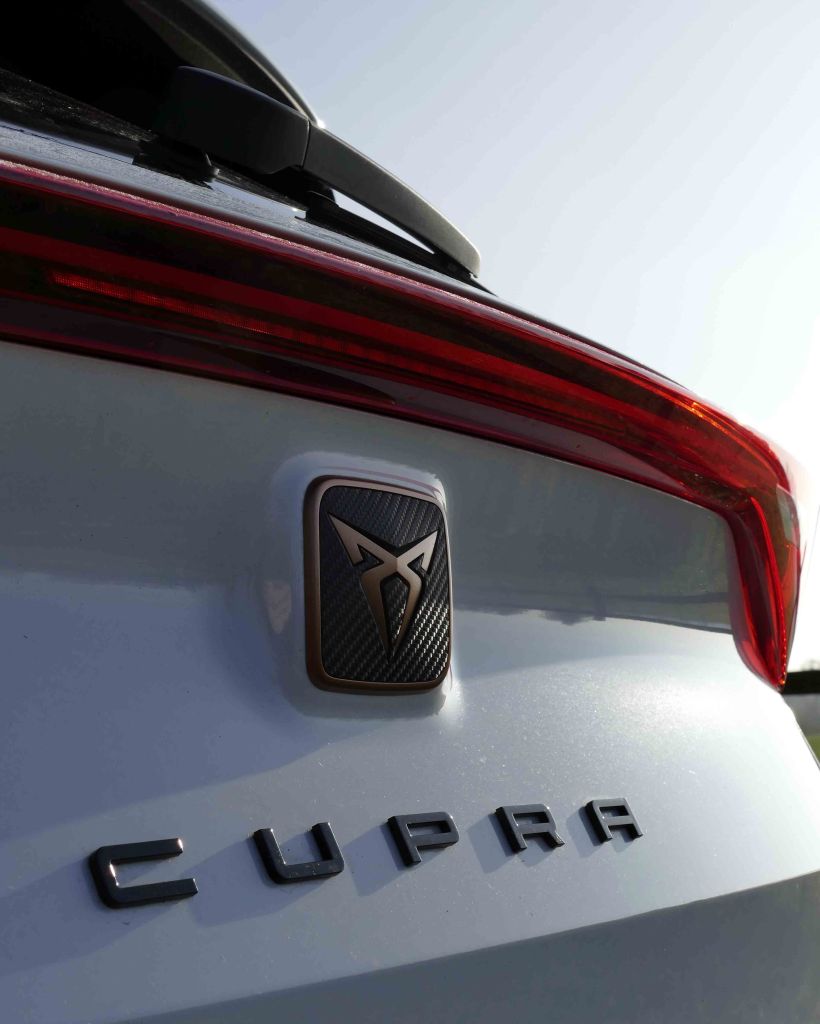
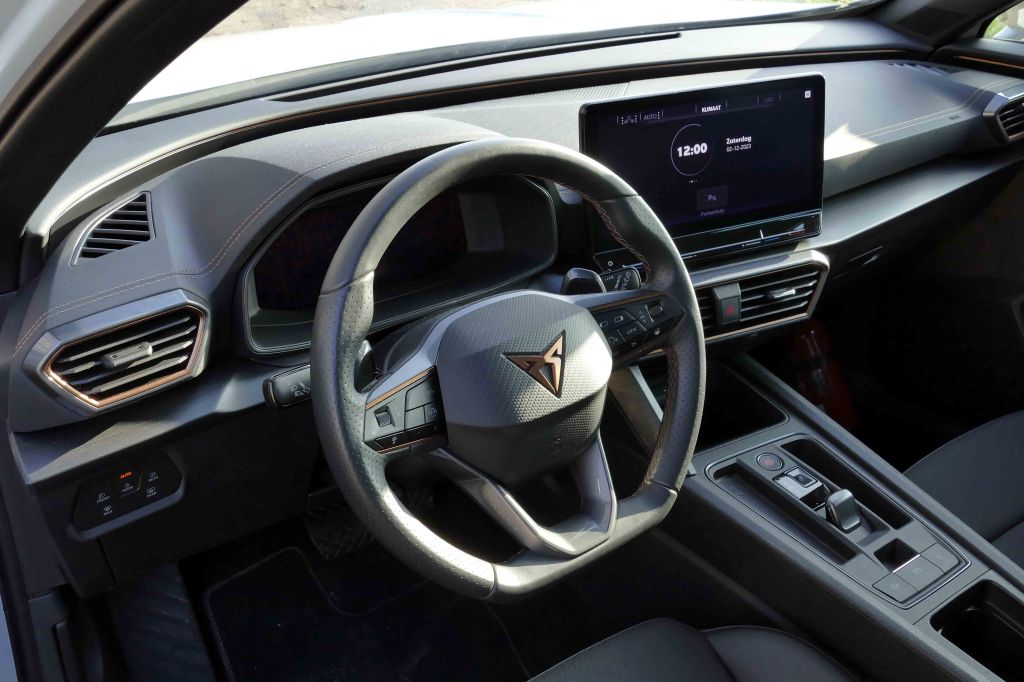
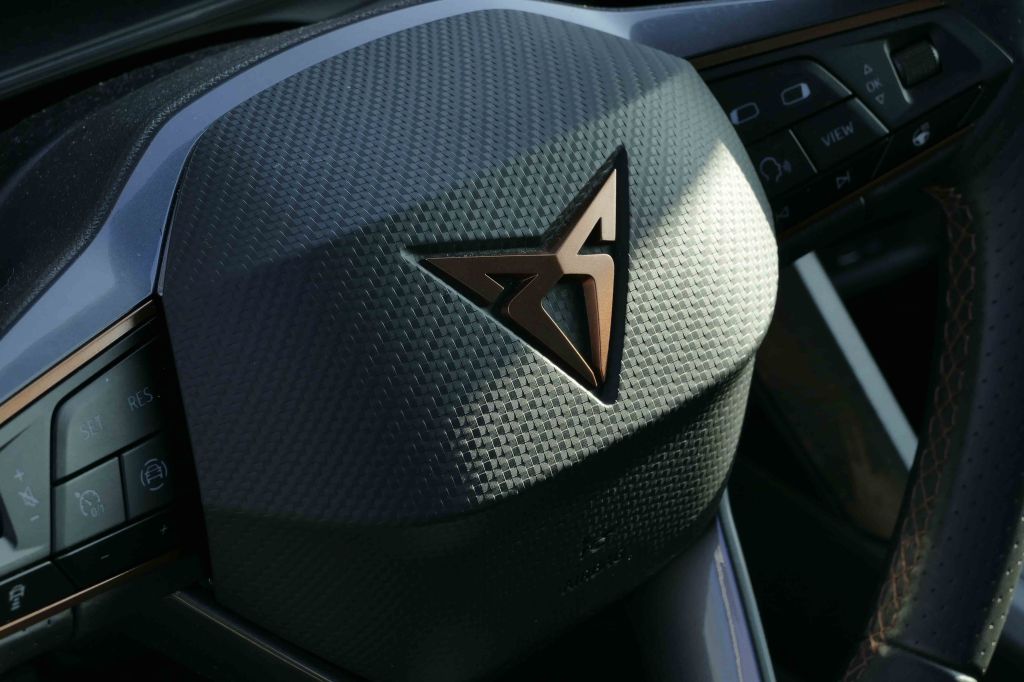
Also in the cabin, the designers have done their homework. One finds copper coloured accents throughout, from the stitching to the copper tinted badge on the steering wheel. The led lighting is also dramatic, with as default hue a copper yellow which runs along the dashboard edge. Note also that this wraparound LED also alerts you to objects in your blind spot (!). Of course, when you step in your Formentor at night, the CUPRA Welcome light projects the CUPRA logo down onto the floor.

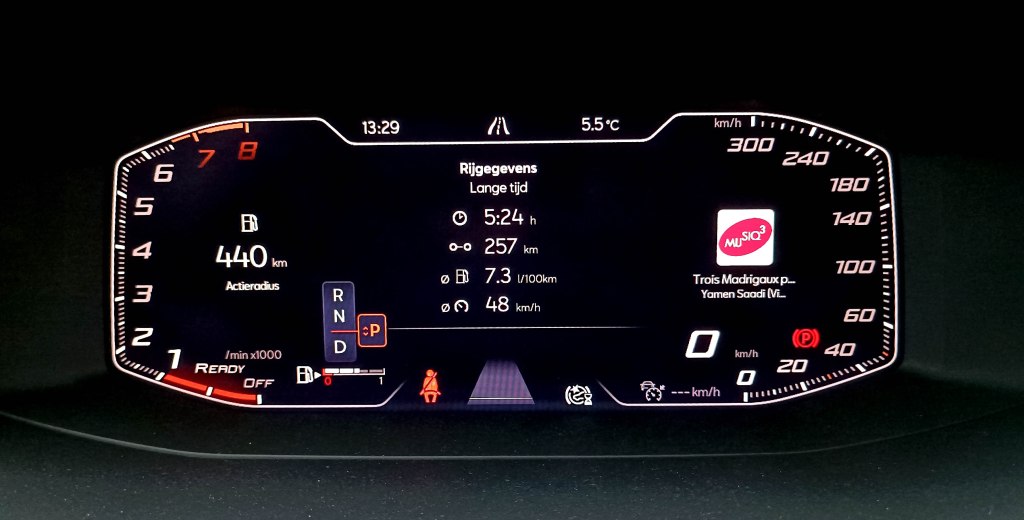
Then we have said nothing about the digital instruments on the panel in front of the driver. You can choose between calm simplicity with some navigation and audio information thrown in or two classic round dials,

and last but not least a large Porsche style central rev counter or as icing on the cake the two square shaped clusters reminiscent of BMW’s.

Of course we preferred most of the time the “Porsche” large rev counter in front of us, as we liked to see what we heard, i.e. the pleasant throb of the efficient 1,5 litre four cylinder at work. This 150 HP/110 kW long stroke unit is coupled to the well proven DSG 7 speed box, and it suits the engine characteristics perfectly. Well honed electronic engine and gearbox management sees to that. The engine develops a healthy 250 Nm of torque between a very wide rev range of 1,500 to 3,500 rpm.  One has the choice between different driving modes, from sport to comfort.

The engine is lively enough and has more than sufficient pulling power to warrant an inspired driving style, so we opted most of the time during our test for the comfort mode. Indeed, it is hardly necessary to put the throttle deeper, the absolute performance figures amply prove the point. Accelerating from 0 to 100 km/h is absolved in 8,9 seconds, with the engine revving with a beautiful staccato. Indeed, this is one of the joys of driving a petrol engined car…Top speed is a good 203 km/h. Mind you, these overall performance figures are the same as the original 911 Porsche!

Of course, fuel consumption varies a lot in function of your driving style. During our test, we averaged some 7,2  liters, with several long motorway stretches thrown in. Driven in a rather spirited manner in urban traffic, consumption rises to a good 10,5 liters/100 km. The manufacturer quotes according to the WLTP cycle for the DSG version a consumption ranging between 6.6-7.2 l/100 km. CO2 emissions are  150-163 g/km.

Superb handling

The Formentor runs on the VW Group MQB platform, with the suspension of course calibrated to its sporting pedigree. It handles and steers with balance and precision, and it is a true joy to drive it with verve on winding roads. Of course, the chassis and suspension are laid out for far more power than this 1,5 litre 150 HP version. The most powerful is the 310 HP variant, so you can understand that the car has a rather easy play with the performance of this one.

All these good road manners are combined with very good comfort. The Formentor is nicely sprung, striking a good balance between low and high speed stability, surefootedness and absence of body movement in sharp corners. The suspension is also not unduly firm on rougher surfaces either. We noticed on some road surfaces somewhat higher wheel roll noises, which force you to turn the audi knob a bit higher than you would like.

Everyday life

The Formentor is very pleasant to live with. We said, one is already spoiled by the aesthetics of the instrumentation and cabin, and on top of that you will find out that you have more than sufficient head and legroom both in front and at the rear. Boot space is also more than sufficient with its standard 450 liters. One good word also about the infotainment system. On the centre console we find the easy to read and manipulate 12 inch touchscreen, with of course all the necessary functions at your fingertips.

There are lots of pleasant features for your phone. For instance the place your smartphone in the Connectivity Box to amplify signal, charge seamlessly and sync to play music via the premium BeatsAudio™ system. There is also CUPRA CONNECT: you receive real – time traffic updates and directions while seamlessly connecting to your smartphone to utilise apps and listen to music services on the move. Of course there is Wireless Full Link, so your Apple or Android smartphone seamlessly syncs up, so you can display your favourite apps and functions on screen.

Conclusion

The Formentor is a compact SUV with lots of style and character, and it was actually the main reason why we found it so endearing. For more sporting souls, the Formentor has many more cards upon its sleeve, and the dynamic SEAT/Cupra PR department at D’Ieteren promised us also a test with the 2 litre 190 HP version early next year, so indeed we have something very good to look forward to in 2024!

Hans Knol ten Bensel

We drove the Opel Grandland GSe: sporting pleasure for the family…

Opel brings sportiness and driving pleasure with their GSe range, and you can read our positive comments in our columns on the Astra GSe. But besides the Astra, the popular Grandland SUV, is now also offered in this more dynamic GSe version, and Opel has gone all the way with a 4 WD variant, having two electric motors combined with a 147 kW/200 HP 4 cylinder petrol engine. The front electric motor is good for 81 kW/110 hp, the rear electric motor develops 83 KW/113 hp. Total system power is a whopping 300 HP and what’s even more important, one enjoys a delightful 520 Nm of torque… Driving pleasure warranted, we would say, just read further!

Hans Knol ten Bensel
Sporting exterior…

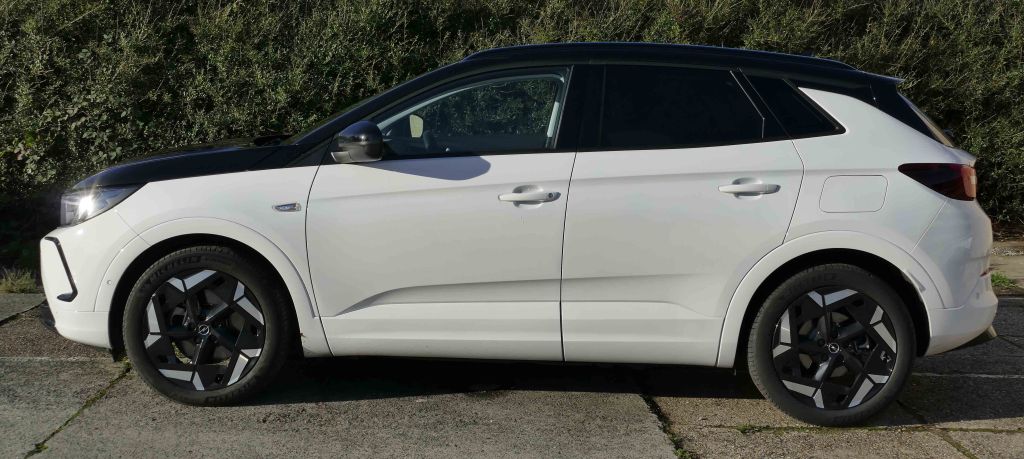
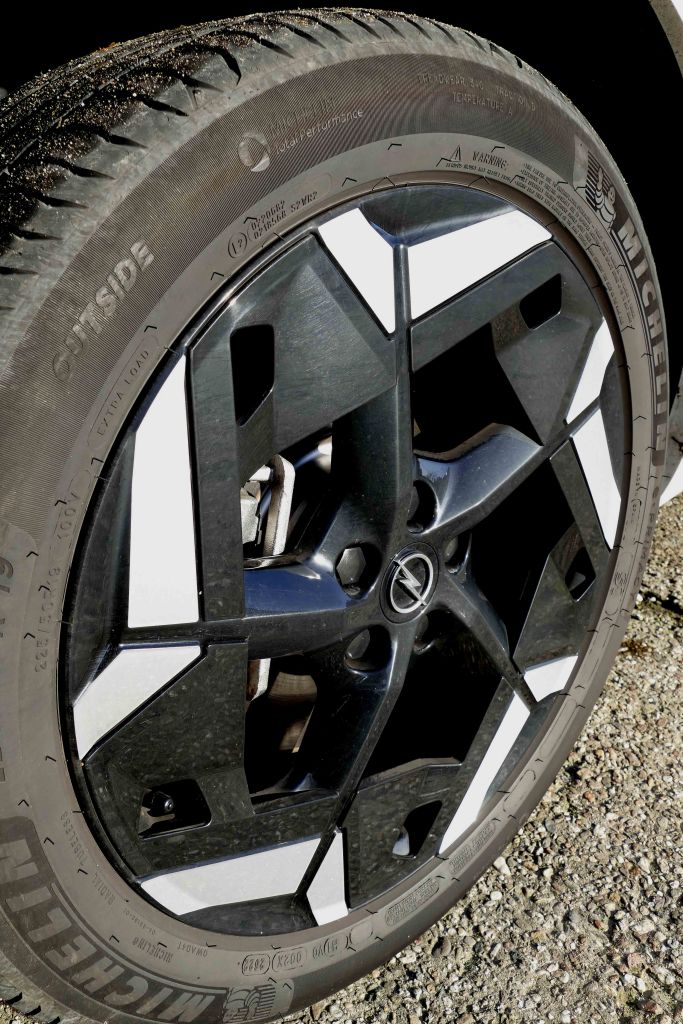
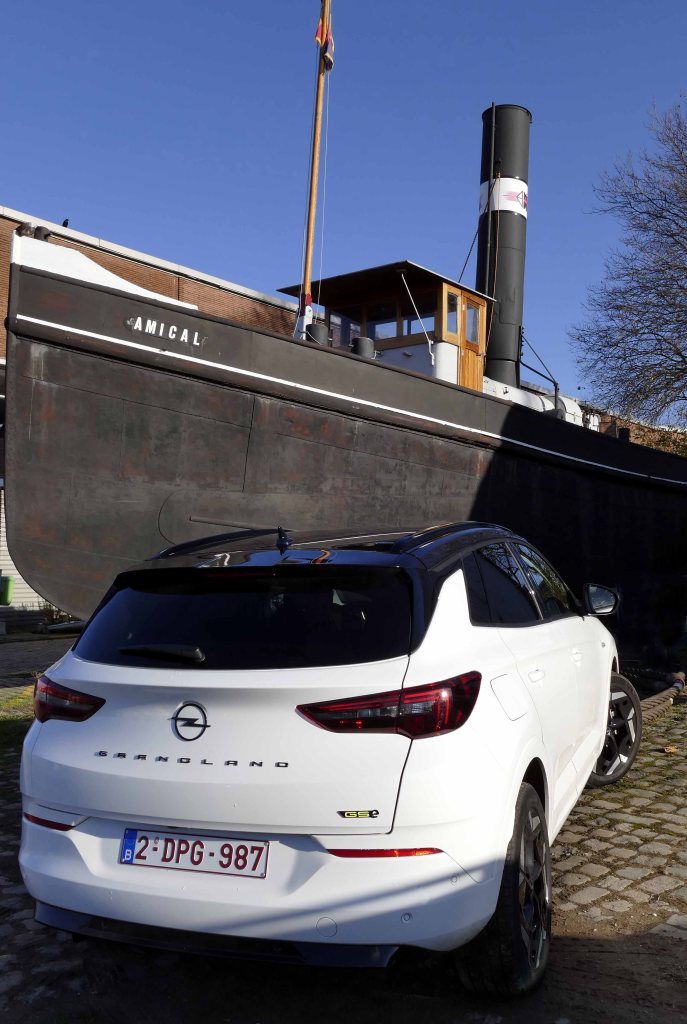
The Grandland gets now besides its earlier “sunvisor” front restyling a further makeover with sporting touches: last but not least the nice 19 inch alloys which are taken straight from the Manta electric prototype, a distinct rear spoiler and a black painted engine bonnet color, which costs you not even 200 Euros extra and make the Grandland visually very attractive. Of course, Opel aficionados know that the sporting Kadetts and Mantas had their engine hoods also painted (matte) black as was “de rigueur” in the rallying world in their days, and Opel continues this tradition.

Smooth power…

So there is plenty of oomph with this Grandland GSe. Despite its 1867 kilo kerb weight, the car will sprint from 0 to 100 in merely 6,1 seconds, and is a true “Autobahnmeister” with a top speed of 235 km/h. Also in pure electric mode, the two electric motors provide ample power for dynamic driving.

The power delivery is very smooth indeed, and also when driving slowly in very dense traffic, there is not the slightest hint of jerkiness and also vibrations are virtually absent. The noise level of the very efficient petrol engine is very subdued.

The driver has the choice between several driving modes:

Electric: In electric mode, the Grandland GSe, the 113 HP rear electric motor is the default power unit. When the driver presses the accelerator fully (kick-down), the combustion engine and the front electric motor switch on. Performance with the sole rear motor is adequate, the the top speed with purely electric drive is 135 km/h.

All-wheel drive: In all-wheel drive mode, the Grandland GSe is driven by the front and rear wheels. The vehicle offers permanent electric all-wheel drive and runs purely electrically in all-wheel mode up to 80 km/h. If a wheel spins, or when more power is required and/or the state of charge of the battery drops, the combustion engine switches on, which it does anyway at speeds above 80 km/h.

Sport: this mode combines the power of the combustion engine and the electric motors.

Hybrid: Here the car always runs in the most efficient way. Depending on the driving conditions and driving style, the combustion and electric motors work together or separately, and this is steered automatically.

Suffice to say that during our test, we drove the Grandland GSe mostly in this very smooth hybrid mode.

Just notice that when you push the gear selector two times backward, you engage the “B” mode, and when you lift the throttle, the electric motor acts as a generator.

Consumption depends of course totally on how you drive the Grandland and how frequently you (re)charge it. The consumption according to the WLTP norm is 1.2 l/100 km, CO2 emissions are 28-27 g/km. When driven in urban traffic with restraint, a consumption around 7-8 litres/100 km is possible, with this SUV thi is no small feat…

… and a superbly well tuned suspension and steering.

All this performance must of course not only be used in a safe and responsible manner, but is also to be thoroughly enjoyed.

Therefore, the Opel engineers, led by Dr. Christian Hartweg, got seriously to work on the chassis and steering.  The result is impressive to say the least, and indeed puts a smile on your face…

They equipped the Grandland (and the Astra GSe models) with special KONI FSD dampers.

Depending on the situation, road surface and driving style, the special springs and dampers with KONI FSD technology enable different damping characteristics. This means comfortable gliding at high shock frequencies – with short impacts such as on cobblestones – as well as for a sporty, ambitious driving style and more direct contact with the road at low frequencies in suspension movement.

The car is more responsive and agile. There is virtually no body roll in corners, and is absolutely stable under heavy braking, cornering and at high speeds on the Autobahn.

The key of this FSD technology lies in the fact that the dampers have an additional valve and a second hydraulic circuit. The car is consequently either more comfortable or sportier to drive, depending on whether the valve is open or closed.

The steering was also newly calibrated, and indeed adds greatly to the driving pleasure with its added precision.

Excellent seats, well finished cabin

The seats deserve almost a separate chapter. Excellent in lateral support, these alcantara clad beauties take also very good care of your back, as they are AGR certified orthopedic seats…

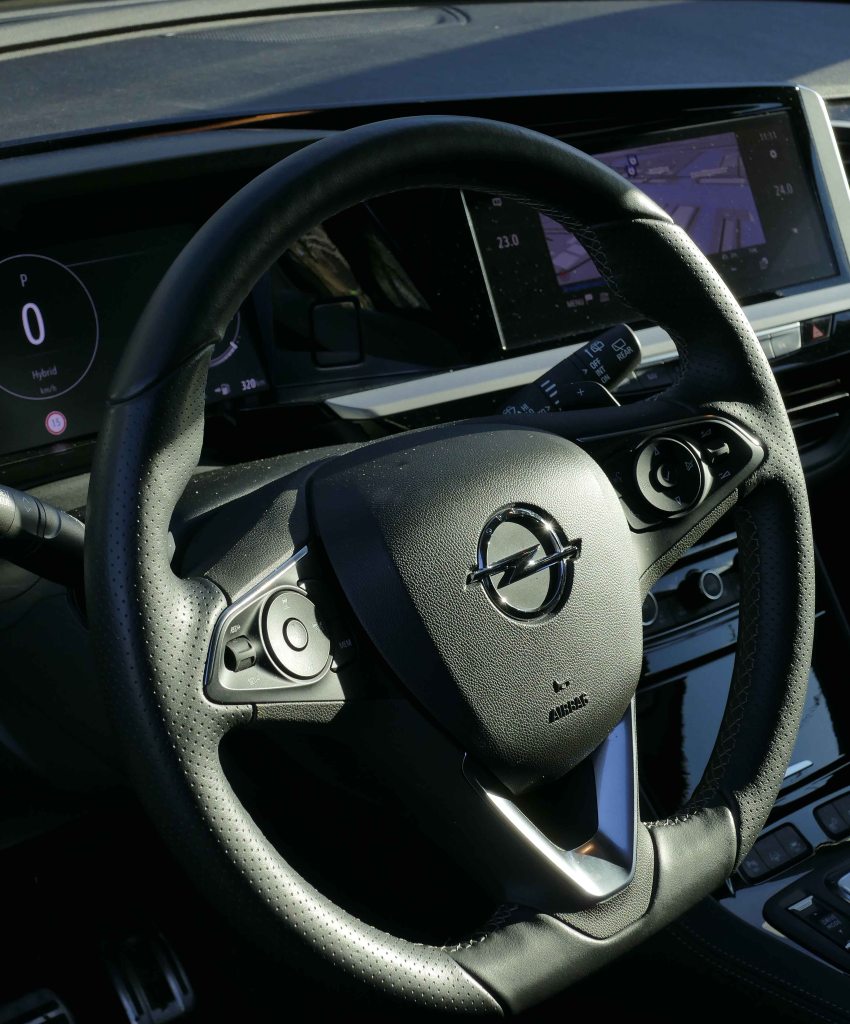
The choice of materials is very good, and the “less is more” dashboard layout philosophy in found in the two large touchscreens with clear, uncluttered info on them, reduced to the max as they say, and indeed very restful for the driver.

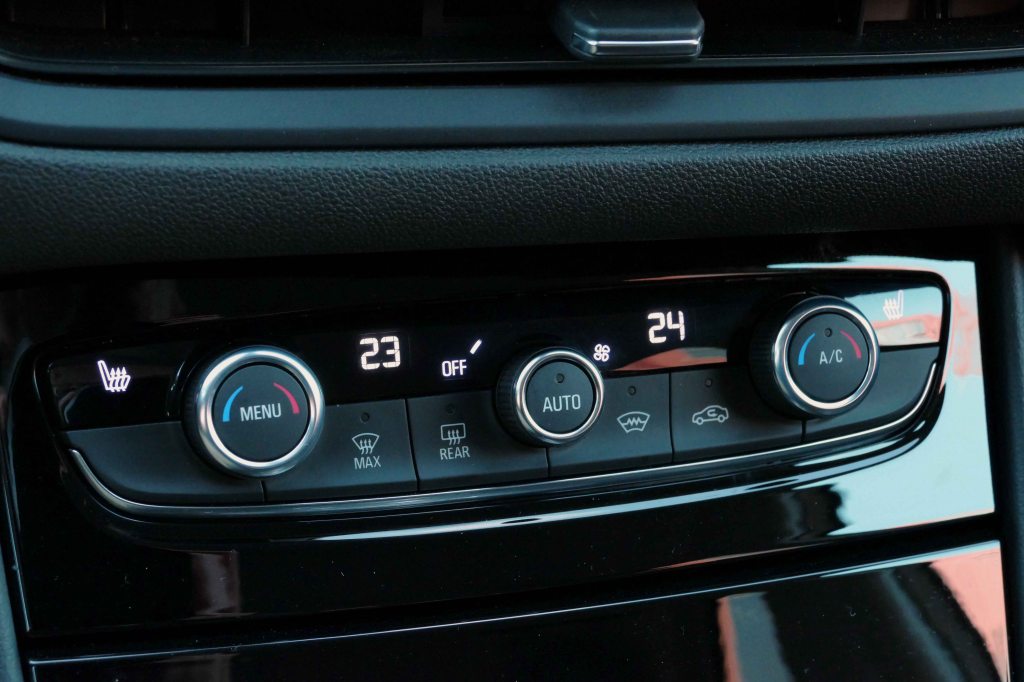
Under these displays is an array of round “analog” knobs, which are fully self explaining and let you get to terms with this Grandland in a breeze.

Their styling is not as clean and angular as one finds in the new Astra, as they breathe the styling language of a few years ago, but they are a joy to use.

The Grandland offers good space fore and aft, the room in the luggage compartment is somewhat restricted by the second motor, but the rear seats have a split folding layout and they leave an opening for longer items, so this Grandland is very fit for everyday family use.

Conclusion

This Grandland has some formidable qualities: smooth, fast, sporting, roomy, well styled and last but not least well built. It is electrified, therefore future safe. Its hybrid character lets you enjoy undisturbed mobility, and that’s something we increasingly appreciate. So have a long look at this one!

Hans Knol ten Bensel

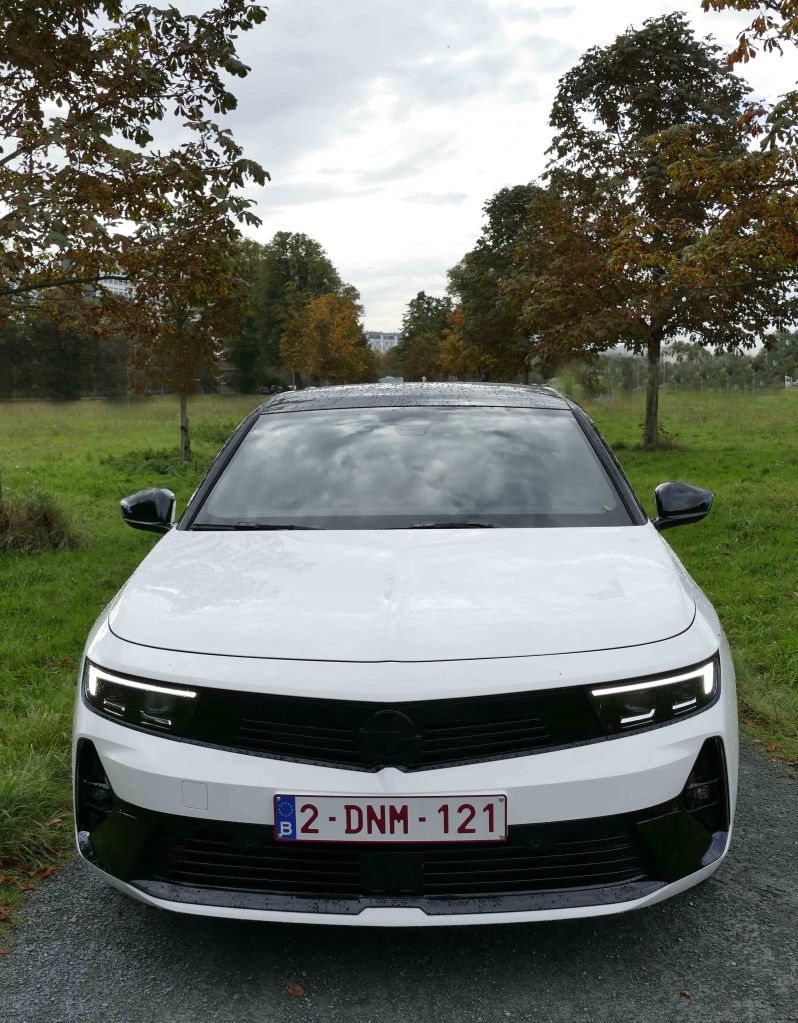
We drove the Opel Astra GSe: the Opel lightning shines again…

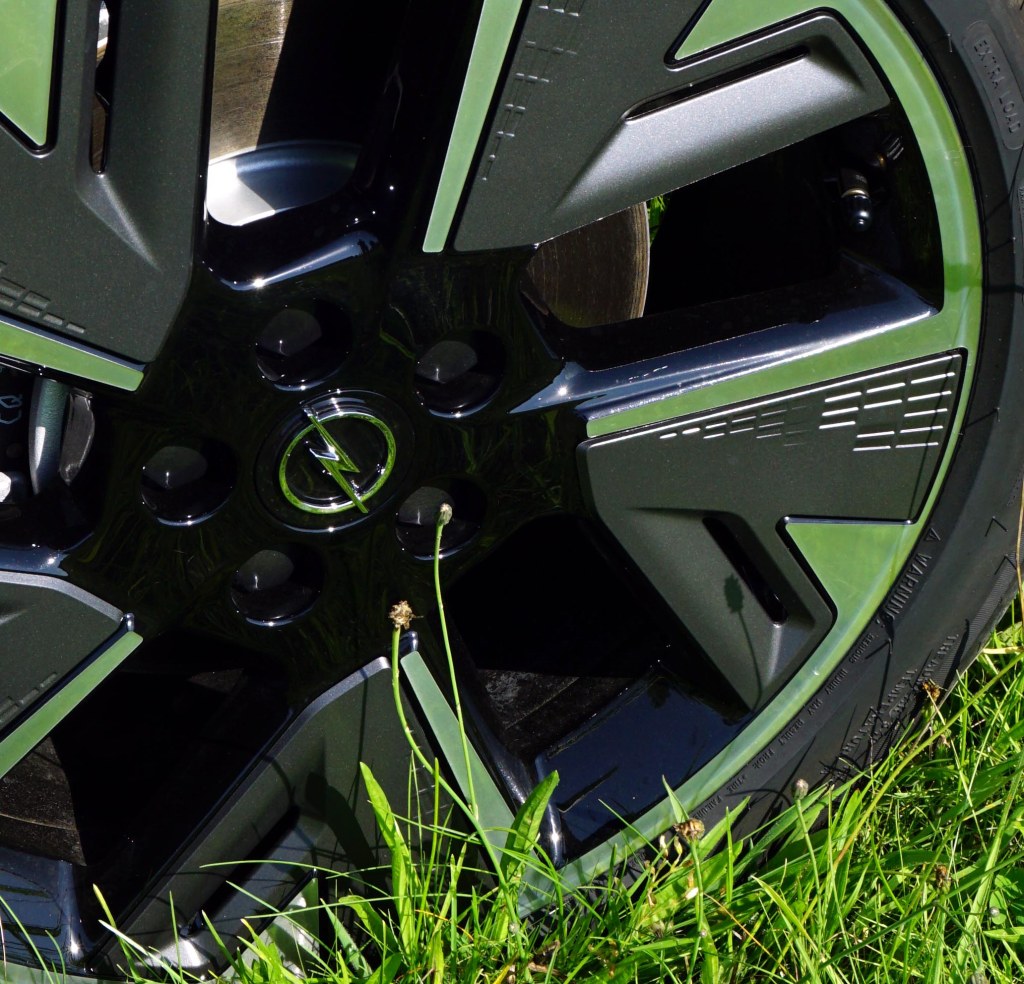
We all know the Opel badge: the image of a lightning boldly striking through the “O”, the first letter of the iconic Opel name. After this extensive test at the wheel of this GSe, we can truly say that this sporting version of the Astra bears tribute to it.

Indeed, this Astra GSe is fast, nimble, with beautiful handling, quiet, stable, steering with precision and offering Gran Turismo comfort to its occupants.

It has style too, and is economical and “green” on top of all this: it’s an efficient hybrid, with sufficient range to bring you around town in a totally emission free manner. Just read further…

Hans Knol ten Bensel
We already applauded the styling and the wonderfully clean interior and dashboard layout of the Astra. Less is more, is the philosophy when it comes to infotainment and ergonomics.

Inside, your eyes admire the GSe-exclusive performance seats. On the outside, one sees clearly that this is an Astra with a sporting touch: it has exclusive 18-inch alloy wheels and the characteristic GSe front bumper.

Driving resuscitates the Opel legend…

Sporting Opels are legendary. The Ascona’s and Manta’s driven by Walter Rohrl for instance. They were efficient, fast, yet still very recognizable as Opels, keeping a very close resemblance to the production series versions. At the wheel of this GSe one feels also this unique punch, the steering precision, the effortless but very impressive performance.

Indeed, this GSe has what it takes. With an impressive system output of 165 kW/225 hp – the 1.6 litre four-cylinder engine delivers 133 kW/180 hp, the electric motor contributes up to 81.2 kW/110 hp – and with a maximum torque of 360 Nm, the Astra GSe with spoil you with an acceleration from 0 to 100 km/h in 7.5 seconds; a top speed of up to 235 km/h is also in the cards. Need we say more? Indeed, this Opel will make you smile.

Because it’s a hybrid, it will not spoil the city atmosphere, as with its 12.4 kWh lithium-ion battery, the Astra GSe can cover up to 64 kilometres on e-power according to WLTP2 (EAER City according to WLTP2: 69-73 km).

The fuel consumption is according to WLTP1: 1.2-1.1 l/100 km, CO2 emissions 26-25 g/km; each combined. With a depleted battery, the hybrid mode is of course still very useful, as the system then recuperates the kinetic energy when decelerating. When cruising along at legal maximum speeds on the autobahn, it is easy to consume less than 6 litres/100 km, and with a very disciplined right foot in city traffic and a lot of anticipation, you can achieve anything between 6 and 7 litres/100 km. But it you are tempted by the smooth and abundant power at your disposal, it will inevitably cost you…

Precise and nimble handling

The Opel engineers did some serious homework. It has a dedicated chassis, lowered by 10 millimetres. The sporty calibration of the steering is GSe-specific, while the springs and oil-filled dampers of the front and rear suspension are specially tuned not only for dynamic driving but also for comfortable cruising.

The dampers feature KONI FSD (Frequency Selective Damping) technology, which enables different damping characteristics at high frequencies (suspension control) versus low frequencies (body control).

The ESP settings are also specific for thenGSe, with the activation threshold adjusted upwards to match the dynamic driving behaviour. The result is a comfortable Opel which handles like a dream, displays utmost stability at high speeds and steers with uncanny precision.

State of the art driving aids and infotainment.

The Astra GSe comes with the so-called “Intelli-Drive 1.0” system with forward collision alert and active emergency braking, pedestrian and drowsiness detection, lane departure warning and traffic sign assistant, cross traffic and side blind spot alert and automatic speed assistant with stop function as standard.

The parking pilot for the front and rear and the 360-degree “Intelli-Vision” camera support the driver when maneuvering.

You are well connected with the wireless Apple CarPlay and Android Auto compatible multimedia navigation system including 10-inch colour touchscreen and the 10-inch driver information display. Compatible smartphones can also be easily charged via wireless charging in the centre console.

Conclusion

Opel has built here a very desirable high performance hybrid with excellent manners. Opel says that with this car, it has redefined the performance “Zeitgeist.”

Indeed, it has done so. Just for Opel historians: the Opel “GSe” label was traditionally an abbreviation of “Grand Sport Einspritzung” (Grand Sport Injection) as on the Opel Commodore GS/E and the Opel Monza GSE.  Now GSe stands for “Grand Sport electric”.

We can only say, we were electrified…

Hans Knol ten Bensel
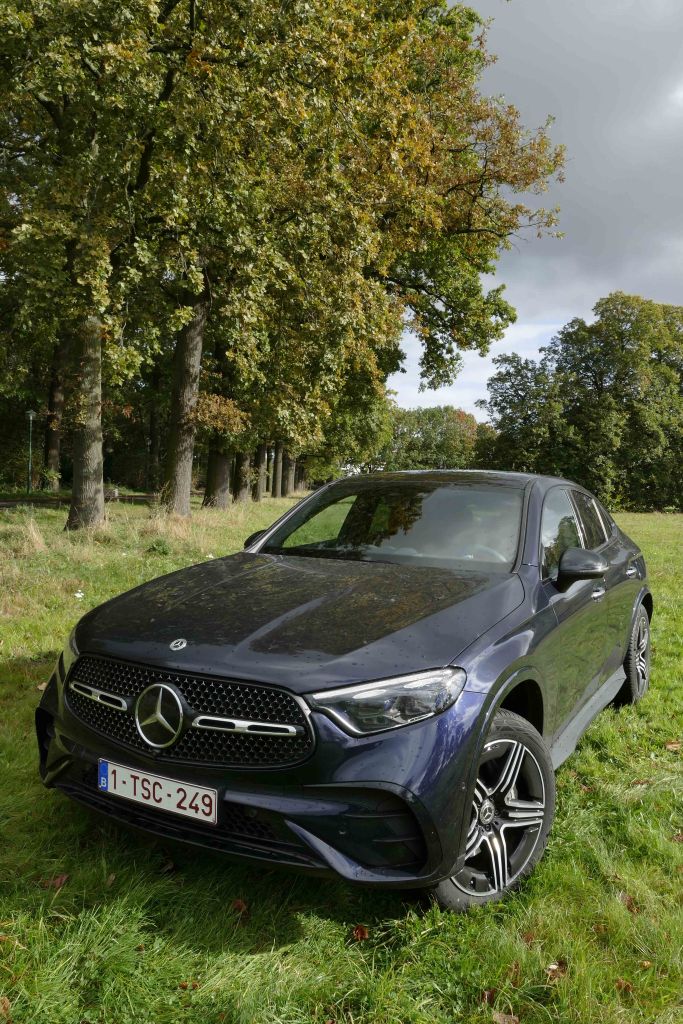
We drove the Mercedes GLC 400e  4MATIC: a plug-in hybrid with the luxury and panache of the good star…

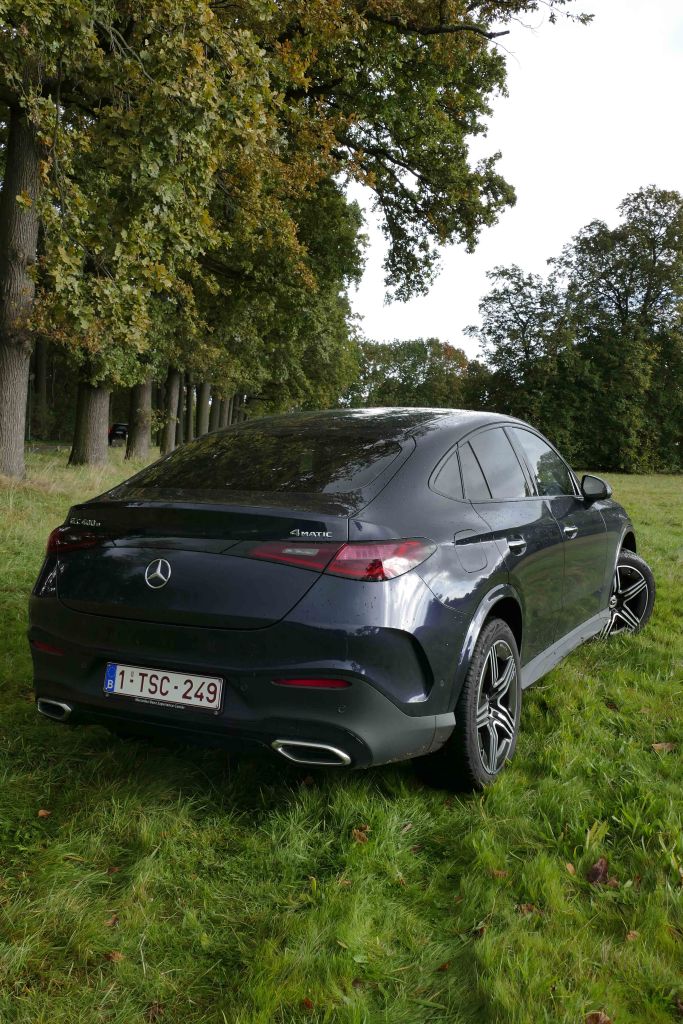
Mercedes is an expert in designing and building premium lifestyle cars, and has with its new GLC Coupé a new and strong contender in this segment. The Coupé version is a more sporty and stylish looking variation on the GLC SUV, which is indeed one of its absolute bestsellers. This Mercedes combines good proportions with stylish surfaces and, certainly in the AMG Line version we tested, a beautiful interior. Mercedes says when stepping into its cars, it feels like coming home. We can only agree. All this is combined with state of the art plug-in technology. Just read further…

Hans Knol ten Bensel

Indeed, the Mercedes GLC looks good, albeit the overall silhouette of these bigger SUV Coupés are a bit chunky. The AMG Line version we drove The AMG Line is available with 19-inch or 20-inch mixed-profile tyres and wheel arch liners in the vehicle color. Also offered as optional extras are easy-entry running boards and last but not least a so-called “Night package.”

The interior is a chapter on its own…

Indeed it is… The color of the seats and upholstered panels was very well matched to the exterior, and indeed the generous trim area flows seamlessly into the curved centre console. Standard for the AMG line is the leather-lined dashboard with nappa-look beltlines, and it is a pleasure to see and touch. Some trim elements have innovative surfaces. In our test car, these included interpretations of open-pored wood veneers in brown, with aluminum inlays.

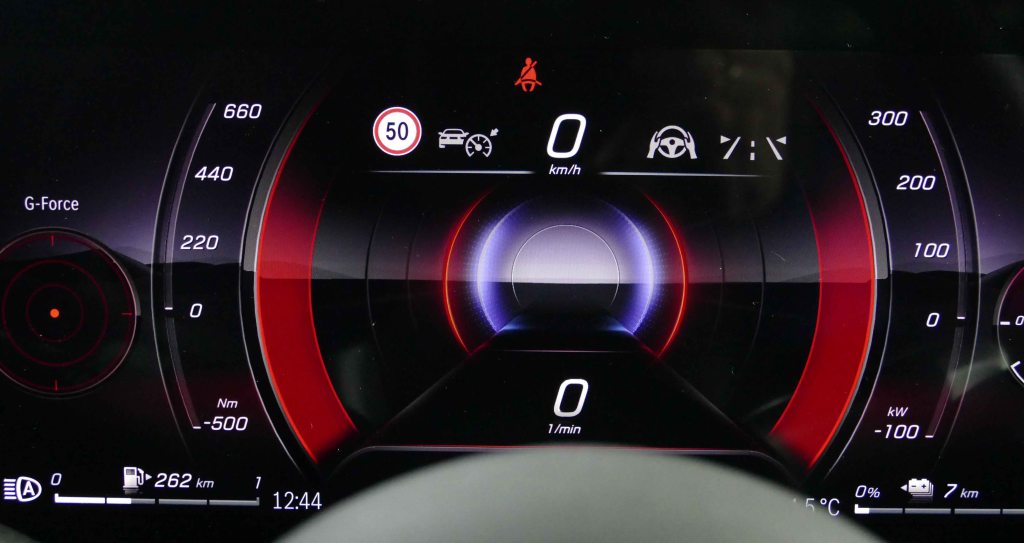
Of course, we find a further improved MBUX operating system in front of us. . The 12.3-inch (31.2 cm) LCD screen in front of the driver appears to float freely above the trim surface. The 11.9-inch (30.2 cm) portrait format central display rises from the centre console and likewise seems detached from the trim surface. Like the dashboard, the screen surface is slightly angled towards the driver, which makes it a bit awkward for the front passenger to imput commands on the screen and seeing the resulting information…There is a special tactile slider command for the sound volume, which reacts indeed more positively and faithfully to your finger input.

A new feature which we liked aesthetically is the floating control cluster, into which the door opener and seat adjustment controls are integrated.

Driving: enjoying workmanship and efficient performance…

There is something unique about driving a Mercedes. It is the feeling of solidity, absolute workmanship, enhanced by the opulence of the interior and the experience of an ultra solid bodywork and chassis. A Mercedes will never really invite you to throw it around corners but nevertheless lets you feel its sheer power and high performance capability. You feel indeed that it is fully ready to do great things, but it will rather invite you into a sedate and responsible driving style. Of course it has the performance.

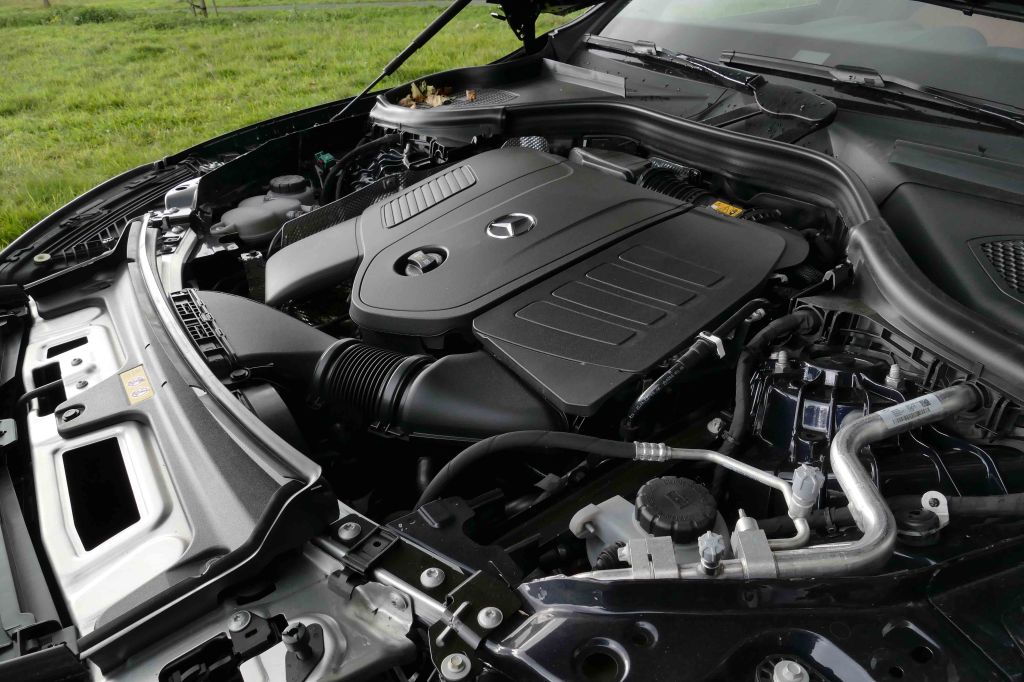
We tested the 400e, which is the plug-in hybrid version with a 2 litre petrol engine, delivering not less than 185 kW/252 hp at 5,800 rpm and 400 Nm of torque between 2,000-3,200 rpm. But that’s not all. It is assisted by a 100 kW electric motor delivering also 440 Nm of torque. You understand that this makes for effortless, instant accelerations. This Mercedes will catapult you from 0 to 100 km/h in 5,6 seconds, and the top speed is also almost in supercar league with a good 239 km/h. Total system power by the way is 280 kW/381 hp, and total system torque not less than 650 Nm.

But don’t expect a nervous supercar when you are driving it in town. The 100 kW electric motor will take most of the honors, and drive you whisper smooth over the city boulevards. If you choose the hybrid driving mode, it will in default configuration (you can select another configuration of course) run on battery first, until it is depleted, and this especially in urban driving conditions.  According to the WLTP test cycle, the electric range varies between 119-131 kilometers. But you can also choose to hold the battery charge constant for later use, and then there is also the obligatory sport mode. You can also choose for instance the electric “all-terrain” mode, the choice is yours…indeed, it is a 4MATIC…  

The battery has a rated capacity of 31.2 kWh, and is an in-house development by Mercedes-Benz. . Starting from empty, a full recharge with the optional 60 kW DC charger is completed in around 30 minutes. The GLC Coupé is equipped as standard with an 11 kW three-phase AC charger.

The full electric power is available up to 140 km/h. It should also be noted that in the new GLC Coupé, Mercedes-Benz uses a so called “electromechanical brake booster”. It automatically  controls the flexible transition between hydraulic braking and recuperation, depending on the driving situation, to ensure optimal energy recovery and braking performance at all times. Indeed, we noticed that even in the “battery hold” position, after we braked almost to a standstill, we then drove for a few hundred meters on battery power when we continued our route, just based on the electric energy we recuperated during the previous braking.

Excellent agility and comfort The GLC Coupé is also surprisingly agile. It has a new four-link front suspension and a multi-link independent rear suspension mounted to a subframe. The hybrids have air suspension and level control at the rear axle as standard too. On request the new GLC Coupé is available with the so-called “Tech Package.” This includes the AIRMATIC air suspension system and active rear-axle steering with a 4.5° steering angle. A very positive handling is the result. The steering has a variable ratio as standard, and this also helps to give you the impression of steering a smaller car. Of course, comfort is paramount in this GLC.

The optional ENERGIZING Plus package brings them to life at the touch of a button or by voice command and bundles them in up to seven comfort programmes. At the same time, the system creates a matching atmosphere in the interior – e.g. invigorating in case of fatigue or relaxing in case of an elevated stress level. The ENERGIZING COACH suggests an appropriate fitness or wellness programme based on vehicle and trip data… need we say more? We can only say that the seats are excellent fore and aft, and that indeed long trips are restful in this Mercedes. Of course the GLC offers excellent stability on motorways and open roads, with very little road or wind noise reaching the cabin.

Another novelty with the GLC Coupé: there is a trailer menu and towing route planner for navigation: In the central display, routes can be planned that are suitable for driving with the previously defined trailer. This takes into account permitted widths and heights along the route, among other aspects.

Efficient

Plug-in hybrids have a varied consumption pattern, largely depending on how you use it. WLTP figures for combined fuel consumption are 0.6-0.5 l/100 km, with weighted combined power consumption being 22.4-20.2 kWh/100 km. We noted that when cruising in the “battery hold” function between 110-120 km on the open road, that the excellent aerodynamics of the GLC resulted in a consumption of… 5,7 l/100 km.

Practical

The GLC has of course all the thinkable infotainment on board, and we also enjoyed the masterful Burmester® surround sound system, offering 15 premium speakers and a total output of 710 watts.  With even more boot volume than before, the GLC Coupé offers 390–1,335 litres in plug-in hybrid form. The EASY-PACK tailgate is standard. This opens or closes at the touch of a button using the ignition key, the switch in the driver’s door or the unlocking handle on the tailgate.

Standard equipment of the new GLC Coupé already includes the AVANTGARDE Line, among other features. This includes large displays, smartphone integration, wireless phone charging and heated seats for drivers and passengers.

The new GLC Coupé has LED High Performance headlamps as standard. DIGITAL LIGHT is available as an optional extra. The light is created by a matrix of LEDs in the headlight unit that can be individually controlled.

Conclusion

This stylish premium SUV in the plug-in hybrid form as we tested here for you marries the best of all worlds. It gives you the pleasant “Zen” feeling of E-driving, with the range and long distance performance of a conventional IC engined supercar. All this in utter quietness and comfort, combined with sleek styling, a cabin which is a pleasure to look at and touch, with an opulent and tasteful interior and instrumentation which makes you indeed feel utterly at home. It offers all the room and space you want, is at home on any road, and even off the road too. Last but not least, it is even a very practical and sturdy towing car. Last but not least, it is future proof with its 140 km E-range… so a car to have and cherish indeed…

Hans Knol ten Bensel

We drove the new Mercedes A-Class AMG line: a compact gem…

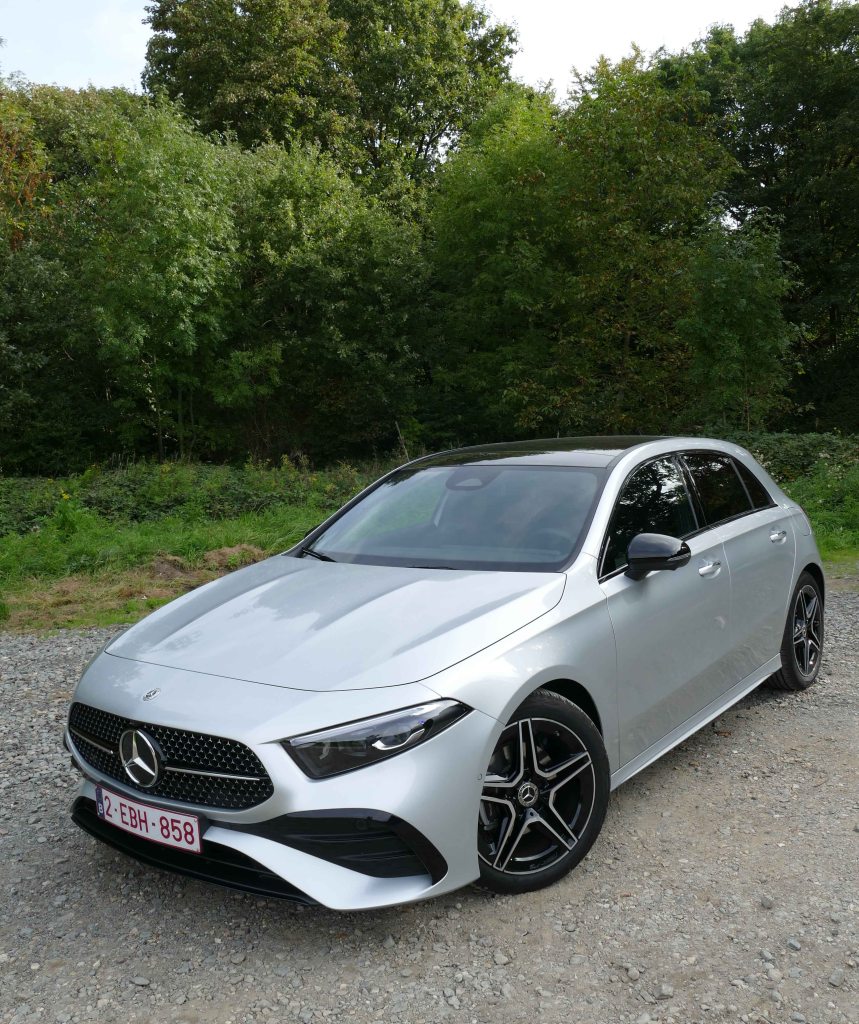
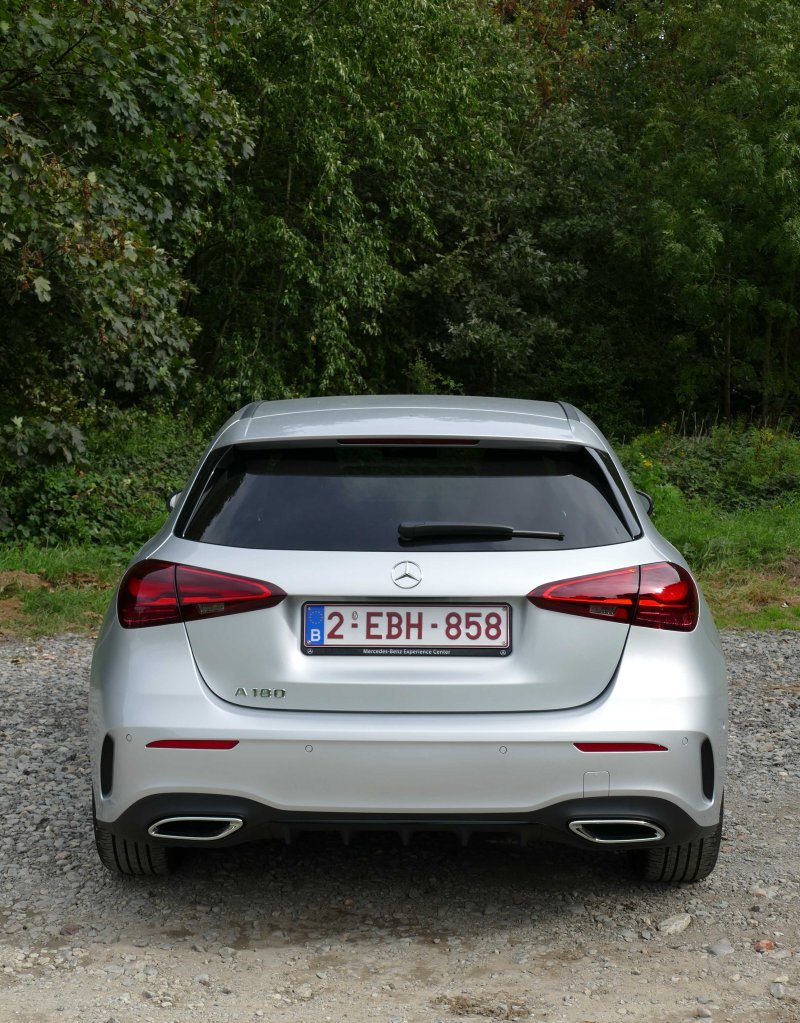
The ever so popular A-Class recently got a face-lift, and it was for us an  excellent opportunity to get behind the wheel of the latest edition of this very capable car with the iconic star. To tell you right away, it proved a wonderful experience, proving amply how good, well balanced and mature this A-class has become. An an icing on the cake, our good looking test car was sprayed in iridium silver and was equipped with the very tasteful AMG line, which gave this A-Class just this extra panache which made it stand out as a true Mercedes-Benz, just as we liked it.

We would say, read further…

Hans Knol ten Bensel

Dynamic looks

The facelifted A-Class looks sporty, even more so in the hatchback version we tested. The front end is dominated by a distinct shark nose, as Mercedes puts it, and the sloping bonnet shows two distinct power bulges, reminiscent of the legendary 300 SL…ah, it reminds us from the beautiful time we had behind the wheel of one in Marbella, celebrating 50 years of SL…

But also this A-Class lets you dream. Just have a look already at its gleaming AMG alloys, the dual exhausts and the new rear diffuser.

A cabin with the unique atmosphere of the good star… The cabin of this AMG line A-Class has plenty of atmosphere. The steering wheel is not only a steal to look at, it also feels great in your hands, the double horizontal spokes let you have all the functions at your fingertips. The latest version of the MBUX makes your life easier, and the dual screen display puts all the info crystal clear in front of you. Of course, the central screen is a touchscreen, but can also be controlled via the commands on the steering wheel.

The latest  version of MBUX has a plethora of useful functions. For instance, did you know that you can prepare the car optimally for a car wash by a simple touch? All the well proven driving aids are of course also at your fingertips, and we appreciated very much in urban manoeuvring and parking the 360 degree camera which offers very crisp images. The camera retracts under the boot lid and so shields itself from the elements, staying always nicely clean.

The look of the digital instrument display can be customised of course. You can choose the “Classic” layout with round dials for speed and revs, “Sporty”  with the dynamic rev counter, or “Discreet” with reduced content. There are also three modes (Navigation, Assistance, Service) and seven colour worlds.

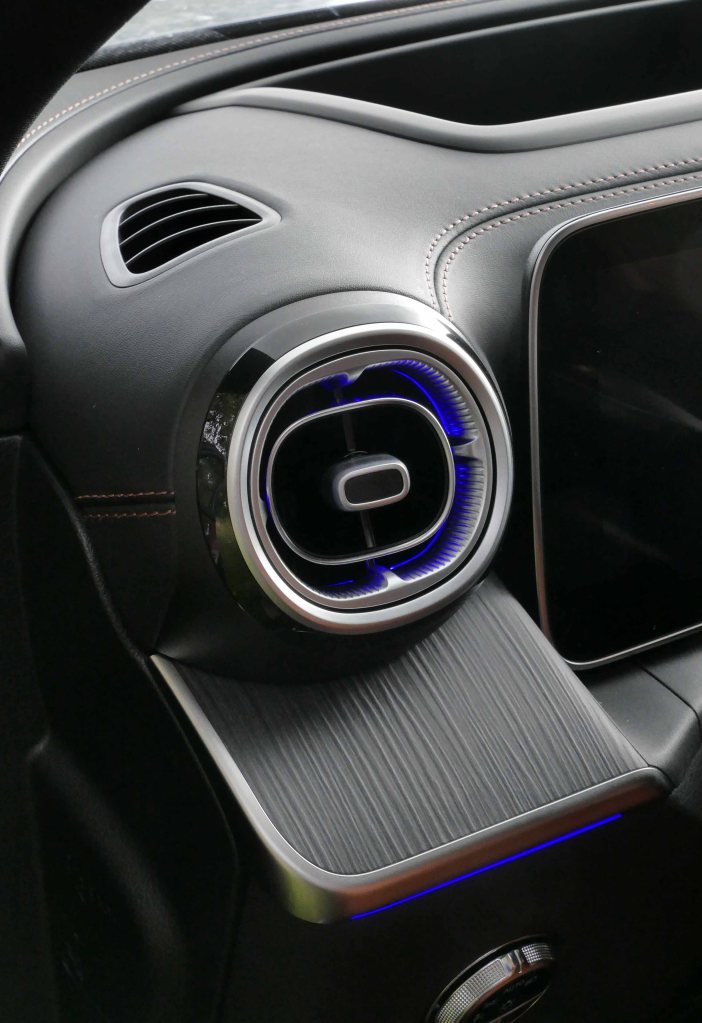
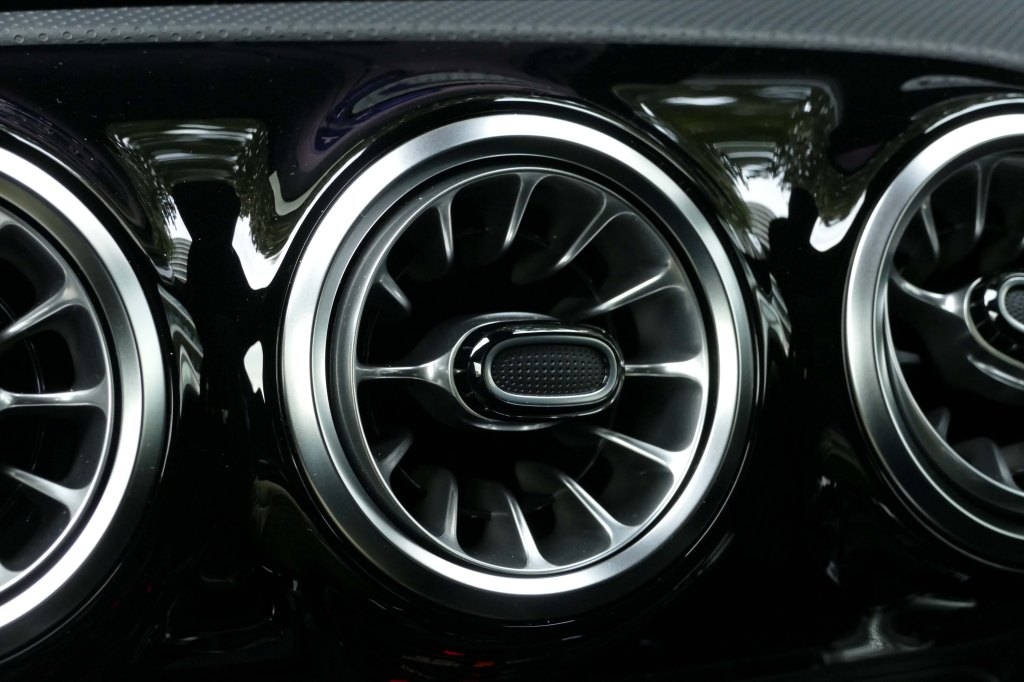
The dashboard is studded with beautiful round air vents, which have become a hallmark for the Mercedes passenger cars, and are nicely sculpted and heavily chromed here, providing a striking contrast with the dark interior. Below these vents one finds a row of buttons for all the necessary ventilation and heating functions, making daily life with the A Class a pleasant experience for everyone, even when unfamiliar with the car.

Of course you will find Android Auto and Apple Carplay in this Merc, so using your phone fully is a proverbial breeze…you also have extra charging points too.

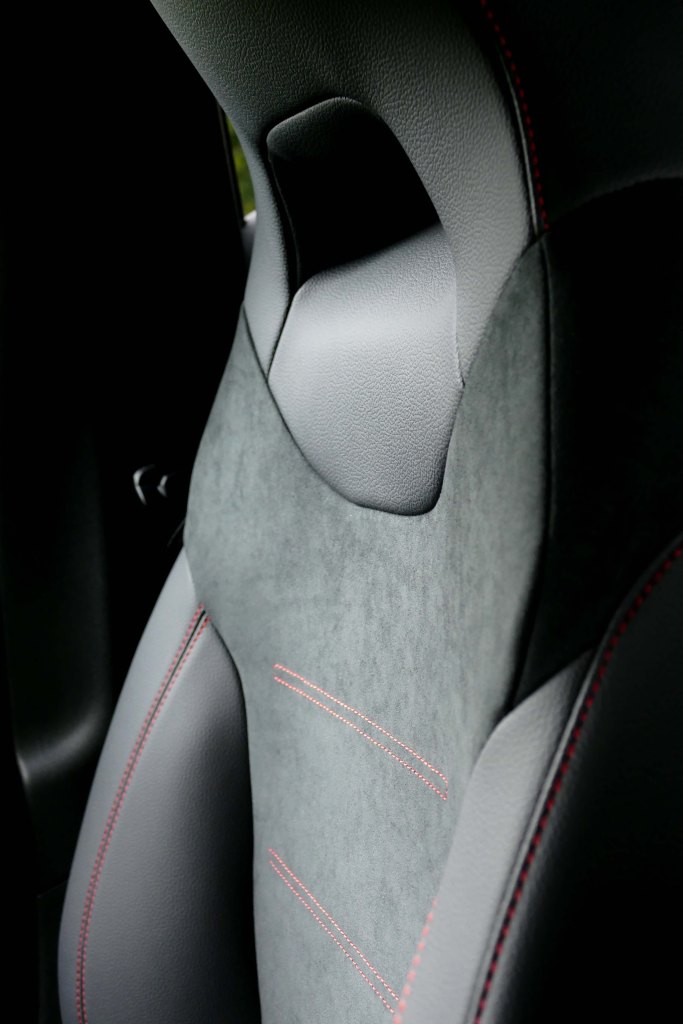
Ideal seating and comfort The AMG Line sports excellent looking seats with integrated headrests, with a nice looking contrasting red stitching, which is also seen on the steering wheel and door panels.  The seats, with their three dimensionally embossed Artico upholstery, as Mercedes puts it, offer excellent support and comfort, are adjustable over a very wide range.

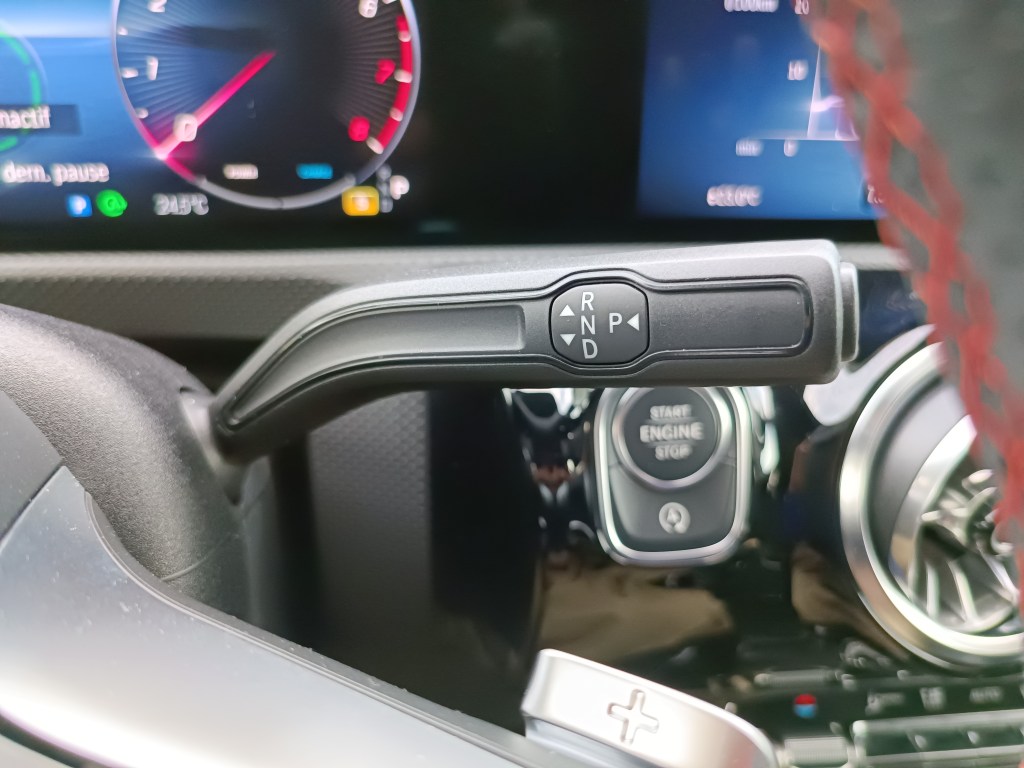
The same goes for the steering wheel, so an ideal seating position is soon found. Seating comfort is one of the strong points of a Mercedes, along with the well studied and honed ergonomics. We also liked the positioning of the small gear lever on the steering column, so you have hardly to lift your hand from the steering wheel when choosing forward, reverse or parking.

Dynamic driving pleasure…

Your servant owns now already for seven years a 180 B Class, which with its smooth 1,6 litre engine is laid out for silent and comfortable transport. The present A Class has clearly a different, more dynamic and sporting  character. This is already manifest when pushing the starting knob. The 1332 cc four cylinder emits a pleasant throb, and indeed lets itself heard. The engine revs willingly at the slightest blip of the throttle, and is quite dynamic of the mark. Even in comfort or eco mode, the engine tends to rev up from standstill, giving you quite brisk accelerations.

The governing electronics of the 7 speed automatic has clearly been laid out for this. Despite this sporting bias, the new belt-driven starter-generator (RSG) noticeably improves the comfort in start/stop situations. A lower-vibration and quieter start is the result, and in addition, it allows ‘sailing’ with the combustion engine switched off during steady cruising. During braking and overrun, the RSG recuperates and thus supplies the 12-volt on-board network and the 48-volt battery. The energy thus generated can then be put to good use when accelerating,  giving the combustion engine an extra boost of 10 kW. It makes the A 180 quite dynamic, even in the 100 kW version we drove. It increases the torque and pulling power of the 1,3 litre engine massively at small throttle openings, and lets you drive with zest in city traffic without impairing economy. Soon enough, one learns to avoid the engine revving too high when moving from standstill, by gently lifting the throttle as soon as revs increase above 2000 rpm.

It triggers the gearbox to change into second, and you repeat this for the third gear. Afterwards, the electronic steering system of the gearbox notices that you use small throttle openings at higher speeds and will further inequivocally choose the highest gear possible. Not only does this increase the pleasure of a “zen” driving, it also greatly helps economy. Urban consumptions dropped from 11-12 litres/100 km to around 8 l/100 km after we learned this.

Mercedes drivetrain engineers must have honed the gearbox and engine management to do this, despite the sporting bias, as when you lift the throttle gently in first gear, it immediately starts to coast when changing up, making the operation very smooth. Of course, in the “sport” mode, the gearbox will keep the gears engaged until at least 3000 rpm, and its behavior is decidedly sporting. At constant speed, even in the sport mode, economy is very good indeed. Mercedes quotes 6.4 – 5.8 l/100 km as combined fuel consumption according to WLTP standards, with combined CO2 emissions being 145.0 – 133.0 g/km.

Autobahn Meister

As a German car befits, this Mercedes feels totally at home on the Autobahn. With a pleasant throb and in total unstressed stability, the speedometer needle rises to 215 km/h. Overall, the performance leaves nothing to be desired, with the 0 to 100 km/h sprint being absolved in 9,2 seconds. And this is just the “base” power version of the A Class range…

Impeccable handling

Of course, performance means nothing if it is not well controlled. Here the beautiful handling of this AMG Line A-Class has to be applauded. With virtually no body roll, it steers with precision, with excellent feedback felt in the delightful steering wheel, which is such a pleasure to touch. Winding roads are the preferred playground of this A-Class, combined with as we said, excellent high speed manners and stability. Of course, the brakes are fully up to the task. The suspension strikes also an ideal balance between comfort and sportiness.

Living with the A-Class

Mercedes tells us it is the Class for everyday, and we can only agree. We drove the hatchback version, and it is a roomy four seater. Standard luggage space is not enormous with 350 liters, but then the split rear seat folds back in seconds, to transport for example the larger paintings I had to bring to my solo exhibition I held at the District House in Wilrijk, nearby Antwerp. We already mentioned the MBUX infotainment system, which makes life pleasant with the A-Class. When you think you know everything, just read fully its manual. You will discover even more… The same goes for all the driving aids you have at your disposal.

Conclusion

The A-Class has matured over the years into a truly superb automobile. Carriying the unique panache of the brand in looks, finish quality and styling, it continues to do so in handling, comfort, performance, economy and durability. You enter in the world of the three pointed star, as you get indeed everything the brand stands for when you slide behind its wheel. Just push the button. It’s a Mercedes.

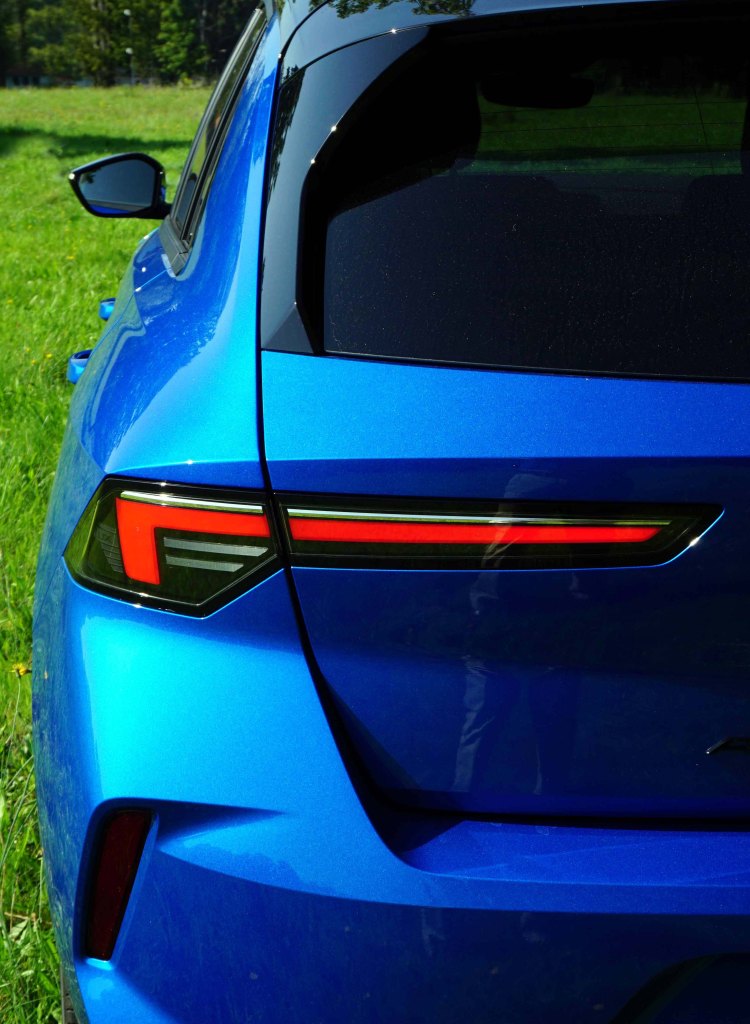
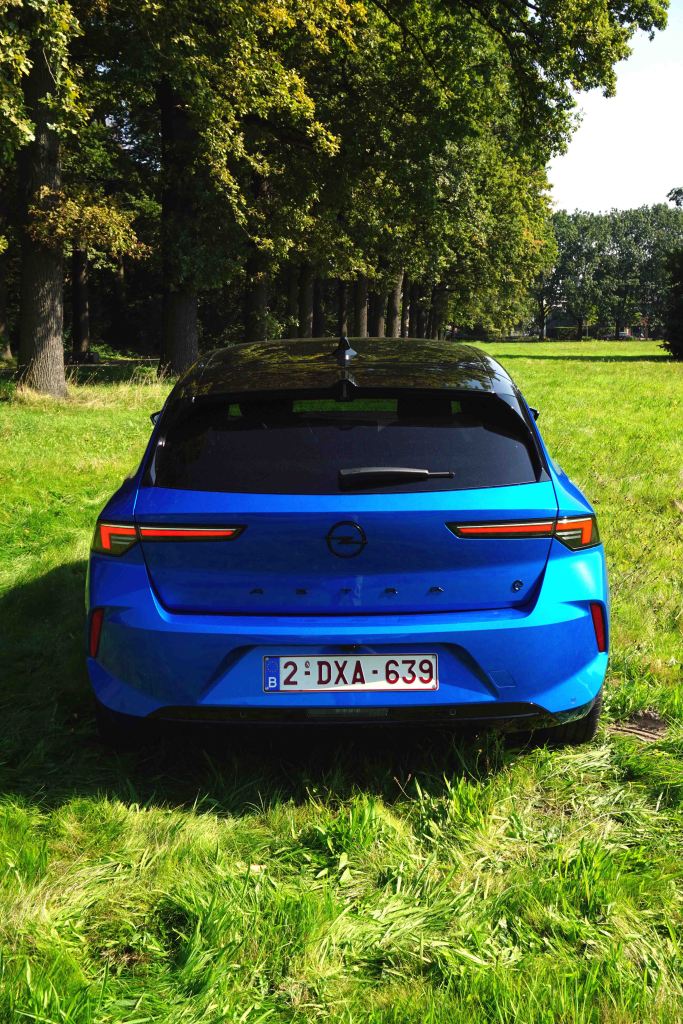
We drove the new Opel Astra Electric: combining pleasure and efficiency with style…

The e-version of the successful Astra was unveiled on the Brussels motor show in January this year, and has recently hit our roads. The dynamic PR department of Stellantis offered us the top equipment version for an extended test drive, and indeed we were very keen to get behind the wheel.

The Astra e seduced us with its refined smoothness and its remarkable efficiency. Driven sedately in dense urban traffic, we used only 12,4 kW/100 km, which is impressive indeed. The Astra is a worthy member of a new generation of compact EV’s with sufficient power, lower weight, reasonable battery sizes and a usable range of some 360-400 kilometers. On top of that, they are agile and a pleasure to drive. Just read further…

Hans Knol ten Bensel
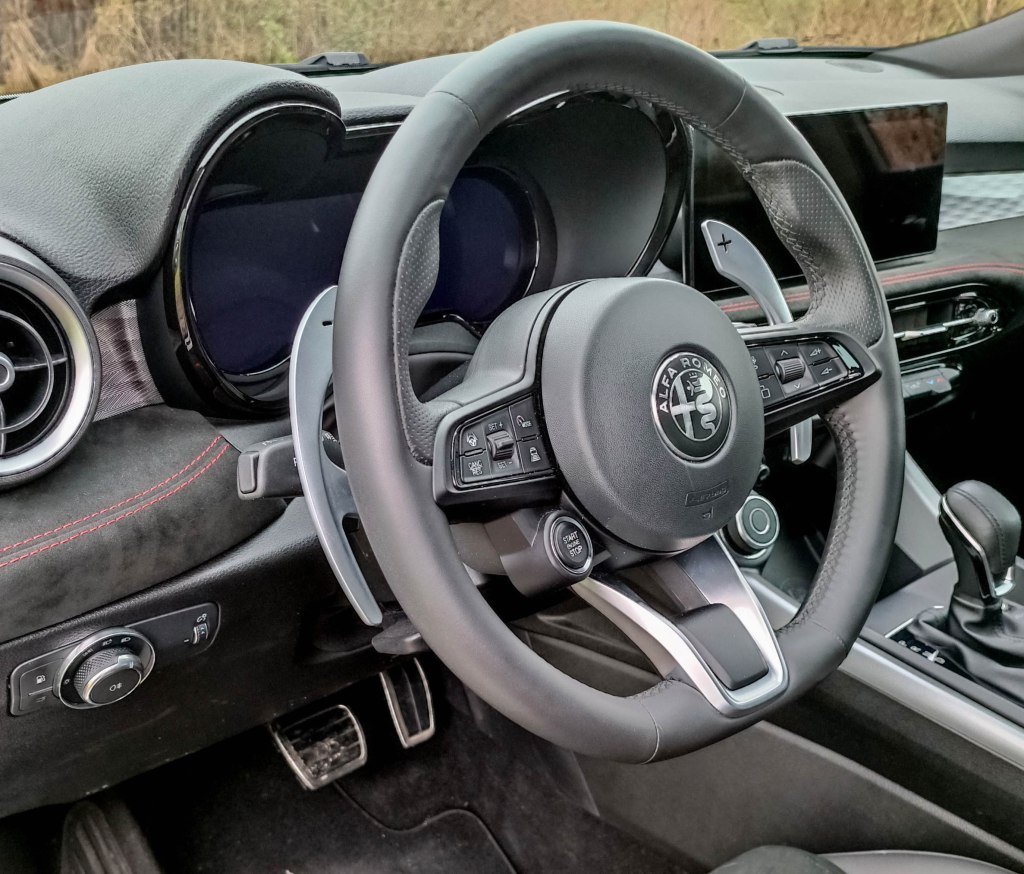
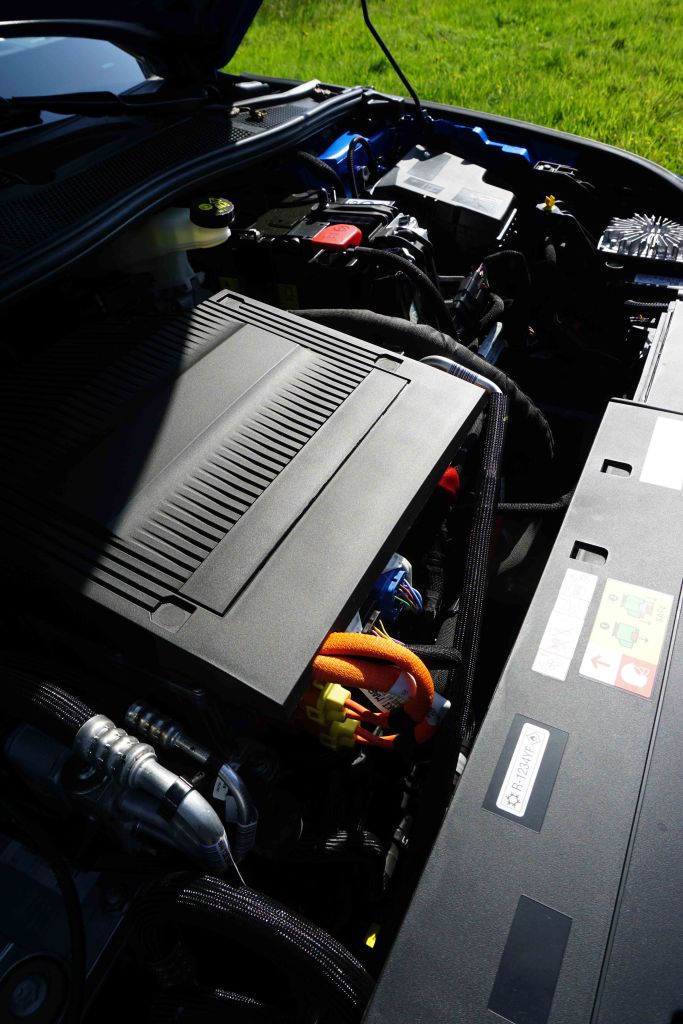
Stellantis is doing fine in the EV field, offering sensibly sized compact models across its range like the DS 3 we tested earlier. Here in the Astra we find the same new electric motor, good for 156 hp and 270 Nm of torque.

This offers zesty performance, which will satisfy virtually all of us in daily life. Indeed, the Astra will sprint with a whisper from standstill to 100 km/h in 9,2 seconds, and has a very creditable top speed of 170 km/h.

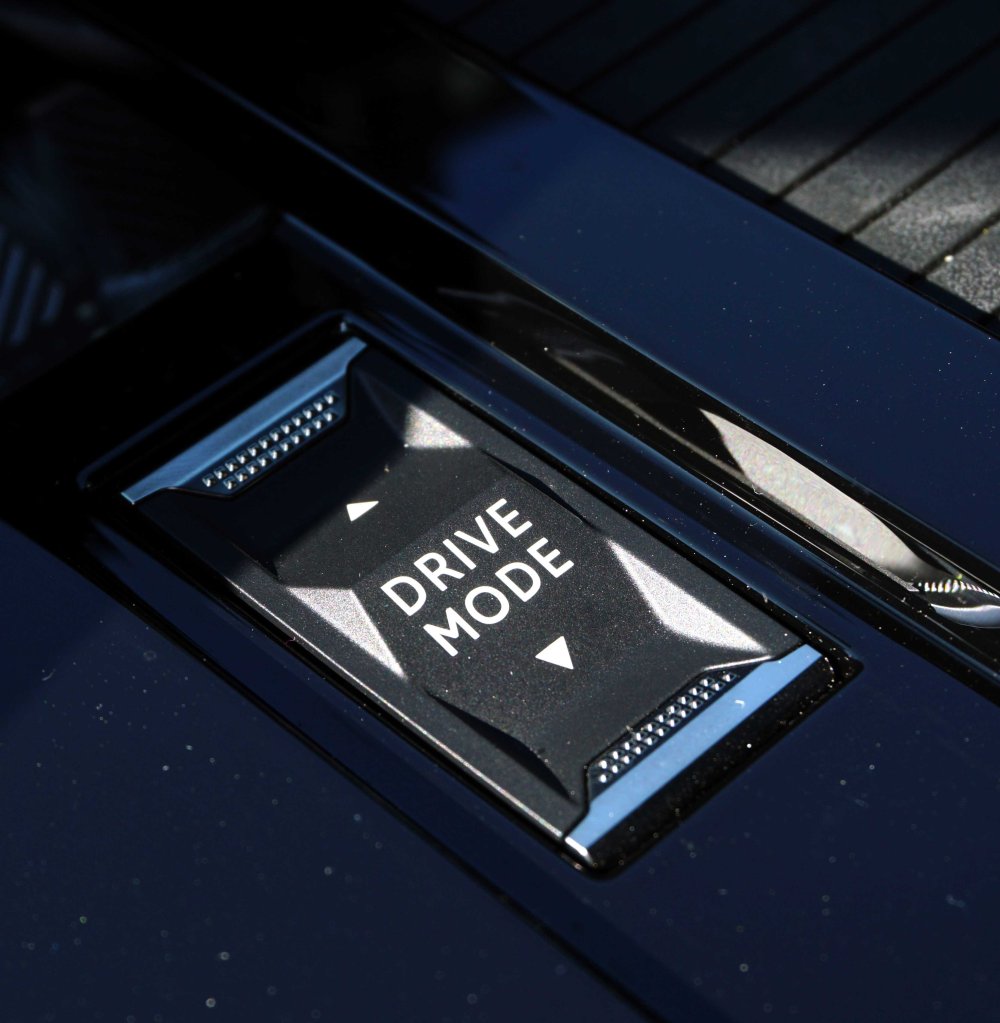
You can choose between three driving modes, eco, normal and sport. In the eco mode, engine power is reduced to 108 hp, but in practice this leaves you still with enough oomph thanks to the excellent torque characteristics of the electric motor. It gives you excellent efficiency, like we pointed out earlier. One drawback with the very hot weather we had during our test is the reduced power of the air conditioner in this eco mode. In the normal driving mode, power is set at 136 hp, with 156 hp being reserved for the sport mode. Nevertheless there is a kickdown function which puts the full engine power at your disposal irrespective of the chosen mode when you floor the throttle.

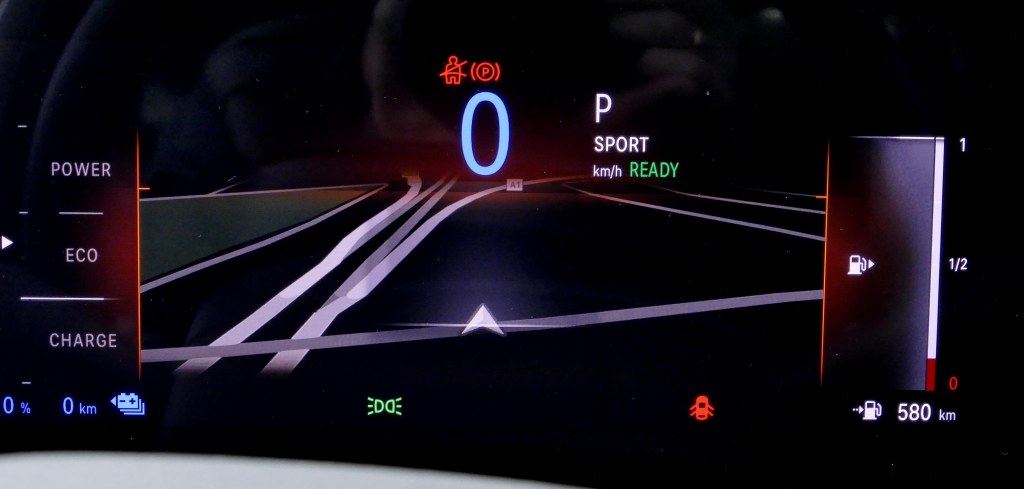
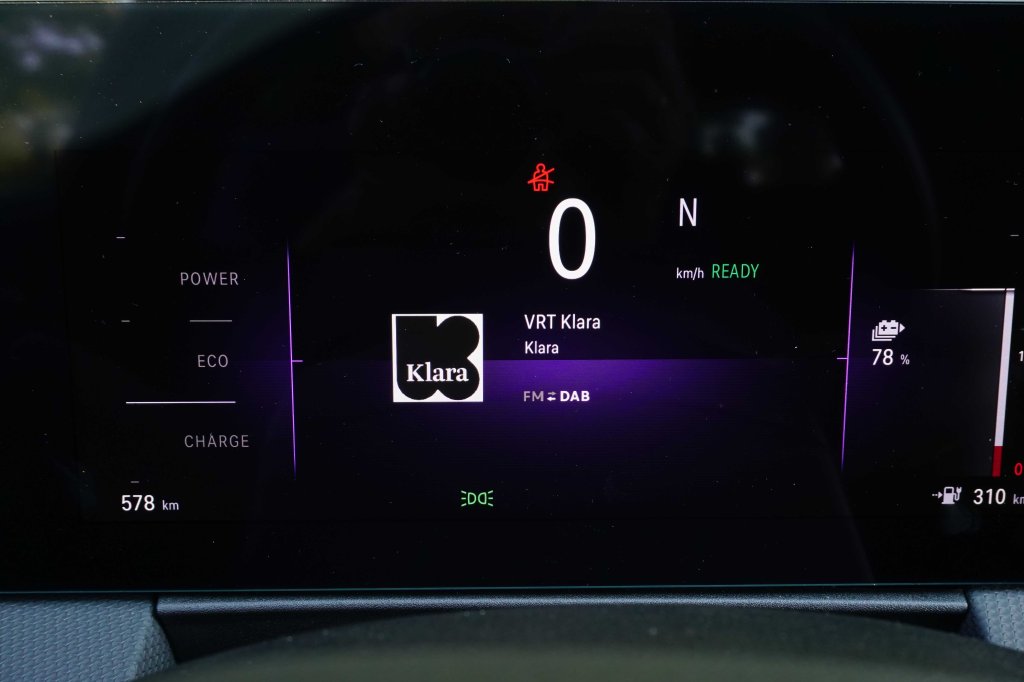
The screen in front of you displays the chosen driving mode, and is a school example of clarity and simplicity. You find all the essential information in a nutshell: battery capacity, range, driven speed and the music you are listening to… of course, it can be configured to suit your personal preferences.

The unique feeling of ’’ZEN’’…

More and more we start to like EV driving, especially in town. There is the uncanny smoothness when parking, maneuvering or driving very slowly in traffic jams. It is so beautifully stress reducing. On top of that, it is silent.  So you discover the merits of a good audio system, and indeed, the beauty of music… it makes spending time in heavy traffic a soothing and restful experience. This can be said more than ever when driving this Astra Electric. The DAB+ radio provides of course crystal clear sound, and with the display right in front of you informing you about the composer, the piece of music and performer, you just sit back and enjoy…

Ideal seating and ergonomics…

At Opel they take good seating very seriously. The driver’s seat is a so-called “active sports” seat, especially designed to give your back the best possible support. It carries the certificate label AGR, which means nothing else than that it is certified by the organisation ’’Aktion Gesunder Rücken”, or Campaign for Healthier Backs. Indeed, they give excellent support. The seat is also eminently adjustable, so sitting behind the wheel of this Astra is an undisturbed pleasure.
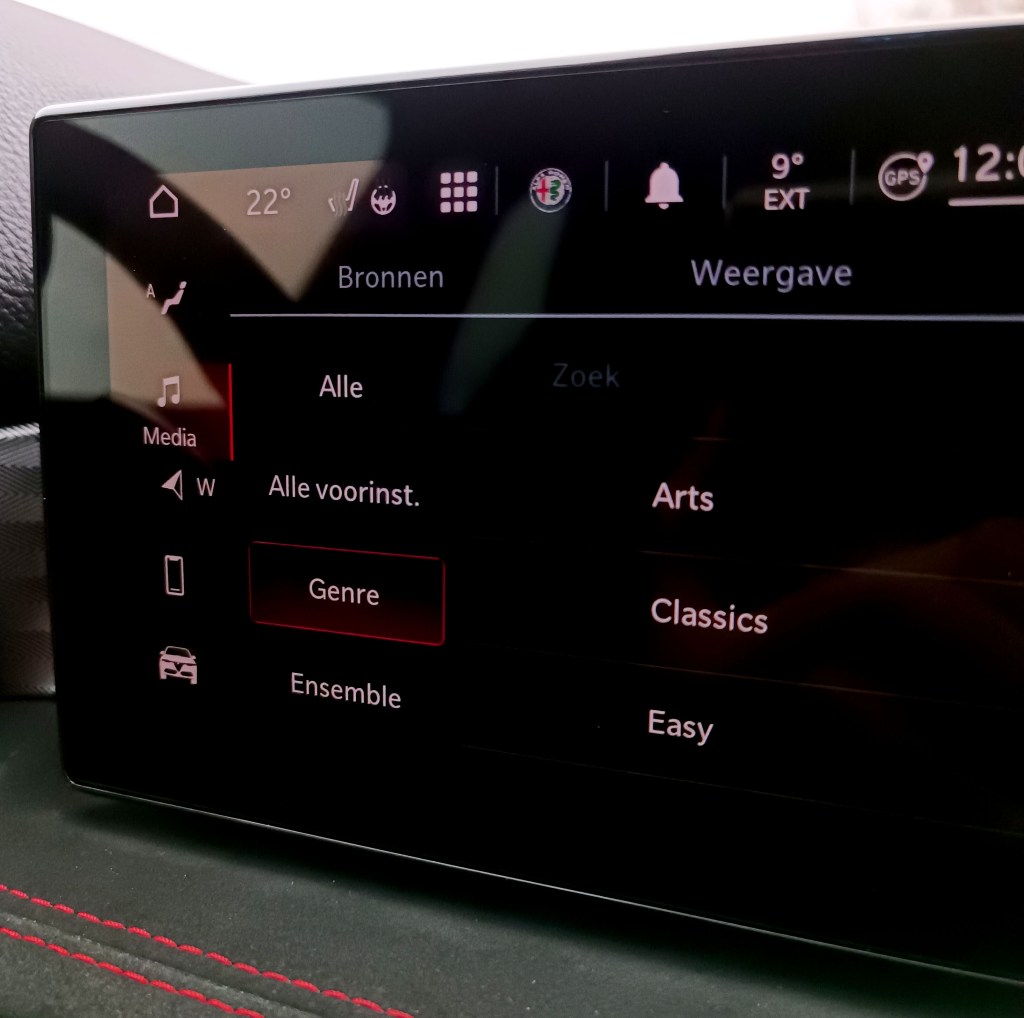
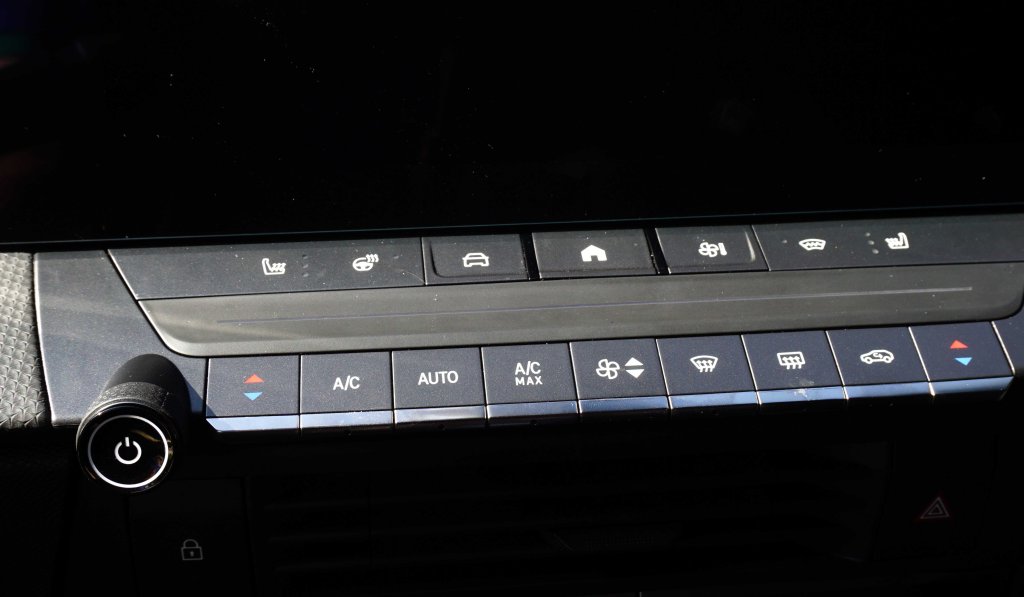
This feeling of absolute well-being is further enhanced by the excellent ergonomics of displays and commands in the cabin. Opel designers are convinced that less is more, and they have adopted this philosophy when designing the dashboard and its controls. Indeed, the dashboard layout is a model of simplicity and clever design.
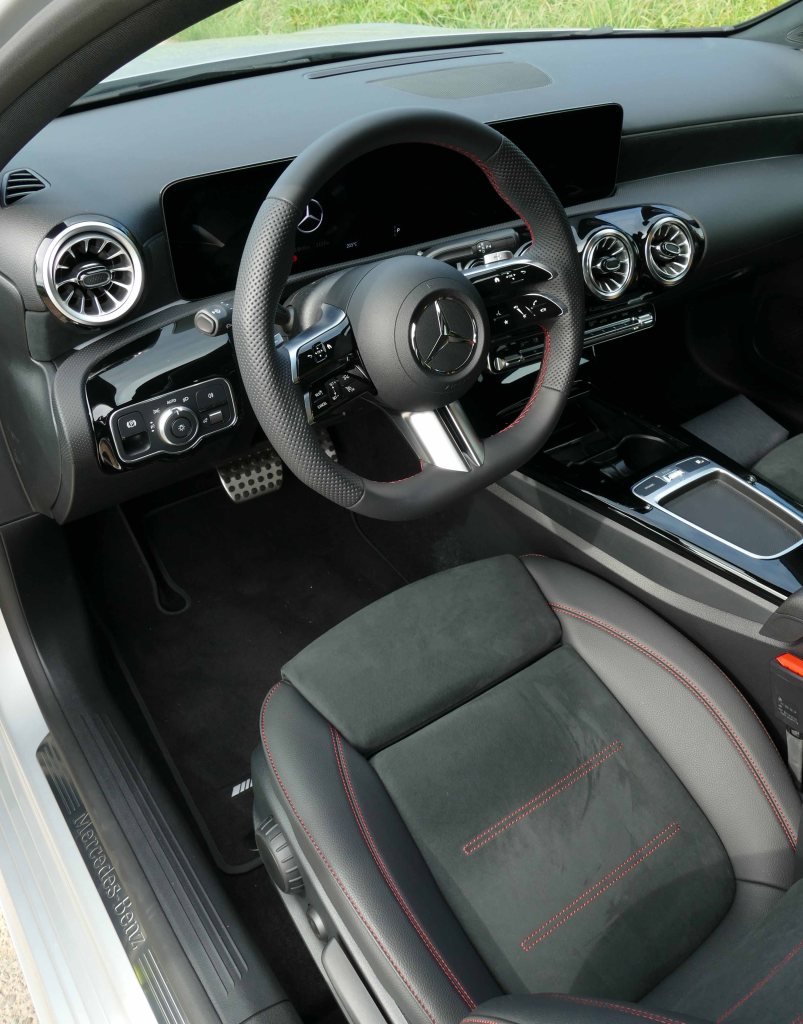
All the controls are clearly labeled and tactile, and you don’t need a manual to get acquainted with all the functions in this Astra. The instruments, or rather the two coupled 10 inch screens are also a school example of clarity and readability. Some will say that everything is rather austere and without stylish drama and panache, but then you come to appreciate it increasingly in daily use.

Lively and agile

The suspension strikes also a very good balance between comfort, steering precision, handling and high speed stability. The Astra steers very pleasant and its overall agility on winding roads totally belies its 1,7 tonne weight, which is quite light anyway for EV standards. As said, the Astra strikes a very good balance between engine power, battery size and vehicle weight.

Just a word about the batteries. It is a 54-kWh lithium-ion battery with  102 battery cells housed in 17 modules. The Astra Electric can cover up to 418 kilometres in accordance with WLTP1.

Charging times are also quite reasonable. It can be charged to 80 pct of its battery capacity in under 30 minutes at a 100 KW charging station. The car is standard equipped with a three-phase 11 kW onboard charger for the wall box at home…

We already told you about the efficiency of the Astra. Thanks to the standard heat pump, this five-door Astra requires just 14.8 kWh of electricity per 100 kilometres (WLTP2 ). A word of praise again here, as in the test of the DS 3, is warranted for the ”B’’ position, where the car will use the regenerative braking to the full. This allows very smooth one pedal driving indeed, with the regenerative braking force being very progressive and smooth.

Practical

The Astra also has an estate version, and soon the Astra Electric will also be available as such. This makes this EV then a very practical proposition indeed. The batteries are housed in the platform floor and beneath the rear and front seats, and take some boot space too. The Astra Electric offers 352 litres of luggage space in the boot – with the seats folded down, the capacity increases to up to 1,268 litres. Sufficient we would say, but the soon to come estate version will offer more…

Electronic driver assistance…

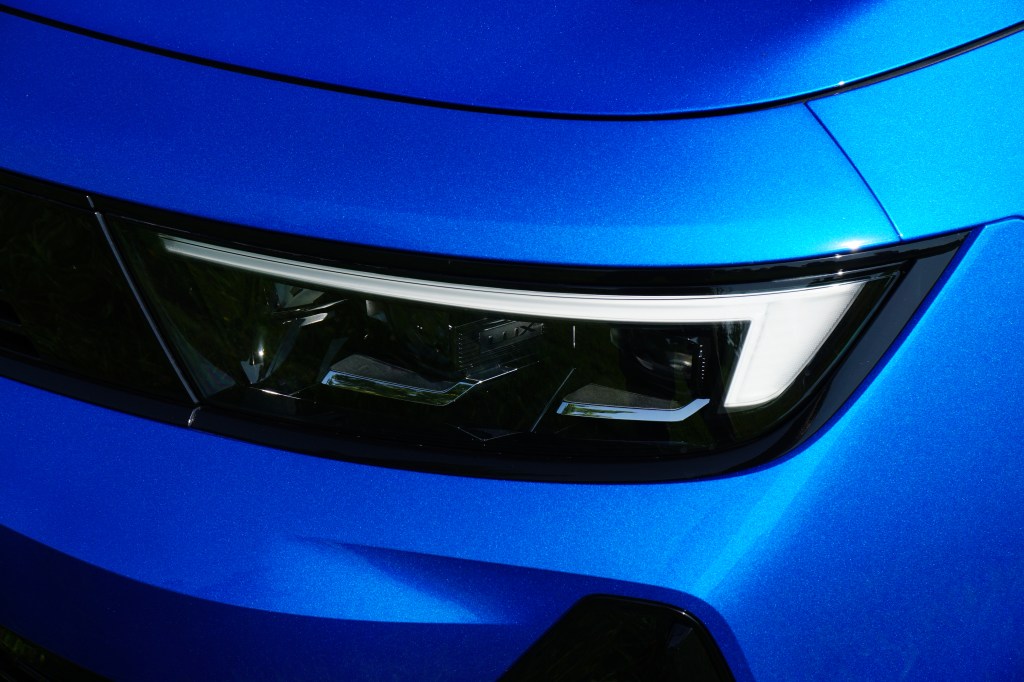
On-board as standard are electronic aids from the front collision warning system with automatic emergency braking to the adaptive cruise control with stop-and-go function and the Intelli-Vision 360-degree camera. In addition, the Intelli-Drive 2.0 system with semi-automatic lane change and intelligent speed adaptation is optionally available for the Astra Electric for the first time. The adaptive Intelli-Lux LED®Pixel Light ensures bright, glare-free illumination of the road at night. We also liked the very clear and readable head up display.

Conclusion

This Opel Astra is now even more endearing to drive in the electric version. It has lost nothing of its agility, the dynamic driving experience is now even better thanks to the smoothness of the drivetrain and the power delivery. Handling is just as good, striking a good balance between comfort and overall handling. The excellent ergonomics, the host of electronic driver assistance systems make daily life with the Astra a further pleasure…and just wait for the estate version!

Hans Knol ten Bensel