
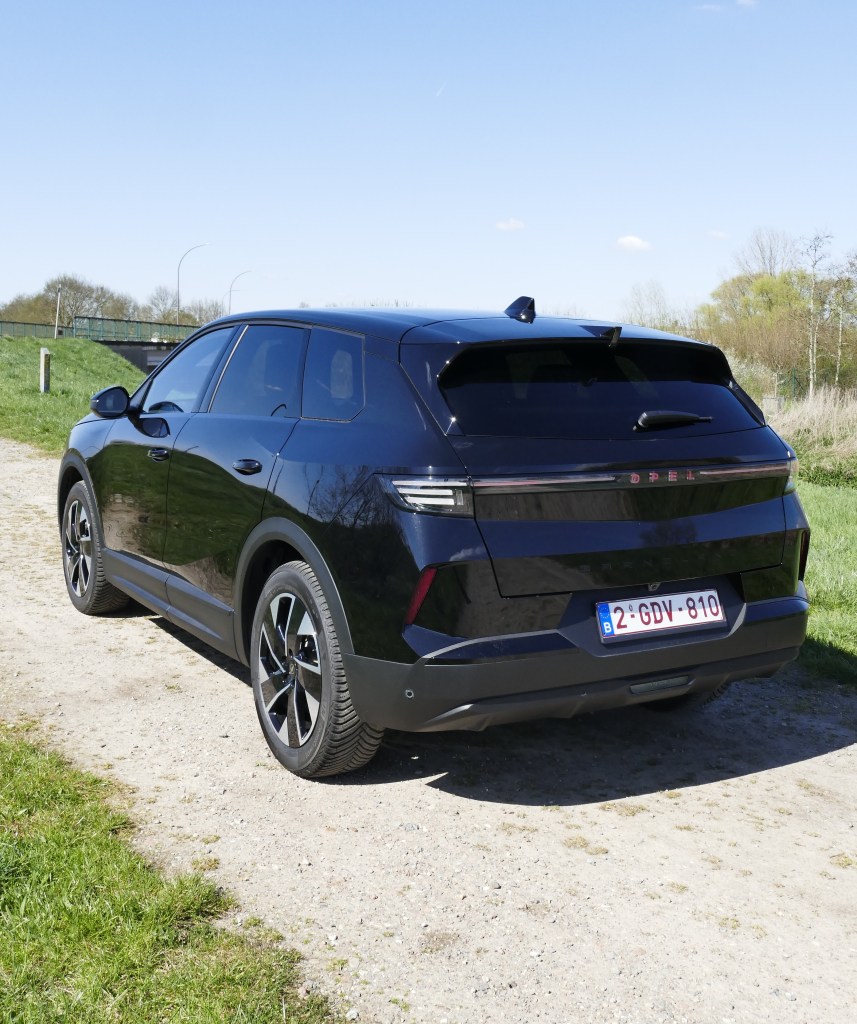
The second generation of the big Opel SUV impresses with a stylish makeover which adds further character and panache to the car. The “vizor” front end has received a transparent cover with the Opel lightning badge being now illuminated for the first time.
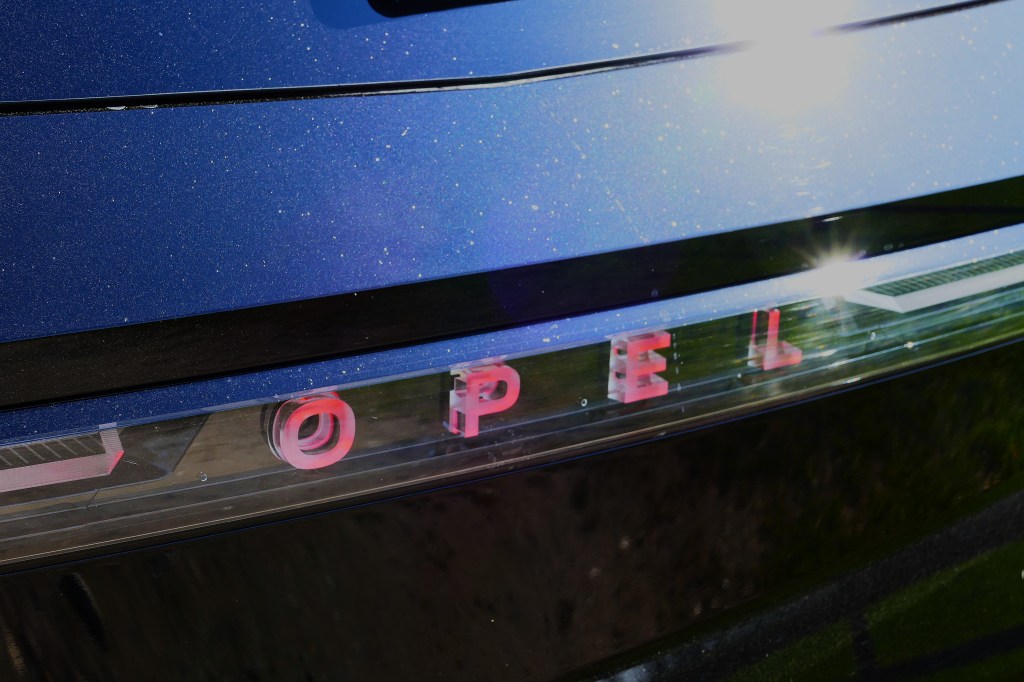
The rear the letters “Opel” across the boot lid are now boldy styled and illuminated in red coloured led light. Opel calls this its “edge light” technology.
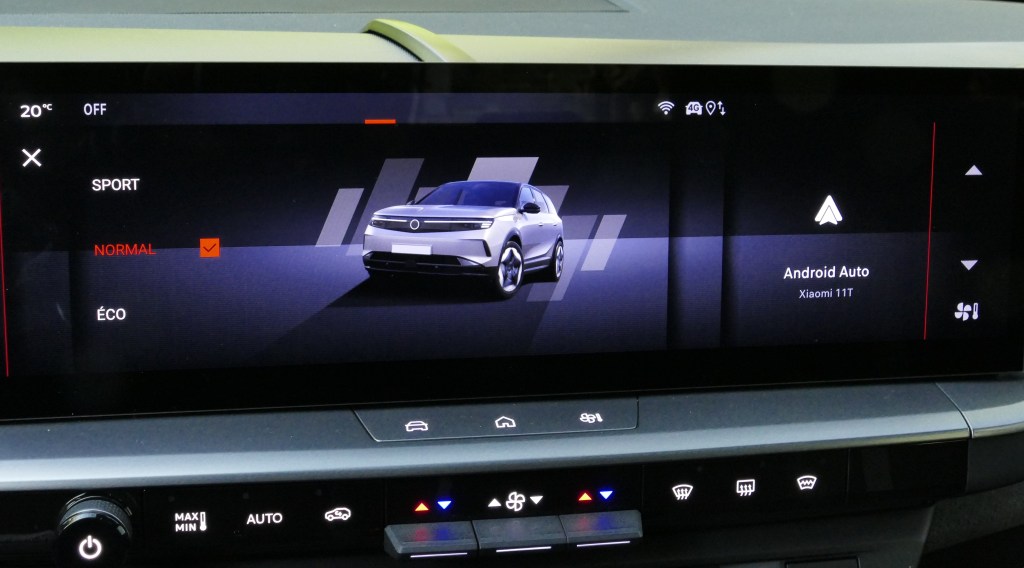
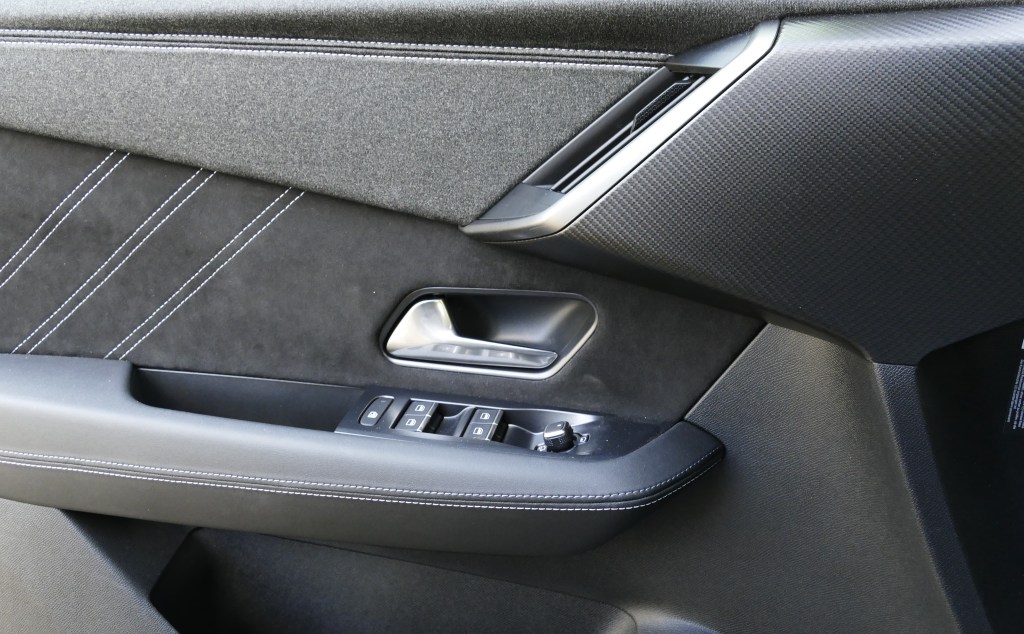
The styling language is elegant and simple, and this same styling philosophy is found in the cabin, where Opel’s strategy of keeping instrumentation as minimal and clear as possible for driver and passengers is continued under the adage “less is more”. This doesn’t mean that the information provided is incomplete, only that nothing but the relevant information is displayed when asked for it. We love this quiet simplicity. We found also the cabin very well finished and the quality of the materials used add a distinct premium touch.

This second generation Grandland comes after 7 years, and it runs on the Stellantis Platform which it shares amongst others with the Peugeot 3008 for instance. Nevertheless, the new Grandland was developed in Rüsselsheim and is assembled and built at the Opel plant in Eisenach.
The biggest news is that the Grandland is now also available in full electric form, with a battery package of up to 98 kW. This allows a range of up to 700 kilometers on a full charge, thanks to the new more efficient electric motor and provided the heat pump is installed.

As Opel caters for a wide(r) public, a plug in hybrid version is also offered which offers a 85 km useable “pure” electric range and last but not least a so-called Mild Hybrid which is the subject of this test.
Under the hood of this MHEV Grandland lies the 3 cylinder 100 kW engine which is shared in so many Stellantis group cars. The MHEV Grandland has a kerb weight of a good 1,6 tonnes, but nevertheless, thanks to the good torque charcteristics, accelerations are still quite brisk with an acceleration up to 100 km/h in just over 10 seconds.

On the autobahn, this Grandland still shows its panache with a top speed of 202 km/h. Consumption depends here greatly on your driving style, where the efficient drivetrain with an electric motor of 28 HP and 51 Nm of torque coupled to the transmission allow you to make good use of the E-power when starting from standstill and driving at slow speeds.
When you really concentrate and use an anticipatory and relaxed driving style, you can cover up to 50 % of urban distances on E-power, and consumption drops to between 5,5 and 6 liters, even in busy urban traffic.

On the open road, cruising at legal maximum speeds will show the good efficiency of the drivetrain with consumption hardly exceeding the 6,5 litre mark on 100 km.
The six speed eDCT transmission is smooth and responsive, well adapted to the engine’s torque characteristics. We found the engine not overly smooth, also emitting a distinct throb, but this actually adds to the dynamic character of the new Grandland. At constant speeds, the engine is smooth and virtually inaudible.
We liked the way the now 17 cm longer and markedly bigger Grandland steers and handles. It has lost nothing of its predictive handling and responsiveness, and if any, this has even improved. It remains utterly stable at high speeds and is indeed very engaging and pleasant to drive.
Comfort is also very good, and here we have to applaud the overall roominess of the cabin. As said, the Grandland has grown 17 cm in length, and this allows also the rear passengers to really stretch their legs. There is also more elbow room, as the new Grandland is also 6 cm wider…
Luggage space is also abundant with a standard 550 liters.
Driving assistance systems are also well cared for, and adaptative intelligent cruise control with stop and go function is standard, together with emergency collision braking and speed limit recognition. You can opt for Opel’s Intelli-Drive-2.0 system which helps you when parking and offers you also a 360° view of the car’s surroundings. One good note also for the excellent lighting system. Now the Grandland shines (literally) with Intelli-Lux Pixel Matrix HD-Lights, which dispose of not less than 25.000 light elements on each side. The front camera of the Grandland recognizes uncoming traffic and corrects the light beam accordingly. A head-up display lets you keep focused on the road.
Conclusion
The Grandland has matured to a premium class SUV, with even in its “base” MHEV version offering many qualities, last but not least it pleases with its agility thanks also to its 1,6 tonne weight, which is markedly less than the plug-in and full EV versions. Furthermore there is the excellent finish, the quality of the materials (all recycled) in the interior, the roominess, the stylish details and the overall good proportions of the car. Then we have said nothing about its very good overall performance and efficiency, its roominess and practicality. Last but not least it offers good value for money, certainly in this Mild Hybrid version…
Hans Knol ten Bensel
Photographers’ notes: the photos here were also taken with our “Leica” Panasonic Lumix DMC – FZ1000. Photographing a black car in sunny daylight is no small feat, but the processor still managed the extreme contrasts reasonably well.

 Autoprova - for the Connaisseur