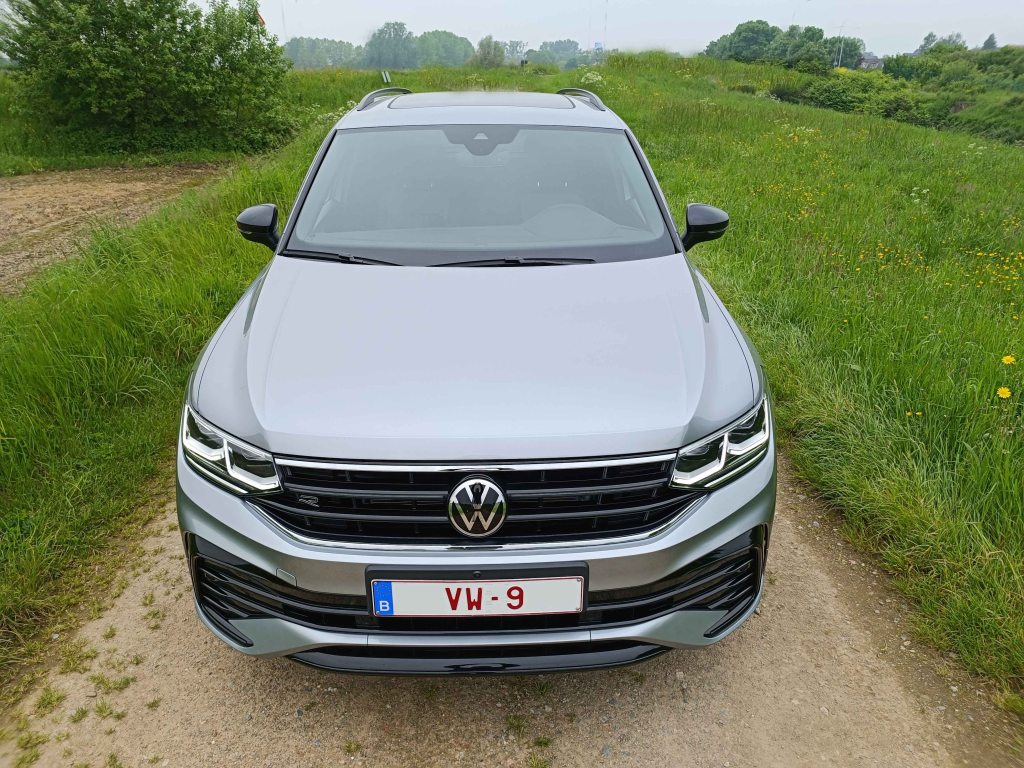
Did you know that the Tiguan is the most sold Volkswagen worldwide? There are many good reasons for this popularity: this is an all-round car, ideal for urban shopping, travelling long distances, towing horses, boats or caravans, or just hauling furniture. It occupies of course also the top of the sales hit parade in its homeland, and this since its introduction in 2007.
In 2021 the Tiguan got a welcome facelift: the front grille has been reworked to show a family resemblance to the bigger Tuareg. The headlight signature has also been revised somewhat and at the rear the now centrally placed Tiguan scripture distinguishes the latest generation.
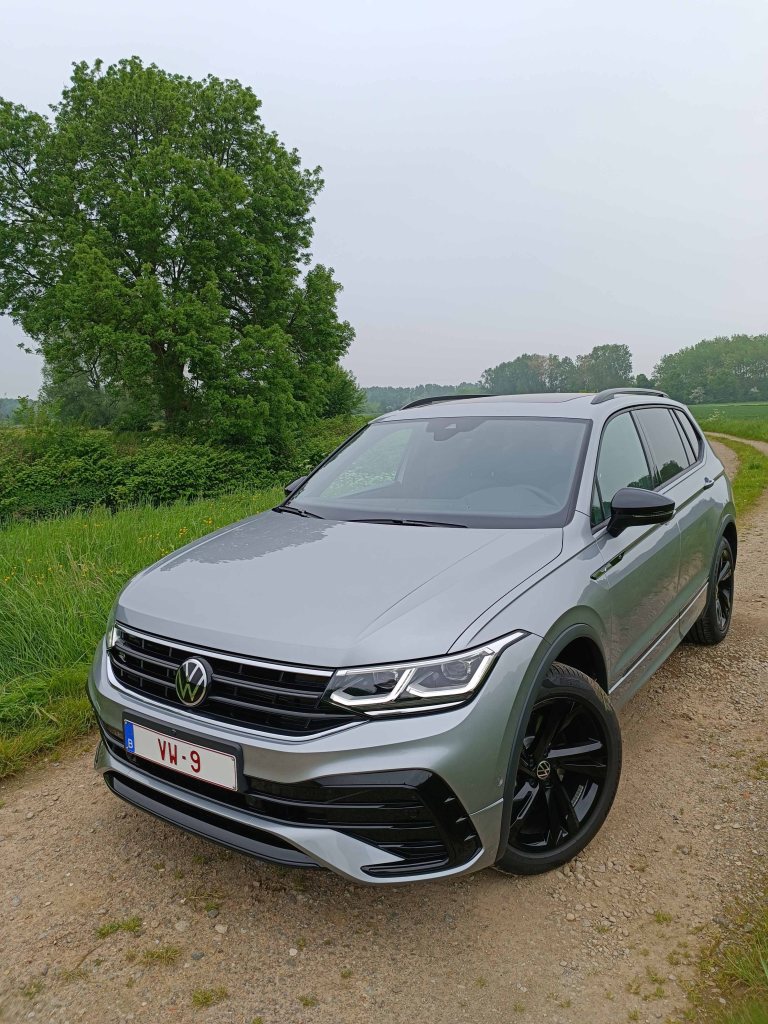
VW has also been working on the engines. It is not forgetting the Diesel, which now has two SCR-catalyzers and who succeeds thanks to “twin dosing” to reduce NOx emissions by an impressive 85 pct.
In the course of 2021 a plug-in version also hit the showrooms, with a 1,4 litre 110 kW/150 PS Petrol engine and an electric motor of 85 KW/115 PS. Total system power is 180 kW/245 PS.
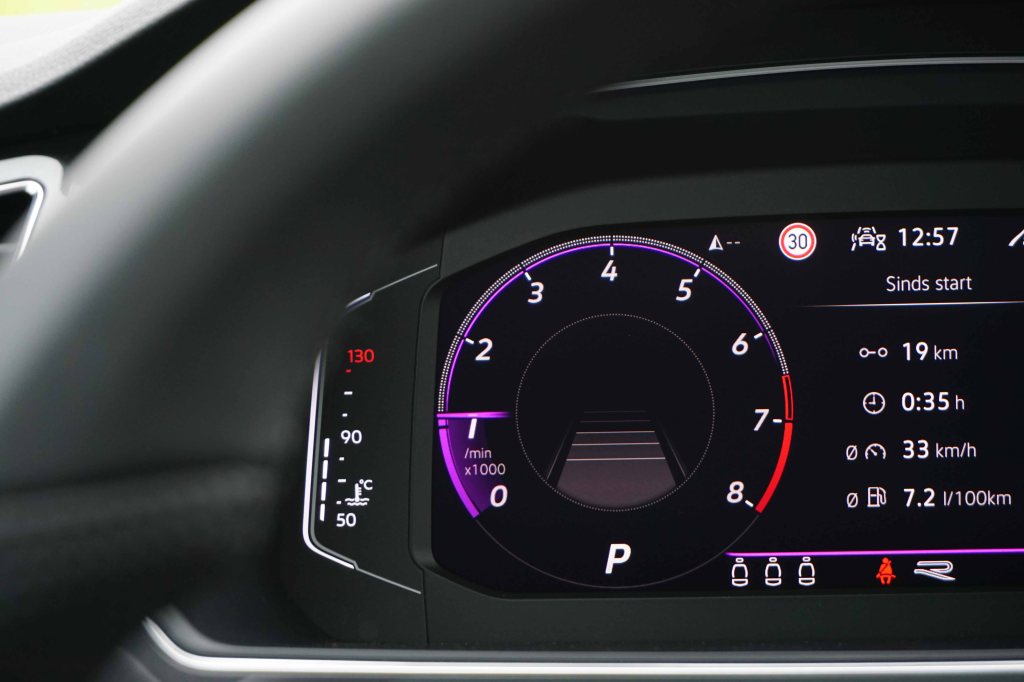
But let’s take a closer look at our test car: it came with the well proven 2 litre TSI petrol engine, coupled to a 7 speed dual clutch transmission. The engine has ample pulling power, with 320 Nm being delivered over a very wide rev range between 1500 and 4100 rpm. This results in good responsiveness and lively accelerations when you put your right foot more down a bit. The Tiguan will sprint from 0 to 100 km in less than 8 seconds, and will reach a top speed of approx. 213 km/h. You couldn’t wish for anything more, we would say.
The engine emits a slight throb when it’s working a bit harder under acceleration, but at constant (high) cruising speeds it remains perfectly inaudible. Of course, with this larger and weightier SUV (1,7 tonnes), the fuel consumption reflects even more how much kinetic energy is generated and lost. Therefore one is well advised to adopt an anticipative driving style in urban traffic. Then consumption stays within reasonable ranges, say around 8-9 litres/100 km or so, but then you have to really pussyfoot around! The WLTP figure for short distances is not less than 10,2 l/100 km. It is the Achilles heel of petrol engined cars, and this explains the popularity of Diesels until now. The stark truth is that only hybrid configurations can save the day for petrol engined cars in urban driving conditions, especially for weightier SUV’s. On the open road, the efficiency of the petrol engine is much better, and consumption will sink considerably. The WLTP figure for driving on country/secondary roads is 7,1 l/100 km, on motorways combined with higher speeds it’s 8,1 l/100 km, which is also the WLTP average. The WLTP combined CO2 value is 183 g/km, which is still on the rather high side. Miracles just don’t happen…Our test car was also equipped with the 4 motion package, and its electronic assistance makes you an instant offroad expert….

Excellent comfort
The Tiguan is quite comfortable indeed. It can be had with damper control, dubbed DCC, where you can choose between Normal, Comfort and Sport. Even in the Sport mode, the suspension is never too harsh and in the Comfort Mode there is not too much leaning in fast cornering. The long suspension travel swallows urban sleeping policemen optimally, and passengers are never jolted about.

This well being is also further enhanced by the ample legroom the 19 cm longer Allspace version offers, we could appreciate this when we drove also the very same Tiguan Allspace version during our recent USA trip on Texas roads, where the long distances were travelled in absolute comfort. The Tiguan steers quite precise, and its responsiveness is also altered in function of the chosen driving modes. The assistance is speed sensitive, making the Tiguan easy to maneuver in all circumstances.
Ever more digital
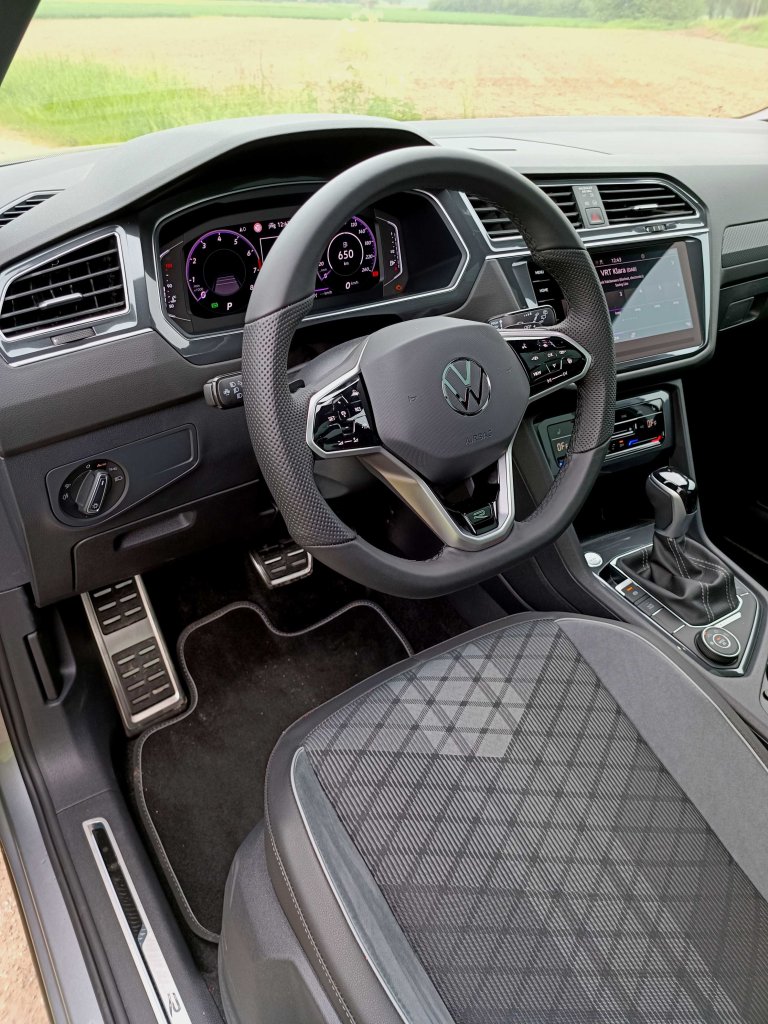
Of course, the age of digitalization spreads also further in the cockpits of Volkswagens, and the Tiguan is no exception. After the facelift the round knobs for heating/cooling/ventilation for instance are replaced by tactile sliders. It takes getting used to, but soon enough one gets the hang of it. I am personally always rather cautious to condemn “modern” functional idiosyncrasies, as owners have their cars for a much longer time than us journalists, who drive their test cars for much shorter periods. What seems annoying for a short term user isn’t necessarily so for a long term owner. It remains of course necessary that also occasional users find their way in it, and that cars are intuitive to use. Therefore any modification which makes this more difficult is indeed a step back…
The Tiguan has now its own SIM card and is now always online. This makes staying connected so much easier. Apple Car Play and Android Auto now also run over Bluetooth.
Roomy and functional.
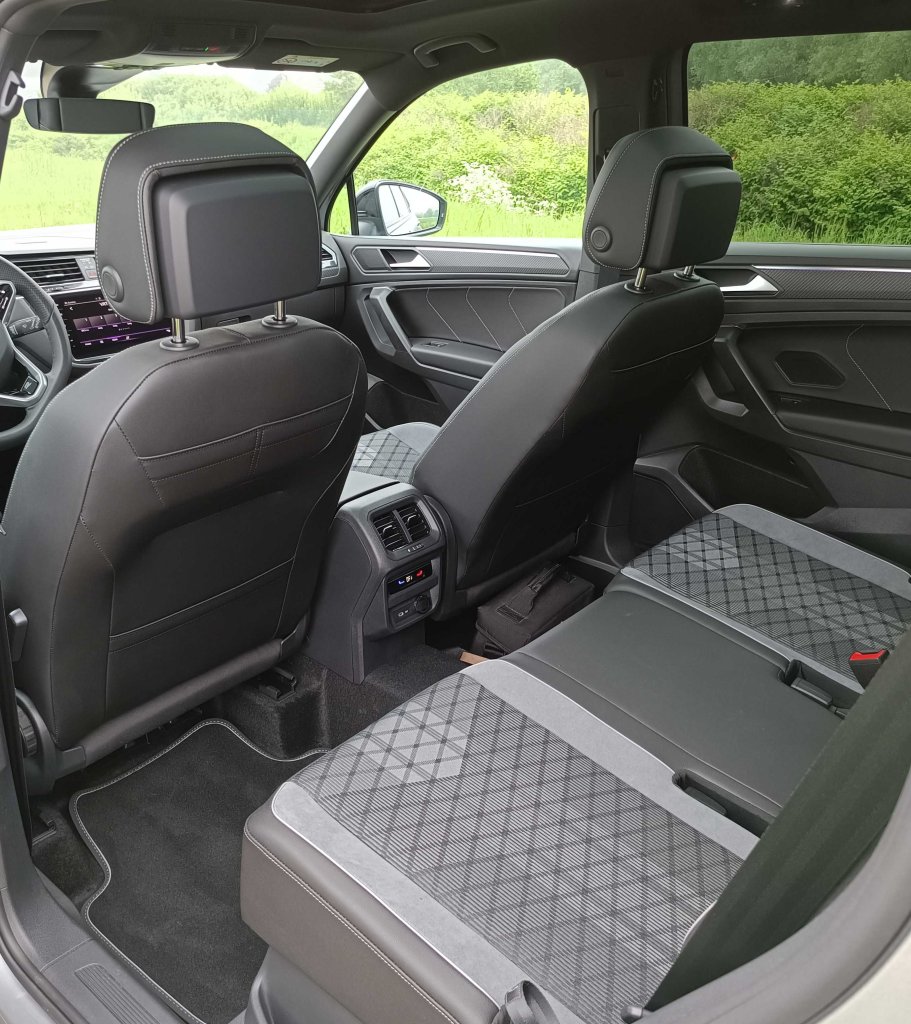
The Allspace offers 400 liters boot space until the luggage cover. Also beneath the luggage floor is an extra 50 liter space, maximum luggage space with all seats down is 1920 liters. As we said before, the Allspace offrers ample head- and legroom for all its passengers. The Tiguan is also a good load carrier: one can add up to 565 kg. Not less than 2,5 tonnes can be towed.
Conclusion
The Tiguan truly earns its bestseller status. It is an all-round car, with excellent driving characterics combined with lively performance and good looks. Its petrol engines are pretty formidable, smooth, powerful and sufficiently frugal. A car built with excellent quality and workmanship, designed and meant to last for decades. If only our lawmakers let you…
Hans Knol ten Bensel
 Autoprova - for the Connaisseur